Data Descriptor

Dataset on Fatigue Results and Fatigue Fracture Initiation Site Characterization in Stress-Relieved PBF-LB/M Ti-6Al-4V Four-Point Bend and Axial Specimens: Part I (High Power, Variable Scan Velocities)


1
Department of Materials Science and Engineering, Case Western Reserve University, Cleveland, OH 44106, USA
2
Naval Surface Warfare Center Carderock Division (NSWCCD), Bethesda, MD 20817, USA
*
Authors to whom correspondence should be addressed.
Data 2026, 11(4), 81; https://doi.org/10.3390/data11040081
Submission received: 3 February 2026 / Revised: 23 March 2026 / Accepted: 1 April 2026 / Published: 8 April 2026

Abstract

As part of a NASA University Leadership Initiative (ULI) program, this work supports the continued development and evaluation of a fatigue-based process window for stress-relieved Ti-6Al-4V specimens produced via laser powder bed fusion (PBF-LB/M). Four-point bend and axial fatigue specimens were fabricated by NASA ULI collaborators across a range of scan velocities (800–2000 mm/s) at a constant power of 370 W using an EOS M290 system. All fatigue specimens were low-stress-ground by a commercial vendor and tested at Case Western Reserve University (CWRU) under load-controlled cyclic loading at a stress ratio of R = 0.1. This paper presents a curated dataset linking PBF-LB/M process parameters to fatigue outcomes across 175 specimens. Of these, 136 fractured and this study includes fatigue crack initiation site identification and defect morphology metrics derived from post mortem SEM analysis. Specimens that reached runout (107 cycles) and did not fracture under subsequent fatigue testing are retained in the dataset, with fractographic fields marked as ‘NA’ to indicate non-applicability. The dataset includes specimen metadata, processing parameters, fatigue life data, fatigue initiation site classification (e.g., keyhole, gas-entrapped pore (GeP), lack-of-fusion (LoF), contamination), defect size and shape descriptors, and spatial location relative to the free surface. These data are intended to support defect-based fatigue life prediction, probabilistic modeling, process–structure–property studies, and machine learning frameworks linking process parameters to fatigue performance in PBF-LB/M Ti-6Al-4V.
Dataset: The dataset presented in this study is included in the Supplementary Materials. Further inquiries can be directed to the corresponding authors.
Dataset License: License under which the dataset is made available: (CC0, CC-BY, CC-BY-SA, CC-BY-NC, etc.)

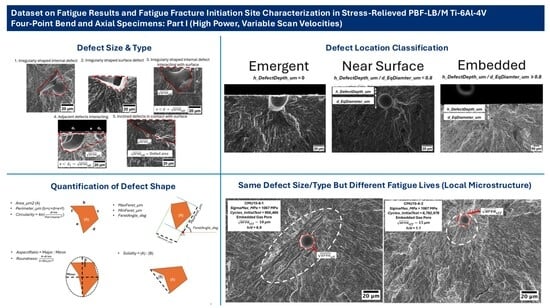
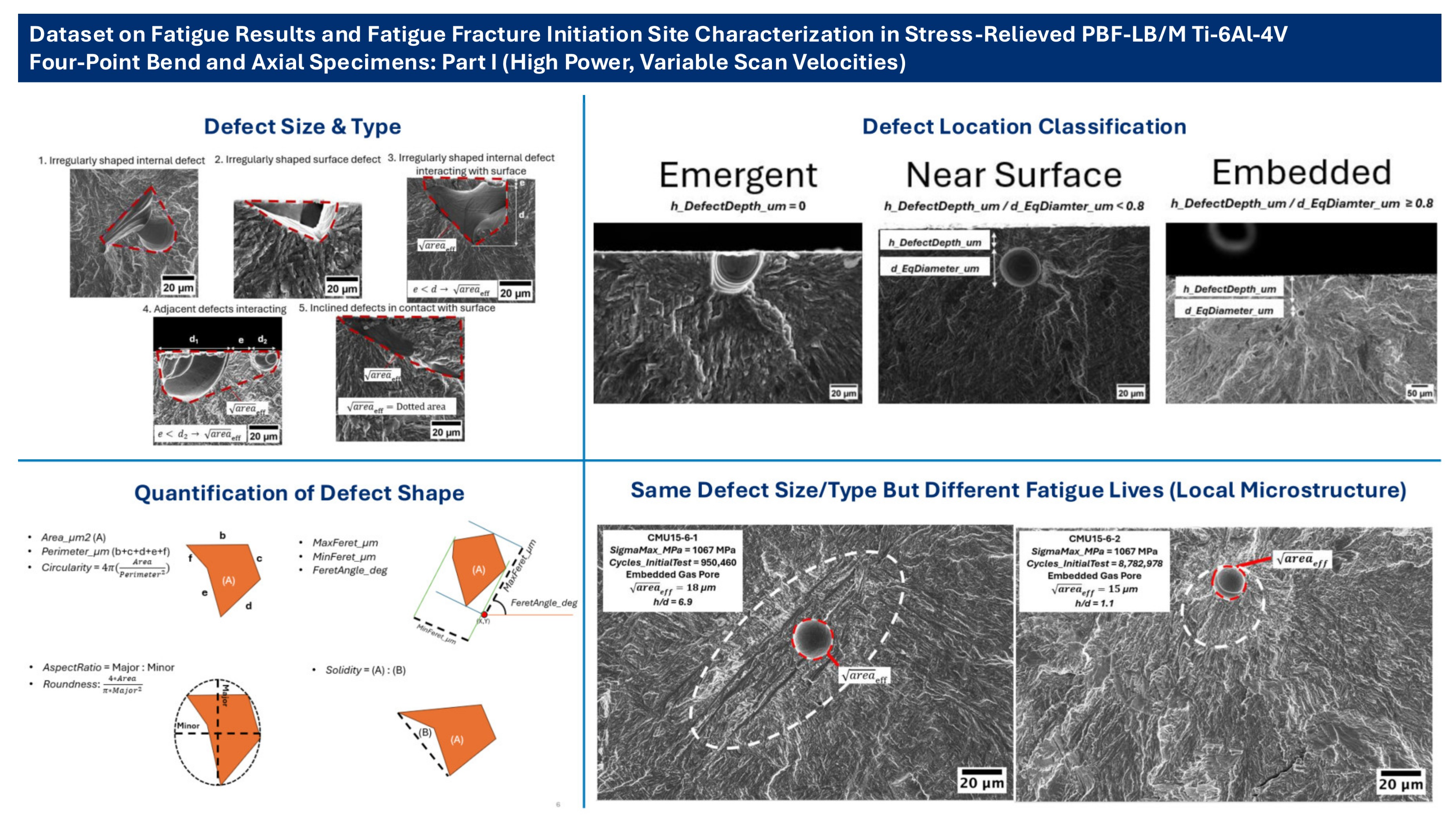
Graphical Abstract

1. Summary

Laser powder bed fusion (PBF-LB/M) Ti-6Al-4V exhibits fatigue performance that is highly sensitive to process-induced porosity [1] and lack-of-fusion (LoF) defects [2,3,4,5]. This defect sensitivity presents a significant challenge for materials qualification and certification [6,7], as variability in defect morphology, size, and spatial location can strongly influence fatigue life [5,8]. While numerous studies report fatigue behavior under selected AM processing conditions [9,10,11], publicly available datasets that systematically link process parameters, fatigue life, and fracture-based characterization of fatigue-initiating defects remain limited. To address this gap, the present dataset was designed to provide this structured information by systematically characterizing fatigue initiation sites across a controlled processing-parameter space in which scan velocity was varied while other primary parameters were held constant.
In this context, fracture-surface-based characterization provides complementary information to metallographic [4,12,13] and micro-computed tomography (µCT) investigations [2,4,14,15], which may have sampling or resolution constraints [5,16] that restrict detection of defects with certain geometries (e.g., thin LoF defects), orientations, or clustered/interconnected morphologies. At the crack initiation scale, fatigue fracture surfaces provide direct observation of crack initiation sites and can serve as reference data in defect-based fatigue modeling and probabilistic life prediction frameworks [6].
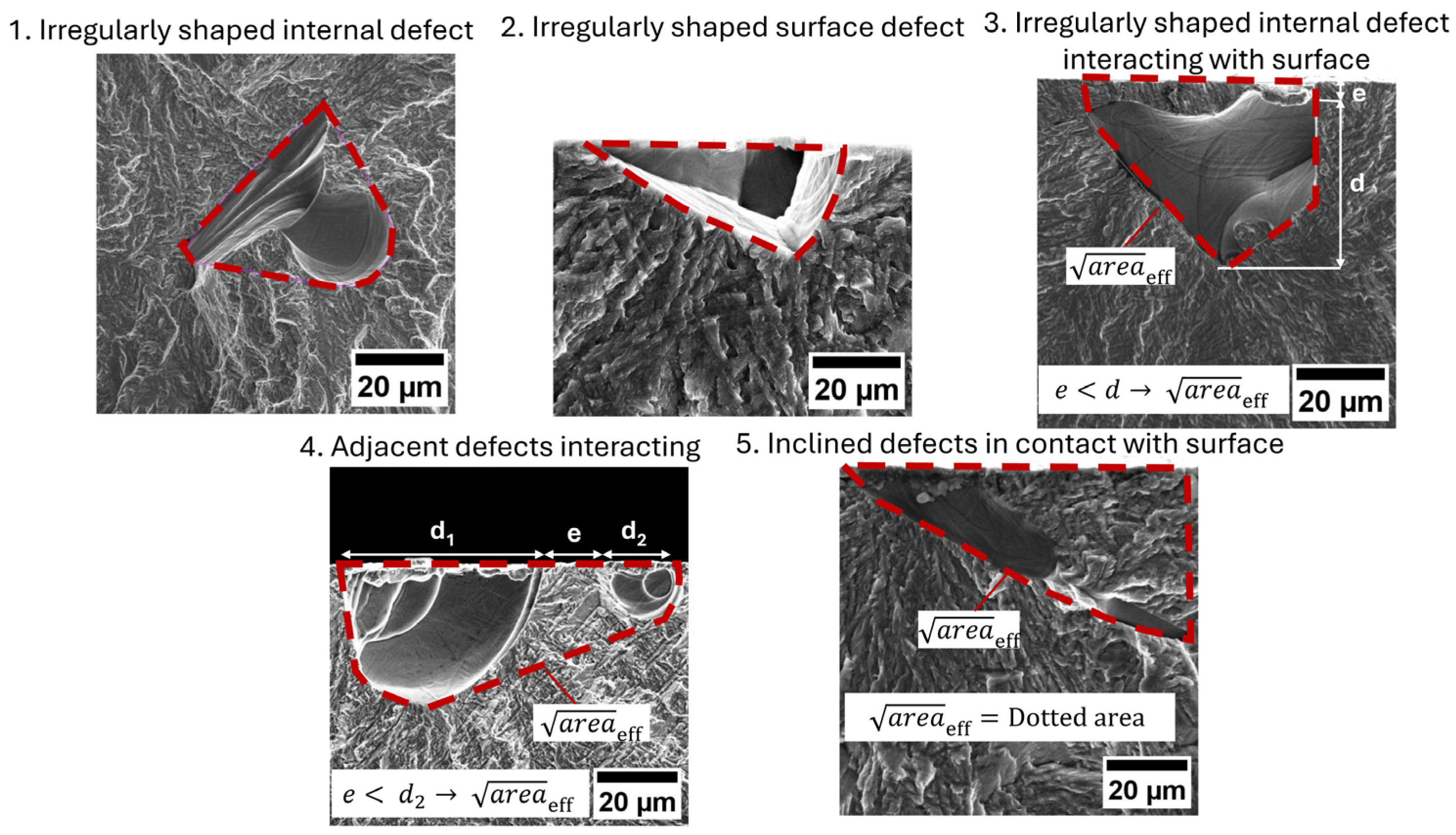
Application of defect-based fatigue frameworks requires quantitative defect size and shape metrics, classification of defect morphology, and documentation of defect proximity to the free surface. Murakami et al. [17,18] developed a defect-based approach for relating projected defect area ( a r e a e f f ) to fatigue strength, accounting for defect geometry and proximity to the free surface or neighboring defects. This framework has been widely applied to steels [18] and, more recently, to additively manufactured alloys [10,17]. Figure 1 illustrates representative defect geometries and the definition of a r e a e f f as applied to the fracture-surface measurements reported in this dataset. The present dataset documents initiation defects using Murakami’s a r e a e f f framework and includes additional size and shape descriptors to support alternative geometry-based modeling approaches. The dataset also enables mapping of fatigue-initiating defect size and corresponding fatigue outcomes across processing conditions.
In this study, four-point bend (4PB) and axial fatigue specimens were produced at Carnegie Mellon University (CMU) on an EOS M290 PBF-LB/M system (EOS GmbH, Krailing, Germany) using constant laser power (P = 370 W), hatch spacing (W = 140 µm), and powder layer thickness (L = 30 µm), while the scan velocity (V) was systematically varied (Table 1). All specimens were fabricated in the vertical orientation because prior studies report that vertically built specimens exhibit reduced fatigue performance when compared to other orientations [9,11]. The vertical build direction was therefore selected to represent a conservative structural condition for fatigue testing. At each relevant P–V condition, four nominally identical 4PB specimens and six nominally identical axial fatigue specimens were fabricated. The 4PB specimens were sufficiently tall (73 mm) to allow two independent fatigue tests to be performed on undeformed regions of the same specimen, either at the same or a different stress levels. This approach increased experimental throughput and enabled assessment of potential differences in fatigue performance and defect characteristics associated with build height.
The corresponding dataset (.csv) for this paper contains printing parameters and fatigue testing results for 144 4PB and 31 axial fatigue Ti-6Al-4V specimens. All specimens were tested at Case Western Reserve University (CWRU) under load-controlled cyclic loading at a stress ratio of R = 0.1 across a range of applied stress levels. Fatigue initiation site characterization was successfully performed for 111 4PB specimens and 27 axial specimens that fractured during testing. Of the 136 characterized fatigue initiation sites, 135 originated from either keyhole pores, LoF defects, or gas-entrapped pores (GePs) associated with the gas-atomized powder feedstock [1,19,20]. One initiation site in this dataset was attributed to powder contamination. The specimen that initiated from contamination is included for completeness and transparency and to document that such failure modes can occur in research-scale PBF-LB/M systems processing multiple powders. The reader is referred to Ref. [21] for a comprehensive review of defect formation and modeling in PBF-LB/M.
Specimens that reached 10,000,000 cycles without fracture were classified as runouts. Most runout specimens were subsequently retested at the same or higher applied stress levels; however, some specimens continued to runout (i.e., did not fracture after another 107 cycles) under subsequent testing conditions. For specimens that never fractured in fatigue, the dataset columns related to fatigue initiation site characterization are populated with NA to indicate non-applicability. These are nonetheless provided to reveal the range of scatter in fatigue life that may exist in such materials.
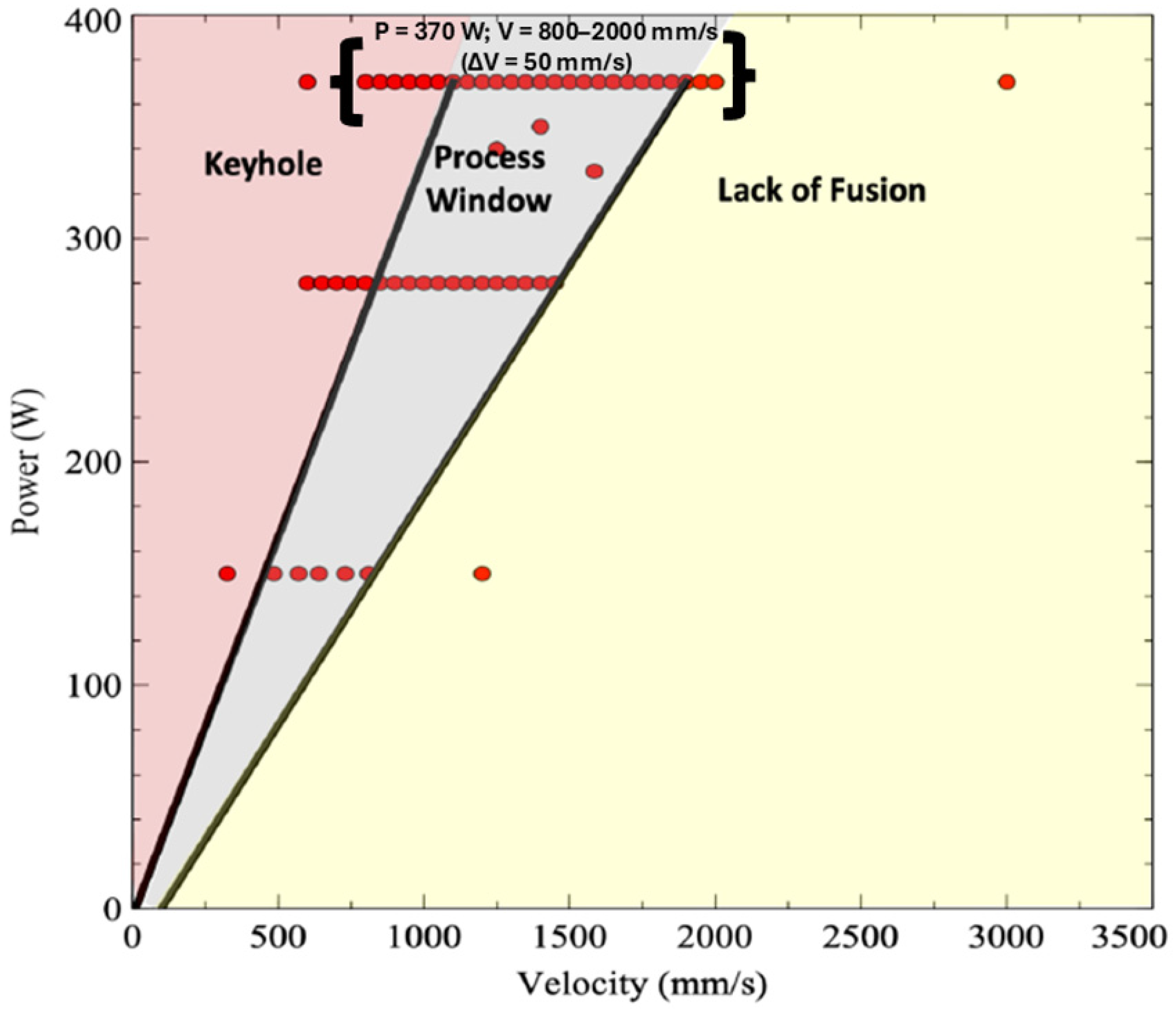
The dataset spans scan velocities ranging from 800–2000 mm/s, covering regions both within and outside the previously defined process window based on geometric criteria of the melt pool [20,22,23] that was partially validated using in situ synchrotron-based dynamic X-ray radiography (DXR) and X-ray micro-computed tomography (X-µCT) [19] (Figure 2). Fatigue outcomes across this parameter space include both runouts and failures initiated from keyhole, LoF, and GeP defects. The inclusion of defect size metrics, defect classification, and spatial location relative to the free surface enables quantitative comparison between the melt pool geometry-based process map and fatigue-based performance trends.
The scope of this Data Descriptor is intentionally focused on defect morphology and spatial characteristics at the fatigue crack initiation site. Microstructural metrics are not included in the current dataset. Several specimens exhibit similar defect size and location characteristics but widely differing fatigue lives (e.g., 10×), motivating future work examining microstructure–defect interactions. All fractographic images of initiation sites will be released through the Institute for Model-Based Qualification & Certification of Additive Manufacturing | NASA STRI (IMQCAM) data portal (https://data.imqcam.org; accessed 6 April 2026) to support independent analysis and model validation.

2. Data Description

The dataset (.csv) is organized into five main components that link PBF-LB/M print conditions, fatigue outcomes, and fracture-based characterization of fatigue initiation sites for Ti-6Al-4V 4PB and axial specimens. The dataset presented in this study is included in the Supplementary Materials.
  • Specimen Metadata;
  • Fatigue Testing and Results;
  • Initiation Defect Type Identification;
  • Initiation Defect Size and Shape Descriptors;
  • Initiation Defect Location Metrics.

2.1. Specimen Metadata

BuildID identifies the build plate from which each specimen originated (e.g., CMU01–CMU03 correspond to 4PB specimens, and CMU04 corresponds to axial specimens).
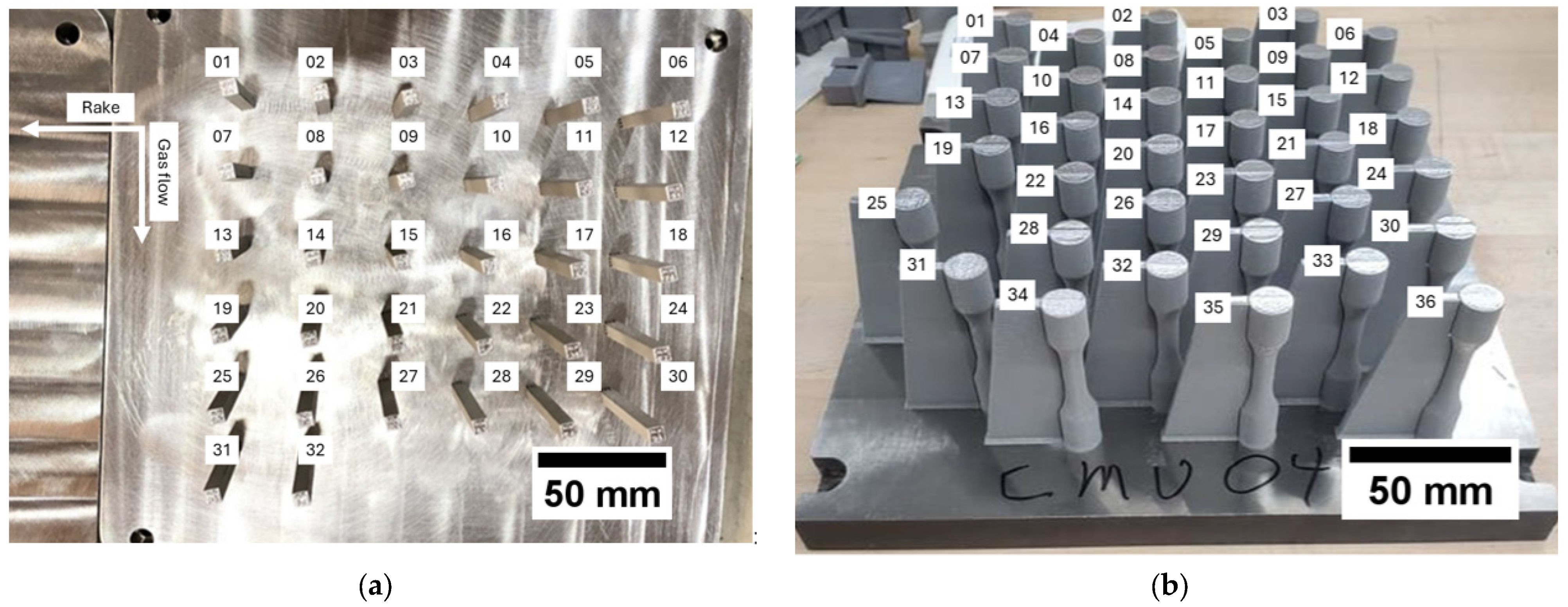
SpecimenPosition denotes the specific location of each specimen on the build plate. The positions are labeled numerically (Figure 3).
ScanVel_mm_s corresponds to the laser scan velocity (mm/s) and was the sole processing parameter varied in this study.

2.2. Fatigue Testing and Results

TestMode identifies whether a specimen was tested under 4PB or axial fatigue loading.
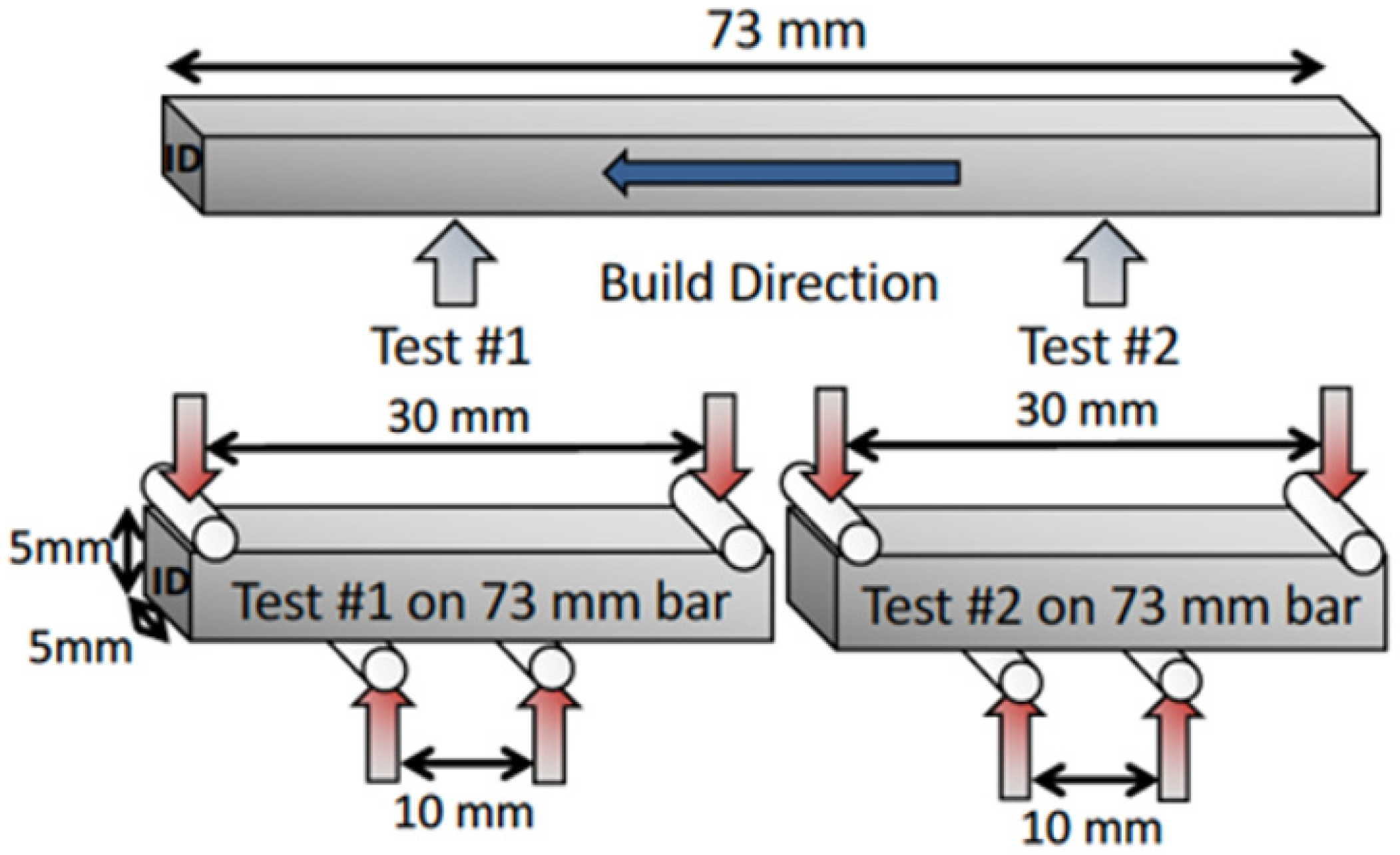
TestRegion indicates the location of the fatigue test relative to the build direction for 4PB specimens. Region 1 corresponds to the end of the specimen closer to the top of the build, and Region 2 corresponds to the end closer to the build plate (Figure 4). Axial fatigue specimens can only be tested once; therefore, all axial tests have a TestRegion value of 1.
RRatio is defined as the ratio of the minimum applied stress, σmin, to the maximum applied stress, σmax. All fatigue tests in this study, including retests, were conducted under tension–tension loading at a constant RRatio of 0.1 and testing frequency of 20 Hz.
SigmaMax_MPa corresponds to the maximum stress during fatigue testing, σmax [24]. Equations for 4PB and axial fatigue tests are provided in (1) and (2), respectively. For four-point bending, σmax corresponds to the maximum surface tensile stress [25]. For axial specimens, σmax corresponds to the applied uniform gauge stress [26,27].
For four-point bending using the configuration shown in Figure 4, the maximum applied stress is given by [25]
σmax (MPa) = (PmaxL)/(bd2),
where Pmax is the maximum applied load (N), L is the outer span (mm), b is the specimen width (mm), and d is the specimen depth (mm).
For axial fatigue, the maximum applied stress is given by [26,27]
σmax (MPa) = Pmax/A
where Pmax is the maximum applied load (N) and A is the cross-sectional area of the gauge region (mm2).
Cycles_InitialTest reports the number of cycles accumulated during the initial fatigue test. If a specimen survives 10,000,000 cycles under the initial loading conditions, the test is paused, and the specimen is classified as a runout. Some runout specimens were subsequently retested at the same or higher maximum stress levels.
RetestFlag indicates whether a runout specimen was subsequently retested (TRUE) or not (FALSE).
RetestSigmaMax_MPa reports the maximum applied stress during the second test.
Retest_Cycles reports the corresponding number of cycles accumulated during the second test, either to failure or to a second runout at 10,000,000 cycles.

2.3. Initiation Defect Type Identification

DefectMeasured indicates whether the fatigue initiation site was characterized using SEM of the fracture surface and takes a value of TRUE or FALSE. TRUE corresponds to specimens that fractured and were subsequently characterized; FALSE corresponds to specimens that did not fracture (runouts).
InitDefectID distinguishes multiple measured initiation defects within the same specimen, which can occur in specimens exhibiting a high defect density at the extreme high and low ends of the scan velocities used in this study.
DefectType is a categorical variable identifying the initiation defect classification and takes one of the following values: keyhole, LoF, GeP, or contamination. The distinguishing visual characteristics used to differentiate these defect types are described in the Section 3.

2.4. Initiation Defect Size and Shape Descriptors

Two-dimensional projections of fatigue-initiating defects were extracted from fracture surfaces and manually segmented using a polygon drawing tool in the open-source image analysis software FIJI (version 1.54p) [28]. Defect boundaries were defined by selecting points along the visible perimeter of the initiation site. From these manually digitized boundaries, geometric size and shape descriptors were determined.
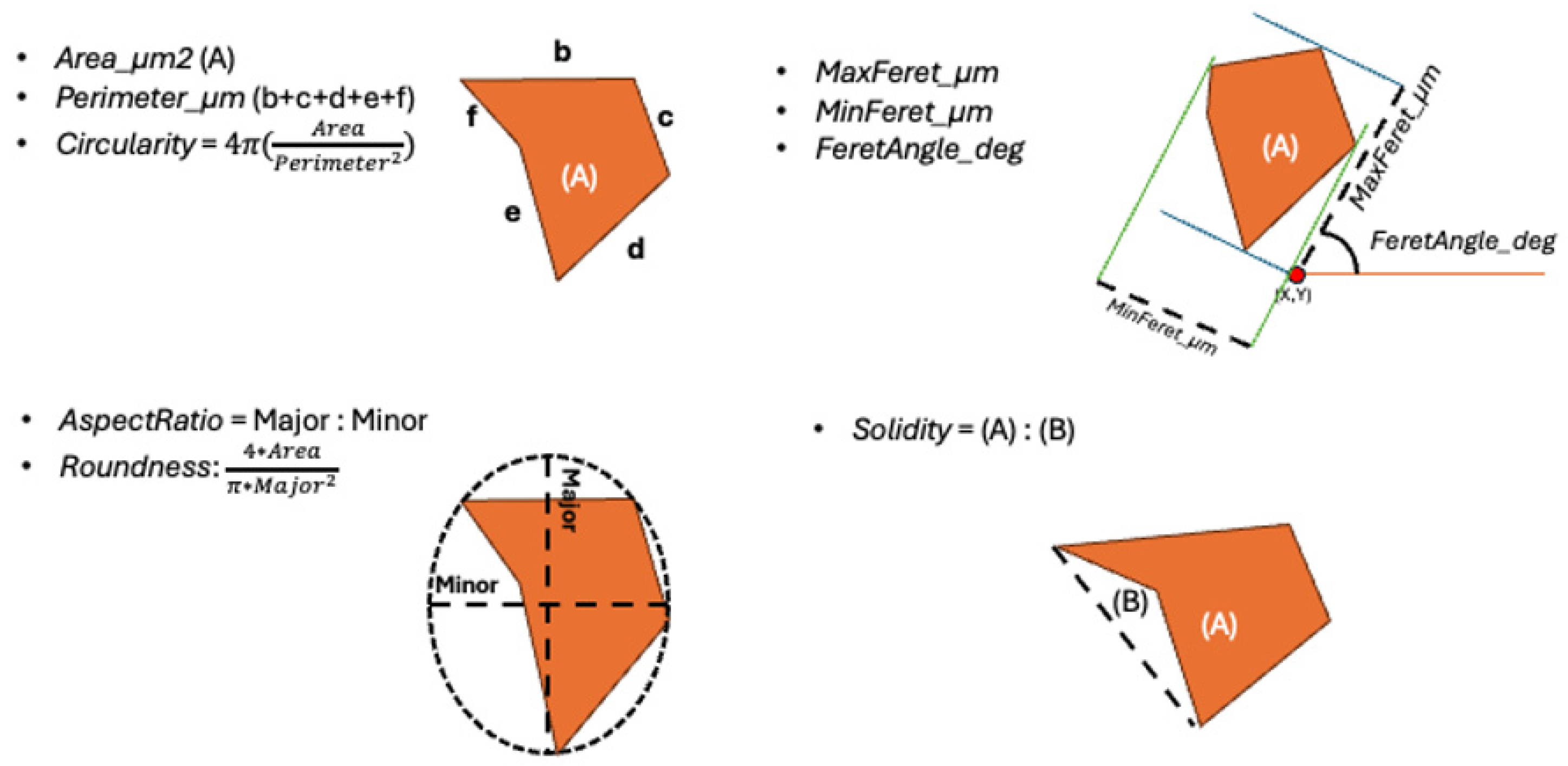
The key descriptors used in this study are illustrated in Figure 5, which have been adapted from reference [29]. The manually digitized boundary defines a closed polygon corresponding to the two-dimensional projection of the defect exposed on the fracture surface.
Area_um2 (µm2) and Perimeter_um (µm) report the area and perimeter of the enclosed polygon corresponding to the fatigue-initiating defect exposed on the fracture surface.
Circularity combines the measured area and perimeter to quantify the smoothness of the defect boundary, with values approaching 1 for a perfect circle.
MaxFeret_um (µm) and MinFeret_um (µm) represent the maximum and minimum Feret diameters of the initiation defect, defined as the longest and shortest distances between any two points along the defect boundary.
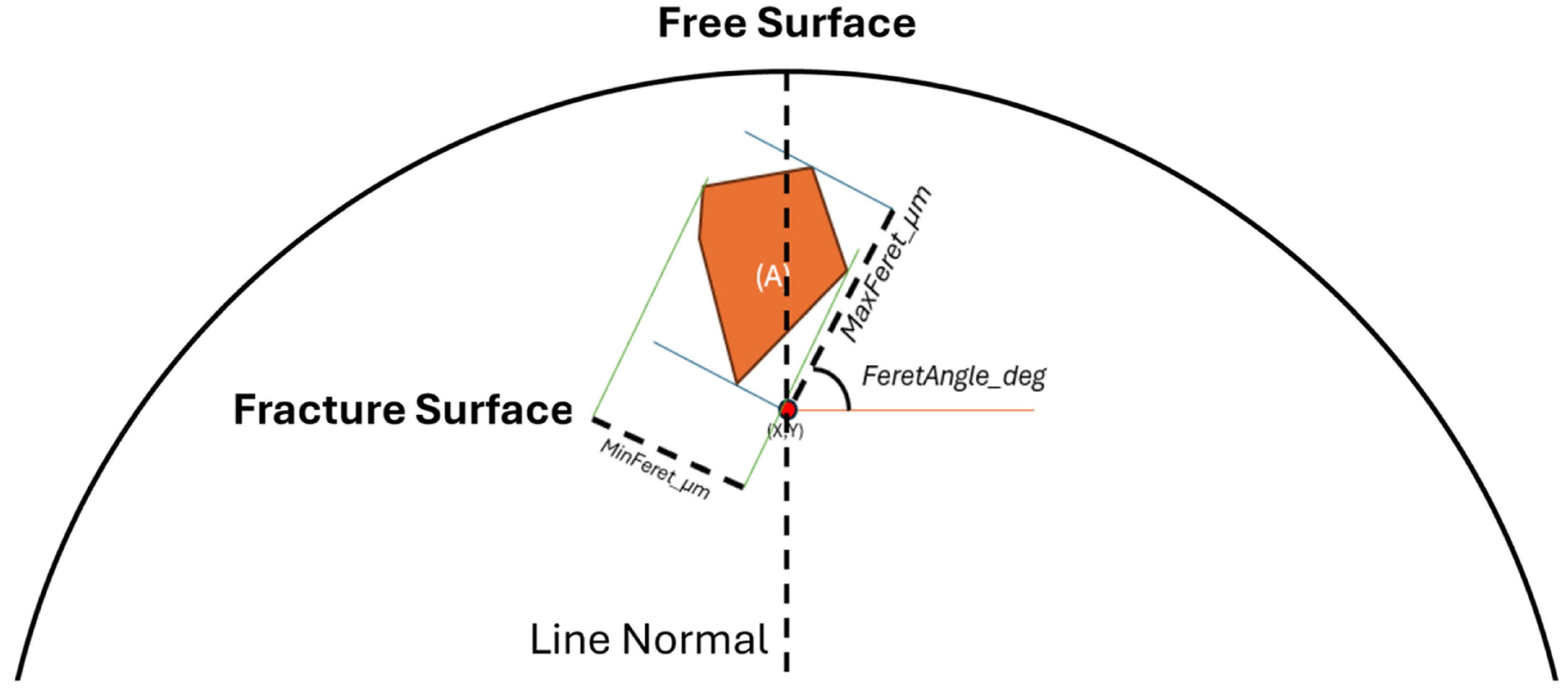
FeretAngle_deg describes the orientation of the longest dimension of the defect with respect to the free surface. For fractured 4PB specimens, images are consistently oriented such that the sample surface subjected to the maximum tensile stress is aligned with the 0° reference direction in the image. Feret angles approaching 90° indicate defects whose longest dimension is oriented nearly perpendicular to the free surface. For axial specimens, the initiation site was oriented such that the shortest distance to the nearest free surface was aligned with the vertical direction (Figure 6). This provided a common reference frame so that the FeretAngle_deg from axial samples could also be compared.
AspectRatio and Roundness are calculated from the major and minor axes of an ellipse fitted to the defect’s boundary. AspectRatio is defined as the ratio of the major axis length to the minor axis length and quantifies the degree of elongation of the defect. Roundness relates the defect area to the square of the fitted major axis length and approaches 1 for circular defects.
Solidity is defined as the ratio of the defect area to the area of its convex hull and provides a measure of boundary concavity.
Several approaches have been proposed in the literature to relate the square root of a defect’s projected area to fatigue performance. This dataset includes these area variants so that their relationship to fatigue can be compared:
  • RootArea_um (µm) is defined as the square root of the area enclosed by the manually segmented defect boundary, Area_um2 (µm2);
  • d_EqDiameter_um (µm) represents the equivalent diameter of a circle having the same area as the enclosed defect;
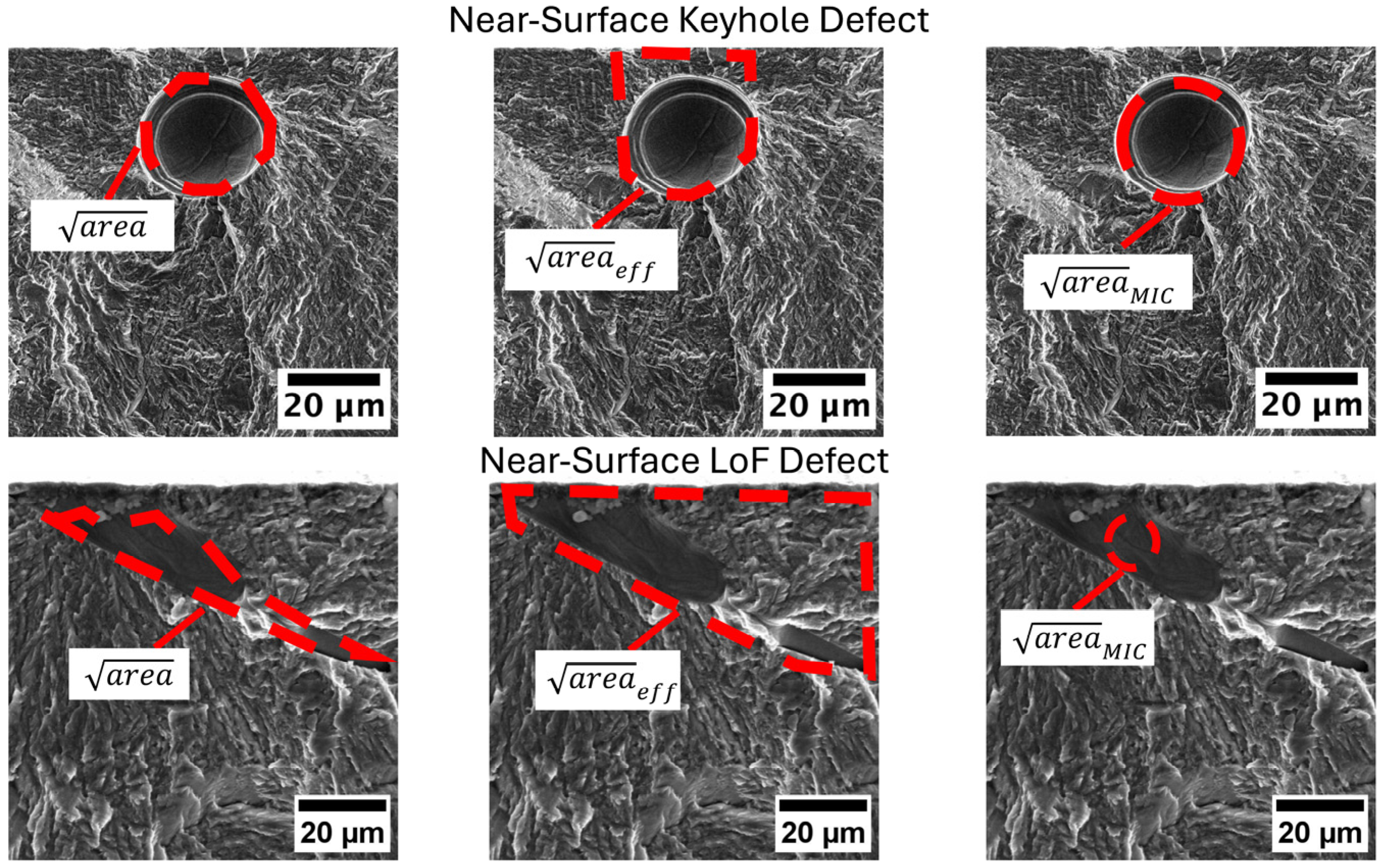
  • AreaEff_um2 (µm2) and RootAreaEff_um (µm) are based on Murakami’s effective a r e a e f f concept, in which projected area is adjusted based on defect geometry and proximity to the free surface or neighboring defects, following procedures described in [17] and illustrated in Figure 1;
  • MaxInscribedArea_um2 (µm2) and MaxInscribedRootArea_um (µm) correspond to the area of the largest circle that can be inscribed within the manually segmented defect boundary [8].
Additional details regarding the measurement and calculation of these parameters are provided in Section 3.

2.5. Initiation Defect Location Metrics

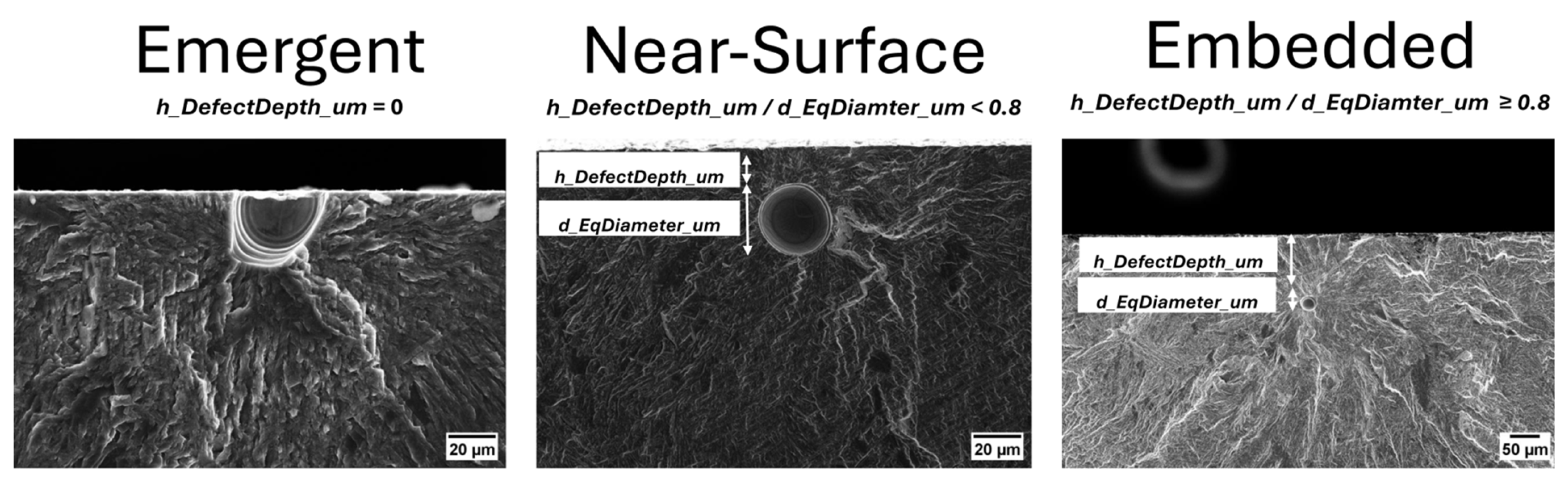
h_DefectDepth_um (µm) is defined as the shortest distance from the defect boundary to the nearest free surface.
h_over_d is defined as the ratio of h_DefectDepth_um/d_EqDiameter_um and normalizes defect depth by defect size:
  • Emergent defects intersect the free surface (h_DefectDepth_um = 0).
  • Near_Surface defects satisfy h_over_d < 0.8.
  • Embedded defects satisfy h_over_d ≥ 0.8 (Figure 7).
The threshold value of h_over_d = 0.8 is informed by finite element analysis reported in [30,31], which examined circular pores and identified a distance from the free surface beyond which the stress concentration becomes approximately constant. Similar defect location classifications have been adopted in prior studies, although the terminology and threshold values vary [8,16,17,32]. Additional discussion is provided in Section 3.

3. Methods

Argon gas-atomized Ti-6Al-4V extra-low interstitial (ELI) virgin powder feedstock was used to fabricate 4PB and axial fatigue specimens using an EOS M290 PBF-LB/M system at CMU. The powder particle sizes ranged from 24 µm (D10) to 61 µm (D90). The nominal powder chemistry, as provided by the manufacturer (ATI Powder Metals, Oakdale, PA, USA), is listed in Table 2.
Near-net-shape 4PB specimens were printed in the vertical build orientation on CMU01, CMU02, and CMU03 build plates with nominal dimensions of 6 mm × 6 mm × 73 mm. Near-net-shape axial specimens were also printed in the vertical orientation on CMU04 build plates with a total length of 73 mm (Figure 3). Before surface machining via commercial low-stress grinding, axial specimens had an as-printed gauge length of 14 mm and grip and gauge diameters of 13.5 mm and 7 mm, respectively.
An EOS M290 system equipped with an ytterbium fiber laser (maximum power 400 W; nominal spot size 100 µm) was used. In this study, the laser power was held constant at 370 W while scan velocity was systematically varied. The additional primary processing conditions are listed in Table 1. The relatively high laser power was selected to sample the full width of the previously defined process window (i.e., solid lines in Figure 2) while also maintaining a high build rate. A build-plate preheat temperature of 180 °C and a scan rotation angle of 67° were used for all builds [2].
All specimens were stress-relieved at 593 °C for 2 h ± 0.25 and subsequently furnace-cooled to room temperature in accordance with AMS 2801 to minimize residual stresses [33]. Specimens did not undergo additional heat treatments or hot isostatic pressing (HIP). Specimens were removed from the build plate using wire electrical discharge machining (EDM).
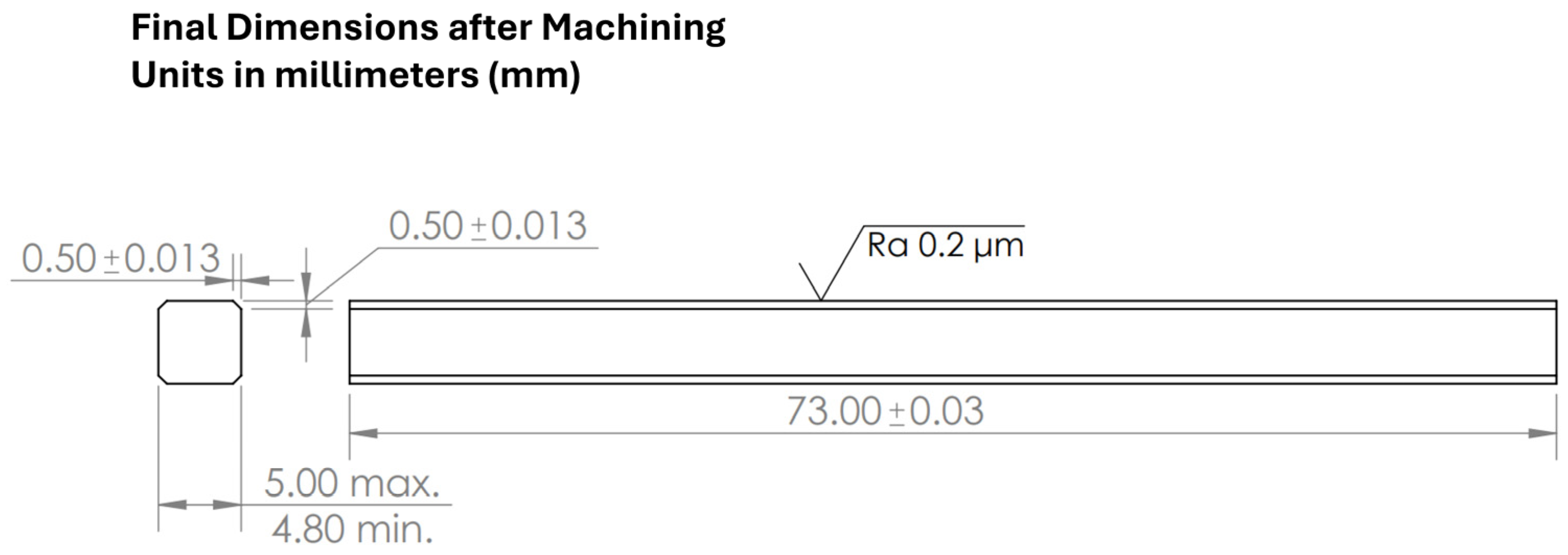
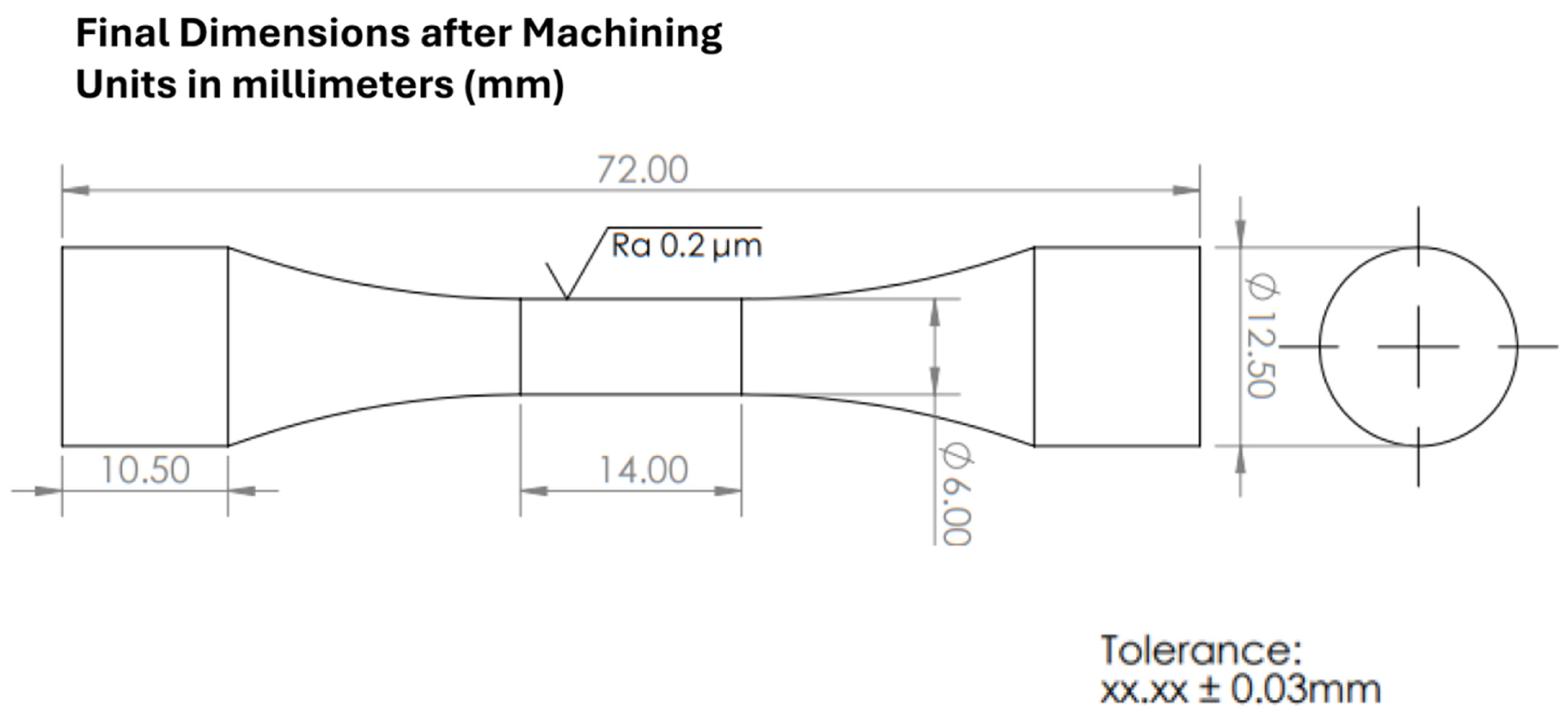
Surface roughness in additively manufactured Ti-6Al-4V has been shown to significantly reduce fatigue performance due to the presence of deep surface valleys that act as notch-like features and are preferential crack-initiation sites [3,34,35]. To isolate the influence of process-induced defects in the infill, specimen surfaces for both 4PB and axial fatigue tests were prepared in accordance with ASTM E466-21 [26] via commercial low-stress grinding at Laboratory Testing (LTI). This standard specifies a series of material-removal steps that reduce the maximum surface roughness to 0.2 µm and ensure that machine marks are oriented parallel to the long axis of the specimen. Chamfers of 45° were also low-stress-ground onto the four corners of the 4PB fatigue specimens because such corners are sites of raster overlaps that produce defect formation where scan tracks terminate and reverse direction [36]. The final machined dimensions for 4PB and axial samples are illustrated in Figure 8 and Figure 9, respectively.
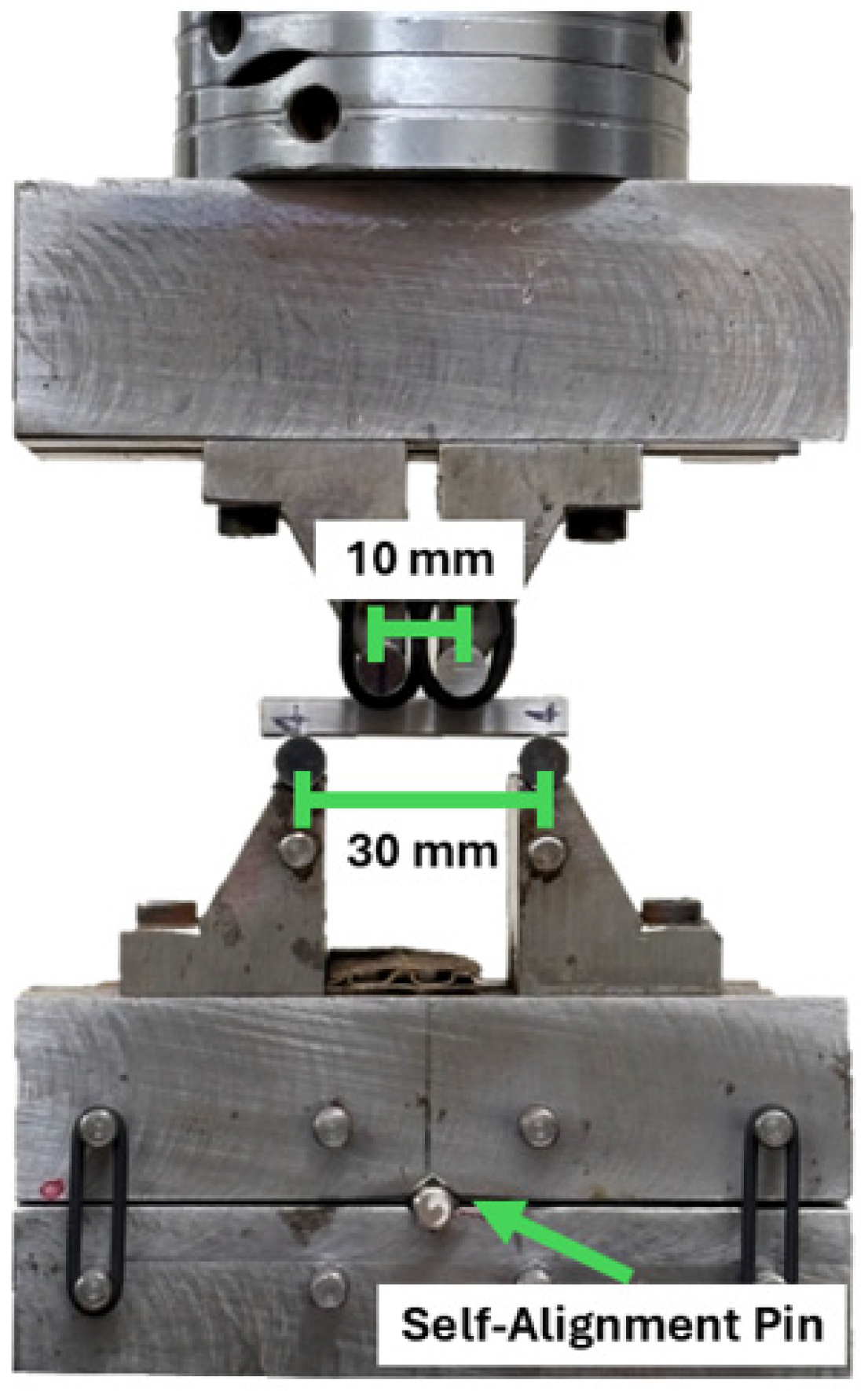
All fatigue tests were conducted in the Advanced Manufacturing and Mechanical Reliability Center (AMMRC) at CWRU using MTS servo-hydraulic test frames (MTS Systems Corporation, Eden Prairie, MN, USA). Tests were performed in laboratory air at a stress ratio, R, of 0.1 and cycling frequency of 20 Hz. 4PB specimens were loaded using 6.35 mm diameter hardened steel pins, with outer and inner spans of 30 mm and 10 mm, respectively. These span dimensions were selected based on finite element analysis (FEA) results for achieving near constant stress levels within the inner 10 mm pins, consistent with 4PB sample dimensions and stress analyses used in much previous work [37,38,39]. The lower loading plate rested on a steel pin to minimize misalignment between the upper and lower crossheads (Figure 10). Axial fatigue specimens were gripped and tested using MTS 646 hydraulic collet grips, with axial alignment checked prior to testing.
As emphasized by Murakami [17], individual specimens fabricated under identical processing conditions contain distinct defect populations and therefore exhibit different fatigue responses. The present dataset reflects this specimen-level variability. Across the examined P–V space, fatigue initiation sites include multiple defect types and sizes, and occur at varying distances from the free surface. These observed differences were considered when selecting applied stress levels for fatigue testing at each P–V condition.
For 4PB specimens, the maximum tensile stress occurs at the specimen surface and decreases linearly toward the neutral axis. This stress gradient permits the use of higher nominal maximum stresses than in axial fatigue tests, where the stress is distributed uniformly across the gauge section. Collaborators at UTEP reported the yield and ultimate tensile strengths of 1227 MPa and 1298 MPa, respectively, for stress-relieved PBF-LB/M Ti-6Al-4V [40,41]. The maximum applied stresses for 4PB and axial fatigue tests were 1200 MPa and 667 MPa, respectively, confirming that all fatigue tests in the present dataset were conducted under predominately elastic conditions.
If a specimen failed before reaching 10,000,000 cycles, the MTS servo-hydraulic system terminated the test upon reaching its displacement limit, and the number of cycles at failure was recorded and specimen automatically unloaded. Specimens that survived 10,000,000 cycles without fracturing were stopped and unloaded upon reaching the manually specified cycle limit and classified as runouts. Runouts were typically retested at the same or higher maximum stress levels to attempt to induce failure.
Fractured specimens were prepared for fractographic analysis by sequential ultrasonic cleaning in acetone and ethanol for a minimum of 7 min each to remove carbon contamination from the fracture surface. All fractographic imaging was performed using a Thermo Fisher Scientific Apreo 2S SEM (Thermo Fisher Scientific, Waltham, MA, USA). After cleaning, specimens were mounted on aluminum SEM stubs using carbon tape. When image drift was observed for tall, fractured pieces, a conductive pathway between the fracture surface and stub was established using copper tape.
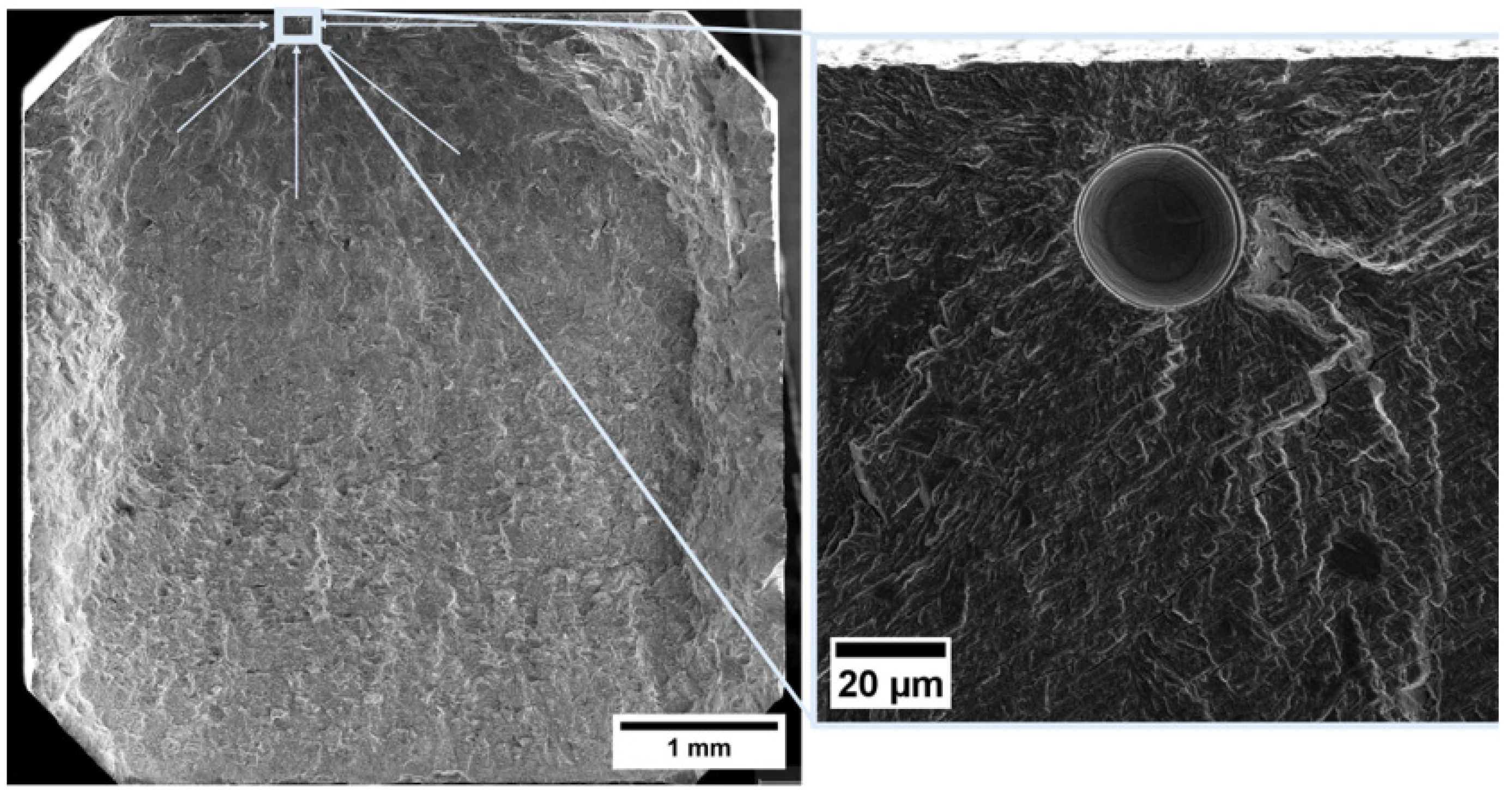
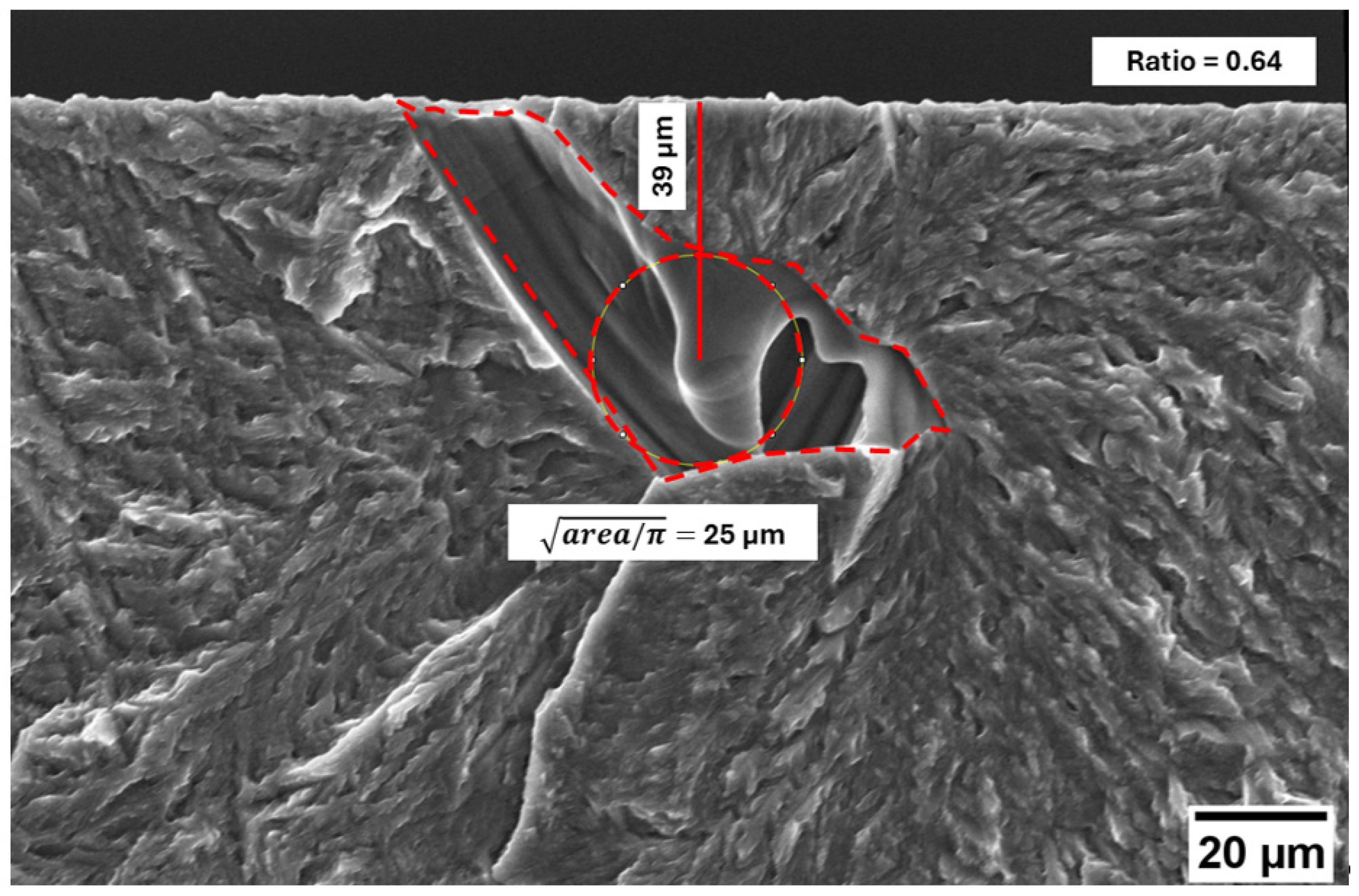
To identify the ‘killer’ defect, Thermo Fisher MAPS software (version 3.26, Thermo Fisher Scientific, Waltham, MA, USA) was used to stitch together approximately 30 individual secondary electron images acquired at 250× magnification. In practice, this typically corresponded to a mosaic of ~24 images (6 × 4) for 4PB specimens and ~35 images (7 × 5) for axial specimens. When examining the stitched secondary electron image, fatigue initiation defects were surrounded by the fatigue crack growth region which appeared dark and relatively flat. Characteristic fracture-surface features associated with fatigue crack propagation could be traced back to the initiation defect. Higher-magnification secondary electron images (typically 2000×) were then acquired at the initiation site to extract quantitative metrics describing the defect’s size, shape, and distance from the free surface (Figure 11). The majority of images used for both low-magnification mapping and fatigue initiation site characterization were acquired at a primary beam accelerating voltage of 10 keV and a beam current of 0.1 nA.
Formal inter-rater reliability testing was not performed for defect classification. Defect classification was conducted using visual assessment of fracture-surface features, consistent with common practice in PBF-LB/M studies employing µCT [1,16,42] and fractographic analysis [8,43]. Four defect categories were defined: keyhole, LoF, GeP, and contamination. The fractographic features used for defect classification are described below. Corresponding fracture-surface images will be made publicly available through the IMQCAM data portal (https://data.imqcam.org; accessed 6 April 2026) to support independent review.
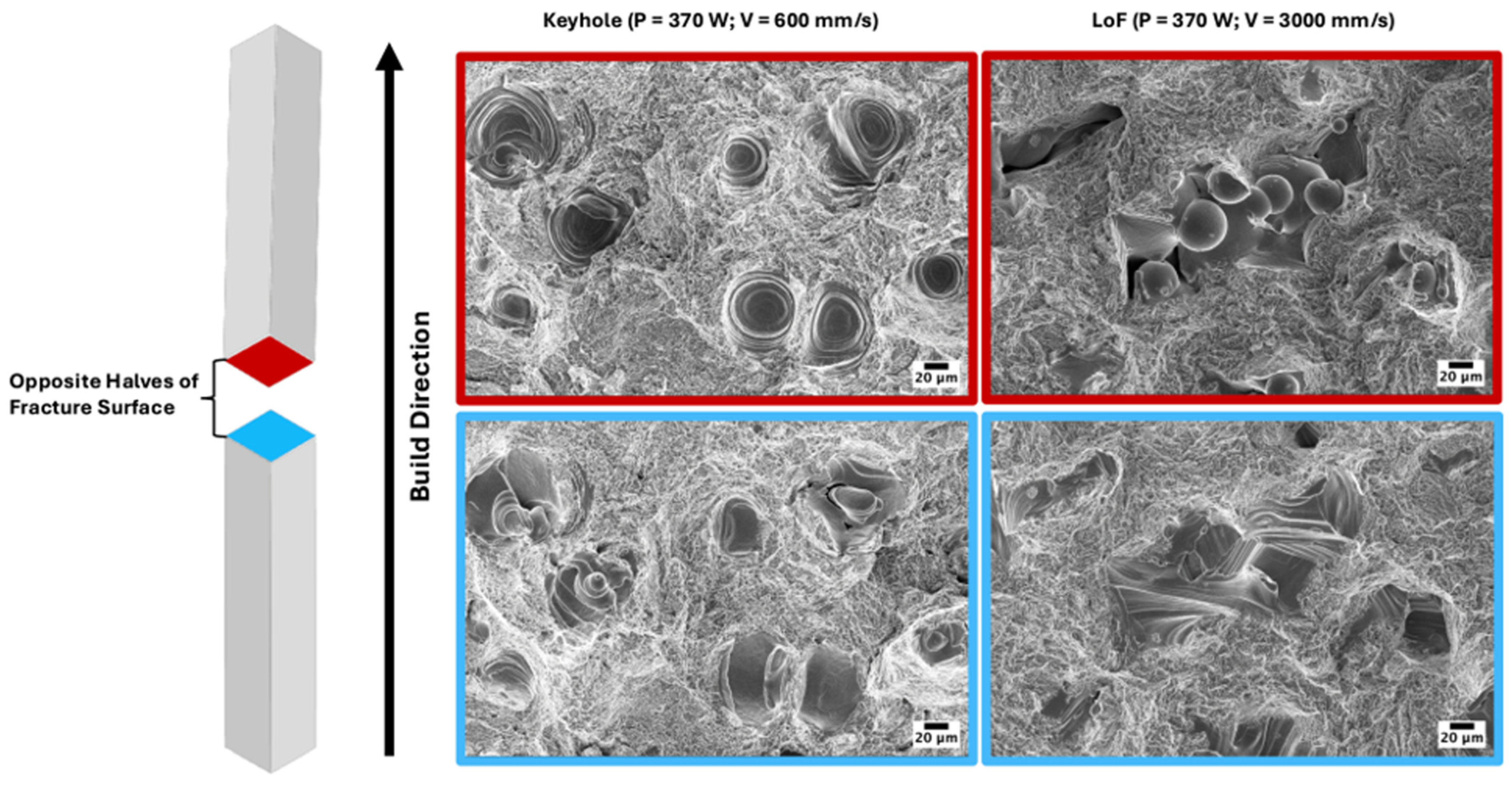
Additional specimens fabricated at scan velocities of 600 mm/s and 3000 mm/s, corresponding to the keyhole- and LoF-dominated extremes of the P–V map (Figure 2), are shown for illustrative purposes. These processing conditions produced a high number of the respective dominant defect type, as confirmed by metallography and µCT [4], enabling multiple representative defects to be observed within a single fracture-surface image. Figure 12 presents fatigue overload regions from these specimens to illustrate the characteristic fractographic features used for classifying these defect types.
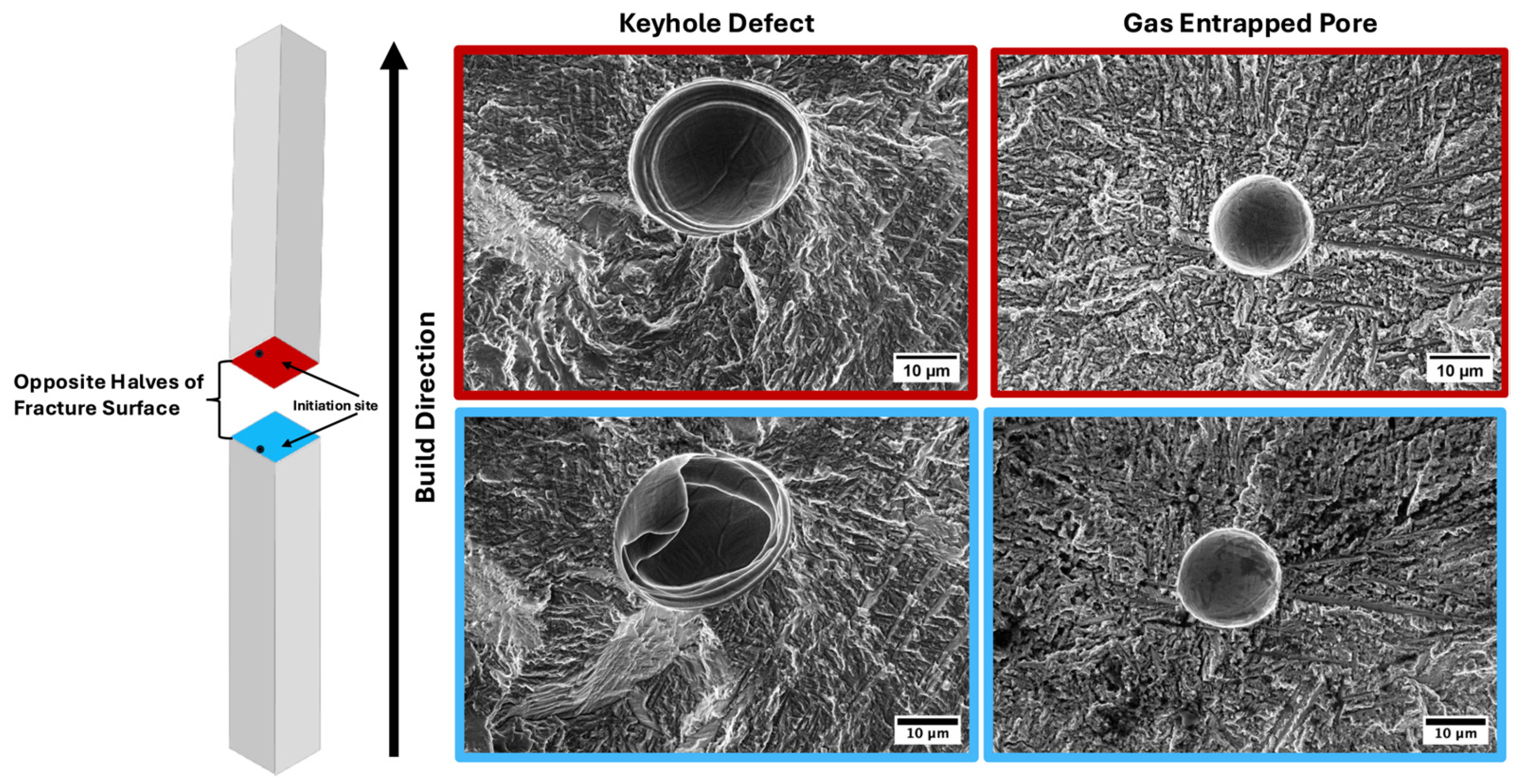
The overload region corresponds to the final rapid fracture that catastrophically interrupts fatigue crack growth. The left-hand side of Figure 12 shows keyhole defects observed within this region. Concentric ring patterns visible on the upper surface (top image) of these keyholes are also observed at initiation sites classified as keyholes in the dataset when images are viewed in the same orientation. Because these ring features remain visible in the overload region, they are interpreted as solidification-related features rather than artifacts of cyclic fatigue loading. These concentric rings are consistently observed on the surface corresponding to the top of the keyhole, whereas the opposing (i.e., bottom) fracture half exhibits a more globular morphology. The formation mechanisms for keyhole defects have been examined using in situ high-resolution X-ray imaging and are discussed in [1].
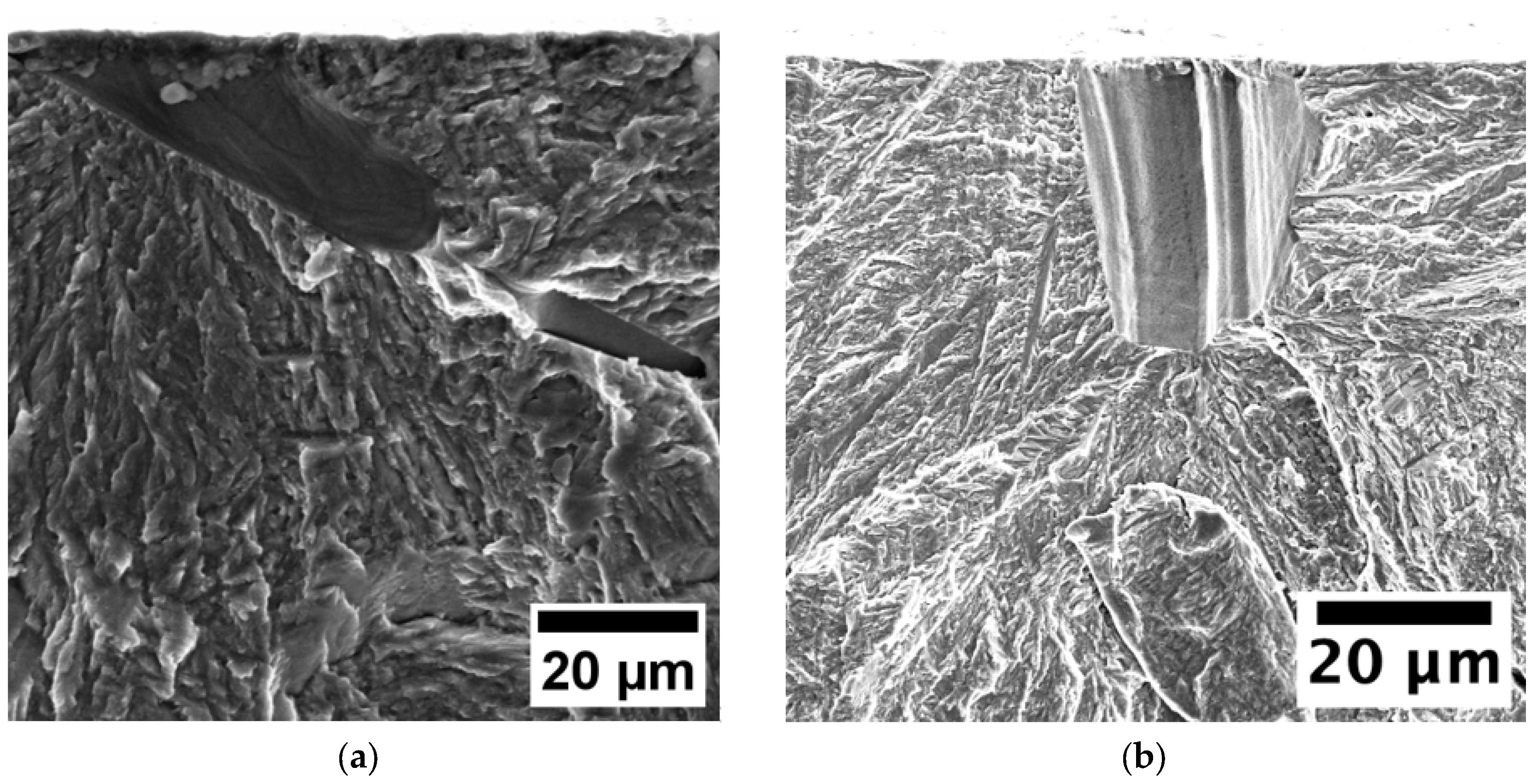
LoF defects are associated with insufficient overlap between adjacent melt pools. At very high scan velocities, unmelted powder particles are often observed within LoF defects (Figure 12). Due to their irregular boundaries, LoF initiation defects generally exhibit lower circularity values than keyholes; however, the morphology can vary widely, and some LoF initiation defects appear approximately ellipsoidal (Figure 13). Process-induced phenomena such as spatter and powder denudation have been proposed as contributing factors [2,21]. However, additional investigation is required to determine whether specific fatigue fracture-surface morphologies can be reliably linked to distinct formation mechanisms.
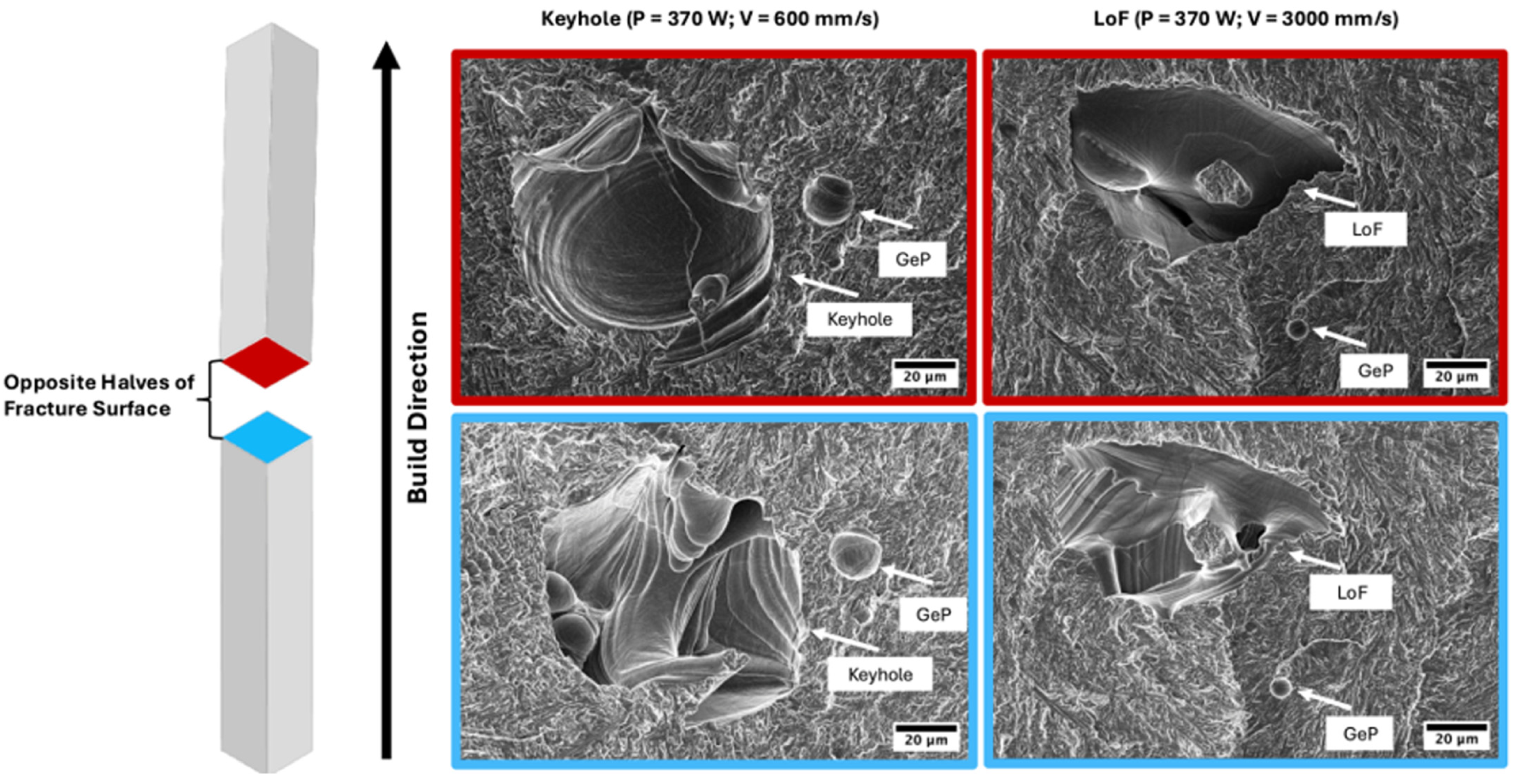
GePs originate from the argon gas-atomized starting powder and are retained during processing [1,19]. Examples were observed in the fatigue crack growth regions of specimens printed both within the keyhole-dominated region (V = 600 mm/s) and within the LoF-dominated region (V = 3000 mm/s) (Figure 14). The distinguishing feature of GeP defects is their highly spherical nature and relatively smooth, featureless interiors observed on both fracture halves, in contrast to the irregular morphology of LoF defects or concentric ring structures observed on the upper fracture half of keyholes, Figure 12. GeP fatigue initiation sites were <30 µm in equivalent diameter, consistent with prior µCT studies [2,42,44]. In cases where ambiguity arose between classification of the defect as a keyhole or GeP defect based on the morphology observed on a single fracture half, matching fracture halves were examined to determine which features more closely aligned with one defect type (Figure 15).
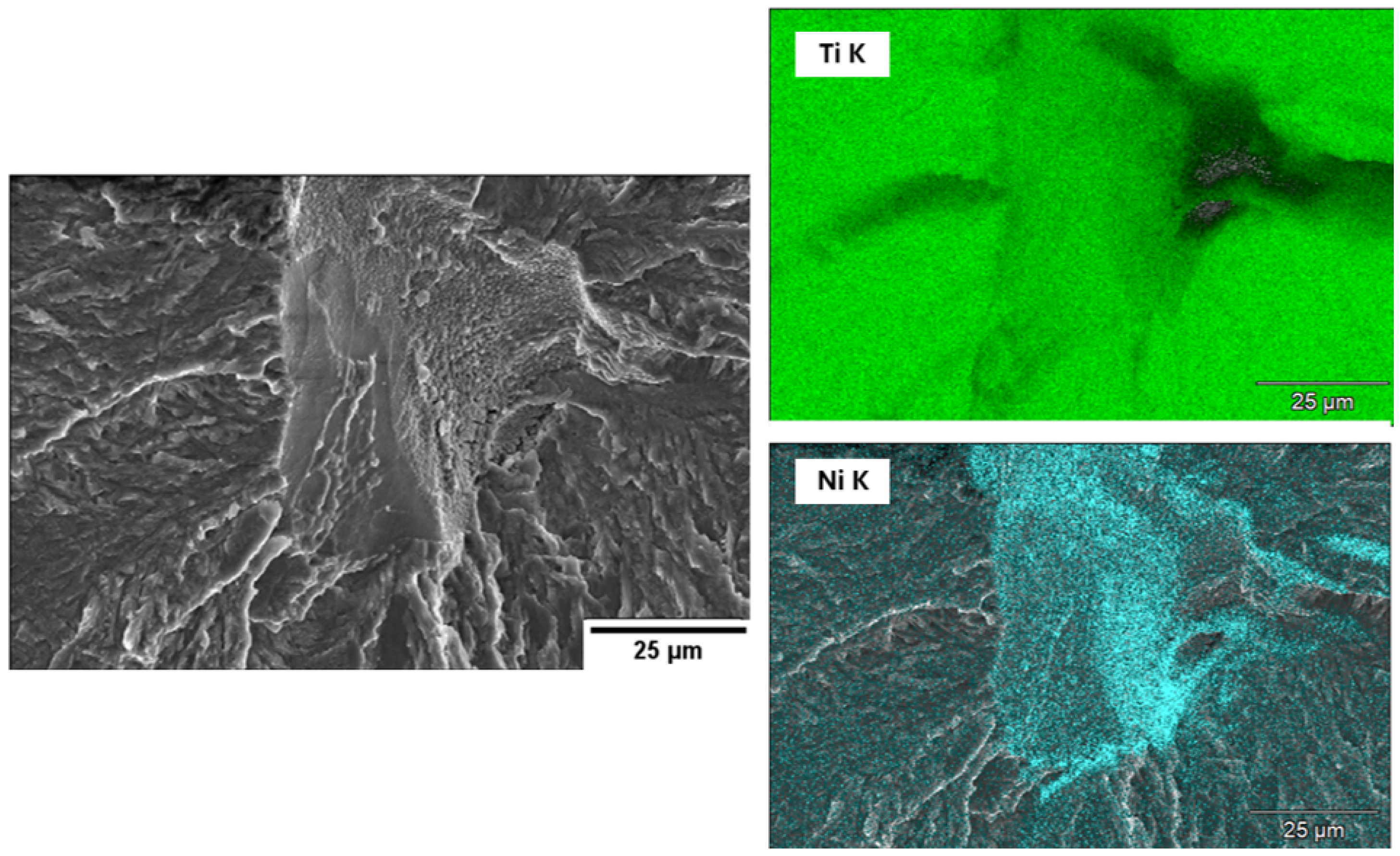
One 4PB specimen at P = 370 W and V = 1800 mm/s failed by crack initiation associated with powder contamination (Figure 16). The initiation site appeared microstructural in nature; however, its morphology was atypical of the martensitic α′ Ti-6Al-4V microstructure formed during PBF-LB/M [45]. Energy-dispersive X-ray spectroscopy (EDS) revealed that the fatigue initiation site was depleted in titanium and enriched in nickel, confirming the presence of foreign powder contamination likely from previous builds of a different materials system on the EOS M290 system. This specimen is included for completeness and transparency and to document that such failure modes can occur in research-scale PBF-LB/M systems processing multiple powders.
All fatigue initiation sites were characterized using the open-source image processing software FIJI [28]. Spatial calibration was performed using the automatically generated scale bar from the Thermo Fisher Scientific Apreo 2. The perimeter of each initiation defect was then manually traced using closely spaced points with the polygon selection tool. All dataset parameters describing defect shape were derived from this manually traced, unmodified defect perimeter.
Formal inter-operator reliability testing was not performed for this dataset. However, image magnification and resolution were selected such that pixel-level uncertainty was small relative to the overall defect dimensions. Murakami’s approach [17,18] relates three-dimensional defect size to fatigue performance by using the square root of the defect’s projected area on the fracture surface, together with the defect’s location relative to the free surface, to approximate the associated stress intensity factor. Defect size is quantified using the a r e a e f f parameter, which for defects embedded in the bulk corresponds to the square root of the defect’s convex-hull area and is modified when the defect is located near a free surface or is in close proximity to another defect (Figure 1). Because the primary fatigue-relevant parameter ( a r e a ) is derived from the overall defect footprint rather than fine-scale boundary curvature, small variations in manual boundary placement are not expected to significantly alter the resulting defect size or shape metrics.
Additional methods for quantifying defect size that are also included in this dataset are: the square root of the defect’s unadjusted area [8,46], the equivalent spherical diameter corresponding to the unadjusted area [14,15,46], and the square root of the area of the maximum inscribed circle (MIC) within the unadjusted defect boundary [8]. (Note: The maximum inscribed circle can be automatically determined in FIJI using the BIOP plugin [28]). While these area metrics yield similar values for approximately circular defects such as keyholes or GePs, they can differ substantially for irregularly shaped LoF defects (Figure 17). These differences propagate into Kitagawa-type plots [10] and fatigue-life calculations by affecting defect area estimates and, in turn, the stress intensity values derived from defect dimensions.
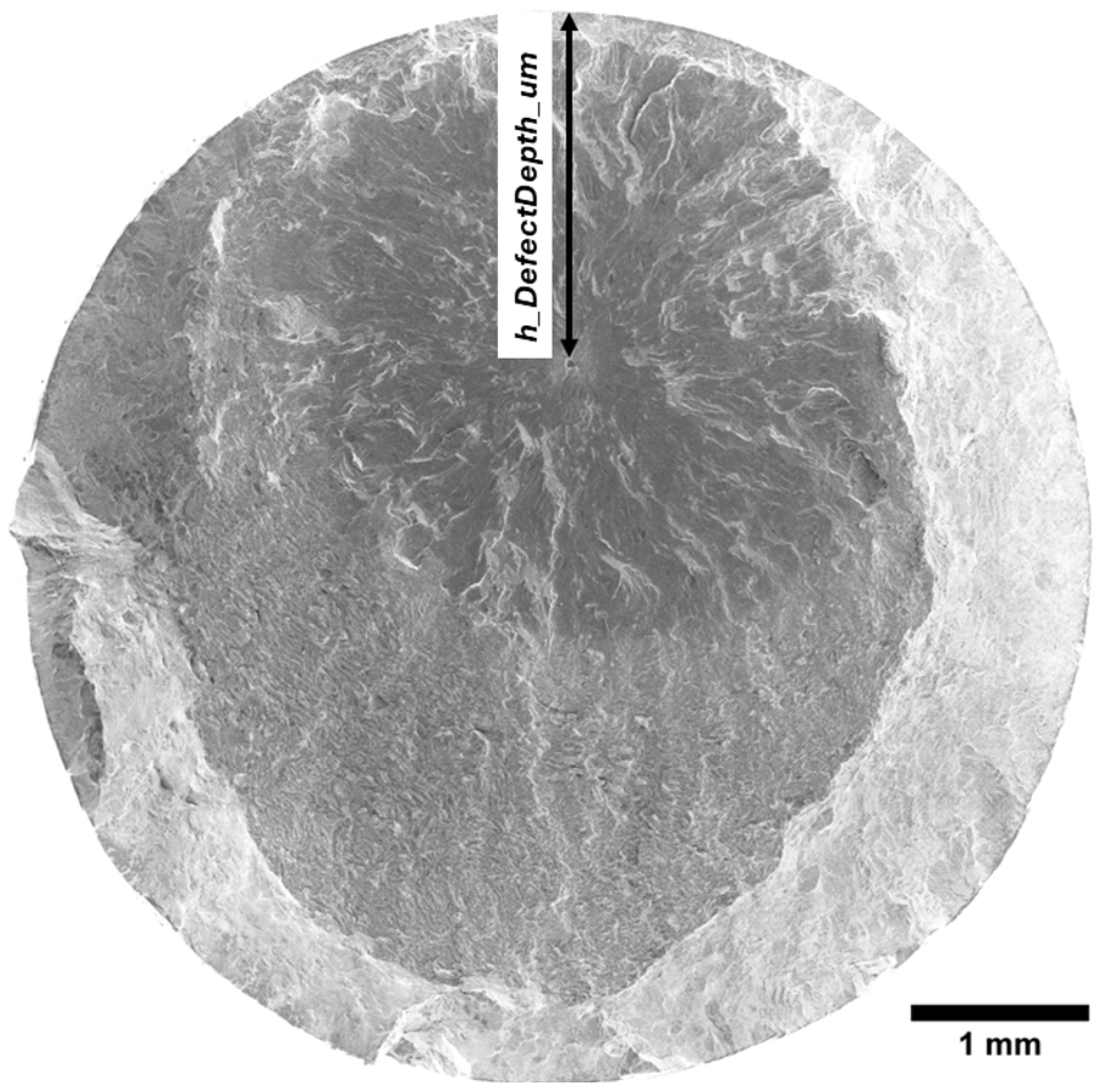
Capturing the defect’s location relative to the free surface requires that both the defect and the free surface are visible within the same reference frame. For 4PB specimens, fatigue-initiating defects were located near the surface experiencing the maximum tensile stress, allowing defect location to be simply determined from a single fracture-surface image. In contrast, some failed axial fatigue specimens contained initiation defects embedded deep within the bulk, particularly for P–V conditions with low defect density [2]. In these cases, the defect relative to the free surface was determined using a stitched fracture-surface image (Figure 18) consisting of 35 images (7 × 5). Increasing the size of the reference frame introduces minor reductions in measurement precision.
While the distance from each fatigue initiation defect to the free surface was quantitatively measured for every fracture surface, such defects are additionally classified as emergent, near-surface, or embedded because this classification directly influences two aspects of Murakami’s framework. First, defect classification affects how a r e a e f f is defined where defects classified as near-surface are treated as connected to the free surface when determining the effective projected area (Figure 1 and Figure 17). Second, defect classification determines the geometry factor coefficient used in Murakami’s approximations for calculating the maximum stress intensity factor associated with the defect [17].
Emergent defects are defined as those that intersect the free surface. However, ambiguity exists in the literature regarding the cutoff distance used to distinguish near-surface from embedded defects. Prior work has proposed ratio-based classification schemes relating defect size to distance from the free surface. For example, Romano adapted Murakami’s approach using the equivalent spherical radius, a, and the distance between the free surface and the center of the maximum-inscribed circle within the defect [47].
This method was initially evaluated during development of the present dataset but was found to misclassify certain LoF defects that were clearly near-surface or emergent, yet categorized as embedded (Figure 19). As a result, this classification approach is not used in the present work and is reserved for future evaluation with finite element analysis.
Other methods reported in the literature for classifying defect location include comparing a r e a e f f to the minimum measurable defect depth, h, and classifying a defect as embedded when a r e a e f f > h [8,32]. Additionally, in a study employing μCT, defect location was classified based on the spatial resolution of the imaging system [16].
In the present study, defect location was classified based on finite element analyses reported in [30,31], which examined spherical defects located at varying depths beneath a free surface. These studies evaluated the ratio of the minimum distance from the defect to the free surface, h, to the diameter of the defect, d. Defects with h/d ≥ 0.8 were classified as embedded, as the finite element results showed that the associated stress concentration factor becomes approximately insensitive to further increases in defect depth beyond this threshold. Because many of the LoF defects are not spherical, this study uses the equivalent spherical diameter when evaluating h/d. To assess robustness in the present dataset, a sensitivity check was performed by varying the classification cutoff to h/d ≥ 0.75 and h/d ≥ 0.85. Only one keyhole defect fell within this range, indicating that the location classification is relatively insensitive to modest variations in the threshold.
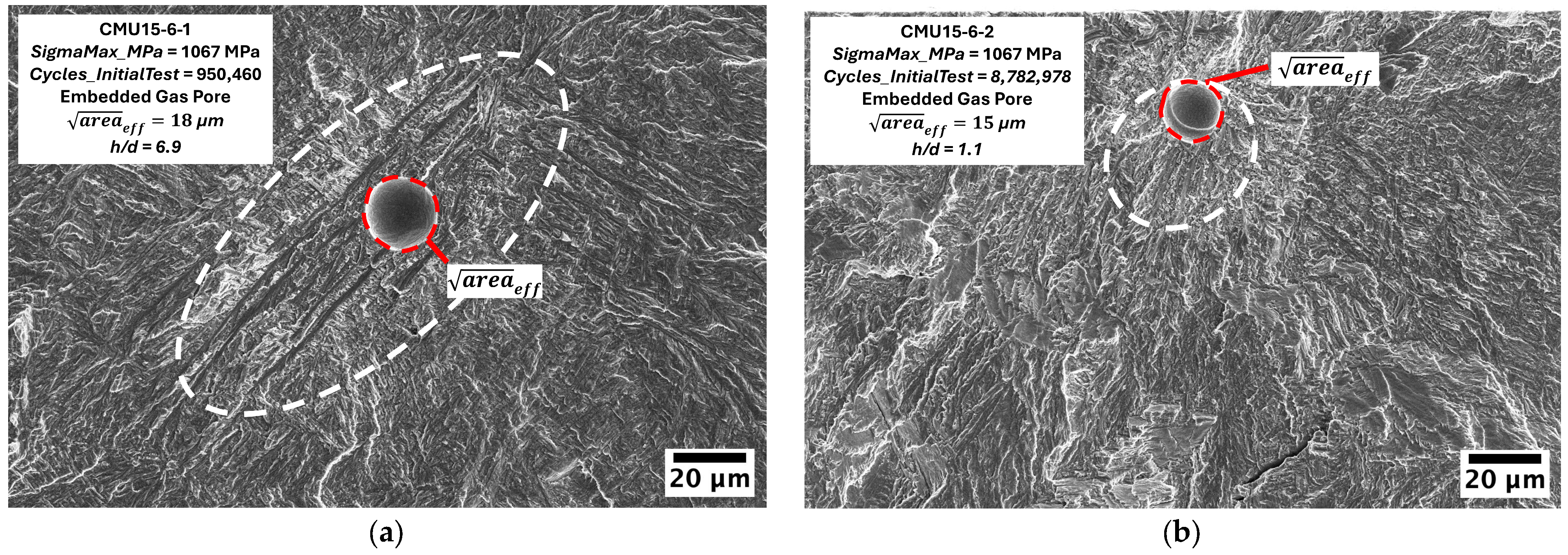
Results from this dataset agree with prior studies that demonstrate a strong correlation between the size, shape, and location of the fatigue-initiating defect and fatigue performance in PBF-LB/M Ti-6Al-4V [2,3,8,16,17]. However, despite numerous defect characterization metrics, cases still arise in which two defects are nominally similar in all measured characteristics yet exhibit fatigue lives that differ by as much as an order of magnitude. Figure 20 illustrates this behavior using two separate fatigue initiation sites from two separately tested regions of the same 4PB specimen, not included in the present dataset (P = 280 W, V = 1150 mm/s) as it was from a different P–V combination [3]. The images compare an initiation site located nearer the top of the specimen (TestRegion = 1) with one near the bottom (TestRegion = 2) of the same 4PB sample tested at the same stress level. Both initiation sites are of the embedded GeP type with a similar measured a r e a yet widely different fatigue lives.
The observed difference in fatigue life coincides with differences in local fracture-surface features consistent with α’ lath morphology in stress-relieved PBF-LB/M Ti-6Al-4V. These observations are consistent with prior reports of the effects of local microstructure on fatigue behavior in defect-free PBF-LB/M Ti-6Al-4V [49] and other additively manufactured and conventionally processed Ti-6Al-4V [31,50,51]. The role of local microstructure, particularly as it relates to crack initiation and growth in the small crack regime [50,52,53,54], will be examined in greater detail for specimens in the present dataset, as well as specimens that sample a wider range of P–V combinations shown in Figure 2 in future publications. In the interim, the fatigue results and defect characterization data provided here capture systematic variations in defect size, morphology, and occurrence as a function of processing conditions. These representative defects can be used to inform defect-based fatigue life prediction, probabilistic modeling approaches, and machine learning frameworks linking process parameters to fatigue performance in stress-relieved Ti-6Al-4V. The observed variability in fatigue life for defects with a similar size, shape, and location indicates that incorporating microstructural information will be a necessary next step toward improved predictive capability.

4. User Notes

Additional datasets for different P–V combinations, defect characterization, and fatigue lives will be published separately.

Supplementary Materials

The following supporting information can be downloaded at https://www.mdpi.com/article/10.3390/data11040081/s1, Table S1: Fatigue Results and Fatigue Fracture Initiation Site Characterization in Stress-Relieved PBF-LB/M Ti-6Al-4V Four-Point Bend and Axial Specimens: Part I (High Power, Variable Scan Velocities).

Author Contributions

Conceptualization, B.E.L. and A.Q.N.; methodology, B.E.L. and A.Q.N.; formal analysis, B.E.L. and A.Q.N.; investigation, B.E.L. and A.Q.N.; data curation, B.E.L. and A.Q.N.; writing—original draft preparation, B.E.L.; writing—review and editing, J.J.L.; supervision, J.J.L.; project administration, J.J.L.; funding acquisition, J.J.L. All authors have read and agreed to the published version of the manuscript.

Funding

Initial funding for the fatigue testing and partial funding for the fractography were provided by the NASA University Leadership Initiative (ULI) award for Development of an Ecosystem for ‘Qualification of Additive Manufacturing Process and Materials in Aviation’ (ID: 80NSSC19M0123). Additional detailed fractography was provided by the Arthur P Armington Professorship (J.J.L.), the Materials Data Science for Stockpile Stewardship Center of Excellence (MDS3-COE) and supported by the U.S. Department of Energy’s National Nuclear Security Administration under Award Number DENA0004104. Parts of this work were also supported by the National Aeronautics and Space Administration (NASA) Space Technology Research Institute (STRI) program under grant 80NSSC23K1342.

Institutional Review Board Statement

Not applicable.

Informed Consent Statement

Not applicable.

Data Availability Statement

The original contributions presented in this study are included in the article. Further inquiries can be directed to the corresponding authors.

Acknowledgments

The authors acknowledge Christian Gobert at Carnegie Mellon University for fabricating the PBF-LB/M specimens used in this study and many discussions with the NASA-ULI, NASA-STRI, and NNSA teams as well as the help of many undergraduate students conducting fracture-surface imaging.

Conflicts of Interest

The authors declare no conflicts of interest. The funders had no role in the design of the study; in the collection, analyses, or interpretation of data; in the writing of the manuscript; or in the decision to publish the results.

References

  1. Hojjatzadeh, S.M.H.; Parab, N.D.; Guo, Q.; Qu, M.; Xiong, L.; Zhao, C.; Escano, L.I.; Fezzaa, K.; Everhart, W.; Sun, T. Direct observation of pore formation mechanisms during LPBF additive manufacturing process and high energy density laser welding. Int. J. Mach. Tools Manuf. 2020, 153, 103555. [Google Scholar] [CrossRef]
  2. Reddy, T.; Ngo, A.; Miner, J.P.; Gobert, C.; Beuth, J.L.; Rollett, A.D.; Lewandowski, J.J.; Narra, S.P. Fatigue-based process window for laser beam powder bed fusion additive manufacturing. Int. J. Fatigue 2024, 187, 108428. [Google Scholar] [CrossRef]
  3. Ngo, A.Q.-T. Determination of a Fatigue-and Toughness-Based Process Window for Metal Additive Manufacturing: Effects of LPBF Process Variables on Flaw Characteristics and Resulting Fatigue and Toughness Properties in LPBF Ti-6Al-4V. Ph.D. Thesis, Case Western Reserve University, Cleveland, OH, USA, 2024. [Google Scholar]
  4. Narra, S.P.; Rollett, A.D.; Ngo, A.; Scannapieco, D.; Shahabi, M.; Reddy, T.; Pauza, J.; Taylor, H.; Gobert, C.; Diewald, E.; et al. Process qualification of laser powder bed fusion based on processing-defect structure-fatigue properties in Ti-6Al-4V. J. Mater. Process. Technol. 2023, 311, 117775. [Google Scholar] [CrossRef]
  5. Sanaei, N.; Fatemi, A. Defects in additive manufactured metals and their effect on fatigue performance: A state-of-the-art review. Prog. Mater. Sci. 2021, 117, 100724. [Google Scholar] [CrossRef]
  6. Seifi, M.; Gorelik, M.; Waller, J.; Hrabe, N.; Shamsaei, N.; Daniewicz, S.; Lewandowski, J.J. Progress towards metal additive manufacturing standardization to support qualification and certification. JOM 2017, 69, 439–455. [Google Scholar] [CrossRef]
  7. Seifi, M.; Salem, A.; Beuth, J.; Harrysson, O.; Lewandowski, J.J. Overview of materials qualification needs for metal additive manufacturing. JOM 2016, 68, 747–764. [Google Scholar] [CrossRef]
  8. Muhammad, M.; Yasin, M.S.; Soman, S.; Shao, S.; Shamsaei, N. Defect features critical to the fatigue of additively manufactured Ti-6Al-4V. Theor. Appl. Fract. Mech. 2025, 138, 104981. [Google Scholar] [CrossRef]
  9. Kobryn, P.; Semiatin, S. Mechanical properties of laser-deposited Ti-6Al-4V. In Proceedings of the Solid Freeform Fabrication Symposium, Austin, TX, USA, 6–8 August 2001; pp. 178–186. [Google Scholar]
  10. Beretta, S.; Romano, S. A comparison of fatigue strength sensitivity to defects for materials manufactured by AM or traditional processes. Int. J. Fatigue 2017, 94, 178–191. [Google Scholar] [CrossRef]
  11. Lewandowski, J.J.; Seifi, M. Metal additive manufacturing: A review of mechanical properties. Annu. Rev. Mater. Res. 2016, 46, 151–186. [Google Scholar] [CrossRef]
  12. Banuelos, C.; Ramirez, B.; De la Cruz, A.; Nabil, S.; Arrieta, E.; Wicker, R.; Medina, F. Fatigue Endurance Investigation of Post-processed Surfaces of LPBF Ti-6Al-4V under Flexural Stress. In Proceedings of the 34th Annual International Solid Freeform Fabrication Symposium, Austin, TX, USA, 14–16 August 2023. [Google Scholar]
  13. Ramirez, B.; Banuelos, C.; De La Cruz, A.; Nabil, S.T.; Arrieta, E.; Murr, L.E.; Wicker, R.B.; Medina, F. Effects of Process Parameters and Process Defects on the Flexural Fatigue Life of Ti-6Al-4V Fabricated by Laser Powder Bed Fusion. Materials 2024, 17, 4548. [Google Scholar] [CrossRef]
  14. Miner, J.P.; Narra, S.P. Dataset of X-Ray Micro Computed Tomography Porosity Measurements from Powder Bed Fusion; Carnegie Mellon University: Pittsburgh, PA, USA, 2024. [Google Scholar] [CrossRef]
  15. Miner, J.P.; Narra, S.P. Extreme value statistics with uncertainty to assess porosity equivalence across additively manufactured parts. Reliab. Eng. Syst. Saf. 2025, 262, 111207. [Google Scholar] [CrossRef]
  16. Sun, S.; Choi, Y.R.; Bayoumy, D.; Miller, J.D.; Liu, Q. Empirical fatigue life model based on micro-CT defect severity indicator for laser powder-bed additively manufactured Ti-6Al-4V. Int. J. Fatigue 2025, 202, 109213. [Google Scholar] [CrossRef]
  17. Murakami, Y. Metal Fatigue: Effects of Small Defects and Nonmetallic Inclusions; Academic Press: Oxford, UK, 2019. [Google Scholar]
  18. Murakami, Y.; Kodama, S.; Konuma, S. Quantitative evaluation of effects of non-metallic inclusions on fatigue strength of high strength steels. I: Basic fatigue mechanism and evaluation of correlation between the fatigue fracture stress and the size and location of non-metallic inclusions. Int. J. Fatigue 1989, 11, 291–298. [Google Scholar] [CrossRef]
  19. Cunningham, R.; Narra, S.P.; Montgomery, C.; Beuth, J.; Rollett, A. Synchrotron-based X-ray microtomography characterization of the effect of processing variables on porosity formation in laser power-bed additive manufacturing of Ti-6Al-4V. JOM 2017, 69, 479–484. [Google Scholar] [CrossRef]
  20. Gordon, J.V.; Narra, S.P.; Cunningham, R.W.; Liu, H.; Chen, H.; Suter, R.M.; Beuth, J.L.; Rollett, A.D. Defect structure process maps for laser powder bed fusion additive manufacturing. Addit. Manuf. 2020, 36, 101552. [Google Scholar] [CrossRef]
  21. Mostafaei, A.; Zhao, C.; He, Y.; Ghiaasiaan, S.R.; Shi, B.; Shao, S.; Shamsaei, N.; Wu, Z.; Kouraytem, N.; Sun, T.; et al. Defects and anomalies in powder bed fusion metal additive manufacturing. Curr. Opin. Solid State Mater. Sci. 2022, 26, 100974. [Google Scholar] [CrossRef]
  22. Francis, Z.R. The Effects of Laser and Electron Beam Spot Size in Additive Manufacturing Processes. Ph.D. Thesis, Carnegie Mellon University, Pittsburgh, PA, USA, 2017. [Google Scholar]
  23. Tang, M.; Pistorius, P.C.; Beuth, J.L. Prediction of lack-of-fusion porosity for powder bed fusion. Addit. Manuf. 2017, 14, 39–48. [Google Scholar] [CrossRef]
  24. ASTM E1823-24c; Standard Terminology Relating to Fatigue and Fracture Testing. ASTM International: West Conshohocken, PA, USA, 2024.
  25. ASTM D6272-25; Standard Test Method for Flexural Properties of Unreinforced and Reinforced Plastics and Electrical Insulating Materials by Four-Point Bending. ASTM International: West Conshohocken, PA, USA, 2025.
  26. ASTM E466-21; Standard Practice for Conducting Force-Controlled Constant-Amplitude Axial Fatigue Tests of Metallic Materials. ASTM International: West Conshohocken, PA, USA, 2021.
  27. Dowling, N.E.; Kampe, S.L.; Kral, M.V. Mechanical Behavior of Materials: Engineering Methods for Deformation, Fracture, and Fatigue; Prentice Hall: Upper Saddle River, NJ, USA, 1999. [Google Scholar]
  28. Schindelin, J.; Arganda-Carreras, I.; Frise, E.; Kaynig, V.; Longair, M.; Pietzsch, T.; Preibisch, S.; Rueden, C.; Saalfeld, S.; Schmid, B. Fiji: An open-source platform for biological-image analysis. Nat. Methods 2012, 9, 676–682. [Google Scholar] [CrossRef]
  29. Malvern Instruments Ltd. Morphologi G3 User Manual; MAN0410, Issue 1.1; Malvern Instruments Ltd.: Malvern, UK, 2008. [Google Scholar]
  30. Biswal, R.; Syed, A.; Zhang, X. Assessment of the effect of isolated porosity defects on the fatigue performance of additive manufactured titanium alloy. Addit. Manuf. 2018, 23, 433–442. [Google Scholar] [CrossRef]
  31. Shamir, M.; Syed, A.K.; Janik, V.; Biswal, R.; Zhang, X. The role of microstructure and local crystallographic orientation near porosity defects on the high cycle fatigue life of an additive manufactured Ti-6Al-4V. Mater. Charact. 2020, 169, 110576. [Google Scholar] [CrossRef]
  32. Wu, Z.; Wu, S.; Bao, J.; Qian, W.; Karabal, S.; Sun, W.; Withers, P.J. The effect of defect population on the anisotropic fatigue resistance of AlSi10Mg alloy fabricated by laser powder bed fusion. Int. J. Fatigue 2021, 151, 106317. [Google Scholar] [CrossRef]
  33. SAE International. Heat Treatment of Titanium Alloy Parts; SAE International: Warrendale, PA, USA, 2024. [Google Scholar]
  34. Bagehorn, S.; Wehr, J.; Maier, H.-J. Application of mechanical surface finishing processes for roughness reduction and fatigue improvement of additively manufactured Ti-6Al-4V parts. Int. J. Fatigue 2017, 102, 135–142. [Google Scholar] [CrossRef]
  35. Greitemeier, D.; Dalle Donne, C.; Syassen, F.; Eufinger, J.; Melz, T. Effect of surface roughness on fatigue performance of additive manufactured Ti–6Al–4V. Mater. Sci. Technol. 2016, 32, 629–634. [Google Scholar] [CrossRef]
  36. Seifi, M.; Salem, A.; Satko, D.; Shaffer, J.; Lewandowski, J.J. Defect distribution and microstructure heterogeneity effects on fracture resistance and fatigue behavior of EBM Ti–6Al–4V. Int. J. Fatigue 2017, 94, 263–287. [Google Scholar] [CrossRef]
  37. Hinderdael, M.; Strantza, M.; De Baere, D.; Devesse, W.; De Graeve, I.; Terryn, H.; Guillaume, P. Fatigue performance of Ti-6Al-4V additively manufactured specimens with integrated capillaries of an embedded structural health monitoring system. Materials 2017, 10, 993. [Google Scholar] [CrossRef]
  38. Jiang, X.; Man, C.-S.; Shepard, M.; Zhai, T. Effects of shot-peening and re-shot-peening on four-point bend fatigue behavior of Ti–6Al–4V. Mater. Sci. Eng. A 2007, 468, 137–143. [Google Scholar] [CrossRef]
  39. Zhai, T.; Xu, Y.; Martin, J.; Wilkinson, A.; Briggs, G. A self-aligning four-point bend testing rig and sample geometry effect in four-point bend fatigue. Int. J. Fatigue 1999, 21, 889–894. [Google Scholar] [CrossRef]
  40. Ariza, D.; Arrieta, E.; Banuelos, C.; Colon, B.; Murr, L.; Wicker, R.; Beamer, C.; Medina, F. Comparison of fatigue life behavior between 4-point and uniaxial loading for L-PBF Ti–6Al–4V after HIP treatments. Results Mater. 2024, 22, 100579. [Google Scholar] [CrossRef]
  41. Ariza, D.; Arrieta, E.; Banuelos, C.; Colón, B.; Wicker, R.; Beamer, C.; Medina, F. The Impact of Different HIP Treatment Cycles on Fatigue Behavior during 4-Point Bending of Additively Manufactured (AM) Ti-6Al-4V. In Proceedings of the 35th Annual International Solid Freeform Fabrication Symposium, Austin, TX, USA, 11–14 August 2024. [Google Scholar]
  42. Poudel, A.; Yasin, M.S.; Ye, J.; Liu, J.; Vinel, A.; Shao, S.; Shamsaei, N. Feature-based volumetric defect classification in metal additive manufacturing. Nat. Commun. 2022, 13, 6369. [Google Scholar] [CrossRef]
  43. Ngo, A.; Hernandez, K.; Olatunde, A.E.; Ciardi, T.G.; Harding, A.; Nihar, A.; Mondal, A.; French, R.H.; Bruckman, L.S.; Lewandowski, J.J. Image-Based Fracture Surface Defect Characterization Methods for Additively Manufactured Ti-6Al-4V Tested in Fatigue. JOM 2024, 76, 4813–4824. [Google Scholar] [CrossRef]
  44. Miner, J.P.; Ngo, A.; Gobert, C.; Reddy, T.; Lewandowski, J.J.; Rollett, A.D.; Beuth, J.; Narra, S.P. Impact of melt pool geometry variability on lack-of-fusion porosity and fatigue life in powder bed fusion-laser beam Ti–6Al–4V. Addit. Manuf. 2024, 95, 104506. [Google Scholar] [CrossRef]
  45. Adcock, E.B. Investigation of Ti-6Al-4V Microstructure Development with Variable Cooling Rates in Laser Powder Bed Fusion. Ph.D. Thesis, Carnegie Mellon University, Pittsburgh, PA, USA, 2025. [Google Scholar]
  46. Chen, H.; Wang, X.; Ren, X. Size effect on fatigue performance of SLM-ed AlSi10Mg alloy: Role of defect size distribution. Int. J. Fatigue 2024, 182, 108163. [Google Scholar] [CrossRef]
  47. Romano, S.; Brandão, A.; Gumpinger, J.; Gschweitl, M.; Beretta, S. Qualification of AM parts: Extreme value statistics applied to tomographic measurements. Mater. Des. 2017, 131, 32–48. [Google Scholar] [CrossRef]
  48. Lütjering, G. Influence of processing on microstructure and mechanical properties of (α + β) titanium alloys. Mater. Sci. Eng. A 1998, 243, 32–45. [Google Scholar] [CrossRef]
  49. Qu, Z.; Zhang, Z.; Liu, R.; Xu, L.; Zhang, Y.; Li, X.; Zhao, Z.; Duan, Q.; Wang, S.; Li, S.; et al. High fatigue resistance in a titanium alloy via near-void-free 3D printing. Nature 2024, 626, 999–1004. [Google Scholar] [CrossRef]
  50. Nalla, R.; Ritchie, R.; Boyce, B.; Campbell, J.; Peters, J. Influence of microstructure on high-cycle fatigue of Ti-6Al-4V: Bimodal vs. lamellar structures. Metall. Mater. Trans. A 2002, 33, 899–918. [Google Scholar] [CrossRef]
  51. Pilchak, A.; Fox, K.; Payton, E.; Wiedemann, M.; Broderick, T.; Delaleau, P.; Glavicic, M.; Jenkins, N.; Ruppert, J.-M.; Streich, B.; et al. Cold Dwell Fatigue of Titanium Alloys: History, Current State, and Aviation Industry Perspective; DOT/FAA/TC-23/40; U.S. Department of Transportation, Federal Aviation Administration: Washington, DC, USA, 2024.
  52. Suresh, S. Fatigue of Materials, 2nd ed.; Cambridge University Press: Cambridge, UK, 1998. [Google Scholar]
  53. Lankford, J. The growth of small fatigue cracks in 7075–T6 aluminum. Fatigue Fract. Eng. Mater. Struct. 1982, 5, 233–248. [Google Scholar] [CrossRef]
  54. Ritchie, R.; Lankford, J. Small fatigue cracks: A statement of the problem and potential solutions. Mater. Sci. Eng. 1986, 84, 11–16. [Google Scholar] [CrossRef]
Figure 1. a r e a e f f for various types of defect geometry. Adapted from [17]. Horizontal dashed red lines in 2., 3., 4., 5., denote the external sample surface.
Data 11 00081 g001
Figure 2. Broad defect process structure map for EOS M290 PBF-LB/M Ti-6Al-4V. Bracketed points denote the P–V processing conditions for fatigue specimens included in this dataset, comprising both 4PB and axial configurations. Figure adapted from [3].
Data 11 00081 g002
Figure 3. (a) 4PB sample layout, indicating the directions of the powder recoater and inert gas flow. (b) Axial sample layout. The additional material shown corresponds to support structures used to mitigate thermal distortion during fabrication. Numbers in the figure denote the SpecimenPosition identifier corresponding to the dataset.
Data 11 00081 g003
Figure 4. Schematic indicating the TestRegion of 4PB fatigue tests with respect to the build direction.
Data 11 00081 g004
Figure 5. Key defect size and shape descriptors [29]. Letters denote geometric parameters and shape metrics as defined within each subfigure.
Data 11 00081 g005
Figure 6. For axial specimens, FeretAngle_deg is defined in this dataset using a reference frame in which the initiation site is rotated such that the shortest distance to the nearest free surface is along a vertical line that bisects the defect.
Data 11 00081 g006
Figure 7. Examples of the three classes used to describe the position of the fatigue initiation site relative to the free surface shown at the top of each image.
Data 11 00081 g007
Figure 8. Final dimensions of 4PB fatigue specimen after machining via commercial low-stress grinding.
Data 11 00081 g008
Figure 9. Final dimensions of axial fatigue specimen after machining via commercial low-stress grinding.
Data 11 00081 g009
Figure 10. Self-aligning fixture used to test 4PB specimens under tension–tension fatigue.
Data 11 00081 g010
Figure 11. A low magnification stitched SEM image composed of 24 images (6 × 4) of the entire fatigue fracture surface, used to identify the killer defect(s) for further analysis. This sample shows an example of a near-surface keyhole defect.
Data 11 00081 g011
Figure 12. Comparison of matching surfaces of 4PB fatigue fracture halves from representative specimens where keyhole defects dominate (left) and LoF defects dominate (right), captured in the fatigue overload region. Note the distinct defect morphology differences between keyhole (left) and LoF (right) defects.
Data 11 00081 g012
Figure 13. Representative LoF fatigue initiation defects for 4PB specimens fabricated at P = 370 W and V = 1700 mm/s exhibiting a wide range of circularities and aspect ratios. (a) A sharp LoF defect with a circularity of only 0.3; (b) a relatively round LoF defect with a circularity of 0.7.
Data 11 00081 g013
Figure 14. Comparison of matching 4PB fatigue fracture halves from representative specimens where keyhole defects dominate (left) and LoF defects dominate (right), shown in the fatigue crack growth region. Each image also contains an example of a GeP.
Data 11 00081 g014
Figure 15. Comparison of matching 4PB fatigue fracture halves from representative specimens where fatigue initiated at a keyhole defect (left) and GeP (right). Distinct morphological differences are evident between the keyhole (left) and GeP (right).
Data 11 00081 g015
Figure 16. EDS measurement of fatigue initiation site confirming the presence of Ni contamination. Colors denote the spatial distribution of elements.
Data 11 00081 g016
Figure 17. Comparison of a r e a (left), a r e a e f f (center), and a r e a M I C (right) for keyhole (top) and LoF (bottom) fatigue-initiating defects. Red outlines highlight the defect regions being captured as defined by each metric.
Data 11 00081 g017
Figure 18. Stitched fracture-surface SEM image composed of 35 images (7 × 5) from an axial fatigue specimen, used to determine the depth (i.e., black arrow) of an embedded fatigue initiation defect relative to the free surface.
Data 11 00081 g018
Figure 19. Example of an emergent LoF defect (dashed red lines) that would be misclassified using a geometric ratio-based classification approach as described in [47].
Data 11 00081 g019
Figure 20. Initiation sites for TestRegions 1 and 2 of the same 4PB specimen printed at P = 280 W and V = 1150 mm/s. The initiation sites exhibit similar sizes, shapes, and locations; however, there is nearly an order of magnitude difference in fatigue life; (a) shows fracture-surface features resembling α′ laths within a β colony [48], highlighted by the white dashed lines extending tens of micrometers beyond the GeP defect, whereas (b) exhibits fewer and shorter α′ lath-like features around the GeP defect, again highlighted by the white dashed lines.
Data 11 00081 g020
Table 1. Processing parameters used for Ti-6Al-4V 4PB and axial fatigue specimens.
Test ModePower (W)Hatch Spacing (µm)Layer Thickness (µm)Scan Velocity (mm/s)
Four-Point Bend37014030800–1950 (∆ = 50)
Axial37014030800, 1000, 1300, 1500, 1800, 2000
Table 2. Chemical composition of ATI Ti-6Al-4V ELI powder in wt%.
AlVFe (max)O (max)C (max)N (max)H (max)Ti
5.50–6.503.50–4.500.250.080.050.010.01Balance
Disclaimer/Publisher’s Note: The statements, opinions and data contained in all publications are solely those of the individual author(s) and contributor(s) and not of MDPI and/or the editor(s). MDPI and/or the editor(s) disclaim responsibility for any injury to people or property resulting from any ideas, methods, instructions or products referred to in the content.