1. Introduction
The global wine sector is undergoing a period of profound transformation. Traditional wine-producing regions are increasingly affected by climatic instability, while mature markets have shown declining or changing patterns of wine consumption. Recent international reports indicate a continued decrease in global wine consumption, associated with economic pressure, demographic change, health-related concerns, competition from other beverage categories and shifting lifestyles among younger consumers [
1]. At the same time, globalization, market segmentation and new consumption behaviors have intensified the demand for wines that are not only technically sound, but also differentiated, meaningful and valued for their origin, experience, authenticity, and storytelling [
2,
3,
4]. In this context, emerging wine categories may offer strategic opportunities for producers and regions seeking to reposition themselves in an increasingly competitive global market.
Innovation in wine is not restricted to new technologies or products; it also involves the construction of new meanings around production systems, sensory identity, origin and consumption experiences. Categories such as natural wines, orange wines, low- and no-alcohol wines and sparkling wines from non-traditional regions illustrate how technical, cultural and market dimensions can converge to reshape consumer perception, communication and market positioning [
5,
6,
7,
8]. Winter wines can be understood within this broader movement. Although still relatively unfamiliar in the international wine market, they represent a distinctive production model in which viticultural management, terroir expression, enological decisions and regional narratives are integrated into an emerging category with potential relevance for domestic and global consumers. The formation and potential consolidation of winter wines therefore involve an ongoing process of market organization. Through practices and interactions among actors, rules, knowledge, devices and forms of coordination, this category can be defined, qualified and made recognizable and relatively stable in the market [
9,
10,
11,
12].
Technically, winter wines originate from double-pruning systems that reposition grape ripening and harvest from the traditional summer period to autumn–winter. In southeastern Brazil, this shift may expose grape maturation to drier conditions, cooler nights and greater thermal amplitude, with potential effects on grape sanitary status and composition [
13,
14,
15,
16]. The agronomic basis and specific consequences of this production model are discussed in detail in
Section 3 and
Section 4.
The relevance of winter wines, however, extends beyond their technical definition. By reorganizing the grapevine cycle, double pruning modifies the environmental conditions under which grape composition and wine identity are shaped. This aspect is particularly relevant to the concept of terroir. In classical viticultural literature, terroir is understood as the interaction among climate, soil, topography, biological material and human practices that together shape grape composition and wine identity [
17,
18]. In winter wines, the human dimension of terroir becomes especially evident because the category itself depends on an intentional viticultural intervention. The decision to invert the vine cycle does not reduce the role of natural factors; rather, it reorganizes the temporal conditions under which those factors act on grape ripening. Climate, altitude, soil, water availability and solar radiation remain essential, but their influence is expressed through deliberate management decisions made throughout vineyard establishment, grape production and winemaking. In this sense, winter wine terroir is expressed through the interaction between nature and human management.
Although double-pruning or related forced-regrowth systems have been reported in other wine-producing regions, including tropical viticulture in India and Thailand and semi-arid Mediterranean conditions in Spain, Brazil—particularly its southeastern region—has played a leading role in scientifically developing, adapting and consolidating double pruning as the basis for the production of winter wines as an emerging wine category [
19,
20,
21]. The recognition of geographical indications, such as the
Indicação de Procedência Vinhos de Inverno Sul de Minas (Winter Wines of Southern Minas Protected Geographical Indication), reinforces the importance of origin, technical specifications, authorized cultivars and collective reputation in the construction of this category [
22]. By establishing technical criteria, territorial boundaries and control mechanisms, the geographical indication contributes to product qualification by defining the conditions under which the protected name may be used. Once materialized in documents, procedures and traceability systems, these criteria also support coordination among actors and help stabilize the indication over time [
10,
23,
24]. More broadly, geographical indications and shared regional brands may act as strategic resources for differentiation, authenticity and competitive advantage in wine markets [
25,
26,
27].
From a market perspective, the potential of winter wines depends on the ability to translate technical complexity into accessible and attractive consumer narratives. Terms such as “double pruning”, and “winter harvest” are scientifically relevant, but they require careful communication to avoid excessive technicality. Effective wine communication should translate terroir, grape variety, geographical indication, producer philosophy and winemaking practices into narratives capable of supporting consumer understanding and engagement [
28,
29]. Beyond facilitating consumer understanding, these narratives contribute to describing, classifying and increasing the visibility of the category, thus shaping how it becomes recognized and organized in the market [
10,
30]. Wine tourism can play a strategic role in this translation process, since winery experiences, storytelling, cultural immersion and direct contact with production contexts can influence consumers’ attitudes, attribute evaluations and loyalty toward wines [
28,
31]. However, the consumer dimension of winter wines remains largely unexplored, particularly regarding perception, acceptance, and market value.
Despite their growing technical and symbolic relevance, winter wines remain underexplored as an integrated wine category. Most available studies focus on agronomic performance, grape maturation, cultivar behavior and wine composition, whereas comparatively few investigate sensory typicity, consumer perception, market positioning, wine tourism or communication. This fragmentation limits the understanding of winter wines as a distinct wine category. Therefore, this narrative and critical review synthesizes current knowledge to propose an integrated framework for understanding winter wines from viticultural, sensory and market perspectives. It also examines how winter wines are formed and become recognized as an emerging wine category, while identifying current knowledge gaps and future research directions.
2. Review Approach
This article was developed as a narrative and critical review rather than as a systematic review or meta-analysis. The literature search was conducted between 2 July 2026 and 17 July 2026 using Scopus, Web of Science, Google Scholar and SciELO. Because terminology related to winter wines and cycle inversion is not yet fully standardized, an exploratory and iterative search strategy was adopted.
Initial searches included the terms “winter wines”, “double pruning”, “Brazilian winter wines”, “winter harvest wines”, “cycle inversion”, “forced regrowth” and “tropical viticulture”. These terms were subsequently combined, where appropriate, with terms related to the main dimensions of the review, including “grapevine”, “grape composition”, “wine composition”, “cultivar”, “rootstock”, “sensory analysis”, “terroir”, “microbiology”, “microbiota”, “geographical indication”, “consumer perception”, “wine tourism”, “wine market”, “marketing” and “market construction”. Search combinations were adapted to the characteristics of each database. Backward and forward citation tracking of relevant publications was also used to identify additional studies.
Sources were included when they met at least one of the following criteria: (i) peer-reviewed original studies directly evaluating double-pruning, cycle-inversion or winter-ripening systems in grapevines, grapes or wines; (ii) peer-reviewed studies or reviews addressing established viticultural, enological, sensory or microbiological mechanisms necessary to interpret winter-wine evidence; (iii) consumer, wine-tourism, geographical-indication or market studies providing conceptual or empirical context for dimensions for which winter-wine-specific evidence remains limited; or (iv) official technical and regulatory documents required to describe the protected geographical indication Vinhos de Inverno Sul de Minas. Sources were excluded when they did not directly support a claim made in the review, were unrelated to grape or wine production, duplicated information already represented by a more appropriate source, consisted primarily of promotional or commercial material, or lacked sufficient bibliographic information for verification.
During the synthesis, evidence was explicitly differentiated into two categories. Direct winter-wine evidence refers to studies conducted with grapes or wines produced under double-pruning, cycle-inversion or winter-ripening conditions. Contextual evidence refers to studies conducted with wines, grape cultivars, sensory methods, microorganisms, consumers, geographical indications or wine-tourism contexts not specifically involving winter wines. Contextual evidence was used to interpret mechanisms, formulate hypotheses and identify research priorities, but not to establish winter-wine-specific effects.
The synthesis was organized around viticultural foundations, cultivar-specific evidence, enological and terroir-related mediation, geographical and institutional identity, sensory evidence, and consumer and market perspectives. This structure was used to distinguish established findings on winter wines from conceptual interpretations and research hypotheses regarding their possible development as an emerging wine category.
3. Winter Wines as an Emerging Wine Category
To avoid conceptual overlap, three analytical levels are distinguished throughout this review. Double pruning is a viticultural technique in which pruning interventions intentionally reorganize grapevine phenology so that the productive cycle, grape ripening and harvest occur in a different seasonal window [
13,
14,
15,
16,
32,
33]. Winter wine is used here as a broader emerging and still-consolidating technical and market category associated with this production logic and with autumn–winter ripening, particularly as developed in southeastern Brazil [
14,
32,
33]. Its interpretation as an emerging category also draws on market studies showing that categories become established through processes of qualification, differentiation and recognition rather than through production characteristics alone [
10,
30]. Vinhos de Inverno Sul de Minas, in contrast, designates a specific Brazilian protected geographical indication (
Indicação de Procedência), with a delimited territory, authorized cultivars, production requirements, traceability procedures and regulatory specifications [
22,
34]. Thus, double pruning as a technique, winter wine as an emerging category, and Vinhos de Inverno Sul de Minas as a protected geographical origin are related but not interchangeable concepts.
Winter wines can be defined as wines produced from grapes grown under double-pruning management, in which grapevine phenology is intentionally reorganized so that ripening and harvest occur during the autumn–winter period rather than in the traditional summer season [
14,
22,
32,
33]. The emergence of winter wines is closely related to the adaptation of
Vitis vinifera production to subtropical and tropical regions where the traditional summer cycle may limit grape quality. In these environments, summer ripening often coincides with high rainfall, elevated relative humidity, and increased fungal disease pressure, which may compromise grape sanitary conditions, technological maturity, and phenolic development [
13,
14,
15,
35]. Double pruning shifts ripening to a drier and cooler season, improving the environmental conditions for grape maturation and favoring sugar accumulation, acid preservation, phenolic maturity, and the formation or retention of aroma-related compounds, thereby contributing to wines with distinctive aromatic, gustatory, and structural characteristics [
14,
15,
16,
33].
In this production model, double pruning is not merely a viticultural practice, but the defining basis of winter wine production. As with other contemporary wine categories, the formation and recognition of winter wines depend both on the translation of production practices into sensory identity, consumer recognition and market positioning [
5,
7,
8,
29], and on processes through which products are described, classified and differentiated from other offerings [
10,
30]. Winter wines should therefore be understood both as wines produced through double pruning and as an emerging category whose identity results from the articulation among viticulture, terroir, enology, sensory expression and regional narratives.
Although winter wines have been most strongly associated with the Brazilian Southeast, double-pruning or related forced-regrowth systems are not exclusive to Brazil. In tropical viticulture, systems based on double pruning and single cropping have been reported in countries such as India and Thailand, where vineyard management is also used to adjust production to more favorable seasonal windows [
19,
20]. In a different context, double-pruning has also been evaluated in semi-arid Mediterranean conditions as a strategy to force bud growth, delay grape ripening, and improve the composition of Tempranillo grapes under warmer conditions [
21]. These examples indicate that the manipulation of grapevine phenology through pruning can be used in different viticultural contexts. However, Brazil—particularly its southeastern region—has played a leading role in scientifically developing, adapting and consolidating double pruning as the basis for the production of winter wines with territorial identity, technical recognition and market potential [
14,
22,
32,
36].
The emergence of winter wines in southeastern Brazil can be understood as the convergence of agronomic adaptation, scientific development, territorial differentiation and market qualification. First, double pruning addressed an important constraint of conventional summer ripening in subtropical conditions by shifting grape maturation to a drier and cooler seasonal window, potentially improving grape sanitary conditions and technological and phenolic maturity [
14,
15,
16,
33]. Second, research conducted under winter-cycle conditions demonstrated the agronomic and enological potential of this production system, particularly for Syrah, while more recent studies have expanded the evidence to other cultivars and production conditions [
14,
32,
33,
37]. These developments progressively transformed double pruning from an agronomic management strategy into the technical basis of a differentiated wine-production model. At the same time, the association among winter ripening, regional origin, technological innovation and distinctive production conditions created opportunities for qualification and differentiation in the market, since wine categories became recognizable not only through production characteristics but also through processes of classification, communication and collective recognition [
10,
30]. The subsequent recognition of Vinhos de Inverno Sul de Minas as a protected geographical indication further institutionalized one specific territorial expression of this production model by establishing origin, production rules, authorized cultivars and traceability requirements [
22,
34]. Thus, winter wines have emerged as a recognizable production model associated with territorial identity and potential market differentiation, although limited evidence on sensory typicity, consumer recognition and market performance indicates that the category is still consolidating.
The recognition of the “
Vinhos de Inverno Sul de Minas” protected geographical indication represents an important step in formalizing a specific territorial model within the broader category of winter wines. The technical specifications of this geographical indication establish that wines must be produced from
Vitis vinifera grapes cultivated in the delimited area under a double-pruning system, with winter harvest and specific production criteria [
22]. The same document defines authorized red and white cultivars, including Syrah, Merlot, Cabernet Franc, Cabernet Sauvignon, Marselan, Tempranillo, Petit Verdot, Pinot Noir, Grenache, Sauvignon Blanc, Chardonnay, Viognier and Marsanne. By establishing territorial boundaries, authorized cultivars, production rules, traceability procedures and sensory evaluation standards, this regulatory framework helps transform double pruning from an agronomic strategy into a collective production model associated with origin, typicity, quality control and regional reputation. This set of rules and procedures gives material form to normalization practices by establishing parameters that guide production, organize the expectations of different actors and define the conditions under which the protected name may be used [
10]. This is consistent with the role of geographical indications and shared regional brands as mechanisms for differentiation, authenticity and competitive advantage in wine markets [
25,
26,
27].
From a sensory perspective, winter wines should not be treated as a homogeneous group. The category includes different styles according to grape variety, vineyard conditions, maturity targets and winemaking decisions. Red winter wines may range from structured, phenolic and age-worthy wines to fruitier and softer styles, while white winter wines may express freshness, aromatic intensity, volume or texture depending on the cultivar and technological approach. Studies on winter-cycle viticulture in Brazil have shown that grape composition and wine potential are influenced by cultivar, rootstock, production cycle and environmental conditions, reinforcing the need to understand winter wines as a diverse category rather than as a single sensory style [
15,
16,
33,
36,
37]. This internal diversity is not a weakness of the category; rather, it indicates that winter wines can develop a broad stylistic portfolio while maintaining a common production identity based on double pruning and winter ripening.
The emergence of winter wines also resembles the development of other contemporary wine categories whose value is shaped by a combination of technique, identity and consumer meaning. Natural wines illustrate how the absence of a single universally accepted definition can coexist with strong consumer interest, symbolic value and market differentiation [
7,
38]. Orange wines demonstrate how an ancient winemaking technique can re-emerge as a contemporary category through distinctive sensory features, production narratives and renewed consumer attention [
8]. Low- and no-alcohol wines show how changing lifestyles, health concerns and moderation trends can stimulate technological innovation and new market opportunities [
5,
39]. In a similar way, winter wines may gain relevance not only because they are produced through double pruning, but because this technique can be communicated as part of a broader story involving climate adaptation, human-mediated terroir, regional innovation and sensory differentiation.
Taken together, these elements support the conceptualization of winter wines as more than a technical response to unfavorable summer ripening conditions. Rather, they represent an emerging wine category whose identity is shaped by the interaction among double pruning, winter ripening, cultivar adaptation, regional origin, potential sensory differentiation and market communication. Understanding the development of this category therefore requires moving beyond agronomic performance to examine how technical differentiation becomes recognizable, meaningful and capable of generating value for consumers, producers and wine regions.
4. Double Pruning and Winter Ripening: Viticultural Foundations
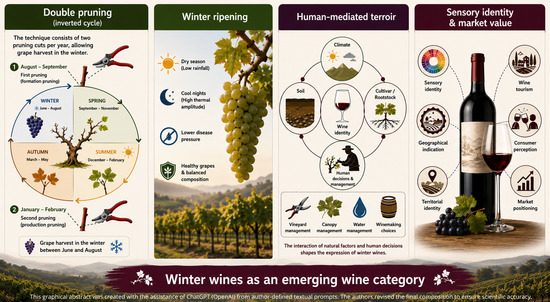
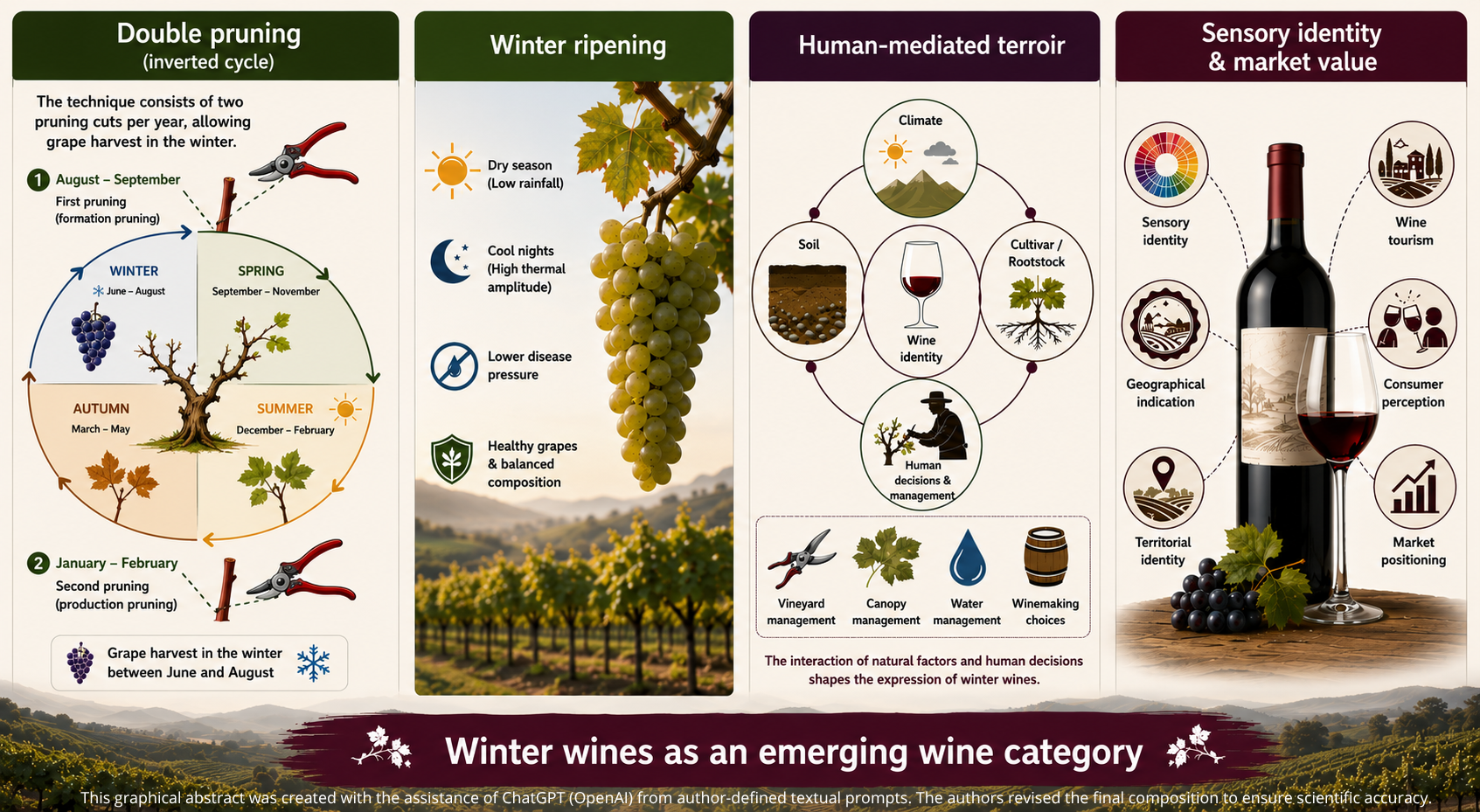
Operationally, double pruning involves two annual pruning events with different physiological purposes. The first pruning, commonly performed in spring, induces a predominantly vegetative cycle and promotes the development of shoots that will serve as the basis for the following productive cycle. Clusters produced during this stage are usually removed in order to prevent summer fruiting and redirect vine growth toward the formation of mature canes. The second pruning, performed during summer on lignified shoots, induces the reproductive cycle, so that budburst, flowering, berry growth,
véraison and ripening occur in a delayed phenological sequence, with harvest projected for the winter season [
13,
36]. This management strategy creates a production model in which phenology is controlled by pruning rather than being determined only by the natural seasonal rhythm of the vine.
The benefits of winter ripening are strongly associated with the climatic conditions that prevail during the maturation period. Lower rainfall reduces the incidence of berry cracking, bunch rot and fungal diseases, improving grape sanitary quality and reducing the need for premature harvest. Cooler nights and greater thermal amplitude can favor a slower ripening process, contributing to a better balance between sugar accumulation and acid retention [
14,
33,
40]. In this sense, winter ripening may provide conditions for grapes to remain longer on the vine, allowing technological maturity and phenolic maturity to progress under lower sanitary risk.
Grape composition is one of the main mechanisms through which double pruning affects wine quality. The winter cycle has been associated with adequate soluble solids accumulation, improved acid balance and increased concentration of phenolic compounds, particularly in red cultivars such as Syrah [
14,
15,
16]. These changes are relevant because sugars determine potential alcohol, organic acids contribute to freshness and microbial stability, anthocyanins influence color intensity and stability, and tannins and other phenolics contribute to body, astringency, structure and aging potential [
41,
42]. Thus, the agronomic value of double pruning is directly connected to the chemical and sensory potential of the resulting wines.
However, the response to double pruning is not uniform and depends on the interaction among cultivar, rootstock, site conditions and vineyard management. Studies with wine grapes under double-pruning management have shown that phenological performance, thermal demand, yield components and grape biochemical composition vary among cultivars, indicating that not all varieties respond in the same way to the double-pruning system [
15,
33]. Rootstock choice is also relevant, as it can influence vine vigor, water relations, yield, berry composition and wine quality under winter-cycle production [
36,
37,
43]. Therefore, the success of double pruning depends not only on shifting harvest to winter, but also on selecting plant material and management strategies compatible with local edaphoclimatic conditions.
Yield control is another critical factor in the production of winter wines. Excessive crop load may dilute sugars, phenolic compounds, and aroma precursors, whereas excessively low yields may compromise economic viability without necessarily improving quality proportionally. Under double pruning, the balance between vegetative growth and reproductive development must be carefully managed because the vine is required to complete two distinct annual cycles. Canopy management, shoot positioning, leaf area, cluster exposure and water availability influence photosynthetic efficiency, berry microclimate and the accumulation of compounds relevant to wine quality [
35,
36,
44]. Consequently, winter wine production requires an integrated view of vine balance, rather than a simple transfer of the harvest date.
The economic implications of this management system should also be considered. Double pruning involves additional vineyard operations compared with a conventional single-pruning cycle because two vegetative cycles must be managed while only one produces the commercial crop. Relevant cost components include vineyard establishment, trellising and irrigation infrastructure, two annual pruning operations, removal of clusters from the non-productive cycle, canopy management, fertilization, crop protection, irrigation, specialized labor and harvesting, in addition to the costs associated with vinification, packaging, maturation, certification and commercialization. A recent industry estimate from southeastern Brazil suggested that the operational cost of double-pruning production may be at least 40% higher than that of a conventional production cycle, although this value should be interpreted as a producer-level estimate rather than as a standardized national benchmark [
45].
Economic evidence specifically addressing double-pruning/winter-wine production remains limited, but a recent case study provides an initial quantitative assessment outside the Vinhos de Inverno Sul de Minas geographical indication. Figueiredo and Silva [
46] evaluated an experimental 0.12-ha double-pruned vineyard in western Bahia using financial and productive records collected between 2018 and 2023. The accumulated investment over the first five years was BRL 92,836.69, while annual production costs reached BRL 15,303.74 in 2022 and BRL 16,880.16 in 2023. In a scenario based on outsourced winemaking, the authors estimated a vinification cost of BRL 5.50 per bottle, in addition to packaging costs for bottles, corks, labels, and capsules. Assuming an annual production of 800 bottles and a projected selling price of BRL 170 per 750-mL bottle, the stabilized project generated an estimated annual operating profit of BRL 29,625.77, a positive net present value of BRL 117,248.35, an internal rate of return of 24%, and a simple payback period of approximately five years. Sensitivity analysis indicated that the project remained economically viable at a bottle price of BRL 110, although with a longer investment-recovery period [
46].
Importantly, this experimental vineyard was located in western Bahia and therefore lies outside the delimited Vinhos de Inverno Sul de Minas geographical indication. The case study is included here as economic evidence for double-pruning/winter-wine production rather than as evidence of production costs within the protected geographical indication. These results should not be generalized directly to all winter-wine producers because economic feasibility is strongly scale- and context-dependent. The Bahia study represents a small experimental vineyard and adopted outsourced vinification, while commercial wineries may differ substantially in vineyard area, labor structure, processing capacity, distribution strategy and capital intensity. For small and family-scale producers, outsourcing winemaking, sharing technical or certification infrastructure and emphasizing direct-to-consumer channels may reduce the need for large fixed investments, whereas larger wineries may have greater capacity to dilute fixed costs across higher production volumes. Conversely, larger operations may require substantial capital expenditure for winery infrastructure, maturation facilities, professional staff and distribution. This distinction is particularly relevant because family properties account for most producers currently associated with the Brazilian winter-wine sector [
47]. Therefore, current evidence supports the economic feasibility of double pruning under specific high-value market conditions, but does not yet permit a standardized cost or profitability benchmark across producer sizes. Comparative studies using cost per hectare, cost per kilogram of grapes, cost per bottle, break-even price and return on invested capital across small, medium and large operations are still required.
The use of double pruning also connects winter wine production to broader discussions on climate adaptation in viticulture. In regions where warming trends accelerate sugar accumulation and reduce acidity, techniques that delay ripening or shift berry maturation to cooler periods have been investigated as strategies to improve grape composition and preserve wine balance [
21,
48]. Although the Brazilian winter-wine model emerged primarily as a response to summer rainfall and disease pressure, it provides a relevant case for investigating phenological manipulation as a potential climate-adaptation strategy. However, the available evidence does not establish double pruning as a broadly transferable adaptation practice, and its agronomic performance, yield effects and influence on grape composition require validation across cultivars, regions and climatic conditions.
Under climate change, many temperate wine-producing regions in Europe and North America are already experiencing earlier phenological events, compressed ripening periods, advanced harvest dates, higher grape sugar concentrations, lower acidity, increased wine alcohol levels and changes in aroma composition [
49,
50,
51]. Historical grape harvest records from Burgundy, for example, indicate that recent warming has been associated with markedly earlier harvest dates, illustrating how traditional temperate wine regions are already being reshaped by climate change [
52]. In the United States, projected warming and extreme heat have also been associated with shifts in premium wine production suitability, particularly in established regions such as California [
53,
54].
In this context, viticultural techniques capable of delaying ripening or shifting berry maturation to cooler periods have gained attention as adaptation strategies. Double pruning, or related forced-regrowth approaches, has been evaluated under semi-arid Mediterranean conditions as a way to force bud growth, delay ripening, and improve grape composition, although yield reductions and cumulative effects on vine productivity remain important limitations [
21,
54]. Thus, while winter wines are currently most strongly associated with subtropical and tropical regions such as southeastern Brazil, the agronomic principle underlying double pruning—the human control of grapevine phenology to reposition ripening into a more favorable climatic window—may warrant further investigation as an adaptation strategy in temperate wine regions facing warming scenarios. Its applicability, however, should be evaluated locally rather than assumed to be directly transferable across regions.
6. Human-Mediated Terroir: Vineyard Management, Harvest Decisions and Winemaking Practices
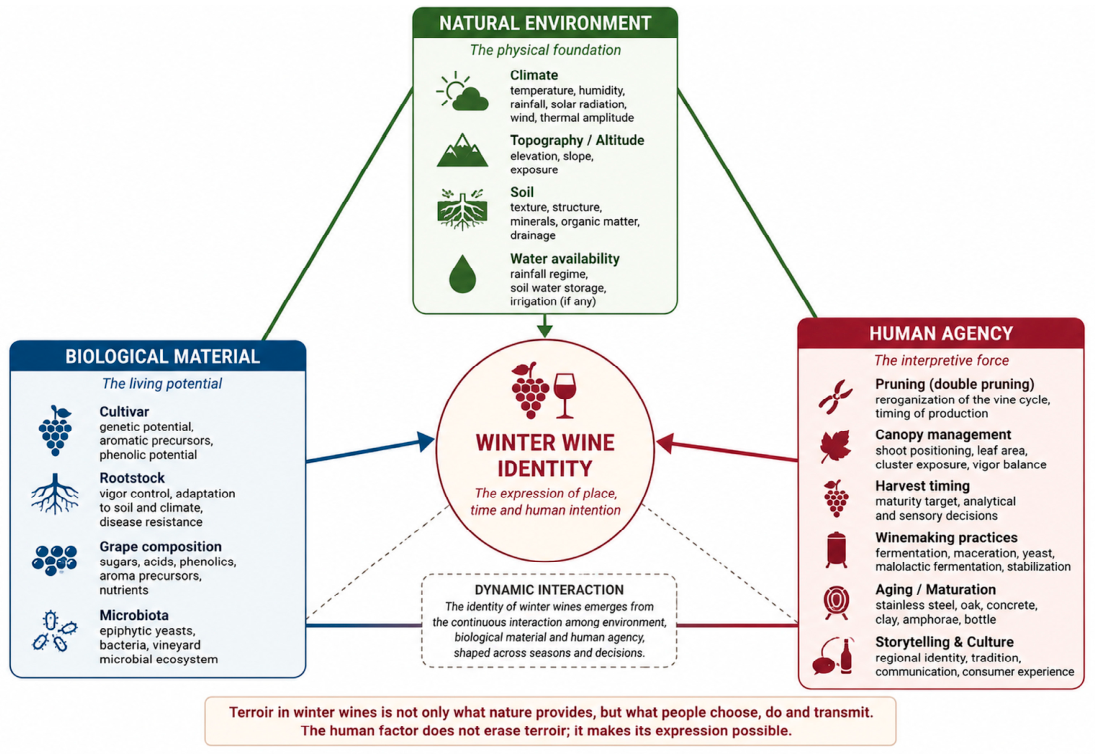
The concept of human-mediated terroir is central to understanding winter wines. The expression is not intended to replace established definitions of terroir, which already recognize human practices as part of the interaction between the vine and its environment. Rather, it is used here as an analytical lens to emphasize how deliberate management decisions become especially visible in the expression of terroir under winter-wine production. In this category, terroir should not be interpreted as a purely natural condition that exists independently of human action, nor should double pruning be understood as a technological intervention that erases the expression of place. Rather, winter wines show that terroir can be reorganized through intentional viticultural management. By shifting grape ripening from summer to autumn–winter, double pruning modifies the temporal conditions under which climate, soil, cultivar, water availability and biological processes interact. The specific conceptual value of “human-mediated terroir” in this context therefore lies in highlighting this temporal mediation: the vineyard remains in the same geographical location, but human intervention changes the seasonal window through which environmental conditions act on grape ripening. In this sense, the terroir of winter wines is natural, technical and cultural at the same time. This understanding also resonates with studies showing that attributes such as origin, identity and quality are not inherent to the product alone, but are shaped by qualification practices and processes that make them perceptible and relevant in the market [
24,
79].
Classical definitions of terroir emphasize the interaction among climate, soil, topography, vine material and human practices in shaping grape composition and wine sensory identity [
17,
18,
80]. More recent interpretations have expanded this view by highlighting that terroir also involves cultural heritage, production norms, collective reputation, communication and consumer experience [
81,
82,
83]. Accordingly, the contribution of the human-mediated terroir perspective is not the introduction of human action into the concept of terroir itself, but the emphasis on how intentional viticultural decisions can reorganize the conditions under which established terroir components are expressed. This broader perspective is particularly useful for understanding winter wines because their identity emerges from the interaction between natural conditions and deliberate vineyard management. In this context, double pruning becomes one of the mechanisms through which terroir is expressed rather than suppressed (
Figure 1).
In winter wines, the first stage of human intervention occurs before the vineyard is planted. Site selection, cultivar choice and rootstock selection determine the biological and environmental basis on which double pruning will operate. Altitude, slope, solar radiation, soil depth, water availability and local disease pressure influence vine growth, berry composition and the feasibility of winter ripening [
16,
17,
40]. At the same time, cultivar and rootstock define the plant’s capacity to respond to the double-pruning, regulate vigor, tolerate water stress, achieve maturity and express varietal attributes under specific edaphoclimatic conditions [
33,
36,
37,
43]. Thus, terroir expression begins with the decision to match plant material to a particular place and production strategy.
The second level of mediation occurs through vineyard architecture and canopy management. Planting density, training system, pruning load, shoot positioning, leaf area, cluster exposure and crop load influence the balance between vegetative growth and fruit development. These practices modify canopy microclimate and berry development, influencing photosynthetic efficiency, disease pressure and the accumulation of compounds related to wine quality, including sugars, acids, phenolics and aroma precursors [
44,
84,
85]. In winter wine production, these decisions are especially important because the vine is managed through two annual cycles: a first cycle oriented toward vegetative formation and a second cycle oriented toward fruit production. Consequently, the expression of place is filtered through a managed vine balance.
Pruning is the most distinctive human intervention in winter wine terroir. In conventional interpretations of terroir, climate is often understood as the seasonal framework within which grape ripening occurs. In winter wines, however, pruning reorganizes the calendar of vine development and changes the seasonal window in which ripening takes place. This does not make climate irrelevant; instead, it changes which climatic conditions become decisive for grape maturation. Summer rainfall, humidity and disease pressure are partially avoided, while winter dryness, cooler nights and thermal amplitude become central to the expression of the wine [
14,
15,
16]. Therefore, double pruning can be interpreted as a technology of temporal terroir: it does not change the location of the vineyard, but it changes the timing through which that location is expressed.
Harvest timing represents another critical point at which human decision-making transforms grape potential into wine identity. The decision to harvest is guided not only by analytical parameters, such as soluble solids, acidity, pH and phenolic maturity, but also by the intended sensory and stylistic profile of the wine. Different harvest dates influence alcohol potential, acidity, anthocyanins, tannins, polysaccharides, aroma compounds, astringency and fruity or overripe notes in the resulting wines [
86,
87]. In winter wines, this decision is particularly relevant because the drier ripening period may allow grapes to remain longer on the vine under lower sanitary risk. As a result, producers may define different maturity targets according to whether the intended style prioritizes freshness, aromatic expression, phenolic structure, concentration or aging potential.
Finally, winemaking represents another key stage of human intervention because it transforms grape composition into sensory identity. Fermentation temperature, yeast selection, nutrient management, maceration length, cap management, oxygen exposure, malolactic fermentation, stabilization, maturation and aging determine how grape composition is translated into the final sensory profile of the wine [
41,
42,
55,
88]. In red winter wines, maceration and extraction decisions are especially important because they determine how anthocyanins, tannins and other phenolic compounds are transferred from skins and seeds to the wine, affecting color, body, astringency and persistence. In white winter wines, pressing, protection against oxidation, fermentation temperature and lees management may be decisive for preserving freshness, aromatic intensity and texture.
Fermentation also connects terroir to microbiology. Alcoholic fermentation is not simply the conversion of sugar into ethanol; it is a microbial transformation that generates volatile compounds, modifies mouthfeel, influences color stability and conditions the subsequent evolution of the wine [
88,
89,
90]. Malolactic fermentation, in turn, is a stylistic and microbiological decision that can reduce perceived acidity, increase microbial stability and contribute to buttery, lactic or creamy notes through compounds such as diacetyl [
66,
91,
92]. In winter wines, the decision to encourage or avoid malolactic fermentation depends on the intended wine style: it enhances softness and complexity in structured reds or fuller-bodied whites but is generally undesirable in aromatic whites, where freshness, acidity and varietal expression are central.
The microbial dimension further broadens the concept of human-mediated terroir. Grape- and vineyard-associated microbial communities are influenced by region, cultivar, vintage, climate, soil and vineyard management, suggesting that microbiota contributes to the biological expression of place [
93,
94,
95]. However, this microbial potential is also mediated by human decisions, including sanitation practices, fungicide use, spontaneous versus inoculated fermentation, yeast strain selection, nutrient addition, sulfur dioxide management and malolactic control. Therefore, microbial terroir is better understood as a biological layer shaped by both environmental conditions and technological practices.
Maturation vessels also function as interpretive tools of terroir. Stainless steel, oak barrels, concrete vessels, clay vessels and other materials differ in oxygen permeability, thermal conductivity, surface area, chemical inertness and their capacity to release exogenous compounds, thereby influencing aroma, color, mouthfeel and wine evolution [
96,
97,
98]. Stainless steel tends to preserve freshness, fruit purity and technical control because it is relatively inert and limits oxygen exposure. Oak contributes oxygen transfer, phenolic interactions and volatile compounds associated with vanilla, spice, toast, smoke and sweetness perception. Concrete and other less aromatic vessels allow oxygen exchange and thermal stability without the same level of exogenous aroma contribution associated with new oak. Therefore, in winter wines, the choice among stainless steel, oak, oval-shaped concrete vessels and other maturation systems becomes part of the stylistic interpretation of origin rather than a neutral technological decision.
This interpretation is especially important because authenticity in wine does not require the absence of technology. Rather, it depends on the coherence among place, grape variety, vineyard management, winemaking and the sensory style communicated to consumers, as well as on qualification and representation practices that make these relationships recognizable in the market [
3,
10,
24,
26,
74,
83]. A wine may be technologically sophisticated and still express terroir if the techniques employed are consistent with environmental conditions, varietal potential and regional identity. Conversely, excessive extraction, inappropriate oak use, uncontrolled fermentation or poor communication may obscure the relationship between wine and its origin, even when grapes come from a distinctive place.
Thus, the identity of winter wines is best understood as the result of interaction rather than opposition. Cultivar provides the biological potential, winter terroir modulates its expression, double pruning reorganizes the timing of ripening, harvest defines the maturity target, and winemaking transforms grapes into a sensory and cultural product. Within this framework, the enologist acts as an interpreter of terroir, selecting which signals of grape, place, and season are preserved, emphasized, or softened. Rather than diminishing the role of nature, this perspective shows that, in winter wines, nature becomes perceptible through human mediation. Rather than reducing the role of nature, this perspective emphasizes that terroir expression in winter wines emerges from the continuous interaction between natural processes and human decisions.
7. Geographical Indication, Regional Identity and Symbolic Value
The consolidation of winter wines as an emerging wine category depends not only on technical quality, but also on territorial recognition, collective reputation and symbolic value. As discussed in previous sections, winter wines represent a broader category based on double pruning, winter ripening and the deliberate reorganization of the grapevine cycle. When this production model becomes associated with a delimited territory, defined production rules and collective reputation, it can also be institutionalized through a geographical indication. Therefore, it is important to distinguish between winter wines as a broader category that may be produced in different regions and Vinhos de Inverno Sul de Minas as a protected geographical indication restricted to a specific territory and regulatory framework. In this context, geographical indications link product quality and reputation to a delimited place, production standards and shared cultural values [
17,
81,
99,
100].
In southern Minas Gerais, the
Indicação de Procedência Vinhos de Inverno Sul de Minas represents a decisive step in transforming a technical production model into a territorially recognized and legally protected indication. Its registration by the Instituto Nacional da Propriedade Industrial (Brazilian National Institute of Industrial Property) formalized the association between the protected name
Vinhos de Inverno Sul de Minas, the delimited production area, double pruning, winter harvest, and local know-how [
34]. The technical specifications require that protected wines be produced from
Vitis vinifera grapes cultivated within the delimited area under a double-pruning system, with harvest during the winter season [
22]. Therefore, rather than defining all winter wines as a broader category, the IP establishes the technical, territorial, and symbolic boundaries of the protected indication
Vinhos de Inverno Sul de Minas.
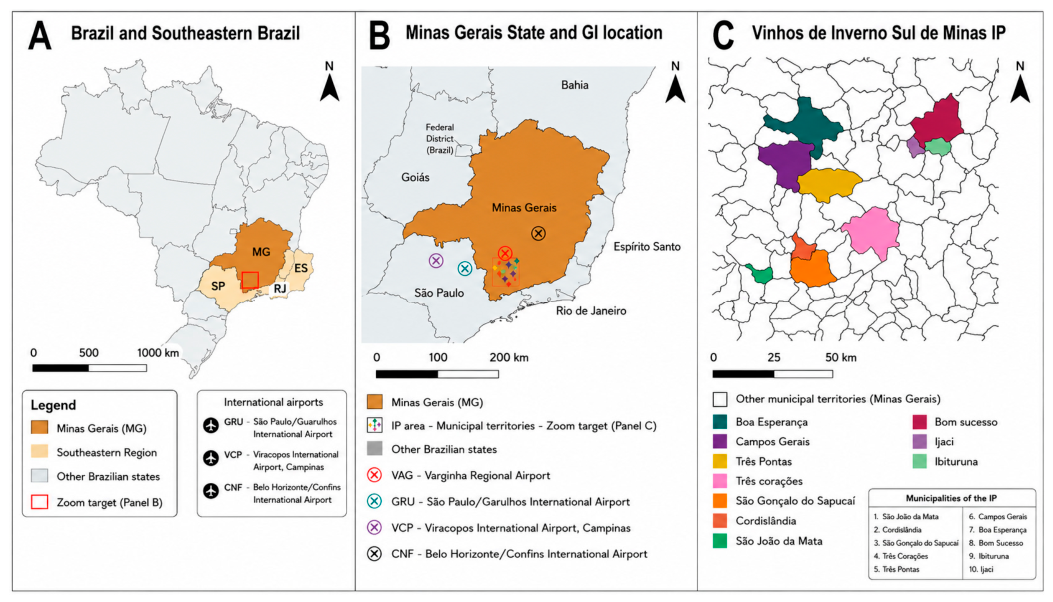
Geographically, the Vinhos de Inverno Sul de Minas IP comprises a discontinuous area of 4239.6 km
2 at elevations of 800 m or higher, distributed within the municipalities of São João da Mata, Cordislândia, São Gonçalo do Sapucaí, Três Corações, Três Pontas, Campos Gerais, Boa Esperança, Bom Sucesso, Ibituruna and Ijaci [
22] (
Figure 2). Its location in southeastern Brazil also places the protected territory within reach of major national and international transport gateways, an aspect that may be relevant to the development of wine tourism.
The
Caderno de Especificações Técnicas (Technical Specifications Booklet) is particularly important because it reduces the risk of conceptual dilution within the geographical indication. It defines authorized cultivars, production systems, harvest period, minimum grape quality parameters, analytical standards, sensory evaluation procedures, traceability mechanisms and quality control rules [
22]. By translating the rules of the geographical indication into criteria, procedures and traceability mechanisms, the Technical Specifications Booklet also contributes to guiding participants’ actions and stabilizing the conditions under which products are qualified and recognized in the market [
10,
24]. Consequently, the protected name
Vinhos de Inverno Sul de Minas remains linked to verifiable production practices rather than becoming a vague marketing expression. This is essential because geographical indications and emerging wine categories may lose credibility when their boundaries are poorly defined or when communication is not supported by objective production criteria.
These quality-assurance benefits, however, are accompanied by direct and indirect compliance costs for producers. Under the current Technical Specifications, applicants must submit a formal Declaration of Products Produced within the established period, maintain updated winery registration and tank identification, demonstrate varietal origin when applicable, permit official sampling from each tank, submit samples for physicochemical and sensory evaluation, maintain an updated traceability record of vinification, handling, storage and bottling operations, and acquire the corresponding control seals [
22]. For each sampled tank, six 750-mL bottles are collected, including bottles used for physicochemical analysis, sensory evaluation, and reference samples. Physicochemical analyses must be performed by laboratories accredited by the Brazilian Ministry of Agriculture, and compliant wines are subsequently submitted to sensory evaluation before the protected indication can be authorized [
22].
The Technical Specifications also establish a direct financial responsibility for applicants: the published rules state that, until the creation of the Regulatory Council’s resource fund, the costs of physicochemical and organoleptic analyses are borne by the requesting producers, while control seals are also paid for by the applicant [
22]. However, the publicly available Technical Specifications do not specify the monetary value of these analyses or seals. Consequently, a precise current compliance cost per certified lot or per bottle cannot yet be calculated from the available documentation. In addition to these direct expenses, compliance involves administrative and managerial costs associated with record keeping, documentation, traceability, sampling, certification procedures and possible re-evaluation of non-approved wines.
These requirements may have scale-dependent effects. Analytical testing, sensory evaluation, certification procedures and administrative tasks include fixed or semi-fixed costs that larger wineries can distribute across greater production volumes, whereas the same requirements may represent a higher cost per bottle and a greater managerial burden for small-scale producers. Broader research on geographical indications has identified adaptation to specifications, protection mechanisms and administrative and bureaucratic costs as relevant transaction costs associated with GI systems [
101]. In Brazilian wine geographical indications, the design of production standards has also been shown to create potential inclusion–exclusion trade-offs; for example, overly restrictive definitions of authorized cultivars were recognized as potentially excluding producers who could not comply with the established production model [
102].
For Vinhos de Inverno Sul de Minas specifically, however, there is currently insufficient empirical evidence to conclude that the existing standards are marginalizing smallholder producers. The rules themselves apply to both NRPROVIN-SM members and other eligible producers seeking certification, indicating that access is not formally restricted to association membership [
22]. Nevertheless, no empirical data were identified comparing certification uptake, compliance expenditure, rejection rates, certified volumes or the proportion of production costs attributable to certification across winery sizes. Therefore, the present concern is better characterized as a potential risk of de facto exclusion rather than demonstrated marginalization. This issue is particularly relevant for a production model in which family-scale properties represent an important component of the broader winter-wine sector [
47]. Ensuring that compliance requirements protect origin and quality without creating disproportionate barriers for smaller producers should therefore become an explicit governance objective of the protected indication.
The authorized varietal repertoire also contributes to the construction of regional identity within the IP. The indication allows red and rosé wines from Syrah, Merlot, Cabernet Franc, Cabernet Sauvignon, Marselan, Tempranillo, Petit Verdot, Pinot Noir and Grenache, and white wines from Sauvignon Blanc, Chardonnay, Viognier and Marsanne [
22]. This selection defines not only the cultivars permitted within the geographical indication but also the expected sensory and stylistic profile of
Vinhos de Inverno Sul de Minas. Consequently, the IP functions both as a regulatory instrument and as a framework for typicity, linking grape varieties, production methods, origin and product identity.
Origin is one of the most important extrinsic cues in wine evaluation. Consumers frequently use information related to geographical origin, appellations and geographical indications as signals of quality, authenticity, reputation and expected sensory style [
26,
103,
104,
105]. However, the influence of these cues depends on consumer knowledge, trust and familiarity with the region. Well-established wine regions benefit from accumulated symbolic capital, whereas emerging regions must still build recognition and credibility. This is because origin and territorial identity do not acquire market relevance merely through their existence, but through processes that make them visible, qualified and recognizable to market participants [
10,
24]. In this context, the
Vinhos de Inverno Sul de Minas can function as both an educational and reputational tool, helping consumers understand that the indication represents not only wines produced during the winter season, but also a specific production system linked to a delimited origin and regional identity.
International evidence supports the importance of geographical indications and appellations in shaping consumer perception and market performance. Studies on origin-labelled wines show that consumers are often willing to pay price premiums for wines associated with recognized origins, particularly when these cues are perceived as credible, meaningful and linked to quality or authenticity [
26,
103,
106]. More recent experimental evidence further demonstrates that GI information has measurable value in pre-purchase evaluations of wines from countries such as France and Spain [
107]. These findings suggest that geographical indications reduce information asymmetry and help consumers infer product quality before tasting, particularly in categories where origin and production standards are central to product identity.
The economic relevance of geographical indications is also well documented. Studies of European wine exports show that quality wines produced in specified regions are associated with higher export values, with volume gains occurring particularly in high-income destination markets [
108]. Broader evaluations of European quality schemes reinforce this evidence: in 2017, EU geographical indications and traditional specialties generated approximately EUR 77.1 billion in sales, of which wines accounted for about EUR 39 billion—more than half of the total value [
109]. Although these figures do not imply that every new GI automatically increases sales, they demonstrate that protected origin can become a powerful market signal when supported by reputation, effective control systems, consumer recognition and consistent communication.
Geographical indications also function as collective brands. Unlike individual winery brands, they depend on coordinated action among producers, regulatory councils, technical institutions and regional stakeholders. This collective dimension is important because wine reputation is built not only by individual labels, but also by the consistency and credibility of the region as a whole [
25,
27]. Sustaining this credibility over time requires coordination among producers, associations and technical institutions, together with mechanisms that make origin and regional identity recognizable in the market [
23,
24]. Internationally, regions such as Champagne, Bordeaux, Burgundy, Rioja, Chianti and Porto illustrate how protected or regionally recognized names accumulate symbolic capital over time, influencing consumer expectations, perceived quality, price positioning and tourism. Although emerging regions cannot immediately achieve the same recognition, these examples highlight the importance of building collective reputation through consistent quality, clear production standards and coherent regional narratives.
In Brazil, Vale dos Vinhedos illustrates how geographical indications support the recognition of wine regions by linking product quality, origin, tourism and regional development [
27,
110]. Similarly, Vale do São Francisco demonstrates how a geographical indication can communicate non-traditional production systems, such as tropical viticulture, through territorial identity and technical specificity [
111]. Vinhos de Inverno Sul de Minas adds another model to this trajectory by combining subtropical high-altitude viticulture, double pruning, winter ripening and regional know-how within a protected indication. Consequently, the IP should be viewed not only as a legal instrument, but also as a strategic framework for building consumer trust, communicating its distinctive identity and strengthening the market positioning of winter wines.
The relationship between geographical indications and regional development is particularly relevant to winter wines. GIs can contribute to territorial development by strengthening local reputation, fostering cooperation among producers, supporting tourism, enhancing landscapes and reinforcing the links among products, culture and place [
27,
99,
100]. The realization of these possibilities, however, depends on collective strategies and organizational conditions capable of connecting producers, institutions, partnerships and support mechanisms over time [
23]. This broader role is explicitly recognized in the technical specifications of the Vinhos de Inverno Sul de Minas, which recommend preserving landscapes, local culture and know-how, protecting terroir expression, promoting originality and encouraging wine tourism [
22]. Consequently, the symbolic value of Vinhos de Inverno Sul de Minas extends beyond the bottle to include vineyards, landscapes, gastronomy, storytelling and regional experiences.
From a rural-development perspective, the winter-wine production model may create opportunities for agricultural diversification, value addition and new forms of interaction between farming, tourism and regional gastronomy. This dimension is particularly relevant because the Brazilian winter-wine sector is strongly associated with family-scale production: ANPROVIN reports that approximately 90% of its associated wineries are family properties and identifies winter viticulture as a diversification alternative in areas historically associated with coffee, grains and dairy farming [
47]. Although these data refer to the broader Brazilian winter-wine sector rather than exclusively to the Vinhos de Inverno Sul de Minas protected geographical indication, they suggest that the expansion of winter viticulture may provide an alternative pathway for maintaining productive rural properties, encouraging farm succession and generating higher-value agricultural activities. In Minas Gerais, public initiatives to develop wine-tourism routes similarly frame viticulture and enotourism as potential generators of employment, income and complementary economic activity involving accommodation, restaurants, gastronomy and rural tourism [
112].
The protected geographical indication may reinforce these territorial linkages because protected wines must use grapes produced within the delimited area and comply with locally defined production and traceability requirements [
22,
34]. In principle, this territorial anchoring can stimulate relationships among grape growers, wineries, tourism businesses, restaurants, local food producers and service providers. However, these effects should not be assumed to be automatically inclusive. The broader geographical-indication literature shows that territorial-development outcomes depend strongly on collective governance, participation, institutional coordination and the distribution of value among local actors [
23,
99,
100]. For the
Vinhos de Inverno Sul de Minas indication specifically, no empirical studies were identified that quantify changes in rural household income, employment, generational succession, land values or the distribution of economic benefits among producers and other community actors. Likewise, no direct evidence was identified concerning impacts on traditional communities in the more specific sociocultural sense of this term. Therefore, the contribution of the protected indication to inclusive rural development should presently be considered a plausible but still insufficiently tested outcome rather than an established effect.
The environmental implications are similarly multidimensional. Shifting grape ripening and harvest from the wet summer to the drier winter reduces rainfall exposure during critical maturation stages and can reduce disease pressure, which creates the possibility of reducing crop losses and some disease-control interventions [
13,
14,
15,
16]. However, direct comparative evidence demonstrating lower pesticide use or a lower environmental footprint for winter wines is currently insufficient. Moreover, moving the productive cycle into the dry season can increase dependence on irrigation. Schwan [
113], studying drip-irrigated Syrah under double pruning, reported accumulated crop evapotranspiration of 416.10 mm and 350.71 mm in the 2021 and 2024 cycles, respectively, illustrating that water demand is an important component of the environmental assessment of this production system.
Double pruning may also involve environmental trade-offs associated with managing two annual vine cycles, including additional pruning and canopy operations, labor, machinery use, fertilization, crop protection, and energy demand. Consequently, neither double pruning nor geographical-indication status should be interpreted as intrinsically sustainable. The protected indication provides a governance framework that explicitly values landscape, local culture, know-how, terroir and wine tourism [
22], but evidence of actual ecological improvement will require monitoring of water use efficiency, pesticide and fertilizer inputs, soil quality, erosion, biodiversity, energy consumption, greenhouse-gas emissions and land-use change. The sustainability of
Vinhos de Inverno Sul de Minas should therefore be understood as a territorial objective to be measured and managed rather than as an environmental attribute that can presently be assumed from the production model itself.
Wine tourism introduces an additional environmental dimension because the expansion of visitor flows may place pressure on the carrying capacity of rural wine-producing territories. Increased visitation can generate additional vehicle movements, parking and road-infrastructure demand, waste and wastewater generation, water and energy consumption, noise and pressure for new tourism-related facilities, while accommodation, restaurants, event spaces and parking areas may alter rural land-use patterns. Evidence from other wine regions supports the need for caution. In Australia, Sun and Drakeman [
114] showed that wine tourism and cellar-door sales can generate substantially higher carbon emissions per bottle than conventional wine-distribution channels, demonstrating that the environmental benefits of direct sales cannot be assessed without considering tourism-related mobility. In the Swan Valley wine region, Soontiens et al. [
115] identified land-use and infrastructure challenges associated with the interaction between wine tourism development and the preservation of rural agricultural functions. In Brazil, research in Vale dos Vinhedos similarly found that the socioeconomic benefits generated by wine tourism coexist with negative impacts and territorial conflicts, emphasizing the importance of planning and coordination [
116].
For Vinhos de Inverno Sul de Minas specifically, no empirical assessment of tourism carrying capacity, visitor-induced traffic, tourism-related land-use change or the ecological footprint of wine tourism was identified. Consequently, the promotion of wine tourism within the protected geographical indication should not be interpreted as environmentally beneficial by definition. As visitor numbers and tourism infrastructure expand, carrying-capacity assessment should consider both environmental and social thresholds, including seasonal visitor flows, road traffic and parking demand, water and energy consumption, solid waste and wastewater generation, land conversion, landscape integrity, biodiversity disturbance and residents’ perceptions of crowding and changes in rural amenity. Such monitoring would help determine the level of tourism development that can be accommodated without compromising the agricultural landscape, local quality of life or the environmental attributes that support the territorial identity of the protected indication.
This symbolic dimension is particularly relevant to wine tourism because winery visits transform abstract origin cues into tangible experiences of place. In winter wines, explaining double pruning while experiencing the vineyard, landscape and altitude helps translate technical complexity into sensory and emotional meaning. Consequently, wine tourism reinforces the credibility of both the broader winter wine category and the protected indication
Vinhos de Inverno Sul de Minas by connecting origin, production methods, sensory experience and memory [
28,
31]. This is especially important because the category still depends on helping consumers understand a production system that remains unfamiliar outside specialized circles.
At the same time, building symbolic value requires caution. Associating winter wines with innovation should not replace the need for consistency, quality, and typicity. If the category is communicated primarily as a novelty, without clear standards or sensory coherence, it may attract initial interest but not long-term recognition. Conversely, by aligning production rules, analytical and sensory evaluation, traceability, regional storytelling and market communication, the Vinhos de Inverno Sul de Minas can develop a stronger and more enduring identity. In this context, the geographical indication should be understood not merely as a label, but as a commitment to collective quality and territorial identity.
The risk of mischaracterization is also relevant. Because double pruning can be adopted in different regions, not every wine produced under this system will share the territorial identity, production standards, or collective reputation of wines protected by the Vinhos de Inverno Sul de Minas. This distinction is essential for the future of the category. Winter wine represents a broader technical and market category based on double pruning and winter ripening, whereas Vinhos de Inverno Sul de Minas designates a specific geographical indication defined by its origin, authorized cultivars, production standards, traceability and collective reputation. Preserving this distinction helps avoid confusion between a production technique, a wine category and a certified geographical origin.
8. Sensory Identity and Quality Evaluation
Sensory identity plays a central role in the formation and recognition of winter wines as an emerging wine category. While the previous sections established its technical, varietal, territorial, and institutional foundations, this section examines how these characteristics are translated into recognizable and valued sensory profiles. Sensory analysis is therefore essential to determine whether winter wines can be defined not only by their production system, but also by how they are perceived.
In wine science, sensory analysis provides the link between grape composition, winemaking decisions, product quality and consumer perception. Physicochemical analyses quantify attributes such as alcohol, acidity, pH, sugars, phenolic and volatile compounds, and color, whereas sensory methods determine how these components are integrated and perceived as appearance, aroma, taste, mouthfeel, balance, persistence and overall quality [
42,
117,
118]. This distinction is particularly important for winter wines because their category claim is based on a technical and territorial differentiation that must become perceptible and meaningful in the glass.
The first contribution of sensory analysis to winter wines is discrimination. Discriminative methods determine whether wines differ according to production cycle, cultivar, vineyard, winery, harvest maturity, aging vessel or enological process. Triangle tests, duo-trio tests, paired comparison tests and difference-from-control tests may be used to determine whether differences are perceptible before more complex descriptive or consumer studies are conducted [
117,
119]. In the context of winter wines, these methods could answer practical questions such as whether wines from summer and winter cycles are sensorially distinguishable, whether different rootstocks or canopy practices generate perceptible differences, or whether maturation in stainless steel, oak or oval-shaped concrete vessels modifies the sensory profile in a meaningful way.
Discriminative approaches are especially useful for quality control. Winter wines depend on consistency across vintages, wineries and lots if they are to become recognizable as a category. Sensory quality control can help detect deviations, oxidation, reduction, excessive volatile acidity, microbial spoilage, oak imbalance, lack of freshness or undesirable herbaceousness. It can also verify whether wines remain aligned with the expected profile defined by producers, technical specifications or regional sensory standards. This is particularly relevant for protected wines and geographical indications, where sensory conformity is increasingly recognized as part of the validation of typicity and authenticity [
73,
74,
78].
The second contribution is descriptive. Descriptive methods are fundamental for building the sensory lexicon of winter wines and identifying the attributes that characterize different styles within the category. Trained panels can quantify appearance, aroma, taste, and mouthfeel descriptors, including color intensity, hue, limpidity, viscosity, fruity, floral, herbaceous, spicy, mineral, and oak-derived aromas, as well as acidity, sweetness, bitterness, alcohol warmth, body, astringency, tannin quality, balance, and persistence. This is important because a systematic description of the sensory profile helps communicate the category more clearly and connect its technical characteristics to the consumer experience.
Descriptive methods are also essential for distinguishing varietal typicity from regional or category typicity. Syrah winter wines, for example, have been associated with high phenolic content, color stability, and sensory characteristics maintained after bottle aging, supporting their role as an emblematic style within the category [
57]. However, winter wine typicity should not be reduced to Syrah alone. Other cultivars, including Sauvignon Blanc, Chardonnay, Viognier, Marsanne, Cabernet Sauvignon, Cabernet Franc, Merlot, Marselan, Tempranillo, Petit Verdot, Pinot Noir and Grenache, may contribute distinct sensory profiles. Therefore, descriptive studies are needed to distinguish attributes primarily associated with cultivar from those related to winter ripening, regional origin, or specific winemaking practices.
Rapid sensory methods complement conventional descriptive analysis, particularly when the objective is to involve consumers or semi-trained assessors. Check-All-That-Apply (CATA) questions allow consumers to describe samples using a predefined list of attributes, generating sensory maps and identifying the descriptors associated with each wine [
120,
121]. Rate-All-That-Apply (RATA) extends this approach by asking assessors not only to select applicable terms but also to rate their intensity, increasing discrimination among samples [
122,
123]. In winter wine research, these methods are especially useful for comparing varietal wines, blends, maturation vessels, wineries and tasting contexts while identifying the attributes associated with consumer liking or rejection.
Sorting and projective mapping further expand the sensory characterization of winter wines by exploring how consumers, experts and wine professionals organize samples according to perceived similarity without requiring an extensive trained vocabulary. Projective mapping and ultra-flash profiling have been used in wine studies to investigate sensory differences, typicity and regional differentiation, including comparisons among experts and consumers [
124,
125,
126]. For winter wines, these approaches could help determine whether professionals or consumers naturally group wines according to cultivar, region, winery, maturation vessel or perceived winter wine identity. This is particularly valuable for an emerging category whose sensory boundaries are still being established.
Qualitative and semi-qualitative methods should also be considered. Focus groups, free listing and open-ended questions can access spontaneous descriptors, associations, symbolic meanings and consumer interpretations that structured methods may fail to capture. In the case of winter wines, this is particularly relevant because consumers may not be familiar with the terms “double pruning” or “winter harvest”. Focus groups can help identify whether these concepts are understood, whether they generate curiosity or confusion, and which sensory or symbolic associations consumers make when tasting wines after receiving information about origin, production method, or winery narrative. These methods can therefore support both sensory lexicon development and communication strategies.
Dynamic sensory methods provide additional insight because sensory perception evolves throughout consumption. Temporal Dominance of Sensations (TDS) records the dominant sensation over time, whereas Temporal Check-All-That-Apply (TCATA) allows assessors to continuously select and deselect multiple attributes as perception changes [
127,
128,
129,
130]. These methods are particularly relevant for wine because they capture the temporal evolution of sensory perception, which cannot be fully described by static sensory methods. In winter wines, TDS and TCATA can characterize the temporal profiles of different wine styles, revealing how sensory perception evolves throughout consumption.
Affective methods are essential to determine whether sensory differences are relevant and desirable to consumers. Hedonic scales, preference tests, purchase intention, and willingness-to-pay measures evaluate whether wines are accepted, preferred, and economically valued by different consumer segments [
117,
119,
131]. This is important because the recognition of winter wines as a market category depends not only on technical differentiation and expert evaluation, but also on their acceptance and perceived relevance among different consumer groups. A wine may be chemically distinctive and sensorially recognizable, but if its sensory profile or price positioning does not match consumer expectations, its market potential will be limited.
Drivers of liking and purchase should therefore be central to future winter wine research. For red wines, fruit intensity, soft tannins, balance, body and persistence are likely to enhance liking, whereas excessive bitterness, acidity, astringency, alcohol warmth or herbaceousness may reduce acceptance depending on consumer segment and consumption context [
132,
133,
134]. For white wines, freshness, aromatic intensity, citrus and tropical fruit notes, balanced acidity and a clean finish are expected to be important drivers, particularly for Sauvignon Blanc-based winter wines. However, these relationships require empirical validation, as winter wine consumers may include both experienced consumers seeking typicity and novelty-oriented consumers attracted by origin, storytelling and wine tourism.
Integrating sensory and chemical data is essential for explaining why winter wines differ and how their quality can be managed. Multivariate approaches can relate sensory attributes to phenolic compounds, anthocyanins, tannins, organic acids, volatile aroma compounds, alcohol, pH, color parameters and markers of aging or oxidation. Studies in wine have shown that sensory attributes can be associated with volatile and phenolic composition, vineyard characteristics and analytical quality indicators [
135,
136,
137]. For winter wines, this integration can clarify how winter ripening influences grape composition and the resulting sensory profile.
Sensory evaluation should also distinguish between expert and consumer perspectives. Specialists, trained assessors and wine professionals are essential for developing sensory lexicons, evaluating typicity, detecting defects and establishing quality standards. Consumers, in turn, provide information on acceptance, preference, purchase intention, willingness to pay and responses to extrinsic cues. Because these groups evaluate wines from different perspectives, winter wine research should integrate both approaches. Experts tend to emphasize typicity, technical quality and regional coherence, whereas consumers respond more strongly to liking, familiarity, price, origin, storytelling and tasting context [
72,
74,
77,
138].
The sensory evaluation of winter wines should also include blind and informed conditions. Blind tasting can isolate intrinsic sensory attributes, while informed tasting can reveal the influence of origin, geographical indication, double pruning, winter harvest, winery story and enotourism experience on perception and valuation. This distinction is relevant because wine is a product in which extrinsic cues can strongly influence expected quality, perceived quality, purchase intention and willingness to pay [
26,
138,
139]. For wines, comparing blind laboratory tastings with informed or winery-based tastings would help determine whether storytelling amplifies perceived value and whether this effect is supported by the intrinsic sensory quality of the wines.
Finally, sensory analysis can support communication. A well-defined sensory lexicon helps producers, geographical indication councils and tourism professionals translate technical complexity into language that consumers can easily understand. Rather than communicating only production practices, producers can relate them to the resulting sensory profile. This connection between production system and sensory experience is essential for building credibility: storytelling may attract consumers, but sensory evidence sustains trust.
9. Consumer Perception, Wine Tourism and Market Positioning
Direct empirical evidence on consumer perception, willingness to pay and wine-tourism responses specifically to winter wines remains scarce. Accordingly, the following discussion does not assume that effects established in the broader wine literature necessarily occur for winter wines. Instead, studies on wine origin, geographical indications, extrinsic cues, storytelling, wine tourism and consumer segmentation are used as contextual evidence to formulate testable hypotheses about how consumers may respond to the category. These hypotheses require validation through winter-wine-specific studies conducted under blind, informed and winery-based conditions.
The market potential of winter wines depends, among other factors, on the ability to translate their technical complexity into narratives, experiences and attributes that consumers can understand and value. Consumer choices are shaped by both intrinsic attributes, such as aroma, taste, body and balance, and extrinsic attributes, such as origin, price, brand, grape variety, certification, label information, awards and reputation [
29,
77,
104,
140,
141]. Thus, the challenge is not merely to explain how winter wines are produced, but to demonstrate how this production system is connected to quality, identity and experiential attributes that consumers may value.
Consumer familiarity is likely to be one of the first barriers to the development of winter wines as a category. Terms such as “double pruning” and “winter harvest” are technically precise, but they may not be immediately clear to ordinary consumers. Wine consumers often rely on simplified and recognizable cues to reduce uncertainty during purchase, especially when they have limited knowledge or low involvement with wine [
140,
141,
142]. Label content, origin information, grape variety, and visual design can influence attention, interpretation, and purchase intention, particularly when consumers need to make decisions in retail environments with many competing alternatives [
29,
104,
143]. Consequently, communicating winter wines only through technical terminology may limit the category to specialists and highly involved consumers. Effective communication should translate agronomic innovation into meaningful consumer benefits.
Double pruning may become a compelling innovation narrative when it is linked to outcomes that consumers can recognize and value. Instead of being presented merely as a vineyard technique, it can be communicated as a strategy that shifts grape ripening to a drier and cooler season, thereby creating potentially more favorable conditions for grape quality and contributing to distinctive wine styles. This translation is important because consumers do not buy production techniques, but the benefits, experiences, authenticity and symbolic value they represent [
3,
26,
141]. Similar dynamics have been observed in other differentiated wine categories, such as natural, sustainable and low- or no-alcohol wines, where production practices become meaningful only when associated with values, lifestyles, sustainability, health or sensory expectations [
5,
7,
144]. Accordingly, double pruning should be presented as part of a broader narrative involving climate adaptation, human ingenuity, high-altitude tropical and subtropical viticulture, and regional identity.
The concept of high-altitude tropical terroir may be particularly valuable for positioning winter wines. Internationally, Brazilian wines are still often perceived as a novelty, while Minas Gerais is more closely associated with cultural heritage, gastronomy, and regional products than with fine wines. Although this presents a challenge, it also creates an opportunity. Place-based narratives can strengthen authenticity and differentiation when consumers recognize the connection between origin, production practices and product identity [
3,
26,
28,
81]. Winter wines can therefore contribute to an emerging Brazilian wine identity, not by imitating traditional European regions, but by emphasizing a distinctive production model based on altitude, climate adaptation, double pruning and regional food culture. This positioning can transform unfamiliarity into curiosity, provided it is supported by consistent communication and sensory quality.
International recognition of Brazilian winter wines is currently growing, although it remains more evident in specialized wine circles than in broad commercial distribution. An important milestone was the international recognition of winter-harvest Syrah at the Decanter World Wine Awards, which helped bring the double-pruning production model to the attention of international critics and wine professionals [
145]. More recently, wines from the
Vinhos de Inverno Sul de Minas protected geographical indication received 18 medals at the 2026 Decanter World Wine Awards, including 11 Silver and seven Bronze medals [
146]. Commercial internationalization is also beginning to emerge: in 2026, winter wines from Minas Gerais producers using double pruning were selected for an export initiative targeting the premium French market, including restaurants and specialized wine bars [
147]. These developments indicate increasing international visibility and reputational recognition; however, they should not be interpreted as evidence of broad market consolidation. International recognition is currently driven primarily by wine competitions, specialist media and selective export initiatives, while production scale, distribution and consumer familiarity abroad remain comparatively limited [
145,
147].
Origin, certification and geographical indication can support this communication process. Origin is a major extrinsic cue in wine evaluation and can influence expected quality, perceived authenticity, willingness to pay and purchase intention, especially when consumers perceive the region as credible or meaningful [
26,
103,
107,
138,
139]. For winter wines, the Vinhos de Inverno Sul de Minas can help reduce uncertainty by connecting the protected indication to a delimited territory, production rules, traceability and collective reputation. At the same time, the broader category of winter wines may benefit from regional communication strategies that clarify the difference between the production system and the protected geographical indication.
Storytelling is particularly relevant because winter wines require explanation. Wine storytelling can influence the wine tourism experience by shaping winescape perception, sensory attraction, wine excitement and cultural experience [
28]. More broadly, wine tourism studies show that the experience of place, hospitality, landscape, tasting, producer interaction and cultural interpretation can influence consumer attitudes, satisfaction, destination image, brand image and loyalty [
31,
148,
149,
150,
151]. In the case of winter wines, storytelling can connect technical elements, such as double pruning and winter ripening, to more intuitive consumer themes, such as climatic adaptation, mountain landscapes, local gastronomy, innovation, producer identity and regional authenticity. However, storytelling should complement, not replace, sensory quality. The narrative must remain consistent with the product; otherwise, it may create expectations that the wine cannot fulfill.
Wine tourism can play a strategic role in this translation process. Winery visits allow consumers to experience vineyards, landscapes, production practices, and interactions with producers while tasting wines at their place of origin. This experience transforms an abstract technical concept into a tangible and memorable expression of origin. Studies indicate that wine tourism experience can influence consumer attitudes, evaluation of intrinsic and extrinsic wine attributes, brand perception and loyalty, while also providing useful segmentation opportunities for wineries and regions [
31,
149,
150,
152]. For winter wines, wine tourism can therefore serve as a space of translation, integrating learning about double pruning, landscape contemplation, events, narratives, and participation in vineyard activities, while connecting the technique to the visitor’s sensory and territorial experience [
153,
154].
This educational function, however, represents only one dimension of the wine tourism experience. Visits may also combine learning, landscape contemplation, events, narratives and active participation in vineyard-related activities, enabling different forms of engagement with wine and territory [
153,
155,
156]. In the case of winter wines, guided tastings can translate double pruning into consumer knowledge; the landscape can make the relationship among altitude, season and production perceptible; events and narratives can connect wine to regional culture; and participatory activities can promote deeper immersion in the production context. When combined, these elements expand the experience beyond tasting and may enhance satisfaction, memory formation and the visitor’s relationship with the winery and the destination [
31,
154]. In this sense, the visit does not merely communicate a previously defined value, but also participates in the qualification of the wine by making its origin, production system and sensory attributes perceptible and open to consumer evaluation [
10,
24].
Contextualized tasting is especially important for winter wines. Blind tasting remains essential for evaluating intrinsic sensory quality without the influence of extrinsic cues, whereas informed tasting reveals how information related to origin, production system and regional identity shapes consumer perception and product valuation. Studies with wine have shown that external information, including origin, grape variety, label cues and other product information, can influence hedonic evaluation, quality perception and willingness to pay [
138,
139,
157,
158,
159]. Therefore, future studies on winter wines should compare blind, informed and winery-based tasting conditions. This design would help determine whether the winter wine narrative increases perceived value and whether this increase is supported by the wine’s intrinsic sensory quality.
Purchase intention and willingness to pay are central indicators for the market positioning of winter wines. A technically differentiated wine does not automatically become commercially successful. Consumers must perceive the difference as relevant, desirable and worth paying for. In wine markets, willingness to pay can be influenced by origin, price, grape variety, certification, sustainability cues, brand reputation, label information, awards and sensory liking [
140,
141,
158,
160,
161,
162]. For winter wines, willingness to pay may depend on whether consumers value the combination of innovation, Brazilian origin, geographical indication, sensory quality, rarity, tourism experience and regional gastronomy.
Consumer segmentation is essential because winter wines are unlikely to appeal equally to all consumers. Highly involved consumers may be more receptive to technical explanations, terroir narratives and innovation, whereas less involved consumers are more likely to rely on price, label design, familiarity with grape varieties, recommendations and tasting experiences [
141,
142,
163]. Wine tourists may value landscapes, hospitality and educational experiences, while local consumers may place greater emphasis on regional identity, gastronomy and accessibility. Likewise, novelty-seeking consumers may be attracted by the concept of Brazilian winter wines, whereas more risk-averse consumers may depend on stronger quality cues, such as awards, expert ratings, geographical indications and trusted winery brands. Future studies should therefore move beyond treating “the wine consumer” as a homogeneous group and instead identify segments based on involvement, knowledge, motivations, values, price sensitivity and openness to innovation.
Several factors may limit the adoption of winter wines. These include limited familiarity with the category, the technical complexity of double pruning, premium price positioning without a clear value proposition, limited market availability, and confusion between winter wines as a production category and Vinhos de Inverno Sul de Minas as a protected geographical indication. These challenges are consistent with broader wine consumer research showing that perceived risk, limited knowledge, information complexity, and unfamiliar origins can negatively influence purchase decisions, particularly among less involved consumers [
104,
138,
141,
142]. Consequently, consumer education, consistent labeling, guided tastings, effective storytelling and strategic distribution may contribute to the development and recognition of winter wines as a market category.
Quantifying the current market size of Brazilian winter wines is challenging because no consolidated public statistics were identified for sales revenue, retail value or market share specifically attributable to this category. Nevertheless, production indicators show that the segment has expanded rapidly. In 2026, ANPROVIN reported 56 associated wineries, approximately 1.49 million grapevines and an annual production of about 1.1 million bottles, with a projected 15% increase in production for the 2026 harvest [
47]. More recent sector reporting indicated approximately 60 ANPROVIN-associated wineries, around 500 ha of vineyards, and approximately 1.5 million bottles produced in 2025 [
164]. In addition, more than 100 wine-growing projects are reported to be under development in these emerging production regions, bringing the broader area associated with expanding winter viticulture to more than 1000 ha [
164]. These figures indicate that winter wines currently represent a relatively small but rapidly expanding segment of the Brazilian fine-wine industry. However, because available figures are based primarily on producer-association and sector reports rather than standardized national market statistics, they should be interpreted as indicators of production scale rather than as a precise estimate of market value.
Current marketing and distribution channels for Brazilian winter wines remain heterogeneous and are largely producer-led rather than organized through a single national distribution structure. Direct-to-consumer channels are particularly visible, including on-site winery stores, proprietary e-commerce platforms and sales associated with winery visits, guided tastings and other wine-tourism experiences. Producers such as Guaspari and Villa Santa Maria combine wine tourism with direct and online sales, illustrating how experiential and digital channels can operate together in the commercialization of winter wines [
165,
166]. At the collective level, ANPROVIN promotes the category through festivals, tastings, specialist media and other communication initiatives [
167,
168]. Professional trade fairs provide an additional B2B channel: participation in ProWine São Paulo brings winter-wine producers into contact with importers, distributors, sommeliers, retailers and other wine-sector professionals [
169]. International distribution remains more selective and incipient, relying on targeted export initiatives and international trade events rather than broad foreign retail penetration [
147]. Thus, the current commercialization model combines direct sales, digital commerce, wine tourism, specialized retail, collective promotional events and emerging B2B and export channels, reflecting a category that is expanding but has not yet achieved mass-market distribution.
At the same time, winter wines offer substantial market opportunities. They can be positioned around authenticity, innovation, origin, sensory differentiation and regional identity. Their connection with Minas Gerais also creates opportunities to integrate wine with local gastronomy, artisanal products and rural tourism, strengthening the experiential and cultural dimensions of consumption. Wine tourism research demonstrates that winescape, sensory attraction, cultural experiences, satisfaction and memorable visits influence consumer engagement and post-visit behavior [
31,
148,
149,
150,
152]. More broadly, wine consumption is not only sensory, but also social, cultural and experiential. Consequently, winery visits, food pairings and regional narratives can position winter wines as part of a broader lifestyle and territorial experience.
Market communication should therefore combine technical accuracy with consumer accessibility. A possible communication hierarchy would begin with simple category cues, such as “winter harvest wine” or “wine from grapes ripened in winter”, followed by explanatory content about double pruning, high-altitude terroir and regional origin. Labels, back labels, QR codes, winery websites, guided tastings and tourism experiences can then provide deeper information for consumers who want to learn more. This layered strategy is consistent with research showing that different consumer segments use wine information differently depending on involvement, knowledge, purchase context and familiarity with the product [
29,
141,
142,
163]. It avoids overloading less involved consumers while still offering technical depth to experts, wine enthusiasts and tourists.
The development of winter wines as a market category will require empirical consumer research. Future studies should measure familiarity with the term “winter wine”, comprehension of double pruning, perceived authenticity, expected quality, sensory liking, purchase intention and willingness to pay. They should also test how different communication frames influence consumer response: innovation, terroir, Brazilian origin, Minas Gerais identity, sustainability, high-altitude viticulture, geographical indication, awards or gastronomy. Discrete choice experiments, experimental auctions, blind versus informed tasting designs, CATA-based consumer profiling and segmentation studies could help identify which attributes and messages are most effective for different consumer groups [
107,
138,
140,
158,
163].
Consumer perception, wine tourism and market positioning may become important components in the future consolidation of winter wines as a market category. However, their actual effects on consumer understanding, perceived value, purchase intention, willingness to pay and market acceptance remain to be demonstrated empirically. Wine tourism, storytelling and contextualized tastings should therefore be regarded as potential mechanisms for category development rather than as established drivers of market success. Future studies should test whether aligning technical characteristics, sensory quality, communication strategies and consumer experience effectively increases recognition and valuation of winter wines.
10. Challenges and Future Research Agenda
The formation and recognition of winter wines as a wine category still face technological, scientific, sensory and market-related challenges. The previous sections indicate that double pruning can create a favorable production window, that cultivars generate diverse styles, and that human-mediated terroir, geographical indication, sensory evidence, wine tourism and storytelling can support category recognition. The main limitation is that these dimensions remain only partially connected. The next stage of research should therefore integrate viticulture, enology, microbiology, sensory science, consumer behavior, marketing and regional development rather than treating winter wines only as an agronomic innovation.
A first challenge is conceptual standardization. Winter wine may function as a broad technical and market category associated with double pruning and winter ripening, whereas Vinhos de Inverno Sul de Minas is a protected geographical indication with delimited origin, authorized cultivars, production rules and control procedures. This distinction is essential to avoid both excessive generic use of the term and unnecessary restriction of the broader category. Future institutional communication should distinguish clearly among technique, category and protected origin.
A second challenge is the uneven scientific evidence. Current studies support the agronomic and enological potential of double pruning, especially in southeastern Brazil and particularly for Syrah [
13,
14,
15,
16,
57]. Recent studies have expanded knowledge on cultivar performance, rootstocks and biochemical composition under double-pruning management [
33,
37]. Nevertheless, for several authorized cultivars, including Marselan, Petit Verdot, Pinot Noir, Grenache, Viognier and Marsanne, direct evidence on winter-cycle performance, grape composition, sensory profile and consumer acceptance remains scarce or absent.
Multi-cultivar, multi-region and multi-vintage studies should be prioritized because category identity cannot be inferred from isolated cultivars, sites or vintages. Such studies should compare winter and traditional cycles, evaluate rootstock and canopy-management effects, and determine which compositional and sensory attributes are stable across production contexts. This is particularly important because wine identity is shaped by cultivar, climate, soil, management and vintage variation [
17,
18,
44].
A third challenge is to separate the technical condition of double pruning from perceived quality. Double pruning can improve the possibility of achieving better sanitary status, technological maturity and phenolic development, but it does not guarantee consumer-valued quality by itself. Wine quality also depends on cultivar adaptation, balanced yields, canopy management, harvest timing, fermentation control, maturation choices and sensory coherence, while price positioning affects how this quality is perceived and evaluated in the market [
14,
16,
36,
37]. Future studies should test how double pruning influences grape composition, sensory attributes, liking, purchase intention, and willingness to pay instead of assuming a direct equivalence between technique and perceived value.
Economic research should also compare the feasibility of double-pruning systems across producer scales. Future studies should quantify establishment and annual operating costs, labor requirements, yield, cost per kilogram of grapes, cost per bottle, break-even price, payback and return on investment for small, medium and large producers, while also comparing own-winery and outsourced-winemaking models. Such analyses are necessary to determine whether the premium positioning currently associated with winter wines can compensate for the additional management costs of double pruning under different production scales.
Sensory and chemical-sensory research remain central to this agenda. Winter wines need a lexicon that distinguishes varietal typicity from attributes associated with winter ripening, regional origin and winemaking choices. Descriptive analysis, CATA, RATA, sorting, projective mapping, focus groups, TDS and TCATA can provide complementary information on sensory identity, consumer vocabulary, temporal perception and typicity [
120,
122,
123,
127,
129]. These sensory data should be integrated with phenolic compounds, anthocyanins, tannins, organic acids, volatile compounds, alcohol, pH, color parameters, and aging markers to explain why winter wines differ and how quality can be managed [
42,
135,
136,
137].
Consumer and market research are equally necessary. At present, there is limited evidence on how ordinary consumers understand the term winter wine, whether they perceive double pruning as valuable, and which intrinsic and extrinsic cues drive liking, purchase intention and willingness to pay. Future studies should compare blind, informed and winery-based tastings; test communication frames based on innovation, origin, geographical indication, sustainability, Brazilian identity, Minas Gerais identity and gastronomy; and segment consumers according to involvement, knowledge, motivations, price sensitivity and openness to innovation [
29,
77,
104,
140,
141].
Beyond consumer responses, future research should also examine how the category is organized through the actions of different actors and market practices. This includes investigating how producers, associations, research institutions, suppliers, regulatory bodies, wine tourism agents and commercialization channels participate in defining, qualifying and circulating winter wines. It is also necessary to understand how standards, technical documents, labels, traceability systems, events, tourist routes and communication platforms coordinate relationships and make attributes such as origin, production system and regional identity recognizable in the market [
10,
11,
24].
The distributive effects of compliance should also be investigated. Future studies should quantify the direct and indirect costs of certification, including physicochemical analyses, sensory evaluation, control seals, product sampling, traceability, record keeping and administrative labor, and express these costs both per certified lot and per bottle. Comparisons across small, medium, and large wineries are necessary to determine whether fixed compliance requirements disproportionately affect producers with lower production volumes. Research should also examine certification uptake and rejection rates by producer size, access to technical assistance and accredited laboratories, and the extent to which certification costs influence decisions not to participate in the protected indication. Governance mechanisms such as shared analytical services, collective traceability infrastructure, technical assistance, transparent fee schedules and scale-sensitive support mechanisms should be evaluated as potential ways of preserving rigorous quality control while avoiding unintended exclusion of small-scale producers.
Wine tourism should be considered both a communication channel and a research context. Winery visits can help consumers understand double pruning, winter ripening, landscape, altitude, regional gastronomy and producer identity, while also allowing researchers to evaluate how contextualized experiences influence memory, authenticity, purchase intention and loyalty. This is particularly important for winter wines because the category is technically complex and still unfamiliar outside specialized circles [
22,
24,
136,
137]. Future studies should also compare the experience designed by wineries with the experience perceived by visitors, examining how learning, landscape, narratives, entertainment and participation in activities influence visit evaluation and visitors’ relationships with the wine and the destination [
153,
154,
170].
Climate adaptation, sustainability and microbiology also require attention. The principle of phenological manipulation may inform broader adaptation strategies in temperate regions facing warming, earlier harvests, higher sugar accumulation and lower acidity, although practices developed in one region cannot be transferred without local validation [
21,
49,
50,
51,
54]. At the same time, the environmental balance of double pruning should be evaluated through indicators such as pesticide use, water demand, labor demand, energy use, soil management, biodiversity and carbon footprint. The socio-economic dimension should be evaluated simultaneously, including employment generation, labor conditions, income diversification, farm succession, participation of family-scale producers, distribution of value along the local supply chain, accessibility of certification requirements and the involvement of local and traditional communities.
Wine-tourism carrying capacity should constitute another priority. Future studies should quantify visitor flows and their seasonal concentration, vehicle traffic, parking requirements, water and energy consumption, waste and wastewater generation, tourism-related land-use change and greenhouse-gas emissions. These indicators should be integrated with residents’ perceptions of crowding, traffic, landscape change and quality of life to determine whether tourism expansion remains compatible with the agricultural, ecological and social functions of the protected territory. Particular attention should be given to whether the benefits associated with geographical indication and wine tourism are broadly distributed across the territory or concentrated among wineries with greater capital, tourism infrastructure and market access. Microbial ecology should also be studied across regions, cultivars, cycles and fermentation strategies to clarify whether winter ripening influences microbial communities and sensory outcomes [
93,
94,
95].
The priority for future research is not simply to generate more studies, but to integrate the available evidence into a coherent understanding of winter wines. Future research should connect technical performance, sensory typicity, chemical composition, microbial ecology, consumer perception, territorial identity, tourism and sustainability to determine whether the characteristics attributed to winter wines are reproducible across regions, cultivars and vintages and meaningful to consumers. Such integration may strengthen the transition of winter wines from a promising regional innovation toward a more scientifically supported and internationally recognized wine category. Current international recognition, however, remains emerging and uneven: awards, specialist media attention and selective export initiatives demonstrate increasing reputational visibility, whereas broad commercial penetration and consumer recognition across foreign markets remain limited. International consolidation should therefore be regarded as a potential future outcome requiring stronger scientific evidence, consistent market positioning and expanded distribution.
11. Conclusions
Winter wines are more than wines produced through double pruning; this review conceptualizes them as an emerging and still-consolidating category shaped by the interaction among double-pruning vineyard management, winter ripening, cultivar adaptation, human-mediated terroir, potential sensory differentiation, regional identity and market communication. Double pruning provides the technical basis by shifting grape ripening to a more favorable climatic window, while the future consolidation of the category will require consistent wine quality, reproducible sensory evidence and origin narratives that are understood and valued by consumers.
The Brazilian experience, especially in southeastern Brazil, illustrates how viticultural innovation can become linked to territorial identity through the joint action of producers, associations, research institutions and regulatory bodies. Within this broader process, the Vinhos de Inverno Sul de Minas protected geographical indication provides a specific institutional example by formalizing origin, production standards, authorized cultivars, winter harvest, traceability and collective reputation.
The consolidation of winter wines requires stronger and more integrated scientific evidence. Current studies support the agronomic and enological potential of double pruning, particularly for Syrah, while more recent research highlights opportunities for other cultivars, including Sauvignon Blanc. Nevertheless, important knowledge gaps remain, including limited evidence for several authorized cultivars, few multi-region and multi-vintage studies, and insufficient understanding of sensory typicity, consumer perception and market acceptance. Future research should integrate viticulture, enology, microbiology, sensory science, consumer behavior, marketing, market organization and wine tourism in order to understand not only the technical and sensory differentiation of these wines, but also the processes through which their attributes are qualified, communicated and valued by different consumer segments.
In a global wine market shaped by climate change, shifting consumption patterns and growing demand for authenticity and differentiation, winter wines offer a relevant case of innovation rooted in place. The long-term potential of winter wines will depend on the articulation among production practices, sensory quality, territorial identity, sustainability, origin narratives and consumer experience, as well as on continued coordination among producers, associations, research institutions, regulatory bodies, and commercialization and tourism agents. Integrating these dimensions may strengthen the scientific and market recognition of winter wines and support their insertion into national and international contexts.




 ,
,