Article

Fermentative Potential of Industrial Saccharomyces cerevisiae Strains for Mead Production from Semi-Arid Brazilian Honeys


by
Rayssa Karla Silva
1,2,
Jamerson Domingos de França
2,
Henri Adson Ferreira Medeiros
3,
Walter de Paula Pinto Neto
2,
Luciana Leite de Andrade Lima Arruda
4,
Hélio Fernandes de Melo
5,
Daniela Maria do Amaral Ferraz Navarro
6,
Paulo Milet-Pinheiro
7,
Andrelina Maria Pinheiro Santos
3,
Marcos Antonio de Morais, Jr.
2 and
Rafael Barros de Souza
1,*
1
Laboratory of Microbial Metabolism, Institute of Biological Sciences, University of Pernambuco, Recife 50100-130, PE, Brazil
2
Laboratory of Microbial Genetics, Department of Genetics, Federal University of Pernambuco, Recife 50670-901, PE, Brazil
3
Laboratory of Bioprocesses and Applied Nanotechnology, Department of Chemical Engineering, Federal University of Pernambuco, Recife 50670-901, PE, Brazil
4
Department of Rural Technology, Federal Rural University of Pernambuco, Recife 52171-900, PE, Brazil
5
Department of Biology, Federal Rural University of Pernambuco, Serra Talhada 56909-535, PE, Brazil
6
Laboratory of Chemical Ecology, Department of Fundamental Chemistry, Federal University of Pernambuco, Recife 50670-901, PE, Brazil
7
Laboratory of Ecological Interactions and Semiochemicals, University of Pernambuco, Petrolina 56328-900, PE, Brazil
*
Author to whom correspondence should be addressed.
Beverages 2026, 12(4), 48; https://doi.org/10.3390/beverages12040048
Submission received: 12 December 2025 / Revised: 24 March 2026 / Accepted: 31 March 2026 / Published: 15 April 2026
(This article belongs to the Special Issue Bioactive Compounds in Fermented Beverages)

Abstract

This study evaluated the fermentative potential of eight industrial strains of Saccharomyces cerevisiae for producing mead from honeys originating from the Caatinga Biome in the semi-arid region of Pernambuco, Brazil. Despite presenting similar ethanol yields around 0.38 g/g, the strains differed in fermentation rate, residual sugar profile, and metabolic composition of the final products. Saccharomyces cerevisiae strains Renaissance TR313 and Fermol Distiller JP1 were selected for more detailed analyses, with JP1 standing out for its higher volumetric productivity (0.23 g/L/h) and shorter fermentation time of 20 days. Further fermentations demonstrated that increasing biomass, supplementing with the inorganic nitrogen source ammonium sulphate, or cell immobilization accelerates fermentation without compromising yield. Thus, the JP1 strain shows promise as a ferment for producing regionally identified mead from honeys typical of the Caatinga biome of the semi-arid Northeast of Brazil. The use of this strain with the honey of the Sertão can characterize the regional product and increase its value.

1. Introduction

Mead is an alcoholic beverage obtained from the fermentation of honey and is considered one of the oldest fermented beverages. It has been drunk in some European countries since the Middle Ages [1,2]. In recent years, public interest in this beverage has returned to Western Europe and North America, and more recently in Latin America, due to its increased marketing and innovative products [3,4,5,6].
In Brazil, apiculture is practiced across all natural biomes, including the Amazon rainforest, Atlantic Forest, Pantanal tropical wetland, Pampa (grassland biome), and Caatinga biome (semiarid area in the hinterland). All these biomes are either shared with neighbouring countries or are present in other countries, except the Caatinga, which is unique to Brazil. It is characterized by a vegetation that encompasses xerophytic plants. Most honeys are produced in semiarid rural areas of Pernambuco, which comprise the geopolitical mesoregion named “Sertão”, a semiarid area in the hinterland. The poor soil and arid growth conditions impose on the vegetal cover the need to produce protective molecules, such as phenolic compounds, which are taken up by bees with the nectar and concentrated during honey preparation [7,8].
Despite a region having a large honey production, the market is extremely dependent on exports and its value is regulated by bulk sales (commodities). Therefore, this production chain, which also includes small family farmers, lacks value-added processing for the honey. We recently reported the high content of flavonols and flavonoids, which confer significant antioxidant activity and, as observed, a protective effect on the probiotic yeast Saccharomyces boulardii during in vitro simulation of the gastrointestinal tract [9]. Together, these characteristics made the honey from the Sertão a product with high nutraceutical properties. Hence, the honey from that area fulfils two important requirements: high nutraceutical properties and the absence of chemical contaminants such as pesticides, since there is no extensive crop production in that area. In this context, using the right strain of Saccharomyces yeast can yield a high-quality mead, combining the characteristics of the honey from the Sertão with a strain that performs high-efficiency fermentation and productivity, even in substrates with nutrient limitation, such as assimilable nitrogen, and compounds with antibiotic activity that could reduce cell viability and metabolic activity.
However, there are no studies evaluating the fermentation of these honeys with industrial yeasts in the current literature, nor any systematic investigations into atypical residual sugars and the resulting metabolic profile. Undesirable events more frequently cited in honey fermentation are delayed or arrested fermentation and unpleasant sensory attributes that severely affect the quality of the final product [10]. Fermentations can last from 2 weeks to 1 month, making them susceptible to bacterial contamination when using low-performance strains [11,12]. Therefore, adjustments can be made by using a high-quality substrate and an adapted yeast strain. In fermentations for other types of beverages, such as wine, cider, and beer, the yeast strain is one of the determining factors of their sensory characteristics, since the biosynthesis of sensorial molecules depends on each strain’s metabolic potential [13]. However, there is a limited number of yeasts for mead on the market at the moment, and producers have chosen strains used to produce red, white, and sparkling wines. Between grape wort and honey, there are quite different chemical compositions that can be offered to the yeast cells to produce sensorial molecules. For example, grape wort has approximately 100 times more assimilable nitrogen than honey wort, which is essential to produce higher alcohols and their equivalent esters [12,14,15]. In addition, nitrogen is essential for the proper functioning of key intracellular processes, and its scarcity can disrupt fermentative metabolism, leading to incomplete fermentations [16]. Given this scenario, this work proposes to evaluate the fermentative performance of different industrial strains of S. cerevisiae in the fermentation of honeys extracted from the semi-arid region of Pernambuco, with emphasis on (i) ethanol yield and sugar consumption, (ii) identification of residual sugars and potential unconventional disaccharides, and (iii) evaluation of technological strategies (nitrogen supplementation, high inoculation, cell immobilization) for process optimization. It is expected that the combination of robust yeasts and regional honeys will allow the production of a mead with local identity, sensory attributes, and potentially superior functional properties.

2. Materials and Methods

2.1. Bee Honeys and Chemicals

The bee honeys used in the present study were collected by the local producers directly from hives of Africanized Apis mellifera in apiaries of the municipalities of Triunfo (07°50′16″ S 38°06′07″ W) and Serra Talhada (07°59′31″ S 38°17′54″ W), both in the “Sertão do Pajeú”, and from the municipality of Ibimirim (8°32′26″ S 37°41′25″ W), in the “Sertão do Moxotó”, all in the state of Pernambuco. The word “Sertão” refers to any semiarid hinterland area in the northeastern political region of Brazil, which comprises nine states of the federation. This word is always accompanied by a geographic designation. In this case, “Pajeú” refers to the Pajeú River basin while “Moxotó” refers to the Moxotó River basin. These honeys and their respective musts will be designated from now on in this work by the acronyms TF/P, ST/P and IB/M to identify their geographic origins from Triunfo/Pajeú, Serra Talhada/Pajeú and Ibimirim/Moxotó, respectively. Honey samples were stored at a room temperature of about 26°C. The physical and chemical characteristics of these honeys, including colour and HMF content, were recently described [9].
Chemicals used for yeast cultivation media were purchased from Himedia Laboratories pvt Ltd. (Thane, Maharashtra, India). Sugars, acetic acid and glycerol were purchased from Neon Reagentes Analiticos Ltd. (Suzano, Brazil). Salts were purchased from Vetec Química Fina (Rio de Janeiro, Brazil). Sodium alginate and sulfuric acid were purchased from Dinâmica Química Ltd. (Indaiatuba, Brazil).

2.2. Yeast Strain and Maintenance

The wine strains used in the present study are described in Table 1, along with their suppliers, product types, and sensorial characteristics.
The CA-11 strain is used for cachaça production, while the JP1 strain is commonly used to produce fuel ethanol and cachaça. It is worth noting that wine strains are used to ferment nitrogen-rich grape wort while CA-11 and JP1 are used to ferment nitrogen-poor sugarcane juice or molasses. The cells were maintained in YPD medium containing 10 g/L yeast extract, 20 g/L peptone, and 20 g/L glucose. For solid medium in plates, agar was added at a concentration of 20 g/L.

2.3. Yeast Inoculum and Wort Preparation and Mead Fermentation

The yeast cells were purchased in lyophilized form from Indupropil (Ijuí, Brazil), a reseller of the companies listed in Table 1, except for the Fermol Distiller JP1 strain, which was purchased from Fermenta Biotecnologia (Lajeado, Brazil). The cells were resuspended in YPD medium and incubated at 30 °C in an orbital shaker incubator (Solab, Piracicaba, Brazil) at 160 rpm for 24 h to reactivate. One volume of the culture was used to re-inoculate nine volumes of fresh YPD medium, and the re-inoculum was incubated for three to four hours at 30 °C in an orbital shaker incubator at 160 rpm. This culture was used as the inoculum.
Honey wort was prepared by diluting honey with mineral water (Santa Clara S/A, Recife, Brazil) with the following physical characteristics of pH 5.49 at 25°C, electrical Conductivity 8.68 × 10⁵ mhos/cm at 25°C, and chemical composition of (in mg/L): 0.03 fluoride, 0.32 calcium, 0.77 magnesium, 7.9 potassium, 7.9 sodium, 10.4 chlorides, 8.2 sulfates and 12.03 bicarbonates. This composition maintains the necessary minerals for yeast metabolism. The water was sterilized by autoclavation before use. After dilution, the initial sugar content in the wort was between 24 and 26 °Brix, measured by a manual refractometer (Megabrix, São Paulo, Brazil). Then, the wort was inoculated with the inoculum culture to an initial yeast cell concentration of 1.25–2.5 × 10⁶ cells/mL (standard condition = 0.25 g/L of biomass). This initial biomass was increased whenever necessary (see high cell density experiments below).
Fermentation took place for 30 days at 20 °C without agitation. Samples were collected every 48 h and centrifuged, and the supernatant (fermented must) was collected and subsequently used to quantify carbohydrate consumption and metabolite production. Fermentation experiments were repeated under three conditions: (i) honey must supplemented with 400 mg/L of ammonium sulfate; (ii) fermentation using a higher initial cell concentration (1.25 g/L of biomass); and (iii) fermentation with 1.25 g/L of cells immobilized in calcium alginate. All fermentations were carried out for 30 days at 20 °C without agitation using 250 mL flasks. Samples were collected as above.
S. cerevisiae JP1 cells were suspended in a 1% (w/v) sodium alginate solution with enough cells to keep the concentration in the fermentation at 1.25 g/L, and pellets were obtained by dripping this solution into a 0.3 M calcium chloride solution using a sterile burette under continuous agitation. All the solutions were kept at ambient temperature for immobilization. Then, the particles were kept in the calcium chloride solution for 24 h at 3 °C, after which the supernatant was removed by aspiration and the beads were washed with sterile distilled water and used in the mead fermentation process.

2.4. Physicochemical and Microbiological Analysis

Fermentation samples were analysed by diluting with deionized water and filtered using 0.22 µm filters and sugars (glucose, fructose and sucrose); glycerol, acetic acid and ethanol were quantified by HPLC (High-Performance Liquid Chromatography) equipped with an HPX-87H+ ion exchange column (Aminex® HPX-87H+, Bio-Rad, Hercules, CA, USA) and a refractive index detector (RID) (Agilent Technologies 1200 Series, Santa Clara, CA, USA). The mobile phase consisted of 5 mM H2SO4 at a flow rate of 0.6 mL/min, maintained at 35 °C. Sugars and fermentation products were identified based on their retention time and quantified using calibration curves for each metabolite [14,17]. When necessary, the content of reduced sugar was quantified by the DNS (3,5-dinitrosalicilic acid) method [18]. The total soluble solids were quantified using a manual refractometer. pH and titratable free acidity parameters were also measured using a 0.05 mol/L NaOH solution to raise the pH of the sample to 8.3 [19].
The physiological data were used to calculate the overall distribution of sugar mass in central yeast metabolism, which produces the main fermentation products. Ethanol and glycerol were directly quantified by HPLC analysis. CO2 was indirectly calculated, taking into consideration that the production of every ethanol molecule is accompanied by the production of one molecule of this gas, and that the molecular mass of CO2 (44) is 95% of the ethanol molecular mass (46). The biomass and biomass-associated CO2 were calculated according to Equation (1) previously described for S. cerevisiae oxidative metabolism [20].
100 g consumed honey sugar = 39 g ethanol + 3 g glycerol + 45 g CO2 + 13 g yeast biomass

2.5. Statistical Analysis

Sugar consumption and glycerol and ethanol production data were expressed as the mean of at least triplicate results (±standard deviation). To evaluate significant differences amongst physicochemical characteristics of meads, a one-factor analysis of variance (ANOVA) was conducted. All statistical tests were performed at a 5% significance level. The analysis was processed in Excel software for Windows.

3. Results and Discussion

3.1. Fermentative Potential of Industrial Yeast Strains

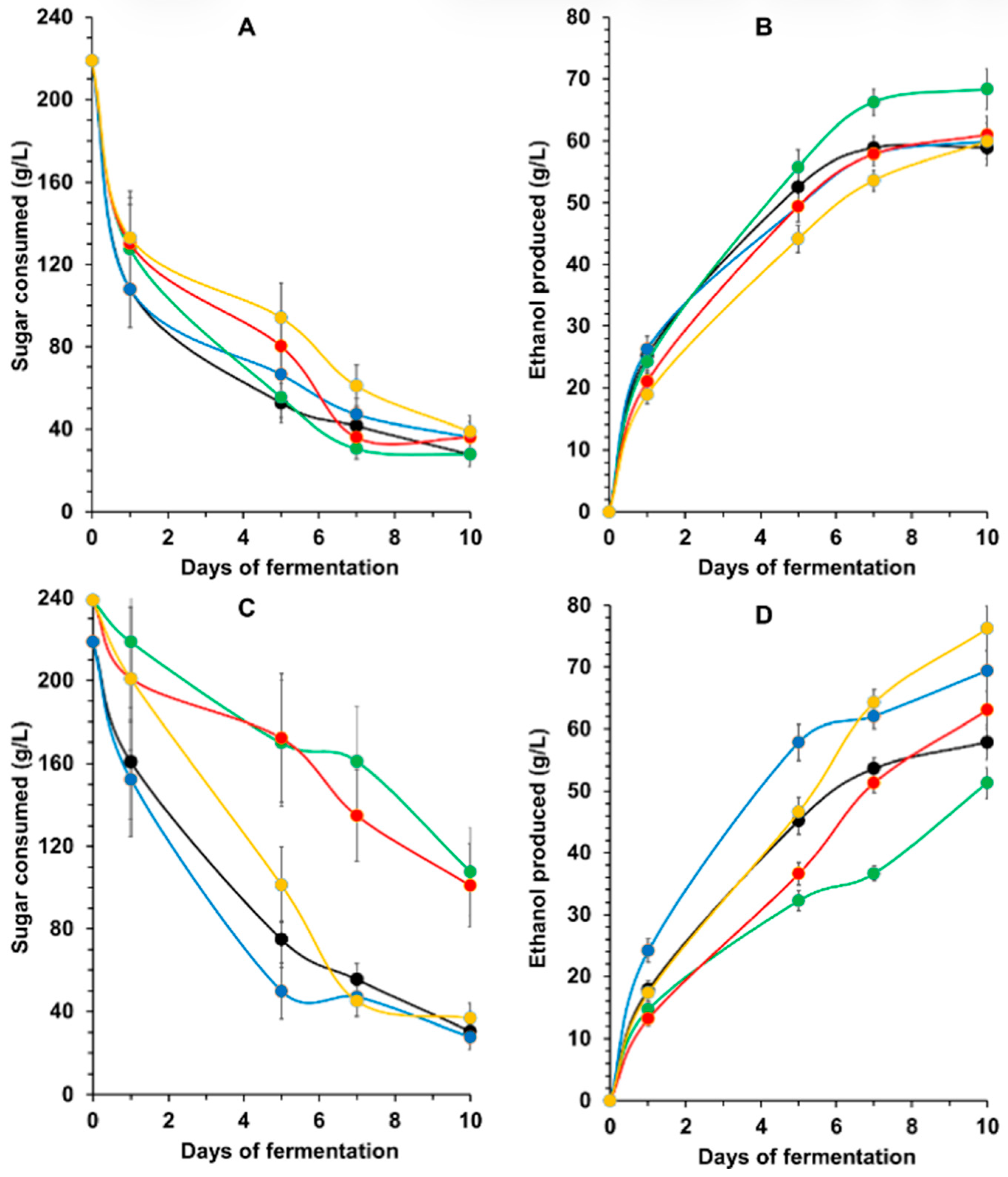
Eight commercial strains of S. cerevisiae, from bread to fuel ethanol strains (Table 1), were used for the fermentation of bee honeys from the semiarid area of the State of Pernambuco, Brazil. The fermentation wort from ST/P honey was composed, on average, of fructose (52.0%) and glucose (38.8%). The remaining sugar was designated “apparent sucrose”. The kinetic data for total sugar consumption and ethanol production were monitored over a ten-day fermentation period (Figure 1). Except for the Côte des Blancs and Premier Classic strains, all six other strains presented nearly identical sugar consumption profiles (Figure 1A,C). On average, only 13% of the initial apparent sucrose was used by cells from the eight strains. Later, we will return to the issue of sucrose.
TR313, Côte des Blancs, Premier Classic, and JP1 strains showed slower ethanol production kinetics than the other strains (Figure 1B,D). However, at the end of fermentation, strain JP1, along with strains Diamond and Lalvin, showed the highest alcohol content (Table 2).
The fermentation yield was the same for all eight strains, indicating a constant physiological parameter in the conversion efficiency of 38% of the mass of honey wort sugars into ethanol (Table 2). Glycerol production (5.9 ± 0.7 g/L) was also similar between strains, meaning that 3% of the mass of consumed sugar was converted to glycerol by cells. These values indicate that the distribution of carbon through the central metabolism of these strains was very similar, reaching constant conversion values to ethanol and glycerol. Therefore, the most relevant difference among them, although small, seems to be the differential consumption capacity of the sugars present in the wort.
Therefore, given the constancy of the yield data, we took into consideration the stoichiometry of biomass/CO2 formation for S. cerevisiae [20] to define the general calculation of the yields for the main products generated by the consumption of sugars at the end of fermentation of the bee honey. This calculation indicated the following mean stoichiometric equation for mead production:
100 g consumed honey sugar = 39 g ethanol + 3 g glycerol + 45 g CO2 + 13 g yeast biomass
Therefore, this equation served as a reference for the selection of yeasts with minimal performance for mead production when using honey from that origin. The maximal theoretical yield for ethanol is 51.1 g of ethanol per 100 g of consumed sugar. Thus, this equation indicated that the fermentation efficiency of this type of honey achieved only 76% of the maximum. This low efficiency can be explained by the presence of phenolic compounds in the honey must, which would cause some metabolic diversion of carbon to non-fermentative pathways. However, it should be noted that the alcohol content achieved by fermentation with the different strains is within the expected range for this type of alcoholic beverage.

3.2. Fermentation Profile of Selected Strains

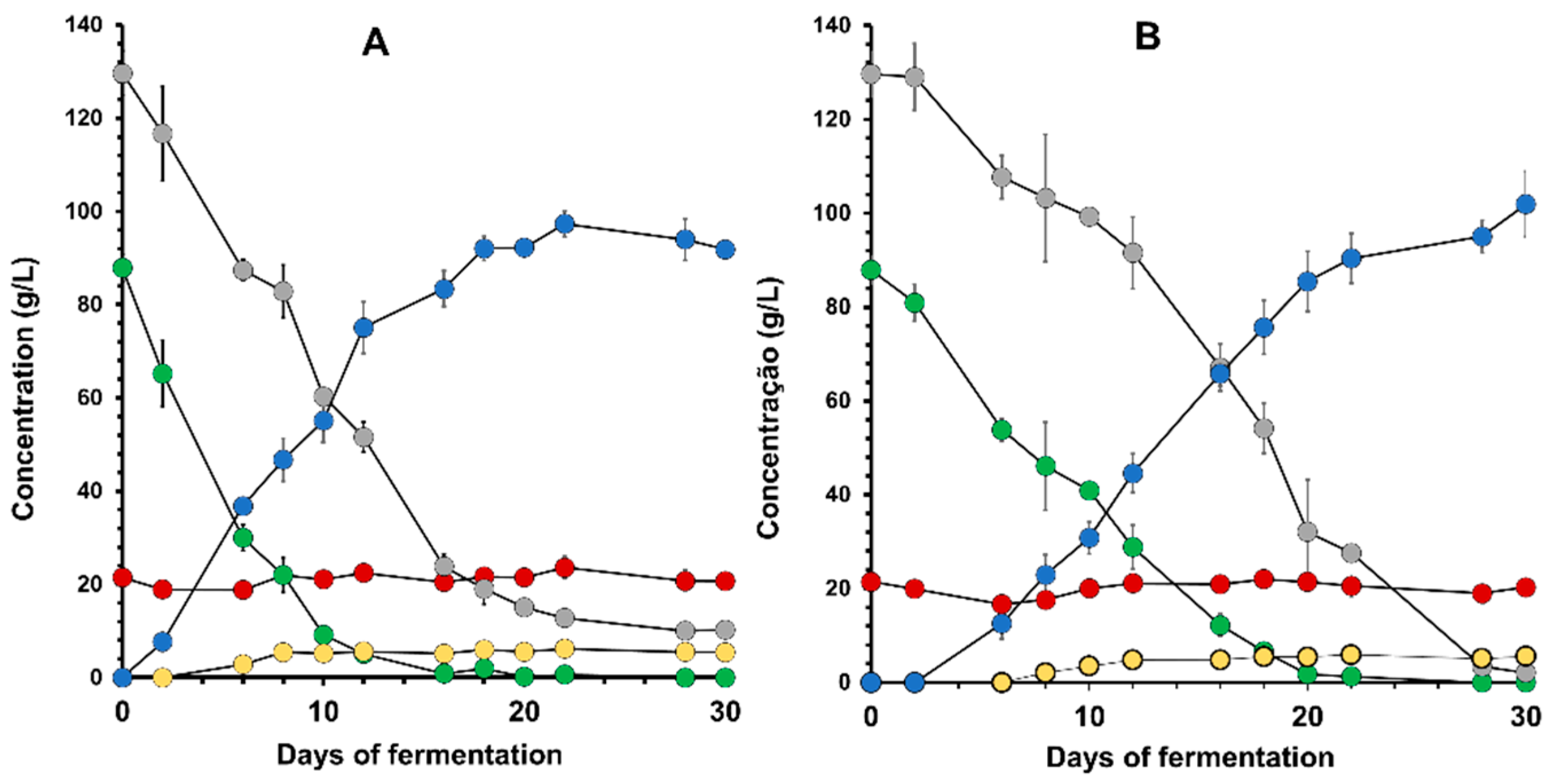
Given the above factors, the JP1 and TR313 strains were selected to better evaluate mead production with ST-P honey. The fermentative kinetics data showed that the JP1 strain consumed all the glucose within 16 days of fermentation but was unable to exhaust the fructose even after 30 days (Figure 2A). On the other hand, the TR313 strain consumed glucose within 20 days of fermentation and fructose after 30 days (Figure 2B). This result revealed the physiological difference between these S. cerevisiae strains, as noted above.
Another interesting aspect was that ethanol production began earlier with JP1 than with TR313, coinciding with the strain’s fructose consumption (Figure 2). This meant that fermentation practically ended after 22 days of incubation with JP1 (Figure 2A), whereas TR313 continued producing ethanol until the 30th day due to fructose consumption (Figure 2B). As a result, the volumetric productivity calculated from the most linear range of the ethanol production curves was 0.23 g of ethanol/L.h for JP1 (between zero and 12 days) and 0.17 g of ethanol/L.h for TR313 (between 2 and 22 days). Total acidity was measured at 55 (±5.6) mEq/kg and 62.5 (±3.5) mEq/kg for the meads produced by JP1 and TR313, respectively. Final pH was around 3.4 for both meads. Therefore, it is concluded that the production of mead by the JP1 strain must occur in a shorter time than by TR313, which implies a reduction in production costs.
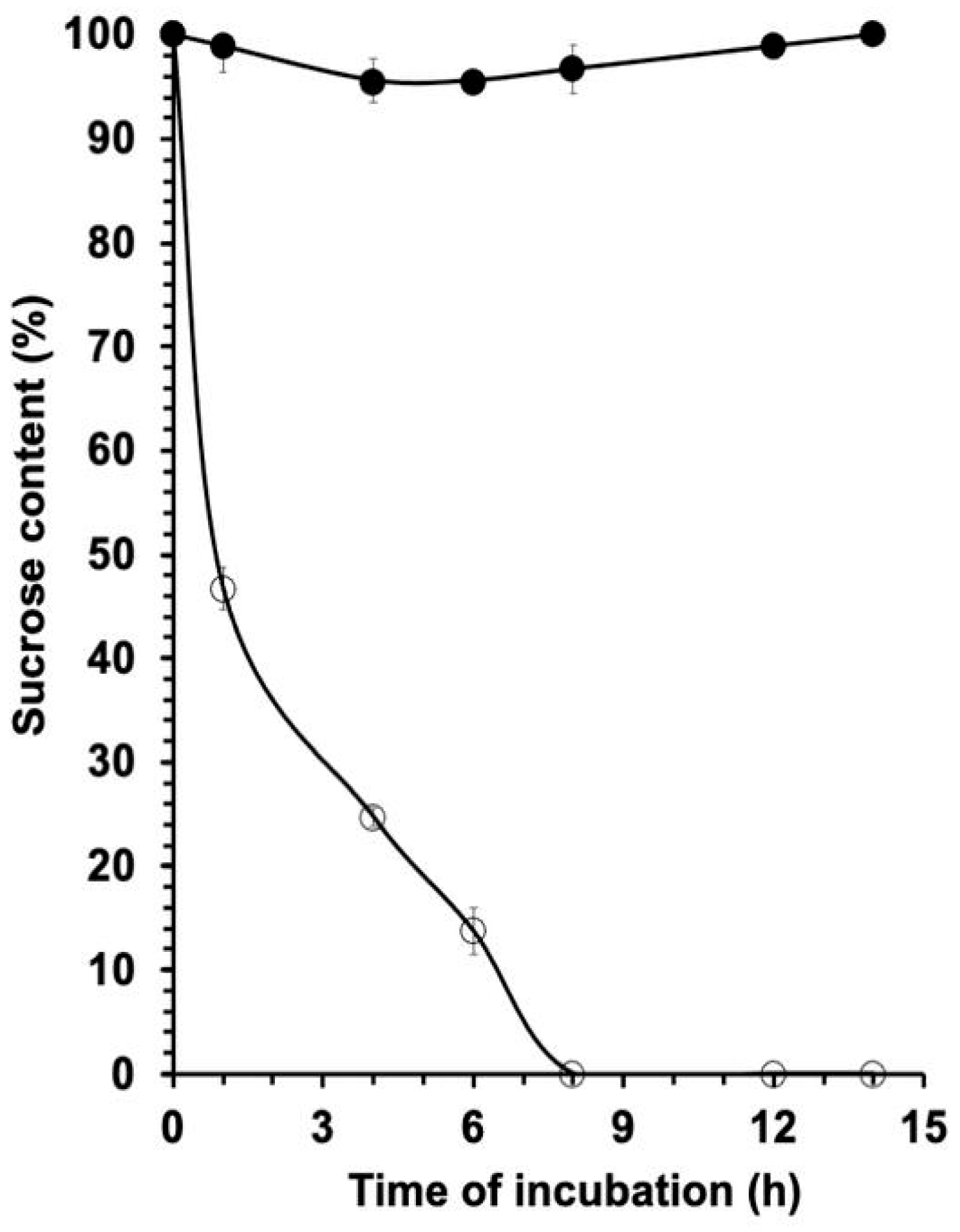
An important aspect noted in all mead fermentations was the high residual sucrose. Figure 3 showed no mobilization of this sugar during fermentation by either strain tested. This is very intriguing, since the yeast S. cerevisiae normally secretes invertase for extracellular hydrolysis of sucrose and the consumption of the resulting monosaccharides, glucose and fructose. The three hypotheses to explain this result are as follows: the yeasts are not producing invertase, the honey contains some invertase-inhibiting substance, or this sugar is another polysaccharide with a retention time similar to sucrose under the HPLC conditions used. To test the first two hypotheses, JP1 cells were cultivated in a synthetic mineral medium with sucrose to induce invertase production. The supernatant was collected and tested for enzyme activity (Figure 3). When added to a solution containing sucrose, it was possible to observe the disappearance of the disaccharide. This indicates that JP1 cells can produce invertase. However, the supposed sucrose in the honey wort remained constant, suggesting that the enzyme produced was not capable of hydrolysing it. When sucrose was added to honey must, its hydrolysis and the intact residual of supposed sucrose were observed. Therefore, it is concluded that there are no invertase inhibitors in honey wort and that this sugar must be of another type. It is interesting to note that even the LalBrew Belle Saison strain, which produces β-glucosidase in addition to invertase, was not able to consume this sugar (Figure 1A). This recalcitrant sugar must be a di- or trisaccharide that does not have β1,4 bonds in its structure, such as isomaltose that is found in honey [21,22,23].
Another possibility for this apparent sucrose is an analogue called turanose. This is a dimer of glucose and fructose with an α-1,3 glycosidic bond, whereas in sucrose this bond is α-1,2 [24]. Other structural analogues of sucrose include trehalulose, leucrose, maltulose, and isomaltulose, all of which have great potential as low-calorie sweeteners [25]. Turanose has recently gained attention for its potential use in biotechnological processes in the food and pharmaceutical industries, as well as serving as a molecular marker of honey authenticity [24]. This molecule is a byproduct of the synthesis of linear α-1,4 glucan structures by plant amylosucrase, and it appears in European nectar and honey at concentrations so low that they prevent commercial extraction [26]. However, its residual concentration ranged from 20 g/L in the must to 20 g/L in the final mead (Figure 3). This means that the turanose concentration in honey should be around 60 g/L, which would represent a very important characteristic of the nectar of plants in the Caatinga biome, exclusive to the semiarid region of northeastern Brazil. In this scenario, fermentation of the honey must remove all glucose and fructose, thereby increasing the purification efficiency and the concentration of turanose for industrial use.

3.3. Fermol Distiller JP1 Strain as Mead-Fermenter Yeast

All physiological parameters evaluated above indicated the potential of the JP1 strain for fermenting honey and producing mead. To expand this hypothesis, fermentation assays were conducted using different honeys from other regions in the semiarid area of the state of Pernambuco, which had been chemically characterized in recent works [6,9]. Worts were prepared by diluting all the bee honeys to 28% (w/v) of the initial sugar. Despite the small differences, the fermentation profiles were very similar (Table 3). Meads produced from IB/M and ST/P honeys were sweeter than the mead from the TF/P honey, while meads from ST/P and TF/P showed higher ethanol content. However, the higher glycerol concentration in TF/P mead should give this drink greater smoothness, helping to alleviate the higher alcohol content. All preparations reached the minimum alcoholic yield of 38% established above for the efficiency of the fermentation process. Therefore, the JP1 strain is efficient at fermenting must prepared with honeys from different locations in the semiarid hinterland of the state of Pernambuco.
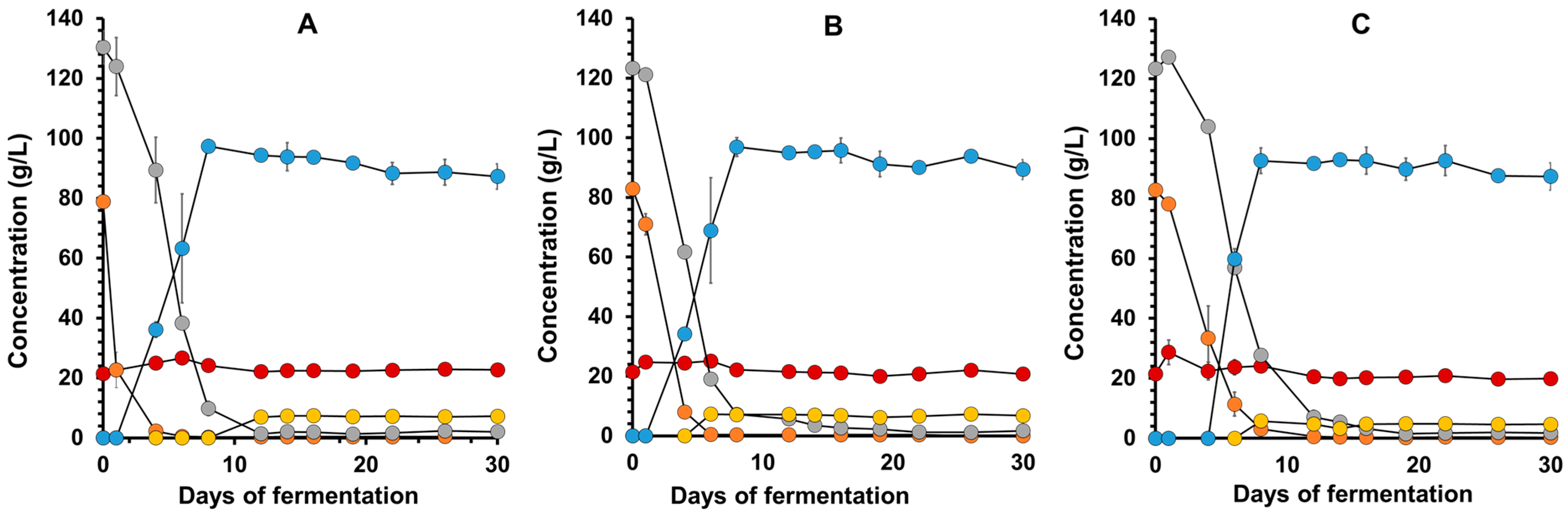
Given the above, we tested three technological improvements to evaluate their potential impact on the fermentation process (Figure 4). The first was supplementing the honey must with ammonium sulphate to increase nitrogen availability for the yeast cells (Figure 4A). This supplementation accelerated fermentation, with increased hexose consumption and an anticipation of peak ethanol production by 10 days (Figure 4A), half the time observed in the must without supplementation (Figure 2A). Glycerol production and maintenance of apparent sucrose were similar between the two conditions. Indeed, nitrogen supply is largely reported for mead production to improve fermentation parameters, and the search for yeasts with low-nitrogen demand [12,16,27]. The second was a twofold increase in initial yeast biomass (Figure 4B). In this case, the fermentation profile resembled that of ammonium supplementation (Figure 4A), indicating that the added nitrogen doubled biomass in the first hours of the fermentation trial. Moreover, high cell density is already known to be an efficient strategy for optimizing mead fermentation parameters and shortening sugar consumption time [28]. The third technological improvement involved the use of cells immobilized in alginate (Figure 4C). In this case, the fermentation profile was similar to the first two, indicating that immobilization likely led to a twofold increase in the process’s initial biomass without disrupting the cells’ metabolic activity. Even though immobilization provides more efficient cell removal from the final product, leaving it clearer, it also incurs a cost. This strategy was recently reported for mead production [29]; however, it did not show the improvement as in this work. Therefore, the producer can choose any of the three technological modifications based on the cost–benefit ratio.

4. Limitations

This paper presents a series of data on the fermentative profiles of yeast strains grown on different honeys during mead production. These honeys originate from a region characterized by a semi-arid climate and composed of a uniquely Brazilian floral and animal diversity. Therefore, the comparability of these data with other literature reports is limited, as few reports are available.

5. Conclusions

Mead is an ancient beverage that faces several challenges in production, as the quality of the honey and the yeast strain are not well-suited to this substrate. The results showed that, even with a similar fermentative profile, the rate of sugar consumption can be important in choosing the better strain for fermentation. Saccharomyces cerevisiae JP1 seems to be a good candidate for the process, even though it is a yeast isolated from the sugarcane industry for fuel-ethanol production in the Northeast of Brazil, especially for its rapid carbohydrate assimilation in the medium. The use of this strain with the honey of the Sertão can characterize the regional product and increase its value. Nevertheless, more studies are necessary to increase productivity without affecting sensorial quality and to understand the presence of carbohydrates that cannot be assimilated during the fermentative process, as well as the potential nutraceutical effects of this mead.

Author Contributions

R.K.S., J.D.d.F. and H.A.F.M.: Methodology, Investigations, Formal analysis, Data curation, Conceptualization, Writing—original draft. J.D.d.F.: Methodology, Investigations, formal analysis, Data curation. W.d.P.P.N. and L.L.d.A.L.A.: Investigations, formal analysis, Data curation. A.M.P.S.: Investigations, formal analysis, Data curation, Supervision. H.F.d.M.: Methodology, Investigations, formal analysis, Data curation, Conceptualization. D.M.d.A.F.N. and P.M.-P.: Investigations, formal analysis, Data curation. M.A.d.M.J. and R.B.d.S.: Formal analysis, Data curation, Conceptualization, Supervision, Project administration, Funding acquisition, Writing—original draft, Writing—review and editing. All authors have read and agreed to the published version of the manuscript.

Funding

This work was supported by Fundação de Amparo à Pesquisa do Estado de Pernambuco (FACEPE), which financed this research by the Local Productive Arrangements grant number APQ-0434-2.12/20 and by the Innovation Locus program 02/2022 grant number APQ-0161-9.26/22.

Institutional Review Board Statement

Not applicable.

Informed Consent Statement

Not applicable.

Data Availability Statement

The original contributions presented in this study are included in the article. Further inquiries can be directed to the corresponding authors.

Acknowledgments

The authors are grateful to the Fundação de Amparo à Pesquisa do Estado de Pernambuco (FACEPE), and to the Beekeepers Association of Serra Talhada, the Beekeepers Association of Triunfo and the Beekeepers Association of Ibimirim for providing the honey samples for this study.

Conflicts of Interest

The authors declare no conflicts of interest.

Abbreviations

The following abbreviations are used in this manuscript:
HPLCHigh-Performance Liquid Chromatography
TF/PTriunfo/Pajeú
ST/PSerra Talhada/Pajeú
IB/MIbimirim/Moxotó
MRSMan, Rogosa & Sharpe medium
RIDRefractive Index Detector

References

  1. Gupta, J.K.; Sharma, R. Production technology and quality characteristics of mead and fruit-honey wines: A review. Nat. Prod. Radiance 2009, 8, 345–355. [Google Scholar]
  2. Ramalhosa, E.; Gomes, T.; Pereira, A.P.; Dias, T.; Estevinho, L.M. Mead production: Tradition versus modernity. Adv. Food Nutr. Res. 2011, 63, 101–118. [Google Scholar]
  3. Barbosa, A.B.; Martins, E.A. Produção artesanal de hidromel. In Proceedings of the Jornada Científica e Tecnológica FATEC Botucatu; Fatec Botucatu Campus: Botucatu, Brazil, 2017. [Google Scholar]
  4. Simão, L.; Wanderley, B.R.D.S.M.; Tavares Vieira, M.P.; Silva Haas, I.C.; Amboni, R.D.M.C.; Fritzen-Freire, C.B. How do different ingredients and additives affect mead production steps and bioactive potential? Food Technol. Biotechnol. 2023, 61, 179–190. [Google Scholar] [CrossRef]
  5. Jose-Salazar, J.A.; Ballinas-Cesatti, C.B.; Hernández-Martínez, D.M.; Cristiani-Urbina, E.; Melgar-Lalanne, G.; Morales-Barrera, L. Kinetic evaluation of mead production from a non-Saccharomyces strain. Foods 2024, 13, 1948. [Google Scholar] [CrossRef] [PubMed]
  6. Pinto Neto, W.P.; Lucena, T.M.C.; Paixão, G.A.; Shinohara, N.K.S.; Pinheiro, A.C.; Vicente, A.A.; Souza, R.B.; Morais, M.A., Jr. Symbiotic honey beverages: A matrix which tells a story of survival and protection of human health. Int. J. Gastron. Food Sci. 2025, 40, 101183. [Google Scholar] [CrossRef]
  7. Galvíncio, J.D.; Badarau, M.S.; Barbosa, V.V.; Freire, F.J.; Freire, M.B.G.S.; Souza, W.M. Avaliação do estágio de regeneração do bioma Caatinga na microrregião do Araripe com sensoriamento remoto. Rev. Bras. Geogr. Fís. 2016, 9, 986–996. [Google Scholar] [CrossRef]
  8. Vidal, M.F. Produção de mel na área de atuação do BNB entre 2011 e 2016. Cad. Setorial ETENE 2018, 3, 30. [Google Scholar]
  9. Pinto-Neto, W.P.; Silva, R.K.; Lima, B.S.; Acioli, G.F.S.; Paixão, G.A.; Muniz, B.C.; Silva, P.K.N.; Costa, R.M.P.B.; Silva, F.S.B.; Melo, H.F.; et al. Bee honey of the Pajeú hinterland, Pernambuco, Brazil: Physicochemical characterization and biological activity. Food Biosci. 2024, 60, 104289. [Google Scholar] [CrossRef]
  10. Iglesias, A.; Pascoal, A.; Choupina, A.B.; Carvalho, C.A.; Feás, X.; Estevinho, L.M. Developments in the fermentation process and quality improvement strategies for mead production. Molecules 2014, 19, 12577–12590. [Google Scholar] [CrossRef]
  11. Sroka, P.; Tuszyński, T. Changes in organic acid contents during mead wort fermentation. Food Chem. 2007, 104, 1250–1257. [Google Scholar] [CrossRef]
  12. Pereira, A.P.; Dias, T.; Andrade, J.; Ramalhosa, E.; Estevinho, L.M. Mead production: Selection and characterization assays of Saccharomyces cerevisiae strains. Food Chem. Toxicol. 2009, 47, 2057–2063. [Google Scholar] [CrossRef]
  13. Lambrechts, M.G.; Pretorius, I.S. Yeast and its importance to wine aroma: A review. S. Afr. J. Enol. Vitic. 2000, 21, 97–129. [Google Scholar] [CrossRef]
  14. Vidal, E.E.; de Billerbeck, G.M.; Simões, D.A.; Schuler, A.; François, J.M.; de Morais, M.A., Jr. Influence of nitrogen supply on higher alcohol and ester formation in cachaça fermentation. Food Chem. 2013, 138, 701–708. [Google Scholar] [CrossRef] [PubMed]
  15. Vidal, E.E.; de Morais, M.A., Jr.; François, J.M.; de Billerbeck, G.M. Biosynthesis of higher alcohol flavour compounds by Saccharomyces cerevisiae. Yeast 2015, 32, 47–56. [Google Scholar]
  16. Schwarz, L.V.; Marcon, A.R.; Delamare, A.P.L.; Agostini, F.; Moura, S.; Echeverrigaray, S. Selection of low-nitrogen-demand yeast strains and their impact on mead composition. J. Food Sci. Technol. 2020, 57, 2840–2851. [Google Scholar] [CrossRef]
  17. Pinto-Neto, W.P.; Silva, A.K.L.F.; Araújo, K.S.; Pinheiro, I.O.; Souza, R.B.; Morais, M.A., Jr. Optimizing wheat beer production by recycling yeast biomass. Food Sci. Technol. 2023, 43. [Google Scholar] [CrossRef]
  18. Miller, G.L. Use of dinitrosalicylic acid reagent for determination of reducing sugar. Anal. Chem. 1959, 31, 426–428. [Google Scholar] [CrossRef]
  19. Instituto Adolfo Lutz. Métodos Físico-Químicos para Análise de Alimentos; Instituto Adolfo Lutz: São Paulo, Brazil, 2008. [Google Scholar]
  20. Leite, F.C.; Basso, T.O.; Pita, W.B.; Gombert, A.K.; Simões, D.A.; de Morais, M.A., Jr. Quantitative aerobic physiology of Dekkera bruxellensis. FEMS Yeast Res. 2013, 13, 34–43. [Google Scholar] [CrossRef]
  21. Pascual-Maté, A.; Osés, S.M.; Marcazzan, G.L.; Gardini, S.; Fernández-Muiño, M.A.; Sancho, M.T. Sugar composition and related parameters of honeys. J. Food Compos. Anal. 2018, 74, 34–43. [Google Scholar] [CrossRef]
  22. Loza, J.P.; Chailyan, A.; Förster, J.; Katz, M.; Mortensen, U.H.; Garcia Sanchez, R. Improving the utilization of isomaltose and panose by lager yeast. Fermentation 2021, 7, 107. [Google Scholar] [CrossRef]
  23. Xu, X.; Asai, K.; Kato, D.; Ishiuchi, K.; Ding, K.; Tabuchi, Y.; Ota, M.; Makino, T. Honey isomaltose and G-CSF induction. Sci. Rep. 2020, 10, 15178. [Google Scholar] [CrossRef]
  24. Ponnurangam, M.; Balaji, S. Tune in to the terrific applications of turanose. Eur. Food Res. Technol. 2024, 250, 375–387. [Google Scholar] [CrossRef]
  25. Tian, Y.; Deng, Y.; Zhang, W.; Mu, W. Sucrose isomers as alternative sweeteners. Appl. Microbiol. Biotechnol. 2019, 103, 8677–8687. [Google Scholar] [CrossRef] [PubMed]
  26. Kaškonienė, V.; Venskutonis, P.; Čeksterytė, V. Carbohydrate composition and electrical conductivity of honeys. LWT Food Sci. Technol. 2010, 43, 801–807. [Google Scholar] [CrossRef]
  27. Pereira, A.P.; Mendes-Ferreira, A.; Oliveira, J.M.; Estevinho, L.M.; Mendes-Faia, A. Mead production: Effect of nitrogen supplementation on growth, fermentation profile and aroma formation by yeasts in mead fermentation. J. Inst. Brew. 2015, 121, 122–128. [Google Scholar] [CrossRef]
  28. Pereira, A.P.; Mendes-Ferreira, A.; Oliveira, J.M.; Estevinho, L.M.; Mendes-Faia, A. High-cell-density fermentation of Saccharomyces cerevisiae for the optimisation of mead production. Food Microbiol. 2013, 33, 114–123. [Google Scholar] [CrossRef]
  29. Sousa-Dias, M.L.; Paula, V.B.; Dias, L.G.; Estevinho, L.M. Mead production using immobilized cells of Saccharomyces cerevisiae: Reuse of sodium alginate beads. Processes 2021, 9, 724. [Google Scholar] [CrossRef]
Figure 1. Kinetics profile of sugar consumption (A,C) and ethanol production (B,D) by Saccharomyces cerevisiae industrial strains fermenting a wort of diluted bee honey from Serra Talhada, in the Pajeú semiarid hinterland, Pernambuco, Brazil. Panels (A,B) show Saf-Instant for baking (Sc01, black line), CA-11 for cachaça (Sc02, blue line), Diamond for German Lager beer (Sc03, green line), Red Star Premier for white wine (Sc04, red line), and LalBrew Belle saison for Belgian beer (Sc05, yellow line). Panels (C,D) show TR313 for white wine (Sc06, black line), Lalvin k1v-1116 for red wine and mead (Sc07, blue line), Côte des Blancs for white wine and mead (Sc08, green line), Premier Classic for white wine and mead (Sc09, red line) and Fermol Distiller JP1 for fuel-ethanol and cachaça (Sc10, yellow line).
Beverages 12 00048 g001
Figure 2. Fermentative profile of Saccharomyces cerevisiae industrial strains Fermol Distiller JP1 (A) and Renascence TR313 (B) in wort of diluted bee honey from the Pajeú semiarid hinterland, Pernambuco, Brazil. The consumption of fructose (grey circles), glucose (green circles) and sucrose (red circles) and the production of ethanol (blue circles) and glycerol (yellow circles) were measured up to 30 days of fermentation.
Beverages 12 00048 g002
Figure 3. Recalcitrant sugar present in the bee honey from the Pajeú semiarid hinterland, Pernambuco, Brazil, to the hydrolysis by yeast invertase. Mead containing sugar in the range of 20 g/L at the end of fermentation (closed circles) was mixed with the filtered supernatant of a 48 h culture of Saccharomyces cerevisiae Fermol Distiller JP1 strain in YNB–sucrose synthetic medium. A 20 g/L sucrose solution (open circles) was used as a reference for enzyme activity.
Beverages 12 00048 g003
Figure 4. Fermentative profile of Saccharomyces cerevisiae industrial strains Fermol Distiller JP1 in wort of diluted bee honey from the Pajeú semiarid hinterland, Pernambuco, Brazil, with supplemented must (A), high density of cells (B) and immobilized cells (C). The consumption of fructose (grey circles), glucose (orange circles) and sucrose (red circles) and the production of ethanol (blue circles) and glycerol (yellow circles) were measured up to 30 days of fermentation.
Beverages 12 00048 g004
Table 1. Industrial yeast strains used in this work.
CodeCommercial NameSupplierProductSensorial Characteristics *
Sc01Saf-InstantLesaffre (France)BreadNeutral
Sc02CA-11LNF (Brazil)CachaçaNeutral
Sc03LalBrew DiamondLallemand (Austria)German lager beerNeutral
Sc04Red Star PremierLesaffre (France)White wine and meadNeutral, butter, bready
Sc05LalBrew Belle saisonLallemand (Austria)Belgium beerFruity and spicy
Sc06Renaissance TR313Renaissance (Canada)White winePassion fruits and berries
Sc07Lalvin k1v-1116Lallemand (Canada)Red wine and meadFloral aroma
Sc08Côte de BlancsFermentis (Belgium)White wine and meadFruity aroma
Sc09Premier ClassicFermentis (Belgium)White wine and meadFruity aroma
Sc10Fermol Distiller JP1LNF (Brazil)Cachaça and fuel-ethanolNeutral
* information provided by the manufacturer.
Table 2. Physiological parameters of the fermentation of diluted bee-honey from Serra Talhada, in the Pajeú semiarid hinterland, Pernambuco, Brazil. Initial sugar of 220 ± 11.5 g/L (°Brix = 24 ± 1.6).
Yeast StrainCodeResidual Sugars (g/L)AttenuationEthanol (%)
Saf-InstantSc0144.6 ± 0.7 80%7.91 ± 0.18
CA-11Sc0249.2 ± 2.7 78%7.91 ± 0.11
Lallemand DiamondSc0322.7 ± 1.4 90%8.79 ± 0.07
Red Star PremierSc0449.4 ± 1.2 78%7.95 ± 0.32
LalBrew Belle saisonSc0552.9 ± 1.1 76%7.61 ± 0.13
Renascence TR313Sc0647.0 ± 2.0 79%7.61 ± 0.13
Lalvin k1v-1116Sc0722.1 ± 0.5 90%9.08 ± 0.17
Côte des BlancsSc0830.4 ± 8.2 86%6.50 ± 0.14
Premier ClassicSc0930.9 ± 5.1 86%7.99 ± 0.17
Fermol distiller JP1Sc1039.9 ± 0.6 82%9.66 ± 0.19
Table 3. Physiological profile of bee honey fermentation of different origins in the semiarid area of Pernambuco, Brazil, by the industrial strain Saccharomyces cerevisiae JP1 for 8 days.
Fermentation ParameterHoney Origin
IB/MST/PTF/P
Initial sugar (g/L)274.9 ± 38.1284.6 ± 8.4281.5 ± 23.3
Residual sugar (g/L)78.5 ± 4.870.0 ± 1.555.1 ± 3.1
Consumed sugar (g/L)196.4 ± 15.5214.7 ± 9.6226.4 ± 3.1
Ethanol produced (g/L)79.7 ± 16.288.3 ± 3.386.1 ± 4.7
Glycerol produced (g/L)10.0 ± 1.76.1 ± 0.910.2 ± 0.7
Ethanol yield (g/g)0.410.410.38
Glycerol yield (g/g)0.050.030.04
Disclaimer/Publisher’s Note: The statements, opinions and data contained in all publications are solely those of the individual author(s) and contributor(s) and not of MDPI and/or the editor(s). MDPI and/or the editor(s) disclaim responsibility for any injury to people or property resulting from any ideas, methods, instructions or products referred to in the content.