1. Introduction
The coffee industry is among the most dynamic areas in the global agri-food market. In the last 50 years, global output has risen by almost 150%, propelled by a demand that attained 10.710 billion kg in 2022–2023 [
1]. This expansion has led to a parallel increase in by-products, raising environmental concerns and highlighting the need for sustainable valorization [
2].
In coffee processing, by-products may constitute almost 50% of the fruit’s dry weight [
3]. Coffee pulp (CP), the primary by-product of wet processing, constitutes 40 to 55% of the weight of fresh cherries and produces 400 to 500 kg of pulp for every ton of processed coffee [
4]. Although abundant, a large portion of this material is discarded without adequate treatment, resulting in significant environmental impacts in coffee-growing areas [
5].
In recent years, CP has been acknowledged as a safe food additive with significant functional potential. It contains polysaccharides, dietary fiber (21–32%), proteins (5–15%), minerals (about 9%), and lipids (2–7%), in addition to phenolic substances like chlorogenic acid, caffeic acid, and tannins, as well as methylxanthines such as caffeine [
6,
7]. These bioactive molecules are associated with antioxidant and anti-inflammatory capabilities, linked to preventive effects against chronic non-communicable diseases [
8,
9].
In this regard, many applications of CP have been evaluated in items including bread, pasta, sauces, and beverages [
10]. Among these alternatives, infusion is a feasible and economical technical approach that satisfies the increasing demand for functional beverages [
11,
12]. CP infusions show good sensory acceptability [
13,
14] and may substantially enhance antioxidant consumption [
15]. Aqueous extraction is a straightforward, cost-effective technique appropriate for industrial-scale manufacturing [
16].
The chemical content of coffee is mostly determined by genotype, which also affects the makeup of its by-products, such as the pulp [
17]. Variability in the concentrations of polyphenols and other beneficial substances among
C. arabica types has been reported [
18]. However, previous studies on coffee pulp have mainly focused on its general chemical composition or its incorporation into food products, with limited attention to the effect of varietal differences on both functional and sensory properties of derived infusions. In particular, integrative approaches combining physicochemical characterization, antioxidant capacity, and sensory evaluation across multiple
C. arabica varieties remain scarce. This lack of knowledge limits the identification of specific varieties with higher potential for valorization as functional beverages.
Therefore, this study evaluated the physicochemical characteristics, AC, and sensory acceptance of infusions prepared from the pulp of nine C. arabica L. varieties (Catimor, Castilla, Milenio, Casiopea, H3, H1, Excelencia, Geisha, and Oro Azteca). The objective is to identify the varieties with the greatest potential for use as a functional beverage and to contribute to a circular-economy approach in the coffee production chain.
2. Materials and Methods
2.1. Procurement of Raw Materials
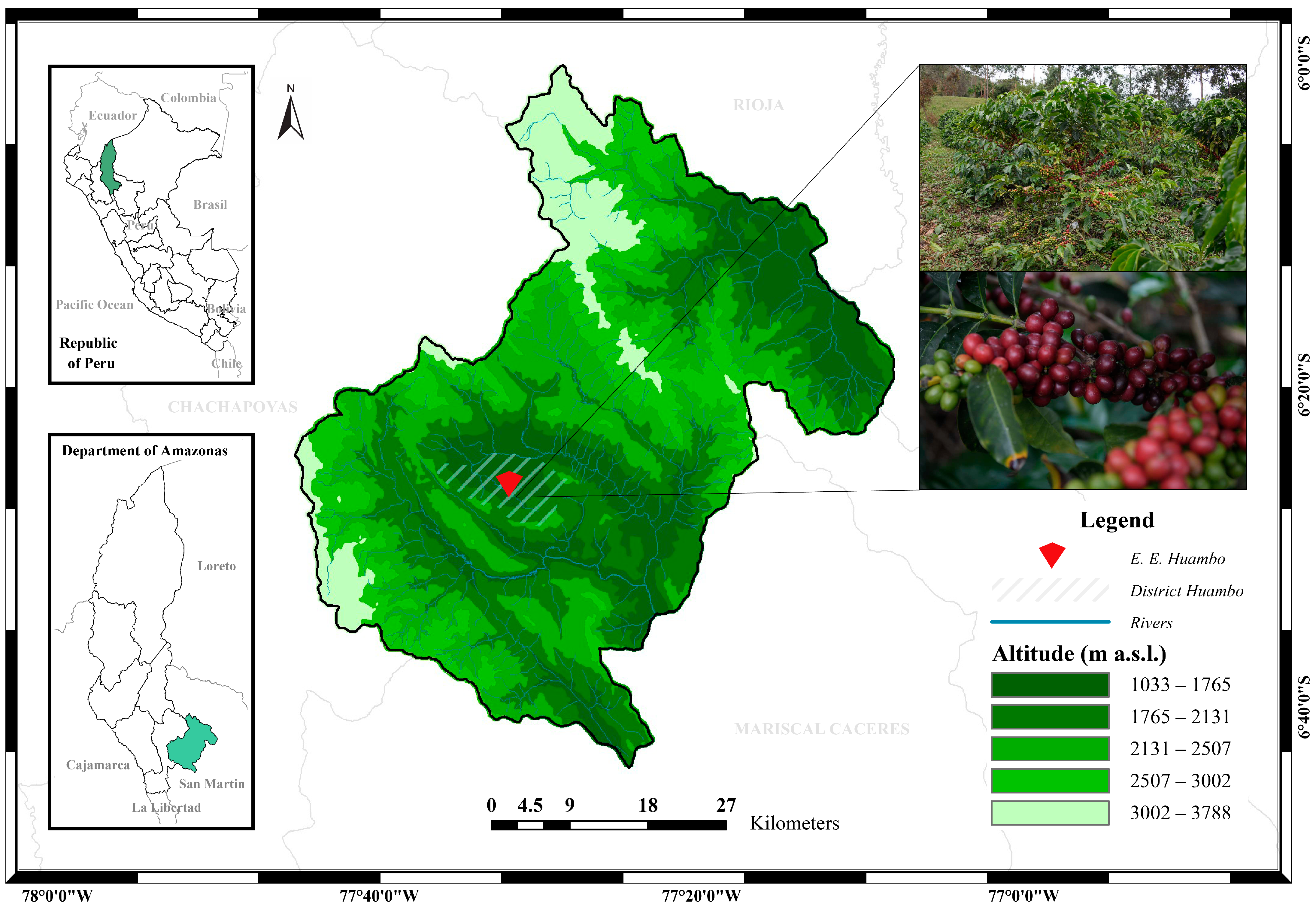
Coffee fruits at physiological maturity were harvested from nine types (Catimor, Castilla, Milenio, Casiopea, H3, H1, Excelencia, Geisha, and Oro Azteca) in the province of Rodríguez de Mendoza, Amazonas, Peru, at 1630 m a.s.l. (
Figure 1) For each
C. arabica variety, three independent biological replicates were collected. Each replicate consisted of approximately 1 kg of coffee cherries harvested from different plants within the same cultivation area to account for intra-varietal variability. Each biological replicate was processed independently throughout all subsequent steps.
The fruits were rinsed with running water to eliminate particulates and disinfected by immersion in a 0.4% (
w/
v) sodium hypochlorite solution, derived from commercial bleach containing 4% active chlorine, for 5 min. Subsequently, they were washed with distilled water to eliminate chlorine residues [
19].
The sanitized fruits were mechanically depulped, and the pulp was dehydrated in a forced-convection oven (LSIS-B2V/VC 222, MMM Group, BMT Medical Technology s.r.o., Brno, Czech Republic) at 50 °C for 24 h until the moisture content fell below 10%. The desiccated substance was pulverized in a knife mill (Retsch GM200, Haan, Germany) at 5000 rpm for 1 min and subsequently sieved through a 250 µm screen to standardize particle size. The CP samples were enclosed in hermetically sealed trilaminate bags (PET) and maintained at 25 ± 2 °C with 60% relative humidity for a maximum of 7 days before infusion preparation and analysis.
2.2. Preparation of Coffee Pulp Infusion
The CP infusion was made according to the process outlined in [
14], with certain modifications. Two grams of crushed pulp from each collected type were incorporated into 250 mL of distilled water at 90 °C. The mixture was infused for 3 min and subsequently filtered through Whatman No. 1 paper to eliminate solid residues and provide a homogenous matrix for further analyses.
2.3. Physicochemical Analysis of the Infusion
2.3.1. pH and Titratable Acidity
The pH of the extracts was assessed utilizing an immersion pH meter (HI22091-01, Hanna Instruments, Woonsocket, RI, USA), which had been calibrated with buffer solutions of pH 4.00 and 7.00 at 25 °C. Titratable acidity was assessed using the method outlined by [
15], with minor adjustments. To do this, 10 mL of the CP infusion was combined with 10 mL of distilled water in an Erlenmeyer flask. Four drops of 0.1% (
w/
v) phenolphthalein were introduced as an indicator, and the mixture was titrated with a standardized 0.1 N sodium hydroxide (NaOH) solution until a stable pink hue remained for 30 s. The data were presented as grams of citric acid equivalent per 100 mL of infusion (g/100 mL).
2.3.2. Bioactivity of the Infusion
Antioxidant Capacity (AC) Using the DPPH Method
The AC was assessed using the free radical scavenging method with 2,2-diphenyl-1-picrylhydrazyl (DPPH), in accordance with the procedure outlined by [
20] and modified for coffee by [
21]. A DPPH solution in methanol (20 mg/L) was formulated, and the absorbance was calibrated to 0.45 ± 0.02 at 516 nm.
In each assay, 100 µL of the infusion was combined with 3.9 mL of the DPPH solution, and the mixture was incubated in the dark at ambient temperature for 30 min. The ultimate absorbance (At) was recorded at 516 nm utilizing a UV/Vis spectrophotometer (Thermo Scientific Genesys 180, Madison, WI, USA).
The data were reported as µmol TE/L, utilizing a calibration curve: y = 0.2319x − 2.7837; R
2 = 0.9946. The percentage inhibition was calculated using the equation:
where
is the initial absorbance of the DPPH solution,
is the absorbance of the blank (methanol) and
is the absorbance of the sample.
Total Phenolic Content (TPC)
The TPC of the coffee pulp infusion was assessed utilizing the Folin–Ciocalteu technique [
22], with minor adjustments. A combination of 100 µL of the previously diluted infusion, 250 µL of Folin–Ciocalteu reagent, and 2000 µL of ultrapure water was formulated. Following a 5 min reaction at ambient temperature, 250 µL of 10% (
w/
v) Na
2CO
3 was introduced, and the mixture was stirred for 20 s. It was then incubated in the dark at 25 °C for 60 min, and the absorbance was recorded at 750 nm using a UV/Vis spectrophotometer (Thermo Scientific Genesys 180, Madison, WI, USA).
Quantification was performed using a calibration curve with gallic acid (y = 0.0065x − 0.0091; R2 = 0.9977), and the results were expressed as mg gallic acid equivalents per liter of infusion (mg GAE/L). All measurements were conducted in triplicate.
Ferric Reducing Antioxidant Power (FRAP)
The FRAP was assessed following the approach outlined in [
23], with minor modifications. The FRAP reagent was formulated by combining 2.5 mL of TPTZ (10 mM) in 40 mM HCl, 2.5 mL of ferric chloride (FeCl
3·6H
2O) at 20 mM, and 25 mL of 0.3 M acetate buffer (pH 3.6). The reagent was warmed to 37 °C before utilization. For the analysis, 2.7 mL of FRAP reagent was combined with 270 µL of distilled water and 90 µL of the infusion or standard; the resultant combination was incubated at 37 °C for 30 min. Absorbance was measured at 595 nm with a UV/Vis spectrophotometer (Thermo Scientific Genesys 180, Madison, WI, USA). Quantification was conducted utilizing a calibration curve with ferrous sulfate (FeSO
4; 500–2000 µM; y = 0.0008x + 0.2565; R
2 = 0.9915), and the outcomes were articulated as µmol FeSO
4 equivalents per liter of infusion (µmol FeSO
4 eq/L). All measurements were conducted in triplicate.
2.4. Sensory Evaluation
The sensory evaluation of the infusions adhered to the technique outlined in [
24]. The analysis was performed in the Laboratory of Physiology, Postharvest, and Coffee Processing at the Universidad Nacional Toribio Rodríguez de Mendoza in Amazonas (UNTRM), within a controlled setting, utilizing natural light and devoid of extraneous scents.
A nine-point hedonic scale was employed, with 1 indicating “dislike extremely,” 5 representing “neither like nor dislike,” and 9 denoting “like extremely.” Sixty habitual coffee drinkers, chosen from university students, participated after receiving a brief instruction on the scale’s usage and the features to be assessed. All participants were aged ≥18 years and included both male and female individuals. This sample size (n = 60) is consistent with ranges commonly used in consumer sensory studies and is sufficient to obtain stable and reliable estimates of acceptability under standard consumer test conditions [
25].
The items were presented in cups labelled with random three-digit codes and arranged in a randomized sequence to mitigate presentation bias. Each participant assessed the characteristics of color, scent, taste, turbidity, and general acceptance, documenting their replies on evaluation questionnaires. A completely randomized block design was used, in which each panelist evaluated all of the samples. Due to the large number of samples, the sensory evaluation was conducted over three sessions on different days, with three samples presented per session, to avoid sensory fatigue and ensure the quality of the responses. Experimental conditions (coding, randomization, and serving conditions) followed standard sensory evaluation practices [
26]. Throughout the experiments, the volume and serving temperature of the samples were maintained consistently to guarantee the comparability of the assessments.
The study protocol involving human subjects received approval from the Institutional Ethics Committee for Research (CIEI) of the Universidad Nacional Toribio Rodríguez de Mendoza de Amazonas, Peru (Approval code: CIEI-N°00038). All subjects willingly consented to participate and provided informed permission before the sensory evaluation. The hedonic scale utilized in the sensory evaluation (
Figure S1) and the informed consent document (
Figure S2) are provided as
Supplementary Materials.
2.5. Data Analysis
The results were examined via ANOVA. The normality of the residuals was assessed using the Shapiro–Wilk test, while the homogeneity of variances was examined using the Levene test. These tests were selected as standard procedures to verify the assumptions required for parametric analysis. Upon fulfillment of both assumptions, the means were analyzed utilizing Tukey’s HSD test (
p < 0.05). For variables that failed to satisfy these assumptions, the non-parametric Kruskal–Wallis test was utilized, followed by Dunn’s post hoc test with Holm adjustment for multiple comparisons (
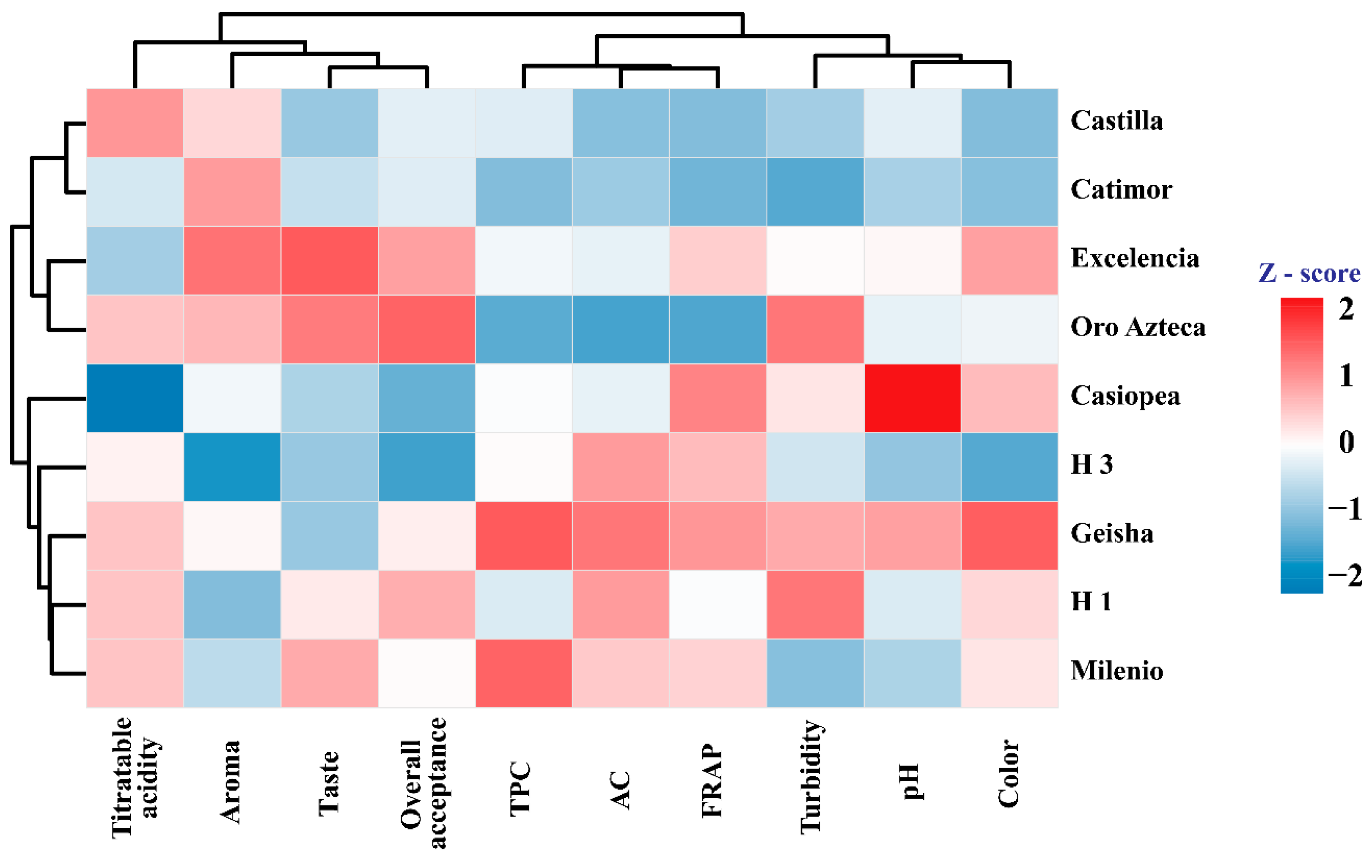
p < 0.05), as it is suitable for detecting differences among groups under non-normal data distributions and controlling type I error in multiple comparisons. A principal component analysis (PCA) and a heatmap with hierarchical clustering (HCA) were conducted using standardized values (Z-scores) to account for differences in variable scales and ensure comparability among physicochemical and sensory parameters. The PCA loadings of physicochemical and sensory variables on the principal components (PC1 and PC2) are presented in
Table S5, the PCA scores of coffee pulp infusion samples are shown in
Table S6, and the Z-score normalized data matrix used for heatmap analysis is provided in
Table S7. All analyses were conducted using R (RStudio, version 4.3.3).
3. Results and Discussion
3.1. Physicochemical Characterization of the Infusion
Table 1 shows the pH and titratable acidity values of CP infusions from nine varieties of
C. arabica. Statistically significant differences were observed among varieties in both parameters (
p < 0.05), indicating that genotype influences the acidic profile of the pulp.
3.1.1. pH
The pH of the infusions ranged between 5.36 ± 0.02 and 6.42 ± 0.02. The CP from the Casiopea variety presented the highest value (6.42 ± 0.02), while H3 showed the lowest (5.36 ± 0.02). These results fall within the range reported for infusions and aqueous extracts of
C. arabica (pH 5.3–6.6) [
27,
28].
pH depends on the balance between organic acids, mainly citric, malic, quinic, and chlorogenic acids, and the buffering compounds present in the matrix [
29]. Comparisons among coffee species show that differences in the content of these acids affect the pH of the infusions.
C. canephora and
C. liberica tend to be more acidic than
C. arabica because they contain higher levels of phenolic compounds, such as chlorogenic acid [
30,
31,
32]. Although only
C. arabica varieties were evaluated, the variability observed among samples indicates that compositional differences may contribute to the acidic profile of the infusions.
In this context, a previous study [
33] reported values between 4.18 and 4.22, which are comparable to those observed in arabica husk infusions prepared with 2 g/100 mL (4.55–4.62) and lower than those obtained with 1 g/100 mL [
30]. These findings confirm the acidic nature of cascara infusions and indicate that acidity is influenced by the amount of husk used during preparation.
3.1.2. Titratable Acidity
Titratable acidity, measured as grams of citric acid per 100 mL, ranged between 0.06 ± 0.01 and 0.08 ± 0.01 g/100 mL. In particular, CP from the Castilla variety presented the highest titratable acidity (0.08 ± 0.01 g/100 mL), while Casiopea showed the lowest (0.06 ± 0.01 g/100 mL). Variations in titratable acidity have been associated with processing conditions [
15], particularly fermentation, which increases organic acid accumulation [
34]. Given that the infusions were prepared without fermentation, the narrow TA range is consistent with limited formation and extraction of organic acids under aqueous conditions.
Although the range of variation was narrow, titratable acidity allowed better differentiation among varieties than pH. This indicates that TA captures differences in total dissociable acids more sensitively than pH under the evaluated conditions. In sensory terms, these differences may influence perceptions of acidity and beverage freshness, which are important for its potential valorization as an infusion.
3.2. Bioactivity of the Infusions
3.2.1. Antioxidant Capacity (AC) Using the DPPH Method
CP is an acknowledged source of phenolic compounds exhibiting antioxidant properties, which has spurred growing interest in its application as a functional additive in beverages [
13,
35]. This investigation revealed a considerable variation in the AC of the infusions among different types (
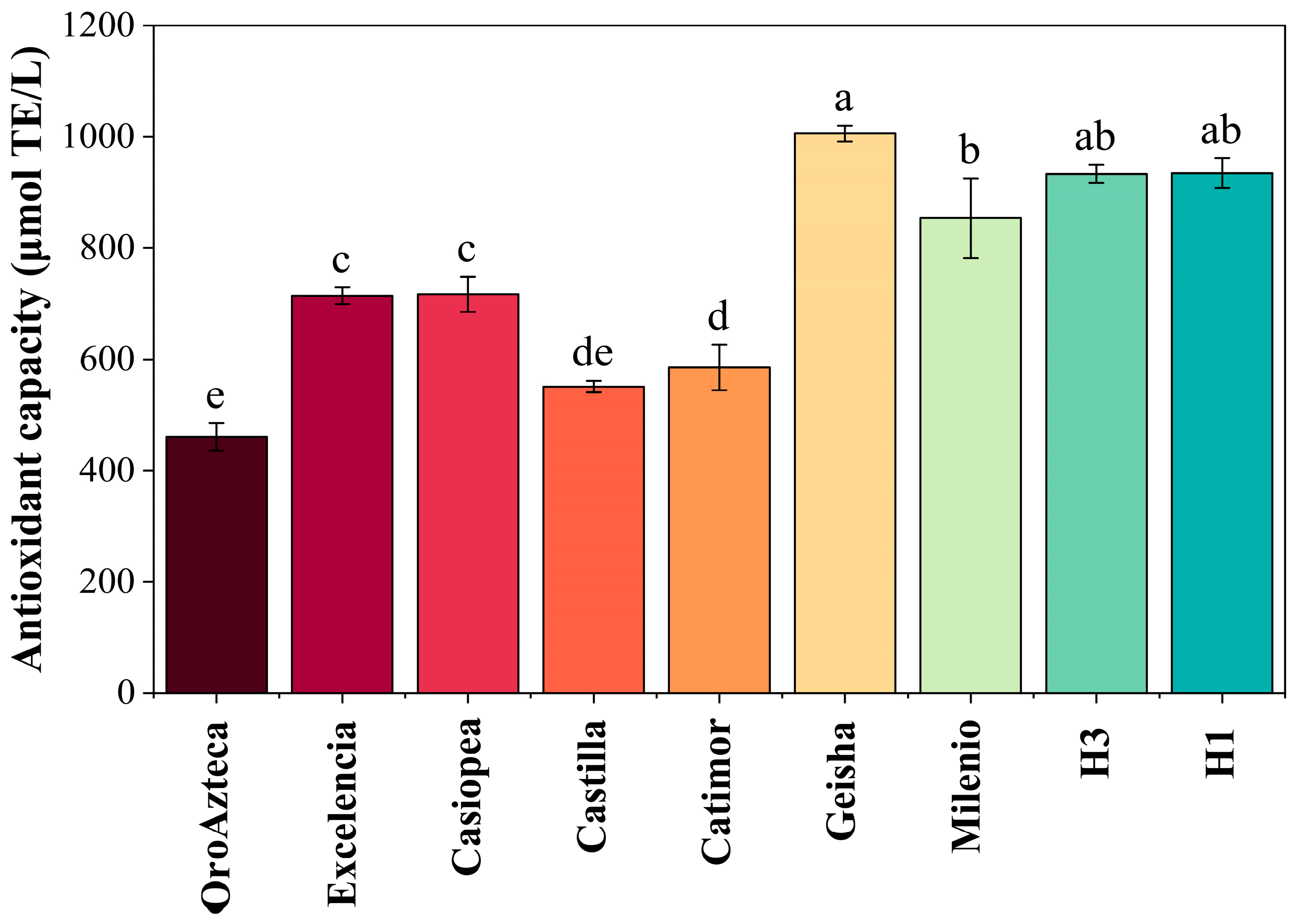
p < 0.05). The values obtained using the DPPH method varied from 460.52 ± 24.79 µmol TE/L in Oro Azteca to 1006.03 ± 14.24 µmol TE/L in Geisha, with the latter exceeding the minimum observed value by more than double (
Figure 2). These results indicate differences in antioxidant capacity among varieties. The cultivars Geisha, H1 (934.76 ± 26.44 µmol TE/L), and H3 (933.39 ± 16.62 µmol TE/L) exhibited the highest antioxidant activity, whilst Castilla and Catimor displayed intermediate values. Previous studies have reported that antioxidant activity in coffee by-products is associated with phenolic composition; however, this relationship varies depending on factors such as variety and extraction conditions [
13,
36]. In this context, the variability observed among the evaluated infusions suggests differences in the concentration and reactivity of phenolic compounds, which influence their radical scavenging capacity through electron or hydrogen donation mechanisms in the DPPH assay [
37,
38]. A similar trend has been reported in tea infusions, where antioxidant capacity values (measured as TEAC) ranged from 166.29 to 2532.41 µmol TE/g DW and strong correlations between antioxidant activity and phenolic content were observed (TEAC vs. TPC, R
2 = 0.946) [
39], supporting the central role of phenolic compounds in determining antioxidant capacity across infusion-based beverages.
3.2.2. Total Phenolic Content
Consistent with these results, the TPC also showed significant differences among varieties (
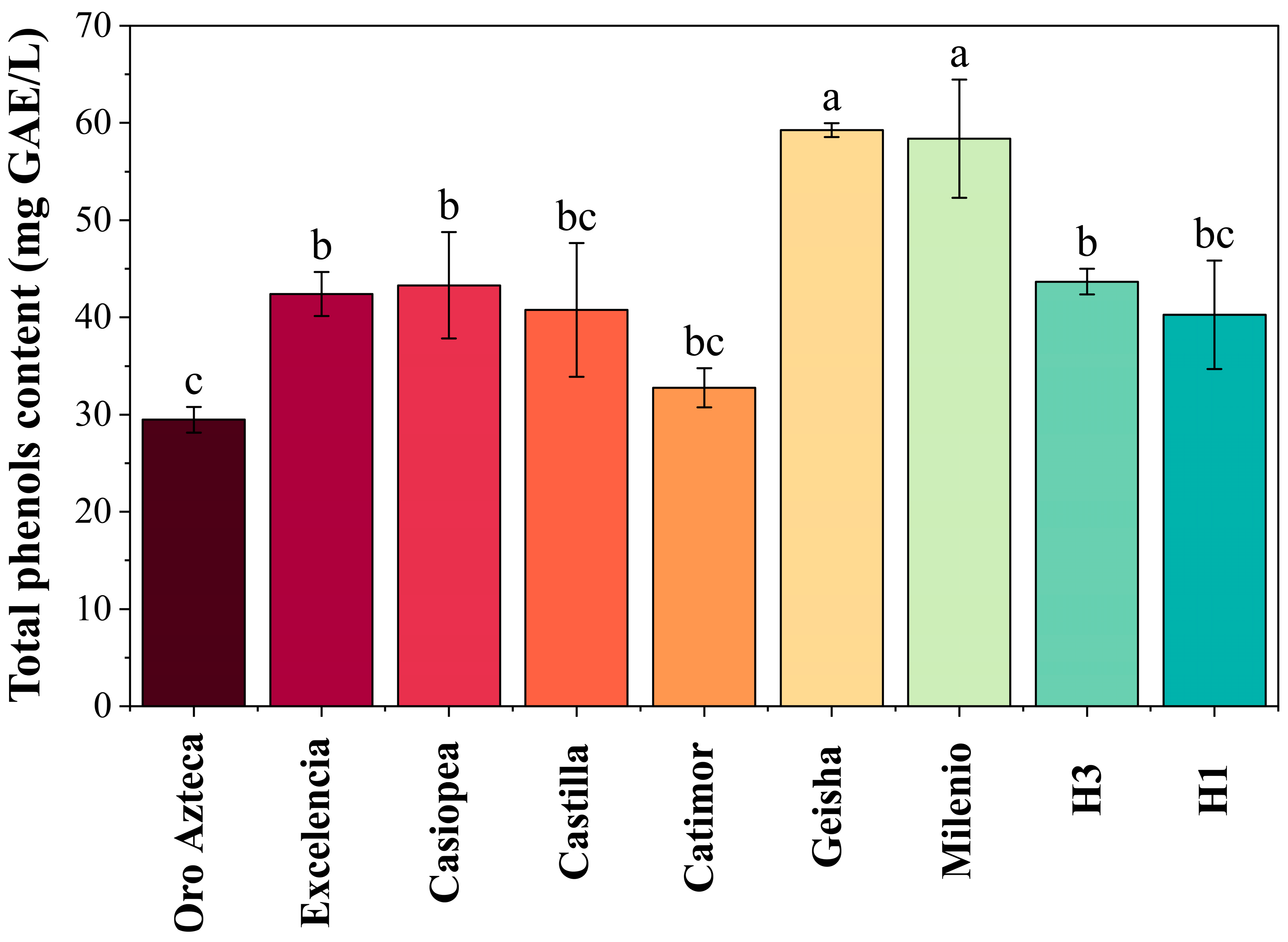
p < 0.05), with values ranging between 29.47 ± 1.31 mg GAE/L in Oro Azteca and 59.27 ± 0.71 mg GAE/L in Geisha (
Figure 3). The varieties Geisha, Milenio (54.5 ± 13.16 mg GAE/L), and H3 (43.68 ± 1.33 mg GAE/L) recorded the highest concentrations, whereas Oro Azteca and Catimor presented the lowest values. Previous studies have documented variability in phenolic composition among
C. arabica varieties, particularly in chlorogenic acids and related hydroxycinnamic compounds present in coffee pulp [
31,
32]. Plant infusions have shown wide variation in total phenolic content, ranging from 51.83 ± 0.59 to 665.03 ± 2.37 mg GAE/L depending on the botanical source and processing conditions [
39]. In comparison, the values obtained in this study are located at the lower end of this range, which may be attributed to the use of mild aqueous extraction conditions that limit the release of bound phenolic compounds, as well as to intrinsic differences in varietal composition.
3.2.3. Ferric Reducing Antioxidant Power (FRAP)
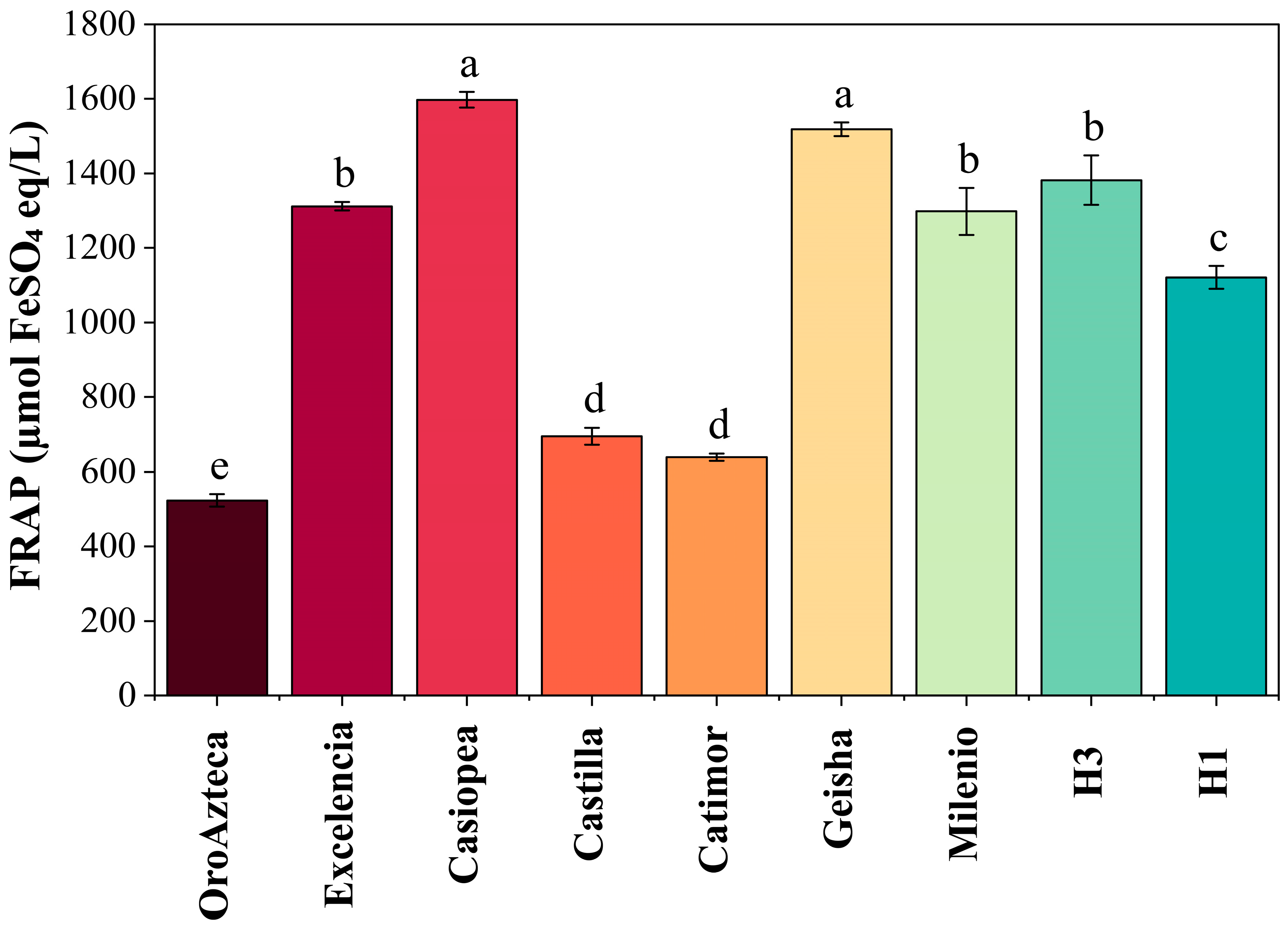
The antioxidant capacity evaluated by the FRAP method also showed significant differences among varieties (
p < 0.05), with values ranging between 523.54 and 1598.38 µmol FeSO
4 eq/L (
Figure 4). The Casiopea variety presented the highest reducing capacity (1598.38 ± 21.3 µmol FeSO
4 eq/L), followed by Geisha (1518.13 ± 18.4 µmol FeSO
4 eq/L), while Castilla and Catimor recorded the lowest values. In comparison, plant infusions such as tea have been reported to exhibit FRAP values ranging from 504.80 to 4647.47 µmol Fe
2+/g dry weight, indicating a wide variability in antioxidant capacity depending on the botanical source and composition [
39]. Although these values are expressed on a dry weight basis and are not directly comparable to infusion-based results, they support the variability observed among the evaluated samples. Differences between methods are likely due to their distinct sensitivities to phenolic compounds. DPPH and FRAP respond differently to chemical structure and reducing capacity [
40]. In this context, the DPPH assay mainly reflects the radical scavenging capacity of antioxidants, whereas the FRAP method evaluates their reducing power through electron transfer reactions [
41]. Thus, phenolic compounds may respond differently depending on the assay.
The variability observed among varieties may be associated with differences in the concentration and composition of phenolic compounds present in the pulp. Changes in phenolic profiles during fruit development, including the transformation of chlorogenic acids and formation of polymerized compounds, have been reported and may influence antioxidant behavior [
42,
43]. These transformations may modify the availability and reactivity of antioxidant compounds extractable in aqueous media.
Likewise, the extraction efficiency of phenolic compounds in the infusions is influenced by the polarity of the solvent. Chlorogenic acids, considered the predominant phenolic compounds in CP and husk, contain multiple hydroxyl groups that favor their solubility in water and facilitate their transfer into the aqueous extract [
44,
45]. Similarly, the polarity of the caffeine molecule contributes to its solubility and extraction during the preparation of infusions [
46]. In this context, the use of hot water as a solvent for the infusions in the present research favors the extraction of these hydrophilic compounds, which may contribute to the observed antioxidant capacity of the evaluated infusions.
It is important to highlight that the CP infusion from the Geisha variety stood out among the evaluated varieties, presenting the highest antioxidant activity in the DPPH assay, the highest TPC, and one of the highest reducing capacity values in the FRAP assay. These results indicate a higher antioxidant potential for this variety under the evaluated conditions. In coffee husk, a study conducted in Peru with the varieties Caturra, Catimor, and Geisha showed variations in AC and reducing power, highlighting Geisha and Caturra under different extraction conditions [
47]. Similarly, in coffee leaves, the Geisha variety presented the highest concentrations of phenols and flavonoids, together with high antioxidant and anti-inflammatory activity in DPPH and ABTS assays [
48]. Likewise, in roasted beans, ref. [
49] reported that fermented Geisha coffee showed higher antioxidant activity in DPPH, ABTS, and FRAP assays than Bourbon, suggesting differences in phenolic composition and antioxidant behavior among coffee varieties.
3.3. Sensory Analysis
Table 2 presents the results of the sensory analysis of infusions prepared with CP, highlighting significant differences among varieties in color and overall acceptance (
p < 0.05).
Color is a key sensory attribute in infusion-type beverages because it influences how consumers perceive quality. Infusion color depends on pigment extraction and the formation of browning compounds through enzymatic and Maillard reactions [
50]. In this study, the infusion of the Geisha variety obtained the highest average score (6.10 ± 1.52), followed by Excelencia (5.80 ± 1.55) and Casiopea (5.60 ± 1.26), without significant differences among them. On the other hand, H3 (4.00 ± 1.15) and Castilla obtained the lowest scores. These differences may be related to phenolic compounds, pigments, and oxidation products that influence color intensity. Previous studies have shown that coffee by-products contain phenolic compounds and melanoidins that can markedly change the color of beverages derived from the fruit [
51]. In addition, differences among coffee genotypes may result in variations in the pulp’s chemical composition and the degree of fruit maturity, which, in turn, affect the color characteristics of the infusion.
For the taste attribute, the Excelencia variety presented the highest average score (5.80 ± 1.48), followed by Oro Azteca (5.60 ± 1.51) and Milenio (5.30 ± 1.70), while Geisha (4.10 ± 0.74), H3 (4.20 ± 1.03), and Casiopea (4.30 ± 0.48) obtained the lowest values. Taste is mainly influenced by soluble compounds such as sugars, organic acids, and phenolics, which determine sweetness, acidity, bitterness, and astringency [
52,
53]. Variations in these compounds have been identified as key factors in the sensory acceptance of products derived from coffee by-products [
54,
55]. Likewise, [
56] reported that incorporating CP into foods can impart roasted, sweet, and caramelized aromatic notes, thereby enhancing sensory acceptance.
The attributes aroma and turbidity did not present significant differences among the evaluated varieties (p > 0.05). Aroma scores ranged between 3.80 ± 1.62 in H3 and 5.70 ± 1.64 in Excelencia, while turbidity varied between 4.10 ± 1.45 in Catimor and 5.50 ± 1.64 in Oro Azteca, Geisha, and H1. These results suggest that, despite genetic differences among the varieties, the extraction of volatile compounds and suspended particles during infusion preparation was relatively similar across varieties.
Regarding overall acceptance, significant differences among varieties were observed (
p < 0.05). The infusion made with pulp from the Oro Azteca variety obtained the highest average score (6.00 ± 1.05), followed by Excelencia (5.60 ± 1.78) and H1 (5.50 ± 1.08). In contrast, Casiopea (4.10 ± 0.88) and H3 (3.90 ± 0.99) obtained the lowest scores. Overall acceptance reflects consumer preference for the product [
57]. It integrates attributes such as color, taste, and aroma [
58]. The greater preference for Oro Azteca, Excelencia, and H1 could be due to a better sensory balance between sweetness, acidity, and aromatic characteristics. In addition, recent studies have shown that CP can enhance the bioactivity and sensory appeal of functional beverages, thereby contributing to flavor balance and the acceptability of the final product [
59].
Overall, the sensory acceptance results indicate that infusions prepared from CP of the varieties Oro Azteca, Excelencia, and H1 show greater sensory acceptance than those of the other evaluated varieties.
3.4. Principal Component Analysis (PCA)
PCA is a statistical dimensionality reduction method that transforms interrelated numerical variables into a few uncorrelated composite indicators, allowing the extraction of the most relevant information [
60].
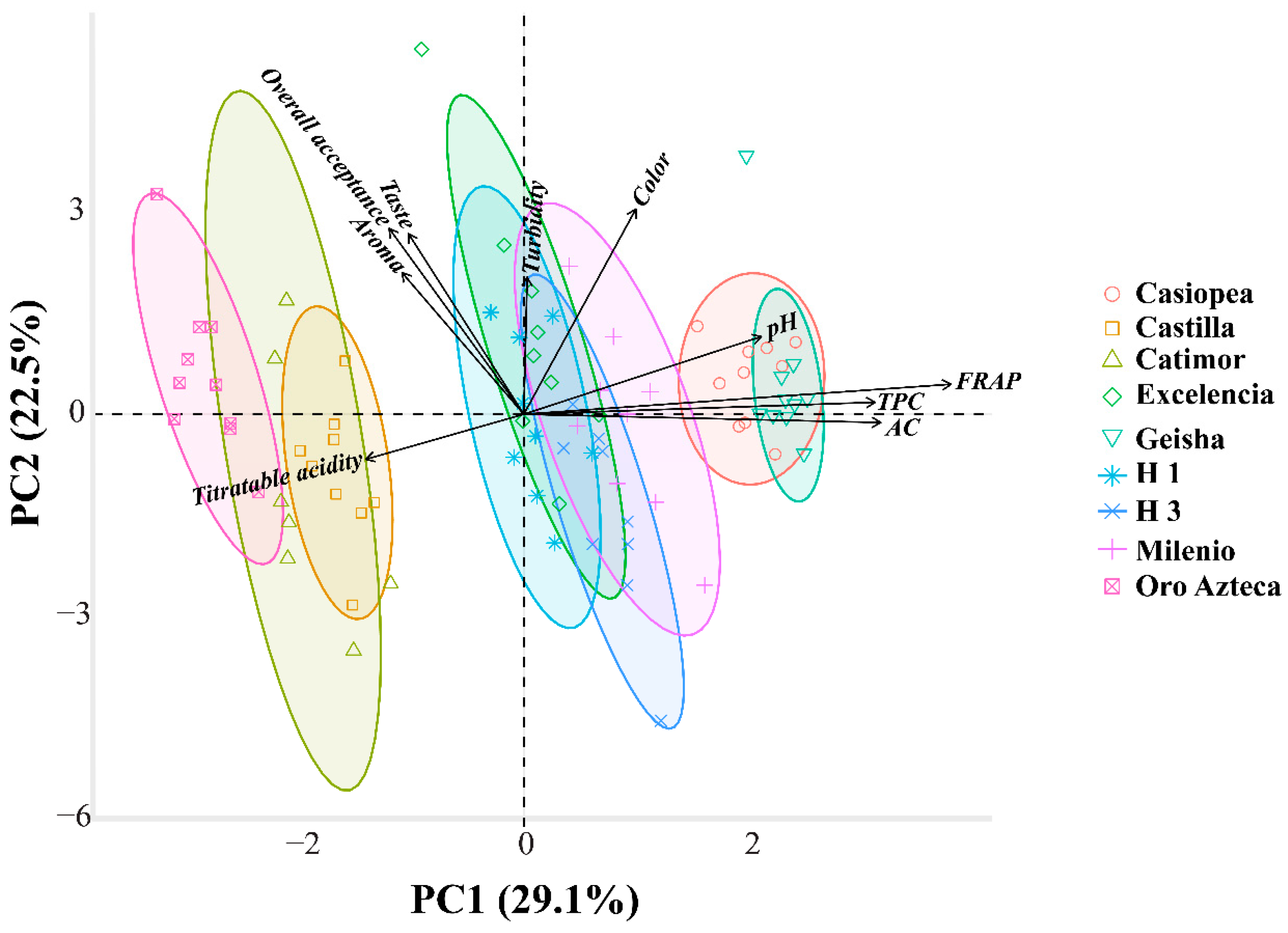
In this study, PCA revealed that the variability in CP infusions is mainly structured by two dimensions: one associated with antioxidant potential and another with sensory attributes (
Figure 5). The strong association of FRAP, AC, and TPC in PC1 suggests that phenolic composition is a determining factor in the functional differentiation of pulps, while PC2 mainly reflects characteristics perceived by consumers, such as color, aroma, and taste. The separation among varieties indicates that those with higher bioactive content (e.g., Geisha, Casiopea) do not necessarily show the best sensory attributes, suggesting a trade-off between functionality and acceptability. This pattern agrees with previous studies showing that sensory acceptance is more influenced by acidity, balance, and aroma than by phenolic content [
61,
62,
63]. This pattern agrees with previous studies showing that sensory acceptance is more influenced by acidity, balance, and aroma than by phenolic content [
36]. This explains why matrices with higher antioxidant potential do not always present higher sensory acceptance [
64].
3.5. Heatmap with Hierarchical Clustering (HCA)
The heatmap with hierarchical clustering confirmed the patterns observed in the PCA, showing that CP varieties present differentiated profiles both in their bioactive composition and in their sensory attributes (
Figure 6). Higher TPC, AC, and FRAP values in Geisha and Milenio suggest greater phenolic content and antioxidant potential. In contrast, Catimor and Oro Azteca showed lower values. The joint clustering of TPC, AC, and FRAP in the dendrogram supports the close functional relationship between TPC and AC, a pattern widely reported in studies on coffee and its coproducts, where these parameters usually show consistent positive correlations [
64,
65,
66,
67].
Clustering patterns suggest that varietal factors influence the chemical and sensory properties of CP, consistent with previous multivariate analyses in coffee matrices [
62,
68]. Sensory attributes clustered largely independently of antioxidant variables, consistent with previous reports, although some interactions may occur [
67,
69,
70,
71]. These results reinforce the usefulness of multivariate approaches to understand the complex relationship between chemical composition and sensory perception in products derived from CP.
4. Limitations
This study presents some limitations that should be considered when interpreting and extrapolating the results. First, coffee fruits were collected in a single coffee-growing area in Rodríguez de Mendoza, Amazonas, Peru, under specific altitude and environmental conditions. Therefore, the physicochemical, antioxidant, and sensory differences observed among varieties could also be influenced, to some extent, by local edaphoclimatic factors, and the results should not be directly generalized to the same varieties cultivated in other regions or production systems.
Second, only nine C. arabica varieties were evaluated, limiting the representativeness of the varietal diversity of coffee cultivated in Peru and other producing countries. Therefore, the conclusions are limited to the varieties included in this study and should not be extended to all Arabica genotypes.
Finally, the sensory evaluation was conducted with 60 regular coffee consumers selected from university students. This panel provides useful information on the product’s acceptability, but it does not fully represent broader consumer populations with different ages, cultural backgrounds, consumption habits, or familiarity with coffee by-products. Consequently, the results of sensory acceptance should be interpreted as exploratory and not fully generalizable to the overall market.
Despite these limitations, the study provides relevant comparative evidence on the influence of coffee variety on the functional and sensory characteristics of CP infusions and offers a useful basis for future studies involving multiple origins, broader consumer panels, and different preparation conditions. Future research should incorporate multi-location trials across different agroecological conditions to validate the consistency of these findings and enhance their broader applicability.
5. Conclusions
The results demonstrate that differences among C. arabica varieties play a key role in shaping both the functional properties and sensory acceptability of coffee pulp (CP) infusions, highlighting varietal selection as a critical factor in product development. Importantly, the findings reveal that higher antioxidant potential does not necessarily translate into greater consumer acceptance, indicating a trade-off between bioactivity and sensory perception that should be considered when designing functional beverages.
From an applied perspective, CP represents a promising raw material for the development of value-added products. Its use in infusion-based beverages provides a feasible strategy for on-farm valorization, contributing to waste reduction and supporting circular economy approaches within the coffee production chain. In this context, targeted varietal selection and product optimization could enhance both functional quality and market acceptance.
However, these findings should be interpreted considering the limited geographical scope of the study and the specific characteristics of the consumer panel, which may restrict their generalization to other regions or populations.
Supplementary Materials
The following supporting information can be downloaded at:
https://www.mdpi.com/article/10.3390/beverages12040047/s1, Figure S1: Hedonic scale used in the sensory evaluation of coffee pulp infusions; Figure S2: Panelist Informed Consent Document; Figure S3: Ethical approval certificate issued by the Institutional Research Ethics Committee (Comité Institucional de Ética en la Investigación, CIEI), UNTRM; Table S1: Results of assumption testing and non-parametric statistical analysis (Shapiro–Wilk, Levene’s, and Kruskal–Wallis tests) for titratable acidity and pH in coffee pulp infusions; Table S2: Results of normality (Shapiro–Wilk), homoscedasticity (Levene’s), and inferential tests (ANOVA/Kruskal–Wallis) for sensory attributes; Table S3: Total phenolic content (TPC) and antioxidant capacity (DPPH and FRAP assays) of coffee pulp infusions from different varieties; Table S4: Results of normality (Shapiro–Wilk), homoscedasticity (Levene’s), and one-way ANOVA for TPC and antioxidant capacity (DPPH and FRAP); Table S5: Loadings of physicochemical and sensory variables on principal components; Table S6: Eigenvalues, percentage of explained variance, and cumulative variance of principal component analysis (PCA); Table S7: Z-score normalized data matrix used for heatmap analysis.
Author Contributions
Conceptualization, R.O.-D., E.A.-R. and B.M.F.I.; methodology, B.M.F.I. and J.E.L.-M.; software, R.O.-D., A.V.-L. and J.V.C.; validation, E.H., A.V.-L. and M.O.-C.; formal analysis, R.O.-D., R.V., B.M.F.I. and A.V.-L.; investigation, R.V., B.M.F.I., E.A.-R. and J.E.L.-M.; resources, E.H. and M.O.-C.; data curation, R.O.-D., J.V.C., R.V. and J.E.L.-M.; writing—original draft preparation, R.O.-D., J.V.C., E.A.-R. and A.V.-L.; writing—review and editing, A.V.-L., R.V. and J.E.L.-M.; visualization, E.H., R.V. and M.O.-C.; supervision, E.H.; project administration, E.H. and M.O.-C.; funding acquisition, M.O.-C. All authors have read and agreed to the published version of the manuscript.
Funding
This research was funded by the project SNIP No. 352439/CUI No. 2314883, “Creación de los Servicios del Centro de Investigación, Innovación y Transferencia Tecnológica de Café (CEINCAFÉ)”, implemented by the Instituto de Investigación para el Desarrollo Sustentable de Ceja de Selva, Universidad Nacional Toribio Rodríguez de Mendoza de Amazonas, Peru. Additional support was provided by its Vice-Rectorate for Research.
Institutional Review Board Statement
The study was conducted in accordance with the ethical standards for research involving human participants and was approved by the Institutional Ethics Committee for Research (CIEI) of the Universidad Nacional Toribio Rodríguez de Mendoza de Amazonas (UNTRM), Peru (Approval code: CIEI-N°00038; Approval date: 11 March 2026).
Informed Consent Statement
Informed consent was obtained from all subjects involved in the study.
Data Availability Statement
All data utilized in this manuscript are incorporated within the main text or in the accompanying
Supplementary Material. The data supporting the findings of this study are included in the article. Further inquiries can be directed to the corresponding author.
Acknowledgments
The authors acknowledge the support of the Laboratorio de Investigación en Fisiología y Biotecnología Vegetal (FISIOBVLAB) for conducting the physicochemical and antioxidant analyses, and the Huambo Experimental Station for providing the coffee plant material and facilitating field sampling.
Conflicts of Interest
The authors declare that they have no conflicts of interest.
Abbreviations
The following abbreviations are used in this manuscript:
| TPC | Total phenolic content |
| DPPH | 2,2-diphenyl-1-picrylhydrazyl |
| AC | Antioxidant capacity |
| FRAP | Ferric reducing antioxidant power |
| CP | Coffee pulp |
| mg GAE/L | mg gallic acid equivalents per liter of infusion |
| PCA | Principal component analysis |
| pH | Hydrogen potential |
| ABTS | 2,2′-azinobis-(3-ethylbenzothiazoline-6-sulfonic acid) |
| HCA | Heatmap with hierarchical clustering |
| UNTRM | Universidad Nacional Toribio Rodríguez de Mendoza |
References
- International Coffee Organization. Stronger Partnerships: Solutions to Overcome Regulatory and Market Challenges. Available online: https://www.icocoffee.org/documents/cy2023-24/annual-review-2022-2023-e.pdf (accessed on 4 December 2025).
- Iriondo-Dehond, A.; Iriondo-Dehond, M.; Del Castillo, M.D. Applications of compounds from coffee processing by-products. Biomolecules 2020, 10, 1219. [Google Scholar] [CrossRef]
- Esquivel, P.; Jiménez, V.M. Functional properties of coffee and coffee by-products. Food Res. Int. 2012, 46, 488–495. [Google Scholar] [CrossRef]
- Gómez-Ramírez, B.D.; Gómez-Gutiérrez, A.M.; Cifuentes-Ramírez, S.; Ceballos-Calle, D.P.; Hincapié-Hincapié, D.L.; Ramírez-Ortiz, D. Obtención de un ingrediente alimentario a partir de pulpa de café. Acta Agronómica 2023, 72, 377–384. [Google Scholar] [CrossRef]
- Oliveira, G.; Passos, C.P.; Ferreira, P.; Coimbra, M.A.; Gonçalves, I. Coffee by-products and their suitability for developing active food packaging materials. Foods 2021, 10, 683. [Google Scholar] [CrossRef]
- Santos, É.M.; Macedo, L.M.; Tundisi, L.L.; Ataide, J.A.; Camargo, G.A.; Alves, R.C.; Oliveira, M.B.P.P.; Mazzola, P.G. Coffee by-products in topical formulations: A review. Trends Food Sci. Technol. 2021, 111, 280–291. [Google Scholar] [CrossRef]
- Gil-Ramírez, A.; Rebollo-Hernanz, M.; Cañas, S.; Cobeta, I.M.; Rodríguez-Rodríguez, P.; Gila-Díaz, A.; Benítez, V.; Arribas, S.M.; Aguilera, Y.; Martín-Cabrejas, M.A. Unveiling the nutritional profile and safety of coffee pulp as a first step in its valorization strategy. Foods 2024, 13, 3006. [Google Scholar] [CrossRef] [PubMed]
- Bondam, A.F.; Diolinda da Silveira, D.; Pozzada dos Santos, J.; Hoffmann, J.F. Phenolic compounds from coffee by-products: Extraction and application in the food and pharmaceutical industries. Trends Food Sci. Technol. 2022, 123, 172–186. [Google Scholar] [CrossRef]
- Pérez-Gregorio, R. Phenolic compounds and functional beverages. Beverages 2021, 7, 71. [Google Scholar] [CrossRef]
- del Castillo, M.D.; Iriondo-DeHond, A.; Martínez-Saez, N.; Fernández-Gómez, B.; Iriondo-DeHond, M.; Zhou, J.R. Applications of recovered compounds in food products. In Handbook of Coffee Processing By-Products; Academic Press: Cambridge, MA, USA, 2017; pp. 171–194. [Google Scholar] [CrossRef]
- Gupta, A.; Sanwal, N.; Bareen, M.A.; Barua, S.; Sharma, N.; Olatunji, O.J.; Nirmal, N.P.; Sahu, J.K. Trends in functional beverages: Functional ingredients, processing technologies, stability, health benefits, and consumer perspective. Food Res. Int. 2023, 170, 113046. [Google Scholar] [CrossRef]
- Dini, I. An overview of functional beverages. In Functional and Medicinal Beverages; Academic Press: Cambridge, MA, USA, 2019; pp. 1–40. [Google Scholar] [CrossRef]
- Heeger, A.; Kosińska-Cagnazzo, A.; Cantergiani, E.; Andlauer, W. Bioactives of coffee cherry pulp and its utilisation for production of cascara beverage. Food Chem. 2017, 221, 969–975. [Google Scholar] [CrossRef] [PubMed]
- Delgado, S.R.; Arbelaez, A.F.A.; Rojano, B. Antioxidant capacity and bioactive compounds in coffee pulp for infusion production. Acta Sci. Pol. Technol. Aliment. 2019, 18, 235–248. [Google Scholar] [CrossRef]
- Jiménez-Ochoa, J.P.; Barrios-Rodríguez, Y.F.; Bahamón-Monje, A.F.; Gutiérrez-Gúzman, N. Physicochemical and sensory characteristics of dehydrated coffee pulp. Rev. Bras. Eng. Agrícola Ambient. 2022, 26, 894–900. [Google Scholar] [CrossRef]
- Geremu, M.; Tola, Y.B.; Sualeh, A. Extraction and determination of total polyphenols and antioxidant capacity of red coffee (Coffea arabica L.) pulp. Chem. Biol. Technol. Agric. 2016, 3, 25. [Google Scholar] [CrossRef]
- Esquivel, P.; Viñas, M.; Steingass, C.B.; Gruschwitz, M.; Guevara, E.; Carle, R.; Schweiggert, R.M.; Jiménez, V.M. Coffee (Coffea arabica L.) by-products as a source of carotenoids and phenolic compounds. Front. Sustain. Food Syst. 2020, 4, 590597. [Google Scholar] [CrossRef]
- Arango-Agudelo, E.; Rendón-Muñóz, Y.; Cadena-Chamorro, E.; Santa, J.F.; Buitrago-Sierra, R. Evaluation of coffee waste to produce antioxidant extracts. Bioresources 2023, 18, 5703–5723. [Google Scholar] [CrossRef]
- Oblitas, R.; Quispe-Sanchez, L.; Guadalupe, G.; Diaz, E.H.; Oliva, S.; Diaz-Valderrama, J.R.; Yoplac, I.; Valencia-Sullca, C.; Chavez, S.G. Physicochemical properties of bioactive bioplastics based on coffee and cocoa by-products. Results Chem. 2025, 15, 102201. [Google Scholar] [CrossRef]
- Brand-Williams, W.; Cuvelier, M.E.; Berset, C. Use of a free radical method to evaluate antioxidant activity. LWT—Food Sci. Technol. 1995, 28, 25–30. [Google Scholar] [CrossRef]
- Çelik, E.E.; Gökmen, V. A study on interactions between the insoluble fractions of different coffee infusions and major cocoa antioxidants. Food Chem. 2018, 255, 8–14. [Google Scholar] [CrossRef] [PubMed]
- Chen, L.Y.; Cheng, C.W.; Liang, J.Y. Effect of esterification condensation on the Folin–Ciocalteu method for the quantitative measurement of total phenols. Food Chem. 2015, 170, 10–15. [Google Scholar] [CrossRef] [PubMed]
- Abrahão, F.R.; Rocha, L.C.R.; Santos, T.A.; Carmo, E.L.; Pereira, L.A.S.; Borges, S.V.; Pereira, R.G.F.A.; Botrel, D.A. Microencapsulation of bioactive compounds from espresso spent coffee by spray drying. LWT—Food Sci. Technol. 2019, 103, 116–124. [Google Scholar] [CrossRef]
- Diaz, K.; Quispe-Sanchez, L.; Balcázar-Zumaeta, C.R.; Oblitas, R.C.; Mori, R.; Mori, S.; Chuquizuta, T.S.; Oliva, M.; Chavez, S.G. Rheological, bioactive and sensory properties of dark chocolates elaborated with stevia sweetener and freeze-dried berries. Appl. Food Res. 2025, 5, 100870. [Google Scholar] [CrossRef]
- Sipos, L.; Nyitrai, Á.; Hitka, G.; Friedrich, L.F.; Kókai, Z. Sensory panel performance evaluation: Comprehensive review of practical approaches. Appl. Sci. 2021, 11, 11977. [Google Scholar] [CrossRef]
- Lawless, H.T.; Heymann, H. Principles of good practice. In Sensory Evaluation of Food; Springer: New York, NY, USA, 1999; pp. 83–115. [Google Scholar] [CrossRef]
- Hoseini, M.; Cocco, S.; Casucci, C.; Cardelli, V.; Corti, G. Coffee by-products derived resources: A review. Biomass Bioenergy 2021, 148, 106009. [Google Scholar] [CrossRef]
- Portela, C.S.; Almeida, I.F.; Reis, T.A.D.; Hickmann, B.R.B.; Benassi, M.T. Effects of brewing conditions and coffee species on physicochemical characteristics and sensory perception. Food Res. Int. 2022, 151, 110860. [Google Scholar] [CrossRef]
- Zapata, A.M.O.; Arango, F.O.D.; Rojano, B.A. Sensory profile, content, and antioxidant activity in coffee beverages prepared by direct contact methods. Coffee Sci. 2020, 15, e151758. [Google Scholar] [CrossRef]
- Murlida, E.; Noviasari, S.; Nilda, C.; Rohaya, S.; Rahmi, F.; Muzaifa, M. Chemical characteristics of cascara tea from several coffee varieties. IOP Conf. Ser. Earth Environ. Sci. 2021, 667, 012078. [Google Scholar] [CrossRef]
- Farah, A. Coffee constituents. In Coffee: Emerging Health Effects and Disease Prevention; Wiley: Hoboken, NJ, USA, 2012; pp. 21–58. [Google Scholar] [CrossRef]
- Gottstein, V.; Krumbügel, K.; Kuballa, T.; Schwarz, S.; Walch, E.; Walch, P.; Lachenmeier, D.W. Monitoring chemical changes in coffee beans during roasting using NMR spectroscopy. Beverages 2023, 9, 87. [Google Scholar] [CrossRef]
- Maharani, S.; Mustikawati, I.; Nailufhar, L.; Istiqomah, S. Effect of brewing time on pH, polyphenols, and antioxidant activity of cascara tea. J. Phys. Conf. Ser. 2021, 1869, 012050. [Google Scholar] [CrossRef]
- Amorocho Cruz, C.M.; Muñoz Cortés, Y. Physicochemical, microbiological, and sensory characterization of fermented coffee pulp beverages. Coffee Sci. 2021, 16, e161889. [Google Scholar] [CrossRef]
- Saewan, N.; Jimtaisong, A.; Vichit, W. Optimization of phenolic extraction from coffee by-products using response surface methodology. Food Appl. Biosci. J. 2020, 8, 14–26. [Google Scholar]
- Pua, A.; Choo, W.X.D.; Goh, R.M.V.; Liu, S.Q.; Cornuz, M.; Ee, K.-H.; Sun, J.; Lassabliere, B.; Yu, B. A systematic study of cascara (Coffea arabica) pulp: Non-volatile compounds and antioxidant capacity. LWT—Food Sci. Technol. 2021, 138, 110630. [Google Scholar] [CrossRef]
- Bhebhe, M.; Füller, T.N.; Chipurura, B.; Muchuweti, M. Effect of solvent type on total phenolic content and antioxidant activity of herbal infusions. Food Anal. Methods 2015, 9, 1060–1067. [Google Scholar] [CrossRef]
- Dobrinas, S.; Soceanu, A.; Popescu, V.; Popovici, I.C.; Jitariu, D. Relationship between total phenolics and antioxidant capacity in tea samples. Processes 2021, 9, 1311. [Google Scholar] [CrossRef]
- Zhao, C.-N.; Tang, G.-Y.; Cao, S.-Y.; Xu, X.-Y.; Gan, R.-Y.; Liu, Q.; Mao, Q.-Q.; Shang, A.; Li, H.-B. Phenolic profiles and antioxidant activities of tea infusions. Antioxidants 2019, 8, 215. [Google Scholar] [CrossRef] [PubMed]
- Apak, R.; Özyürek, M.; Güçlü, K.; Çapanoğlu, E. Antioxidant activity/capacity measurement: Classification and mechanisms. J. Agric. Food Chem. 2016, 64, 997–1027. [Google Scholar] [CrossRef] [PubMed]
- Munteanu, I.G.; Apetrei, C. Analytical methods used in determining antioxidant activity: A review. Int. J. Mol. Sci. 2021, 22, 3380. [Google Scholar] [CrossRef] [PubMed]
- Bastian, F.; Hutabarat, O.S.; Dirpan, A.; Nainu, F.; Harapan, H.; Emran, T.B.; Simal-Gandara, J. From plantation to cup: Changes in bioactive compounds during coffee processing. Foods 2021, 10, 2827. [Google Scholar] [CrossRef] [PubMed]
- Farah, A.; Donangelo, C.M. Phenolic compounds in coffee. Braz. J. Plant Physiol. 2006, 18, 23–36. [Google Scholar] [CrossRef]
- De, B.S.; Wasewar, K.L.; Dhongde, V. Extractive separation of protocatechuic acid using natural non-toxic solvents. Chem. Data Collect. 2018, 15–16, 244–253. [Google Scholar] [CrossRef]
- Soto-Hernández, M.; García-Mateos, R.; Palma-Tenango, M. Plant physiological aspects of phenolic compounds. In Phenolic Compounds—Biological Activity; IntechOpen: London, UK, 2019. [Google Scholar] [CrossRef]
- Fakioğlu, M.; Kalpaklı, Y. Mechanism and behavior of caffeine sorption: Affecting factors. RSC Adv. 2022, 12, 26504–26513. [Google Scholar] [CrossRef]
- Puñez Yance, M.Y.; Chuquipiondo Pérez, G.; Ayala Galdos, M.E.; Pariona-Velarde, D. Physicochemical comparison of aqueous extracts from Peruvian coffee husks (Caturra, Catimor and Geisha). Coffee Sci. 2023, 18, e182136. [Google Scholar] [CrossRef]
- Jeon, Y.A.; Natraj, P.; Kim, S.C.; Moon, J.K.; Lee, Y.J. Comparative analysis of phytochemical and functional profiles of Arabica coffee leaves and green beans. Foods 2024, 13, 3744. [Google Scholar] [CrossRef]
- Tan, Y.; Wu, H.; Shi, L.; Barrow, C.; Dunshea, F.R.; Suleria, H.A.R. Impacts of fermentation on phenolic composition and antioxidant potential of coffee beans. Fermentation 2023, 9, 918. [Google Scholar] [CrossRef]
- Salehi, F. Physicochemical properties of fruit and vegetable juices as affected by ultrasound: A review. Int. J. Food Prop. 2020, 23, 1748–1765. [Google Scholar] [CrossRef]
- Buck, N.; Wohlt, D.; Winter, A.R.; Ortner, E. Aroma-active compounds in robusta coffee pulp puree: Physicochemical and sensory evaluation. Molecules 2021, 26, 3925. [Google Scholar] [CrossRef]
- Kim, J.H.; Lee, J.H.; Choi, Y.K.; Chun, S.S. A lexicon for descriptive sensory evaluation of blended tea. Prev. Nutr. Food Sci. 2018, 23, 364. [Google Scholar] [CrossRef]
- Zhang, S.; Yang, Y.; Cheng, X.; Thangaraj, K.; Arkorful, E.; Chen, X.; Li, X. Prediction of suitable brewing conditions of tea based on chemical composition and sensory quality. Sci. Rep. 2020, 10, 945. [Google Scholar] [CrossRef]
- Makwana, M.; Hati, S. Fermented beverages and their health benefits. In Fermented Beverages: The Science of Beverages; Woodhead Publishing: Cambridge, UK, 2019; pp. 1–29. [Google Scholar] [CrossRef]
- Nguyen Le, B.X.; Van, T.P.; Phan, Q.K.; Pham, G.B.; Quang, H.P.; Do, A.D. Coffee husk as ingredient for cascara kombucha production. J. Microbiol. Biotechnol. 2024, 34, 673–680. [Google Scholar] [CrossRef]
- Hussein, A.; Ali, H.; Bareh, G.; Farouk, A. Influence of spent coffee grounds on physicochemical and sensory properties of sponge cake. Pak. J. Biol. Sci. 2019, 22, 273–282. [Google Scholar] [CrossRef]
- Fiorentini, M.; Kinchla, A.J.; Nolden, A.A. Role of sensory evaluation in consumer acceptance of plant-based meat analogs. Foods 2020, 9, 1334. [Google Scholar] [CrossRef]
- Meiselman, H.L.; Cardello, A.V. Food acceptability: Affective methods. In Encyclopedia of Food Sciences and Nutrition; Academic Press: Cambridge, MA, USA, 2003; pp. 2569–2576. [Google Scholar] [CrossRef]
- Barcenilla, C.; Puente, A.; Cobo-Díaz, J.F.; Alexa, E.A.; Garcia-Gutierrez, E.; O’Connor, P.M.; Cotter, P.D.; González-Raurich, M.; López, M.; Prieto, M.; et al. Sustainable co-fermentation of seagrape (Caulerpa lentillifera) and coffee pulp for functional beverages. Future Foods 2025, 12, 100688. [Google Scholar] [CrossRef]
- Bro, R.; Smilde, A.K. Principal component analysis. Anal. Methods 2014, 6, 2812–2831. [Google Scholar] [CrossRef]
- Fuentes, J.A.M.; Alemán, R.A.; Chavarría, L.A.; Murillo, I.M.V.; Alvarado, N.P.; Fernández, I.M. Development of an infusion-type beverage from coffee pulp (Coffea arabica) Lempira variety. J. Agric. Sci. 2019, 12, 209. [Google Scholar] [CrossRef]
- Riandani, A.P.; Prangdimurti, E.; Herawati, D. Chemical and sensory profiling of cascara beverages from different locations in Indonesia. Food Res. 2022, 6, 388–398. [Google Scholar] [CrossRef] [PubMed]
- DePaula, J.; Cunha, S.C.; Cruz, A.; Sales, A.L.; Revi, I.; Fernandes, J.; Ferreira, I.M.P.L.V.O.; Miguel, M.A.L.; Farah, A. Volatile fingerprinting and sensory profiles of coffee cascara teas produced in Latin America. Foods 2022, 11, 3144. [Google Scholar] [CrossRef]
- Poláková, K.; Bobková, A.; Demianová, A.; Bobko, M.; Lidiková, J.; Jurčaga, L.; Belej, Ľ.; Mesárošová, A.; Korčok, M.; Tóth, T. Quality attributes and sensory acceptance of coffee co-products. Foods 2023, 12, 2675. [Google Scholar] [CrossRef]
- Rendón-Mera, A.M.; Vega-Oliveros, C.; Ordoñez-Lozano, S.; López, D.M.; Guzmán, N.G. Multivariate analysis of FTIR, bioactive compounds, and antioxidant activity in coffee pulp (Coffea arabica var. Catimor). Food Chem. X 2025, 29, 102828. [Google Scholar] [CrossRef]
- Kristanti, D.; Setiaboma, W.; Ratnawati, L.; Sagita, D. Robusta coffee cherry fermentation: Physicochemical and sensory evaluation of cascara tea. J. Food Process. Preserv. 2022, 46, e17054. [Google Scholar] [CrossRef]
- Mihai, R.A.; Ortiz-Pillajo, D.C.; Iturralde-Proaño, K.M.; Vinueza-Pullotasig, M.Y.; Sisa-Tolagasí, L.A.; Villares-Ledesma, M.L.; Melo-Heras, E.J.; Cubi-Insuaste, N.S.; Catana, R.D. Comprehensive assessment of coffee varieties (Coffea arabica L.; Coffea canephora L.) from Ecuador. Horticulturae 2024, 10, 200. [Google Scholar] [CrossRef]
- Liang, N.; Kitts, D.D.; Wang, X.; Hu, Z.; Sabier, M. Phenolic acid composition of coffee cascara and antioxidant capacity: A geographic assessment. Antioxidants 2025, 14, 502. [Google Scholar] [CrossRef]
- Rocha, R.A.R.; Cruz, M.A.D.; Silva, L.C.F.; Costa, G.X.R.; Amaral, L.R.; Bertarini, P.L.L.; Gomes, M.S.; Santos, L.D. Evaluation of Arabica coffee fermentation using machine learning. Foods 2024, 13, 454. [Google Scholar] [CrossRef] [PubMed]
- Alsubot, S.; Aldiab, D. Impact of post-harvest treatments on physicochemical and sensory characteristics of coffee beans in Huila, Colombia. Postharvest Biol. Technol. 2022, 187, 111852. [Google Scholar] [CrossRef]
- Muñoz, A.E.; Hernández, S.S.; Tolosa, A.R.; Burillo, S.P.; Olalla-Herrera, M. Differences in antioxidant capacity and phenolic compounds of green and roasted coffee. LWT—Food Sci. Technol. 2020, 128, 109457. [Google Scholar] [CrossRef]
| Disclaimer/Publisher’s Note: The statements, opinions and data contained in all publications are solely those of the individual author(s) and contributor(s) and not of MDPI and/or the editor(s). MDPI and/or the editor(s) disclaim responsibility for any injury to people or property resulting from any ideas, methods, instructions or products referred to in the content. |




 ,
,