Article

Evolution of Different Physicochemical Parameters During Aging of Six Unfiltered Lager and Ale Beers Made with White, Red, and Blue Corn Malts

by
José R. Verde-Calvo
1,
Héctor Bernardo Escalona-Buendía
2,
Araceli Arellano-Covarrubias
3,
Frida Pura Malpica-Sánchez
1 and
Miguel Ángel Hernández-Carapia
1,*
1
Laboratory of Enology and Fermented Foods, Biotechnology Department, Universidad Autónoma Metropolitana, Mexico City 09340, Mexico
2
Sensory and Consumer Laboratory, Biotechnology Department, Universidad Autónoma Metropolitana, Mexico City 09340, Mexico
3
Department of Chemical, Industrial and Food Engineering, Universidad Iberoamericana, Mexico City 01219, Mexico
*
Author to whom correspondence should be addressed.
Beverages 2026, 12(3), 36; https://doi.org/10.3390/beverages12030036
Submission received: 15 January 2026 / Revised: 3 March 2026 / Accepted: 4 March 2026 / Published: 12 March 2026
(This article belongs to the Section Malting, Brewing and Beer)

Abstract

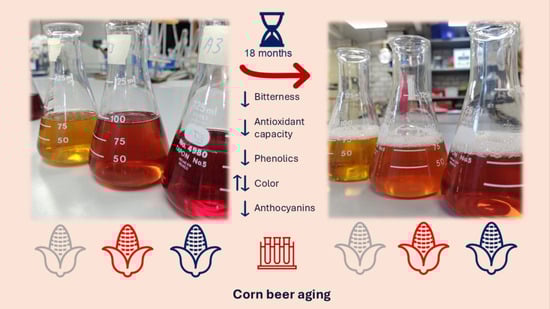
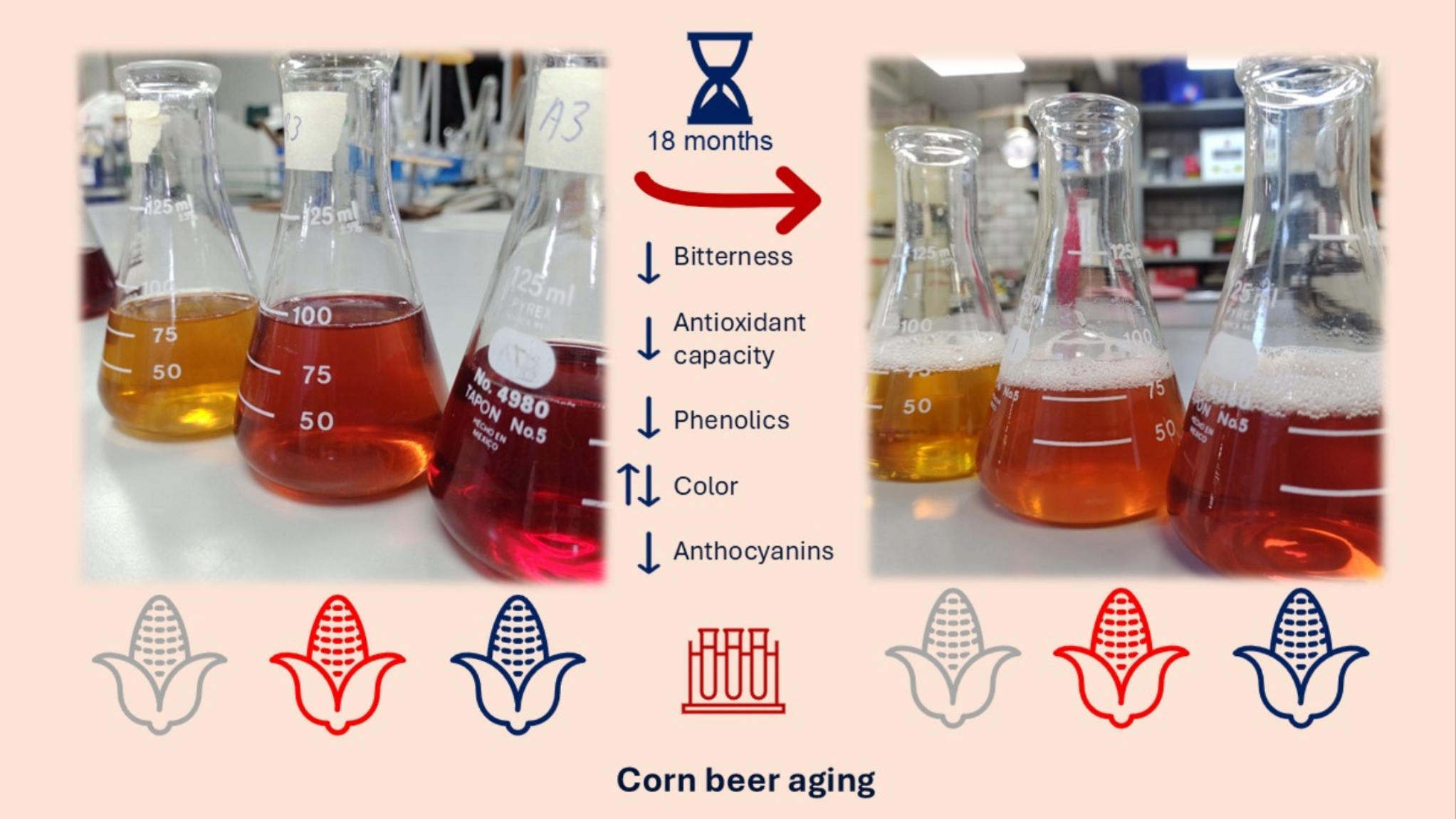
Beer is an alcoholic beverage made primarily from malted cereals, water, hops, and yeast. Although barley is the most common cereal in brewing, corn malts are also used to produce beer in different countries. However, research on their production, physicochemical properties, and aging evolution is limited. In the present study, the evolution of various physicochemical features during the aging of six lager- and ale-fermented corn beers was investigated. Results after 18 months of aging showed decreases in most of the measured properties: total phenolics between 16 and 20%, antioxidant capacity between 17 and 23% by DPPH assay and 23–41% by ABTS assay, free anthocyanins between 38 and 55%, bitterness units between 32 and 42%, and SRM color and color intensity only dropped in lager beers, while in ale beers these properties increased. Finally, tonality increased in lager beers and one ale beer. This study enabled a more in-depth analysis of corn beer, focusing on the evolution of physicochemical properties during aging that are relevant to beer quality.

Graphical Abstract

1. Introduction

Beer is an alcoholic beverage made from four basic ingredients: malted cereals, water, hops, and yeast. According to the yeast species used for fermentation, Saccharomyces cerevisiae (also known as “top-fermenting yeasts”) or Saccharomyces pastorianus (also known as “bottom-fermenting yeasts”), beer can be classified into two large groups: lager beers and ale beers. The former are usually fermented at 7–15 °C, whereas the latter are fermented at 16–24 °C [1]. Both the yeast species employed and the fermentation temperature impact the production of volatile compounds, which influence the sensory profile of beer. Ale yeasts are more related to greater productions of higher alcohols and some esters than lager yeasts [2].
Aging has a significant impact on both sensory and physicochemical properties of beer, since it changes many of its characteristics from its production, such as flavor, aroma, and colloidal stability [3], as well as degradation of hop bitter acids and oxidation of polyphenols [4], to name but a few. Changes during beer aging depend on intrinsic factors such as type (ale or lager) and beer composition, and on extrinsic factors such as storage temperature, light, mechanical stress, etc. [5]. When beer is filtered to remove yeast before packaging and/or pasteurized to inactivate the remaining enzymes produced by the yeast that carried out carbonation, changes during aging are of only chemical origin [5]. However, yeasts have a significant impact on the evolution of unfiltered and non-pasteurized beers through the release of enzymes and yeast autolysis [6].
Phenols are among the reported compounds that change during beer aging. These are substances consisting of at least one aromatic ring to which one or more hydroxyl groups are attached. They are secondary metabolites of plants [7] and are responsible for some sensorial parameters in food and beverages, such as color and taste [8]. In addition to their contribution to the sensory profile of foods, they are considered potent antioxidants [7], principally due to their strong tendency to chelate metals and their radical scavenging properties [9]. Among the various phenolic compounds are anthocyanins, which are water-soluble pigments [10] that cause the colors blue, blue-black, red, and purple in leaves, flowers, fruits, stems, roots, and seeds [11], as in some corn varieties.
Among the basic ingredients of beer, hops and malts are the main sources of phenolic compounds. Hops contribute about 30% of the polyphenols contained in beer, and malts, in addition to providing between 70 and 80% of phenolics [12], also provide melanoidins [13]. Both contribute most of the antioxidant capacity in beer [14], which can be defined as the ability of a molecule to interact with different free radical or non-free radical species [15], thereby limiting or inhibiting nutrient oxidation [16]. These antioxidant compounds could improve the flavor stability of beer during storage [17].
Corn is the most consumed cereal in Mexico in very different ways, such as “tortillas”, “pozole” (a kind of soup), several kinds of beverages, and snacks, to mention but a few. Different varieties of corn are grown in different parts of the country, among them some pigmented varieties such as red, blue, and purple. Anthocyanins, which are present mainly in the pericarp and in the aleurone layer, are responsible for these colors of corn [18].
Although barley is the most widely used cereal for beer production worldwide, corn use for this purpose has increased in some countries. Consequently, studies on the optimization of the different stages of beer production have been conducted over the past 15 years. These include the malting process [19,20,21], the brewing process [22], and the physicochemical characterization of the finished products [23,24]. However, this characterization has only been studied in corn ale beers.
On the other hand, studies of the evolution of physicochemical characteristics during beer aging have mostly focused on barley beers, rather than corn beers. Additionally, this research has mainly been conducted on commercial beers [25,26], which are generally filtered. For these reasons, the present study examined the evolution of several physicochemical parameters (color, total phenol content, bitterness units, free anthocyanins, and antioxidant capacity) during the aging of six unfiltered corn lager and ale beers. This research complements existing information on beers made from 100% corn malts, offers another option for the craft breweries, and provides another alternative for the use of native corn varieties.

2. Materials and Methods

2.1. Beer Production

2.1.1. Malting and Milling

White, blue, and red Chalqueño race corn malts were produced according to the conditions reported by Ref. [20] (Soaking: 42 h of soaking were alternated with 3 h of air rest, for a total soaking time of 42 h. Germination was carried out at 25 °C for 7 days. Drying was performed at 55 °C for 24 h). Each malt was milled in a stone-fluted-disk mill.

2.1.2. Brewing Process

Six different beers were produced in 20 L batches from 100% corn malt. Three were ale-fermented (one each from white, red, and blue corn) and three lager-fermented (also one from each corn color).
The ground malt was mashed in a 30 L stainless steel tank in a water-to-malt ratio of 4:1. The mashing program was as follows: 10 min at 40 °C, 10 min at 50 °C, 30 min at 64 °C, 30 min at 72 °C, and 1 min at 78 °C (mash out step). The wort was drained from the tank, and then water at 78 °C was added at a 1:1 ratio to rinse the grain bed. The wort and the rinsing water were placed in a 30 L stainless steel kettle, which was then boiled for 90 min. In this stage, three different pellet hops (Magnum, Centennial, and Cascade) were added at a dosage of 0.675 g/L each. Once the boil finished, the wort was passed through a stainless-steel serpentine tube cooler and then led to a 20 L tank using a 1/32 HP pump for fermentation. Ale beers were fermented with the yeast Safale S-04 (Fermentis, Marquette-lez-Lille, France) at 18 °C for 9 days. For the lager beers, fermentation was performed with the yeast SafLager W-34/70 (Fermentis, Marquette-lez-Lille, France) at 10 °C for 12 days, followed by 2 days at 18 °C. After that, the green beer was transferred to another tank to perform a “cold crashing” at 2 °C for 7 days. After this time, bottle conditioning was performed by adding 6 g/L sucrose. Bottled beer was stored at 18 °C for 14 days to achieve carbonation.

2.1.3. Beer Aging

Three bottles of each beer were randomly assigned to different aging times (0, 1, 2, 3, 5, and 18 months), and they were stored at 25 ± 0.5 °C in an environmental chamber (Mod. 50620-IL, Scorpion Scientific, Mexico City, México) until analysis. The physicochemical properties determined just in fresh beers (time 0) were pH, titratable acidity, reducing sugars, specific gravity, and ethanol. The physicochemical properties measured at different aging times were total phenolic content, total anthocyanin content, antioxidant capacity, SRM color, absorbance at 420 and 520 nm (only in red and blue corn beers), color intensity and tonality (only in red and blue corn beers), and bitterness units (BUs).

2.2. Physicochemical Analysis of Beers

2.2.1. Reagents and Chemicals

Folin–Ciocalteu reagent was purchased from Hycel (Zapopan, Jalisco, Mexico). 0.1 N sodium hydroxide standard solution, glacial acetic acid, and ethanol (99.5%) were purchased from Meyer (Mexico City, Mexico). Copper sulfate, sodium potassium tartrate tetrahydrate, sodium hydroxide, dextrose, anhydrous sodium carbonate, 1-octanol, potassium persulfate, sodium acetate trihydrate, potassium chloride, and hydrochloric acid were purchased from J.T. Baker (Phillipsburg, NJ, USA). Gallic acid monohydrate, (±)-6-hydroxy-2,5,7,8-tetramethylchroman-2-carboxylic acid (Trolox), 2,2′-azino-bis(3-ethylbenzothiazoline-6-sulfonic acid) (ABTS), 2,2-diphenyl-1-picrylhydrazyl (DPPH), and 2,2,4-trimethylpentane (≥99%) were purchased from Sigma-Aldrich (St. Louis, MO, USA). All reagents were of ACS grade.

2.2.2. Sample Preparation

Beer samples were prepared for chemical and physical analysis as described by method ASBC Beer 1 A [27]. The beers were tempered between 15 and 20 °C. Then, the beer sample was placed in a 500 mL Erlenmeyer flask and degassed by shaking. When sediments were present, the beer was passed through filter paper to remove them.

2.2.3. Total Acidity

Total acidity was determined by the potentiometric titration method described in ASBC Beer 8 A [28] using a potentiometer (Model PC45, Conductronic, Puebla, Mexico).

2.2.4. pH

pH of the beers was determined according to the potentiometric method described in the ASBC Method Beer 9 [29] using a potentiometer (Model PC45, Conductronic, Puebla, Mexico).

2.2.5. Reducing Sugars

The Lane–Eynon volumetric method reported in ASBC Beer 12 B [30] was used for measuring reducing sugars.

2.2.6. Alcohol

Alcohol content was determined using the ASBC Beer 4 A distillation method and pycnometry [31].

2.2.7. Specific Gravity

To determine the specific gravity, 85 mL of degassed beer were poured into a 100 mL graduated cylinder. Then, a hydrometer (Model 0900FC060/20-qp, Alla France, Anjou, France) was placed in the beer. Once the hydrometer reached a complete stop, the reading was registered.

2.2.8. Total Phenolics

Total phenolic content was analyzed using the method reported in Ref. [32], but 10 times lower amounts of both reagents and samples were used to reduce the highly polluting residues of the Folin–Ciocalteu reagent. A 100 µL aliquot of beer sample was added to a 10 mL volumetric flask containing 5.0 mL of distilled water. Then, 500 µL of Folin–Ciocalteu reagent was added and mixed, followed by 2.0 mL of a 20% (w/v) aqueous solution of anhydrous sodium carbonate. The mixture was made up to the volume with distilled water, thoroughly mixed, and allowed to stand in the dark for 30 min. Absorbance was measured at 750 nm with a UV-Vis spectrophotometer (BioMate 3, Thermo Fisher Scientific Inc., Waltham, MA, USA). The blank was prepared in the same manner but using distilled water instead of beer. Quantification of total phenolic content was performed using a gallic acid calibration curve (144–1600 mg/L; R2 = 0.97).

2.2.9. Antioxidant Capacity

ABTS
The antioxidant capacity of the beers was determined using the ABTS assay described in Ref. [33], with some modifications. The solution of cation radical ABTS was prepared as reported by Ref. [33]. Once prepared, the solution was diluted with acetate buffer (0.1 M, pH 5) until its absorbance values at 734 nm were about 0.700 ± 0.020. To analyze the samples, 2.980 mL of diluted ABTS radical and 20 μL of degassed beer were pipetted into a 7 mL amber glass vial. Then, the content was mixed. The vial was left in a dark place, and after 10 min, absorbance at 734 nm was measured with a UV-Vis spectrophotometer (BioMate 3, Thermo Fisher Scientific Inc., Waltham, MA, USA). For the negative control, 2.980 mL of diluted ABTS radical and 20 μL of acetate buffer were mixed and treated as described for the samples. To quantify antioxidant capacity, a Trolox calibration curve was prepared over concentrations ranging from 119.86 μM (30 mg/L) to 2796 μM (700 mg/L). The antioxidant capacity of the beers was reported as Trolox equivalents (mmol/L).
DPPH
The DPPH assay reported in Ref. [33], with some modifications, was used to measure the antioxidant capacity of the beers. DPPH solution was prepared as reported in Ref. [33], but ethanol was used instead of methanol. To analyze the samples, 3.940 mL of the DPPH solution and 60 μL of degassed beer were pipetted into a 7 mL amber glass vial, and the contents were mixed. The vial was left in a dark place for 10 min. Once this time had elapsed, the mixture in the vial was centrifuged at 1000× g for 5 min using a bench-top centrifuge (Solbat, Puebla, Mexico); this modification was made to eliminate the turbidity caused by protein coagulation due to the alcohol in the DPPH radical solution. Finally, absorbance at 515 nm was measured with a UV-Vis spectrophotometer (BioMate 3, Thermo Fischer Scientific Inc., Waltham, MA, USA). For the negative control, 3.940 mL of the DPPH solution and 60 μL of the acetate buffer (0.1 M, pH 4.3) were mixed and treated as described for the samples. To quantify antioxidant capacity, a Trolox calibration curve was prepared over concentrations ranging from 119.86 μM (30 mg/L) to 2397.21 μM (600 mg/L). The antioxidant capacity of the beers was reported as Trolox equivalents (mmol/L).

2.2.10. Total Free Anthocyanins

The pH differential method [34] was used to measure anthocyanin content. Absorbance was measured with a UV-Vis spectrophotometer (BioMate 3, Thermo Fisher Scientific Inc., Waltham, MA, USA).

2.2.11. Bitterness Units

The bitterness units of the beers were measured using the spectrophotometric method described in ASBC Beer 23 A [35]. Absorbance was measured with a UV-Vis spectrophotometer (BioMate 3, Thermo Fisher Scientific Inc., Waltham, MA, USA).

2.2.12. Color

The color of the beers was determined using the ASBC Beer 10 A spectrophotometric method [36]. Absorbance was measured with a UV-Vis spectrophotometer (BioMate 3, Thermo Fisher Scientific Inc., Waltham, MA, USA).

2.2.13. Color Intensity, Tonality, and Other Chromatic Characteristics

Since beers made with red and blue corn malts contain anthocyanins, analyses used in red and rosé wines to study the color evolution related to these pigments were performed. For this purpose, absorbance of the beers, previously degassed as indicated in the ASBC Beer 1 A method [27], was determined at wavelengths of 420, 520, and 620 nm, as reported by Ref. [37].
Color intensity was determined by summing the absorbances at 420, 520, and 620 nm, while tonality was obtained from the ratio of absorbance at 420 nm to absorbance at 520 nm, according to the official OIV method [38] (OIV, 2009).
Absorbance measurements were performed with a UV-Vis spectrophotometer (BioMate 3, Thermo Fisher Scientific Inc., Waltham, MA, USA).

2.3. Statistical Analysis

The data obtained from the physicochemical analyses were analyzed using ANOVA and Tukey tests (α = 0.05), in the statistical package NCSS 2020 Version 20.0.3 [39].
In addition to ANOVA, a principal component analysis (PCA) was performed using the statistical software XLSTAT Version 2025.2.0 [40], taking into account differences in the values of the physicochemical parameters evaluated at each time compared to the beers at time 0. That is, the PCA was constructed using cumulative increases or decreases in the values of the physicochemical parameters. A PCA was performed for the beers made with blue corn and red corn, and another for the beers made with white corn, since anthocyanins, tonality, and color intensity were not determined for the latter.

3. Results and Discussion

3.1. Physicochemical Profiles of the Corn Beers

The physicochemical profiles of the six fresh corn beers are shown in Table 1. As can be seen, the beer’s alcohol content ranges from 4.9 to 5.8% alcohol by volume (ABV). The red corn beers, both ale and lager, showed the highest alcohol content, whereas no significant differences were observed among the remaining beers. These values fall within the alcohol content range of commercial beers available in the Mexican market (4.0–5.3% ABV), except for the red corn lager, which was slightly above this range. The alcohol content of the beers analyzed in this study was higher than that reported by Refs. [23,24], which measured 3.0–3.7% and 1.6–2.0% ABV, respectively, for experimental corn beers.
Regarding reducing sugars (RS), the red corn ale exhibited the lowest concentration. In contrast, the three lager beers showed the highest concentrations, with no significant differences among them. Titratable acidity and pH ranged from 2.5 to 2.7 g/L and from 4.0 to 4.6, respectively. For these parameters, Ref. [23] reported values of 1.8–2.6 g/L for titratable acidity and 4.5–4.8 for pH, as well as 5–7 g/L for reducing sugars.
Finally, the ale beers had higher specific gravity values than the lager beers, except for the red corn beer.

3.2. Total Phenolics

Results of total phenolics (Table 2) showed that all corn beers had higher concentrations than most of the commercial beers reported in previous studies [41,42,43,44]. These findings may be attributed to differences in the raw materials used in each process, since both the type of malt and hops influence the concentration of phenolics in beer [45]. Intrinsic characteristics of the cereals from which the malts used were produced could be responsible for that, since corn has been reported to contain higher phenolic concentrations than other cereals such as barley, oats, wheat, and rice [46,47]. Additionally, this could be attributed to the yeast used in fermentation or to differences in the brewing process, since the different stages of malting and brewing influence the phenolic content of malts and beer [48]. It is also important to mention that these differences could also be attributed to the fact that the Folin–Ciocalteu method, used in the present study, is not specific to total phenols, as it can react with other components present in beer, such as vitamins, amino acids, organic acids, sugars, and so on [49].
According to Ref. [12], the main sources of phenolic compounds present in beer are malt (70–80%) and hops (20–30%). Nevertheless, since the content of these substances in beer depends on the raw material composition, the reported percentages may vary from beer to beer, and further research is needed on this issue. Among the main phenolics contained in corn are some phenolic acids like p-coumaric and ferulic [50]. However, other compounds, such as flavonols [51], phenolic amines [50], condensed tannins [52], and anthocyanins [52,53], have been reported, the latter in colored corn. On the other hand, hops contain flavanols, proanthocyanidins, flavonol glycosides, phenolic acids, and stilbenes [54,55,56].
Considering the color of corn, at time 0 of aging, white corn beers had the highest total phenolic content. In contrast, the red corn beers had the lowest values of these compounds. Results also revealed no significant difference between any of the ale beers and their lager versions. These values remained constant in the beers until month 5 of aging, except for the blue corn lager beer, which had a significant drop in month 3 (but the value rose again by month 5), and the red corn ale beer, whose value decreased in month 2 of aging and remained without significant change until month 18. Then, the concentration of these compounds dropped by the 18th month of aging in all beers, except for red corn ale beer. Overall, all beers showed a decrease in phenolic compound concentration by month 18 compared to the values observed in the fresh beers. The two beers made from white corn malts had the highest values, whereas there was no significant difference among the beers from both red corn and blue corn malts. Likewise, comparing ale-fermented and lager-fermented beers, there was no significant difference in the percentage decrease in phenolic compounds at the end of the aging period, which ranged from 16 to 20%.
The two beers made from white corn malts had the highest values, whereas there was no significant difference among the beers from both red corn and blue corn malts. Likewise, comparing ale-fermented and lager-fermented beers, there was no significant difference in the percentage of phenolic compounds at the end of the aging period, whose values ranged from 16 to 20%.
Decreases in phenolic compound concentrations over the aging period could be due to their tendency to be adsorbed onto the cell walls of yeasts [57]. Also, it could be due to interactions and precipitation with proteins present in fresh beers, as well as with those released into the beer by yeast autolysis, since during this event, different cellular constituents, including lipids, polysaccharides, and different molecular-weight proteins, are released into the medium [58]. However, the decreases observed in the corn beers of this study are smaller than those reported in a study performed by Ref. [26] on commercial barley beers, which are usually subjected to filtration, an operation in which yeasts are removed; thus, the aging process would have been carried out in the absence of these. Meanwhile, the beers in this study were in contact with yeasts throughout aging, as gasification was performed via secondary fermentation in bottles, and lees were not removed. This fact may be one of the reasons for the lower rate of decrease in phenolic compounds in the corn beers, since the yeasts used in fermentation adsorb a considerable amount of phenolic compounds from the wort, mainly those from hops [59], which could be released throughout the aging of the beers.

3.3. Antioxidant Capacity

Table 3 and Table 4 show the evolution of the antioxidant capacity of the different corn beers. As can be seen, the fresh ale beers (0 months of aging) had higher antioxidant capacity values by both ABTS and DPPH assays (except for red corn beers, which showed no significant difference by ABTS assay) than the fresh lager fermented beers, when compared to the same corn color. Unlike what has been reported in other studies on filtered barley malt beers, in which the antioxidant capacity decreases considerably during the first two months of aging [26,60], the values of the six unfiltered corn beers showed a decrease after three months of aging by both assays, except for blue corn ale beer, which had this drop only by ABTS assay but not by DPPH. These drops in antioxidant capacity could be due to oxidation or a decrease in the content of compounds other than phenolics, since, except for the blue corn lager beer (and red corn ale beer in month 2 of aging), no significant decrease in these compounds was observed in the beers aged three months (Table 2). In addition to phenolics, corn contains other antioxidants like carotenoids and tocochromanols [61,62,63], and malts also contain melanoidins and reductones, which are Maillard reaction products, generated during malting and wort boiling [64,65]. Oxidation of some of these molecules has been reported as a cause of a decrease in beer’s antioxidant capacity [66].
In month 5 of aging, the three lager beers showed an increase in antioxidant capacity values measured by the DPPH assay. Nevertheless, only the blue corn ale beer showed an increase in phenolics in the same aging time; hence, this growth in antioxidant capacity is probably due to molecules other than these compounds, such as melanoidins, one of the main antioxidant compounds in beer [67], which can act as reducing agents, to scavenge free oxygen, and chelate metals [68], and that can be formed during beer storage as a product of Maillard reactions [4].
Another decrease was evident in the six beers after 18 months of aging by DPPH assay, but this drop was observed as early as month 5 of aging in ale beers by ABTS assay. This drop coincides with the decrease in total phenols also in beers aged 18 months (Table 2), which are reported as important antioxidants and whose antioxidant activity is related to free radical scavenging and metal chelation [9]. Also, they are reported to contribute up to 60% of the endogenous reducing capacity of beers [69].

3.4. Total Free Anthocyanins

As shown in Table 5, the fresh blue corn beers (both lager and ale) had a greater concentration of anthocyanins than red corn beers. This result may be attributed to the fact that anthocyanins are found mainly in the aleurone layer of blue corn. In contrast, in red corn, they are distributed in both the aleurone layer and the pericarp [70]. This results in greater loss of anthocyanins in red corn during the malting process, as a large portion of those in the pericarp are solubilized and removed in the soaking water.
There was no clear trend in the evolution of anthocyanins, as concentrations fluctuated throughout aging, particularly in ale fermentation beers, which showed a decrease in months 2 and 5 of aging, followed by an increase in months 3 and 18. The lager beers showed a decrease in anthocyanin content in months 1 and 3 of aging, with no significant change thereafter. Although at the end of the aging period the difference in anthocyanin concentration between red corn beers and blue corn beers was smaller than at the beginning, the latter still showed higher values than the former, as observed in fresh beers. Moreover, in the same way as in fresh beers, there was no significant difference between beers of the same corn color but of different fermentation types at month 18 of aging.
The drops observed in free anthocyanin concentrations could be due to different mechanisms that have been reported in red wines, such as adsorption by the yeast cell wall, degradation, oxidation, precipitation with polymeric molecules such as proteins, polysaccharides, or tannins, as well as the formation of pyroanthocyanins or polymeric anthocyanins [71].
On the other hand, the increases could be due to the release of free anthocyanins retained on yeast cell walls, a phenomenon reported in red wines that have been aged on lees [72].

3.5. Bitterness Units

In terms of bitterness units (BUs), both the fresh blue corn and white corn ale beers had considerably higher values than their lager-fermented counterparts. In contrast, the red corn beers began aging with the same BU value, suggesting that these dissimilarities could be attributed to differences in the brewing process. The evolution of the BU showed a clear and consistent trend throughout the aging period. As shown in Table 6, BU in beers decreased with increasing aging time. Thus, the lowest values were observed in beers aged 18 months.
The decrease in percentage of bitterness units ranged between 31.7% (observed in the white corn ale beer) and 41.7% (observed in the blue corn lager beer). It was also observed that both blue corn and white corn lager beers, which had the lowest initial BU values, showed a lower percentage decrease than their ale fermentation counterparts at the end of aging.
Due to the time elapsed between analyses, the greatest decrease in BU values in the beers studied was observed from month 5 to month 18 of aging, except in the white corn ale beer, whose greatest drop in this value occurred from month 3 to month 5. Also, in the blue corn ale beer, a marked drop in bitterness units (5 units) was observed in this same period, although it was not the greatest that occurred in this one.
The decrease in BU observed throughout aging could result from the oxidative degradation of hop bitter acids, which leads to the production of 2-alkanones, alkanals, 2-alkenals, and 2,4-alkadienals [73]. Among the different hop bitter acids contained in beer, isohumulones (especially trans isomers) have a greater susceptibility to oxidative degradation because the double bond and the carbonyl group that these molecules have in the isohexanoyl side chain of their structure are the ones mainly involved in this degradation reaction [73,74]. In a study conducted by Ref. [74], they reported average decreases of 91% and 73% for these isohumulones and cis-humulinones in Belgian dry-hopped beers aged for 2 years, corresponding to a bitterness decrement of 18% to 43%.
In addition to the decrease in bitterness, the degradation of iso-α-acids can generate the appearance of compounds such as 4-methylpentan-2-one, 3-penten-2-one, and acids 3-methylbutyric and 2-methylbutyric [25]. The latter two compounds can react with ethanol to produce ethyl 3-methylbutirate and ethyl 2-methylbutirate, respectively [25], two compounds associated with wine aging flavors [75].

3.6. Color

With respect to color, the ale beers had lower values than the beers made with malts of the same color but with lager fermentation (Table 7). Considering the color of the corn malt, the beers brewed with white corn malts had the lighter SRM color, and, on the contrary, the beers made with blue corn malts had the darker SRM color, which could be explained by the presence of anthocyanins in the latter malts and the absence of these pigments in the white corn malts.
In color evolution, a drop in SRM values was observed in the three lager beers in month 1 of aging, followed by an increase in these values in both the blue corn and white corn beers in month 3, and finally another decrease in months 5 and 18 of aging in the blue corn beer and the red corn beer, respectively. The white corn beer did not show any significant change in SRM color values after the drop observed in month 1. In contrast to lager-fermented beers, the SRM color values increased significantly in ale beers aged for 2 months. This value remained unchanged in the blue corn beer until month 18 of aging, whereas in both the red and white corn beers, another increase in SRM values was observed in months 5 and 18, respectively.
Increases in color could be related to the production of molecules derived from Maillard reactions and to the oxidation of phenolic compounds [25]. On the other hand, a decrease in craft beer color has been associated with degradation of melanoidins [76]. Color diminish could also be attributed to a decrease in various phenolic compounds that contribute to the beer’s yellow tones, such as flavonols, flavanols, proanthocyanidins, and phenolic acids [77], which, like anthocyanins, are adsorbed onto yeast cell walls [78].

3.7. Color Intensity, Tonality, and Other Chromatic Characteristics

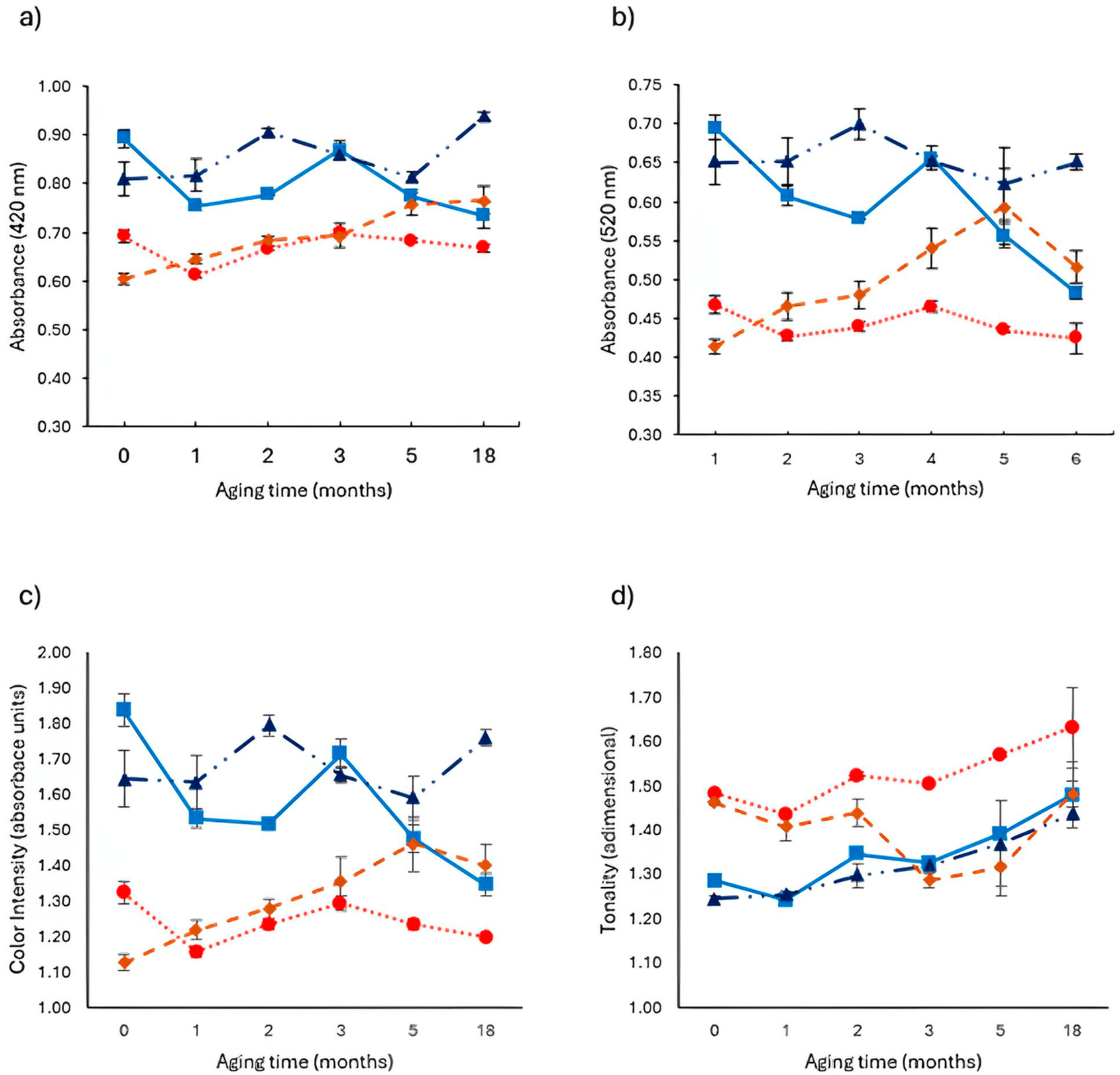
Since the SRM color was measured at 430 nm, the absorbance trend at 420 nm observed in the beers over aging time was very similar to the color evolution. Figure 1a shows that, while absorbance values measured at 420 nm were higher in month 18 for the two ale beers than for the fresh beers, in the lager beers, these values decreased. On the other hand, as shown in Figure 1b, the red ale beer had a consistent increase in absorbance values measured at 520 nm from month 0 to month 5, followed by a decrease in month 18. In the blue ale beer, ups and downs were observed in these values, but there was no difference between the value at the end of aging time and that at time 0. In the case of lager beers, both blue and red corn beers showed a decrease in absorbances at 520 nm in month 18 compared to that of month 0, which was more noticeable in the blue corn beer.
As shown in Figure 1c, the evolution of color intensity in both lager and ale fermentation blue corn beers showed a similar trend to that observed in color SRM values. The lager beers showed a decrease in color intensity in month 1, then the values significantly increased in month 3, and decreased again in months 5 and 18, most markedly in the blue corn beer. In ale beers, the blue corn beer showed a similar trend to its lager version from month 0 to month 5, while the red corn beer had an upward trend in the same period, and then fell in month 18.
In the case of tonality, in general, values increased across all beers as aging time increased, except for the red corn ale beer, which showed a decrease in month 3 and then returned to a value practically the same as time 0 (Figure 1d). Since the tonality of the beer was calculated from the quotient of its absorbance at 420 nm by its absorbance at 520 nm, increases in this parameter are due to the increase in the absorbance values at 420 nm and/or a drop in the absorbance values at 520 nm (Figure 1a,b). These results showed that both red and blue beers exhibited a similar evolution in tonality to that reported in barrel-aged red wines, in which increases in this parameter have been observed [79,80]. The increase in this parameter indicates a shift in color from the initial reddish-blue and copper hues characteristic of the fresh blue corn beer and the fresh red corn beer, respectively, to a more brick red, orange, or yellowish hue.
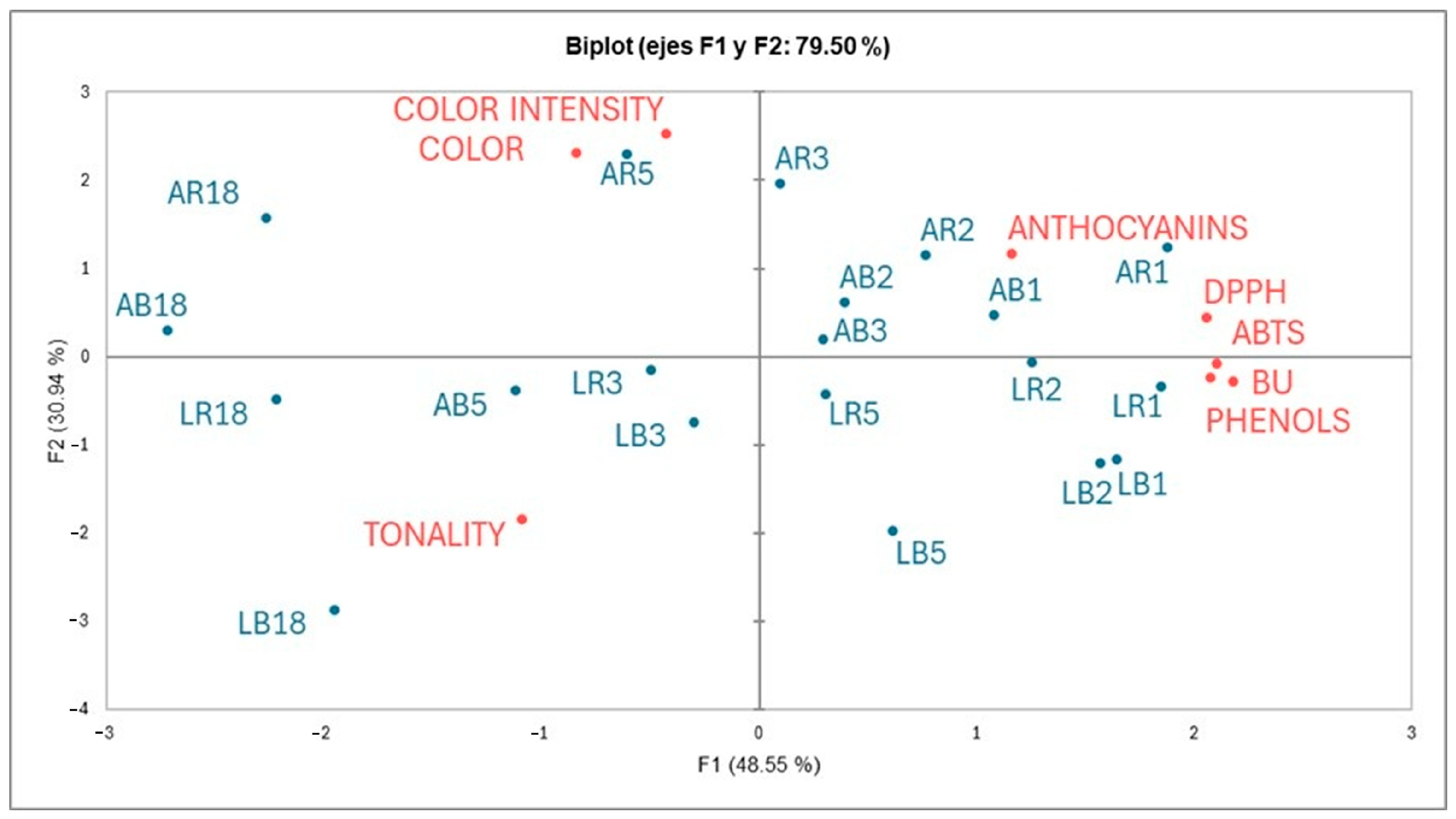
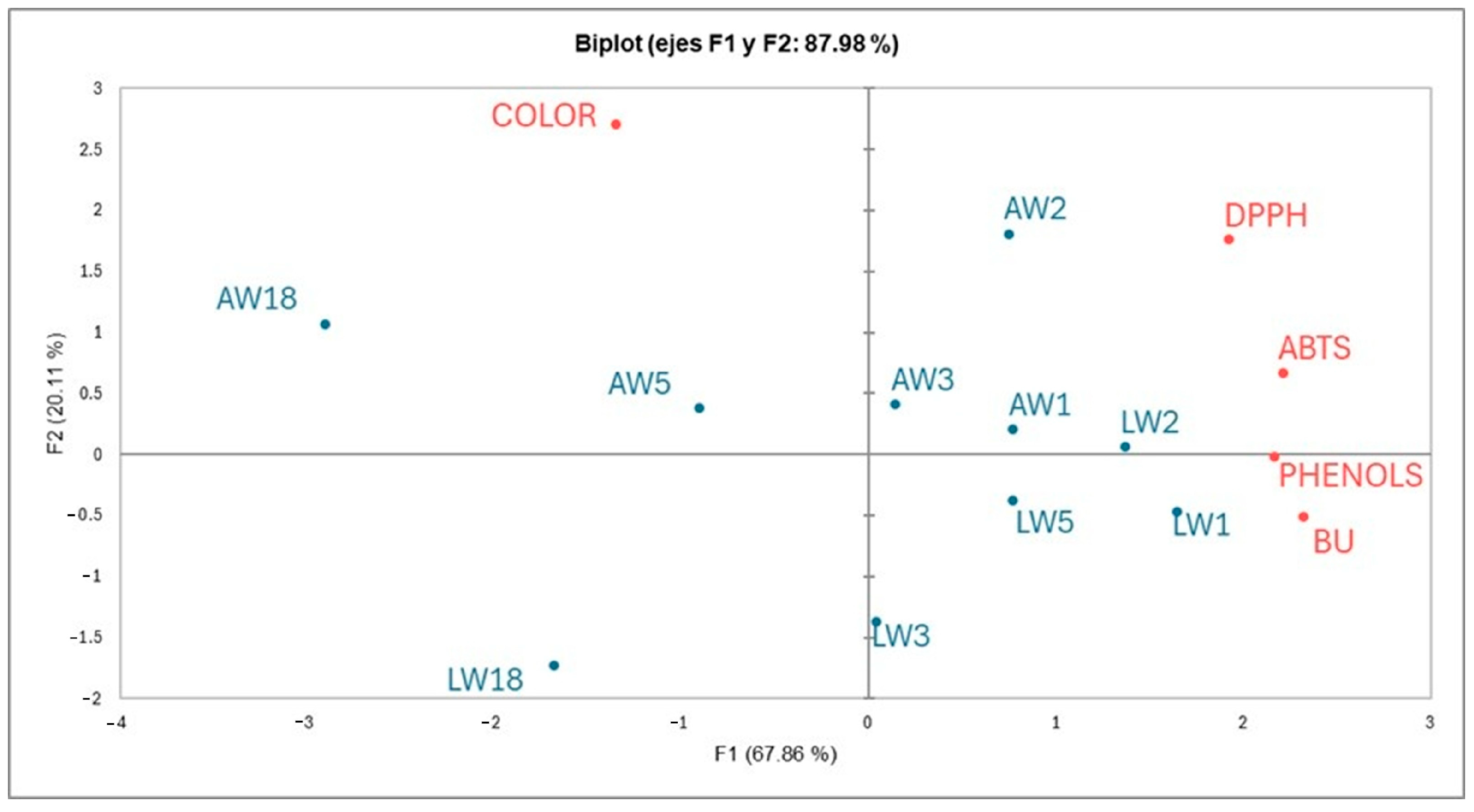
Results from the PCAs are shown in Figure 2 and Figure 3. Results show a high correlation between phenolic compounds, bitterness units, and the antioxidant capacity of beers, as measured by both the ABTS and DPPH methods. Figure 2 also shows a weaker correlation between these variables and anthocyanin content. These correlations suggest that a decrease in the concentration of phenolic compounds and anthocyanins in beer is associated with a reduction in antioxidant capacity. This trend negatively affects bitterness units, whose values would decrease due to oxidation of iso-α-acids, resulting from reduced protection against oxidative processes. The beers most strongly correlated with these variables were those aged for 1 and 2 months.
On the other hand, an inverse relationship was observed between phenolic compounds, bitterness units, and antioxidant capacity with color, tonality, and color intensity. This result suggests that as aging time increases and the values of the first variables mentioned decrease, color, tonality, and color intensity increase. Therefore, the beers most closely associated with these variables were those aged for 5 and 18 months. Specifically, ales were most strongly associated with color and color intensity, while lagers were more strongly associated with tonality.

4. Limitations

The findings of this research could be useful for brewers in countries where corn consumption is common, although they might not be useful for those in countries where corn consumption is limited, except for craft brewers who want to explore new flavors or expand their product range.
The usefulness of this study lies in the fact that, in addition to showing the physicochemical profiles of corn beers produced under the specified conditions described herein, it provides an overview of changes in various physicochemical characteristics of beers during aging. However, it is important to note that no sensory analysis of the beers was carried out; therefore, it is not possible to determine how the changes observed during aging might affect either their sensory profile or consumer acceptability. Furthermore, since these studies were conducted only on unfiltered corn beers, the results do not reflect what would happen with filtered and/or pasteurized beers, for which further research would be necessary.


5. Conclusions

This research showed changes that occur in some physicochemical characteristics during the aging of unfiltered corn beers, enabling a better understanding of their deterioration and improved management throughout storage time. Among the main findings are that, although the fresh lager-fermented corn beers studied had physicochemical characteristics similar to those of ale-fermented beers, during aging, some differences in their evolution were observed, mainly in antioxidant capacity and SRM color values. Broadly, after 18 months of aging, a decrease was observed in the different physicochemical characteristics studied in this research, except for SRM color values, where ale fermented beers showed an increase. Furthermore, it can be concluded that analyzing both the intensity and hue of color in beers containing anthocyanins could better reveal the evolution of their color than simply determining the SRM value.

Author Contributions

Conceptualization, M.Á.H.-C. and J.R.V.-C.; methodology, M.Á.H.-C. and J.R.V.-C.; software, H.B.E.-B. and A.A.-C.; validation, all the authors; formal analysis, H.B.E.-B. and A.A.-C.; investigation, all the authors; resources, J.R.V.-C. and F.P.M.-S. data curation, M.Á.H.-C. and F.P.M.-S.; writing—original draft preparation, M.Á.H.-C., J.R.V.-C., and A.A.-C.; writing—review and editing, M.Á.H.-C., J.R.V.-C., and A.A.-C.; visualization, A.A.-C. and M.Á.H.-C.; supervision, M.Á.H.-C. and J.R.V.-C.; project administration, M.Á.H.-C. and J.R.V.-C.; funding acquisition, J.R.V.-C. All authors have read and agreed to the published version of the manuscript.

Funding

This research received no external funding.

Institutional Review Board Statement

Not applicable.

Informed Consent Statement

Not applicable.

Data Availability Statement

The raw data supporting the conclusions of this article will be made available by the authors on request.

Acknowledgments

The authors aknowledge the research incentive granted by the Secretaría de Ciencia, Humanidades, Tecnología e Innovación (SECIHTI).

Conflicts of Interest

The authors declare no conflicts of interest.

Abbreviations

The following abbreviations are used in this manuscript:
DPPH2,2-diphenyl-1-picrylhydrazyl
ABTS2,2′-azino-bis(3-ethylbenzothiazoline-6-sulfonic acid)
SRMStandard Reference Method
OIVInternational Organization of Vine and Wine
ANOVAAnalysis of variance
PCAPrincipal Component Analysis
ABVAlcohol by volume
RSReducing sugars
BUsBitterness units
× gTimes gravity

References

  1. Martínez-Gómez, A.; Caballero, I.; Blanco, C.A. Phenols and Melanoidins as Natural Antioxidants in Beer. Structure, Reactivity and Antioxidant Activity. Biomolecules 2020, 10, 400. [Google Scholar] [CrossRef]
  2. Roberts, R.; Khomenko, I.; Eyres, G.T.; Bremer, P.; Silcock, P.; Betta, E.; Biasioli, F. Online Monitoring of Higher Alcohols and Esters throughout Beer Fermentation by Commercial Saccharomyces cerevisiae and Saccharomyces pastorianus Yeast. J. Mass Spectrom. 2023, 58, e4959. [Google Scholar] [CrossRef] [PubMed]
  3. Klimczak, K.; Cioch-Skoneczny, M.; Poreda, A. Factors Affecting Beer Quality During Storage—A Review. Acta Univ. Cibiniensis. Ser. E Food Technol. 2024, 28, 1–20. [Google Scholar] [CrossRef]
  4. De Schutter, D.P.; Saison, D.; Delvaux, F.; Derdelinckx, G.; Delvaux, F.R. The Chemistry of Aging Beer. In Beer in Health and Disease Prevention; Preedy, V.R., Ed.; Academic Press: London, UK, 2009; pp. 375–388. ISBN 978-0-12-373891-2. [Google Scholar]
  5. Bamforth, C.W.; Lentini, A. The flavor instability of beer. In Beer: A Quality Perspective; Bamforth, C.W., Ed.; Academic Press: Cambridge, MA, USA, 2009; pp. 85–109. [Google Scholar] [CrossRef]
  6. Fous, K.; Jarolímová, A.; Kubizniaková, P.; Majtán, K. Alert for microbreweries—A case study on unpasteurized and unfiltered beer. Kvas. Prům. 2024, 70, 888–894. [Google Scholar] [CrossRef]
  7. Mihaylova, D.; Dimitrova-Dimova, M.; Popova, A. Dietary Phenolic Compounds—Wellbeing and Perspective Applications. Int. J. Mol. Sci. 2024, 25, 4769. [Google Scholar] [CrossRef]
  8. Matsumura, Y.; Kitabatake, M.; Kayano, S.I.; Ito, T. Dietary Phenolic Compounds: Their Health Benefits and Association with the Gut Microbiota. Antioxidants 2023, 12, 880. [Google Scholar] [CrossRef]
  9. Ahmad, Z.; Rauf, A.; Orhan, I.E.; Mubarak, M.S.; Akram, Z.; Islam, M.R.; Imran, M.; Edis, Z.; Kondapavuluri, B.K.; Thangavelu, L.; et al. Antioxidant Potential of Polyphenolic Compounds, Sources, Extraction, Purification and Characterization Techniques: A Focused Review. Food Sci. Nutr. 2025, 13, e71259. [Google Scholar] [CrossRef]
  10. Suresh, S.; Begum, R.F.; Singh, S.A.; Chitra, V. Anthocyanin as a Therapeutic in Alzheimer’s Disease: A Systematic Review of Preclinical Evidences. Ageing Res. Rev. 2022, 76, 101595. [Google Scholar] [CrossRef]
  11. Fan, X.; Fan, B.; Wang, Y.; Yang, W. Anthocyanin accumulation enhanced in Lc-transgenic cotton under light and increased resistance to bollworm. Plant Biotechnol. Rep. 2016, 10, 1–11. [Google Scholar] [CrossRef] [PubMed]
  12. Quifer-Rada, P.; Vallverdú-Queralt, A.; Martínez-Huélamo, M.; Chiva-Blanch, G.; Jáuregui, O.; Estruch, R.; Lamuela-Raventós, R.M. A Comprehensive Characterisation of Beer Polyphenols by High Resolution Mass Spectrometry (LC–ESI-LTQ-Orbitrap-MS). Food Chem. 2015, 169, 336–343. [Google Scholar] [CrossRef] [PubMed]
  13. Rodhouse, L.; Carbonero, F. Overview of craft brewing specificities and potentially associated microbiota. Crit. Rev. Food Sci. Nutr. 2019, 59, 462–473. [Google Scholar] [CrossRef]
  14. Di Domenico, M.; Feola, A.; Ambrosio, P.; Pinto, F.; Galasso, G.; Zarrelli, A.; Di Fabio, G.; Porcelli, M.; Scacco, S.; Inchingolo, F.; et al. Antioxidant Effect of Beer Polyphenols and Their Bioavailability in Dental-Derived Stem Cells (D-dSCs) and Human Intestinal Epithelial Lines (Caco-2) Cells. Stem Cells Int. 2020, 2020, 8835813. [Google Scholar] [CrossRef]
  15. Bursal, E.; Köksal, E.; Gülçin, I.; Bilsel, G.; Gören, A.C. Antioxidant activity and polyphenol content of cherry stem (Cerasus avium L.) determined by LC-MS/MS. Food Res. Int. 2013, 51, 66–74. [Google Scholar] [CrossRef]
  16. Guclu, G.; Kelebek, H.; Selli, S. Antioxidant activity in olive oils. In Olives and Olive Oil in Health and Disease Prevention, 2nd ed.; Preedy, V., Watson, R., Eds.; Academic Press: Cambridge, MA, USA, 2021; pp. 313–325. [Google Scholar] [CrossRef]
  17. Yang, L.; Lu, Z.; Lu, J.; Wu, D. Evaluation of the Antioxidant Characteristics of Craft Beer with Green Tea. J. Food Sci. 2023, 88, 625–637. [Google Scholar] [CrossRef]
  18. Bello-Pérez, L.A.; Camelo-Mendez, G.A.; Agama-Acevedo, E.; Utrilla-Coello, R.G. Nutraceutic spects of pigmented corn: Digestibility of carbohydrates and anthocyanins. Agrociencia 2016, 50, 1041–1063. Available online: http://www.scielo.org.mx/scielo.php?script=sci_arttext&pid=S1405-31952016000801041&lng=es&tlng=en (accessed on 17 July 2025).
  19. Iwouno, J.O.; Ojukwu, M. Effects of experimental variables on the malting quality of Nigerian yellow corn (Zea mayz), farz 27 variety. Afr. J. Food Sci. Technol. 2012, 3, 252–259. [Google Scholar]
  20. Hernández-Carapia, M.Á.; Verde-Calvo, J.R.; Escalona-Buendía, H.B. Influence of temperature and germination time on diastatic power of blue and red corn (Zea mays L.) malts. Emir. J. Food Agric. 2021, 33, 56–66. [Google Scholar] [CrossRef]
  21. Amadi, O.C.; Moneke, A.N.; Okolo, B.N.; Nwagu, T.N. Assessment of Malting Performance of Corn and Sorghum of Similar Total Nitrogen Content in Providing the Hydrolytic Enzymes in the Brewing of Gluten-Free Beers. J. Am. Soc. Brew. Chem. 2021, 80, 35–42. [Google Scholar] [CrossRef]
  22. Ore, G.; Mironov, M.; Shootov, A. Design and production of maize beer. MOJ Food Process Technol. 2018, 6, 78–87. [Google Scholar] [CrossRef]
  23. Flores-Calderón, A.M.D.; Luna, H.; Escalona-Buendía, H.B.; Verde-Calvo, J.R. Chemical characterization and antioxidant capacity in blue corn (Zea mays L.) malt beers. J. Inst. Brew. 2017, 123, 506–518. [Google Scholar] [CrossRef]
  24. Romero-Medina, M.A.; Estarrón-Espinosa, M.; Verde-Calvo, J.R.; Lelièvre-Desmas, M.; Escalona-Buendía, H.B. Renewing traditions: A sensory and chemical characterisation of Mexican pigmented corn beers. Foods 2020, 9, 886. [Google Scholar] [CrossRef]
  25. Vanderhaegen, B.; Delvaux, F.; Daenen, L.; Verachtert, H.; Delvaux, F.R. Aging characteristics of different beer types. Food Chem. 2007, 103, 404–412. [Google Scholar] [CrossRef]
  26. Li, H.; Zhao, M.; Cui, C.; Sun, W.; Zhao, H. Antioxidant activity and typical ageing compounds: Their evolutions and relationships during the storage of lager beers. Int. J. Food Sci. Technol. 2016, 51, 2026–2033. [Google Scholar] [CrossRef]
  27. American Society of Brewing Chemists. Beer 1 A: Sampling. In Methods of Analysis of the American Society of Brewing Chemists; American Society of Brewing Chemists: St. Paul, MN, USA, 2004. [Google Scholar]
  28. American Society of Brewing Chemists. Beer 8 A: Total acidity (Potentiometric titration). In Methods of Analysis of the American Society of Brewing Chemists; American Society of Brewing Chemists: St. Paul, MN, USA, 2004. [Google Scholar]
  29. American Society of Brewing Chemists. Beer 9: pH (Hydrogen ion concentration). In Methods of Analysis of the American Society of Brewing Chemists; American Society of Brewing Chemists: St. Paul, MN, USA, 2004. [Google Scholar]
  30. American Society of Brewing Chemists. Beer 12 B: Reducing sugars (Lane-Eynon volumetric method). In Methods of Analysis of the American Society of Brewing Chemists; American Society of Brewing Chemists: St. Paul, MN, USA, 2004. [Google Scholar]
  31. American Society of Brewing Chemists. Beer 4 A: Alcohol (Beer and distillate measured volumetrically). In Methods of Analysis of the American Society of Brewing Chemists; American Society of Brewing Chemists: St. Paul, MN, USA, 2004. [Google Scholar]
  32. European Community (EC). Commission Regulation (EEC) No 2676/90 of 17 September 1990 determining Community methods for the analysis of wines. Off. J. Eur. Communities 1990, 74, 178–179. [Google Scholar]
  33. Mareček, V.; Mikyška, A.; Hampel, D.; Čejka, P.; Neuwirthová, J.; Malachová, A.; Cerkal, R. ABTS and DPPH methods as a tool for studying antioxidant capacity of spring barley and malt. J. Cereal Sci. 2017, 73, 40–45. [Google Scholar] [CrossRef]
  34. Giusti, M.; Wrolstad, R.E. Characterization and measurement of anthocyanins by UV-Visible spectroscopy. Curr. Protoc. Food Anal. Chem. 2001, F1.2.1–F1.2.13. [Google Scholar] [CrossRef]
  35. American Society of Brewing Chemists. Beer 23 A: Beer bitterness: Bitterness units. In Methods of Analysis of the American Society of Brewing Chemists; American Society of Brewing Chemists: St. Paul, MN, USA, 2004. [Google Scholar]
  36. American Society of Brewing Chemists. Beer 10 A: Color (Spectrophotometric color method). In Methods of Analysis of the American Society of Brewing Chemists; American Society of Brewing Chemists: St. Paul, MN, USA, 2004. [Google Scholar]
  37. Jagatić Korenika, A.-M.; Biloš, J.; Kozina, B.; Tomaz, I.; Preiner, D.; Jeromel, A. Effect of Different Reducing Agents on Aromatic Compounds, Antioxidant and Chromatic Properties of Sauvignon Blanc Wine. Foods 2020, 9, 996. [Google Scholar] [CrossRef]
  38. Organización Internacional de la Viña y el Vino. Method OIV-MA-AS2-07B: Chromatic Characteristics. 2009. Available online: https://www.oiv.int/public/medias/2475/oiv-ma-as2-07b.pdf (accessed on 4 June 2025).
  39. NCSS 2020, Version 20.0.3; Statistical Software; NCSS, LLC: Kaysville, UT, USA, 2020. Available online: https://www.ncss.com/software/ncss/ (accessed on 16 June 2025).
  40. XLSTAT 202, Version 2025.2.0; Statistical and Data Analysis Solution; Addinsoft: Paris, France, 2025. Available online: https://www.xlstat.com (accessed on 5 February 2026).
  41. Gorjanović, S.Z.; Novaković, M.M.; Potkonjak, N.I.; LeskoŠek-Cŭkalović, I.; SuŽnjević, D.Z. Application of a Novel Antioxidative Assay in Beer Analysis and Brewing Process Monitoring. J. Agric. Food Chem. 2010, 58, 744–751. [Google Scholar] [CrossRef]
  42. Piazzon, A.; Forte, M.; Nardini, M. Characterization of Phenolics Content and Antioxidant Activity of Different Beer Types. J. Agric. Food Chem. 2010, 58, 10677–10683. [Google Scholar] [CrossRef]
  43. Zukić, A.; Celeska, I.; Salihović, M.; Ajanović, A.; Hrković-Porobija, A.; Velić, L. Polyphenols and their antioxidant effect in beers from the Bosnia and Herzegovina market. J. Agric. Food Environ. Sci. 2021, 75, 3–10. [Google Scholar] [CrossRef]
  44. González-Mendoza, D.; Tzintzun-Camacho, O.; Méndez-Trujillo, V. Determination of antioxidant activity and phenolic compounds in different Mexican craft beers. Rev. Colomb. Investig. Agroindustriales 2022, 9, 46–54. [Google Scholar] [CrossRef]
  45. Ambra, R.; Pastore, G.; Lucchetti, S. The Role of Bioactive Phenolic Compounds on the Impact of Beer on Health. Molecules 2021, 26, 486. [Google Scholar] [CrossRef]
  46. Adom, K.K.; Liu, R.H. Antioxidant activity of grains. J. Agric. Food Chem. 2002, 50, 6182–6187. [Google Scholar] [CrossRef]
  47. Ndolo, V.U.; Beta, T. Comparative studies on composition and distribution of phenolic acids in cereal grain botanical fractions. Cereal Chem. 2014, 91, 522–530. [Google Scholar] [CrossRef]
  48. Carvalho, D.O.; Guido, L.F. A Review on the Fate of Phenolic Compounds during Malting and Brewing: Technological Strategies and Beer Styles. Food Chem. 2022, 372, 131093. [Google Scholar] [CrossRef] [PubMed]
  49. Sik, B.; Székelyhidi, R.; Lakatos, E.; Kapcsándi, V.; Ajtony, Z. Analytical procedures for determination of phenolics active herbal ingredients in fortified functional foods: An overview. Eur. Food Res. Technol. 2022, 248, 329–344. [Google Scholar] [CrossRef]
  50. Choi, S.W.; Sung, K.L.; Eun, O.K.; Ji, H.O.; Kyung, S.Y.; Parris, N.; Hicks, K.B.; Moreau, R.A. Antioxidant and antimelanogenic activities of polyamine conjugate from corn bran and related hydroxicinnamic acids. J. Agric. Food Chem. 2007, 55, 3920–3925. [Google Scholar] [CrossRef]
  51. Das, A.K.; Singh, V. Antioxidative free and bound phenolic constituents in pericarp, germ and endosperm of Indian dent (Zea mays var. indentata) and flint (Zea mays var. indurata) corn. J. Funct. Foods 2015, 13, 363–374. [Google Scholar] [CrossRef]
  52. Feregrino-Pérez, A.A.; Mercado-Luna, A.; Murillo-Cárdenas, C.A.; González-Santos, R.; Chávez-Servín, J.L.; Vargas-Madriz, A.F.; Luna-Sánchez, E. Polyphenolic Compounds and Antioxidant Capacity in Native Corn of the Sierra Gorda of Querétaro. Agronomy 2024, 14, 142. [Google Scholar] [CrossRef]
  53. Flores-Calderón, A.M.D.; Hernández-Carapia, M.A.; Luna, H.; Escalona-Buendía, H.B.; Verde-Calvo, J.R. Chemical analysis of blue corn base malt and the effect of malting and roasting of blue corn malts on color and antioxidant compounds associated with antioxidant capacity. Emir. J. Food Agric. 2022, 34, 938–948. [Google Scholar] [CrossRef]
  54. Forster, A.; Beck, B.; Schmidt, R.; Jansen, C.; Mellenthin, A. Über die Zusammensetzung von niedermolekularen Polyphenolen in verschiedenen Hopfensorten und zwei Anbaugebieten. BrewingScience 2002, 55, 98–108. [Google Scholar]
  55. McMurrough, I.; Hennigan, G.P.; Loughrey, M.J. Quantitative analysis of hop flavonols using high-performance liquid chromatography. J. Agric. Food Chem. 1982, 30, 1102–1106. [Google Scholar] [CrossRef]
  56. Jerkovic, V.; Collin, S. Occurrence of resveratrol and piceid in American and European hop cones. J. Agric. Food Chem. 2007, 55, 8754–8758. [Google Scholar] [CrossRef]
  57. Aronbaev, S.; Aronbaev, D.; Vasina, S.; Isakova, D.; Raimkulova, C.; Abilkosimova, G. Study of the biosorption of phenol by cell walls of brewing yeast. E3S Web Conf. 2023, 462, 02031. [Google Scholar] [CrossRef]
  58. Alexandre, H.; Guilloux-Benatier, M. Yeast autolysis in sparkling wine-a review. Aust. J. Grape Wine Res. 2006, 12, 119–127. [Google Scholar] [CrossRef]
  59. Cortese, M.; Gigliobianco, M.R.; Peregrina, D.V.; Sagratini, G.; Censi, R.; Martino, P.D. Quantification of phenolic compounds in different types of crafts beers, worts, starting and spent ingredients by liquid chromatography-tandem mass spectrometry. J. Chromatogr. A. 2020, 1612, 460622. [Google Scholar] [CrossRef]
  60. Siqueira, P.; Bolini, H.; Macedo, G. Polyphenols and antioxidant properties inforced and naturally aged Brazilian beer. J. Brew. Distill. 2011, 2, 45–50. Available online: https://www.internationalscholarsjournals.com/articles/polyphenols-and-antioxidant-properties-in-forced-and-naturally-aged-brazilian-beer.pdf (accessed on 6 August 2025).
  61. Anguelova, T.; Warthesen, J. Degradation of Lycopene, α-Carotene, and β-Carotene During Lipid Peroxidation. J. Food Sci. 2000, 65, 71–75. [Google Scholar] [CrossRef]
  62. Lux, P.E.; Schneider, J.; Müller, F.; Wiedmaier-Czerny, N.; Vetter, W.; Weiß, T.M.; Frank, J. Location and Variety but Not Phosphate Starter Fertilization Influence the Profiles of Fatty Acids, Carotenoids, and Tocochromanols in Kernels of Modern Corn (Zea mays L.) Hybrids Cultivated in Germany. J. Agric. Food Chem. 2021, 69, 2845–2854. [Google Scholar] [CrossRef] [PubMed]
  63. Alberdi-Cedeño, J.; Ibargoitia, M.L.; Guillén, M.D. Monitoring of minor compounds in corn oil oxidation by Direct Immersion-Solid Phase Microextraction-Gas Chromatography/Mass Spectrometry. New oil oxidation markers. Food Chem. 2019, 290, 255–262. [Google Scholar] [CrossRef]
  64. Chandra, S.X. Antioxidant activity during beer production. In Melanoidins in Food and Health: Proceedings of COST Action 919 European Commission; Fogliano, V., Henle, T., Eds.; Office for Official Publications of the European Communities: Luxembourg, 2002; Volume 3, pp. 137–142. ISBN 9289457244. [Google Scholar]
  65. Woffenden, H.M.; Ames, J.M.; Chandra, S. Relationships between antioxidant activity, color, and flavour compounds of crystal malt extracts. J. Agric. Food Chem. 2001, 49, 5524–5530. [Google Scholar] [CrossRef] [PubMed]
  66. Vanderhaegen, B.; Neven, H.; Coghe, S.; Verstrepen, K.J.; Verachtert, H.; Derdelinckx, G. Evolution of Chemical and Sensory Properties during Aging of Top-Fermented Beer. J. Agric. Food Chem. 2003, 51, 6782–6790. [Google Scholar] [CrossRef] [PubMed]
  67. Yang, H.; Zhang, Q.; Zeng, Y.; Cheng, C.; Coldea, T.; Zhao, H. Differences in structure, stability and antioxidant activity of melanoidins from lager and ale beers. LWT 2024, 205, 116517. [Google Scholar] [CrossRef]
  68. Ames, J.M. Melanoidins as pro- or antioxidants. Cerevisia 2001, 26, 210–216. [Google Scholar]
  69. McMurrough, I.; Madigan, D.; Kelly, R.J.; Smyth, M.R. The role of flavanoid polyphenols in beer stability. J. Am. Soc. Brew. Chem. 1996, 54, 141–148. [Google Scholar] [CrossRef]
  70. Salinas-Moreno, Y.; García-Salinas, C.; Coutiño-Estrada, B.; Vidal-Martínez, V.A. Content and type variability of anthocyanins in blue/purple colored grains of Mexican corn populations. Rev. Fitotec. Mex. 2013, 36, 285–294. [Google Scholar] [CrossRef]
  71. He, F.; Liang, N.N.; Mu, L.; Pan, Q.H.; Wang, J.; Reeves, M.J.; Duan, C.Q. Anthocyanins and their variation in red wines. II. Anthocyanin derived pigments and their color evolution. Molecules 2012, 17, 1483–1519. [Google Scholar] [CrossRef]
  72. Blanco-Huerta, C.; Fernández-Fernández, E.; Vila-Crespo, J.; Ruipérez, V.; Moyano, R.; Rodríguez-Nogales, J.M. Impact of Ageing on Ultrasound-Treated Lees on Volatile Composition and Sensory Properties of Red Sparkling Base Wine. Beverages 2023, 9, 23. [Google Scholar] [CrossRef]
  73. Hashimoto, N.; Eshima, T. Oxidative degradation of isohumulones in relation to flavour stability of beer. J. Inst. Brew. 1979, 85, 136–140. [Google Scholar] [CrossRef]
  74. Ferreira, C.S.; Collin, S. Fate of Bitter Compounds through Dry-Hopped Beer Aging. Why cis-Humulinones Should be as Feared as trans-Isohumulones? J. Am. Soc. Brew. Chem. 2020, 78, 103–113. [Google Scholar] [CrossRef]
  75. Williams, R.S.; Wagner, H.P. The isolation and identification of new staling related compounds from beer. J. Am. Soc. Brew. Chem. 1978, 36, 27–31. [Google Scholar] [CrossRef]
  76. De Francesco, G.; Bravi, E.; Sanarica, E.; Marconi, O.; Cappelletti, F.; Perretti, G. Effect of Addition of Different Phenolic-Rich Extracts on Beer Flavour Stability. Foods 2020, 9, 1638. [Google Scholar] [CrossRef] [PubMed]
  77. Ualema, N.J.M.; dos Santos, L.N.; Bogusz, S.; Ferreira, N.R. From Conventional to Craft Beer: Perception, Source, and Production of Beer Color—A Systematic Review and Bibliometric Analysis. Foods 2024, 13, 2956. [Google Scholar] [CrossRef]
  78. Rizzo, M.; Ventrice, D.; Varone, M.A.; Sidari, R.; Caridi, A. HPLC determination of phenolics adsorbed on yeasts. J. Pharm. Biomed. Anal. 2006, 42, 46–55. [Google Scholar] [CrossRef] [PubMed]
  79. Del Fresno, J.M.; Morata, A.; Loira, I.; Escott, C.; Suárez-Lepe, J.A. Evolution of the Phenolic Fraction and Aromatic Profile of Red Wines Aged in Oak Barrels. ACS Omega 2020, 5, 7235–7243. [Google Scholar] [CrossRef] [PubMed]
  80. Gambuti, A.; Picariello, L.; Forino, M.; Errichiello, F.; Guerriero, A.; Moio, L. How the Management of pH during Winemaking Affects Acetaldehyde, Polymeric Pigments and Color Evolution of Red Wine. Appl. Sci. 2022, 12, 2555. [Google Scholar] [CrossRef]
Figure 1. (a) Evolution of absorbance at 420 nm; (b) Evolution of absorbance at 520 nm; (c) Evolution of color intensity; (d) Evolution tonality in the corn beers.
Beverages 12 00036 g001
Figure 2. Principal component analysis of blue and red corn beers. A = Ale beers; L = Lager beers; B = Blue corn; R = Red corn; the number indicates the aging time in months. (e.g., LB2 corresponds to the lager blue corn beer aged for 2 months.
Beverages 12 00036 g002
Figure 3. Principal component analysis of white beers. A = Ale beers; L = Lager beers; W = White corn; the number indicates the aging time in months (e.g., LW2 corresponds to the lager white corn beer aged for 2 months).
Beverages 12 00036 g003
Table 1. Physicochemical characteristics of fresh corn beers.
FermentationCorn Color%ABVRS (g Dextrose/L)Titratable Acidity (g Lactic Acid/L)pHSpecific Gravity
LagerBlue corn5.2 B ± 0.267.87 A ± 0.012.71 A ± 0.024.5 B ± 0.01.015 ± 0.0
Red corn5.4 AB ± 0.278.17 A ± 0.012.62 ABC ± 0.074.5 B ± 0.011.013 ± 0.0
White corn5.0 B ± 0.058.07 A ± 0.012.65 AB ± 0.034.6 A ± 0.011.015 ± 0.0
AleBlue corn5.1 B ± 0.045.63 B ± 0.012.50 C ± 0.084.2 D ± 0.031.018 ± 0.0
Red corn5.8 A ± 0.053.67 C ± 0.012.70 A ± 0.024.0 E ± 0.011.012 ± 0.0
White corn4.9 B ± 0.345.87 B ± 0.012.53 BC ± 0.034.4 C ± 0.011.018 ± 0.0
Capital letters indicate significant differences between beers (Tukey tests (α = 0.05); n = 3 per treatment: corn color-type of fermentation). For specific gravity, the ANOVA and Tukey tests were not performed since the sample values in each treatment were the same.
Table 2. Evolution of total phenolics of corn beers during aging, reported as mg of gallic acid/L.
BeerAging Time (Months)
0123518
LagerBlue corn928.33 aCD ± 11.5903.89 aBC ± 16.7888.89 aABC ± 13.4815.56 bC ± 27.1924.44 aBC ± 28.7766.11 bC ± 23.0
Red corn868.89 aD ± 4.2843.33 aCBC ± 23.3817.78 aC ± 50.0788.89 abC ± 57.5836.67 aDE ± 8.7702.22 bC ± 5.1
White corn992.22 aAB ± 9.2972.78 aAB ± 29.4965.56 aAB ± 52.3941.67 aAB ± 17.31002.78 aA ± 11.7838.33 bAB ± 20.9
AleBlue corn946.67 aBC ± 24.7858.33 abC ± 39.8865.00 aBC ± 41.5867.22 aBC ± 29.0867.78 aCD ± 35.6772.22 bBC ± 19.5
Red corn891.67 aCD ± 42.6900.56 aBC ± 39.6805.00 bC ± 17.3798.89 bC ± 19.9796.67 bE ± 20.5729.44 bC ± 17.8
White corn1033.33 aA ± 22.41006.11 aA ± 12.9968.89 aA ± 26.7972.22 aA ± 34.7981.67 aAB ± 14.8870.56 bA ± 48.6
Lowercase letters indicate subgroups for the same beer at different aging times (rows) (Tukey tests (α = 0.05); n = 3 per treatment: corn color-type of fermentation). Capital letters within the same aging time (columns) indicate significant differences between beers (Tukey tests (α = 0.05); n = 3 per treatment: corn color-type of fermentation).
Table 3. Evolution of the antioxidant capacity of corn beers by DPPH assay (in mmol of Trolox/L) during aging.
BeerAging Time (Months)
0123518
LagerBlue corn 1.52 aB ± 0.051.48 abA ± 0.061.54 aAB ± 0.051.37 bB ± 0.021.47 abAB ± 0.081.20 cB ± 0.02
Red corn1.23 aD ± 0.011.21 aB ± 0.011.21 aE ± 0.070.97 bD ± 0.041.18 aC ± 0.020.95 bD ± 0.06
White corn1.32 aCD ± 0.031.26 bB ± 0.021.31 abDE ± 0.021.13 cC ± 0.01.27 abC ± 0.031.06 dC ± 0.02
AleBlue corn 1.66 aA ± 0.041.59 abA ± 0.071.65 aA ± 0.031.60 abA ± 0.021.50 bcA ± 0.081.39 cA ± 0.02
Red corn1.33 abCD ± 0.041.31 abB ± 0.071.36 aCD ± 0.071.20 bcC ± 0.021.25 abC ± 0.101.05 cC ± 0.03
White corn1.42 abC ± 0.041.31 cdB ± 0.021.48 aBC ± 0.021.38 bcB ± 0.051.30 dBC ± 0.021.18 eB ± 0.01
Lowercase letters indicate subgroups for the same beer at different aging times (rows) (Tukey tests (α = 0.05); n = 3 per treatment: corn color-type of fermentation). Capital letters within the same aging time (columns) indicate significant differences between beers (Tukey tests (α = 0.05); n = 3 per treatment: corn color-type of fermentation).
Table 4. Evolution of the antioxidant capacity of corn beers by ABTS assay (in mmol of Trolox/L) during aging.
BeerAging Time (Months)
0123518
LagerBlue corn 2.40 aB ± 0.032.37 aAB ± 0.022.36 aAB ± 0.072.10 bBC ± 0.071.99 bA ± 0.031.73 cB ± 0.03
Red corn2.27 aC ± 0.032.22 aC ± 0.042.16 aC ± 0.101.75 bE ± 0.071.75 bBC ± 0.061.35 cD ± 0.03
White corn2.30 aBC ± 0.052.31 aBC ± 0.032.29 aBC ± 0.051.91 bDE ± 0.051.90 bAB ± 0.021.66 cBC ± 0.07
AleBlue corn2.62 aA ± 0.022.50 abA ± 0.062.47 bA ± 0.022.27 cA ± 0.061.99 dA ± 0.082.02 dA ± 0.03
Red corn2.34 aBC ± 0.042.21 bC ± 0.062.19 bC ± 0.011.95 cCD ± 0.051.68 dC ± 0.051.57 dC ± 0.06
White corn2.56 aA ± 0.052.45 aAB ± 0.092.42 aAB ± 0.052.19 bAB ± 0.072.04 bcA ± 0.081.93 cA ± 0.07
Lowercase letters indicate subgroups for the same beer at different aging times (rows) (Tukey tests (α = 0.05); n = 3 per treatment: corn color-type of fermentation). Capital letters within the same aging time (columns) indicate significant differences between beers (Tukey tests (α = 0.05); n = 3 per treatment: corn color-type of fermentation).
Table 5. Evolution of free anthocyanins of corn beers during aging, reported as mg of cyanidin-3-glycoside/L.
BeerAging Time (Months)
0123518
LagerBlue corn8.12 aA ± 0.705.48 cC ± 0.136.90 bA ± 0.133.15 dB ± 0.393.23 dA ± 0.393.70 dA ± 0.13
Red corn4.84 aB ± 0.633.90 bD ± 0.134.59 abB ± 0.092.06 cC ± 0.052.22 cB ± 0.212.84 cB ± 0.29
White cornn/an/an/an/an/an/a
AleBlue corn7.60 aA ± 0.08.29 aA ± 1.053.64 cdC ± 0.215.57 bA ± 0.802.12 dB ± 0.414.09 bcA ± 0.22
Red corn5.01 bB ± 0.176.79 aB ± 0.333.06 cC ± 0.784.59 bA ± 0.221.95 dB ± 0.053.15 cB ± 0.10
White cornn/an/an/an/an/an/a
n/a = Not applicable: White corn beers were excluded from the analysis since they do not contain anthocyanins. Lowercase letters indicate subgroups for the same beer at different aging times (rows) (Tukey tests (α = 0.05); n = 3 per treatment: corn color-type of fermentation). Capital letters within the same aging time (columns) indicate significant differences between beers (Tukey tests (α = 0.05); n = 3 per treatment: corn color-type of fermentation).
Table 6. Evolution of bitterness units (BUs) of corn beers during aging.
BeerAging Time (Months)
0123518
LagerBlue corn24 aE ± 0.3621 bB ± 0.9121 bcD ± 0.3520 cD ± 0.5619 cD ± 0.1515 dD ± 0.15
Red corn33 aC ± 0.4031 aC ± 0.4029 bC ± 0.0928 bcC ± 0.9128 cB ± 0.5821 dB ± 0.86
White corn26 aBD ± 0.2024 aD ± 0.2422 bD ± 0.5121 bD ± 0.9121 bD ± 0.3317 cC ± 0.29
AleBlue corn36 aB ± 0.6434 bB ± 0.4632 bB ± 1.4832 bB ± 0.8127 cB ± 0.9521 dB ± 0.45
Red corn33 aC ± 0.1330 bC ± 0.3528 bC ± 0.8526 cC ± 1.2025 cC ± 0.5121 dB ± 0.71
White corn41 aA ± 0.1538 bA ± 0.3637 bA ± 0.2636 cA ± 0.7531 dA ± 0.6128 eA ± 0.18
Lowercase letters indicate subgroups for the same beer at different aging times (rows) (Tukey tests (α = 0.05); n = 3 per treatment: corn color-type of fermentation). Capital letters within the same aging time (columns) indicate significant differences between beers (Tukey tests (α = 0.05); n = 3 per treatment: corn color-type of fermentation).
Table 7. Color evolution (SRM) of corn beers during aging.
BeerAging Time (Months)
0123518
LagerBlue corn11.33 aA ± 0.2410 bB ± 0.1510 bB ± 0.0211 aA ± 0.2410 bAB ± 0.219.33 bB ± 0.33
Red corn8.78 abC ± 0.177.77 cC ± 0.098.47 bC ± 0.098.87 aB ± 0.148.66 abC ± 0.108.48 bC ± 0.11
White corn6.85 aE ± 0.265.91 bE ± 0.106.11 bE ± 0.155.91 bC ± 0.036.20 bD ± 0.165.97 bD ± 0.07
AleBlue corn10.28 cB ± 0.4310.37 cA ± 0.4211.50 abA ± 0.1110.91 abcA ± 0.1010.76 bcA ± 0.7211.92 aA ± 0.09
Red corn7.67 cD ± 0.148.19 bcC ± 0.128.66 bC ± 0.138.80 bB ± 0.319.62 aBC ± 0.329.72 aB ± 0.36
White corn6.27 cE ± 0.086.52 cD ± 0.057.28 bD ± 0.436.37 cC ± 0.236.81 bcD ± 0.398.33 aC ± 0.21
Lowercase letters indicate subgroups for the same beer at different aging times (rows) (Tukey tests (α = 0.05); n = 3 per treatment: corn color-type of fermentation). Capital letters within the same aging time (columns) indicate significant differences between beers (Tukey tests (α = 0.05); n = 3 per treatment: corn color-type of fermentation).
Disclaimer/Publisher’s Note: The statements, opinions and data contained in all publications are solely those of the individual author(s) and contributor(s) and not of MDPI and/or the editor(s). MDPI and/or the editor(s) disclaim responsibility for any injury to people or property resulting from any ideas, methods, instructions or products referred to in the content.