Article

Utilizing Hydrolyzed Whey Proteins in a Flavored Dairy Beverage for Carrier Antihypertensive Peptides


by
Luis Guillermo González Olivares
1,
Elizabeth Contreras López
1,*,
Nayeli Vélez Rivera
2,
Ilse Monroy Rodríguez
2 and
Juan Ramírez Godínez
2,*
1
Área Académica de Química, Instituto de Ciencias Básicas e Ingeniería, Universidad Autónoma del Estado de Hidalgo, Pachuca 42160, Hidalgo, Mexico
2
Área Académica de Gastronomía, Instituto de Ciencias Económico Administrativas, Universidad Autónoma del Estado de Hidalgo, Pachuca 42160, Hidalgo, Mexico
*
Authors to whom correspondence should be addressed.
Beverages 2026, 12(3), 35; https://doi.org/10.3390/beverages12030035
Submission received: 18 November 2025 / Revised: 17 January 2026 / Accepted: 5 March 2026 / Published: 9 March 2026

Abstract

In this study, hydrolyzed whey was obtained using pancreatin as the proteolytic enzyme, and its antihypertensive activity was evaluated. The hydrolysis was carried out for 7 h, and the resulting products were analyzed for antihypertensive in vitro activity by inhibiting angiotensin-converting enzyme (ACE). The hydrolysate demonstrated a 42 ± 3.38% ACE inhibition after 7 h of hydrolysis, indicating the effective release of bioactive peptides. Electrophoresis analysis revealed peptides with molecular weights below 6.5 kDa, consistent with known antihypertensive peptides. The hydrolysate was then incorporated as a functional ingredient into a dairy beverage. However, the beverage’s ACE-inhibitory activity was lower, reaching only 11.88 ± 0.26% inhibition. However, the dairy beverage retained low-molecular-weight peptides. Despite the lower antihypertensive activity in the final product, the results highlight the potential of hydrolyzed whey as a functional ingredient for developing functional dairy beverages. For that reason, the research aimed to evaluate the potential of a dairy beverage prepared with whey hydrolyzed by pancreatin as a carrier of antihypertensive peptides.
Keywords:
health; nutrition; food

1. Introduction

Whey has long been valued as a protein source and a dietary supplement due to its rich profile of essential amino acids [1]. Beyond its nutritional value, the proteins found in whey are associated with a broad spectrum of biological activities that confer various health benefits. These include the prevention of specific cancers, as well as antiviral, antimicrobial, and immunomodulatory properties, further supporting their role in health promotion [2,3,4,5,6]. Research has also shown that whey may help regulate appetite, leading to improved satiety and potential benefits for weight management [7]. These multifaceted bioactivities make whey a valuable ingredient for general health and the development of functional foods with targeted therapeutic effects.
One of the most bioactive proteins in whey is lactoferrin, which has demonstrated bacteriostatic properties against various microorganisms, including Helicobacter pylori, a bacterium linked to gastric ulcers [8]. Furthermore, when whey is used as a fermentation medium, lactic acid bacteria (LAB) hydrolyze whey proteins, releasing bioactive peptides. These peptides possess various beneficial properties, contributing to whey’s value as a potent source of bioactive compounds [9,10]. The ability of whey to serve as both a nutrient-rich substrate and a medium for producing these peptides enhances its potential for use in functional foods and therapeutics.
Bioactive peptides are short protein fragments that offer various health benefits. Typically consisting of 2 to 15 amino acid residues, these peptides remain inactive within the intact protein but can be released during digestion or through enzymatic hydrolysis processes [9,10]. These peptides exhibit various bioactivities, including antimicrobial, antihypertensive, antioxidant, immunomodulatory, and opioid effects. The diverse therapeutic potential of whey-derived peptides makes them highly valuable to the food and pharmaceutical industries. As such, these bioactive compounds are increasingly being explored for use in functional foods and pharmaceuticals to enhance consumer health and well-being [11]. Their ability to target specific health concerns, such as hypertension or immune modulation, positions them as promising ingredients in the development of health-promoting products.
Among the peptides with antihypertensive properties, lactokinins stand out. These peptides are derived from the proteins α-lactalbumin (α-LA) and β-lactoglobulin (β-LG), which are known for their ability to inhibit the angiotensin-converting enzyme (ACE) [12,13]. ACE inhibition is a well-established mechanism for lowering blood pressure, making lactokinins promising candidates as antihypertensive agents. A notable example is a heptapeptide derived from β-LG hydrolysis, which demonstrates potent ACE inhibitory activity with an IC50 of 43 µM [14]. This indicates that even at relatively low concentrations, the peptide is highly effective in reducing ACE activity, further supporting its potential use in developing functional foods or therapeutics to manage hypertension.
The use of microbial proteinases derived from lactic acid bacteria or fungi is a promising method for producing peptides with antihypertensive activity, as it efficiently releases these bioactive compounds [15]. Moreover, peptides with molecular weights below 3 kDa derived from whey proteins have significant potential for the food and pharmaceutical industries to develop functional products to control hypertension [9,11]. Additionally, in vivo digestion can release novel antihypertensive sequences from these peptides [16].
This study presents a novel application of pancreatin for the enzymatic hydrolysis of whey protein. Unlike other commonly used enzymes or fermentation processes, pancreatin (a complex mixture of digestive enzymes) enabled the release of low-molecular-weight peptides, which could have antihypertensive potential. Building on this, the study aims to harness the nutritional and bioactive value of hydrolyzed whey to develop a functional beverage capable of naturally managing high blood pressure. The incorporation of the hydrolysate into a dairy beverage further explores this application, revealing key formulation challenges that affect peptide bioactivity. By focusing on the production of antihypertensive peptides via enzymatic hydrolysis, the research offers new insights into using a dairy beverage as a carrier for bioactive ingredients, providing an alternative to microbial fermentation or single-enzyme methods for developing functional dairy products.

2. Materials and Methods

2.1. Enzymatic Hydrolysis

Enzymatic hydrolysis was conducted using pancreatin from porcine pancreas (Sigma-Aldrich, St. Louis, MO, USA; CAS No. 8049-47-6; declared activity ≥ 4 × USP specifications, containing protease, amylase, and lipase activities). A pasteurized 10% (w/v) whey solution (Sweet Whey Powder Darigold, Inc., Seatle, WA, USA) was prepared in 0.1 M K2CO3-HCl buffer (pH = 6). Protein content was calculated through the Kjeldahl method. The enzyme was added at a protein/enzyme ratio of 100:5 (w/v) selected based on preliminary assays and literature reports indicating efficient proteolysis while avoiding excessive hydrolysis that could negatively affect functionality. Hydrolysis was performed at 37 °C for 7 h maintaining a constant pH of 6, for 7 h under constant pH (6.0). Samples were collected every 30 min and heat-inactivated at 98 °C for 10 min. After centrifugation (7800× g, 10 min, 4 °C), supernatants were stored at −8 °C until analysis.

2.2. Determination of Proteolysis Measured by the Trinitrobenzenesulfonic Acid (TNBS) Method

Proteolysis was quantified by measuring free amino groups using the TNBS method [17]. Samples (250 μL) were reacted with phosphate buffer (0.21 M, pH 8.2) and a 0.1% TNBS reagent (Sigma-Aldrich, St. Louis, MO, USA) and incubated at 50 °C for 1 h in the dark. The reaction was stopped by adding 4 mL of 0.1 N HCl, and absorbance was measured at 340 nm. Free amino groups were calculated using a glycine standard curve (0–200 mg/L).

2.3. Analysis of Low Molecular Weight Peptides by SDS-Polyacrylamide Gel Electrophoresis (SDS-PAGE)

Protein fractionation was evaluated by Tris–Glycine SDS-PAGE (15% T) following Laemmli [18]. Gels were prepared using a 37.5:1 acrylamide:bisacrylamide ratio. Samples were reduced with β-mercaptoethanol and heated at 95 °C for 5 min prior to loading. Molecular weight estimation was performed using a Broad Range™ Standard (Bio-Rad, Hercules, CA, USA, catalog no. 1610317), spanning 6.5–200 kDa, enabling reliable identification of low- and high-molecular-weight fractions. Electrophoresis was conducted at 200 V for 60–90 min. Gels were stained with Coomassie Brilliant Blue and analyzed using a Gel Doc imaging system (Bio-Rad). To identify the peptides in the prepared dairy beverage, the Polyeptides™ Standard (Bio-Rad, catalog no. 1610326) covers a range from 26.6 to 1.4 kDa.

2.4. Determination of Antihypertensive Activity

Angiotensin-converting enzyme (ACE) inhibitory activity was determined according to Cushman and Cheung [19], with minor modifications. Hippuric acid released from hippuryl-histidyl-leucine (HHL) was quantified spectrophotometrically at 410 nm after extraction and derivatization. ACE inhibition (%) was calculated using Equation (1), comparing sample activity against a control system representing 100% enzyme activity.
% Inhibition = [(B − A)/(B − C)] × 100
where
A is the absorbance of the reaction with enzyme, substrate, and inhibitor (sample).
B is the absorbance of the reaction with enzyme and substrate (100% activity).
C is the absorbance of the test with substrate, without enzyme or inhibitor (0% activity).

2.5. Application of Hydrolyzed Whey in a Flavored Beverage

The hydrolyzed whey was incorporated into a flavored beverage using a formulation developed by a dairy product company, as shown in Table 1. An electrophoresis test was performed on a 15% T SDS-polyacrylamide gel to identify proteolysis and peptide fractions with different molecular weights generated by the process.

Process Description of the Flavored Beverage

The preparation was carried out in two parts: the first involved preparing the aqueous phases and the fatty phase, and the second involved mixing the phases. Twenty grams of hydrolyzed whey were dissolved in 200 mL of water, and an enzyme solution was added at a ratio of 5 parts enzyme to 100 parts protein. The mixture was incubated at 37 °C for 3.5 and 7 h. Three different beverages were prepared with whey hydrolyzed at 3.5 and 7 h, and one elaborated not hydrolyzed whey solution. After the hydrolysis, salts and sugar were added to the mixture, which was stirred for 1 min using a turbo mixer. Next, the skim milk powder (as per Table 1), previously mixed with 25 mL of water and fructose syrup (70%), was added, and the mixture was stirred for an additional 2 min. Meanwhile, the anhydrous milk fat (NZMP, Fonterra, Auckland, New Zealand) was melted at 60 °C, and the stabilizers were incorporated into the melted fat, which was then homogenized using a stainless-steel balloon whisk. The aqueous phase was gradually added to the oil phase while stirring with the stainless-steel balloon. The remaining water was added, and the mixture was heated to 70 °C. A turbo mixer was employed to achieve complete homogenization, mixing the ingredients at high speed for 5 min. The mixture was flavored with pineapple-coconut flavor (Deiman S.A. de C.V., Guadalajara, Mexico). Finally, the product was pasteurized in an open pan at 80 °C for 15 min to microbiological safety and stability.

2.6. Statistical Analysis

Results were analyzed using one-way ANOVA (p = 0.05) and a post hoc Tukey test with the NCSS statistical software (NCSS 2007, v. 0, Kaysville, UT, USA, 2007). All experiments were replicated in triplicate.

3. Results and Discussion

3.1. Hydrolysis

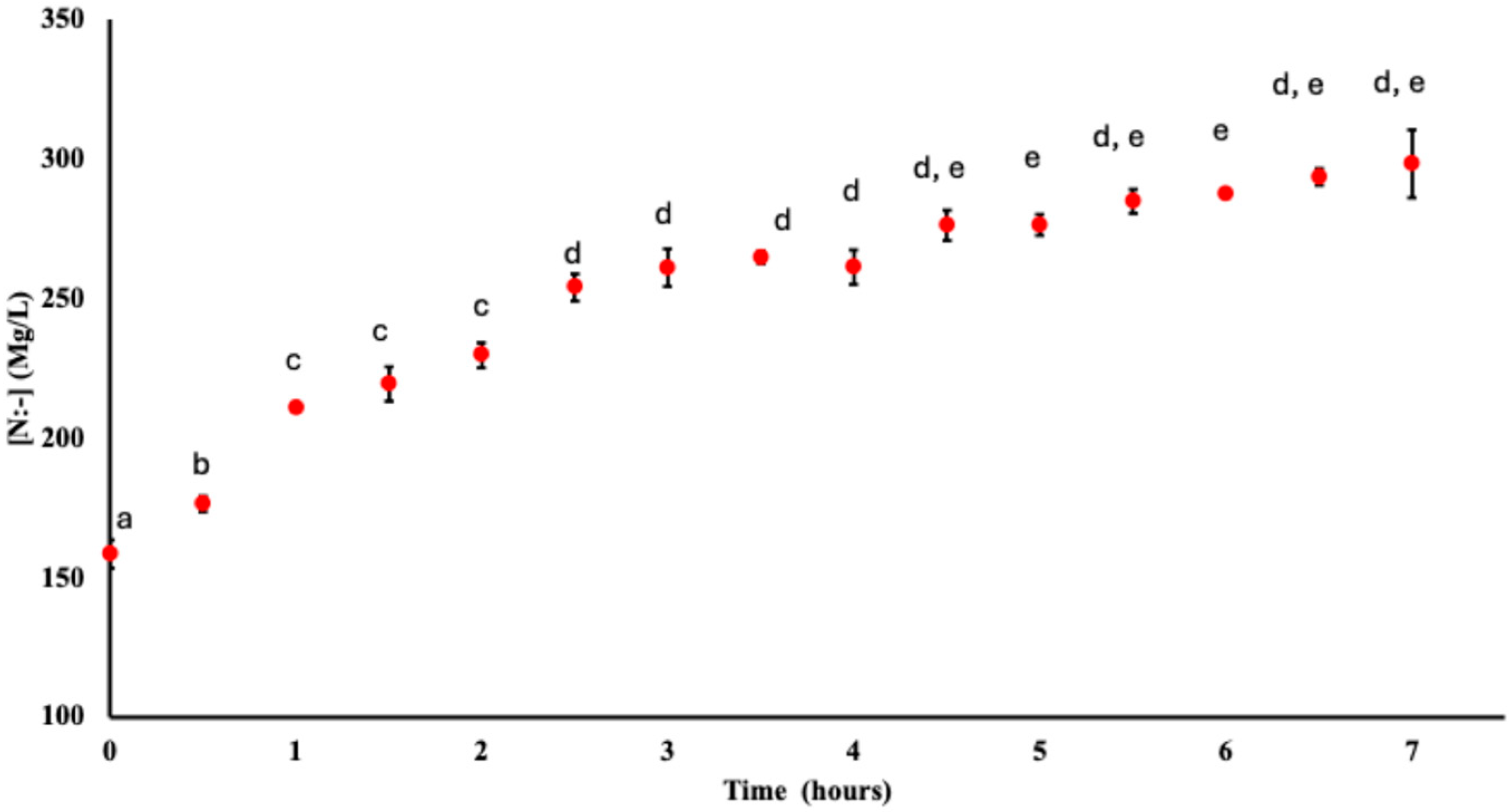
Figure 1 presents the evolution of free amino group concentration during hydrolysis, showing a significant increase from an initial value of 158.66 mg/L to 298.41 mg/L at the end of the reaction. This increase indicates a progressive release of free amino groups, reflecting the enzyme’s effectiveness in hydrolysis. The highest concentration was observed at 5.5 h and remained stable thereafter. After this time, no significant differences were observed (p = 0.05).
The results are consistent with those reported by Tolentino-Barroso et al. [20], demonstrating that pancreatin was effective in protein hydrolysis and amino acid release without signs of enzyme saturation. However, this does not necessarily indicate optimal efficiency or specificity in releasing bioactive peptides. Although similar behaviors have been described for trypsin [16] and pancreatin at comparable concentrations [21,22,23], hydrolysis efficiency should be assessed based on kinetic parameters, degree of hydrolysis, and peptide profiling.
Jung et al. [24] also reported comparable outcomes when using pancreatin to release bioactive peptides from dairy proteins, noting an increase in free amino groups during hydrolysis. Nevertheless, this increase alone does not confirm the formation of functionally relevant peptides. Thus, while the findings indicate the potential for producing bioactive compounds for functional food applications [3], further characterization is required to verify their efficacy and technological feasibility. Overall, pancreatin has been shown to generate bioactive peptides with antihypertensive, antioxidant, and other health-promoting properties [24,25], confirming its usefulness in obtaining functional compounds for both the food and pharmaceutical industries.

3.2. Separation of Hydrolysates by SDS-PAGE

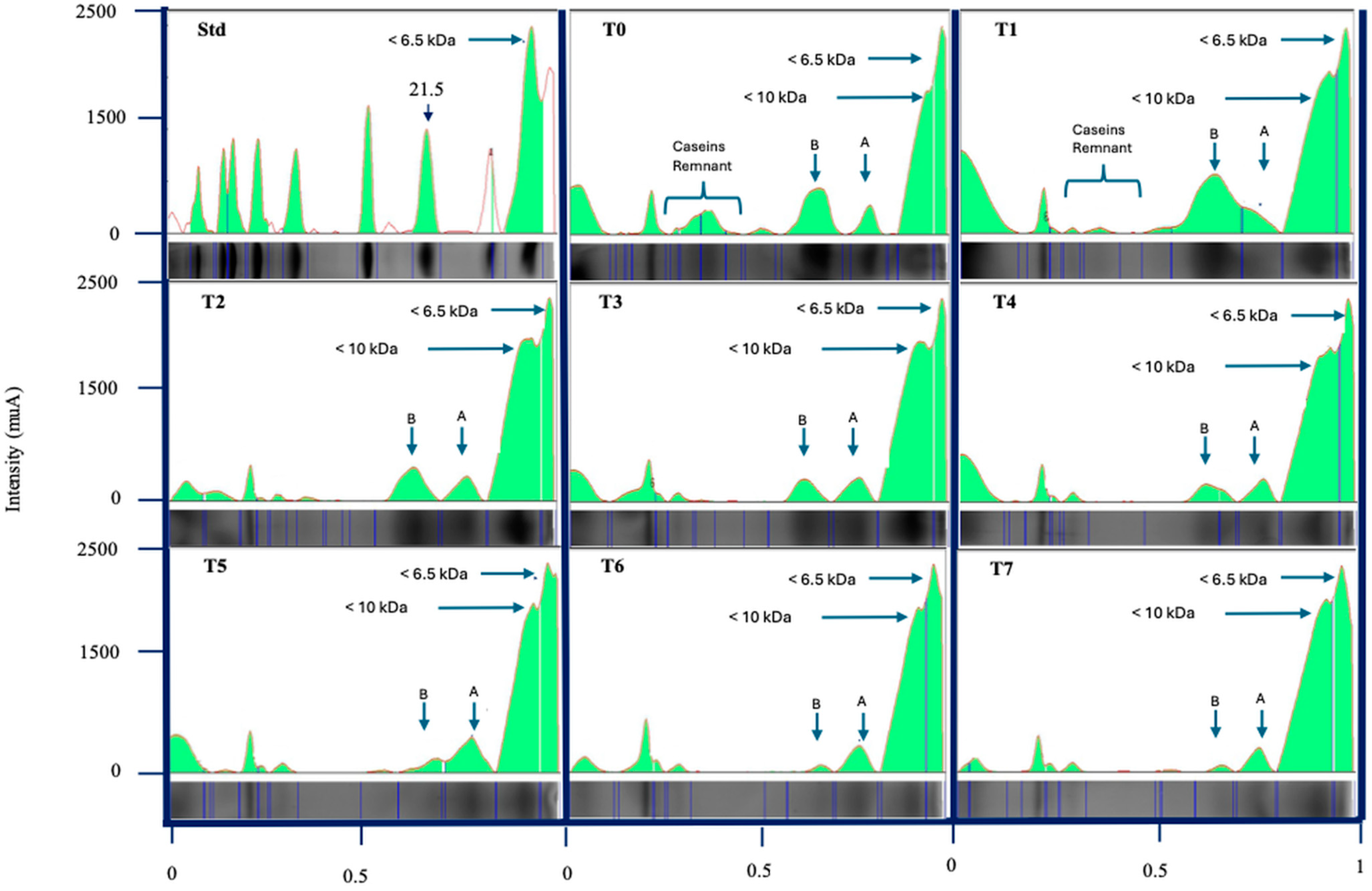
Electrophoretic analysis (Figure 2) showed a clear pattern of progressive hydrolysis during the initial hours of the process. Casein remnants disappeared within the first 4 h (T0–T4), indicating complete degradation. Concurrently, between T1 and T2, an evident accumulation of peptides with molecular weights below 10 kDa and 6.5 kDa was observed, suggesting that whey proteins (A and B) and residual casein were the main substrates, yielding smaller peptides as hydrolysis progressed. This was further supported by the marked reduction in proteins A and B, confirming their conversion into low-molecular-weight peptide fractions (<6.5 kDa).
The progressive breakdown of proteins and release of low-molecular-weight peptides confirms the catalytic efficiency of pancreatin in the hydrolysis process. Peptides smaller than 6.5 kDa are particularly important due to their reported bioactive properties, especially antihypertensive effects [26]. Consistent with previous findings, pancreatin has been shown to produce bioactive peptides with antioxidant and antihypertensive potential [24,25], and the accumulation of peptides below 6.5 kDa during hydrolysis supports their possible role in ACE inhibition and blood pressure regulation [27].
Although peptide size has been linked to ACE inhibitory and antihypertensive activity [27], this relationship remains complex and context-dependent. The mere presence of such peptides in hydrolyzed whey does not confirm their functional efficacy, highlighting the need for comprehensive biochemical and physiological validation before suggesting cardiovascular benefits. Li et al. [28] used in silico analysis to propose that low-molecular-weight peptides might exhibit stronger antihypertensive potential; however, experimental evidence is still required to support these predictions. Similarly, Xia et al. [29] noted that peptides around or below 6.5 kDa may contribute to blood pressure regulation, though factors such as enzyme specificity and food matrix interactions complicate this relationship. Ortiz-Chao et al. [30] identified antihypertensive peptides from whey hydrolysates, yet their translation into effective functional food applications remains limited and demands further investigation.
The enzymatic hydrolysis of whey with pancreatin generated low-molecular-weight peptides (<6.5 kDa), a range in which sequences with known angiotensin-converting enzyme (ACE) inhibitory activity have been identified. However, molecular size alone does not ensure bioactivity; this depends strongly on amino acid composition and sequence, particularly on the presence of hydrophobic residues such as proline, phenylalanine, tyrosine, or tryptophan at the C-terminal end, which enhance interaction with the ACE active site [1,2]. Li et al. [28] reported β-lactoglobulin-derived peptides (e.g., Leu-Leu-Phe and Leu-Gln-Lys-Trp) with potent IC50 values below 50 µM [3], highlighting the importance of future characterization of the generated fractions using mass spectrometry or in silico analysis.
Compared with other proteases, pancreatin exhibits a broad hydrolysis spectrum but lower specificity than enzymes such as trypsin, alcalase, or pepsin, which may explain the formation of a more heterogeneous peptide profile and, consequently, a smaller proportion of highly active antihypertensive sequences [4]. For instance, alcalase hydrolysates have shown ACE-inhibitory activities above 70% in whey protein systems [5], while sequential pepsin-trypsin hydrolysis yields peptides with greater in vivo bioavailability [6]. From a technological perspective, pancreatin offers practical advantages—being a food-grade, low-cost enzyme operating under mild pH and temperature conditions—but its low catalytic specificity may limit selective enrichment of bioactive sequences. Future research should therefore explore combined enzymatic systems (pancreatin–trypsin) or complementary fermentation approaches to maximize the release of well-characterized antihypertensive motifs.

3.3. Determination of the Antihypertensive Activity of Hydrolyzed Whey

Antihypertensive activity is often observed after short hydrolysis times of whey proteins, and this effect is primarily attributed to the release of low-molecular-weight peptides (less than 1 kDa) [3,10]. For example, two ACE inhibitory peptides, LLF and LQKW, have been identified from the β-lactoglobulin (β-LG) protein, and these peptides have been shown to retain their antihypertensive activity even after digestion [31,32]. This highlights the potential of whey hydrolysis, particularly when utilizing specific proteases, to produce bioactive peptides that can be used in the development of functional foods or nutraceuticals to manage hypertension. The ability of these peptides to maintain their activity after digestion further supports their potential therapeutic benefits in vivo.
Table 2 presents the antihypertensive activity observed during hydrolysis, showing that after 7 h of hydrolysis, the inhibitory capacity reached 42.97 ± 3.38%, a significant increase (p = 0.05) compared to the 19.53 ± 5.52% observed after 3.5 h, which was not significant compared to the initial value (19.53 ± 3.31%). This increase in activity suggests that as hydrolysis progresses, more bioactive peptides are released, which help inhibit angiotensin-converting enzyme (ACE), a key regulator of blood pressure. Although the 42% ACE inhibition observed at 7 h aligns with ranges reported for whey-derived peptides [15,28]. However, Ayala-Niño et al. [33] reported an inhibition level of nearly 70% with Flavourzyme and Alcalase for hydrolyzed whey. This disparity highlights potential limitations in the current hydrolysis strategy, possibly due to suboptimal enzyme specificity, inadequate reaction conditions, or the limited bioactivity of the generated peptides. Such findings suggest that relying solely on whey as a substrate and pancreatin as a catalyst may not be sufficient to achieve the high bioactivity levels required for practical antihypertensive functionality. Therefore, refining hydrolysis parameters and exploring synergistic enzymatic approaches appear essential to enhance the generation of peptides with greater inhibitory capacity.
The difference in inhibitory activity observed between the current study and previous studies may be attributed to the methods used for peptide release. Previous in vitro studies on whey-derived antihypertensive peptides have largely focused on enzymatic hydrolysis using commercial proteases and simulated gastrointestinal digestion models. These approaches aim to mimic physiological conditions and enhance peptide release and bioactivity. In particular, the combined or sequential action of microbial proteases and gastrointestinal enzymes has been shown to generate peptides with enhanced antihypertensive potential, as reported by Mansinhbhai et al. [34] and Ashaolu et al. [35], who highlight the synergistic effects of these enzymatic systems on peptide bioactivity. The exclusive use of pancreatin probably limited peptide diversity and ACE-inhibitory activity compared to multi-enzyme or fermentation systems. The lower inhibition seen suggests that using more complex hydrolysis methods could improve the production of antihypertensive peptides from whey proteins.
For example, in lactic acid fermentation processes, microorganisms such as lactic acid bacteria (LAB) break down skim milk powder proteins through a different mechanism than commercial enzymes like pancreatin [9]. LAB utilizes a combination of proteolytic enzymes, including endogenous proteinases, to release a broader spectrum of peptides with diverse structures, some of which may possess more potent biological activity, particularly in ACE inhibition. In contrast, pancreatin primarily acts on specific peptide bonds, which could limit the variety and bioactivity of the peptides generated. This difference in hydrolysis mechanisms may help explain why the antihypertensive activity of peptides produced in this study using pancreatin was relatively lower than that obtained via lactic acid fermentation. Therefore, fermentation processes may offer advantages in making a more diverse array of bioactive peptides with enhanced functional properties, such as higher ACE inhibition, compared to what can be achieved through enzymatic hydrolysis with pancreatin alone.
Another factor affecting the difference in activity between peptides obtained through pancreatin hydrolysis and those produced via in vitro or in vivo digestion is the complexity of digestive conditions [36]. In in vitro or in vivo models, protein hydrolysis occurs under physiological-like conditions involving multiple digestive enzymes, pH variations, and interactions with components such as bile salts. These conditions promote the release of a broader range of antihypertensive peptides, whereas pancreatin alone may not produce the same peptide diversity or concentration needed for strong ACE inhibition. Although pancreatin has proteolytic activity, it cannot fully replicate the enzymatic diversity of human digestion, which may limit the generation or activation of bioactive peptides [37].
Despite this limitation, the study marks a significant advance as the first to report the release of antihypertensive fractions through enzymatic fractionation with pancreatin. Since it is commonly used in the food industry, pancreatin offers a promising tool for producing functional products with antihypertensive potential. Although the activity observed was lower than with other methods, the findings suggest that pancreatin hydrolysis could serve as a controlled and scalable alternative to more complex processes like fermentation or in vivo digestion. Future optimization of hydrolysis parameters—such as temperature, incubation time, and enzyme concentration—may boost peptide activity, supporting the development of functional foods or supplements with antihypertensive properties that are accessible to consumers.

3.4. Application of Hydrolyzed Whey in a Dairy Beverage and Antihypertensive Capacity

To evaluate whether the functionality of the hydrolyzed whey was retained in the final product, the formulated dairy beverage was analyzed using polyacrylamide gel electrophoresis (SDS-PAGE) to determine the concentration of low-molecular-weight peptides and assess the viability of this product.
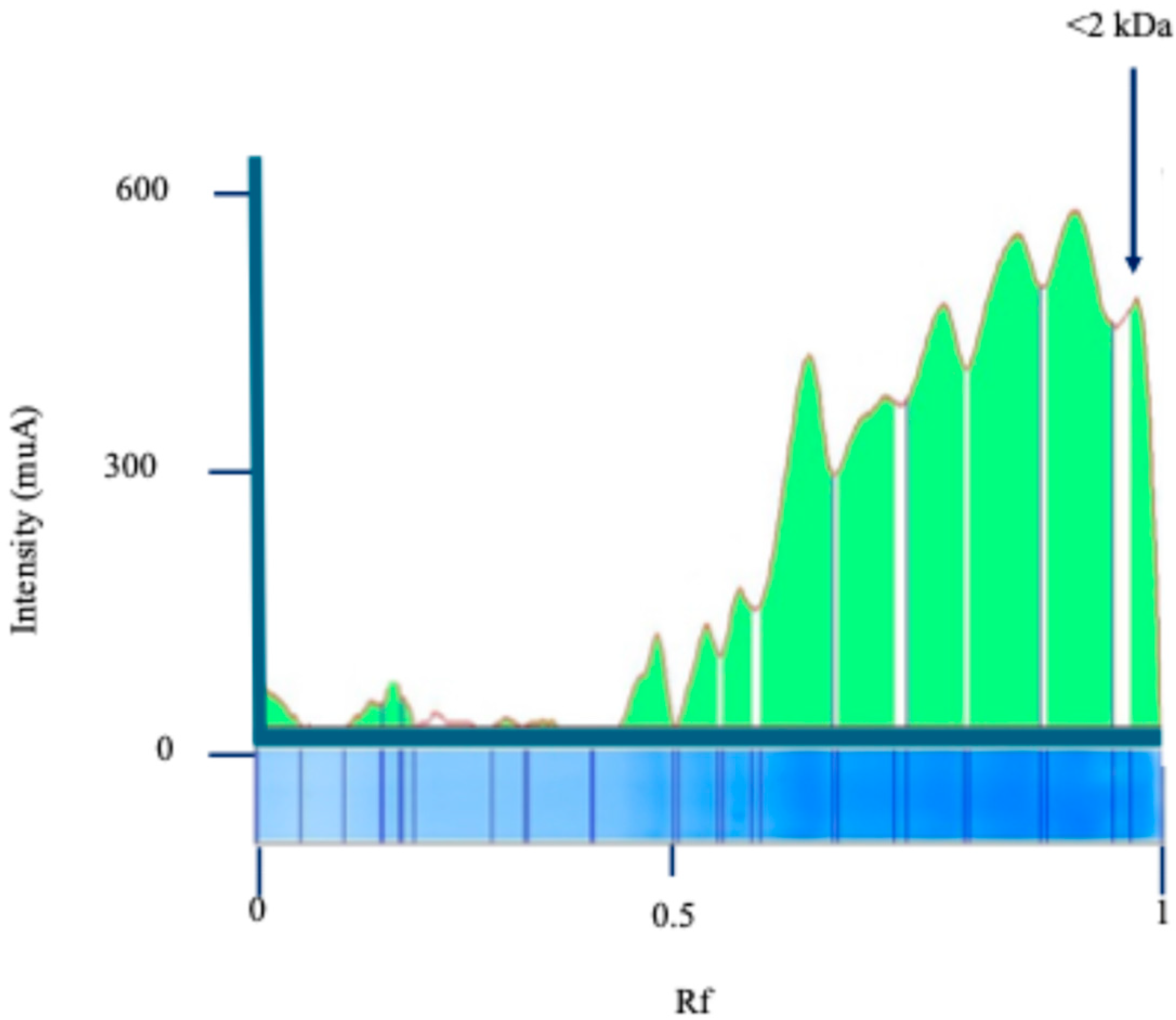
Figure 3 presents the electrophoresis gel results for a dairy beverage made with whey hydrolyzed for 7 h. The gel was used to detect and quantify peptides with lower molecular weights (<2 kDa), providing insight into how hydrolysis affected the peptide profile in the dairy beverage.
The analysis of the beverage reveals a substantial presence of peptides lower to 2 kDa, similar to those found in the hydrolyzed whey. Notably, such peptides are absent in non-hydrolyzed whey (Figure 2), underscoring the central role of enzymatic hydrolysis in their formation. However, while this supports the efficacy of the hydrolysis process, it is essential to consider other possible sources of peptide generation.
In the beverage formulated with hydrolyzed whey, the progressive retention of low-molecular-weight peptides reflects the effective enzymatic breakdown of high-molecular-weight proteins during hydrolysis, as pancreatin promotes the controlled release of smaller peptide fractions over time [24]. Although high-temperature processes involved in industrial whey powder production may induce incidental protein hydrolysis and generate small peptides [38,39], the functional relevance of these thermally derived peptides remains uncertain, as peptide bioactivity is strongly dependent on the degree of hydrolysis and processing conditions. Therefore, distinguishing enzymatically generated peptides retained in the beverage matrix from those formed during thermal processing is essential for accurately attributing biofunctional properties. The observed accumulation of low-molecular-weight peptides further suggests that an appropriate protein-to-enzyme ratio was employed, enabling efficient hydrolysis without enzymatic saturation, which is critical for preserving peptide integrity and potential bioactivity in the final beverage [24].
Regarding the antihypertensive capacity, the observed ACE inhibition was 11.88 ± 0.26%, which was lower than expected. Typically, peptides derived from whey exhibit ACE inhibition values of 30% or higher [3,15,40]. Therefore, the result was somewhat surprising. Some studies suggest that when whey concentrations in functional beverages reach up to 5 mg/mL, ACE inhibition values can approach 70% [41].
An important aspect to critically consider is that, although the beverage in this study exhibited relatively low antihypertensive activity, similar reductions have been reported when hydrolyzed whey is incorporated into dairy matrices, particularly following in vitro protease digestion [10,42]. This recurring outcome suggests that specific components within the dairy matrix may interfere with the expression or stability of antihypertensive peptides. Nevertheless, evidence indicates that other functional properties, such as antioxidant activity, may be less affected by these interactions and can remain preserved [43]. These findings indicate that even when the observed bioactive percentage is low, the formulated beverage can effectively serve as a carrier for whey-derived bioactive peptides. In this study, the beverage matrix enabled the incorporation and retention of peptides with antihypertensive potential, supporting its role as a delivery system rather than solely as a bioactivity enhancer. Although the beverage’s intrinsic antihypertensive activity was limited, its capacity to transport and stabilize bioactive peptides underscores its functional relevance and provides a basis for further optimization of peptide delivery in functional beverage formulations.
In summary, the research demonstrates that although the beverage’s antihypertensive activity was lower than expected, the hydrolysis process successfully generated low-molecular-weight peptides with potential bioactive properties. These peptides could be leveraged to develop functional products. However, it is crucial to carefully balance the hydrolyzed whey concentration and the beverage’s overall composition to optimize the final product’s health benefits and sensory attributes. In this study, a sensory evaluation was not performed; however, some bitter flavors and sweet aromas were detected after the hydrolyzed whey was added, which may be due to the release of certain amino acids. The final ACE-inhibition value of 11.88% in the functional beverage represents a marked reduction compared to the 42% observed in the pure hydrolysate. This decrease can be attributed to multiple physicochemical interactions within the dairy matrix that limit peptide availability and stability. First, casein micelles and non-hydrolyzed whey proteins can form non-covalent complexes with bioactive peptides, reducing their accessibility to the ACE catalytic site [7]. Additionally, the presence of reducing sugars and phosphate salts may induce glycosylation or thermal aggregation reactions, particularly during pasteurization, altering peptide conformation and diminishing their enzyme-binding capacity [8]. Parameters such as pH, ionic strength, and thermal processing conditions play crucial roles in maintaining the functional integrity of peptides in beverage systems [9]. Furthermore, the relationship between hydrolysis time and ACE-inhibitory activity deserves quantitative treatment. In various models, this relationship follows a logarithmic or saturation-type curve, with an optimal intermediate point where the release of active peptides is maximized before excessive degradation occurs [10]. Implementing regression analysis (r2) or kinetic modeling of the relationship between degree of hydrolysis (DH%) and ACE inhibition could clarify whether the plateau observed after 7 h represents enzyme saturation or degradation of key bioactive peptides. Finally, a lower in vitro ACE inhibition does not necessarily indicate reduced in vivo efficacy, since some peptides retain or even acquire functionality after gastrointestinal digestion or intestinal transport [11]. Therefore, combining kinetic analysis, structural modeling, and simulated digestion assays would provide deeper insight into the stability and true bioavailability of the antihypertensive peptides produced. This balance is essential to ensure the beverage provides the desired functional effects without compromising consumer acceptability.

4. Limitations

This study has several limitations that should be considered when interpreting the results and extrapolating them beyond the experimental context. Antihypertensive activity was assessed exclusively through in vitro ACE-inhibition assays, which do not fully reflect peptide bioavailability, stability, or efficacy under physiological conditions; therefore, the results cannot be directly translated into in vivo effects without further validation. In addition, enzymatic hydrolysis was performed using pancreatin as a single-enzyme system under fixed reaction conditions, which may have limited peptide diversity and specificity compared with multi-enzyme or fermentation-based approaches commonly used in functional food research.
Furthermore, the formulation and processing conditions of the dairy beverage, including pasteurization and interactions with other matrix components, likely influenced peptide stability and measurable ACE inhibition, potentially limiting the applicability of the findings to other formulations. The absence of sensory evaluation, shelf-life studies, and consumer testing also limits conclusions regarding product acceptability and practical implementation. Despite these limitations, the study provides valuable preliminary insight into the use of pancreatin-hydrolyzed whey as a functional ingredient and highlights key factors that should be addressed in future research to enhance applicability and translational relevance.

5. Conclusions

Hydrolysis of whey proteins using pancreatin produces low-molecular-weight peptides, which are closely linked to the antihypertensive potential (inhibition of angiotensin-converting enzyme) of the resulting flavored dairy beverage (11.88%). Additionally, the observed difference of about 42% compared to the final prepared product may also be due to hydrolyzed whey proteins being one ingredient in the overall formulation. Their interactions with other components in the matrix could reduce measurable activity, underscoring the impact of the food system on the bioavailability and expression of antihypertensive peptides.
Additional components of the flavored dairy beverage, including base ingredients, may have attenuated antihypertensive activity by interfering with peptide bioactivity and limiting angiotensin-converting enzyme (ACE) inhibition, despite the presence of low-molecular-weight peptides. Nevertheless, even with the lower-than-expected antihypertensive activity reported in the literature, the beverage matrix effectively served as a carrier for whey-derived peptides with antihypertensive potential, enabling their incorporation and retention. This supports the role of whey as a functional ingredient with bioactivities beyond ACE inhibition, such as antioxidant and anti-inflammatory effects. Consequently, further research is required to optimize antihypertensive beverage formulations by balancing enzymatic conditions and matrix composition to preserve peptide functionality while ensuring sensory acceptability. Because sensory evaluation and quality control were not addressed in this study, future work should focus on these aspects to assess consumer acceptance and product stability.

Author Contributions

Conceptualization, L.G.G.O. and J.R.G.; methodology, N.V.R.; software, N.V.R.; validation, E.C.L.; formal analysis, I.M.R.; investigation, E.C.L.; resources, L.G.G.O.; data curation, N.V.R. and I.M.R.; writing—original draft preparation, L.G.G.O. and J.R.G.; writing—review and editing, E.C.L., L.G.G.O. and J.R.G.; supervision, E.C.L.; project administration, L.G.G.O.; funding acquisition, L.G.G.O. All authors have read and agreed to the published version of the manuscript.

Funding

This research received no external funding.

Institutional Review Board Statement

Not applicable.

Informed Consent Statement

Not applicable.

Data Availability Statement

The original contributions presented in the study are included in the article, further inquiries can be directed to the corresponding authors.

Conflicts of Interest

The authors declare no conflicts of interest.

References

  1. Yiğit, A.; Bielska, P.; Cais-Sokolińska, D.; Samur, G. Whey proteins as a functional food: Health effects, functional properties, and applications in food. J. Am. Nutr. Assoc. 2023, 42, 758–768. [Google Scholar] [CrossRef]
  2. Olsen, W. Immunomodulatory Actions of Bovine Whey Protein Isolates, Glycomacropeptide, and Their Digests: Insights from Macrophage and Human Studies. 2023. Available online: https://ir.library.oregonstate.edu/concern/graduate_thesis_or_dissertations/2v23w323t (accessed on 17 November 2025).
  3. Olvera-Rosales, L.B.; Cruz-Guerrero, A.E.; García-Garibay, J.M.; Gómez-Ruíz, L.C.; Contreras-López, E.; Guzmán-Rodríguez, F.; González-Olivares, L.G. Bioactive peptides of whey: Obtaining, activity, mechanism of action, and further applications. Crit. Rev. Food Sci. Nutr. 2023, 63, 10351–10381. [Google Scholar] [CrossRef] [PubMed]
  4. Saadi, S.; Makhlouf, C.; Nacer, N.E.; Halima, B.; Faiza, A.; Kahina, H.; Saoudi, Z. Whey proteins as multifunctional food materials: Recent advancements in hydrolysis, separation, and peptidomimetic approaches. Compr. Rev. Food Sci. Food Saf. 2024, 23, e13288. [Google Scholar] [CrossRef] [PubMed]
  5. González-Olivares, L.G.; Jiménez-Guzmán, J.; Cruz-Guerrero, A.; Rodríguez-Serrano, G.; Gómez-Ruiz, L.; García-Garibay, M. Liberación de péptidos bioactivos por bacterias lácticas en leches fermentadas comerciales. Rev. Mex. Ing. Quím. 2011, 10, 179–188. [Google Scholar]
  6. Reyes-Méndez, A.I.; Figueroa-Hernández, C.; Melgar-Lalanne, G.; Hernández-Sánchez, H.; Dávila-Ortiz, G.; Jiménez-Martínez, C. Producción de péptidos fijadores de calcio y hierro por cepas probióticas de Bacillus subtilis, B. clausii y B. coagulans GBI-30. Rev. Mex. Ing. Quím. 2017, 16, 11–18. [Google Scholar]
  7. Lim, J.J.; Sequeira, I.R.; Yip, W.C.; Lu, L.W.; Barnett, D.; Cameron-Smith, D.; Poppitt, S.D. Postprandial glycine as a biomarker of satiety: A dose-rising randomised control trial of whey protein in overweight women. Appetite 2022, 169, 105871. [Google Scholar] [CrossRef]
  8. Imoto, I.; Yasuma, T.; D’Alessandro-Gabazza, C.N.; Oka, S.; Misaki, M.; Horiki, N.; Gabazza, E.C. Antimicrobial effects of lactoferrin against Helicobacter pylori infection. Pathogens 2023, 12, 599. [Google Scholar] [CrossRef]
  9. Olvera-Rosales, L.B.; Cruz-Guerrero, A.E.; Jaimez-Ordaz, J.; Pérez-Escalante, E.; Quintero-Lira, A.; Ramírez-Moreno, E.; Contreras-López, E.; González-Olivares, L.G. Differences in the proteolytic system of lactic acid bacteria affect the release of DPP-IV inhibitory peptides from whey proteins. Dairy 2023, 4, 515–526. [Google Scholar] [CrossRef]
  10. Saubenova, M.; Oleinikova, Y.; Rapoport, A.; Maksimovich, S.; Yermekbay, Z.; Khamedova, E. Bioactive peptides derived from whey proteins for health and functional beverages. Fermentation 2024, 10, 359. [Google Scholar] [CrossRef]
  11. Minj, S.; Anand, S. Whey proteins and its derivatives: Bioactivity, functionality, and current applications. Dairy 2020, 1, 233–258. [Google Scholar] [CrossRef]
  12. Shukla, P.; Chopada, K.; Sakure, A.; Hati, S. Current trends and applications of food-derived antihypertensive peptides for the management of cardiovascular disease. Protein Pept. Lett. 2022, 29, 408–428. [Google Scholar] [CrossRef]
  13. Mandal, R.; Karmakar, P. Whey protein derived bioactive peptides: Isolation, characterization, and functional aspects. In Functional Dairy Ingredients and Nutraceuticals; Apple Academic Press: Oakville, ON, Canada, 2022; pp. 123–145. [Google Scholar]
  14. Das, S.; Hati, S. Food derived ACE inhibitory peptides: Science to application. In Nutrition and Functional Foods in Boosting Digestion, Metabolism and Immune Health; Academic Press: Cambridge, MA, USA, 2022; pp. 39–54. [Google Scholar]
  15. Chopada, K.; Basaiawmoit, B.; Sakure, A.A.; Maurya, R.; Bishnoi, M.; Kondepudi, K.K.; Hati, S. Purification and characterization of novel antihypertensive and antioxidative peptides from whey protein fermentate: In vitro, in silico, and molecular interactions studies. J. Am. Nutr. Assoc. 2023, 42, 598–617. [Google Scholar] [CrossRef]
  16. Ballatore, M.B.; del Rosario Bettiol, M.; Braber, N.L.V.; Aminahuel, C.A.; Rossi, Y.E.; Petroselli, G.; Montenegro, M.A. Antioxidant and cytoprotective effect of peptides produced by hydrolysis of whey protein concentrate with trypsin. Food Chem. 2020, 319, 126472. [Google Scholar] [CrossRef]
  17. Spellman, D.; McEvoy, E.; O’Cuinn, G.; FitzGerald, R.J. Proteinase and exopeptidase hydrolysis of whey protein: Comparison of the TNBS, OPA and pH stat methods for quantification of degree of hydrolysis. Int. Dairy J. 2003, 13, 447–453. [Google Scholar] [CrossRef]
  18. Laemmli, U.K. Cleavage of structural proteins during the assembly of the head of bacteriophage T4. Nature 1970, 227, 680–685. [Google Scholar] [CrossRef]
  19. Cushman, D.W.; Cheung, H.S. Spectrophotometric assay and properties of the angiotensin-converting enzyme of rabbit lung. Biochem. Pharmacol. 1971, 20, 1637–1648. [Google Scholar] [CrossRef]
  20. Tolentino-Barroso, D.A.; González-Olivares, L.G.; Pérez-Flores, J.G.; Contreras-López, E.; Olvera-Rosales, L.B.; Escobar-Ramírez, M.C.; Pérez-Escalante, E. Bovine whey hydrolysis with pancreatin produces a functional ingredient for developing antihypertensive beverages. Biol. Life Sci. Forum 2023, 26, 63. [Google Scholar] [CrossRef]
  21. Silvestre, M.P.; Afonso, W.O.; Lopes Junior, C.O.; Silva, V.D.; Souza, M.W.; Silva, M.R. Effect of some hydrolytic parameters in the action of subtilisin and pancreatin on whey protein concentrate. Int. J. Food Eng. 2013, 9, 55–66. [Google Scholar] [CrossRef]
  22. Aiello, G.; Lammi, C.; Boschin, G.; Zanoni, C.; Arnoldi, A. Exploration of potentially bioactive peptides generated from the enzymatic hydrolysis of hempseed proteins. J. Agric. Food Chem. 2017, 65, 10174–10184. [Google Scholar] [CrossRef] [PubMed]
  23. Daliri, H.; Ahmadi, R.; Pezeshki, A.; Hamishehkar, H.; Mohammadi, M.; Beyrami, H.; Ghorbani, M. Quinoa bioactive protein hydrolysate produced by pancreatin enzyme—Functional and antioxidant properties. LWT 2021, 150, 111853. [Google Scholar] [CrossRef]
  24. Jung, H.; Jung, D.; Lee, J.; Ki, W.; Lee, J.M.; Kim, E.M.; Kim, K.K. Bioactive peptides in the pancreatin-hydrolysates of whey protein support cell proliferation and scavenge reactive oxygen species. Anim. Cells Syst. 2022, 26, 232–242. [Google Scholar] [CrossRef]
  25. Mansinhbhai, C.H.; Sakure, A.; Liu, Z.; Maurya, R.; Das, S.; Basaiawmoit, B.; Hati, S. Anti-inflammatory, ACE inhibitory, antioxidative activities and release of novel antihypertensive and antioxidative peptides from whey protein hydrolysate with molecular interactions. J. Am. Nutr. Assoc. 2023, 42, 371–385. [Google Scholar] [CrossRef] [PubMed]
  26. Alcaide-Hidalgo, J.M.; Romero, M.; Duarte, J.; López-Huertas, E. Antihypertensive effects of virgin olive oil (unfiltered) low molecular weight peptides with ACE inhibitory activity in spontaneously hypertensive rats. Nutrients 2020, 12, 271. [Google Scholar] [CrossRef] [PubMed]
  27. Daliri, E.B.M.; Lee, B.H.; Park, B.J.; Kim, S.H.; Oh, D.H. Antihypertensive peptides from whey proteins fermented by lactic acid bacteria. Food Sci. Biotechnol. 2018, 27, 1781–1789. [Google Scholar] [CrossRef]
  28. Li, X.; Feng, C.; Hong, H.; Zhang, Y.; Luo, Z.; Wang, Q.; Tan, Y. Novel ACE inhibitory peptides derived from whey protein hydrolysates: Identification and molecular docking analysis. Food Biosci. 2022, 48, 101737. [Google Scholar] [CrossRef]
  29. Xia, Y.; Yu, J.; Xu, W.; Shuang, Q. Purification and characterization of angiotensin-I-converting enzyme inhibitory peptides isolated from whey proteins of milk fermented with Lactobacillus plantarum QS670. J. Dairy Sci. 2020, 103, 4919–4928. [Google Scholar] [CrossRef]
  30. Ortiz Chao, P.; Gomez Ruiz, J.A.; Rastall, R.A.; Mills, D.; Cramer, R.; Pihlanto, A.; Korhonen, H.; Jauregi, P. Production of novel ACE inhibitory peptides from β-lactoglobulin using Protease N Amano. Int. Dairy J. 2009, 19, 69–76. [Google Scholar] [CrossRef]
  31. Chamata, Y.; Watson, K.A.; Jauregi, P. Whey derived peptides interactions with ACE by molecular docking as a potential predictive tool of natural ACE inhibitors. Int. J. Mol. Sci. 2020, 21, 864. [Google Scholar] [CrossRef]
  32. Mann, B.; Athira, S.; Sharma, R.; Kumar, R.; Sarkar, P. Bioactive peptides from whey proteins. In Whey Proteins; Deeth, H.C., Bansal, N., Eds.; Academic Press: London, UK, 2019; pp. 519–547. [Google Scholar] [CrossRef]
  33. Ayala-Niño, A.; Sánchez-Franco, J.A.; González-Olivares, L.G.; Rodríguez-Serrano, G.M.; Alvarez-Cisneros, Y.M.; Mondragón-Pontocarrero, A.C.; Sinisterra-Loaiza, L.I. Whey-Derived Antihypertensive Peptides Produced by Proteinase K Hydrolysis and Fermentation. In Waste and Biomass Valorization; Springer Nature: Berlin/Heidelberg, Germany, 2025; pp. 1–10. [Google Scholar] [CrossRef]
  34. Mansinhbhai, C.H.; Sakure, A.; Maurya, R.; Bishnoi, M.; Kondepudi, K.K.; Das, S.; Hati, S. Significance of whey protein hydrolysate on anti-oxidative, ACE-inhibitory and anti-inflammatory activities and release of peptides with biofunctionality: An in vitro and in silico approach. J. Food Sci. Technol. 2022, 59, 2629–2642. [Google Scholar] [CrossRef]
  35. Ashaolu, T.J.; Lee, C.C.; Ashaolu, J.O.; Tarhan, O.; Pourjafar, H.; Jafari, S.M. Pepsin: An excellent proteolytic enzyme for the production of bioactive peptides. Food Rev. Int. 2024, 40, 1875–1912. [Google Scholar] [CrossRef]
  36. Bouzerzour, K.; Morgan, F.; Cuinet, I.; Bonhomme, C.; Jardin, J.; Le Huërou-Luron, I.; Dupont, D. In vivo digestion of infant formula in piglets: Protein digestion kinetics and release of bioactive peptides. Br. J. Nutr. 2012, 108, 2105–2114. [Google Scholar] [CrossRef]
  37. Kleekayai, T.; Cermeño, M.; FitzGerald, R.J. The production of bioactive peptides from skim milk powder (as per Table 1) proteins. In Agents of Change: Enzymes in Milk and Dairy Products; Academic Press: London, UK, 2021; pp. 447–497. [Google Scholar]
  38. Sarabandi, K.; Tamjidi, F.; Akbarbaglu, Z.; Samborska, K.; Gharehbeglou, P.; Kharazmi, M.S.; Jafari, S.M. Modification of whey proteins by sonication and hydrolysis for the emulsification and spray drying encapsulation of grape seed oil. Pharmaceutics 2022, 14, 2434. [Google Scholar] [CrossRef]
  39. Meng, Y.; Liang, Z.; Zhang, C.; Hao, S.; Han, H.; Du, P.; Li, A.; Shao, H.; Li, C.; Liu, L. Ultrasonic modification of whey protein isolate: Implications for the structural and functional properties. LWT 2021, 152, 112272. [Google Scholar] [CrossRef]
  40. Fluegel, S.M.; Shultz, T.D.; Powers, J.R.; Clark, S.; Barbosa-Leiker, C.; Wright, B.R.; Freson, T.S.; Fluegel, H.A.; Minch, J.D.; Schwarzkopf, L.K.; et al. Whey beverages decrease blood pressure in prehypertensive and hypertensive young men and women. Int. Dairy J. 2010, 20, 753–760. [Google Scholar] [CrossRef]
  41. Lim, S.M.; Lee, N.K.; Park, K.K.; Yoon, Y.C.; Paik, H.D. ACE-inhibitory effect and physicochemical characteristics of yogurt beverage fortified with whey protein hydrolysates. Food Sci. Anim. Resour. 2011, 31, 886–892. [Google Scholar] [CrossRef]
  42. Xue, L.; Yin, R.; Howell, K.; Zhang, P. Activity and bioavailability of food protein-derived angiotensin-I-converting enzyme–inhibitory peptides. Compr. Rev. Food Sci. Food Saf. 2021, 20, 1150–1187. [Google Scholar] [CrossRef] [PubMed]
  43. Sinha, R.; Radha, C.; Prakash, J.; Kaul, P. Whey protein hydrolysate: Functional properties, nutritional quality and utilization in beverage formulation. Food Chem. 2007, 101, 1484–1491. [Google Scholar] [CrossRef]
Figure 1. Concentration of free amino groups during hydrolysis for 7 h. Lowercase letters compare means between times of the same hydrolytic system. According to Tukey’s test, the same letter did not present a significant difference (p < 0.05).
Beverages 12 00035 g001
Figure 2. Electrophoresis gel obtained for samples T0–T7 (0 to 7 h of hydrolysis) hydrolyzed with pancreatin. Std: broad-range standard; B: β-lactoglobulin; A: α-lactoalbumin.
Beverages 12 00035 g002
Figure 3. Electrophoresis gel obtained from the beverage prepared with whey after 7 h of hydrolysis with pancreatin.
Beverages 12 00035 g003
Table 1. Formulation of flavored beverage based on hydrolyzed whey.
IngredientFormula (% w/w)Base (500 g)Technological Function
Water77.628388.14Continuous phase and solvent for ingredient dispersion
Hydrolyzed whey4.020.0Source of bioactive peptides and milk proteins
Skimmed milk powder (high heat)2.010.0Protein enrichment, body and mouthfeel improvement
Anhydrous milk fat3.015.0Fat source; contributes to creaminess and flavor
Brown sugar10.050.0Sweetener; flavor and solids contribution
Fructose syrup (70%)3.015.0Sweetener; enhances sweetness and viscosity
Glyceryl monostearate (emulsifier)0.21.0Emulsification and fat phase stabilization
Disodium phosphate0.090.45Buffering agent; protein stabilization
Sodium citrate0.050.25Chelating and buffering agent
Sodium hexametaphosphate0.030.15Sequestrant; improves mineral balance and stability
Pineapple–coconut flavor0.0020.01Flavoring agent
Total100500-
Table 2. Antihypertensive activity of the peptide fractions.
Hydrolysis Time
(Hours)
Antihypertensive Activity
(% ACE Inhibition)
019.53 ± 3.31 a
3.519.53 ± 5.52 a
742.97 ± 3.38 b
Lowercase letters compare means between hydrolysis times of the same enzymatic system. According to Tukey’s test, the same letter did not present a significant difference (p < 0.05).
Disclaimer/Publisher’s Note: The statements, opinions and data contained in all publications are solely those of the individual author(s) and contributor(s) and not of MDPI and/or the editor(s). MDPI and/or the editor(s) disclaim responsibility for any injury to people or property resulting from any ideas, methods, instructions or products referred to in the content.