Article

Changes in Bioactive Characteristics of Nance (Byrsonima crassifolia) Pulp and Liqueur During Storage


by
Diana Maylet Hernández-Martínez
1,
Jose Irving Valdez-Miranda
2,
Patricia Rosales-Martínez
1,
Hugo Necoechea-Mondragón
3,
Gustavo F. Gutiérrez-López
2 and
Maribel Cornejo-Mazón
1,*
1
Departamento de Biofísica, Escuela Nacional de Ciencias Biológicas, Instituto Politécnico Nacional, Carpio y Plan de Ayala S/N, Unidad Santo Tomás, Mexico City 11340, Mexico
2
Departamento de Ingeniería Bioquímica, Escuela Nacional de Ciencias Biológicas, Instituto Politécnico Nacional, Carpio y Plan de Ayala S/N, Unidad Santo Tomás, Mexico City 11340, Mexico
3
Dirección de Incubación de Empresas Tecnológicas, Secretaría de Innovación e Integración Social, Instituto Politécnico Nacional, Av. Wilfrido Massieu S/N Gustavo A. Madero, Mexico City 07700, Mexico
*
Author to whom correspondence should be addressed.
Beverages 2026, 12(1), 17; https://doi.org/10.3390/beverages12010017
Submission received: 29 November 2025 / Revised: 13 January 2026 / Accepted: 19 January 2026 / Published: 22 January 2026
(This article belongs to the Special Issue New Insights into Artisanal and Traditional Beverages)

Highlights

  1. Nance fruit is suitable as a raw material for producing artisanal liqueur.
  2. Ascorbic acid and antioxidant capacity in liquor decayed at a higher rate than in pulp.
  3. Pulp and, more markedly, liqueur showed an initial increase in phenolic compounds, followed by a steady decrement.
  4. Reported bioactive profiles and kinetic parameters will be useful for determining processing conditions.

Abstract
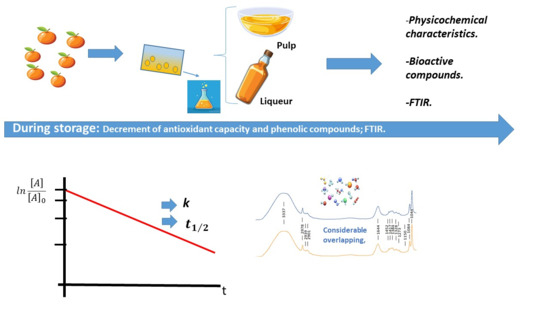
Nance fruit is considered an important source of antioxidants and is used as a raw material to produce various edible products including liqueur. This fruit is grown in various locations worldwide, and its use to prepare different products needs to be further developed. Nance pulp and liqueur were analyzed by evaluating their physicochemical characteristics, bioactive compounds, and antioxidant capacities during 90 days of storage. Ascorbic acid and antioxidant capacities decreased at higher rates than pulp as per their kinetic constants and half-life times (t1/2 was shorter for liqueur than for pulp). Fourier Transform Infrared Spectroscopy (FTIR) allowed us to register the characteristic fingerprints from bonds from diverse functional groups and demonstrated that liqueur preserved, at a higher extent, the bioactive compounds of pulp. Phenolic compounds in both samples decayed over time, suggesting that, during storage, they release due to the breakage of cell walls. Infrared spectra showed considerable overlapping, presenting characteristic alcohol and functional group peaks distinctive of bioactive compounds and polysaccharides. At the end of their storage, both samples presented peaks of less intensity than those for the initial samples, which was in agreement with the bioactive compound content and antioxidant capacity kinetics. Bioactive profiles and kinetic parameters would be useful for establishing the processing and storage conditions of nance liqueur and could support the development of local communities.

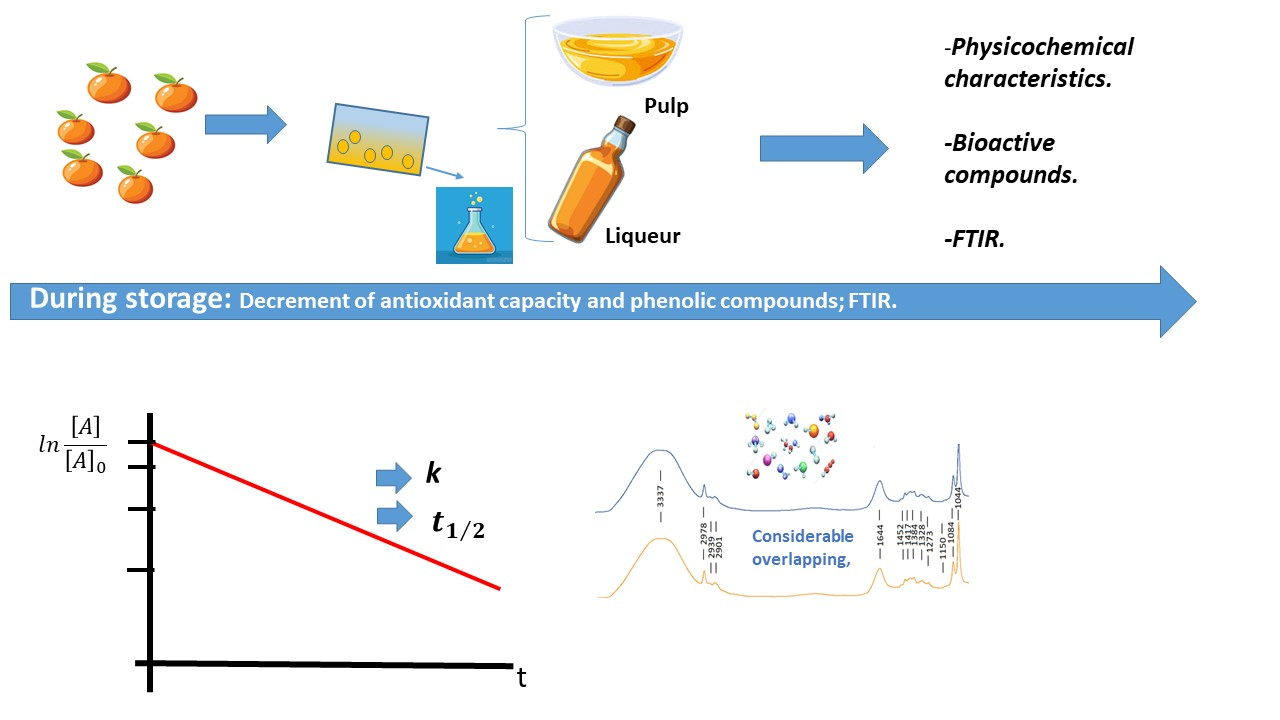
Graphical Abstract

1. Introduction

Fruits of Byrsonima crassifolia or nance have a globose shape, with a diameter between 1.5 and 3 cm, and are slightly flattened at the poles. They are obtained seasonally, and grow worldwide in the wild or in small orchards. The pulp, which makes up 64% of the fruit’s weight, is creamy to yellow with a delicate sweet and sour taste and a strong characteristic aroma, while the endocarp and epicarp make up 25% and 11% of the weight, respectively [1]. Nance is marketed locally and regionally in various countries, where it is consumed fresh or used as a raw material for preparing a wide variety of artisanal food products such as jams, jellies, syrups, candies, popsicles, gelatins, and sauces [2]. It is also used in the production of alcoholic beverages such as artisanal liqueurs, which are commercialized in local markets around production areas, enhancing local economies. The nance fruit possesses compounds with antioxidant activity, such as carotenoids, pigments responsible for the yellow coloration of the fruit [3,4]. In this respect, some authors reported the presence of phenolic compounds in pasteurized pulp and their decay during refrigerated storage [5]. In addition, it was found that, during storage, the ascorbic acid content decreased (epicarp and pulp) while the phenolic compounds increased and antioxidant activity (DPPH) decreased [6]. In this respect, it has been reported that the type of antioxidant compound has an important role on determining the decay rate [7,8].
In general, the methods for making artisanal liqueurs are based on macerating the raw plant materials in sugar cane alcohol [9], and their production varies depending on the desired final organoleptic characteristics. In the case of nance liqueur, one of the simplest and most widely used manufacturing techniques involves preparing a macerate by directly immersing the fruits in cane alcohol, followed by the addition of water and sugar syrup [10]. According to the specifications outlined in the official Mexican standard [11], which is based on international ones, a liqueur is a product made from distilled alcoholic beverages, neutral spirits, ethanol bought locally, or a mixture, with a sugar content of no less than 1.0% (w/v) and water. According to the permitted specifications, liqueurs can have an alcoholic content between 13.5% and 55% of ethanol [12]. This mixture can be flavored and aromatized by adding ingredients, such as additives and adjuvants. Finally, the product is bottled and brought to selling or storage sites.
Fruit liqueurs contain bioactive compounds that are often extracted from the fruit’s flesh or peel during production [13]. The presence of phenolic compounds in sour cherry has been reported to decrease during storage following first-order kinetics [14]. Likewise, it has been reported that the physicochemical parameters and content of the bioactive compounds of blackberry liqueur decreased during 180 days of storage following a first-order kinetic model, in which the reaction rate is proportional to the concentration of the reactant through the rate constant. This parameter, along with the half-time (time to reach 0.5 of the maximum referred change), characterizes the particular kinetics [15]. The processing of nance fruit into liqueur has been of interest to producers and consumers due to its relatively straightforward production and marketing. Liqueur making is also considered a preservation method that allows for the obtaining of a product with a long shelf life and desired organoleptic characteristics [15]. As nance fruit is seasonal, studies focused on promoting its preservation are gaining interest. Despite the above, the literature on the physicochemical characteristics, bioactive compounds, and antioxidant capacity of nance liqueur during storage is scarce, and no formal scientific reports have been found to date. Therefore, the objective of this work was to study the artisanal production of nance liqueur by determining the stability of its physicochemical properties, bioactive compounds, and antioxidant capacity during storage in order to contribute to adding value to this fruit as an artisanal liqueur.

2. Materials and Methods

2.1. Fruit Selection and Processing

Nances (B. crassifolia) were acquired in a local market in Iguala, Guerrero, Mexico. The fruits at commercial maturity were selected, discarding visibly damaged specimens (soft tissues, surface physical damage, or signs of pest infestation), and were transported under refrigeration to the laboratory. Then, the fruits were washed with water, sanitized with a sodium hypochlorite solution (100 ppm; JT Baker, Center Valley, PA, USA) for 10 min, and rinsed with distilled water. The washed fruits were stored in plastic bags in a freezer at −10 °C until further processing.

2.2. Pulp Extraction

The fruits (three batches, 15 kg each/run) were deposited in a pulper (MAPISA POLINOX-P, DERE-1, 022.301107.09, Mexico City. Mexico) with a 0.1 mm diameter mesh. Once the pericarp and endocarp were removed, the pulp was collected and stored in amber jars (approximately 70 g per jar) and subsequently refrigerated in the dark (4 °C) [16]. In total, 400 filled jars were prepared for subsequent experiments, and a randomly selected jar was used in each methodology.

2.3. Preparation of the Liqueur

The nance liqueur was prepared according to the methodology proposed by Luna-Ramírez et al. [15]. Commercial sucrose, food-grade ethyl alcohol, and nance pulp previously conditioned and kept under refrigeration (4 °C) were used. The alcoholic extract of the pulp was prepared in a 1:1 ratio of pulp to alcohol in a glass container sealed with parafilm®. This mixture was macerated for a month at room temperature (25 °C) in the dark. During this time, the container was shaken every day and inverted. After the maceration time, the contents were filtered through a cloth and through a Whatman No. 40 filter paper to remove the suspended particles. On the other hand, a sucrose syrup was prepared at 35 °Brix. Finally, the liqueur was prepared by mixing the filtered extract from the maceration and the syrup at a ratio of 1:1. The resulting mixture was poured in amber jars (approximately 200 mL in each jar) and stored in dark conditions and at room temperature (25 °C).

2.4. Physicochemical Analysis

Physicochemical analyses were carried out every 15 days for 3 months.

2.4.1. pH Determination

The pH of the samples was determined with a potentiometer (Hach Model: 51700-23. Shanghai, China) previously calibrated with pH 4 and pH 7 standard solutions. The readings were taken by directly immersing the electrode in the liqueur. The pH of the pulp was measured following the method reported by Díaz-Álvarez et al. [17]. Briefly, fruits were mixed with distilled water at a 1:5 (w/v) ratio in a blender, and then the mix was filtered to avoid fleshy portions of the fruit; the electrode was then directly immersed in the filtrate.

2.4.2. Acidity Determination

The acidity was determined according to the AOAC Official Method 942.15. (2016) [18]. The results were expressed as g of citric acid equivalent per 100 g for pulp and per 100 mL for liqueur (g CAE/100 g). The following equations determined the results for the liqueur (Equation (1)) and the pulp (Equation (2)):
A c i d i t y   ( g   C A E / 100   m L ) = N × 0.064 × 100 V 1  
A c i d i t y   g   C A E / 100   g = N × V × 0.064 × D × 100 a × m 2
In which
N: Normality of the NaOH solution;
V: Volume (mL) of the NaOH solution consumed;
V1: Volume of the liqueur sample (mL);
m2: Mass of the sample (g);
D: Final volume of the pulp solution (mL);
a: Volume of the aliquot (mL);
0.064: Equivalent weight of citric acid (g/meq).

2.4.3. Determination of Total Soluble Solids

Soluble solids were determined by placing three drops of the sample on the refractive crystal of the refractometer (ATAGO Model: NAR-1T. Co., Ltd., Fukaya-shi, Japan), and the reading was taken directly in the case of liqueur. In the case of the pulp, it was measured by grinding a fruit sample in a blender and filtering it to avoid fleshy portions of the fruit. The filtrate was taken and read directly by placing three drops on the refractometer crystal. The results are reported as °Brix.

2.4.4. Determination of Alcohol Content

The alcohol content (%) of the liqueur was determined by placing 50 mL of the liqueur in a distillation system. The distillate obtained was measured, and distilled water was added to a volume of 50 mL. The reading was then carried out with a Gay-Lussac aerometer (Robsan 200, Monterrey, Mexico) according to [19].

2.4.5. Moisture Determination

The moisture content was determined through oven drying according to AOAC Official Method 925.10 [20]. The percentage of humidity was determined by the following Equation (3):
% M o i s t u r e = M 0 M 1 M 0 100
In the equation,
M0: Initial weight of the sample (g);
M1: Final weight of the sample (g).

2.4.6. Density Determination

The determination of liqueur density was carried out with the use of a 10 mL capacity pycnometer, using the following Equation (4):
ρ = A B V
In the equation,
ρ: Density (g/mL);
A: Mass of the pycnometer filled with liqueur (g);
B: Mass of the empty pycnometer (g);
V: Known pycnometer volume (mL).

2.4.7. Color Measurement

A tristimulus colorimeter (HunterLab. Model: ColorFlex EZ, Reston, VA, USA) was used for color analysis, with a 45°/0° circumferential geometry and a D65 illuminant. A total of 20 mL of liqueur or 20 g of pulp was deposited in the cell, and the parameters L*, a*, and b* were subsequently determined in the Easy Math QC software. The total color difference (ΔE) was calculated according to Equation (5), as reported by Xu et al. [21]:
E = L t L 0 2 + a t a 0 2 + b t b 0 2 1 2
In the equation,
L* − L*0: Difference in lightness;
a* − a*0: Difference in red (+)/green (−) intensity;
b* − b*0: Difference in yellow (+)/blue (−) intensity.
The subscripts “0” and “t” represent the color values of the sample at the initial day and at t days of storage, respectively.

2.4.8. Extraction of Nance Pulp Compounds and Liqueur Preparation for Analysis

The compounds were extracted for further analysis. The extracts were prepared according to the methodology described by Moo-Huchin et al. [22]. In total, 3.1 g of pulp was weighed, and 80% ethanol or 80% methanol was added to a final volume of 25 mL; the mixture was subjected to ultrasonication (Branson-1200, Brookfield, CT, USA) at 40 kHz) for 10 min and centrifuged at 25 °C, 13,000 rpm for 15 min. The supernatant obtained was filtered with Whatman No. 40 paper and stored in an amber jar at 4 °C until analysis.

2.4.9. Antioxidant Activity

ABTS
The ABTS+• radical [2.2′-azinobis-(3-ethylbenzothiazoline-6-acid)] assay was used according to the method described by Augusto et al. [23]. A total of 88 μL of 140 mM potassium persulfate (JT Baker, Center Valley, PA, USA) was added to 5 mL of 7 mM ABTS solution, which was incubated for 16 h at room temperature, and after this time it was subsequently adjusted with absolute ethanol to obtain an absorbance in the spectrophotometer (Perkin Elmer Frontier FT-IR/NIR, Shelton, CT, USA) of 0.7 ± 0.05 at 734 nm. For the antioxidant activity determination, 30 μL of the pulp ethanolic extract or liqueur was mixed with 3 mL of the ABTS radical solution. This mixture was left to stand for 6 min, and then its absorbance was measured in the spectrophotometer at 734 nm. Trolox was used as a standard, and the results were expressed as Trolox Equivalent Antioxidant Capacity (TEAC) in μmol TEAC/g (wet basis) of the pulp extract or µM TEAC/mL of liqueur.
The percentage of inhibition was calculated with Equation (6):
%   R a d i c a l   i n h i b i t i o n = A b s c o n t r o l A b s s a m p l e A b s c o n t r o l 100
In the equation,
Abscontrol: Absorbance of the ethanol with the radical solution (at 734 nm);
Abssample: Absorbance of the sample with the radical solution (at 734 nm).
DPPH
The determination of antioxidant activity through the DPPH method was performed using the method reported by Chen et al. [24]. A DPPH solution was prepared by dissolving 3 mg of DPPH in 100 mL of methanol (76 µM) and was protected from light until use. To determine the antioxidant capacity of the sample, 100 μL of the pulp methanolic pulp extract or liqueur was mixed with 3900 μL of the DPPH radical solution. This mixture was allowed to stand for 30 min, and its absorbance was then measured at 517 nm in the spectrophotometer.
%   R a d i c a l   i n h i b i t i o n = A b s c o n t r o l A b s s a m p l e A b s c o n t r o l 100
In the equation,
Abscontrol: Absorbance of the ethanol with the radical solution (at 517 nm);
Abssample: Absorbance of the sample with the radical solution (at 517 nm).

2.4.10. Ascorbic Acid Determination

Ascorbic acid was determined through the method reported in the AOAC method 967.22 (2005) [25] using 2,6-dichlorophenolindophenol. The results were expressed as mg of ascorbic acid/100 g of fruit pulp or liqueur.

2.4.11. Determination of Total Phenolic Compounds

Total phenolic compounds content was determined using the Folin–Ciocalteu method reported by Zhao et al. [26] with slight modifications. Briefly, 200 μL of methanolic pulp extract or liqueur and 200 μL of Folin–Ciocalteu (Sigma Aldrich, St. Louis, MO, USA) reagent were mixed and incubated for 6 min. Subsequently, 2600 μL of Na2CO3 (JT Baker, Center Valley, PA, USA) (2% w/v) was added to the mixture and left to stand for 30 min. The reading was made in a spectrophotometer at 765 nm. Gallic acid (Sigma Aldrich, St. Louis, MO, USA) was used as a standard and expressed as mg of gallic acid equivalent (GAE)/100 g (wet basis) for the pulp extract and mg of gallic acid equivalent (GAE)/100 mL for the liqueur.

2.4.12. Analysis of the Stability of Bioactive Compounds and Antioxidant Capacity During Storage Time

Nance pulp and liqueur samples were analyzed every 15 days for 3 months of storage. The results from the determination of phenolic compounds and ascorbic acid, as well as antioxidant capacity (ABTS and DPPH), were analyzed to assess whether they followed first-order degradation kinetics. The velocity constant k and the half-life time (t1/2) were determined from the following equations, as reported by Ordoñez-Santos & Yoshioka-Tamayo (2012) [27]:
l n A A 0 = k t
t 1 / 2 = ln 2 k
In the equation,
k: Reaction rate constant (1/days);
t: Time (days);
t1/2: Half-life time (days);
[A]0: Initial content of the bioactive compound;
[A]: content of the bioactive compound after a period of time t.

2.4.13. FTIR Spectroscopy Spectra on the Nance Liqueur

The infrared spectra of the liqueur and the residues obtained from the extract used to produce it (maceration) were analyzed at the initial and final storage time (7 months) to observe possible changes in each sample. The samples stored in the dark at room temperature remained intact in amber glass containers throughout the 7 months of storage. The analysis was performed in the MIR-FTIR-ATR spectrum (Perkin Elmer model: Frontier FT-IR/NIR Spectrometer, Shelton, CT, USA) at a range of 4000 to 900 cm−1 from the mid-infrared region, according to Ovchinnikov et al. (2016) [28].

2.4.14. Statistical Analysis

Results were statistically analyzed using an ANOVA test with α = 0.05, followed by Tukey’s post hoc test for multiple comparisons in MINITAB 17.1.0. The values represent the mean ± standard deviation. All tests were carried out in triplicate.

3. Results and Discussion

3.1. Physicochemical Analysis

The physicochemical characteristics of the nance pulp and liqueur during storage are shown in Table 1.
The measurement of pH is commonly carried out in industries as an indicator of changes in food properties commonly present during storage and processing [29]. The nance pulp presented pH values similar to those reported in previous studies with samples of the same fruit, with values between 3.09 and 4.06 [5]. During storage, an increase in pulp pH was observed, which was attributed to a decrease in fruit acidity resulting from the degradation of organic acids during cellular respiration [30,31,32,33]. Furthermore, the relative pH stability observed during the first few days of sample storage could be associated with the activity of acids present in the food, which can act as buffer systems, allowing the pH to remain stable for a certain period [34,35]. The increase in soluble solids during pulp storage was attributed to processes such as the hydrolysis of starch into simple sugars by enzyme activity [36,37,38]. In this regard, the authors suggested that such an increase could be associated with a higher sugar concentration, also due to the gradual loss of water contained in the pulp [39,40]. Regarding the changes observed in liqueur density during storage, an increase in these values was observed, similar to that reported in previous studies with blackberry liqueur [15]. In this respect, Oliveira et al. (2015) [41] mentioned that the density is proportional to the soluble solids content, coinciding with the increase in soluble solids observed during the storage of nance liqueur depicted in Table 1.
The nance liqueur showed an increase in pH during storage. This result coincides with that reported by Moreno-Álvarez et al. (2002) [42], who observed an increase in this parameter in mandarin liqueur stored at room temperature (25 °C). Attchelouwa et al. (2017) [43] indicated that, during the storage of alcoholic beverages at room temperature, the organic acid content can decrease, contributing to the increase in pH in a similar way to what was observed in this work. Previous studies with fruit liqueurs have reported pH values ranging from 5.44 to 5.89 for red myrtle liqueur [44] and from 3.41 to 4.94 for cranberry, cherry, and raspberry liqueurs [45]. Another process that may contribute to the reduction in acidity is malolactic fermentation, which was unlikely to arise during storage due to the relatively high ethanol concentration of the liqueur [46]. Furthermore, the acidity of the liqueur decreased during storage in this study, similarly to that reported by Luna-Ramírez et al. (2017) [15] for blackberry liqueur. This decrease was attributed to chemical reactions occurring during the aging process of alcoholic beverages, such as those related to esterification and to the concentration of acids over time due to the evaporation of moisture, as given by the increments found for °Brix (Table 1). These trends were also similar to those obtained during the storage of blackberry liqueur [15].
The nance liqueur had an alcohol content between 38.67 ± 2.3% and 18.8 ± 0.7% during storage, complying with the specifications established in the official Mexican standard (NOM-142-SSA1/SCFI-2014) [11] for beverages classified as “Liqueurs”. The decrease in alcohol content observed during the sample analysis could be due to evaporation during storage; thus, evaporation concentrated the components in the liqueur [47]. Such phenomena induced the decrement of low-boiling-point components (such as ethanol), which caused an increment of the density of the liqueur [48], as depicted in Table 1. This behavior is similar to that in previous studies with blackberry liqueur [15]. In this respect, Oliveira et al. (2015) [41] mentioned that this parameter is proportional to the soluble solid content, coinciding with the increase in soluble solids observed during storage [10].

3.2. Color Analysis

During storage, the pulp exhibited decrements in lightness (L*) at 15 and 30 days compared to the initial sampling day (30 days, based on our own observations of the retail time of the bottles in a local market, which is around 15 days). Furthermore, the values obtained for the a* and b* coordinates in the pulp showed a shift towards the positive axis of the a* coordinate, indicating a change in color away from green, while the shift towards the negative axis of the b* coordinate indicated a change in color away from yellow. The yellow color of the nance fruit pericarp was primarily due to the presence of carotenoids such as lutein [49,50]. These compounds are susceptible to degradation by oxidations due to lipoxygenases and non-enzymatic processes [51,52]. In addition, the color variations can also be due to the oxidation of fatty acids by the action of lipoxygenase on membrane lipids [53]. Other enzymatic processes associated with browning may result from the activity of polyphenol oxidase on compounds such as flavonoids and lignin, as well as organic acids, to name a few [54,55]. Furthermore, the non-enzymatic oxidation of ascorbic acid can also contribute to the browning of the sample [56]. In Table 2, the color parameters of nance pulp and liqueur are shown.
In alcoholic beverages, color changes can be due to the degradation of ascorbic acid; Table 2 shows that liqueur color change increased as the time increased (ΔE). Hsin-Yun et al. (2012) [57] reported that the aerobic degradation products of ascorbic acid, such as 3-hydroxy-2-pyrone, could contribute to the browning in hydroalcoholic samples. They also pointed out that increased ethanol concentrations could contribute to the accumulation of these compounds and accelerate the darkening of the samples. Other ascorbic acid degradation processes, to dehydroascorbic acid and then to 2,3-diketogulonic acid and finally to furfural compounds, can lead to browning reactions during storage [58,59].

3.3. Bioactive Compounds

3.3.1. Ascorbic Acid

Hamacek et al. (2014) [60] reported higher contents of ascorbic acid (22.58 ± 5.76 mg/100 g) than those obtained in this work (Table 1). Since fruits are biological matrices, natural variations in their biochemical characteristics (such as ascorbic acid) occur due to fluctuations in light exposure, the position of the fruit in the tree, the distance from one tree to another [61,62,63], the stage of maturity [64], and edaphoclimatic differences during cultivation and harvesting. Some authors indicate that storage conditions have a significant effect on the concentrations of this vitamin in fruits. In the present study, the observed decrement in ascorbic acid in the pulp showed a similar trend to that reported in previous studies under similar storage conditions [6]. Ascorbic acid is an unstable compound susceptible to degradation by oxidation [6], and, in this respect, aeration and tissue degradation during pulping can increase enzymatic activity, contributing to the degradation of ascorbic acid [65,66].
Previous studies of blackberry liqueur reported slightly lower values of this component (8.96 to 20.48 mg/100 mL) [15] to those obtained in this study. Among the factors that can contribute to the degradation of ascorbic acid in alcoholic beverages are those associated with the content of ethanol. For instance, Hsin-Yun et al. (2012) [57] indicated that a higher concentration of ethanol promoted the dehydration of intermediate compounds in the degradation mechanism of ascorbic acid.
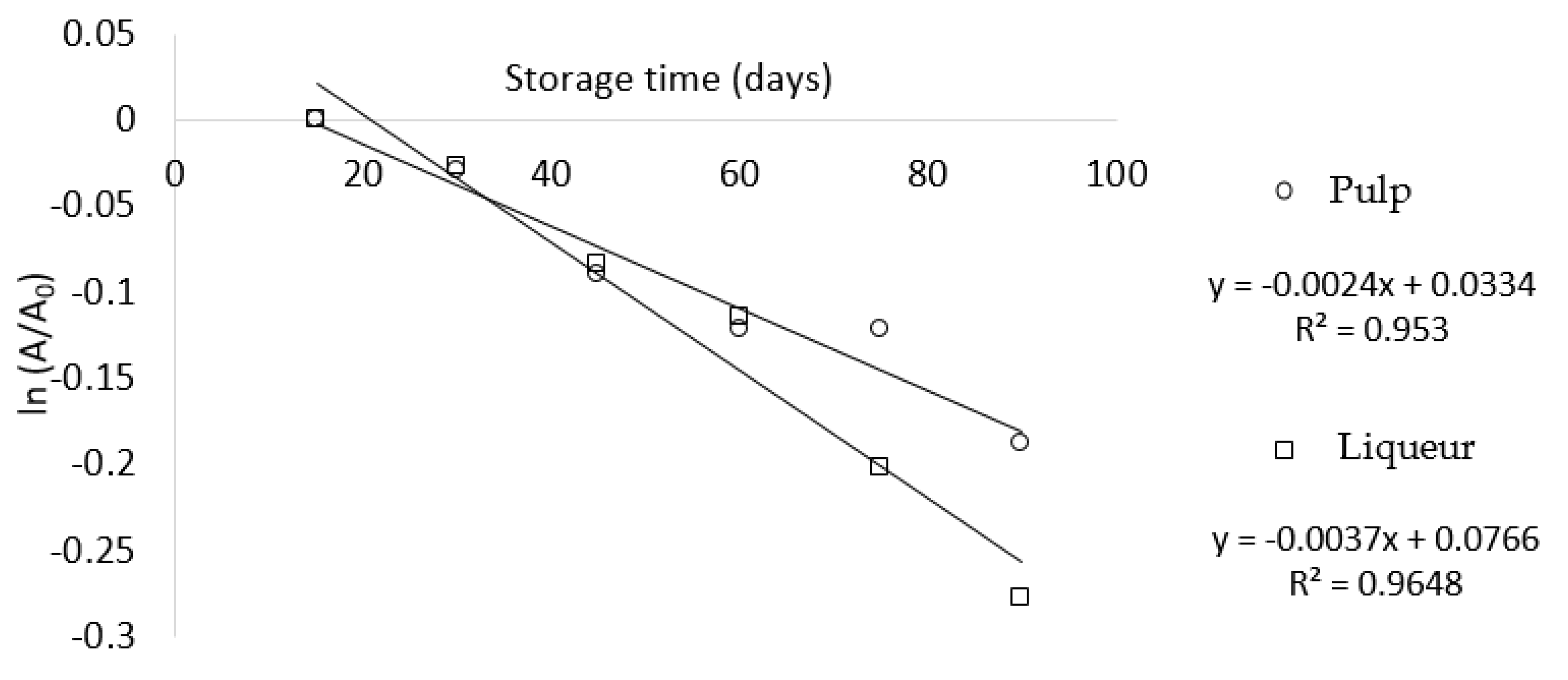
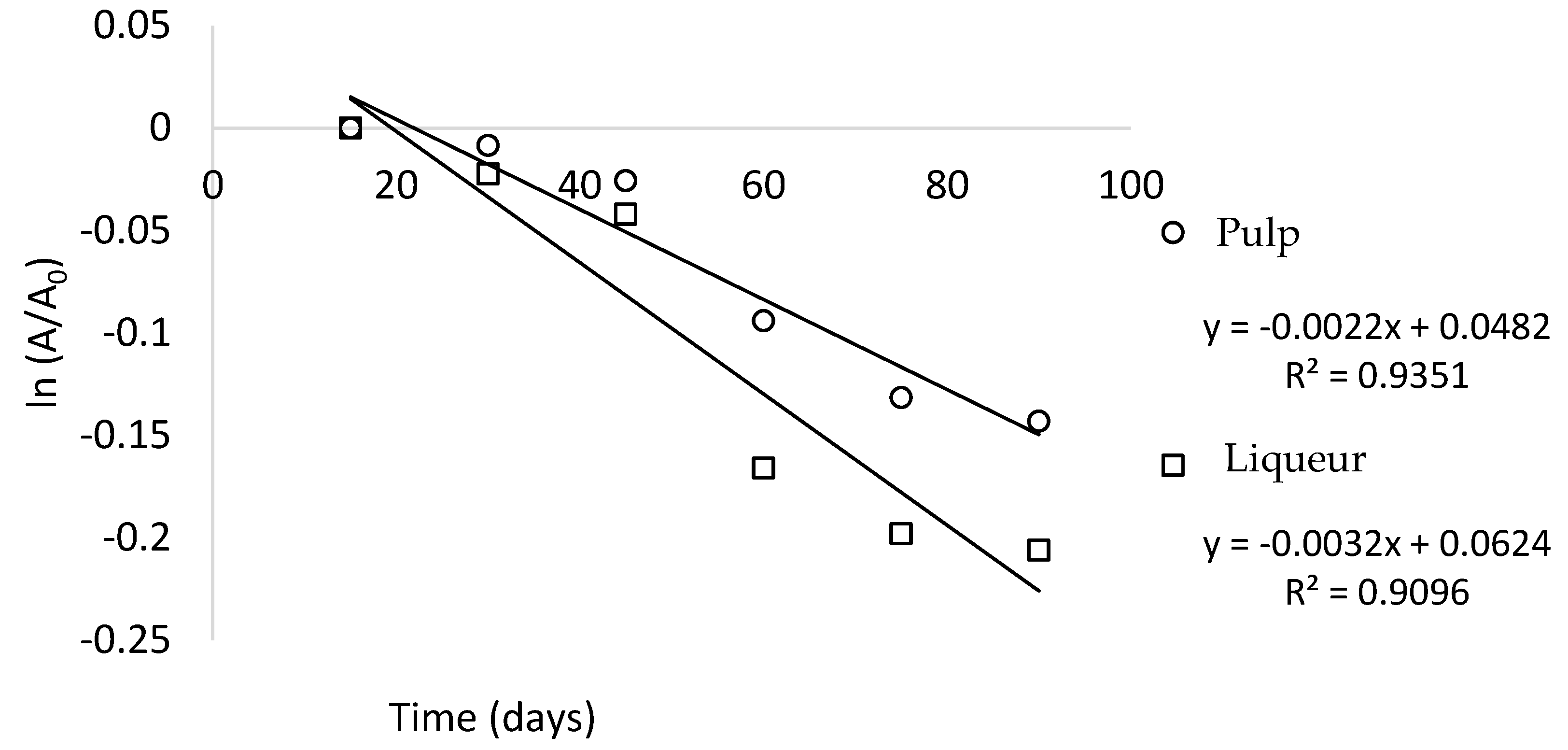
The ascorbic acid content of pulp and liqueur decreased (Figure 1) during storage by following a first-order kinetic model depicting larger rate constants for liqueur than for pulp, as obtained from the rate equation in which the velocity constant k and the half-life time (t1/2) were determined—the equations reported by Ordoñez-Santos & Yoshioka-Tamayo (2012) [27]. That is, [A]/[A0] in Equation (8) decreased at a higher rate for liqueur than for pulp, and, in consequence, the values of t1/2 were shorter in liqueur (Table 3). These results are similar to those reported for blackberry liqueur [15], which established first-order kinetics for the degradation of ascorbic acid during its shelf life. Several factors can influence the stability of ascorbic acid; however, it has been reported that this compound is susceptible to various processes in storage, during which it is exposed to factors such as temperature, sugars, pH, oxygen, and enzymes, etc. [67].

3.3.2. Phenolic Compounds

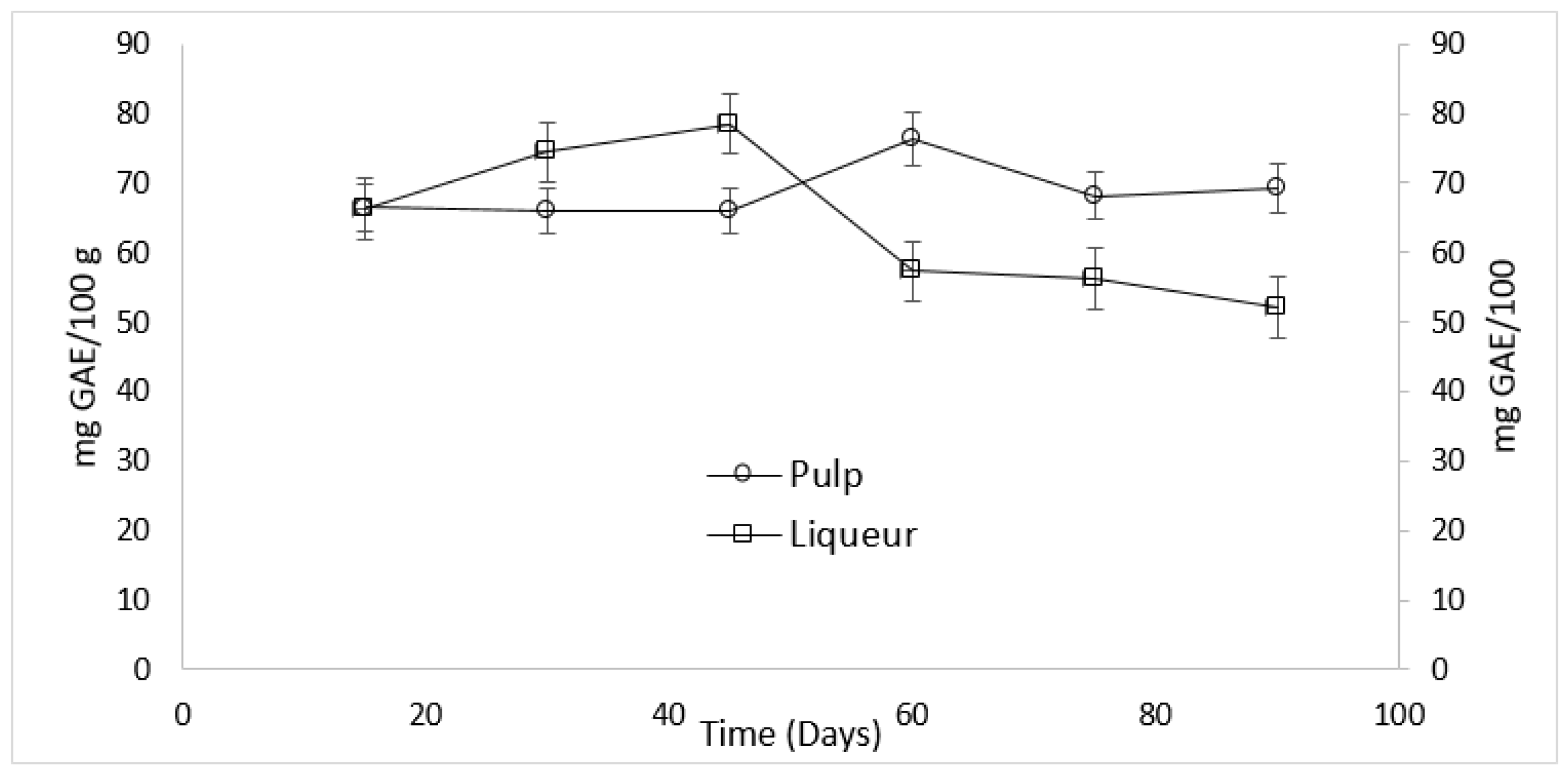
During storage, the nance pulp exhibited contents of phenolic compounds (Figure 2) lower than those obtained by Becerra-Almeida et al. (2011) [68] and Moo-Huchin et al. (2014) [22], who found 159.9 mg GAE/100 g pulp and 240.76 mg GAE/100 g pulp both in a wet basis, respectively. Several factors influence variations in phenolic compound content in the fruit, including environmental conditions [69], pre- and post-harvest handling, the fruit’s genotypic characteristics, and the structural composition of the sample. Pulp and more markedly liqueur showed an increase in its content (up to day 60 and 45 respectively), followed by a steady decrement. This was reported in previous studies conducted in frits by Neves et al. (2015) [6] and were attributed to the disruption of the cell matrix during pulping and the consequent release of polyphenolic compounds [70], as well as to the action of glycosidase, generating free phenolic compounds from phenolic glycoside [71]. The degradation of phenolic compounds having a significant antioxidant capacity by the residual activity of peroxidases in frozen products was important for the depicted decrement of these compounds [72].
These authors also found that, during storage, an increase followed by a decrease in these compounds was observed. Similar trends were observed in studies with fruit liqueurs, attributed to the oxidation and degradation of polyphenols and to the formation of new phenolic compounds with antioxidant capacities such as phenolic acids [14]. In addition, the polymerization and condensation of phenolic compounds may influence their decrement during storage [14,15,44].

3.3.3. Antioxidant Capacity (ABTS)

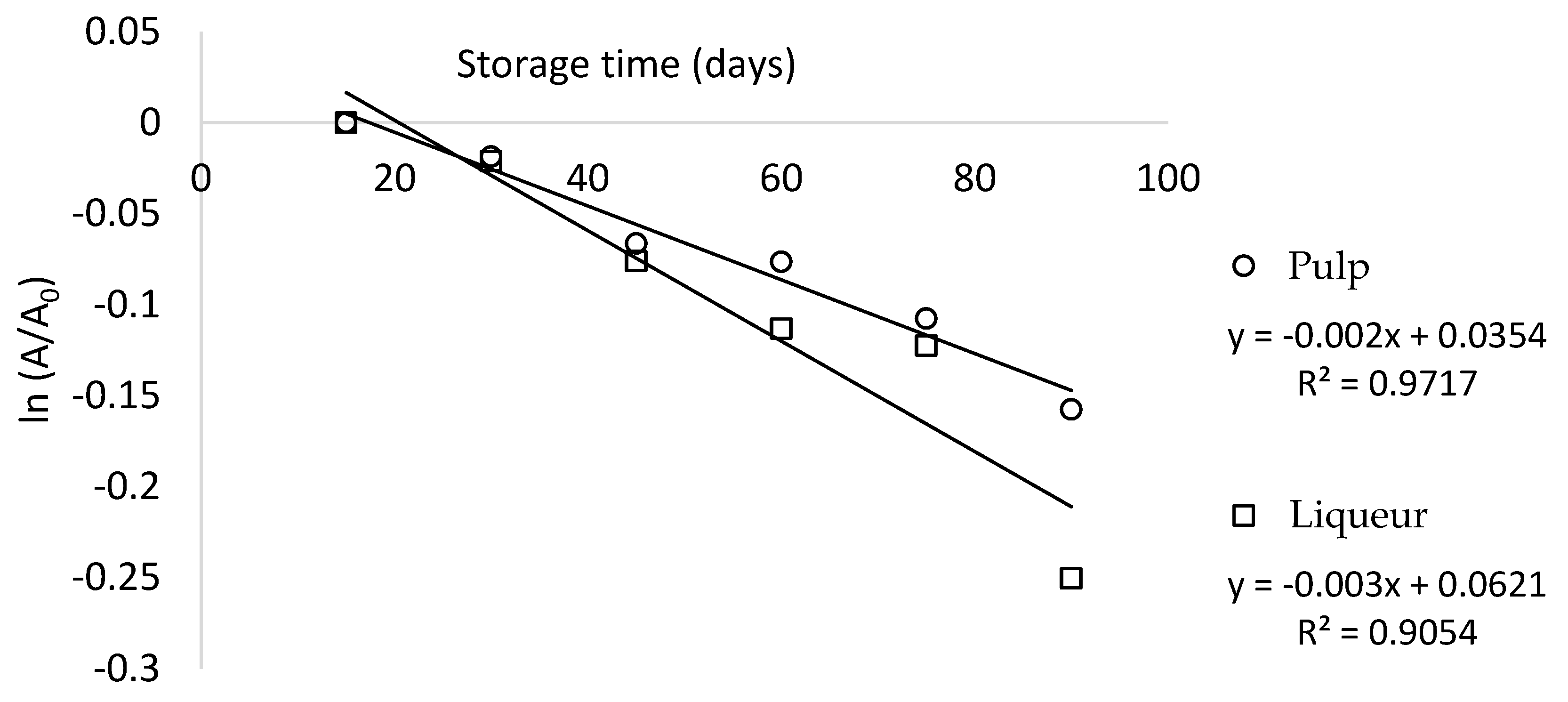
The pulp and liqueur showed initial antioxidant capacities of 178.5 and 2252.0 µM TEAC/100 g, respectively. The differences observed can be attributed not only to variations in the content of ascorbic acid, phenolic compounds, and carotenoids, but also to the structural differences and composition of the analyzed samples. Previous studies with this fruit reported a significantly higher carotenoid content in the epicarp compared to the pulp [50]. Both materials decreased their values following first-order kinetics as shown in Figure 3. The liqueur depicted a larger decrement rate compared to pulp, as given by the values of their kinetic constants (Table 3). Consequently, the liqueur exhibited a lower t1/2 than pulp.
Considering that the liqueur was prepared with the whole fruit, it was possible that higher fractions of these compounds contributed to the greater antioxidant capacity observed in the liqueur. In this respect, Arvayo-Enríquez et al. (2013) [73] reported that carotenoids such as xanthophylls can solubilize in ethanoic solvents, which agrees with Rodriguez-Amaya (2010) [74], who noted that, although most solvents used for carotenoid extraction are nonpolar (hexane, petroleum ether), other solvents such as methanol and ethanol can efficiently extract carotenoids like xanthophylls. Therefore, the results in this study could suggest the presence of a significant fraction of carotenoids in the liqueur, which contributed to its antioxidant capacity.

3.3.4. Antioxidant Capacity (DPPH)

During storage, the pulp exhibited an antioxidant capacity (DPPH) decrement of 944.2 to 818.2 μmol TEAC/100 g on a fresh pulp basis (Figure 4). Previous studies conducted with nance pulp have reported similar values, with 1068 μmol TEAC/100 g [5] and 646 ± 0.31 μmol TEAC/100 g [68]. On the other hand, the liqueur exhibited an antioxidant capacity of 950 to 773 μmol TEAC/100 mL during storage, values comparatively higher than those reported by Luna-Ramírez et al. (2017) [15] in blackberry liqueur (338.69 µM TEAC/100 mL).
Moo-Huchin et al. (2014) [22] reported that the antioxidant capacity of a sample is determined by the combined activity of different compounds, such as ascorbic acid, carotenoids, and phenolic compounds [75,76]. Therefore, the decrease in antioxidant capacity in both samples could be associated not only with the degradation of ascorbic acid, as observed in previous sections, but also with the decrease in carotenoid content during sample storage, as mentioned in Section 3.3.3.
The decrement in antioxidant capacity observed in nance liqueur (from 950.3 to 773.6 µM TEAC/100 g) during its storage coincided with reports for blackberry liqueur [15] and red myrtle and sour cherry liqueur [14,44]. Likewise, the significant relationship between the decrease in ascorbic acid concentrations and the decrease in antioxidant capacity (DPPH) during the storage of fruit liqueurs was previously noted [15]. In nance pulp, the antioxidant capacity determined using the ABTS and DPPH methods decreased during storage, confirming the first-order kinetic model (R2 = 0.97 and 0.93, respectively) (Figure 3 and Figure 4). This decrease in antioxidant capacity during the storage of frozen pulp was described in previous studies [77]. Higher decrement rates of the antioxidant capacities were obtained for liqueur than for pulp, as given by the kinetic constant (Table 3). This might be due to the larger oxidant effect of ethanol compared to water [78]. Consequently, t1/2 was shorter for liqueur than for pulp (Table 3).
However, it is important to note that a food product comprises a complex system of compounds of diverse nature, which can undergo countless types of reactions and interactions that may contribute to variations in the food’s antioxidant capacity [79].

3.3.5. FTIR Spectroscopy

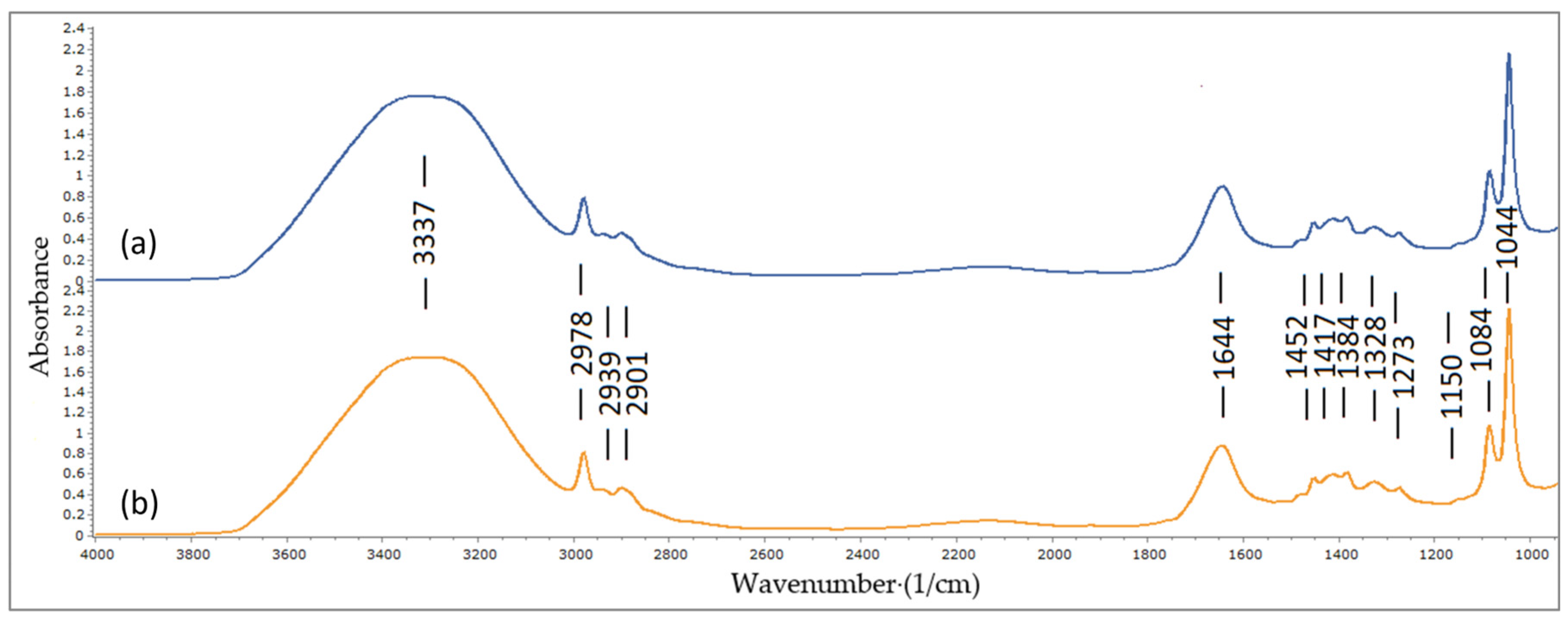
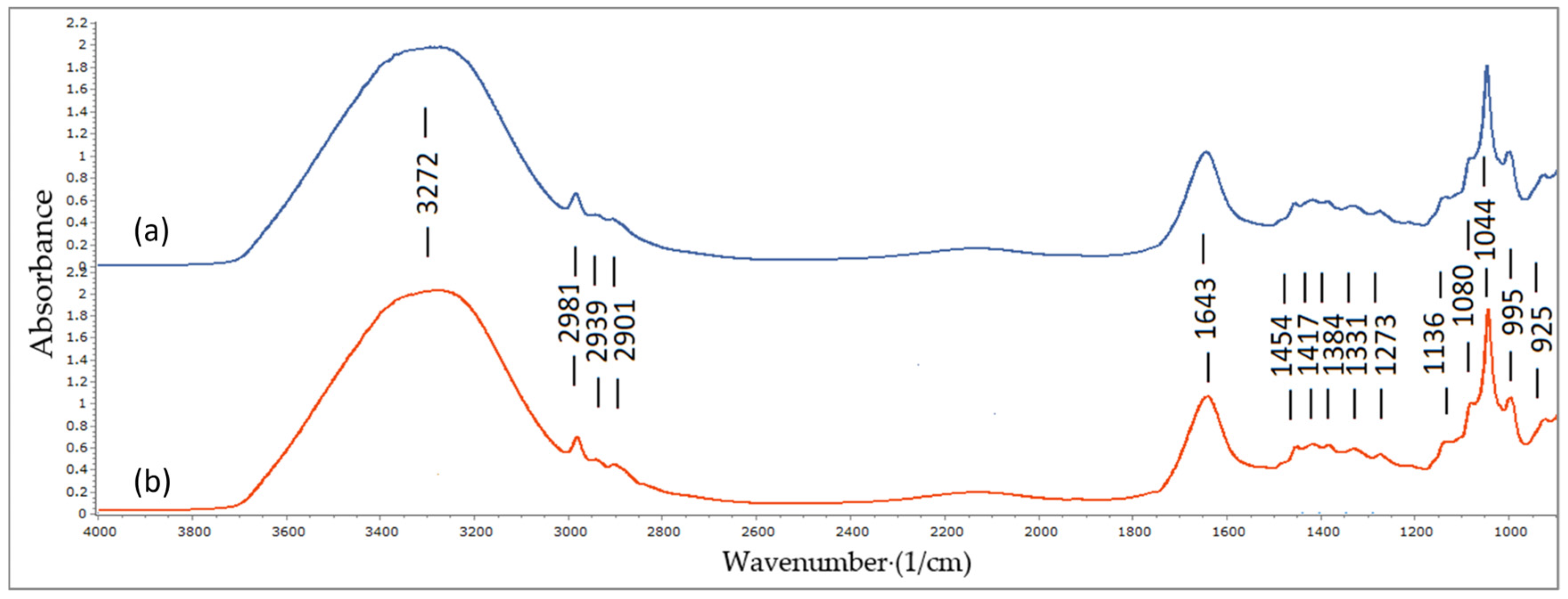
In Figure 5 and Figure 6, the infrared spectra corresponding to the initial and final (after storage period) samples of pulp (Figure 5) and liqueur (Figure 6) are presented.
In the infrared spectrum of the liqueur and pulp macerate, the first peaks at 3272 and 3337 cm−1 correspond to O-H stretching movements [80] characteristic of aqueous or ethanol extracts. These bands could also be associated with the O-H stretching of compounds present in the samples, such as polyphenols. In wine samples, the 3600–3200 cm−1 absorption bands have also been associated with O-H stretching vibrations [80]. The peaks located at 2981, 2978, 2939, and 2901 cm−1 correspond to asymmetric vibrations in the methyl (-CH3) and methylene (-CH2) groups present in carotenoids such as β-carotene, zeaxanthin, and lutein, which are predominantly found in nance [50]. These bands may also correspond to compounds associated with the organoleptic properties of nance pulp, such as butyric acid, ethyl hexanoate, and ethyl butanoate, among others [1,81]. Similar peaks located between 3000 and 2800 cm−1 have been reported in wine samples, associated with C-H stretching vibrations [80].
The peaks located at 1643 and 1644 cm−1 correspond to the stretching vibrations of isolated or conjugated carbon–carbon double bonds (C=C) from carotenoids (chain with conjugated double bonds) such as β-carotene, zeaxanthin, and lutein and organic acids such as ascorbic acid. Also, phenolic (aromatic) compounds such as gallotannins, quercetin, catechin, and acids (gallic and caffeic) are present in the fruit [7].
The peaks located in the fingerprint zone (1500–900 cm−1) at 1454, 1452, and 1417 cm−1 corresponded to bending movements in single C-C and C-H bonds, such as those present in carbohydrates like fructose and sucrose, or to those belonging to ether-type functional groups (C-O-C). These complexes may correspond to the phenolic compounds present in nance, such as quercetin, proanthocyanidins, and catechin [7]. In studies with fruit juices and wines, C-H and O-H bond vibrations were identified in the 1399–1699 cm−1 range, corresponding to the absorbance of water and phenolic compounds [82]. The presence of small peaks located between 1000 and 1600 cm−1 has been reported for wine samples, associated with stretching vibrations in the C-O, CH2, C-C, C-OH, and C-H bonds [80,83]. These vibrations are similar to those observed in the bands of 1384, 1331, 1273, 1136, 1080, and 1044 cm−1 in the liqueur and 1452, 1417, 1384, 1328, 1273, 1150, 1084, and 1044 cm−1 in the macerate, which could be associated with the presence of polysaccharides in the samples. According to Rosas-Mendoza and Fernández-Muñoz (2012) [84], the peaks associated with vibrations in carbohydrate structures could be represented in the 925 cm−1 band and correspond to C-H stretching movements in fructose, while the band at 995 cm−1 could be associated with C-OH vibrations in glucose. Likewise, the band near 1044 cm−1 could be associated with C-O-C stretching vibrations in the glycosidic bond of sucrose.
When analyzing the effects of storage on the spectra of the liqueur and the maceration residue, it was observed that these samples remained relatively stable, displaying infrared spectra with considerable overlap at the beginning and end of storage. It should be noted that, although the differences in the liqueur spectra were not very pronounced, at the end of storage, a decrease in signal was observed in the peaks present in the 3272, 2939, and 2901 cm−1 bands. These bands corresponded to the O-H stretching motion present in aqueous or ethanol extracts and to asymmetric vibrations of methyl and methylene groups, such as those that may be present in compounds associated with the organoleptic properties of the fruit, as previously mentioned. This decrease was also observed in the 1080 and 1044 cm−1 bands, associated with characteristic alcohol peaks. Changes in temperature, light exposure, and oxidation are factors that can affect the shelf life of liqueurs [85], and, in this respect, liqueurs are considered stable products with a shelf life of between six months and two years. This is due, among other factors, to their high sucrose (syrup) and alcohol content, which prevents the growth of pathogenic microorganisms [86] that could compromise the product’s stability.
Additionally, differences in the liqueur’s spectra could be associated with storage conditions. In this regard, previous studies suggested the importance of the conditions and containers where alcoholic beverages are stored, noting that there may be changes in the concentration of compounds due to the evaporation of water or ethanol through the containers of the alcoholic beverage [86].
The main change observed in the maceration residue spectra after storage time was a decrease in the signal in the 3337 cm−1 band, associated with the O-H stretching movements characteristic of aqueous or ethanol extracts, which could be a result of the aforementioned storage conditions. The stability observed in the maceration residue spectra is consistent with previous studies comparing the stability of fruit alcoholic extracts with and without added sugar, which reported that the latter exhibit a greater stability in physicochemical properties for up to 6 months of storage [14].
FTIR spectroscopy offers a significant potential for industrial liqueur production through the rapid, non-destructive quality control of volatile organic compounds and alcoholic strength, which facilitates analysis in a very short time per sample with little preparation and no chemical reagents. In this respect, the present work provides a basis for researchers to develop efficient, cost-effective analytical protocols for ensuring product consistency, detecting adulteration, and supporting process optimization in liqueur manufacturing [85,86,87].
While this study focuses on the liqueur as the main product, the maceration residues, generally considered waste, could be of interest for future research and used in the production of other edible products. This work supports research on the use of nance fruit for the production of an artisanal liqueur, which represents an opportunity for the development of local production settlements. The reported bioactive profiles and kinetic parameters will be useful for determining processing and storage conditions for artisanal nance liqueur.

4. Limitations

While nance fruit is grown in various locations worldwide, this work was limited to the use of the fruit cultivasted in Guerrero, Mexico. Therefore, appropriate adjustments to techniques should be made by considering local varieties of the fruit. The results provided in this article will certainly constitute a robust basis for comparing outcomes from somewhere else.

5. Conclusions

During storage, liqueur and pulp showed a decrease in ascorbic acid content, as well as in antioxidant capacity (ABTS and DPPH), and the decays were more pronounced in liqueur than in pulp. The content of phenolic compounds in the nance pulp and liqueur showed slight changes during the beginning of the storage, likely due to cell breakage, followed by a decrease by the action of residual peroxidase activity. A first-order reaction kinetic model described the degradation of ascorbic acid and antioxidant capacity determined using the ABTS and DPPH methods in nance pulp and liqueur during their storage. For liqueur, the half-life of ascorbic acid and antioxidant capacity decay kinetics were lower compared to those for pulp. At the end of their storage, both samples presented FTIR peaks of less intensity than those for the initial samples, which agreed with the reported decay of bioactive compounds and antioxidant capacities. The liqueur depicted a decrease in signal in peaks corresponding to the O-H stretching motion present in aqueous or ethanol extracts. The findings in this work can contribute to adding value to this fruit as an artisanal liqueur and will be useful for determining processing and storage conditions for this product.

Author Contributions

Conceptualization, M.C.-M., D.M.H.-M. and G.F.G.-L.; methodology, M.C.-M., D.M.H.-M., H.N.-M., P.R.-M. and J.I.V.-M.; validation, M.C.-M., D.M.H.-M. and P.R.-M.; formal analysis, M.C.-M., H.N.-M. and D.M.H.-M.; investigation, M.C.-M., D.M.H.-M., P.R.-M. and J.I.V.-M.; resources, M.C.-M. and MHM; data curation, M.C.-M. and MHM; writing—original draft preparation, M.C.-M., G.F.G.-L. and H.N.-M.; writing—review and editing, M.C.-M., J.I.V.-M. and G.F.G.-L.; visualization, G.F.G.-L. and H.N.-M.; supervision, M.C.-M. and D.M.H.-M.; project administration, M.C.-M.; funding acquisition, M.C.-M. and D.M.H.-M. All authors have read and agreed to the published version of the manuscript.

Funding

This research was funded by Instituto Politécnico Nacional, Secretaría de Investigación y Posgrado, grant number 20251161.

Institutional Review Board Statement

Not applicable.

Informed Consent Statement

Not applicable.

Data Availability Statement

The original contributions presented in this study are included in the article. Further inquiries can be directed to the corresponding author.

Acknowledgments

The authors are thankful to Instituto Politécnico Nacional, Secretaría de Investigación y Posgrado for awarding a research project in the name of the corresponding author.

Conflicts of Interest

The authors declare no conflicts of interest.

References

  1. Duarte, O.; Paull, R.E. Exotic Fruits and Nuts of the New World; CABI: Wallingford, UK, 2015; ISBN 978-1-78064-505-6. [Google Scholar]
  2. Medina Torres, R.; Ibarra Estrada, M.E.; González Chávez, J.G.; Salazar Garcia, S. Gustatory preferences of five minimally processed products of nance (Byrsonima crassifolia (L.) Kunth) fruits. Rev. Venez. Cienc. Tecnol. Aliment. 2017, 8, 45–56. [Google Scholar]
  3. Maldonado Peralta, M.D.L.Á.; García De Los Santos, G.; García Nava, J.R.; Rojas García, A.R. Vegetative propagation of nanche Malpighia mexicana and Byrsonima crassifolia. Remexca 2017, 8, 611–619. [Google Scholar] [CrossRef][Green Version]
  4. Panda, J.; Amrit, R.; Mishra, A.K.; Chakraborty, A.; Rustagi, S.; Nath, P.C.; Sarabandi, K.; Sarma, H.; Wagh, M.S.; Mohanta, Y.K. Sustainable Valorization of Fruit and Vegetable Waste for Bioactive Compounds: Advancing Functional Food and Wellness. Waste Biomass Valor. 2025, 16, 3357–3386. [Google Scholar] [CrossRef]
  5. Urquieta-Herrero, M.; Cornejo-Mazón, M.; Gutiérrez-López, G.F.; García-Pinilla, S.; Instituto Politécnico Nacional. Effect of Two Pasteurization Methods on the Content of Bioactive Compounds and Antioxidant Capacity of Nance (Byrsonima crassifolia) Pulp and Their Kinetics of Loss during Refrigerated Storage. Rev. Mex. De Ing. Química 2021, 20, 663–678. [Google Scholar] [CrossRef]
  6. Neves, L.C.; Tosin, J.M.; Benedette, R.M.; Cisneros-Zevallos, L. Post-Harvest Nutraceutical Behaviour during Ripening and Senescence of 8 Highly Perishable Fruit Species from the Northern Brazilian Amazon Region. Food Chem. 2015, 174, 188–196. [Google Scholar] [CrossRef]
  7. Mariutti, L.R.B.; Rodrigues, E.; Mercadante, A.Z. Carotenoids from Byrsonima crassifolia: Identification, Quantification and in Vitro Scavenging Capacity against Peroxyl Radicals. J. Food Compos. Anal. 2013, 31, 155–160. [Google Scholar] [CrossRef]
  8. Mariutti, L.R.B.; Rodrigues, E.; Chisté, R.C.; Fernandes, E.; Mercadante, A.Z. The Amazonian Fruit Byrsonima crassifolia Effectively Scavenges Reactive Oxygen and Nitrogen Species and Protects Human Erythrocytes against Oxidative Damage. Food Res. Int. 2014, 64, 618–625. [Google Scholar] [CrossRef]
  9. Galego, L.R.; Da Silva, J.P.; Almeida, V.R.; Bronze, M.R.; Boas, L.V. Preparation of Novel Distinct Highly Aromatic Liquors Using Fruit Distillates: Myrtle Liquors with Fruit Distillates. Int. J. Food Sci. Technol. 2011, 46, 67–73. [Google Scholar] [CrossRef]
  10. Moreno-Martínez, J.L.; Ruiz-Bello, C.; Jasso-García, Y.; Moreno-Ruiz, M.; Villarreal-Fuentes, J.M. Valor Agregado del Nanche (Byrsonima crassifolia (L.) H.B.K.). Agro Product. 2016, 9, 66–71. [Google Scholar]
  11. NOM-142-SSA1-1995. Bienes Y Servicios. Bebidas Alcoholicas. Especificaciones Sanitarias. Etiquetado Sanitario Y Comercial. Secretaría de Salud 1995. Available online: https://www.salud.gob.mx/unidades/cdi/nom/142ssa15.html (accessed on 28 November 2025).
  12. NOM-199-SCFI-2017. Bebidas Alcohólicas-Denominación, Especificaciones Fisicoquímicas, Información Comercial Y Métodos De Prueba. Secretaría de Salud. 2017. Available online: https://platiica.economia.gob.mx/normalizacion/nom-199-scfi-2017/ (accessed on 28 November 2025).
  13. Coelho, E.M.; De Souza, M.E.A.O.; Corrêa, L.C.; Viana, A.C.; De Azevêdo, L.C.; Dos Santos Lima, M. Bioactive Compounds and Antioxidant Activity of Mango Peel Liqueurs (Mangifera indica L.) Produced by Different Methods of Maceration. Antioxidants 2019, 8, 102. [Google Scholar] [CrossRef]
  14. Sokół-Łętowska, A.; Kucharska, A.Z.; Szumny, A.; Wińska, K.; Nawirska-Olszańska, A. Phenolic Composition Stability and Antioxidant Activity of Sour Cherry Liqueurs. Molecules 2018, 23, 2156. [Google Scholar] [CrossRef]
  15. Luna-Ramırez, K.Y.; Arellano-Cardenas, S.; Garcıa-Pinilla, S.; Cornejo-Mazon, M. Kinetic analysis of the stability of antioxidants in blackberry (Rubus fruticosus L.) LIQUOR. Rev. Mex. Ing. Química 2017, 16, 121–130. [Google Scholar] [CrossRef]
  16. Robles-Melchor, L.; Cornejo-Mazón, M.; Hernández-Martínez, D.M.; Gutiérrez-López, G.F.; García-Pinilla, S.; López-Villegas, E.O.; Téllez-Medina, D.I. Removal of Methylene Blue from Aqueous Solutions by Using Nance (Byrsonima crassifolia) Seeds and Peels as Natural Biosorbents. J. Chem. 2021, 2021, 6940. [Google Scholar] [CrossRef]
  17. Díaz-Álvarez, R.; Carpentieri, S.; Ferrari, G.; Pataro, G.; Segura-Ponce, L. Effect of High-Voltage Electrical Discharge (HVED) at High Frequency on Vacuum Freeze-Drying Time and Physicochemical Properties of Blueberries. J. Food Eng. 2024, 365, 111815. [Google Scholar] [CrossRef]
  18. AOAC International. Titratable Acidity of Fruit Juices and Related Products (Method 942.15). In Official Methods of Analysis of AOAC International; AOAC International: Gaithersburg, MD, USA, 2016; Volume 1. [Google Scholar]
  19. AOAC International. Alcohol by Volume in Distilled Liquors (Method 942.06), 20th ed.; AOAC International: Gaithersburg, MD, USA, 2016; Volume 1. [Google Scholar]
  20. AOAC International. Moisture in Foods (Method 925.10). In Official Methods of Analysis of AOAC International; AOAC International: Gaithersburg, MD, USA, 2016; Volume 1. [Google Scholar]
  21. Xu, B.; Zhang, M.; Bhandari, B.; Cheng, X.; Islam, M.N. Effect of Ultrasound-Assisted Freezing on the Physico-Chemical Properties and Volatile Compounds of Red Radish. Ultrason. Sonochem. 2015, 27, 316–324. [Google Scholar] [CrossRef]
  22. Moo-Huchin, V.M.; Estrada-Mota, I.; Estrada-León, R.; Cuevas-Glory, L.; Ortiz-Vázquez, E.; Vargas, M.D.L.V.Y.; Betancur-Ancona, D.; Sauri-Duch, E. Determination of Some Physicochemical Characteristics, Bioactive Compounds and Antioxidant Activity of Tropical Fruits from Yucatan, Mexico. Food Chem. 2014, 152, 508–515. [Google Scholar] [CrossRef]
  23. Augusto, T.R.; Salinas, E.S.S.; Alencar, S.M.; D’arce, M.A.B.R.; Camargo, A.C.D.; Vieira, T.M.F.D.S. Phenolic Compounds and Antioxidant Activity of Hydroalcoholic Extracts of Wild and Cultivated Murtilla (Ugni molinae Turcz.). Food Sci. Technol. 2014, 34, 667–679. [Google Scholar] [CrossRef]
  24. Chen, Y.; Wang, M.; Rosen, R.T.; Ho, C.-T. 2,2-Diphenyl-1-Picrylhydrazyl Radical-Scavenging Active Components from Polygonum multiflorum Thunb. J. Agric. Food Chem. 1999, 47, 2226–2228. [Google Scholar] [CrossRef]
  25. AOAC International. Ascorbic Acid in Foods (Method 967.22). In Official Methods of Analysis of AOAC International; AOAC International: Gaithersburg, MD, USA, 2005; Volume 1. [Google Scholar]
  26. Zhao, Y.; Li, L.; Gao, S.; Wang, S.; Li, X.; Xiong, X. Postharvest Storage Properties and Quality Kinetic Models of Cherry Tomatoes Treated by High-Voltage Electrostatic Fields. LWT 2023, 176, 114497. [Google Scholar] [CrossRef]
  27. Ordoñez-Santos, L.E.; Yoshioka-Tamayo, L.S. Cinética de degradación térmica de vitamina C en pulpa de mango (Mangifera indica L.). Vitae 2012, 19, 81–83. [Google Scholar]
  28. Ovchinnikov, O.V.; Evtukhova, A.V.; Kondratenko, T.S.; Smirnov, M.S.; Khokhlov, V.Y.; Erina, O.V. Manifestation of Intermolecular Interactions in FTIR Spectra of Methylene Blue Molecules. Vib. Spectrosc. 2016, 86, 181–189. [Google Scholar] [CrossRef]
  29. Andrés-Bello, A.; Barreto-Palacios, V.; García-Segovia, P.; Mir-Bel, J.; Martínez-Monzó, J. Effect of pH on Color and Texture of Food Products. Food Eng. Rev. 2013, 5, 158–170. [Google Scholar] [CrossRef]
  30. Cirillo, A.; Magri, A.; Petriccione, M.; Di Vaio, C. Effects of Cold Storage on Quality Parameters and Nutraceutical Compounds of Pomegranate Fruits (Cv. Acco). Adv. Hort. Sci. 2023, 37, 15–23. [Google Scholar] [CrossRef]
  31. Jiang, B.; Fang, X.; Fu, D.; Wu, W.; Han, Y.; Chen, H.; Liu, R.; Gao, H. Exogenous Salicylic Acid Regulates Organic Acids Metabolism in Postharvest Blueberry Fruit. Front. Plant Sci. 2022, 13, 1024909. [Google Scholar] [CrossRef] [PubMed]
  32. Sakaldaş, M.; Şen, F.; Gundogdu, M.; Aglar, E. Alterations in Quality Characteristics and Bioactive Compounds of Blackberry Fruits Subjected to Postharvest Salicylic Acid Treatment during Cold Storage. Food Sci. Nutr. 2024, 12, 9123–9135. [Google Scholar] [CrossRef] [PubMed]
  33. Yilmaz, N.; Islek, F.; Cavusoglu, S.; Nečas, T.; Ondrášek, I.; Ercisli, S. Effect of Exogenous Essential Oil Treatments on the Storage Behaviour of Apricot Fruit Harvested at Different Altitudes. Folia Hortic. 2023, 35, 433–447. [Google Scholar] [CrossRef]
  34. Jacobo-Velázquez, D.A.; Hernández-Brenes, C. Biochemical Changes during the Storage of High Hydrostatic Pressure Processed Avocado Paste. J. Food Sci. 2010, 75, S264–S270. [Google Scholar] [CrossRef]
  35. Macedo, L.L.; Vilela, D.R.; Da Cunha, M.C.; Lopes De Carvalho Dias, L.; Carvalho, E.E.N.; De Resende, J.V.; De Barros Vilas Boas, E.V. Stability of Uvaia (Eugenia pyriformis Cambess) Pulp Subjected to Freezing by Static and Forced Air. J. Food Process Eng. 2022, 45, e13997. [Google Scholar] [CrossRef]
  36. Chang, C.-K.; Adi, P.; Mulyani, R.; Lin, C.-F.; Listyaningrum, R.S.; Santoso, S.P.; Gavahian, M.; Hsieh, C.-W. Optimizing Non-Thermal Magnetic Field to Minimize Weight Loss and Tissue Degradation: Identifying Possible Enzyme Inhibition Mechanisms. Foods 2025, 14, 166. [Google Scholar] [CrossRef]
  37. Asghar, N.; Imran, M.; Mushtaq, Z.; Ahmad, R.S.; Khan, M.K.; Ahmad, N.; Ahmad, U. Characterization and Functional Product Development from Bael (Aegle marmelos L. Correa) Fruit Pulp: Applications of Bael Fruit for Functional Jam. J. Food Process. Preserv. 2016, 40, 770–779. [Google Scholar] [CrossRef]
  38. De Oliveira Militão, A.; Da Silva, T.I.; Do Nascimento, A.M.; Da Costa, F.B.; De Castro, A.K.G.; Macêdo, L.F.; Alcântara, C.M.; Evangelista, M.E.M.; Sales, G.N.B.; Lopes, K.P.; et al. Storage Increases Soluble Sugars and Decreases Bioactive Compounds in Wild Passion Fruit (Passiflora cincinnata). Hortic. Environ. Biotechnol. 2025, 66, 657–672. [Google Scholar] [CrossRef]
  39. Zhao, C.; Niu, J.; Wang, W.; Wang, Y.; Cheng, L.; Meng, Y.; Guo, Y.; Song, S. Deterioration in the Quality of ‘Xuxiang’ Kiwifruit Pulp Caused by Frozen Storage: An Integrated Analysis Based on Phenotype, Color, Antioxidant Activity, and Flavor Compounds. Foods 2025, 14, 2322. [Google Scholar] [CrossRef] [PubMed]
  40. Shrestha, S.; Shrestha, B.; Chapai, A.; Acharya, P.; Bhandari, N.; Adhikari, S. Effect of Different Concentrations of Salicylic Acid as Post-Harvest Treatment on Physicochemical Properties and Shelf Life of Mango (Mangifera indica Cv. Bombay Green). Int. J. Hortic. 2024, 14, 20. [Google Scholar] [CrossRef]
  41. Oliveira, É.R.; De Deus, K.O.; Caliari, M. Production, Characterization and Acceptability of Pineapple Liqueurs Prepared with Different Alcoholic Bases. Rev. Verde 2015, 10, 108. [Google Scholar] [CrossRef]
  42. Moreno, A.; José, M.; Graterol, A.; Douglas, R. Belén Evaluacion de Un Licor Dulce Acondicionado Con Cascaras de Mandarina. Rev. Científica Fac. Cienc. Vet. 2002, 12, 271–278. [Google Scholar]
  43. Attchelouwa, C.; Aka-Gbézo, S.; N’guessan, F.; Kouakou, C.; Djè, M. Biochemical and Microbiological Changes during the Ivorian Sorghum Beer Deterioration at Different Storage Temperatures. Beverages 2017, 3, 43. [Google Scholar] [CrossRef]
  44. Vacca, V.; Piga, A.; Del Caro, A.; Fenu, P.A.M.; Agabbio, M. Changes in Phenolic Compounds, Colour and Antioxidant Activity in Industrial Red Myrtle Liqueurs during Storage. Nahrung 2003, 47, 442–447. [Google Scholar] [CrossRef]
  45. Polak, J.; Bartoszek, M. The Study of Antioxidant Capacity of Varieties of Nalewka, a Traditional Polish Fruit Liqueur, Using EPR, NMR and UV–Vis Spectroscopy. J. Food Compos. Anal. 2015, 40, 114–119. [Google Scholar] [CrossRef]
  46. Costello, P.J.; Délérus-Bou, M.; Descenzo, R.; Hall, N.; Krieger, S.; Lonvaud-Funel, A.; Loubser, P.; Heras, J.M.; Molinari, S.; Morenzoni, R.; et al. Malolactic Fermentation—Importance of Wine Lactic Acid Bacteria in Winemaking; Lallemand Inc.: Montreal, QC, Canada, 2015; ISBN 978-2-9815255-0-5. [Google Scholar]
  47. González-Gutiérrez, J.; Pérez-Isidoro, R.; Ruiz-Suárez, J.C. A Technique Based on Droplet Evaporation to Recognize Alcoholic Drinks. Rev. Sci. Instrum. 2017, 88, 074101. [Google Scholar] [CrossRef]
  48. Hlaváč, P.; Božiková, M.; Ardonová, V.; Petrović, A.; Kotoulek, P. Influence of the selected factors on the liquid food density. J. Process. Energy Agric. 2018, 22, 53. [Google Scholar] [CrossRef]
  49. Pires, F.C.S.; Oliveira, J.C.D.; Menezes, E.G.O.; Silva, A.P.D.S.E.; Ferreira, M.C.R.; Siqueira, L.M.M.; Almada-Vilhena, A.O.; Pieczarka, J.C.; Nagamachi, C.Y.; Carvalho Junior, R.N.D. Bioactive Compounds and Evaluation of Antioxidant, Cytotoxic and Cytoprotective Effects of Murici Pulp Extracts (Byrsonima crassifolia) Obtained by Supercritical Extraction in HepG2 Cells Treated with H2O2. Foods 2021, 10, 737. [Google Scholar] [CrossRef] [PubMed]
  50. Irías-Mata, A.; Jiménez, V.M.; Steingass, C.B.; Schweiggert, R.M.; Carle, R.; Esquivel, P. Carotenoids and Xanthophyll Esters of Yellow and Red Nance Fruits (Byrsonima crassifolia (L.) Kunth) from Costa Rica. Food Res. Int. 2018, 111, 708–714. [Google Scholar] [CrossRef] [PubMed]
  51. Mares, D.J.; Cheong, J.; Goonetilleke, S.N.; Mather, D.E. Lipoxygenase in Wheat: Genetic Control and Impact on Stability of Lutein and Lutein Esters. Foods 2021, 10, 1149. [Google Scholar] [CrossRef] [PubMed]
  52. Parada, R.; Royo, C.; Gadaleta, A.; Colasuonno, P.; Marcotuli, I.; Matus, I.; Castillo, D.; De Camargo, A.C.; Araya-Flores, J.; Villegas, D.; et al. Phytoene Synthase 1 (Psy-1) and Lipoxygenase 1 (Lpx-1) Genes Influence on Semolina Yellowness in Wheat Mediterranean Germplasm. Int. J. Mol. Sci. 2020, 21, 4669. [Google Scholar] [CrossRef]
  53. Wu, H.; Richards, M.P.; Undeland, I. Lipid Oxidation and Antioxidant Delivery Systems in Muscle Food. Comp. Rev. Food Sci. Food Safe 2022, 21, 1275–1299. [Google Scholar] [CrossRef]
  54. Zavarise, A.; Rabeeah, I.; Molitor, C.; Davoudi Pahnekolayi, M.; Gruber-Schmidt, V.; Winter, A.; Olbricht, K.; Haselmair-Gosch, C.; Stich, K.; Goessinger, M.; et al. Gene Expression and Enzyme Kinetics of Polyphenol Oxidases in Strawberry and Their Possible Involvement in Enzymatic Browning Reactions in Strawberry Nectar. Foods 2025, 14, 2064. [Google Scholar] [CrossRef]
  55. Liu, B.; Fang, F.; Guan, H.; Zhang, J.; Luo, H.; Zhong, R.; Wei, J.; Pang, X.; Zhang, Z. Integrated Function of Proanthocyanidin and Lignin Polymerization Mediated by LAC/PRXs in Pericarp Browning of Longan Fruit. Postharvest Biol. Technol. 2024, 207, 112618. [Google Scholar] [CrossRef]
  56. Feng, L.; Yang, Y.; Xie, Y.; Liu, S.; Peng, X.; Hu, S.; Yu, A. Kinetics of L-Ascorbic Acid Degradation and Non-Enzymatic Browning Development in Hot-Compressed Water. Front. Nutr. 2023, 9, 1022254. [Google Scholar] [CrossRef]
  57. Hsu, H.-Y.; Tsai, Y.-C.; Fu, C.-C.; Wu, J.S.-B. Degradation of Ascorbic Acid in Ethanolic Solutions. J. Agric. Food Chem. 2012, 60, 10696–10701. [Google Scholar] [CrossRef]
  58. Yu, L.; Liao, Z.; Zhao, Y.; Zeng, X.; Yang, B.; Bai, W. Metabolomic Analyses of Dry Lemon Slice during Storage by NMR. Food Front. 2020, 1, 180–191. [Google Scholar] [CrossRef]
  59. Buvé, C.; Pham, H.T.T.; Hendrickx, M.; Grauwet, T.; Van Loey, A. Reaction Pathways and Factors Influencing Nonenzymatic Browning in Shelf-stable Fruit Juices during Storage. Comp. Rev. Food Sci. Food Safe 2021, 20, 5698–5721. [Google Scholar] [CrossRef]
  60. Hamacek, F.R.; Martino, H.S.; Pinheiro-Sant’Ana, H.M. Fruit from the Cerrado of Minas Gerais, Brazil: Physical and Physicochemical Characteristics, and Occurrence and Concentration of Carotenoids and Vitamins. Fruits 2014, 69, 459–472. [Google Scholar] [CrossRef]
  61. Kviklys, D.; Viškelis, J.; Liaudanskas, M.; Janulis, V.; Laužikė, K.; Samuolienė, G.; Uselis, N.; Lanauskas, J. Apple Fruit Growth and Quality Depend on the Position in Tree Canopy. Plants 2022, 11, 196. [Google Scholar] [CrossRef] [PubMed]
  62. Timilsina, K.; Tripathi, B.K. Chemical Quality Attributes of Mandarin (Citrus reticulata Blanco) as Affected by Altitude and Fruit Bearing Position in Kavre, Nepal. Arch. Agric. Environ. Sci. 2019, 4, 319–325. [Google Scholar] [CrossRef]
  63. Viškelis, J.; Uselis, N.; Liaudanskas, M.; Janulis, V.; Bielicki, P.; Univer, T.; Lepsis, J.; Kviklys, D. Triterpenic Acid Content in the Fruit Peel of Malus × Domestica Borkh. Depends on the Growing Technology. Zemdirb. Agric. 2018, 105, 71–78. [Google Scholar] [CrossRef]
  64. Africano, K.L.; Almanza-Merchán, P.J. Caracterización poscosecha del fruto de durazno [Prunus persica (L.) Batsch] cv. Dorado producido bajo condiciones de trópico alto. Rev. Colomb. Cienc. Hortícolas 2016, 10, 232–240. [Google Scholar] [CrossRef]
  65. Nunes, M.C.N.; Brecht, J.K.; Morais, A.M.M.B.; Sargent, S.A. Controlling Temperature and Water Loss to Maintain Ascorbic Acid Levels in Strawberries During Postharvest Handling. J. Food Sci. 1998, 63, 1033–1036. [Google Scholar] [CrossRef]
  66. Chakraborty, S.; Ghag, S.; Bhalerao, P.P.; Gokhale, J.S. The Potential of Pulsed Light Treatment to Produce Enzymatically Stable Indian Gooseberry (Emblica officinalis Gaertn.) Juice with Maximal Retention in Total Phenolics and Vitamin C. J. Food Process. Preserv. 2020, 44, e14932. [Google Scholar] [CrossRef]
  67. Sánchez-Chávez, W.; Cortez-Arredondo, J.; Solano-Cornejo, M.; Vidaurre-Ruiz, J. Kinetics of thermal degradation of betacyanins, betaxantins and vitamin C in a juice-based drink beet (Beta vulgaris L.) and honey. Sci. Agropecu 2015, 6, 111–118. [Google Scholar] [CrossRef]
  68. Almeida, M.M.B.; De Sousa, P.H.M.; Arriaga, Â.M.C.; Do Prado, G.M.; Magalhães, C.E.D.C.; Maia, G.A.; De Lemos, T.L.G. Bioactive Compounds and Antioxidant Activity of Fresh Exotic Fruits from Northeastern Brazil. Food Res. Int. 2011, 44, 2155–2159. [Google Scholar] [CrossRef]
  69. Silva, L.M.R.D.; Figueiredo, E.A.T.D.; Ricardo, N.M.P.S.; Vieira, I.G.P.; Figueiredo, R.W.D.; Brasil, I.M.; Gomes, C.L. Quantification of Bioactive Compounds in Pulps and By-Products of Tropical Fruits from Brazil. Food Chem. 2014, 143, 398–404. [Google Scholar] [CrossRef] [PubMed]
  70. Arampath, P.C.; Dekker, M. Bulk Storage of Mango (Mangifera indica L.) and Pineapple (Ananas comosus L.) Pulp: Effect of Pulping and Storage Temperature on Phytochemicals and Antioxidant Activity. J. Sci. Food Agric. 2019, 99, 5157–5167. [Google Scholar] [CrossRef] [PubMed]
  71. Yu, X.; Huang, M.; Fu, X.; Hu, R.; Dong, W. Evaluation of the Effects of Saccharomyces Cerevisiae Fermentation on the Non-Volatile Compounds in Semi-Dry Coffee Beans Using Widely Targeted Metabolomics Analysis. Food Chem. 2025, 29, 102781. [Google Scholar] [CrossRef] [PubMed]
  72. Yousef, G.G.; Brown, A.F.; Funakoshi, Y.; Mbeunkui, F.; Grace, M.H.; Ballington, J.R.; Loraine, A.; Lila, M.A. Efficient Quantification of the Health-Relevant Anthocyanin and Phenolic Acid Profiles in Commercial Cultivars and Breeding Selections of Blueberries (Vaccinium spp.). J. Agric. Food Chem. 2013, 61, 4806–4815. [Google Scholar] [CrossRef]
  73. Arvayo-Enríquez, H.; Mondaca-Fernández, I.; Gortárez-Moroyoqui, P.; López-Cervantes, J.; Rodríguez-Ramírez, R. Carotenoids Extraction and Quantification: A Review. Anal. Methods 2013, 5, 2916. [Google Scholar] [CrossRef]
  74. Rodriguez-Amaya, D.B. Quantitative Analysis, in Vitro Assessment of Bioavailability and Antioxidant Activity of Food Carotenoids—A Review. J. Food Compos. Anal. 2010, 23, 726–740. [Google Scholar] [CrossRef]
  75. De Souza, V.R.; Pereira, P.A.P.; Queiroz, F.; Borges, S.V.; De Deus Souza Carneiro, J. Determination of Bioactive Compounds, Antioxidant Activity and Chemical Composition of Cerrado Brazilian Fruits. Food Chem. 2012, 134, 381–386. [Google Scholar] [CrossRef]
  76. Poletto, P.; Álvarez-Rivera, G.; López, G.-D.; Borges, O.M.A.; Mendiola, J.A.; Ibáñez, E.; Cifuentes, A. Recovery of Ascorbic Acid, Phenolic Compounds and Carotenoids from Acerola by-Products: An Opportunity for Their Valorization. LWT 2021, 146, 111654. [Google Scholar] [CrossRef]
  77. Mejía, L.J.; Narváez, C.E. Cambios físicos, químicos y sensoriales durante el almacenamiento congelado de la pulpa de arazá (Eugenia stipitata Mc Vaugh). Agron. Colomb. 2006, 24, 87–95. [Google Scholar]
  78. Shchukarev, S.A.; Tolmacheva, T.A. Solubility of Oxygen in Ethanol? Water Mixtures. J. Struct. Chem. 1968, 9, 16–21. [Google Scholar] [CrossRef]
  79. Mercado-Mercado, G.; de la Rosa Carrillo, L.; Wall-Medrano, A.; López Díaz, J.A.; Álvarez-Parrilla, E. Compuestos polifenólicos y capacidad antioxidante de especias típicas. Nutr. Hosp. 2013, 28, 36–46. [Google Scholar] [CrossRef]
  80. Yu, J.; Wang, H.; Zhan, J.; Huang, W. Review of Recent UV–Vis and Infrared Spectroscopy Researches on Wine Detection and Discrimination. Appl. Spectrosc. Rev. 2018, 53, 65–86. [Google Scholar] [CrossRef]
  81. Rezende, C.M.; Fraga, S.R.G. Chemical and Aroma Determination of the Pulp and Seeds of Murici (Byrsonima crassifolia L.). J. Braz. Chem. Soc. 2003, 14, 425–428. [Google Scholar] [CrossRef]
  82. Gajdoš Kljusurić, J.; Mihalev, K.; Bečić, I.; Polović, I.; Georgieva, M.; Djaković, S.; Kurtanjek, Ž. Near-Infrared Spectroscopic Analysis of Total Phenolic Content and Antioxidant Activity of Berry Fruits. Food Technol. Biotechnol. 2016, 54, 236. [Google Scholar] [CrossRef] [PubMed]
  83. Nandhini, U.S.; Radhika, V.; Manisha, S.; Anusha, J.V. Phytochemical studies and antimicrobial compounds from fruit of thespesia populnea. Asian J. Pharm. Clin. Res. 2017, 10, 309. [Google Scholar] [CrossRef]
  84. Rosas Mendoza, M.E.; Fernández Muñoz, J.L. FTIR Aplicada Durante La Deshidratación Osmótica de Mango Ataulfo (Magnífera indica L.). Superf. Y Vacío 2012, 25, 8–13. [Google Scholar]
  85. Polak, J.; Bartoszek, M.; Bernat, R. Comprehensive Comparison of Antioxidant Properties of Tinctures. Sci. Rep. 2019, 9, 6148. [Google Scholar] [CrossRef]
  86. Petric, I.V.; Duralija, B.; Leder, R. Analytical Techniques for the Authenticity Evaluation of Chokeberry, Blackberry and Raspberry Fruit Wines: Exploring FT-MIR Analysis and Chemometrics. Horticulturae 2024, 10, 1043. [Google Scholar] [CrossRef]
  87. Arzberger, U.; Lachenmeier, D.W. Fourier Transform Infrared Spectroscopy with Multivariate Analysis as a Novel Method for Characterizing Alcoholic Strength, Density, and Total Dry Extract in Spirits and Liqueurs. Food Anal. Methods 2008, 1, 18–22. [Google Scholar] [CrossRef]
Figure 1. Kinetics of the degradation of ascorbic acid content in nance pulp (4 °C) and liqueur (25 °C) during 90 days of storage.
Beverages 12 00017 g001
Figure 2. Phenolic compound content during storage of nance pulp (4 °C) and liqueur (25 °C).
Beverages 12 00017 g002
Figure 3. Kinetics of the degradation of antioxidant capacity determined through the ABTS method in nance pulp (4 °C) and liqueur (25 °C) during 90 days of storage.
Beverages 12 00017 g003
Figure 4. Kinetics of the degradation of antioxidant capacity determined using the DPPH method in nance pulp (4 °C) and liqueur (25 °C) during 90 days of storage.
Beverages 12 00017 g004
Figure 5. Infrared spectra obtained of the pulp at the initial (a) and final (b) time of storage at 4 °C.
Beverages 12 00017 g005
Figure 6. Infrared spectra of the liqueur obtained at the initial (a) and final (b) time of storage at 25 °C.
Beverages 12 00017 g006
Table 1. Physicochemical characterization of nance pulp (4 °C) and liqueur (25 °C) during 90 days of storage.
Time
(Days)
pHAcidity
(g CAE/100 g)
°BrixDensity (g/mL)Alcohol Content (%)
Pulp
04.30 ± 0.00 c0.48 ± 0.04 a13.3 ± 0.00 g
154.30 ± 0.00 c0.47 ± 0.01 a13.5 ± 0.00 f
304.31 ± 0.00 c0.46 ± 0.00 ab13.5 ± 0.00 e
454.31 ± 0.01 c0.43 ± 0.01 abc14.0 ± 0.00 d
604.31 ± 0.00 bc0.42 ± 0.01 bc14.0 ± 0.00 c
754.33 ± 0.00 ab0.42 ± 0.00 bc15.0 ± 0.00 b
904.33 ± 0.01 a0.40 ± 0.00 c15.0 ± 0.00 a
Liqueur
04.90 ± 0.0 c0.10 ± 0.0 a28.9 ± 0.00 c1.05 ± 0.0 d38.67 ± 2.31 a
154.91 ± 0.0 c0.10 ± 0.0 a29.0 ± 0.00 bc1.05 ± 0.0 c32.66 ± 1.15 b
304.91 ± 0.0 bc0.09 ± 0.0 a29.0 ± 0.11 b1.05 ± 0.0 c29.33 ± 1.15 bc
454.91 ± 0.0 abc0.09 ± 0.0 a29.4 ± 0.05 a1.05 ± 0.0 b27.33 ± 1.15 cd
604.92 ± 0.0 abc0.09 ± 0.0 a29.5 ± 0.00 a1.05 ± 0.0 ab25.33 ± 1.15 d
754.92 ± 0.0 ab0.09 ± 0.0 a29.5 ± 0.00 a1.05 ± 0.0 a21.33 ± 1.15 e
904.93 ± 0.0 a0.09 ± 0.0 a29.6 ± 0.57 a1.05 ± 0.0 a18.8 ± 0.72 e
Different superscript letters in columns indicate significant differences using Tukey’s test (p ≤ 0.05).
Table 2. CIELab parameters for nance pulp (4 °C) and liqueur (25 °C) during storage.
Time
(Days)
L*a*b*ΔE
Pulp
067.80 ± 1.36 a5.08 ± 0.36 b42.95 ± 1.93 a-
1564.06 ± 0.06 b7.06 ± 0.10 a41.11 ± 0.07 b4.81 a
3064.44 ± 0.18 b7.37 ±0.01 a41.85 ± 0.19 b4.54 a
Liqueur
048.66 ± 0.005 a2.39 ± 0.010 c41.22 ± 0.010 a-
1547.94 ± 0.075 c3.11 ± 0.005 b40.91 ± 0.040 b1.072 b
3048.17 ± 0.040 b3.29 ± 0.015 a40.54 ± 0.020 c1.234 a
Different superscript letters in columns indicate significant differences using Tukey’s test (p ≤ 0.05).
Table 3. Values of k and t1/2 for the degradation kinetics of bioactive compounds and antioxidant capacity in pulp and liqueur.
Parameterk × 10−3 (1/Days)t1/2 (Days)
PulpLiqueurPulpLiqueur
Ascorbic acid2.33.6291.3187.6
Antioxidant capacity (ABTS)2.03.0341.9228.4
Antioxidant capacity (DPPH)2.13.2315.5216.4
k: rate constant; t1/2: half-life.
Disclaimer/Publisher’s Note: The statements, opinions and data contained in all publications are solely those of the individual author(s) and contributor(s) and not of MDPI and/or the editor(s). MDPI and/or the editor(s) disclaim responsibility for any injury to people or property resulting from any ideas, methods, instructions or products referred to in the content.