Article

Impact of Yeast and Grape Polysaccharides on White Sparkling Wine Production


by
María Curiel-Fernández
1,
Estela Cano-Mozo
1,
Belén Ayestarán
2,
Zenaida Guadalupe
2,
Inés Sampedro-Marigómez
1 and
Silvia Pérez-Magariño
1,*
1
Grupo de Enología, Instituto Tecnológico Agrario de Castilla y León (ITACyL), Ctra. Burgos Km 119, 47071 Valladolid, Spain
2
Departamento de Agricultura y Alimentación, Instituto de Ciencias de la Vid y el Vino, Universidad de La Rioja, Gobierno de La Rioja, Consejo Superior de Investigaciones Científicas (CSIC), Finca de La Grajera, Ctra. Burgos 6, 26007 Logroño, Spain
*
Author to whom correspondence should be addressed.
Beverages 2026, 12(1), 14; https://doi.org/10.3390/beverages12010014
Submission received: 6 November 2025 / Revised: 15 December 2025 / Accepted: 9 January 2026 / Published: 14 January 2026
(This article belongs to the Section Wine, Spirits and Oenological Products)

Highlights

  • Grape polysaccharides from winemaking by-products reduce the loss of volatile compounds in sparkling wines.
  • Grape polysaccharides enhance fruity and floral aromas and improve mouthfeel after aging.
  • Polysaccharide addition reduces acidity and bitterness while having a minimal effect on wine color or phenolic composition.
  • Polysaccharide addition is particularly beneficial for sparkling wines produced from neutral grape varieties.
  • Polysaccharide extracts offer a sustainable valorization pathway for winemaking by-products.

Abstract
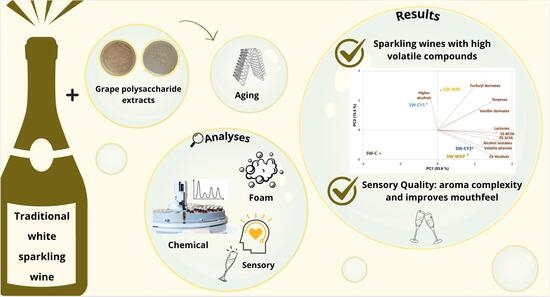
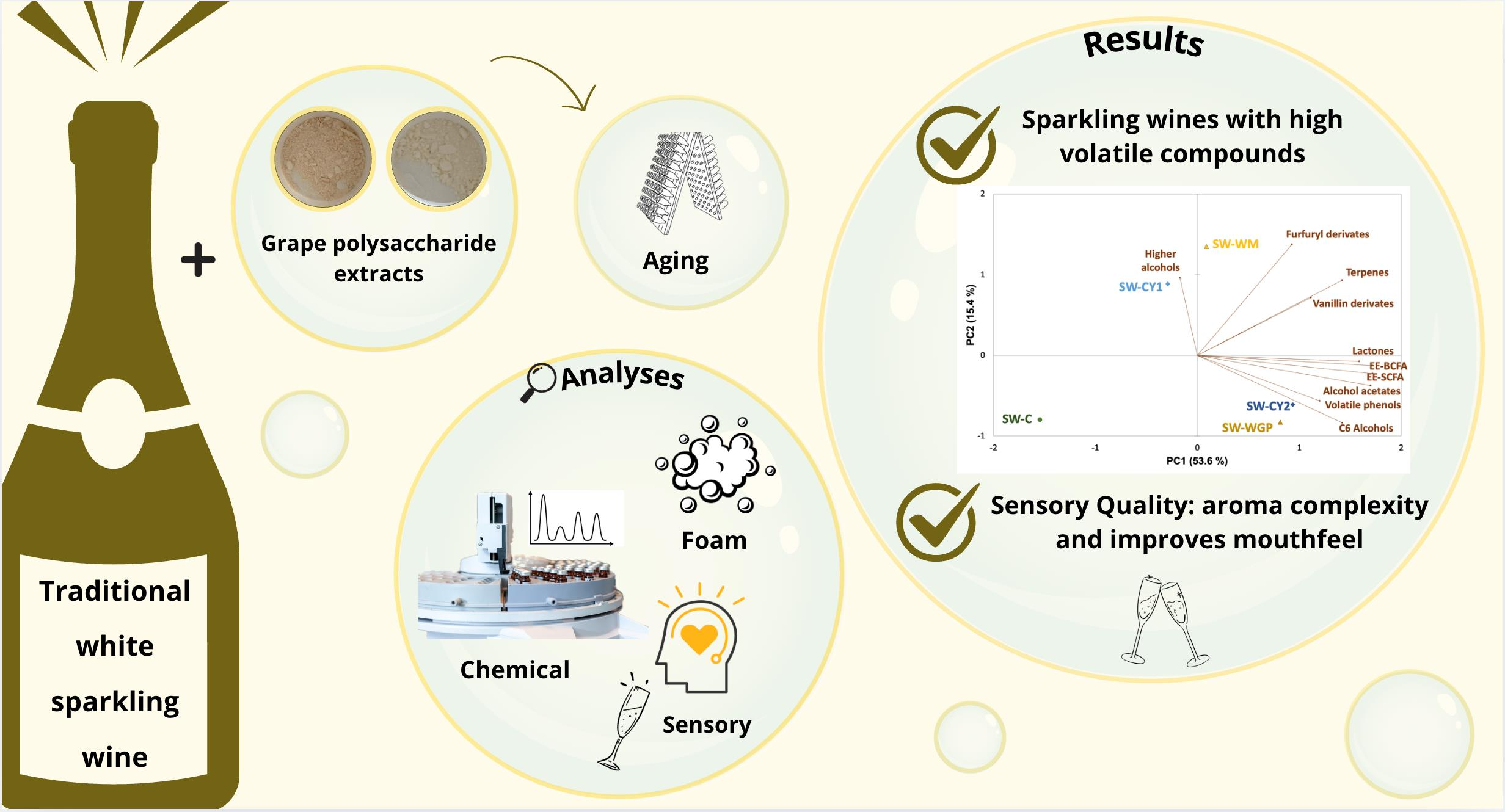
Grape polysaccharide extracts derived from winemaking by-products have been shown to affect key wine characteristics. This study aimed to investigate the application of different grape-derived, polysaccharide-rich extracts and commercial yeast products in white sparkling wines, since no other studies have been found. The impacts of these products on the volatile, phenolic and polysaccharide compositions, as well as on the foam properties and sensory characteristics, were evaluated. After 15 months of aging, the products used did not influence the color and phenolic composition of the sparkling wines. However, they had a positive effect on the volatile compounds, with treated wines showing a general increase compared with the control, mainly in ethyl esters and alcohol acetates, compounds associated with fruity and floral notes. The treated wines showed clear sensory differences compared with the control, including aromatic complexity, which may reflect better preservation of certain aromatic compounds over time. In addition, improvements in wine taste were observed, likely due to a reduction in perceived acidity and bitterness. These results demonstrate the potential of grape-derived polysaccharide extracts to preserve volatile compounds in sparkling wines and to enhance their aromatic complexity and mouthfeel, thus improving overall sensory quality.

Graphical Abstract

1. Introduction

In recent years, the production and consumption of sparkling wine have increased. This growth has been driven by diversification in production, including the introduction of new varieties such as native varieties in some regions [1,2,3], and the use of innovative techniques in the sparkling winemaking process [4,5,6]. Additionally, due to shifting consumer trends, sparkling wine is now consumed more regularly, not just on special occasions.
Sparkling wines are produced through a secondary fermentation of a base wine. This can be carried out in two ways: in pressurized stainless-steel tanks (the Charmat method), or in sealed bottles (the traditional Champenoise method). The traditional method is the most employed due to the sensory complexity that wines acquire [7]. According to Commission Delegated Regulation (EU) 2019/934 of 12 March 2019, the second fermentation in the traditional method must be followed by prolonged aging on lees for at least nine months. Yeast autolysis occurs during contact with lees, and this process is essential for developing the distinctive sensory profile and complexity of high-quality sparkling wines. This process involves hydrolytic enzymes releasing cytoplasmic and cell wall compounds, such as peptides, amino acids, fatty acids and mannoproteins (MPs) [8]. MPs are polysaccharides (PSs) composed mainly of mannose (>90%), with some glucose units and proteins [9], which may have technological properties and influence wine quality. MPs can improve protein stability and prevent tartaric crystallization in wines [10,11]. Other studies have shown that MPs stabilize the color of red wines [12], improve mouthfeel, reduce astringency [13,14,15], and interact with volatile compounds [16,17,18]. Studies conducted on sparkling wines have shown the influence of MPs on foam formation and stability, as well as on volatile composition [15,19].
However, the autolysis process is time-consuming, thereby increasing production costs. To accelerate this process, the use of commercial yeast derivatives (CY) has been investigated as an alternative. Several studies on the use of CY in sparkling wines have shown their impact on color intensity and volatile composition, as well as improving mouthfeel and persistence [19,20,21].
In addition to MP, PS from grapes can play a key role in wine characteristics due to its behavior as protective colloids and its ability to interact with other wine molecules. These interactions enable grape PS to influence the technological and sensory properties of wine. Grape PS mainly originate from grape cell walls and can be classified as pectic and non-pectic PS. Pectic PS include homogalacturonans (HGs), rhamnogalacturonans of type I and II (RG-I and RG-II) and polysaccharides rich in arabinose and galactose (PRAGs), while non-pectic PS consist of cellulose and hemicellulose [9,22]. Some authors have shown that RG-II and PRAG can affect tannin aggregation [14,23,24,25], thereby influencing the body, structure and mouthfeel of wines in different ways [26,27]. Studies recently carried out by our group and others have shown the impact of grape PSs on the characteristics of white and red wines. Canalejo et al. [28] demonstrated that grape PS extracts, when used as fining agents, can modify the volatile profile of Viura wines by increasing the concentration of certain volatile compounds. Pérez-Magariño et al. [29] showed that adding grape PS extracts for two months improved the volatile composition and modulated the acidity and bitterness of Verdejo and Albillo white wines. Jiménez-Martínez et al. [30] and Manjón et al. [31] studied different extracts from red grape pomaces and demonstrated an interaction between PS and phenolic compounds. This interaction reduced the concentration of certain phenolic compounds and the astringency of red wines. Regarding sparkling wines, Martínez-Lapuente et al. [19] demonstrated that grape PSs, especially PRAGs, contribute to foam stability, thereby highlighting their importance for the technological quality of these wines.
Therefore, these previous studies highlight the potential of grape PS extracts to influence key wine quality characteristics, such as the volatile and phenolic profiles, acidity, astringency and bitterness. Due to its colloidal nature and interaction capacity, grape PSs could be useful in complex wine matrices such as sparkling wines. However, no studies have investigated the effect of grape PS on this type of wine. In addition, given the growing importance of reducing and valorizing wine by-products, this study investigates the application of different grape derived PS-rich products and CY in white sparkling wines, and evaluates their effect on foam properties, aromatic and phenolic profiles, and sensory characteristics.

2. Materials and Methods

2.1. Chemical Reagents and Standard Compounds

Food-grade reagents were used for the PS extractions: hydrochloric acid 37% (E-507, Panreac, Madrid, Spain), tartaric acid (E-334, Agrovin, Ciudad Real, Spain), and 96% rectified alcohol from molasses (0110F, Alcoholes Montplet, Barcelona, Spain).
The chromatographic-grade reagents were provided by Riedel-de-Haën (Honeywell, Germany), and the analytical-quality reagents were supplied by Panreac (Madrid, Spain) and Sigma-Aldrich (Steinheim, Germany). Type I water was obtained using an Autwomatic Plus 1 + 2 GR system (Wasserlab, Barbatáin, Navarra, Spain).
The chromatographic gases, helium BIP (99.9997%), air zero (99.998%), and premier plus hydrogen (99.9992%), were provided by Carburos Metálicos S.A. (Valladolid, Spain).
The polysaccharide standards (dextrans from 5 to 670 kDa and pectin) were supplied by Sigma-Aldrich (Steinheim, Germany). Volatile and phenolic compound standards were purchased from Fluka (Buchs, Switzerland), Sigma-Aldrich (Steinheim, Germany), Alfa Aesar (Lancashire, UK), and Extrasynthèse (Genay, France).

2.2. Polysaccharide Extracts and Commercial Yeast Products

Two grape polysaccharide extracts were obtained from commercial white concentrated must (WM) and white grape pomace (WGP). Commercial white grape juice concentrate is obtained by partially dehydrating grape must to reach a ºBrix of 65° ± 0.5 at 20 °C, and was provided by GAP (Albacete, Spain). The WM extract was recovered by precipitation with cold acidified ethanol for 20 h at 4 °C, followed by freeze-drying [9]. The WGP was obtained from the Verdejo grape variety in the Rueda Designation of Origin, after the grapes were pressed using a pneumatic press (Šraml, Podnanos, Slovenia). The pressed pomace was immediately frozen at −15 °C in labelled plastic bags until extraction. The WGP extract was obtained using a method developed by our group [32]. Briefly, the grape pomace was defrosted and homogenized using an Ultra Turrax T25 digital (IKA, Staufen im Breisgau, Germany). Extraction was carried out in an ultrasound bath under acidic conditions (2.5 g/L of tartaric acid at pH 1) for 30 min. Then, the samples were stirred in an orbital shaker for 18 h and centrifuged. The resulting supernatants were concentrated five times in a rotary evaporator. The polysaccharides were precipitated by adding four volumes of cold acidified ethanol and incubating for 24 h at 4 °C. The resulting pellets were then freeze-dried.
Two different commercial yeast products, both rich in MP and recommended for sparkling wines, were used. The CY1 is a yeast crust rich in yeast PS (48–53%) and with a high soluble MP content (20–22%), and were provided by Agrovin (Alcázar de San Juan, Ciudad Real, Spain). The CY2 is an inactivated yeast with a high content of free MP, and were provided by Enartis (Vidyenol, Peñafiel, Valladolid, Spain).

2.3. Polysaccharide Characterization of Products Used

The polysaccharide extracts obtained and the CY were characterized by the analyses of the molecular weight distribution of PS and the monosaccharide composition. The polysaccharide molecular weight distributions were determined by high-resolution size exclusion chromatography (HRSEC) using an Agilent 1200 equipment (Agilent Technologies, Waldbronn, Germany) with a refractive index detector (RID). The chromatographic conditions were set out by Guadalupe et al. [9], and the calibration was performed using eight dextrans with a molecular weight ranging from 670 kDa to 5 kDa.
The monosaccharide composition was determined by gas chromatography using a gas chromatograph (Agilent 7890A, Agilent Technologies, Waldbronn, Germany) coupled to a mass spectrometer. The acidic methanolysis and derivatization process and the chromatographic conditions were described by Guadalupe et al. [9]. The calibrations were carried out with each standard monosaccharide and uronic acid, using myo-inositol as internal standard.
The total proteins and total polyphenols of the PS extracts were analyzed. Total protein content was measured using the Bradford method [33] and reported as milligrams of bovine serum albumin per gram of extract. Total polyphenol content was determined using the Folin–Ciocalteu reaction and expressed as milligrams of gallic acid per gram of extract [34]. All spectrophotometric analyses were performed using a UV/Vis Agilent Cary 60 spectrophotometer (Agilent, Santa Clara, CA, USA).
All analyses were performed in triplicate.

2.4. Sparkling Wine Elaboration and Treatments

The sparkling wines were elaborated following the traditional method in the experimental winery of the Enological Station from ITACyL (Rueda, Valladolid, Spain). The base wine was produced using the Verdejo grape variety in a winery belonging to the Rueda Designation of Origin, following the traditional white winemaking process. The tirage liquor, formed by yeast Saccharomyces cerevisiae var. bayanus (0.30 g/L, IOC 18-2007, Institut oenologique de Champagne, Epernay, France), fermentation activators (0.10 g/L, NutriFerm Special Enartis, Enartis, Italy), sucrose (23 g/L) and sodium bentonite (0.07 g/L, Laffort, France), was added to the tank. A starter was previously prepared using 10% of the base wine with 180 g/L sucrose and 0.30 g/L yeast.
After homogenization, the prepared base wine was divided into five tanks of 50 L for the different experiments: (1) control wine (no product added, SW-C); (2) wine with the addition of PS extracted from white must (0.2 g/L, SW-WM); (3) wine with the addition of PS extracted from white grape pomace (0.2 g/L, SW-WGP); (4) wine with the addition of CY1 (0.2 g/L, SW-CY1); (5) wine with the addition of CY2 (0.2 g/L, SW-CY2). The 0.2 g/L dose was chosen for all the extracts, as it is generally recommended for commercial yeast products. After that, the wines were bottled, and the bottles were stored in a cellar at a controlled temperature of 11–13 °C and relative humidity of 75–85%. Under these conditions, the second fermentation occurred in closed bottles, followed by aging of the wines with lees for nine months before disgorgement, which corresponds to the legally established minimum aging period (Commission Delegated Regulation (EU) 2019/934). The pressure and residual sugars were periodically measured to control the second fermentation, which took two months. The pressure was measured using an aphrometer and the sugars were measured using an enzymatic method. After nine months in the bottle, the sparkling wines were riddled and disgorged without the addition of expedition liqueur.
Three bottles of each sparkling wine treatment were analyzed three months after disgorgement.

2.5. Wine Composition Analyses

Standard oenological parameters were determined according to the official analysis methods of the OIV [35]: reducing sugars (OIV-MA-AS311-02), alcohol degree (OIV-MA-AS312-01), titratable acidity (OIV-MA-AS313-01), pH (OIV-MA-AS313-15), acetic acid (OIV-MA-AS313-27), malic acid (OIV-MA-AS313-11) and total SO2 (OIV-MA-AS323-04B). Color parameters, total polyphenols and total tannins were evaluated by spectrophotometric methods using a UV/Vis Agilent Cary 60 spectrophotometer (Agilent, Santa Clara, CA, USA). Color intensity was determined by the measurement of the absorbance at 420 nm and total polyphenols by Folin–Ciocalteu method, expressed as mg/L of gallic acid, following the OIV methods, OIV-MA-AS2-07B and OIV-MA-AS2-10, respectively [35], and total tannins by acid hydrolysis, expressed as mg/L of cyanidin chloride [36]. The individual low molecular weight phenolic compounds were analyzed by direct injection in a High-Performance Liquid Chromatography (1200 equipment, Agilent Technologies, Waldbronn, Germany) with Diode Array Detector (HPLC-DAD), following the chromatographic conditions described by Pérez-Magariño et al. [37].
The total wine soluble PS were extracted by precipitation with an ethanolic acid solution, and their concentrations were estimated by HPSEC-RID (Agilent Technologies, Waldbronn, Germany) according to the method described by Guadalupe et al. [9]. The molecular weight distributions of PS were also determined and three fractions were obtained: high molecular weight (HMWP, 700–100 kDa), medium molecular weight (MMWP, 100-5 kDa) and low molecular weight (LMWP, <5 kDa). The total soluble polysaccharides (TPSs) were estimated by the sum of the three fractions, expressed in mg/L of dextrans.
Two different analytical methods were used to quantify the volatile composition of the sparkling wines. Gas chromatography with a flame ionization detector (FID, Agilent Technologies, Waldbronn, Germany) was used to evaluate the higher alcohols (volatile compounds with high concentration) by direct injection, following the method and the chromatographic conditions established by Pérez-Magariño et al. [5]. Quantification was carried out using calibration curves for each compound. The volatile compounds present at low concentrations were quantified by a gas chromatograph coupled to an inert mass detector (GC-MS, Agilent Technologies, Waldbronn, Germany), with a previous liquid–liquid extraction with dichloromethane. The detailed extraction, chromatographic and quantification conditions are described in Perez-Magariño et al. [5]. Quantification was carried out using calibration curves for each pure standard compound, using the internal standard quantification method. Quantification ions and the internal standard were selected for each compound.

2.6. Measurement of Foaming Properties by Instrumental Method

Three foam parameters were measured in the sparkling wines using Mosalux equipment (Station Oenotechnique de Champagne, Cormontreuil, France), following the procedure described in Maujean et al. [38]. This method involves injecting CO2 at a constant flow rate and pressure for 15 min, as detailed in a previous study [20]. Foamability was evaluated as the maximum foam height reached after CO2 injection (HM, expressed in mm), representing the ability of the solution to form foam. Foam stability was determined as the mean foam height during CO2 injection (HS, expressed in mm), representing the ability of the wine to maintain stable foam and a persistent of foam collar. Foam stability time was evaluated as the time taken for all bubbles to collapse once CO2 injection was interrupted (TS, expressed in s), representing the foam stability time once effervescence decreased. These foam parameters were determined in triplicate for each bottle of sparkling wine analyzed.

2.7. Sensory Analysis

According to the ITACyL Research Ethics Policy, sensory analyses involving the tasting of wines produced in its facilities using commercial and food-grade reagents for research purposes may be exempt from Ethics Committee review. Sensory analysis was carried out in a designed test room in accordance with ISO 8589 Standard (2010) [39] and was performed by seven expert tasters from ITACyL. These tasters were previously trained during 10 training sessions to quantify the defined descriptors using a structured five-point numerical scale (with 1 corresponding to no intensity and 5 to the highest intensity).
Initially, when the sparkling wines were served, the sensory foam characteristics were evaluated using the descriptors defined by Gallart et al. [40]: initial foam, foam surface area, foam collar, bubble size, and effervescence speed, with scores of 1 (low), 2 (medium) and 3 (high). After that, the tasters evaluated three visual attributes (color intensity, yellow tones and green tones), nine olfactory attributes (olfactory intensity, citrus fruit, white fruit, stone fruit, tropical fruit, floral notes, herbaceous/vegetal notes, fermentative notes and toasted/lees notes) and six gustative attributes (sweetness, acidity, bitterness, volume or mouthfeel, persistence and balance).
The olfactory attributes were trained using different standards for each group of aromas: lemon, grapefruit and orange for citrus fruit; apple and pear for white fruit; peach and apricot for stone fruit; banana, pineapple and melon for tropical fruit; roses, violets and jasmine for floral notes; fennel, grass and green pepper for herbaceous/vegetal notes; and clove, pepper, vanilla, cinnamon, nuts and toasted bread for toasted notes. In terms of gustatory attributes, sweetness was assessed using a saccharose standard, acidity using tartaric acid, bitterness using caffeine, body using glycerin and Arabic gum, and persistence using a mixture of different concentrations of tartaric acid, glycerin, saccharose, and standards of fruity, floral, and herbaceous aromas. All the standards used were food grade.
The sparkling wines were presented in standard glasses in a random order and assigned a three-digit code.

2.8. Statistical Analyses

One-way analysis of variance (ANOVA) and Tukey’s honestly significant difference (HSD) test at a significance level of p < 0.05 were performed to determine the effect of the treatments on the evaluated compounds of the wines under study. Principal component analysis (PCA) was also carried out to study the correlation between the significant compounds and the treated wines. General Procrustes Analyses (GPA) were performed on the sensory results of the wines to reduce the scaling effects of the different tasters. ANOVA analyses were carried out with the Statgraphics Centurion XVIII statistical package (18.1.06), while PCA and GPA were performed using the XLSTAT software (Addinsoft Inc., New York, NY, USA, version 2023.1).

3. Results and Discussion

3.1. Characterization of the Polysaccharide Extracts and Products Used

Firstly, the PS composition and molecular weight distribution of the different products used were evaluated (Table 1). The different PS families were determined from the monosaccharide concentrations of the extracts (Table S1), as described by Guadalupe et al. [9]. Briefly, PRAG content was estimated from the arabinose, galactose, rhamnose and glucuronic acid residues; RG-II content was calculated from its characteristic monosaccharides, 2-O-methyl fucose, 2-O-methyl xylose, apiose and 3-deoxyoctulosonic acid; and HG content was estimated from the galacturonosyl residues not attributable to RG-II. MP and mannans content were estimated from the content of mannose and GP (glucosyl PS) content was estimated from the residues of glucose and xylose. The total PS content was determined by the sum of PRAG, RG-II, HG, MP, and GP contents.
The PS extract obtained from WM contained 681 mg/g of TPS, mainly composed of non-pectic PS (68%), 40% mannans and 28% GP, which is attributed to celluloses and hemicelluloses of the grape cell walls [32]. The remaining components were pectic PS, PRAG, RG-II and HG.
The PS extract obtained from WGP had the lowest TPS concentration (292 mg/g), mainly consisting of non-pectic PS (66.2% GP and 3.79% mannans).
The CY had high TPS concentrations of 839 and 644 mg/g, accounting for 72% of MP. The presence of PRAG, RG-II and HG was virtually undetectable, given that these commercial products are obtained from the cell walls of Saccharomyces cerevisiae yeasts.
Significant differences in the molecular weight distribution of PS were observed. The WGP and WM extracts had the highest HMWP content, which corresponded mainly to glucosyl PS (cellulose and hemicellulose) and mannans, respectively. In contrast, the commercial products CY1 and CY2 had the highest MMWP and LMWP content, respectively, which are associated with mannoproteins.
Other macromolecules, such as proteins and phenolic compounds, are present in the cell walls of grape skins and may be extracted. Thereby the total content of proteins and phenols was evaluated in all the extracts. The total protein and polyphenol content was very low, at less than 1% in all the extracts (Table 1). These contents are considered insignificant and will not influence the characteristics of the obtained extracts.

3.2. Effect of Polysaccharide Treatments on the Sparkling Wine Composition

Table 2 shows the results of the oenological quality control parameters for white sparkling wines after disgorgement and aging. The sugar content was below 2 g/L, indicating that the secondary fermentation in the bottle had finished. As shown in the table, no significant differences were found in the other oenological parameters of the different wines, indicating the white sparkling wines, including the control and those treated with different PS extracts, evolved adequately.
Table 3 shows the color parameters, the content of different phenolic families evaluated globally using spectrophotometric methods and the concentration of individual phenolic compounds determined by HPLC-DAD. Statistically significant differences were found in color intensity, total polyphenol and tannin content resulting from the addition of PS extracts.
Small differences were also observed between the treated wines in terms of the individual low molecular weight phenolic compounds. Thirty-three phenolic compounds were examined according to those identified by Perez-Magariño et al. [37]. Of these, only thirteen could be quantified and were grouped in hydroxybenzoic acids, hydroxycinnamic acids, tartaric esters of hydroxycinnamic acids, flavanols and phenolic alcohols (Table 3). The flavonol and stilbene compounds detected were below the limit of quantification. No statistically significant differences were found in the content of hydroxybenzoic and hydroxycinnamic acid. Only the tartaric esters of hydroxycinnamic acids, catechin and tryptophol showed significant differences by the addition of PS extracts. The WM extract reduced the content of catechin and tryptophol (32.9% and 13.7%, respectively), while the WGP extract reduced the concentration of tartaric esters of hydroxycinnamic acids (11.9%). The slight differences observed in the phenolic content suggest that these compounds did not interact significantly with the extracts and products used during the elaboration of sparkling wine. These results are consistent with those of other studies on sparkling white wines aged with commercial yeast products [20] and on white wines using grape PS extracts or commercial yeast products [18,29,41]. These studies found no effect or a slight reduction in phenolic content. However, some authors have shown that the reduction of phenolic compounds is due to their interaction with polysaccharides in red wines using PS obtained from grapes [30,31], especially in wines with a high tannin or flavanol content. This is probably due to the lower concentrations of phenolic compounds in white wines compared to red wines. Therefore, these results suggest that PS extracts from grapes and yeasts have minimal effect on the phenolic composition of white sparkling wines.
Table 4 shows the total soluble polysaccharide content (TPS) and molecular weight distribution of PS in the control sparkling wine and in wines treated with different PS extracts. The addition of PS extracts increased the TPSs of all the treated wines, mainly in the SW-CY1 (44%) and SW-WM (41%), which corresponded to the PS extracts that were richer in TPSs (see Table 1). The levels of all types of PS increased in these wines, with the highest levels found in the MMWP and LMWP (51% and 61%, respectively). These results are consistent with those previously obtained by our group for white wines [29]. The WGP extract contributed less to the TPSs of the wines, probably because this extract is richer in cellulose and hemicellulose (66.2%) and less soluble.
No statistically significant differences were found in foam maximum height (HM) values, meaning that the added extracts and the amount added did not alter the foamability of the wines. However, statistically significant differences were found in the foam stability (HS) and foam stability time (TS) parameters of the different sparkling wines produced (Table 4). The WGP and CY2 extracts slightly reduced the foam stability, while the WM and WGP extracts reduced the foam stability time. Generally, these PS extracts had no effect on the foamability of the wines, but they did have a slight impact on the stability of the foam. Similar results were found in sparkling wines produced from different grape varieties and treated with commercial yeast products [20]. Polysaccharides, particularly glycoproteins, have been described as the main compounds influencing foaming properties, although contradictory results have been published regarding the effect of PS on foam quality. Nevertheless, most studies suggest that total PSs have a positive influence on both foamability and foam stability, with MP and PRAG acting as good foam stabilizers but poor foam formers [19].
Thirty-eight volatile compounds were quantified and grouped as shown in Table 5. Statistically significant differences were found in the concentrations of most volatile compounds by the addition of PS extracts, with the exception of fatty acids. The SW-C generally had the lowest concentrations. The SW-WM, SW-WGP, and SW-CY2 maintained the highest content of ethyl esters of straight-chain fatty acids (EE-SCFAs), ethyl esters of branched-chain fatty acids (EE-BCFAs), and alcohol acetates, compounds associated with fruity and floral notes of wines. These results are consistent with those obtained by Costa et al. [42], who observed an increased level of fruity esters in sparkling wines following the addition of commercial mannoprotein-rich products. A similar effect was reported regarding PS extracts by Pérez-Magariño et al. [29] and Canalejo et al. [28] in Verdejo and Viura wines, respectively. These esters are hydrophobic compounds that can interact with the protein part of PSs, such as MPs and PRAGs [18,43], thereby reducing its content.
However, different studies have demonstrated that although PS extracts from grapes and yeasts initially reduce ester concentrations in wine, the content of these compounds increases with longer aging times [18,20,28,44]. This may be due to the fact that the interactions between esters and PS are reversible and the esters can be released by a salting out effect [45,46]. Additionally, using CY or grape PS extracts can slow the kinetics of hydrolysis and esterification processes of ethyl esters and alcohol acetates, favoring the maintenance of volatile compounds associated with fruity notes over time [47].
For the C6 alcohols, the SW-WGP and SW-CY2 maintained the highest concentrations due to the high levels of 1-hexanol and cis-1-hexen-1-ol. However, the concentrations of all C6 alcohol were below the perception threshold and did not impact the herbaceous and vegetal notes in the wines. Similar results were observed in the study of Canalejo et al. [28], in which the addition of white pomace and wine lees extracts increased the concentration of C6 alcohols.
Terpenes are known as varietal aroma compounds, mainly associated with citrus and floral notes. All wines treated with PS extracts also exhibited the highest terpene content, mainly due to the presence of α-terpineol. However, these compounds were present in very low concentrations and they are likely to have no effect on the aroma profile of the wines. A similar enhancement in terpene concentration was previously reported by Pérez-Magariño et al. [29] and Canalejo et al. [28] in still varietal white wines treated with PS from white grape pomace and commercial yeast products. Similarly to esters, terpenes can be adsorbed by yeast walls because they are highly hydrophobic compounds [48], and they are released, thereby increasing their content, after a long aging period.
The sparkling wines with the highest lactone content were those treated with WGP and CY, which contained the highest levels of γ-butyrolactone. γ-Nonalactone showed higher content in all treated wines than in the control. There were also statistically significant differences in the content of vanillin derivatives, with the SW-WM, SW-WGP and SW-CY1 samples presenting the highest values. The few studies available in the literature did not show any clear effects related to the content of vanillin derivatives and lactones in wines and sparkling wines treated with different PS [18,20,29]. However, these compounds are not very important in sparkling wines, as they are present in concentrations below the perception threshold, and they do not contribute to the volatile profile of this type of wine.
Furfuryl derivates are mainly formed from sugars present in wine through acid catalysis during the aging process [49]. They can also be formed, to a lesser extent, through the Maillard reaction. These compounds are associated with aromas of bread, toast, almonds and caramel notes, increasing the aromatic complexity of sparkling wines [50]. These aromas tend to increase their concentration over time due to the aging processes. The results showed higher levels of furfuryl derivates in the wines treated with WM and CY. This suggests that, in addition to the aging process observed in the control wine, PS from must and yeast also favors the formation of furfuryl compounds, mainly 5-hydroxymethylfurfural. This effect is particularly pronounced in SW-WM, where the WM extract exhibited higher levels of TPSs, mainly mannans and PRAG. These carbohydrates can be gradually released and become available for the formation of furfural and 5 hydroxymethylfurfural. This trend is supported by previous studies on sparkling and sweet wines that have been aged for a long time. These studies have shown that the formation of furfural and 5-hydroxymethylfurfural increases with the amount of sugar present during aging [51,52].
Statistically significant differences were also found in volatile phenols, with the wines treated with WGP and CY showing higher content than the control wine. This was due to the presence of 4-vinylguaiacol, the predominant volatile phenol in these wines. This compound is formed by the decarboxylation of ferulic acid through yeast action and accumulates in white wines since no oxidation process occurs as in red wines. At low concentrations, it adds complexity to the aroma profile of wines, providing spicy, balsamic and smoky notes. It should be noted that no other volatile phenols such as 4-ethylphenol and 4-vinylphenol, which contribute negative notes to leather or animal-like, were detected. Other studies also reported an increase of 4-vinylguaiacol in Viura wines and white and rosé sparkling wines using CY, WGP and WM extracts [20,28].
The total content of higher alcohols remained similar across all treatments, except for CY1, which showed a 12% increase compared to the control. These compounds are the most abundant chemical family in wines and slight differences in their content will not significantly affect wine aroma. The increase in SW-CY1 was due to the rise in isoamyl alcohols, which are formed during alcoholic fermentation from their precursors, leucine and isoleucine, through the action of different yeast enzymes. Therefore, CY1 could contain these amino acids, resulting in an increase in the content of isoamyl alcohol in SW-CY1. Other authors found no differences in higher alcohol concentrations when using yeast-derived products in white wines, red wines and model wines [18,29,45], while others found slight effects [20,28]. Some studies have indicated that higher alcohols can have a positive effect on the aromatic complexity of wines, enhancing fruity and floral notes, as well as increasing aroma complexity, at concentrations below 400 mg/L [53]. However, as these compounds are in balance with other volatile compounds, it is difficult to determine the concentration ranges that contribute positive or negative notes to wine.
The observed differences in volatile compound content between treatments may be due to interactions between the PS from the added extracts and the volatile compounds present in the wine matrix [18,29]. The influence of PS on volatile compounds is a complex phenomenon that directly affects the aromatic profile of wine. The interaction between PS and volatile compounds depends on several factors, including their structure, molecular size and concentration [43,45,54]. Martínez-Lapuente et al. [19] found a negative correlation between PRAG and most volatile compounds in sparkling wines, suggesting that PRAG could reduce their volatile content. In our study, the PS extracts had a low PRAG content; therefore, this negative effect was not observed. The aging time is another important factor that can influence the volatile concentration. After an aging period, it appears that the release of simple sugars from yeast derivatives can sequester some water molecules, thereby facilitating the release of certain volatile compounds [45,46].

3.3. Multivariate Analyses

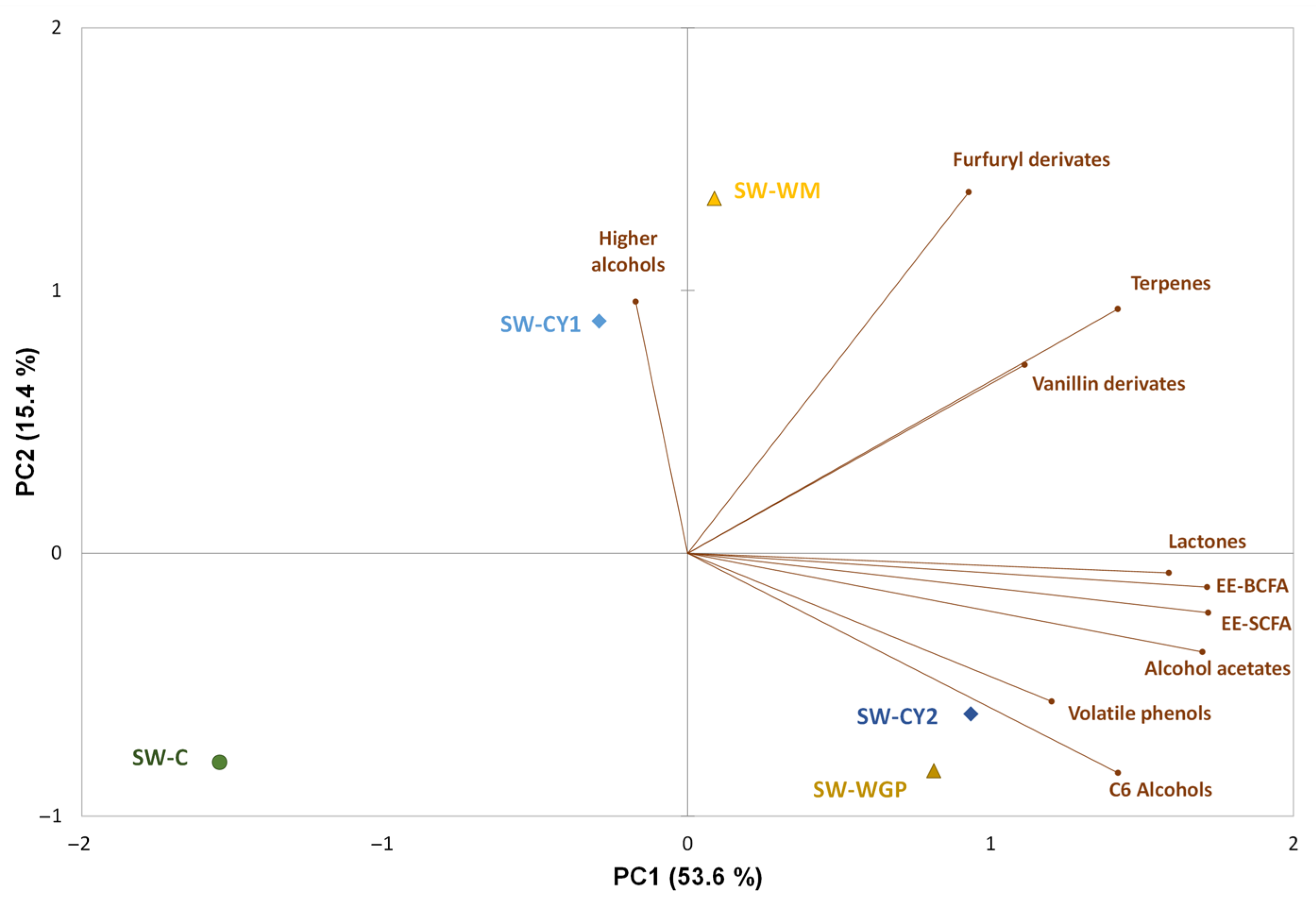
Principal component analysis (PCA) was used to investigate the information provided by the significant volatile compounds. This analysis was applied to differentiate between sparkling wines treated with different PS extracts, and to study the correlations between these wines and the volatile compounds.
The PCA selected three components with eigenvalues greater than 1, explaining 82.3% of the total variance. Table S2 shows the loadings of each volatile variable for each of the selected components, as well as the respective eigenvalue and the cumulative variance. Those volatile variable with higher loading values contribute most significantly to the explanatory meaning of the component.
Figure 1 shows the distribution of the different sparkling wines studied and the variables in the plane defined by the first two principal components (PCs), which together explain 69% of the total variance. Ethyl esters of fatty acids (EE-BCFAs and EE-BCFAs), alcohol acetates, lactones, C6 alcohols and terpenes are positively correlated with PC1, enabling differentiation between sparkling wines treated with different extracts and the control. The SW-C had the lowest concentration of volatile compounds since it was negatively correlated with all of these variables, and it was situated in the bottom left- corner of the plane. The SW-WGP and SW-CY2 are located in the bottom right corner of the graph, indicating higher positive values for PC1. Therefore, these wines had higher levels of ethyl esters of fatty acids (EE-BCFAs and EE-BCFAs), alcohol acetates, lactones, C6 alcohols and terpenes. Consequently, these wines are characterized by fruity and floral aromas. Conversely, the SW-WM and SW-CY1, which are located in the upper part and are correlated with the variables associated with PC2, positively correlate with furfuryl derivates and higher alcohols, and negatively with C6 alcohols. Both groups of treated sparkling wines were located far from the SW-C and demonstrated higher levels of volatile compounds in the treated wines compared to the control.

3.4. Effect of Polysaccharide Treatments in the Sparkling Wine Sensory Analyses

All sensory data are included in Supplementary Table S3. Initially, the tasters evaluated the following foam descriptors: initial foam, foam surface area, foam collar, bubble size and effervescence speed. However, no significant differences were detected among the sparkling wines (see Table S3).
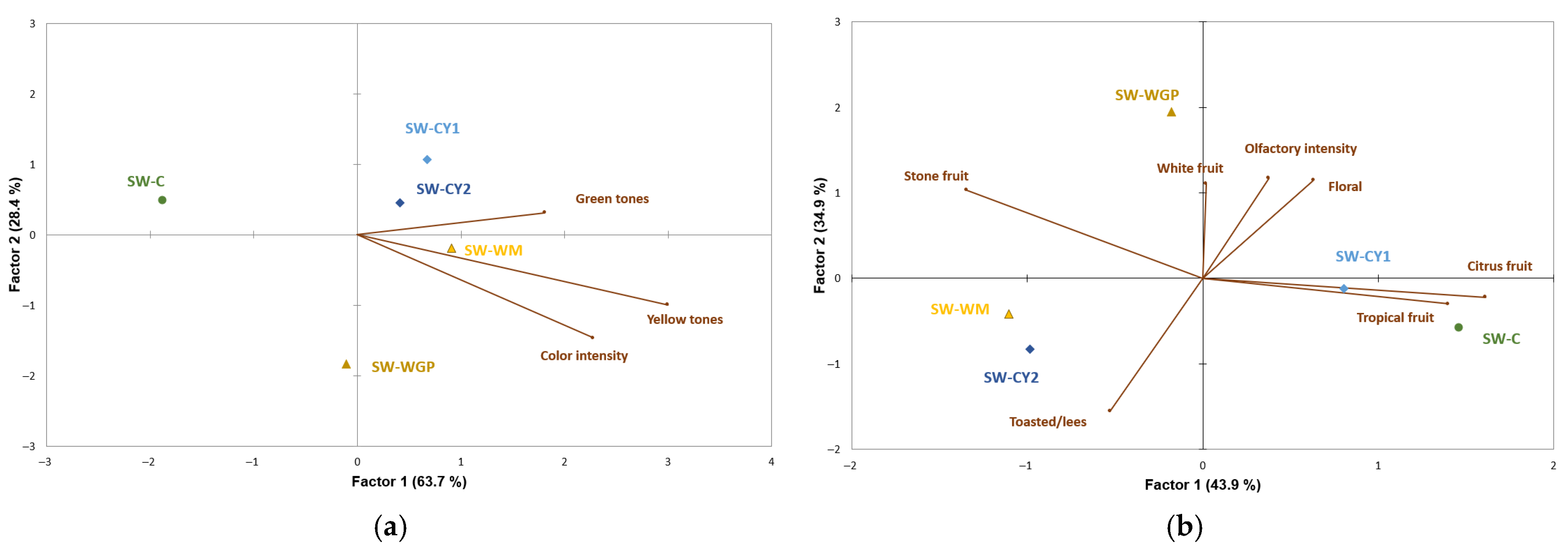
Generalized Procrustes analysis (GPA) was applied to the sensory data to explore the relationships among the sparkling wines. This analysis provides an integrated representation of their sensory profiles. Figure 2a shows the GPA consensus configuration of the sparkling wines according to their visual attributes, explaining 92.1% of the total variance. The treated wines were separated from the control wine. The wines treated with CY (SW-CY1 and SW-CY2) were characterized by green tones, while those treated with WM and WGP presented high color intensity and yellow tones.
In the olfactory phase, the tasters did not detect any herbaceous, vegetal or fermentative notes, in the sparkling wines. Therefore, these attributes were not included in the GPA. The olfactory GPA space, defined by the first two factors, explained 78.8% of the total variance and clearly differentiated between sparkling wines (Figure 2b). The SW-C was located on the positive side of factor 1 at the bottom of the graph, close to SW-CY1. Both were associated with citrus and tropical fruits, confirming their similarity in terms of their volatile composition. On the other hand, the SW-WM and SW-CY2, which were associated with toasted and lees notes and stone fruits, were located on the negative values of factors 1 and 2. This sensory characterization is consistent with their chemical composition, as the SW-WM exhibited the highest concentrations of γ-nonalactone and furfuryl derivates. These volatile compounds are known to impart toasty, woody and sweet notes [17]. Finally, the SW-WGP was located at the top of the graph, on the positive side of factor 2. It was associated with greater olfactory intensity, as well as stone, white fruit, and floral notes. These results are consistent with the high concentration of ethyl esters of fatty acids in its volatile composition, although similar concentrations were observed in other treated sparkling wines.
Del Barrio-Galán et al. [41] showed that treating Verdejo wines with different CY reduced olfactory intensity and fruity aromas. However, after six months of aging, all of the treated wines presented higher varietal, fruity, and floral aromas than the controls. Other authors have also demonstrated an increase in tropical and stone fruit notes with WM and WGP in white wines [29], and an increase in fruity and lees notes with CY in sparkling white wines [20]. Canalejo et al. [55] showed an increase in the intensity of the floral and fruit notes in Viura wines treated with two PS extracts (extract of distilled washing residues of wine pomace and purified PS extract from wine) after 12 months of aging.
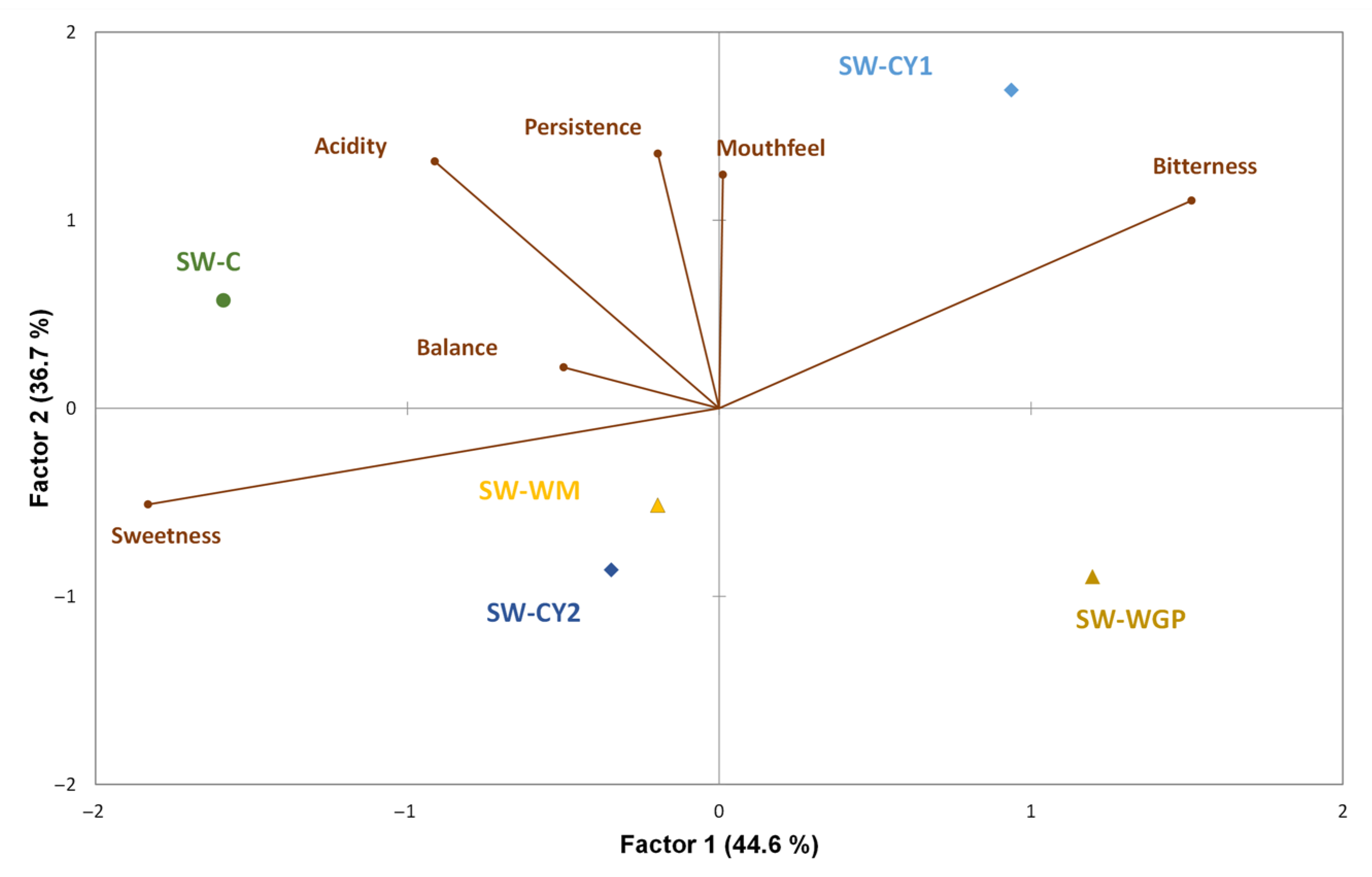
Figure 3 shows the GPA average space obtained from the gustative attributes, and the first two factors accounted for 81.3% of the total variance. This analysis showed differences among the treated wines. The SW-C appeared in the upper left quadrant and was mainly related to acidity, persistence and balance. Among the treated wines, the SW-CY1 was located in the top right-hand corner, mainly relating to mouthfeel, bitterness and persistence. In the negative region of factor 2, the SW-WM and SW-CY2 showed stronger correlations with sweetness. The SW-WGP was not related to any of the attributes, indicating that it had the weakest gustatory profile, being the least bitter, sweet and acidic.
Regarding taste attributes, the grape PS extracts (WM and WGP), as well as CY2, produced sweeter sparkling wines, likely reducing perceived acidity. These extracts also reduced bitterness, possibly due to the formation of complexes between phenolic compounds and PS through hydrogen bonding [56], which inhibits the interaction between bitter phenols with taste receptors. While some studies did not report a decrease in bitterness in white wines, most of them observed a noticeable reduction. Other studies also found an improvement in mouthfeel, bitterness, sweetness and balance when using grape PS [29,41,55].

4. Conclusions

The PS extracts from grapes or yeast evaluated in this study demonstrated an important capacity to modulate key chemical and sensory attributes of sparkling wines. Their ability to preserve ethyl esters, alcohol acetates and specific terpene compounds indicates that PSs can affect the natural esterification–hydrolysis balance during aging, thereby contributing to greater aroma stability. Consequently, these products can maintain higher concentrations of these volatile compounds and preserve the fruity and floral aromas of sparkling wines for at least 12 months. This is particularly valuable for sparkling wines produced from neutral grape varieties with low concentrations of primary or varietal aromas.
Despite having a limited impact on color and phenolic composition, PS extracts produced significant improvements in sensory quality. They enhanced aromatic complexity and improved mouthfeel by reducing the perception of acidity and bitterness. These results highlight the potential of PS extracts, including grape-derived extracts, to stabilize aromatic compounds and enhance the sensory perceptions of sparkling wines. Overall, given their positive effects on wine quality, these extracts represent a promising strategy for the valorization of winemaking by-products.

Supplementary Materials

The following supporting information can be downloaded at: https://www.mdpi.com/article/10.3390/beverages12010014/s1, Table S1: Monosaccharide composition (mg monosaccharide/g extract) of the polysaccharide extracts used; Table S2: Factor loadings of PCA (loadings lower than an absolute value of 0.250 are not shown); Table S3: Descriptors of the sensory characteristics in the control and treated sparkling wines.

Author Contributions

Conceptualization, S.P.-M., B.A. and Z.G.; methodology, S.P.-M. and E.C.-M.; validation, M.C.-F. and S.P.-M.; formal analysis, M.C.-F., E.C.-M. and S.P.-M.; investigation, M.C.-F. and E.C.-M.; data curation, E.C.-M. and I.S.-M.; writing—original draft preparation, S.P.-M. and M.C.-F.; writing—review and editing, S.P.-M., I.S.-M. and B.A.; visualization, M.C.-F., S.P.-M. and I.S.-M.; supervision, S.P.-M.; project administration, S.P.-M.; funding acquisition, S.P.-M., B.A. and Z.G. All authors have read and agreed to the published version of the manuscript.

Funding

This research was funded by MICIU/AEI/10.13039/501100011033 and FEDER, EU, grants RTA2017-00005-C02-01 and PID2021-123361OR-C21.

Institutional Review Board Statement

The authors declare that the Instituto Tecnológico Agrario de Castilla y León (ITACyL) currently does not have a formally established Ethics Committee specifically for sensory evaluation studies. All products used in the wine elaboration are commercial, food-grade reagents, and there is no risk to participants. The sensory evaluation of the wines in this study was carried out by a trained tasting panel from ITACyL. The tasters were informed of the purpose of the study and the anonymity of their responses, and provided their informed consent to participate, agreeing that their data would be used exclusively for research purposes.

Informed Consent Statement

Informed consent for participation was obtained from all subjects involved in the study.

Data Availability Statement

Data is contained within the article or Supplementary Material.

Acknowledgments

M.C.-F. thanks the PRE202020-094464 grant, which is funded by MICIU/AEI/10.13039/501100011033 and ESF investing in your future, for financing her contract. All authors would like to thank the tasters for their participation.

Conflicts of Interest

The authors declare no conflicts of interest.

Abbreviations

The following abbreviations are used in this manuscript:
WMWhite must
WGPWhite grape pomace
CYCommercial yeast derivatives
PSPolysaccharides
TPSsTotal polysaccharides
PRAGPolysaccharide rich in arabinose and galactose
RG-IRhamnogalacturonans type I
RG-IIRhamnogalacturonans type II
HGHomogalacturonans
MPMannoproteins or mannans
GPsGlucosyl polysaccharides
HMWPsHigh-molecular-weight polysaccharides
MMWPsMedium-molecular-weight polysaccharides
LMWPsLow-molecular-weight polysaccharides
HMFoamability
HSFoam stability
TSFoam stability time
HCAsHydroxycinnamic acids
EE-SCFAsEthyl esters of straight-chain fatty acids
EE-BCFAsEthyl esters of branched-chain fatty acids
SW-CControl wine
SW-WMWine with the addition of PS extracted from wine must
SW-WGPWine with the addition of PS extracted from white grape pomace
SW-CY1Wine with the addition of CY1
SW-CY2Wine with the addition of CY2
PCAPrincipal Component Analysis
GPAGeneral Procrustes Analysis

References

  1. Caliari, V.; Burin, V.M.; Rosier, J.P.; BordignonLuiz, M.T. Aromatic profile of Brazilian sparkling wines produced with classical and innovative grape varieties. Food Res. Int. 2014, 62, 965–973. [Google Scholar] [CrossRef]
  2. Cravero, M.C. Innovations in sparkling wine production: A review on the sensory aspects and the consumer’s point of view. Beverages 2023, 9, 80. [Google Scholar] [CrossRef]
  3. Plavša, T.; Bubola, M.; Jeromel, A.; Tomaz, I.; Krapac, M. Exploring the Potential of Indigenous Grape Varieties for Sparkling Wine Production in the Hrvatska Istra Subregion (Croatia). Beverages 2025, 11, 78. [Google Scholar] [CrossRef]
  4. Romano, P.; Braschi, G.; Siesto, G.; Patrignani, F.; Lanciotti, R. Role of yeasts on the sensory component of wines. Foods 2022, 11, 1921. [Google Scholar] [CrossRef]
  5. Pérez-Magariño, S.; Bueno-Herrera, M.; López de la Cuesta, P.; González-Lázaro, M.; Martínez-Lapuente, L.; Guadalupe, Z.; Ayestarán, B. Volatile composition, foam characteristics and sensory properties of Tempranillo red sparkling wines elaborated using different techniques to obtain the base wines. Eur. Food Res. Technol. 2019, 245, 1047–1059. [Google Scholar] [CrossRef]
  6. Luchian, C.E.; Grosaru, D.; Scutarașu, E.C.; Colibaba, L.C.; Scutarașu, A.; Cotea, V.V. Advancing sparkling wine in the 21st century: From traditional methods to modern innovations and market trends. Fermentation 2025, 11, 174. [Google Scholar] [CrossRef]
  7. Úbeda, C.; Callejón, R.M.; Troncoso, A.M.; Peña-Neira, A.; Morales, M.L. Volatile profile characterisation of Chilean sparkling wines produced by traditional and Charmat methods via sequential stir bar sorptive extraction. Food Chem. 2016, 207, 261–271. [Google Scholar] [CrossRef]
  8. Alexandre, H.; Guilloux-Benatier, M. Yeast autolysis in sparkling wine–a review. Aust. J. Grape Wine Res. 2006, 12, 119–127. [Google Scholar] [CrossRef]
  9. Guadalupe, Z.; Ayestarán, B.; Williams, P.; Doco, T. Determination of must and wine polysaccharides by gas chromatographymass spectrometry (GC-MS) and Size-Exclusion Chromatography (SEC). In Polysaccharides: Bioactivity and Biotechnology; Ramawat, K., Mérillon, J.M., Eds.; Springer: Cham, Switzerland, 2015; pp. 1265–1297. [Google Scholar] [CrossRef]
  10. Dupin, I.V.; McKinnon, B.M.; Ryan, C.; Boulay, M.; Markides, A.J.; Jones, G.P.; Williams, P.J.; Waters, E.J. Saccharomyces cerevisiae mannoproteins that protect wine from protein haze: Their release during fermentation and lees contact and a proposal for their mechanism of action. J. Agric. Food Chem. 2000, 48, 3098–3105. [Google Scholar] [CrossRef]
  11. Lankhorst, P.P.; Voogt, B.; Tuinier, R.; Lefol, B.; Pellerin, P.; Virone, C. Prevention of tartrate crystallization in wine by hydrocolloids: The mechanism studied by dynamic light scattering. J. Agric. Food Chem. 2017, 65, 8923–8929. [Google Scholar] [CrossRef]
  12. Escot, S.; Feuillat, M.; Dulau, L.; Charpentier, C. Release of polysaccharides by yeasts and the influence of released polysaccharides on colour stability and wine astringency. Aust. J. Grape Wine Res. 2001, 7, 153−159. [Google Scholar] [CrossRef]
  13. Núñez, E.; Vidal, J.; Chávez, M.; Bordeu, E.; Osorio, F.; Vargas, S.; Hormazábal, E.; Brossard, N. Effect of mannoprotein-producing yeast on viscosity and mouthfeel of red wine. Foods 2025, 14, 462. [Google Scholar] [CrossRef] [PubMed]
  14. Poncet-Legrand, C.; Doco, T.; Williams, P.; Vernhet, A. Inhibition of grape seed tannin aggregation by wine mannoproteins: Effect of polysaccharide molecular weight. Am. J. Enol. Vitic. 2007, 58, 87−91. [Google Scholar] [CrossRef]
  15. Rinaldi, A.; Gonzalez, A.; Moio, L.; Gambuti, A. Commercial mannoproteins improve the mouthfeel and colour of wines obtained by excessive tannin extraction. Molecules 2021, 26, 4133. [Google Scholar] [CrossRef] [PubMed]
  16. Bautista, R.; Fernández, E.; Falqué, E. Effect of the contact with fermentation lees or comercial-lees on the volatile composition of white wines. Eur. Food Res. Technol. 2007, 224, 405−413. [Google Scholar] [CrossRef]
  17. Pozo-Bayón, M.A.; Andújar-Ortiz, I.; Moreno-Arribas, M.V. Volatile profile and potential of inactive dry yeast-based winemaking additives to modify the volatile composition of wines. J. Sci. Food Agric. 2009, 89, 1665–1673. [Google Scholar] [CrossRef]
  18. Del Barrio-Galán, R.; Ortega-Heras, M.; Sánchez-Iglesias, M.; Pérez-Magariño, S. Interactions of phenolic and volatile compounds with yeast lees, commercial yeast derivatives and non toasted chips in model solutions and young red wines. Eur. Food Res. Technol. 2012, 234, 231−244. [Google Scholar] [CrossRef]
  19. Martínez-Lapuente, L.; Ayestarán, B.; Guadalupe, Z. Influence of wine chemical compounds on the foaming properties of sparkling wines. In Grapes and Wines—Advances in Production, Processing, Analysis and Valorization; InTech: London, UK, 2018; Volume 10, pp. 195–223. [Google Scholar] [CrossRef]
  20. Pérez-Magariño, S.; Martínez-Lapuente, L.; Bueno-Herrera, M.; Ortega-Heras, M.; Guadalupe, Z.; Ayestarán, B. Use of commercial dry yeast products rich in mannoproteins for white and rosé sparkling wine elaboration. J. Agric. Food Chem. 2015, 63, 5670–5681. [Google Scholar] [CrossRef]
  21. Ruipérez, V.; Rodríguez-Nogales, J.M.; Fernández-Fernández, E.; Vila-Crespo, J. Impact of β-glucanases and yeast derivatives on chemical and sensory composition of long-aged sparkling wines. J. Food Compos. Anal. 2022, 107, 104385. [Google Scholar] [CrossRef]
  22. Jones-Moore, H.R.; Jelley, R.E.; Marangon, M.; Fedrizzi, B. The polysaccharides of winemaking: From grape to wine. Trends Food Sci. Technol. 2021, 111, 731–740. [Google Scholar] [CrossRef]
  23. Riou, V.; Vernhet, A.; Doco, T.; Moutounet, M. Aggregation of grape seed tannins in model wine-effect of wine polysaccharides. Food Hydrocoll. 2002, 16, 17–23. [Google Scholar] [CrossRef]
  24. Mateus, N.; Carvalho, E.; Luis, C.; de Freitas, V. Influence of the tannin structure on the disruption effect of carbohydrates on protein–tannin aggregates. Anal. Chim. Acta 2004, 513, 135–140. [Google Scholar] [CrossRef]
  25. Carvalho, E.; Mateus, N.; Plet, B.; Pianet, I.; Dufourc, E.; de Freitas, V. Influence of wine pectic polysaccharides on the interactions between condensed tannins and salivary proteins. J. Agric. Food Chem. 2006, 54, 8936–8944. [Google Scholar] [CrossRef] [PubMed]
  26. Vidal, S.; Francis, L.; Williams, P.; Kwiatkowski, M.; Gawel, R.; Cheynier, V.; Waters, E.J. The mouth-feel properties of polysaccharides and anthocyanins in a wine like medium. Food Chem. 2004, 85, 519–525. [Google Scholar] [CrossRef]
  27. Quijada-Morín, N.; Williams, P.; Rivas-Gonzalo, J.C.; Doco, T.; Escribano-Bailón, M.T. Polyphenolic, polysaccharide and oligosaccharide composition of Tempranillo red wines and their relationship with the perceived astringency. Food Chem. 2014, 154, 44–51. [Google Scholar] [CrossRef]
  28. Canalejo, D.; Martínez-Lapuente, L.; Ayestarán, B.; Pérez-Magariño, S.; Guadalupe, Z. Potential use of grape and wine polysaccharide extracts as fining agents to modulate the volatile composition of Viura wines. Food Chem. 2024, 430, 137047. [Google Scholar] [CrossRef]
  29. Pérez-Magariño, S.; Cano-Mozo, E.; Bueno-Herrera, M.; Canalejo, D.; Doco, T.; Ayestarán, B.; Guadalupe, Z. The effects of grape polysaccharides extracted from grape by-products on the chemical composition and sensory characteristics of white wines. Molecules 2022, 27, 4815. [Google Scholar] [CrossRef]
  30. Jiménez-Martínez, M.D.; Bautista-Ortín, A.B.; Gil-Muñoz, R.; Gómez-Plaza, E. Fining with purified grape pomace. Effect of dose, contact time and varietal origin on the final wine phenolic composition. Food Chem. 2019, 271, 570–576. [Google Scholar] [CrossRef]
  31. Manjón, E.; Li, S.; Dueñas, M.; García-Estévez, I.; Escribano-Bailón, M.T. Effect of the addition of soluble polysaccharides from red and white grape skins on the polyphenolic composition and sensory properties of Tempranillo red wines. Food Chem. 2023, 400, 134110. [Google Scholar] [CrossRef]
  32. Canalejo, D.; Guadalupe, Z.; Martínez-Lapuente, L.; Ayestarán, B.; Pérez-Magariño, S. Optimization of a method to extract polysaccharides from white grape pomace by-products. Food Chem. 2021, 365, 130445. [Google Scholar] [CrossRef]
  33. Bradford, M.M. A rapid and sensitive method for the quantitation of microgram quantities of protein utilizing the principle of protein-dye binding. Anal. Biochem. 1976, 72, 248–254. [Google Scholar] [CrossRef]
  34. Singleton, V.L.; Rossi, J.A. Colorimetry of total phenolics with phosphomolibdicphos-photungstic acid reagent. Am. J. Enol. Vitic. 1965, 16, 144–158. [Google Scholar] [CrossRef]
  35. OIV. International Organisation of Vine and Wine. In Compendium of International Methods of Wine and Must Analysis; International Organisation of Vine and Wine: Paris, France, 2016. [Google Scholar]
  36. Ribéreau-Gayón, P.; Stonestreet, E. Dógase des tannins du vin rouges et determination du leur structure. Chem. Anal. 1966, 48, 188–196. [Google Scholar]
  37. Pérez-Magariño, S.; Ortega-Heras, M.; Cano-Mozo, E. Optimization of a solid-phase extraction method using copolymed sorbents for isolation of phenolic compounds in red wines and quantification by HPLC. J. Agric. Food. Chem. 2008, 56, 11560–11570. [Google Scholar] [CrossRef]
  38. Maujean, A.; Poinsaut, P.; Dantan, H.; Brissonnet, F.; Cossiez, E. Etude de la tenue et de la qualité de mousse des vins effervescents. II. Mise au point d’une technique de mesure de la moussabilité de la tenue et de la stabilité de la mousse des vins effervescents. Bull. L’ OIV 1990, 63, 405–427. [Google Scholar]
  39. UNE-EN ISO 8589:2010/A1:2014; Análisis Sensorial. Guía General Para el Diseño de Una Sala de Cata. ISO: Geneva, Switzerland, 2010.
  40. Gallart, M.; Tomás, X.; Suberbiola, G.; López-Tamames, E.; Buxaderas, S. Relationship between foam parameters obtained by sparging method and sensory evaluation of sparkling wines. J. Sci. Food Agric. 2004, 84, 127−133. [Google Scholar] [CrossRef]
  41. Del Barrio-Galán, R.; Pérez-Magariño, S.; Ortega-Heras, M.; Williams, P.; Doco, D. Effect of aging on lees and of three different dry yeast derivative products on Verdejo white wine composition and sensorial characteristics. J. Agric. Food Chem. 2011, 59, 12433–12442. [Google Scholar] [CrossRef] [PubMed]
  42. Costa, G.P.; Nicolli, K.P.; Welke, J.E.; Manfroi, V.; Zini, C.A. Volatile profile of sparkling wines produced with the addition of mannoproteins or lees before second fermentation performed with free and immobilized yeast. J. Braz. Chem. Soc. 2018, 29, 1866–1875. [Google Scholar] [CrossRef]
  43. Mitropoulou, A.; Hatzidimitriou, E.; Paraskevopoulou, A. Aroma release of a model wine solution as influenced by the presence of non-volatile components. Effect of commercial tannin extracts, polysaccharides and artificial saliva. Food Res. Int. 2011, 44, 1561–1570. [Google Scholar] [CrossRef]
  44. Lambert-Royo, M.I.; Úbeda, C.; Del Barrio-Galán, R.; Sieczkowski, N.; Canals, J.M.; Peña-Neira, A.; Gil, I.; Cortiella, M. The diversity of effects of yeast derivatives during sparkling wine aging. Food Chem. 2022, 390, 133174. [Google Scholar] [CrossRef]
  45. Comuzzo, P.; Tat, L.; Fenzi, D.; Brotto, L.; Battistutta, F.; Zironi, R. Interactions between yeast autolysates and volatile compounds in wine and model solution. Food Chem. 2011, 127, 473–480. [Google Scholar] [CrossRef] [PubMed]
  46. Rodríguez-Bencomo, J.J.; Muñoz-González, C.; Andújar-Ortiz, I.; Martín-Álvarez, P.J.; Moreno-Arribas, M.V.; Pozo-Bayón, M.Á. Assessment of the effect of the non-volatile wine matrix on the volatility of typical wine aroma compounds by headspace solid phase microextraction/gas chromatography analysis. J. Sci. Food Agric. 2011, 91, 2484–2494. [Google Scholar] [CrossRef]
  47. Rigou, P.; Julie Mekoue, J.; Sieczkowski, N.; Doco, T.; Vernhet, A. Impact of industrial yeast derivative products on the modification of wine aroma compounds and sensorial profile. A review. Food Chem. 2021, 358, 129760. [Google Scholar] [CrossRef] [PubMed]
  48. Gallardo-Chacon, J.J.; Vichi, S.; Lopez-Tamames, E.; Buxaderas, S. Changes in the sorption of diverse volatiles by Saccharomyces cerevisiae lees during sparkling wine aging. J. Agric. Food Chem. 2010, 58, 12426–12430. [Google Scholar] [CrossRef] [PubMed]
  49. Pereira, V.; Albuquerque, F.M.; Ferreira, A.C.; Cacho, J.; Marques, J.C. Evolution of 5-hydroxymethylfurfural (HMF) and furfural (F) in fortified wines submitted to overheating conditions. Food Res. Int. 2011, 44, 71–76. [Google Scholar] [CrossRef]
  50. Torrens, J.; Riu-Aumatell, M.; Vichi, S.; Lopez-Tamames, E.; Buxaderas, S. Assessment of volatile and sensory profiles between base and sparkling wines. J. Agric. Food Chem. 2010, 58, 2455–2461. [Google Scholar] [CrossRef]
  51. Câmara, J.D.S.; Alves, M.A.; Marques, J.C. Changes in volatile composition of Madeira wines during their oxidative ageing. Anal. Chim. Acta 2006, 563, 188–197. [Google Scholar] [CrossRef]
  52. Serra-Cayuela, A.; Aguilera-Curiel, M.A.; Riu-Aumatell, M.; Buxaderas, S.; López-Tamames, E. Browning during biological aging and commercial storage of Cava sparkling wine and the use of 5-HMF as a quality marker. Food Res. Int. 2013, 53, 226–231. [Google Scholar] [CrossRef]
  53. Etievant, P. Wine. In Volatile Compounds in Foods and Beverages, 1st ed.; Maarse, H., Ed.; Marcel Dekker: New York, NY, USA, 1991; Volume 1, pp. 483–546. [Google Scholar] [CrossRef]
  54. Dufour, C.; Bayonove, C.L. Influence of wine structurally different polysaccharides on the volatility of aroma substances in a model system. J. Agric. Food Chem. 1999, 47, 671–677. [Google Scholar] [CrossRef]
  55. Canalejo, D.; Martínez-Lapuente, L.; Ayestarán, B.; Pérez-Magariño, S.; Doco, T.; Guadalupe, Z. Grape-derived polysaccharide extracts rich in rhamnogalacturonans-ii as potential modulators of white wine flavor compounds. Molecules 2023, 28, 6477. [Google Scholar] [CrossRef]
  56. Wang, Y.; Liu, J.; Chen, F.; Zhao, G. Effect of molecular structure of polyphenols on their noncovalent interactions with oat β-glucan. J. Agric. Food Chem. 2013, 61, 4533–4538. [Google Scholar] [CrossRef]
Figure 1. Biplot of the principal component analysis representing the sparkling wines and the loadings of the volatile variables. SW-C: control wine (no product added); SW-WM: wine with the addition of PS extracted from white must (0.2 g/L); SW-WGP: wine with the addition of PS extracted from white grape pomace (0.2 g/L); SW-CY1: wine with the addition of commercial yeast product CY1 (0.2 g/L); SW-CY2: wine with the addition of commercial yeast product CY2 (0.2 g/L). EE-SCFAs: ethyl esters of straight-chain fatty acids; EE-BCFAs: ethyl esters of branched-chain fatty acids.
Beverages 12 00014 g001
Figure 2. Generalized Procrustes analysis (GPA) of the mean ratings for (a) visual phase and (b) olfactory phase in the sparkling wines. SW-C: control wine (no product added); SW-WM: wine with the addition of PS extracted from white must (0.2 g/L); SW-WGP: wine with the addition of PS extracted from white grape pomace (0.2 g/L); SW-CY1: wine with the addition of commercial yeast product CY1 (0.2 g/L); SW-CY2: wine with the addition of commercial yeast product CY2 (0.2 g/L).
Beverages 12 00014 g002
Figure 3. Generalized Procrustes analysis (GPA) of the mean ratings for gustative phase in the sparkling wines. SW-C: control wine (no product added); SW-WM: wine with the addition of PS extracted from white must (0.2 g/L); SW-WGP: wine with the addition of PS extracted from white grape pomace (0.2 g/L); SW-CY1: wine with the addition of commercial yeast product CY1 (0.2 g/L); SW-CY2: wine with the addition of commercial yeast product CY2 (0.2 g/L).
Beverages 12 00014 g003
Table 1. Total polysaccharides (mg/g), percentages of polysaccharide families of the extracts determined from monosaccharide compounds, percentages of molecular weight distribution determined with HPSEC-RID, total polyphenols (mg/g) and total proteins (mg/g) 1.
Compounds 3WM 2WGP 2CY1 2CY2 2
TPS681 ± 59 b292 ± 27 a839 ± 63 c644 ± 47 b
% PRAG19.0 ± 0.68 d12.6 ± 1.77 c0.30 ± 0.01 a2.92 ± 0.35 b
% RG-II4.84 ± 0.58 b8.90 ± 0.33 c0.04 ± 0.02 a0.09 ± 0.05 a
% HG8.18 ± 0.38 b8.50 ± 1.44 b0.26 ± 0.03 a0.44 ± 0.03 a
% mannans40.1 ± 0.72 b3.79 ± 0.33 a--
% MP--72.1 ± 0.3872.2 ± 0.65
% GP27.9 ± 1.05 b66.2 ± 2.73 c27.3 ± 0.39 b24.4 ± 0.55 a
% HMWP35.3 ± 1.06 b47.0 ± 1.60 c8.60 ± 0.51 a6.90 ± 0.26 a
% MMWP48.6 ± 1.46 b0.0 ± 0.0053.1 ± 3.19 c25.9 ± 0.98 a
% LMWP16.1 ± 2.52 a53.0 ± 1.60 c38.3 ± 3.70 b67.2 ± 1.25 d
TP10.3 ± 1.3 b11.0 ± 1.3 b3.5 ± 0.1 a4.3 ± 0.0 a
Total proteins6.0 ± 0.8 b5.1 ± 0.7 b4.7 ± 0.0 b3.1 ± 0.2 a
1 Mean values ± standard deviation (n = 3). Values with different letters in each compound indicate statistically significant differences at p value < 0.05; 2 WM: PS extract from white must; WGP: PS extract from white grape pomace; CY1 and CY2: commercial yeast products; 3 TPSs: total polysaccharides; PRAG: polysaccharide rich in arabinose and galactose; RG-II: rhamnogalacturonans type II; HG: homogalacturonans; MP: mannoproteins; GP: glucosyl polysaccharides; HMWP: high-molecular-weight PS; MMWP: medium-molecular-weight PS; LMWP: low-molecular-weight PS.; TPs: total polyphenols.
Table 2. Oenological quality control parameters (±uncertainty) in the control and treated sparkling wines.
ParametersSW-C 1SW-WMSW-WGPSW-CY1SW-CY2
Reducing sugars (g/L)1.2 ± 0.11.1 ± 0.11.2 ± 0.11.2 ± 0.11.2 ± 0.1
Alcohol degree (% ethanol v/v)12.63 ± 0.1912.76 ± 0.1912.78 ± 0.1912.81 ± 0.1912.80 ± 0.19
Titratable acidity
(g/L of tartaric acid)
6.58 ± 0.266.62 ± 0.266.62 ± 0.266.58 ± 0.266.46 ± 0.26
pH2.93 ± 0.082.94 ± 0.082.94 ± 0.082.93 ± 0.082.94 ± 0.08
Acetic acid (g/L)0.22 ± 0.040.24 ± 0.040.25 ± 0.040.24 ± 0.040.22 ± 0.04
Malic acid (g/L)1.18 ± 0.161.22 ± 0.161.18 ± 0.161.17 ± 0.161.17 ± 0.16
Total SO2 (mg/L)52 ± 657 ± 660 ± 653 ± 651 ± 6
1 SW-C: control wine (no product added); SW-WM: wine with the addition of PS extracted from white must (0.2 g/L); SW-WGP: wine with the addition of PS extracted from white grape pomace (0.2 g/L); SW-CY1: wine with the addition of commercial yeast product CY1 (0.2 g/L); SW-CY2: wine with the addition of commercial yeast product CY2 (0.2 g/L).
Table 3. Color intensity (absorbance at 420 nm), concentration of total polyphenols (mg/L of gallic acid), total tannins (mg/L of cyanidin chloride), and concentration of individual phenolic compounds (mg/L) in the control and treated sparkling wines 1.
CompoundsSW-C 3SW-WMSW-WGPSW-CY1SW-CY2p-Value
Color intensity0.086 ± 0.001 a0.094 ± 0.001 b0.085 ± 0.002 a0.086 ± 0.002 a0.087 ± 0.002 a0.001
Total polyphenols168 ± 0 a169 ± 2 a175 ± 1 b179 ± 4 c176 ± 2 bc0.000
Total tannins112 ± 3 bc111 ± 1 ab114 ± 2 c109 ± 0 a110 ± 1 ab0.010
Gallic Acid4.07 ± 0.054.06 ± 0.024.03 ± 0.024.11 ± 0.024.07 ± 0.100.506
Protocatequic acid1.27 ± 0.012 b1.22 ± 0.000 a1.23 ± 0.012 a1.28 ± 0.020 b1.28 ± 0.040 b0.014
Vanillin acid0.253 ± 0.012 d0.240 ± 0.000 d0.160 ± 0.020 a0.180 ± 0.000 b0.200 ± 0.000 c0.000
Ethyl gallate0.960 ± 0.0400.947 ± 0.0310.927 ± 0.0120.933 ± 0.0120.967 ± 0.0310.384
Hydroxybenzoic acids6.56 ± 0.066.47 ± 0.026.35 ± 0.036.51 ± 0.056.52 ± 0.170.106
trans-caffeic acid6.73 ± 0.156.69 ± 0.036.75 ± 0.046.65 ± 0.016.61 ± 0.150.430
trans-coumaric acid1.13 ± 0.0611.07 ± 0.0811.03 ± 0.0121.12 ± 0.0351.09 ± 0.0580.242
Hydroxycinnamic acids7.85 ± 0.127.77 ± 0.117.78 ± 0.057.77 ± 0.047.69 ± 0.210.636
trans-caftaric acid4.39 ± 0.05 bc4.25 ± 0.16 b4.03 ± 0.04 a4.46 ± 0.05 c4.35 ± 0.16 bc0.005
cis-coutaric acid0.567 ± 0.023 b0.520 ± 0.060 b0.440 ± 0.020 a0.573 ± 0.023 b0.547 ± 0.042 b0.008
trans-coutaric acid0.760 ± 0.035 bc0.640 ± 0.131 ab0.500 ± 0.020 a0.820 ± 0.069 c0.760 ± 0.087 bc0.004
trans-fertaric acid0.773 ± 0.023 ab 0.767 ± 0.012 a0.753 ± 0.012 a0.800 ± 0.000 c0.793 ± 0.012 bc0.010
Tartaric esters of HCA 26.49 ± 0.07 bc6.17 ± 0.34 b5.72 ± 0.09 a6.65 ± 0.14 c6.45 ± 0.30 bc0.005
Catechin2.40 ± 0.37 bc1.61 ± 0.01 a2.68 ± 0.08 c2.24 ± 0.12 b2.35 ± 0.07 b0.000
Tyrosol44.0 ± 1.044.1 ± 0.844.1 ± 0.544.0 ± 0.144.4 ± 0.90.950
Tryptophol1.61 ± 0.07 bc1.39 ± 0.01 a1.65 ± 0.01 c1.64 ± 0.00 bc1.56 ± 0.07 b0.000
1 Mean values ± standard deviation (n = 3). Values with different letters in each compound indicate statistically significant differences at p value < 0.05; 2 HCAs: hydroxycinnamic acids; 3 SW-C: control wine (no product added); SW-WM: wine with the addition of PS extracted from white must (0.2 g/L); SW-WGP: wine with the addition of PS extracted from white grape pomace (0.2 g/L); SW-CY1: wine with the addition of commercial yeast product CY1 (0.2 g/L); SW-CY2: wine with the addition of commercial yeast product CY2 (0.2 g/L).
Table 4. Total soluble polysaccharides (mg/L), molecular weight distribution of polysaccharides (mg/L) and foam parameters in the control and treated sparkling wines 1.
Parameters 2SW-C 3SW-WMSW-WGPSW-CY1SW-CY2p-Value
TPS212 ± 2 a299 ± 3 d226 ± 4 b305 ± 9 d243 ± 4 c0.000
HMWP111 ± 1 b143 ± 3 d122 ± 3 c143 ± 6 d103 ± 5 a0.000
MMWP61 ± 4 a95 ± 4 c77 ± 2 b103 ± 2 d82 ± 1 b0.000
LMWP40 ± 1 b61 ± 1 c27 ± 2 a59 ± 4 c58 ± 1 c0.000
Foam HM113 ± 11125 ± 8112 ± 7115 ± 5121 ± 70.081
Foam HS70.1 ± 1.0 b73.9 ± 1.9 b56.8 ± 4.6 a72.7 ± 1.8 b58.4 ± 6.8 a0.000
Foam TS43.3 ± 4.4 c34.9 ± 4.8 ab26.7 ± 2.7 a44.6 ± 5.1 c42.4 ± 4.5 bc0.003
1 Mean values ± standard deviation (n = 3). Values with different letters in each compound/parameter indicate statistically significant differences at p value < 0.05; 2 TPSs: total polysaccharides; HMWPs: high-molecular-weight polysaccharides; MMWPs: medium-molecular-weight polysaccharides; LMWPs: low-molecular-weight polysaccharides; HM: foam maximum height; HS: foam medium height; TS: foam stability time; 3 SW-C: control wine (no product added); SW-WM: wine with the addition of PS extracted from white must (0.2 g/L); SW-WGP: wine with the addition of PS extracted from white grape pomace (0.2 g/L); SW-CY1: wine with the addition of commercial yeast product CY1 (0.2 g/L); SW-CY2: wine with the addition of commercial yeast product CY2 (0.2 g/L).
Table 5. Concentration of volatile compounds (µg/L, except higher alcohols in mg/L) in the control and treated sparkling wines 1.
CompoundsSW-C 3SW-WMSW-WGPSW-CY1SW-CY2p-Value
Ethyl butyrate449 ± 26 a492 ± 17 b511 ± 23 b498 ± 8 b523 ± 26 b0.015
Ethyl hexanoate886 ± 66 a974 ± 24 b1022 ± 27 b987 ± 13 b1011 ± 63 b0.025
Ethyl octanoate1110 ± 67 a1206 ± 56 bc1275 ± 17 c1154 ± 18 ab1233 ± 70 bc0.020
Ethyl decanoate183 ± 9 b175 ± 10 b194 ± 18 b125 ± 12 a185 ± 5 b0.000
EE-SCFA 22627 ± 158 a2846 ± 80 bc3003 ± 63 c2765 ± 46 ab2952 ± 164 bc0.015
Ethyl 2-methylbutyrate70.5 ± 3.7 a76.5 ± 3.6 b79.0 ± 2.4 b75.5 ± 0.4 ab79.8 ± 3.2 b0.022
Ethyl isovalerate98.9 ± 5 a107 ± 5 b111 ± 5 b108 ± 2 b113 ± 2 b0.012
EE-BCFA 2170 ± 9 a184 ± 8 b189 ± 7 b183 ± 2 b193 ± 6 b0.014
Isobutyl acetate17.8 ± 0.8 a20.0 ± 0.4 b22.7 ± 1.1 d21.3 ± 0.1 c22.2 ± 0.3 cd0.000
Isoamyl acetate786 ± 66 811 ± 24 865 ± 40 782 ± 7 847 ± 43 0.118
Hexyl acetate20.1 ± 0.9 ab20.7 ± 0.3 bc22.3 ± 0.6 d19.2 ± 0.1 a21.4 ± 0.1 cd0.000
2-phenylethyl acetate482 ± 4 a534 ± 12 c539 ± 5 c506 ± 10 b535 ± 18 c0.000
Alcohol acetates1305 ± 48 a1386 ± 13 b1449 ± 45 b1329 ± 11 a1426 ± 60 b0.014
Isovaleric acid1174 ± 601198 ± 621249 ± 811177 ± 401280 ± 250.165
Hexanoic acid4281 ± 2344362 ± 2294367 ± 1534401 ± 3324728 ± 1660.230
Octanoic acid7328 ± 3317247 ± 4147044 ± 1576402 ± 4767323 ± 6740.129
Decanoic acid1326 ± 76 b1357 ± 78 b1420 ± 81 b1107 ± 103 a1442 ± 125 b0.010
Dodecanoic acid16.1 ± 0.2 bc15.4 ± 2.0 b17.5 ± 0.5 c6.69 ± 0.2 a14.4 ± 1.0 b0.000
Fatty Acids14,125 ± 68114,179 ± 62614,097 ± 24413,093 ± 78514,787 ± 8030.104
1-hexanol1028 ± 73 a1037 ± 84 a1138 ± 49 b1006 ± 25 a1159 ± 7 b0.021
trans-3-hexen-1-ol91.5 ± 7.895.9 ± 1.5101 ± 2.195.5 ± 5.2104 ± 5.40.093
cis-3-hexen-1-ol86.6 ± 8.0 a93.2 ± 1.2 ab98.3 ± 2.5 bc94.8 ± 5.4 abc103 ± 6.2 c0.033
C6 Alcohols1207 ± 88 a1226 ± 58 a1337 ± 52 b1196 ± 19 a1366 ± 15 b0.017
Linalool1.57 ± 0.061.76 ± 0.121.78 ± 0.021.71 ± 0.071.79 ± 0.140.086
α-Terpineol4.18 ± 0.07 a5.20 ± 0.21 c4.87 ± 0.19 bc4.63 ± 0.24 b4.88 ± 0.17 bc0.001
Terpenes5.75 ± 0.13 a6.96 ± 0.09 c6.65 ± 0.18 bc6.35 ± 0.29 b6.68 ± 0.31 bc0.001
γ-butyrolactone5542 ± 430 a5887 ± 20 ab6379 ± 271 bc6314 ± 500 bc6788 ± 592 c0.034
γ-nonalactone4.32 ± 0.26 a5.49 ± 0.21 c4.99 ± 0.13 b4.96 ± 0.05 b4.84 ± 0.15 b0.000
Vanillin16.3 ± 1.7 b20.2 ± 0.8 c21.4 ± 1.1 c20.7 ± 1.8 c13.8 ± 0.3 a0.000
Methyl vanillate10.7 ± 0.3 11.1 ± 0.311.6 ± 0.810.4 ± 0.611.4 ± 0.60.131
Ethyl vanillate2.29 ± 0.21 a2.97 ± 0.15 d2.71 ± 0.11 bc2.57 ± 0.11 b2.89 ± 0.08 cd0.001
Acetovanillone36.2 ± 1.137.9 ± 0.539.7 ± 2.538.2 ± 2.440.7 ± 0.70.062
Vanillin Derivates65.5 ± 2.9 a72.1 ± 0.2 bc75.3 ± 4.5 c71.8 ± 4.2 bc68.8 ± 1.0 ab0.027
Furfural52.0 ± 4.9 a59.3 ± 1.4 b60.5 ± 1.4 b59.5 ± 3.6 b63.5 ± 4.2 b0.023
5-hydroxymethylfurfural113 ± 14 a252 ± 6 c131 ± 8 a174 ± 27 b183 ± 30 b0.000
Furfuryl alcohol23.8 ± 3.426.4 ± 0.827.4 ± 1.326.5 ± 2.029.2 ± 1.60.088
Furfuryl Derivates188 ± 21 a337 ± 4 d219 ± 10 ab260 ± 32 bc276 ± 36 c0.000
Guaiacol1.14 ± 0.021.19 ± 0.021.20 ± 0.051.17 ± 0.051.19 ± 0.040.395
4-vinylguaiacol620 ± 33 a624 ± 5 a682 ± 15 bc672 ± 27 b710 ± 2 c0.001
4-vinylphenol22.4 ± 2.4 a22.6 ± 1.0 a25.7 ± 1.1 b25.7 ± 1.1 b27.4 ± 1.2 b0.006
Volatile Phenols644 ± 32 a647 ± 4 a709 ± 16 bc699 ± 28 b738 ± 2 ca0.001
2-phenylethanol97 ± 6100 ± 6104 ± 5111 ± 8102 ± 90.201
1-propanol28.0 ± 2.2 b27.3 ± 2.5 ab24.7 ± 0.7 a29.2 ± 0.3 b29.0 ± 0.5 b0.034
Isobutanol23.5 ± 0.9 bc23.1 ± 0.4 ab21.9 ± 0.5 a24.6 ± 0.9 c22.7 ± 0.6 ab0.007
1-butanol1.37 ± 0.07 a1.65 ± 0.11 c1.41 ± 0.07 ab1.57 ± 0.03 bc1.46 ± 0.12 ab0.017
2-methyl-1-butanol41.8 ± 1.1 b40.1 ± 1.3 b37.1 ± 0.8 a47.8 ± 1.5 c40.9 ± 2.2 b0.000
3-methyl-1-butanol182 ± 6 ab182 ± 5 ab173 ± 3 a205 ± 6 c185 ± 7 b0.000
Higher Alcohols374 ± 14 a374 ± 14 a362 ± 9 a420 ± 17 b381 ± 4 a0.002
1 Mean values ± standard deviation (n = 3). Values with different letters in each compound indicate statistically significant differences at p value < 0.05; 2 EE-SCFAs: ethyl esters of straight-chain fatty acids; EE-BCFAs: ethyl esters of branched-chain fatty acids; 3 SW-C: control wine (no product added); SW-WM: wine with the addition of PS extracted from white must (0.2 g/L); SW-WGP: wine with the addition of PS extracted from white grape pomace (0.2 g/L); SW-CY1: wine with the addition of commercial yeast product CY1 (0.2 g/L); SW-CY2: wine with the addition of commercial yeast product CY2 (0.2 g/L).
Disclaimer/Publisher’s Note: The statements, opinions and data contained in all publications are solely those of the individual author(s) and contributor(s) and not of MDPI and/or the editor(s). MDPI and/or the editor(s) disclaim responsibility for any injury to people or property resulting from any ideas, methods, instructions or products referred to in the content.