Communication

Cell-Free Wharton’s Jelly-Derived MSC Secretome in a Polymeric Carrier for Refractory Chronic Wounds: Two Cases


by
John A. Dangerfield
1,*,
Arkar W. Maung
1 and
Poovasit Klinoubol
2
1
Miskawaan Health Group, 2415/4 New Phetchaburi Road, Bangkapi, Bangkok 10310, Thailand
2
Foot Clinic and Wound Care, Vimut-Theptarin Hospital, Bangkok 10110, Thailand
*
Author to whom correspondence should be addressed.
Bioengineering 2026, 13(9), 1077; https://doi.org/10.3390/bioengineering13091077

Submission received: 20 August 2026 / Revised: 9 September 2026 / Accepted: 10 September 2026 / Published: 16 September 2026
(This article belongs to the Special Issue Recent Advancements in Wound Healing and Repair, 2nd Edition)

Abstract

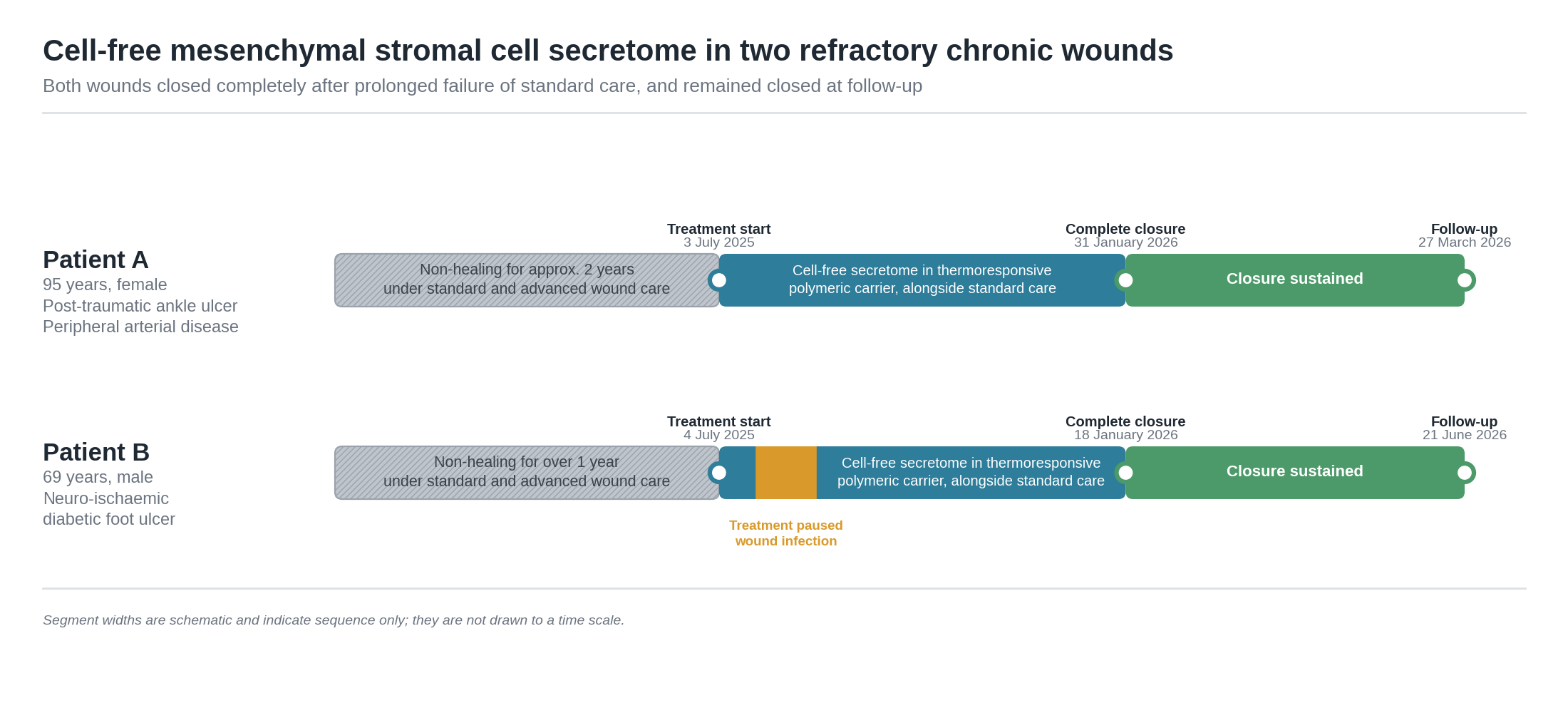
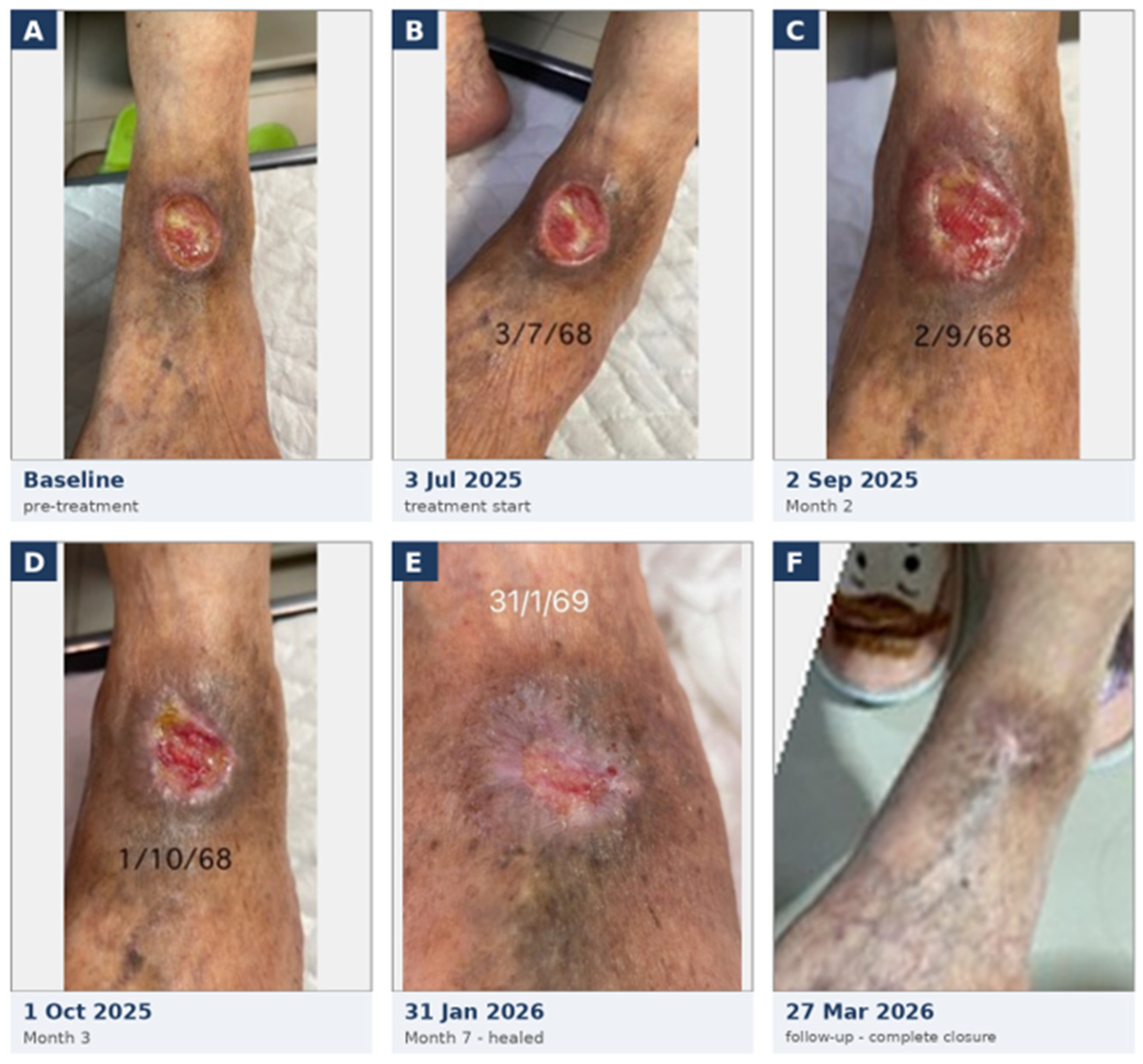
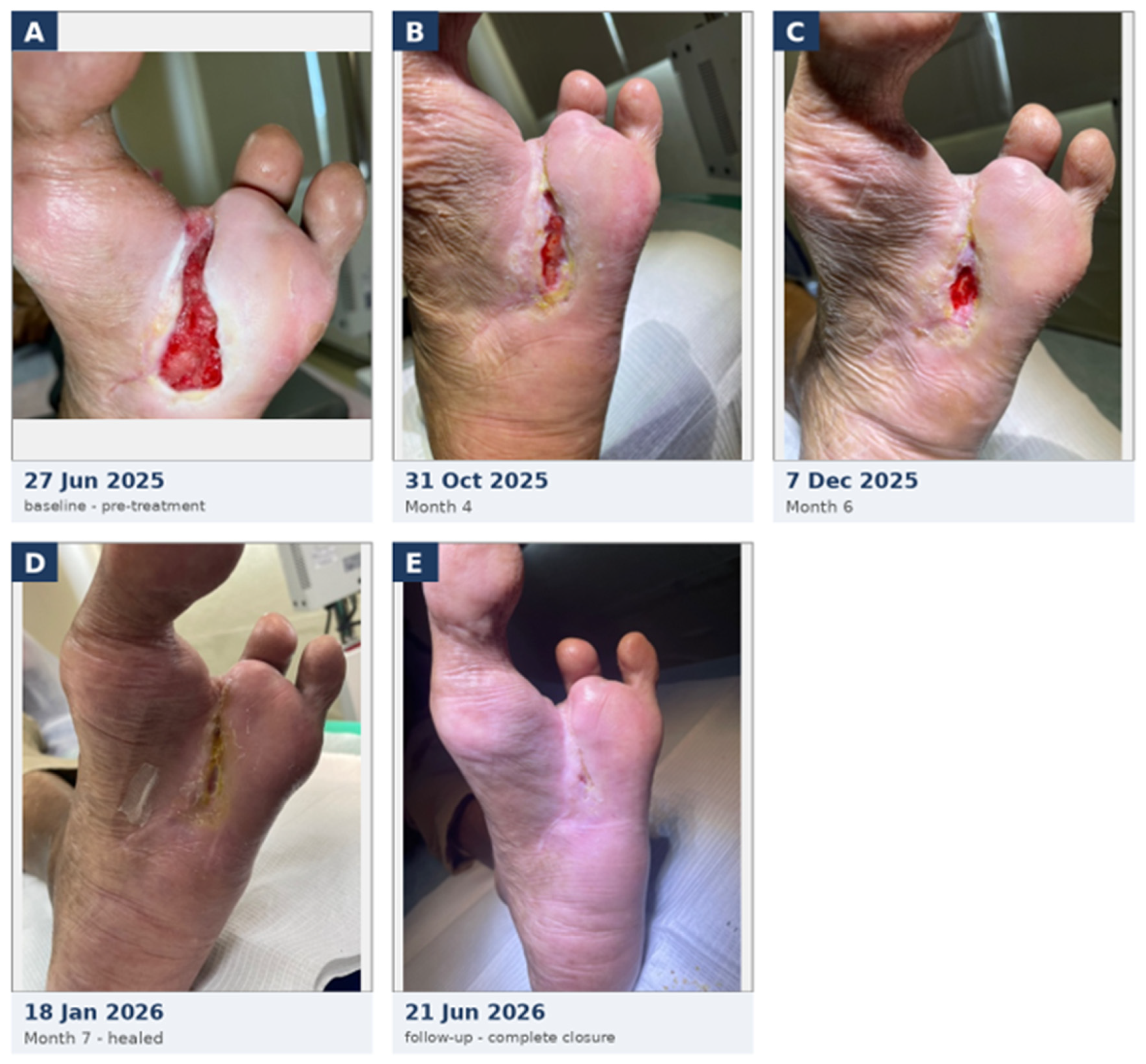
Background: Chronic wounds that fail to heal despite debridement and advanced care are an unmet clinical need, particularly in elderly patients and those with peripheral arterial disease, for whom the alternatives are often indefinite maintenance or amputation. The mesenchymal stromal cell (MSC) secretome is pro-reparative in preclinical models, but human evidence is concentrated on shorter-duration diabetic foot ulcers and has usually reported area reduction rather than complete closure. Methods: We describe two patients with long-standing, treatment-refractory wounds treated with a cell-free Wharton’s jelly-derived MSC secretome delivered in a thermoresponsive polymeric carrier that gels at the wound bed, applied every three days alongside standard care. Results: The cases comprise the following: Case 1, a 95-year-old woman with peripheral arterial disease and a two-year ankle ulcer refractory to multiple advanced products; and Case 2, a 69-year-old man with a one-year neuro-ischemic diabetic foot ulcer persisting after amputation and repeated debridement. Both achieved complete closure at approximately 27 and 28 weeks, respectively, from baseline wound areas of approximately 7.5 cm2 (Case 1) and 12 cm2 (Case 2), using approximately 20 mL of preparation each. Closure was sustained at the latest follow-up (27 March 2026, Case 1; 21 June 2026, Case 2). Treatment was well tolerated; Case 2 had an intercurrent infection requiring a brief pause. Conclusions: A two-patient series cannot establish efficacy, but complete closure in wounds this refractory supports controlled evaluation of this cell-free platform, with complete closure as the primary endpoint.
Keywords: mesenchymal stromal cell secretome; cell-free therapy; Wharton’s jelly; thermoresponsive carrier; drug delivery; regenerative medicine; chronic wounds; diabetic foot ulcer; peripheral arterial disease; wound closure mesenchymal stromal cell secretome; cell-free therapy; Wharton’s jelly; thermoresponsive carrier; drug delivery; regenerative medicine; chronic wounds; diabetic foot ulcer; peripheral arterial disease; wound closure
Graphical Abstract