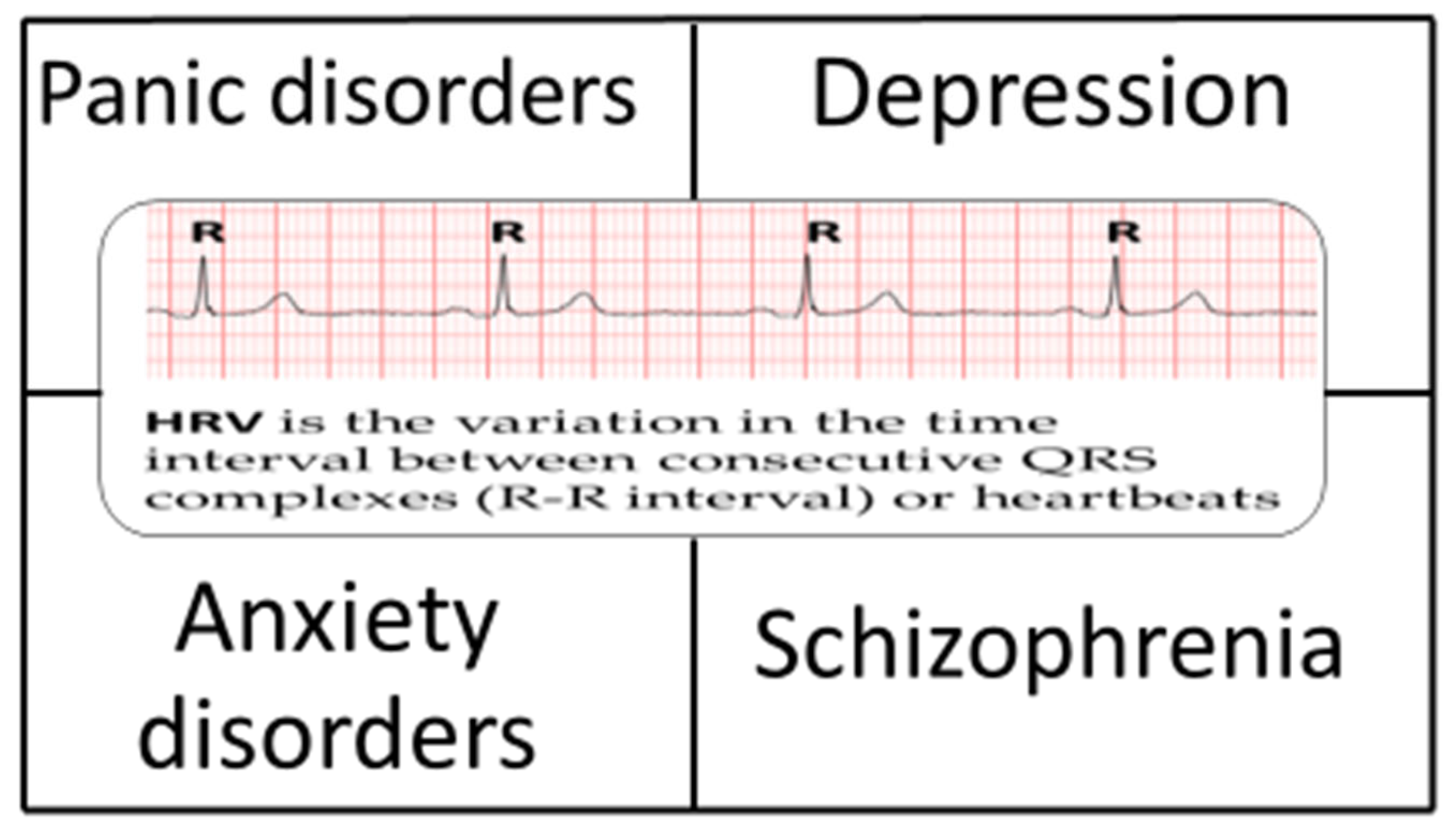
Artificial Intelligence in the Assessment of Heart Rate Variability as an Instrument to Understand the Connection Between Psychologic and Psychiatric Conditions and the Heart


Abstract
1. Introduction
2. Heart Rate Variability (HRV)
3. Artificial Intelligence/Machine Learning
- K-nearest neighbor (KNN) The k-nearest neighbors (KNN) algorithm is a non-parametric, supervised learning classifier, which uses proximity to classify individual data points that form a group, defined based on their proximity to each other or ‘K’ closest neighbors in the feature space, using distance metrics like Euclidean distance [15]. This approach has been useful in clinical medicine [16].
- Support vector machine (SVM) is a supervised machine learning algorithm used for classification and regression. It attempts to find the best “hyperplane” (decision boundary) to separate data into categories, maximizing the margin (distance) to the closest points (support vectors) for robust, accurate predictions, and is useful in a variety of clinical situations [16,17,18].
- Logistic regression (LR) is used to obtain the odds ratio in the presence of more than one explanatory variable in order to identify the contribution of each variable or the odds of the observed event of interest [19].
- Linear discriminant analysis (LDA) separates multiple classes with multiple features through data dimensionality reduction and is especially useful in separating or differentiating two groups [20].
- Naïve Bayes constructs a family of supervised machine learning algorithms that use Bayes’ Theorem for classification and assumes that the features are conditionally independent [21].
- Random forest (RF) is an ensemble machine learning method that builds a number of decision trees in the training set and combines their predictions, i.e., construct a diverse group of models that collectively out preform a single tree [24].
- Gradient boosting machine (GBM) is an ensemble learning algorithm that produces accurate predictions by combining multiple decision trees into a single model. It builds accurate models by sequentially combining many simple models (usually decision trees) to minimize prediction mistakes for complex regression and classification tasks [25,26].
- LightGBM Gradient Boosting Decision Tree (GBDT) utilizes a Gradient-based One-Side Sampling (GOSS) and Exclusive Feature Bundling (EFB) that uses tree-based learning algorithms, providing an approach that excels at the classification, regression and ranking of data.kml.,
- Fuzzy logic models use mathematical fuzzy logic to deal with uncertainty and imprecision [29].
- Neural networks functions use layers of interconnected nodes to learn patterns from data in order to recognize images and understand language. Recurrent neural networks (RNNs) have been useful for a variety of health care issues [30,31]. A long short-term memory architecture (LSTM) is a special type of neural network designed to learn and remember information over long sequences of data.
- Multilayer perceptron (MLP) is a type of neural network with connected nodes organized in layers which is adept at handling non-linear data [32].
4. Mental Stress
5. Anxiety Disorders
6. Panic Disorders
7. Depression
8. Schizophrenia
9. Comments and Challenge
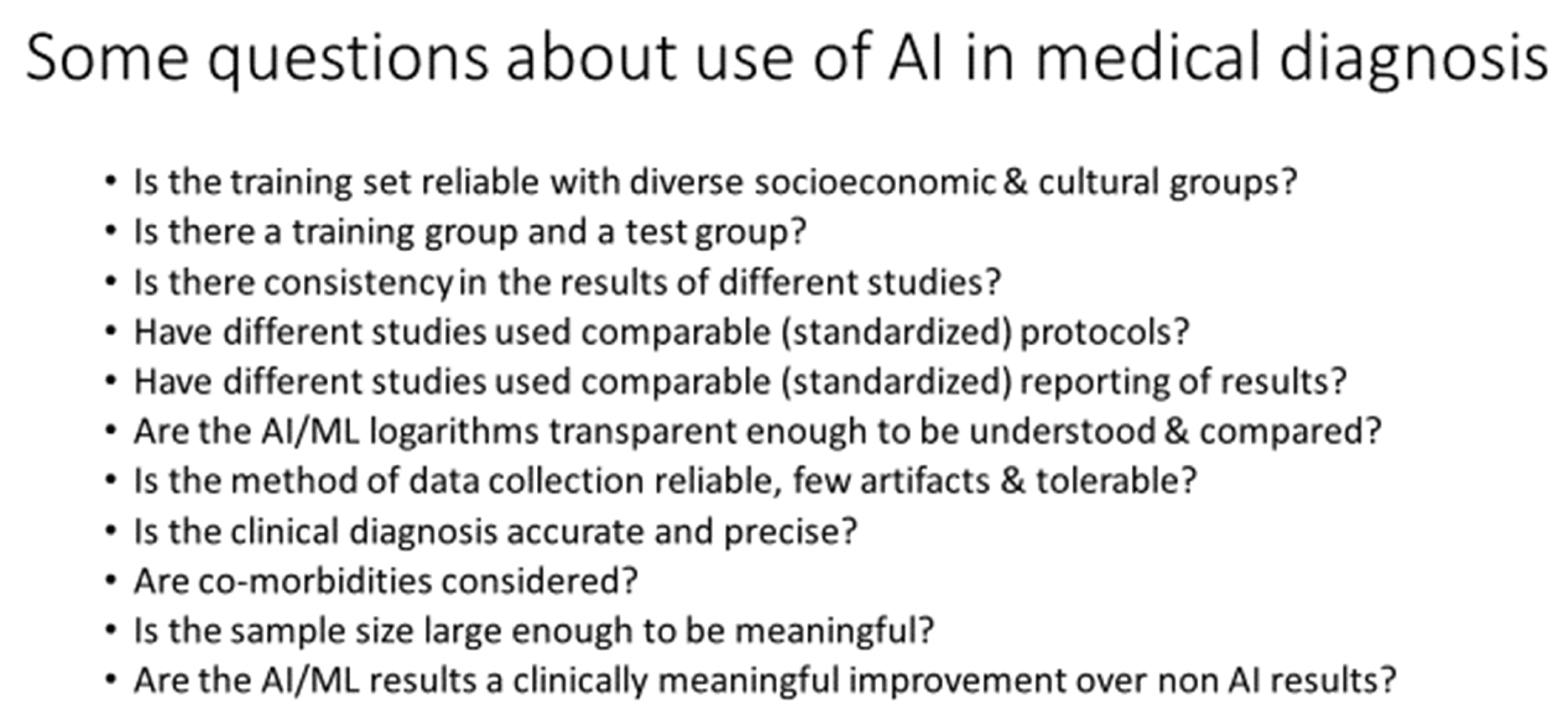
- Is the training set reliable, including diverse socioeconomic and cultural groups?
- Is there a training group and a test group?
- Some studies present the results from their original group (training data set) only and do not apply or test their model on a totally different group or population, the so-called test group.
- Is there consistency in the results of different studies?
- Have different studies used comparable (standardized) protocols?
- The lack of standardized protocols between studies limits, and in some cases precludes, between-study comparisons.
- There is a need for generally accepted protocols for stress-level annotation and the standardization of HRV metrics.
- Have different studies used a comparable (standardized) reporting of results?
- Some studies report only sensitivity and specificity, while others report only AUC, and others do not calculate F1.
- There is a lack of consistent reporting practices.
- Are the AI/ML logarithms transparent enough to be understood and compared?
- Concerns remain that the ‘black box’ of machine learning is impenetrable, therefore creating a lack of transparency in understanding how the models are constructed.
- Differences in AI or ML methodologies between studies create challenges in identifying the best approach (SVM, gradient boost, etc.) to apply and accept into clinical practice.
- Is the method of data collection reliable and tolerable, with few artifacts?
- The compliance of patients with different psychological or psychiatric conditions is needed for them to wear the recording device.
- Artifacts that may result from the technology or poor adherence to recording techniques must be managed.
- There are differences in the mode of data collection—machine or wearables—and the spectrum of different wearables obtain different frequency responses.
- The system must work in real-world settings and not just in the lab.
- Are there multi-day/multi-week studies with external validation?
- Can the computational complexity be adapted to lightweight, energy-efficient wearables?
- Is the clinical diagnosis accurate and precise?
- Are there differences in diagnostic criteria between studies?
- Are co-morbidities considered?
- Is the sample size large enough to be meaningful?
- The small sample sizes in some studies limit the ability to extrapolate the study.
- Do the AI/ML results show a clinically meaningful improvement over non-AI results?
10. Conclusions and Future Directions
Supplementary Materials
Funding
Data Availability Statement
Acknowledgments
Conflicts of Interest
References
- Namazi, A.; Modiri, E.; Blesić, S.; Knežević, O.M.; Mirkov, D.M. Comparative Analysis of Machine Learning Techniques for Heart Rate Prediction Employing Wearable Sensor Data. Sports 2025, 13, 87. [Google Scholar] [CrossRef]
- Ludwig, M.; Hoffmann, K.; Endler, S.; Asteroth, A.; Wiemeyer, J. Measurement, Prediction, and Control of Individual Heart Rate Responses to Exercise-Basics and Options for Wearable Devices. Front. Physiol. 2018, 9, 778. [Google Scholar] [CrossRef] [PubMed]
- Akselrod, S.; Gordon, D.; Ubel, F.A.; Shannon, D.C.; Berger, A.C.; Cohen, R.J. Power spectrum analysis of heart rate fluctuation: A quantitative probe of beat-to-beat cardiovascular control. Science 1981, 213, 220–222. [Google Scholar] [CrossRef] [PubMed]
- Pagani, M.; Lombardi, F.; Guzzetti, S.; Rimoldi, O.; Furlan, R.; Pizzinelli, P.; Sandrone, G.; Malfatto, G.; Dell’Orto, S.; Piccaluga, E. Power spectral analysis of heart rate and arterial pressure variabilities as a marker of sympatho-vagal interaction in man and conscious dog. Circ. Res. 1986, 59, 178–193. [Google Scholar] [CrossRef]
- Koch, C.; Wilhelm, M.; Salzmann, S.; Rief, W.; Euteneuer, F. A meta-analysis of heart rate variability in major depression. Psychol. Med. 2019, 49, 1948–1957. [Google Scholar] [CrossRef] [PubMed]
- Wu, Q.; Miao, X.; Cao, Y.; Chi, A.; Xiao, T. Heart rate variability status at rest in adult depressed patients: A systematic review and meta-analysis. Front. Public Health 2023, 11, 1243213. [Google Scholar] [CrossRef]
- Alvares, G.A.; Quintana, D.S.; Hickie, I.B.; Guastella, A.J. Autonomic nervous system dysfunction in psychiatric disorders and the impact of psychotropic medications: A systematic review and meta-analysis. J. Psychiatry Neurosci. 2016, 41, 89–104. [Google Scholar] [CrossRef] [PubMed]
- Kircanski, K.; Williams, L.M.; Gotlib, I.H. Heart rate variability as a biomarker of anxious depression response to antidepressant medication. Depress. Anxiety 2019, 36, 63–71. [Google Scholar] [CrossRef]
- Johnson, L.S.; Zadrozniak, P.; Jasina, G.; Grotek-Cuprjak, A.; Andrade, J.G.; Svennberg, E.; Diederichsen, S.Z.; McIntyre, W.F.; Stavrakis, S.; Benezet-Mazuecos, J.; et al. Artificial intelligence for direct-to-physician reporting of ambulatory electrocardiography. Nat. Med. 2025, 31, 925–931. [Google Scholar] [CrossRef]
- Rabkin, S.W. Searching for the Best Machine Learning Algorithm for the Detection of Left Ventricular Hypertrophy from the ECG: A Review. Bioengineering 2024, 11, 489. [Google Scholar] [CrossRef]
- Herman, R.; Mumma, B.E.; Hoyne, J.D.; Cooper, B.L.; Johnson, N.P.; Kisova, T.; Demolder, A.; Rafajdus, A.; Iring, A.; Palus, T.; et al. AI-Enabled ECG Analysis Improves Diagnostic Accuracy and Reduces False STEMI Activations: A Multicenter U.S. Registry. JACC. Cardiovasc. Interv. 2026, 19, 145–156. [Google Scholar] [CrossRef] [PubMed]
- Berntson, G.G.; Bigger, J.T.J.; Eckberg, D.L.; Grossman, P.; Kaufmann, P.G.; Malik, M.; Nagaraja, H.N.; Porges, S.W.; Saul, J.P.; Stone, P.H.; et al. Heart rate variability: Origins, methods, and interpretive caveats. Psychophysiology 1997, 34, 623–648. [Google Scholar] [CrossRef]
- Malik, M.; Camm, A.J.; Bigger, J.T.; Breithardt, G.; Cerutti, S.; Cohen, R.J.; Coumel, P.; Fallen, E.L.; Kennedy, H.L.; Kleiger, R.E.; et al. Heart rate variability. Standards of measurement, physiological interpretation, and clinical use. Task Force of the European Society of Cardiology and the North American Society of Pacing and Electrophysiology. Eur. Heart J. 1996, 17, 354–381. [Google Scholar] [CrossRef]
- Singh, I.; Rabkin, S.W. Circadian variation of the QT interval and heart rate variability and their interrelationship. J. Electrocardiol. 2021, 65, 18–27. [Google Scholar] [CrossRef]
- Uddin, S.; Haque, I.; Lu, H.; Moni, M.A.; Gide, E. Comparative performance analysis of K-nearest neighbour (KNN) algorithm and its different variants for disease prediction. Sci. Rep. 2022, 12, 6256. [Google Scholar] [CrossRef]
- Nouraei, H.; Nouraei, H.; Rabkin, S.W. Comparison of Unsupervised Machine Learning Approaches for Cluster Analysis to Define Subgroups of Heart Failure with Preserved Ejection Fraction with Different Outcomes. Bioengineering 2022, 9, 175. [Google Scholar] [CrossRef]
- Huang, S.; Cai, N.; Pacheco, P.P.; Narrandes, S.; Wang, Y.; Xu, W. Applications of Support Vector Machine (SVM) Learning in Cancer Genomics. Cancer Genom. Proteom. 2018, 15, 41–51. [Google Scholar] [CrossRef]
- Uddin, S.; Khan, A.; Hossain, M.E.; Moni, M.A. Comparing different supervised machine learning algorithms for disease prediction. BMC Med. Inform. Decis. Mak. 2019, 19, 281. [Google Scholar] [CrossRef]
- Sperandei, S. Understanding logistic regression analysis. Biochem. Medica 2014, 24, 12–18. [Google Scholar] [CrossRef]
- Graf, R.; Zeldovich, M.; Friedrich, S. Comparing linear discriminant analysis and supervised learning algorithms for binary classification-A method comparison study. Biom. J. 2024, 66, e2200098. [Google Scholar] [CrossRef] [PubMed]
- Langarizadeh, M.; Moghbeli, F. Applying Naive Bayesian Networks to Disease Prediction: A Systematic Review. Acta Inform. Medica 2016, 24, 364–369. [Google Scholar] [CrossRef]
- Podgorelec, V.; Kokol, P.; Stiglic, B.; Rozman, I. Decision trees: An overview and their use in medicine. J. Med. Syst. 2002, 26, 445–463. [Google Scholar] [CrossRef]
- Geurts, P.; Ernst, D.; Wehenkel, L. Extremely randomized trees. Mach. Learn. 2006, 63, 3–42. [Google Scholar] [CrossRef]
- Svetnik, V.; Liaw, A.; Tong, C.; Culberson, J.C.; Sheridan, R.P.; Feuston, B.P. Random forest: A classification and regression tool for compound classification and QSAR modeling. J. Chem. Inf. Comput. Sci. 2003, 43, 1947–1958. [Google Scholar] [CrossRef]
- Natekin, A.; Knoll, A. Gradient boosting machines, a tutorial. Front. Neurorobot. 2013, 7, 21. [Google Scholar] [CrossRef]
- Zhang, Z.; Zhao, Y.; Canes, A.; Steinberg, D.; Lyashevska, O. Predictive analytics with gradient boosting in clinical medicine. Ann. Transl. Med. 2019, 7, 152. [Google Scholar] [CrossRef] [PubMed]
- Wiens, M.; Verone-Boyle, A.; Henscheid, N.; Podichetty, J.T.; Burton, J. A Tutorial and Use Case Example of the eXtreme Gradient Boosting (XGBoost) Artificial Intelligence Algorithm for Drug Development Applications. Clin. Transl. Sci. 2025, 18, e70172. [Google Scholar] [CrossRef]
- Sun, Y.; Yu, K.; Du, L.; Hu, X.; Sheng, W.; Wang, D.; Miao, H. Application of XGBoost in the prediction of acute postoperative pain after major noncardiac surgery in older patients. Mol. Pain 2025, 21, 17448069251376200. [Google Scholar] [CrossRef] [PubMed]
- Ghazavi, S.N.; Liao, T.W. Medical data mining by fuzzy modeling with selected features. Artif. Intell. Med. 2008, 43, 195–206. [Google Scholar] [CrossRef] [PubMed]
- Shahid, N.; Rappon, T.; Berta, W. Applications of artificial neural networks in health care organizational decision-making: A scoping review. PLoS ONE 2019, 14, e0212356. [Google Scholar] [CrossRef]
- Mall, P.K.; Singh, P.K.; Srivastav, S.; Narayan, V.; Paprzycki, M.; Jaworska, T.; Ganzha, M. A comprehensive review of deep neural networks for medical image processing: Recent developments and future opportunities. Healthc. Anal. 2023, 4, 100216. [Google Scholar] [CrossRef]
- Popescu, M.-C.; Balas, V.E.; Perescu-Popescu, L.; Mastorakis, N. Multilayer perceptron and neural networks. WSEAS Trans. Cir. Syst. 2009, 8, 579–588. [Google Scholar]
- Karthikeyan, P.; Murugappan, M.; Yaacob, S. Detection of human stress using short-term ECG and HRV signals. J. Mech. Med. Biol. 2013, 13, 1350038. [Google Scholar] [CrossRef]
- Healey, J.A.; Picard, R.W. Detecting stress during real-world driving tasks using physiological sensors. IEEE Trans. Intell. Transp. Syst. 2005, 6, 156–166. [Google Scholar] [CrossRef]
- Singh, R.R.; Conjeti, S.; Banerjee, R. A comparative evaluation of neural network classifiers for stress level analysis of automotive drivers using physiological signals. Biomed. Signal Process. Control 2013, 8, 740–754. [Google Scholar] [CrossRef]
- Immanuel, S.; Teferra, M.N.; Baumert, M.; Bidargaddi, N. Heart Rate Variability for Evaluating Psychological Stress Changes in Healthy Adults: A Scoping Review. Neuropsychobiology 2023, 82, 187–202. [Google Scholar] [CrossRef] [PubMed]
- Verkuil, B.; Brosschot, J.F.; Tollenaar, M.S.; Lane, R.D.; Thayer, J.F. Prolonged Non-metabolic Heart Rate Variability Reduction as a Physiological Marker of Psychological Stress in Daily Life. Ann. Behav. Med. 2016, 50, 704–714. [Google Scholar] [CrossRef]
- Cinaz, B.; Arnrich, B.; La Marca, R.; Tröster, G. Monitoring of mental workload levels during an everyday life office-work scenario. Pers. Ubiquitous Comput. 2013, 17, 229–239. [Google Scholar]
- Kim, H.-G.; Cheon, E.-J.; Bai, D.-S.; Lee, Y.H.; Koo, B.-H. Stress and Heart Rate Variability: A Meta-Analysis and Review of the Literature. Psychiatry Investig. 2018, 15, 235–245. [Google Scholar] [CrossRef]
- He, M.; Cerna, J.; Alkurdi, A.; Dogan, A.; Zhao, J.; Clore, J.L.; Sowers, R.; Hsiao-Wecksler, E.T.; Hernandez, M.E. Physical, Social and Cognitive Stressor Identification using Electrocardiography-derived Features and Machine Learning from a Wearable Device. In Proceedings of the 2024 46th Annual International Conference of the IEEE Engineering in Medicine and Biology Society (EMBC), Orlando, FL, USA, 15–19 July 2024; pp. 1–4. [Google Scholar] [CrossRef]
- Fan, X.; Zhao, C.; Zhang, X.; Luo, H.; Zhang, W. Assessment of mental workload based on multi-physiological signals. Technol. Health Care 2020, 28, 67–80. [Google Scholar]
- Parent, M.; Peysakhovich, V.; Mandrick, K.; Tremblay, S.; Causse, M. The diagnosticity of psychophysiological signatures: Can we disentangle mental workload from acute stress with ECG and fNIRS? Int. J. Psychophysiol. 2019, 146, 139–147. [Google Scholar] [CrossRef]
- Giannakakis, G.; Marias, K.; Tsiknakis, M. A stress recognition system using HRV parameters and machine learning techniques. In Proceedings of the 2019 8th International Conference on Affective Computing and Intelligent Interaction Workshops and Demos (ACIIW), Cambridge, UK, 3–6 September 2019; pp. 269–272. [Google Scholar]
- Iovino, M.; Lazic, I.; Loncar-Turukalo, T.; Javorka, M.; Pernice, R.; Faes, L. Comparison of automatic and physiologically-based feature selection methods for classifying physiological stress using heart rate and pulse rate variability indices. Physiol. Meas. 2024, 45, 115004. [Google Scholar] [CrossRef]
- Castaldo, R.; Montesinos, L.; Melillo, P.; James, C.; Pecchia, L. Ultra-short term HRV features as surrogates of short term HRV: A case study on mental stress detection in real life. BMC Med. Inform. Decis. Mak. 2019, 19, 12. [Google Scholar] [CrossRef]
- Bahameish, M.; Stockman, T.; Requena Carrión, J. Strategies for Reliable Stress Recognition: A Machine Learning Approach Using Heart Rate Variability Features. Sensors 2024, 24, 3210. [Google Scholar] [CrossRef]
- Lei, L.; He, S.; Hou, R.; Zhu, Y.; Zhao, J.; Ouyang, Y. Physiological Assessment of Mental Stress in Construction Workers Under High-Risk Working Conditions: ECG-Based Field Measurements on Inexperienced Scaffolders. Sensors 2026, 26, 949. [Google Scholar] [CrossRef]
- Lee, S.; Hwang, H.B.; Park, S.; Kim, S.; Ha, J.H.; Jang, Y.; Hwang, S.; Park, H.-K.; Lee, J.; Kim, I.Y. Mental Stress Assessment Using Ultra Short Term HRV Analysis Based on Non-Linear Method. Biosensors 2022, 12, 465. [Google Scholar] [CrossRef]
- Hwang, B.; You, J.; Vaessen, T.; Myin-Germeys, I.; Park, C.; Zhang, B.-T. Deep ECGNet: An Optimal Deep Learning Framework for Monitoring Mental Stress Using Ultra Short-Term ECG Signals. Telemed. e-Health 2018, 24, 753–772. [Google Scholar] [CrossRef]
- Pourmohammadi, S.; Maleki, A. Continuous mental stress level assessment using electrocardiogram and electromyogram signals. Biomed. Signal Process. Control 2021, 68, 102694. [Google Scholar]
- Betti, S.; Lova, R.M.; Rovini, E.; Acerbi, G.; Santarelli, L.; Cabiati, M.; Ry, S.D.; Cavallo, F. Evaluation of an Integrated System of Wearable Physiological Sensors for Stress Monitoring in Working Environments by Using Biological Markers. IEEE Trans. Biomed. Eng. 2018, 65, 1748–1758. [Google Scholar] [CrossRef]
- Xu, Q.; Nwe, T.L.; Guan, C. Cluster-based analysis for personalized stress evaluation using physiological signals. IEEE J. Biomed. Health Inform. 2014, 19, 275–281. [Google Scholar]
- Li, R.; Liu, Z. Stress detection using deep neural networks. BMC Med. Inform. Decis. Mak. 2020, 20, 285. [Google Scholar] [CrossRef]
- Can, Y.S.; Chalabianloo, N.; Ekiz, D.; Ersoy, C. Continuous Stress Detection Using Wearable Sensors in Real Life: Algorithmic Programming Contest Case Study. Sensors 2019, 19, 1849. [Google Scholar] [CrossRef]
- Gedam, S.; Dutta, S.; Jha, R. Analyzing mental stress in Indian students through advanced machine learning and wearable technologies. Sci. Rep. 2025, 15, 20610. [Google Scholar] [CrossRef]
- World Health Organization. Depression and Other Common Mental Disorders: Global Health Estimates; World Health Organization: Geneva, Switzerland, 2017. [Google Scholar]
- Zafar, F.; Fakhare Alam, L.; Vivas, R.R.; Wang, J.; Whei, S.J.; Mehmood, S.; Sadeghzadegan, A.; Lakkimsetti, M.; Nazir, Z. The Role of Artificial Intelligence in Identifying Depression and Anxiety: A Comprehensive Literature Review. Cureus 2024, 16, e56472. [Google Scholar] [CrossRef]
- Abd-alrazaq, A.; AlSaad, R.; Harfouche, M.; Aziz, S.; Ahmed, A.; Damseh, R.; Sheikh, J. Wearable Artificial Intelligence for Detecting Anxiety: Systematic Review and Meta-Analysis. J. Med. Internet Res. 2023, 25, e48754. [Google Scholar] [CrossRef]
- Pal, B.; Gupta, A.; Paul, S.; Rahaman, M.M. AI-Driven Panic Detection and Alert System Using Smartwatch and LLM Model. In Proceedings of the 2024 Eighth International Conference on Parallel, Distributed and Grid Computing (PDGC), Waknaghat, Solan, India, 18–20 December 2024; pp. 798–803. [Google Scholar]
- Shikha, S.; Sethia, D.; Indu, S. A Systematic Review on Physiology-based Anxiety Detection using Machine Learning. Biomed. Phys. Eng. Express 2025, 11, 042002. [Google Scholar] [CrossRef]
- Miu, A.C.; Heilman, R.M.; Miclea, M. Reduced heart rate variability and vagal tone in anxiety: Trait versus state, and the effects of autogenic training. Auton. Neurosci. 2009, 145, 99–103. [Google Scholar] [CrossRef]
- Alkurdi, A.; He, M.; Cerna, J.; Clore, J.; Sowers, R.; Hsiao-Wecksler, E.T.; Hernandez, M.E. Extending Anxiety Detection from Multimodal Wearables in Controlled Conditions to Real-World Environments. Sensors 2025, 25, 1241. [Google Scholar] [CrossRef]
- Ancillon, L.; Elgendi, M.; Menon, C. Machine Learning for Anxiety Detection Using Biosignals: A Review. Diagnostics 2022, 12, 1794. [Google Scholar] [CrossRef]
- Gu, X.; Hu, X. Research on mood monitoring and intervention for anxiety disorder patients based on deep learning wearable devices. Technol. Health Care 2025, 33, 1128–1139. [Google Scholar] [CrossRef]
- Li, X.; Zou, L.; Li, H. Multilayer Perceptron-Based Wearable Exercise-Related Heart Rate Variability Predicts Anxiety and Depression in College Students. Sensors 2024, 24, 4203. [Google Scholar] [CrossRef]
- Handouzi, W.; Maaoui, C.; Pruski, A. Virtual reality exposure aided-diagnosis system for anxiety disorders: Long short-term memory architecture for three levels of anxiety recognition. Bio-Med. Mater. Eng. 2023, 34, 491–502. [Google Scholar] [CrossRef]
- Bilgin, S.; Arslan, E.; Elmas, O.; Yildiz, S.; Colak, O.H.; Bilgin, G.; Koyuncuoglu, H.R.; Akkus, S.; Comlekci, S.; Koklukaya, E. Investigation of the relationship between anxiety and heart rate variability in fibromyalgia: A new quantitative approach to evaluate anxiety level in fibromyalgia syndrome. Comput. Biol. Med. 2015, 67, 126–135. [Google Scholar] [CrossRef]
- ShamsEldin, T.; Gaber, S.; Ansari, S.; Elgohary, R.; Shawky, M.A.; Elbahnasawy, M.; Abdrabou, M. Artificial intelligence for predicting depression anxiety and stress using psychometric data. Sci. Rep. 2025, 15, 37282. [Google Scholar] [CrossRef]
- Das, K.P.; Gavade, P. A review on the efficacy of artificial intelligence for managing anxiety disorders. Front. Artif. Intell. 2024, 7, 1435895. [Google Scholar] [CrossRef]
- Angst, J. Panic disorder: History and epidemiology. Eur. Psychiatry 1998, 13, 51s–55s. [Google Scholar] [CrossRef]
- Sobanski, T.; Wagner, G. Functional neuroanatomy in panic disorder: Status quo of the research. World J. Psychiatry 2017, 7, 12–33. [Google Scholar] [CrossRef]
- Tsai, C.-H.; Christian, M.; Kuo, Y.-Y.; Lu, C.C.; Lai, F.; Huang, W.-L. Sleep, physical activity and panic attacks: A two-year prospective cohort study using smartwatches, deep learning and an explainable artificial intelligence model. Sleep Med. 2024, 114, 55–63. [Google Scholar] [CrossRef]
- Na, K.-S.; Cho, S.-E.; Cho, S.-J. Machine learning-based discrimination of panic disorder from other anxiety disorders. J. Affect. Disord. 2021, 278, 1–4. [Google Scholar] [CrossRef]
- Oh, H.; Do, H.; Maeng, C.; Park, J.; Yoon, T.; Kim, J.; Hwang, H.; Choi, S.; Huilin, P. Panic Attack Prediction for Patients with Panic Disorder via Machine Learning and Wearable Electrocardiography Monitoring: Model Development and Validation Study. J. Med. Internet Res. 2025, 27, e69045. [Google Scholar] [CrossRef]
- Hong, S.; Park, D.-H.; Ryu, S.-H.; Ha, J.H.; Jeon, H.J. Association between Heart Rate Variability Indices and Depressed Mood in Patients with Panic Disorder. Clin. Psychopharmacol. Neurosci. Off. Sci. J. Korean Coll. Neuropsychopharmacol. 2022, 20, 737–746. [Google Scholar] [CrossRef]
- Carney, R.M.; Saunders, R.D.; Freedland, K.E.; Stein, P.; Rich, M.W.; Jaffe, A.S. Association of depression with reduced heart rate variability in coronary artery disease. Am. J. Cardiol. 1995, 76, 562–564. [Google Scholar] [CrossRef]
- Stein, P.K.; Carney, R.M.; Freedland, K.E.; Skala, J.A.; Jaffe, A.S.; Kleiger, R.E.; Rottman, J.N. Severe depression is associated with markedly reduced heart rate variability in patients with stable coronary heart disease. J. Psychosom. Res. 2000, 48, 493–500. [Google Scholar] [CrossRef]
- Kemp, A.H.; Quintana, D.S.; Gray, M.A.; Felmingham, K.L.; Brown, K.; Gatt, J.M. Impact of depression and antidepressant treatment on heart rate variability: A review and meta-analysis. Biol. Psychiatry 2010, 67, 1067–1074. [Google Scholar] [CrossRef]
- Brunoni, A.R.; Kemp, A.H.; Dantas, E.M.; Goulart, A.C.; Nunes, M.A.; Boggio, P.S.; Mill, J.G.; Lotufo, P.A.; Fregni, F.; Benseñor, I.M. Heart rate variability is a trait marker of major depressive disorder: Evidence from the sertraline vs. electric current therapy to treat depression clinical study. Int. J. Neuropsychopharmacol. 2013, 16, 1937–1949. [Google Scholar] [CrossRef]
- Galin, S.; Keren, H. The Predictive Potential of Heart Rate Variability for Depression. Neuroscience 2024, 546, 88–103. [Google Scholar] [CrossRef]
- Tan, Y.; Zhou, M.; Wang, J.; Song, Y.; Li, Q.; Huang, Z.; Li, Y.; Wang, Y.; Zhang, J.; Quan, W.; et al. Heart rate variability in subthreshold depression and major depressive disorder. J. Affect. Disord. 2025, 373, 306–313. [Google Scholar] [CrossRef]
- Pagès, E.G.; Kontaxis, S.; Siddi, S.; Miguel, M.P.; de la Cámara, C.; Bernal, M.L.; Ribeiro, T.C.; Laguna, P.; Badiella, L.; Bailón, R.; et al. Contribution of physiological dynamics in predicting major depressive disorder severity. Psychophysiology 2025, 62, e14729. [Google Scholar] [CrossRef]
- Kontaxis, S.; Orini, M.; Gil, E.; Mar Posadas-de Miguel, M.; Bernal, M.; Aguil, J.; de la Camara, C.; Laguna1, P.; Bail, R. Heart Rate Variability Analysis Guided by Respiration in Major Depressive Disorder. In Proceedings of the 2018 Computing in Cardiology Conference (CinC), Maastricht, Netherlands, 23–26 September 2018; pp. 1–5. [Google Scholar]
- Wu, M.-J.; Wang, W.-Q.; Zhang, W.; Li, J.-H.; Zhang, X.-W. The diagnostic value of electrocardiogram-based machine learning in long QT syndrome: A systematic review and meta-analysis. Front. Cardiovasc. Med. 2023, 10, 1172451. [Google Scholar] [CrossRef]
- Kobayashi, M.; Sun, G.; Shinba, T.; Matsui, T.; Kirimoto, T. Development of a Mental Disorder Screening System Using Support Vector Machine for Classification of Heart Rate Variability Measured from Single-lead Electrocardiography. In Proceedings of the 2019 IEEE Sensors Applications Symposium (SAS), Sophia Antipolis, France, 11–13 March 2019; pp. 1–6. [Google Scholar]
- Zhang, Z.-X.; Tian, X.-W.; Lim, J.S. New algorithm for the depression diagnosis using HRV: A neuro-fuzzy approach. In Proceedings of the International Symposium on Bioelectronics and Bioinformations 2011, Suzhou, China, 3–5 November 2011; IEEE: New York, NY, USA, 2011; pp. 283–286. [Google Scholar]
- Sun, G.; Shinba, T.; Kirimoto, T.; Matsui, T. An objective screening method for major depressive disorder using logistic regression analysis of heart rate variability data obtained in a mental task paradigm. Front. Psychiatry 2016, 7, 180. [Google Scholar] [CrossRef]
- Kuang, D.; Yang, R.; Chen, X.; Lao, G.; Wu, F.; Huang, X.; Lv, R.; Zhang, L.; Song, C.; Ou, S. Depression recognition according to heart rate variability using Bayesian Networks. J. Psychiatr. Res. 2017, 95, 282–287. [Google Scholar] [CrossRef]
- Kim, M.; Lim, J.S. Finding and evaluating suitable contents to recognize depression based on neuro-fuzzy algorithm. In Proceedings of the 2019 International Conference on Information and Communication Technology Convergence (ICTC), Jeju, Republic of Korea, 16–18 October 2019; IEEE: New York, NY, USA, 2019; pp. 478–483. [Google Scholar]
- Byun, S.; Kim, A.Y.; Jang, E.H.; Kim, S.; Choi, K.W.; Yu, H.Y.; Jeon, H.J. Detection of major depressive disorder from linear and nonlinear heart rate variability features during mental task protocol. Comput. Biol. Med. 2019, 112, 103381. [Google Scholar] [CrossRef]
- Geng, D.; An, Q.; Fu, Z.; Wang, C.; An, H. Identification of major depression patients using machine learning models based on heart rate variability during sleep stages for pre-hospital screening. Comput. Biol. Med. 2023, 162, 107060. [Google Scholar] [CrossRef]
- Xia, Y.; Zhang, H.; Wang, Z.; Song, Y.; Shi, K.; Fan, J.; Yang, Y. Circadian rhythm modulation in heart rate variability as potential biomarkers for major depressive disorder: A machine learning approach. J. Psychiatr. Res. 2025, 184, 340–349. [Google Scholar] [CrossRef]
- Yang, M.; Zhang, H.; Yu, M.; Xu, Y.; Xiang, B.; Yao, X. Auxiliary identification of depression patients using interpretable machine learning models based on heart rate variability: A retrospective study. BMC Psychiatry 2024, 24, 914. [Google Scholar] [CrossRef]
- Saad, M.; Ray, L.B.; Bujaki, B.; Parvaresh, A.; Palamarchuk, I.; De Koninck, J.; Douglass, A.; Lee, E.K.; Soucy, L.J.; Fogel, S.; et al. Using heart rate profiles during sleep as a biomarker of depression. BMC Psychiatry 2019, 19, 168. [Google Scholar] [CrossRef]
- Xiao, X.; Li, S.; Yu, W. DCEM-TCRCN: An innovative approach to depression detection using wearable IoT devices and deep learning. Int. J. Comput. Assist. Radiol. Surg. 2025, 20, 2301–2308. [Google Scholar] [CrossRef]
- Datta, A.; Choudhary, S.; Soni, S.; Misra, R.; Singh, K. Altered Heart Rate Variability During Rest in Schizophrenia: A State Marker. Cureus 2023, 15, e44145. [Google Scholar] [CrossRef]
- Cella, M.; Okruszek, Ł.; Lawrence, M.; Zarlenga, V.; He, Z.; Wykes, T. Using wearable technology to detect the autonomic signature of illness severity in schizophrenia. Schizophr. Res. 2018, 195, 537–542. [Google Scholar] [CrossRef]
- Kim, J.-H.; Yi, S.H.; Yoo, C.S.; Yang, S.A.; Yoon, S.C.; Lee, K.Y.; Ahn, Y.M.; Kang, U.G.; Kim, Y.S. Heart rate dynamics and their relationship to psychotic symptom severity in clozapine-treated schizophrenic subjects. Prog. Neuropsychopharmacol. Biol. Psychiatry 2004, 28, 371–378. [Google Scholar] [CrossRef]
- Bär, K.-J.; Boettger, M.K.; Koschke, M.; Schulz, S.; Chokka, P.; Yeragani, V.K.; Voss, A. Non-linear complexity measures of heart rate variability in acute schizophrenia. Clin. Neurophysiol. 2007, 118, 2009–2015. [Google Scholar] [CrossRef]
- Chung, M.-S.; Yang, A.C.; Lin, Y.-C.; Lin, C.-N.; Chang, F.-R.; Shen, S.; Ouyang, W.-C.; Loh, E.-W.; Chiu, H.-J. Association of altered cardiac autonomic function with psychopathology and metabolic profiles in schizophrenia. Psychiatry Res. 2013, 210, 710–715. [Google Scholar] [CrossRef]
- Refisch, A.; Schumann, A.; Gupta, Y.; Schulz, S.; Voss, A.; Malchow, B.; Bär, K.-J. Characterization of cardiac autonomic dysfunction in acute Schizophrenia: A cluster analysis of heart rate variability parameters. Schizophrenia 2025, 11, 40. [Google Scholar] [CrossRef]
- Montaquila, J.M.; Trachik, B.J.; Bedwell, J.S. Heart rate variability and vagal tone in schizophrenia: A review. J. Psychiatr. Res. 2015, 69, 57–66. [Google Scholar] [CrossRef]
- Haigh, S.M.; Walford, T.P.; Brosseau, P. Heart Rate Variability in Schizophrenia and Autism. Front. Psychiatry 2021, 12, 760396. [Google Scholar] [CrossRef]
- Clamor, A.; Lincoln, T.M.; Thayer, J.F.; Koenig, J. Resting vagal activity in schizophrenia: Meta-analysis of heart rate variability as a potential endophenotype. Br. J. Psychiatry 2016, 208, 9–16. [Google Scholar] [CrossRef]
- Benjamin, B.R.; Valstad, M.; Elvsåshagen, T.; Jönsson, E.G.; Moberget, T.; Winterton, A.; Haram, M.; Høegh, M.C.; Lagerberg, T.V.; Steen, N.E.; et al. Heart rate variability is associated with disease severity in psychosis spectrum disorders. Prog. Neuropsychopharmacol. Biol. Psychiatry 2021, 111, 110108. [Google Scholar] [CrossRef]
- Stogios, N.; Gdanski, A.; Gerretsen, P.; Chintoh, A.F.; Graff-Guerrero, A.; Rajji, T.K.; Remington, G.; Hahn, M.K.; Agarwal, S.M. Autonomic nervous system dysfunction in schizophrenia: Impact on cognitive and metabolic health. npj Schizophr. 2021, 7, 22. [Google Scholar] [CrossRef]
- Yoshida, N.; Miyajima, M.; Suzuki, Y.; Matsushima, E.; Watanabe, T.; Omoya, R.; Fujiwara, M.; Nakamura, M.; Takahashi, H.; Takeuchi, T. Heart rate variability in schizophrenia: A comparative analysis before and after electroconvulsive therapy. PCN Rep. Psychiatry Clin. Neurosci. 2024, 3, e70030. [Google Scholar] [CrossRef]
- Fujibayashi, M.; Matsumoto, T.; Kishida, I.; Kimura, T.; Ishii, C.; Ishii, N.; Moritani, T. Autonomic nervous system activity and psychiatric severity in schizophrenia. Psychiatry Clin. Neurosci. 2009, 63, 538–545. [Google Scholar] [CrossRef]
- Valkonen-Korhonen, M.; Tarvainen, M.P.; Ranta-Aho, P.; Karjalainen, P.A.; Partanen, J.; Karhu, J.; Lehtonen, J. Heart rate variability in acute psychosis. Psychophysiology 2003, 40, 716–726. [Google Scholar] [CrossRef]
- Ramesh, A.; Nayak, T.; Beestrum, M.; Quer, G.; Pandit, J.A. Heart Rate Variability in Psychiatric Disorders: A Systematic Review. Neuropsychiatr. Dis. Treat. 2023, 19, 2217–2239. [Google Scholar] [CrossRef]
- Książek, K.; Masarczyk, W.; Głomb, P.; Romaszewski, M.; Buza, K.; Sekuła, P.; Cholewa, M.; Kołodziej, K.; Gorczyca, P.; Piegza, M. Deep learning approach for automatic assessment of schizophrenia and bipolar disorder in patients using R-R intervals. PLoS Comput. Biol. 2025, 21, e1012983. [Google Scholar] [CrossRef] [PubMed]
- Ghorbankhani, M.; Safara, M. Artificial intelligence in depression diagnostics: A systematic review of methodologies and clinical applications. Artif. Intell. Med. 2026, 172, 103320. [Google Scholar] [CrossRef] [PubMed]
- Kim, S.; Ko, B.-C.; Nam, J. Model Simplification of Deep Random Forest for Real-Time Applications of Various Sensor Data. Sensors 2021, 21, 3004. [Google Scholar] [CrossRef] [PubMed]
- Luan, J.; Zhang, C.; Xu, B.; Xue, Y.; Ren, Y. The predictive performances of random forest models with limited sample size and different species traits. Fish. Res. 2020, 227, 105534. [Google Scholar] [CrossRef]
- Fiske, A.; Henningsen, P.; Buyx, A. Your Robot Therapist Will See You Now: Ethical Implications of Embodied Artificial Intelligence in Psychiatry, Psychology, and Psychotherapy. J. Med. Internet Res. 2019, 21, e13216. [Google Scholar] [CrossRef]


| Metric | F1 Score |
|---|---|
| Logistic regression | 87.2 |
| Decision tree | 87.1 |
| K-nearest neighbor | 84.0 |
| Naive Bayes | 84.4 |
| Random Forest | 89.2 |
| Support vector machine | 84.3 |
| Metric | Score |
|---|---|
| F1 Score | 65.8% |
| Accuracy | 70.3% |
| Precision | 100% |
| Recall | 49.1% |
| AUC | 53.6% |
| MCC | 64.2% |
| ERTC | SVM | |
|---|---|---|
| F1 score | 89% | 75% |
| Specificity | 75% | 80% |
| Accuracy | 83% | 79% |
| Precision | 83% | 73% |
| Metric | F1 Score |
|---|---|
| Gradient Boosted Machine (GBM) | 88.3 |
| LightGBM | 84.1 |
| XGBoost | 85.9 |
| Linear discriminant analysis | 84.7 |
| Logistic regression | 83.6 |
| K-nearest neighbor | 85.0 |
| Multilayer perception | 85.1 |
| Mental stress | ||
| Author | ML algorithm (best one if multiple were used) | Accuracy |
| He et al. [40] | SVM binary classification SVM multi-class classification | 76 79% |
| Cinaz et al. [38] | SVM, LDA and KNN | 71–86% |
| Fan et al. [41] | SVM | 80% |
| Parent et al. [42] | LR SVM | 42% 82% |
| Giannakckis et al. [43] | RF Pair-wise SVM | 75% 84% |
| Iovino et al. [44] | LDA, SVM, KNN and RF | 80% |
| Castaldo et al. [45] | LDA | 94% |
| Bahameish et al. [46] | RF (test set) | 70% |
| Lei et al. [47] | KNN | 93% |
| Lee et al. [48] | SVM | 91% |
| Huang [49] | RF (one data set) MLP (another data set) | 73% 67% |
| Anxiety disorders | ||
| Gu & Hu [64] | SVM LSTM SVM + LSTM | 67% 73% 86% |
| Li et al. [65] | MLP | 79% |
| Handouzi et al. | LSTM | 98% |
| Xia et al. [80] | GBM | 83% |
| Panic disorders | ||
| Na et al. [73] | Logistic regression | 78% |
| Oh et al. [74] | Random Forest | 71% |
| Tsai et al. [72] | LSTM RNN | 93% 91% |
| Depression | ||
| Kobayashi et al. [85] | SVM | 87% |
| Zhang et al. [86] | Fuzzy-based model | 95% |
| Sun et al. [87] | Logistic regression | 79% |
| Kuang et al. [88] | Bayesian | 87% |
| Kim & Lim [89] | Neurofuzzy network | 85% |
| Byun et al. [90] | SVM | 74% |
| Li et al. [65] | 82% | |
| Geng et al. [91] | Ensemble learning decision tree | 83% |
| Xia et al. [92] | Gradient-Boosted Machine | 83% |
Disclaimer/Publisher’s Note: The statements, opinions and data contained in all publications are solely those of the individual author(s) and contributor(s) and not of MDPI and/or the editor(s). MDPI and/or the editor(s) disclaim responsibility for any injury to people or property resulting from any ideas, methods, instructions or products referred to in the content. |
© 2026 by the author. Licensee MDPI, Basel, Switzerland. This article is an open access article distributed under the terms and conditions of the Creative Commons Attribution (CC BY) license.
Share and Cite
Rabkin, S.W. Artificial Intelligence in the Assessment of Heart Rate Variability as an Instrument to Understand the Connection Between Psychologic and Psychiatric Conditions and the Heart. Bioengineering 2026, 13, 554. https://doi.org/10.3390/bioengineering13050554
Rabkin SW. Artificial Intelligence in the Assessment of Heart Rate Variability as an Instrument to Understand the Connection Between Psychologic and Psychiatric Conditions and the Heart. Bioengineering. 2026; 13(5):554. https://doi.org/10.3390/bioengineering13050554
Chicago/Turabian StyleRabkin, Simon W. 2026. "Artificial Intelligence in the Assessment of Heart Rate Variability as an Instrument to Understand the Connection Between Psychologic and Psychiatric Conditions and the Heart" Bioengineering 13, no. 5: 554. https://doi.org/10.3390/bioengineering13050554
APA StyleRabkin, S. W. (2026). Artificial Intelligence in the Assessment of Heart Rate Variability as an Instrument to Understand the Connection Between Psychologic and Psychiatric Conditions and the Heart. Bioengineering, 13(5), 554. https://doi.org/10.3390/bioengineering13050554