

The Cortical Contributions to Turning Performance Through Muscle Synergies in Parkinson’s Disease: A Mediation Study

Abstract
1. Introduction
2. Methods
2.1. Participant Characteristics
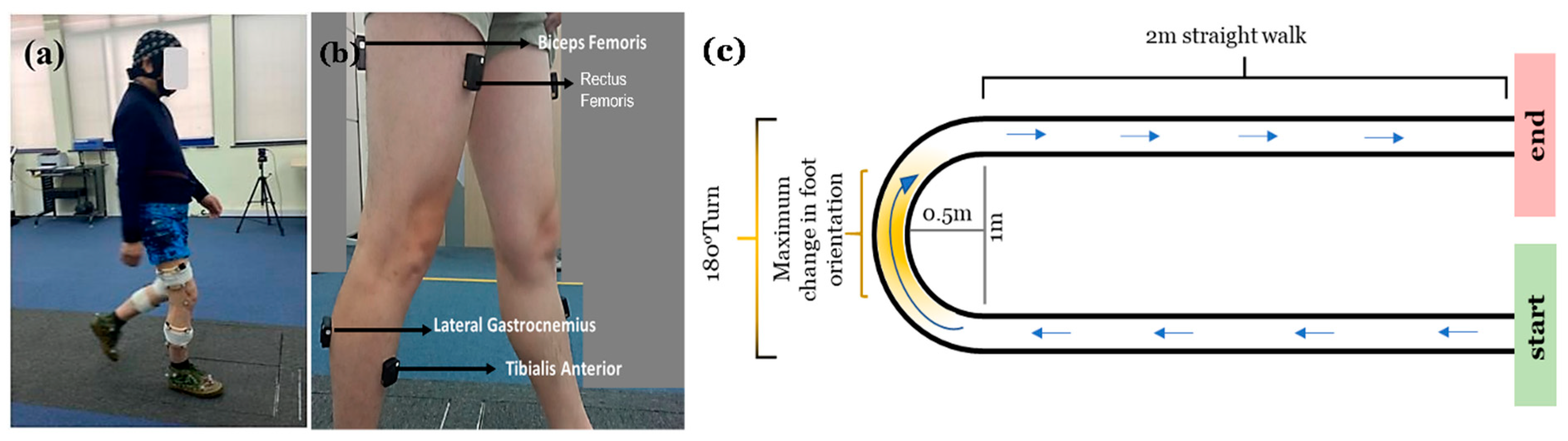
2.2. Experimental Setup
2.3. Data Analysis
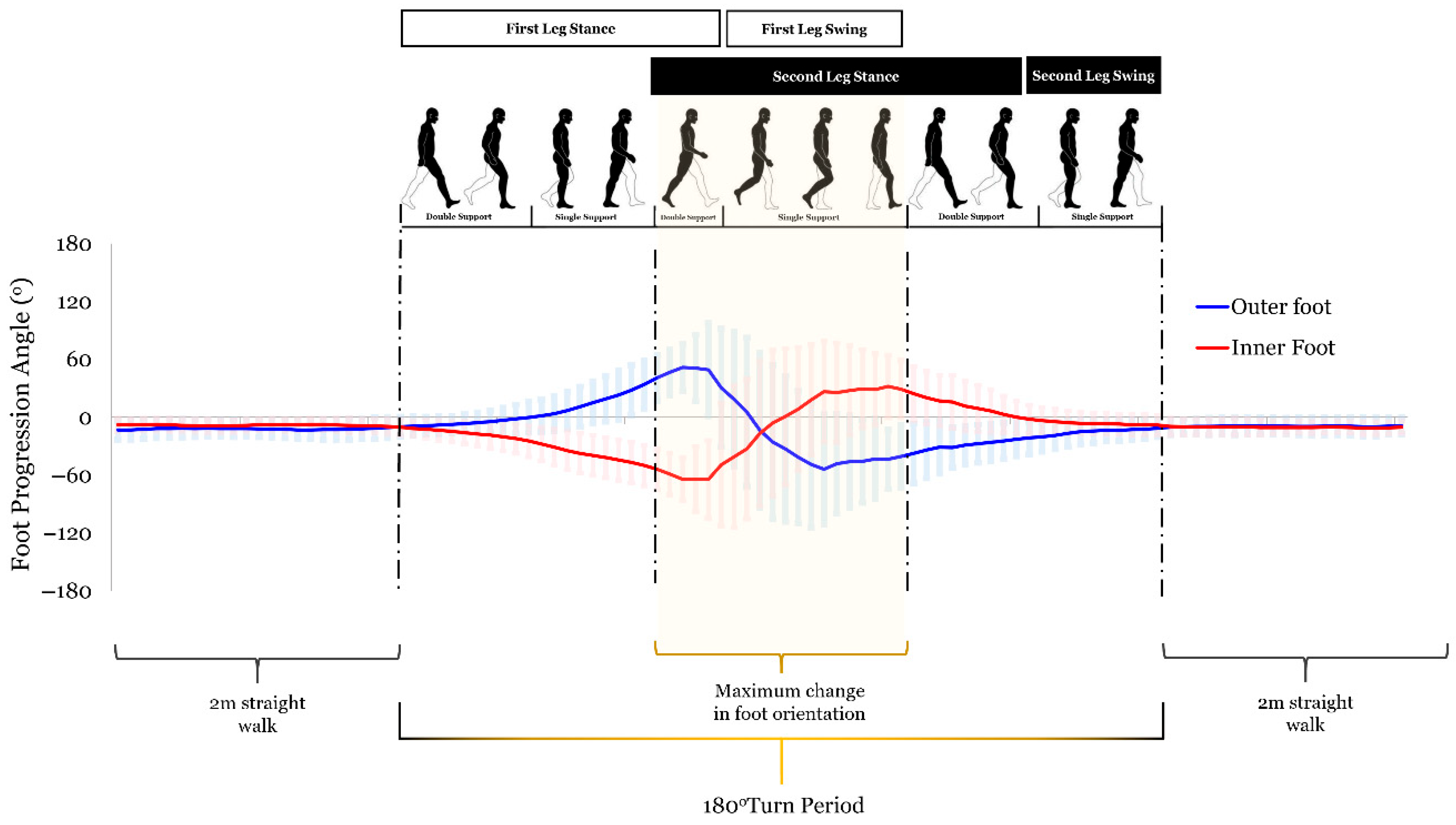
2.3.1. Turning Period Definition
2.3.2. Muscle Synergy Analysis
2.3.3. Cortical Functional Connectivity
2.4. Statistical Analysis
2.4.1. Group Comparisons
2.4.2. Multimodal Associations
2.4.3. Mediation Analysis
3. Results
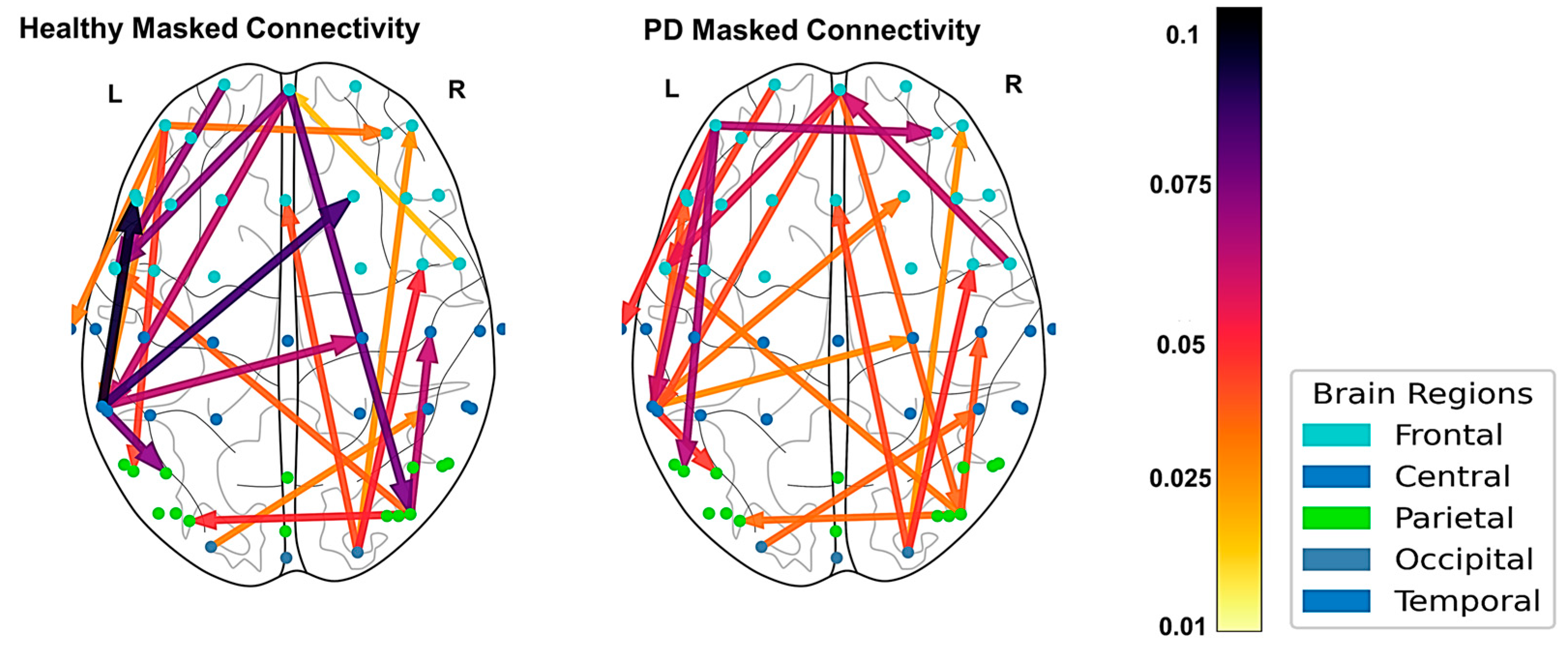
3.1. Group Differences in Gait, Muscle Synergy, and Brain Connectivity
3.2. Multimodal Associations
3.2.1. Turning Performance with Muscle Synergy
3.2.2. Functional Connectivity with Muscle Synergy
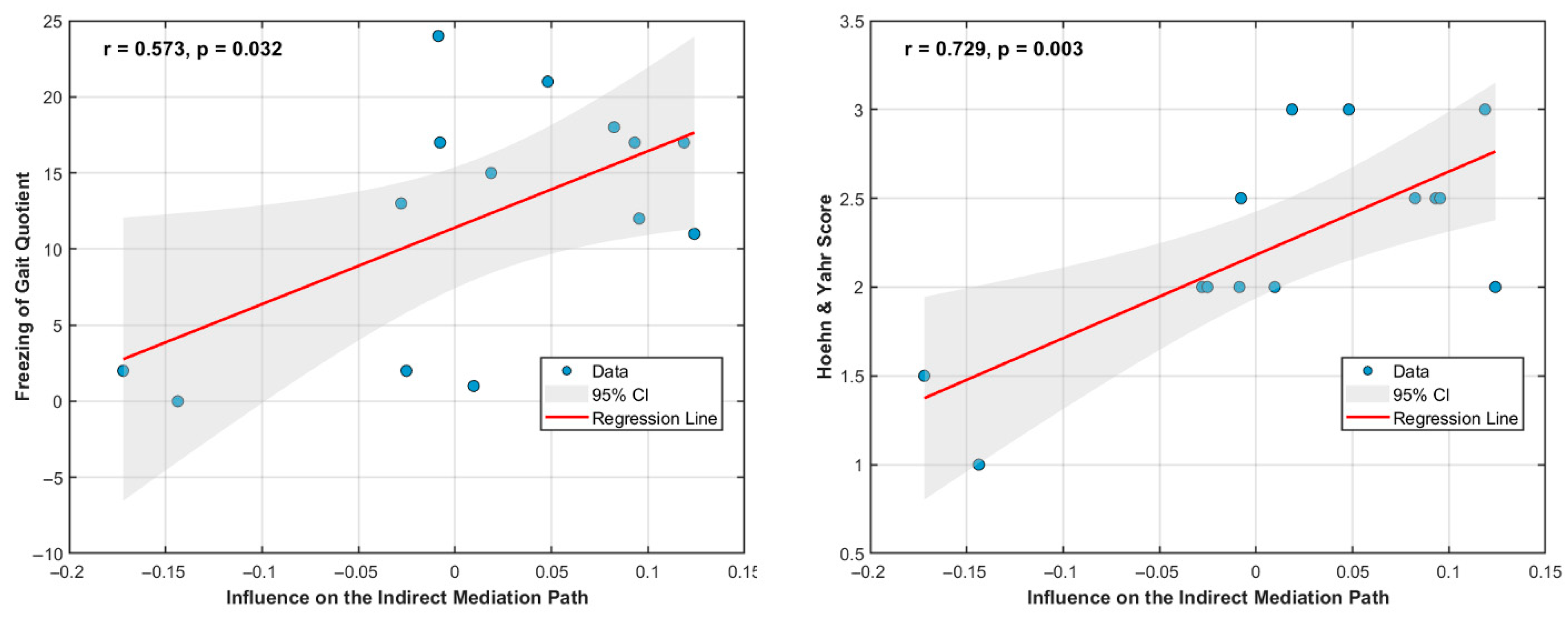
3.3. Mediation Analysis (Brain—Muscle Synergy—Turning Performance)
4. Discussion
5. Limitations and Future Study
6. Conclusions
Author Contributions
Funding
Institutional Review Board Statement
Informed Consent Statement
Data Availability Statement
Acknowledgments
Conflicts of Interest
Abbreviations
| PD | Parkinson’s Disease |
| EEG | Electroencephalography |
| EMG | Electromyography |
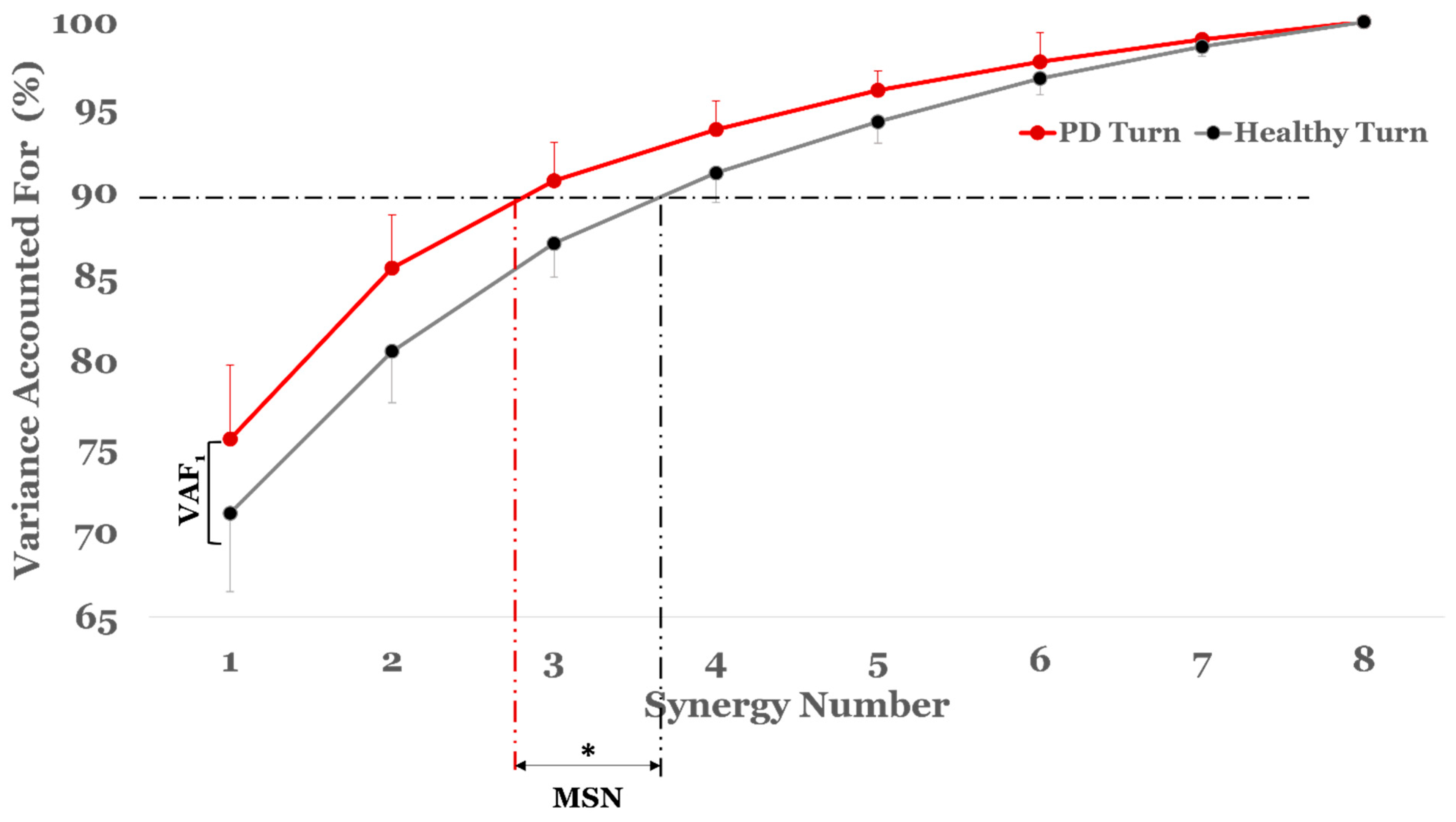
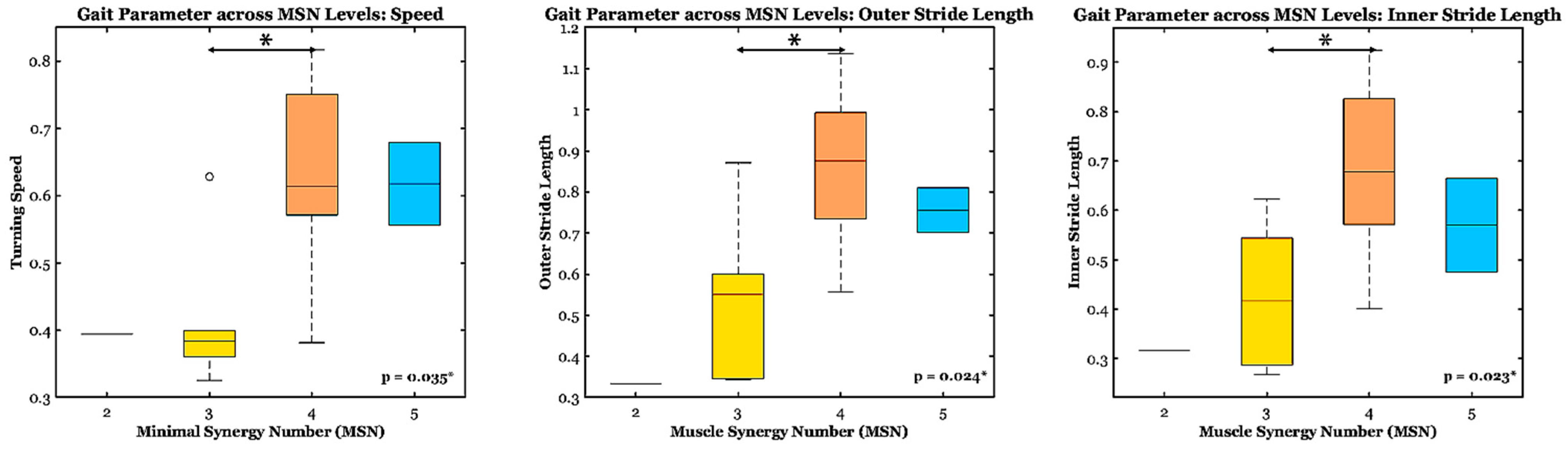
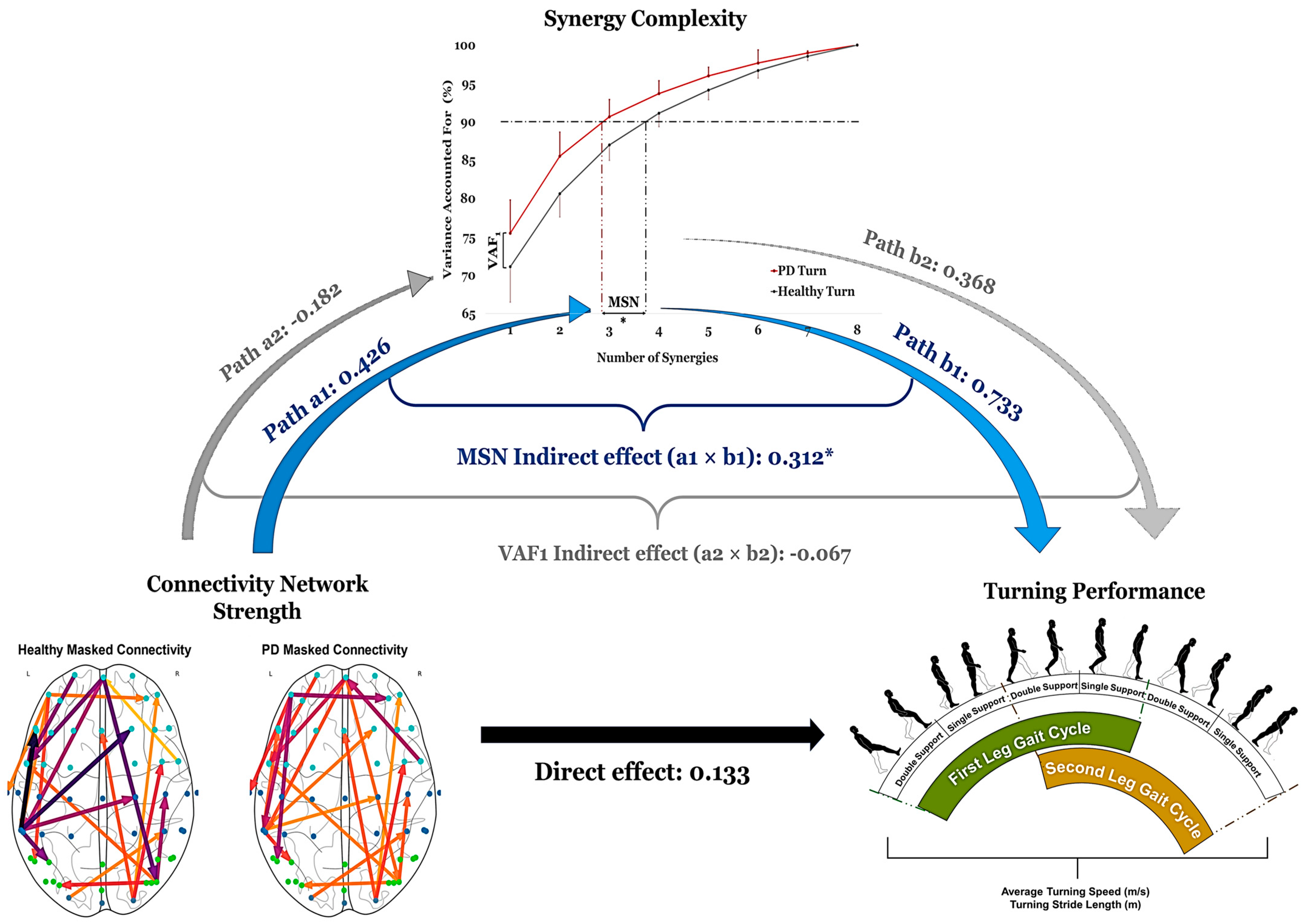
| MSN | Minimal Synergy Number (the smallest number of muscle synergies required to explain at least 90% of the total variance) |
| VAF1 | Variance Accounted For using only one synergy |
| ICA | Independent Component Analysis |
| ASR | Artifact Subspace Reconstruction |
| EEGLAB | MATLAB toolbox for processing EEG data |
| NNMF | Non-Negative Matrix Factorization |
| PDC | Partial Directed Coherence |
| FOGQ | Freezing of Gait Quotient |
| H&Y | Hoehn & Yahr staging scores (PD disease severity scale) |
| UPDRS | Unified Parkinson’s Disease Rating Scale |
| MoCA | Montreal Cognitive Assessment |
| MMSE | Mini-Mental State Examination |
| LOO | Leave-One-Out (cross-validation method) |
| 3D | Three-Dimensional |
| SENIAM | Surface Electromyography for the Non-Invasive Assessment of Muscles |
| R2 | Coefficient of Determination (statistical measure of model fit) |
| CI | Confidence Interval |
References
- Bloem, B.R.; Okun, M.S.; Klein, C. Parkinson’s disease. Lancet 2021, 397, 2284–2303. [Google Scholar] [CrossRef] [Scilit]
- Tolosa, E.; Garrido, A.; Scholz, S.W.; Poewe, W. Challenges in the diagnosis of Parkinson’s disease. Lancet Neurol. 2021, 20, 385–397. [Google Scholar] [CrossRef] [Scilit] [PubMed]
- Chou, P.-Y.; Lee, S.-C. Turning deficits in people with Parkinson’s disease. Tzu Chi Med. J. 2013, 25, 200–202. [Google Scholar] [CrossRef] [Scilit]
- Hulbert, S.; Ashburn, A.; Robert, L.; Verheyden, G. A narrative review of turning deficits in people with Parkinson’s disease. Disabil. Rehabil. 2015, 37, 1382–1389. [Google Scholar] [CrossRef] [Scilit] [PubMed]
- Mellone, S.; Mancini, M.; King, L.A.; Horak, F.B.; Chiari, L. The quality of turning in Parkinson’s disease: A compensatory strategy to prevent postural instability? J. Neuroeng. Rehabil. 2016, 13, 39. [Google Scholar] [CrossRef] [Scilit]
- Karimi, F.; Niu, J.; Almeida, Q.; Jiang, N. Movement Related Cortical Potentials in Parkinson’s Disease Patients with Freezing of Gait. In Annual International Conference of the IEEE Engineering in Medicine & Biology Society; IEEE: New York, NY, USA, 2020; Volume 2020, pp. 2857–2860. [Google Scholar]
- Li, J.; Zhang, Y.; Huang, Z.; Jiang, Y.; Ren, Z.; Liu, D.; Zhang, J.; La Piana, R.; Chen, Y. Cortical and subcortical morphological alterations in motor subtypes of Parkinson’s disease. NPJ Park. Dis. 2022, 8, 167. [Google Scholar] [CrossRef] [Scilit]
- Luft, F.; Sharifi, S.; Mugge, W.; Schouten, A.C.; Bour, L.J.; van Rootselaar, A.F.; Veltink, P.H.; Heida, T. Distinct cortical activity patterns in Parkinson’s disease and essential tremor during a bimanual tapping task. J. Neuroeng. Rehabil. 2020, 17, 45. [Google Scholar] [CrossRef] [Scilit]
- Stuart, S.; Vitorio, R.; Morris, R.; Martini, D.N.; Fino, P.C.; Mancini, M. Cortical activity during walking and balance tasks in older adults and in people with Parkinson’s disease: A structured review. Maturitas 2018, 113, 53–72. [Google Scholar] [CrossRef] [Scilit]
- Keloth, S.M.; Arjunan, S.P.; Raghav, S.; Kumar, D.K. Muscle activation strategies of people with early-stage Parkinson’s during walking. J. Neuroeng. Rehabil. 2021, 18, 133. [Google Scholar] [CrossRef] [Scilit]
- Romanato, M.; Piatkowska, W.; Spolaor, F.; To, D.-K.; Volpe, D.; Sawacha, Z. Different perspectives in understanding muscle functions in Parkinson’s disease through surface electromyography: Exploring multiple activation patterns. J. Electromyogr. Kinesiol. 2022, 64, 102658. [Google Scholar] [CrossRef] [Scilit]
- Cantú, H.; Nantel, J.; Millán, M.; Paquette, C.; Côté, J.N. Abnormal Muscle Activity and Variability Before, During, and After the Occurrence of Freezing in Parkinson’s Disease. Front. Neurol. 2019, 10, 951. [Google Scholar] [CrossRef] [Scilit]
- Kang, S.H.; Kim, J.; Lee, J.; Koh, S.-B. Mild cognitive impairment is associated with poor gait performance in patients with Parkinson’s disease. Front. Aging Neurosci. 2022, 14, 1003595. [Google Scholar] [CrossRef] [Scilit]
- Tosserams, A.; Weerdesteyn, V.; Bal, T.; Bloem, B.R.; Solis-Escalante, T.; Nonnekes, J. Cortical Correlates of Gait Compensation Strategies in Parkinson Disease. Ann. Neurol. 2022, 91, 329–341. [Google Scholar] [CrossRef] [Scilit] [PubMed]
- Guo, X.; Zhao, S.; Yu, L.; Wang, H.; Acquah, M.E.E.; Chen, W.; Gu, D. Neural Correlates of Abnormal Cortical Gait Control in Parkinson’s Disease: A Whole-Gait-Cycle EEG Study. IEEE Trans. Biomed. Eng. 2024, 71, 400–409. [Google Scholar] [CrossRef] [Scilit] [PubMed]
- Peterson, D.S.; Horak, F.B. Neural control of walking in people with parkinsonism. Physiology 2016, 31, 95–107. [Google Scholar] [CrossRef] [Scilit] [PubMed]
- Gimenez-Aparisi, G.; Guijarro-Estelles, E.; Chornet-Lurbe, A.; Diaz-Roman, M.; Hao, D.; Li, G.; Ye-Lin, Y. Early detection of Parkinson’s disease based on beta dynamic features and beta-gamma coupling from non-invasive resting state EEG: Influence of the eyes. Biomed. Signal Process. Control 2025, 107, 107868. [Google Scholar] [CrossRef] [Scilit]
- Davoodi, R.; Jafari, S.; Mehrabbeik, M.; Perc, M. EEG Entropy Markers for Cognitive Dysfunction in Parkinson’s Disease. Nonlinear Dyn. 2025, 113, 33831–33851. [Google Scholar] [CrossRef] [Scilit]
- Gimenez-Aparisi, G.; Guijarro-Estelles, E.; Chornet-Lurbe, A.; Cerveró-Albert, D.; Hao, D.; Li, G.; Ye-Lin, Y. Abnormal dynamic features of cortical microstates for detecting early-stage Parkinson’s disease by resting-state electroencephalography: Systematic analysis of the influence of eye condition. Heliyon 2025, 11, e41500. [Google Scholar] [CrossRef] [Scilit]
- Roeder, L.; Breakspear, M.; Kerr, G.K.; Boonstra, T.W. Dynamics of brain-muscle networks reveal effects of age and somatosensory function on gait. iScience 2024, 27, 109162. [Google Scholar] [CrossRef] [Scilit]
- Pellegrini, F.; Pozzi, N.G.; Palmisano, C.; Marotta, G.; Buck, A.; Haufe, S.; Isaias, I.U. Cortical networks of parkinsonian gait: A metabolic and functional connectivity study. Ann. Clin. Transl. Neurol. 2024, 11, 2597–2608. [Google Scholar] [CrossRef] [Scilit]
- Bizzi, E.; Cheung, V.C.K. The neural origin of muscle synergies. Front. Comput. Neurosci. 2013, 7, 51. [Google Scholar] [CrossRef] [Scilit] [PubMed]
- Chvatal, S.A.; Ting, L.H. Common muscle synergies for balance and walking. Front. Comput. Neurosci. 2013, 7, 48. [Google Scholar] [CrossRef] [Scilit] [PubMed]
- Choi, Y.; Kim, Y.; Kim, M.; Yoon, B. Muscle Synergies for Turning During Human Walking. J. Mot. Behav. 2019, 51, 1–9. [Google Scholar] [CrossRef] [Scilit] [PubMed]
- Acuña, S.A.; Tyler, M.E.; Thelen, D.G. Individuals with Chronic Mild-to-Moderate Traumatic Brain Injury Exhibit Decreased Neuromuscular Complexity During Gait. Neurorehabilit. Neural Repair 2022, 36, 317–327. [Google Scholar] [CrossRef] [Scilit]
- Falaki, A.; Huang, X.; Lewis, M.M.; Latash, M.L. Impaired synergic control of posture in Parkinson’s patients without postural instability. Gait Posture 2016, 44, 209–215. [Google Scholar] [CrossRef] [Scilit]
- Mileti, I.; Zampogna, A.; Santuz, A.; Asci, F.; Del Prete, Z.; Arampatzis, A.; Palermo, E.; Suppa, A. Muscle synergies in Parkinson’s disease. Sensors 2020, 20, 3209. [Google Scholar] [CrossRef] [Scilit]
- Rodriguez, K.L.; Roemmich, R.T.; Cam, B.; Fregly, B.J.; Hass, C.J. Persons with Parkinson’s disease exhibit decreased neuromuscular complexity during gait. Clin. Neurophysiol. 2013, 124, 1390–1397. [Google Scholar] [CrossRef] [Scilit]
- Zandvoort, C.S.; van Dieën, J.H.; Dominici, N.; Daffertshofer, A. The human sensorimotor cortex fosters muscle synergies through cortico-synergy coherence. NeuroImage 2019, 199, 30–37. [Google Scholar] [CrossRef] [Scilit]
- Yokoyama, H.; Kaneko, N.; Ogawa, T.; Kawashima, N.; Watanabe, K.; Nakazawa, K. Cortical Correlates of Locomotor Muscle Synergy Activation in Humans: An Electroencephalographic Decoding Study. iScience 2019, 15, 623–639. [Google Scholar] [CrossRef] [Scilit]
- Lanzani, V.; Brambilla, C.; Scano, A. A methodological scoping review on EMG processing and synergy-based results in muscle synergy studies in Parkinson’s disease. Front. Bioeng. Biotechnol. 2024, 12, 1445447. [Google Scholar] [CrossRef] [Scilit]
- Browne, R.H. On the use of a pilot sample for sample size determination. Stat. Med. 1995, 14, 1933–1940. [Google Scholar] [CrossRef] [Scilit] [PubMed]
- Cibulka, M.T.; Winters, K.; Kampwerth, T.; McAfee, B.; Payne, L.; Roeckenhaus, T.; Ross, S.A. Predicting Foot Progression Angle During Gait Using Two Clinical Measures In Healthy Adults: A Preliminary Study. Int. J. Sports Phys. Ther. 2016, 11, 400–408. [Google Scholar] [PubMed]
- Moreira, L.; Figueiredo, J.; Fonseca, P.; Vilas-Boas, J.P.; Santos, C.P. Lower limb kinematic, kinetic, and EMG data from young healthy humans during walking at controlled speeds. Sci. Data 2021, 8, 103. [Google Scholar] [CrossRef] [Scilit] [PubMed]
- Kim, Y.; Bulea, T.C.; Damiano, D.L. Novel methods to enhance precision and reliability in muscle synergy identification during walking. Front. Hum. Neurosci. 2016, 10, 455. [Google Scholar] [CrossRef] [Scilit]
- Steele, K.M.; Rozumalski, A.; Schwartz, M.H. Muscle synergies and complexity of neuromuscular control during gait in cerebral palsy. Dev. Med. Child Neurol. 2015, 57, 1176–1182. [Google Scholar] [CrossRef] [Scilit]
- Delorme, A.; Makeig, S. EEGLAB: An open source toolbox for analysis of single-trial EEG dynamics including independent component analysis. J. Neurosci. Methods 2004, 134, 9–21. [Google Scholar] [CrossRef] [Scilit]
- de Oliveira, A.P.S.; de Santana, M.A.; Andrade, M.K.S.; Gomes, J.C.; Rodrigues, M.C.A.; dos Santos, W.P. Early diagnosis of Parkinson’s disease using EEG, machine learning and partial directed coherence. Res. Biomed. Eng. 2020, 36, 311–331. [Google Scholar] [CrossRef] [Scilit]
- Chiarion, G.; Sparacino, L.; Antonacci, Y.; Faes, L.; Mesin, L. Connectivity Analysis in EEG Data: A Tutorial Review of the State of the Art and Emerging Trends. Bioengineering 2023, 10, 372. [Google Scholar] [CrossRef] [Scilit]
- Delval, A.; Bayot, M.; Defebvre, L.; Dujardin, K. Cortical Oscillations during Gait: Wouldn’t Walking Be So Automatic? Brain Sci. 2020, 10, 90. [Google Scholar] [CrossRef] [Scilit]
- Davoodi, R.; Mehrabbeik, M.; Jafari, S.; Perc, M. Elevated EEG fractal dimension in Parkinson’s during timing tasks. Chaos Interdiscip. J. Nonlinear Sci. 2025, 35, 063107. [Google Scholar] [CrossRef] [Scilit]
- Asher, E.E.; Plotnik, M.; Günther, M.; Moshel, S.; Levy, O.; Havlin, S.; Kantelhardt, J.W.; Bartsch, R.P. Connectivity of EEG synchronization networks increases for Parkinson’s disease patients with freezing of gait. Commun. Biol. 2021, 4, 1017. [Google Scholar] [CrossRef] [Scilit]
- Sun, X.; Zhao, C.; Koorathota, S.; Sajda, P. EEG-estimated functional connectivity, and not behavior, differentiates Parkinson’s patients from health controls during the Simon conflict task. In 2024 46th Annual International Conference of the IEEE Engineering in Medicine and Biology Society (EMBC); IEEE: New York, NY, USA, 2024; pp. 1–6. Available online: https://api.semanticscholar.org/CorpusID:273228436 (accessed on 3 February 2026).
- Vega, M.L.B.; Ibáñez, I.P.; Razzaq, F.A.; Zhang, M.; Chacón, L.M.; Ren, P.; Garcia, L.G.; Gan, P.; Alba, T.V.; Naranjo, C.L.; et al. The Effect of Neuroepo on Cognition in Parkinson’s Disease Patients Is Mediated by Electroencephalogram Source Activity. Front. Neurosci. 2022, 16, 841428. [Google Scholar] [CrossRef] [Scilit] [PubMed]
- Singh, A.; Cole, R.C.; Espinoza, A.I.; Evans, A.; Cao, S.; Cavanagh, J.F.; Narayanan, N.S. Timing variability and midfrontal ~4 Hz rhythms correlate with cognition in Parkinson’s disease. NPJ Park. Dis. 2021, 7, 14. [Google Scholar] [CrossRef] [Scilit] [PubMed]
- Chuang, I.-C.; Chen, I.-C.; Wu, Y.-R.; Li, K.-Y. Prediction and mediation analysis for treatment responses to combined cognitive and physical training for older adults. Sci. Rep. 2024, 14, 10571. [Google Scholar] [CrossRef] [Scilit] [PubMed]
- Lee, H.; Cashin, A.G.; Lamb, S.E.; Hopewell, S.; Vansteelandt, S.; VanderWeele, T.J.; MacKinnon, D.P.; Mansell, G.; Collins, G.S.; Golub, R.M.; et al. A Guideline for Reporting Mediation Analyses of Randomized Trials and Observational Studies. JAMA 2021, 326, 1045–1056. [Google Scholar] [CrossRef] [Scilit]
- Jia, Z.; Niu, Z.; Xie, Y.J.; Su, Z.; Wang, J.J.; Hernandez, J.; Li, Y.T.; Wang, H.H. Temporal Relationship Between Treatment Burden and Self-Care and Its Impact on Systolic Blood Pressure and Hypertension Control. Int. J. Gen. Med. 2025, 18, 3597–3607. [Google Scholar] [CrossRef] [Scilit]
- Gilat, M.; Shine, J.M.; Walton, C.C.; O’cAllaghan, C.; Hall, J.M.; Lewis, S.J.G. Brain activation underlying turning in Parkinson’s disease patients with and without freezing of gait: A virtual reality fMRI study. NPJ Park. Dis. 2015, 1, 15020. [Google Scholar] [CrossRef] [Scilit]
- Sosnik, R.; Fahoum, F.; Katzir, Z.; Mirelman, A.; Maidan, I. Key shifts in frontoparietal network activity in Parkinson’s disease. NPJ Park. Dis. 2025, 11, 2. [Google Scholar] [CrossRef] [Scilit]
- Roeder, L.; Boonstra, T.W.; Kerr, G.K. Corticomuscular control of walking in older people and people with Parkinson’s disease. Sci. Rep. 2020, 10, 2980. [Google Scholar] [CrossRef] [Scilit]
- Wang, D.D.; Choi, J.T. Brain Network Oscillations During Gait in Parkinson’s Disease. Front. Hum. Neurosci. 2020, 14, 568703. [Google Scholar] [CrossRef] [Scilit]
- Safavynia, S.A.; Torres-Oviedo, G.; Ting, L.H. Muscle synergies: Implications for clinical evaluation and rehabilitation of movement. Top. Spinal Cord Inj. Rehabil. 2011, 17, 16–24. [Google Scholar] [CrossRef] [Scilit]
- Li, G.; Hayashibe, M. Motor synergy and energy efficiency emerge in whole-body locomotion learning. Sci. Rep. 2025, 15, 712. [Google Scholar] [CrossRef] [Scilit]
- Zhang, J.; Villringer, A.; Nikulin, V.V. Dopaminergic Modulation of Local Non-oscillatory Activity and Global-Network Properties in Parkinson’s Disease: An EEG Study. Front. Aging Neurosci. 2022, 14, 846017. [Google Scholar] [CrossRef] [Scilit]
- dos Santos, P.C.R.; Heimler, B.; Koren, O.; Flash, T.; Plotnik, M. Dopamine improves defective cortical and muscular connectivity during bilateral control of gait in Parkinson’s disease. Commun. Biol. 2024, 7, 495. [Google Scholar] [CrossRef] [Scilit]
- Shah, V.V.; McNames, J.; Carlson-Kuhta, P.; Nutt, J.G.; El-Gohary, M.; Sowalsky, K.; Mancini, M.; Horak, F.B. Effect of Levodopa and Environmental Setting on Gait and Turning Digital Markers Related to Falls in People with Parkinson’s Disease. Mov. Disord. Clin. Pract. 2023, 10, 223–230. [Google Scholar] [CrossRef] [Scilit]
- Maidan, I.; Nieuwhof, F.; Bernad-Elazari, H.; Reelick, M.F.; Bloem, B.R.; Giladi, N.; Deutsch, J.E.; Hausdorff, J.M.; Claassen, J.A.H.; Mirelman, A. The Role of the Frontal Lobe in Complex Walking Among Patients with Parkinson’s Disease and Healthy Older Adults. Neurorehabilit. Neural Repair 2016, 30, 963–971. [Google Scholar] [CrossRef] [Scilit]



| Characteristics | PD (n = 12) | Healthy (n = 12) |
|---|---|---|
| Age (years) | 66.75 (6.90) | 70.67 (5.53) |
| Height (cm) | 165.0 (7.24) | 165.0 (5.14) |
| Weight (kg) | 64.42 (10.89) | 64.19 (12.36) |
| Male/Female | 7/5 | 8/4 |
| Mini-Mental State Examination (MMSE) | 26.85 (3.37) | 27.71 (2.23) |
| Montreal Cognitive Assessment (MoCA) | 22.71 (4.93) | 27.29 (1.07) |
| Unified Parkinson’s Disease Rating Scale (UPDRS I, II, III) | 55.42 (22.44) | N/A |
| Hoehn & Yahr (H&Y) Staging | 2.39 (0.68) | N/A |
| Disease duration (years) | 3.29 (2.75) | 0 |
| Freezing Of Gait Quotient (FOGQ) | 15.79 (5.56) | 0 |
| Measure | Healthy (n = 12) | PD (n = 12) | Cohen’s d | p-Value | ||
|---|---|---|---|---|---|---|
| Mean | SD | Mean | SD | |||
| Gait Performance | ||||||
| Turning Speed (m/s) | 0.648 | 0.144 | 0.506 | 0.149 | 0.97 | 0.022 * |
| Stride Length (m) | 0.767 | 0.169 | 0.597 | 0.213 | 0.89 | 0.035 * |
| Synergy Complexity | ||||||
| First Variance Accounted For (VAF1) | 0.711 | 0.046 | 0.755 | 0.062 | −0.76 | 0.057 |
| Minimal Synergy Number (MSN) | 4.167 | 0.389 | 3.429 | 0.646 | 1.38 | 0.002 ** |
| Cortical Connectivity | ||||||
| Global Network Strength | 3.494 | 0.961 | 3.000 | 1.342 | 0.423 | 0.214 |
| Frontal → Frontal Strength | 0.034 | 0.074 | 0.029 | 0.045 | −1.031 | 0.017 * |
| Frontal → Central Strength | 0.215 | 0.200 | 0.119 | 0.069 | 0.151 | 0.699 |
| Frontal → Posterior Strength | 0.148 | 0.181 | 0.078 | 0.093 | −0.389 | 0.336 |
| Central → Frontal Strength | 0.022 | 0.085 | 0.028 | 0.081 | −1.046 | 0.017 * |
| Central → Central Strength | — | — | — | — | — | — |
| Central → Posterior Strength | — | — | — | — | — | — |
| Posterior → Frontal Strength | 0.222 | 0.148 | 0.091 | 0.074 | 0.884 | 0.033 * |
| Posterior → Central Strength | 0.242 | 0.225 | 0.104 | 0.092 | 0.176 | 0.657 |
| Posterior → Posterior Strength | 0.117 | 0.087 | 0.063 | 0.042 | 0.566 | 0.157 |
Disclaimer/Publisher’s Note: The statements, opinions and data contained in all publications are solely those of the individual author(s) and contributor(s) and not of MDPI and/or the editor(s). MDPI and/or the editor(s) disclaim responsibility for any injury to people or property resulting from any ideas, methods, instructions or products referred to in the content. |
© 2026 by the authors. Licensee MDPI, Basel, Switzerland. This article is an open access article distributed under the terms and conditions of the Creative Commons Attribution (CC BY) license.
Share and Cite
Acquah, M.E.E.; Wang, Z.; Chen, W.; Gu, D. The Cortical Contributions to Turning Performance Through Muscle Synergies in Parkinson’s Disease: A Mediation Study. Bioengineering 2026, 13, 453. https://doi.org/10.3390/bioengineering13040453
Acquah MEE, Wang Z, Chen W, Gu D. The Cortical Contributions to Turning Performance Through Muscle Synergies in Parkinson’s Disease: A Mediation Study. Bioengineering. 2026; 13(4):453. https://doi.org/10.3390/bioengineering13040453
Chicago/Turabian StyleAcquah, Mirabel Ewura Esi, Zengguang Wang, Wei Chen, and Dongyun Gu. 2026. "The Cortical Contributions to Turning Performance Through Muscle Synergies in Parkinson’s Disease: A Mediation Study" Bioengineering 13, no. 4: 453. https://doi.org/10.3390/bioengineering13040453
APA StyleAcquah, M. E. E., Wang, Z., Chen, W., & Gu, D. (2026). The Cortical Contributions to Turning Performance Through Muscle Synergies in Parkinson’s Disease: A Mediation Study. Bioengineering, 13(4), 453. https://doi.org/10.3390/bioengineering13040453