
Implant Surface Characteristics and Peri-Implant Outcomes: A Systematic Review of Clinical and Microbiological Evidence

 , , , ,
  ,
,  , and
, and 
Abstract
1. Introduction
2. Materials and Methods
2.1. Protocol and Registration
2.2. Search Processing
2.3. Inclusion Criteria
- Criteria: application in the present study;
- Population: human subjects rehabilitated with dental implants;
- Intervention: evaluation of different implant surface characteristics or surface modifications;
- Comparison: comparison between implants with different surface characteristics or conventional/reference surfaces;
- Outcome: evaluation of peri-implant outcomes, including marginal bone loss, peri-implant health parameters, peri-implant mucositis/peri-implantitis occurrence, and, when available, microbiological or biomolecular findings;
- Study design: randomized controlled trials (RCT), controlled clinical trials, prospective observational studies, retrospective cohort studies, and comparative clinical studies.
2.4. Exclusion Criteria
2.5. Data Processing
2.6. Article Identification Procedure
2.7. Study Evaluation
2.8. Quality Assessment
3. Results
Characteristics of Included Studies
4. Discussion
4.1. Implant Surface Characteristics and Clinical–Radiographic Outcomes
4.2. Implant Surface Roughness, Patient-Related Factors, and Peri-Implant Disease
4.3. Microbiological Evidence, Methodological Limitations, and Clinical Implications
5. Conclusions
Author Contributions
Funding
Institutional Review Board Statement
Informed Consent Statement
Data Availability Statement
Conflicts of Interest
Abbreviations
| BIC | Bone-to-Implant Contact |
| ISQ | Implant Stability Quotient |
| PRISMA | Preferred Reporting Items for Systematic Reviews and Meta-Analyses |
| PROSPERO | The International Prospective Register of Systematic Reviews |
| RCT | Randomized Controlled Trials |
| SLA | Sandblasted and acid-etched |
References
- Zhong, X.; Song, Y.; Yang, P.; Wang, Y.; Jiang, S.; Zhang, X.; Li, C. Titanium Surface Priming with Phase-Transited Lysozyme to Establish a Silver Nanoparticle-Loaded Chitosan/Hyaluronic Acid Antibacterial Multilayer via Layer-by-Layer Self-Assembly. PLoS ONE 2016, 11, e0146957. [Google Scholar] [CrossRef]
- Zhang, X.; Li, Y.; Luo, X.; Ding, Y. Enhancing Antibacterial Property of Porous Titanium Surfaces with Silver Nanoparticles Coatings via Electron-Beam Evaporation. J. Mater. Sci. Mater. Med. 2022, 33, 57. [Google Scholar] [CrossRef]
- Dus, S.; Buono, U.; Aiello, V.; Paduano, F.P.; Inchingolo, F.; Paduano, S. Upper Blepharoplasty in Dermatochalasis: A Retrospective Study of Our Cases. J. Maxillofac. Oral Surg. 2025. [Google Scholar] [CrossRef]
- Xu, Z.; Krajewski, S.; Weindl, T.; Loeffler, R.; Li, P.; Han, X.; Geis-Gerstorfer, J.; Wendel, H.-P.; Scheideler, L.; Rupp, F. Application of Totarol as Natural Antibacterial Coating on Dental Implants for Prevention of Peri-Implantitis. Mater. Sci. Eng. C Mater. Biol. Appl. 2020, 110, 110701. [Google Scholar] [CrossRef]
- Xing, M.; Qian, W.; Ye, K.; Zhang, H.; Feng, J.; Liu, X.; Qiu, J. All-in-One Design of Titanium-Based Dental Implant Systems for Enhanced Soft and Hard Tissue Integration. Biomaterials 2025, 320, 123251. [Google Scholar] [CrossRef] [PubMed]
- Xiang, B.; Jiang, J.; Wang, H.; Song, L. Research Progress of Implantable Materials in Antibacterial Treatment of Bone Infection. Front. Bioeng. Biotechnol. 2025, 13, 1586898. [Google Scholar] [CrossRef]
- Windael, S.; Vervaeke, S.; Wijnen, L.; Jacquet, W.; De Bruyn, H.; Collaert, B. Ten-Year Follow-up of Dental Implants Used for Immediate Loading in the Edentulous Mandible: A Prospective Clinical Study. Clin. Implant. Dent. Relat. Res. 2018, 20, 515–521. [Google Scholar] [CrossRef] [PubMed]
- Wennström, J.L.; Ekestubbe, A.; Gröndahl, K.; Karlsson, S.; Lindhe, J. Oral Rehabilitation with Implant-Supported Fixed Partial Dentures in Periodontitis-Susceptible Subjects. A 5-Year Prospective Study. J. Clin. Periodontol. 2004, 31, 713–724. [Google Scholar] [CrossRef]
- Inchingolo, A.M.; Inchingolo, A.D.; Morolla, R.; Riccaldo, L.; Guglielmo, M.; Palumbo, I.; Palermo, A.; Inchingolo, F.; Dipalma, G. Pre-Formed Crowns and Pediatric Dentistry: A Systematic Review of Different Techniques of Restorations. JOCPD 2025, 49, 1–13. [Google Scholar] [CrossRef]
- Laforgia, A.; Inchingolo, A.M.; Inchingolo, F.; Sardano, R.; Trilli, I.; Di Noia, A.; Ferrante, L.; Palermo, A.; Inchingolo, A.D.; Dipalma, G. Paediatric Dental Trauma: Insights from Epidemiological Studies and Management Recommendations. BMC Oral Health 2025, 25, 6. [Google Scholar] [CrossRef]
- Wen, Z.; Shi, X.; Li, X.; Liu, W.; Liu, Y.; Zhang, R.; Yu, Y.; Su, J. Mesoporous TiO2 Coatings Regulate ZnO Nanoparticle Loading and Zn2+ Release on Titanium Dental Implants for Sustained Osteogenic and Antibacterial Activity. ACS Appl. Mater. Interfaces 2023, 15, 15235–15249. [Google Scholar] [CrossRef]
- Wang, F.-Z.; Liu, S.; Gao, M.; Yu, Y.; Zhang, W.-B.; Li, H.; Peng, X. 3D-Printed Polycaprolactone/Hydroxyapatite Bionic Scaffold for Bone Regeneration. Polymers 2025, 17, 858. [Google Scholar] [CrossRef]
- Vroom, M.G.; Sipos, P.; de Lange, G.L.; Gründemann, L.J.M.M.; Timmerman, M.F.; Loos, B.G.; van der Velden, U. Effect of Surface Topography of Screw-Shaped Titanium Implants in Humans on Clinical and Radiographic Parameters: A 12-Year Prospective Study. Clin. Oral Implant. Res. 2009, 20, 1231–1239. [Google Scholar] [CrossRef] [PubMed]
- Vollmer, A.; Saravi, B.; Lang, G.; Adolphs, N.; Hazard, D.; Giers, V.; Stoll, P. Factors Influencing Primary and Secondary Implant Stability—A Retrospective Cohort Study with 582 Implants in 272 Patients. Appl. Sci. 2020, 10, 8084. [Google Scholar] [CrossRef]
- Vilarrasa, J.; Delgado, L.M.; Galofré, M.; Àlvarez, G.; Violant, D.; Manero, J.M.; Blanc, V.; Gil, F.J.; Nart, J. In Vitro Evaluation of a Multispecies Oral Biofilm over Antibacterial Coated Titanium Surfaces. J. Mater. Sci. Mater. Med. 2018, 29, 164. [Google Scholar] [CrossRef]
- Vandeweghe, S.; Ferreira, D.; Vermeersch, L.; Mariën, M.; De Bruyn, H. Long-Term Retrospective Follow-up of Turned and Moderately Rough Implants in the Edentulous Jaw. Clin. Oral Implant. Res. 2016, 27, 421–426. [Google Scholar] [CrossRef] [PubMed]
- Inchingolo, F.; Tatullo, M.; Pacifici, A.; Gargari, M.; Inchingolo, A.D.; Inchingolo, A.M.; Dipalma, G.; Marrelli, M.; Abenavoli, F.M.; Pacifici, L. Use of Dermal-Fat Grafts in the Post-Oncological Reconstructive Surgery of Atrophies in the Zygomatic Region: Clinical Evaluations in the Patients Undergone to Previous Radiation Therapy. Head Face Med. 2012, 8, 33. [Google Scholar] [CrossRef]
- van Steenberghe, D.; Naert, I.; Jacobs, R.; Quirynen, M. Influence of Inflammatory Reactions vs. Occlusal Loading on Peri-Implant Marginal Bone Level. Adv. Dent. Res. 1999, 13, 130–135. [Google Scholar] [CrossRef]
- van Hengel, I.A.J.; Tierolf, M.W.A.M.; Fratila-Apachitei, L.E.; Apachitei, I.; Zadpoor, A.A. Antibacterial Titanium Implants Biofunctionalized by Plasma Electrolytic Oxidation with Silver, Zinc, and Copper: A Systematic Review. Int. J. Mol. Sci. 2021, 22, 3800. [Google Scholar] [CrossRef]
- van Hengel, I.A.J.; Putra, N.E.; Tierolf, M.W.A.M.; Minneboo, M.; Fluit, A.C.; Fratila-Apachitei, L.E.; Apachitei, I.; Zadpoor, A.A. Biofunctionalization of Selective Laser Melted Porous Titanium Using Silver and Zinc Nanoparticles to Prevent Infections by Antibiotic-Resistant Bacteria. Acta Biomater. 2020, 107, 325–337. [Google Scholar] [CrossRef]
- van Eekeren, P.; Said, C.; Tahmaseb, A.; Wismeijer, D. Resonance Frequency Analysis of Thermal Acid-Etched, Hydrophilic Implants During First 3 Months of Healing and Osseointegration in an Early-Loading Protocol. Int. J. Oral Maxillofac. Implant. 2015, 30, 843–850. [Google Scholar] [CrossRef]
- Van Assche, N.; Coucke, W.; Teughels, W.; Naert, I.; Cardoso, M.V.; Quirynen, M. RCT Comparing Minimally with Moderately Rough Implants. Part 1: Clinical Observations. Clin. Oral Implant. Res. 2012, 23, 617–624. [Google Scholar] [CrossRef] [PubMed]
- Tatullo, M.; Marrelli, M.; Scacco, S.; Lorusso, M.; Doria, S.; Sabatini, R.; Auteri, P.; Cagiano, R.; Inchingolo, F. Relationship between Oxidative Stress and “Burning Mouth Syndrome” in Female Patients: A Scientific Hypothesis. Eur. Rev. Med. Pharmacol. Sci. 2012, 16, 1218–1221. [Google Scholar] [PubMed]
- Valantijiene, V.; Mazeikiene, A.; Alkimavicius, J.; Linkeviciene, L.; Alkimaviciene, E.; Linkevicius, T. Clinical and Immunological Evaluation of Peri-Implant Tissues around Ultra-Polished and Conventionally-Polished Zirconia Abutments. A 1-Year Follow-up Randomized Clinical Trial. J. Prosthodont. 2023, 32, 392–400. [Google Scholar] [CrossRef]
- Uysal, I.; Tezcaner, A.; Evis, Z. Methods to Improve Antibacterial Properties of PEEK: A Review. Biomed. Mater. 2024, 19, 022004. [Google Scholar] [CrossRef]
- Ueoka, K.; Kabata, T.; Tokoro, M.; Kajino, Y.; Inoue, D.; Takagi, T.; Ohmori, T.; Yoshitani, J.; Ueno, T.; Yamamuro, Y.; et al. Antibacterial Activity in Iodine-Coated Implants Under Conditions of Iodine Loss: Study in a Rat Model Plus In Vitro Analysis. Clin. Orthop. Relat. Res. 2021, 479, 1613–1623. [Google Scholar] [CrossRef] [PubMed]
- Tonetti, M.S.; Sanz, M.; Avila-Ortiz, G.; Berglundh, T.; Cairo, F.; Derks, J.; Figuero, E.; Graziani, F.; Guerra, F.; Heitz-Mayfield, L.; et al. Relevant Domains, Core Outcome Sets and Measurements for Implant Dentistry Clinical Trials: The Implant Dentistry Core Outcome Set and Measurement (ID-COSM) International Consensus Report. J. Clin. Periodontol. 2023, 50, 5–21. [Google Scholar] [CrossRef]
- Todisco, M.; Sbricoli, L.; Ippolito, D.R.; Esposito, M. Do We Need Abutments at Immediately Loaded Implants Supporting Cross-Arch Fixed Prostheses? Results from a 5-Year Randomised Controlled Trial. Eur. J. Oral Implantol. 2018, 11, 397–407. [Google Scholar]
- Teulé-Trull, M.; Altuna, P.; Arregui, M.; Rodriguez-Ciurana, X.; Aparicio, C. Antibacterial Coatings for Dental Implants: A Systematic Review. Dent. Mater. 2025, 41, 229–247. [Google Scholar] [CrossRef]
- Inchingolo, F.; Tatullo, M.; Abenavoli, F.M.; Marrelli, M.; Inchingolo, A.D.; Corelli, R.; Inchingolo, A.M.; Dipalma, G. Surgical Treatment of Depressed Scar: A Simple Technique. Int. J. Med. Sci. 2011, 8, 377–379. [Google Scholar] [CrossRef][Green Version]
- Tavelli, L.; Barootchi, S. Prevalence, Incidence, Risk, and Protective Factors for Soft Tissue Dehiscences at Implant Sites in the Absence of Disease: An AO/AAP Systematic Review and Meta-Regression Analysis. J. Periodontol. 2025, 96, 562–586. [Google Scholar] [CrossRef]
- Suresh, N.; Kaarthikeyan, G.; Chellappa, L.R.; Balaram, K.; Bhattu, B.K.; Parihar, A.S. Rare Earth Element Coatings on Titanium Dental Implants for Osseointegration and Peri-Implantitis Prevention: A Systematic Review. J. Contemp. Dent. Pract. 2025, 26, 912–923. [Google Scholar] [CrossRef]
- Santacroce, L.; Di Cosola, M.; Bottalico, L.; Topi, S.; Charitos, I.A.; Ballini, A.; Inchingolo, F.; Cazzolla, A.P.; Dipalma, G. Focus on HPV Infection and the Molecular Mechanisms of Oral Carcinogenesis. Viruses 2021, 13, 559. [Google Scholar] [CrossRef]
- Sun, F.Q.; Li, M.Q.; Peng, S.H.; Zhang, H.M.; Liu, M.; Qu, X.Y. Study on antibacterial properties and osteoblast activity of antimicrobial peptide coatings on titanium implants. Zhonghua Kou Qiang Yi Xue Za Zhi 2018, 53, 419–424. [Google Scholar] [CrossRef]
- Sukegawa, S.; Yoshii, K.; Hara, T.; Yamashita, K.; Nakano, K.; Yamamoto, N.; Nagatsuka, H.; Furuki, Y. Deep Neural Networks for Dental Implant System Classification. Biomolecules 2020, 10, 984. [Google Scholar] [CrossRef]
- Spinelli, A.; Zamparini, F.; Romanos, G.; Gandolfi, M.G.; Prati, C. Tissue-Level Laser-Lok Implants Placed with a Flapless Technique: A 4-Year Clinical Study. Materials 2023, 16, 1293. [Google Scholar] [CrossRef]
- Inchingolo, F.; Inchingolo, A.M.; Malcangi, G.; De Leonardis, N.; Sardano, R.; Pezzolla, C.; de Ruvo, E.; Di Venere, D.; Palermo, A.; Inchingolo, A.D.; et al. The Benefits of Probiotics on Oral Health: Systematic Review of the Literature. Pharmaceuticals 2023, 16, 1313. [Google Scholar] [CrossRef]
- Spinato, S.; Stacchi, C.; Lombardi, T.; Bernardello, F.; Messina, M.; Zaffe, D. Biological Width Establishment around Dental Implants Is Influenced by Abutment Height Irrespective of Vertical Mucosal Thickness: A Cluster Randomized Controlled Trial. Clin. Oral Implant. Res. 2019, 30, 649–659. [Google Scholar] [CrossRef] [PubMed]
- Spinato, S.; Bernardello, F.; Stacchi, C.; Soardi, C.M.; Messina, M.; Rapani, A.; Lombardi, T. Marginal Bone Changes Around Tissue-Level Implants After Prosthesis Delivery: A Multicenter Prospective Study. Clin. Implant. Dent. Relat. Res. 2025, 27, e70071. [Google Scholar] [CrossRef] [PubMed]
- Song, Y.; Ma, A.; Ning, J.; Zhong, X.; Zhang, Q.; Zhang, X.; Hong, G.; Li, Y.; Sasaki, K.; Li, C. Loading Icariin on Titanium Surfaces by Phase-Transited Lysozyme Priming and Layer-by-Layer Self-Assembly of Hyaluronic Acid/Chitosan to Improve Surface Osteogenesis Ability. Int. J. Nanomed. 2018, 13, 6751–6767. [Google Scholar] [CrossRef] [PubMed]
- Raes, M.; D’hondt, R.; Teughels, W.; Coucke, W.; Quirynen, M. A 5-Year Randomized Clinical Trial Comparing Minimally with Moderately Rough Implants in Patients with Severe Periodontitis. J. Clin. Periodontol. 2018, 45, 711–720. [Google Scholar] [CrossRef]
- Ferrantino, L.; Simion, M.; Zanetti, A.; Zambon, A. Association between Implant Surface Roughness, Smoking Habits and Implant Site Location on the Occurrence of Peri-Implantitis: A Pooled Retrospective Cohort Study. Front. Oral Maxillofac. Med. 2022, 4, 34. [Google Scholar] [CrossRef]
- Sivaswamy, V.; Bahl, V. Surface Modifications of Commercial Dental Implant Systems: An Overview. J. Long. Term. Eff. Med. Implant. 2023, 33, 71–77. [Google Scholar] [CrossRef]
- Sirirattanagool, P.; Asavanamuang, P.; Jain, S.; Tavelli, L.; Finkelman, M.; Chen, Y.-W.; Brahmbhatt, Y.; Ntovas, P.; Galarraga-Vinueza, M.E. Prosthetic Factors Influencing the Prevalence of Peri-Implant Diseases and Marginal Bone Loss in Static Computer-Assisted Implant Sites: A Cross-Sectional Study. J. Periodontol. 2025, 97, 47–61. [Google Scholar] [CrossRef]
- Serino, G.; Ström, C. Peri-Implantitis in Partially Edentulous Patients: Association with Inadequate Plaque Control. Clin. Oral Implant. Res. 2009, 20, 169–174. [Google Scholar] [CrossRef]
- Inchingolo, F.; Hazballa, D.; Inchingolo, A.D.; Malcangi, G.; Marinelli, G.; Mancini, A.; Maggiore, M.E.; Bordea, I.R.; Scarano, A.; Farronato, M.; et al. Innovative Concepts and Recent Breakthrough for Engineered Graft and Constructs for Bone Regeneration: A Literature Systematic Review. Materials 2022, 15, 1120. [Google Scholar] [CrossRef]
- Semenzin Rodrigues, A.; de Moraes Melo Neto, C.L.; Santos Januzzi, M.; Dos Santos, D.M.; Goiato, M.C. Correlation between Periotest Value and Implant Stability Quotient: A Systematic Review. Biomed. Tech. 2024, 69, 1–10. [Google Scholar] [CrossRef] [PubMed]
- Schincaglia, G.P.; Marzola, R.; Scapoli, C.; Scotti, R. Immediate Loading of Dental Implants Supporting Fixed Partial Dentures in the Posterior Mandible: A Randomized Controlled Split-Mouth Study--Machined versus Titanium Oxide Implant Surface. Int. J. Oral Maxillofac. Implant. 2007, 22, 35–46. [Google Scholar]
- Sayin Ozel, G.; Inan, O.; Secilmis Acar, A.; Alniacik Iyidogan, G.; Dolanmaz, D.; Yildirim, G. Stability of Dental Implants with Sandblasted and Acid-Etched (SLA) and Modified (SLActive) Surfaces during the Osseointegration Period. J. Dent. Res. Dent. Clin. Dent. Prospect. 2021, 15, 226–231. [Google Scholar] [CrossRef]
- Satwalekar, P.; Nalla, S.; Reddy, R.; Chowdary, S.G. Clinical Evaluation of Osseointegration Using Resonance Frequency Analysis. J. Indian Prosthodont. Soc. 2015, 15, 192–199. [Google Scholar] [CrossRef]
- Salvi, G.E.; Gallini, G.; Lang, N.P. Early Loading (2 or 6 Weeks) of Sandblasted and Acid-Etched (SLA) ITI Implants in the Posterior Mandible. A 1-Year Randomized Controlled Clinical Trial. Clin. Oral Implant. Res. 2004, 15, 142–149. [Google Scholar] [CrossRef] [PubMed]
- Saini, R.S.; Kanji, M.A.; Okshah, A.; Alshadidi, A.A.F.; Binduhayyim, R.I.H.; Vyas, R.; Aldosari, L.I.N.; Vardanyan, A.; Mosaddad, S.A.; Heboyan, A. Comparative Efficacy of Photobiomodulation on Osseointegration in Dental Implants: A Systematic Review and Meta-Analysis. Photodiagnosis Photodyn. Ther. 2024, 48, 104256. [Google Scholar] [CrossRef]
- Santacroce, L.; Sardaro, N.; Topi, S.; Pettini, F.; Bottalico, L.; Cantore, S.; Cascella, G.; Del Prete, R.; Dipalma, G.; Inchingolo, F. The Pivotal Role of Oral Microbiota in Health and Disease. J. Biol. Regul. Homeost. Agents 2020, 34, 733–737. [Google Scholar] [CrossRef] [PubMed]
- Roccuzzo, M.; De Angelis, N.; Bonino, L.; Aglietta, M. Ten-Year Results of a Three-Arm Prospective Cohort Study on Implants in Periodontally Compromised Patients. Part 1: Implant Loss and Radiographic Bone Loss. Clin. Oral Implant. Res. 2010, 21, 490–496. [Google Scholar] [CrossRef]
- Roccuzzo, M.; Bonino, L.; Dalmasso, P.; Aglietta, M. Long-Term Results of a Three Arms Prospective Cohort Study on Implants in Periodontally Compromised Patients: 10-Year Data around Sandblasted and Acid-Etched (SLA) Surface. Clin. Oral Implant. Res. 2014, 25, 1105–1112. [Google Scholar] [CrossRef]
- Roccuzzo, M.; Bonino, F.; Aglietta, M.; Dalmasso, P. Ten-Year Results of a Three Arms Prospective Cohort Study on Implants in Periodontally Compromised Patients. Part 2: Clinical Results. Clin. Oral Implant. Res. 2012, 23, 389–395. [Google Scholar] [CrossRef]
- Ravald, N.; Dahlgren, S.; Teiwik, A.; Gröndahl, K. Long-Term Evaluation of Astra Tech and Brånemark Implants in Patients Treated with Full-Arch Bridges. Results after 12–15 Years. Clin. Oral Implant. Res. 2013, 24, 1144–1151. [Google Scholar] [CrossRef]
- Rapani, A.; Vercellotti, T.; Stacchi, C.; Gregorig, G.; Oreglia, F.; Morella, E.; Lombardi, T. Long-Term Clinical Outcomes of Wedge-Shaped Implants Inserted in Narrow Ridges: A 7-Year Follow-Up Multicenter Prospective Single-Arm Cohort Study. J. Clin. Med. 2025, 14, 6299. [Google Scholar] [CrossRef]
- Inchingolo, F.; Dipalma, G.; Azzollini, D.; Trilli, I.; Carpentiere, V.; Hazballa, D.; Bordea, I.R.; Palermo, A.; Inchingolo, A.D.; Inchingolo, A.M. Advances in Preventive and Therapeutic Approaches for Dental Erosion: A Systematic Review. Dent. J. 2023, 11, 274. [Google Scholar] [CrossRef]
- Raghavendra, S.; Wood, M.C.; Taylor, T.D. Early Wound Healing around Endosseous Implants: A Review of the Literature. Int. J. Oral Maxillofac. Implant. 2005, 20, 425–431. [Google Scholar]
- Rachman, A.; Pujowaskito, P.; Permatasari, N.I.; Arfiyanti, A.; Putri, I.L. hADMSC-YTZP Seeding Improves Peri-Implant Bone Repair through Increased Expression of BMP-2, ALP, and OPG. Sci. Rep. 2025, 15, 37800. [Google Scholar] [CrossRef]
- Quirynen, M.; Van Assche, N. RCT Comparing Minimally with Moderately Rough Implants. Part 2: Microbial Observations. Clin. Oral Implant. Res. 2012, 23, 625–634. [Google Scholar] [CrossRef]
- Quirynen, M.; Peeters, W.; Naert, I.; Coucke, W.; van Steenberghe, D. Peri-Implant Health around Screw-Shaped c.p. Titanium Machined Implants in Partially Edentulous Patients with or without Ongoing Periodontitis. Clin. Oral Implant. Res. 2001, 12, 589–594. [Google Scholar] [CrossRef]
- Quintas-Hijós, J.; Pérez-Pevida, E. Influence of Intermediate Abutment Height and Timing of Placement on Marginal Bone Loss in Single Implant-Supported Crowns: A 12-Month Follow-up Randomized Clinical Trial. Clin. Oral Investig. 2025, 29, 291. [Google Scholar] [CrossRef]
- Prati, C.; Zamparini, F.; Spinelli, A.; Lenzi, J.; Gandolfi, M.G. The Use of Two-Piece Transmucosal Implants Designed with a Convergent Neck: A 6-Year Clinical Prospective Cohort Study Evaluating the Impact on Soft and Hard Tissues. Int. J. Oral Maxillofac. Implant. 2024, 396–408. [Google Scholar] [CrossRef]
- Yudaev, P.; Chuev, V.; Klyukin, B.; Kuskov, A.; Mezhuev, Y.; Chistyakov, E. Polymeric Dental Nanomaterials: Antimicrobial Action. Polymers 2022, 14, 864. [Google Scholar] [CrossRef] [PubMed]
- Kenawy, E.-R.; Abdelrehim, E.-S.; Elba, M.; Mahmoud, Y.; Mashaly, Y.; Salem, S. Modification of Chitosan Biopolymer with L-Arginine Synthesized via Click Chemistry for Designing Promising Polymeric Compounds as Antimicrobial Coatings for Medical Implants. J. Coat. Technol. Res. 2025, 22, 2057–2080. [Google Scholar] [CrossRef]
- Tardelli, J.D.C.; Schiavon, M.A.; dos Reis, A.C. Chitosan Coatings on Titanium-Based Implants—From Development to Characterization and Behavior: A Systematic Review. Carbohydr. Polym. 2024, 344, 122496. [Google Scholar] [CrossRef]
- Kravanja, K.A.; Finšgar, M. A Review of Techniques for the Application of Bioactive Coatings on Metal-Based Implants to Achieve Controlled Release of Active Ingredients. Mater. Des. 2022, 217, 110653. [Google Scholar] [CrossRef]
- Herczeg, C.K.; Song, J. Sterilization of Polymeric Implants: Challenges and Opportunities. ACS Appl. Bio Mater. 2022, 5, 5077–5088. [Google Scholar] [CrossRef]
- Jaafar, A.; Hecker, C.; Árki, P.; Joseph, Y. Sol-Gel Derived Hydroxyapatite Coatings for Titanium Implants: A Review. Bioengineering 2020, 7, 127. [Google Scholar] [CrossRef]
- Tang, W.; Fischer, N.G.; Kong, X.; Sang, T.; Ye, Z. Hybrid Coatings on Dental and Orthopedic Titanium Implants: Current Advances and Challenges. BMEMat 2024, 2, e12105. [Google Scholar] [CrossRef]
- Prati, C.; Zamparini, F.; Canullo, L.; Pirani, C.; Botticelli, D.; Gandolfi, M.G. Factors Affecting Soft and Hard Tissues Around Two-Piece Transmucosal Implants: A 3-Year Prospective Cohort Study. Int. J. Oral Maxillofac. Implant. 2020, 35, 1022–1036. [Google Scholar] [CrossRef]
- Pozzi, A.; Mura, P. Clinical and Radiologic Experience with Moderately Rough Oxidized Titanium Implants: Up to 10 Years of Retrospective Follow-Up. Int. J. Oral Maxillofac. Implant. 2014, 29, 152–161. [Google Scholar] [CrossRef]
- Popova, A.; Advakhova, D.Y.; Sheveyko, A.N.; Kuptsov, K.A.; Slukin, P.; Ignatov, S.G.; Ilnitskaya, A.; Timoshenko, R.V.; Erofeev, A.S.; Kuchmizhak, A.A.; et al. Synergistic Bactericidal Effect of Zn2+ Ions and Reactive Oxygen Species Generated in Response to Either UV or X-Ray Irradiation of Zn-Doped Plasma Electrolytic Oxidation TiO2 Coatings. ACS Appl. Bio Mater. 2024, 7, 5579–5596. [Google Scholar] [CrossRef]
- Pieri, F.; Aldini, N.N.; Marchetti, C.; Corinaldesi, G. Influence of Implant-Abutment Interface Design on Bone and Soft Tissue Levels around Immediately Placed and Restored Single-Tooth Implants: A Randomized Controlled Clinical Trial. Int. J. Oral Maxillofac. Implant. 2011, 26, 169–178. [Google Scholar]
- Pera, F.; Menini, M.; Alovisi, M.; Crupi, A.; Ambrogio, G.; Asero, S.; Marchetti, C.; Canepa, C.; Merlini, L.; Pesce, P.; et al. Can Abutment with Novel Superlattice CrN/NbN Coatings Influence Peri-Implant Tissue Health and Implant Survival Rate Compared to Machined Abutment? 6-Month Results from a Multi-Center Split-Mouth Randomized Control Trial. Materials 2022, 16, 246. [Google Scholar] [CrossRef] [PubMed]
- Patel, R.; Patel, S.; Girgis, W.; Ahmed, W.; Barrak, F. A Systematic Assessment of the Stability of SLA® vs. SLActive® Implant Surfaces over 12 Weeks. Evid. Based Dent. 2025, 26, 67–68. [Google Scholar] [CrossRef] [PubMed]
- Parpaiola, A.; Toia, M.; Norton, M.; Bacci, C.; Todaro, C.; Rodriguez YBaena, R.; Lupi, S.M. One-Piece CAD/CAM Abutment for Screw-Retained Single- Tooth Restorations: A 5-Year Prospective Cohort Study. Int. J. Oral Maxillofac. Implant. 2024, 39, 911–921. [Google Scholar] [CrossRef]
- Pariente, L.; Dada, K.; Daas, M.; Linder, S.; Dard, M. Evaluation of the Treatment of Partially Edentulous Patients with Bone Level Tapered Implants: 24-Month Clinical and Radiographic Follow-Up. J. Oral Implantol. 2020, 46, 407–413. [Google Scholar] [CrossRef]
- Rapone, B.; Inchingolo, A.D.; Trasarti, S.; Ferrara, E.; Qorri, E.; Mancini, A.; Montemurro, N.; Scarano, A.; Inchingolo, A.M.; Dipalma, G.; et al. Long-Term Outcomes of Implants Placed in Maxillary Sinus Floor Augmentation with Porous Fluorohydroxyapatite (Algipore® FRIOS®) in Comparison with Anorganic Bovine Bone (Bio-Oss®) and Platelet Rich Plasma (PRP): A Retrospective Study. J. Clin. Med. 2022, 11, 2491. [Google Scholar] [CrossRef] [PubMed]
- Panariello, B.H.D.; Denucci, G.C.; Tonon, C.C.; Eckert, G.J.; Witek, L.; Nayak, V.V.; Coelho, P.G.; Duarte, S. Tissue-Safe Low-Temperature Plasma Treatment for Effective Management of Mature Peri-Implantitis Biofilms on Titanium Surfaces. ACS Biomater. Sci. Eng. 2024, 10, 7647–7656. [Google Scholar] [CrossRef] [PubMed]
- Pan, Y.; Cao, L.; Chen, L.; Gao, L.; Wei, X.; Lin, H.; Jiang, L.; Wang, Y.; Cheng, H. Enhanced Bacterial and Biofilm Adhesion Resistance of ALD Nano-TiO2 Coatings Compared to AO Coatings on Titanium Abutments. Int. J. Nanomed. 2024, 19, 11143–11159. [Google Scholar] [CrossRef] [PubMed]
- Norton, M.R.; Åström, M. The Influence of Implant Surface on Maintenance of Marginal Bone Levels for Three Premium Implant Brands: A Systematic Review and Meta-Analysis. Int. J. Oral Maxillofac. Implant. 2020, 35, 1099–1111. [Google Scholar] [CrossRef]
- Nordin, T.; Nilsson, R.; Frykholm, A.; Hallman, M. A 3-Arm Study of Early Loading of Rough-Surfaced Implants in the Completely Edentulous Maxilla and in the Edentulous Posterior Maxilla and Mandible: Results after 1 Year of Loading. Int. J. Oral Maxillofac. Implant. 2004, 19, 880–886. [Google Scholar]
- Nicu, E.A.; Van Assche, N.; Coucke, W.; Teughels, W.; Quirynen, M. RCT Comparing Implants with Turned and Anodically Oxidized Surfaces: A Pilot Study, a 3-Year Follow-Up. J. Clin. Periodontol. 2012, 39, 1183–1190. [Google Scholar] [CrossRef]
- Necula, B.S.; van Leeuwen, J.P.T.M.; Fratila-Apachitei, L.E.; Zaat, S.A.J.; Apachitei, I.; Duszczyk, J. In Vitro Cytotoxicity Evaluation of Porous TiO2-Ag Antibacterial Coatings for Human Fetal Osteoblasts. Acta Biomater. 2012, 8, 4191–4197. [Google Scholar] [CrossRef]
- Inchingolo, A.M.; Patano, A.; De Santis, M.; Del Vecchio, G.; Ferrante, L.; Morolla, R.; Pezzolla, C.; Sardano, R.; Dongiovanni, L.; Inchingolo, F.; et al. Comparison of Different Types of Palatal Expanders: Scoping Review. Children 2023, 10, 1258. [Google Scholar] [CrossRef]
- Müller, F.; Al-Nawas, B.; Storelli, S.; Quirynen, M.; Hicklin, S.; Castro-Laza, J.; Bassetti, R.; Schimmel, M. Roxolid Study Group Small-Diameter Titanium Grade IV and Titanium-Zirconium Implants in Edentulous Mandibles: Five-Year Results from a Double-Blind, Randomized Controlled Trial. BMC Oral Health 2015, 15, 123. [Google Scholar] [CrossRef]
- Mukaddam, K.; Astasov-Frauenhoffer, M.; Fasler-Kan, E.; Ruggiero, S.; Alhawasli, F.; Kisiel, M.; Meyer, E.; Köser, J.; Bornstein, M.M.; Wagner, R.S.; et al. Piranha-Etched Titanium Nanostructure Reduces Biofilm Formation in Vitro. Clin. Oral Investig. 2023, 27, 6187–6197. [Google Scholar] [CrossRef]
- Moreira, F.; Rocha, S.; Caramelo, F.; Tondela, J.P. One-Abutment One-Time Effect on Peri-Implant Marginal Bone: A Prospective, Controlled, Randomized, Double-Blind Study. Materials 2021, 14, 4179. [Google Scholar] [CrossRef]
- Molaei, M.; Attarzadeh, N.; Fattah-Alhosseini, A. Tailoring the Biological Response of Zirconium Implants Using Zirconia Bioceramic Coatings: A Systematic Review. J. Trace Elem. Med. Biol. 2021, 66, 126756. [Google Scholar] [CrossRef]
- Meyle, J.; Gersok, G.; Boedeker, R.-H.; Gonzales, J.R. Long-Term Analysis of Osseointegrated Implants in Non-Smoker Patients with a Previous History of Periodontitis. J. Clin. Periodontol. 2014, 41, 504–512. [Google Scholar] [CrossRef]
- Menini, M.; Pesce, P.; Delucchi, F.; Ambrogio, G.; Canepa, C.; Carossa, M.; Pera, F. One-Stage versus Two-Stage Technique Using Two Splinted Extra-Short Implants: A Multicentric Split-Mouth Study with a One-Year Follow-Up. Clin. Implant. Dent. Relat. Res. 2022, 24, 602–610. [Google Scholar] [CrossRef]
- Mengel, R.; Behle, M.; Flores-de-Jacoby, L. Osseointegrated Implants in Subjects Treated for Generalized Aggressive Periodontitis: 10-Year Results of a Prospective, Long-Term Cohort Study. J. Periodontol. 2007, 78, 2229–2237. [Google Scholar] [CrossRef]
- Mengel, R.; Stelzel, M.; Hasse, C.; Flores-de-Jacoby, L. Osseointegrated Implants in Patients Treated for Generalized Severe Adult Periodontitis. An Interim Report. J. Periodontol. 1996, 67, 782–787. [Google Scholar] [CrossRef]
- Patano, A.; Malcangi, G.; De Santis, M.; Morolla, R.; Settanni, V.; Piras, F.; Inchingolo, A.D.; Mancini, A.; Inchingolo, F.; Dipalma, G.; et al. Conservative Treatment of Dental Non-Carious Cervical Lesions: A Scoping Review. Biomedicines 2023, 11, 1530. [Google Scholar] [CrossRef] [PubMed]
- Canullo, L.; Menini, M.; Pesce, P.; Iacono, R.; Sculean, A.; Del Fabbro, M. Nano-Superhydrophilic and Bioactive Surface in Poor Bone Environment. Part 1: Transition from Primary to Secondary Stability. A Controlled Clinical Trial: Bioactive Implant Surfaces in Poor Density Bone. Clin. Oral Investig. 2024, 28, 372. [Google Scholar] [CrossRef]
- Guarnieri, R.; Di Nardo, D.; Di Giorgio, G.; Miccoli, G.; Testarelli, L. Clinical and Radiographics Results at 3 Years of RCT with Split-Mouth Design of Submerged vs. Nonsubmerged Single Laser-Microgrooved Implants in Posterior Areas. Int. J. Implant. Dent. 2019, 5, 44. [Google Scholar] [CrossRef] [PubMed]
- Vílchez, B.; Caneiro, L.; Lima, C.; Sanz-Sánchez, I.; Montero, E.; Figuero, E.; Blanco, J.; Sanz, M. Clinical and Radiographic Performance of Two Distinct Sandblasted, Large-Grit, Acid-Etched Implant Surfaces: A Split-Mouth Randomized Clinical Trial. Clin. Oral Implant. Res. 2025, 37, 141–154. [Google Scholar] [CrossRef] [PubMed]
- Ko, K.-A.; Kim, S.; Choi, S.-H.; Lee, J.-S. Randomized Controlled Clinical Trial on Calcium Phosphate Coated and Conventional SLA Surface Implants: 1-Year Study on Survival Rate and Marginal Bone Level. Clin. Implant. Dent. Relat. Res. 2019, 21, 995–1001. [Google Scholar] [CrossRef]
- Longhi, B.; Pera, F.; Menini, M.; Bagnasco, F.; Pesce, P.; Caroprese, M.; Troiano, G.; Zhurakivska, K. The Influence of Implant Surface Modification on Marginal Bone Loss and Periodontal Health: A Cross-Over Randomized Clinical Trial. Int. J. Dent. 2025, 2025, 8889144. [Google Scholar] [CrossRef]
- Albertini, M.; Herrero-Climent, F.; Díaz-Castro, C.M.; Nart, J.; Fernández-Palacín, A.; Ríos-Santos, J.V.; Herrero-Climent, M. A Radiographic and Clinical Comparison of Immediate vs. Early Loading (4 Weeks) of Implants with a New Thermo-Chemically Treated Surface: A Randomized Clinical Trial. Int. J. Environ. Res. Public. Health 2021, 18, 1223. [Google Scholar] [CrossRef] [PubMed]
- Carinci, F.; Lauritano, D.; Bignozzi, C.A.; Pazzi, D.; Candotto, V.; Santos de Oliveira, P.; Scarano, A. A New Strategy Against Peri-Implantitis: Antibacterial Internal Coating. Int. J. Mol. Sci. 2019, 20, 3897. [Google Scholar] [CrossRef] [PubMed]
- Hussain, B.; Grytten, J.I.; Rongen, G.; Sanz, M.; Haugen, H.J. Surface Topography Has Less Influence on Peri-Implantitis than Patient Factors: A Comparative Clinical Study of Two Dental Implant Systems. ACS Biomater. Sci. Eng. 2024, 10, 4562–4574. [Google Scholar] [CrossRef]
- Gnanajothi, J.; Rajasekar, A. Inflammatory Status of Patients with Dental Implants of Different Microgeometry Using ELISA: A Prospective Clinical Study. J. Int. Oral Health 2024, 16, 472–478. [Google Scholar] [CrossRef]
- Anitua, E.; Piñas, L.; Alkhraisat, M.H. Early Marginal Bone Stability of Dental Implants Placed in a Transalveolarly Augmented Maxillary Sinus: A Controlled Retrospective Study of Surface Modification with Calcium Ions. Int. J. Implant. Dent. 2017, 3, 49. [Google Scholar] [CrossRef] [PubMed]
- Şener-Yamaner, I.D.; Yamaner, G.; Sertgöz, A.; Çanakçi, C.F.; Özcan, M. Marginal Bone Loss Around Early-Loaded SLA and SLActive Implants: Radiological Follow-Up Evaluation Up to 6.5 Years. Implant. Dent. 2017, 26, 592–599. [Google Scholar] [CrossRef]
- Patano, A.; Inchingolo, A.M.; Cardarelli, F.; Inchingolo, A.D.; Viapiano, F.; Giotta, M.; Bartolomeo, N.; Di Venere, D.; Malcangi, G.; Minetti, E.; et al. Effects of Elastodontic Appliance on the Pharyngeal Airway Space in Class II Malocclusion. J. Clin. Med. 2023, 12, 4280. [Google Scholar] [CrossRef]
- Mengel, R.; Schröder, T.; Flores-de-Jacoby, L. Osseointegrated Implants in Patients Treated for Generalized Chronic Periodontitis and Generalized Aggressive Periodontitis: 3- and 5-Year Results of a Prospective Long-Term Study. J. Periodontol. 2001, 72, 977–989. [Google Scholar] [CrossRef]
- Menezes, K.M.; Fernandes-Costa, A.N.; Silva-Neto, R.D.; Calderon, P.S.; Gurgel, B.C.V. Efficacy of 0.12% Chlorhexidine Gluconate for Non-Surgical Treatment of Peri-Implant Mucositis. J. Periodontol. 2016, 87, 1305–1313. [Google Scholar] [CrossRef] [PubMed]
- Memenga-Nicksch, S.; Marschner, F.; Thomas, N.H.; Holzwart, D.; Staufenbiel, I. Systematic Review and Meta-Analysis on Marginal Bone Loss of Dental Implants Placed in Augmented or Pristine Bone Sites: Findings from Clinical Long-Term Studies. J. Dent. 2025, 158, 105808. [Google Scholar] [CrossRef]
- Meloni, S.M.; Baldoni, E.; Pisano, M.; Tullio, A.; De Riu, G.; Tallarico, M. 1-Year Results from a Split-Mouth Randomised Controlled Pilot Trial Comparing Implants with 0.75 mm of Machined Collar Placed at Bone Level or Supracrestally. Eur. J. Oral Implantol. 2018, 11, 353–359. [Google Scholar]
- Mei, D.M.; Zhao, B.; Xu, H.; Wang, Y. Radiographic and Clinical Outcomes of Rooted, Platform-Switched, Microthreaded Implants with a Sandblasted, Large-Grid, and Acid-Etched Surface: A 5-Year Prospective Study. Clin. Implant. Dent. Relat. Res. 2017, 19, 1074–1081. [Google Scholar] [CrossRef]
- Matys, J.; Rygus, R.; Kensy, J.; Okoniewska, K.; Zakrzewski, W.; Kotela, A.; Struzik, N.; Gerber, H.; Fast, M.; Dobrzyński, M. Enhancing Osseointegration of Zirconia Implants Using Calcium Phosphate Coatings: A Systematic Review. Materials 2025, 18, 4501. [Google Scholar] [CrossRef]
- Massa, M.A.; Covarrubias, C.; Bittner, M.; Fuentevilla, I.A.; Capetillo, P.; Von Marttens, A.; Carvajal, J.C. Synthesis of New Antibacterial Composite Coating for Titanium Based on Highly Ordered Nanoporous Silica and Silver Nanoparticles. Mater. Sci. Eng. C Mater. Biol. Appl. 2014, 45, 146–153. [Google Scholar] [CrossRef] [PubMed]
- Patano, A.; Cirulli, N.; Beretta, M.; Plantamura, P.; Inchingolo, A.D.; Inchingolo, A.M.; Bordea, I.R.; Malcangi, G.; Marinelli, G.; Scarano, A.; et al. Education Technology in Orthodontics and Paediatric Dentistry during the COVID-19 Pandemic: A Systematic Review. Int. J. Environ. Res. Public. Health 2021, 18, 6056. [Google Scholar] [CrossRef]
- Marković, A.; Đinić, A.; Calvo Guirado, J.L.; Tahmaseb, A.; Šćepanović, M.; Janjić, B. Randomized Clinical Study of the Peri-Implant Healing to Hydrophilic and Hydrophobic Implant Surfaces in Patients Receiving Anticoagulants. Clin. Oral Implant. Res. 2017, 28, 1241–1247. [Google Scholar] [CrossRef]
- Marković, A.; Čolić, S.; Šćepanović, M.; Mišić, T.; Ðinić, A.; Bhusal, D.S. A 1-Year Prospective Clinical and Radiographic Study of Early-Loaded Bone Level Implants in the Posterior Maxilla. Clin. Implant. Dent. Relat. Res. 2015, 17, 1004–1013. [Google Scholar] [CrossRef] [PubMed]
- Malheiros, S.S.; Borges, M.H.R.; Rangel, E.C.; Fortulan, C.A.; da Cruz, N.C.; Barao, V.A.R.; Nagay, B.E. Zinc-Doped Antibacterial Coating as a Single Approach to Unlock Multifunctional and Highly Resistant Titanium Implant Surfaces. ACS Appl. Mater. Interfaces 2025, 17, 18022–18045. [Google Scholar] [CrossRef]
- Malchiodi, L.; Ghensi, P.; Cucchi, A.; Pieroni, S.; Bertossi, D. Peri-Implant Conditions around Sintered Porous-Surfaced (SPS) Implants. A 36-Month Prospective Cohort Study. Clin. Oral Implant. Res. 2015, 26, 212–219. [Google Scholar] [CrossRef]
- Malchiodi, L.; Balzani, L.; Cucchi, A.; Ghensi, P.; Nocini, P.F. Primary and Secondary Stability of Implants in Postextraction and Healed Sites: A Randomized Controlled Clinical Trial. Int. J. Oral Maxillofac. Implant. 2016, 31, 1435–1443. [Google Scholar] [CrossRef]
- Makary, C.; Menhall, A.; Lahoud, P.; Yang, K.R.; Park, K.B.; Razukevicius, D.; Traini, T. Bone-to-Implant Contact in Implants with Plasma-Treated Nanostructured Calcium-Incorporated Surface (XPEEDActive) Compared to Non-Plasma-Treated Implants (XPEED): A Human Histologic Study at 4 Weeks. Materials 2024, 17, 2331. [Google Scholar] [CrossRef]
- Saccomanno, S.; Passarelli, P.C.; Oliva, B.; Grippaudo, C. Comparison between Two Radiological Methods for Assessment of Tooth Root Resorption: An In Vitro Study. Biomed. Res. Int. 2018, 2018, 5152172. [Google Scholar] [CrossRef] [PubMed]
- Saccomanno, S.; Martini, C.; D’Alatri, L.; Farina, S.; Grippaudo, C. A Specific Protocol of Myo-Functional Therapy in Children with Down Syndrome. A Pilot Study. Eur. J. Paediatr. Dent. 2018, 19, 243–246. [Google Scholar] [CrossRef] [PubMed]
- Memè, L.; Sartini, D.; Pozzi, V.; Emanuelli, M.; Strappa, E.M.; Bittarello, P.; Bambini, F.; Gallusi, G. Epithelial Biological Response to Machined Titanium vs. PVD Zirconium-Coated Titanium: An In Vitro Study. Materials 2022, 15, 7250. [Google Scholar] [CrossRef] [PubMed]
- Lo Russo, L.; Zhurakivska, K.; Montaruli, G.; Salamini, A.; Gallo, C.; Troiano, G.; Ciavarella, D. Effects of Crown Movement on Periodontal Biotype: A Digital Analysis. Odontology 2018, 106, 414–421. [Google Scholar] [CrossRef]
- Lo Muzio, L.; Lo Russo, L.; Falaschini, S.; Ciavarella, D.; Pentenero, M.; Arduino, P.; Favia, G.; Maiorano, E.; Rubini, C.; Pieramici, T.; et al. Beta- and Gamma-Catenin Expression in Oral Dysplasia. Oral Oncol. 2009, 45, 501–504. [Google Scholar] [CrossRef]
- Mailoa, J.; Arnett, M.; Chan, H.-L.; George, F.M.; Kaigler, D.; Wang, H.-L. The Association Between Buccal Mucosa Thickness and Periimplant Bone Loss and Attachment Loss: A Cross-Sectional Study. Implant. Dent. 2018, 27, 575–581. [Google Scholar] [CrossRef]
- Ma, H.; Tong, J.; Su, X.; Liu, L.; Liang, J.; Sun, J.; Lu, J.; Zhang, Y.; Lei, B.; Zhao, H. 3D Printed Bioactive Mechanical-Adaptive Polyetheretherketone Implants with Non-Invasive Tracking for Immunomodulatory Osseointegration. Adv. Healthc. Mater. 2025, 14, e2404435. [Google Scholar] [CrossRef] [PubMed]
- Lv, H.; Chen, Z.; Yang, X.; Cen, L.; Zhang, X.; Gao, P. Layer-by-Layer Self-Assembly of Minocycline-Loaded Chitosan/Alginate Multilayer on Titanium Substrates to Inhibit Biofilm Formation. J. Dent. 2014, 42, 1464–1472. [Google Scholar] [CrossRef] [PubMed]
- López-Píriz, R.; Solá-Linares, E.; Rodriguez-Portugal, M.; Malpica, B.; Díaz-Güemes, I.; Enciso, S.; Esteban-Tejeda, L.; Cabal, B.; Granizo, J.J.; Moya, J.S.; et al. Evaluation in a Dog Model of Three Antimicrobial Glassy Coatings: Prevention of Bone Loss around Implants and Microbial Assessments. PLoS ONE 2015, 10, e0140374. [Google Scholar] [CrossRef] [PubMed]
- Liu, R.; Tang, Y.; Zeng, L.; Zhao, Y.; Ma, Z.; Sun, Z.; Xiang, L.; Ren, L.; Yang, K. In Vitro and in Vivo Studies of Anti-Bacterial Copper-Bearing Titanium Alloy for Dental Application. Dent. Mater. 2018, 34, 1112–1126. [Google Scholar] [CrossRef] [PubMed]
- Pasciuti, E.; Coloccia, G.; Inchingolo, A.D.; Patano, A.; Ceci, S.; Bordea, I.R.; Cardarelli, F.; Di Venere, D.; Inchingolo, F.; Dipalma, G. Deep Bite Treatment with Aligners: A New Protocol. Appl. Sci. 2022, 12, 6709. [Google Scholar] [CrossRef]
- Liu, P.; Fan, B.; Zou, L.; Lü, L.; Gao, Q. Progress in antibacterial/osteogenesis dual-functional surface modification strategy of titanium-based implants. Zhongguo Xiu Fu Chong Jian Wai Ke Za Zhi 2023, 37, 1300–1313. [Google Scholar] [CrossRef]
- Lin, H.-K.; Lin, J.C.-Y.; Pan, Y.-H.; Salamanca, E.; Chang, Y.-T.; Hsu, Y.-S.; Wu, Y.-F.; Lin, C.-K.; Dorj, O.; Chang, W.-J. Peri-Implant Marginal Bone Changes around Dental Implants with Platform-Switched and Platform-Matched Abutments: A Retrospective 5-Year Radiographic Evaluation. J. Pers. Med. 2022, 12, 1226. [Google Scholar] [CrossRef]
- Lin, H.-X.; Huang, J.; Sun, Y.-X.; Xia, J.-X. Full-zirconia single-tooth molar implant-supported restorations with angulated screw channel abutments: Evaluation of short-term outcomes. Shanghai Kou Qiang Yi Xue 2021, 30, 384–388. [Google Scholar]
- Li, X.; Qi, M.; Sun, X.; Weir, M.D.; Tay, F.R.; Oates, T.W.; Dong, B.; Zhou, Y.; Wang, L.; Xu, H.H.K. Surface Treatments on Titanium Implants via Nanostructured Ceria for Antibacterial and Anti-Inflammatory Capabilities. Acta Biomater. 2019, 94, 627–643. [Google Scholar] [CrossRef]
- Li, M.; Liu, J.; Li, Y.; Chen, W.; Yang, Z.; Zou, Y.; Liu, Y.; Lu, Y.; Cao, J. Enhanced Osteogenesis and Antibacterial Activity of Dual-Functional PEEK Implants via Biomimetic Polydopamine Modification with Chondroitin Sulfate and Levofloxacin. J. Biomater. Sci. Polym. Ed. 2024, 35, 2790–2806. [Google Scholar] [CrossRef]
- Lai, Y.; Xu, Z.; Chen, J.; Zhou, R.; Tian, J.; Cai, Y. Biofunctionalization of Microgroove Surfaces with Antibacterial Nanocoatings. Biomed. Res. Int. 2020, 2020, 8387574. [Google Scholar] [CrossRef]
- Kulkarni Aranya, A.; Pushalkar, S.; Zhao, M.; LeGeros, R.Z.; Zhang, Y.; Saxena, D. Antibacterial and Bioactive Coatings on Titanium Implant Surfaces. J. Biomed. Mater. Res. A 2017, 105, 2218–2227. [Google Scholar] [CrossRef] [PubMed]
- Koutouzis, T.; Neiva, R.; Lipton, D.; Lundgren, T. The Effect of Interimplant Distance on Peri-Implant Bone and Soft Tissue Dimensional Changes: A Nonrandomized, Prospective, 2-Year Follow-up Study. Int. J. Oral Maxillofac. Implant. 2015, 30, 900–908. [Google Scholar] [CrossRef]
- Montenegro, V.; Inchingolo, A.D.; Malcangi, G.; Limongelli, L.; Marinelli, G.; Coloccia, G.; Laudadio, C.; Patano, A.; Inchingolo, F.; Bordea, I.R.; et al. Compliance of Children with Removable Functional Appliance with Microchip Integrated during COVID-19 Pandemic: A Systematic Review. J. Biol. Regul. Homeost. Agents 2021, 35, 365–377. [Google Scholar] [CrossRef]
- Kotsakis, G.A.; Black, R.; Kum, J.; Berbel, L.; Sadr, A.; Karoussis, I.; Simopoulou, M.; Daubert, D. Effect of Implant Cleaning on Titanium Particle Dissolution and Cytocompatibility. J. Periodontol. 2021, 92, 580–591. [Google Scholar] [CrossRef]
- Troiano, G.; Dioguardi, M.; Cocco, A.; Laino, L.; Cervino, G.; Cicciu, M.; Ciavarella, D.; Lo Muzio, L. Conservative vs Radical Approach for the Treatment of Solid/Multicystic Ameloblastoma: A Systematic Review and Meta-Analysis of the Last Decade. Oral Health Prev. Dent. 2017, 15, 421–426. [Google Scholar] [CrossRef]
- Troiano, G.; Dioguardi, M.; Cocco, A.; Giuliani, M.; Fabiani, C.; D’Alessandro, A.; Ciavarella, D.; Lo Muzio, L. Centering Ability of ProTaper Next and WaveOne Classic in J-Shape Simulated Root Canals. Sci. World J. 2016, 2016, 1606013. [Google Scholar] [CrossRef] [PubMed]
- Termine, N.; Panzarella, V.; Ciavarella, D.; Lo Muzio, L.; D’Angelo, M.; Sardella, A.; Compilato, D.; Campisi, G. Antibiotic Prophylaxis in Dentistry and Oral Surgery: Use and Misuse. Int. Dent. J. 2009, 59, 263–270. [Google Scholar] [CrossRef]
- Kahramanoğlu, E.; Aslan, Y.U.; Özkan, Y.; Özkan, Y. The Clinical and Radiologic Outcomes of Early Loaded Implants After 5 Years of Service. Int. J. Oral Maxillofac. Implant. 2020, 35, 1248–1256. [Google Scholar] [CrossRef]
- Jin, G.; Qin, H.; Cao, H.; Qian, S.; Zhao, Y.; Peng, X.; Zhang, X.; Liu, X.; Chu, P.K. Synergistic Effects of Dual Zn/Ag Ion Implantation in Osteogenic Activity and Antibacterial Ability of Titanium. Biomaterials 2014, 35, 7699–7713. [Google Scholar] [CrossRef] [PubMed]
- Iorio-Siciliano, V.; Matarasso, R.; Guarnieri, R.; Nicolò, M.; Farronato, D.; Matarasso, S. Soft Tissue Conditions and Marginal Bone Levels of Implants with a Laser-Microtextured Collar: A 5-Year, Retrospective, Controlled Study. Clin. Oral Implant. Res. 2015, 26, 257–262. [Google Scholar] [CrossRef]
- Hopewell, S.; Chan, A.-W.; Collins, G.S.; Hróbjartsson, A.; Moher, D.; Schulz, K.F.; Tunn, R.; Aggarwal, R.; Berkwits, M.; Berlin, J.A.; et al. CONSORT 2025 Explanation and Elaboration: Updated Guideline for Reporting Randomised Trials. BMJ 2025, 389, e081124. [Google Scholar] [CrossRef]
- Hojda, S.; Biegun-Żurowska, M.; Skórkowska, A.; Klesiewicz, K.; Ziąbka, M. A Weapon Against Implant-Associated Infections: Antibacterial and Antibiofilm Potential of Biomaterials with Titanium Nitride and Titanium Nitride-Silver Nanoparticle Electrophoretic Deposition Coatings. Int. J. Mol. Sci. 2025, 26, 1646. [Google Scholar] [CrossRef] [PubMed]
- Herrera, D.; Berglundh, T.; Schwarz, F.; Chapple, I.; Jepsen, S.; Sculean, A.; Kebschull, M.; Papapanou, P.N.; Tonetti, M.S.; Sanz, M.; et al. Prevention and Treatment of Peri-Implant Diseases-The EFP S3 Level Clinical Practice Guideline. J. Clin. Periodontol. 2023, 50, 4–76. [Google Scholar] [CrossRef]
- Minetti, E.; Palermo, A.; Savadori, P.; Patano, A.; Inchingolo, A.D.; Rapone, B.; Malcangi, G.; Inchingolo, F.; Dipalma, G.; Tartaglia, F.C.; et al. Socket Preservation Using Dentin Mixed with Xenograft Materials: A Pilot Study. Materials 2023, 16, 4945. [Google Scholar] [CrossRef]
- Hermann, J.S.; Cochran, D.L.; Nummikoski, P.V.; Buser, D. Crestal Bone Changes around Titanium Implants. A Radiographic Evaluation of Unloaded Nonsubmerged and Submerged Implants in the Canine Mandible. J. Periodontol. 1997, 68, 1117–1130. [Google Scholar] [CrossRef]
- He, J.; Feng, W.; Zhao, B.-H.; Zhang, W.; Lin, Z. In Vivo Effect of Titanium Implants with Porous Zinc-Containing Coatings Prepared by Plasma Electrolytic Oxidation Method on Osseointegration in Rabbits. Int. J. Oral Maxillofac. Implant. 2018, 33, 298–310. [Google Scholar] [CrossRef]
- Han, X.; Sharma, N.; Spintzyk, S.; Zhou, Y.; Xu, Z.; Thieringer, F.M.; Rupp, F. Tailoring the Biologic Responses of 3D Printed PEEK Medical Implants by Plasma Functionalization. Dent. Mater. 2022, 38, 1083–1098. [Google Scholar] [CrossRef] [PubMed]
- Han, X.; Gao, W.; Zhou, Z.; Yang, S.; Wang, J.; Shi, R.; Li, Y.; Jiao, J.; Qi, Y.; Zhao, J. Application of Biomolecules Modification Strategies on PEEK and Its Composites for Osteogenesis and Antibacterial Properties. Colloids Surf. B Biointerfaces 2022, 215, 112492. [Google Scholar] [CrossRef] [PubMed]
- Han, J.; Lulic, M.; Lang, N.P. Factors Influencing Resonance Frequency Analysis Assessed by Osstell Mentor during Implant Tissue Integration: II. Implant Surface Modifications and Implant Diameter. Clin. Oral Implant. Res. 2010, 21, 605–611. [Google Scholar] [CrossRef]
- Hallman, M. A Prospective Study of Treatment of Severely Resorbed Maxillae with Narrow Nonsubmerged Implants: Results after 1 Year of Loading. Int. J. Oral Maxillofac. Implant. 2001, 16, 731–736. [Google Scholar]
- Guo, J.; Tsai, P.-W.; Xue, X.; Wu, D.; Van, Q.T.; Kaluarachchi, C.N.; Dang, H.T.; Chintha, N. TVGG Dental Implant Identification System. Front. Pharmacol. 2022, 13, 948283. [Google Scholar] [CrossRef] [PubMed]
- Gultekin, B.A.; Sirali, A.; Gultekin, P.; Yalcin, S.; Mijiritsky, E. Does the Laser-Microtextured Short Implant Collar Design Reduce Marginal Bone Loss in Comparison with a Machined Collar? Biomed. Res. Int. 2016, 2016, 9695389. [Google Scholar] [CrossRef]
- Guarnieri, R.; Testarelli, L.; Zuffetti, F.; Bertani, P.; Testori, T. Comparative Results of Single Implants with and Without Laser-Microgrooved Collar Placed and Loaded with Different Protocols: A Long-Term (7 to 10 Years) Retrospective Multicenter Study. Int. J. Oral Maxillofac. Implant. 2020, 35, 841–849. [Google Scholar] [CrossRef]
- Guarnieri, R.; Miccoli, G.; Reda, R.; Mazzoni, A.; Di Nardo, D.; Testarelli, L. Laser Microgrooved vs. Machined Healing Abutment Disconnection/Reconnection: A Comparative Clinical, Radiographical and Biochemical Study with Split-Mouth Design. Int. J. Implant. Dent. 2021, 7, 19. [Google Scholar] [CrossRef]
- Guarnieri, R.; Di Nardo, D.; Gaimari, G.; Miccoli, G.; Testarelli, L. Short vs. Standard Laser-Microgrooved Implants Supporting Single and Splinted Crowns: A Prospective Study with 3 Years Follow-Up. J. Prosthodont. 2019, 28, e771–e779. [Google Scholar] [CrossRef]
- Guarnieri, R.; Di Nardo, D.; Gaimari, G.; Miccoli, G.; Testarelli, L. Implant-Gingival Unit Stability Around One-Stage Implant with Laser-Microgrooved Collar: Three-Year Result of a Prospective Study. Int. J. Periodontics Restor. Dent. 2019, 39, 875–882. [Google Scholar] [CrossRef]
- Guarnieri, R.; Ceccarelli, R.; Ricci, J.L.; Testori, T. Implants with and Without Laser-Microtextured Collar: A 10-Year Clinical and Radiographic Comparative Evaluation. Implant. Dent. 2018, 27, 81–88. [Google Scholar] [CrossRef] [PubMed]
- Guan, B.; Wang, H.; Xu, R.; Zheng, G.; Yang, J.; Liu, Z.; Cao, M.; Wu, M.; Song, J.; Li, N.; et al. Establishing Antibacterial Multilayer Films on the Surface of Direct Metal Laser Sintered Titanium Primed with Phase-Transited Lysozyme. Sci. Rep. 2016, 6, 36408. [Google Scholar] [CrossRef] [PubMed]
- Memè, L.; Pizzolante, T.; Saggiomo, A.P.; Plaku, D.; Inchingolo, A.D.; Inchingolo, F.; Rastelli, S. The Use of Ozone Therapy for the Treatment and Post-Surgical Management of Patients Treated with Bilateral Extraction of the Included Third Mandibular Molars. Oral Implantol. A J. Innov. Adv. Tech. Oral Health 2024, 16, 124–132. [Google Scholar] [CrossRef]
- Göthberg, C.; André, U.; Gröndahl, K.; Thomsen, P.; Slotte, C. Bone Response and Soft Tissue Changes Around Implants with/Without Abutments Supporting Fixed Partial Dentures: Results from a 3-Year, Prospective, Randomized, Controlled Study. Clin. Implant. Dent. Relat. Res. 2016, 18, 309–322. [Google Scholar] [CrossRef]
- Glibert, M.; Vervaeke, S.; Jacquet, W.; Vermeersch, K.; Östman, P.-O.; De Bruyn, H. A Randomized Controlled Clinical Trial to Assess Crestal Bone Remodeling of Four Different Implant Designs. Clin. Implant. Dent. Relat. Res. 2018, 20, 455–462. [Google Scholar] [CrossRef]
- Glibert, M.; Vervaeke, S.; Ibrahim, W.; Doornewaard, R.; De Bruyn, H. A Split-Mouth Study to Assess the Effect of Implant Surface Roughness on Implant Treatment Outcome After 5 Years. Int. J. Periodontics Restor. Dent. 2023, 43, 113–119. [Google Scholar] [CrossRef] [PubMed]
- Mancini, A.; Inchingolo, A.M.; Chirico, F.; Colella, G.; Piras, F.; Colonna, V.; Marotti, P.; Carone, C.; Inchingolo, A.D.; Inchingolo, F.; et al. Piezosurgery in Third Molar Extractions: A Systematic Review. J. Pers. Med. 2024, 14, 1158. [Google Scholar] [CrossRef]
- Glibert, M.; Matthys, C.; Maat, R.-J.; De Bruyn, H.; Vervaeke, S. A Randomized Controlled Clinical Trial Assessing Initial Crestal Bone Remodeling of Implants with a Different Surface Roughness. Clin. Implant. Dent. Relat. Res. 2018, 20, 824–828. [Google Scholar] [CrossRef] [PubMed]
- Gatti, C.; Gatti, F.; Silvestri, M.; Mintrone, F.; Rossi, R.; Tridondani, G.; Piacentini, G.; Borrelli, P. A Prospective Multicenter Study on Radiographic Crestal Bone Changes Around Dental Implants Placed at Crestal or Subcrestal Level: One-Year Findings. Int. J. Oral Maxillofac. Implant. 2018, 33, 913–918. [Google Scholar] [CrossRef]
- Libonati, A.; Montella, D.; Montemurro, E.; Campanella, V. External Cervical Resorption: A Case Report. Eur. J. Paediatr. Dent. 2017, 18, 296–298. [Google Scholar] [CrossRef] [PubMed]
- Usai, P.; Campanella, V.; Sotgiu, G.; Spano, G.; Pinna, R.; Eramo, S.; Saderi, L.; Garcia-Godoy, F.; Derchi, G.; Mastandrea, G.; et al. Effectiveness of Calcium Phosphate Desensitising Agents in Dental Hypersensitivity Over 24 Weeks of Clinical Evaluation. Nanomaterials 2019, 9, 1748. [Google Scholar] [CrossRef]
- Ciani, L.; Libonati, A.; Dri, M.; Pomella, S.; Campanella, V.; Barillari, G. About a Possible Impact of Endodontic Infections by Fusobacterium Nucleatum or Porphyromonas Gingivalis on Oral Carcinogenesis: A Literature Overview. Int. J. Mol. Sci. 2024, 25, 5083. [Google Scholar] [CrossRef]
- Gatti, C.; Gatti, F.; Chiapasco, M.; Esposito, M. Outcome of Dental Implants in Partially Edentulous Patients with and without a History of Periodontitis: A 5-Year Interim Analysis of a Cohort Study. Eur. J. Oral Implantol. 2008, 1, 45–51. [Google Scholar]
- Ganeles, J.; Zöllner, A.; Jackowski, J.; Ten Bruggenkate, C.; Beagle, J.; Guerra, F. Immediate and Early Loading of Straumann Implants with a Chemically Modified Surface (SLActive) in the Posterior Mandible and Maxilla: 1-Year Results from a Prospective Multicenter Study. Clin. Oral Implant. Res. 2008, 19, 1119–1128. [Google Scholar] [CrossRef]
- Gadzo, N.; Ioannidis, A.; Naenni, N.; Hüsler, J.; Jung, R.E.; Thoma, D.S. Survival and Complication Rates of Two Dental Implant Systems Supporting Fixed Restorations: 10-Year Data of a Randomized Controlled Clinical Study. Clin. Oral Investig. 2023, 27, 7327–7336. [Google Scholar] [CrossRef]
- Friberg, B.; Jemt, T. Rehabilitation of Edentulous Mandibles by Means of Osseointegrated Implants: A 5-Year Follow-up Study on One or Two-Stage Surgery, Number of Implants, Implant Surfaces, and Age at Surgery. Clin. Implant. Dent. Relat. Res. 2015, 17, 413–424. [Google Scholar] [CrossRef] [PubMed]
- Friberg, B.; Jemt, T. Rehabilitation of Edentulous Mandibles by Means of Five TiUnite Implants after One-Stage Surgery: A 1-Year Retrospective Study of 90 Patients. Clin. Implant. Dent. Relat. Res. 2008, 10, 47–54. [Google Scholar] [CrossRef] [PubMed]
- Mancini, A.; Chirico, F.; Colella, G.; Piras, F.; Colonna, V.; Marotti, P.; Carone, C.; Inchingolo, A.D.; Inchingolo, A.M.; Inchingolo, F.; et al. Evaluating the Success Rates and Effectiveness of Surgical and Orthodontic Interventions for Impacted Canines: A Systematic Review of Surgical and Orthodontic Interventions and a Case Series. BMC Oral Health 2025, 25, 295. [Google Scholar] [CrossRef]
- Fischer, K.; Stenberg, T. Prospective 10-Year Cohort Study Based on a Randomized Controlled Trial (RCT) on Implant-Supported Full-Arch Maxillary Prostheses. Part 1: Sandblasted and Acid-Etched Implants and Mucosal Tissue. Clin. Implant. Dent. Relat. Res. 2012, 14, 808–815. [Google Scholar] [CrossRef] [PubMed]
- Malcangi, G.; Patano, A.; Palmieri, G.; Di Pede, C.; Latini, G.; Inchingolo, A.D.; Hazballa, D.; de Ruvo, E.; Garofoli, G.; Inchingolo, F.; et al. Maxillary Sinus Augmentation Using Autologous Platelet Concentrates (Platelet-Rich Plasma, Platelet-Rich Fibrin, and Concentrated Growth Factor) Combined with Bone Graft: A Systematic Review. Cells 2023, 12, 1797. [Google Scholar] [CrossRef]
- Fiorellini, J.P.; Buser, D.; Paquette, D.W.; Williams, R.C.; Haghighi, D.; Weber, H.P. A Radiographic Evaluation of Bone Healing around Submerged and Non-Submerged Dental Implants in Beagle Dogs. J. Periodontol. 1999, 70, 248–254. [Google Scholar] [CrossRef]
- Esposito, M.; Bressan, E.; Grusovin, M.G.; D’Avenia, F.; Neumann, K.; Sbricoli, L.; Luongo, G. Do Repeated Changes of Abutments Have Any Influence on the Stability of Peri-Implant Tissues? One-Year Post-Loading Results from a Multicentre Randomised Controlled Trial. Eur. J. Oral Implantol. 2017, 10, 57–72. [Google Scholar]
- Eke, P.I.; Braswell, L.D.; Fritz, M.E. Microbiota Associated with Experimental Peri-Implantitis and Periodontitis in Adult Macaca Mulatta Monkeys. J. Periodontol. 1998, 69, 190–194. [Google Scholar] [CrossRef]
- Eick, S.; Markauskaite, G.; Nietzsche, S.; Laugisch, O.; Salvi, G.E.; Sculean, A. Effect of Photoactivated Disinfection with a Light-Emitting Diode on Bacterial Species and Biofilms Associated with Periodontitis and Peri-Implantitis. Photodiagnosis Photodyn. Ther. 2013, 10, 156–167. [Google Scholar] [CrossRef]
- Doornewaard, R.; Christiaens, V.; De Bruyn, H.; Jacobsson, M.; Cosyn, J.; Vervaeke, S.; Jacquet, W. Long-Term Effect of Surface Roughness and Patients’ Factors on Crestal Bone Loss at Dental Implants. A Systematic Review and Meta-Analysis. Clin. Implant. Dent. Relat. Res. 2017, 19, 372–399. [Google Scholar] [CrossRef]
- Malcangi, G.; Patano, A.; Morolla, R.; De Santis, M.; Piras, F.; Settanni, V.; Mancini, A.; Di Venere, D.; Inchingolo, F.; Inchingolo, A.D.; et al. Analysis of Dental Enamel Remineralization: A Systematic Review of Technique Comparisons. Bioengineering 2023, 10, 472. [Google Scholar] [CrossRef]
- Dini, C.; Nagay, B.E.; Cordeiro, J.M.; da Cruz, N.C.; Rangel, E.C.; Ricomini-Filho, A.P.; de Avila, E.D.; Barão, V.A.R. UV-Photofunctionalization of a Biomimetic Coating for Dental Implants Application. Mater. Sci. Eng. C Mater. Biol. Appl. 2020, 110, 110657. [Google Scholar] [CrossRef]
- de Waal, Y.C.M.; Raghoebar, G.M.; Meijer, H.J.A.; Winkel, E.G.; van Winkelhoff, A.J. Implant Decontamination with 2% Chlorhexidine during Surgical Peri-Implantitis Treatment: A Randomized, Double-Blind, Controlled Trial. Clin. Oral Implant. Res. 2015, 26, 1015–1023. [Google Scholar] [CrossRef] [PubMed]
- De Boever, A.L.; Quirynen, M.; Coucke, W.; Theuniers, G.; De Boever, J.A. Clinical and Radiographic Study of Implant Treatment Outcome in Periodontally Susceptible and Non-Susceptible Patients: A Prospective Long-Term Study. Clin. Oral Implant. Res. 2009, 20, 1341–1350. [Google Scholar] [CrossRef] [PubMed]
- Malcangi, G.; Patano, A.; Guglielmo, M.; Sardano, R.; Palmieri, G.; Di Pede, C.; de Ruvo, E.; Inchingolo, A.D.; Mancini, A.; Inchingolo, F.; et al. Precision Medicine in Oral Health and Diseases: A Systematic Review. J. Pers. Med. 2023, 13, 725. [Google Scholar] [CrossRef]
- Ballesio, I.; Angotti, V.; Gallusi, G.; Libonati, A.; Tecco, S.; Marzo, G.; Campanella, V. Durability of Adhesion between an Adhesive and Post-Space Dentin: Push-out Evaluation at One and Six Months. Int. J. Adhes. Adhes. 2012, 38, 75–78. [Google Scholar] [CrossRef][Green Version]
- Campanella, V. Dental Stem Cells: Current Research and Future Applications. Eur. J. Paediatr. Dent. 2018, 19, 257. [Google Scholar] [CrossRef]
- Cucchi, A.; Molè, F.; Rinaldi, L.; Marchetti, C.; Corinaldesi, G. The Efficacy of an Anatase-Coated Collar Surface in Inhibiting the Bacterial Colonization of Oral Implants: A Pilot Prospective Study in Humans. Int. J. Oral Maxillofac. Implant. 2018, 33, 395–404. [Google Scholar] [CrossRef] [PubMed]
- Cochran, D.L.; Buser, D.; ten Bruggenkate, C.M.; Weingart, D.; Taylor, T.M.; Bernard, J.-P.; Peters, F.; Simpson, J.P. The Use of Reduced Healing Times on ITI Implants with a Sandblasted and Acid-Etched (SLA) Surface: Early Results from Clinical Trials on ITI SLA Implants. Clin. Oral Implant. Res. 2002, 13, 144–153. [Google Scholar] [CrossRef]
- Malcangi, G.; Inchingolo, A.M.; Inchingolo, A.D.; Ferrante, L.; Latini, G.; Trilli, I.; Nardelli, P.; Longo, M.; Palermo, A.; Inchingolo, F.; et al. The Role of Platelet Concentrates and Growth Factors in Facial Rejuvenation: A Systematic Review with Case Series. Medicina 2025, 61, 84. [Google Scholar] [CrossRef]
- Bonelli, P.; Tuccillo, F.M.; Calemma, R.; Pezzetti, F.; Borrelli, A.; Martinelli, R.; De Rosa, A.; Esposito, D.; Palaia, R.; Castello, G. Changes in the Gene Expression Profile of Gastric Cancer Cells in Response to Ibuprofen: A Gene Pathway Analysis. Pharmacogenomics J. 2011, 11, 412–428. [Google Scholar] [CrossRef] [PubMed]
- Cirillo, N.; Lanza, M.; De Rosa, A.; Cammarota, M.; La Gatta, A.; Gombos, F.; Lanza, A. The Most Widespread Desmosomal Cadherin, Desmoglein 2, Is a Novel Target of Caspase 3-Mediated Apoptotic Machinery. J. Cell Biochem. 2008, 103, 598–606. [Google Scholar] [CrossRef] [PubMed]
- Choi, S.-H.; Jang, Y.-S.; Jang, J.-H.; Bae, T.-S.; Lee, S.-J.; Lee, M.-H. Enhanced Antibacterial Activity of Titanium by Surface Modification with Polydopamine and Silver for Dental Implant Application. J. Appl. Biomater. Funct. Mater. 2019, 17, 2280800019847067. [Google Scholar] [CrossRef]
- Chen, Z.; Zhang, Y.; Li, J.; Wang, H.-L.; Yu, H. Influence of Laser-Microtextured Surface Collar on Marginal Bone Loss and Peri-Implant Soft Tissue Response: A Systematic Review and Meta-Analysis. J. Periodontol. 2017, 88, 651–662. [Google Scholar] [CrossRef]
- Malcangi, G.; Inchingolo, A.M.; Casamassima, L.; Trilli, I.; Ferrante, L.; Inchingolo, F.; Palermo, A.; Inchingolo, A.D.; Dipalma, G. Effectiveness of Herbal Medicines with Anti-Inflammatory, Antimicrobial, and Antioxidant Properties in Improving Oral Health and Treating Gingivitis and Periodontitis: A Systematic Review. Nutrients 2025, 17, 762. [Google Scholar] [CrossRef] [PubMed]
- Nastri, L.; De Rosa, A.; De Gregorio, V.; Grassia, V.; Donnarumma, G. A New Controlled-Release Material Containing Metronidazole and Doxycycline for the Treatment of Periodontal and Peri-Implant Diseases: Formulation and In Vitro Testing. Int. J. Dent. 2019, 2019, 9374607. [Google Scholar] [CrossRef]
- Mazzarella, N.; Femiano, F.; Gombos, F.; De Rosa, A.; Giuliano, M. Matrix Metalloproteinase Gene Expression in Oral Lichen Planus: Erosive vs. Reticular Forms. J. Eur. Acad. Dermatol. Venereol. 2006, 20, 953–957. [Google Scholar] [CrossRef]
- La Gatta, A.; Schiraldi, C.; Esposito, A.; D’Agostino, A.; De Rosa, A. Novel Poly(HEMA-Co-METAC)/Alginate Semi-Interpenetrating Hydrogels for Biomedical Applications: Synthesis and Characterization. J. Biomed. Mater. Res. A 2009, 90, 292–302. [Google Scholar] [CrossRef]


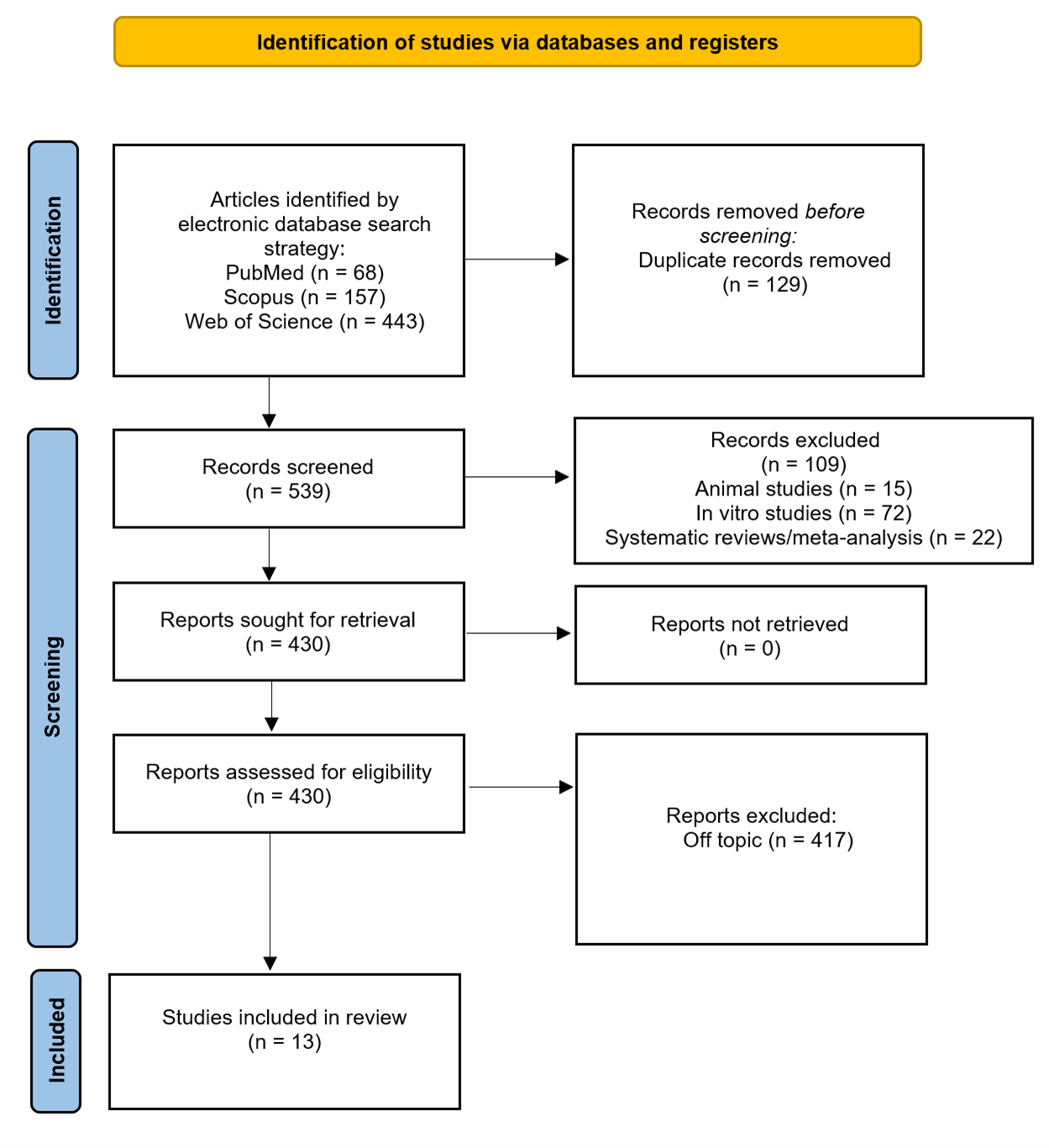
| Articles screening strategy | KEYWORDS: (A): dental implant; (B): surface OR coating OR antibacterial OR antimicrobial; (C): peri-implantitis OR periimplantitis OR marginal bone loss OR biofilm. |
| Boolean Indicators: (A) AND (B) AND (C). | |
| Timespan: 1 January 2015, to 1 December 2025. | |
| Electronic databases: Pubmed; Scopus; Web of Science. |
| Authors | Year of Study | Type of Study | Aim of the Study | Materials and Methods | Results |
|---|---|---|---|---|---|
| Luigi Canullo et al. [98] | 2024 | Controlled Clinical Trial | Evaluate transition from primary to secondary stability of nano-superhydrophilic bioactive surfaces in poor bone | 36 patients; 60 implants in D3–D4 bone; bioactive nano-superhydrophilic vs. conventional moderately rough surface; ISQ measured at placement, 30 and 45 days; MBL evaluated at 6 months after loading. | Bioactive surface showed more stable ISQ during early healing; control group showed transient ISQ reduction. No negative effect on MBL |
| Renzo Guarnieri et al. [99] | 2019 | Randomized Clinical Trial | Compare crestal bone loss and soft tissue outcomes of submerged vs. non-submerged laser-microgrooved implants | 20 patients; 40 implants; split-mouth design; radiographic CBL and clinical parameters (PD, BOP, plaque index, recession) evaluated up to 3 years after loading. | No significant differences in CBL or peri-implant soft tissue parameters at 3 years between submerged and non-submerged implants. |
| Blanca Vílchez et al. [100] | 2025 | Randomized Clinical Trial | Compare MBL between modified hydrophilic SLA and conventional SLA surfaces | 122 implants; split-mouth design. Primary outcome MBL at 12 month after loading. Secondary outcomes: PD, BOP, keratinized mucosa width, ISQ. | No clinically relevant differences in MBL or peri-implant soft tissue parameters between surfaces at 12 months. |
| Kyung-A Ko et al. [101] | 2019 | Randomized Controlled Trial | Compare CaP-coated vs. uncoated SLA implants | 34 patients; 50 implants; randomized double-blind design. Clinical and radiographic evaluation at placement, 3 months and 12 month. Primary outcome: MBL at 1 year | No implant failures. No clinically significant differences in marginal bone level between CaP-coated and conventional SLA implants at 1 year. |
| Beatrice Longhi et al. [102] | 2025 | Randomized Clinical Trial | Assess influence of anodized collar vs. machined collar on MBL and peri-implant parameters | 30 patients; two adjacent short implants (test and control), Radiographic MBL and clinical parameters (PD, BOP, plaque index) assessed at baseline, 3, 6 and 12 months | No significant differences in MBL or peri-implant indices between anodized and machined collar implants at 12 months. |
| Matteo Albertini et al. [103] | 2021 | Randomized Clinical Trial | Compare immediate vs. early loading of thermo-chemically treated implants | 21 patients; 35 implants; Immediate loading (1 week) vs. early loading (4 weeks). Radiographic, MBL, ISQ and clinical parameters at 12 months. | No implant loss. No differences in MBL or implant survival between loading protocols |
| Francesco Carinci et al. [104] | 2019 | Clinical Trial | Evaluate antibacterial internal implant coating | 60 implants; microbiological assessment by Real-Time PCR at 6 months; comparison between coated and non-coated implants. | Significant reduction in bacterial load in coated implants compared to controls at 6 months. Clinical peri-implantitis endpoint not assessed. |
| Magalie Raes et al. [41] | 2018 | Randomized Clinical Trial | Compare minimally vs. moderately rough implants in periodontitis patients | 18 patients; 84 implants; 5-year follow-up; clinical, radiographic, microbiological outcomes. Peri-implantitis incidence assessed. | Higher peri-implantitis incidence on moderately rough surfaces at 5 years. Marginal bone levels comparable but disease progression more frequent in moderately rough surfaces. |
| Luca Ferrantino et al. [42] | 2022 | Retrospective cohort study | Assess association between surface roughness, smoking and peri-implantitis | 630 implants; long-term follow-up. Multilevel logistic regression analysis evaluating surface roughness, smoking, implant site location and peri-implantitis occurrence. | Rough surfaces and smoking significantly associated with higher peri-implantitis risk. Patient-related factors strongly influenced disease onset. |
| Badra Hussain et al. [105] | 2024 | Comparative Clinical Study | Compare peri-implantitis occurrence between implant systems | >600 patients; clinical and radiographic evaluation of peri-implant status; assessment of implant system characteristics. | Patient factors outweighed surface topography |
| Janani Gnanajothi et al. [106] | 2024 | Prospective Clinical Study | Evaluate inflammatory status around implants with different microgeometries | 78 patients; three implant surface groups (SLA, SLActive, TiUnite). IL-1β levels in peri-implant crevicular fluid measured bu ELISA at 3 months and 1 year. | Higher IL-1β levels detected in TiUnite group compared to SLA and SLActive at both timepoints. Inflammatory markers increased over time in all groups. |
| Eduardo Anitua et al. [107] | 2017 | Controlled Retrospective Study | Assess early marginal bone stability in implants with calcium-modified surface. | Retrospective clinical and radiographic analysis of implants placed in augmented maxillary sinus. | Comparable marginal bone stability among surfaces (modified an conventional); no increased risk of early bone loss detected. |
| Işil Damla Şener-Yamaner et al. [108] | 2017 | Controlled Retrospective Study | Evaluate marginal bone loss around early-loaded SLA vs. SLActive implants. | 55 patients; 157 implants. Eary loading protocols (3 vs. 8 weeks). Radiographic MBL evaluated up to long-term follow-up (>60 months). | No significant long-term differences in MBL between SLA and SLActive implants. Surface effects secondary to patient-related factors. |
| Authors | D1 | D2 | D3 | D4 | D5 | D6 | D7 | Overall |
|---|---|---|---|---|---|---|---|---|
| Luigi Cannulo et al. (2024) [98] |  | |  | | | | | |
| Renzo Guarnieri et al. (2019) [99] | | | | | | | | |
| Blanca Vílchez et al. (2025) [100] | | | | | | | | |
| Kyung-A Ko et al. (2019) [101] | | | | | | | | |
| Beatrice Longhi et al. (2025) [102] | | | | | | | | |
| Matteo Albertini et al. (2021) [103] | | | | | | | | |
| Francesco Carinci et al. (2019) [104] | | | | | | | | |
| Magalie Raes et al. (2018) [41] | | | | | | | | |
| Luca Ferrantino et al. (2022) [42] |  | | | | | | | |
| Badra Hussain et al. (2024) [105] | | | | | | | | |
| Janani Gnanajothi et al. (2024) [106] | | | | | | | | |
| Eduardo Anitua et al. (2017) [107] | | | | | | | | |
| Işil Damla Şener-Yamaner et al. (2017) [108] | | | | | | | | |
 | ||||||||
Disclaimer/Publisher’s Note: The statements, opinions and data contained in all publications are solely those of the individual author(s) and contributor(s) and not of MDPI and/or the editor(s). MDPI and/or the editor(s) disclaim responsibility for any injury to people or property resulting from any ideas, methods, instructions or products referred to in the content. |
© 2026 by the authors. Licensee MDPI, Basel, Switzerland. This article is an open access article distributed under the terms and conditions of the Creative Commons Attribution (CC BY) license.
Share and Cite
Dipalma, G.; Marinelli, G.; Bassi, P.; Lagioia, R.; Rizzo, A.; Savastano, S.; Inchingolo, F.; Grippaudo, C.; Inchingolo, A.M.; Inchingolo, A.D. Implant Surface Characteristics and Peri-Implant Outcomes: A Systematic Review of Clinical and Microbiological Evidence. Bioengineering 2026, 13, 299. https://doi.org/10.3390/bioengineering13030299
Dipalma G, Marinelli G, Bassi P, Lagioia R, Rizzo A, Savastano S, Inchingolo F, Grippaudo C, Inchingolo AM, Inchingolo AD. Implant Surface Characteristics and Peri-Implant Outcomes: A Systematic Review of Clinical and Microbiological Evidence. Bioengineering. 2026; 13(3):299. https://doi.org/10.3390/bioengineering13030299
Chicago/Turabian StyleDipalma, Gianna, Grazia Marinelli, Paola Bassi, Rosalba Lagioia, Antonio Rizzo, Sara Savastano, Francesco Inchingolo, Cristina Grippaudo, Angelo Michele Inchingolo, and Alessio Danilo Inchingolo. 2026. "Implant Surface Characteristics and Peri-Implant Outcomes: A Systematic Review of Clinical and Microbiological Evidence" Bioengineering 13, no. 3: 299. https://doi.org/10.3390/bioengineering13030299
APA StyleDipalma, G., Marinelli, G., Bassi, P., Lagioia, R., Rizzo, A., Savastano, S., Inchingolo, F., Grippaudo, C., Inchingolo, A. M., & Inchingolo, A. D. (2026). Implant Surface Characteristics and Peri-Implant Outcomes: A Systematic Review of Clinical and Microbiological Evidence. Bioengineering, 13(3), 299. https://doi.org/10.3390/bioengineering13030299