Article

The Impact of Left Ventricular Performance and Afterload on the Evaluation of Aortic Valve Stenosis: A 1D Mathematical Modeling Approach


by
Cemre Çelikbudak Orhon
1,*,
Nikolaos Stergiopulos
1,
Stéphane Noble
2,3,
Georgios Giannakopoulos
3,
Hajo Müller
2,3 and
Dionysios Adamopoulos
2,3
1
Laboratory of Hemodynamics and Cardiovascular Technology, Institute of Bioengineering, Ecole Polytechnique Fédérale de Lausanne, 1015 Lausanne, Switzerland
2
Faculty of Medicine, University of Geneva, 1211 Geneva, Switzerland
3
Department of Internal Medicine, Division of Cardiology, Hopitaux Universitaires de Genève (HUG), 1205 Geneva, Switzerland
*
Author to whom correspondence should be addressed.
Bioengineering 2023, 10(4), 425; https://doi.org/10.3390/bioengineering10040425

Submission received: 27 February 2023 / Revised: 22 March 2023 / Accepted: 24 March 2023 / Published: 28 March 2023
(This article belongs to the Special Issue Mathematical Modeling of Aortic Diseases)

Abstract

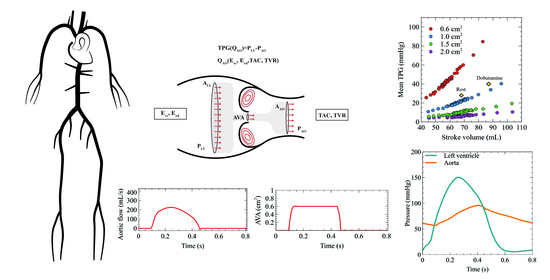
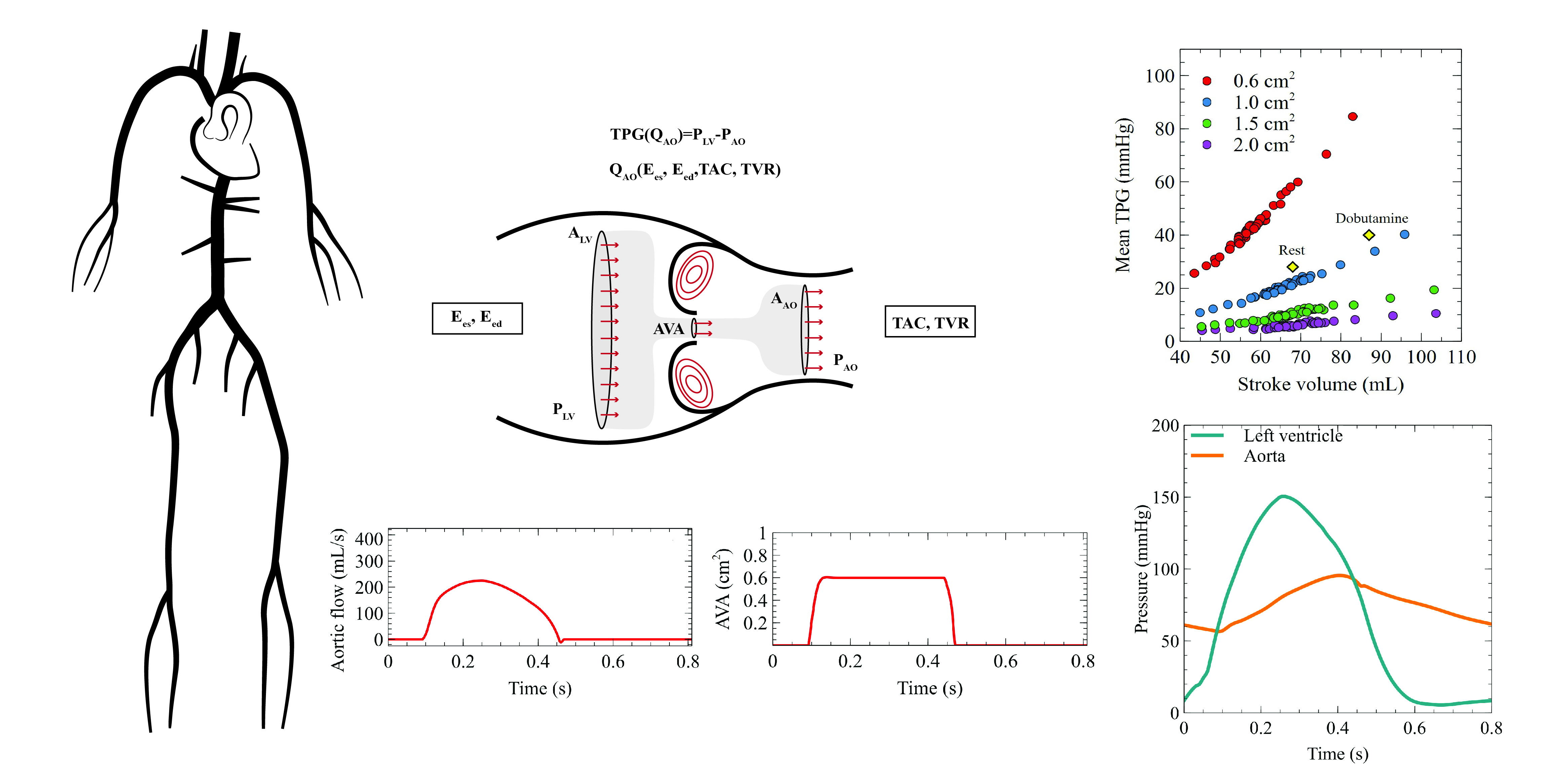
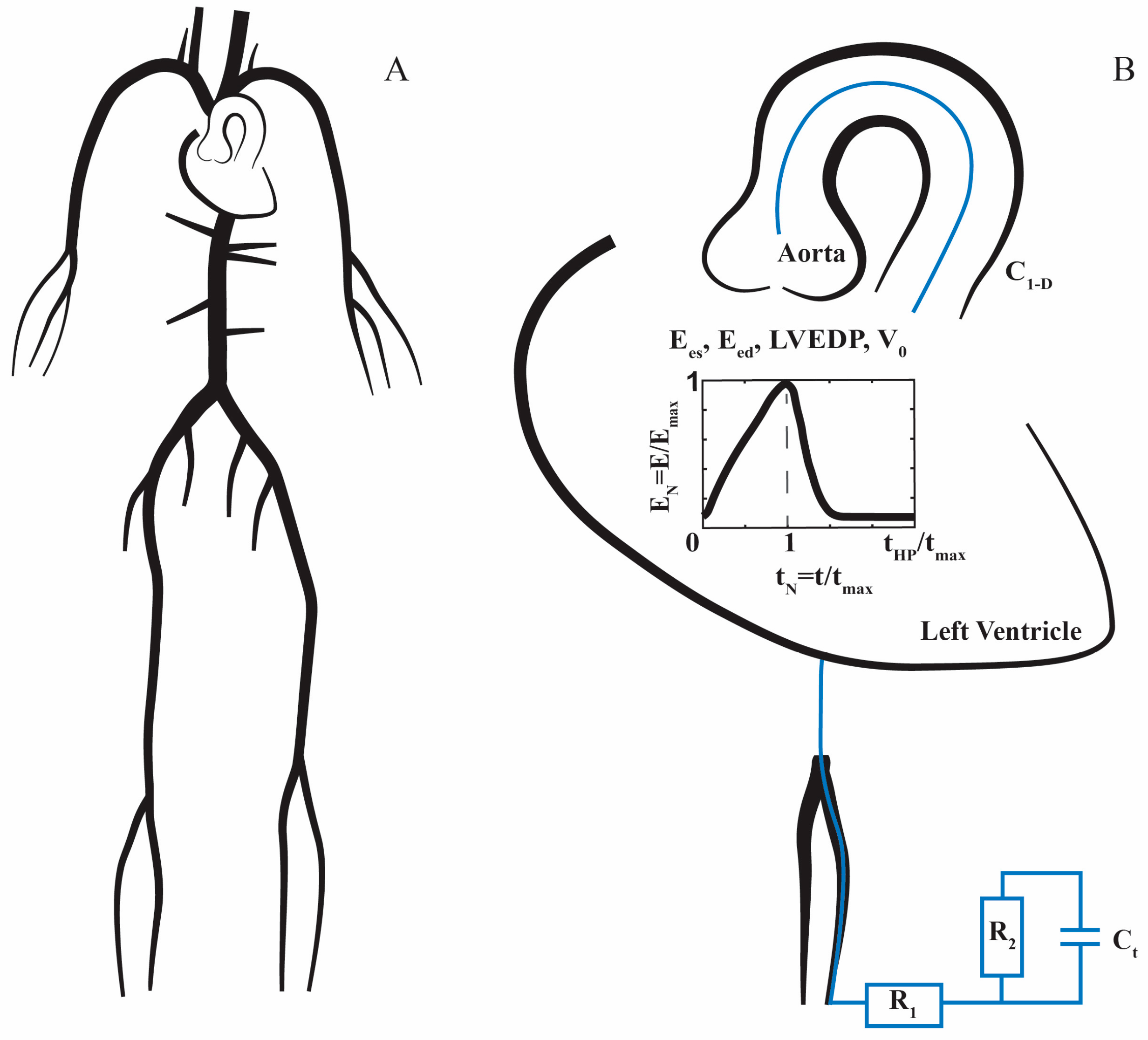
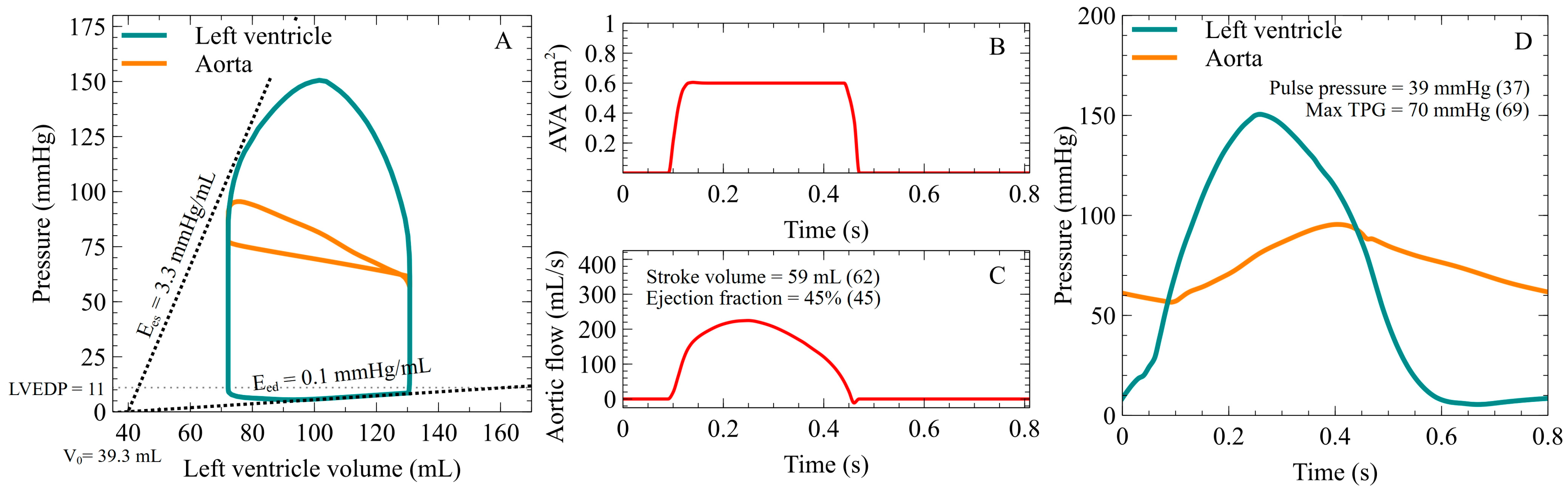
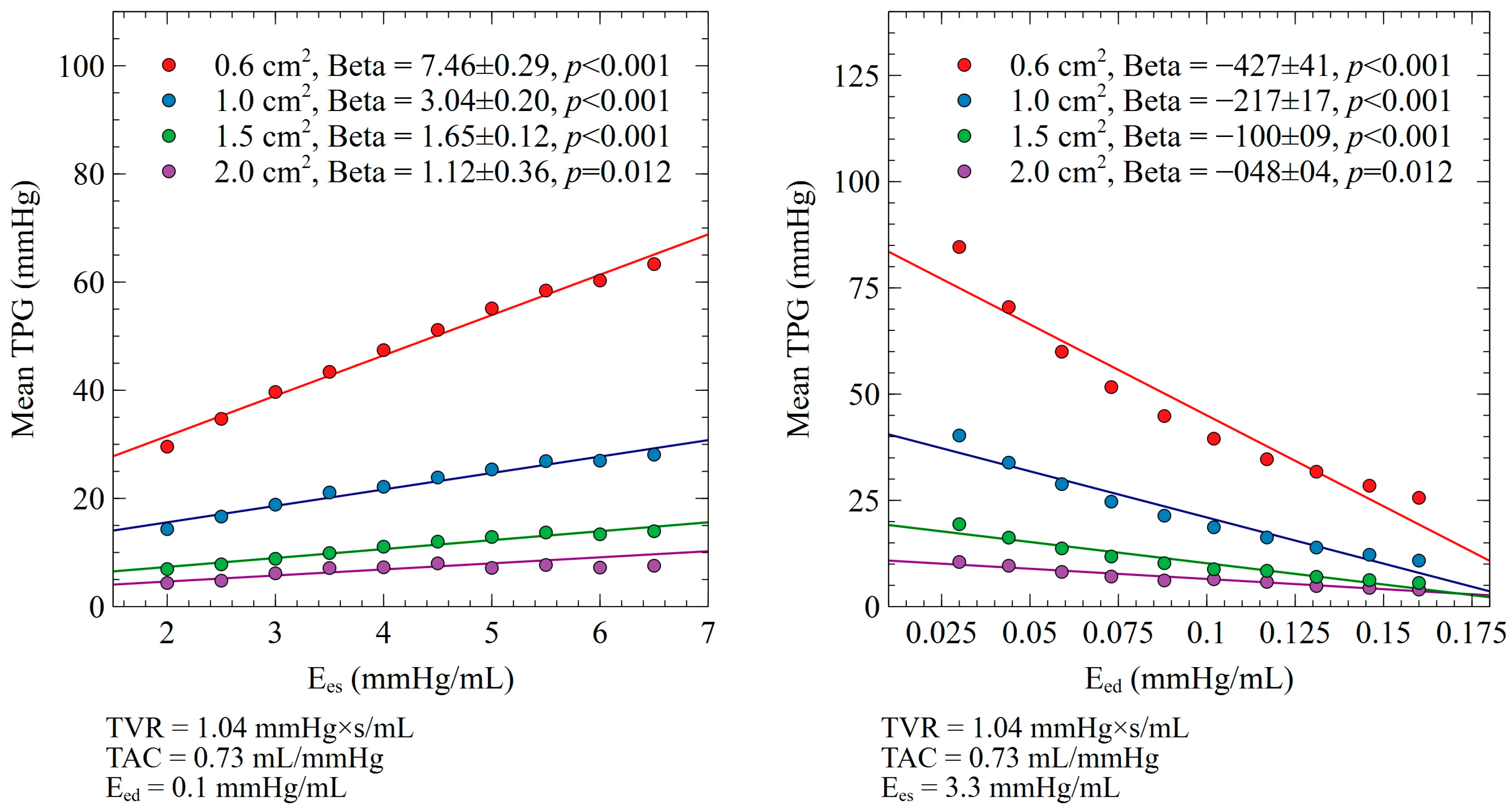
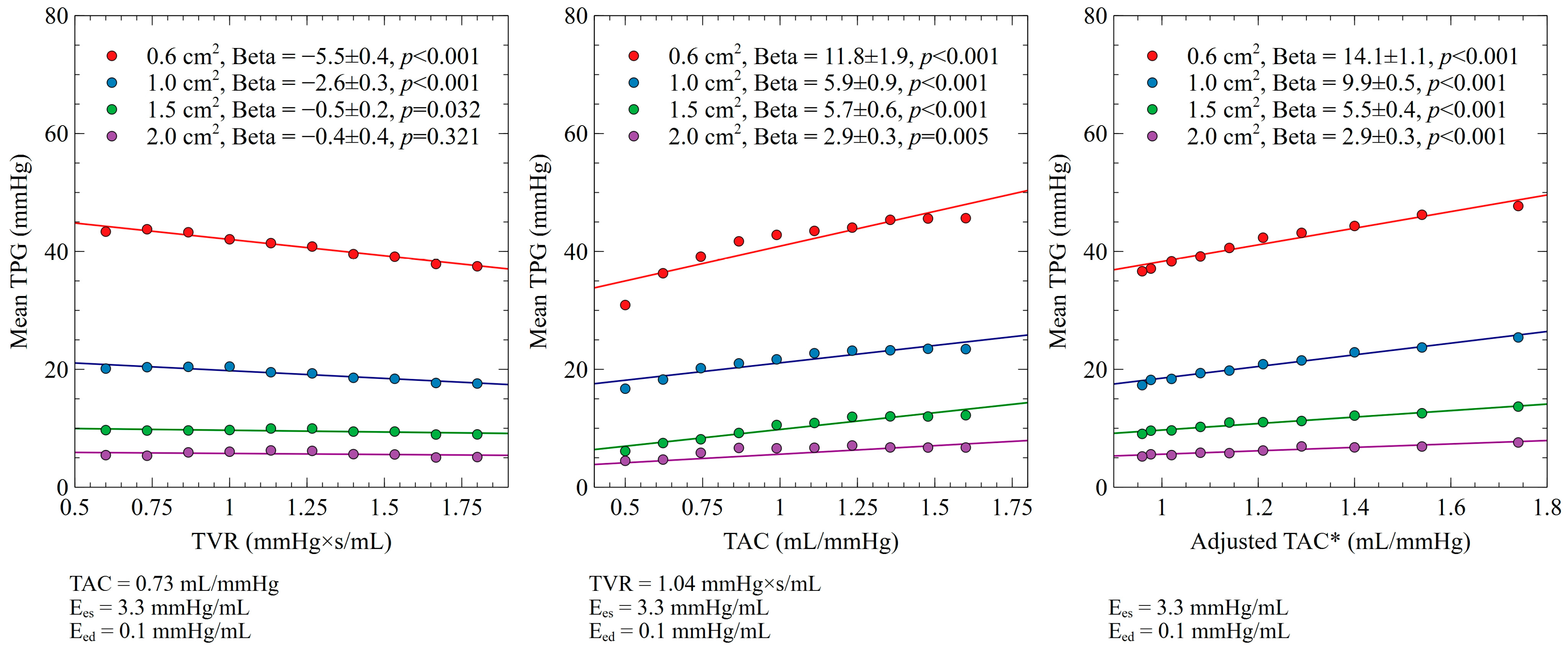
The transaortic valvular pressure gradient (TPG) plays a central role in decision-making for patients suffering from severe aortic stenosis. However, the flow-dependence nature of the TPG makes the diagnosis of aortic stenosis challenging since the markers of cardiac performance and afterload present high physiological interdependence and thus, isolated effects cannot be measured directly in vivo. We used a validated 1D mathematical model of the cardiovascular system, coupled with a model of aortic stenosis, to assess and quantify the independent effect of the main left ventricular performance parameters (end-systolic (Ees) and end-diastolic (Eed) elastance) and principal afterload indices (total vascular resistance (TVR) and total arterial compliance (TAC)) on the TPG for different levels of aortic stenosis. In patients with critical aortic stenosis (aortic valve area (AVA) ≤ 0.6 cm2), a 10% increase of Eed from the baseline value was associated with the most important effect on the TPG (−5.6 ± 0.5 mmHg, p < 0.001), followed by a similar increase of Ees (3.4 ± 0.1 mmHg, p < 0.001), in TAC (1.3 ±0.2 mmHg, p < 0.001) and TVR (−0.7 ± 0.04 mmHg, p < 0.001). The interdependence of the TPG left ventricular performance and afterload indices become stronger with increased aortic stenosis severity. Disregarding their effects may lead to an underestimation of stenosis severity and a potential delay in therapeutic intervention. Therefore, a comprehensive evaluation of left ventricular function and afterload should be performed, especially in cases of diagnostic challenge, since it may offer the pathophysiological mechanism that explains the mismatch between aortic severity and the TPG.
Keywords: aortic valve stenosis; transaortic valvular pressure gradient; left ventricular systolic and diastolic function; total vascular resistance; total arterial compliance aortic valve stenosis; transaortic valvular pressure gradient; left ventricular systolic and diastolic function; total vascular resistance; total arterial compliance
Graphical Abstract