1. Introduction
Reservoirs play a critical role in water resources systems by regulating water supply, mitigating floods, and supporting socio-economic development [
1,
2,
3]. However, reservoir operation has become increasingly challenging under climate variability, nonstationary hydrological conditions, and growing water demand [
4,
5,
6]. Traditional reservoir operation strategies, particularly fixed rule curves, are commonly developed under the assumption of hydrological stationarity, limiting their ability to respond effectively to dynamic inflow conditions and extreme hydrological events [
7,
8,
9]. In recent decades, substantial efforts have been devoted to improving reservoir operation through advanced optimization techniques, stochastic simulation, and decision support systems [
10,
11,
12,
13]. Deterministic rule curves remain widely adopted because of their simplicity and practical applicability [
14,
15,
16]. Nevertheless, such approaches often fail to capture the inherent variability and uncertainty of hydrological processes, especially in monsoon-dominated regions where inflow patterns exhibit strong seasonal fluctuations and high interannual variability [
17,
18,
19,
20]. To overcome these limitations, stochastic and probabilistic approaches, including Monte Carlo simulation and hedging operation policies, have been introduced to incorporate hydrological uncertainty into reservoir operation [
21,
22,
23,
24]. These methods generally improve operational robustness; however, they frequently generate a wide range of possible operational trajectories, making it difficult for decision-makers to identify a single, practically implementable operating policy [
25,
26]. Moreover, many existing approaches lack a systematic mechanism for translating probabilistic simulation outputs into actionable operational rule curves suitable for real-time reservoir management [
27,
28].
This challenge is particularly significant in climate-sensitive and data-scarce regions such as Southeast Asia. In Thailand, reservoir systems are strongly influenced by monsoon dynamics, resulting in frequent occurrences of both floods and droughts [
29,
30]. Kwan Phayao, a medium-sized reservoir located in northern Thailand, represents a typical example of these operational challenges [
31]. Despite the implementation of conventional rule curves, the reservoir continues to experience recurring flood and water shortage events, indicating that existing operational strategies remain insufficient under increasingly variable hydrological conditions [
32]. Recent advances in dynamic decision support systems (DDSS) and hybrid simulation frameworks provide new opportunities for developing adaptive reservoir operation strategies [
33,
34]. In particular, integrating stochastic inflow simulation with adaptive rule-selection mechanisms has significant potential to improve operational flexibility and system resilience [
35,
36]. However, a critical gap remains in developing practical frameworks capable of converting stochastic simulation outputs into a single representative operational rule that is both robust and operationally feasible. This study addresses this gap by proposing a Probabilistic Dynamic Reservoir Operation Framework (PDROF) based on the concept of the Most Likely Line (MLL). The proposed framework integrates stochastic inflow generation using Monte Carlo simulation, mass balance-based reservoir operation modeling, and probabilistic rule extraction to derive a dynamic operational rule curve representing the dominant storage behavior of the reservoir system [
37,
38]. In addition, a quartile-based classification approach is introduced to support adaptive rule selection under different hydrological conditions [
39].
The proposed framework is applied to Kwan Phayao to evaluate its performance under both historical and extreme hydrological conditions. The results demonstrate that the MLL-based dynamic rule curve can effectively reduce spill volumes and downstream flood impacts while maintaining water supply reliability. More importantly, this study contributes to the advancement of reservoir operation theory by bridging deterministic and probabilistic approaches and providing a practical and scalable framework for adaptive water resources management under hydrological uncertainty [
37,
38,
40].
2. Study Area
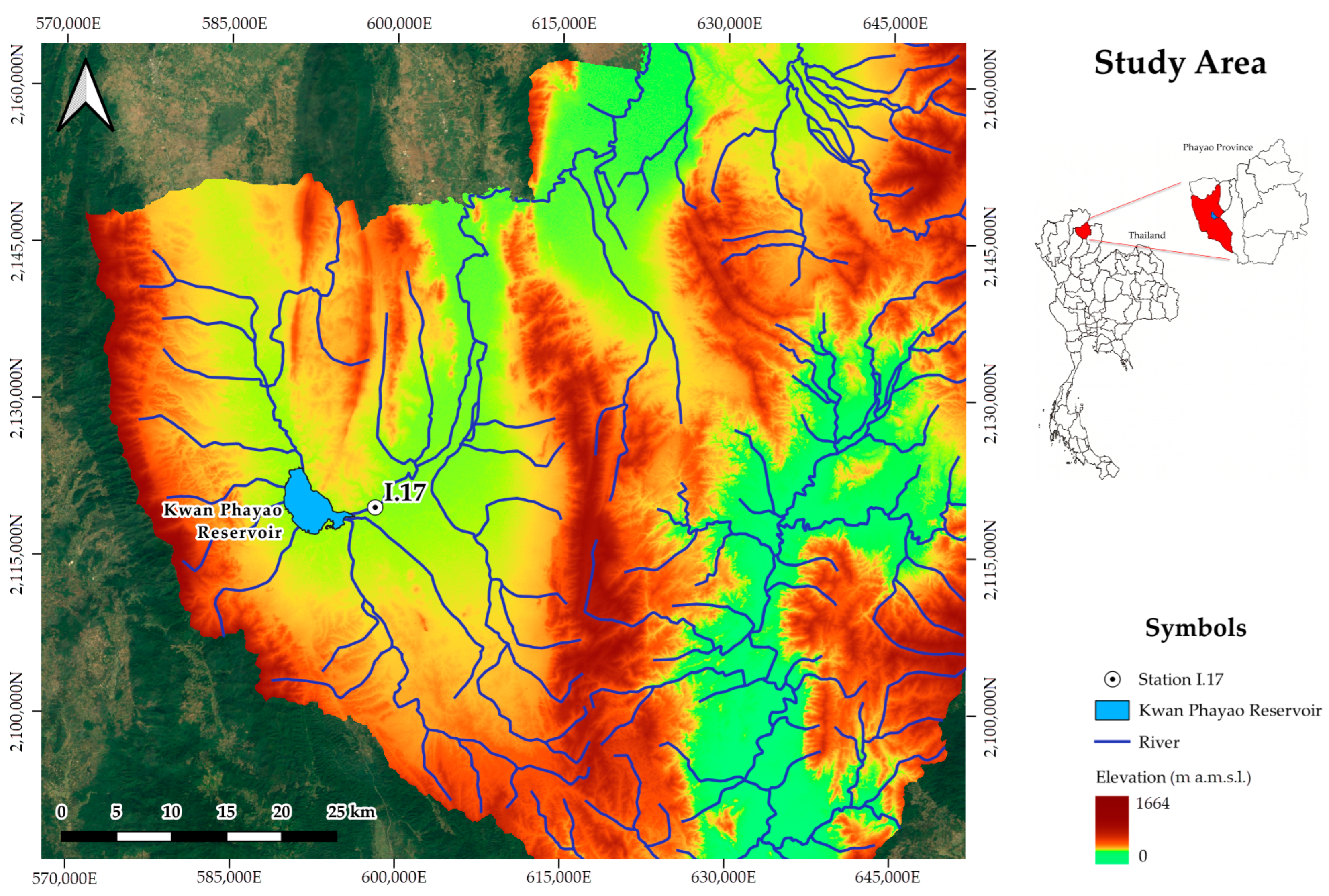
Kwan Phayao is a shallow natural lake that has been modified into a regulated reservoir system located in northern Thailand. The reservoir serves as a critical component of the regional water resources infrastructure, supporting irrigation, domestic water supply, ecological conservation, and flood mitigation within the upper Ing River basin. The spatial configuration of Kwan Phayao and the upper Ing River basin is illustrated in
Figure 1. The reservoir receives inflow from several tributaries connected to the upper Ing River system within a monsoon-influenced watershed. The total upstream drainage area contributing inflow to Kwan Phayao Reservoir is approximately 1227 km
2. The watershed consists of the upper Ing River basin and several tributary catchments that collectively contribute inflow to the reservoir system. The inflow data used in this study were obtained from Station I.17, a hydrological gauging station located in the upper Ing River Basin at latitude 19°10′10″ N and longitude 99°56′13″ E. The station is operated by the Phayao Irrigation Project under the Royal Irrigation Department (RID), Thailand. Observed monthly streamflow records from 2003–2025 were used to characterize inflow variability and develop the probabilistic inflow model employed in this study. The location of Station I.17 is identified in
Figure 1 to improve data transparency and reproducibility.
The reservoir is hydraulically connected to a network of tributaries draining a monsoon-dominated catchment, where precipitation is highly seasonal and concentrated during the wet season (July–October). Annual rainfall in the basin averages approximately 990 mm, with a substantial proportion occurring within a relatively short period, resulting in rapid inflow accumulation and elevated flood risk during the wet season. Conversely, inflow conditions during the dry season (March–April) are typically minimal, leading to recurring water shortages.
Kwan Phayao has undergone several structural modifications to improve storage capacity and operational performance. The reservoir currently has a maximum storage capacity of approximately 55.65 million cubic meters, while the minimum operational storage is maintained at approximately 9 million cubic meters to preserve water supply reliability and ecological requirements. The system is regulated by a gated control structure with limited discharge capacity, constraining flood release operations and increasing the likelihood of spill events during extreme inflow conditions.
From a hydrological perspective, the reservoir system is characterized by substantial inflow variability and a relatively limited hydrological monitoring network within the upstream catchment. Nevertheless, observed streamflow records from Station I.17, operated by the Phayao Irrigation Project under the Royal Irrigation Department (RID), were available and used as the primary inflow dataset in this study. While these observations provide valuable information for characterizing inflow behavior, the limited number of monitoring stations within the upper basin may restrict the representation of spatial variability in hydrological conditions across the watershed. This limitation, together with increasing climate variability and land-use changes, poses significant challenges for conventional deterministic rule curve-based reservoir management.
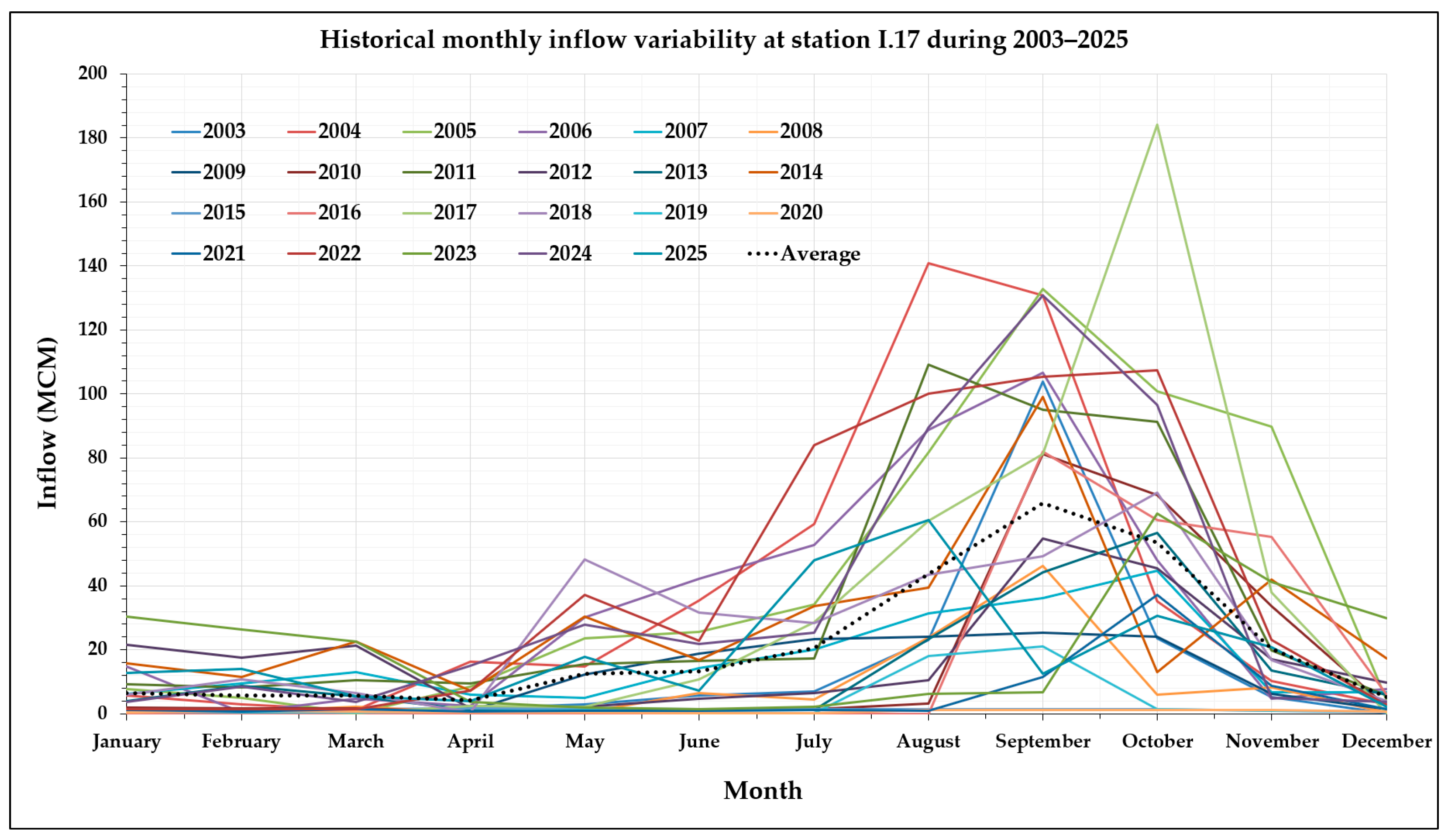
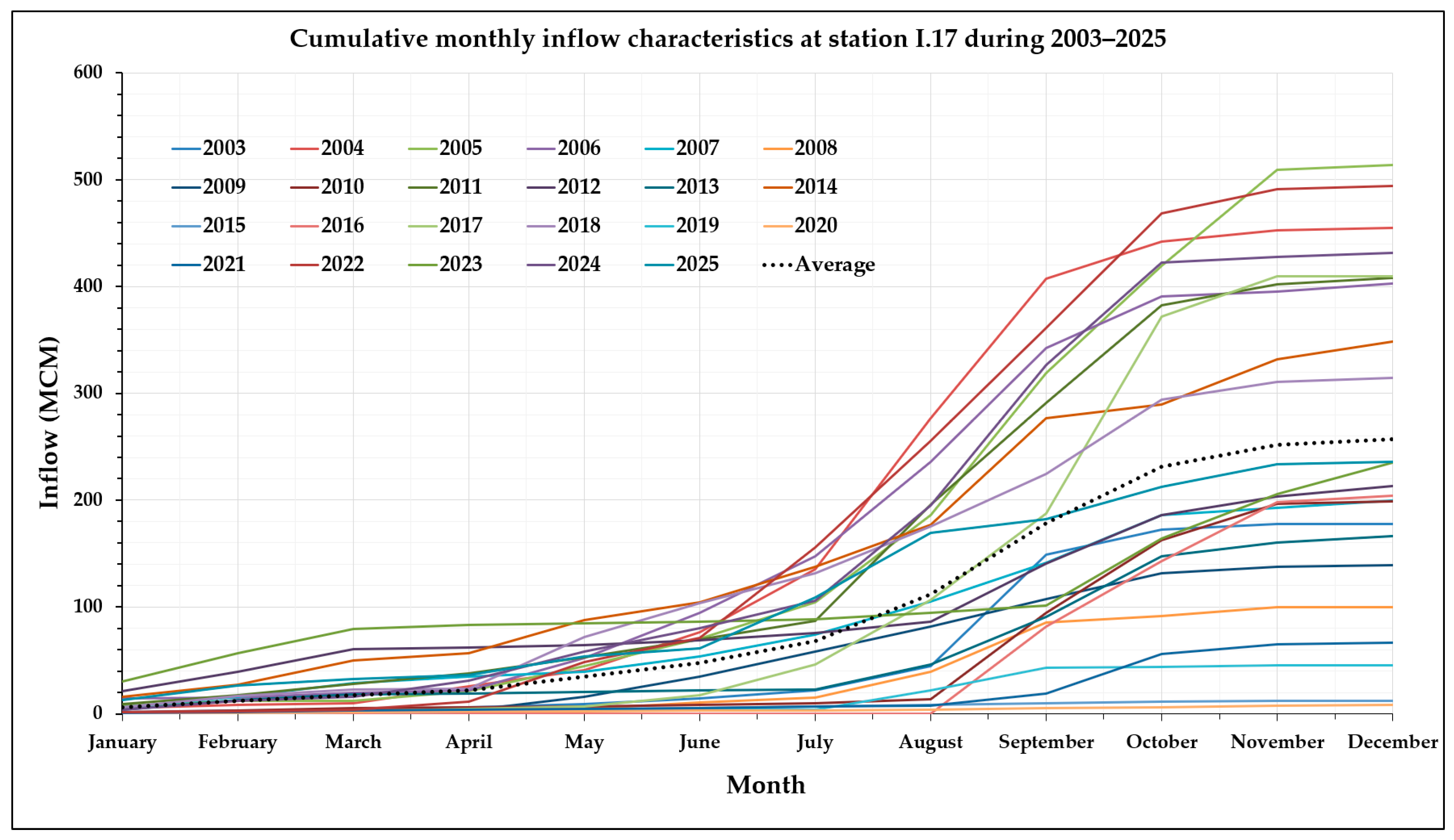
As illustrated in
Figure 2 and
Figure 3, inflow conditions within the upper Ing River basin exhibit strong seasonal concentration and substantial interannual variability.
Figure 2 demonstrates pronounced year-to-year fluctuations in monthly inflow, particularly during the wet season (August–October), indicating highly nonstationary hydrological behavior. These characteristics indicate that conventional fixed rule curves may be inadequate for managing rapidly changing inflow conditions and extreme hydrological events.
In addition to seasonal variability, cumulative inflow behavior also differs substantially between hydrological years.
Figure 3 illustrates the cumulative monthly inflow characteristics throughout the hydrological year and highlights considerable differences in cumulative inflow magnitude among years, particularly during the wet season. These cumulative inflow dynamics directly influence reservoir storage behavior, flood risk, and operational decision-making.
The combination of high inflow variability limited observational data, constrained storage capacity, and strong climate sensitivity makes Kwan Phayao a representative case of medium-scale reservoirs in monsoon-driven and data-limited regions. Consequently, the reservoir provides an appropriate testbed for evaluating uncertainty-aware and adaptive reservoir operation strategies under highly variable hydrological conditions.
3. Proposed Framework: Probabilistic Dynamic Reservoir Operation Framework (PDROF)
To address the limitations of conventional deterministic rule curves and purely stochastic simulation approaches, this study proposes a PDROF. The framework is designed to integrate hydrological uncertainty, reservoir system dynamics, and adaptive decision-making into a unified structure for reservoir operation under nonstationary conditions.
The PDROF is structured as a sequential and interconnected process that transforms uncertain inflow information into actionable operational rules. It combines probabilistic inflow characterization, ensemble-based stochastic simulation, reservoir operation modeling, probabilistic rule extraction, and adaptive decision mechanisms. This integrated structure enables the system to move beyond static rule-based operation toward a dynamic and uncertainty-informed decision framework.
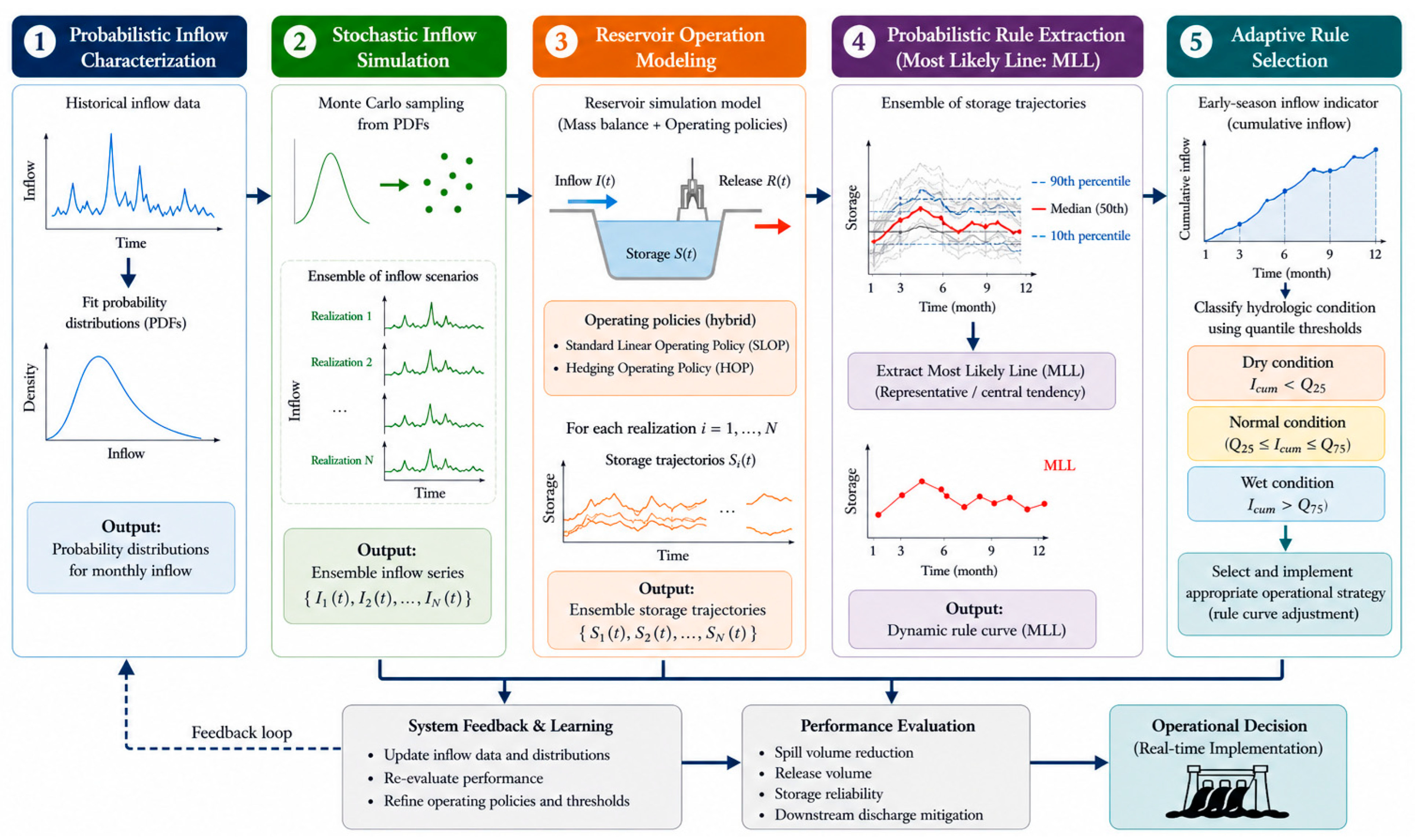
The conceptual structure of the proposed PDROF is illustrated in
Figure 4. The framework highlights the transformation of uncertain inflow inputs into operational decisions through a multi-stage workflow. Specifically, stochastic inflow ensembles are first generated to represent a wide range of hydrological conditions. These ensembles are then propagated through the reservoir operation model to produce corresponding storage trajectories. The MLL is subsequently extracted as a representative trajectory that captures the dominant behavior of the system. Finally, an adaptive rule selection mechanism allows the system to adjust operational strategies based on evolving hydrological conditions.
3.1. Probabilistic Inflow Characterization
The first component of the PDROF focuses on transforming historical hydrological records into probabilistic representations of inflow behavior. Monthly inflow data are analyzed to derive suitable probability distributions that characterize the variability, seasonality, and uncertainty of reservoir inflow conditions.
Through probabilistic characterization, both typical hydrological conditions and extreme inflow events can be represented within a unified framework. This probabilistic abstraction enables the framework to move beyond deterministic historical records and establish a foundation for uncertainty-aware reservoir operation [
41].
The resulting probabilistic inflow representations provide the basis for generating stochastic inflow ensembles in the subsequent simulation stage.
3.2. Stochastic Inflow Simulation
Based on the probabilistic inflow characterization, stochastic inflow scenarios are generated to represent a wide range of possible hydrological conditions [
42]. This process produces an ensemble of inflow trajectories spanning wet, normal, and dry hydrological periods.
The ensemble-based formulation enables the framework to evaluate reservoir system behavior under multiple plausible future conditions rather than relying solely on historical observations or predefined deterministic scenarios. By representing inflow uncertainty as an ensemble of possible realizations, the framework can capture both typical hydrological behavior and extreme inflow variability within a unified simulation environment.
Monte Carlo-based stochastic simulation is employed to generate these inflow realizations, ensuring that hydrological variability and uncertainty are consistently propagated throughout the reservoir operation modeling process [
43]. The generated inflow ensembles subsequently serve as input conditions for probabilistic reservoir operation simulation and dynamic rule extraction.
3.3. Reservoir Operation Framework
The reservoir operation component simulates the dynamic interaction between inflow, storage, release, and spill processes under operational and physical system constraints. The operational simulation is governed by mass balance relationships that continuously update reservoir storage based on inflow conditions, release decisions, evaporation losses, and storage limitations throughout the operational cycle [
44].
The model incorporates both proportional allocation strategies and hedging mechanisms to reflect realistic reservoir operation behavior under uncertain hydrological conditions. In particular, the Standard Linear Operating Policy (SLOP) provides a baseline allocation of water based on available storage and demand conditions, while the Hedging Operating Policy (HOP) introduces operational flexibility by allowing controlled delivery deficits during periods of inflow uncertainty [
45,
46].
This hybrid operational structure enables the system to balance multiple operational objectives, including flood mitigation, water supply reliability, storage preservation, and downstream impact reduction. Consequently, the reservoir operation model provides a dynamic simulation environment for evaluating operational responses under varying hydrological conditions.
3.4. Probabilistic Rule Extraction Using MLL
A central innovation of the PDROF is the extraction of a representative operational rule from stochastic simulation outputs using the MLL concept. The MLL is designed to identify the dominant reservoir storage behavior embedded within the ensemble simulation results while reducing the influence of extreme and low-probability trajectories.
Rather than relying on individual simulation realizations, the MLL derives a temporally consistent representative storage trajectory from the probabilistic ensemble distribution. This process can be interpreted as a probabilistic filtering mechanism that preserves the dominant hydrological signal while minimizing the effect of stochastic outliers and highly extreme operational responses.
As a result, the MLL provides a stable, smooth, and operationally practical rule curve that can be directly implemented in reservoir management [
47]. Importantly, this component bridges the gap between stochastic simulation and real-world operational decision-making by transforming ensemble-based uncertainty into a single actionable operational guideline.
The extracted MLL therefore serves as the primary adaptive operational trajectory within the proposed framework, supporting uncertainty-aware reservoir operation under highly variable hydrological conditions.
It is important to distinguish the proposed MLL from conventional ensemble summary statistics commonly used in stochastic reservoir analysis. While ensemble mean or median trajectories represent the central tendency of storage distributions at individual time steps, these statistics do not necessarily preserve temporal consistency throughout the operational period. The MLL is designed to identify a representative storage trajectory that maintains temporal coherence while reflecting the dominant behavior embedded within the ensemble simulation results.
In addition, the proposed MLL differs from optimization-based reservoir operation approaches such as dynamic programming and robust optimization. Rather than searching for an optimal operating policy through iterative optimization procedures, the MLL extracts an operationally practical rule directly from probabilistic simulation outcomes. This enables the framework to transform stochastic storage information into an interpretable and implementable operating guideline while maintaining computational efficiency and adaptability under hydrological uncertainty.
3.5. Adaptive Rule Selection Mechanism
To further enhance operational flexibility, the framework incorporates an adaptive rule selection mechanism based on hydrological indicators. In particular, cumulative inflow during the early wet season is used to classify hydrological conditions into categories such as dry, normal, and wet years using a quantile-based approach.
Based on this classification, the corresponding operational strategy is selected dynamically according to the evolving hydrological condition. This adaptive mechanism enables the system to respond proactively to changing inflow conditions rather than relying on a single fixed operational rule curve throughout the year.
By integrating hydrological classification with dynamic operational adjustment, the framework improves operational responsiveness under highly variable and nonstationary hydrological conditions. This adaptive rule selection mechanism is particularly important for monsoon-driven reservoir systems, where inflow conditions can change rapidly during the wet season and significantly influence flood risk and storage behavior.
3.6. Framework Advantages and Theoretical Contribution
The proposed PDROF offers several important advantages over conventional reservoir operation approaches. First, the framework integrates deterministic and stochastic methodologies by transforming probabilistic simulation outputs into a single representative operational trajectory through the MLL concept. This integration enables uncertainty-aware operation while maintaining practical operational interpretability.
Second, the framework enhances operational feasibility by providing a unique and actionable operational rule curve rather than multiple uncertain ensemble trajectories. This characteristic simplifies decision-making and improves the applicability of stochastic simulation results for real-world reservoir management.
Third, the framework improves adaptability under nonstationary hydrological conditions through the incorporation of dynamic rule selection based on evolving inflow conditions. This adaptive capability enables proactive operational adjustment under changing climatic and hydrological conditions.
Finally, the framework is scalable to data-scarce regions because it relies primarily on probabilistic inflow representations rather than extensive physical observation networks. This makes the framework particularly suitable for medium-scale reservoirs in climate-sensitive and data-limited regions.
Overall, the PDROF advances reservoir operation theory by introducing a structured methodology for transforming stochastic hydrological uncertainty into deterministic operational decisions. The framework therefore provides a practical foundation for adaptive and uncertainty-aware reservoir operation under highly variable hydrological conditions.
4. Methodology
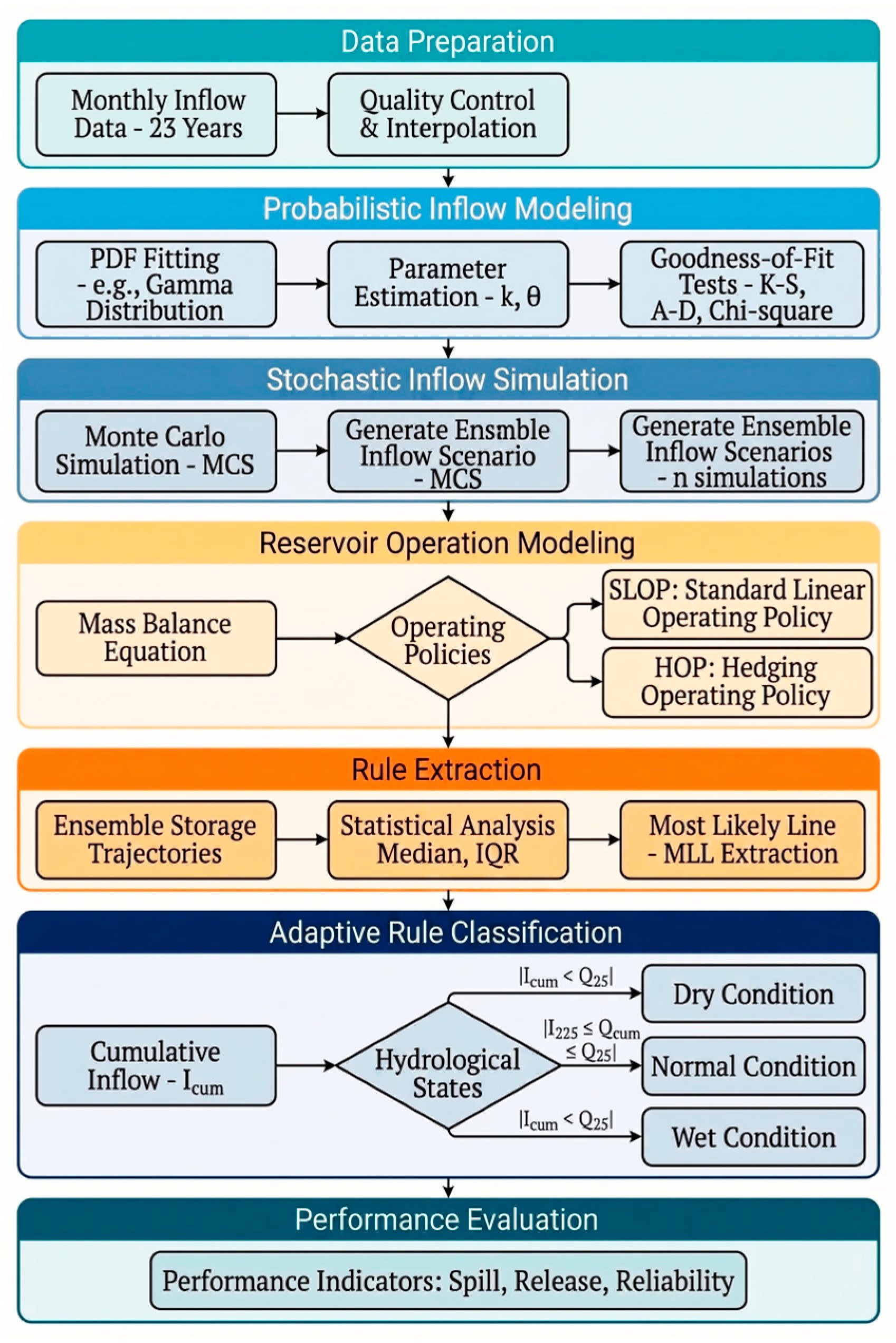
This section presents the computational implementation of the PDROF proposed in the previous section. The methodology translates the conceptual framework into a sequential computational workflow consisting of probabilistic inflow modeling, stochastic simulation, reservoir operation modeling, probabilistic rule extraction, and adaptive operational decision-making.
The workflow is designed to transform historical inflow information into uncertainty-aware operational rule curves through a multi-stage stochastic simulation and probabilistic analysis process. Initially, historical inflow data are transformed into probabilistic inflow distributions and stochastic inflow ensembles. These ensembles are subsequently propagated through the reservoir operation model to generate probabilistic storage trajectories. The MLL is then extracted from the ensemble storage distributions to derive a representative adaptive operational rule curve for uncertainty-aware reservoir management. The overall computational workflow of the proposed methodology is illustrated in
Figure 5.
4.1. Data Preparation
Monthly inflow data covering the period 2003–2025 were used to represent long-term hydrological variability within the upper Ing River Basin. The inflow records were obtained from observed streamflow measurements at Station I.17, a hydrological gauging station operated by the Phayao Irrigation Project under the Royal Irrigation Department (RID), Thailand. These observed records served as the primary dataset for characterizing historical inflow behavior and supporting probabilistic inflow modeling. As illustrated in
Figure 2, the historical inflow series exhibits substantial seasonal fluctuations and pronounced interannual variability, particularly during the wet season, indicating strong nonstationary hydrological behavior.
Prior to probabilistic analysis, the inflow dataset underwent a data quality assessment to verify completeness and consistency. The monthly inflow record for the period 2003–2025 contained no missing observations and no anomalous values requiring outlier correction. Consequently, no interpolation or outlier treatment procedures were necessary before probabilistic modeling and stochastic simulation.
The processed inflow dataset subsequently served as the primary input for probabilistic distribution fitting, stochastic inflow generation, Monte Carlo simulation, and reservoir operation analysis within the proposed PDROF.
4.2. Model Calibration and Validation
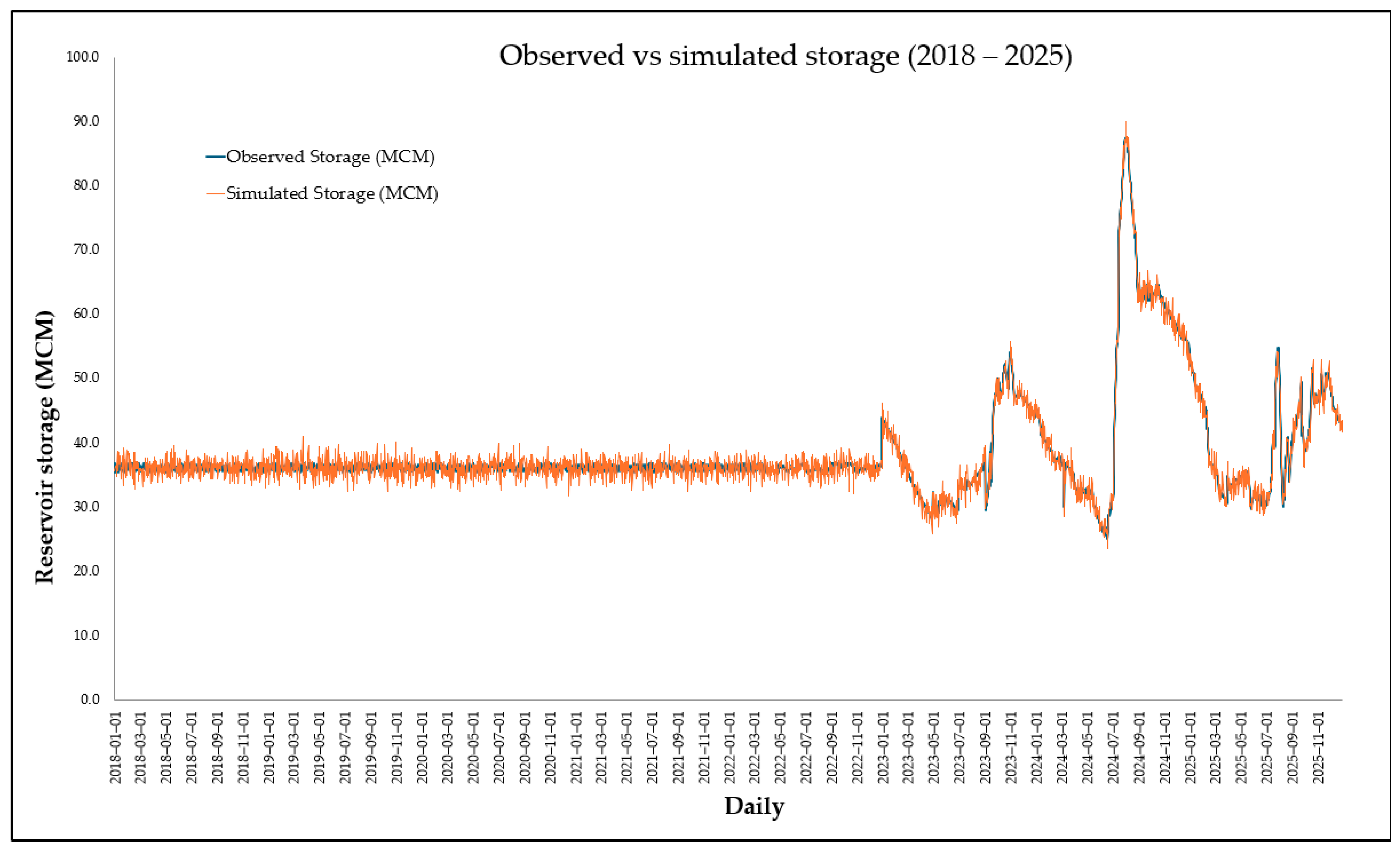
To evaluate the reliability of the proposed PDROF, the available 23-year reservoir storage dataset (2003–2025) was divided into two independent periods. The first 15 years (2003–2017) were used for model development and calibration, while the remaining 8 years (2018–2025) were reserved for independent validation. This split-sample approach was adopted to assess the ability of the framework to reproduce reservoir storage behavior under hydrological conditions that were not used during model development.
Model performance was evaluated by comparing simulated reservoir storage with observed reservoir storage using four commonly used statistical indicators: the coefficient of determination (R
2), Nash–Sutcliffe efficiency (NSE), root mean square error (RMSE), and mean absolute error (MAE). These indicators were selected to assess the agreement between simulated and observed reservoir storage dynamics over both the calibration and validation periods [
48].
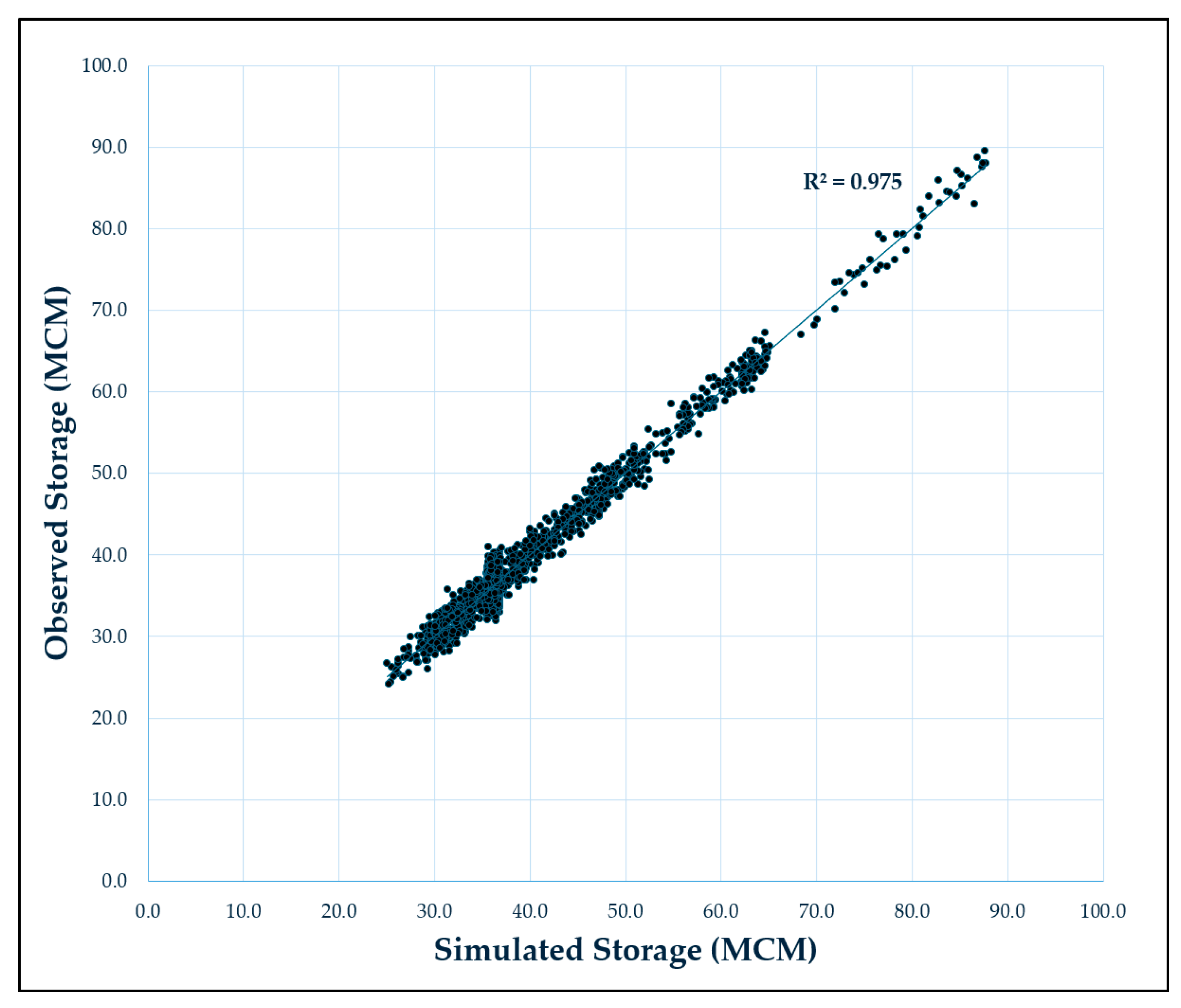
During the calibration period (2003–2017), the model achieved an R2 value of 0.916 and an NSE value of 0.910, indicating a strong agreement between simulated and observed storage. The corresponding RMSE and MAE values were 1.300 MCM and 1.035 MCM, respectively. For the independent validation period (2018–2025), the model produced an R2 value of 0.975 and an NSE value of 0.974, with RMSE and MAE values of 1.313 MCM and 1.057 MCM, respectively.
The validation results demonstrate that the proposed framework can accurately reproduce historical reservoir storage dynamics and maintain robust predictive performance under independent hydrological conditions. The high R2 and NSE values, together with the relatively low RMSE and MAE values, confirm the suitability of the calibrated model for reservoir operation analysis and subsequent evaluation of the PDROF under both historical and future hydrological scenarios.
Table 1 summarizes the calibration and validation statistics, while
Figure 6 compares the observed and simulated reservoir storage during the validation period. In addition,
Figure 7 presents a scatter plot of observed versus simulated reservoir storage, illustrating the strong agreement between the two datasets. The close clustering of data points around the 1:1 reference line and the high coefficient of determination further confirm the accuracy and reliability of the proposed framework in reproducing historical reservoir storage dynamics.
4.3. Probabilistic Inflow Modeling
To characterize hydrological uncertainty, inflow data were modeled using probability density functions (PDFs). The probability density function used to represent inflow uncertainty is expressed in Equation (1):
where
x = inflow variable;
Θ = set of distribution parameters.
For example, when the Gamma distribution is applied, the probability density function can be expressed as Equation (2):
where
k = shape parameter (controls the form of the distribution);
θ = scale parameter (controls the spread of the data);
Γ(k) = Gamma function.
The shape parameter k controls the degree of skewness of the inflow distribution, while the scale parameter θ governs the variability of inflow magnitude. Smaller values of k generally indicate highly skewed hydrological behavior, whereas larger values of θ indicate broader inflow variability.
Parameter estimation was performed for each monthly inflow dataset to identify the probability distribution that most appropriately represents the hydrological behavior of the system. Historical inflow observations were grouped by calendar month and analyzed separately to preserve seasonal hydrological characteristics. For each monthly dataset, the Gamma distribution parameters (shape parameter k and scale parameter θ) were estimated using the Maximum Likelihood Estimation (MLE) method implemented in MATLAB 2025b.
The estimated Gamma distribution parameters varied seasonally, reflecting differences in inflow behavior throughout the hydrological year.
Table 2 summarizes the monthly values of the shape parameter (
k) and scale parameter (
θ) obtained using Maximum Likelihood Estimation (MLE).
Candidate probability distributions, including Gamma, Normal, Lognormal, and Weibull distributions, were fitted independently to each monthly inflow dataset using Maximum Likelihood Estimation (MLE) in MATLAB. The goodness-of-fit of each fitted distribution was evaluated using the Kolmogorov–Smirnov (K–S), Anderson–Darling (A–D), and Chi-square (χ2) statistical tests. Lower test statistics indicate better agreement between the theoretical distribution and the observed data. The distribution exhibiting the most favorable overall performance across the three tests was selected for subsequent stochastic inflow generation. Among the evaluated distributions, the Gamma distribution consistently provided the best fit and was therefore selected for probabilistic inflow modeling.
4.4. Monte Carlo Simulation
Monte Carlo Simulation (MCS) was employed to propagate inflow uncertainty through the reservoir operation system and generate probabilistic storage trajectories under varying hydrological conditions [
49]. The simulation framework propagates stochastic inflow distributions through the reservoir operation model to generate multiple possible storage responses throughout the operational cycle.
Monte Carlo simulation was performed by randomly sampling inflow values from the fitted monthly Gamma distributions. For each realization, a complete hydrological year was generated by sequentially sampling monthly inflows from the corresponding monthly distributions. This procedure preserved the seasonal statistical characteristics of the historical inflow regime while representing stochastic variability and uncertainty. The simulation process was repeated 10,000 times in MATLAB, resulting in an ensemble of 10,000 inflow scenarios used for reservoir operation analysis.
For each monthly inflow distribution, random inflow realizations were generated using the fitted PDFs obtained from the probabilistic inflow modeling stage. The generated inflow values preserve the statistical characteristics of the historical inflow records, including seasonal variability and positively skewed hydrological behavior.
The expected inflow behavior can be expressed by Equation (3):
where
N = total number of simulation realizations;
= random sample generated from the fitted inflow distribution;
= simulated inflow corresponding to realization i.
A total of 10,000 simulation realizations were performed to ensure stable probabilistic representation of reservoir behavior. The number of realizations was selected based on convergence analysis, where changes in the ensemble mean reservoir storage remained below 1% as the number of realizations increased. The convergence behavior indicated that the ensemble mean storage stabilized after approximately 8000 realizations, while additional simulations produced only minor variations in the probabilistic storage estimates. Therefore, 10,000 realizations were adopted to provide statistically stable probabilistic storage trajectories and reliable estimation of spill and storage variability under uncertain hydrological conditions [
50].
The generated inflow ensembles were propagated through the reservoir operation model to produce probabilistic storage trajectories over the annual operational cycle. This ensemble-based approach allows the framework to explicitly represent uncertainty propagation and evaluate the likelihood of different storage conditions, including spill events and low-storage periods.
Unlike deterministic reservoir simulation, which relies on a single predefined inflow sequence, the Monte Carlo framework evaluates a wide range of possible hydrological outcomes. This enables more robust operational analysis under highly variable and nonstationary inflow conditions.
4.5. Reservoir Operation Modeling
Reservoir storage dynamics were simulated using a mass balance formulation that represents the interaction between inflow, storage, release, and operational constraints throughout the operational cycle. The reservoir storage continuity equation is expressed in Equation (4):
where
S(t) = reservoir storage at time (t);
I(t) = inflow at time (t);
R(t) = controlled release at time (t).
The release decision is determined as a function of storage conditions and water demand, as expressed in Equation (5):
where
D(t) = water demand at time (t).
This formulation describes the dynamic evolution of reservoir storage under varying inflow conditions and operational decisions. Reservoir storage was constrained by the maximum and minimum operational storage limits to ensure realistic operational behavior throughout the simulation period.
To ensure physically realistic reservoir operation, storage constraints were explicitly enforced during each simulation time step. If the calculated storage exceeded the maximum storage capacity (Smax), the storage was set equal to Smax and the excess volume was treated as spill. Conversely, if the calculated storage fell below the minimum operational storage (Smin), the storage was set equal to Smin. These constraints ensured that all simulated storage values remained within the physically feasible operating range of the reservoir.
The reservoir operation model incorporates both SLOP and HOP strategies to represent proportional water allocation and deficit-based operational adjustment under uncertain hydrological conditions. These operational policies provide the basis for evaluating adaptive reservoir behavior within the proposed PDROF.
4.6. Operating Policies
Two operating policies were implemented to represent realistic reservoir management:
4.6.1. SLOP
The SLOP is expressed in Equation (6):
where
= maximum storage capacity;
= minimum storage capacity.
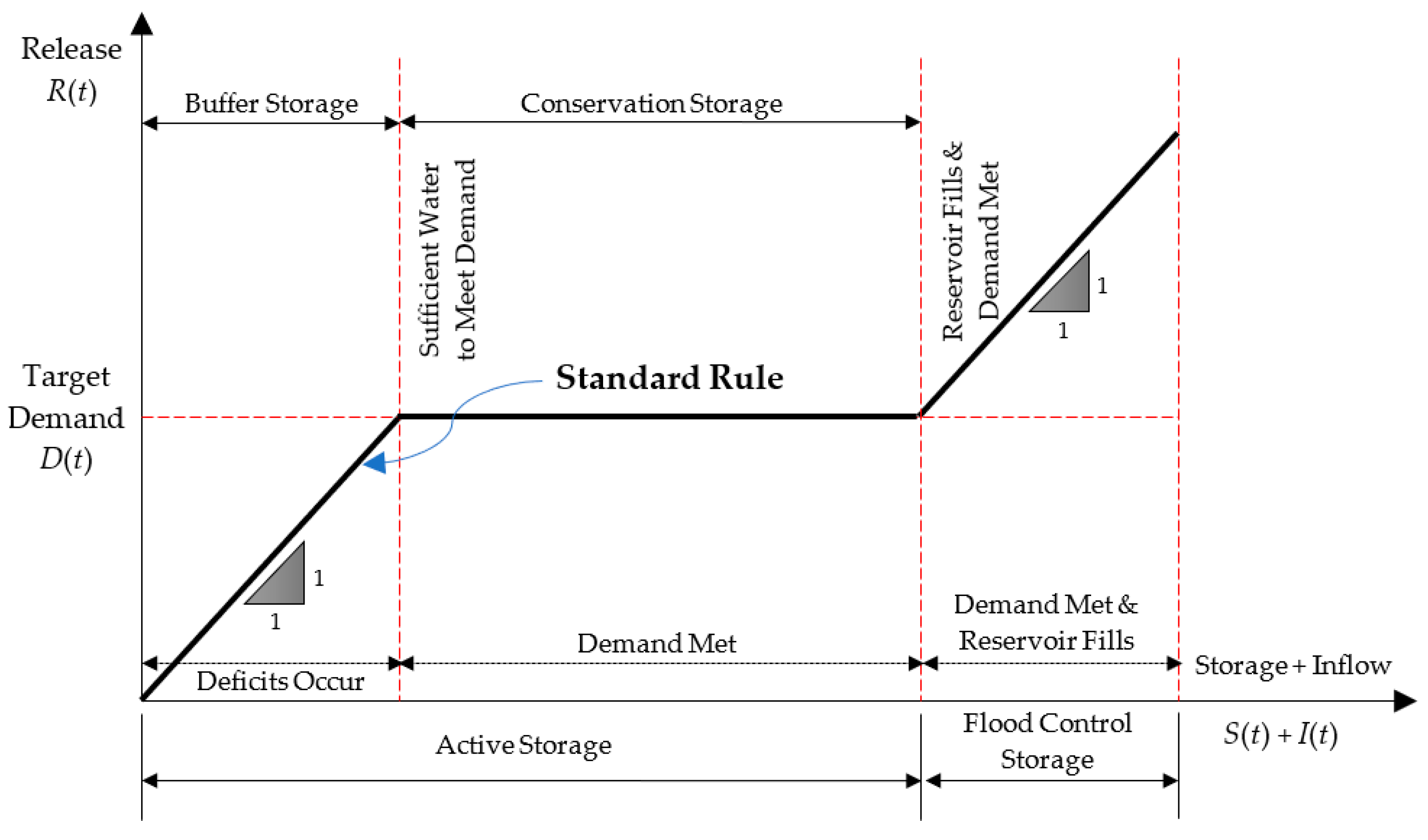
This policy allocates water proportionally based on available storage. As reservoir storage increases, water release also increases proportionally to satisfy downstream demand while maintaining operational stability.
Figure 8 illustrates the conceptual behavior of the SLOP, showing the proportional relationship between reservoir storage and release allocation under normal operating conditions.
4.6.2. HOP
To improve system resilience under shortage conditions, the HOP is expressed in Equation (7):
where
= hedging factor .
In this study, the hedging factor (α) was set to 0.8, indicating that 80% of the target demand was supplied during shortage conditions. This value was selected as a representative benchmark hedging strategy because it reduces water demand by 20% while avoiding excessively severe supply restrictions. The selected value was maintained constant throughout the simulation period to provide a consistent basis for comparison with the SLOP and the proposed PDROF.
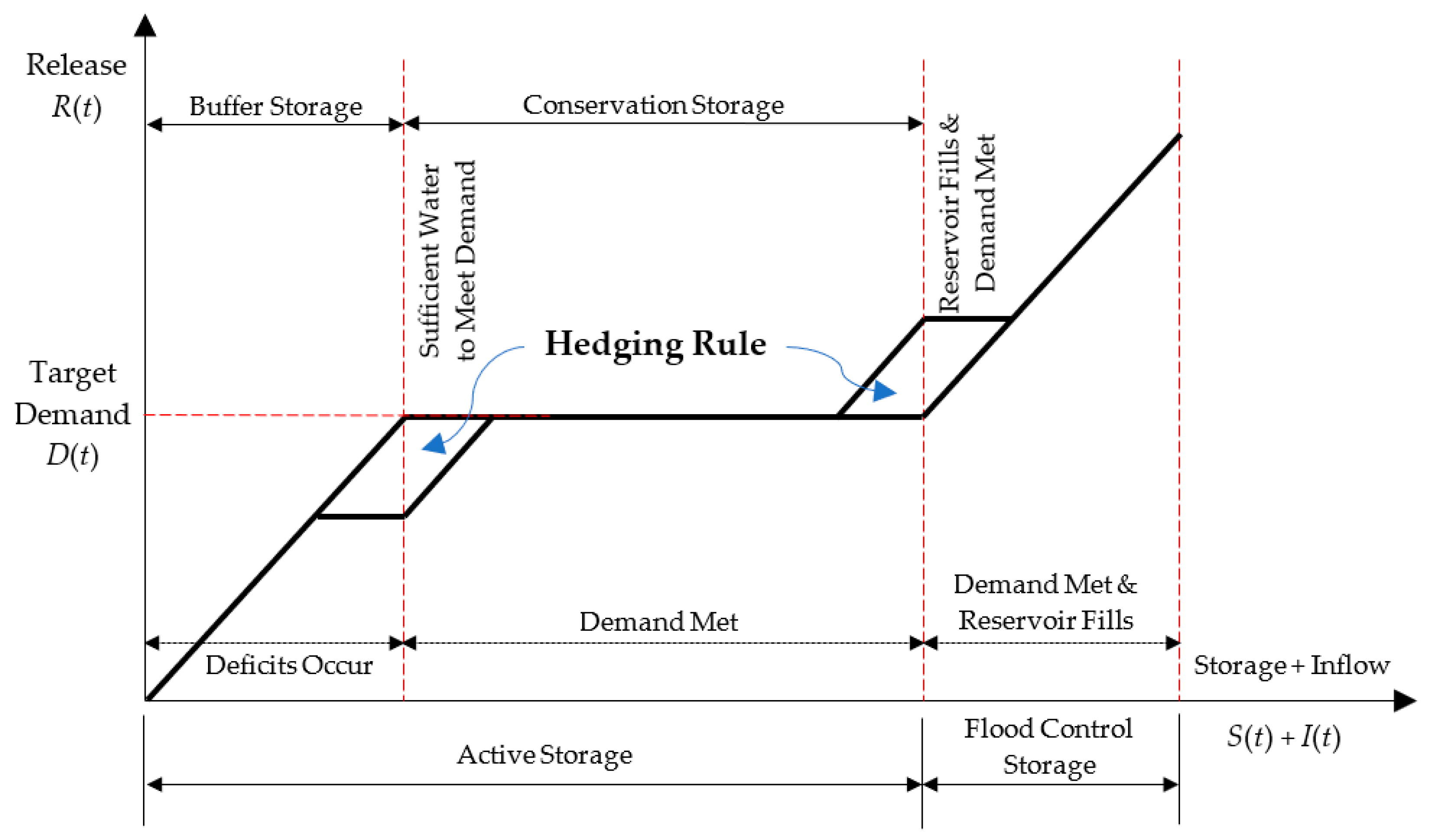
This policy allows partial delivery of demand to preserve storage for future use under uncertain inflow conditions. By intentionally reducing water release during periods of limited storage, the policy helps distribute deficits over time and improves long-term system reliability under hydrological uncertainty.
Figure 9 illustrates the conceptual behavior of the HOP, demonstrating how release allocation is intentionally reduced under low-storage conditions to preserve future water availability.
For comparative evaluation, reservoir simulations were performed independently under four operating approaches: the existing conventional reservoir operation strategy, the SLOP, the HOP, and the proposed PDROF. All operating approaches were evaluated using the same set of stochastic inflow scenarios generated through the Monte Carlo simulation procedure. SLOP and HOP were implemented as standalone benchmark operating policies and were not integrated into the PDROF decision-making process. The resulting storage trajectories, release volumes, spill volumes, and performance indicators were subsequently compared to assess the relative effectiveness of each operating strategy.
4.7. Ensemble Storage Analysis
For each stochastic inflow realization, reservoir operation was simulated to generate a corresponding reservoir storage trajectory throughout the operational cycle. The ensemble storage trajectories are represented using the following notation:
where
= reservoir storage trajectory for simulation realization (i);
N = total number of stochastic simulation realizations.
The resulting ensemble storage distributions were analyzed statistically to quantify reservoir system behavior under hydrological uncertainty. Statistical indicators including the ensemble mean, median, interquartile range (IQR), minimum values, and maximum values were evaluated to characterize storage variability and uncertainty propagation throughout the hydrological year.
The ensemble-based storage analysis enables identification of both dominant operational behavior and extreme storage conditions, including potential spill events and low-storage periods. In particular, quartile-based analysis was used to characterize the probabilistic distribution of storage conditions and provide the statistical basis for MLL extraction in the subsequent analysis stage.
This probabilistic storage evaluation framework allows the reservoir operation system to be analyzed as a range of possible operational outcomes rather than a single deterministic trajectory, thereby improving uncertainty-aware operational assessment under stochastic inflow conditions.
4.8. MLL Extraction
The MLL was derived from the ensemble of storage trajectories generated through stochastic inflow simulations. Rather than relying on a single deterministic storage trajectory, the MLL represents a probabilistically derived and temporally consistent storage trajectory extracted from the ensemble distribution.
In this study, the MLL was approximated using the median trajectory of the ensemble storage distribution at each time step, as expressed in Equation (8):
where
= Most Likely Line storage value at time (t);
= ensemble reservoir storage values at time (t).
Following the Monte Carlo simulation, reservoir storage values from all simulated trajectories were aggregated at each monthly time step. The median storage value was then calculated across the ensemble of storage realizations. By repeating this procedure for all time steps and connecting the resulting median values sequentially, a continuous MLL was obtained. The MLL represents the central tendency of probabilistic storage behavior and provides an operationally practical rule curve for reservoir management under uncertainty.
The median trajectory was selected because it provides a robust representation of ensemble behavior while reducing the influence of extreme storage conditions and stochastic outliers. This approach enables the extraction of a stable, smooth, and operationally interpretable storage trajectory under hydrological uncertainty.
Although the MLL is mathematically derived from the median of the ensemble storage distribution at each time step, its contribution lies in the transformation of probabilistic simulation outputs into an operationally implementable rule curve. Unlike conventional ensemble median statistics that are typically used only to describe the central tendency of stochastic results, the MLL is extracted as a temporally coherent storage trajectory and subsequently applied as the basis for adaptive reservoir operation and rule-curve development.
By converting the ensemble of probabilistic storage trajectories into a single continuous storage trajectory, the MLL transforms complex stochastic simulation outputs into an operationally implementable rule curve. The resulting MLL can be directly interpreted as a target storage trajectory for reservoir operation, thereby bridging probabilistic analysis and practical decision-making. This transformation enables reservoir operators to utilize uncertainty-informed guidance without requiring direct interpretation of large probabilistic ensembles.
The MLL should not be interpreted as a new optimization algorithm comparable to Stochastic Dynamic Programming (SDP), Reinforcement Learning (RL), or robust optimization approaches. Rather, it serves as a rule-extraction mechanism that translates probabilistic ensemble behavior into an operationally interpretable storage trajectory. While optimization-based approaches typically require objective-function formulation, iterative policy search, and computationally intensive optimization procedures, the MLL provides a transparent and computationally efficient means of deriving adaptive operational guidance directly from stochastic simulation outputs. The novelty of the MLL therefore lies not in the median calculation itself, but in its application as an adaptive rule curve that bridges probabilistic reservoir simulation and practical reservoir operation within the proposed PDROF.
The resulting MLL serves as the basis for constructing adaptive dynamic rule curves within the proposed PDROF. By representing the dominant storage behavior of the ensemble reservoir system, the MLL provides a practical adaptive operational rule for uncertainty-aware reservoir management under stochastic inflow conditions.
4.9. Adaptive Rule Classification
To support adaptive reservoir operation under varying hydrological conditions, hydrological states were classified using cumulative inflow
Icum and quantile-based thresholds derived from the probabilistic inflow distribution. The quantile threshold is expressed in Equation (9):
where
= quantile corresponding to probability level (p);
= inverse cumulative distribution function.
The cumulative inflow during the early wet season was evaluated against the probabilistic quantile thresholds to classify hydrological conditions into Dry, Normal, and Wet categories. Specifically, cumulative inflow values below the 25th percentile Q25 were classified as Dry conditions, values between Q25 and Q75 were classified as Normal conditions, and values exceeding the 75th percentile Q75 were classified as Wet conditions.
The Q25 and Q75 thresholds were derived from the probabilistic cumulative inflow distributions obtained through Monte Carlo simulation. Specifically, the 25th percentile (Q25) and 75th percentile (Q75) were calculated from the ensemble of simulated cumulative inflow values and used as statistical thresholds for hydrological classification. The use of quartile-based thresholds provides a data-driven and non-arbitrary method for distinguishing relatively dry, normal, and wet hydrological conditions within the probabilistic inflow ensemble.
This quantile-based classification enables dynamic selection of operational strategies according to evolving inflow conditions rather than relying on a single fixed operational rule throughout the hydrological year. The adaptive classification framework therefore improves operational responsiveness under nonstationary hydrological conditions and supports proactive reservoir management during periods of elevated hydrological uncertainty.
The adaptive operational rule was selected using a quantile-based classification procedure rather than an optimization algorithm. Cumulative inflow conditions were first classified into Dry, Normal, and Wet categories using the Q25 and Q75 thresholds derived from the probabilistic inflow distributions. The corresponding operational rule associated with each hydrological category was then selected and applied for reservoir operation.
4.10. Performance Evaluation
To assess the robustness and operational efficiency of the proposed PDROF, system performance was evaluated across all stochastic simulation scenarios using three primary performance indicators: spill volume, release volume, and storage reliability.
Spill volume was used to quantify the magnitude of excess water released beyond reservoir storage capacity during high inflow conditions, representing the system’s flood mitigation performance. Release volume was evaluated to assess operational responsiveness and downstream discharge behavior under varying hydrological conditions. Storage reliability was used to measure the ability of the reservoir system to maintain storage within acceptable operational limits throughout the simulation period.
The performance indicators were analyzed statistically across the ensemble simulation results to evaluate both average system behavior and extreme operational responses under hydrological uncertainty. This ensemble-based evaluation enables comprehensive assessment of operational robustness, flood mitigation capability, and storage stability under stochastic inflow conditions.
For comparative evaluation, the performance of the proposed PDROF was assessed against three reference operating approaches: the existing conventional reservoir operation strategy, the SLOP, and the HOP. These benchmark operating policies were selected because they represent commonly applied reservoir operation strategies with different operational characteristics. The inclusion of both SLOP and HOP provides additional benchmark references beyond current operational practice and enables a broader assessment of the effectiveness, adaptability, and operational robustness of the proposed framework under hydrological uncertainty.
By integrating probabilistic performance evaluation with stochastic reservoir simulation, the proposed framework provides a quantitative basis for comparing adaptive operational strategies under highly variable and nonstationary hydrological conditions.
5. Results and Discussion
This section evaluates the performance of the proposed PDROF through probabilistic analysis, stochastic reservoir simulation, and real-world operational validation. The results are analyzed from both hydrological and operational perspectives to examine the ability of the framework to manage uncertainty, improve storage stability, and enhance adaptive reservoir operation under varying inflow conditions.
The discussion emphasizes not only the observed simulation outcomes but also the underlying mechanisms governing system behavior under hydrological uncertainty. Particular attention is given to uncertainty propagation, probabilistic storage behavior, MLL extraction, adaptive rule selection, and long-term operational performance under stochastic inflow conditions.
Comparisons between deterministic and probabilistic operational behavior are also presented to demonstrate the advantages of the proposed framework in reducing spill risk, improving operational flexibility, and supporting uncertainty-aware reservoir management.
5.1. Probability Distribution Fitting Results
The goodness-of-fit statistics presented in
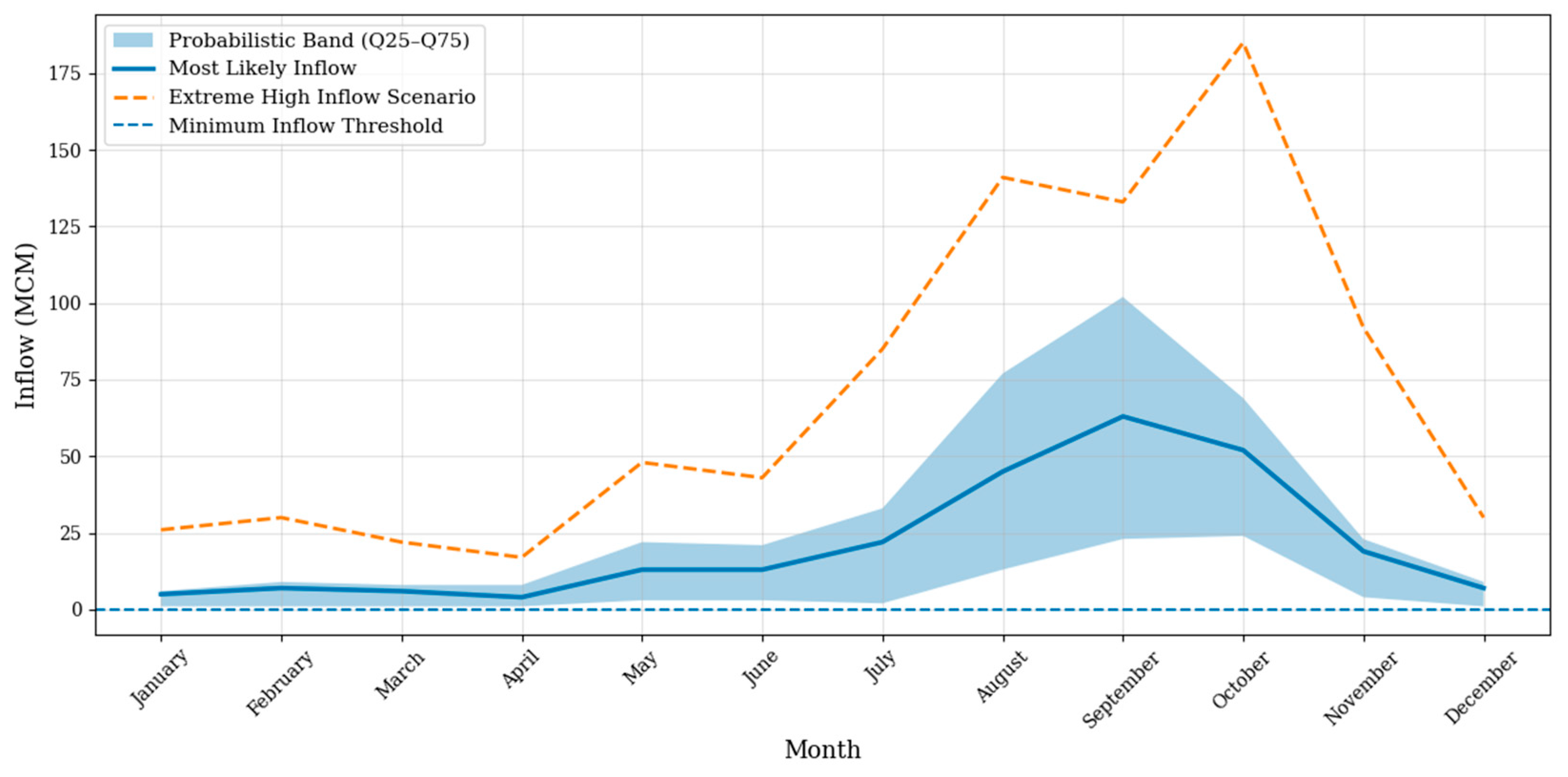
Table 3 indicate that the Gamma distribution provides satisfactory agreement with the observed monthly inflow data across all seasons. These fitted distributions were subsequently used to derive the probabilistic inflow bands shown in
Figure 10, which visually represent the seasonal uncertainty and variability of inflow conditions.
This monthly distribution-based approach preserves important seasonal hydrological characteristics, including low-flow behavior during the dry season and high-flow variability during the wet season.
Figure 10 illustrates the probabilistic inflow band derived from the historical inflow distribution at station I.17. The figure presents the mean inflow trajectory together with the interquartile uncertainty range (Q25–Q75), demonstrating substantial seasonal variability and uncertainty in inflow conditions, particularly during the wet season. The widening probabilistic band during August–October indicates increased hydrological uncertainty, suggesting that deterministic operating rules alone may be insufficient during high-variability periods.
This probabilistic representation is essential for the PDROF because it transforms historical inflow records into uncertainty-aware inputs. Rather than relying on a single deterministic inflow sequence, the framework evaluates a range of possible hydrological conditions, enabling more robust reservoir operation under variability and extreme hydrological events.
5.2. Deterministic Operation Behavior
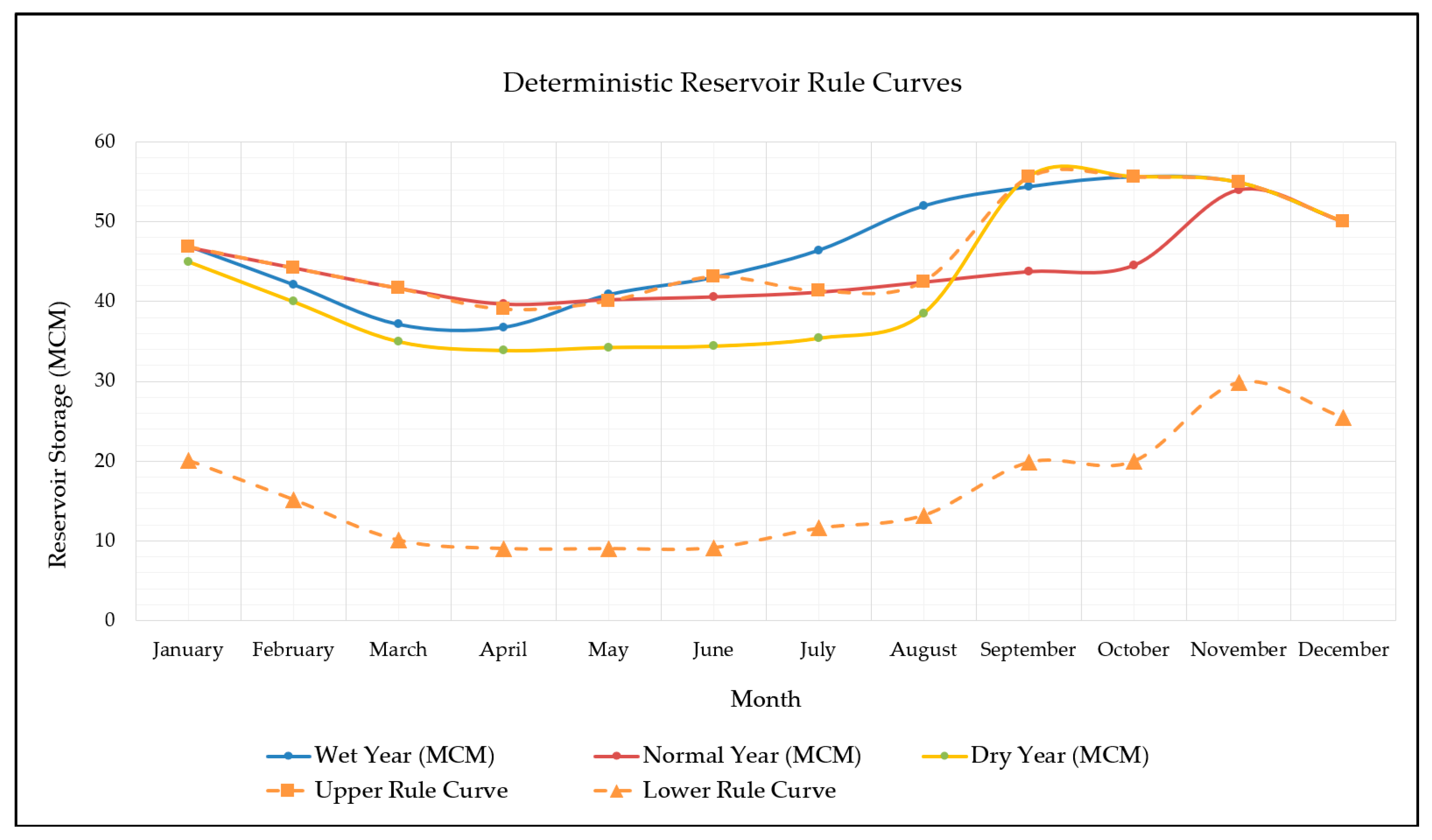
Figure 11 presents the deterministic reservoir operation behavior under predefined hydrological conditions (wet, normal, and dry years), including the corresponding operational storage trajectories and rule curve thresholds for each hydrological scenario.
Figure 11 illustrates distinct storage trajectories under different hydrological scenarios. Under dry-year conditions, reservoir storage gradually decreases during the dry season and reaches a minimum value of approximately 33.89 MCM in April. In contrast, under wet-year conditions, reservoir storage increases rapidly during the wet season, reaching approximately 55.65 MCM during September–October, which corresponds closely to the maximum storage capacity of the reservoir. The normal-year trajectory remains between these two operational extremes throughout the hydrological year.
Figure 11 also illustrates the deterministic rule curves associated with each hydrological scenario. The upper rule curve remains close to the reservoir storage capacity during periods of high-water availability, whereas the lower rule curve varies from approximately 9.04 to 20.12 MCM depending on seasonal conditions. These rule curves establish operational boundaries that support reliable water supply management while minimizing the risks of reservoir spill and critical storage depletion.
Although deterministic rule curves provide a structured operational guideline, the results indicate that reservoir operation remains highly sensitive to the prior classification of hydrological conditions. In practical reservoir management, future inflow conditions are inherently uncertain and may not conform strictly to predefined wet, normal, or dry scenarios. Consequently, deterministic operation may be insufficient under highly variable hydrological conditions, particularly during extreme inflow events. This limitation motivates the need for a probabilistic reservoir operation framework capable of accommodating continuous inflow uncertainty and dynamic operational variability.
5.3. Probabilistic Storage Behavior and Uncertainty Propagation
The proposed probabilistic framework captures a wide range of possible reservoir storage states through Monte Carlo simulation. The resulting ensemble storage trajectories (
Figure 12) reveal not only the expected seasonal storage pattern but also the magnitude of uncertainty associated with each operational period.
The ensemble trajectories were generated from 10,000 stochastic inflow realizations, enabling statistical characterization of storage uncertainty throughout the annual operational cycle. This ensemble-based representation allows the framework to evaluate a wide range of possible hydrological outcomes rather than relying on a single deterministic inflow sequence.
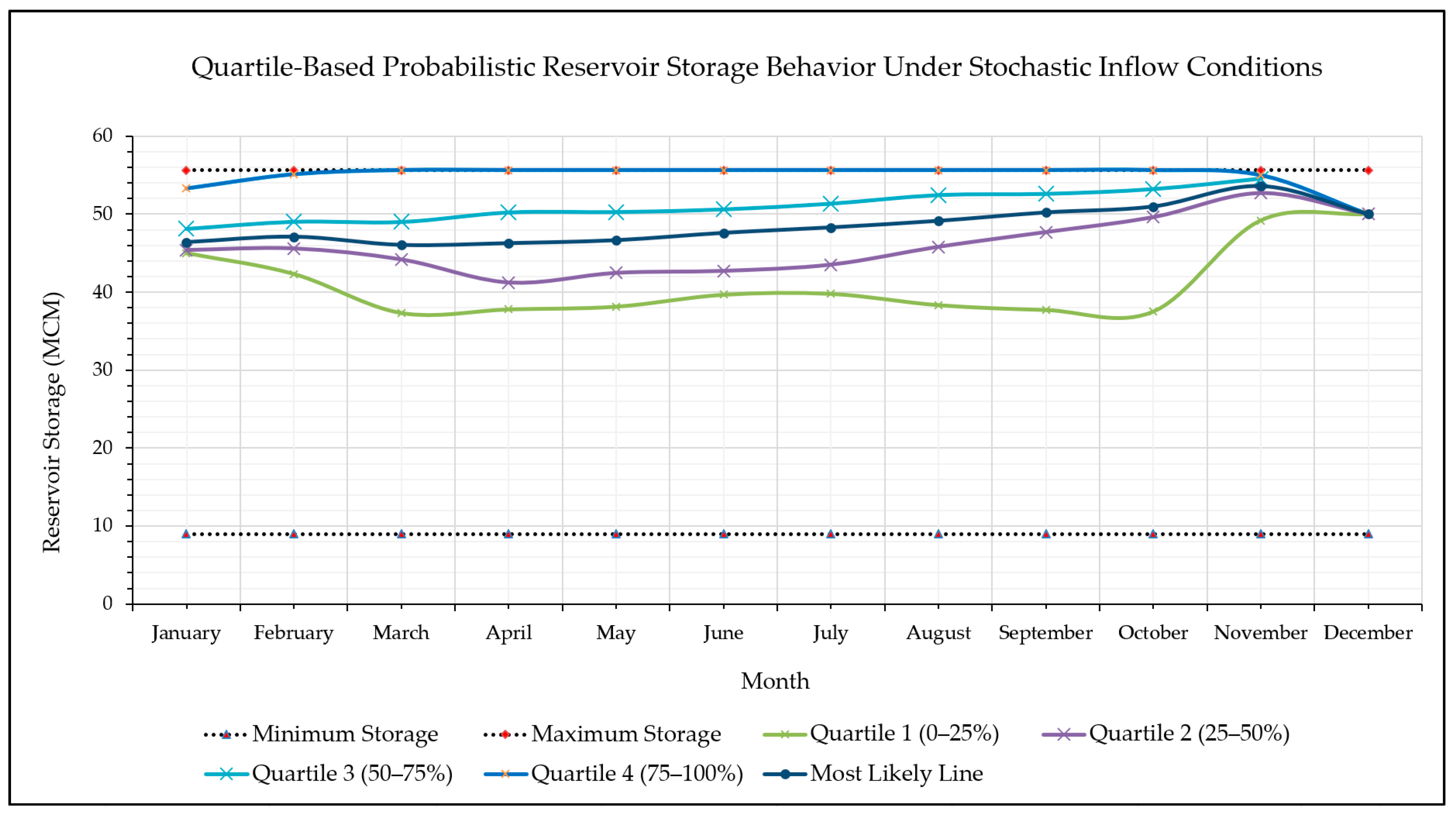
Figure 12 illustrates the probabilistic storage trajectories generated from the Monte Carlo simulation. A key observation is that ensemble spread increases significantly during the wet season (August–October), indicating substantially higher uncertainty in inflow conditions during periods of intense monsoon activity. In contrast, the dry season exhibits a narrower ensemble distribution, reflecting relatively stable low-inflow conditions.
This widening probabilistic storage distribution demonstrates that operational risk is not constant throughout the year but varies seasonally according to inflow variability. Deterministic rule curves are unable to represent this dynamic uncertainty structure because they rely on predefined hydrological classifications and fixed operational assumptions.
The probabilistic simulation framework explicitly propagates inflow uncertainty through the reservoir operation process, thereby allowing identification of high-risk periods associated with potential spill events or low-storage conditions. This capability enables more informed and adaptive operational decision-making under uncertain hydrological conditions.
Furthermore, the ensemble trajectories provide the statistical foundation for extracting the MLL, which serves as a representative operational trajectory derived from the dominant probabilistic storage behavior of the reservoir system.
These findings are consistent with previous studies indicating that probabilistic reservoir simulation can better represent seasonal hydrological uncertainty compared with deterministic rule-based approaches [
51,
52].
5.4. MLL as a Representative Operational Rule
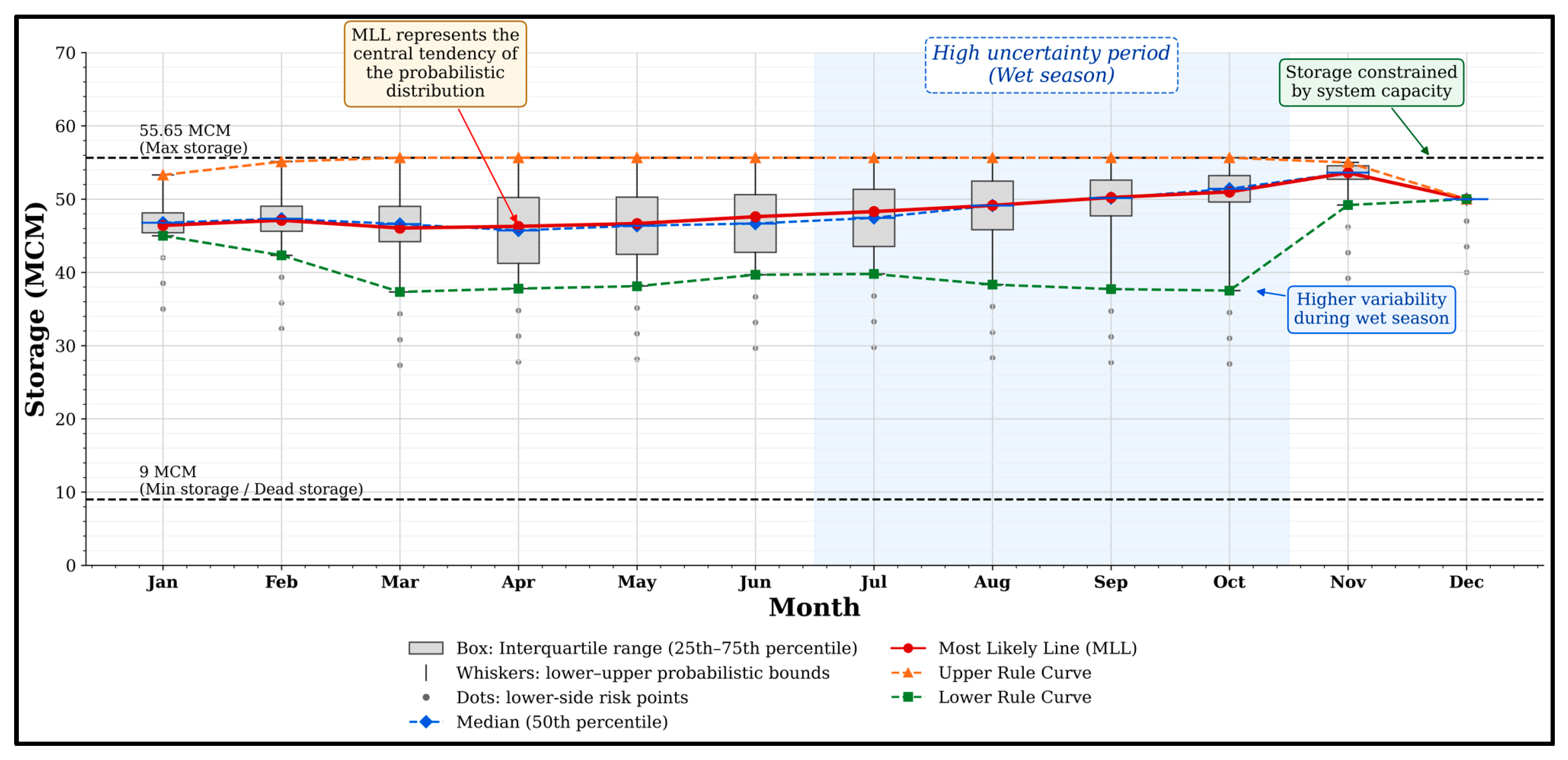
To translate probabilistic storage behavior into an operationally practical reservoir management strategy, the MLL was extracted from the ensemble storage distribution. The MLL represents a dominant, temporally consistent storage trajectory derived from stochastic reservoir simulations and serves as a representative operational pathway for adaptive reservoir management under hydrological uncertainty.
The statistical distribution of reservoir storage trajectories together with the extracted MLL is illustrated in
Figure 13. The box-whisker representation demonstrates the interquartile variability and operational uncertainty associated with each month, while the MLL follows the central tendency of the probabilistic ensemble. The results indicate that the MLL closely aligns with the ensemble median behavior while filtering out extreme operational outcomes.
For example, the MLL remains approximately within the range of 46–47 MCM during the dry season (March–April) and gradually increases to approximately 50–51 MCM during the wet season (September–October). This seasonal storage behavior reflects the natural inflow pattern while maintaining smooth and operationally stable reservoir storage transitions throughout the hydrological year.
Unlike deterministic rule curves, which exhibit abrupt transitions between predefined hydrological scenarios, the MLL provides a continuous and adaptive operational trajectory. This smoothing behavior reduces operational instability caused by sudden release adjustments and improves the practicality of real-world reservoir operation under uncertain inflow conditions.
Furthermore, the MLL effectively balances operational flexibility and risk control by preserving the central probabilistic storage characteristics of the ensemble system while minimizing the influence of extreme realizations. These findings confirm that the MLL serves as a robust linkage between probabilistic inflow modeling and adaptive reservoir operation.
The dynamic operational storage values derived from the MLL approach are summarized in
Table 4. The results indicate that the adaptive rule curve maintains relatively stable operational storage throughout the hydrological year while preserving sufficient flexibility to accommodate seasonal inflow variability. The upper operational boundary remains close to the reservoir capacity during high-storage periods, whereas the lower boundary dynamically adjusts according to seasonal hydrological conditions and operational risk levels.
Compared with deterministic rule curves, the MLL-based dynamic rule curve provides a smoother and more consistent operational trajectory, thereby improving the practicality and resilience of reservoir operation under uncertain hydrological conditions. These findings are also consistent with previous studies on adaptive reservoir operation, which suggest that representative probabilistic trajectories can improve operational stability under uncertain inflow conditions [
47].
5.5. Long-Term System Performance and Adaptive Rule Selection
The long-term performance of the PDROF was evaluated over a 23-year simulation period. The results indicate a total spill volume of 17.74 million cubic meters, with spill events occurring during only 7 months throughout the simulation period. These findings demonstrate that the reservoir system remained within acceptable operational storage and spill conditions for most simulation periods.
Compared with conventional deterministic operation, the probabilistic framework improved storage allocation by anticipating inflow variability and reducing unnecessary spill events. The integration of probabilistic inflow simulation and adaptive rule extraction enabled the reservoir to respond more effectively to highly variable hydrological conditions.
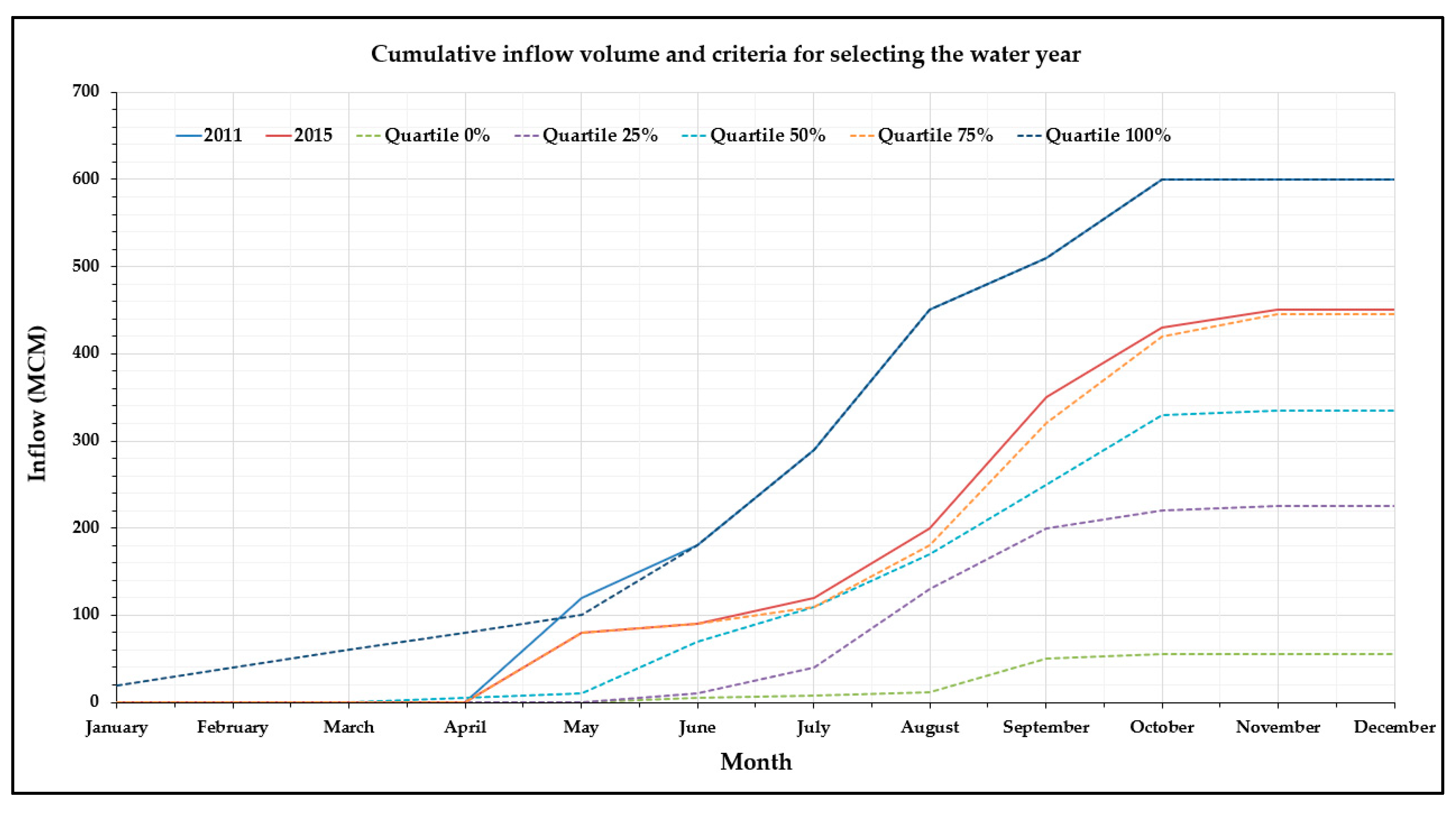
In addition to long-term performance evaluation, cumulative inflow analysis was employed to support adaptive rule selection under different hydrological conditions. As shown in
Figure 14, cumulative inflow trajectories during the early wet season (April–May) were classified into quartile ranges to determine the appropriate operational rule curve.
When cumulative inflow remained within the lower quartile range (0–25%), the dry-year operational rule was selected. Conversely, inflow trajectories within the upper quartile range (75–100%) corresponded to wet-year conditions requiring more conservative reservoir operation to preserve flood-buffer capacity. Intermediate quartile ranges represented normal hydrological conditions.
For example, the cumulative inflow trajectory in 2011 was located within the upper quartile range, indicating wet-year conditions, whereas the inflow trajectory in 2015 remained within the lower quartile range, corresponding to dry-year operation. This adaptive classification mechanism allows the operational strategy to evolve dynamically according to observed hydrological conditions rather than relying on fixed deterministic assumptions.
Overall, the results indicate enhanced operational robustness, adaptive flexibility, and long-term reservoir reliability under hydrological uncertainty. This adaptive classification mechanism is also consistent with recent studies emphasizing the importance of dynamic operational adjustment under nonstationary hydrological conditions [
53,
54].
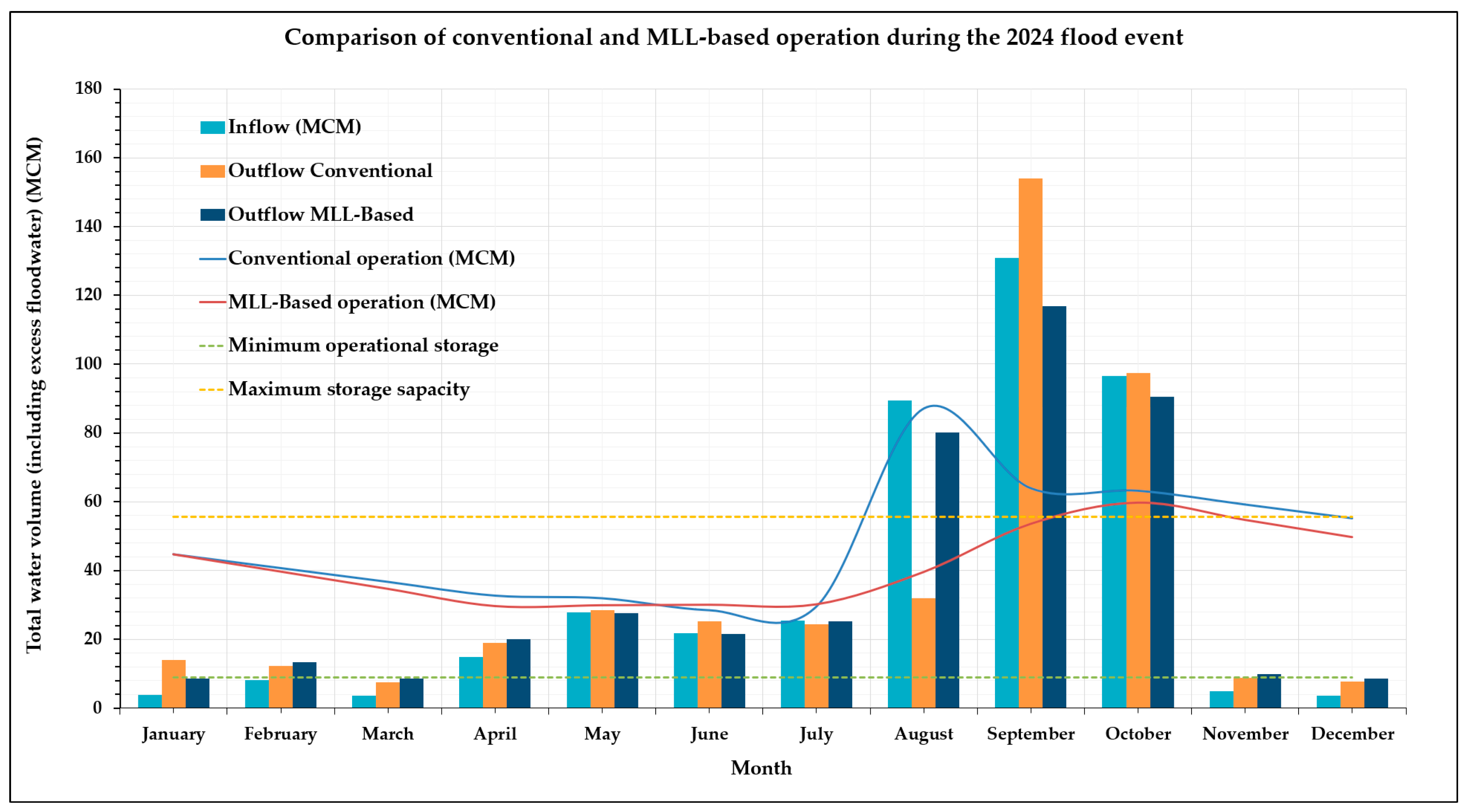
5.6. Case Study: Flood Event in 2024
The operational effectiveness and flood-mitigation capability of the proposed framework were further evaluated using the observed flood event that occurred in 2024.
Figure 15 compares the total water volume trajectories obtained under conventional operation and the proposed MLL-based operational rule during the flood event. The dashed yellow line represents the maximum storage capacity (55.65 MCM), while the dashed green line represents the minimum operational storage (9 MCM). Water volumes exceeding the maximum storage capacity represent excess floodwater associated with spill and temporary inundation conditions rather than physically stored reservoir water within the reservoir.
The results demonstrate that the proposed probabilistic operational framework substantially reduced excess floodwater volume during the critical flood season. During the extreme inflow period in August 2024, the conventional operating strategy resulted in a peak total water volume of approximately 87.87 MCM, whereas the MLL-based operational rule limited the peak volume to approximately 40.45 MCM, corresponding to a reduction of 47.42 MCM. In October, the total water volume under the proposed framework remained approximately 3.46 MCM lower than that under conventional operation.
The primary mechanism underlying this improvement is the anticipatory behavior of the MLL-based operational rule. By maintaining lower storage levels prior to the peak monsoon inflow period, the reservoir preserved additional flood-buffer capacity and reduced the accumulation of excess floodwater during extreme inflow events. Consequently, the proposed framework reduced the volume of water exceeding the storage capacity and lowered the requirement for emergency releases during periods of rapidly increasing inflow.
Although the proposed framework significantly reduced excess floodwater volume, approximately 4.10 MCM of water remained above the maximum storage capacity during October, indicating that exceptionally severe hydrological events may still exceed the effective flood-control capacity of the reservoir system. This finding suggests that adaptive reservoir operation should be complemented by additional structural and non-structural flood-mitigation measures under extreme hydrological conditions.
The comparison further demonstrates that the proposed framework enables earlier operational adjustments before extreme inflow periods, thereby enhancing flood-buffer availability and operational flexibility under rapidly changing monsoon conditions. Similar benefits associated with anticipatory reservoir operation and flood-buffer preservation have been reported in probabilistic and forecast-informed reservoir operation studies [
55,
56,
57,
58,
59]. While the reduction in excess water volume suggests the potential for reduced downstream flood impacts, downstream hydraulic effects were not explicitly evaluated in this study and should be investigated in future research.
Overall, the results indicate that the proposed probabilistic operational framework can improve reservoir responsiveness under rapidly changing inflow conditions while maintaining more adaptive and resilient flood-management performance during extreme hydrological events.
5.7. Implications for Adaptive Reservoir Management
The results demonstrate that incorporating uncertainty into reservoir operation leads to more adaptive, robust, and uncertainty-aware reservoir decision-making. Unlike conventional deterministic rule curves, which depend on predefined hydrological scenarios, the PDROF continuously adjusts operational strategies according to probabilistic inflow behavior and evolving hydrological conditions.
The integration of Monte Carlo simulation, probabilistic inflow modeling, and the MLL enables the reservoir system to balance flood-control objectives and water-supply reliability under stochastic hydrological uncertainty. The adaptive rule-selection mechanism further enhances operational flexibility by allowing rule curves to respond dynamically to cumulative inflow conditions observed during the wet season.
This capability is particularly important under increasing climate variability and nonstationary hydrological conditions, where operational assumptions derived solely from historical records may no longer remain valid. Long-term inflow analysis indicates substantial interannual variability and substantial variability in wet-season inflow dynamics, reinforcing the necessity of uncertainty-aware reservoir operation frameworks.
The proposed PDROF also differs from optimization-based reservoir operation approaches such as Stochastic Dynamic Programming (SDP), Reinforcement Learning (RL), Evolutionary Optimization, and Model Predictive Control (MPC). These approaches are capable of identifying highly effective operating policies under complex system conditions but often require extensive computational resources, detailed system representations, and, in some cases, large training datasets. In contrast, the PDROF emphasizes transparency, computational simplicity, and practical implementation by transforming probabilistic inflow and storage information into adaptive operational rule curves through the MLL.
Overall, the proposed framework provides a practical and scalable approach for adaptive reservoir management in data-scarce and climate-sensitive regions. The methodology can be directly adapted to other medium-scale reservoir systems experiencing increasing hydrological uncertainty under climate change.
5.8. Limitations and Future Work
Despite the advantages of the proposed PDROF, several limitations should be acknowledged. First, the framework relies heavily on the accuracy of probabilistic inflow modeling and stochastic simulation. Errors associated with probability distribution fitting, parameter estimation, or hydrological model uncertainty may propagate through the Monte Carlo simulation process and influence the resulting reservoir operation trajectories. In addition, the Monte Carlo simulation preserved the monthly statistical characteristics of inflow variability through independent sampling from month-specific probability distributions. However, temporal autocorrelation between consecutive months was not explicitly represented. As a result, the persistence of prolonged wet or dry conditions may not be fully captured in the stochastic inflow sequences. Future studies may incorporate autoregressive, Markov-chain, or copula-based stochastic generation techniques to preserve inter-month dependence and improve the representation of hydrological persistence.
Although longer hydrological records would improve the representation of rare and extreme events, the available reservoir operation and hydrological dataset for Kwan Phayao Reservoir is limited to 23 years, representing the complete period of consistently recorded and archived reservoir data. Consequently, the probabilistic inflow distributions and associated hydrological classifications are conditioned on the available historical record. While the Monte Carlo simulation framework expands the range of possible inflow realizations, extremely rare hydrological conditions beyond the observed record may not be fully represented. As a result, the Dry, Normal, and Wet classification thresholds may be subject to uncertainty associated with the limited historical record. Future studies should incorporate longer datasets, climate projections, and scenario-based hydrological simulations where such information becomes available.
Although the Gamma distribution consistently provided the best goodness-of-fit performance among the candidate distributions considered in this study, goodness-of-fit alone does not guarantee predictive performance outside the calibration dataset. Because of the limited length of the available hydrological record, independent out-of-sample validation of the monthly probability distributions was not performed and should be investigated in future studies when longer datasets become available.
Because the probabilistic inflow distributions were derived from the available historical record, the stochastic simulations remain conditioned on the hydrological characteristics observed during the study period. Consequently, future hydrological conditions that fall substantially outside the historical range may not be fully represented by the current framework. Although the proposed methodology provides adaptive operational guidance under historical hydrological variability, additional evaluation using climate change projections, nonstationary hydrological models, and extreme-event scenarios is required to assess its robustness under unprecedented future conditions.
The proposed PDROF is not restricted to the specific characteristics of Kwan Phayao Reservoir and may be adapted to reservoirs with different storage capacities, hydrological regimes, seasonality patterns, and climatic conditions. Because the methodology relies on probabilistic inflow modeling, stochastic simulation, and adaptive rule extraction, its fundamental structure remains applicable across a wide range of reservoir systems. However, site-specific recalibration of probability distributions, operating policies, storage constraints, and adaptive classification thresholds would be required to reflect local hydrological and operational conditions.
The MLL primarily represents the central tendency of the probabilistic storage ensemble and may not fully capture extreme hydrological risk conditions associated with rare flood or severe drought events. Although the MLL provides a stable and operationally practical rule curve, additional risk-based operational criteria may be required for managing extreme events beyond the probabilistic median behavior.
The current reservoir operation model focuses primarily on storage dynamics and operational decision-making under hydrological uncertainty. Although reservoir storage was constrained by the maximum and minimum operational storage limits throughout the simulations, hydraulic constraints associated with spillway discharge capacity, outlet release capacity, and downstream flood-routing processes were not explicitly represented. Consequently, the proposed framework should be interpreted as a storage-based operational assessment rather than a detailed hydraulic routing analysis. Future studies should incorporate infrastructure-specific hydraulic constraints and downstream routing simulations to further evaluate the operational feasibility and flood-management performance of the proposed framework under extreme hydrological conditions.
The proposed framework was developed using monthly inflow data to support long-term reservoir operation analysis. Consequently, the model does not explicitly represent within-month inflow variability, short-duration flood peaks, or rapid operational responses occurring at daily or hourly time scales. Although monthly inflow data are suitable for evaluating long-term operational behavior and strategic reservoir management, higher temporal resolution datasets may be required to accurately assess flood-routing performance and operational responses during extreme hydrological events. Future studies should investigate the application of the framework using daily or hourly inflow data and real-time operational simulations to improve the representation of short-term hydrological variability.
The proposed PDROF was developed primarily within an annual reservoir operation cycle and adaptive rule selection was based on cumulative inflow conditions observed within a hydrological year. Consequently, the framework has not been explicitly evaluated under prolonged multi-year droughts or other persistent hydrological anomalies extending beyond the annual planning horizon. Although the stochastic simulations include a wide range of hydrological variability, the long-term persistence of consecutive drought years may not be fully represented. Future studies should investigate the performance and robustness of the framework under multi-year drought scenarios and extended hydrological stress conditions to assess its applicability beyond the annual operational context.
Furthermore, the current framework focuses primarily on storage-based operational behavior and does not explicitly incorporate real-time forecasting uncertainty, multi-reservoir interactions, or multi-objective optimization involving ecological, agricultural, and socio-economic objectives. These factors may significantly influence reservoir operation performance under complex real-world conditions.
In addition, the current performance evaluation primarily emphasizes storage dynamics, operational rule curves, and spill reduction performance. Although these indicators are directly related to the objectives of flood mitigation and adaptive storage management, other widely used reservoir performance metrics, such as reliability, resilience, vulnerability, and water supply deficit, were not explicitly evaluated in this study. The incorporation of these indicators could provide a more comprehensive assessment of reservoir operation performance, particularly with respect to water-supply reliability and system recovery under hydrological stress conditions.
The proposed framework is intended to enhance reservoir operation under hydrological uncertainty and climate variability. However, the present study relies primarily on historical hydrological records and stochastic inflow simulations derived from observed conditions. Explicit climate change projections were not incorporated into the current analysis. Therefore, the results should be interpreted as an evaluation of operational adaptability under hydrological variability rather than a direct assessment of future climate change impacts. Future research should integrate climate model projections and scenario-based hydrological simulations to further evaluate the performance and robustness of the proposed framework under changing climate conditions.
Future work should therefore focus on integrating real-time hydrometeorological forecasting, risk-based optimization, and multi-objective decision-making techniques to further enhance adaptive reservoir operation under climate uncertainty. In addition, future studies should evaluate the proposed framework using reliability, resilience, vulnerability, and water supply deficit metrics to support a more comprehensive multi-objective assessment of reservoir operation performance. The incorporation of machine learning-based forecasting systems and real-time decision support tools may also improve operational responsiveness under rapidly evolving hydrological conditions.
6. Conclusions
This study presents the PDROF, a novel uncertainty-aware reservoir operation approach that integrates probabilistic inflow modeling, stochastic simulation, and dynamic rule extraction to improve adaptive reservoir operation under hydrological variability.
The results demonstrate that conventional deterministic rule curves are limited by their dependence on predefined hydrological scenarios. The analysis shows that storage behavior varies significantly across wet, normal, and dry conditions, with storage levels ranging from approximately 33.89 MCM to 55.65 MCM under deterministic operation. Such rigid scenario-based classification does not adequately represent the continuous variability of inflow conditions.
By incorporating probabilistic inflow modeling and Monte Carlo simulation, the proposed framework captures a wide range of possible reservoir storage and operational states. The ensemble-based representation reveals that uncertainty is not constant but varies seasonally, particularly during high-flow periods.
A key contribution of this study is the extraction of the MLL, which serves as a temporally consistent representative storage trajectory for dynamic reservoir operation under uncertainty. The MLL effectively captures the central tendency of the probabilistic storage distribution while maintaining smooth and operationally stable storage behavior. Unlike deterministic rule curves, the MLL provides a smooth and adaptive trajectory that reflects real system behavior.
The long-term simulation results demonstrate that the PDROF improves long-term operational robustness, with a total spill volume of 17.74 million cubic meters and spill events occurring in only 7 months over a 23-year period. Furthermore, the case study of a flood event in 2024 shows that the proposed approach reduces spill volume by 47.42 million cubic meters and reduces release volume by 3.46 million cubic meters, indicating significant improvement in flood mitigation performance.
These findings confirm that integrating probabilistic modeling with dynamic rule extraction provides a robust and operationally practical framework for reservoir management under hydrological uncertainty. The proposed framework enables a transition from static, scenario-based operation to adaptive, data-driven decision-making.
Despite its advantages, the framework relies on accurate probabilistic modeling and may not fully capture extreme hydrological events. Future research should focus on incorporating real-time forecasting, risk-based optimization, and multi-objective decision-making to further enhance reservoir operation performance under climate uncertainty.
Overall, the PDROF offers a scalable and transferable approach for supporting adaptive and uncertainty-aware reservoir operation, particularly in the context of increasing hydrological uncertainty and climate variability.