


Abstract
Analysis of the hydroclimatic variations in complex topographic and climatic regimes is important in determining the freshwater availability and its response. Although several previous studies have assessed the changing patterns of hydroclimatic variables in South Asian River basins, most of them have considered traditional statistical methods, which may inadequately reflect potential non-linear hydroclimatic trends. This study determines long-term variations in precipitation, temperature, and streamflow in the Soan River Basin of Pakistan, using three decades of in situ records (1991–2020). A non-parametric (Mann–Kendall) trend test along with an artificial neural network (ANN) approach was used to check the linear and non-linear trends. The results exhibited that the basin was getting warmer at a consistent rate, although the amount of precipitation varied significantly with location and season. The annual average amount of precipitation over the entire basin was decreasing at the rate of −7.33 mm/year. As compared to the westerly season, the trend of monsoon precipitation was less certain. Changes in streamflow patterns generally demonstrated the consequences of changing precipitation and rising temperature patterns. The annual average streamflow was decreasing at the rate of −0.47 (−1.30) m3/year, as per the results of MK (ANN). A moderate positive correlation between precipitation and streamflow indicates that precipitation mainly governed the flows in the basin. The results of the MK test and the machine-learning approach demonstrated the similar decreasing tendencies of hydroclimatic variables. However, the ANN approach more precisely demonstrates the non-linear behavior of hydroclimatic variables. It was concluded that the streamflow patterns were considerably responsive to the warming of the Soan River Basin, as well as to the changing behavior of precipitation. These findings emphasized the significance of integrating statistical and machine-learning approaches to enhance the comprehension of hydroclimatic trends. Results of this research could be applicable in sustainable management and planning of the water resources within the basin.
1. Introduction
The hydrological cycle plays a primary role in the existence of human societies; it controls the availability and distribution of freshwater resources. Ongoing global warming is significantly altering the various phases of the hydrological cycle, especially precipitation and runoff. In the last few decades, various studies have indicated that there are substantial changes in the seasonality, amount, and distribution of precipitation in various parts of the world as a result of climate change [1,2,3]. The changes in the patterns of precipitation and temperature have been widely cited as major factors leading to the alterations in hydrological and ecological systems, which frequently cause a shift in the streamflow patterns and water availability at the regional and local scales [4,5].
Changes in the patterns of streamflow are among the most significant indicators of climatic variability and watershed response. Such changes are the consequences of the combined effects of variations in precipitation, temperature, catchment characteristics, and land-surface processes, and thus give a holistic measure of hydrological behavior at a basin scale [3]. Alterations in the spatiotemporal patterns of precipitation usually have a direct impact on streamflow, especially in those river basins where precipitation is the dominant cause of runoff regulation [6,7,8]. Therefore, the assessment of streamflow variability along with climatic variables is very important for understanding the hydrological response of a specific river basin, and ultimately for the better planning and management of freshwater resources.
Previously, several studies have investigated the changing characteristics of hydroclimatic variables in different topographic and climatic conditions of the world. Most of the past studies have demonstrated that the hydrological response of any basin differs from others due to different geographical settings, terrain, landscapes, and watershed management practices [6,9,10,11]. For instance, an increasing streamflow has been observed in the southern watersheds of the Tianshan Mountain of China, whereas reduction patterns have been recorded in other watersheds of the mountain [12]. Similarly, studies of Romanian river flows have indicated a decreasing trend in summer flow since the middle of the 1970s; conversely, the winter and autumn flows of the same rivers are increasing [13]. These results lead to the realization that hydroclimatic responses to the changing climatic conditions are complex and region-specific.
Besides contributing to the discharge of rivers, the streamflow is an important source of groundwater recharge and storage of surface waters, and so is an important element of integrated water resource systems [6,14]. Knowledge of long-term patterns of streamflow and understanding of climatic factors that can cause changes in those patterns are thus important for the sustainable management and planning of water resources [3,15].
The Hindu Kush–Himalayan (HKH) region is one of the most hydrologically sensitive regions in the world, due to the vast coverage of snow and glaciers. The shift in the hydroclimatic regimes in this region has far-reaching repercussions on ecosystems, flood regimes, the supply of drinking water, irrigation systems, and hydropower generation [16,17]. The HKH region is characterized by a distinct climatic system that is epigenetically determined by various significant atmospheric circulation systems such as the South Asian summer monsoon, mid-latitude westerlies, and Tibetan anticyclone [18]. The interaction of these systems generates complicated patterns of precipitation and temperature that have a great impact on the hydrological processes of river basins in the region.
Hydroclimatic studies in Pakistan have been mostly confined to high altitude glacier-fed basins in the Karakoram and Himalayan ranges, including the Hunza and Shyok basins, where the mean altitude is above 4000 m above sea level [19,20]. Nevertheless, the results of these studies are still contradictory, especially when it comes to long-term changes in streamflow patterns at the Himalayan sub-basin level [21,22,23]. A tendency towards an increasing streamflow, at least in some parts of the Karakoram range, has been reported in some studies [23], and, increasingly, recent studies in the Chitral River Basin have shown an increase in annual streamflow [24]. Regardless of these circumstances, comparatively little focus has been placed on the hydroclimatic variability and streamflow–climate associations in the humid subtropical watersheds within the HKH region, where rainfall prevails in the process of hydrology.
One of such rainfall-dominated watershed is the Soan River Basin (SRB), which is one of the main tributaries of the Indus River. The basin empties into the Potohar Plateau and the Murree Hills to the Indus River near Makhad [25]. The basin has heavy seasonal precipitation, whereby a major part of the rain occurs during the monsoon. Through this, there is a lot of temporal variability in streamflow, and flash flooding is prevalent in the area. Hydrological processes in the SRB are predominantly precipitation-based, as compared to a glacier-fed basin, which is seen in the north of Pakistan. The socio-economic system of the basin also contributes to its susceptibility to hydroclimatic variability because about 80 percent of the population are dependent on rainfed agriculture and underground water, which is replenished by rainfall [26].
Over the last few years, machine-learning methods have seen development and have offered new opportunities to examine non-linear and complex relationships in hydrological systems. Models based on neural networks, such as recurrent neural networks or long short-term memory (LSTM) architectures, have shown good potential in the non-linear capturing of hydroclimatic data patterns and streamflow prediction in changing climatic conditions [27,28,29]. They can be used in addition to conventional statistical techniques and allow a stronger examination of the hydroclimatic trends and watershed reactions.
In rainfall-dominated basins, precipitation is the most important force in the generation of runoffs because the intensity, duration, and seasonal distribution of rainfall have a strong effect on the surface runoff and discharge of rivers. The precipitation intensities, especially high intensity, can give rise to rapid runoff reactions because of the saturation and low infiltration capacity of the soils, which can lead to a considerable seasonal fluctuation in the streamflow [30,31]. The nature of the interaction between streamflow response and the variability of precipitation in such basins is thus crucial in assessing hydrological changes in such basins.
This study assessed the long-term hydroclimatic variations and their impacts on the Soan River flows, which is a rainfall-dominated basin nested in the eastern vicinity of the Indus Basin. In contrast to the previous investigations that considered only the traditional statistical methods, this study ensembles the statistical trend test with the artificial neural network (ANN) model to check the non-linear and monotonic trends in the hydroclimatic variables. The current research explores long-term variation in precipitation, temperature, and the streamflow in the Soan River Basin by means of a combination of machine-learning and statistical methods. To detect monotonic trends, the non-parametric Mann–Kendall (MK) test is used, and to detect possible non-linear patterns, a neural network model is utilized to demonstrate the possible patterns in hydroclimatic variables. Through a combination of these complementary processes, the study will offer an integrated evaluation of the hydroclimatic variability and the precipitation–streamflow associations within the basin. The results should be useful in enhancing water management systems, mitigating flood risks, and climate adaptation in rainfall-based watersheds in the area.
2. Materials and Methods
2.1. Study Area
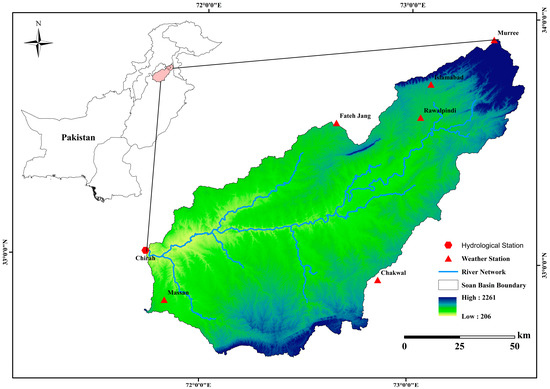
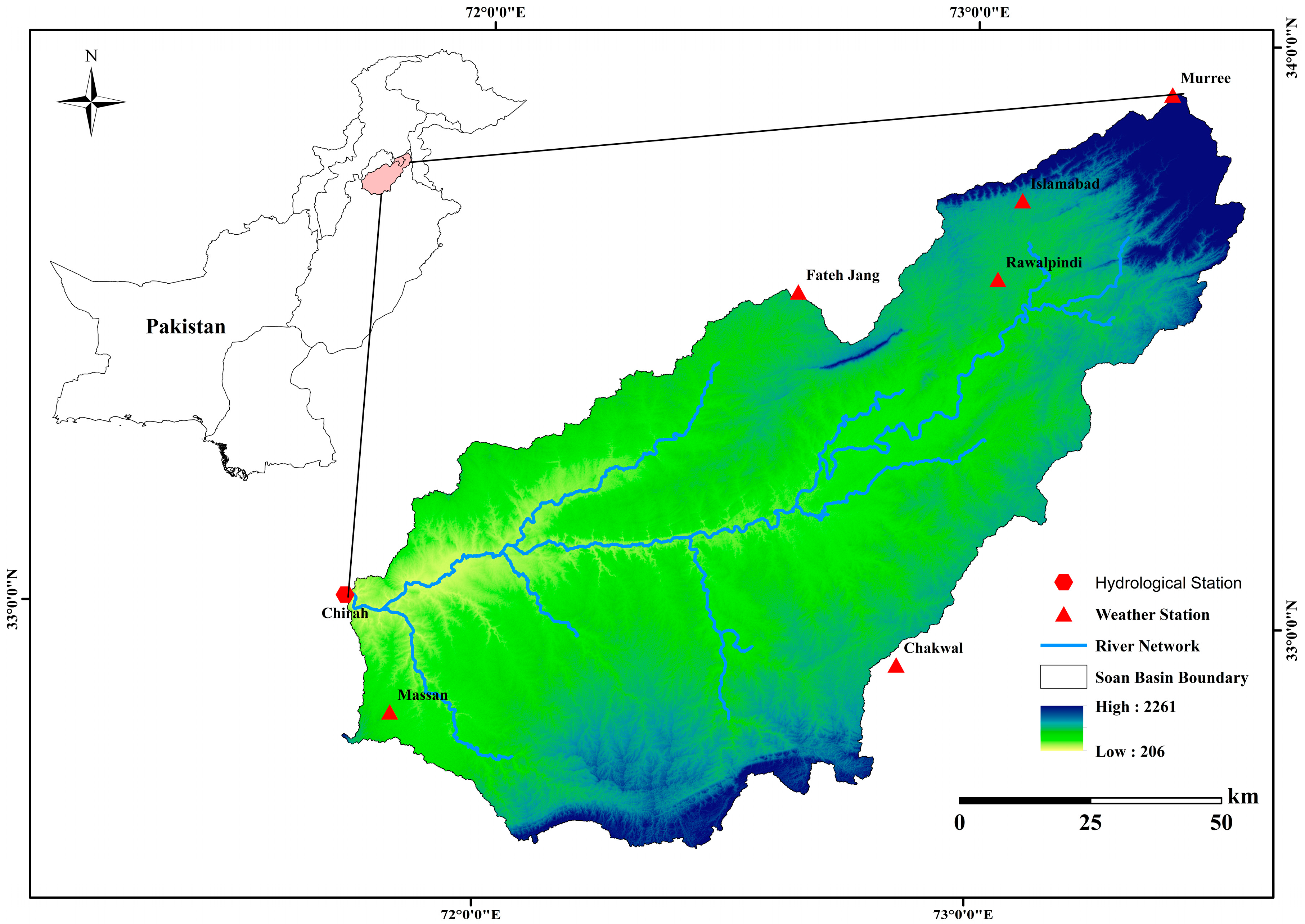
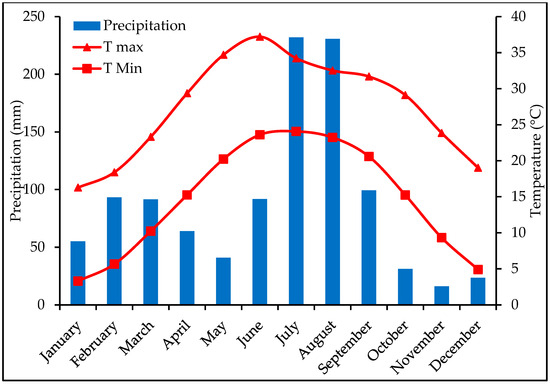
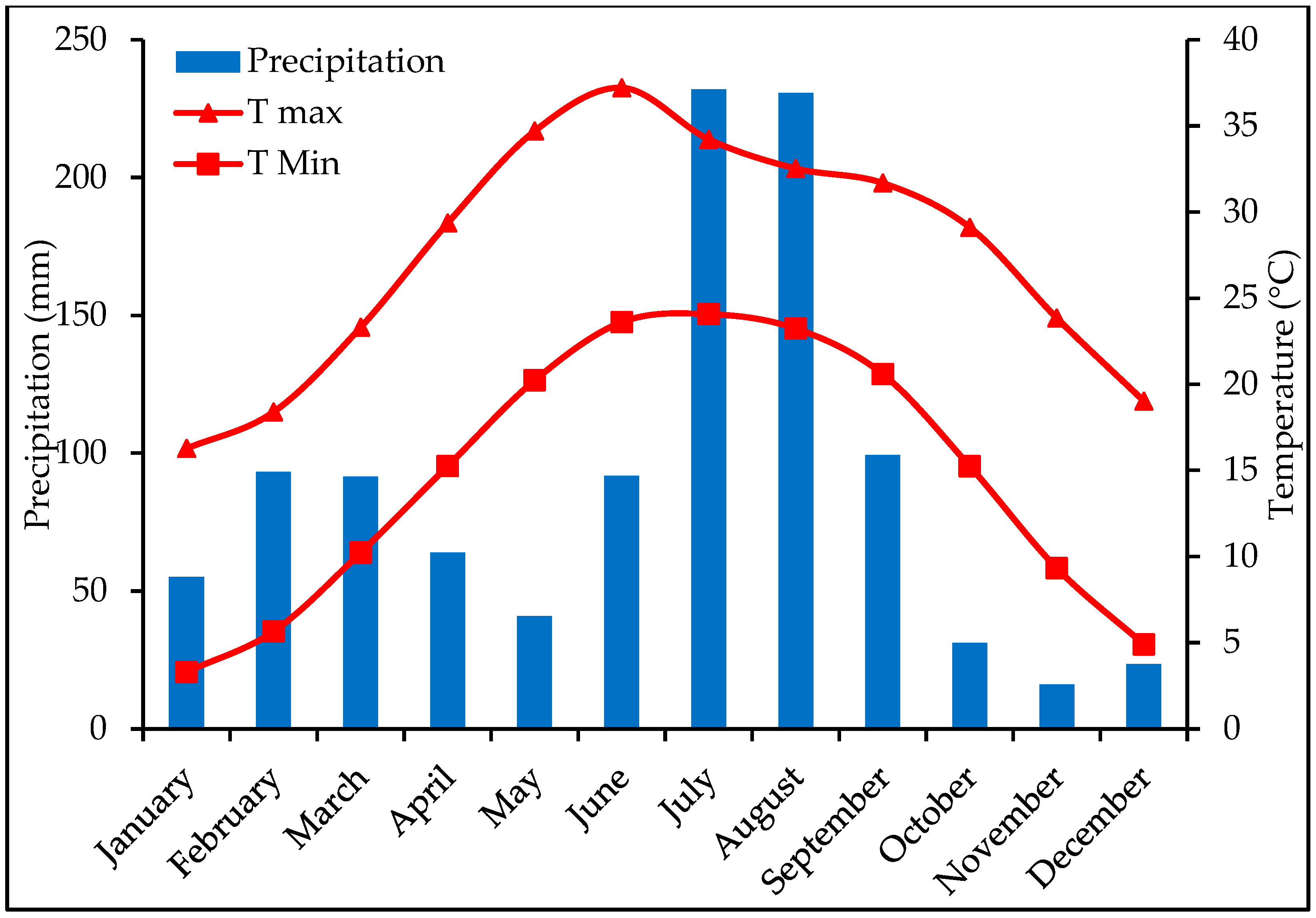
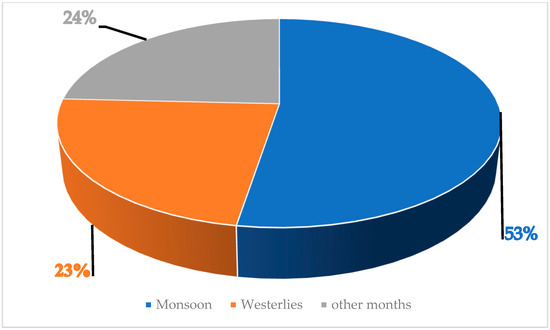
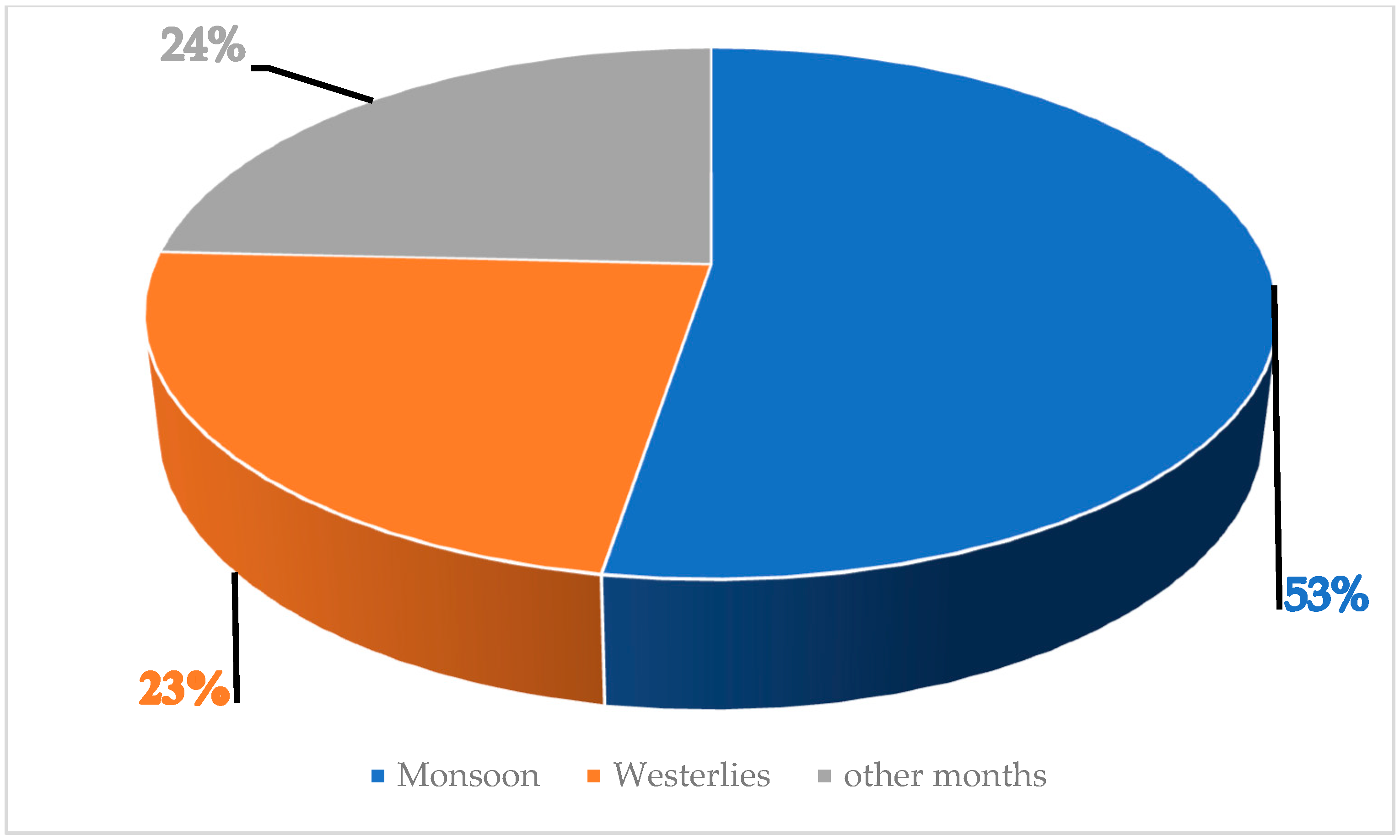
For this assessment, the Soan River Basin, which is an eastern tributary of the basin, was considered. The considered basin spans 32°45′–33°55′ N and 71°45′–73°35′ E in the Potohar Plateau of Pakistan. The total drainage area of the basin is about 9994 km2. The river originates from the Murree Hills and flows southwest across the plateau and drains into the Indus River near Attock (Figure 1). The elevation in the basin varies from 206 m to 2261 m. The northern parts of the basin consist of steep mountains, whereas the southwestern parts are dominated by alluvial valleys and the Potohar Plateau. This basin lies in the subtropical semiarid to sub-humid continental climate. Monsoon is the main rainy season, which contributes more than 50% of the annual rainfall. The climatological cycle of the basin is presented in Figure 2, whereas the seasonal contributions of the monsoon and westerly systems to the annual precipitation are shown in Figure 3. This basin is very important for the supply of drinking and agricultural water. The historical hydroclimatic variations (from 1990 to 2020) and their impacts on the flows of the river were assessed using an integrated approach of statistical and machine-learning methods.
Figure 1.
The geographical location, elevation, and hydrographic features of the Soan River Basin.
Figure 2.
Monthly variations in precipitation and temperature in the Soan River Basin.
Figure 3.
The relative contribution of monsoon, westerlies, and other months to annual precipitation.
2.2. Datasets
Hydroclimatic variability analysis needs long-term climatic and hydrological data. In this research, precipitation and temperature were considered as the climatic variables, and they were combined with the streamflow to evaluate the effects of climate change in the Soan River Basin. To perform trend detection and variability analysis, datasets of climatic variables spanning at least three past decades were used, which is generally considered the minimum requirement for climate-related analysis.
Daily records of precipitation and temperature (maximum and minimum) were retrieved for the period 1991–2020. Pakistan Meteorological Department (PMD) provided these datasets. The criteria used to select all the meteorological stations were the availability, length of records, continuity of data, and the coverage of the basin. Details of the considered stations are mentioned in Table 1. PMD ensured the quality of the climatic data.
Table 1.
Details of the meteorological stations used for this assessment.
The streamflow records of the basin were obtained from WAPDA, Pakistan. The long-term historical flow data of only one station (Chirah station), which was installed at the outlet of the basin, was available. Location of the stream gauge is shown in Figure 1. Depending upon the continuity of the records, daily streamflow records from 1983 to 2016 were considered for this assessment. These data were utilized to examine the alterations in the river flow patterns and to check the correlation between precipitation and streamflow. For the assessment of linear agreement between flow and precipitation, only the overlapping records of both variables (from 1991 to 2016) were considered.
The quality of the raw data of hydroclimatic variables was checked by visual inspection, and it was found that there were some missing values; however, all of the missing values were less than 5% of the collected data. The missing values in the time series of hydroclimatic variables were then filled by using the linear fit method. After that, daily precipitation and temperature time series were used to prepare the monthly, seasonal, and annual time series datasets. These processed datasets were then used for further trend analysis and machine-learning modeling in the Soan River Basin.
2.3. Mann–Kendall Trend Test
The non-parametric Mann–Kendall Test, also known as the MK Test, was introduced by [32], later studied by [33], and furthermore improved by Hirsch in 1982–1984. It gives a monotonic trend in time series data and detects the tendency for decreasing and increasing values. This test is also recommended by the World Meteorological Organization (WMO). It gives three types of results, decreasing trend, increasing trend, and no change in trend. H0 (null hypothesis) indicates that there is no change in monotonic trend, while H1 (alternative hypothesis) indicates that there is an upward or downward trend. Below are the equations that are used to solve the MK test statistics, i.e., Z, for the given time series data.
First of all, the mean (S) value is to be calculated from the yj and yi, which are the values of the ith and jth in the time series data, respectively. After the estimation of S, the calculation of the variance (V(S)) is performed by the above equation, in which n indicates the number of observations and t indicates the extent of time for time series data. From the mean and variance values, the value of Z can be evaluated by the given equation.
2.4. Sen’s Slope Estimator
In most of the previous studies, the least-squares estimation method was used for the slope of the regression line. This method can be affected by outliers and is valid when the data set has all the data about a straight line, which may not be valid for long-term hydroclimatic datasets. The Sen’s slope is among the most accurate nonparametric methods for estimating the slope of a regression line with long-term temporal data and is not affected by outliers. This statistical linear relation was first developed by [34] and further discussed by [35]. With this method, the slope of the trend line can be estimated even though there are some missing values. Slope can be determined by the following equation.
where xj and xk are the measured data values for the time j and k, respectively, for i = 1 to n − 1 and j = 2 to n. In this study, all trends were checked considering the 95% confidence level (α = 0.05).
2.5. Machine-Learning Approach
To complement the MK trend analysis and to capture potential non-linear temporal behavior in hydroclimatic variables, a feed-forward Artificial Neural Network (ANN) was employed. Neural networks are widely used in hydroclimatic studies due to their ability to model complex, non-linear relationships without assuming data normality or linearity [36,37].
In this study, a single-hidden-layer feed-forward neural network was adopted, with time (year) as the input variable and precipitation, temperature, or streamflow as the output variable. The network architecture consisted of one input neuron, a hidden layer with H neurons, and one output neuron. The hidden layer employed a non-linear activation function (sigmoid) to capture non-linear relationships between time and the hydroclimatic variables, whereas the output layer employed a linear activation function appropriate for continuous hydrological variables. The neural network model can be expressed as:
where represents the ANN-estimated value at time , is the number of hidden neurons, denotes the connection weights, represents bias terms, is the non-linear activation function of the hidden layer, and is the linear activation function of the output layer [38]. Before training, all variables were standardized using Z score normalization to improve numerical stability and training efficiency:
where is the normalized variable, and and are the mean and standard deviation of the original dataset.
The ANN model was implemented in RStudio (Version: 2025.5.1.513) using the R programming environment, and the network was trained using the backpropagation algorithm, which minimizes the mean squared error (MSE) between observed and predicted values:
To enhance model generalization and reduce the risk of overfitting, the dataset was split into training and validation subsets, and model performance was evaluated during training. Moreover, the hidden neurons were obtained by trial and error experimentation, and a comparison of the performance of the models ensured that the network was neither overly flexible to the point of capturing non-linear patterns nor unduly complex.
After training, the ANN-generated values were used to extract the long-term trend by regressing the predicted series against time:
where represents the ANN-derived trend slope (rate of change per year), and is the intercept. The statistical significance of the ANN-based trends was evaluated using a permutation-based resampling approach, and the resulting Z statistics were compared with those obtained from the MK test. While the MK test detects monotonic trends, the ANN approach captures non-linear and regime-dependent variability, providing complementary insight into hydroclimatic change [39,40].
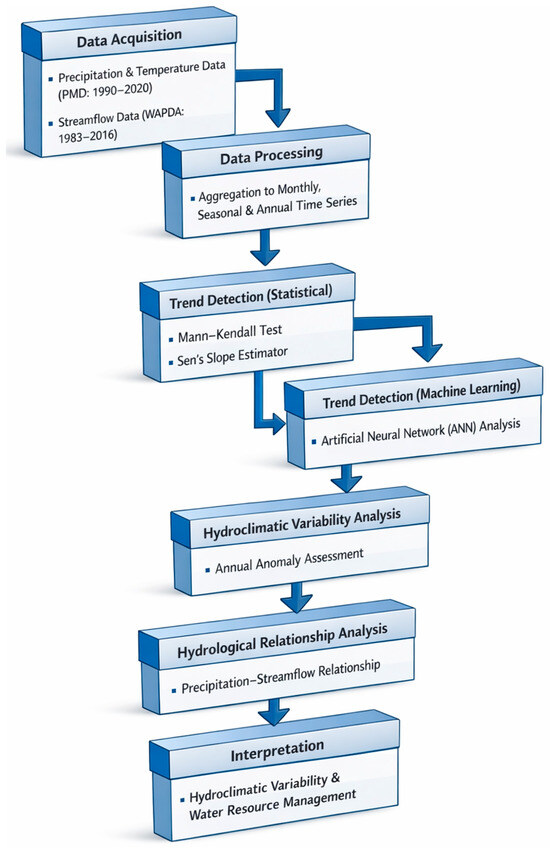
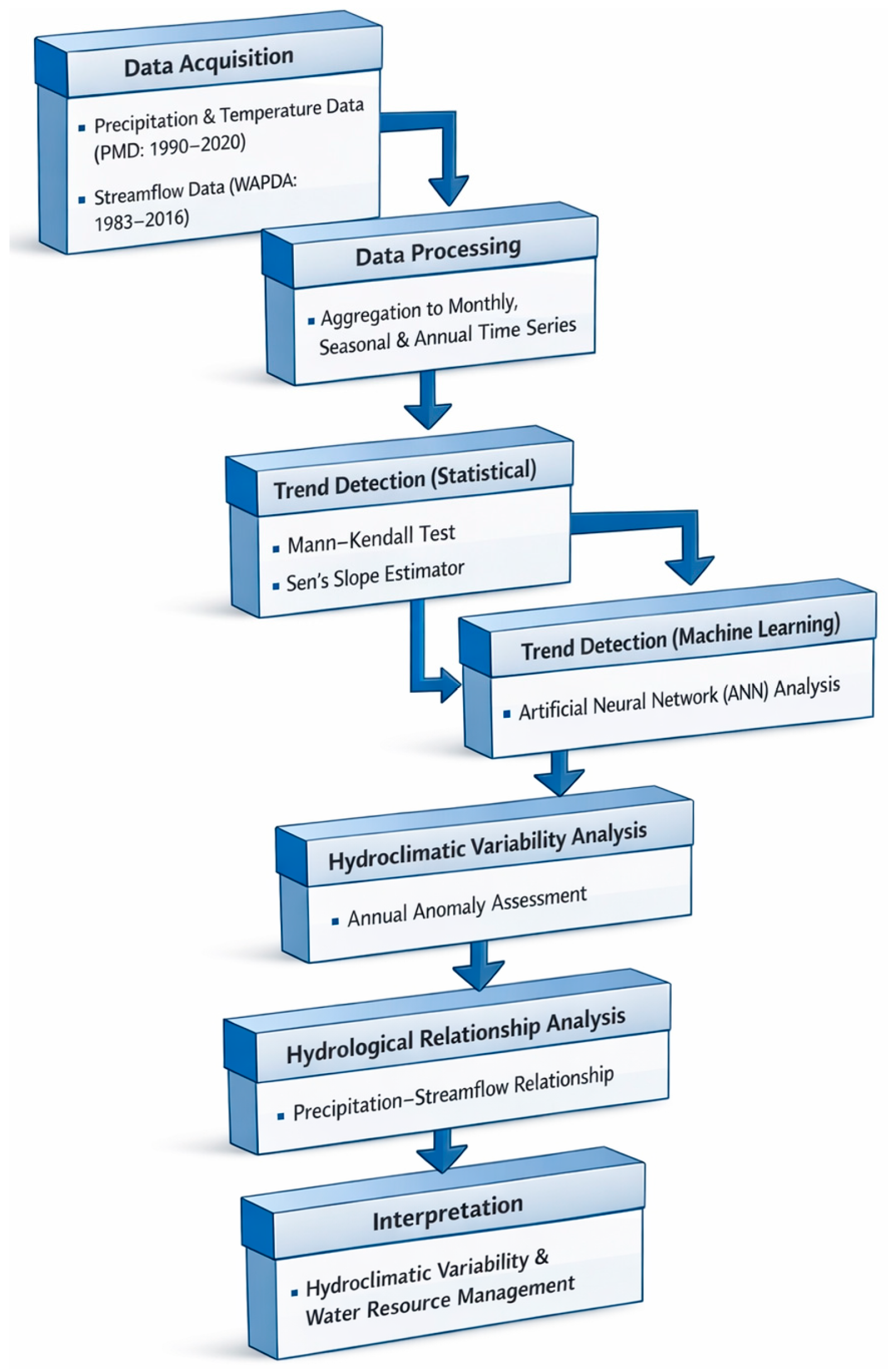
In this study, the MK test was used for the assessment of monotonic trends in the time series of hydroclimatic variables, whereas the ANN approach was used to check the non-linearity of the trends. The overall methodological framework used for this investigation is shown in Figure 4.
Figure 4.
Overall methodological framework of this study.
3. Results
3.1. Historical Variabilities of Annual and Seasonal Precipitation
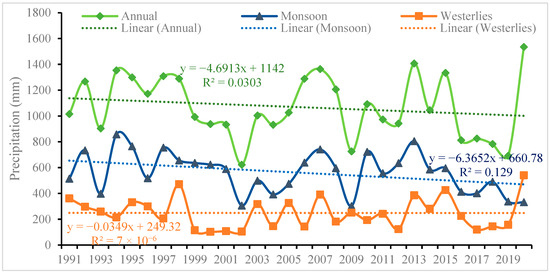
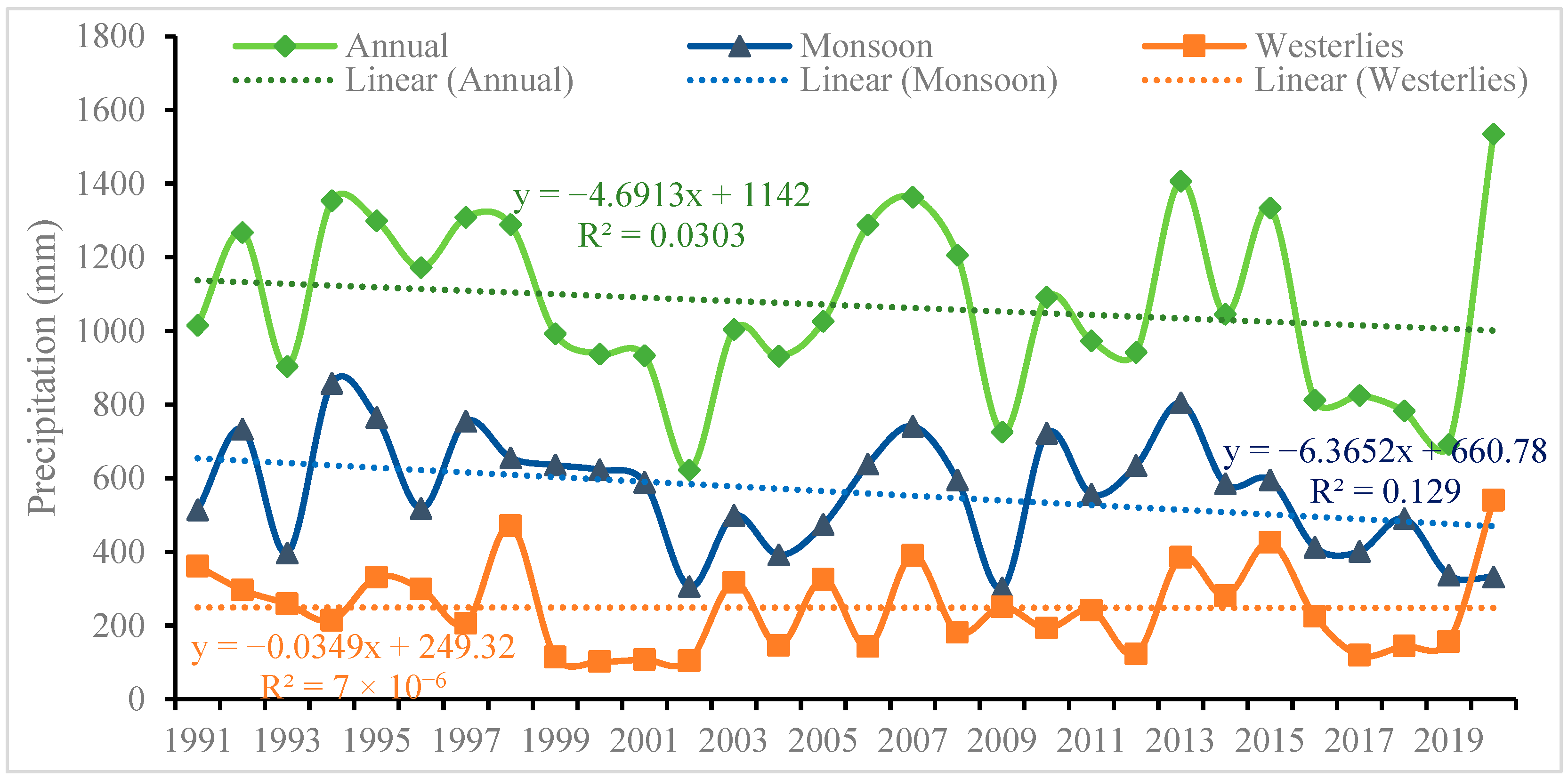
Figure 5 presents the changes in the annual, monsoon, and westerly precipitation of the Soan River Basin during the years 1991–2020. The average annual precipitation fluctuates wildly every year, with the years 1996 to 1999 and 2003 to 2007 being wet and dry, respectively. The linear trend shows that annual precipitation has reduced slightly during the study time.
Figure 5.
The long-term temporal variabilities and trends of annual, monsoon, and westerly precipitation in the Soan River Basin.
Monsoon precipitation also showed similar changes in annual precipitation and had significant interannual changes. Some years received high monsoon precipitation, and others received less precipitation. There was a slightly downward trend in the monsoon precipitation, as indicated by the trend line, showing that there has been a slow decline in the contribution of monsoon precipitation.
The contribution of westerly precipitation to the total annual precipitation is less, and its fluctuation rate is less than that of the monsoon season. The time series of westerly precipitation was relatively constant, with a slight deviation over the past three decades. This linear trend shows that there was a small variation in westerly precipitation over the considered historical period.
In general, the findings indicate that the variations in the annual precipitation were predominantly affected by the monsoon precipitation, whereas the role of the westerly precipitation was less significant.
The observed variability of the Soan River Basin in terms of precipitation is primarily due to the interaction of two major atmospheric circulation patterns which have been influencing the north of Pakistan: the south Asian summer monsoon and western winter disturbances. The monsoon system during the summer seasons provides most of the precipitation in the basin and possibly with heavy-intensity precipitation events that lead to high seasonal runoff and floods. On the other hand, the westerly disturbances result in comparatively lower but meaningful winter precipitation that sustains the conditions of soil moisture and baseflow. The variations in the severity, timing, and spatial coverage of these circulation patterns may then produce noticeable interannual and seasonal variations in the amount of precipitation across the basin. In addition, the local mechanisms of warming may lead to additional effects on the availability of humidity and processes of precipitation in the atmosphere, which contribute to the complex hydroclimatic variability of the basin.
3.2. Historical Variabilities of Annual and Seasonal Temperature
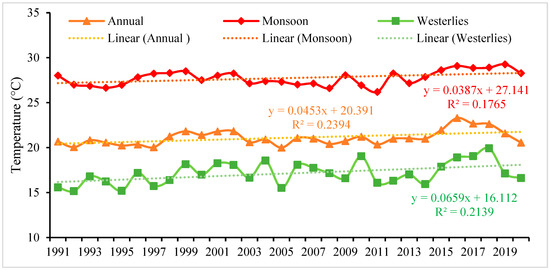
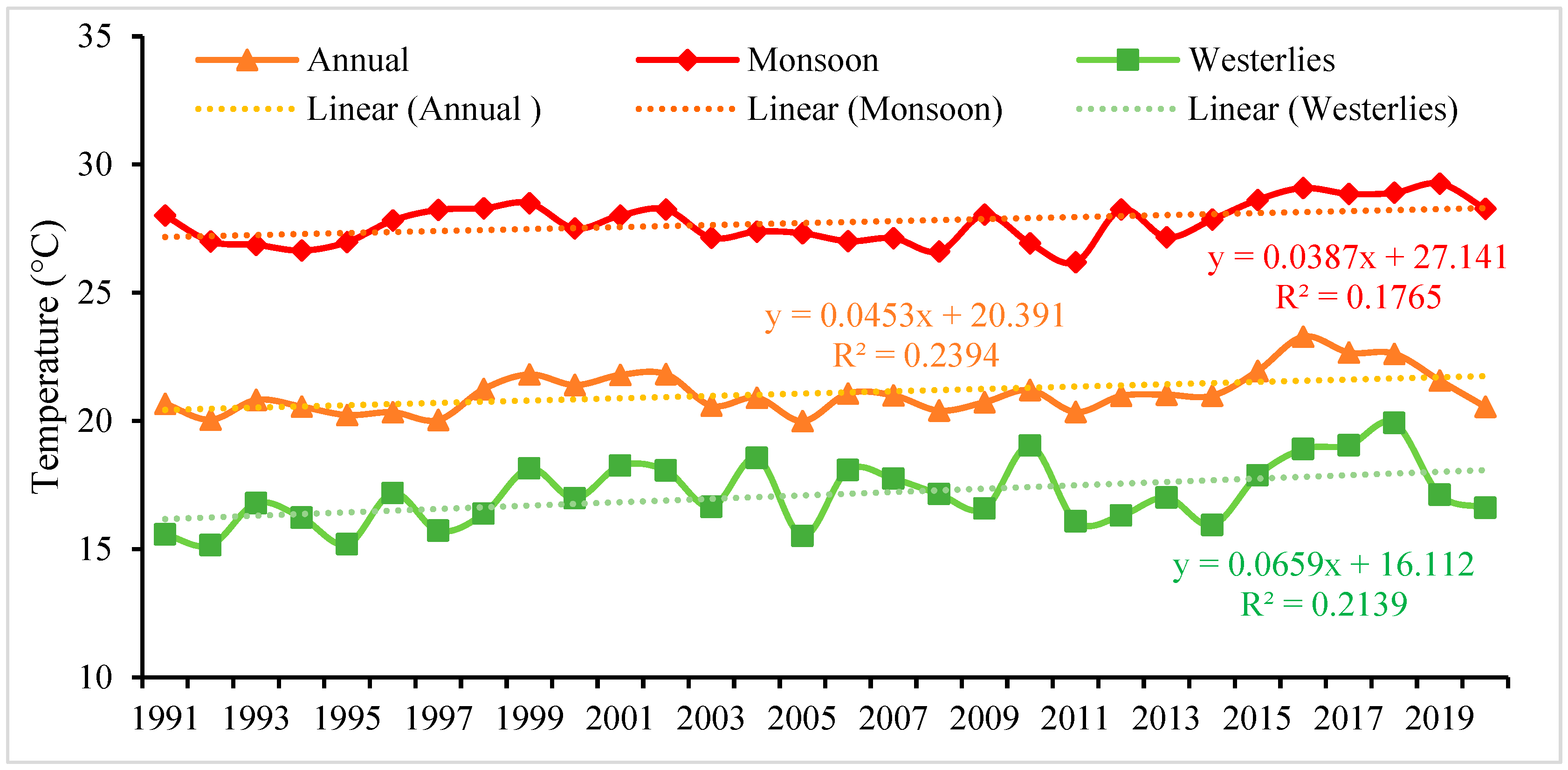
Figure 6 shows the historical temporal variabilities of annual, monsoon, and westerly temperature in the Soan River Basin over the time span of 1991–2010. All of the temperature time series exhibited an increasing trend over the past three decades. The linear trend line shows that there was a gradual rise in annual temperature, implying a general warming trend in the basin. The monsoon temperature remains constantly higher than annual and westerly temperatures over this period. This implies that warm conditions may be intensified in the monsoon season. The westerly temperature was lower than the other two and exhibited larger interannual variations.
Figure 6.
Temperature variations across annual and seasonal scales.
In general, the data indicated an overall steady warming trend in annual and seasonal temperatures. The highest warming rate (0.065 °C/year) was found in the westerlies time series.
3.3. Historical Variability of Streamflow
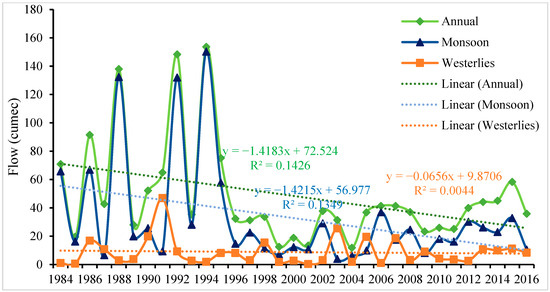
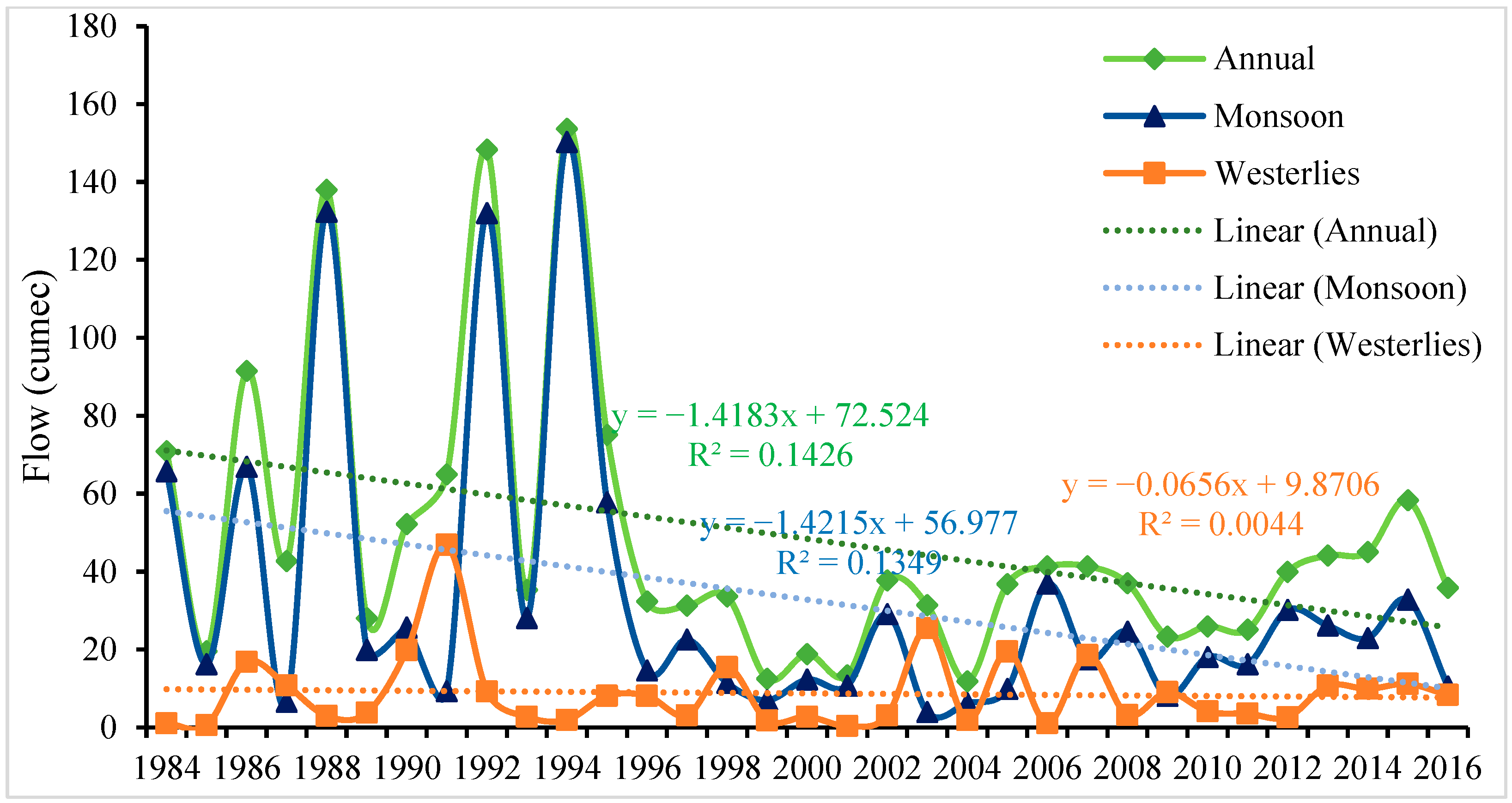
Figure 7 demonstrates the historical annual, monsoon, and westerly streamflow changes in the Soan River Basin. The interannual variability of all three streamflow series is high, and several high-flow events were observed during the late 1980s and early-to-mid-1990s. The annual flow also declines, more or less, after the mid-1990s, and only in recent years has it increased. The linear trend shows that the overall flows in the basin are decreasing. The annual and monsoon flows are significantly decreasing compared to the westerly season’s flows.
Figure 7.
Historical variations in the annual and seasonal flows of the Soan River.
Similar trends were observed in the annual and monsoon streamflows; the late 1980s and early 1990s experienced multiple strong peaks. A gradual decrease in streamflow due to the monsoon was implied by the decreasing trend. In comparison to the monsoon streamflow, the westerly streamflow was low and showed very slight variability. Although there were a few years with short-term peaks, the flow of the westerly season was usually low during the course of the past three decades. The linear trend shows that there was little change over time, with a minor declining tendency.
The overall data revealed a reduction in streamflow over time, which was mostly caused by decreases in monsoon flow. The altered precipitation patterns and rising temperatures in the Soan River Basin are likely contributing factors to the changing hydrological conditions, as shown by the high interannual variability and declining trends.
3.4. Precipitation Anomalies and Seasonal Regime Characteristics
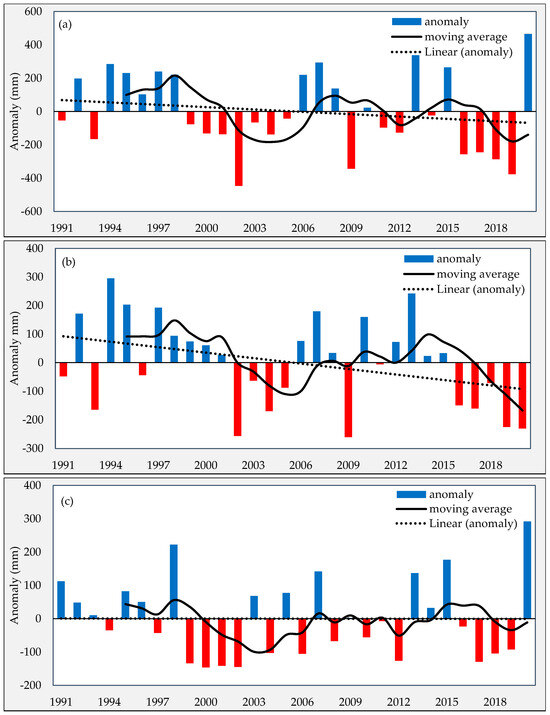
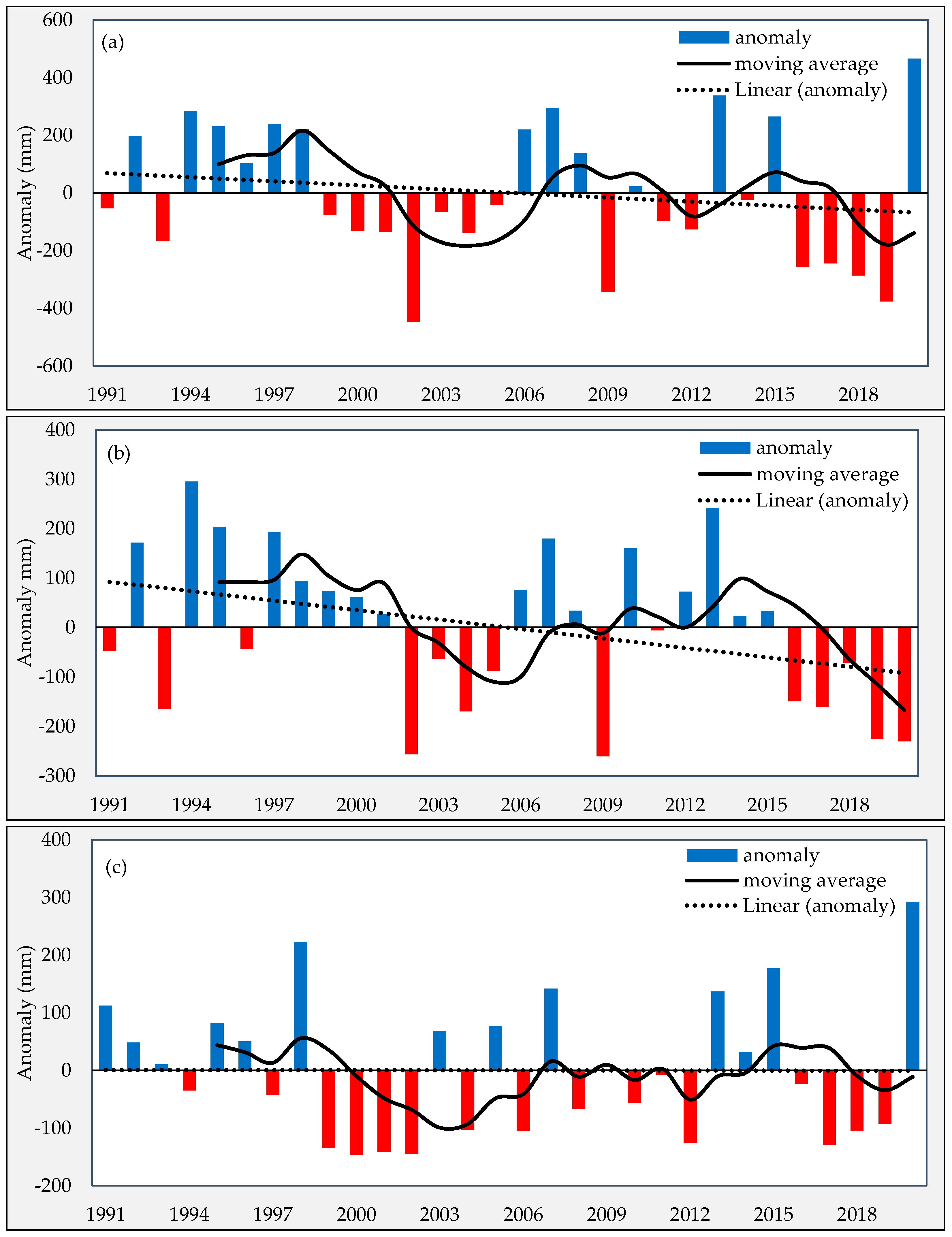
Figure 8 shows the historical anomalies of annual (Figure 8a), monsoon (Figure 8b), and westerly (Figure 8c) precipitation in the Soan River Basin. The anomalies were calculated against the long-term mean; positive anomalies (blue bars) represent wet conditions, and negative anomalies (red bars) represent dry conditions. The solid black line shows the moving average, which indicates the variability and regime behavior of the past few years, and the dotted black line indicates the linear direction of the precipitation anomaly over the period of study.
Figure 8.
Annual (a), monsoon (b), and westerly (c) precipitation anomalies in the Soan River Basin during the study period. The red bars indicate the negative values of anomaly.
Annual precipitation deviation shows strong interannual variability (with a large number of positive anomalies) in the early-to-mid-1990s, followed by a long dry spell in the late 1990s and the early 2000s (Figure 8a). Even though some intermittent wet years followed later, the negative anomalies prevail in the latter half of the period, indicating a progressive transition to drier conditions. The amplitudes and frequency of extremes of the monsoon precipitation anomalies (Figure 8b) were greater than those of annual and westerly components, which highlights the prevalence of the monsoon system. It has been demonstrated that there was a distinct shift in the wet monsoon conditions in the early period to established negative anomalies in the early 2000s, which was followed by a brief recovery period in 2010–2014 and a recurrence of drying more recently. In comparison, westerly precipitation anomalies (Figure 8c) have lower magnitudes and were more irregular in time, with wet and dry periods alternating and a comparatively weak overall trend.
The combined analysis of the anomalies showed that the annual precipitation changes were mainly controlled by monsoon variability, with only secondary effects caused by the westerly precipitation, which occurs episodically. The prevalence of multi-year wet and dry periods in the Soan River Basin demonstrates nonstationary precipitation behavior and changing precipitation regimes, as illustrated by the moving average curves. These findings demonstrate the complexity of the interaction between seasonal precipitation systems and support the use of non-linear approaches to complement one another to better reflect the diversity of hydroclimatic conditions.
3.5. Temperature Anomalies and Seasonal Regime Characteristics
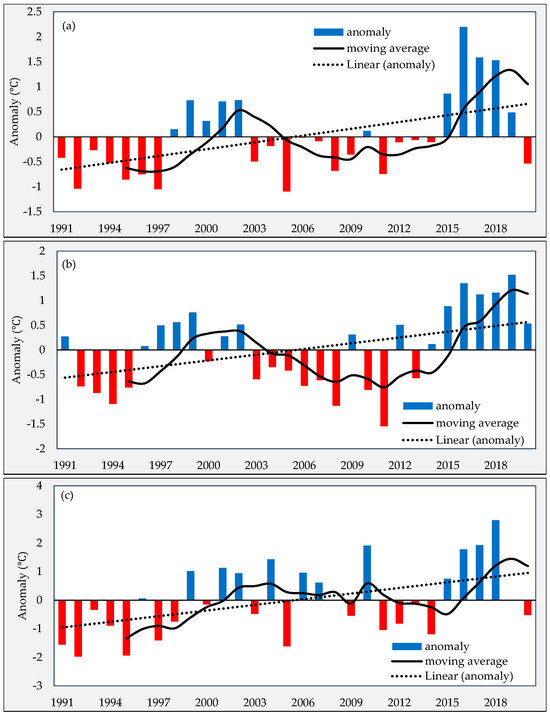
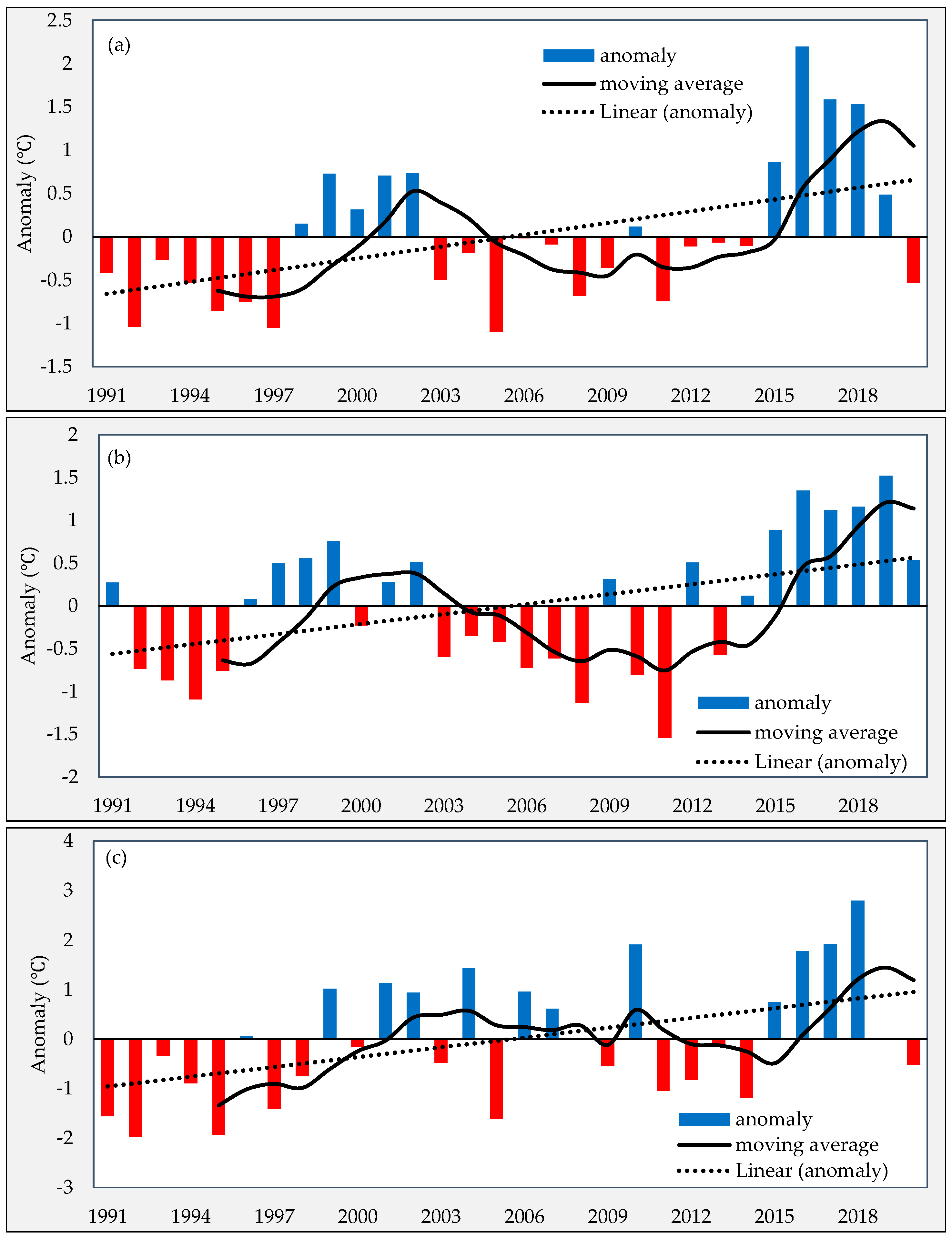
Figure 9 depicts temperature anomalies in the Soan River Basin from 1991 to 2020, including yearly (Figure 9a), monsoon season (Figure 9b), and westerly season (Figure 9c). Temperature anomalies were calculated against the long-term mean, with blue bars representing warmer-than-average years and red bars indicating cooler-than-average years. The solid black line represents the moving average, which illustrates the multi-year variation in the temperature, whereas the dotted black line is the trend in the temperature variations over the time of study.
Figure 9.
Annual (a), monsoon (b), and westerly (c) temperature anomalies in the Soan River Basin during the study period. Red bars show the negative anomaly values.
The time series shows a considerable interannual variability with an obvious warming effect (Figure 9a). The early 1990s show mostly negative anomalies, with values often less than −0.5 °C. The transition occurs between 1997 and 1998, after which positive anomalies become more prevalent. The moving average curve depicts a strong warming period that began in 2014, with multiple years displaying high positive anomalies indicating increased warming over the last few decades. The positive linear trend suggests that there was a general rising trend in the annual temperature anomaly, which implies that there was a long-term warming tendency in the basin.
The seasonal analysis shows that these warming signals are constant in both monsoon (Figure 9b) and westerly (Figure 9c) temperature anomalies, albeit at varied magnitudes and time scales. Temperature anomalies in the monsoon seasons exhibit intermediate interannual variability, with cooler conditions predominant throughout the earlier study period and steadily increasing warmer anomalies after 2010. The westerly season anomalies exhibit bigger amplitude variations, with the initial cold anomalies appearing in the early 1990s and a steady shift toward warmer climates observed in subsequent years. Both moving average curves of the two seasons show an apparent warming regime for the period following 2015, while the linear trends demonstrate that seasonal temperatures are continuously rising.
3.6. Annual and Seasonal Streamflow Variability
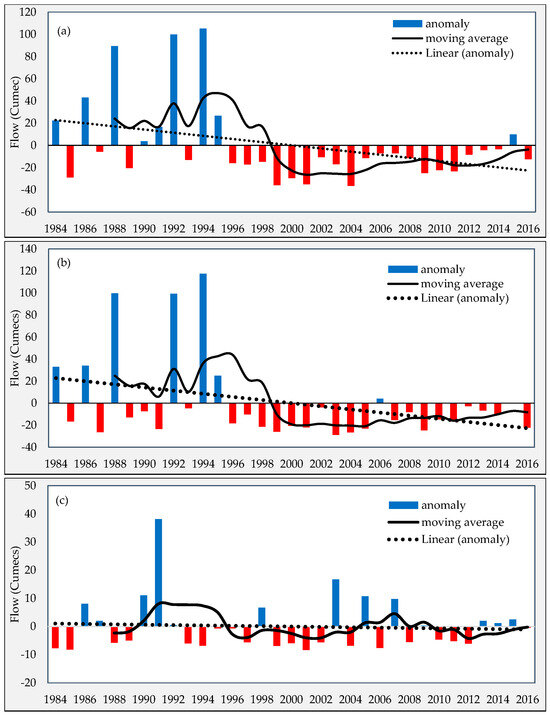
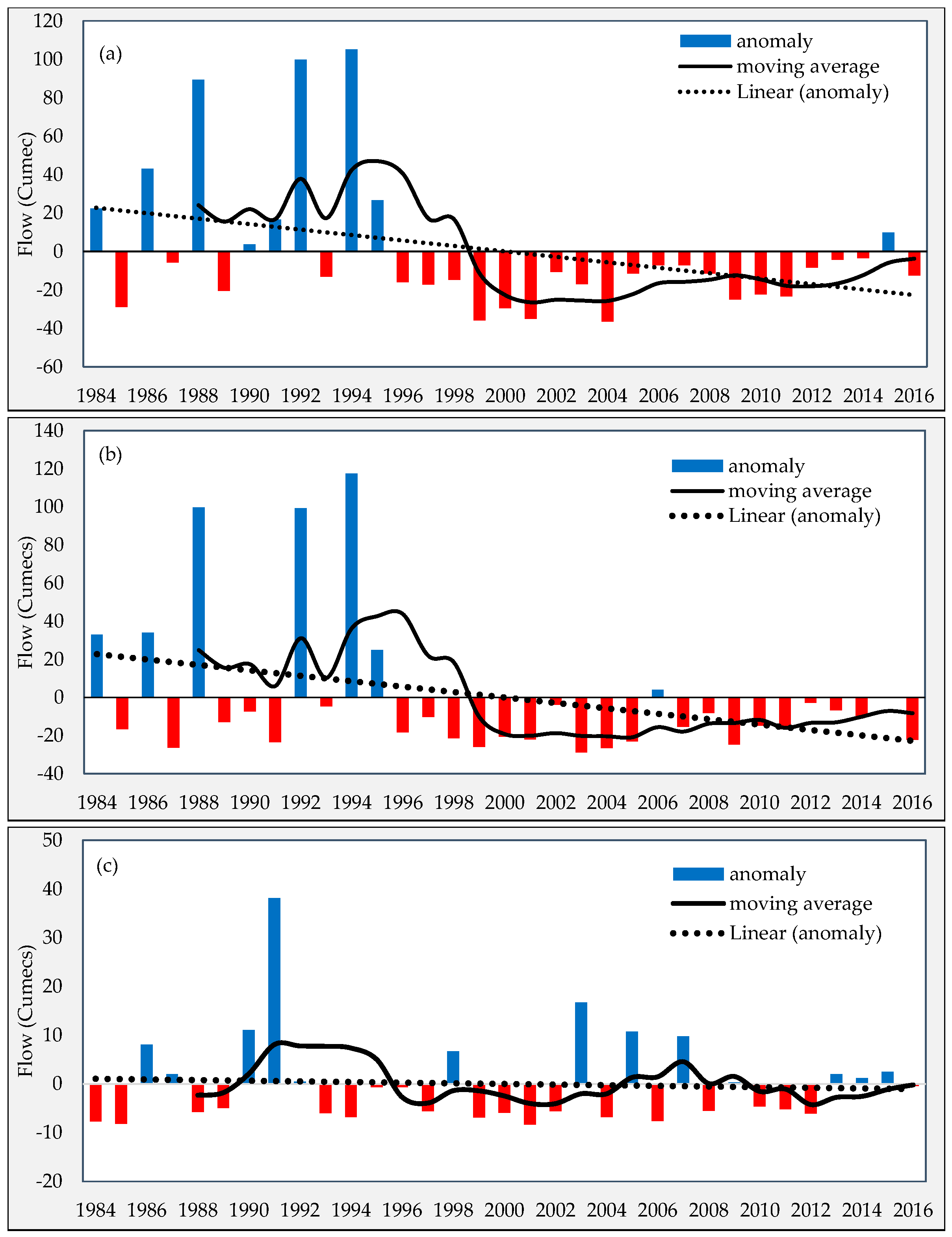
Figure 10 shows the temporal change in annual (Figure 10a), monsoon (Figure 10b), and westerly (Figure 10c) streamflow in the Soan River Basin from 1984 to 2016, together with the moving averages and the linear trend lines. These plots indicate that there are high interannual changes in the annual and seasonal streamflows, with distinct differences between the initial and later sections of the record.
Figure 10.
Annual (a), monsoon (b), and westerly (c) streamflow anomalies in the Soan River Basin during the study period. The red bars indicate the negative values of anomaly.
Figure 10a shows that streamflow was relatively low in the late 1980s and early 1990s, and then decreased significantly after the mid-1990s. The moving average shows a transition from a high-flow phase to a long low-flow period, whereas the linear trend shows the general tendency of decreasing annual streamflow over time.
The annual flow tends to closely follow the monsoon streamflow (Figure 10b), which explains the majority of the high-flow years on record. At first, there were several sharp peaks, but by the late 1990s, monsoon flows had declined. The downward trend indicates a steady drop in monsoon-based streamflow.
The streamflow in the westerly season (Figure 10c) was significantly lower than annual and monsoon streamflows, with little variability. There have been several years of short-term increases, yet they were often low. There was little long-term change, and the linear trend shows a slight downward shift.
Overall, the findings show that streamflow is decreasing, which is mostly due to decreases in monsoon flow, with westerly flow accounting for just a minor portion of the total streamflow variability.
3.7. Precipitation–Streamflow Relationship in the Soan River Basin
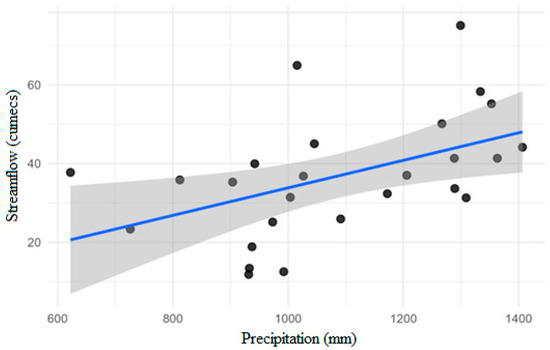
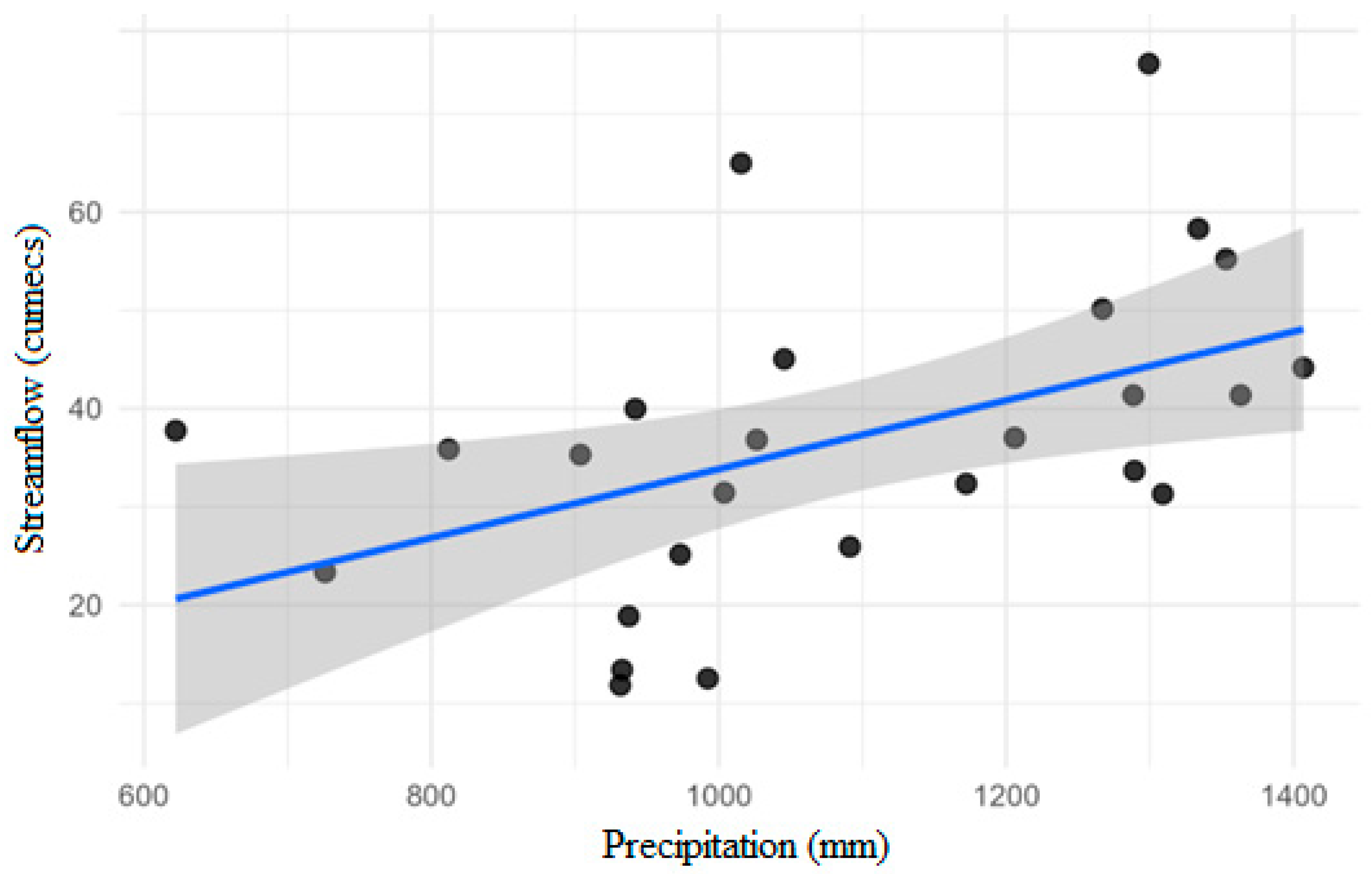
Figure 11 shows the relationship between the annual precipitation and streamflow in the Soan River Basin. The scatter plot indicates that there is a positive correlation between precipitation and streamflow, as demonstrated by the positive regression line. The Pearson correlation coefficient (cc = 0.48) indicates a moderately positive association that was statistically significant (p = 0.0135). The coefficient of determination (R2 = 0.23) indicates that variations in the annual precipitation can account for some portion (23 percent) of the interannual variations in streamflow. Even though increased precipitation results in higher streamflow, the dispersion of the points around the regression line demonstrates a significant amount of variability in the flow response, even when the amount of precipitation is comparable. This dispersion suggests that additional hydrological factors, such as basin storage, groundwater contribution, land-surface conditions, and evapotranspiration, have a role in the link between precipitation and runoff. Overall, the data indicate that precipitation is a substantial contributor to the variability in streamflow in the Soan River Basin, although it does not dominate the streamflow behavior.
Figure 11.
The relationship between annual precipitation and streamflow, based on the data from 1991 to 2016.
3.8. Comparison of Precipitation Trends Using Mann–Kendall and Neural Network Methods
Table 2 summarizes the annual, monsoon, and westerly precipitation patterns at the selected Soan River Basin stations using the MK test and the ANN approach. The first three columns indicate the MK Z statistics, which show the monotonic direction and strength of the trend, while the ANN Z values are low, representing the non-linear trend type. The following columns show MK Q values and ANN-derived Q values, which indicate the magnitude of precipitation change.
Table 2.
Mann–Kendall and Neural Network trend statistics (Z and Q values) for annual, monsoon, and westerly precipitation in the Soan River Basin.
In the case of annual precipitation, the MK test displays significantly decreasing trends at Chaklala (Z = −2.53) and Murree (Z = −3.21), with negative MK Q values of −24.57 mm yr−1 and −33.05 mm yr−1, respectively. The areal average annual precipitation also showed a slightly decreasing trend (Z = −1.03); however, the trend was statistically non-significant. The ANN Q at these stations was also negative and of a comparable magnitude, demonstrating the downward trend; however, the sign of the ANN Z variables differs, indicating the presence of non-linear variability reflected by the neural network model. Chakwal, on the other hand, has a unique positive annual precipitation pattern, with a positive MK Z value of 2.21 and positive Q values for both MK (13.10 mm yr−1) and NN (18.56 mm yr−1), indicating a positive upward tendency.
During the monsoon season, precipitation patterns were typically more prominent than the annual scale. The MK results show that monsoon trends decreased significantly at Chaklala (Z = −2.80) and Murree (Z = −2.78). A slightly decreasing tendency for monsoon precipitation was also found at Islamabad (Z = −1.61), whereas it slightly increased (non-significantly) at other stations. Overall, the areal average precipitation during the monsoon season significantly decreased (Z = −2.03). The ANN-derived Q values were quite close in sign and magnitude to the MK Q values, implying that the two techniques correlate well in terms of monsoon precipitation variations. Nonetheless, fluctuations in ANN Z indicate that monsoon precipitation was very non-linear, which is best represented by the ANN technique.
In westerly precipitation, the MK and ANN results exhibit weaker and less localized trends. The MK Z values were typically small, and both the MK and ANN Q values were low, indicating that winter precipitation at most locations was quite consistent. This means that westerly precipitation contributes less to long-term variation in precipitation than the monsoon season.
On the areal average scale, both MK and ANN results show a general downward trend in annual precipitation, as indicated by negative Q values for both approaches. Monsoon and westerly precipitation patterns were less pronounced at the basin scale, indicating that monsoon precipitation had a greater influence on precipitation variations in the Soan River Basin.
The comparison demonstrates that both MK and ANN methods provide consistent estimates of the magnitude of precipitation trends, with disparities in Z statistics indicating the ANN method’s additional ability to detect non-linear precipitation trends that are not well reflected by conventional monotonic trend tests.
3.9. Comparison of Temperature Trends Using Mann–Kendall and Neural Network Methods
Table 3 summarizes annual, monsoon, and westerly temperature trends at all meteorological stations installed in the Soan River Basin. These trends are based on the MK test and the ANN approach. The first three columns present MK Z values (annual, monsoon, and westerly), followed by ANN Z values in the same seasonal sequence, while the last six columns show the MK and ANN Q values representing the magnitude of temperature change. Overall, both techniques indicate a dominant warming tendency across the basin, although the strength of the trend varies spatially and seasonally.
Table 3.
Mann–Kendall and Neural Network trend statistics (Z and Q values) for annual, monsoon, and westerly temperature in the Soan River Basin.
Annual temperature had substantial positive MK Z values for Chaklala (Z = 3.18), Islamabad (Z = 2.60), and Murree (Z = 3.32), indicating a statistically significant warming trend. These trends were justified by positive MK Q values ranging from 0.065 to 0.104, confirming an increase in annual temperature. The ANN results were nearly identical, with higher ANN Q values (0.061–0.215), suggesting that both linear and non-linear approaches consistently capture the warming signal. In contrast, Chakwal, Massan, and Fateh Jang exhibit weak or slightly negative annual trends, with small negative Z and Q values from both methods, indicating relatively stable or marginally cooling conditions.
During the monsoon season, MK results revealed consistent warming at most stations, particularly at Chaklala (Z = 3.32), Islamabad (Z = 2.96), and Murree (Z = 2.71). The corresponding MK Q values were positive, indicating increasing monsoon temperatures. ANN Z values also indicated the same warming trend, especially at Islamabad (Z = 3.02) and Chakwal (Z = 1.82). For some stations (e.g., Chaklala and Murree), ANN Z values were reported as NA because monsoon temperature values exhibit very limited variability and remain nearly constant over time, restricting the neural network’s ability to learn a stable trend.
In the westerly season, both the MK and ANN techniques detected strong and consistent warming at most of the considered stations. Murree showed the strongest westerly warming signal (MK Z = 3.46; MK Q = 0.218), followed by Islamabad (MK Z = 2.42; MK Q = 0.068). The ANN-derived Q values for the westerly season were generally higher than those of the monsoon season, reaching up to 0.247, indicating that winter temperatures were increasing more rapidly than annual and monsoon temperatures, particularly at higher elevations.
At the basin scale, the areal average confirms a robust warming trend across all seasons. Positive MK Z results (2.36, 2.21, and 2.32 for annual, monsoon, and westerly seasons, respectively) were nearly identical to the ANN Z values (2.88, 2.39, and 2.72), whereas consistently positive Q values from both approaches indicate basin-wide temperature increases. The strong agreement in trend direction between MK and ANN enhances confidence in the detected warming patterns, while differences in magnitude highlight the added value of the ANN approach in capturing non-linear temperature behavior.
3.10. Comparison of Flow Trends Using Mann–Kendall and Neural Network Methods
Table 4 compares streamflow trends at the Chirah station based on the MK test and the ANN approach on annual, monsoon, and westerly seasons. The MK results showed weak negative tendencies in the annual (Z = −0.98) and monsoon (Z = 0.95) flows, whereas westerly flow had a weak positive tendency (Z = 0.57). This tendency was supported by the related MK Q values, which showed negative values for annual (Q = −0.47) and monsoon flow (Q = 0.33). The magnitude of the change throughout the westerly season was minimal (Q = 0.04).
Table 4.
Mann–Kendall and Neural Network trend statistics (Z and Q values) for annual, monsoon, and westerly streamflow in the Soan River Basin.
In contrast, ANN Z results showed that annual (Z = 2.11) and monsoon (Z = 2.00) flow values were stronger and positive, while westerly flow was positive but modest (Z = 0.36). The ANN Q values for annual (Q = −1.30) and monsoon flow (Q = −1.28) were negative, which was consistent with the MK Q values and a decrease in the amplitude of annual and monsoon flow. As a result, although the direction of change was the same between MK and ANN due to the Q values (annual and monsoon flow decreased, and westerly flow slightly increased), the Z statistic was different, indicating that the ANN method was differentiating non-linear behavior that the monotonic MK Z statistic was not fully capturing.
4. Discussion
The present study used the MK test and an ANN model to assess trends in precipitation, temperature, and streamflow in the Soan River Basin. Combining statistical and machine-learning models allows for the detection of both monotonic and non-linear temporal variability, which is vital for explaining hydroclimatic change in complicated river basins [19,32,35].
Overall, the results indicate that MK and ANN techniques tend to agree on the direction of trends, particularly in temperature and monsoon-dominated variables. However, inequalities exist in the magnitude and size of trends, as evidenced by differences in Z and Q values. In contrast to the ANN model, which can detect non-linear patterns, regime shift, and complex interactions in hydroclimatic time series, the MK test is designed to detect long-term monotonic behavior; therefore, these differences are significant [39,40].
In terms of precipitation, the two techniques produce spatially varied patterns throughout the basin, with the monsoon season exhibiting more significant and stable changes than the westerly season. The magnitudes of the trend produced by the ANN are similar to those derived by the MK analysis, while in several cases the former is more sensitive to interannual variability. This phenomenon suggests that multiple interacting factors, such as seasonal circulation systems and local topographical controls, can cause changes in the way precipitation is affected in the Soan River Basin, and the responses result in non-linearity, which may not be well represented by conventional trend tests [34,41].
Temperature trend patterns show a high rate of consistency between MK and ANN data, with both approaches reporting considerable warming at both the annual and seasonal scales, particularly at high-altitude sites. The observed improvement in the strength of agreement of temperature over precipitation and streamflow can be attributed to the fact that the temperature relationship is smoother and more stable, and is less impacted by short-term variations [42,43].
The MK and ANN algorithms make the patterns of streamflow more intricate, and in some instances, they differ in terms of the Z statistic yet have similar Q values. In other words, the patterns of streamflow are more complicated. This represents the overall aspect of streamflow, which is influenced by temperature-initiated evapotranspiration, storage in the basin, and catchment features, in addition to precipitation. It has previously been proposed that machine-learning models can better capture such non-linear hydrological responses, particularly in basins subject to mixed climate impacts [19,44].
Overall, the results at the basin level show that hydroclimatic conditions have changed, including temperature increases, variable precipitation patterns, and associated streamflow changes. The agreement in trend direction between MK and ANN approaches raises confidence in the strength of identified changes, however the difference in the trend scale illustrates the value addition of neural network modeling in characterizing non-linear hydroclimatic dynamics [40].
In general, the findings show that combining traditional statistical approaches with machine-learning techniques provides a more robust framework for assessing hydroclimatic changes. This form of integrated practice is of distinctive relevance to river basins such as the Soan River Basin, where there is a considerable strength of variation in climatic conditions, seasonal changes, and difficult topography that serve as the key elements determining hydrological functions.
In the basin, a moderate positive agreement between precipitation and streamflow was found, with a Pearson correlation coefficient of CC = 0.48 and a coefficient of determination of R2 = 0.23 for the overlapping period (1991–2016). This suggests that precipitation accounts for around 23% of interannual variations in streamflow, showing that, while rainfall is an important hydrological parameter, it does not solely influence streamflow variability across the basin. This intermediate association is unsurprising in catchments with complex physiographic and hydroclimatic characteristics. Other elements that can influence the albedo-precipitation relationship to runoff can be found in the Soan River Basin, including temperature-induced evapotranspiration, soil moisture retention, groundwater responses, watershed storage capacity, and land-use dynamics. These variables have the power to influence the timing and amount of runoff created, hence reducing the direct quantitative relationship between precipitation and streamflow. The same has been found in other rainfall-dominated basins, where hydrological processes are influenced by a variety of meteorological and catchment-scale factors. Thus, the comparatively low level of explanation provided by precipitation demonstrates the multi-factor nature of streamflow formation in the basin, implying that future research incorporating hydro-meteorological parameters, land-surface features, and groundwater dynamics could be used to improve understanding of runoff variability in the area.
The streamflow analysis was conducted based on data from one hydrological gauging station that might not provide a good reflection of the spatial heterogeneity of hydrological responses in the basin. This weakness is primarily explained by the fact that there are no long-term and continuous streamflow records in the basin. However, the selected station is the main outlet of the Soan River Basin. Due to its incorporation of the hydrological response upstream, it has often been used as a baseline for hydrological investigations of this basin.
5. Conclusions
This study examined hydroclimatic variability and trends in the Soan River Basin using long-term records of precipitation, temperature, and streamflow. An integrated approach of statistical (Mann–Kendall) and machine-learning (ANN) methods was used to check the trends of hydroclimatic variables. The combined use of these methods allowed the detection of monotonic trends as well as non-linear temporal behavior across annual, monsoon, and westerly seasons. The main findings of the study revealed that:
- The Soan River Basin has been consistently warming over the past three decades. Most of the stations showed statistically significant trends in annual average temperature. The areal average analysis of temperature showed that the annual average temperature significantly increased at the rate of 0.40 °C/decade, which was above the global warming level (0.02 °C/decade). Both of the approaches (i.e., MK and ANN) revealed the same increasing rate of annual average temperature. On a seasonal scale, the westerly season indicated a higher warming rate (0.6 °C/decade) than the monsoon season’s warming rate (0.40 °C/decade).
- The patterns of precipitation showed clear seasonal and spatial variations. Annual precipitation decreased at Chaklala (MK Z = −2.53; Q = −24.57 mm yr−1) and Murree (MK Z = −3.21; Q = −33.05 mm yr−1), but increased at Chakwal (MK Z = 2.21; Q = 13.10 mm yr−1). In contrast to the westerly precipitation, the monsoon precipitation showed stronger indications, with significant increasing trends at Chakwal (MK Z = 3.00; NN Z = 2.65) and Murree (MK Z = 3.48; NN Z = 3.17). Generally, westerly precipitation showed mild trends, minimal Q magnitudes (<5 mm yr−1), and tiny Z values. Based on the results of the areal average, it was seen that there was a modest decrease in the annual precipitation quantity (MK Z = −1.03; NN Z = −2.18).
- The combined effect of variations in temperature and precipitation is reflected in streamflow trends. Under both the MK (Z = −0.98; Q = −0.469 cumecs yr−1) and ANN (Q = −1.303 cumecs yr−1) methods, the annual flow at Chirah station exhibited a slight declining trend. The flow during the monsoon season was slightly increasing (MK Z = 2.11; NN Z = 2.00), while the flow throughout the westerly season was reasonably steady with small positive Q values (0.04–0.06 cumecs yr−1). The differences between MK and NN Z statistics were particularly noticeable for streamflow, which brings attention to the non-linear hydrological response of the basin.
- The comparison analysis suggests that MK and NN techniques often agreed on the trend direction, notably for temperature and monsoon-driven variables. On the other hand, ANN-derived Q values generally indicated greater magnitudes, which in turn reflects its capacity to capture non-linear variability. The differences between the two approaches emphasize the advantages of integrating machine-learning techniques with traditional statistical methods, while the similarities between the two approaches raise the level of confidence in the trends that have been identified.
Overall, the results showed that streamflow in the Soan River Basin changed in conjunction with rising temperatures and seasonally fluctuating precipitation trends. The quantification of these changes has significant repercussions for the availability of water, the risk of flooding, and the management of water resources over the long run. Based on the results, it is recommended to use an integrated MK-ANN framework for the comprehensive evaluation of hydroclimatic trends in basins with complicated topography and climate.
Author Contributions
Conceptualization, A.A.K., M.N.A., R.U.D., A.T.M.S.R. and S.H.; methodology, A.A.K., M.N.A., A.T.M.S.R., S.H. and R.U.D.; software, A.A.K., M.N.A., A.T.M.S.R. and S.H.; validation, M.N.A., S.H. and R.U.D.; formal analysis, A.A.K. and M.N.A.; investigation, A.A.K.; resources, M.N.A. and S.H.; data curation, M.N.A. and R.U.D.; writing—original draft preparation, A.A.K., S.U., M.N.A. and S.H.; writing—review and editing, S.H., A.T.M.S.R., M.N.A. and A.A.K.; visualization, M.N.A. and S.H.; supervision, M.N.A. and A.T.M.S.R.; project administration, M.N.A. All authors have read and agreed to the published version of the manuscript.
Funding
This research received no external funding.
Data Availability Statement
Data will be provided on demand.
Acknowledgments
We would like to express our gratitude to the Pakistan Meteorological Department for sharing with us the daily data that was used in this evaluation.
Conflicts of Interest
The authors declare no conflicts of interest.
References
- Kundzewicz, Z.W.; Robson, A.J. Change detection in hydrological records—A review of the methodology/Revue méthodologique de la détection de changements dans les chroniques hydrologiques. Hydrol. Sci. J. 2004, 49, 7–19. [Google Scholar] [CrossRef] [Scilit]
- Whitfield, P.H.; Shook, K.R.; Pomeroy, J.W. Spatial patterns of temporal changes in Canadian Prairie streamflow using an alternative trend assessment approach. J. Hydrol. 2020, 582, 124541. [Google Scholar] [CrossRef] [Scilit]
- Morbidelli, R.; García-Marín, A.P.; Al Mamun, A.; Atiqur Rahman, M.; Saltalippi, C.; Ayuso-Muñoz, J.L.; Taouti, M.B.; Baranowski, P.; Bellocchi, G.; Sangüesa-Pool, C.; et al. The history of rainfall data time-resolution in a wide variety of geographical areas. J. Hydrol. 2020, 590, 125258. [Google Scholar] [CrossRef] [Scilit]
- Kar, S.C.; Rana, S. Interannual variability of winter precipitation over northwest India and adjoining region: Impact of global forcings. Theor. Appl. Climatol. 2014, 116, 609–623. [Google Scholar] [CrossRef] [Scilit]
- Hasson, S.; Pascale, S.; Lucarini, V. Seasonal cycle of precipitation over major river basins in South and Southeast Asia: A review and implications under warming. Atmos. Res. 2016, 180, 42–55. [Google Scholar] [CrossRef] [Scilit]
- Milly, P.C.D.; Betancourt, J.; Falkenmark, M.; Hirsch, R.M.; Kundzewicz, Z.W.; Lettenmaier, D.P.; Stouffer, R.J. Stationarity is dead: Whither water management? Science 2008, 319, 573–574. [Google Scholar] [CrossRef] [Scilit]
- Yue, S.; Pilon, P.; Phinney, B.; Cavadias, G. The influence of autocorrelation on the ability to detect trend in hydrological series. Hydrol. Process. 2002, 16, 1807–1829. [Google Scholar] [CrossRef] [Scilit]
- Blöschl, G.; Hall, J.; Viglione, A.; Parajka, J.; Perdigão, R.A.; Merz, B.; Arheimer, B.; Aronica, G.T.; Bilibashi, A.; Bonacci, O.; et al. Changing climate shifts timing of European floods. Science 2017, 357, 588–590. [Google Scholar] [CrossRef] [Scilit]
- Shen, C. A transdisciplinary review of deep learning research and its relevance for water resources scientists. Water Resour. Res. 2018, 54, 8558–8593. [Google Scholar] [CrossRef] [Scilit]
- Hamed, K.H.; Rao, A.R. A modified Mann–Kendall trend test for autocorrelated data. J. Hydrol. 1998, 204, 182–196. [Google Scholar] [CrossRef] [Scilit]
- Devia, G.K.; Ganasri, B.P.; Dwarakish, G.S. A review on hydrological models. Aquat. Procedia 2015, 4, 1001–1007. [Google Scholar] [CrossRef] [Scilit]
- Rodríguez-Blanco, M.L.; Taboada-Castro, M.M.; Taboada-Castro, M.T. Rainfall–runoff response and event-based runoff coefficients in a humid catchment. Hydrol. Sci. J. 2012, 57, 445–459. [Google Scholar] [CrossRef] [Scilit]
- Berghuijs, W.R.; Woods, R.A.; Hrachowitz, M. A precipitation shift from snow towards rain leads to a decrease in streamflow. Nat. Clim. Change 2014, 4, 583–586. [Google Scholar] [CrossRef] [Scilit]
- Sagarika, S.; Kalra, A.; Ahmad, S. Evaluating the effect of persistence on long-term trends and analyzing step changes in streamflows of the continental United States. J. Hydrol. 2014, 517, 36–53. [Google Scholar] [CrossRef] [Scilit]
- Bîrsan, M.-V.; Zaharia, L.; Chendes, V.; Brănescu, E. Seasonal trends in Romanian streamflow. Hydrol. Process. 2014, 28, 4496–4505. [Google Scholar] [CrossRef] [Scilit]
- Ul Hasson, S.; Saeed, F.; Böhner, J.; Schleussner, C.-F. Water availability in Pakistan from Hindukush–Karakoram–Himalayan watersheds at 1.5 °C and 2 °C Paris Agreement targets. Adv. Water Resour. 2019, 131, 103365. [Google Scholar] [CrossRef] [Scilit]
- Prudhomme, C.; Giuntoli, I.; Robinson, E.L.; Clark, D.B.; Arnell, N.W.; Dankers, R.; Fekete, B.M.; Franssen, W.; Gerten, D.; Gosling, S.N.; et al. Hydrological droughts in the 21st century, hotspots and uncertainties from a global multimodel ensemble experiment. Proc. Natl. Acad. Sci. USA 2014, 111, 3262–3267. [Google Scholar] [CrossRef] [Scilit]
- Tahir, A.A.; Chevallier, P.; Arnaud, Y.; Ahmad, B. Modeling snowmelt-runoff under climate change in the Hunza River basin, Karakoram region, Pakistan. J. Hydrol. 2011, 409, 104–117. [Google Scholar] [CrossRef] [Scilit]
- Immerzeel, W.W.; van Beek, L.P.H.; Bierkens, M.F.P. Climate change will affect the Asian water towers. Science 2010, 328, 1382–1385. [Google Scholar] [CrossRef] [Scilit]
- Khan, F.; Pilz, J.; Ali, S. Improved hydrological projections and reservoir management in the Upper Indus Basin under the changing climate. Water Environ. J. 2017, 31, 235–244. [Google Scholar] [CrossRef] [Scilit]
- Hasson, S.; Böhner, J.; Lucarini, V. Prevailing climatic trends and runoff response from Hindukush–Karakoram–Himalaya, upper Indus Basin. Earth Syst. Dyn. 2017, 8, 337–355. [Google Scholar] [CrossRef] [Scilit]
- Tahir, A.A.; Adamowski, J.F.; Chevallier, P.; Ul Haq, A.; Terzago, S. Comparative assessment of spatiotemporal snow cover changes and hydrological behavior of the Gilgit, Astore and Hunza River basins (Hindukush–Karakoram–Himalaya region, Pakistan). Meteorol. Atmos. Phys. 2016, 128, 793–811. [Google Scholar] [CrossRef] [Scilit]
- Ali, S.; Kiani, R.S. Identifying hotspots cities vulnerable to climate change in Pakistan under CMIP5 climate projections. Int. J. Climatol. 2020, 41, 559–581. [Google Scholar] [CrossRef] [Scilit]
- Ahmad, S.; Jia, H.F.; Chen, Z.X.; Li, Q.; Yin, D.K.; Israr, M.; Hayat, W.; Bilal, H.; Ahmed, R.; Ashraf, A. Effects of climate and land use changes on stream flow of Chitral river basin of northern highland Hindu-Kush region of Pakistan. J. Hydro-Environ. Res. 2021, 38, 53–62. [Google Scholar] [CrossRef] [Scilit]
- Usman, M.; Ndehedehe, C.E.; Manzanas, R.; Ahmad, B.; Adeyeri, O.E. Impacts of Climate Change on the Hydrometeorological Characteristics of the Soan River Basin, Pakistan. Atmosphere 2021, 12, 792. [Google Scholar] [CrossRef] [Scilit]
- Ahmad, B.; Nadeem, M.U.; Liu, T.; Asif, M.; Rizvi, F.F.; Kamran, A.; Virk, Z.T.; Jamil, M.K.; Mustafa, N.; Saeed, S.; et al. Climate change impact on groundwater-based livelihood in the Soan River Basin of Pakistan based on the perception of local farmers. Water 2023, 15, 1287. [Google Scholar] [CrossRef] [Scilit]
- Adnan, R.M.; Mirboluki, A.; Mehraein, M.; Malik, A.; Heddam, S.; Kisi, O. Improved prediction of monthly streamflow using metaheuristic-enhanced deep learning and machine-learning models. Theor. Appl. Climatol. 2024, 155, 205–228. [Google Scholar] [CrossRef] [Scilit]
- Kratzert, F.; Klotz, D.; Brenner, C.; Schulz, K.; Herrnegger, M. Rainfall–runoff modelling using Long Short-Term Memory (LSTM) networks. Hydrol. Earth Syst. Sci. 2018, 22, 6005–6022. [Google Scholar] [CrossRef] [Scilit]
- Nachappa, T.G.; Tavakkoli Piralilou, S.; Gholamnia, K.; Ghorbanzadeh, O.; Shahabi, H.; Blaschke, T. Flood susceptibility mapping with machine learning, multi-criteria decision analysis and ensemble using Dempster–Shafer Theory. J. Hydrol. 2020, 590, 125275. [Google Scholar] [CrossRef] [Scilit]
- Türk, H.; Stumpp, C.; Hrachowitz, M.; Schulz, K.; Strauss, P.; Blöschl, G.; Stockinger, M. Soil moisture and precipitation intensity jointly control runoff transit time distribution in a flashy catchment. Hydrol. Earth Syst. Sci. 2025, 29, 3935–3956. [Google Scholar] [CrossRef] [Scilit]
- Kirchner, J.W. Characterizing nonlinear, nonstationary, and heterogeneous hydrologic behavior using ensemble rainfall–runoff analysis (ERRA): Proof of concept. Hydrol. Earth Syst. Sci. 2024, 28, 4427–4454. [Google Scholar] [CrossRef] [Scilit]
- Mann, H.B. Nonparametric tests against trend. Econometrica 1945, 13, 245–259. [Google Scholar] [CrossRef] [Scilit]
- Kendall, M.G. Rank Correlation Methods; Charles Griffin: London, UK, 1955. [Google Scholar]
- Theil, H. A rank-invariant method of linear and polynomial regression analysis. Nederl. Akad. Wetensch. Proc. 1950, 53, 386–392. [Google Scholar]
- Sen, P.K. Estimates of the regression coefficient based on Kendall’s tau. J. Am. Stat. Assoc. 1968, 63, 1379–1389. [Google Scholar] [CrossRef]
- Hsu, K.; Gupta, H.V.; Sorooshian, S. Artificial neural network modeling of the rainfall–runoff process. Water Resour. Res. 1995, 31, 2517–2530. [Google Scholar] [CrossRef] [Scilit]
- Kisi, O.; Shiri, J. Precipitation Forecasting Using Wavelet-Genetic Programming and Wavelet-Neuro-Fuzzy Conjunction Models. Water Resour. Manag. 2011, 25, 3135–3152. [Google Scholar] [CrossRef] [Scilit]
- Haykin, S. Neural Networks: A Comprehensive Foundation, 2nd ed.; Prentice Hall: Upper Saddle River, NJ, USA, 1999. [Google Scholar]
- Hamed, K.H. Trend detection in hydrologic data: The Mann–Kendall trend test under the scaling hypothesis. J. Hydrol. 2008, 349, 350–363. [Google Scholar] [CrossRef] [Scilit]
- Nourani, V.; Kisi, O.; Komasi, M. Two hybrid artificial intelligence approaches for modeling rainfall–runoff process. J. Hydrol. 2011, 402, 41–59. [Google Scholar] [CrossRef] [Scilit]
- Partal, T.; Kahya, E. Trend analysis in Turkish precipitation data. Hydrol. Process. 2006, 20, 2011–2026. [Google Scholar] [CrossRef] [Scilit]
- Zhang, X.; Harvey, K.D.; Hogg, W.D.; Yuzyk, T.R. Trends in Canadian streamflow. Water Resour. Res. 2001, 37, 987–998. [Google Scholar] [CrossRef] [Scilit]
- Liu, S.; Xie, Y.; Fang, H.; Du, H. Trend test for hydrological and climatic time series considering the interaction of trend and autocorrelations. Water 2022, 14, 3006. [Google Scholar] [CrossRef] [Scilit]
- Yaseen, Z.M.; El-Shafie, A.; Jaafar, O.; Afan, H.A.; Sayl, K.N. Artificial intelligence based models for stream-flow forecasting: 2000–2015. J. Hydrol. 2015, 530, 829–844. [Google Scholar] [CrossRef] [Scilit]

Disclaimer/Publisher’s Note: The statements, opinions and data contained in all publications are solely those of the individual author(s) and contributor(s) and not of MDPI and/or the editor(s). MDPI and/or the editor(s) disclaim responsibility for any injury to people or property resulting from any ideas, methods, instructions or products referred to in the content. |
© 2026 by the authors. Licensee MDPI, Basel, Switzerland. This article is an open access article distributed under the terms and conditions of the Creative Commons Attribution (CC BY) license.