1. Introduction
Hydroclimatic variability in the Southeastern United States (SEUS) poses persistent challenges for water resource management, particularly in regions where instrumental record periods are relatively short and hydrologic systems are sensitive to variability. Within the SEUS, spring to early summer precipitation plays a critical role in sustaining water resources, with the Tennessee Valley being an area of particular concern. The Tennessee Valley Authority (TVA) manages reservoirs and water resources within the Tennessee River watershed, and the TVA identified changes in precipitation drought patterns for this period as a source of concern. Supporting more than 5.2 million residents, the region is directly affected by water availability, drought preparedness, and hydrologic forecasting capabilities [
1].
In recent decades, tree-ring-based paleo-hydrologic reconstructions have become an increasingly important tool for contextualizing extremes in streamflow and precipitation observed in the instrumental record by expanding the historical record. Dendrochronologically based streamflow reconstructions reliably capture multi-decadal trends in water availability and are therefore useful in understanding hydroclimatic variability [
2]. Ho et al. were the first to successfully develop reconstructions of the Conterminous United States (CONUS) streamflow using the North American Drought Atlas (NADA) Self-calibrated Palmer Drought Severity Index (scPDSI) as a reconstruction proxy [
3]. Numerous studies have since expanded upon this work, developing streamflow reconstructions across the CONUS and Europe [
4,
5,
6].
Quantitative reconstructions of precipitation are less common than streamflow reconstructions, particularly in the SEUS, where complex climate dynamics and relatively short instrumental records often limit calibration periods. Nevertheless, previous studies have shown that reconstructions based on tree ring proxies can serve as effective indicators of warm-season precipitation variability in this region. For example, Blasing et al. demonstrated strong correlations between reconstructed May–June precipitation and observed gauge data in eastern Tennessee, highlighting the utility of tree ring proxies for precipitation inference in the region [
7]. Additional studies have combined dendrochronological methods with United States Geological Survey (USGS) streamflow data to assess long-term hydroclimatic variability in the Tennessee Valley area [
8]. For example, Sadeghi et al. identified a related 21st century decline in streamflow in 26 SEUS unimpaired gauges, including gauges within the Tennessee River watershed and several watersheds examined in this study [
9]. The question remains on whether future projections of spring-early summer precipitation in the Tennessee River watershed parallel the recent decline of precipitation and streamflow in the neighboring watersheds, as well as streamflow decline across the SEUS.
Several physical drivers of climatic variation influence drought in the Tennessee Valley. Findings from Stahle et al. indicate the position of the Bermuda High’s western ridge—a component of the North Atlantic Subtropical High (NASH)—is linked to hydroclimatic variability in the SEUS, with wetter years occurring when the Bermuda High ridge is displaced east of its mean position [
10]. The inverse also holds true, as low precipitation totals in the region are associated with a western displacement of the system. Furthermore, the direction of NASH northern trade winds over the Gulf of Mexico and Caribbean, which are controlled by system displacement about the mean, influences moisture abundance transferred into the SEUS, impacting precipitation patterns [
11]. These physical drivers play an important role in determining spring-early summer precipitation and are important to consider when evaluating trends in precipitation drought.
With these physical drivers considered, climate model projections suggest that future hydroclimatic conditions in the SEUS may be characterized by increased variability and an elevated likelihood of drought conditions. Shared Socioeconomic Pathway 5–8.5 (SSP 5–8.5), often described as a fossil-fueled development pathway with high economic growth and minimal climate mitigation, has been widely used to explore upper-bound climate responses and associated hydrologic impacts [
12]. Precipitation projections derived from SSP 5–8.5 simulations, including those developed by Oak Ridge National Laboratory (ORNL), indicate an increased potential for drought and greater variability in precipitation across the Tennessee Valley. However, the extent to which projected future droughts exceed the natural range of hydroclimatic variability remains uncertain, particularly when evaluated only against the relatively short instrumental record.
Within the Tennessee Valley, opportunities to evaluate long-term hydroclimatic variability are limited by widespread flow regulation and land use modification. Because the majority of watersheds have experienced anthropogenic alteration to streamflow or watershed characteristics, the relatively few remaining unimpaired watersheds are crucial. These unimpaired basins provide a unique opportunity to integrate instrumental records, dendrochronological proxy data, and future climate projections within a consistent hydrologic framework. By combining SSP 5–8.5 predictive data with dendrochronological data, a comprehensive precipitation timeline can be established, which can be used to contextualize future drought conditions [
8]. However, this is limited by the availability of such unimpaired watersheds and by the basin-specific nature of precipitation variability in the region.
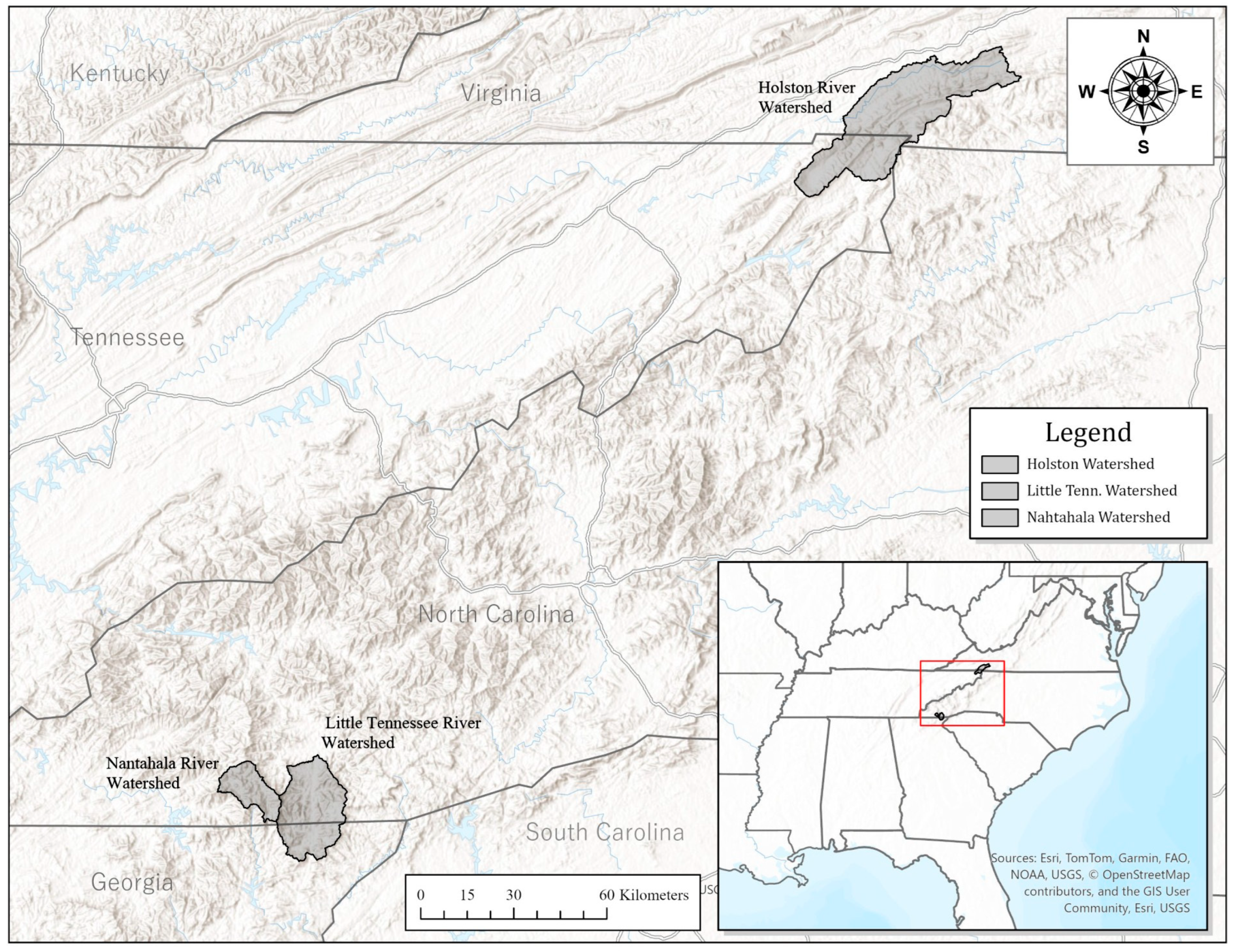
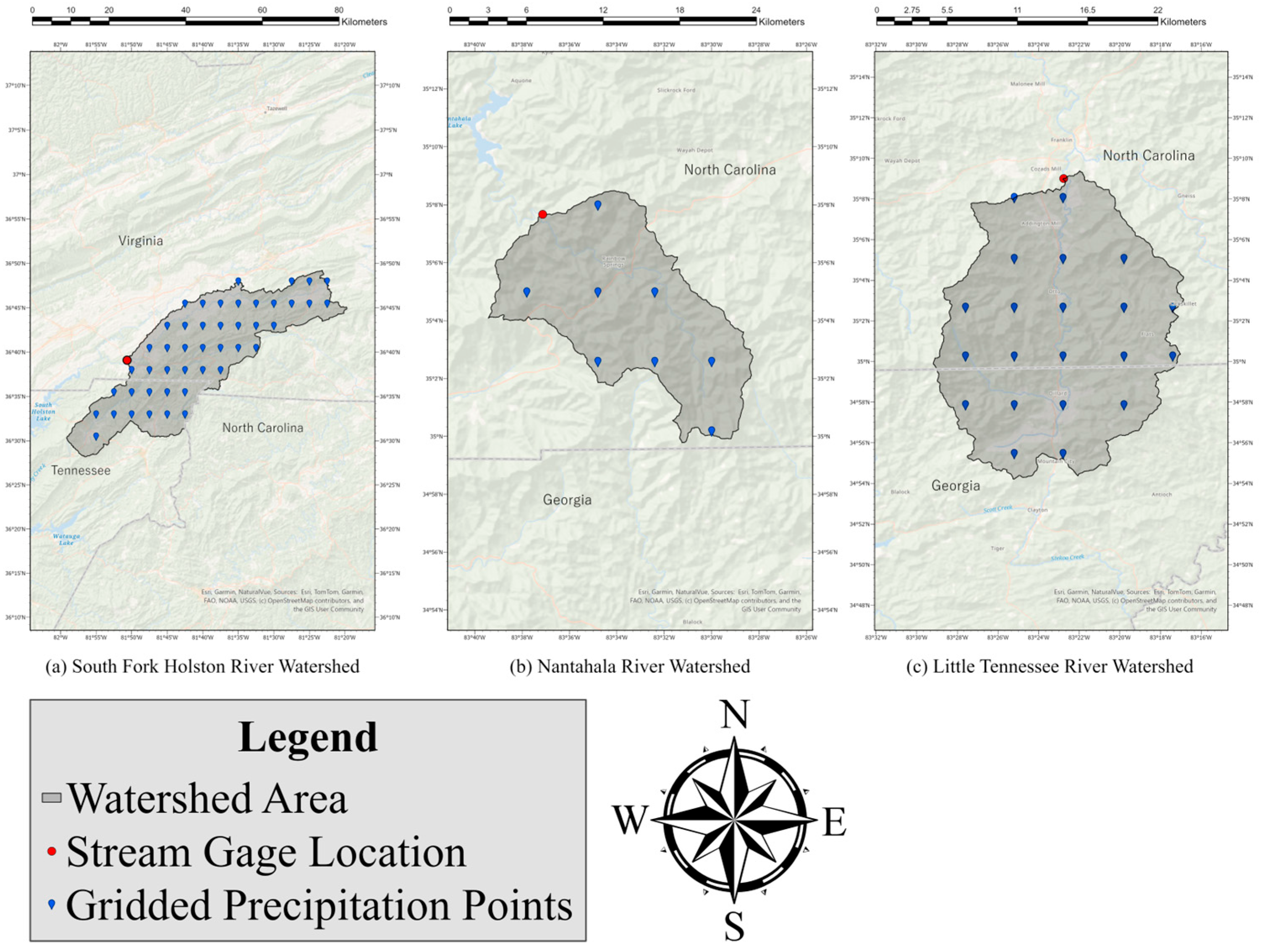
This study focuses on three unimpaired watersheds within the Tennessee Valley: the Little Tennessee River (LTN), the Nantahala River (NAN), and the South Fork Holtson River (SFH) (
Figure 1). The primary objective is to develop multi-century timelines of spring-early summer precipitation for each watershed by integrating hindcast precipitation records, tree-ring-based scPDSI data from the NADA, and future precipitation projections derived from SSP 5–8.5 climate simulations produced by ORNL. In addition, reconstructed summer precipitation is evaluated against reconstructed streamflow in each watershed to assess the ability of precipitation reconstructions to capture hydrologically relevant variability given the relatively short period of overlap between proxy and instrumental data.
By combining recent records, dendrochronological paleohydrologic proxies, and SSP 5–8.5 climate projections, this study places future meteorological drought projections within a multi-century hydroclimatic context that extends well beyond the historic record. Specifically, it evaluates whether projected future droughts exceed the magnitude and persistence of droughts evident in the reconstructed paleo record and examines the implications of this comparison for understanding drought risk in unimpaired Tennessee Valley watersheds. Through this integrated approach, the study contributes to improved characterization of spring-early summer precipitation extremes in the SEUS and demonstrates the value of precipitation reconstructions for contextualizing future climate projections.
3. Results
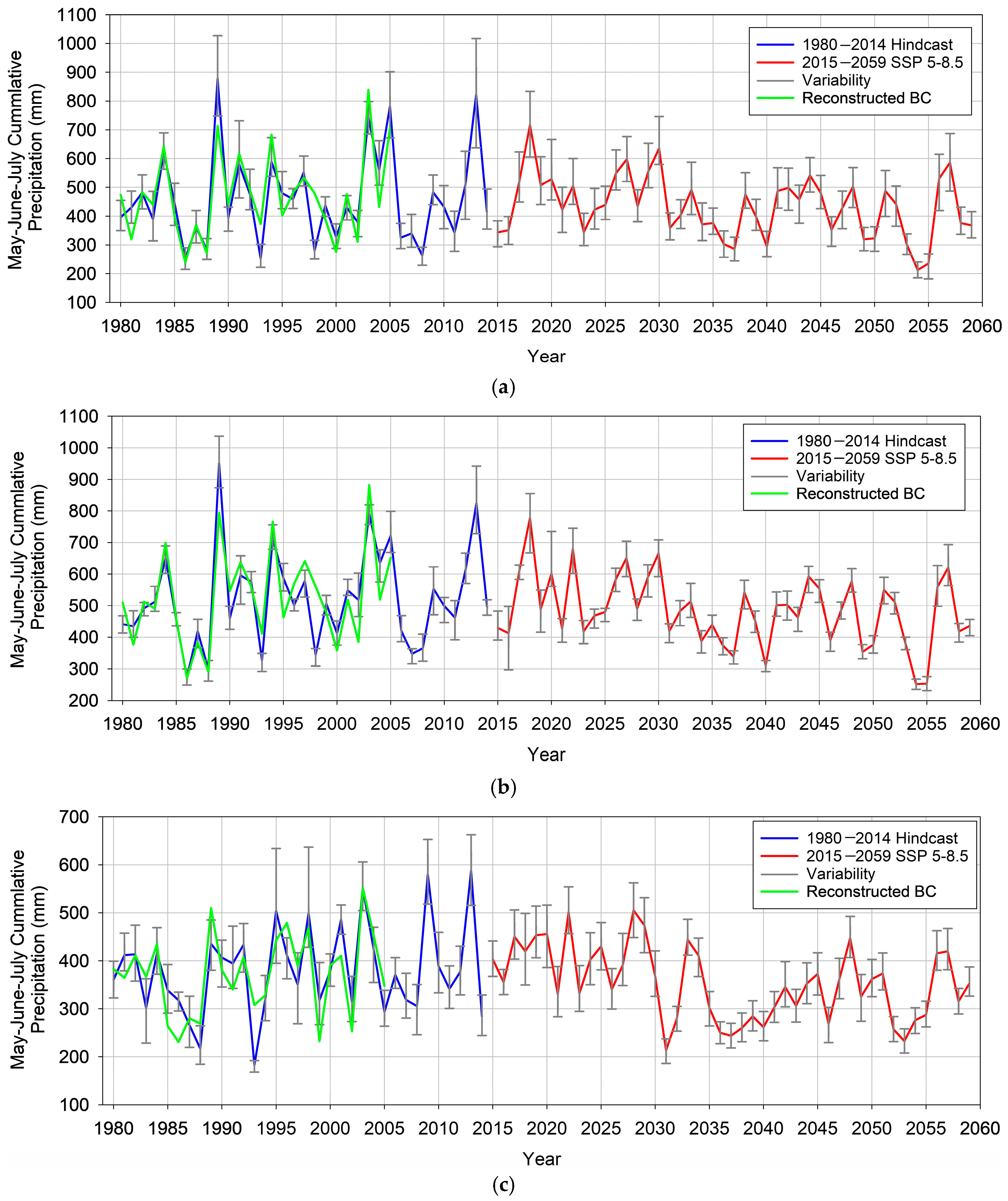
Annual cumulative MJJ precipitation hindcast (1980 to 2014) and SSP 5–8.5 forecast (2015 to 2059) data were combined to evaluate projected changes relative to the observed period (
Figure 4). For the period of overlap (1980 to 2005), the bias-corrected scPDSI-based reconstruction is overlaid on the hindcast data to illustrate model performance.
Reconstruction performance was strong across all three watersheds (
Table 1). For the precipitation reconstructions, the coefficient of determination (R
2) and predicted R
2 (R
2P) were consistently higher than those of the streamflow reconstructions. This is most likely associated with the longer overlap period used for streamflow reconstructions. Overall, these values indicate limited model degradation during cross-validation and suggest stable predictive skill despite the relatively short calibration period. Multicollinearity was minimal, with VIF values between 1.0 and 1.3. Durbin-Watson statistics (1.8–2.2) indicated little evidence of residual autocorrelation.
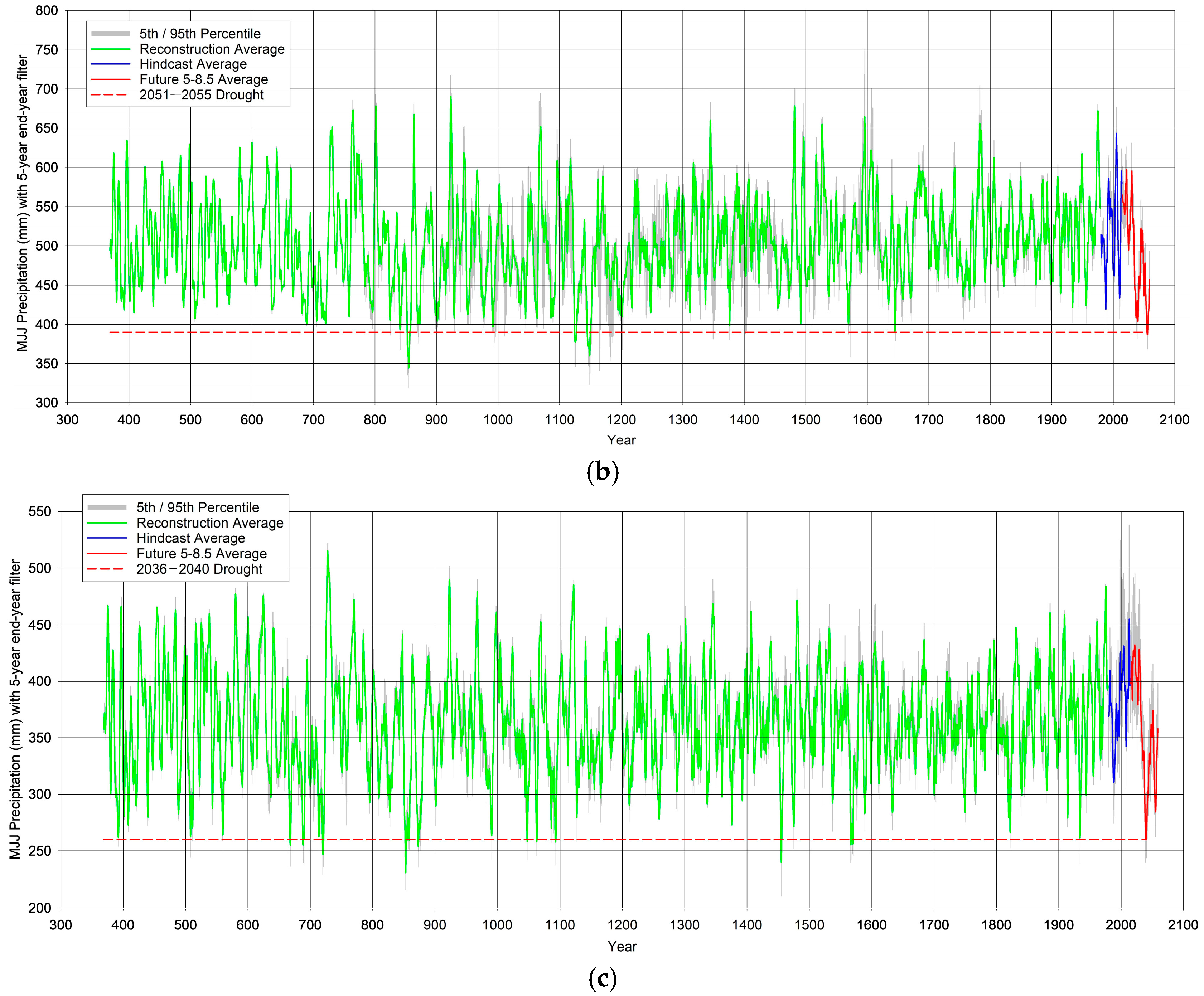
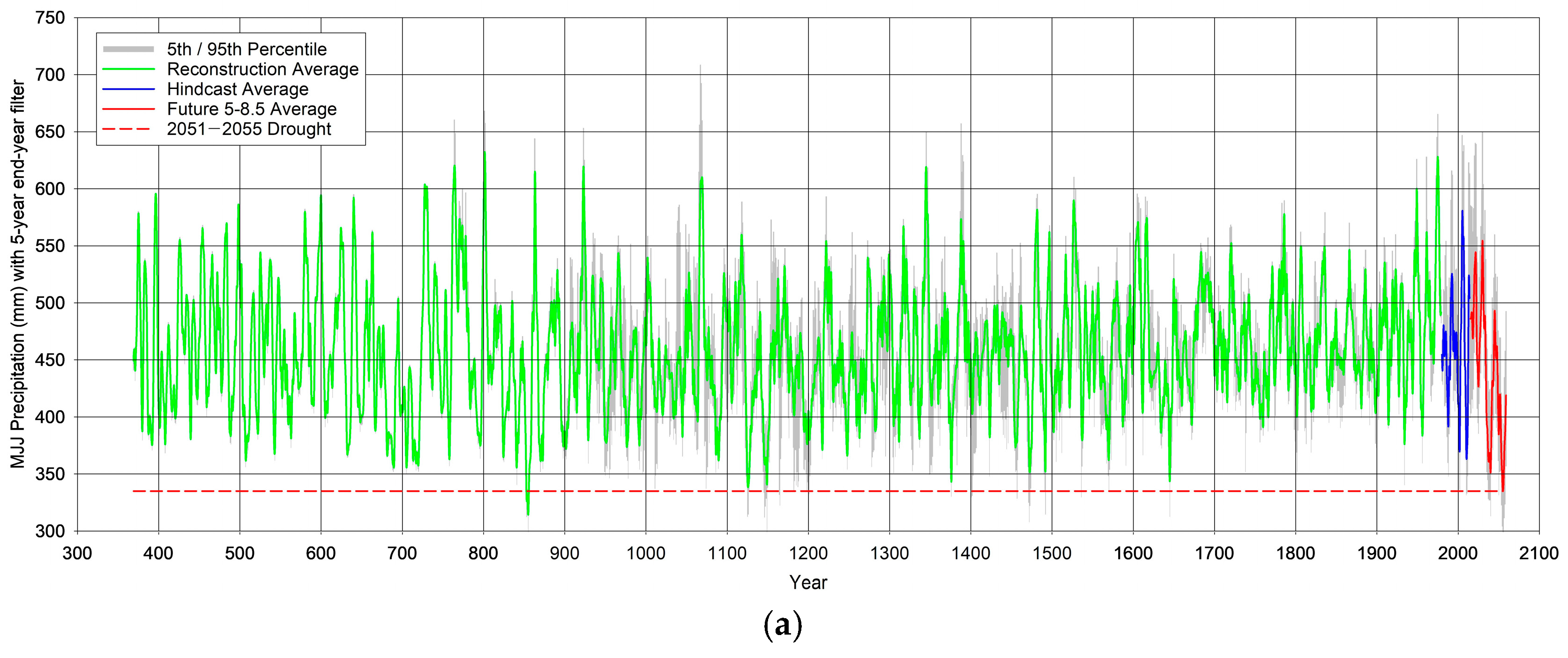
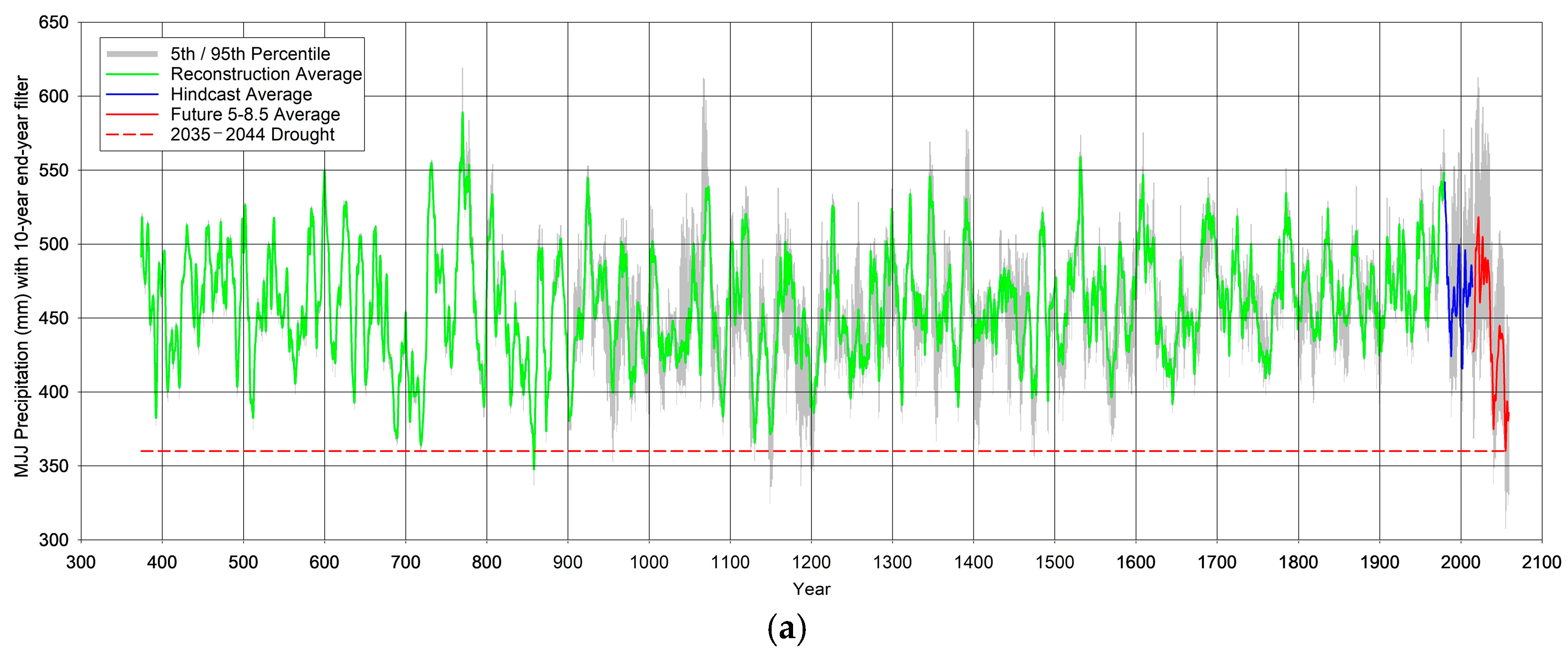
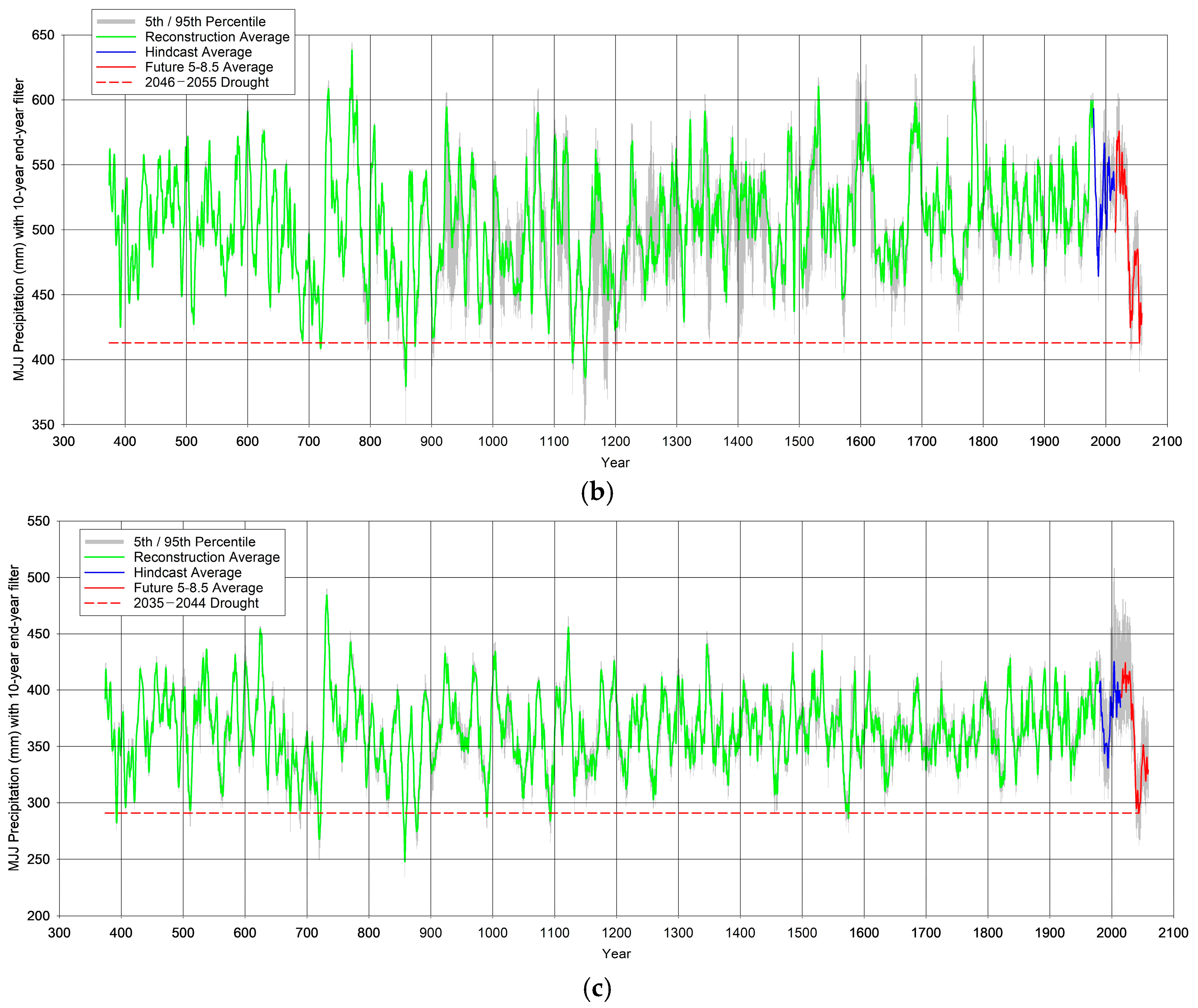
Reconstructed (paleo), hindcast, and SSP 5–8.5 precipitation were merged to produce multi-century timelines for each watershed. To evaluate multi-year drought persistence, 5-year and 10-year end-year moving averages were applied (
Figure 5 and
Figure 6). Across all watersheds, SSP 5–8.5 projections indicate a marked decline in MJJ precipitation during portions of the 21st century relative to the 1980–2014 hindcast. Under both the 5-year and 10-year filters, the lowest projected drought (dashed line in
Figure 5 and
Figure 6) exceeds any drought observed in the instrumental hindcast record. However, when placed in the context of the reconstructed paleo record, several historical multi-year droughts exceed the magnitude of any projected “worst-case” future event. This pattern is consistent across the LTN, NAN, and SFH watersheds and is evident under both smoothing windows. Thus, while SSP 5–8.5 projections suggest drought conditions more severe than those observed in recent decades, the paleo record demonstrates that droughts of comparable or greater magnitude have occurred over the past several centuries.
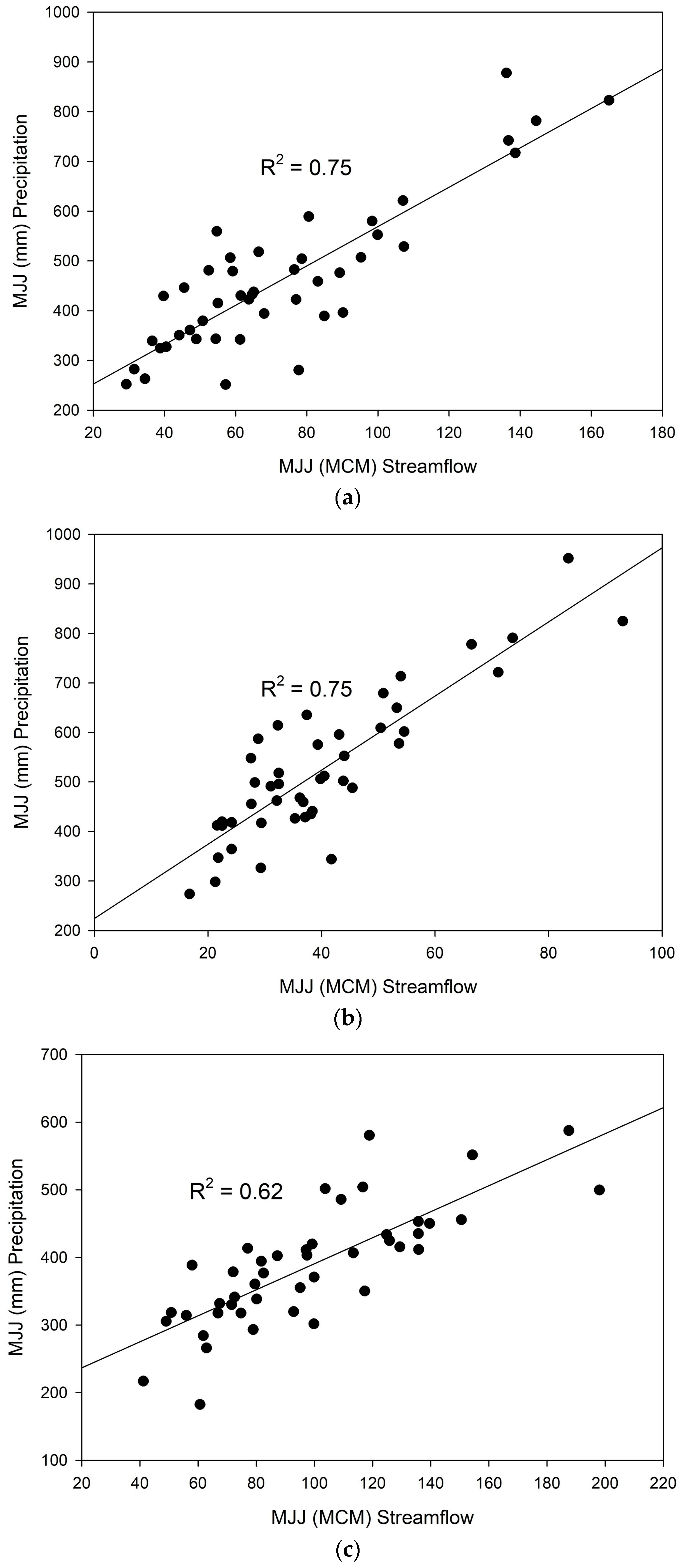
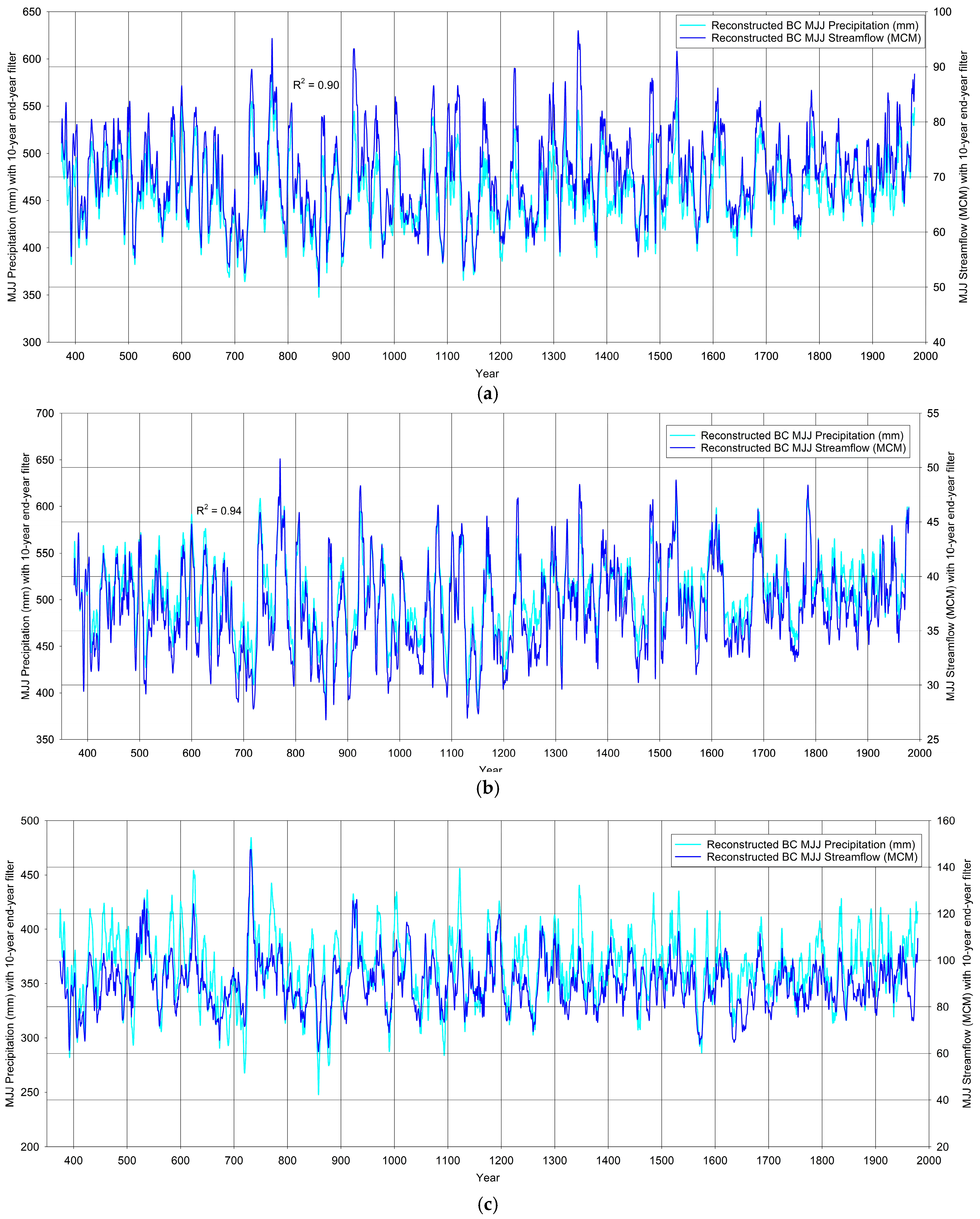
Because of the limited calibration overlap period for precipitation reconstructions, MJJ streamflow was correlated with precipitation (
Figure 7) and independently reconstructed for each watershed (
Table 2) (
Figure 8). Using the NAN watershed as an example, extreme drought end-years can be matched to compare how the models identify periods of low flow and precipitation. Under the 10-year filter, the most extreme drought end-years (858, 1151, 1130, and 719, ranked 1, 2, 3, and 4, respectively) were identical for both precipitation and streamflow. Importantly, each of these reconstructed droughts exceeded the magnitude of the lowest projected future SSP 5–8.5 drought. This agreement in drought ranking and persistence between independently derived precipitation (
Figure 7b) and streamflow (
Figure 8b) reconstructions strengthens confidence in precipitation models, particularly given the relatively short overlap period used for calibration. This consistency indicates that the precipitation reconstructions capture hydrologically meaningful variability and are not merely statistical artifacts of the calibration interval. The LTN watershed exhibits a similar correlation between streamflow and precipitation. The SFH watershed has the largest land area of the three, so the lower R
2 may be associated with a lag between precipitation and streamflow response.
4. Discussion
The current research developed multi-century records of spring-early summer (MJJ) precipitation in three unimpaired TVA watersheds with tree ring-based proxies (NADA scPDSI) and future precipitation based on SSP 5–8.5 projections. This combination of historic and predicted precipitation data is a novel approach for this region, allowing high and low extremes in seasonal rainfall to be examined over a large timeframe within these basins. Our results show that while SSP 5–8.5 projections indicate droughts of severity exceeding the observed record, comparable and more severe multi-year droughts occurred repeatedly in the reconstructed record. Streamflow reconstructions have become more prevalent in the SEUS in recent years, but this study is amongst the first to provide insights into the long-term extremes in precipitation for past and future conditions.
Tree ring-based streamflow reconstructions have proven extremely useful for improving the existing understanding of long-term hydrological trends and wet/dry periods in this region of the SEUS [
23,
24]. Quantitative reconstructions of precipitation are less common, and the SEUS has only a few studies of this kind [
7,
25]. A common factor prohibiting precipitation reconstructions is an insufficient period of record for observed data, which the watersheds examined in this paper were not exempt from. However, our findings revealed that even with a relatively small period of overlap between the observed MJJ precipitation record and tree ring-based proxy data, the reconstructed spring-early summer precipitation data performed similarly to an MJJ streamflow reconstruction with an increased period of overlap in identifying extreme droughts. This consistency in temporal variability between the two reconstruction methods lends an increased confidence in the reliability of the MJJ precipitation reconstructions, even with the relatively small overlap periods. These findings highlight strong potential for this approach to be used in other basins, particularly when there is limited overlap between data sources, such as low-order streams in areas with little development.
The development of these comprehensive precipitation timelines contextualizes the “worst-case” future droughts predicted through the SSP 5–8.5 data. While this climate scenario predicts droughts of a magnitude exceeding the observed record in each of the watersheds in this study, the reconstructed paleo records indicate that this level of drought is not unprecedented. Furthermore, the paleo reconstruction expands what would previously have been considered the natural variability envelope for precipitation in this region. This is not indicative of low risk associated with this climate scenario with regard to drought or precipitation, but could instead indicate the SSP 5–8.5 conditions driving the system toward more frequent occupation of the dry tail of the natural range of precipitation, even if the magnitudes themselves are not novel. This has important implications for water resource planning in TVA watersheds and warrants further investigation.
This study has a few key limitations that may affect the interpretation of the findings. One limitation that has already been discussed is the small period of overlap between data sources for precipitation and tree-ring-based proxies. While such short overlap periods can introduce uncertainty, our cross-validation approaches of comparing the precipitation reconstruction with an increased overlap record streamflow reconstruction and generating a series of precipitation reconstruction models mitigate this limitation. A potential area for further research expanding this idea lies in relating precipitation reconstructions in low-order or data-limited watersheds to more reliable markers, such as streamflow in downstream watersheds with greater data availability.
Another limitation of this study is its reliance on scPDSI as a proxy for summer precipitation. The scPDSI is highly sensitive to temperature, so the established relationship between tree ring growth and MJJ precipitation could change in climate warming scenarios. Specifically, since scPDSI accounts for potential evapotranspiration, temperature-induced stress under SSP 5–8.5 might decouple the relationship between tree growth and moisture availability, creating bias in the model or causing an exaggeration of drought intensity compared to the paleo-record. Consideration of other proxies, such as stratigraphic sediment cores, has been shown to provide insight into historic hydrologic extremes [
22]. Implementation of multiple physical indicators of historic precipitation trends may improve model skill, but the issue of small overlap periods would likely persist. Limiting the future precipitation data to SSP 5–8.5 only may also limit the findings in this paper, particularly in its interpretation. Future research may benefit from considering a range of climate scenarios (SSP’s) as opposed to the “worst-case scenario.”
By integrating observed records, tree ring-based paleo-hydrologic proxies, and SSP 5–8.5 climate projections, this study provides a multi-century perspective on spring-early summer precipitation variability in three unimpaired TVA watersheds. The results demonstrate that while projected future droughts exceed those observed during the instrumental period, similarly severe or more extreme multi-year droughts have occurred in the past, expanding the historical context for contemporary drought risk assessments. The consistency between precipitation and streamflow reconstructions, even in watersheds with limited observational overlap, supports the robustness of this approach and highlights its applicability in data-limited basins. Taken together, these findings underscore the value of long-term hydroclimatic reconstruction for contextualizing future climate projections and improving understanding of precipitation extremes in the SEUS.