
Article

Spatiotemporal Variability and Extreme Precipitation Characteristics in Arid Region of Ordos, China

1
College of Water Conservancy and Civil Engineering, Inner Mongolia Agricultural University, Hohhot 010018, China
2
Yinshanbeilu Grassland Ecohydrology National Observation and Research Station, China Institute of Water Resources and Hydropower Research, Beijing 100038, China
3
Institute of Pastoral Hydraulic Research, Ministry of Water Resources, Hohhot 010020, China
4
Ordos River and Lake Protection Center, Ordos 017010, China
5
Ordos Shengyuan Water Group Co., Ltd., Ordos 017299, China
6
Yellow River Great Bend Region Eco-Environmental Change and Integrated Management Field Observation and Research Station of Inner Mongolia, Hohhot 010020, China
*
Authors to whom correspondence should be addressed.
Hydrology 2026, 13(2), 68; https://doi.org/10.3390/hydrology13020068

Submission received: 24 December 2025 / Revised: 6 February 2026 / Accepted: 6 February 2026 / Published: 11 February 2026
(This article belongs to the Special Issue Global Rainfall-Runoff Modelling)

Abstract

Studying the precipitation characteristics and extreme precipitation events in arid and semi-arid regions is of significant baseline value for optimizing water resource allocation and utilizing precipitation resources. Utilizing multi-scale ERA5 precipitation data from 1960 to 2023, this study focuses on the typical arid and semi-arid region of Ordos as the research area. Precipitation exceeding the 90th percentile was defined as extreme precipitation, and three indices—extreme precipitation amount (EPA), extreme precipitation frequency (EPF), and extreme precipitation proportion (EPP)—were used to investigate its characteristics in the study area. Additionally, three typical extreme precipitation events in recent years were analyzed to study the precipitation process of these typical events. The main results are as follows: The annual average precipitation in the study area ranges from 170.3 to 606.1 mm, with an average of 378.5 mm, which has been on a declining trend over the years, with an average annual decrease of 1.2 mm. Overall, 70% of the precipitation is concentrated in the months of June to September. The daily average of extreme precipitation in Ordos is 18.7 mm and the annual average number of extreme precipitation days ranges from 8 to 13 days, with an average annual number of extreme precipitation days being 11. Extreme precipitation accounts for more than 50% of the total precipitation. Among all areas analyzed, Jungar Banner demonstrates the greatest vulnerability to intense rainfall events. Typical extreme precipitation events in Ordos are characterized by short-duration heavy rainfall, with the rain peak ratio coefficients of the three events ranging from 0.62 to 0.72, exhibiting a distinct “post-peak” pattern. These findings provide scientific support for water resource management and disaster prevention strategies in arid and semi-arid regions.

1. Introduction

Against the backdrop of global climate warming, extreme weather events are becoming increasingly frequent, posing significant threats to human life and property [1,2]. As a crucial component of the global material and energy cycles, changes in precipitation can directly impact ecosystems and hydrological processes. Insufficient precipitation can lead to drought events, adversely affecting vegetation growth, while excessive precipitation can result in flooding hazards and trigger soil erosion [3,4]. In the context of increasingly severe climate change, research on precipitation and extreme precipitation events has become increasingly vital. As atmospheric water content continues to rise, identifying the manifestations of climate change in atmospheric processes has become increasingly critical. However, due to regional disparities in geographical location, atmospheric circulation, and climatic conditions, precipitation amounts and distribution patterns exhibit significant spatial variability [5,6,7]. Therefore, investigating regional-scale precipitation variability and extreme precipitation events is essential for environmental adaptation, sustainable water resource management, and mitigating drought and flood risks [5,8,9].
According to the Sixth Assessment Report (AR6) of the Intergovernmental Panel on Climate Change (IPCC), extreme precipitation events have continued to increase globally, leading to more severe and more frequent flood disasters [1,9,10,11,12,13]. A growing body of research indicates that both the frequency and intensity of extreme precipitation are likely to keep rising in the future. On most continents, including North America, Europe, Asia, and parts of South America, significant increases in the frequency and intensity of heavy precipitation events have already been observed, posing heightened flood risks and increasing pressure on infrastructure and socio-economic systems. Meanwhile, in some drought-sensitive regions such as Africa and Australia, a pattern of more pronounced alternation between extreme wet and dry conditions is emerging, further affecting agricultural production, urban water security, and economic development [14,15]. China, with its complex topography, vast arable land, and diverse and concentrated population, is highly vulnerable to the impacts of extreme precipitation [16,17,18]. In recent decades, numerous studies have examined precipitation variability across northern China and the Inner Mongolian Plateau, mainly focusing on long-term trends in annual and seasonal precipitation, drought evolution, and general climate variability based on station observations [19,20]. These studies have improved the understanding of regional drying/wetting tendencies and seasonal shifts in precipitation regimes [15,21]. However, research specifically targeting extreme precipitation characteristics in arid and semi-arid areas of Inner Mongolia remains relatively limited.
The Ordos region, located in the transition zone between the Loess Plateau, the Mongolian Plateau, and arid northwestern China, is characterized by fragile ecosystems, scarce water resources, and high sensitivity to hydroclimatic extremes [22]. Previous studies in Ordos have mainly focused on drought monitoring, vegetation responses to climate change, and long-term precipitation trends [23,24,25]. Although some research has touched on heavy rainfall events or individual extreme indices, systematic investigations of multi-scale extreme precipitation characteristics, including their temporal evolution, spatial distribution, and typical event processes, are still insufficient [26,27]. In particular, few studies have combined long-term reanalysis datasets with event-based analyses to examine how extreme precipitation manifests and evolves in this arid and semi-arid environment.
Climate change exacerbates hydrological risks in the Ordos region, yet a critical research gap persists in understanding the mechanisms and impacts of extreme precipitation in this arid to semi-arid area. Such extremes often trigger disproportionate impacts, including flash floods, severe soil erosion, and damage to water conservancy infrastructure [28,29,30]. Compounding these acute events is a persistent decline in annual precipitation, which has driven a systemic ecological degradation. This is manifested as reduced grassland vegetation cover, a decline in high-quality forage grass, expansion of desertified land, shrinkage of wetlands and Yellow River tributaries, falling groundwater levels, and a sharp loss of biodiversity. Together, these trends form a vicious cycle of “reduced precipitation → ecological degradation → diminished water retention capacity” [31,32,33]. The resulting ecological decline has subsequently impacted socio-economic systems, reducing livestock carrying capacity, undermining herders’ livelihoods, degrading irrigated farmland quality, and ultimately constraining sustainable regional development.
At present, Ordos has preliminarily developed a series of adaptation and mitigation measures, mainly including the promotion of water-saving agriculture and high-efficiency irrigation technologies, grassland stocking balance management and ecological restoration projects, water-saving transformation of the energy industry, construction of flood control and disaster reduction infrastructure, as well as the intensive allocation of groundwater and Yellow River water resources [34,35]. However, most of these measures are designed to address single extreme events and show insufficient coupling with the spatiotemporal variability characteristics of regional extreme precipitation, meaning their targeting and effectiveness still need to be further optimized based on refined studies of extreme precipitation [36]. Therefore, systematically assessing the variability of extreme precipitation and typical events, and revealing the long-term evolution patterns of precipitation, can not only fill gaps in regional research but also provide scientific support for improving regional disaster prevention and mitigation strategies, optimizing water resource allocation, and enhancing the climate adaptability of ecological and socio-economic systems. This work thus holds important theoretical and practical significance.
To address these issues, this study investigates the spatiotemporal variability of precipitation and extreme precipitation in Ordos from 1960 to 2023 using ERA5 reanalysis data. Extreme precipitation thresholds are defined using a percentile-based method, and multiple indices are employed to quantify both the intensity and frequency of extreme events. Furthermore, typical precipitation events are analyzed to identify peak timing and movement characteristics of precipitation systems. The objectives of this study are to reveal the long-term spatiotemporal patterns of precipitation in Ordos; characterize the variability and distribution of extreme precipitation at multiple scales; and analyze the features of representative extreme precipitation events. The methodological innovation of this study lies in establishing a multi-indicator evaluation system for arid and semi-arid regions, which includes extreme precipitation amount, frequency, and proportion, and quantifying the precipitation characteristics of the study area through typical precipitation events.

2. Materials and Methods

2.1. Study Area

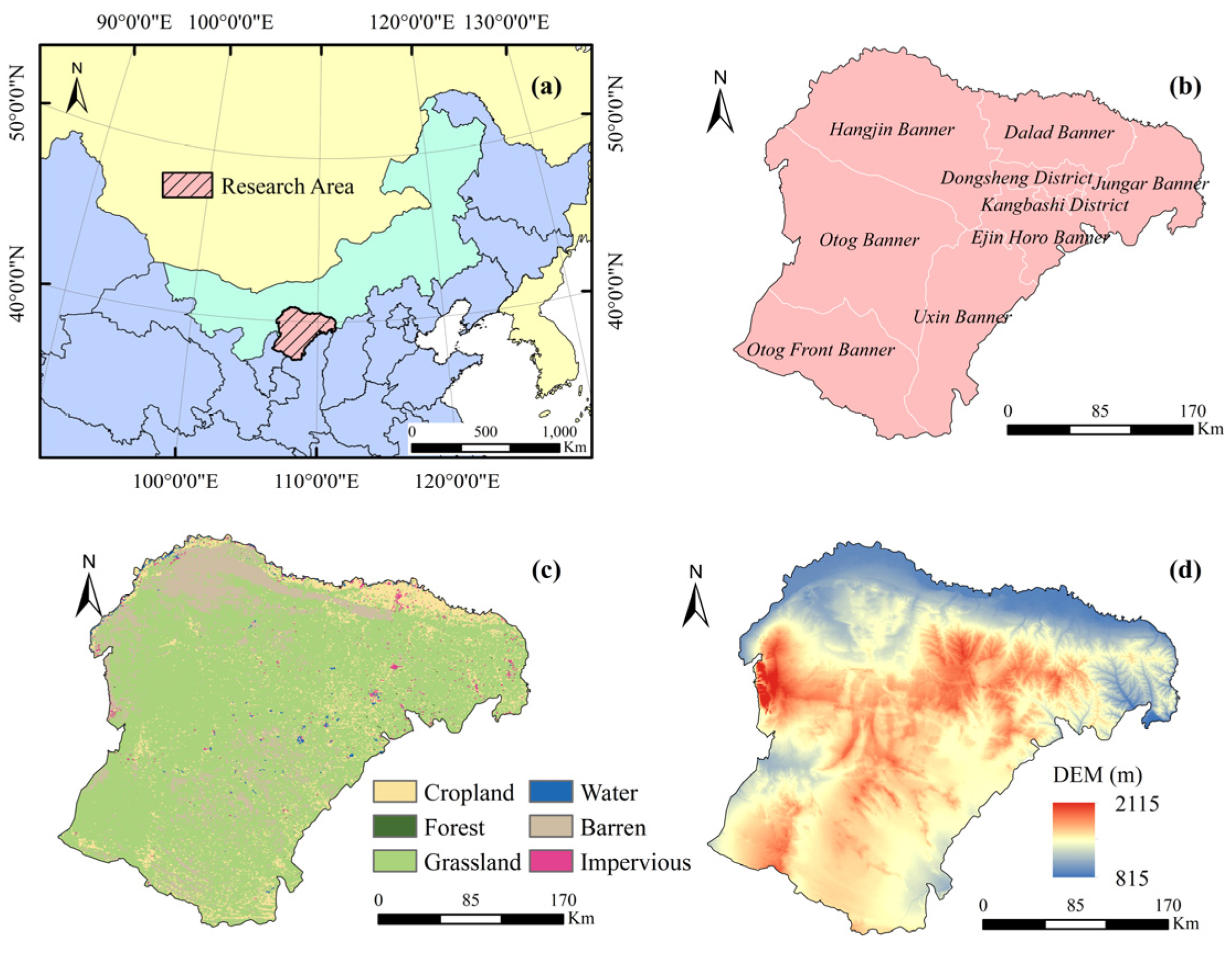
This study focuses on Ordos, located in the southwestern part of the Inner Mongolia Autonomous Region (37°35′24″~40°51′20″ N, 106°42′40″~111°27′20″ E), at the geographical center of the Ordos Plateau. An overview map of this research is shown in Figure 1. The topography of Ordos is characterized by a lower eastern region and a higher western region. The eastern part consists of hilly and ravine terrain, while the western part is a high plain. The southern region is dominated by the Mu Us Desert, the northern area includes the Kubuqi Desert and the plains along the Yellow River, and the central region is a wavy plateau. Ordos experiences a semi-arid continental climate with distinct seasons. The annual average temperature ranges from 5.3 °C to 8.7 °C, with the coldest monthly average temperature between −10 °C and −13 °C and the hottest monthly average temperature between 21 °C and 25 °C. The region experiences high annual evaporation, ranging from 2000 to 3000 mm. The Ordos region belongs to a temperate arid to semi-arid continental climate and is generally classified as BSk (cold semi-arid climate) under the Köppen–Geiger climate classification system.

2.2. Data Source and Preprocessing

The data required for this study include DEM (Digital Terrain Model) elevation data and hourly precipitation raster data from 00:00 on 1 January 1960, to 23:00 on 31 December 2023. The DEM elevation data were downloaded from the NASA Earth Science Data website with a spatial resolution of 12.5 m, while the precipitation data were obtained from ERA5 hourly raster data. The information is shown in Table 1.
The ERA5 precipitation dataset, comprising cumulative values, was first processed into hourly measurements using MATLAB (v2024) algorithms. Since the original data were recorded in meters, a unit conversion to millimeters was performed to align with the study’s standardized metrics. The ERA5 data were spatially resampled using the bi-linear interpolation method (a spatial resampling technique) to enhance spatial resolution, converting the original 0.1° × 0.1° grid to a 1 km × 1 km grid to meet the requirements of higher-resolution spatial analysis, ensuring compatibility with higher-resolution analyses. Subsequently, the dataset was further processed in MATLAB (v2024) to derive monthly and annual precipitation aggregates, facilitating temporal analysis.

2.3. Research Methods

2.3.1. Precipitation Trend Analysis

The precipitation trend in the study area was analyzed using the Theil–Sen median analysis combined with the Mann–Kendall (MK) test method. The Theil–Sen median analysis is a robust non-parametric statistical method for trend analysis [39], and its calculation formula is as follows:
S P r e = M e d i a n ( P r e j P r e i j i )  
where P r e j and P r e i represent the precipitation amounts in the j -th and i -th months, respectively, and S P r e denotes the trend of precipitation. When S P r e > 0, it indicates an increasing trend in precipitation; when S P r e = 0, precipitation remains unchanged; and when S P r e < 0, it indicates a decreasing trend. The greater the absolute value of S P r e , the more significant the trend change.
Since the Theil–Sen median method lacks statistical significance testing for trend analysis, the MK test is used for evaluation. The MK test is a non-parametric statistical method used to determine whether there is a significant trend in a time series. The MK test formula is as follows:
S = i = 1 n 1 j = i + 1 n s g n ( P r e j P r e i )
where
s g n ( P r e j P r e i ) = { 1                             P r e j > P r e i 0                             P r e j = P r e i 1                         P r e j < P r e i               i < j
And the variance of S is
V a r ( S ) = n ( n 1 ) ( 2 n + 5 ) 18
where S is the test statistic, n is the length of the time series, and s g n is the sign function. V a r ( S ) is the variance. When n ≥ 10, the distribution of the statistic S approximates a standard normal distribution, and the trend test uses the test statistic Z . The length of the time series in this study is 63 years (1960–2023). After standardizing the test statistic, the calculation formula is as follows:
Z = { S V a r ( S )                                             S > 0                 0                                                             S = 0 S + 1 V a r ( S )                                             S < 0
At different significance levels, the threshold for the test statistic Z is set to determine whether the trend is statistically significant. Specifically, when | Z | > 1.96, it indicates that the trend has passed the 95% confidence level significance test.

2.3.2. Determination of Extreme Precipitation Threshold

The calculation methods for the Extreme Precipitation Threshold (EPT) generally include the fixed threshold method, the percentile method, and the extreme value distribution fitting method [40,41]. The fixed threshold method does not account for the statistical distribution or temporal–spatial variability of precipitation and lacks flexibility across different regions and climatic backgrounds, which may lead to biases in identifying extreme events [42]. The extreme value distribution fitting method, although theoretically robust, requires complex statistical procedures and large sample sizes; moreover, uncertainties in parameter estimation may arise due to data limitations in this study [43]. Considering these limitations, the percentile method was adopted in this study because it is distribution-independent, regionally adaptable, and widely used in extreme climate research [44,45]—notably, it is also the core methodological basis of the commonly used extreme precipitation framework proposed by the Expert Team on Climate Change Detection and Indices (ETCCDI). As a globally recognized standard for extreme climate event identification, ETCCDI primarily uses percentile-based thresholds (e.g., 95th and 99th percentiles, denoted as R95p and R99p) to define extreme precipitation, with a consistent requirement of a 30-year or longer reference period to ensure statistical robustness [46]. Specifically, daily precipitation ≥ 0.1 mm during 1960–2023 was ranked in ascending order, and the precipitation amounts corresponding to the 90th, 95th, and 99th percentiles were defined as the EPTs [47]. Based on ERA5 reanalysis data, both the amount and frequency of extreme precipitation were then calculated. The specific precipitation indices used in this study are listed in Table 2.

2.3.3. Wavelet Analysis

This study aims to investigate the long-term periodic characteristics of extreme precipitation in the study area. To this end, wavelet analysis was employed to analyze the frequency of extreme precipitation events. Wavelet analysis is a mathematical tool that decomposes a signal into a set of localized basis functions with finite temporal support and decaying energy, and it has been widely applied in climate and hydrological studies.
Wavelet analysis allows for a timescale decomposition of a signal, enabling the effective capture of local features at different temporal scales. This makes it particularly suitable for exploring multiscale and long-term evolution characteristics in hydrological time series. In hydrology, wavelet analysis has been extensively applied to reveal dynamic patterns in precipitation and other hydrological series [48].
For the precipitation time series used in this study, the Morlet continuous wavelet function, which is commonly employed in hydrological research, was selected to analyze periodicity and variability [49]. Its mathematical expression is given by
ψ 0 ( η ) = π 1 / 4 e i ω 0 η e η 2 / 2
where ω 0 is the dimensionless frequency parameter and η is the dimensionless time variable. The normalized wavelet convolution of a time series is defined as
W n ( s ) = n = 0 N 1 x n ψ * [ ( n n ) δ t s ]
where ( * ) denotes the complex conjugate, s is the wavelet scale, and n is the local time index. The wavelet transform coefficients are complex, containing both real and imaginary parts, and the wavelet power is defined as the squared modulus, W n ( s ) 2 , which represents the local energy of the signal at different scales and times.

2.3.4. Validation of Precipitation Data Reliability

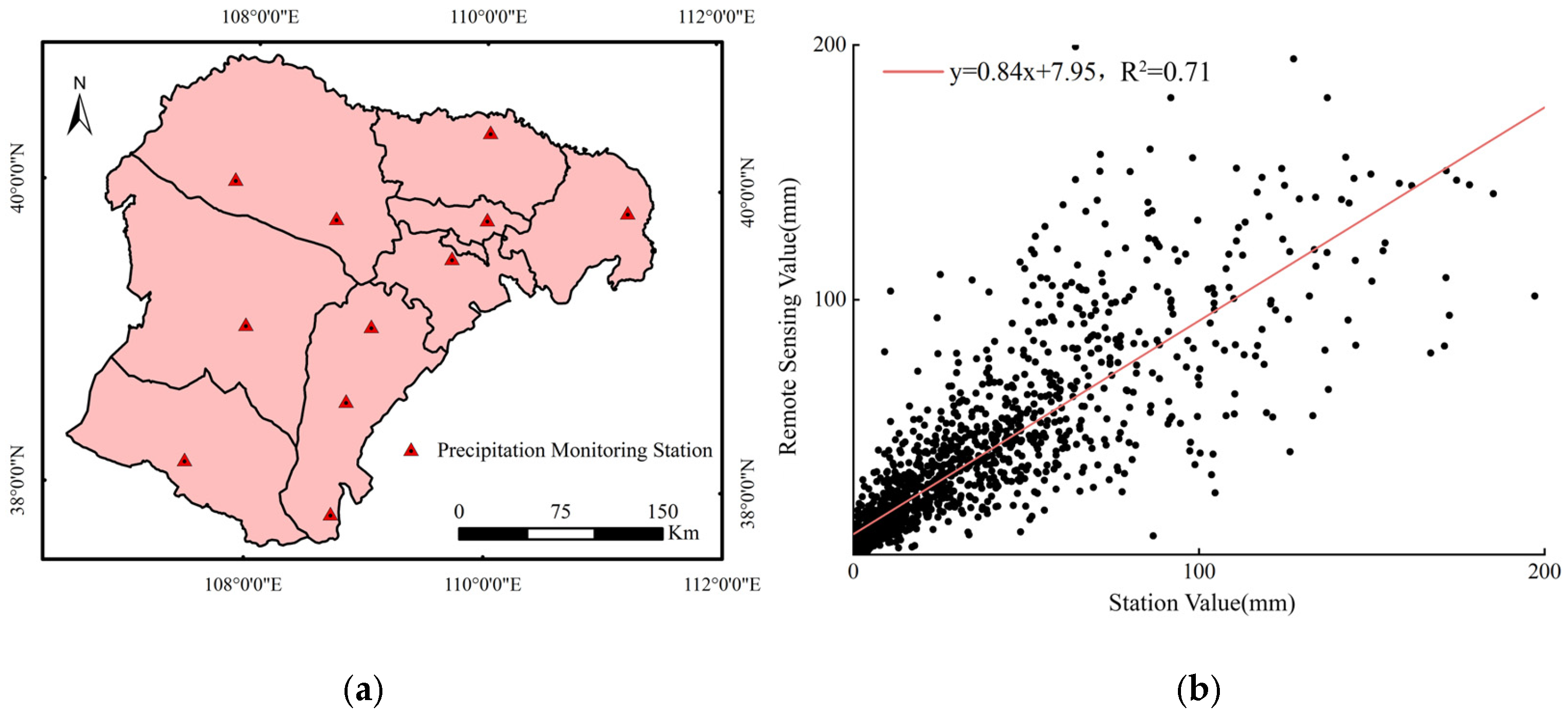
Multiple studies have demonstrated that the ERA5 precipitation data exhibits good applicability on a global scale, with its accuracy having been effectively validated across various regions [50,51]. The primary dataset used in this study is the precipitation remote sensing data from ERA5-Land. Despite its advantages of strong spatial continuity and a complete time series, the model algorithm and retrieval accuracy of this dataset are susceptible to interference factors such as atmospheric conditions, surface environments and regional geographic characteristics, which may induce inherent errors. In contrast, the precipitation data recorded by ground meteorological stations are obtained from real-time in situ observations and can reflect the actual precipitation conditions of the study area. Therefore, to verify the applicability of the aforementioned remote sensing dataset in the study area, precipitation data from 11 meteorological stations distributed across all banners and counties within the study area were adopted for validation analysis. The specific method is as follows:
The meteorological station data x = { x 1 , x 2 , , x n } and remote sensing data y = { y 1 , y 2 , , y n } were subjected to linear regression. For the precipitation data observed by meteorological stations and the remote sensing precipitation data in the i-th month, the following relationship exists:
y = a x + b
where y represents the remote sensing precipitation data; x   represents the precipitation data observed by meteorological stations. The slope a and intercept b are determined by the following least squares method to minimize the sum of squared residuals S :
S = i = 1 n ( y i ( a x i + b ) ) 2
The formula for calculating the coefficient of determination R 2 is as follows:
R 2 = 1 i = 1 n ( y i ( a x i + b ) ) 2 i = 1 n ( y i y ¯ ) 2

3. Results

3.1. Precipitation Data Reliability Validation Results

The remote sensing precipitation data used in this study were systematically validated against in situ observations from meteorological stations. These meteorological stations are scattered across the entire Ordos region, which can reflect well the accuracy of remote sensing precipitation data in various subregions of the study area. The information for each meteorological station is presented in Table 3. The validation results are shown in Figure 2b. It can be observed that the scatter points of all observed values and remote sensing retrieval values generally exhibit a significant positive correlation distribution trend, clustering closely around the diagonal without obvious systematic deviation. This indicates a high degree of consistency and fitting accuracy between the two, with the coefficient of determination ( R 2 ) reaching 0.71, which meets the data accuracy requirements for regional-scale rainfall characteristic analysis.
In order to make the validation results more robust, this study expanded the evaluation to include additional metrics such as PBIAS (Percent Bias), MAE (Mean Absolute Error), RMSE (Root Mean Square Error), and NSE (Nash–Sutcliffe Efficiency Coefficient) for supplementary validation. The results, as shown in Table 4, indicate excellent performance across all metrics. The PBIAS value is 11.36%, which falls within the acceptable accuracy range of ±20%, indicating only a slight positive bias that does not affect the overall characterization of precipitation features. The MAE is 11.79 mm, demonstrating a low average deviation between the remotely sensed retrievals and the measured values, confirming accurate estimation of precipitation magnitude. The RMSE is 20.75 mm; although it is slightly higher than the MAE due to its amplification effect on extreme deviations, the magnitude of the bias is limited and does not hinder the overall analysis of extreme precipitation patterns. The NSE is 0.6855, exceeding the reliable threshold of 0.6. Combined with the previously mentioned R 2 value of 0.71, this adequately demonstrates a high degree of fit between the remotely sensed precipitation data and ground-based measurements. The data effectively captures the spatial distribution and magnitude differences in precipitation in the study area, meeting the accuracy requirements for regional scale precipitation characteristic analysis. Furthermore, all extreme precipitation indices (e.g., EPT, EPA, EPF, and EPP) were derived statistically from the ERA5-Land precipitation dataset. The reliability of this parent dataset has been rigorously validated using the metrics mentioned above; consequently, further validation of these indices is deemed unnecessary.

3.2. Spatial and Temporal Distribution Characteristics of Precipitation

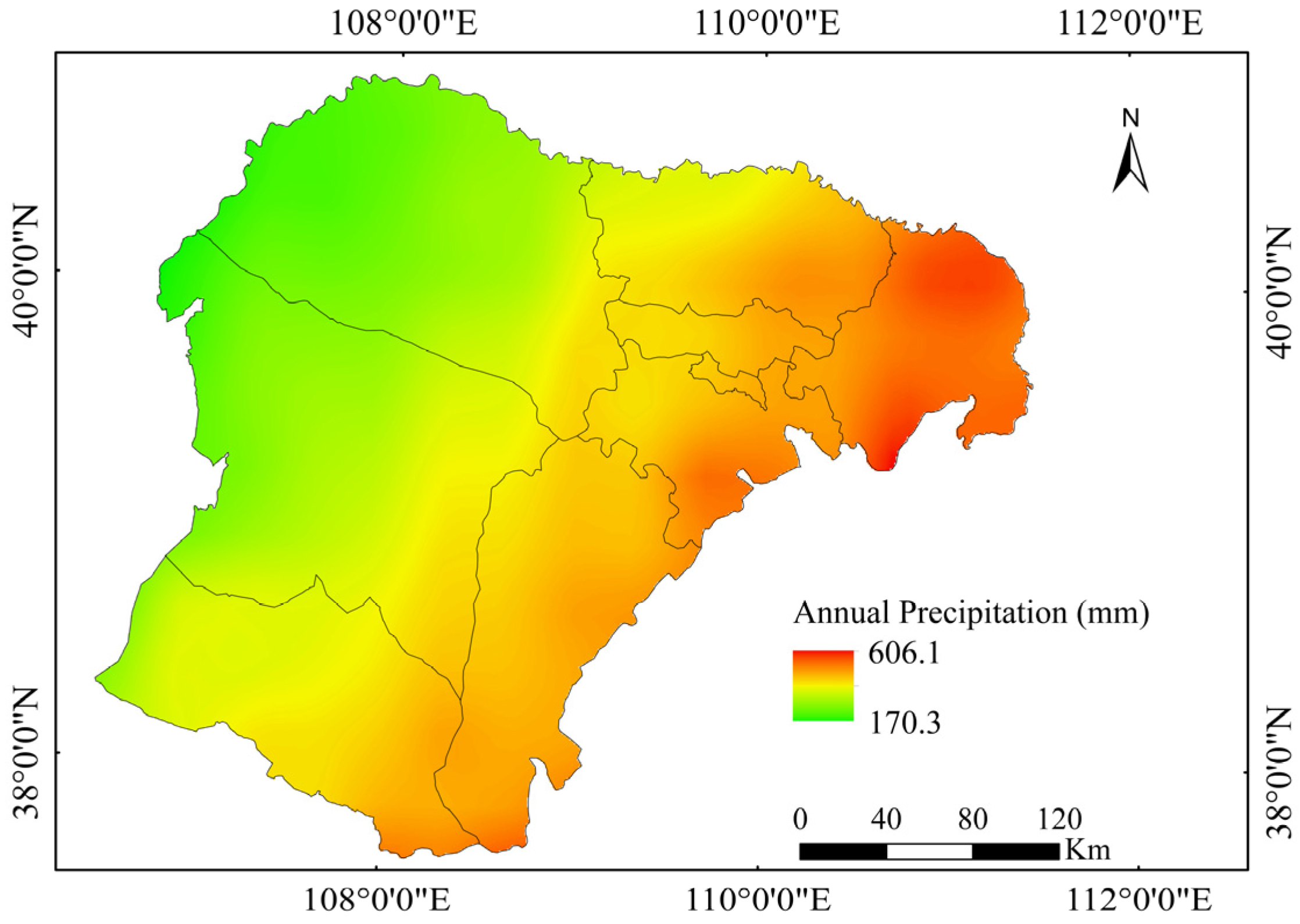
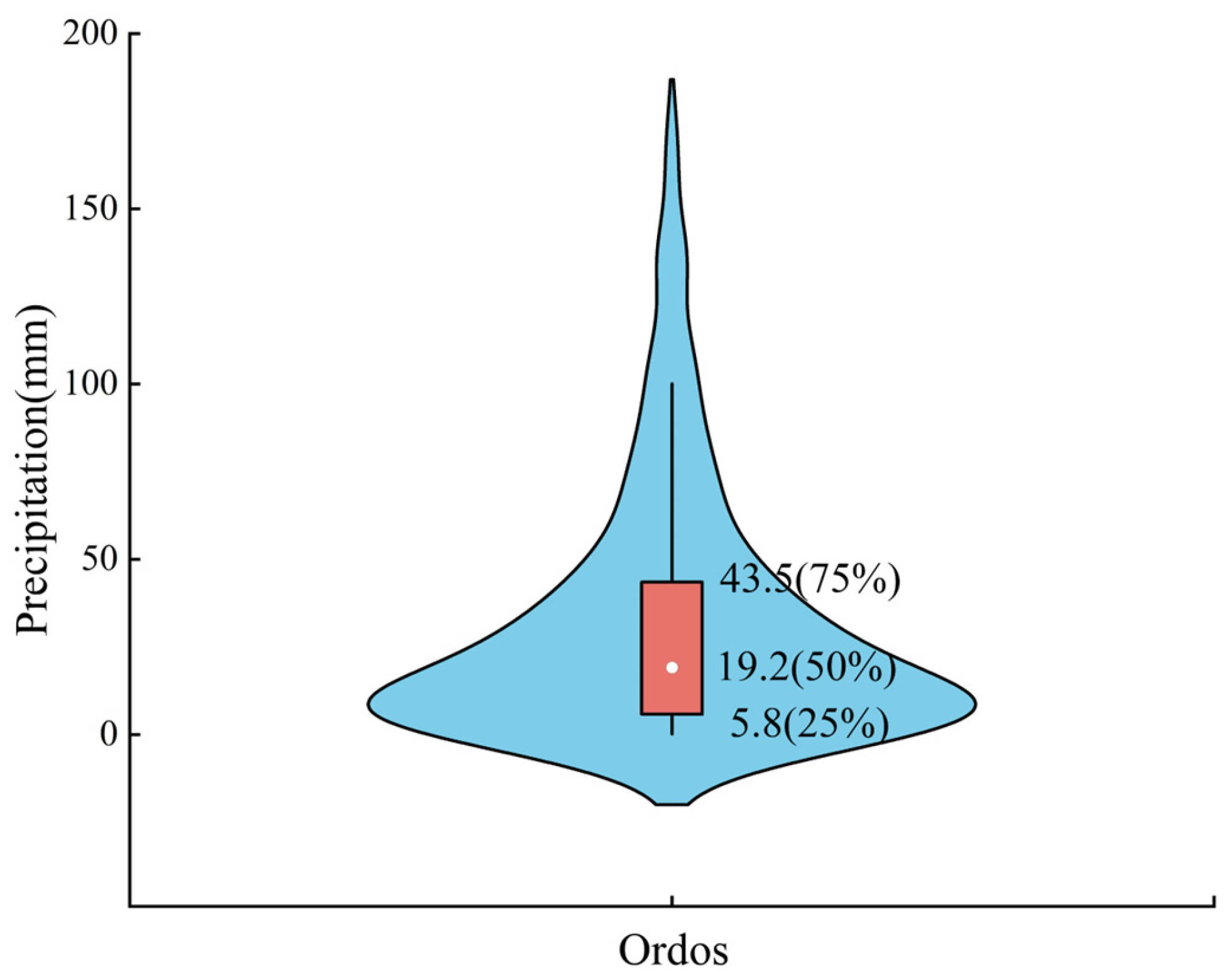
This study calculated the annual total average precipitation in Ordos from 1960 to 2023, and the results are presented in Figure 3. It can be observed that the precipitation in Ordos exhibits a distribution pattern of being higher in the east and lower in the west, with a distinct precipitation boundary located at Hangjin Banner, Otog Banner, and the eastern borders of Otog Front Banner. The multi-year average annual total precipitation in this region ranges from 170.3 mm to 606.1 mm, with an overall mean value of 378.5 mm; the area with the highest precipitation is located within the jurisdiction of Jungar Banner in eastern Ordos. Figure 4 shows the violin plot of monthly precipitation from 1960 to 2023. It can be seen that the monthly precipitation is mainly concentrated in the range of 5.8 mm to 43.5 mm, with a median value of 19.2 mm. According to the meteorological drought classification standard [52] issued by China, this region is a typical semi-arid area. The median precipitation value is around 20 mm, and the data shows a right-skewed distribution, indicating that the overall precipitation in this region is relatively low, although extreme precipitation events occasionally occur.
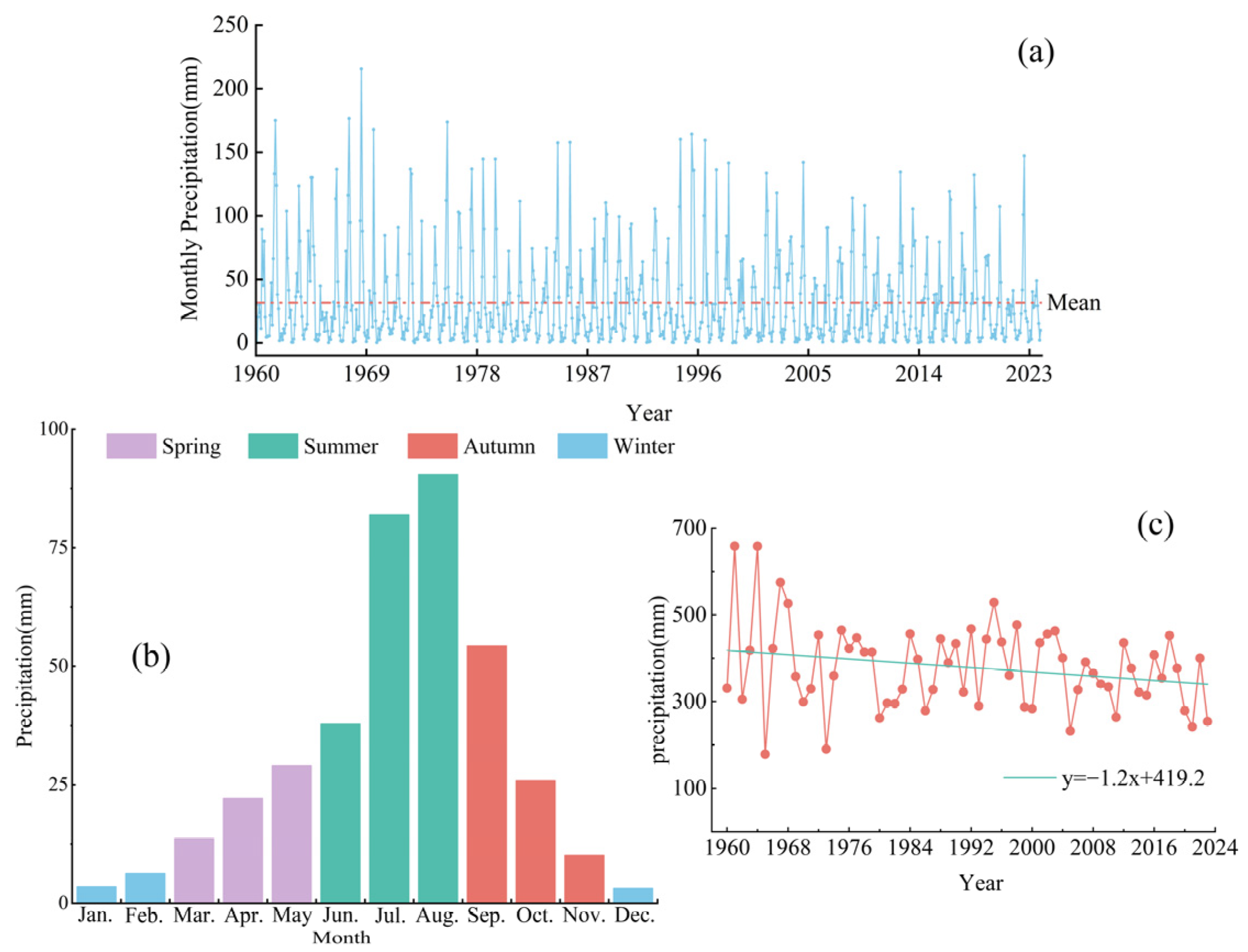
Figure 5 shows the temporal variation characteristics of annual total average precipitation in Ordos from 1960 to 2023. Figure 5a displays the monthly precipitation across Ordos. It can be observed that the monthly precipitation in Ordos ranges between 0.2 mm and 215.7 mm, with a multi-year monthly average of 31.6 mm. There were 53 months with precipitation exceeding 100 mm, with August 1968 recording the highest multi-year average value of over 200 mm, while December 2013 had the lowest multi-year average value of 0.2 mm. Figure 5b illustrates the multi-year average monthly precipitation for each month. The results indicate that the region exhibits distinct seasonal precipitation patterns, with rainfall concentrated primarily between June and September, accounting for 70% of the annual precipitation. August recorded the highest precipitation during this period. Figure 5c presents the temporal variation in annual precipitation from 1960 to 2023. The annual precipitation ranged between 178.7 mm and 658.8 mm, with an average value of 379.1 mm. Over the years, precipitation showed a fluctuating downward trend, with an average annual decline of −1.2 mm. The year with the highest precipitation was 1961 (658.8 mm), while the lowest was 1965 (178.7 mm). Overall, in recent years, the climate in Ordos has been trending towards aridity, but extreme precipitation events also occur from time to time.
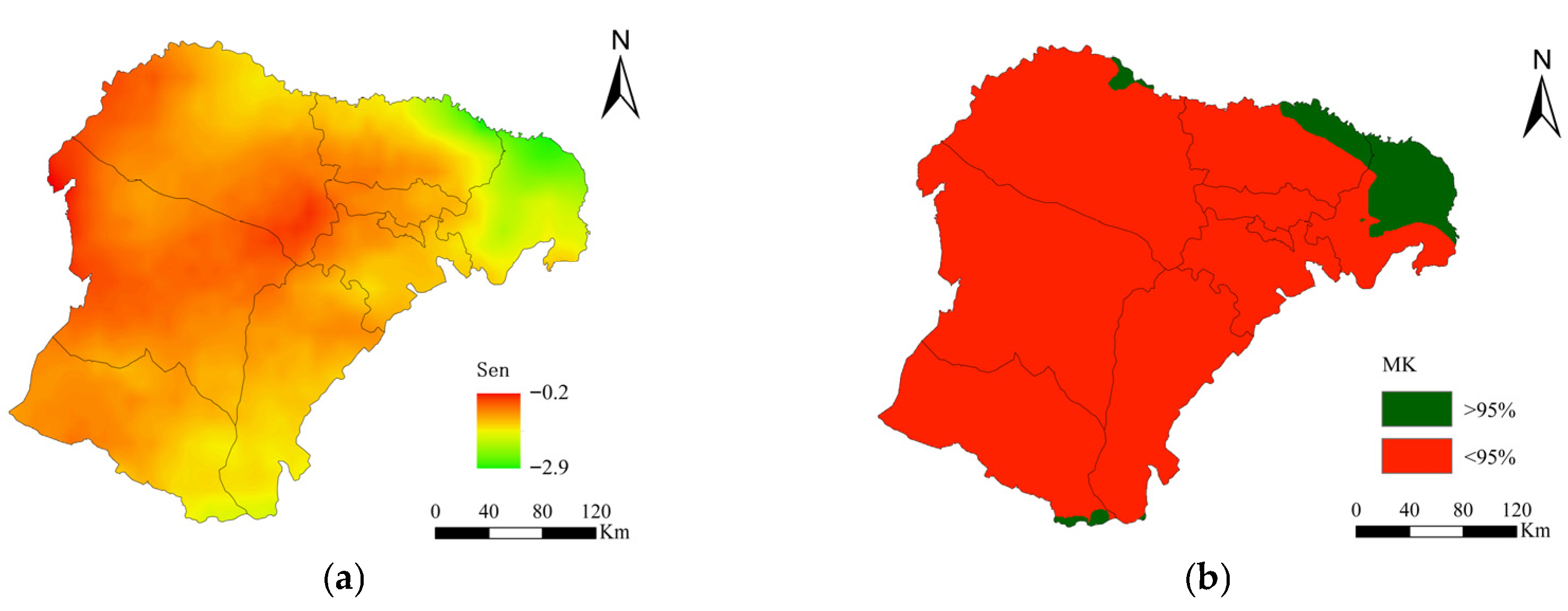
This study utilized Sen’s slope estimation and the MK test to analyze the spatial trend of precipitation changes in Ordos over multiple years, with the results shown in Figure 6. It was found that the Sen’s values for Ordos over the years range from −2.9 to −0.2 mm/a, with an average of −1.1 mm/a, indicating an overall decreasing trend in precipitation across the study area. Spatially, the trend of precipitation change is more significant in the northeastern part of the study area, specifically in Jungar Banner, and less so in the central and western parts. According to the results of the MK test, some areas in the northeastern and southern parts of the study area passed the 95% significance test, suggesting that the trend of precipitation change is not significant in most regions and may be related to other factors such as terrain and local climatic conditions.
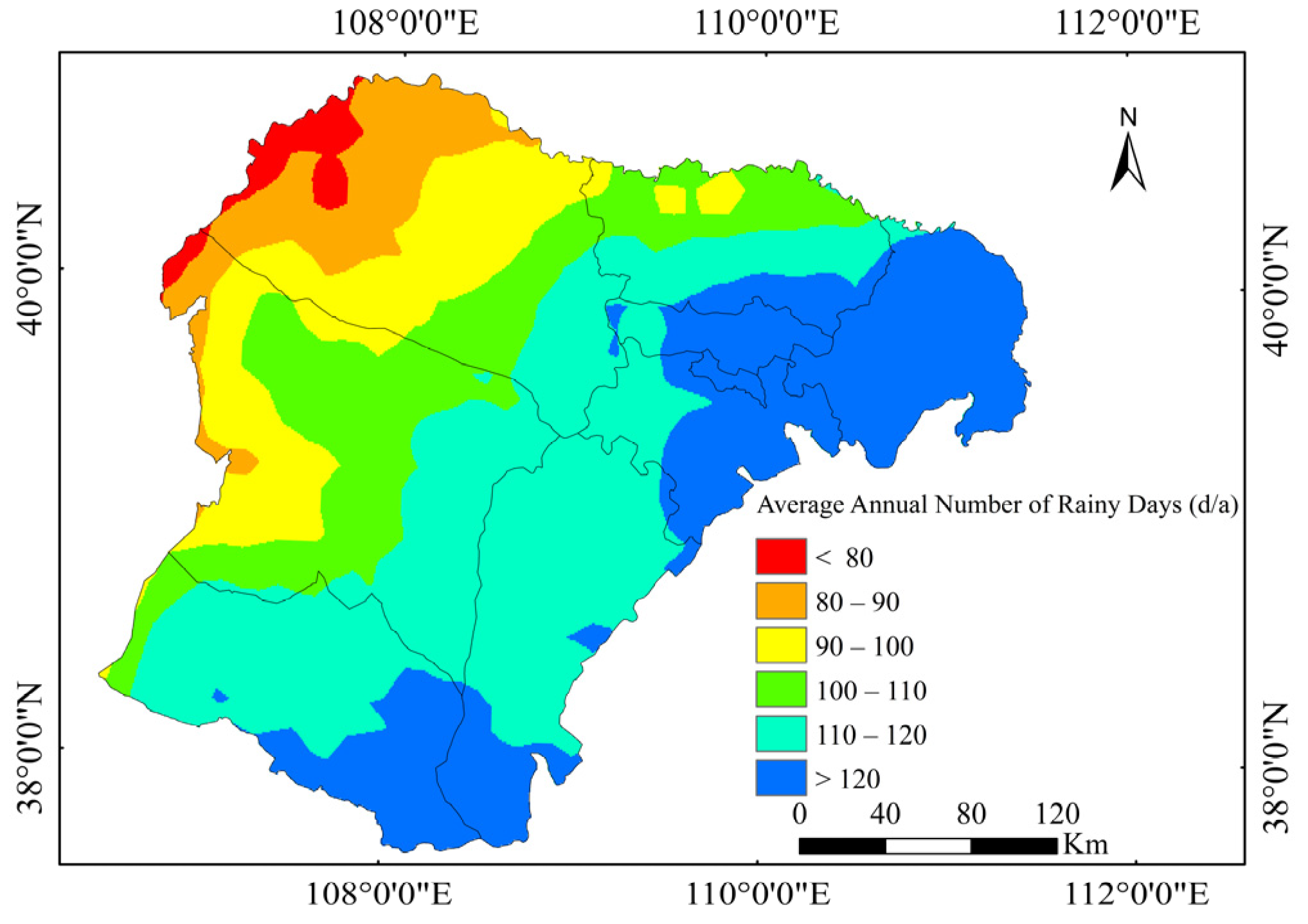
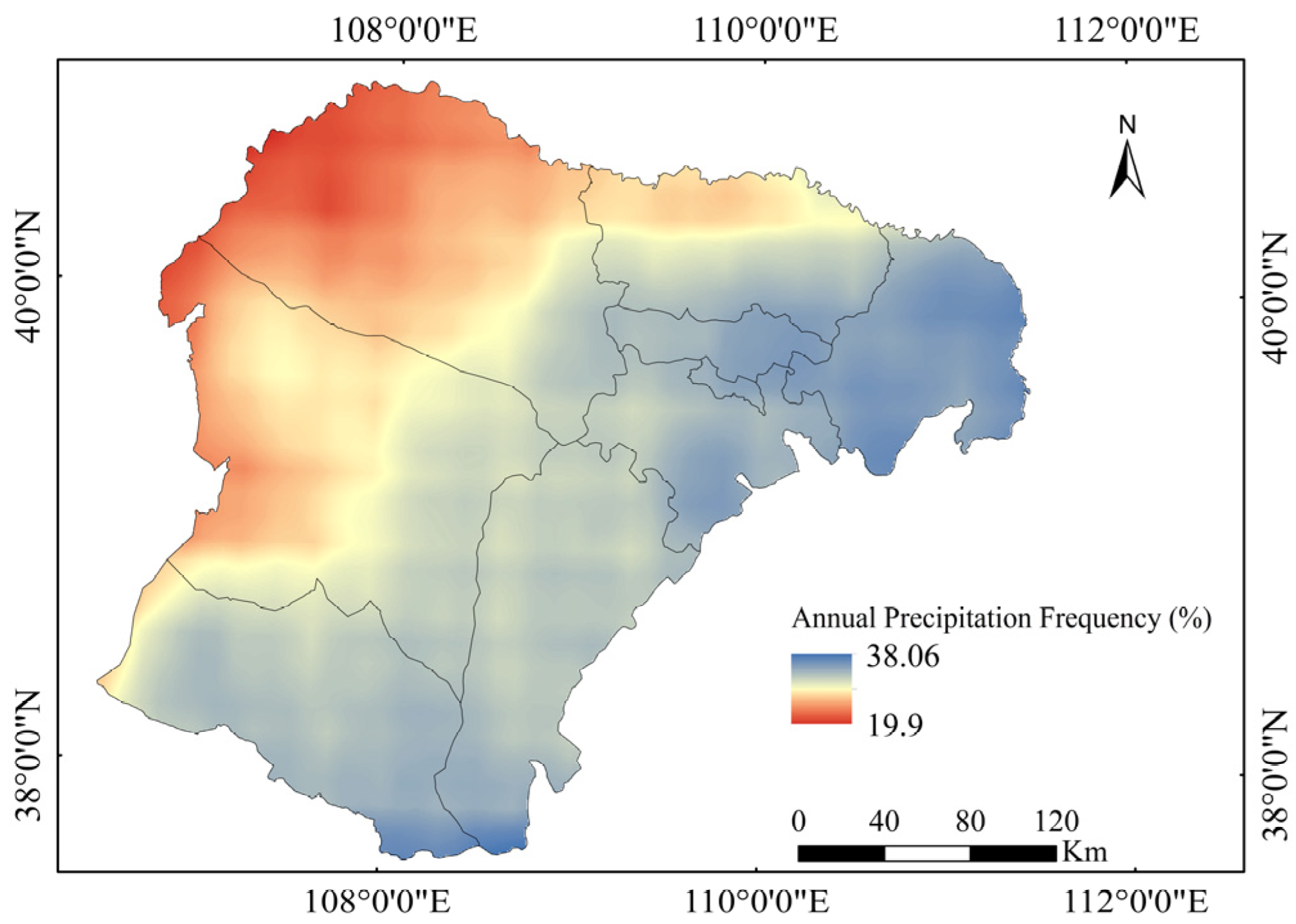
Due to the presence of noise in the remote sensing data, days with precipitation greater than or equal to 0.1 mm within a 24 h period are defined as precipitation days. The annual total number of precipitation days and precipitation frequency for each region in Ordos from 1960 to 2023 were calculated, and the results are shown in Figure 7 and Figure 8. It can be seen that the number of precipitation days in Ordos ranges from 80 to 120 days, while the precipitation frequency ranges from 19.9% to 38.06%. The average annual number of precipitation days is 105, and the average precipitation frequency is 29%. The precipitation frequency and annual number of precipitation days exhibit a pattern of lower values in the east and higher values in the west, which is consistent with the spatial distribution of precipitation. The region with the highest precipitation frequency is Jungar Banner. while the region with the lowest is Hangjin Banner. This result indicates that the spatial distribution of precipitation in the Ordos region is not uniform and is influenced by a combination of factors such as topography and climate.

3.3. Extreme Precipitation Characteristics

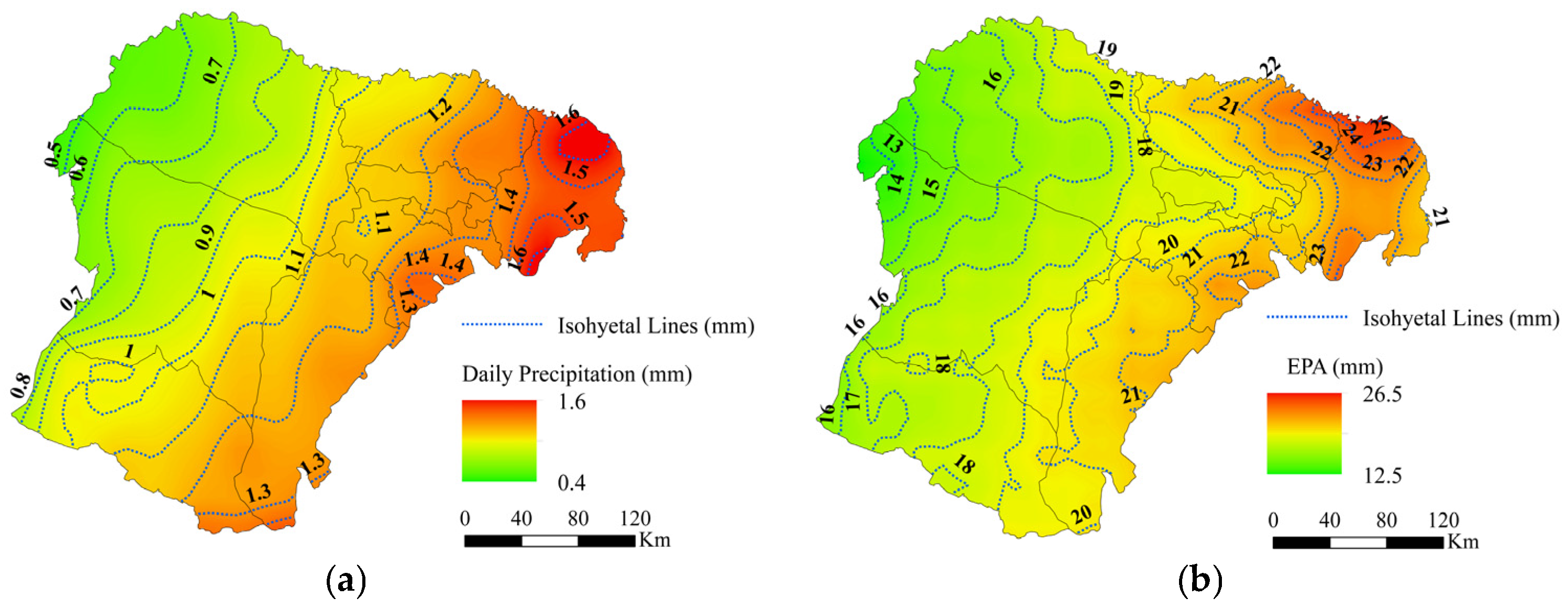
Based on the spatiotemporal distribution characteristics of precipitation mentioned above, suitable extreme precipitation indices were selected to analyze the extreme precipitation features in the study area. Since the study area is located in an arid and semi-arid region, selecting an excessively high threshold (such as the 95th or 99th percentile) may result in an insufficient number of extreme precipitation samples. This would hinder the effective characterization of spatiotemporal variations. In contrast, the 90th percentile threshold not only effectively screens for extreme precipitation events but also ensures an adequate sample size for comprehensive analysis. Therefore, this study uses the precipitation data corresponding to the 90th percentile to represent the EPT. Figure 9 shows the daily average precipitation and EPA. It can be observed that the daily average precipitation ranges from 0.4 mm to 1.6 mm, with a mean value of 1 mm. The magnitude of extreme precipitation ranges from 12.5 mm to 26.5 mm, with a mean value of 18.7 mm. The spatial distribution of extreme precipitation is consistent with that of general precipitation, with Jungar Banner being the region with higher extreme precipitation values, where the extreme daily average precipitation exceeds 21 mm. According to the isohyet analysis of multi-year annual total average precipitation, the high-value center zones of precipitation and extreme precipitation in the study area coincide, and the isohyets generally exhibit a longitudinally aligned distribution pattern in a north–south direction. However, the extreme precipitation center exhibits a divergent pattern, indicating that the area affected by extreme precipitation is larger than the area affected by general precipitation.
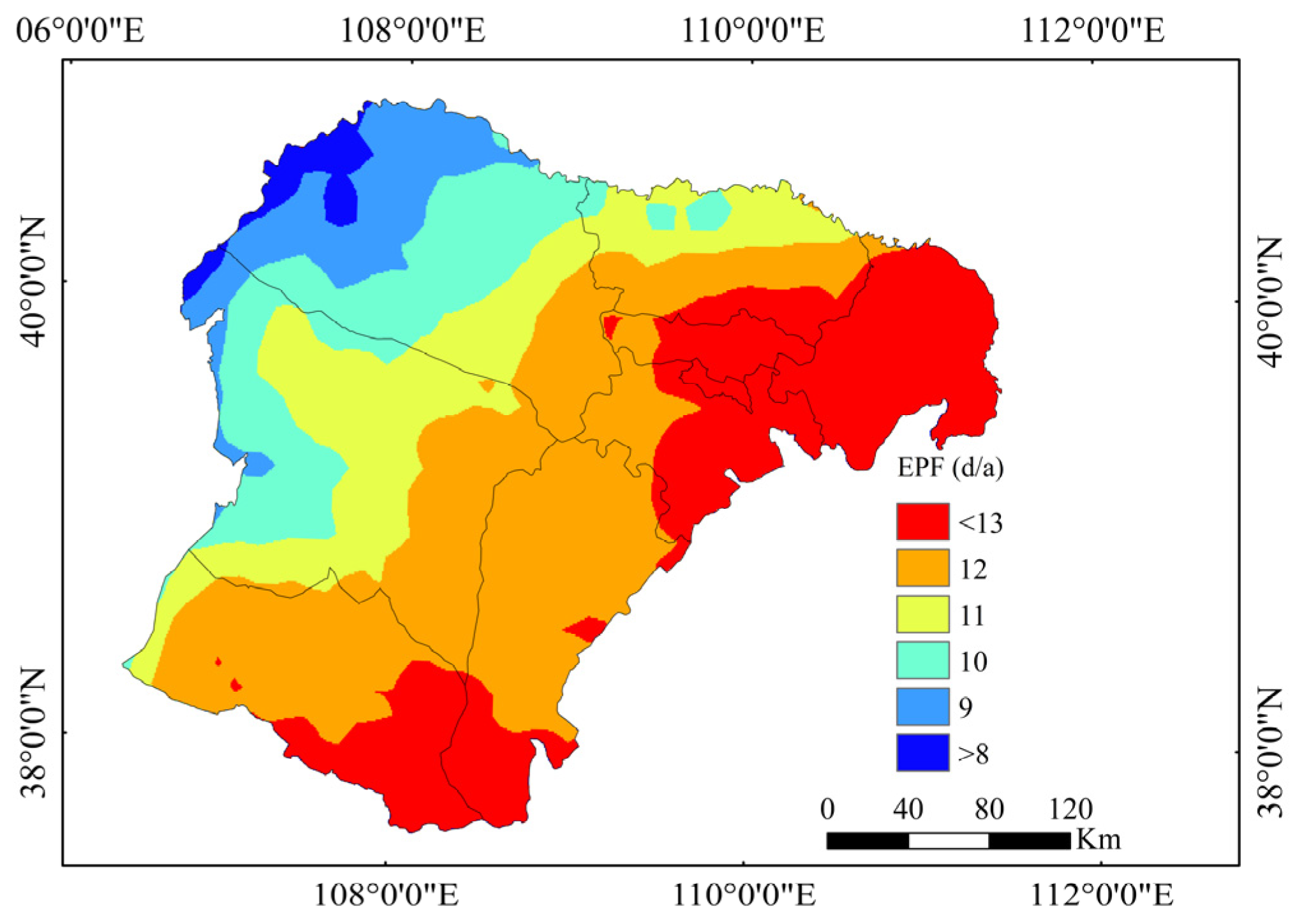
Figure 10 shows the spatial distribution of multi-year EPF in Ordos. It can be seen that the annual number of extreme precipitation days in Ordos ranges from 8 to 13 days, with an average of 11 days per year. The maximum values are found in Jungar Banner, Dongsheng District, Kangbashi District, the eastern part of Ejin Horo Banner, the eastern part of Otog Banner, and the southern part of Uxin Banner, all exceeding 13 days. The minimum value is located in the western part of Hangjin Banner, with less than 8 days.
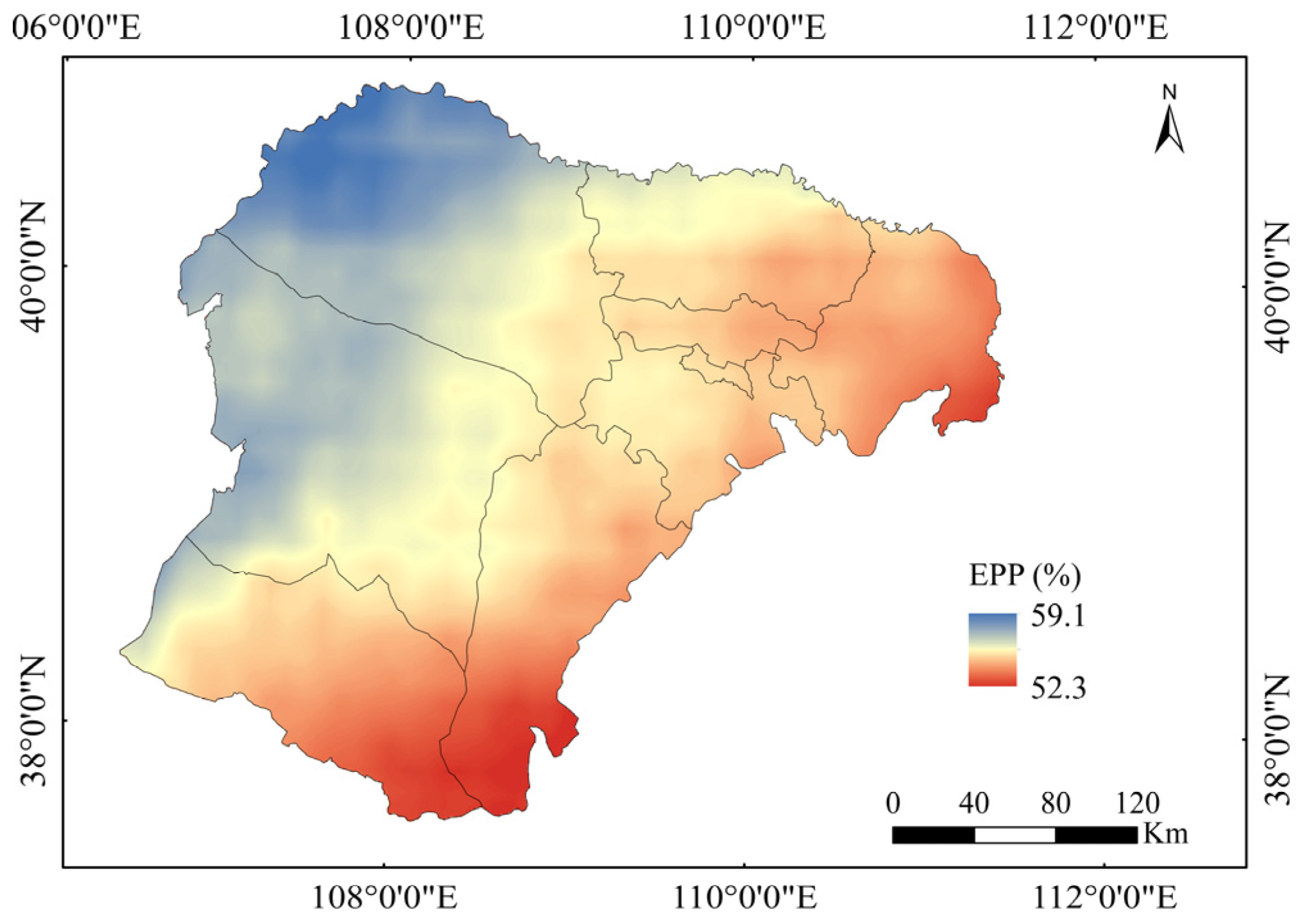
Figure 11 shows the spatial distribution of EPP in Ordos. It can be observed that, compared to the east, the western part of Ordos has a larger proportion of extreme precipitation. However, extreme precipitation accounts for over 50% of the total precipitation in Ordos, indicating that the majority of the precipitation in Ordos is driven by extreme precipitation events.
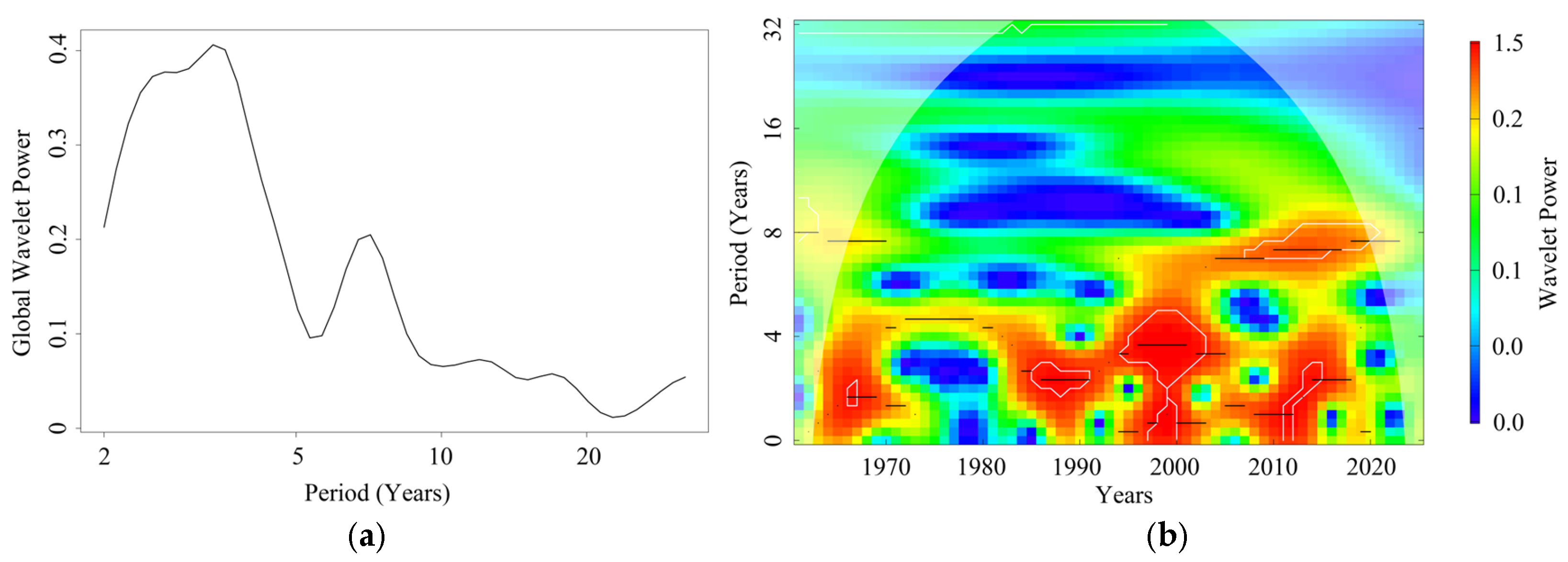
This study employed continuous wavelet transform (CWT) to analyze the multi-temporal scale characteristics of the annual series of EPF. The complex Morlet wavelet (Amor) was used as the mother wavelet, with the analysis period ranging from 2 to 32 years and a scale resolution of 12 voices per octave. To address boundary effects, a symmetric padding method was applied, and the cone of influence (white dashed line) based on the e-folding time is plotted in the figure; interpretation of results inside the cone of influence should be made with caution. Significance testing was performed using a first-order autoregressive (AR1) red-noise model as the null hypothesis, and the 95% confidence level threshold was calculated. Prior to the analysis, the EPF series was linearly detrended and standardized using z-score normalization.
The results are shown in Figure 12. It can be observed that extreme precipitation in Ordos exhibits a dominant short-term periodicity, with a core oscillation cycle of 2–4 years. The corresponding wavelet power is significantly higher than that of other periods (indicated by the red high-power regions) and passes the 95% significance level (enclosed by the white contour lines). The wavelet power of this cycle reaches its peak during two distinct periods, around 1970 and 2000, suggesting that interannual fluctuations in extreme precipitation days were most pronounced during these intervals. In contrast, the strength of short-term oscillations weakened between 1980 and 1990 and 2010–2020. After 2010, the variability of extreme precipitation days shifted from being dominated by the 2–4-year short cycle to a more prominent 8-year mid-term cycle, indicating an interdecadal transition in the periodic structure of extreme precipitation in Ordos.

3.4. Analysis of Typical Extreme Precipitation Events

Based on the extreme precipitation events published by the Ordos Meteorological Bureau, this study selects three typical extreme precipitation events that occurred in Ordos, 3 August 2019, 11 July 2022, and 18 August 2022, for analysis. The reasons for selecting these three extreme precipitation events are as follows: First, these events cover the main heavy precipitation periods of summer in Ordos, and the precipitation recorded at multiple meteorological stations broke the concurrent or historical extreme values during these events, which can reflect the high-risk periods of precipitation in the study area. Second, the three precipitation events were dominated by different meteorological factors. The first event was caused by the combination of the northward-moving Southwest Vortex, which established an abnormally strong water vapor channel. The second event occurred during the circulation adjustment: the antecedent atmospheric circulation was favorable for precipitation, which then rapidly shifted to arid conditions. The third event was triggered by the violent convergence of warm and moist airflows on the edge of the subtropical high and cold air brought by the upper trough, coupled with the boosting effect of the low-level jet stream. This led to the repeated generation of convection and the “train effect”, resulting in a long-duration extreme precipitation event. These facts demonstrate the diversity of formation causes of extreme precipitation in Ordos and reflect the impacts of its varied meteorological conditions. Third, all three events induced urban waterlogging and caused disasters such as damage to property and infrastructure.
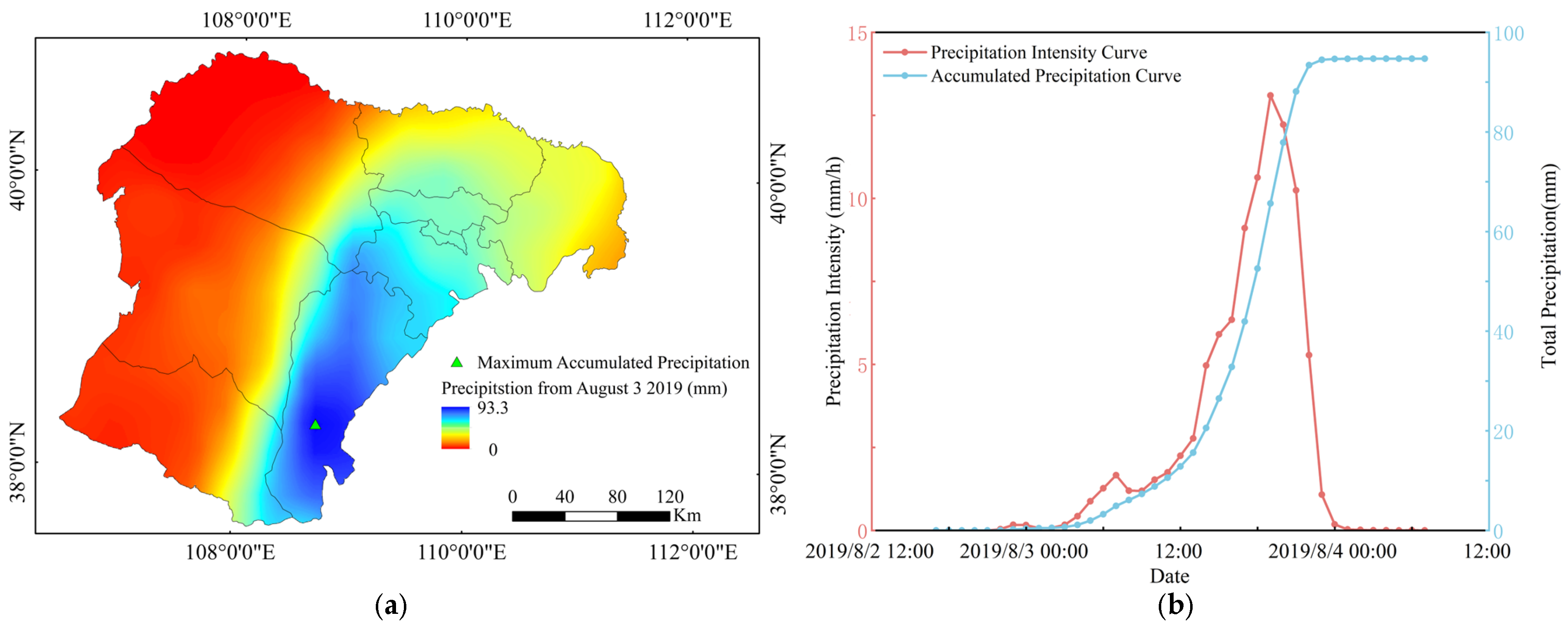
Figure 13 shows the spatial distribution of extreme precipitation on 3 August 2019. Figure 13a shows the spatial distribution of this precipitation event. It can be observed that the extreme precipitation was concentrated in Uxin Banner, with the maximum precipitation reaching 93.3 mm. According to the precipitation classification standards of the Chinese meteorological authorities, this precipitation event is classified as a heavy rain event. Figure 13 presents the precipitation process line and the cumulative precipitation curve. It can be seen that this extreme precipitation event lasted for 22 h, with precipitation increasing from the 10th hour. The peak precipitation intensity occurred at the 16th hour, and the precipitation peak ratio coefficient was 0.72.
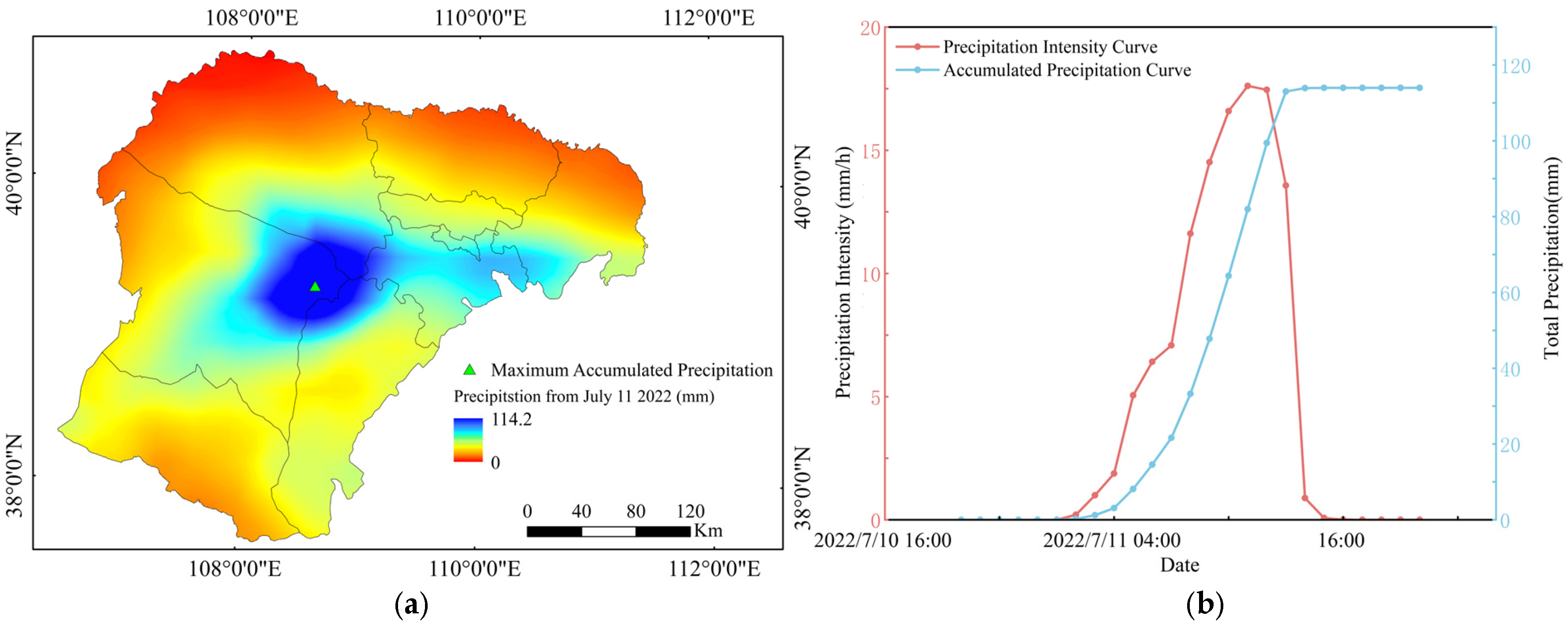
Figure 14 shows the spatial distribution of extreme precipitation on 11 July 2022. Figure 14a shows the spatial distribution of this precipitation event. It can be observed that the extreme precipitation was concentrated at the border of Otog Banner and Uxin Banner, with a maximum precipitation of 114.2 mm. According to the precipitation classification standards of the Chinese Meteorological Department, this event is classified as a heavy rainstorm. Figure 14 presents the precipitation process line and cumulative precipitation curve. It can be seen that this extreme precipitation event lasted for 15h, with peak precipitation intensity occurring at the 10th hour, and the precipitation peak ratio coefficient was 0.67.
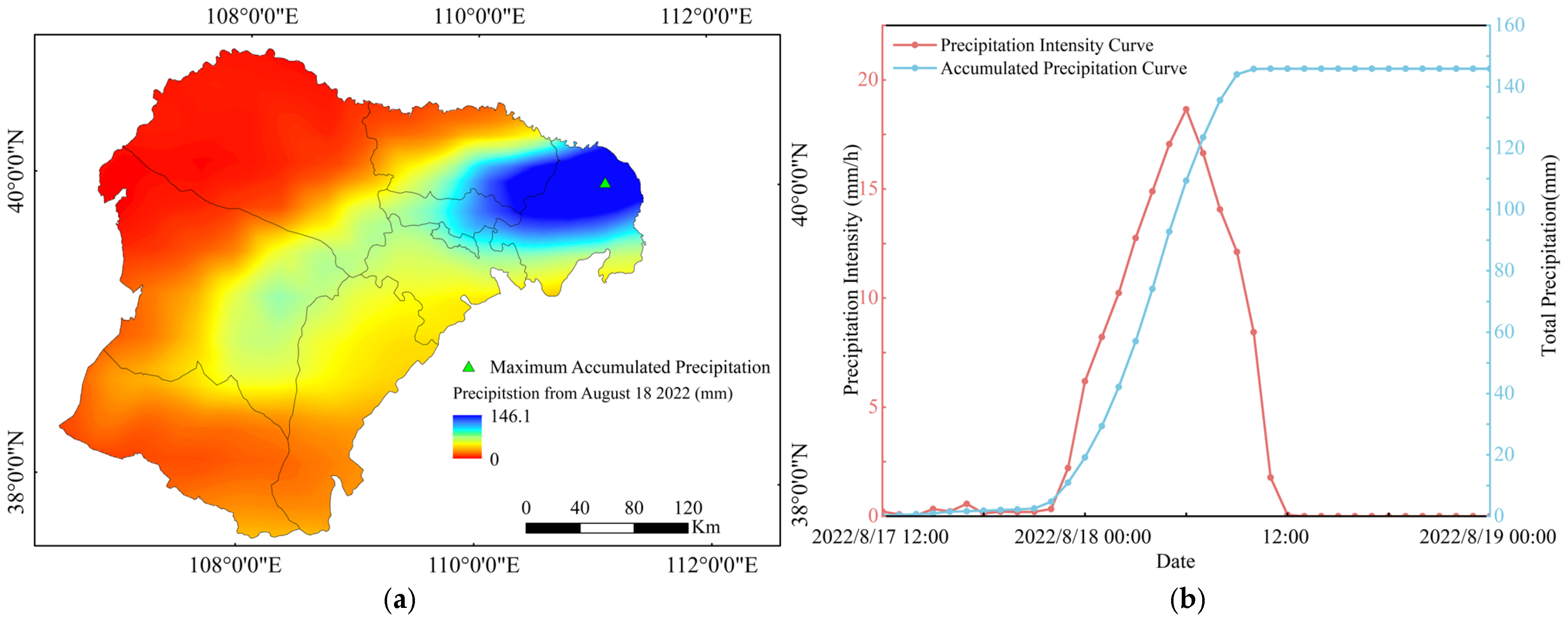
Figure 15 shows the spatial distribution of extreme precipitation from 17 to 18 August 2022. Figure 15a shows the spatial distribution of this precipitation event. It can be observed that the maximum precipitation occurred in the northern part of Jungar Banner and the northeastern part of Dalad Banner, with the maximum precipitation exceeding 146 mm. According to the precipitation classification standards of the China Meteorological Department, this precipitation event is categorized as a heavy rain event. Figure 15 presents the precipitation process line. It can be observed that the intense precipitation lasted for approximately 13 h, with the peak precipitation occurring in the 8th hour. The rain peak ratio coefficient is 0.62.
Based on the three extreme precipitation events, it can be observed that extreme precipitation events in Ordos exhibit a clear spatial concentration. Furthermore, the precipitation intensity in Ordos increases rapidly within a short time, indicating that extreme precipitation events in the region are characterized by short-duration, intense precipitation, which is likely to cause flooding and waterlogging. The rain peak ratio coefficients for the three events range from 0.62 to 0.72, indicating that the precipitation peaks are mostly concentrated in the middle and later stages of the precipitation process, exhibiting a distinct “post-peak” pattern. The precipitation intensity reaches its maximum towards the end of the precipitation event.
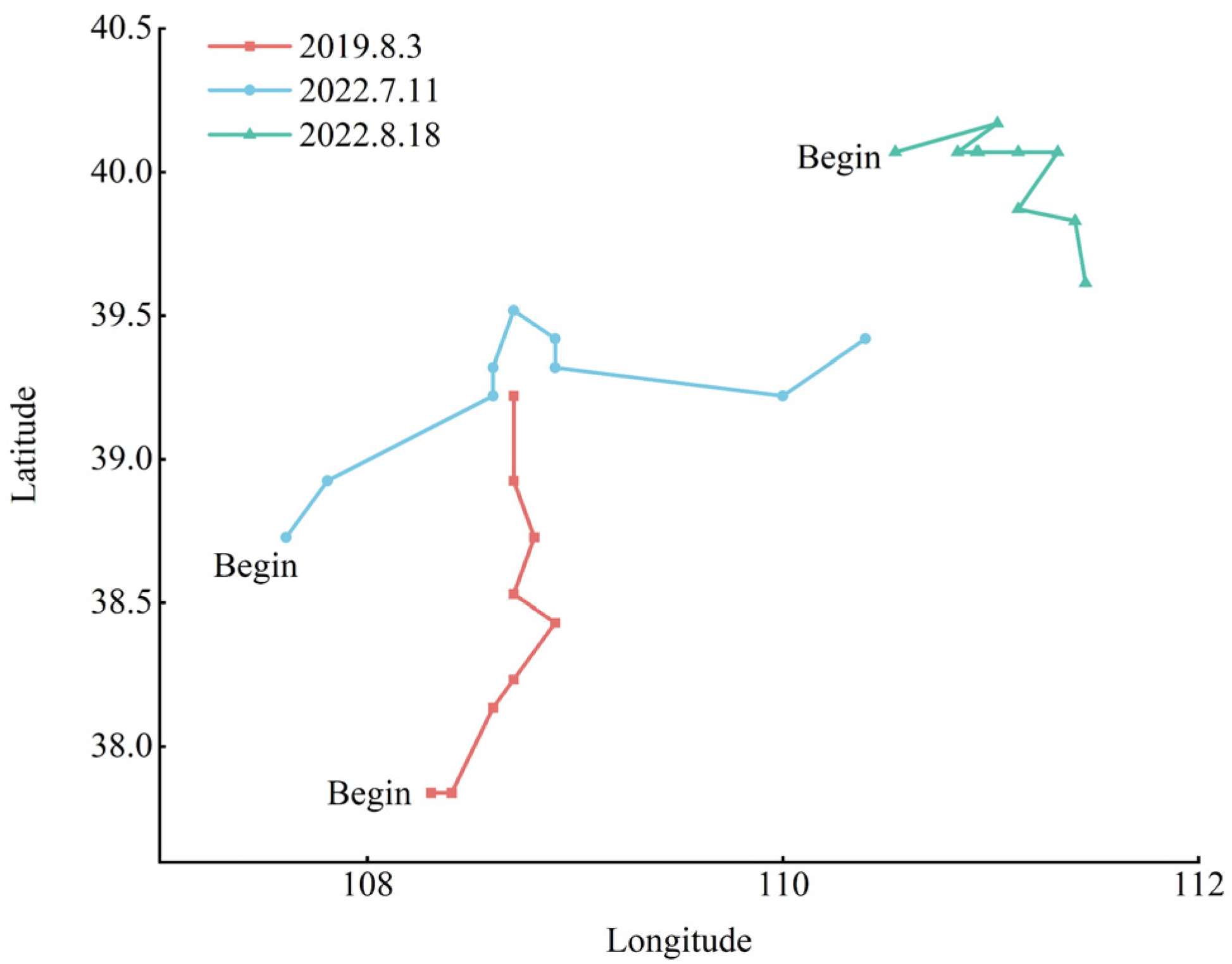
As can be observed from the preceding analysis, extreme precipitation in Ordos is characterized by a spatially concentrated distribution. Additionally, the three typical extreme precipitation events all exhibit the features of short-duration heavy rainfall and a distinct “post-peak” pattern. However, the spatial movement of extreme precipitation centers during these events and their overall movement patterns remain unclear. Therefore, this study tracks the temporal dynamic changes in the maximum precipitation centers to reveal the spatial dynamic evolution process of extreme precipitation events, as illustrated in Figure 16. It can be seen that the rainstorm centers of extreme precipitation generally move in a west-to-east direction.

4. Discussion

This study reveals the spatiotemporal distribution characteristics and variation trends of multi-year precipitation in the Ordos region through multi-timescale analysis. The findings indicate that extreme precipitation is primarily concentrated in the eastern part of the region, especially in Jungar Banner. Spatially, precipitation in Ordos exhibits a distinct longitudinal banded distribution, resulting from the combined effects of complex weather systems and monsoon climate. This is consistent with the findings of studies by Liu [53], Zhong [54], and Li [55]. Located in the mid-latitudes, Ordos is simultaneously influenced by the East Asian monsoon and mid-to-high latitude atmospheric circulation [56]. The study also shows that extreme precipitation accounts for over 50% of the total precipitation in Ordos, indicating a precipitation pattern characterized by “low frequency but high intensity per event,” which aligns with the results of studies by Li [57] and Zhang [58]. Such precipitation is prone to triggering flash floods and urban waterlogging during short-duration heavy rainfall events, may lead to soil erosion, and its concentrated nature makes it difficult to utilize effectively [59].
The intensity of the summer monsoon directly modulates moisture transport efficiency, leading to significant spatial variability in precipitation. This study highlights that precipitation in Ordos is primarily concentrated during the summer months, with moisture carried by the summer monsoon predominantly affecting the eastern region, resulting in the observed longitudinal banded distribution. Furthermore, the topography of Ordos, characterized by higher elevations in the west and lower elevations in the east, plays a critical role. The eastern region, with its relatively low elevation, is more significantly influenced by the southeast monsoon, ensuring adequate moisture transport and higher precipitation levels [56,60]. In contrast, the western region, with its higher elevations and proximity to the interior, experiences weaker monsoon influence and reduced precipitation, particularly in the Kubuqi Desert, where precipitation is markedly lower. This topographic feature further accentuates the longitudinal banded distribution of precipitation. However, between 1960 and 2023, no significant long-term trend in precipitation was observed, suggesting that precipitation variability in Ordos is influenced by multiple factors, warranting further in-depth investigation.
Additionally, this study examines typical extreme precipitation events in Ordos, finding that precipitation peaks during these events are predominantly concentrated in the later stages of the precipitation process, exhibiting a distinct “post-peak” characteristic. This phenomenon arises because the initial phase of extreme precipitation in Ordos is primarily convective, while the later phase involves the splitting and northward movement of convective cloud bands, leading to mixed precipitation with continuous echo replenishment. During intense precipitation events, convective cloud clusters repeatedly form and replenish the precipitation area, creating a “train effect.” This effect causes precipitation to intensify continuously in the later stages, with peak intensity occurring near the end of the event. These combined factors result in precipitation reaching its maximum in the latter half of the event [61,62].
This study also compares the results with relevant research from national and global arid and semi-arid regions. Domestic studies, such as those on the Loess Plateau, Ningxia, and other arid areas of Inner Mongolia, indicate that these regions also exhibit a precipitation pattern characterized by “less frequent but more intense” events, with extreme events concentrated in summer and significantly influenced by monsoons and local topography [63]. Internationally, in arid and semi-arid regions such as North Africa, inland Australia, and the southwestern United States, trends of increased intensity and concentration of extreme precipitation events are also observed, leading to heightened flood risks and posing threats to agriculture, urban water resources, and infrastructure [64,65]. These comparisons suggest that the precipitation patterns in Ordos share certain commonalities with other arid and semi-arid regions.

5. Conclusions

In this study we investigate the spatiotemporal distribution of multi-year extreme precipitation in Ordos from 1960 to 2023 using monthly precipitation data, with the 90th percentile serving as the threshold for extreme precipitation. Additionally, typical extreme precipitation events were analyzed to understand the characteristic precipitation processes in the region. The main findings are as follows:
(1) The multi-year average annual total precipitation in Ordos ranges from 170.3 mm to 606.1 mm, with an average value of 378.5 mm. It has been on a declining trend over the years, with an average annual decrease of 1.2 mm. There is distinct seasonal variation within the year, with 70% of rainfall concentrated in the months of June to September. The number of rainy days per year ranges from 80 to 120. The overall pattern of precipitation amount and frequency shows higher values in the east and lower values in the west.
(2) The average daily value of extreme precipitation in Ordos (precipitation exceeding 90%) is 18.7 mm. The average annual number of extreme precipitation days ranges from 8 to 13, with an average of 11 days per year. Extreme precipitation accounts for more than 50% of the total precipitation. The banner most susceptible to extreme precipitation is Jungar Banner.
(3) Typical extreme precipitation events in Ordos are characterized by short-duration heavy rainfall. The peak rainfall ratio coefficient for the three events ranges from 0.62 to 0.72, indicating a distinct “post-peak” characteristic.
Looking ahead, further research into the mechanisms driving precipitation and extreme precipitation events in Ordos is crucial, particularly focusing on regional response differences. By leveraging the spatial distribution characteristics of precipitation and extreme precipitation, optimizing regional water resource utilization and enhancing scientific water resource management are essential steps. Additionally, tailored flood prevention and disaster mitigation strategies should be developed for areas prone to extreme precipitation. Strengthening targeted infrastructure construction will improve the region’s resilience to disasters, supporting its green and sustainable development. This study provides a valuable scientific foundation for these efforts.

Author Contributions

S.Z.: Conceptualization, Funding acquisition, Writing—review & editing. S.C.: Methodology, Writing—original draft. C.L.: Supervision, Writing—review & editing, Formal analysis. Y.W.: Data curation, Validation. X.L.: Data curation, Resources, Supervision. P.M.: Data curation, Supervision. S.B.: Data curation, Resources, Software. Y.Z.: Formal analysis, Supervision. J.L.: Data curation, Validation. All authors have read and agreed to the published version of the manuscript.

Funding

We acknowledge financial support from the Major Science and Technology Innovation Pilot Project for Water Resources Protection and Integrated-Saving Utilization in the Yellow River Basin of Inner Mongolia Autonomous Region (No. 2023JBGS0007), the IWHR Research & Development Support Program (No. MK0145B022021), the Natural Science Foundation of Inner Mongolia Autonomous Region Project (No. 2025YQ009), the First-Class Discipline Research Special Project (YLXKZX-NSD-027), the Basic Scientific Research Business Fee of Directly affiliated Universities in Inner Mongolia Autonomous Region (No. BR231516), the IWHR Internationally oriented Talents Program, The National Natural Science Foundation of China—Yellow River Water Science Joint Fund (grant No. U2443205), The Inner Mongolia Autonomous Region Science and Technology Plan Project, (grant No. 2023YFSH0002), The Natural Foundation of Inner Mongolia (grant No. 2023MS05023), and the Central Government Guided Local Science and Technology Development Fund Project (grant No. 2024ZY0065).

Data Availability Statement

Data will be made available on request. All authors have read and agreed to the published version of the manuscript.

Conflicts of Interest

Author Shiming Bai was employed by the company Ordos Shengyuan Water Group Co., Ltd. The remaining authors declare that the research was conducted in the absence of any commercial or financial relationships that could be construed as a potential conflict of interest.

References

  1. Zhou, B.T.; Qian, J. Changes of Weather and Climate Extremes in the IPCC AR6. Clim. Change Res. 2021, 17, 713–718. [Google Scholar]
  2. Xiao, A.; Shan, J.; Chen, H.; Bao, H.; Xia, H.; Li, Z.; Liu, X. Mesoscale Characteristics of Exceptionally Heavy Rainfall during 4–6 May 2023 in Jiangxi, China. Atmosphere 2023, 14, 1735. [Google Scholar] [CrossRef]
  3. Kong, D.D.; Zhang, Q.; Gu, X.H.; Wang, Y.; Li, H.Z. Vegetation responses to drought at different time scales in China. Acta Ecol. Sin. 2016, 36, 7908–7918. [Google Scholar] [CrossRef]
  4. Fang, N.F.; Wang, L.; Shi, Z.H. Runoff and soil erosion of field plots in a subtropical mountainous region of China. J. Hydrol. 2017, 552, 387–395. [Google Scholar] [CrossRef]
  5. Du, J.K.; Qiu, Y.Q.; Li, Y.L.; Lu, Q.; Hao, C.F.; Liu, H.Y. Evolution characteristics of the interannual and intra-annual precipitation in China from 1956 to 2016. Adv. Water Sci. 2023, 34, 182–196. [Google Scholar] [CrossRef]
  6. Wu, Y.; Zeng, J. Analysis of temperature and precipitation evolution characteristics in different climatic regions of China. Clim. Change Res. Lett. 2024, 13, 1064–1077. [Google Scholar] [CrossRef]
  7. Tian, Z.P.; Shi, J.W.; Jiang, D.B. Modelling analyses on the monsoon precipitation change over China during the Last Interglacial. Quat. Sci. 2024, 44, 1388–1398. [Google Scholar]
  8. Gao, S.; Ti, C.P.; Tang, S.R.; Wang, X.L.; Wang, H.Y.; Meng, L.; Yan, X.Y. Runoff simulation and its response to extreme precipitation in the Yangtze River Basin. Huanjing Kexue 2023, 44, 4853–4862. [Google Scholar] [CrossRef]
  9. Pu, Y.L.; Hong, Q.; Feng, J. Influence of developing phase of El Niño events on summer extreme precipitations in eastern China. J. Beijing Norm. Univ. Nat. Sci. 2024, 60, 242–249. [Google Scholar] [CrossRef]
  10. Seneviratne, S.I.; Zhang, X.; Adnan, M.; Badi, W.; Dereczynski, C.; Di Luca, A.; Ghosh, S.; Iskandar, I.; Kossin, J.; Lewis, S.; et al. Weather and climate extreme events in a changing climate. In Climate Change 2021: The Physical Science Basis. Contribution of Working Group I to the Sixth Assessment Report of the Intergovernmental Panel on Climate Change; Masson-Delmotte, V., Zhai, P., Pirani, A., Connors, S.L., Péan, C., Berger, S., Caud, N., Chen, Y., Goldfarb, L., Gomis, M.I., et al., Eds.; Cambridge University Press: Cambridge, UK, 2021; pp. 1513–1766. [Google Scholar] [CrossRef]
  11. Thackeray, C.W.; Hall, A.; Norris, J.; Chen, D. Constraining the increased frequency of global precipitation extremes under warming. Nat. Clim. Change 2022, 12, 441–448. [Google Scholar] [CrossRef]
  12. Meresa, H.; Tischbein, B.; Mekonnen, T. Climate change impact on extreme precipitation and peak flood magnitude and frequency: Observations from CMIP6 and hydrological models. Nat. Hazards 2022, 111, 2649–2679. [Google Scholar] [CrossRef]
  13. Chang, P.; Fu, D.; Liu, X.; Castruccio, F.S.; Prein, A.F.; Danabasoglu, G.; Wang, X.; Bacmeister, J.; Zhang, Q.; Rosenbloom, N.; et al. Future extreme precipitation amplified by intensified mesoscale moisture convergence. Nat. Geosci. 2025, 18, 33–41. [Google Scholar] [CrossRef]
  14. Sun, Q.; Zhang, X.; Zwiers, F.; Westra, S.; Alexander, L.V. A global, continental, and regional analysis of changes in extreme precipitation. J. Clim. 2021, 34, 243–258. [Google Scholar] [CrossRef]
  15. Liu, K.; Wang, Q.; Wang, M.; Koks, E.E. Global transportation infrastructure exposure to the change of precipitation in a warmer world. Nat. Commun. 2023, 14, 2541. [Google Scholar] [CrossRef] [PubMed]
  16. Li, S.; Chen, Y.; Wei, W.; Fang, G.; Duan, W. The increase in extreme precipitation and its proportion over global land. J. Hydrol. 2024, 628, 130456. [Google Scholar] [CrossRef]
  17. Hu, P.; Chen, B.; Shi, P. Spatiotemporal patterns and influencing factors of rainstorm-induced flood disasters in China. Acta Geogr. Sin. 2021, 76, 1148–1162. [Google Scholar] [CrossRef]
  18. Tang, M.X.; Zhu, X.F.; Liu, T.T.; Guo, C.H.; Zhang, S.Z.; Xu, K. Assessment of future socioeconomic risk of global extreme rainfall under different return periods based on CMIP6. Prog. Geogr. 2023, 42, 531–542. [Google Scholar] [CrossRef]
  19. Li, C.; Leal Filho, W.; Wang, J.; Fudjumdjum, H.; Fedoruk, M.; Hu, R.; Yin, S.; Bao, Y.; Yu, S.; Hunt, J. An Analysis of Precipitation Extremes in the Inner Mongolian Plateau: Spatial-Temporal Patterns, Causes, and Implications. Atmosphere 2018, 9, 322. [Google Scholar] [CrossRef]
  20. Zhai, P.; Zhang, X.; Wan, H.; Pan, X. Trends in total precipitation and frequency of daily precipitation extremes over China. J. Clim. 2005, 18, 1096–1108. [Google Scholar] [CrossRef]
  21. Li, B.; Liu, D.; Yu, E.; Wang, L. Warming-and-wetting trend over China’s drylands: Observational evidence and future projection. Glob. Environ. Change 2024, 86, 102826. [Google Scholar] [CrossRef]
  22. Niu, Y.Y.; Li, C.L.; Wang, J.; Xu, H.Q.; Liu, Q. Performance evaluation of ERA5 reanalysis precipitation data and spatiotemporal characteristics of extreme precipitation in Inner Mongolia. Arid Land Geogr. 2023, 46, 1418–1431. [Google Scholar]
  23. Xu, F.; Ma, L.; Huang, X.; Chen, Y. Changes in extreme temperature and precipitation and their driving mechanisms in Inner Mongolia from 1960 to 2021. J. Soil Water Conserv. 2025, 32, 225–235. [Google Scholar] [CrossRef]
  24. Xin, Y.; Yang, Y.; Chen, X.; Yue, X.; Liu, Y.; Yin, C. Evaluation of IMERG and ERA5 precipitation products over the Mongolian Plateau. Sci. Rep. 2022, 12, 21776. [Google Scholar] [CrossRef] [PubMed]
  25. Liang, K. Spatio-temporal variations in precipitation extremes in the endorheic Hongjian Lake Basin in the Ordos Plateau, China. Water 2019, 11, 1981. [Google Scholar] [CrossRef]
  26. Gu, X.; Ye, L.; Xin, Q.; Zhang, C.; Zeng, F.; Nerantzaki, S.D.; Papalexiou, S.M. Extreme precipitation in China: A review on statistical methods and applications. Adv. Water Resour. 2022, 163, 104144. [Google Scholar] [CrossRef]
  27. Han, X.; Chen, Q.; Fu, D. Trends in Extreme Precipitation and Associated Natural Disasters in China, 1961–2021. Climate 2025, 13, 74. [Google Scholar] [CrossRef]
  28. Li, E. Effects of Extreme Rainfall Change on Sediment Load in the Huangfuchuan Watershed, Loess Plateau, China. Sustainability 2024, 16, 7457. [Google Scholar] [CrossRef]
  29. Huang, X.Y.; Li, Y.H.; Feng, J.Y.; Wang, J.; Wang, Z.; Wang, S.; Zhang, Y. Climate characteristics of precipitation and extreme drought events in Northwest China. Acta Ecol. Sin. 2015, 35, 1359–1370. [Google Scholar] [CrossRef]
  30. Shao, H.E.; Zhao, F.; Liu, W.C.; Xu, L.L.; Liu, N.; Liu, X.Y.; Ma, Y.H. Mechanism of trigger and maintenance during an extremely torrential rain in semi-arid region of eastern Northwest China. J. Arid Meteorol. 2022, 40, 933. [Google Scholar] [CrossRef]
  31. Zhao, N.; Ma, C.; Yang, Y. Water quality variation of Lake Hongjiannao and its driving force analysis from 1973 to 2013. Hupo Kexue 2016, 28, 982–993. [Google Scholar] [CrossRef]
  32. Xing, X.; Yu, X.; Bai, Z.; Jia, L. Analysis of water balance of the wetland in Erdos Larus relictus Nature Reserve. J. Arid Land Resour. Environ. 2009, 23, 100–103. [Google Scholar] [CrossRef]
  33. Li, J. Responses of vegetation NDVI to climate change and land use in Ordos City, north China. Appl. Sci. 2022, 12, 7288. [Google Scholar] [CrossRef]
  34. Ye, L.; Jiang, W.; Chen, X.; Wu, Y.; Wang, S. Drought trends in Ordos from 1961 to 2020 based on meteorological precipitation anomaly percentage. Arid Zone Res. 2024, 41, 1099–1111. [Google Scholar]
  35. Cao, X.S.; Zheng, H.X.; Miao, P.; Niu, H.; Sun, C.Y. The effect of drip fertigation with Yellow River water on water consumption and yield of summer maize. Irrig. Drain. 2022, 71, 33–39. [Google Scholar] [CrossRef]
  36. Lyv, Y.; Qiao, W.; Chen, W.; Cheng, X.; Liu, M.; Liu, Y. Quantifying the impact of coal mining on underground water in arid and semi-arid area: A case study of the New Shanghai No. 1 Coal Mine, Ordos Basin, China. Water 2023, 15, 1765. [Google Scholar] [CrossRef]
  37. Muñoz-Sabater, J. ERA5-Land Hourly Data from 1950 to Present; Copernicus Climate Change Service (C3S) Climate Data Store (CDS): Reading, UK, 2019. [Google Scholar] [CrossRef]
  38. Japan Aerospace Exploration Agency (JAXA). ALOS PALSAR Radiometrically Terrain Corrected (RTC) Digital Elevation Model (DEM); JAXA: Tokyo, Japan, 2017. [Google Scholar]
  39. Cai, B.F.; Yu, R. Advance and evaluation in the long time series vegetation trends research based on remote sensing. J. Remote Sens. 2009, 13, 1170–1186. [Google Scholar] [CrossRef]
  40. Zhuang, Z.M. Research on the Spatiotemporal Distribution and Evolution Characteristics of Urban Precipitation and Influencing Factors. Ph.D. Thesis, Beijing University of Civil Engineering and Architecture, Beijing, China, 2024. [Google Scholar]
  41. Zhang, X.; Zhang, L.Y. Progress in the study of spatio-temporal distribution of extreme precipitation and its atmospheric circulation background in China. J. Meteorol. Res. Appl. 2023, 44, 70–77. [Google Scholar] [CrossRef]
  42. Liu, B.J.; Wu, L.L.; Lu, W.X. Researches on DFA-based extreme precipitation threshold in the Pearl River Basin. Acta Sci. Nat. Univ. Sunyatseni 2013, 52, 136–141. [Google Scholar] [CrossRef]
  43. Fan, L.L.; Wang, Y.Y. Parameter estimation of generalized extreme value distribution and case analysis. J. Cap. Norm. Univ. Nat. Sci. Ed. 2017, 38, 13–18. [Google Scholar] [CrossRef]
  44. Nordling, K.; Fahrenbach, N.L.; Samset, B.H. Climate variability can outweigh the influence of climate mean changes for extreme precipitation under global warming. Atmos. Chem. Phys. 2025, 25, 1659–1684. [Google Scholar] [CrossRef]
  45. Klein Tank, A.M.G.; Können, G.P. Trends in indices of daily temperature and precipitation extremes in Europe, 1946–1999. J. Clim. 2003, 16, 3665–3680. [Google Scholar] [CrossRef]
  46. Alexander, L.V.; Zhang, X.; Peterson, T.C.; Caesar, J.; Gleason, B.; Klein Tank, A.M.G.; Haylock, M.; Collins, D.; Trewin, B.; Rahimzadeh, F.; et al. Global observed changes in daily climate extremes of temperature and precipitation. J. Geophys. Res. Atmos. 2006, 111, D05109. [Google Scholar] [CrossRef]
  47. Kong, F.; Fang, J.; Sun, S.; Wang, P.; Lü, L. Spatial differentiation characteristics of rainfall intensity under different return periods and variation patterns of heavy rainfall in China (1961–2016) based on peak-over-threshold sampling. Resour. Environ. Yangtze Basin 2019, 28, 144–156. [Google Scholar]
  48. Wang, W.S.; Ding, J.; Xiang, H.L. Application and prospect of wavelet analysis in hydrology. Adv. Water Sci. 2002, 13, 515–520. [Google Scholar] [CrossRef]
  49. Torrence, C.; Compo, G.P. A practical guide to wavelet analysis. Bull. Am. Meteorol. Soc. 1998, 79, 61–78. [Google Scholar] [CrossRef]
  50. Bell, B.; Hersbach, H.; Simmons, A.; Berrisford, P.; Dahlgren, P.; Horányi, A.; Muñoz-Sabater, J.; Nicolas, J.; Radu, R.; Schepers, D.; et al. The ERA5 global reanalysis: Preliminary extension to 1950. Q. J. R. Meteorol. Soc. 2021, 147, 4186–4227. [Google Scholar] [CrossRef]
  51. Xu, J.; Ma, Z.; Yan, S.; Peng, J. Do ERA5 and ERA5-Land precipitation estimates outperform satellite-based precipitation products? A comprehensive comparison between state-of-the-art model-based and satellite-based precipitation products over mainland China. J. Hydrol. 2022, 605, 127353. [Google Scholar] [CrossRef]
  52. GB/T 20481-2017; National Technical Committee on Climate and Climate Change Standardization (SAC/TC 540). Standards Press of China: Beijing, China, 2017.
  53. Liu, L.C.; Liu, W.; Sun, X.; Liu, X.; Dong, Z.L.; Zhang, Y. Analysis on characteristic of extreme precipitation in Hetao Area, Inner Mongolia. J. Arid Meteorol. 2020, 38, 535–543. [Google Scholar]
  54. Zhong, H.L.; Li, D.L.; Chen, X.G. Study on variety trend of the precipitation in the Hetao and its vicinity area in recent 40 years. Plateau Meteorol. 2006, 25, 900–905. [Google Scholar]
  55. Li, G.Q.; Zheng, Y.R. Characteristics of regional climate change and pattern analysis on Ordos Plateau. J. Environ. Sci. 2002, 14, 568–576. Available online: https://api.semanticscholar.org/CorpusID:129873983 (accessed on 5 February 2026).
  56. Sun, Y. Summer precipitation characteristics and atmospheric circulation analysis of typical abnormal years in Ordos City over the past 50 years. Mod. Agric. 2019, 11, 100–102. [Google Scholar] [CrossRef]
  57. Li, R.Q.; Huang, X.; Song, G.Y.; Li, L.H. Comparative analysis of summer extreme rainstorm characteristics between Western and Eastern Inner Mongolia. Plateau Meteorol. 2023, 42, 1218–1231. [Google Scholar] [CrossRef]
  58. Zhang, J.; Gao, G.; Fu, B.; Wang, C.; Gupta, H.V.; Zhang, X.; Li, R. A universal multifractal approach to assessment of spatiotemporal extreme precipitation over the Loess Plateau of China. Hydrol. Earth Syst. Sci. 2020, 24, 809–826. [Google Scholar] [CrossRef]
  59. Xu, J.; Zheng, Y.F.; Zhang, L.X.; Xiang, F.; Su, R.; Xu, C.; Zi, Q. Threshold analysis of environmental parameters for heavy precipitation events over the Ordos Plateau. J. Agric. Disasters 2021, 11, 54–55. [Google Scholar]
  60. Xu, Y.; Fan, J.; Zhang, J.; Tian, L.; Zhang, H.; Cui, T.; Wang, Y.; Wang, R. Characteristics of Atmospheric Rivers and the impact of urban roof roughness on precipitation during the “23.7” extreme rainstorm against the background of climate warming. Atmosphere 2024, 15, 824. [Google Scholar] [CrossRef]
  61. Li, H.Y.; Su, R.N. Analysis of the cause of the heavy rainstorm in Ordos City on 17–18 August 2022. J. Agric. Disasters 2023, 13, 166–168. [Google Scholar]
  62. Zhang, G.L.; Hang, Y.H.; Fu, L.J.; Zhang, L.; Bao, F.X. Causes of a torrential rainstorm induced by “train effect” in Hetao Area. Plateau Meteorol. 2020, 39, 788–795. [Google Scholar] [CrossRef]
  63. Yang, Y.; Sun, H.; Zhang, Y.; Yu, Z.; Gu, H.; Gu, X. Regional patterns and long-term persistence of extreme precipitation in China (1959–2015). J. Hydrol. Reg. Stud. 2025, 61, 102625. [Google Scholar] [CrossRef]
  64. Ogunrinde, A.T.; Adeyeri, O.E.; Xian, X.; Yu, H.; Jing, Q.; Faloye, O.T. Long-Term Spatiotemporal Trends in Precipitation, Temperature, and Evapotranspiration Across Arid Asia and Africa. Water 2024, 16, 3161. [Google Scholar] [CrossRef]
  65. Li, W.; Guan, J.; Wang, W.; Wu, Y.; Zhao, Y.; Zhang, W.; Wang, S.; Chen, Z. Analysis of extreme precipitation variation characteristics in mountain grasslands of arid and semi-arid regions in China. Front. Environ. Sci. 2024, 12, 1403490. [Google Scholar] [CrossRef]
Figure 1. Overview of the study area: ((a) location of the study area; (b) administrative divisions within the study area; (c) land use types in the study area; (d) digital elevation model of the study area).
Hydrology 13 00068 g001
Figure 2. Results of Data Reliability Validation ((a) Distribution of Meteorological Stations; (b) Validation Results).
Hydrology 13 00068 g002
Figure 3. Spatial Distribution of Multi-year Annual Total Average Precipitation.
Hydrology 13 00068 g003
Figure 4. Violin Plot of Monthly Average Precipitation in Ordos from 1960 to 2023.
Hydrology 13 00068 g004
Figure 5. Multi-Year Average Monthly Precipitation in Ordos ((a), monthly precipitation; (b), average monthly precipitation for each month; (c), annual total average precipitation).
Hydrology 13 00068 g005
Figure 6. Sen–MK Test Results for Multi-Year Precipitation in Ordos ((a), Sen; (b), MK).
Hydrology 13 00068 g006
Figure 7. Average Annual Number of Precipitation Days in Ordos.
Hydrology 13 00068 g007
Figure 8. Spatial Distribution of Multi-Year Precipitation Frequency in Ordos.
Hydrology 13 00068 g008
Figure 9. Spatial Distribution of Daily Precipitation and EPA in Ordos ((a), Daily Precipitation; (b), EPA).
Hydrology 13 00068 g009
Figure 10. Spatial Distribution of EPF in Ordos.
Hydrology 13 00068 g010
Figure 11. Multi-Year EPP Spatial Distribution Map of Ordos.
Hydrology 13 00068 g011
Figure 12. Wavelet Analysis of Extreme Precipitation in Ordos ((a). Global Wavelet Spectrum; (b). Wavelet Coefficient Plot).
Hydrology 13 00068 g012
Figure 13. Distribution of the extreme precipitation event and the precipitation process line at the precipitation center on 3 August 2019. ((a), Precipitation distribution; (b), precipitation process line).
Hydrology 13 00068 g013
Figure 14. Distribution of the extreme precipitation event and the precipitation process line at the precipitation center on 11 July 2022. ((a), Precipitation distribution; (b), precipitation process line).
Hydrology 13 00068 g014
Figure 15. Distribution of the extreme precipitation event and the precipitation process line at the precipitation center on 18 August 2022. ((a), Precipitation distribution; (b), precipitation process line).
Hydrology 13 00068 g015
Figure 16. Precipitation Trajectory Map.
Hydrology 13 00068 g016
Table 1. Data Information.
Data TypeDataset NameSpatial ResolutionTime
Period
UnitDownload Link
ERA5-Land hourly averaged data from 1950 to present [37]Precipitation0.1° × 0.1°1960–2023mhttps://cds.climate.copernicus.eu/datasets/reanalysis-era5-land?tab=overview (accessed on 5 February 2026)
Phased Array L-band Synthetic Aperture Radar [38]DEM12.5 m × 12.5 m mhttps://nasadaacs.eos.nasa.gov/ (accessed on 5 February 2026)
Table 2. Definition of Extreme Precipitation Indicators.
Precipitation IndicatorDefinitionUnit
Annual Precipitation DaysNumber of rainy days (daily precipitation ≥ 0.1 mm) in a yearDays
Annual PrecipitationTotal annual precipitationmm
Extreme Precipitation Amount (EPA)Average daily precipitation exceeding the EPTmm
Extreme Precipitation Frequency (EPF)Annual number of days with precipitation exceeding the EPTDays
Extreme Precipitation Proportion (EPP)Percentage of extreme precipitation amount relative to annual precipitation%
Table 3. Information on Meteorological Stations.
NameLongitude (E)Latitude (N)Elevation (m)
Dalad Banner110.0340.401011.0
Yike Wusu107.8340.051180.3
Otog Banner107.9639.091381.4
Hangjin Banner108.7139.811414.0
Dongsheng110.0139.821462.2
Ejin Horo Banner109.7139.561367.0
Uxin Zhao109.0339.101312.2
Jungar Banner111.2239.871221.4
Uxin Banner108.8338.601307.2
Otog Front Banner107.4838.181333.3
Henan108.7237.851209.9
Table 4. Other Validation Metrics.
PBIASMAERMSENSE
11.36%11.7920.750.6855
Disclaimer/Publisher’s Note: The statements, opinions and data contained in all publications are solely those of the individual author(s) and contributor(s) and not of MDPI and/or the editor(s). MDPI and/or the editor(s) disclaim responsibility for any injury to people or property resulting from any ideas, methods, instructions or products referred to in the content.