Article

Quasi-Global (50° S–50° N) of Soil Moisture and Precipitation Extremes

1
College of Geological and Surveying Engineering, Taiyuan University of Technology, Taiyuan 030024, China
2
Key Laboratory of Monitoring and Protection of Natural Resources in Mining Cities, Ministry of Natural Resources, Jinzhong 030600, China
3
Shanxi Coal Geological Exploration Research Institute, Taiyuan 030031, China
4
School of Geographic Sciences, East China Normal University, Shanghai 200241, China
*
Author to whom correspondence should be addressed.
Hydrology 2026, 13(2), 67; https://doi.org/10.3390/hydrology13020067

Submission received: 28 December 2025 / Revised: 29 January 2026 / Accepted: 4 February 2026 / Published: 9 February 2026
(This article belongs to the Topic Advances in Hydrogeological Research)

Abstract

Clarifying the interplay between extreme soil moisture (SM) and precipitation (P) is imperative to understand the impacts of extreme events on ecosystems in a changing climate. However, the detailed relationships, pathways, and quantitative characterization of SM-P extremes at a quasi-global (50° S–50° N) scale remain unclear. Here, we systematically evaluated the co-occurrence and temporal dependencies of SM-P extremes from 2000 to 2022, quantified their synchronous probability, used statistical modeling to reveal the directional pathways among evapotranspiration (ET), P, and SM, and detected long-term trends in P and SM extremes. Our results show a significant increase in the co-occurrence frequency of SM-P extremes globally, with strong spatiotemporal co-occurrence patterns. A lower conditional probability (62%) of extreme SM anomalies was observed within a short term (34 days) after P extremes occurred, while a significantly higher conditional probability (88%) of P extremes was found following extreme SM anomalies. Path analysis (structural equation modeling) indicates a strong direct positive pathway from P to SM, whereas SM influences P indirectly through ET. Compared to satellite-based observations, the BCC-ESM1 model within the CMIP6 framework reproduces the synchrony of SM-P extremes reasonably well, offering a feasible alternative for predicting SM-P relationships in regions lacking satellite observations and aiding future projections of their trends. Our study broadens the perspective on land–atmosphere interactions and coupling mechanisms, providing a solid theoretical basis for predicting and managing the effects of extreme events on ecosystems.

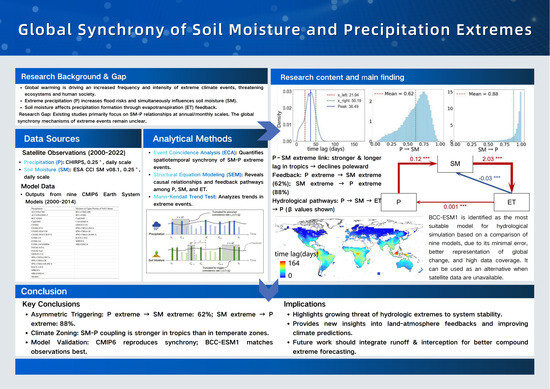
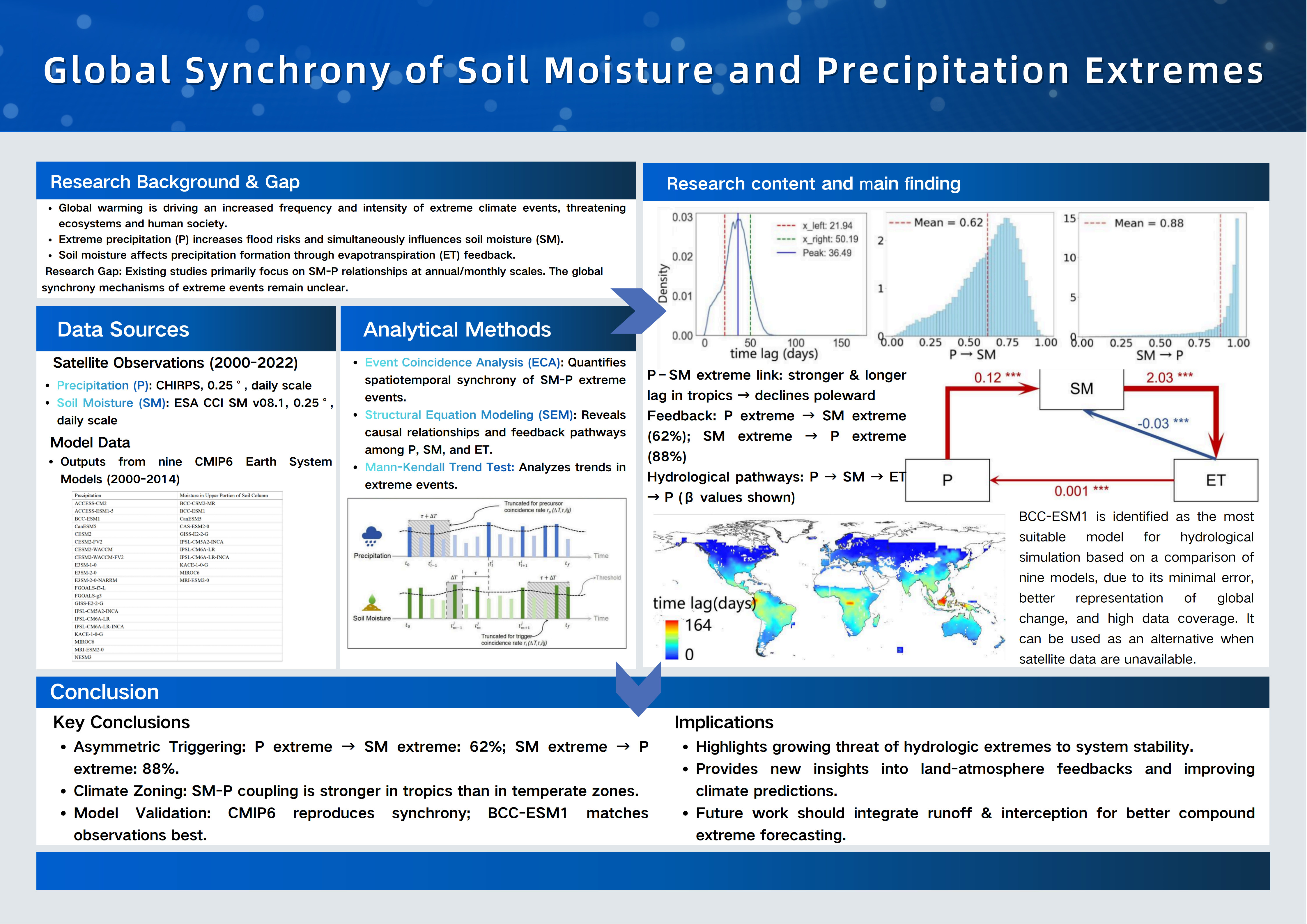
Graphical Abstract

1. Introduction

Global warming has driven the increasing frequency and intensity of extreme climate events, posing significant threats to terrestrial ecosystems and human society. In particular, widespread increases in P extremes have been documented over the last few decades [1], promoting the occurrence of flood hazards that threaten agricultural production and human life [2,3]. These P extremes could also provide increased water yield, which increases SM [4]. This might result in extreme soil moisture anomaly (hereafter SM anomaly). Such SM anomalies can adversely affect agricultural production by inducing root-zone hypoxia, which inhibits plant growth and reduces productivity [5]. Conversely, SM plays a critical role in influencing P through a set of land–atmosphere feedback. This is particularly true in cases where abundant SM increases evapotranspiration (ET), which transforms moisture into the atmosphere where it condenses to form rain, snow, or other forms of P [6,7,8]. Taken together, the response and feedback between SM and P are one of the central issues because of their importance in controlling the water and energy cycles, as well as the associated impacts on biological processes. An improved knowledge of the interplay between SM-P extremes is thus necessary for forecasting extreme events and flood risks and for understanding the land–atmosphere interactions, which, however, are poorly understood on a global scale. Clarifying the interaction mechanisms between P and SM can provide a basis for disaster prevention and mitigation, as well as theoretical support for the development of early warning systems.
The interactions between SM and P were commonly explored at an annual or monthly timescale [8,9,10,11,12]. Depending on a wide array of rigorous statistical methods and data sources (e.g., satellite, reanalysis and modeling), these studies primarily documented a significantly positive relationship between SM and P, while attempting to reveal the causal effects of SM on P (i.e., feedback) [13,14,15]. Although the response of SM to P is generally considered a straightforward positive relationship [4], a negative correlation between them has also been documented under specific conditions. This might be attributed to strong variability in P and SM memory effects [15,16]. Additionally, this relationship could help correct P products [17].
Given the strong interactions between SM and P at annual and monthly scales, the relationship between SM-P extremes has raised considerable concern [18,19,20,21]. The correlation coefficient is generally used to identify the association between SM and P at varying coarse temporal resolutions (e.g., monthly or annual scale) [8,22]. Daily-scale dependence between them was explored using Granger causality analysis [23] and the higher frequency interactions were studied using wavelet analysis [21]. A complex network analysis based on the classic graph theory to complex systems with high structural heterogeneity and inherently dynamic properties were proposed to quantify multivariate and multiscale connectivity in hydroclimates [24,25,26]. These studies provide global statistical linear or nonlinear associations between continuous time series of SM and P, which mainly focus on the center of the distribution. However, this might overlook critical information on extreme events or anomalies quantified by the tails of the distributions.
Consequently, a nonparametric event-based synchronicity measure, developed in neuroscience to quantify event synchronicity in electroencephalogram signals [27], is integrated with complex network analysis to quantify the spatiotemporal dynamics of climate extremes. Event synchronization (ES) counts the number of concurrent events within a sliding window. This nonparametric measure effectively resolves the difficulties associated with conventional correlation analysis, such as handling non-normality and nonlinearity in the data. ES has thus been widely used to characterize P extremes [28,29] and droughts [30]. Furthermore, the Event Coincidence Analysis (ECA) measure [31] can calculate the precursor or trigger coincidence rate, which reflects the probability that one type of event precedes or succeeds another. However, these methods have not yet been employed to analyze global daily-scale extremes of P and SM, leaving the underlying interaction mechanisms and feedback responses between SM and P insufficiently explored.
In this study, we aim to investigate the daily-scale interactions between SM-P extremes globally, clarify their mutual influences and response times, and to assess whether the Earth System Models (ESMs) participating in CMIP6 can capture the relationship. We used satellite-derived P from the Climate Hazards Group Infrared Precipitation and Stations (CHIRPS) and SM from the European Space Agency Climate Change Initiative (ESA CCI), which ensures that both datasets are independent. Specifically, we firstly characterized the spatiotemporal dynamics of SM-P extremes during 2000–2022. Secondly, the temporal synchronization between SM-P extremes was studied by the ECA approach. Thirdly, we explored the mechanism of the SM-P extremes interactions by considering ET. Finally, the outputs P and SM from ESMs were used to assess whether these climate models can accurately capture the interactions between SM-P extremes. This study provides a novel methodological framework for understanding the interplay between extreme P and SM, offers theoretical support for flood prevention and early warning systems, and gives scientific guidance for climate change projections based on ESMs.

2. Materials and Methods

2.1. Data and Method

2.1.1. CHIRPS Precipitation

Daily P data were obtained from the Climate Hazards Group Infrared Precipitation with Stations (CHIRPS version 2.0) dataset [32]. Developed by the Climate Hazards Center at the University of California, Santa Barbara, CHIRPS integrates multiple satellite infrared observations and in situ rain gauge data to improve estimation accuracy. The dataset provides global daily P estimates at a spatial resolution of 0.25°, and is publicly accessible via https://data.chc.ucsb.edu/products/CHIRPS-2.0/global_daily/ (accessed on 31 January 2026). This study uses data from 2000 to 2022, and since CHIRPS covers all longitudes between 50° S and 50° N, the analysis is confined to this latitudinal range.

2.1.2. ESA Soil Moisture

Daily SM data at 0.25° spatial resolution were obtained from the European Space Agency Climate Change Initiative (ESA CCI SM v08.1) product [33], which combines multi-source satellite scatterometer and radiometer observations. The dataset is accessible via https://catalogue.ceda.ac.uk/uuid/0e346e1e1e164ac99c60098848537a29/ (accessed on 31 January 2026). We used data from 2000–2022, which exhibit more consistent and complete global coverage.

2.1.3. GLEAM Evapotranspiration

The monthly ET data used in this study were obtained from the Global Land Evaporation Amsterdam Model (GLEAM) version 3.7a (Miralles et al., 2011). This dataset has a spatial resolution of 0.25° and a monthly temporal resolution, provided in NetCDF (nc) format, and is accessible at https://www.gleam.eu/ (accessed on 31 January 2026.). To ensure temporal consistency with P and SM data, ET records from the period 2000–2022 were selected for integrated analysis.

2.1.4. Standardized Precipitation Evapotranspiration Index Drought Index

The monthly Standardized Precipitation Evapotranspiration Index (SPEI) data used in this study were obtained from the Global SPEI database (SPEIbase) version 2.9 (based on CRU TS 4.07). This dataset has a spatial resolution of 0.5° and a monthly temporal resolution, provided in NetCDF (nc) format, and is accessible at https://spei.csic.es/spei_database_2_9 (accessed on 31 January 2026). To ensure temporal consistency with other integrated data, SPEI records from the period 2000–2022 were selected for analysis.

2.1.5. Delineation of Study Regions

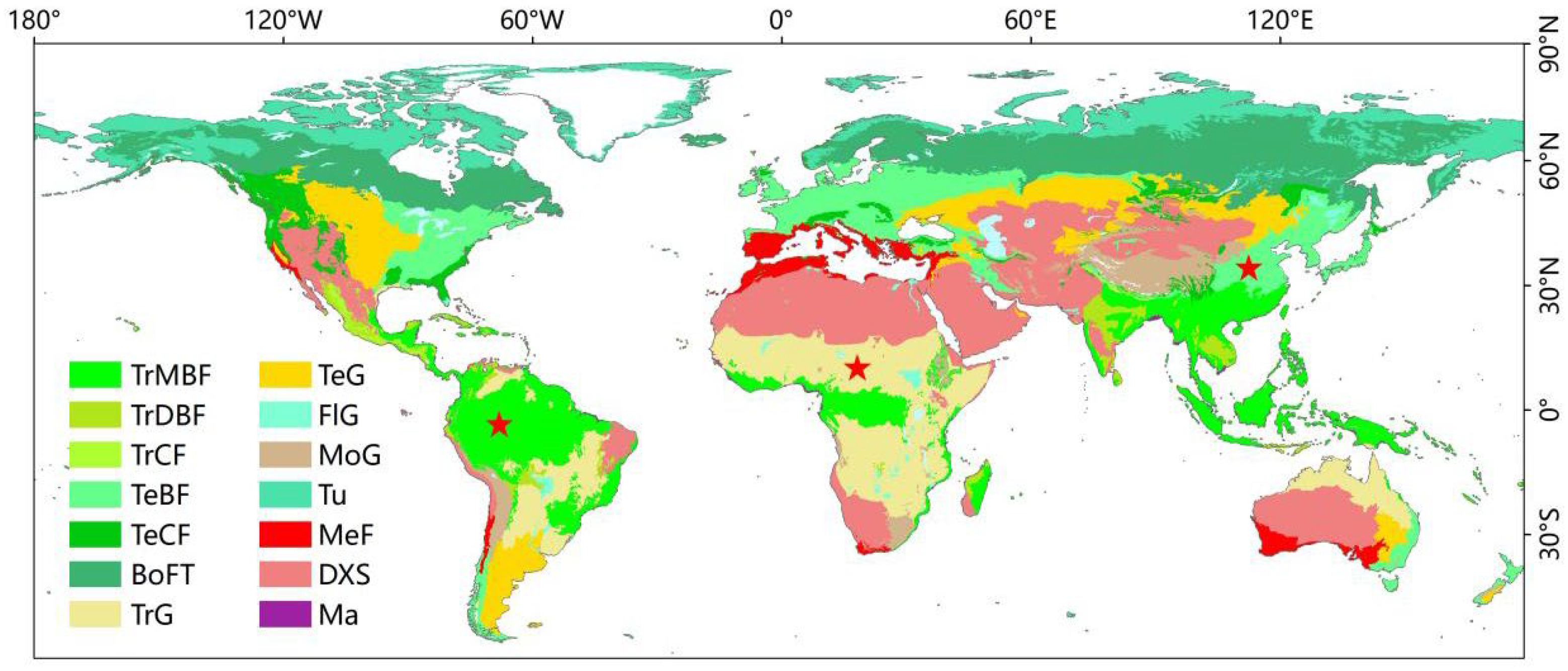
Based on the WWF ecoregion classification, this study divides the research domain into 14 representative sub-regions (Figure A1). This subdivision aims to capture the major climate–ecosystem types ranging from humid to arid and from tropical to temperate zones, in order to investigate the environmental dependence of SM-P feedback mechanisms. Detailed geographical attributes of each region—including the corresponding major ecoregion, climate type, geographic extent, and key characteristics—are summarized in the caption of Figure A1. The main analyses of this study will be conducted within this regional framework.

2.1.6. Consideration of Data Coverage and Limitations

As a widely used gridded P product, CHIRPS v2.0 exhibits certain performance variations across different climatic regions and seasons. In particular, in areas with sparse station coverage or frequent strong convection, it may be influenced by infrared estimation biases and nonstationary errors [32]. Furthermore, the product covers land areas only and is spatially limited to 50° S–50° N. The selection of CHIRPS in this study is primarily based on the following considerations: (1) its spatial extent aligns fully with the ESA CCI SM data used in this study, facilitating coordinated analysis; (2) the research focuses on land surface hydrological processes, making the land-specific coverage of CHIRPS well-suited to the study objectives; and (3) as a remote sensing product that integrates station information, it maintains objective spatial continuity while also possessing a certain foundation of ground-based validation. To evaluate its suitability for our study region, we conducted a spatial consistency comparison with an independent P dataset (IMERG Final Run V06). The results show high agreement between the two in terms of long-term climatological spatial patterns and interannual trends (spatial correlation coefficient > 0.9), indicating that CHIRPS can reliably capture the main P signals of interest in this study. Therefore, although systematic bias correction was not performed, we consider the dataset suitable for the present large-scale, multivariate co-variability analysis.
The European Space Agency Climate Change Initiative (ESA CCI) SM product provides satellite-based estimates of global surface SM, expressed as volumetric water content (m3m−3) within the range of 0–1, representing approximately the top 0–5 cm soil layer. However, this product exhibits inherent data gaps in regions with long-term snow cover, frozen ground, dense vegetation (e.g., tropical rainforests), and strong radio-frequency interference. In this study, areas with persistent or frequent data gaps—such as parts of the Sahara Desert (due to extremely weak SM signals) and the Amazon rainforest (due to signal attenuation under dense canopy)—were excluded using a land mask, without applying spatial interpolation or gap-filling methods. Furthermore, since the study primarily focuses on seasonal to inter-annual co-variability between P and SM, a continuous daily time series is not strictly required. The period 2000–2022 was selected because earlier years (before 2000) show better data consistency and coverage, whereas earlier periods exhibit more pronounced longitudinal gaps and higher missing data rates. Although satellite-derived SM carries inherent uncertainties, such as signal attenuation under vegetation canopy and limited sensitivity to deeper soil layers, these systematic errors are considered acceptable within the comparative framework of this study, which focuses on large-scale, multi-year relative variations.

2.2. Synchronization Analysis of Extreme Event

Synchronization is characterized by the statistical dependence or nonlinear correlation among time series, which is generally used to quantify the dynamic similarity of the series in the state space and to identify its differential characteristics in the phase space evolution [34]. Event Coincidence Analysis (ECA), a statistical method for quantifying interrelationships between event time series [31], was applied to analyze the synchronization between SM-P extremes. To ensure the statistical robustness of the synchrony analysis results, we explicitly defined the null hypothesis: SM and the occurrence of P extreme events are temporally independent. We employed a permutation test to assess whether the observed synchrony significantly deviates from this null hypothesis. This method is suitable for discrete event time series and does not rely on specific process models (such as the Poisson process). Furthermore, to eliminate potential bias in statistical tests caused by sequence dependencies arising from climate persistence, we employed block permutation (or time shifting) when generating alternative data for the permutation test. This approach preserves the autocorrelation structure of the original event sequence, thereby ensuring the validity of zero distribution estimates. Specifically, a global static time window ( Δ T ) and time lag parameter ( τ ) were used to quantify the overrun–lag relationship between the time series of P extremes Y P ( t i ) and extreme SM anomalies Y S M ( t j ) . In this study, the effective time window ( Δ T ) was not fixed globally but was adaptively determined for each individual pixel. The specific procedure was as follows: starting from a minimum window length, the analysis was conducted iteratively by incrementally increasing the window duration day by day. For a given pixel, the iteration ceased once the calculated synchrony index between SM and P extremes reached a predefined threshold of statistical significance (p < 0.05). Consequently, each pixel possesses its own optimized Δ T value, representing the shortest window length capable of yielding statistically significant synchrony at that location. This process ensures that all ultimately presented synchrony patterns are locally statistically significant. For the event t l i in the time series X and the event t m j in the time series Y, they are regarded as synchronous events if they satisfy either 0 t l i t m j Δ T (instantaneous synchronization) or 0 ( t l i τ ) t m j Δ T (time lag synchronization). ECA can quantify the strength of the dependence between the extremes of the two sequences at a specific timescale by counting the percentage of pairs of events that meet such conditions [34].
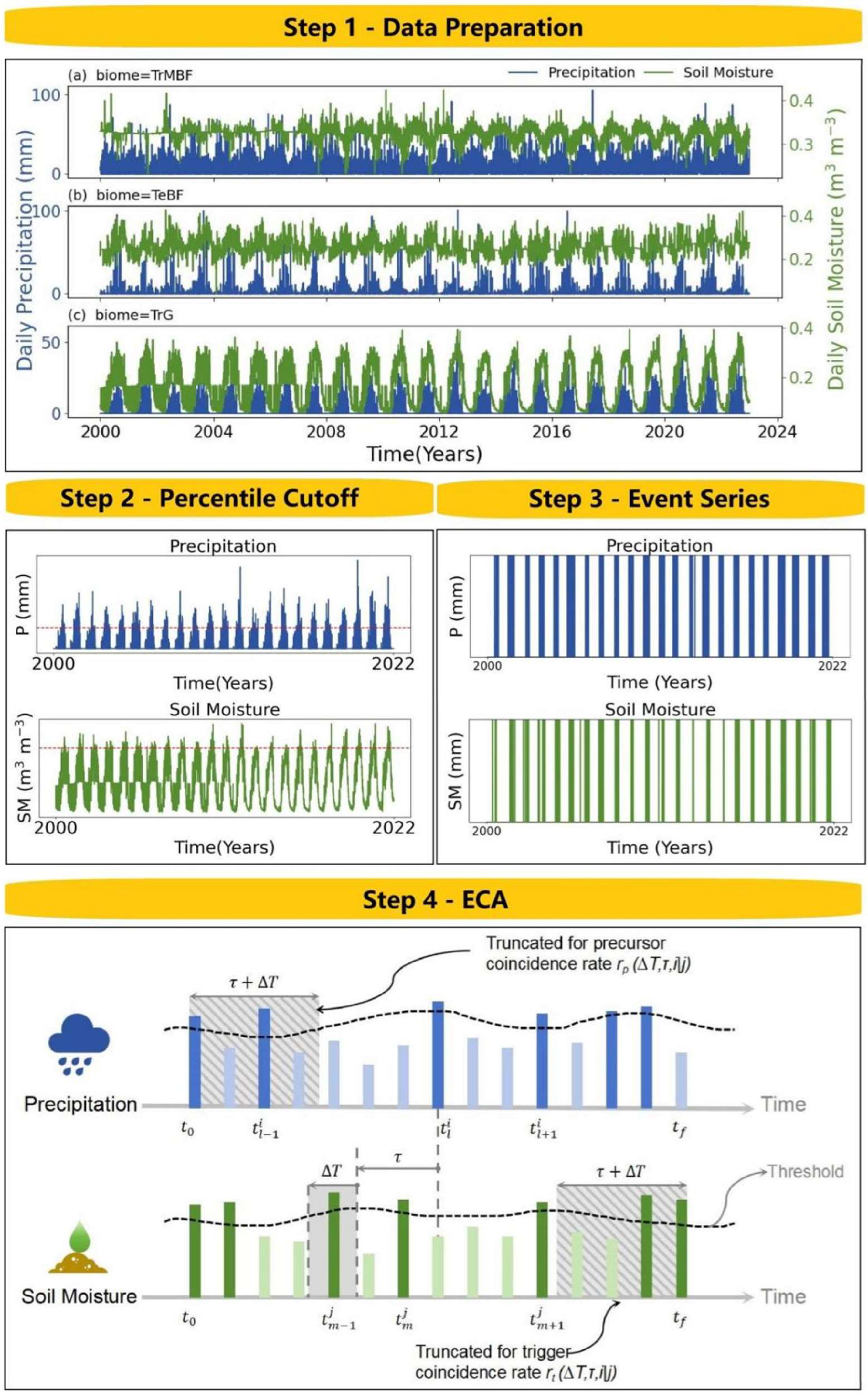
We extracted the time series of P and SM from three ecoregions (locations shown in Figure A1; for P and SM features, see Step 1 in Figure 1): Tropical and Subtropical Moist Broadleaf Forests (TrMBF) zone where P was uniformly distributed throughout the year without a significant rainy season, and SM fluctuated slightly; in Temperate Broadleaf and Mixed Forests (TeBF) zone where P was characterized by a clear seasonal cycle as well as SM; in Tropical and subtropical grasslands, savannas, and shrublands (TrG) zone, which has the least amount of P but a significant rainy season, SM responds rapidly to rainfall (i.e., a rapid increase followed by a gradual decrease after rainfall), and the regularity of fluctuation is the most significant.

2.3. Statistical Significance Assessment

Statistical significance testing was performed for all synchrony analysis results in this study. The specific procedure is outlined below:
Construction of the Null Distribution: Based on the aforementioned null hypothesis, surrogate data were generated using a block permutation method. Specifically, the SM extreme event series was temporally shifted starting from a lag of 1 day, while the P extreme event series was kept unchanged. This process disrupts any potential real temporal association between the two series while preserving their respective internal temporal structures. The procedure was repeated 500 times, each iteration yielding a synchrony index under the null hypothesis, thereby constructing an empirical null distribution of the synchrony index.
p-value Calculation: The synchrony index computed from the actual observed data was compared with the null distribution described above. The p-value is defined as the probability, under the null distribution, that a randomly generated synchrony index is greater than or equal to the observed value:
p = N b o o t s t r a p θ o b s N t o t a l
Significance Determination: A significance level of α = 0.05 was set. If the calculated p-value is less than 0.05, the null hypothesis is rejected, indicating that the synchrony between SM and P extreme events at that pixel is statistically significant.

2.4. Extraction of Extreme Event Series

For a given grid pixel (X), a daily time series of either P or SM data is converted to a binary sequence of 0 s and 1 s (see Step 3 in Figure 1), where 1 indicates that an event occurred and 0 indicates that an event did not occur. The daily time series of P and SM are denoted by X P ( t i ) and X SM ( t j ) , respectively, with observations for each t i , t j [ 1 , T ] . T denotes the last time step of the observation record. The threshold for extreme events is defined as the 95th percentile of the empirical cumulative distribution function of the time series at each grid point, representing the extreme intensity on a daily scale. The event time series Y P ( t i ) and Y SM ( t j ) are defined as
Y P ( t i ) = 1 , X P ( t i ) m 0 , e l s e
Y S M ( t j ) = 1 , X S M ( t j ) n 0 , e l s e
where m and n denote site-specific percentile cutoffs for P and SM when considering the entire time series data, and the 95th percentile is used in this study to retain daily values of SM-P extremes. The 95th percentile is a common metric for defining extreme climate events [35], offering a balance between extremity and statistical robustness: excessively high percentiles (e.g., the 99th) may yield too few events and increase sampling uncertainty, while lower thresholds would include more moderate events and dilute the “extreme” character. We thus derived the representative extreme event time series Y P ( t i ) and Y SM ( t j ) , where only the occurrence times of events t i and t j are recorded.
Operationally, for each grid cell, we first calculate the empirical cumulative distribution of the daily P and SM values over the full study period, then take the 95th percentile of that distribution as the extreme event threshold for that cell [36]. This approach is chosen for the following reasons: (1) it maintains a relatively consistent standard of extremity across different climate zones, avoiding regional biases that could arise from absolute thresholds; (2) it ensures a sufficient number of events to support robust estimation of coincidence rates between P and SM extremes; and (3) it aligns with the quantile-based methods commonly employed in extreme hydroclimatic studies, facilitating comparison with other research.

2.5. Linking Water Cycle Using SEM

Structural equation modeling (SEM) (Bollen, 1989) is used to explore the potential causal relationship between the components of the water cycle (P, SM and ET). Prior to analysis, to eliminate dimensional differences, all daily time series variables have been normalized within each grid point. We designed three pathways: (1) the direct impact of P on SM, (2) the direct impact of SM on ET and its feedback, and (3) the direct impact of ET on P. For simplicity, we only modeled the hypothesized effects. However, the impacts of P on SM can be modulated by runoff and interception, for example, through feedback. It should be noted that the SEM employed in this study primarily serves to test the strength and direction of predefined path relationships among variables. Its model identification relies on the following assumptions: the model specification reflects the key mechanisms of actual hydrological processes, and no significant confounding factors (such as radiation, temperature, surface runoff, vegetation interception, etc.) are excluded from the model. Nevertheless, we acknowledge that P’s influence on SM may be modulated by other processes such as runoff and interception in actual conditions. To simplify the model, this study did not explicitly model all these intermediate mechanisms.

3. Results

3.1. Spatiotemporal Changes in SM and P Extremes

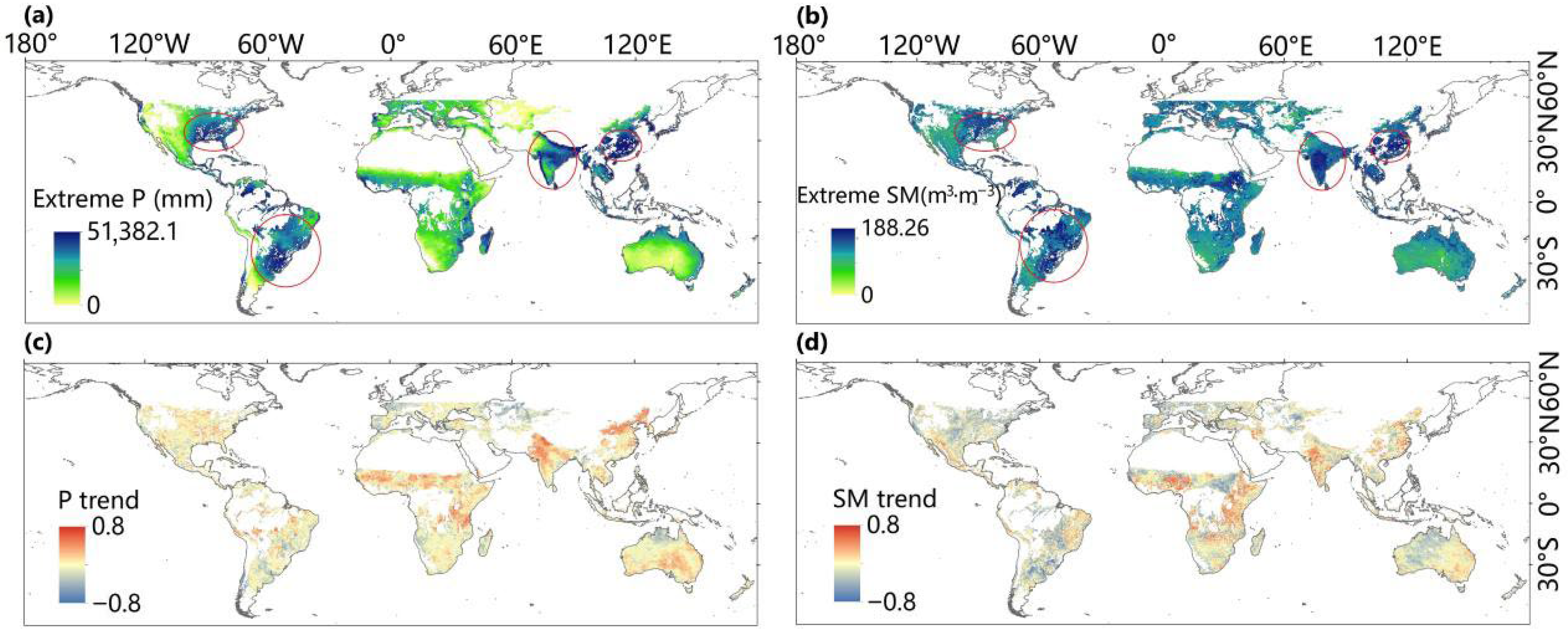
Based on the soil moisture (SM) and precipitation (P) extremes derived from daily-scale P and SM observations during 2000–2022, we documented large spatial variations in P extremes (global average = 344 mm) and extreme SM anomalies (global average = 5.43 m3m−3) (Figure 2a,b). High values are predominantly recorded in tropical regions such as Brazil, India, and Southeast Asia, though notable extremes also occur in parts of Argentina and southeastern North America. This pattern underscores the pronounced concentration of extreme hydrological events in tropical zones in addition to widespread increases in the frequency of SM-P extremes across global regions (Figure 2c,d). The pronounced variations in SM-P extremes were generally observed in coastal regions (e.g., Madagascar, southeast China, central India, northeast North America), while the pronounced increasing trends were generally observed in drylands or semi-drylands (e.g., Sahel, central Australia, southwest Asia, northern China). Spatially, both the annual mean magnitudes (r = 0.59) and trend coefficients (r = 0.22) of SM-P extremes show significant correlations (p < 0.05). Of the 56.9% of regions where SM-P extremes show the same trends (22.1% positive and 34.8% negative).
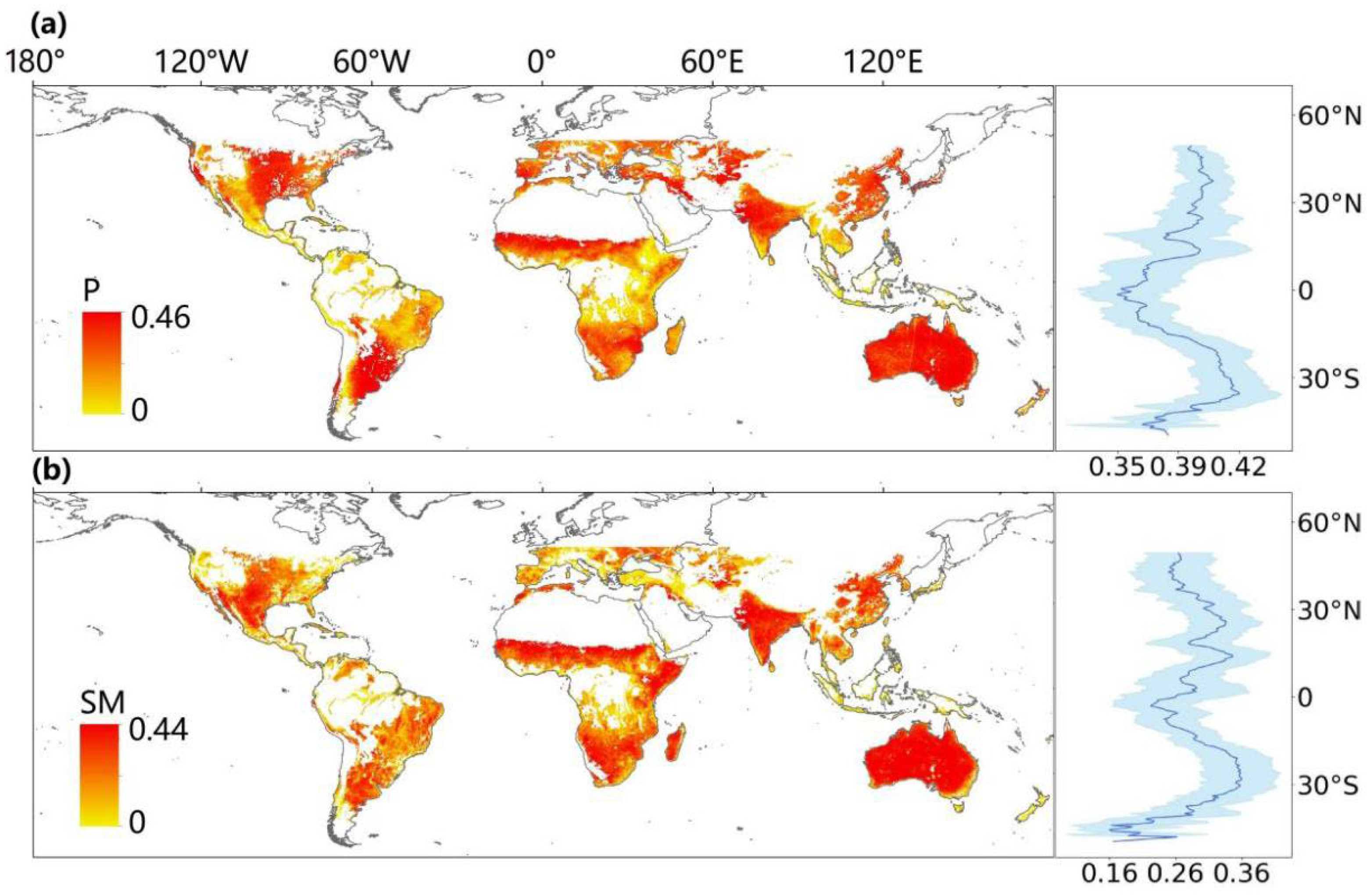
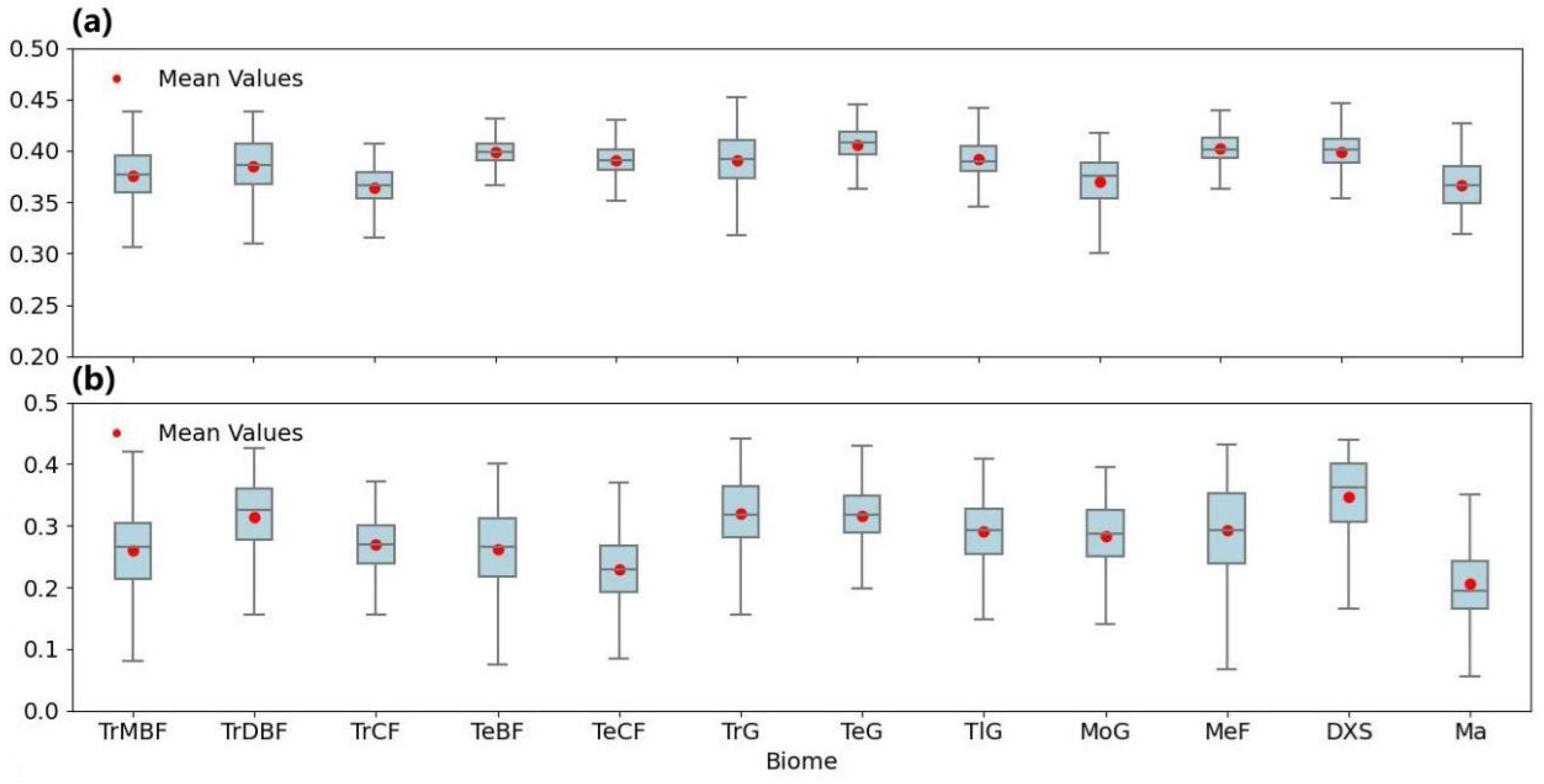
The spatial synchronization probabilities, which quantify the mean probability that the remaining regions in a 3 × 3 neighborhood of a given pixel will experience an extreme event within 10 days, were calculated for an extreme event (either P or SM) occurring at that pixel. The selection of the spatial neighborhood (3 × 3 grid) and temporal window (10 days) is based on a comprehensive consideration of geographical scale matching and methodological robustness. Firstly, at a 0.25° resolution, the 3 × 3 neighborhood corresponds to a spatial extent of approximately 83 km × 83 km (near the equator). This scale aligns with the typical spatial dimensions of local weather systems and hydrological processes, facilitating the capture of coordinated changes between adjacent grid cells while avoiding interference from heterogeneous processes introduced by overly large neighborhoods. Secondly, to validate the rationality of parameter selection, we conducted systematic sensitivity analysis. Tests indicate that the core spatial pattern of spatial synchronization probability is insensitive to neighborhood size (comparing 5 × 5 and 7 × 7 grids). The selection of a 3 × 3 grid primarily aims to achieve higher geographic resolution within an acceptable spatial representativeness range. On the temporal scale, shorter windows (e.g., 5 days) yield insufficient paired extreme event samples, making robust statistical convergence difficult; longer windows (e.g., 15 or 20 days) may encompass multiple independent extreme event sequences, obscuring direct causal links. In contrast, a 10-day window strikes the optimal balance between ensuring sufficient sample size and focusing on a single potential event chain, making it most consistent with the characteristics of hydrometeorological processes. We show that the synchronization probability of P extremes greater than 39% accounted for 59% of land areas, while the mean values for the TrMBF (38%), Tropical and Subtropical Dry Broadleaf Forests (TrDBF) (38%), Tropical and Subtropical Coniferous Forests (TrCF) (36%), Montane Grasslands and Shrublands (MoG) (37%), and Mangroves (Ma) (37%) ecoregions were slightly smaller than the total mean (Figure A2a). The spatial synchronization probability of extreme SM anomalies (global average = 30%) is generally 5–16% lower than that of P extremes (global average value = 39%) (Figure 3b), with the largest difference between Ma and Temperate Coniferous Forests (TeCF) (16%) and the smallest difference between Deserts and Xeric Shrublands (DXS) (5%) (Figure A2b). Both types of SM-P extremes show clear latitudinal variations in the spatial synchronization probability, which is a lower probability across tropical regions (Figure 3).

3.2. Temporal Synchrony Probability Between SM-P Extremes

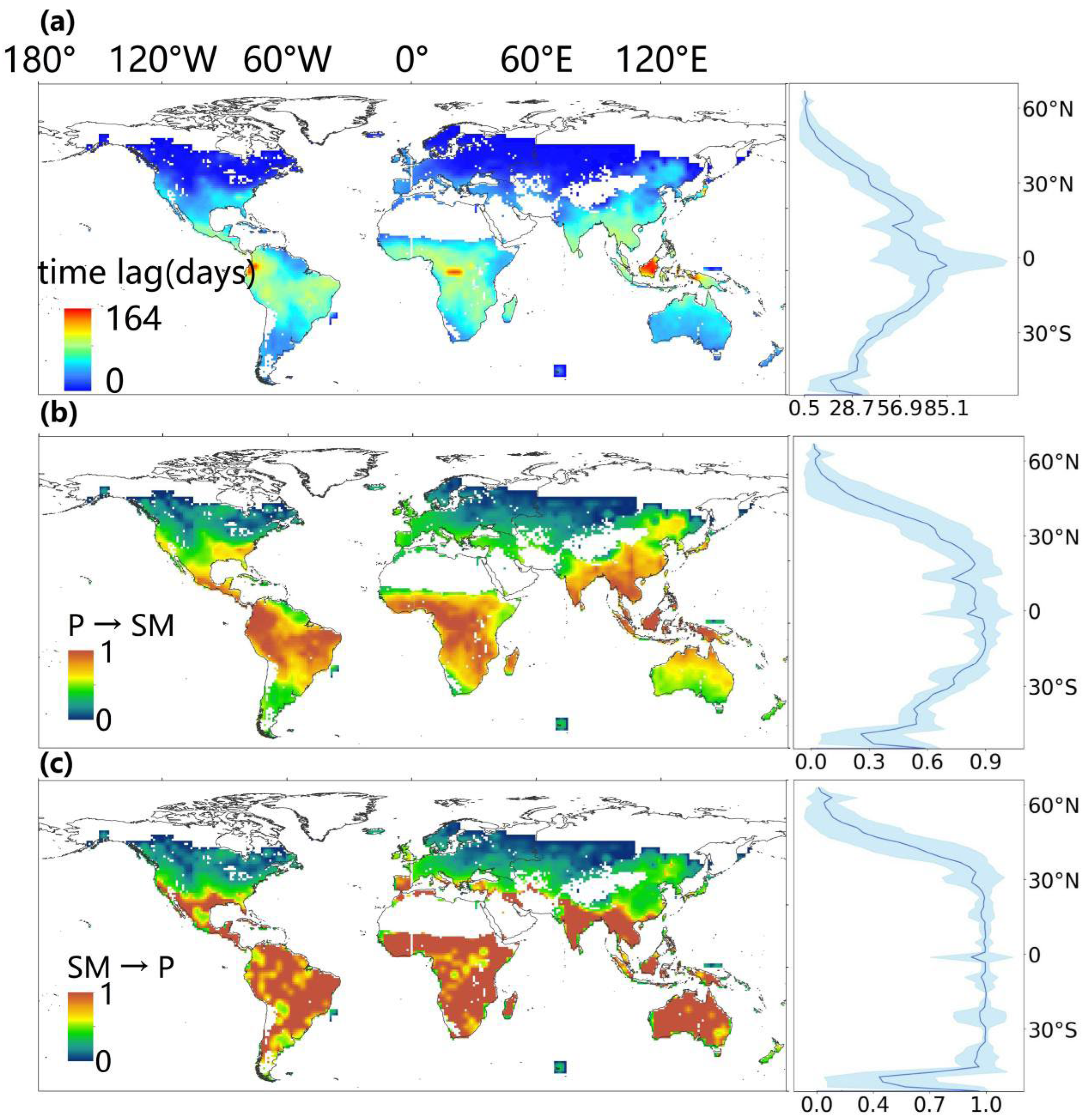
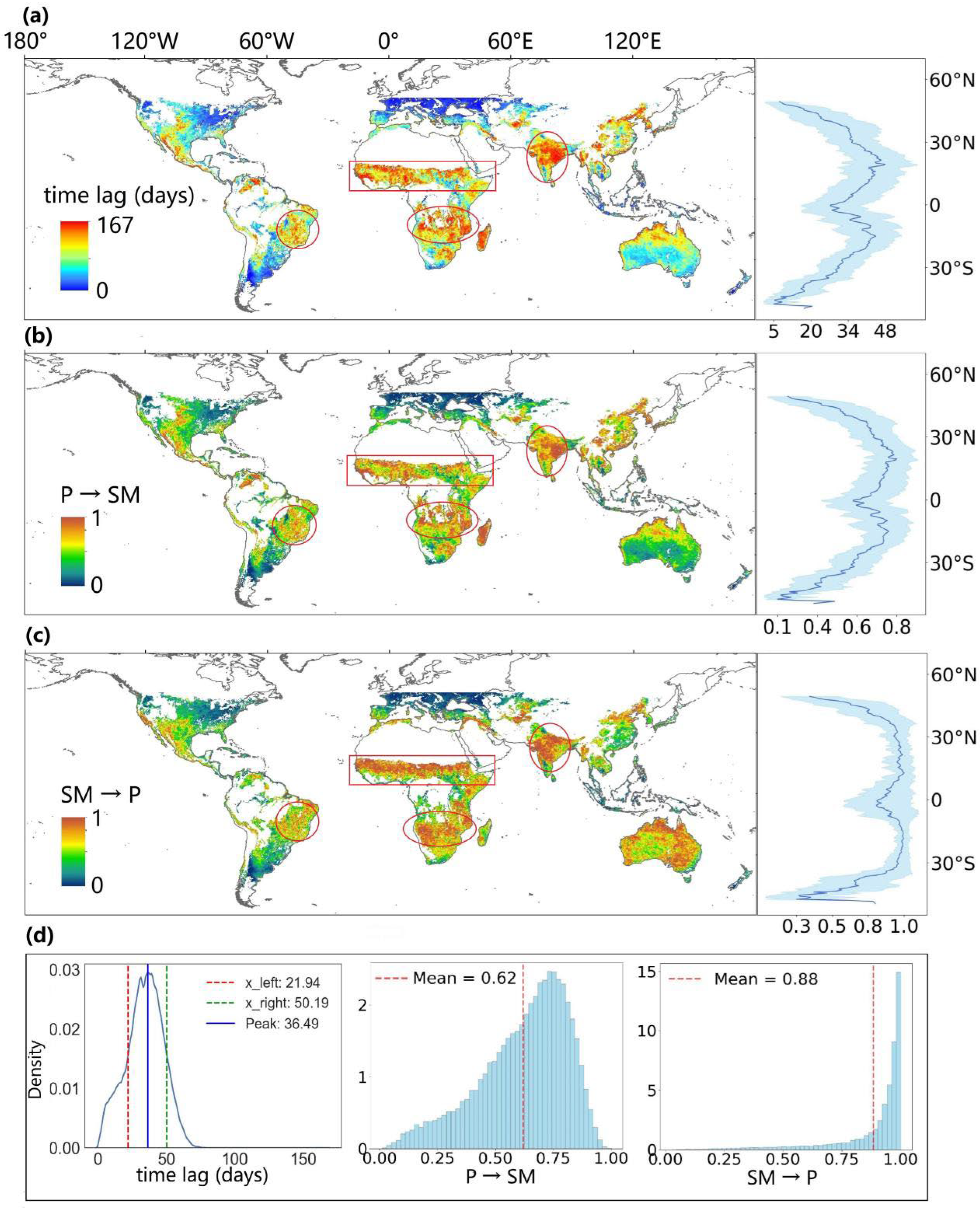
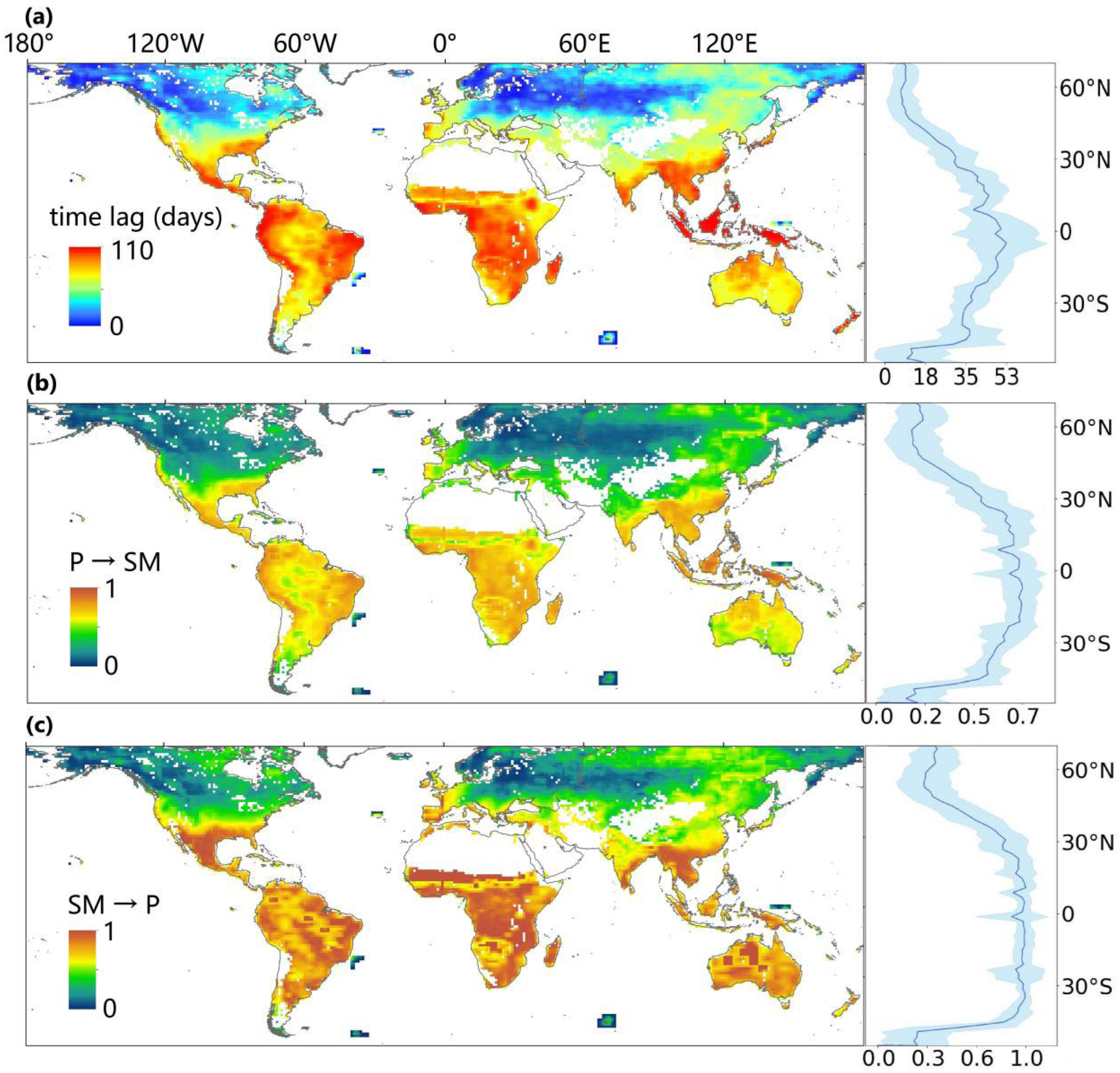
The ECA method was then used to quantify the temporal synchronization between P extremes and extreme SM anomalies identified within the time window. We showed that significant temporal synchronization (Figure 4a), 73% of the regional time window, in the study area is 20–50 days, with the high-value area (50–60 days) concentrated in the southern part of South Africa (4° S–24° S) and in the South Asian monsoon region (peninsular India); the higher the latitude (>35° N/S), the shorter the time window (~20 days); Southern Australia (23° S–38° S) remained at a 20–30-day low. Further analysis showed that the synchronization time varied significantly across vegetation types: the average time for TrG amounted to 41.81 days (the highest), while Temperate Grasslands, Savannas, and Shrublands (TeG) was only 23 days (the lowest) (Figure A3a). The dominance of climate zones is evident: synchronization is concentrated at 20–30 days in temperate regions and generally maintained at 30–45 days in the tropics; while differences in vegetation within the same climatic zone can lead to fluctuations (e.g., temperate forests vs. grasslands), their magnitude is always limited by climate type thresholds, suggesting that there may be nonlinear regulation of hydrological processes by specific vegetation assemblages.
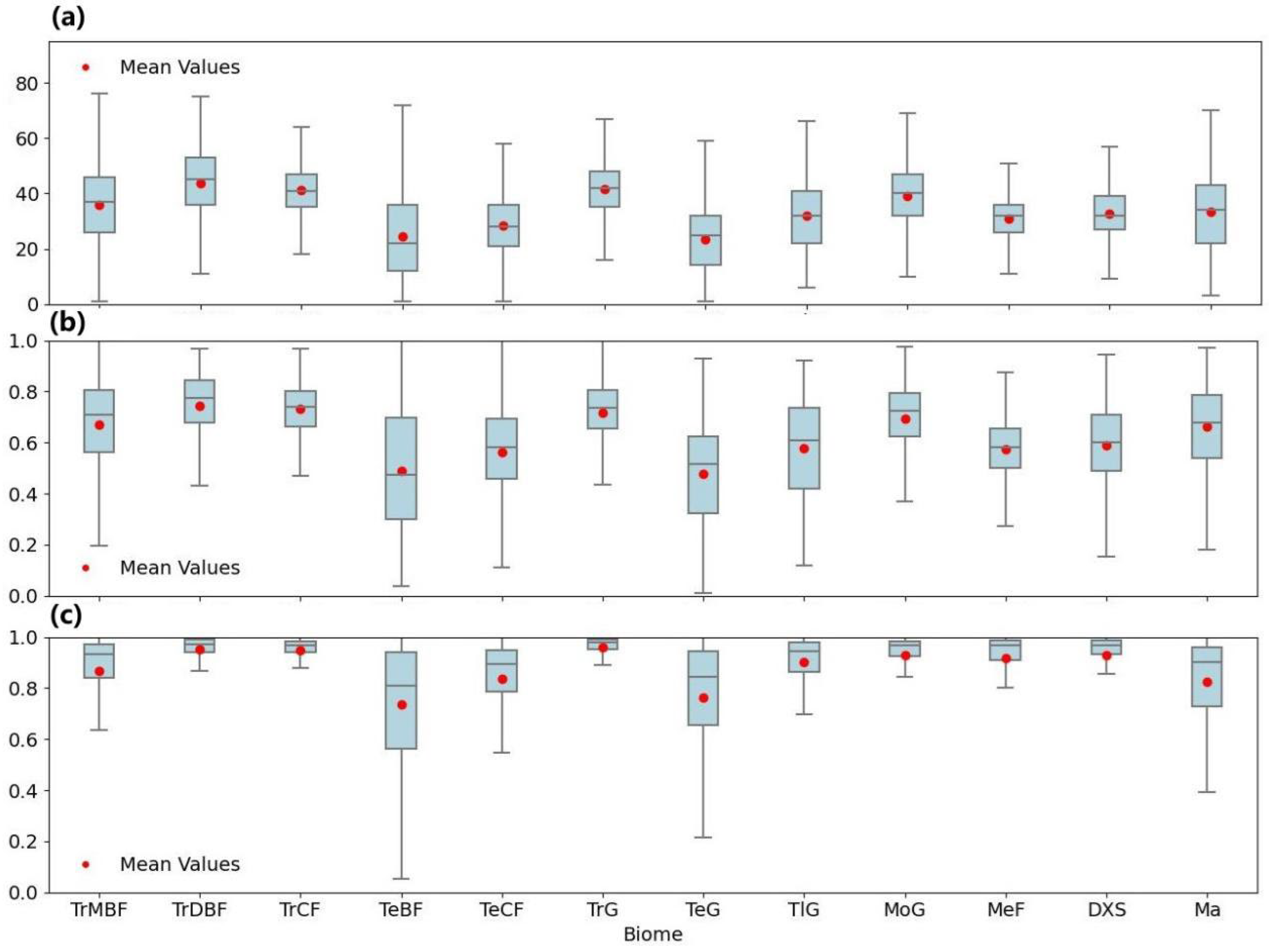
We further showed the synchronization probability of SM/P extremes occurring significantly after P/SM extremes occur within the time window (Figure 4b). In other words, this suggested that P/SM extremes can be considered as precursors of SM/P extremes [36]. We showed that the global average probability of extreme SM anomalies occurring after P extremes was 62%. Meanwhile, the probability of P extremes occurring after extreme SM anomalies was 88% (Figure 4d). It is worth noting that the value of 74% is both the highest probability for the former (TrMBF) and the lowest probability for the latter (TeBF) (Figure A3b,c). This suggests that extreme SM anomalies are more likely to be precursors of P extremes. On a regional scale, the Sahel, southern Africa, northern Australia, India and Brazil generally have a higher probability of extreme SM anomalies occurring after the occurrence of P extremes. In contrast, the lower probability was observed across southern Europe, northern America and southern America and southern Australia (Figure 4b). Likewise, a similar spatial pattern showing a higher probability of P extremes occurring after the occurrence of extreme SM anomalies and lower probability was observed (Figure 4c). This indicates the varying strength between P and SM interactions across these regions. From the perspective of vegetation cover types, the probability of P extremes triggering extreme SM anomalies is generally higher in tropical vegetation zones—including TrMBF: 67%, TrDBF: 74%, TrCF: 73%, and TrG: 72%—compared to temperate vegetation zones, which include TeBF: 49%, TeCF: 56%, and TeG: 48%. This pattern is consistent with the spatial distribution of high-probability regions mentioned earlier. Similarly, following extreme SM anomalies, the probability of P extremes also shows a comparable trend: tropical vegetation zones (TrMBF: 87%, TrDBF: 95%, TrCF: 95%, TrG: 96%) exhibit higher values overall than temperate vegetation zones (TeBF: 74%, TeCF: 84%, TeG: 76%). These results further suggest that vegetation type may play an important role in regulating the strength of land–atmosphere hydrological coupling.

3.3. Relationship Between P, SM and ET

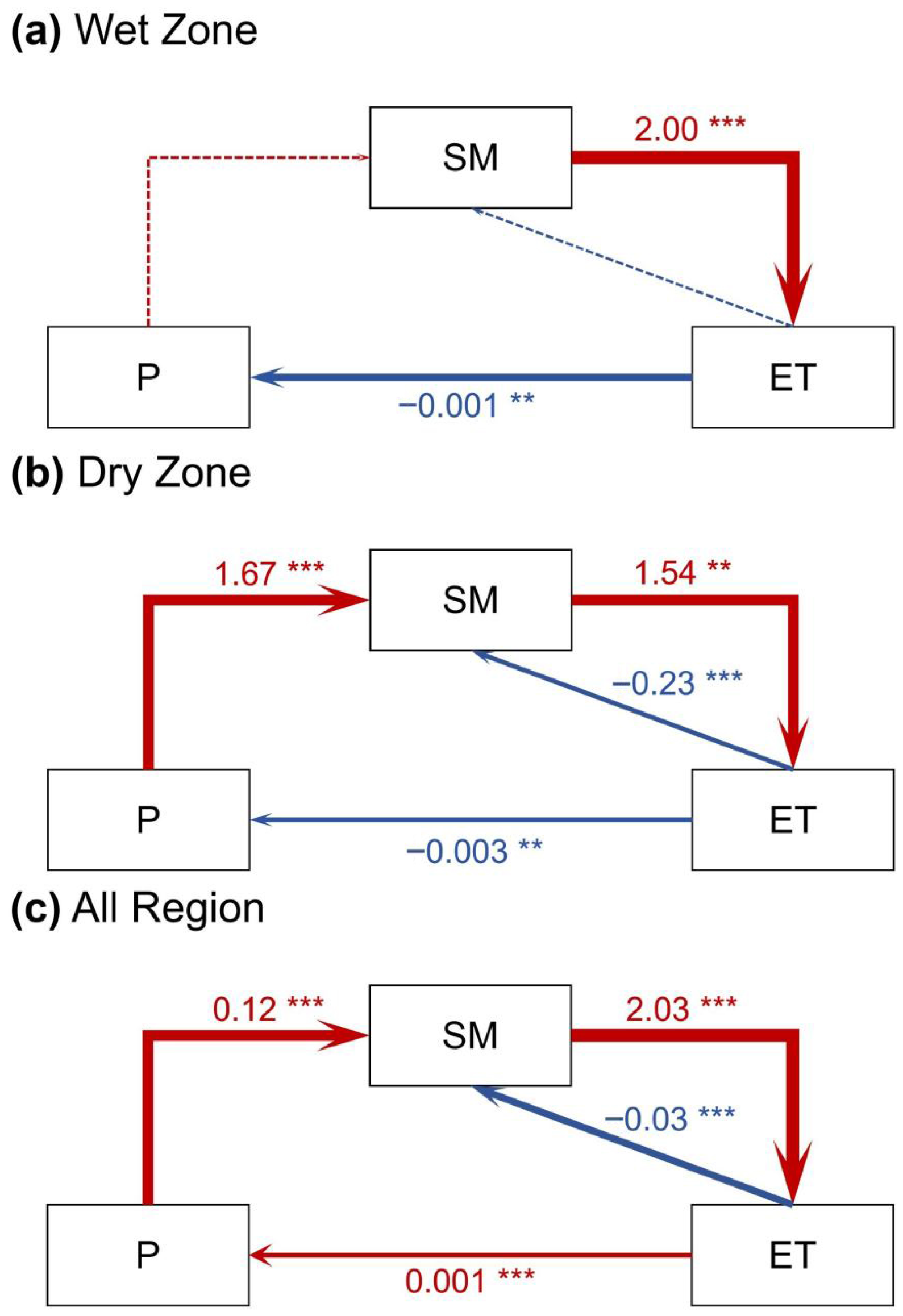
Evapotranspiration (ET) serves as the pivotal process linking P and SM, directly consuming soil water and influencing local climate through latent heat flux. To quantitatively assess its intermediary role in the P-SM interactions, we conducted a path analysis of these three variables using SEM. This analysis is grounded in the strong statistical relationships observed among the variables: ET exhibits highly significant positive correlations with both P (R = 0.86, p < 0.01) and SM (R = 0.92, p < 0.01), satisfying the fundamental prerequisite for mediation analysis. To distinguish process differences under varying moisture conditions, we utilized the Standardized Precipitation Evapotranspiration Index (SPEI) to classify the study area into arid and humid zones. Specifically, based on the annual mean SPEI values from 2000 to 2014, areas with SPEI ≤ −1.5 were defined as arid zones, while those with SPEI ≥ +1.5 were designated as humid zones. This threshold is widely used to identify moderate-to-severe drought and exceptionally wet conditions, effectively distinguishing the water budgets and ecohydrological contexts between these two types of regions. This approach aimed to elucidate the driving pathways and feedback mechanisms among the three variables (Figure 5). The results showed that P, as the main input source of SM, had a significant positive direct effect (β = 0.1206, p < 0.001) (Table A2), with a higher conversion efficiency in the dry zone (β = 1.6724, p < 0.001) and borderline significance in the wet zone (β = 0.0013, p = 0.0947), reflecting the weakening effect of soil saturation and runoff loss on water storage capacity in humid regions.
The influence of SM on P is primarily mediated through its regulation of ET. Path analysis revealed a significant positive effect of SM on ET (β = 2.0267, p < 0.001), indicating that increased SM substantially enhances ET. This promoting effect was more pronounced in wet zones (β = 2.0000, p < 0.001) than in dry zones (β = 1.5415, p = 0.0122), reflecting differential vegetation water use strategies under varying SM regimes. In contrast, ET exerted a general suppressing effect on SM (β = −0.0291, p < 0.001), with regional heterogeneity: the effect was weaker in dry zones (β = −0.2266, p < 0.001), where deep-rooted vegetation mitigates surface SM dependency by accessing deeper water sources, and non-significant in wet zones (β = −0.0001, p = 0.0947) due to frequent replenishment of SM by P. At the quasi-global scale, ET exhibited a significant yet weak positive feedback effect on P (β = 0.0013, p < 0.001). However, at regional scales, the direction of this influence reversed, with both dry and wet zones showing consistent negative feedback (β = −0.0010, p = 0.0118; β = −0.0034, p = 0.0212, respectively), reflecting localized self-regulatory processes under different hydroclimatic regimes. These feedback pathways collectively demonstrate that within the “SM → ET → P” cascade, despite the inhibitory effect of ET on P at local scales, the strong positive driving force of SM on ET remains dominant, resulting in clearly positive net indirect feedback from SM to P globally. This mechanism highlights how SM fundamentally shapes atmospheric moisture supply through its potent regulation of ET, with an intensity that substantially outweighs subsequent local regulatory consumption processes. Therefore, this study demonstrates that within the overall hydrological cycle, the positive feedback from SM to P is relatively stronger and more deterministic. Quantifying the strength of this feedback pathway—achieved here through the product of path coefficients or model fit indices—provides key insights for understanding regional hydroclimatic dynamics.

3.4. Simulated Temporal Synchrony of P and SM Extremes

We extracted daily timescale SM and P from nine Earth System Models participating in CMIP6, including BCC-ESM1, CanESM5, GISS-E2-2-G, IPSL-CM5A2-INCA, IPSL-CM6A-LR, IPSL-CM6A-LR-INCA, KACE-1-0-G, MIROC6 and MRI-ESM2-0 (Table A1). To ensure a consistent comparative framework across models with differing native resolutions, all daily model outputs were regridded to a common 0.5° × 0.5° latitude–longitude grid using bilinear interpolation. Our study focuses on daily P (pr) and moisture content in the upper layer of the SM (mrsos) for the period 2000 to 2014 overlaid with satellite-based SM and P data. The CMIP6 variable mrsos, defined as the moisture content in the upper soil layer (typically 0–10 cm), was originally provided in units of kgm−2. For direct comparison with satellite-based products, mrsos values were converted to volumetric units (m3m−3) using the upper-layer soil thickness specified by each respective model. However, the specific definition of the “surface layer” (e.g., 0–10 cm versus 0–5 cm) and the soil layer schemes vary across different models. This structural inconsistency is one of the inherent sources of uncertainty in cross-model comparisons. Processed model data were then compared against satellite-derived SM and P estimates that had been regridded to the same 1° resolution. We applied the ECA method to simulations from nine CMIP6 models to derive the synchronization window for each. The simulations further revealed a distinct spatial pattern, with the synchronization window shortening markedly at higher latitudes (Figure 6a), a feature consistent with the spatial distribution observed in satellite data. Moreover, the models successfully reproduced the locations of larger synchronization windows seen in satellite products, including southern South Africa, the Indian Peninsula, and parts of Brazil. The model analysis further revealed a notable latitudinal dependence, with synchronization probabilities declining markedly toward higher latitudes (Figure 6b,c), a trend consistent with satellite observations. While differences in physical parameterizations and process representations among models introduce uncertainty in the absolute values of simulated SM, they nevertheless demonstrate consistency with observations in the statistical relationships of extreme events (such as the spatial patterns of synchrony and latitudinal trends) that are the focus of this study. This convergence strengthens our confidence in the physical mechanisms underlying this pattern, suggesting that despite variations in specific numerical realizations, the models are capable of capturing the key large-scale physical processes driving the co-variability between extreme SM and P.
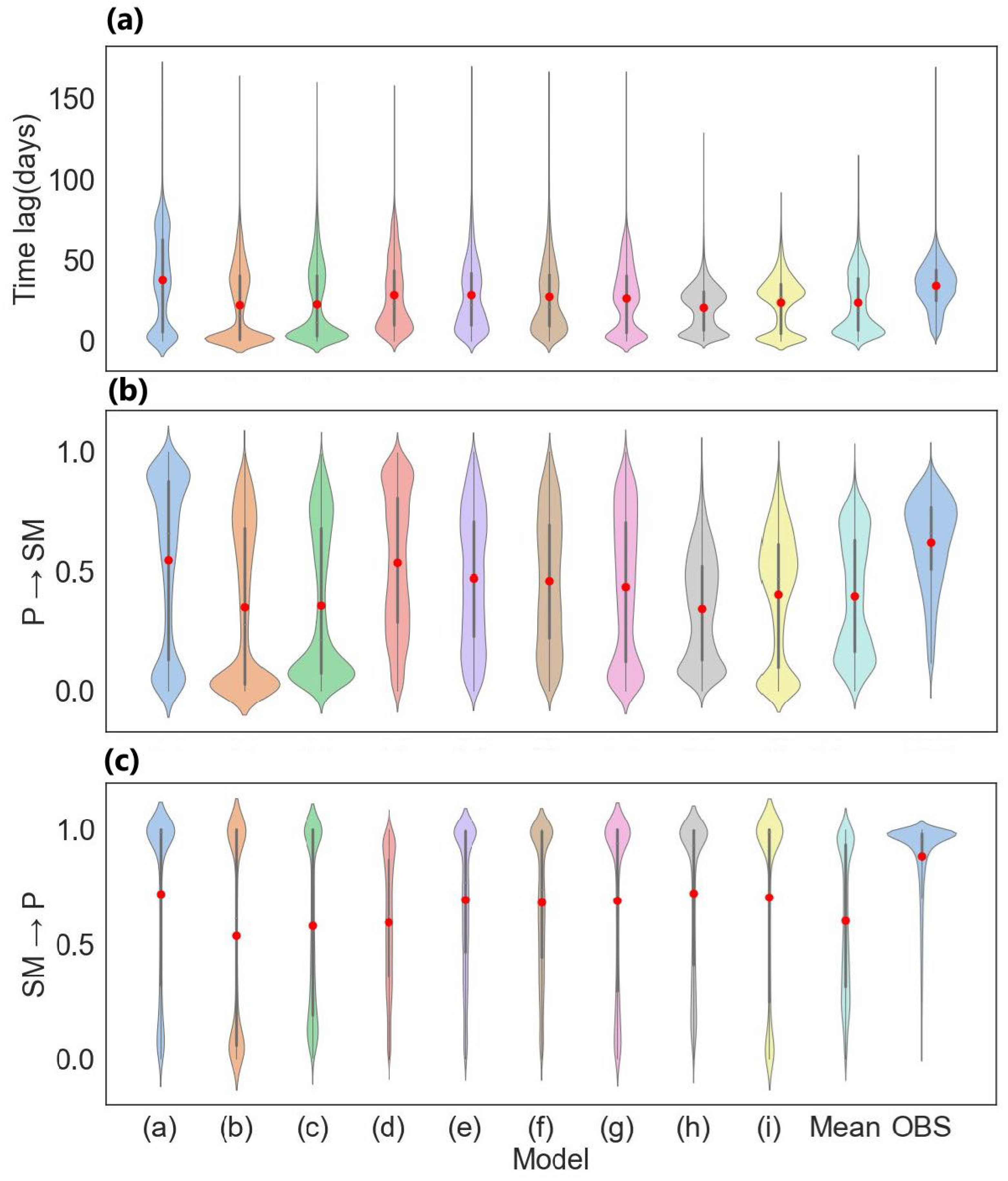
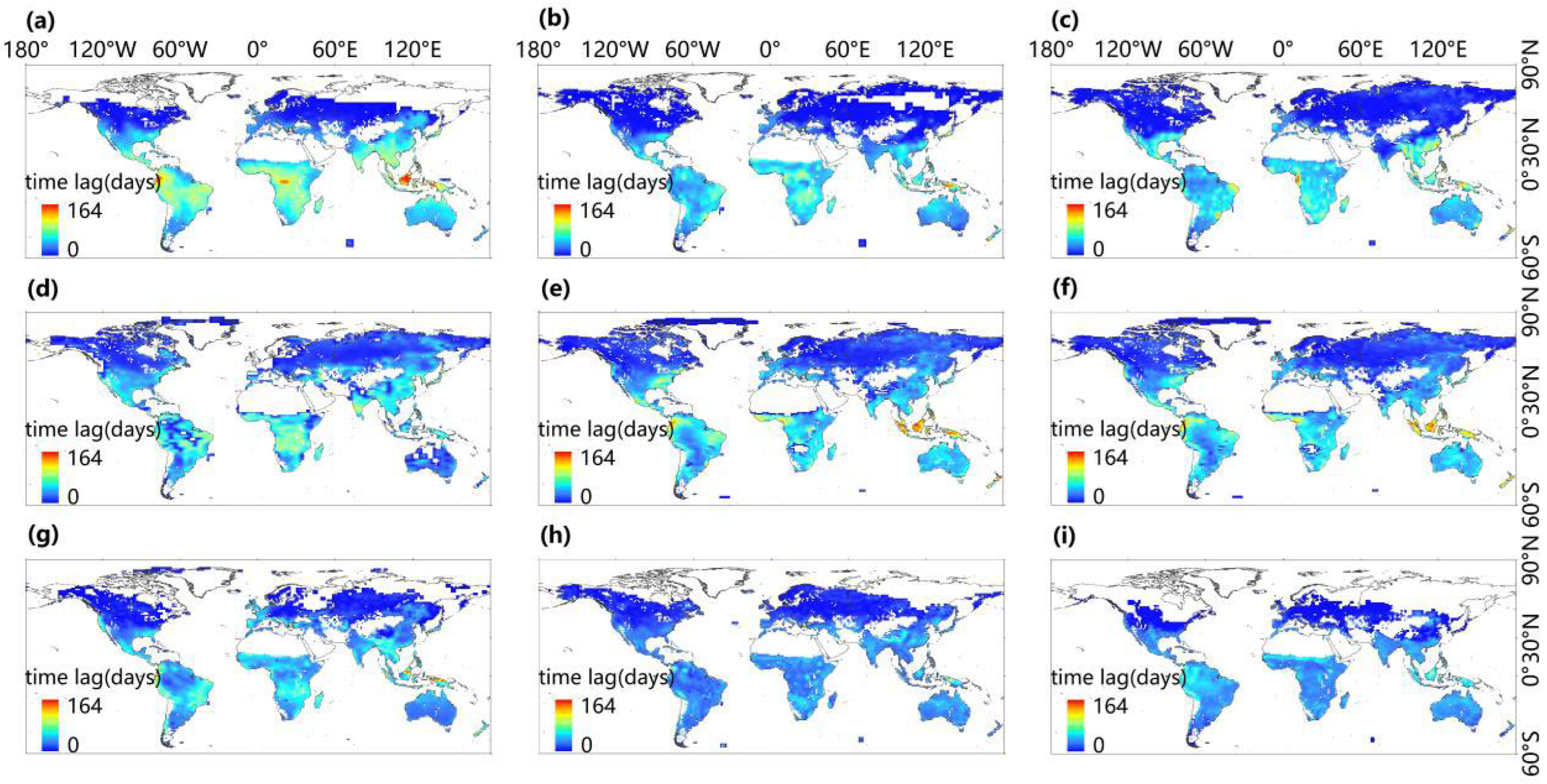
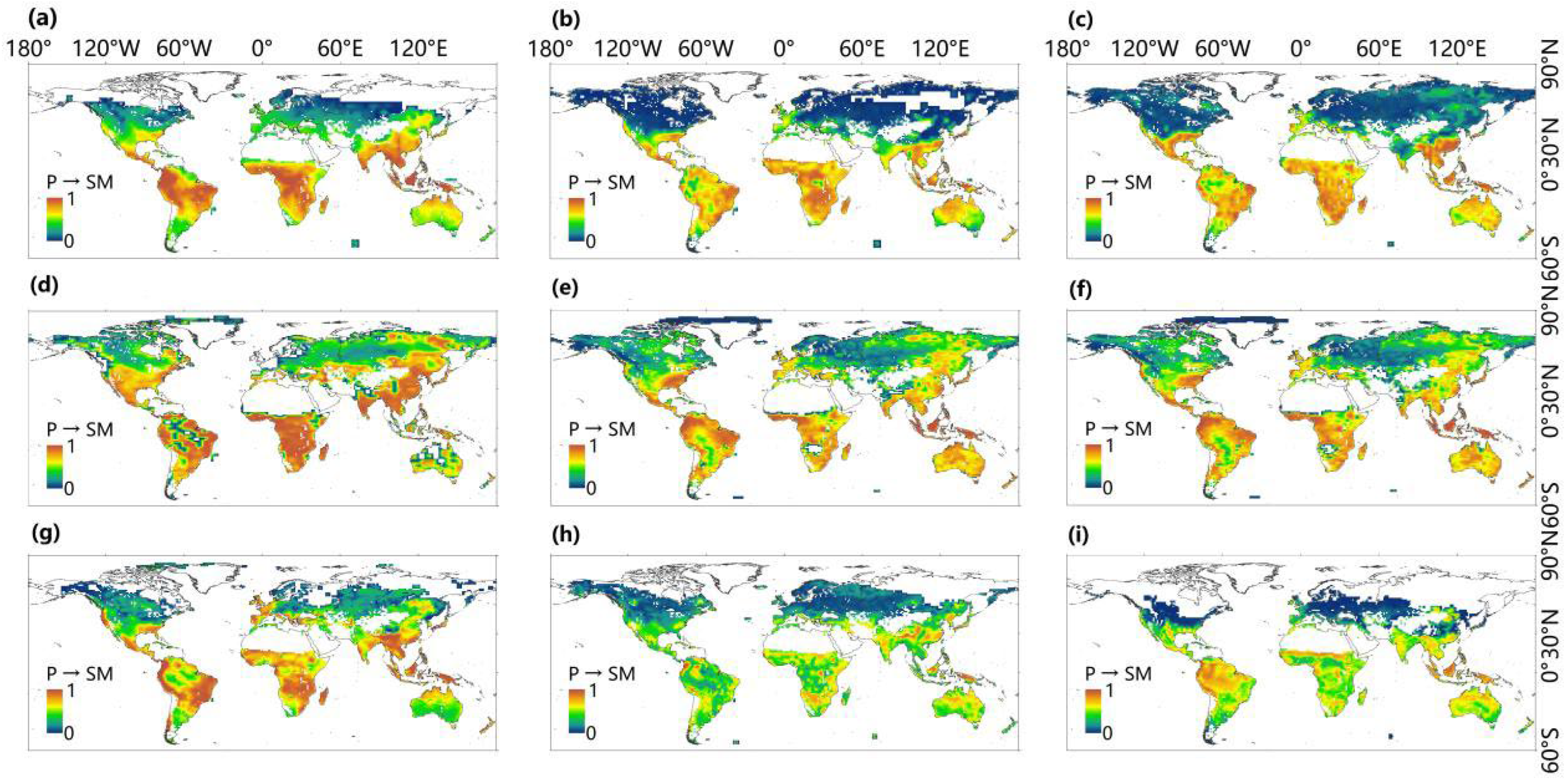
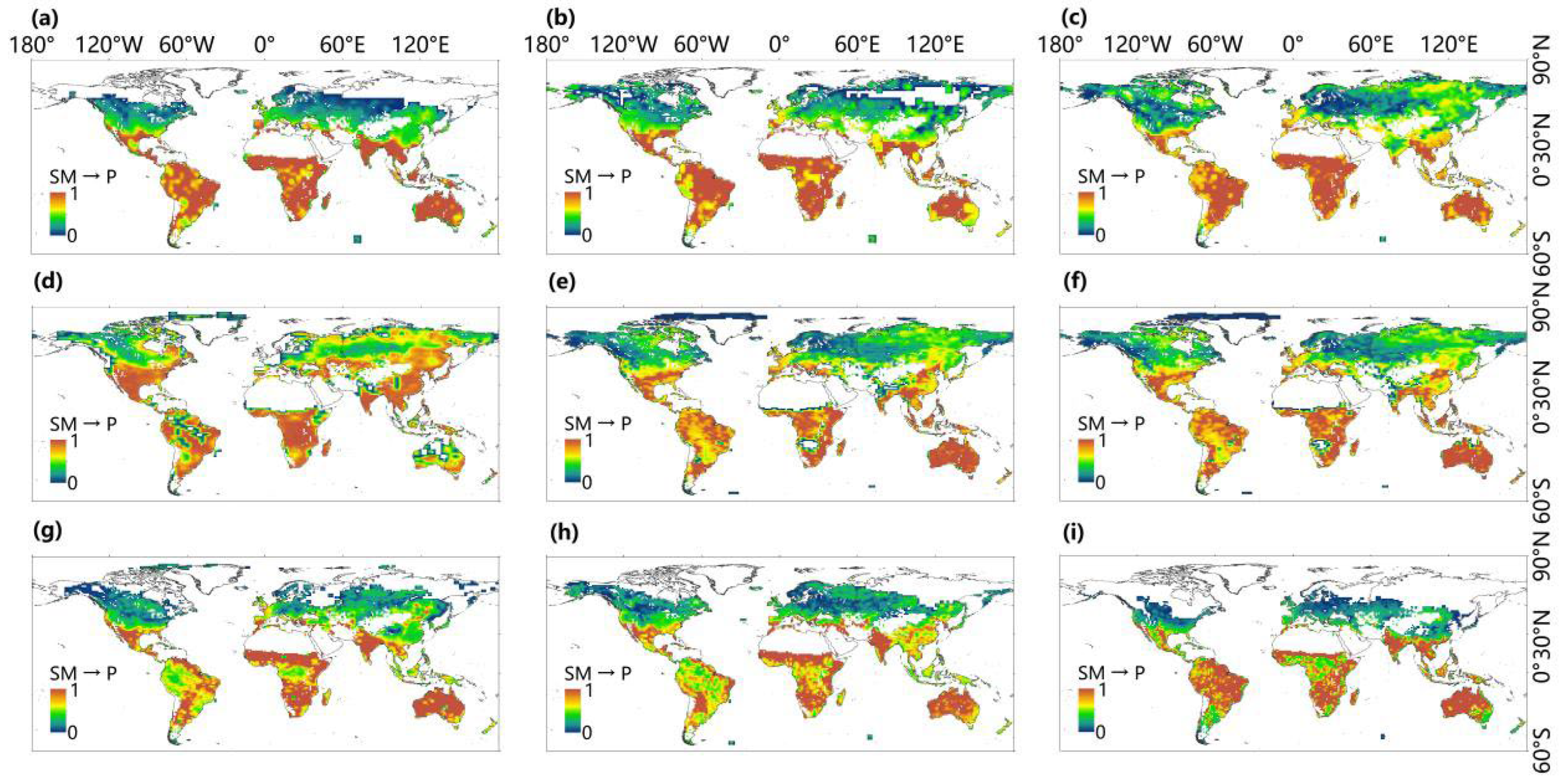
In the quantitative comparison, however, the models collectively exhibited a systematic underestimation: the average synchronization window for SM-P extremes was 23.57 ± 18.70 days, significantly shorter than the satellite-based estimate (34 ± 14 days) (Figure 7a). Moreover, the synchrony probability of extreme SM anomalies following P extremes, as well as that of P extremes following extreme SM anomalies simulated by the ESMs, was consistently lower than satellite-based estimates (40% ± 25% and 60% ± 31% for ESMs, respectively; satellite estimates: 62% ± 19% and 81% ± 17%) (Figure 7b,c; see Figure A5 for P→SM and Figure A6 for SM→P synchrony probabilities). To investigate inter-model differences, we further evaluated each model individually (Figure 7). The results showed that BCC-ESM1 simulated the longest synchronization window (38.00 days), while MIROC6 produced the shortest (20.53 days). In terms of bidirectional synchrony probabilities, BCC-ESM1 yielded the highest estimate for P→SM direction (55%), with CanESM5 and MIROC6 being the lowest (35%). Conversely, for the SM→P direction, BCC-ESM1 and MIROC6 showed the highest values (72%), while CanESM5 remained the lowest (54%). In a comprehensive model evaluation, BCC-ESM1 demonstrated the smallest deviation from satellite-based results, indicating its potential as a viable substitute in the absence of satellite data. Based on its reliability, we further present the spatial distribution of synchronization characteristics simulated by this model under a future climate scenario (SSP 5-8.5) (Figure 8), supporting the use of CMIP6 outputs for future projections and for constructing advanced disaster forecasting systems, such as flood prediction.

4. Discussion

4.1. The Applicability of ECA for Quantifying Synchrony

Our study used the ECA method to quantify the interactions between satellite-based soil moisture (SM) and precipitation (P) extremes. This ECA method allows revealing the temporal synchronization between SM-P extremes that could be obscured by a traditional correlation analysis (e.g., Pearson correlation) or directional ambiguity methods (e.g., event synchronization). In contrast to the limitations of Granger causality analysis, this method can also quantify the time lag response between variables without the need to define the lag order. Based on the ECA framework, our study extended knowledge of SM-P extremes synchronization from India and Europe to proximate global scales [18,19] constrained by the satellite-derived SM spatial coverage. However, reanalysis or modeling data have the potential to compensate for the entire global scale, provided that the generated SM and P data are independent. It is worth emphasizing that this study focuses on the statistical dependence between “extreme events” themselves, which is fundamentally distinct from research paradigms aimed at clarifying continuous “causal pathways” between variables (e.g., Sun [37]). The ECA method does not presuppose a causal direction but instead objectively quantifies the probability of extreme states following one another. This provides a unique perspective for revealing nonlinear relationships that traditional causal analyses may fail to capture or may obscure, particularly in the tails of the distribution.

4.2. Understanding the Synchrony of SM-P Extremes

We observed that most of the global regions (73%) experience temporal synchrony of SM-P extremes within 20–50 days. However, extreme SM anomalies are observed to precede P extremes more often. This may be related to abundant SM, associated with increases in vapor pressure deficit, enhancing ET and potentially promoting convective development and regionally intense P (Figure 5). Wet soils can thus contribute to subsequent P by altering surface fluxes, especially in semi-arid regions with strong interactions between water cycling and vegetation (i.e., transpiration). This process requires further interpretation in conjunction with the vertical stratification of SM. The ESA-CCI SM product used in this study primarily reflects conditions in the 0–5 cm surface layer. Variations in surface SM are highly dynamic, directly driving rapid evaporation following P and effectively increasing local atmospheric humidity. However, the more persistent vegetation transpiration component within evapotranspiration (ET) is primarily regulated by SM in deeper root zones (>10 cm). Therefore, the strength of the positive feedback from surface SM to P largely depends on whether shallow moisture can rapidly infiltrate to replenish roots or maintain strong coupling with deep-layer moisture—a critical factor in semi-arid regions where vegetation water acquisition strategies are highly sensitive to vertical SM distribution, suggesting that in the areas, the development of P is strongly dependent on the supply of SM [5,7].
The low probability of extreme SM anomalies following P extremes occurrences is probably due to the inability of P to be fully and efficiently converted into SM storage. Firstly, the dense vegetation canopy intercepts P, making it evaporate directly back to the atmosphere [37]. Secondly, for the part of P penetrating the canopy, the P is absorbed by the vegetation for transpiration, which depletes the effective SM, while the drainage capacity of the soil (both rapid infiltration of gravitational water and lateral runoff) and strong evaporation from the surface soil together drive a low probability of P-induced SM peaks. This also agrees with SM memory [15,38]. Thirdly, the ability to reach extreme SM anomalies after P extremes depends heavily on how wet the initial SM was prior to the event. For example, extremely dry soils in the preceding period will preferentially take up water to replenish deficits. Additionally, this ability is also modulated by the intensity and duration characteristics of the P itself [39].
In contrast to the low probability of extreme SM anomalies following P extremes, the occurrence of P extremes is significantly more likely after extreme SM anomalies—particularly under extremely wet conditions—primarily due to the positive feedback mechanism of SM on P processes. Firstly, SM substantially increases local atmospheric humidity by enhancing ET. Here, ET exhibits a hierarchical response: a rapid increase in surface SM immediately boosts surface evaporation; meanwhile, the previously moist root zone soil maintains a high vegetation transpiration rate, providing a more sustained source of water vapor. This elevated ET serves as a moisture source, fostering convective development and P formation, thereby indirectly raising the likelihood of P extremes. This process is strongly supported by the SEM results, which reveal a robust positive feedback effect of SM on ET across both humid and arid regions. Secondly, the strength of this feedback mechanism is strongly dependent on the antecedent wetness of the SM. Pre-existing moist soils not only sustain higher ET rates over time, prolonging the atmospheric moistening effect, but also further modulate local climate conditions—for instance, by reducing surface albedo and altering the surface energy balance (e.g., increasing latent heat flux)—thereby creating an environment more conducive to heavy P [4,36]. Moreover, the SM memory effect [38] allows such wet anomalies to persist for weeks to months, extending the potential time window during which SM can influence subsequent P events. In summary, the spatiotemporal patterns and asymmetry of extreme SM-P linkages revealed by the ECA approach in this study provide a new line of evidence distinct from traditional causal pathway analyses. This does not negate the mediating roles of sensible heat (SH) or ET, but rather suggests that under extreme conditions, the triggering efficiency and dominance of these physical pathways may be reconfigured and amplified through processes such as SM memory. This perspective based on the probabilistic association of extreme events also leads to different implications for climate model evaluation: we found that while most CMIP6 models struggle to accurately reproduce certain local causal pathway intensities, they are relatively capable of capturing the basic large-scale, statistically significant positive association between extreme SM and P. This indicates that when evaluating a model’s ability to simulate land–atmosphere coupling, in addition to testing the realism of its physical processes, assessing its capability to reproduce the co-occurrence of extreme events is equally critical.

5. Conclusions

In this study, we applied ECA to investigate the global-scale temporal synchrony between soil moisture (SM) and precipitation (P) extremes, using satellite-derived P (CHIRPS) and SM (ESA CCI) data. The main findings are as follows:
(1) Over quasi-global land areas (50° S–50° N), extreme SM anomalies exhibit a relatively low probability (62%) of occurring within a short-term window (34 days) after P extremes, whereas the probability of P extremes following extreme SM anomalies is considerably higher (88%), indicating an asymmetric triggering mechanism between SM-P extremes.
(2) Based on a global analysis stratified by climate zones and vegetation types, the interaction between SM and P extremes is significantly stronger, on average, within tropical/subtropical regions compared to temperate regions for analogous vegetation covers.
(3) Most of the nine evaluated CMIP6 models are generally capable of reproducing the observed synchrony patterns of SM-P extremes. Among them, BCC-ESM1 shows the best agreement with satellite-based results and can be used as a reliable proxy in cases of satellite data absence.
(4) Our findings underscore the significant impact of intensified extreme climatic events on hydrological system stability under climate change, and highlight the necessity of addressing their potential threats to safeguard water security and ecological balance.
Overall, this study reveals the precursor and trigger mechanisms underlying SM-P extremes across global land surfaces. By synthesizing the interconnections among precipitation, soil moisture, and evapotranspiration, our results provide deeper insight into the interactive processes governing the terrestrial water cycle. Future work should incorporate additional hydrological variables, such as precipitation interception and runoff, to further improve the prediction of compound climate extremes.

Author Contributions

Conceptualization, Methodology, Writing—original draft, and Supervision, W.Z.; Methodology, Software, Data curation, Writing—original draft, and Writing—review & editing, A.S.; Investigation, Writing—review & editing, Supervision, and Funding acquisition, J.L.; Validation and Data curation, T.J. and Z.L.; Supervision, Project administration, and Funding acquisition, W.Y.; Project administration and Funding acquisition, W.W. All authors have read and agreed to the published version of the manuscript.

Funding

This research was funded by the Natural Science Foundation of Shanxi Provincial Department of Science and Technology, grant number 202203021221043; the Open Fund of the Key Laboratory of the Ministry of Natural Resources, grant number 2023-B03.

Data Availability Statement

The computational code associated with this manuscript has been archived in Mendeley Data (shi, aoqi, 2025, “Global synchrony of soil moisture and precipitation extremes”, Mendeley Data, V1, doi: 10.17632/z5s49w9r9f.1).

Acknowledgments

Thanks to the European Space Agency for providing Climate Change Initiative data (ESA CCI SM v08.1) SM product (Dorigo et al. 2017) and the Climate Hazards Group for providing Infrared Precipitation with Station data (CHIRPS; Funk et al. 2015). The authors have reviewed and edited the output and take full responsibility for the content of this publication.

Conflicts of Interest

The authors declare that they have no known competing financial interests or personal relationships that could have appeared to influence the work reported in this paper. Author Wenfu Yang was employed by the company Shanxi Coal Geological Exploration Research Institute. Author Wenwen Wang was employed by the company Shanxi Coal Geological Exploration Research Institute. The remaining authors declare that the research was conducted in the absence of any commercial or financial relationships that could be construed as a potential conflict of interest.

Appendix A

Figure A1. Distribution of Terrestrial Ecoregions of the World. Abbreviations: Tropical and Subtropical Moist Broadleaf Forests (TrMBF); Tropical and Subtropical Dry Broadleaf Forests (TrDBF); Tropical and Subtropical Coniferous Forests (TrCF); Temperate Broadleaf and Mixed Forests (TeBF); Temperate Coniferous Forests (TeCF); Boreal Forests/Taiga (BoFT); Tropical and subtropical grasslands, savannas, and shrublands (TrG); Temperate Grasslands, Savannas, and Shrublands (TeG); Flooded Grasslands and Savannas (FlG); Montane Grasslands and Shrublands (MoG); Tundra (Tu); Mediterranean Forests, Woodlands, and Scrub (MeF); Deserts and Xeric Shrublands (DXS); Mangroves (Ma). Note: Tropical and subtropical moist broadleaf forests experience consistently high temperatures and abundant rainfall year-round, supporting extremely high biodiversity. Dry broadleaf forests feature distinct wet and dry seasons, with predominantly deciduous trees. Tropical coniferous forests are often found in cool mountainous areas and exhibit a relatively uniform forest structure. Temperate broadleaf and mixed forests display clear seasonal variation and are characterized by a mix of deciduous broadleaf and coniferous vegetation. Temperate coniferous forests occur in cold climates dominated by evergreen conifers, with some regions receiving substantial precipitation. Boreal forests endure long winters and commonly overlie permafrost soils. Tropical grasslands (savannas) are dominated by grasses and experience frequent fires during the dry season. Temperate grasslands receive precipitation concentrated in the summer and are primarily covered by perennial grasses. Flooded grasslands form under periodic inundation, resulting in saturated soils. Montane grasslands are located at high elevations, support low-growing vegetation, and are significantly influenced by snowmelt. Tundra regions endure severe cold with very short growing seasons and underlain by permafrost. Mediterranean forests experience hot, dry summers and host vegetation often adapted with sclerophyllous (hard-leaved) structures. Deserts and xeric shrublands receive minimal precipitation and sustain extremely sparse vegetation. Mangroves are uniquely distributed in tropical coastal intertidal zones and are adapted to brackish water conditions.
Hydrology 13 00067 g0a1
Figure A2. The spatial synchronization probability of extreme P (a) and SM (b) with different vegetation cover was obtained.
Hydrology 13 00067 g0a2
Figure A3. (a) Time characteristics of observations of different vegetation cover were obtained. (b) Box plot of the incidence of extreme P as a precursor event. (c) Box plot of the incidence of extreme SM as a precursor event.
Hydrology 13 00067 g0a3
Figure A4. Time characteristics, from (ai), show the distribution of time lag window (days) for nine models: BCC-ESM1, CanESM5, GISS-E2-2-G, IPSL-CM5A2-INCA, IPSL-CM6A-LR, IPSL-CM6A-LR-INCA, KACE-1-0-G, MIROC6 and MRI-ESM2-0.
Hydrology 13 00067 g0a4
Figure A5. Patterns of spatial distribution of conditional probabilities of extreme precipitation events as precursors of extreme soil wetness, 2000–2014, from (a–i), show the distribution of time lag window (days) for nine models: BCC-ESM1, CanESM5, GISS-E2-2-G, IPSL-CM5A2-INCA, IPSL-CM6A-LR, IPSL-CM6A-LR-INCA, KACE-1-0-G, MIROC6 and MRI-ESM2-0.
Hydrology 13 00067 g0a5
Figure A6. Patterns of spatial distribution of conditional probabilities of extreme soil wetness events as precursors of extreme precipitation, 2000–2014, from (ai), show the distribution of time lag window (days) for nine models: BCC-ESM1, CanESM5, GISS-E2-2-G, IPSL-CM5A2-INCA, IPSL-CM6A-LR, IPSL-CM6A-LR-INCA, KACE-1-0-G, MIROC6 and MRI-ESM2-0.
Hydrology 13 00067 g0a6
Table A1. Precipitation (pr) and upper soil moisture (mrsos) models.
PrecipitationMoisture in Upper Portion of Soil Column
ACCESS-CM2BCC-CSM2-MR
ACCESS-ESM1-5BCC-ESM1
BCC-ESM1CanESM5
CanESM5CAS-ESM2-0
CESM2GISS-E2-2-G
CESM2-FV2IPSL-CM5A2-INCA
CESM2-WACCMIPSL-CM6A-LR
CESM2-WACCM-FV2IPSL-CM6A-LR-INCA
E3SM-1-0KACE-1-0-G
E3SM-2-0MIROC6
E3SM-2-0-NARRMMRI-ESM2-0
FGOALS-f3-L
FGOALS-g3
GISS-E2-2-G
IPSL-CM5A2-INCA
IPSL-CM6A-LR
IPSL-CM6A-LR-INCA
KACE-1-0-G
MIROC6
MRI-ESM2-0
NESM3
Table A2. Results of SEM analysis between P, SM, and ET variables.
RegionIndependent VariableImplicit VariableEstimateStd. Errz-Valuep-Value
Wet ZonePSM0.001356.42730.06640.0947
SMET2.0000413.757614.36490.0000
ETSM−0.00014.1401−0.06620.0947
Dry ZoneETP−0.00101.2298−2.51940.0118
PSM1.67241.63083.74681.791150 × 10−4
SMET1.54152.24922.50411.227800 × 10−2
ETSM−0.22660.0532−15.57330.000000 × 10
ETP−0.00340.0101−1.24612.127309 × 10−2
PSM0.12069.14751.26342.064368 × 10−4
All RegionSMET2.026736.86185.26751.383159 × 10−7
ETSM−0.02910.1925−14.47750.000000 × 10
ETP0.00130.02594.92678.362909 × 10−7

References

  1. Donat, M.G.; Lowry, A.L.; Alexander, L.V.; O’Gorman, P.A.; Maher, N. More Extreme Precipitation in the World’s Dry and Wet Regions. Nat. Clim. Change 2016, 6, 508–513. [Google Scholar] [CrossRef]
  2. Fu, J.; Jian, Y.; Wang, X.; Li, L.; Ciais, P.; Zscheischler, J.; Wang, Y.; Tang, Y.; Müller, C.; Webber, H.; et al. Extreme Rainfall Reduces One-Twelfth of China’s Rice Yield over the Last Two Decades. Nat. Food 2023, 4, 416–426. [Google Scholar] [CrossRef]
  3. Haslinger, K.; Breinl, K.; Pavlin, L.; Pistotnik, G.; Bertola, M.; Olefs, M.; Greilinger, M.; Schöner, W.; Blöschl, G. Increasing Hourly Heavy Rainfall in Austria Reflected in Flood Changes. Nature 2025, 639, 667–672. [Google Scholar] [CrossRef]
  4. Seneviratne, S.I.; Corti, T.; Davin, E.L.; Hirschi, M.; Jaeger, E.B.; Lehner, I.; Orlowsky, B.; Teuling, A.J. Investigating Soil Moisture–Climate Interactions in a Changing Climate: A Review. Earth-Sci. Rev. 2010, 99, 125–161. [Google Scholar] [CrossRef]
  5. Zhang, W.; Wei, F.; Horion, S.; Fensholt, R.; Forkel, M.; Brandt, M. Global Quantification of the Bidirectional Dependency between Soil Moisture and Vegetation Productivity. Agric. For. Meteorol. 2022, 313, 108735. [Google Scholar] [CrossRef]
  6. Abel, B.D.; Rajagopalan, B.; Ray, A.J. Understanding the Dominant Moisture Sources and Pathways of Summer Precipitation in the Southeast Prairie Pothole Region. Earth Space Sci. 2022, 9, e2021EA001855. [Google Scholar] [CrossRef]
  7. Wei, F.; Wang, S.; Fu, B.; Li, Y.; Huang, Y.; Zhang, W.; Fensholt, R. Quantifying the Precipitation Supply of China’s Drylands through Moisture Recycling. Agric. For. Meteorol. 2024, 352, 110034. [Google Scholar] [CrossRef]
  8. Wei, J.; Dirmeyer, P.A. Dissecting Soil Moisture-precipitation Coupling. Geophys. Res. Lett. 2012, 39, 2012GL053038. [Google Scholar] [CrossRef]
  9. Feng, H.; Liu, Y. Combined Effects of Precipitation and Air Temperature on Soil Moisture in Different Land Covers in a Humid Basin. J. Hydrol. 2015, 531, 1129–1140. [Google Scholar] [CrossRef]
  10. Sehler, R.; Li, J.; Reager, J.; Ye, H. Investigating Relationship Between Soil Moisture and Precipitation Globally Using Remote Sensing Observations. Contemp. Water Res. 2019, 168, 106–118. [Google Scholar] [CrossRef]
  11. Sun, S.; Wang, G. The Complexity of Using a Feedback Parameter to Quantify the Soil Moisture-precipitation Relationship. J. Geophys. Res. 2012, 117, 11113. [Google Scholar] [CrossRef]
  12. Wang, Y.; Yang, J.; Chen, Y.; De Maeyer, P.; Li, Z.; Duan, W. Detecting the Causal Effect of Soil Moisture on Precipitation Using Convergent Cross Mapping. Sci. Rep. 2018, 8, 12171. [Google Scholar] [CrossRef]
  13. Cook, B.I.; Bonan, G.B.; Levis, S. Soil Moisture Feedbacks to Precipitation in Southern Africa. J. Clim. 2006, 19, 4198–4206. [Google Scholar] [CrossRef]
  14. Li, L.; Shangguan, W.; Deng, Y.; Mao, J.; Pan, J.; Wei, N.; Yuan, H.; Zhang, S.; Zhang, Y.; Dai, Y. A Causal Inference Model Based on Random Forests to Identify the Effect of Soil Moisture on Precipitation. J. Hydrometeorol. 2020, 21, 1115–1131. [Google Scholar] [CrossRef]
  15. Orth, R.; Seneviratne, S.I. Analysis of Soil Moisture Memory from Observations in Europe. J. Geophys. Res. 2012, 117, 2011JD017366. [Google Scholar] [CrossRef]
  16. Wei, J.; Dickinson, R.E.; Chen, H. A Negative Soil Moisture–Precipitation Relationship and Its Causes. J. Hydrometeorol. 2008, 9, 1364–1376. [Google Scholar] [CrossRef]
  17. Zhan, W.; Pan, M.; Wanders, N.; Wood, E.F. Correction of Real-Time Satellite Precipitation with Satellite Soil Moisture Observations. Hydrol. Earth Syst. Sci. 2015, 19, 4275–4291. [Google Scholar] [CrossRef]
  18. Manoj, J.A.; Pérez Ciria, T.; Chiogna, G.; Salzmann, N.; Agarwal, A. Characterising the Coincidence of Soil Moisture—Precipitation Extremes as a Possible Precursor to European Floods. J. Hydrol. 2023, 620, 129445. [Google Scholar] [CrossRef]
  19. Manoj, J.A.; Guntu, R.K.; Agarwal, A. Spatiotemporal Dependence of Soil Moisture and Precipitation over India. J. Hydrol. 2022, 610, 127898. [Google Scholar] [CrossRef]
  20. Sun, A.Y.; Xia, Y.; Caldwell, T.G.; Hao, Z. Patterns of Precipitation and Soil Moisture Extremes in Texas, US: A Complex Network Analysis. Adv. Water Resour. 2018, 112, 203–213. [Google Scholar] [CrossRef]
  21. Wu, D.; Di, C.; Wang, T.; Wang, L.; Chen, X. Characterization of the Coherence Between Soil Moisture and Precipitation at Regional Scales. JGR Atmos. 2021, 126, e2020JD034340. [Google Scholar] [CrossRef]
  22. Yang, K.; Wang, C.; Bao, H. Contribution of Soil Moisture Variability to Summer Precipitation in the Northern Hemisphere. JGR Atmos. 2016, 121, 12108–12124. [Google Scholar] [CrossRef]
  23. Tuttle, S.; Salvucci, G. Empirical Evidence of Contrasting Soil Moisture–Precipitation Feedbacks across the United States. Science 2016, 352, 825–828. [Google Scholar] [CrossRef] [PubMed]
  24. Newman, M.E.J. The Structure and Function of Complex Networks. SIAM Rev. 2003, 45, 167–256. [Google Scholar] [CrossRef]
  25. Steinhaeuser, K.; Chawla, N.V.; Ganguly, A.R. Complex Networks as a Unified Framework for Descriptive Analysis and Predictive Modeling in Climate Science. Stat. Anal. 2011, 4, 497–511. [Google Scholar] [CrossRef]
  26. Steinhaeuser, K.; Ganguly, A.R.; Chawla, N.V. Multivariate and Multiscale Dependence in the Global Climate System Revealed through Complex Networks. Clim. Dyn. 2012, 39, 889–895. [Google Scholar] [CrossRef]
  27. Quiroga, R.Q.; Kreuz, T.; Grassberger, P. Event Synchronization: A Simple and Fast Method to Measure Synchronicity and Time Delay Patterns. Pyhs. Rev. E 2002, 66, 041904. [Google Scholar] [CrossRef]
  28. Boers, N.; Bookhagen, B.; Marwan, N.; Kurths, J.; Marengo, J. Complex Networks Identify Spatial Patterns of Extreme Rainfall Events of the South American Monsoon System. Geophys. Res. Lett. 2013, 40, 4386–4392. [Google Scholar] [CrossRef]
  29. Malik, N.; Bookhagen, B.; Marwan, N.; Kurths, J. Analysis of Spatial and Temporal Extreme Monsoonal Rainfall over South Asia Using Complex Networks. Clim. Dyn. 2012, 39, 971–987. [Google Scholar] [CrossRef]
  30. Konapala, G.; Mishra, A. Review of Complex Networks Application in Hydroclimatic Extremes with an Implementation to Characterize Spatio-Temporal Drought Propagation in Continental USA. J. Hydrol. 2017, 555, 600–620. [Google Scholar] [CrossRef]
  31. Donges, J.F.; Schleussner, C.-F.; Siegmund, J.F.; Donner, R.V. Event Coincidence Analysis for Quantifying Statistical Interrelationships between Event Time Series: On the Role of Flood Events as Triggers of Epidemic Outbreaks. Eur. Phys. J. Spec. Top. 2016, 225, 471–487. [Google Scholar] [CrossRef]
  32. Funk, C.; Peterson, P.; Landsfeld, M.; Pedreros, D.; Verdin, J.; Shukla, S.; Husak, G.; Rowland, J.; Harrison, L.; Hoell, A.; et al. The Climate Hazards Infrared Precipitation with Stations—A New Environmental Record for Monitoring Extremes. Sci. Data 2015, 2, 150066. [Google Scholar] [CrossRef] [PubMed]
  33. Dorigo, W.; Wagner, W.; Albergel, C.; Albrecht, F.; Balsamo, G.; Brocca, L.; Chung, D.; Ertl, M.; Forkel, M.; Gruber, A.; et al. ESA CCI Soil Moisture for Improved Earth System Understanding: State-of-the Art and Future Directions. Remote Sens. Environ. 2017, 203, 185–215. [Google Scholar] [CrossRef]
  34. Odenweller, A.; Donner, R.V. Disentangling Synchrony from Serial Dependency in Paired-Event Time Series. Phys. Rev. E 2020, 101, 052213. [Google Scholar] [CrossRef]
  35. Pendergrass, A.G. What Precipitation Is Extreme? Science 2018, 360, 1072–1073. [Google Scholar] [CrossRef]
  36. Schär, C.; Lüthi, D.; Beyerle, U.; Heise, E. The Soil–Precipitation Feedback: A Process Study with a Regional Climate Model. J. Clim. 1999, 12, 722–741. [Google Scholar] [CrossRef]
  37. Sun, J.; Yang, K.; He, X.; Wang, G.; Wang, Y.; Yu, Y.; Lu, H. Causal Pathways Underlying Global Soil Moisture–Precipitation Coupling. Nat. Commun. 2025, 16, 8935. [Google Scholar] [CrossRef] [PubMed]
  38. Green, J.K.; Konings, A.G.; Alemohammad, S.H.; Berry, J.; Entekhabi, D.; Kolassa, J.; Lee, J.-E.; Gentine, P. Regionally Strong Feedbacks between the Atmosphere and Terrestrial Biosphere. Nat. Geosci. 2017, 10, 410–414. [Google Scholar] [CrossRef]
  39. McColl, K.A.; Alemohammad, S.H.; Akbar, R.; Konings, A.G.; Yueh, S.; Entekhabi, D. The Global Distribution and Dynamics of Surface Soil Moisture. Nat. Geosci. 2017, 10, 100–104. [Google Scholar] [CrossRef]
Figure 1. Schematic representation of the study methodology. Step 1 shows the extraction of P (blue) and SM (green) time series for representative grid points in different regions of the globe. Percentile cutoff values are then applied (Step 2) to obtain the final event series as shown in Step 3. The schematic of ECA analysis is shown in Step 4.
Hydrology 13 00067 g001
Figure 2. Spatial distributions of trends in mean annual P (a) and SM extremes (b) from 2000 to 2022. For each pixel, the P and SM extremes were determined based on daily P and SM values that exceeded the 95th percentile of the daily time series of P and SM values during 2000–2022. Trends in mean annual mean of extreme P (c) and SM (d) during 2000–2022.
Hydrology 13 00067 g002
Figure 3. Spatial synchronization probabilities of extreme P (a) and SM (b) determined by ECA. The right side shows the latitude profile of the spatial synchronization probability corresponding to the left-side panel, with a standard deviation along the latitude band indicated by the shading.
Hydrology 13 00067 g003
Figure 4. Temporal synchronization between SM-P extremes identified within the time window (when p < 0.05). (a) Spatial distribution of time windows (in days) in which significant (p < 0.05) temporal synchronization between the P and SM extremes was identified. The accompanying figure on the right is a latitude profile synchronized as a function of time, and the standard deviation along the latitude band is shown in shadow. (b) Spatial pattern of synchronization probability for P extremes being precursors of extreme SM anomalies, and (c) for extreme SM anomalies being precursors of P extremes. The accompanying right-side panel shows the latitude profile synchronized with the overlap rate of the front drive, and the standard deviation of the extended latitude band is shown in shadow. (d) Histograms of time window (a), synchronization probability of P extremes as precursor events (b), and of extreme SM anomalies as precursor events (c) from left to right (red dashed lines indicate mean values).
Hydrology 13 00067 g004
Figure 5. Schematic diagram of the relationship between P, SM and ET in wet zone (a), dry zone (b) and global (c). Shown are the final SEMs with significant pathways (***: p ≤ 0.01, **: p ≤ 0.05). Red and blue arrows denote positive and negative associations, respectively. Fisher’s C = 115.32; d.f. = 4; p = 0.00.
Hydrology 13 00067 g005
Figure 6. Spatial pattern of temporal synchronization of SM-P extremes simulated by ESMs for 2000–2014. (a) Spatial distribution of synchronization time features (days). The attached figure on the right shows the latitude variation profile of time synchronization (shaded to indicate the standard deviation within the latitude band). (b) Spatial pattern of synchronization probability for P extremes being precursors of extreme SM anomalies, and (c) for extreme SM anomalies being precursors of P extremes, by ESMs. The accompanying right-side panel shows the latitude profile synchronized with the overlap rate of the front drive, and the standard deviation of the extended latitude band is shown in shadow.
Hydrology 13 00067 g006
Figure 7. Statistical comparison of temporal synchronization of SM-P extremes based on CMIP6 multi-model and satellite-based estimates (2000–2014). (a) Violin plot of temporal synchronization (days) of SM-P extremes. (b) Violin plot of the incidence of extreme P as a precursor event. (c) Violin plot of the incidence of extreme SM as a precursor event. The subplots, from left to right, are BCC-ESM1, CanESM5, GISS-E2-2-G, IPSL-CM5A2-INCA, IPSL-CM6A-LR, IPSL-CM6A-LR-INCA, KACE-1-0-G, MIROC6, and MRI-ESM2-0, ensemble mean of all ESMs (Mean), and satellite-based observations (OBS) of probabilities. Red dots mark the mean of probability.
Hydrology 13 00067 g007
Figure 8. Spatial pattern of temporal synchronization of SM-P extremes simulated by BCC-ESM1 for 2000–2014. (a) Spatial distribution of synchronization time features (days). The attached figure on the right shows the latitude variation profile of time synchronization (shaded to indicate the standard deviation within the latitude band). (b) Spatial pattern of synchronization probability for P extremes being precursors of extreme SM anomalies, and (c) for extreme SM anomalies being precursors of P extremes, by BCC-ESM1. The accompanying right-side panel shows the latitude profile synchronized with the overlap rate of the front drive, and the standard deviation of the extended latitude band is shown in shadow.
Hydrology 13 00067 g008
Disclaimer/Publisher’s Note: The statements, opinions and data contained in all publications are solely those of the individual author(s) and contributor(s) and not of MDPI and/or the editor(s). MDPI and/or the editor(s) disclaim responsibility for any injury to people or property resulting from any ideas, methods, instructions or products referred to in the content.