1. Introduction
Water scarcity and groundwater depletion have emerged as critical global challenges over the past decades, particularly in regions where surface water resources are limited or highly variable. In dry and semi-arid environments, groundwater serves as the primary and often only reliable freshwater source. However, groundwater systems in these regions are susceptible to climatic variability: changes in rainfall and temperature directly alter recharge rates, storage dynamics, and long-term water security [
1,
2,
3,
4]. Projections indicate that declining precipitation and increasing evapotranspiration will substantially reduce effective recharge in many vulnerable basins, intensifying pressure on groundwater-dependent communities.
Pronounced climatic fluctuations commonly occur in the Eastern Mediterranean and the Middle East. Climate experts expect groundwater recharge in these areas to decline by 30–70% under future scenarios [
1,
5,
6]. Syria, located within this semi-arid belt, already faces severe water management challenges. Increased groundwater abstraction—driven by agricultural expansion and population growth—combined with irregular rainfall and recurrent droughts, has significantly altered natural replenishment patterns. Groundwater currently supplies nearly 70% of Syria’s total water demand [
7], making aquifer systems particularly vulnerable to climatic or anthropogenic disturbances. Coastal basins such as the Al-Hsain system illustrate this vulnerability, yet rainfall–groundwater interactions in these areas remain insufficiently quantified.
Previous studies in the region and beyond have examined rainfall–groundwater linkages using a range of statistical and spectral techniques. These investigations show that recharge behavior varies widely with aquifer type, climatic regime, and temporal scale, and that groundwater responses often exhibit multi-scale behavior rather than simple linear patterns. However, existing research suffers from several limitations: (i) short monitoring periods, (ii) limited spatial coverage, and (iii) limited integration of classical statistical metrics with modern time–frequency tools. In Syria in particular, few studies have quantitatively assessed the strength, timing, and frequency characteristics of rainfall-driven recharge, and none have systematically combined correlation, regression, lag analysis, and wavelet coherence within the same framework. The lack of study constitutes a clear research gap, especially in data-scarce coastal basins where management decisions require robust yet practical analytical tools.
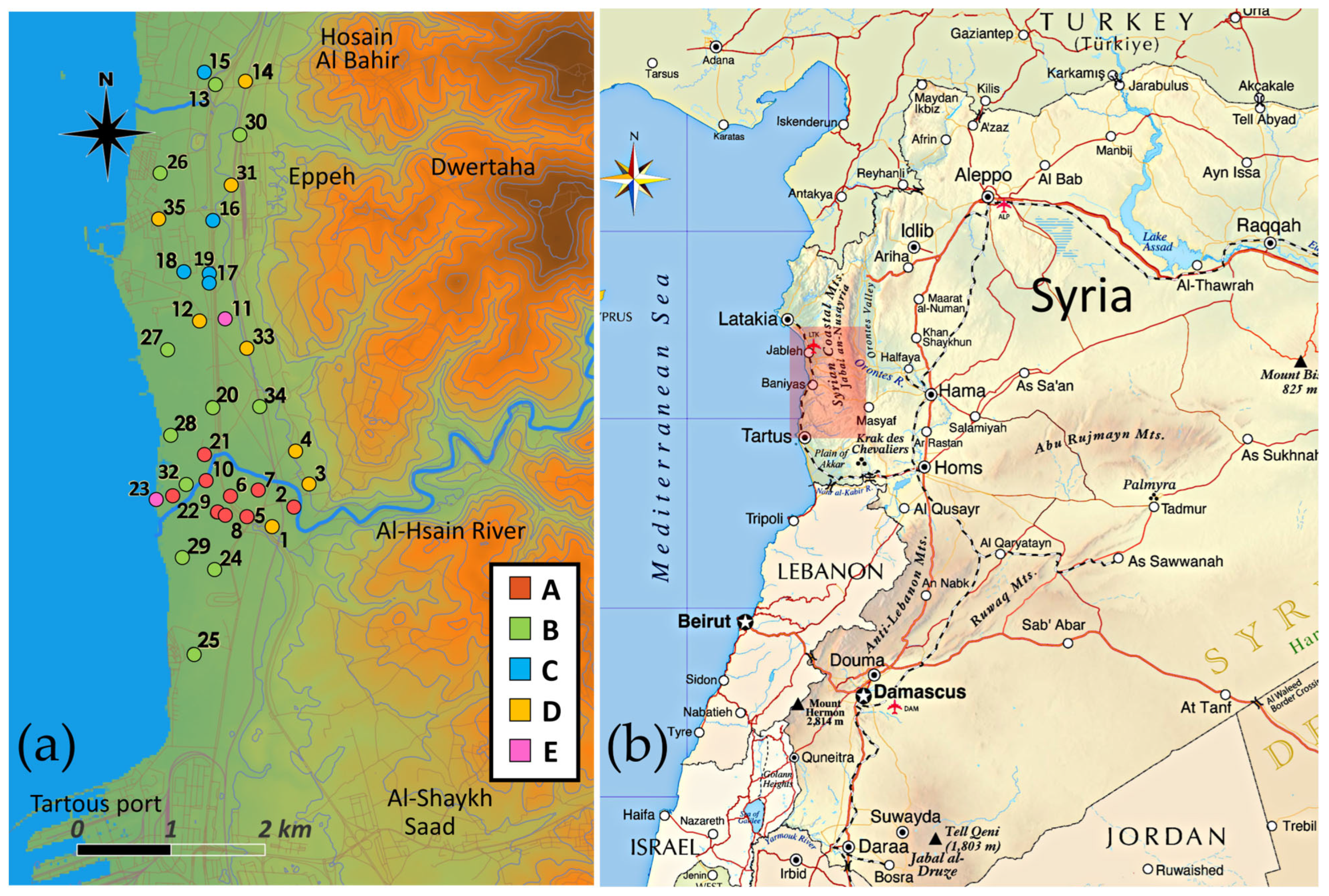
To address this gap, the present study investigates rainfall–groundwater dynamics in the Al-Hsain coastal plain (Tartous, Syria) using monthly observations from 35 wells across heterogeneous lithological units. The analysis integrates correlation and regression statistics, ANOVA-based comparisons, and lag detection with advanced spectral methods, including Wavelet Coherence (WTC) and Short-Time Fourier Transform (STFT). This multi-layered approach enables the characterization of scale-dependent recharge behavior and the identification of short-lag, high-coherence responses, effectively addressing the non-stationary nature of hydrological signals that traditional linear methods often fail to capture.
The novelty of this work lies in developing a transferable analytical framework specifically optimized for data-scarce environments that jointly leverages statistical and spectral indicators to evaluate rainfall–groundwater coupling. By explicitly linking multi-temporal spectral peaks with statistical lag structures, the study provides new quantitative insight into how climatic forcing propagates through complex coastal aquifers. Ultimately, this integrated approach offers a scientific basis for more adaptive and sustainable groundwater management strategies in the region.
This study aims to provide a clear, focused, and verifiable characterization of rainfall–groundwater dynamics in the Al-Hsain coastal plain by addressing the following specific objectives:
Quantify the strength and direction of rainfall–groundwater interactions across 35 observation wells using Pearson correlation, regression modeling, and ANOVA-based group comparisons.
Determine statistically robust lag times between rainfall events and groundwater-level responses under semi-arid Mediterranean climatic conditions using cross-correlation and peak-alignment analysis.
Identify dominant temporal frequencies governing recharge processes using WTC and STFT, with explicit characterization of coherence strength, phase behavior, and time–frequency localization.
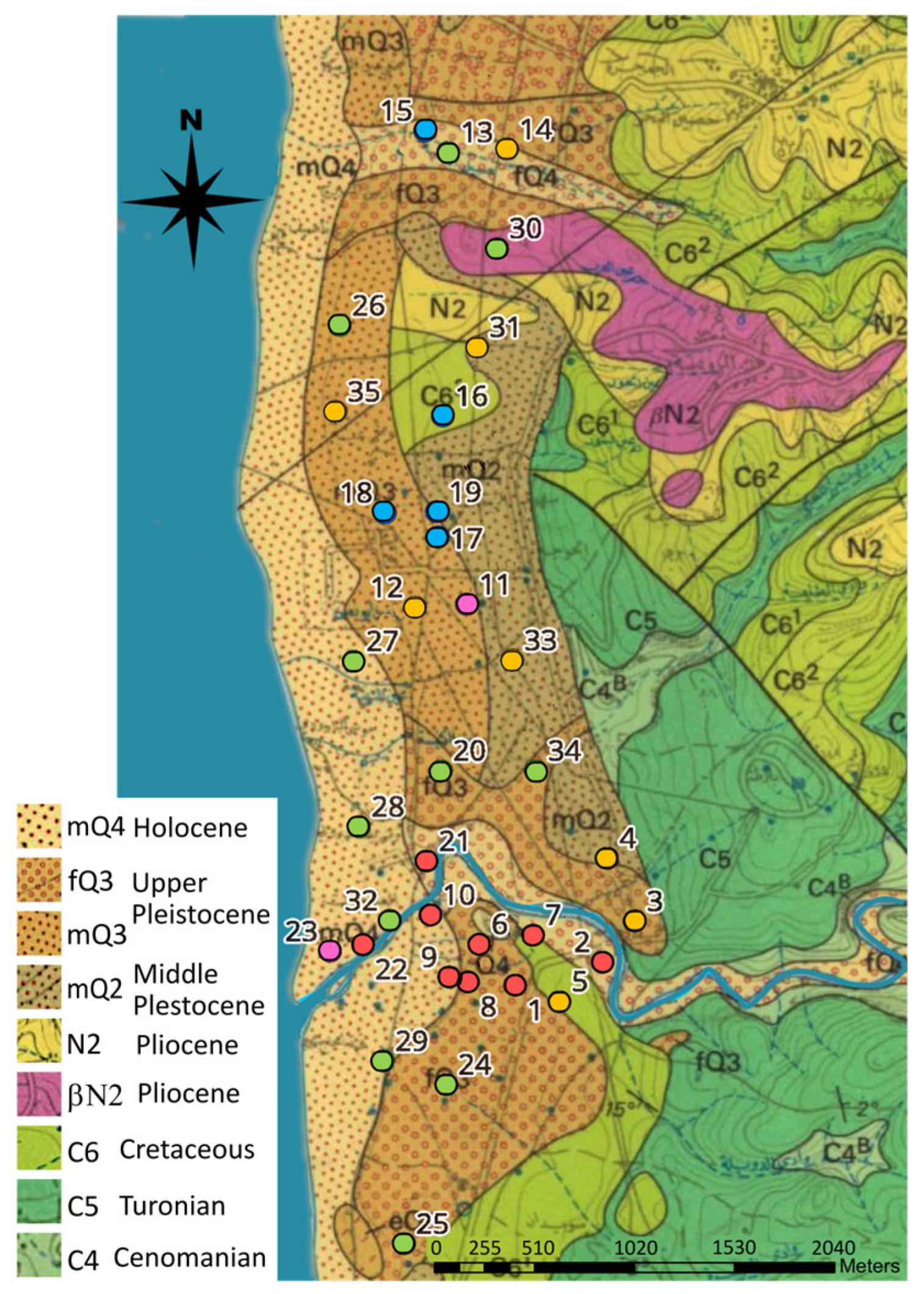
Classify wells into hydro-functional groups and assess spatial heterogeneity in recharge behavior across Quaternary, Neogene, and Cretaceous geological units.
Develop a transferable, data-efficient analytical framework that integrates statistical indicators, lag structures, and spectral signatures to support application in other data-limited Mediterranean and semi-arid coastal aquifers.
These objectives form a logical structure and directly align with the methodology and analytical workflows in this study.
2. Literature Review
2.1. Rainfall–Groundwater Interactions in Semi-Arid and Mediterranean Climates
Groundwater systems in arid and semi-arid environments rarely respond instantaneously to rainfall inputs. Instead, their temporal behavior reflects the combined effects of aquifer transmissivity, lithological structure, and climatic variability. Numerous empirical studies have demonstrated that recharge signals typically propagate through the unsaturated zone with delayed responses ranging from several weeks to multiple months, depending on soil permeability, storage capacity, and heterogeneity in subsurface pathways. Xu et al. [
8] identified lags of approximately 2–10 months, emphasizing that low-permeability aquifers attenuate recharge signals and extend response times. In contrast, highly permeable sediments transmit rainfall pulses rapidly with greater amplitude. Comparable patterns were documented across West Africa, where rainfall–recharge correlation coefficients ranged from 0.80 to 0.97 in unconsolidated sedimentary formations, whereas in crystalline terrains they were weaker due to restricted infiltration [
9]. Such responses are consistent with findings from multi-climate comparative studies, which showed that groundwater fluctuation magnitudes closely track interannual rainfall variability [
10,
11,
12,
13].
These observations underscore a key conclusion: the temporal coupling between precipitation and groundwater is not linear nor spatially uniform. It varies with aquifer type, depth to the water table, and hydrogeological structure. This non-stationarity necessitates analytical frameworks capable of distinguishing short-term recharge pulses from longer climatic cycles.
2.2. Statistical Approaches for Rainfall–Groundwater Coupling
Traditional statistical indicators, particularly correlation-based techniques, have been widely used to quantify rainfall–groundwater linkages across semi-arid landscapes. Kotchoni et al. [
9] reported robust linear correlations between annual rainfall and shallow groundwater recharge in sedimentary basins, while Zeydalinejad et al. [
14] showed rapid adjustment of groundwater levels to precipitation inputs in highly permeable settings. Long-term analyses across Ethiopia, East Africa, and parts of Nigeria similarly identified statistically significant relationships between rainfall anomalies and groundwater variability, often with coefficients exceeding 0.80 (
p < 0.01) [
15,
16,
17,
18,
19,
20].
However, linear statistics alone are unable to capture the following:
Delayed recharge behavior,
Non-linear responses in fractured or karst terrains,
Multi-scale trends (seasonal vs. interannual).
Accordingly, rainfall–groundwater interactions require complementary approaches that incorporate lag estimation, temporal clustering, or higher-order statistical decomposition. These methods offer valuable spatial insight but remain limited in detecting frequency-dependent recharge signals that are characteristic of Mediterranean systems.
2.3. Time–Frequency Spectral Approaches and Wavelet Applications
To overcome the limitations of linear statistics, recent studies increasingly employ wavelet-based and time–frequency tools to characterize hydrological dynamics. Such techniques are particularly suited to non-stationary recharge processes, where response strength varies across temporal scales. Zhang et al. [
21] used wavelet coherence and cross-wavelet transform to analyze recharge behavior in the Datong Basin, demonstrating that groundwater responses ranged from 11 to 152 days depending on wavelet scale and aquifer properties. Other investigations coupled geospatial data and analytic hierarchy techniques to identify recharge-prone zones under desert conditions [
22,
23], highlighting how rainfall signatures propagate differently through surface and subsurface strata.
Unlike traditional correlation metrics, wavelet coherence (WTC) enables the following:
Simultaneous representation of time and frequency domains,
Detection of dominant recharge periodicities,
Differentiation between in-phase (coherent) recharge and anti-phase (delayed) storage processes,
Identification of aquifer-scale changes in recharge efficiency across wet and dry seasons.
Despite their success globally, these spectral approaches have not been systematically applied to Syrian coastal aquifers, where rainfall variability and stratigraphic heterogeneity demand multi-scale interpretation. This gap directly motivates the use of WTC and STFT in the present study.
2.4. Lithological and Hydrogeological Controls on Recharge
Subsurface lithology governs infiltration pathways, pore connectivity, and vertical percolation efficiency, ultimately shaping how rainfall signals translate into groundwater fluctuations. Evidence from Benin shows that sedimentary terrains with high permeability respond rapidly to rainfall pulses, leading to strong statistical coupling, whereas crystalline or consolidated formations exhibit attenuated, delayed recharge behavior [
9]. Similar lithology-linked variability has been documented globally, including in Mediterranean carbonate systems, where dolomitic and limestone aquifers exhibit high transmissivity and storage capacity [
14].
Terrain-related hydrological controls also modulate recharge efficiency. Gentle slopes and low-lying zones enhance infiltration, while steep gradients accelerate runoff and reduce subsurface recharge [
24,
25,
26]. Climatic variability compounds these effects, as shifts in rainfall intensity and seasonality alter the balance between evapotranspiration losses and percolation. Collectively, these controls explain why basins with similar rainfall regimes may exhibit substantially different recharge signatures, depending on their geological structure and surface geomorphology.
2.5. Integrated Statistical–Spectral Frameworks in Groundwater Studies
A growing body of research demonstrates that no single analytical method captures the full complexity of rainfall–groundwater coupling. Time-domain approaches quantify directional relationships, while spectral tools reveal multi-scale coherence and phase behavior. Hybrid frameworks that combine both are increasingly favored, as they provide a more complete characterization of aquifer dynamics.
Recent applications show that statistical correlation, regression, and lag detection can be paired with WTC to extract scale-dependent recharge pathways and distinguish between shallow and deeper responses [
8,
9,
14,
15,
16,
21,
27,
28]. These studies offer strong proof that integrated analytical pipelines outperform linear or spectral approaches alone, particularly in semi-arid systems with episodic rainfall.
Despite these advances, no published work—especially within Syria’s coastal basins—has integrated correlation, regression, lag extraction, and wavelet coherence into a unified analytical workflow, nor applied such a framework across spatially distributed well networks with contrasting lithologies. This absence forms the central motivation of the present study.
4. Methods
4.1. Overall Analytical Workflow
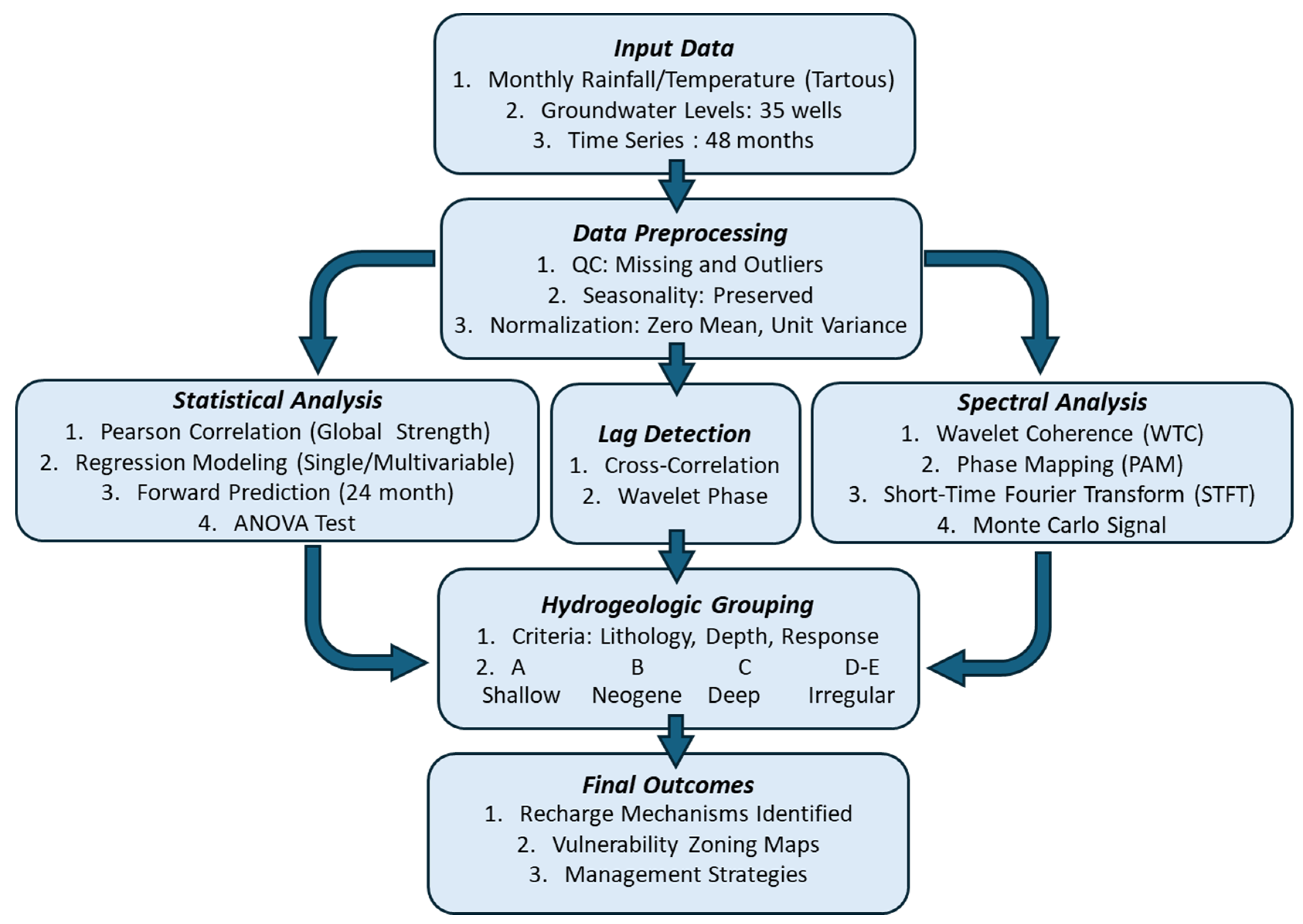
The analysis followed a reproducible, multi-stage workflow (
Figure 4): (i) data preprocessing, (ii) statistical coupling analysis, (iii) lag detection, and (iv) time–frequency decomposition. All procedures were implemented in Python (version 3.11) using the Python routines for Pandas, NumPy, SciPy, PyCWT, and Matplotlib [
34]. Groundwater and rainfall time series were aligned on a monthly temporal resolution (48 observations).
4.2. Data Preprocessing and Quality Control
4.2.1. Data Checks
Visual inspection and graphical cross-checks provided insight into the data’s veracity. Both rainfall and groundwater datasets contained no data gaps or irregularities, allowing their direct application. Spikes or abrupt deviations were manually inspected and cross-checked against field logs. No corrections were applied since values corresponded to known hydrological conditions. Groundwater fluctuations were compared among adjacent wells sharing similar lithology. Stations presenting inconsistent behavior were flagged for later interpretation rather than removed.
4.2.2. Seasonality Handling
No deseasonalization was applied. The aim was to preserve climatic forcing signatures and assess the natural synchronization between rainfall pulses and groundwater response.
4.2.3. Standardization
For spectral procedures, all series were normalized to zero mean and unit variance to ensure comparability across wells and avoid amplitude-based artifacts.
4.3. Statistical Analysis
4.3.1. Pearson Correlation
Linear coupling between rainfall and groundwater level was estimated for each well using
where
and are the individual rainfall and groundwater level values, and
and are their respective means.
Correlation was interpreted solely as global coupling strength because it could not resolve time-varying recharge behavior [
9].
4.3.2. Regression Modeling
Two models were fitted: (i) simple linear regression to estimate direct rainfall–groundwater response:
where
a = y-intercept
b = slope,
= mean values
y = expected value, and
x = independent variable.
and (ii) multivariate regression incorporating temperature:
where
a1, a2 = regression coefficients for rainfall and temperature,
= y-intercept.
GWL = predicted groundwater level.
Both models were trained on 2020–2024 data, and coefficients were retained for forward prediction [
9,
35].
4.3.3. ANOVA Group Comparison
One-way ANOVA tested statistical differences among the well groups:
where
= Sum of squares between groups.
= Sum of squares within groups.
= number of groups.
= Total number of observations.
= statistic to determine if there are significant differences between groups.
This method addressed whether different lithologies exhibit distinct groundwater responses [
36].
4.4. Lag Detection
Cross-Correlation (Screening)
This method is used solely for initial screening and does not represent final lag estimates [
6,
37].
τ = Time lag,
σx, σy = Standard deviation.
= Measures the relationship between two variables over a specific time lag.
4.5. Wavelet and Spectral Procedures
4.5.1. Mother Wavelet
The complex Morlet wavelet (
= 6) was selected due to its balance of temporal and spectral localization for hydrological signals [
21,
38]. The Morlet wavelet provides a finite-length signal that the transform convolves with the time series. In this case, the monthly well readings. While Fourier transforms use continuous (infinite) trigonometric functions, wavelets are finite and consist of multiple frequencies, and may be convolved across different time dimensions of the time series. All wavelets are energy neutral in that they do not add (or subtract) energy to the convoluted signal. The Morelet wavelet may vary in shape and number of positive and negative excursions; however, a typical shape factor is 2.
where
= the cross wavelet transform of time series X and Y,
, = individual wavelet transforms, and
S = smoothing operator in time and magnitude.
4.5.2. Scale Domain and Edge Effects
Scales from 2 to 32 months were analyzed, corresponding to sub-seasonal, seasonal, and inter-annual variabilities. The Cone of Influence (COI) for the Morlet wavelet is directly related to the wavelet scale. Monte Carlo simulations are used to determine whether the wavelet power at a given time and scale is statistically significant when approaching noise and edge effects. Many synthetic time series (1000+) are generated to better define wavelet power distributions along the edge and estimate 95% significance thresholds.
4.5.3. Phase Interpretation
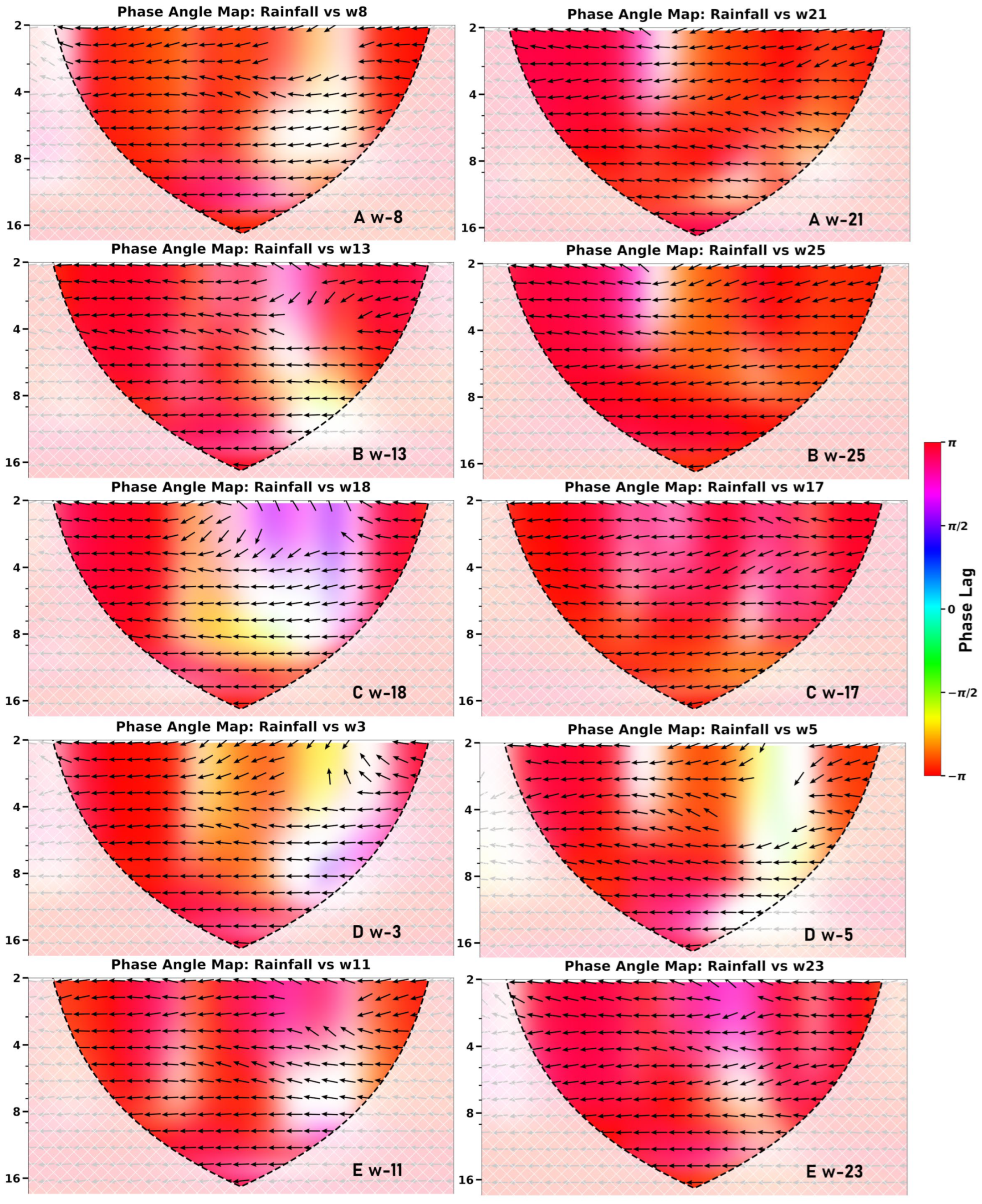
Directional arrows provide a visual key to phase relationships between rainfall and groundwater. Rightward arrows indicate in-phase behavior (synchronous), leftward arrows denote anti-phase. Downward arrows indicate that rainfall leads groundwater by 90° (quarter-cycle) and upward arrows indicate that groundwater leads rainfall (due to pumping or non-climatic drivers).
4.5.4. Wavelet Phase Difference
Time-localized lag was extracted from wavelet phase angles:
where arg() = phase angle of the complex result (radians) from the CWT.
A negative phase indicates a rainfall event leading to a groundwater response. These results represent the definitive characterization of recharge delay [
21,
38].
4.5.5. Software Implementation
4.6. Hydro-Functional Grouping of Wells
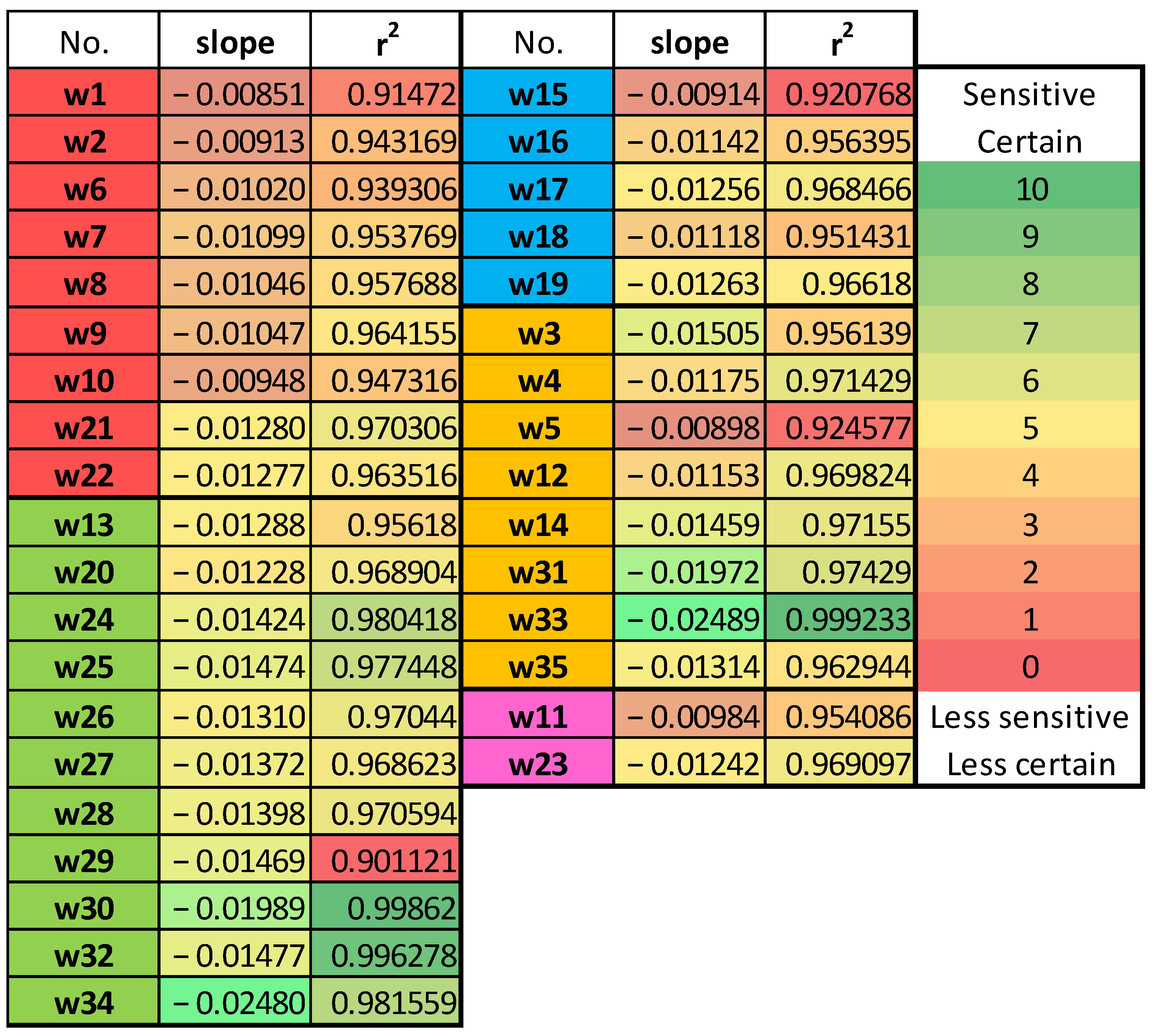
Wells were classified into five hydro-functional categories using quantitative thresholds: (i) lithology (Quaternary, Neogene, Cretaceous), (ii) static groundwater depth, and (iii) recharge response metrics (Pearson r and phase-derived lag).
Group A: Shallow Quaternary wells (Depth < 18 m; Lag < 2 months).
Group B: Neogene agricultural wells (Depth 18–35 m; Lag 2–4 months).
Group C: Confined Cretaceous wells (Depth > 35 m; Lag > 4 months).
Group D–E: Industrial or irregular wells excluded from predictive modeling.
4.7. Forward Prediction
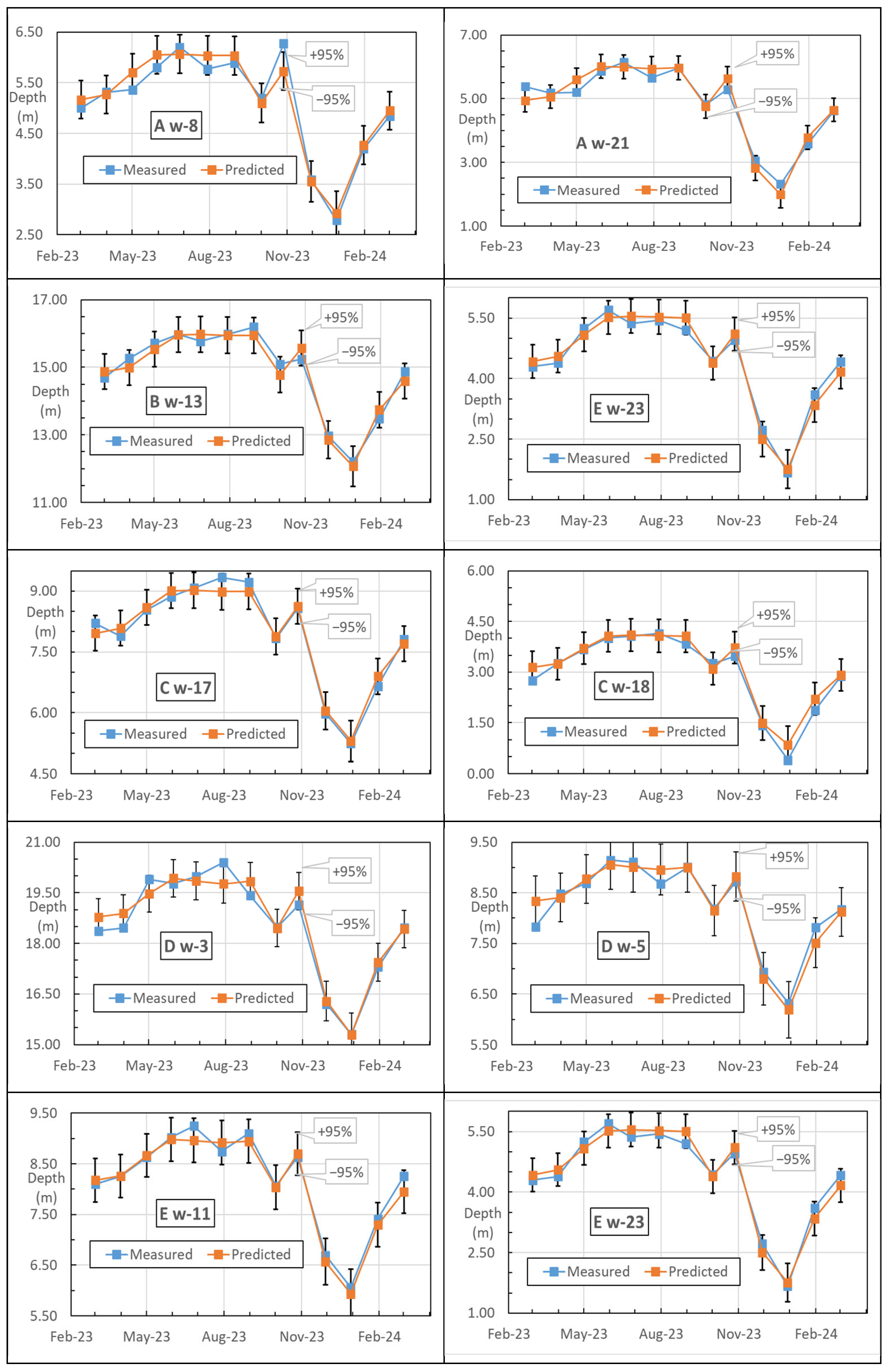
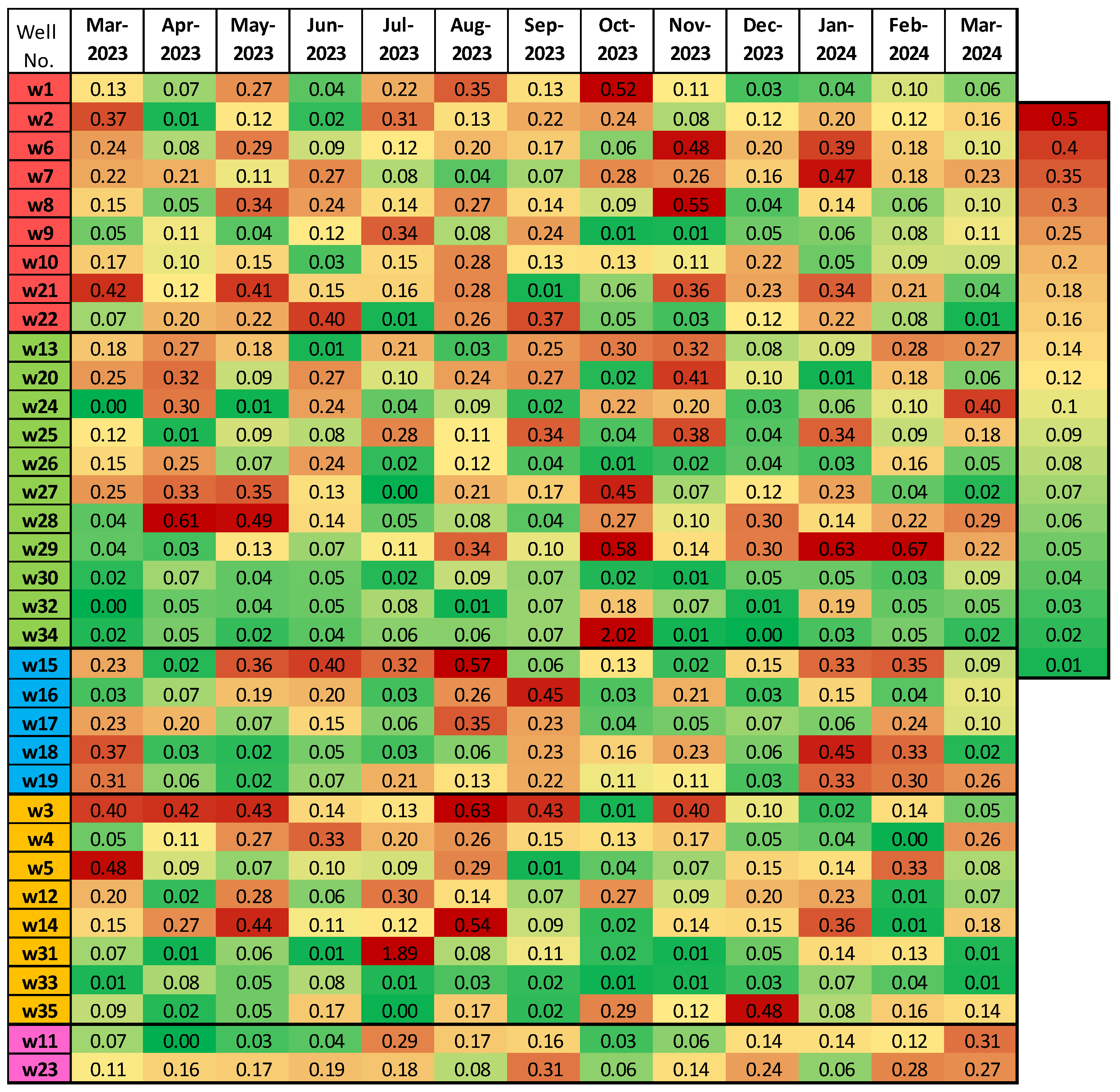
To project groundwater level variations under future climatic conditions, monthly forward prediction was performed using the developed regression models. This predictive framework helps to plan and assess groundwater sustainability under changing climatic conditions [
39]. The formula is given as
where
= the predicted value of the target variable at time t + h (h steps ahead).
= The intercept term (constant) in the regression equation.
= Regression coefficients that represent the influence of each predictor variable on the forecast.
= Predictor variables (independent variables) measured at time t.
n = Total number of predictor variables.
t = The current time index.
h = Forecast horizon (number of steps forward in time).
4.8. Short-Time Fourier Transform (STFT)
To extract the dominant frequency components over time, the Short-Time Fourier Transform (STFT) was applied [
40]. The STFT of a signal
x(
t) is given by
where
w(τ−t) = sliding window function centered at time t.
f = frequency
τ = variable of integration
j = imaginary component of a complex number
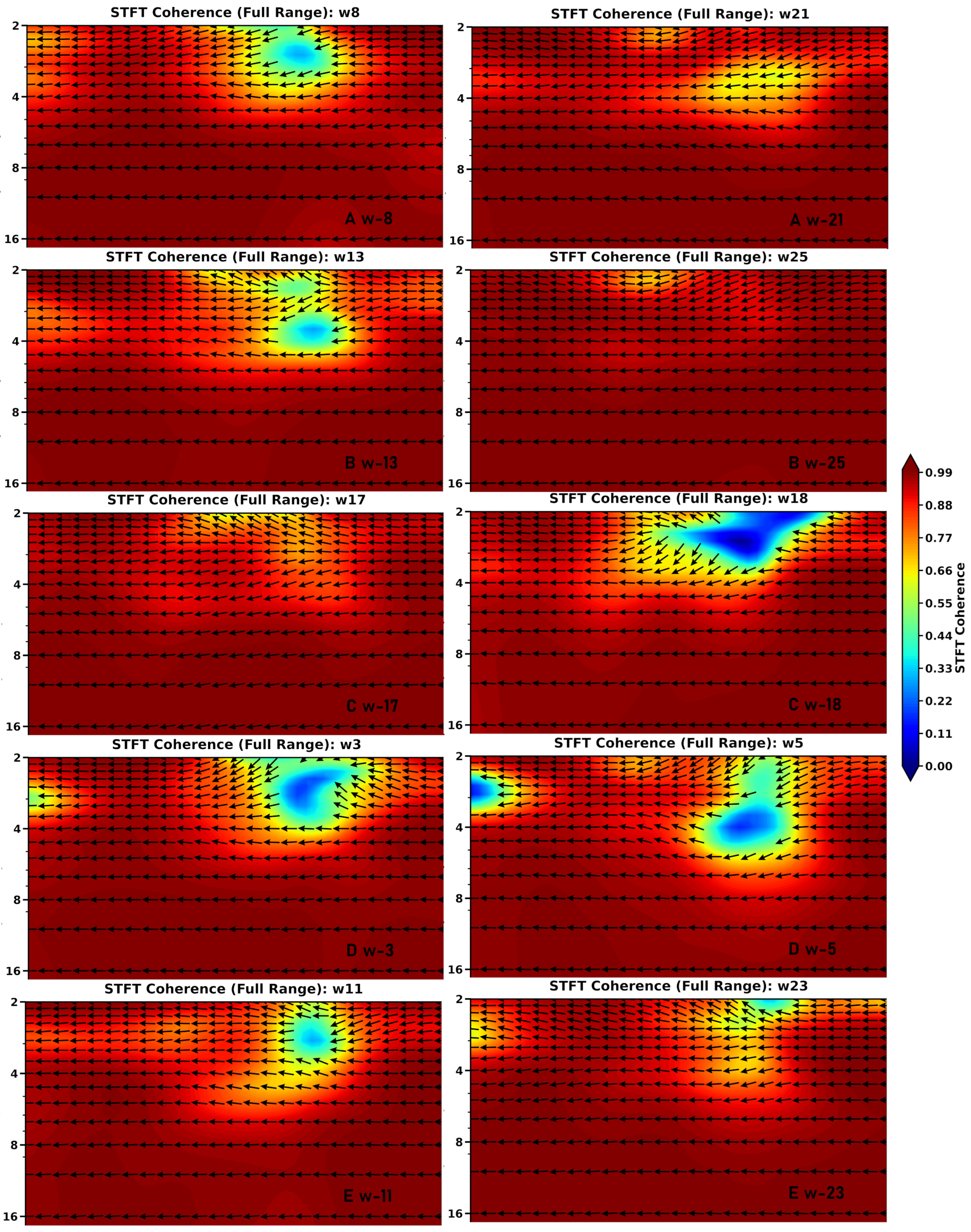
The squared magnitude |STFTₓ(t, f)|2 yields the power spectral density (PSD), which is plotted as a time–frequency heatmap. Wells with intense seasonal cycles displayed concentrated energy in the low-frequency band (~0.08–0.12 cycles/month), while others exhibited weaker or noisier spectral structure.
6. Discussion
6.1. Interpretation of Seasonal Synchrony
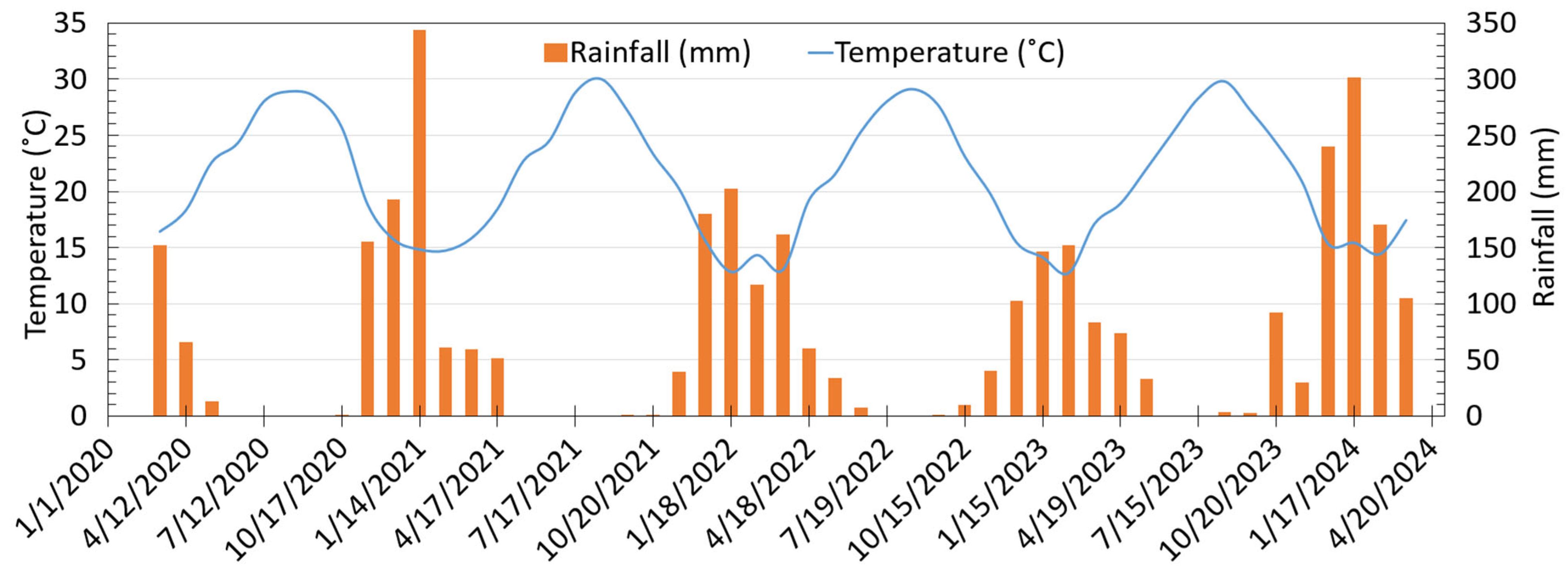
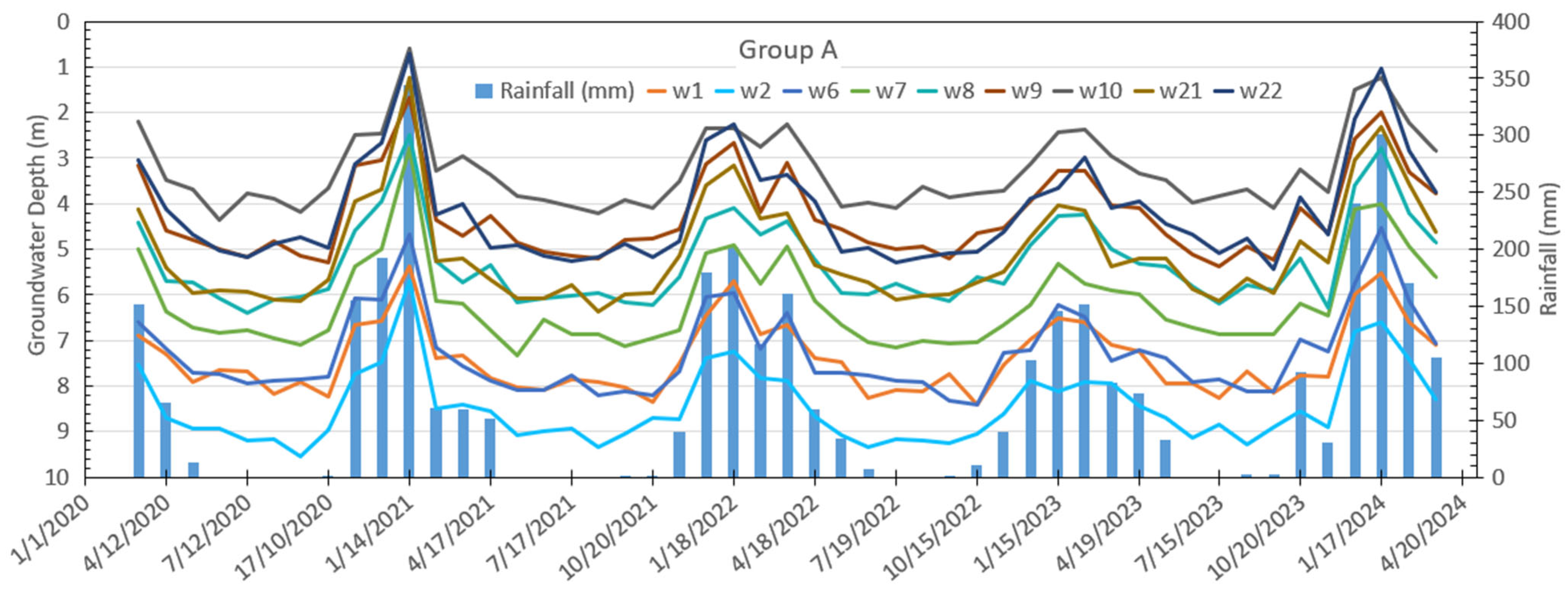
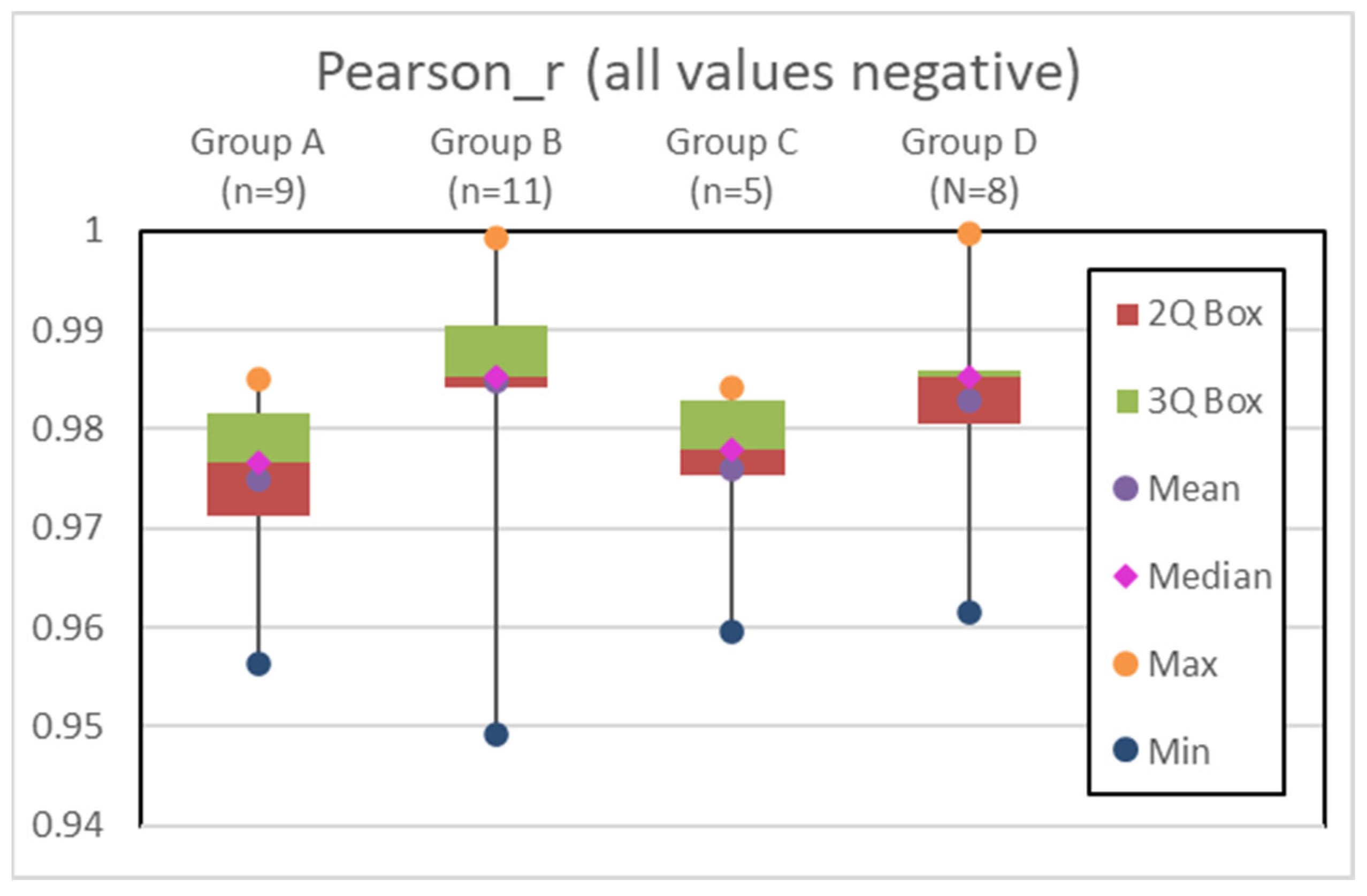
The results consistently indicate a strongly inverse statistical association between monthly rainfall and groundwater levels across the Al-Hsain Basin, with Pearson correlation coefficients typically between −0.95 and −0.99 and p-values < 0.001 for all wells. This pattern reflects a pronounced seasonal synchrony rather than a purely linear response: rainfall is concentrated in a short winter period, while groundwater levels rise during and shortly after this interval and decline through the dry season. At a monthly time step, this shared annual cycle produces a nearly monotonic relationship between rainfall and groundwater depth, which drives the correlation towards −1.
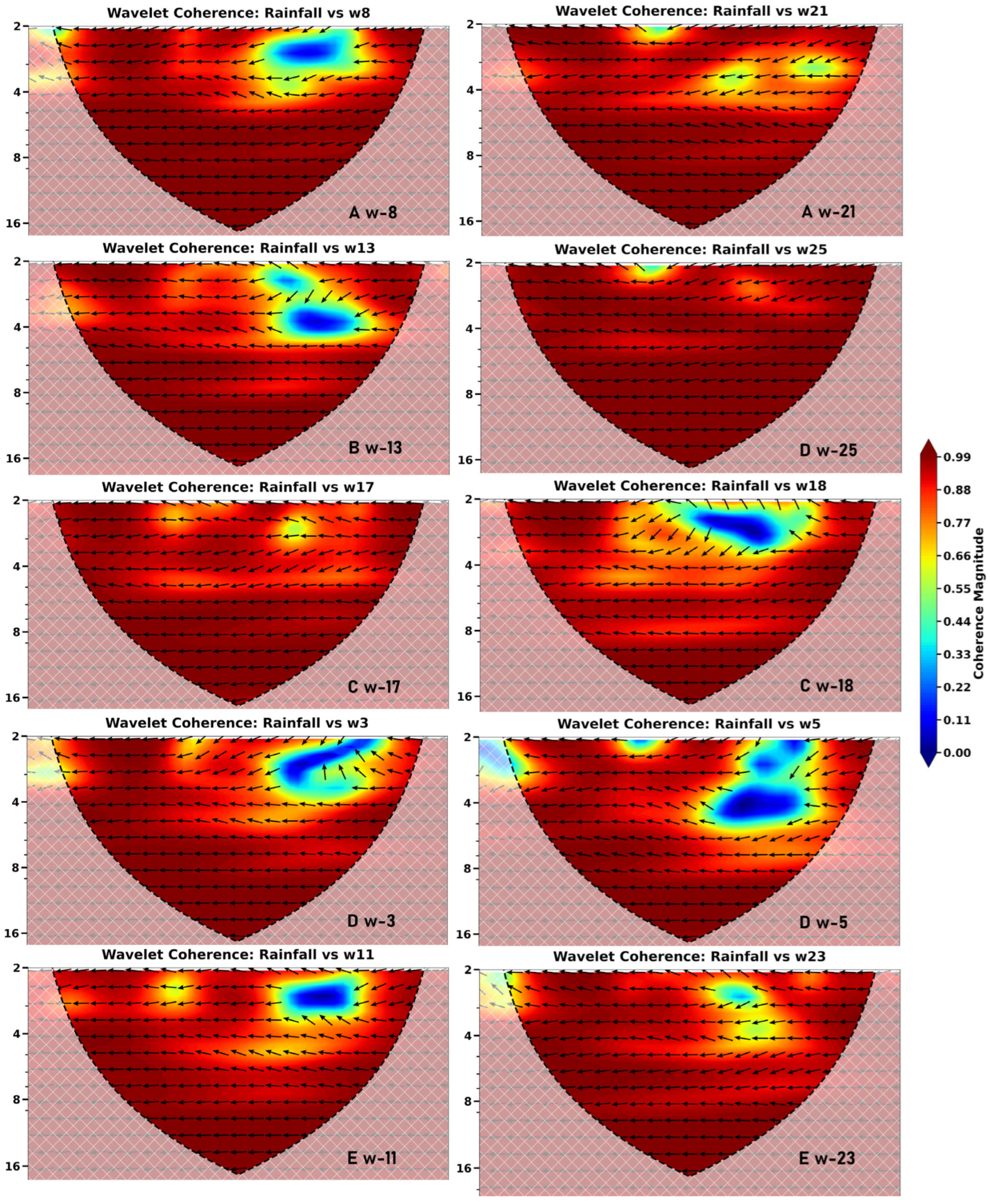
Wavelet coherence and STFT analyses corroborate this interpretation. A dominant seasonal band (8–16 months) with high coherence (>0.8 in most wells) confirms that annual rainfall cycles are the primary driver of groundwater-level variability. The coherence structure and phase arrows indicate that rainfall leads groundwater by a short delay, typically about 1 month. Thus, the observed “near-perfect” correlations indicate an integrated signature of (i) strong climatic seasonality, (ii) shallow unconfined conditions over much of the basin, and (iii) relatively stable climatic forcing during the 2020–2024 period, rather than as evidence of strictly proportional, purely linear recharge processes.
6.2. Aquifer Structure and Lag Variation
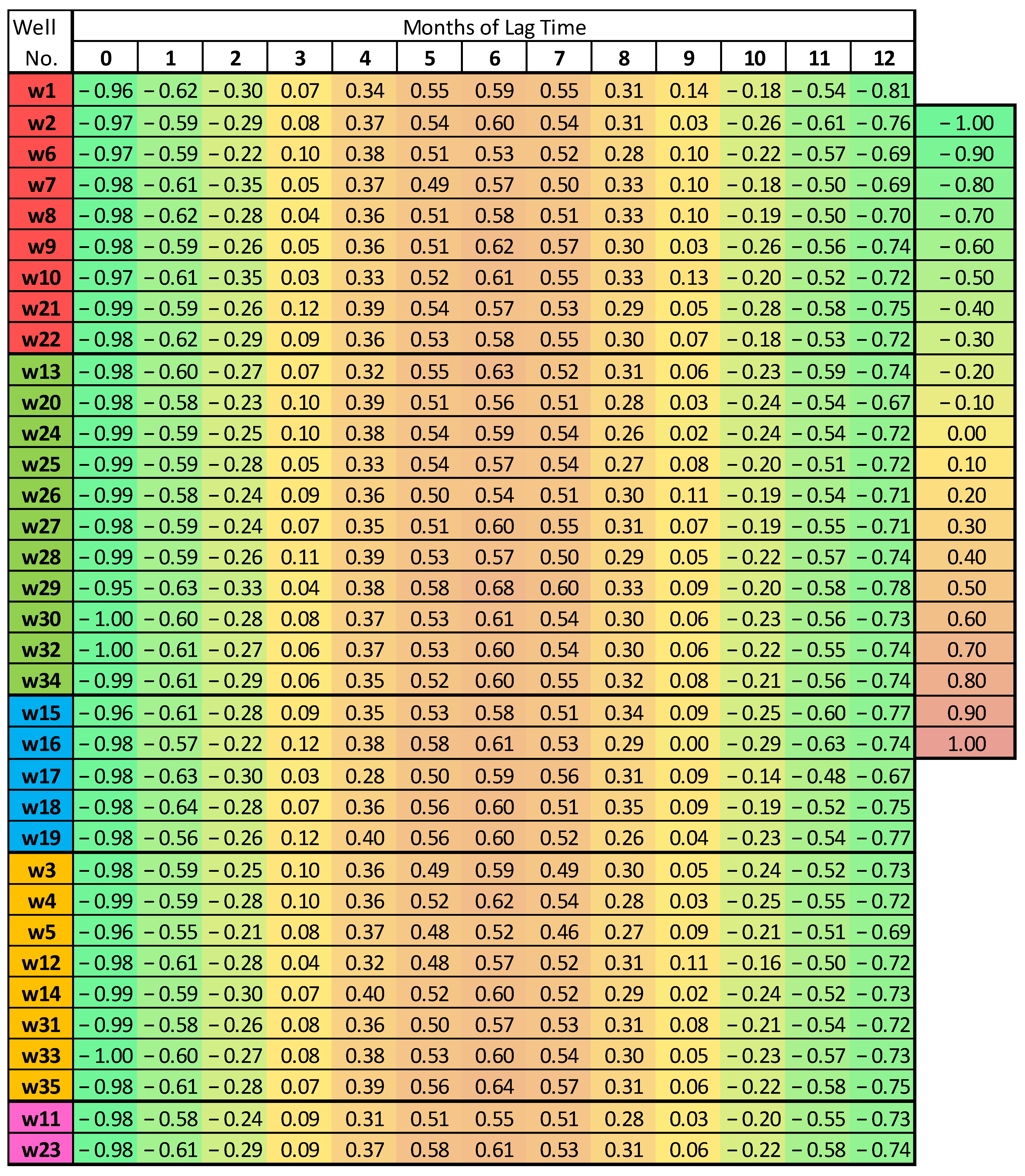
Recharge timing and response magnitude vary systematically with aquifer structure. Cross-correlation analysis showed that most wells achieve peak correlation at a lag of approximately one month, with a basin-wide mean lag of ~1.1 months. Shallow Quaternary wells (Group A) tend to respond within 0–1 month, consistent with high hydraulic conductivity, thin unsaturated zones, and direct vertical infiltration in alluvial deposits.
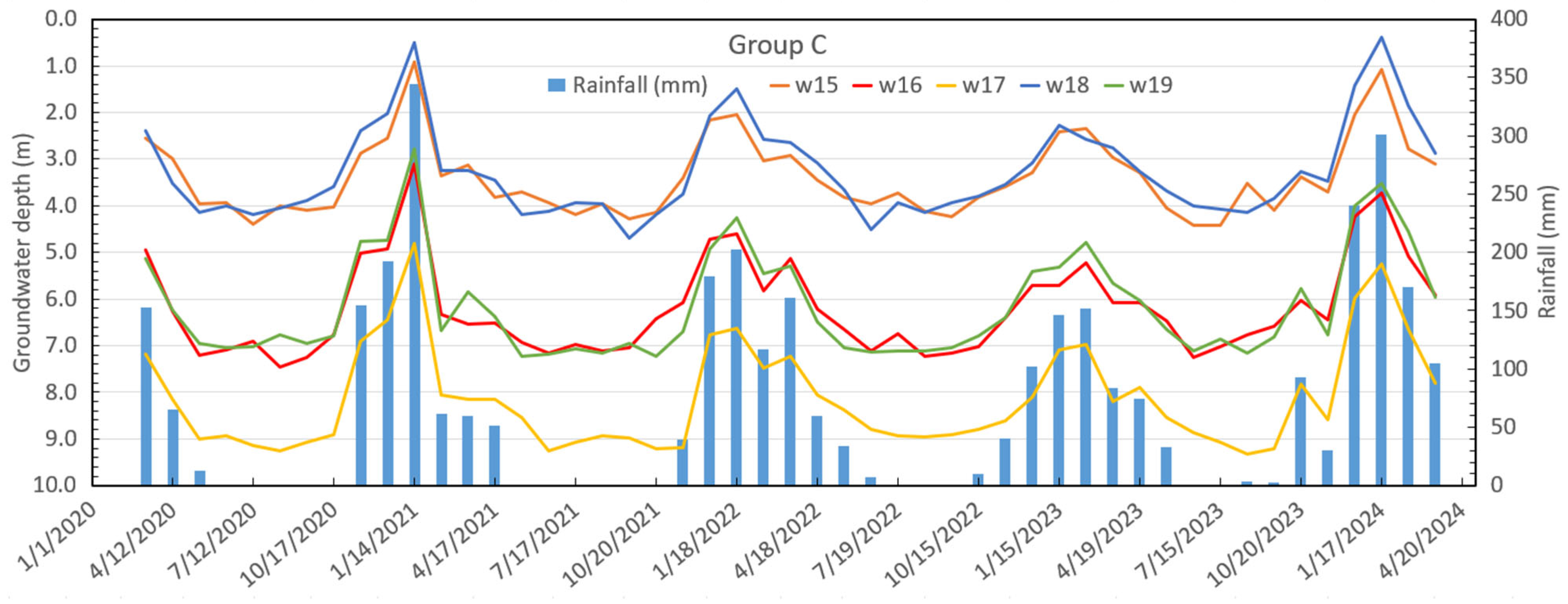
Neogene wells (Group B) exhibit moderate lags (1–2 months) and attenuated amplitudes, reflecting intermediate permeability and thicker unsaturated layers. Cretaceous carbonate wells (Group C), as well as many wells in Groups D and E, exhibit longer, more variable lags and smaller seasonal amplitudes, consistent with semi-confined or deeper systems where vertical percolation and lateral flow dominate recharge pathways.
Wavelet phase analysis refines this picture by revealing time- and scale-dependent lag behavior. In the seasonal band, phase angles for Group A wells cluster around small positive values (rainfall leading groundwater), corresponding to delays of roughly 0.5–1.5 months. In deeper or structurally complex wells (Groups C–E), seasonal phase angles are more dispersed and sometimes indicate longer lags, confirming the role of low-permeability layers, karstic storage, and structural boundaries in modulating recharge transmission. Together, these findings highlight a clear structural control on lag behavior: rapid, tightly coupled responses in shallow Quaternary units and slower, buffered responses in deeper Neogene and Cretaceous formations.
6.3. Statistical vs. Spectral Evidence of Coupling
Statistical and spectral tools provide complementary perspectives on rainfall–groundwater coupling. Pearson correlation and regression frameworks quantify the overall strength and direction of association at the monthly scale, demonstrating that rainfall is the dominant climatic driver of groundwater-level variability across all hydro-functional groups. Cross-correlation further summarizes the “global” lag per well, which is helpful for management-oriented diagnostics and for building parsimonious predictive models.
However, these linear metrics implicitly assume stationarity and cannot fully capture time-localized, scale-dependent behaviors or non-linear recharge responses. Wavelet coherence and phase analysis overcome these limitations by identifying when and at which temporal scales the strongest coupling between rainfall and groundwater occurs. The WTC spectra reveal persistent seasonal coherence and intermittent sub-seasonal patches, while phase maps identify periods of immediate versus delayed responses and transitions between different hydroclimatic regimes. STFT provides an independent confirmation of dominant frequencies and helps detect shifts in spectral energy through time.
Significantly, the lag values reported in this study are not based solely on cross-correlation. Cross-correlation is used as an initial, basin-wide summary, while wavelet-based phase differences provide data for interpreting time- and scale-dependent lag dynamics. This combined strategy balances interpretability and methodological rigor: linear statistics provide compact indices for comparison among wells and groups, whereas spectral methods capture the inherently non-stationary character of recharge in semi-arid coastal aquifers.
6.4. Implications for Groundwater Management
The integrated results have several implications for groundwater management in the Al-Hsain Basin and similar Mediterranean semi-arid coastal plains. First, the strong seasonal synchrony and short lags indicate that the aquifer system is highly sensitive to winter rainfall totals and their intra-seasonal distribution. Management strategies should therefore prioritize protecting and enhancing recharge during the wet season, for example, by promoting infiltration-friendly land uses, preserving floodplain and riverbank recharge zones, and reducing soil sealing in critical areas.
Second, the clear contrast between shallow, highly responsive Quaternary wells and deeper, buffered Neogene–Cretaceous wells suggests that regulators should consider these differences. In Group A zones, intensive abstraction during or immediately after wet seasons can rapidly deplete the shallow aquifer and reduce its resilience to dry years. In contrast, wells in Groups B and C tap storage that integrates recharge over more extended periods, but are more vulnerable to cumulative depletion and slower recovery.
Third, the demonstrated ability to reproduce groundwater dynamics with relatively simple statistical models, supported by time–frequency diagnostics, provides a practical foundation for short-term operational forecasting. Monthly forecasts driven by rainfall and temperature can support proactive allocation decisions, early warning of low-water conditions, and the design of managed aquifer recharge (MAR) interventions. By explicitly linking hydro-functional groups to recharge behavior, the framework can guide prioritization of monitoring and protection efforts in zones where climatic forcing exerts the strongest control.
6.5. Methodological Comparison with Literature
Previous studies on rainfall–groundwater interactions in semi-arid and Mediterranean settings have typically emphasized either physically based modeling (e.g., coupled surface–subsurface models) or selected statistical and spectral tools applied to a small number of wells. Many studies have quantified correlation and lag or applied wavelet coherence at limited spatial scales but have not integrated these approaches into a unified, basin-wide analytical framework.
In contrast, the present study combines (i) basin-wide Pearson and cross-correlation diagnostics, (ii) hydro-functional grouping of 35 wells spanning Quaternary, Neogene, and Cretaceous units, and (iii) time–frequency characterization using WTC, phase mapping, and STFT, all within a data-scarce coastal Syrian basin. The framework explicitly connects multi-temporal spectral peaks with statistical lag structures and spatial hydrogeological heterogeneity.
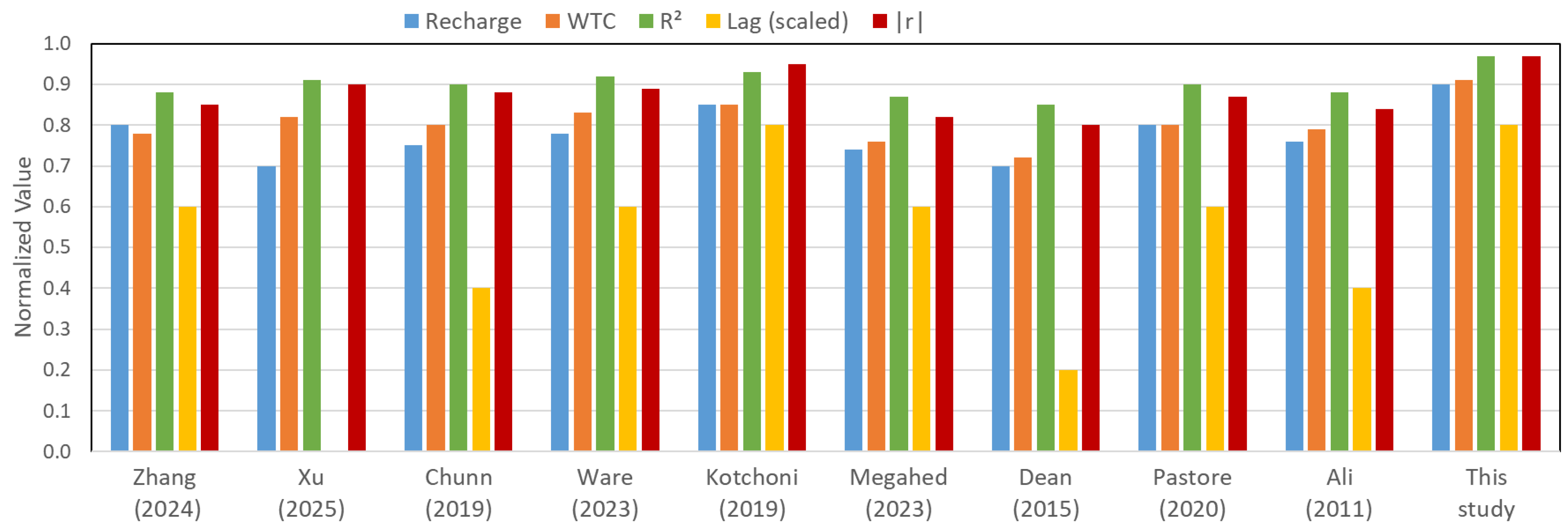
To contextualize these findings,
Figure 15 compares the performance indicators of this study with those of recent regional investigations [
8,
9,
21,
23,
29,
41,
42,
43]. Compared to earlier applications that reported lags of several months and moderate coherence, the Al-Hsain Basin results demonstrate superior statistical coupling (|r| =0.97) and stronger seasonal coherence (WTC > 0.85), reflecting the distinct ‘fast-response’ nature of the shallow coastal aquifer system.
Methodologically, the study advances beyond single-tool analyses by interpreting linear statistics, spectral indicators, and structural grouping jointly to derive a coherent hydrogeological narrative. This integration, together with the focus on a coastal basin with limited monitoring infrastructure, underscores the methodological novelty and practical relevance of the proposed framework for data-limited Mediterranean and semi-arid aquifers.
6.6. Applicability and Constraints of the Framework
The analytical framework developed here may apply to other data-scarce basins, provided they meet certain minimum conditions. At a methodological level, the approach requires (i) concurrent monthly rainfall and groundwater-level records spanning at least 3–4 years, (ii) a basic understanding of local lithology and aquifer architecture, and (iii) a monitoring network that samples key hydrogeological domains (e.g., shallow alluvium vs. deeper bedrock units). Under these conditions, the combined use of correlation, lag analysis, and wavelet-based tools can reveal dominant recharge frequencies, characteristic lags, and spatial gradients in aquifer responsiveness.
Nevertheless, the framework works best for regional-scale diagnosis rather than for event-scale or fully three-dimensional flow modeling. Its primary value lies in screening and prioritizing areas for more detailed investigation, guiding the design of monitoring networks, and supporting management decisions in contexts where data and computational resources are limited. In more complex basins with strong anthropogenic disturbances or highly heterogeneous pumping the framework would require additional information on abstraction, irrigation return flows, and surface–groundwater interactions.
6.7. Study Limitations
This study has several limitations. First, the monthly data over four years constrains the resolution of short-lived recharge events and may underrepresent low-frequency climatic variability. Event-scale processes, such as individual storms and rapid bank storage, cannot be fully resolved at this temporal resolution.
Second, while the study explicitly discusses the limitations of linear metrics such as Pearson correlation and regression, it does not implement more advanced non-linear dependence measures (e.g., mutual information, copula-based models, or non-linear regression). The combination of correlation, cross-correlation, and wavelet coherence partially mitigates this limitation by capturing non-stationary and scale-dependent behavior. However, future work could systematically compare linear and non-linear coupling metrics.
Third, pumping and land use changes were not explicitly incorporated as time-varying drivers due to data gaps. Although the hydro-functional grouping and comparison among well types provide indirect insight into anthropogenic influences, a more complete assessment would require time series of abstraction rates, irrigation practices, and surface-water management interventions.
Finally, the framework is diagnostic rather than mechanistic; it does not replace physically based models that simulate three-dimensional groundwater flow and transport. Instead, it offers a robust intermediate step that bridges raw monitoring data and complete numerical modeling. Future research could couple the present analytical approach with calibrated groundwater-flow models or climate-scenario simulations to improve further understanding of rainfall–recharge dynamics under changing hydroclimatic conditions.
7. Conclusions
This study provides the first systematic quantification of rainfall–groundwater dynamics in the Al-Hsain Basin, employing a novel integrated framework that combines classical statistics with advanced time–frequency diagnostics. By analyzing 48 months of data from 35 wells, the research yields the following site-specific and methodological conclusions:
7.1. Site-Specific Findings and Hydrogeological Dynamics
The Al-Hsain coastal aquifer does not function as a monolithic unit but rather as a spatially segmented system governed by lithological structure. Shallow Quaternary deposits (Group A) exhibit a “fast-response” regime characterized by near-instantaneous recharge (lag < 1 month) and high spectral coherence, driven by direct vertical infiltration. In contrast, deeper Neogene and Cretaceous formations (Groups B and C) function as “buffered” storage systems, where recharge signals are attenuated and delayed by 2–4 months due to thicker vadose zones and semi-confining layers. This dual behavior resolves the apparent paradox of high basin-wide correlation (r = −0.97) coexisting with spatially heterogeneous flow dynamics.
7.2. Mechanistic Insights via Spectral Analysis
The application of Wavelet Coherence (WTC) and Phase Angle Mapping (PAM) revealed that rainfall–groundwater coupling is highly non-stationary—a feature invisible to traditional correlation metrics. The dominant recharge signal is confined to the 8–16-month seasonal band, confirming a strong “annual memory effect.” However, the detection of sub-seasonal coherence patches suggests that episodic storm events also contribute significantly to recharge in karstified zones. These findings confirm that recharge in semi-arid Mediterranean settings is an episodic, frequency-dependent process rather than a continuous linear function of rainfall.
7.3. Perspective for Groundwater Management
The defined hydro-functional groups provide a practical zoning basis for adaptive management:
Vulnerability Zoning: The rapid response of Group A wells implies high vulnerability to immediate droughts and surface contamination, necessitating strict land use protection in coastal alluvial zones.
Strategic Abstraction: The buffered response of Group C wells offers a strategic reserve that can be prioritized for extraction during short-term dry spells, allowing shallow aquifers to recover.
Operational Forecasting: The multivariate regression model can reliably forecast monthly groundwater levels using rainfall and temperature data, providing a low-cost early warning tool for local water authorities.
7.4. Future Directions and Methodological Novelty
Methodologically, this study establishes that a “Statistical–Spectral Framework” significantly outperforms single-method approaches in data-scarce environments. By using spectral tools to validate statistical lags, the framework provides a robust alternative to complex physical modeling in regions with limited parameterization. Future research should refine this approach by incorporating high-resolution (daily) monitoring to capture flash-flood recharge events and by integrating explicit pumping data to decouple anthropogenic stressors from climatic signals. Ultimately, this work offers a transferable blueprint for assessing aquifer sustainability in the Al-Hsain Basin and similar semi-arid coastal systems globally.