


Abstract
This study examines the fast pyrolysis of rosehip seed waste (RSW) in a fluidized bed reactor, evaluating its potential for syngas production and effective waste valorization. The fluidization behavior of sand/RSW mixtures was characterized by determining the minimum fluidization velocity (Umf) from pressure drop measurements. Umf increased with RSW content, ranging from 0.227 to 0.257 m/s. Fluid-dynamic tests conducted in an acrylic prototype assessed bed expansion and mixing, showing stable fluidization at 10% RSW concentration without axial slugging. The bed expanded to 68% above the fixed-bed height, while bubble formation promoted uniform mixing and prevented solid segregation. Pyrolysis experiments were performed in a steel reactor using a nitrogen flow three times the Umf, an initial bed height of 2.5 cm, and a 10% RSW mixture. The reactor operated between 400 and 600 °C, and syngas composition was analyzed. At 600 °C, carbon monoxide and hydrogen yields reached 13.868 mmol/gRSW and 7.914 mmol/gRSW, respectively—values notably higher than those obtained under slow pyrolysis conditions. These findings demonstrate that high-efficiency fluidized bed technology provides a sustainable pathway to convert invasive biomass into clean syngas, integrating waste mitigation with renewable energy generation.
1. Introduction
The increasing global population has led to a growing demand for food, which challenges traditional linear production models. The agroindustry is estimated to generate approximately 998 million tons of waste annually worldwide [1], a figure projected to rise in the coming years. This massive waste stream presents not only an environmental challenge but also a significant opportunity for valorization within a circular bioeconomy framework, especially in the context of the growing need for renewable energy sources to replace fossil fuels. This circular bioeconomy approach seeks to efficiently produce value-added products from renewable biomass-based resources while reusing generated waste [2]. Concurrently, the global demand for conventional fuels is expected to reach 6 million gallons per day by 2050 [3]. The depletion of fossil fuel reserves and increasing demand necessitate the exploration of alternative renewable energy sources, with biomass (and biomass residues) gaining significant attention. Biomass energy consumption is projected to increase from 4.01 million tons of oil equivalent per day in 2018 to 5.04 million tons by 2040 [4]. Biomass is a renewable and widely available resource with the potential to produce bio-oil, biochar, and gas through thermochemical processes such as pyrolysis and gasification [5].
Pyrolysis is a thermochemical process in which biomass, such as plant-based materials, is thermally decomposed in the absence of oxygen. This process breaks down the feedstock’s molecular bonds, resulting in volatile compounds that form bio-oil and gas. Additionally, the solid matrix carbonizes, producing biochar [6]. For example, Mu et al. [7] conducted a comparative study on the pyrolysis of wheat straw, peach wood, and bamboo, analyzing the effects of temperature and biomass composition on the products obtained, including the morphology of the biochar. Moreover, Li et al. [8] demonstrated through various co-pyrolysis experiments that interactions between cellulose and hemicellulose significantly influence the properties of the resulting biochar. While slow pyrolysis in fixed-bed reactors is often optimized for biochar, fast pyrolysis in fluidized bed reactors offers higher heat transfer rates and shorter residence times, making it a more effective technology for maximizing syngas and bio-oil yields. Yan et al. [5] investigated hydrogen-rich syngas production through fluidized bed pyrolysis of tobacco stems at temperatures ranging from 385 to 700 °C, demonstrating superior gas yields compared to fixed-bed reactors. Trubetskaya et al. [9] also explored fluidized bed pyrolysis, focusing on the bio-oil characterization from olive stones and pinewood pellets at temperatures between 500 and 600 °C. Their study found that bio-oil derived from olive stones at 600 °C exhibited the most homogeneous composition with the lowest oxygenated compound content. Moreover, biomass research extends beyond plant-based materials to include animal-derived biomass, such as cattle manure. Constantinescu et al. [10] examined the thermochemical decomposition of cattle manure via pyrolysis and gasification in a fixed-bed reactor at temperatures between 700 and 875 °C.
This study focuses on biomass residues derived from the processing of Rosa rubiginosa seeds. In Argentina, particularly in the Patagonian region, Rosa rubiginosa (also known as Rosa eglanteria), a wild shrub native to temperate regions of the North Hemisphere, acts as an invasive species with extensive territorial coverage. Its widespread availability facilitates the harvesting of its fruit (rosehip) for the cosmetic and food industries. While major global producers like Chile export over 3800 tons annually [11], regional studies indicate that the annual harvest in the Argentinean Andean Patagonia area alone is approximately 1400 tons, with a total productive potential reaching up to 20,000 tons per year. The industrial processing of these fruits generates significant quantities of waste, primarily seeds from pulp extraction and the solid cake (RSW) remaining after oil pressing. Currently, this residue lacks a systematic disposal route; however, its high heating value and abundance make it an attractive candidate for energy valorization. Previous studies [12,13,14] have investigated the thermochemical treatment of Rosa rubiginosa residues through fixed-bed pyrolysis (heating rates of 5–10 °C/min) and CO2-assisted gasification, operating at temperatures up to 950 °C. Unlike gasification, which relies on active agents to enhance syngas production, the present study explores fast pyrolysis in an inert nitrogen atmosphere. The objective is to determine if the superior heat transfer and rapid heating rates inherent to the fluidized bed technology can sufficiently promote cracking reactions to generate high-quality syngas at moderate temperatures (400–600 °C), offering a more energy-efficient alternative. To date, no data has been reported on the fast pyrolysis of this specific waste in a bubbling fluidized bed reactor, creating a clear knowledge gap regarding its potential for high-yield syngas production under these conditions.
While Bubbling Fluidized Bed reactors present known engineering challenges regarding scale-up, bubble dynamics, and particle attrition, they offer superior heat and mass transfer characteristics essential for efficient fast pyrolysis. Therefore, before addressing reactor design optimization, it is critical to first validate the fluid-dynamic feasibility and thermochemical performance of processing irregular biomass particles like RSW. The objective of the present work was to evaluate the fast pyrolytic degradation of Rosa rubiginosa seed residues in a laboratory-scale bubbling fluidized bed reactor. Fluid dynamic behavior was first assessed in a cold model to establish suitable operating conditions. Specifically, this study aims to fill the aforementioned knowledge gap by harnessing waste from an invasive species to generate quantitative data on syngas (CO + H2) production, thereby assessing a novel pathway for its valorization using high-efficiency fluidized bed technology. This approach provides an efficient and scalable route to convert invasive biomass into clean syngas, linking waste valorization with sustainable energy production.
2. Materials and Methods
2.1. Materials
The rosehip seed waste (RSW) used in this study was supplied by Flores Norpatagónicas S.R.L., a company specializing in the production of rosehip oil and flour from the seeds of Rosa rubiginosa. The seeds undergo cold pressing to extract oil for cosmetic applications, while the remaining solid fraction is ground to produce calcium-rich flour. However, due to limitations in grinding efficiency, part of the material remains as a coarse solid residue (RSW), which represents a potential by-product for energy valorization.
The ultimate and proximate analyses, as well as the density and heating values of RSW, were previously determined by Torres-Sciancalepore et al. [12]. The values of solid density (ρs), apparent density (ρp), and bulk (or bed) density (ρb), previously reported for this specific biomass, were 1394 kg/m3, 1241.5 kg/m3, and 737 kg/m3, respectively [12].
For the fluidization experiments, the particle diameter of RSW was restricted to the range 425 μm < dp < 710 μm.
To improve fluidization, sand from the Paraná River (Argentina) was employed as an inert material. The sand’s characterization, previously conducted by Toschi et al. [15], indicates a particle diameter range of 425 μm to 600 μm, with apparent and real densities of ρp = ρs = 2650 kg/m3 (non-porous material), and a bulk density of ρb = 1723 kg/m3.
The morphology of the solid particles (sand and RSW) was visually examined using a stereoscopic binocular microscope (Olympus SZI 145 TR CTV, Tokyo, Japan) with a magnification range of 1.8X to 11X.
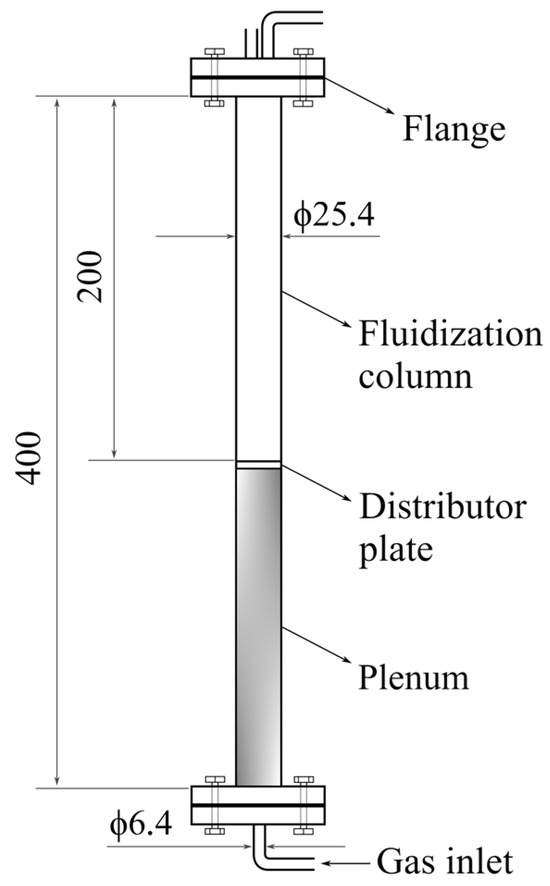
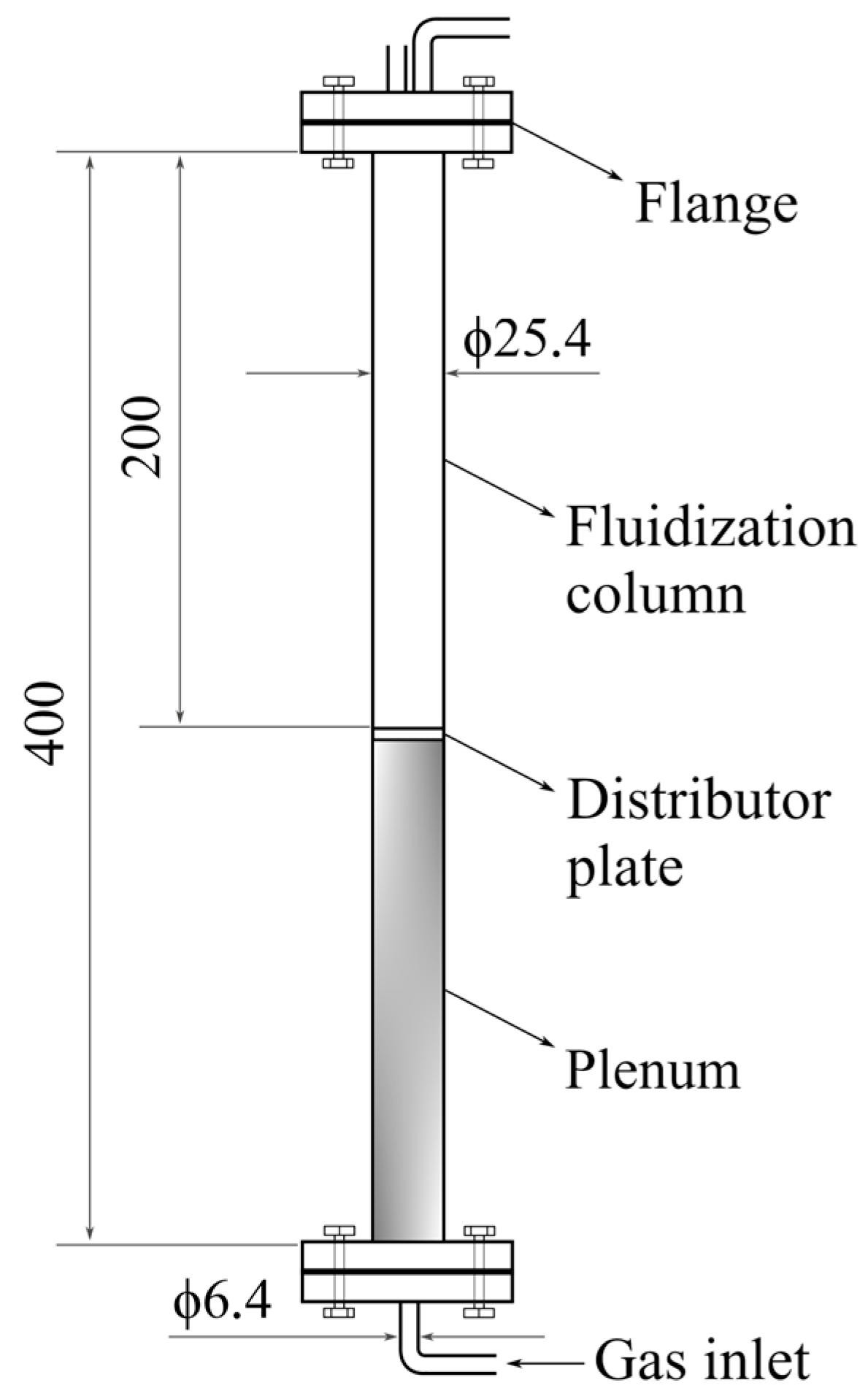
Two fluidization columns were constructed for the experimental procedures: an acrylic prototype and a stainless steel reactor, both with identical dimensions (Figure 1). The acrylic prototype was utilized to evaluate the fluidization behavior of the RSW/sand mixture, including bubble formation, potential segregation, and bed expansion. In contrast, the stainless steel reactor was designed for conducting the pyrolysis experiments on RSW.
Figure 1.
Schematic representation of the fluidization prototype constructed from transparent acrylic (for cold fluid-dynamic tests) and stainless steel (for the pyrolytic reactor), with measurement units indicated in millimeters (mm).
2.2. Minimum Fluidization Velocity Determination
The minimum fluidization velocity (Umf) represents the minimum gas surface velocity required for the vertical drag force exerted by the fluid to balance the gravitational forces acting on the particles. This property is intrinsic to the solid-fluid system and is independent of the mass, volume, or height of the solid bed, as well as the column geometry.
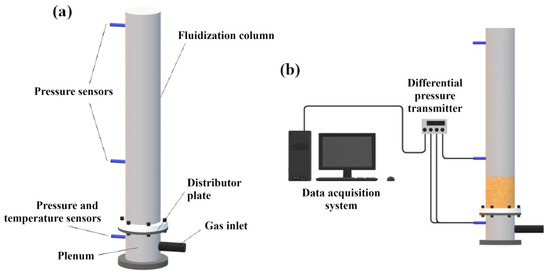
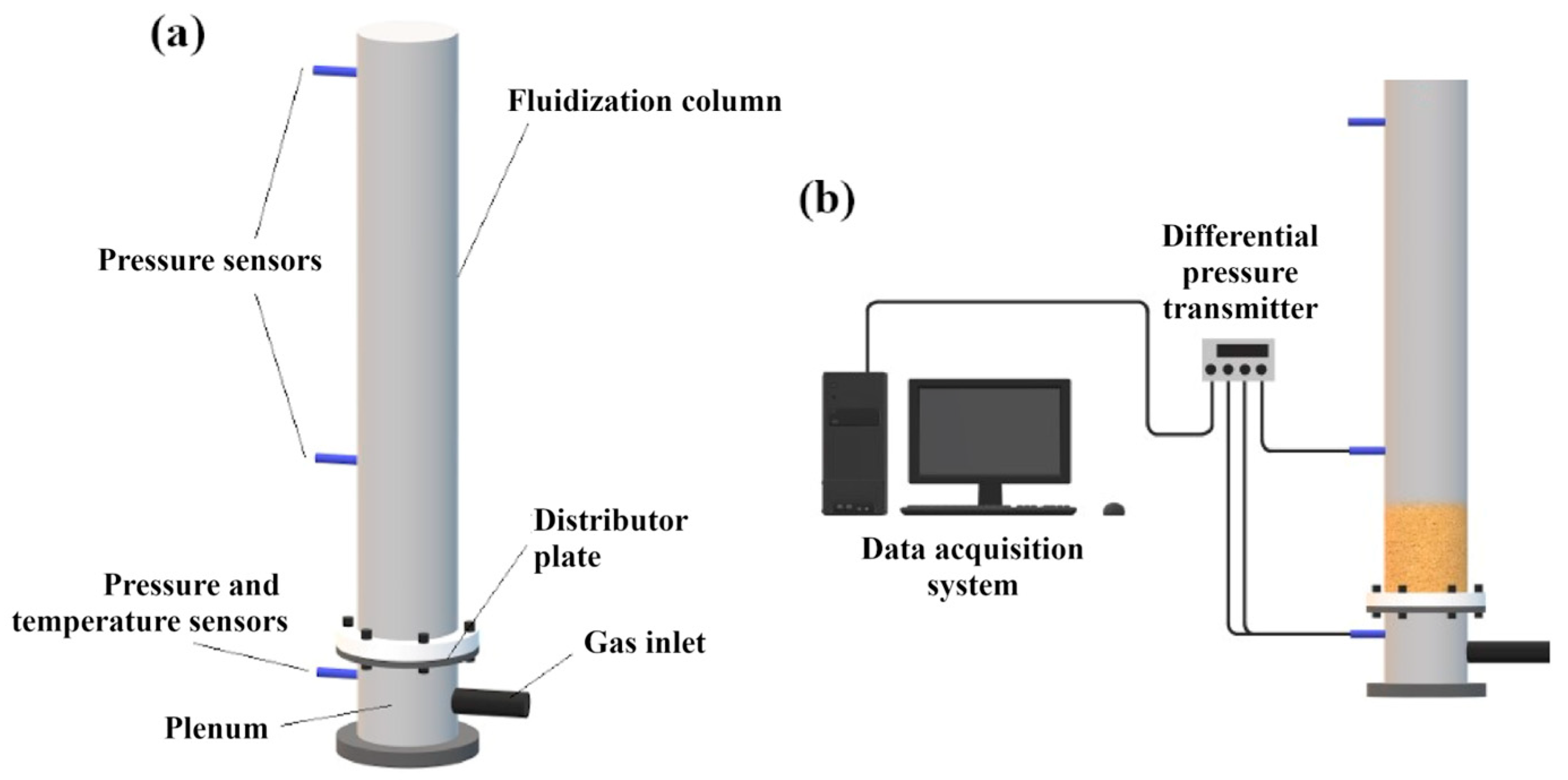
The acrylic fluidization column used to determine Umf had a diameter of 5.3 cm and a height of 45 cm (Figure 2). It was equipped with a perforated distributor plate, which was supplemented with a fine mesh to prevent the leakage of smaller particles. The particle bed was fluidized using air supplied by a 3 kW, 2860 rpm compressor (GREENCO 2RB 710-7AH26, Wenling, China), and the volumetric airflow rate was measured at the compressor outlet using a hot-wire anemometer. The effective volumetric flow rate inside the fluidized bed was corrected for differences in the column cross-section and for the minor temperature increase (1–2 °C) in the gas.
Figure 2.
(a) Schematic diagram of the fluidization equipment used for determining the minimum fluidization velocity; and (b) Representation of the equipment integrated with the data acquisition system, including the measurement and recording of linear velocity, temperature, and pressure differences between sensor positions.
To ensure accurate measurements, the equipment was calibrated by accounting for pressure losses caused by the distributor plate and the additional mesh. Calibration tests were performed by varying the gas flow rate and recording the pressure losses with an empty column. Subsequently, during experiments with the particle bed, the distributor’s pressure loss was subtracted to isolate the pressure loss attributable solely to the bed of particles.
Fluidization experiments were conducted in triplicate for pure sand, pure biomass, and biomass/sand blends containing 10%, 20%, and 40% (v/v) biomass. Fluidization curves were constructed, and Umf values were determined. The biomass particle size was carefully selected to ensure the solids fell within Geldart Group B classification. The Umf value was obtained from the intersection of the fitted lines corresponding to the fixed bed and fluidized zones on the fluidization curve (U vs. ∆p), which was generated by gradually decreasing the gas volumetric flow rate [15,16]. For all experiments, the total bed height (sand + biomass) was maintained at 4 cm.
2.3. Bed Expansion Analysis
Fluidization curves were obtained in a larger diameter column to characterize the gas–solid system properties (Umf). However, for the specific geometry of the pyrolysis reactor (D = 2.54 cm), hydrodynamic tests in an identical acrylic prototype (Figure 1) revealed that mixtures with biomass contents higher than 10% exhibited evident signs of segregation. Consequently, the 10% mixture was selected as the maximum loading to ensure appropriate fluidization. Additionally, an initial bed height of 2.5 cm (H0) was chosen to maintain a height-to-diameter ratio (H/D) of approximately 1, staying well below the critical threshold of 2 typically associated with the onset of slugging [17].
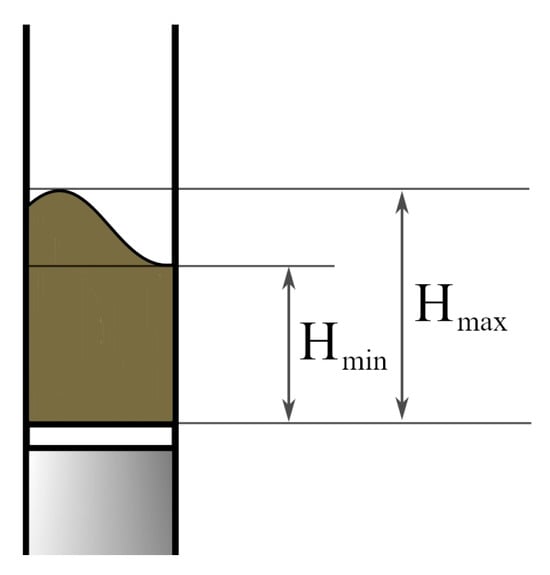
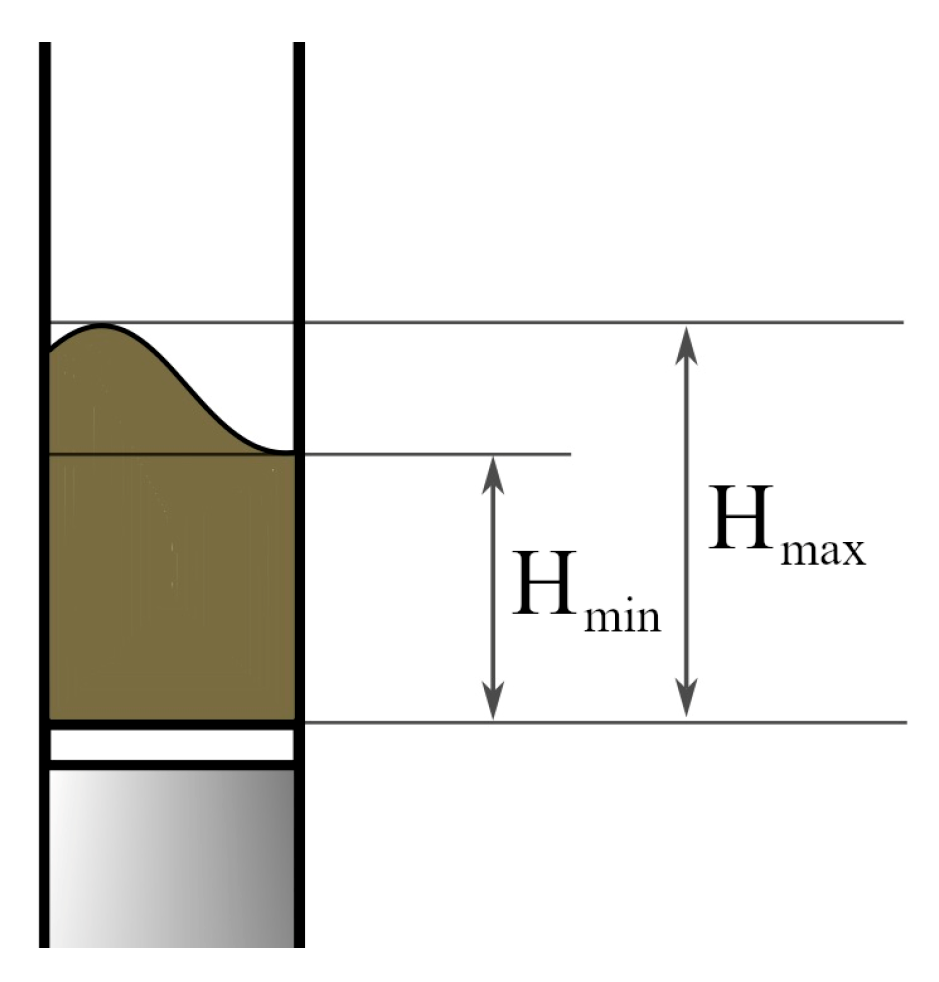
Air was introduced at a flow rate of 22.5 L/min through a 1/4-inch connection located at the bottom of the column. As noted by Emiola-Sadiq et al. [18], increasing the superficial gas velocity reduces the likelihood of segregation in binary mixtures. It is therefore recommended to operate at gas velocities of U ≥ 3Umf. The airflow rate used during these evaluations corresponded to approximately three times the Umf. Photographs were taken to assess the height of the expanded bed under fluidization conditions. Two height parameters were measured: Hmin, the minimum height from the distribution mesh to the free surface of the bed, and Hmax, the maximum height from the distribution mesh to the free surface (Figure 3).
Figure 3.
Definition of bed heights (Hmin and Hmax) used for expansion measurements in the acrylic fluidization device.
2.4. High-Temperature Pyrolysis Experiments
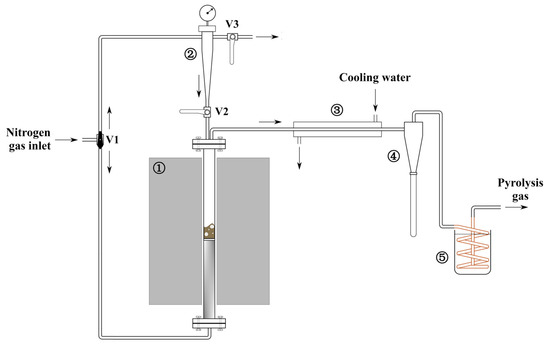
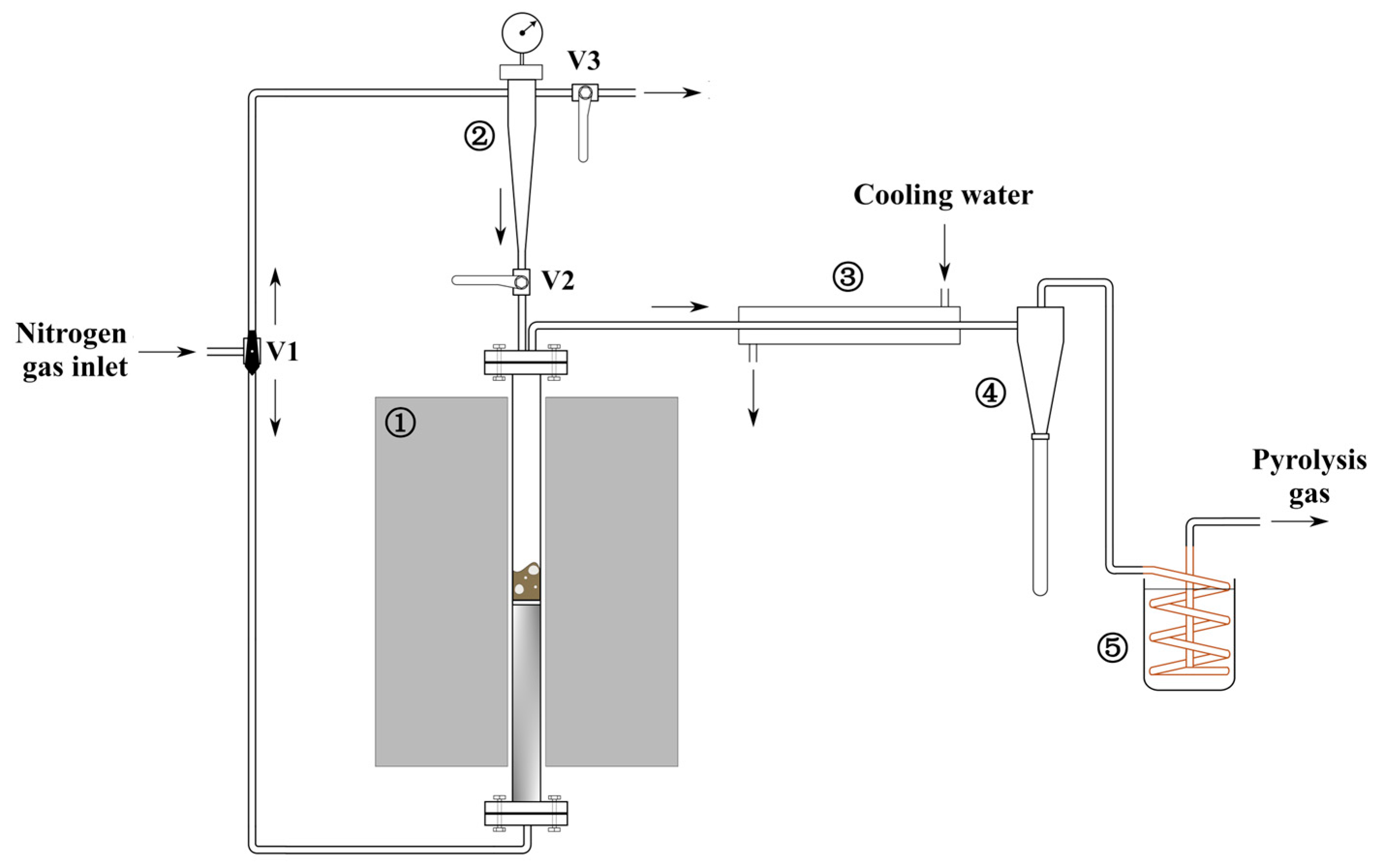
The biomass pyrolysis experiments were conducted in a stainless steel reactor. The reactor dimensions are provided in Figure 1, while the connections and component parts of the fluidization system are detailed in Figure 4.
Figure 4.
Graphic diagram of the apparatus and connections used in the fluidized bed pyrolysis experiments. Key components: V1: three-way valve; V2, V3: ball valves; ①: electric furnace; ②: pressure sample injector with an integrated pressure gauge; ③: linear countercurrent pre-cooling heat exchanger; ④: cyclone with a particulate matter trap; ⑤: copper coil submerged in ice water for volatile condensation.
Prior to the pyrolysis experiments, a calibration curve was developed to accurately determine the internal reactor temperature under gas flow conditions, as it differs from the temperature indicated by the controller of the electric furnace. Temperature measurements inside the reactor were performed using a type K thermocouple connected to a temperature indicator. Calibration measurements were conducted for a volumetric flow rate of q = 22.5 L/min, applying a temperature correction based on the ideal gas law, , where q0 is the volumetric flow rate at ambient temperature T0, and T is the reactor’s internal bulk temperature measured by the thermocouple.
For each experiment, 19.7 g of sand (corresponding to a bed height of 2.25 cm) was loaded into the reactor before sealing the flanges. With the system assembled as shown in Figure 4, the electric furnace was heated (without gas flow) until the reactor reached the desired temperature. During the heating period, the biomass sample (approximately 1 g of RSW, corresponding to a bed height of 0.25 cm) was purged within the sample injector (item ② in Figure 4) using a low nitrogen flow rate. This flow was directed via a three-way valve (V1), with valve V2 closed and valve V3 open. After 15 min of purging, valve V3 was closed, allowing the system pressure to increase to 3 bar. This setup ensured that the biomass volume fraction in the bed did not exceed 10% (v/v).
Once the reactor reached the target temperature, the nitrogen flow was redirected using valve V1 to initiate fluidization. After a steady state was established, indicated by a stable internal temperature T and zero baseline gas readings, the biomass sample was injected into the reactor by quickly opening valve V2.
The volatiles produced during pyrolysis, along with the nitrogen carrier gas, exited the reactor at the top and passed through a heat exchanger (item ③ in Figure 4), where the volatiles were pre-cooled with water. The stream then entered a cyclone (item ④ in Figure 4) to retain fines (small particles). Following this, the volatiles were directed to a copper coil (item ⑤ in Figure 4) for complete condensation. Permanent gases exited the system for analysis using a Perkin Elmer Spectrum 400 FTIR (Waltham, MA, USA) and a Testo 350 (Litzendorf, Germany) gas analyzer equipped with a CO sensor (H2-compensated). The gas analyzer sensors were calibrated by comparing measured concentrations against those obtained using an SRI Instruments 8610C (Torrance, CA, USA) gas chromatograph fitted with an Alltech CTR I column and TCD and FID detectors.
The pyrolysis experiments were conducted in a temperature range of 400–600 °C. This range was selected based on reported behavior for solid waste decomposition, which typically occurs at relatively low temperatures (300–600 °C) [19]. Operating within this window ensures substantial devolatilization of lignocellulosic components while enabling the assessment of secondary cracking reactions that become dominant as temperatures approach 600 °C [20,21]. Furthermore, this range facilitates a direct comparison with previous fixed-bed studies [13], aiming to demonstrate that the superior heat transfer of the fluidized bed can achieve high syngas yields without the need for the higher temperatures (up to 950 °C) required in fixed-bed configurations.
2.5. Syngas Efficiency Calculations
To evaluate the energy performance of the process towards syngas production, the Carbon Conversion Efficiency to CO (CCECO) and the syngas Energy Conversion Efficiency (ECEsyn) were calculated [22,23] according to Equations (1) and (2).
where YCO is the molar yield of CO, MC is the molar mass of carbon (12.01 g/mol), and Cbio is the mass fraction of carbon in the biomass (48.18% according to previous characterization [12]). For the ECEsyn, YCO and YH2 represent the molar yield of each combustible gas component, CO and H2, and LHVCO and LHVH2 correspond to their Lower Heating Values. The standard LHV values used were 241.8 kJ/mol for H2 and 283.0 kJ/mol for CO [24], while the LHVbio was 18.60 MJ/kg as reported in previous characterization [12].
3. Results and Discussion
3.1. Minimum Fluidization Velocity Determination
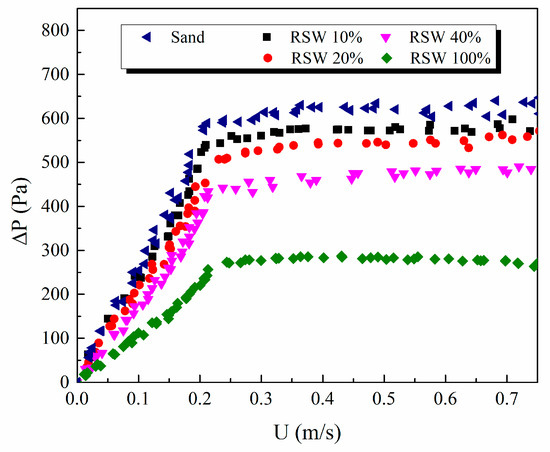
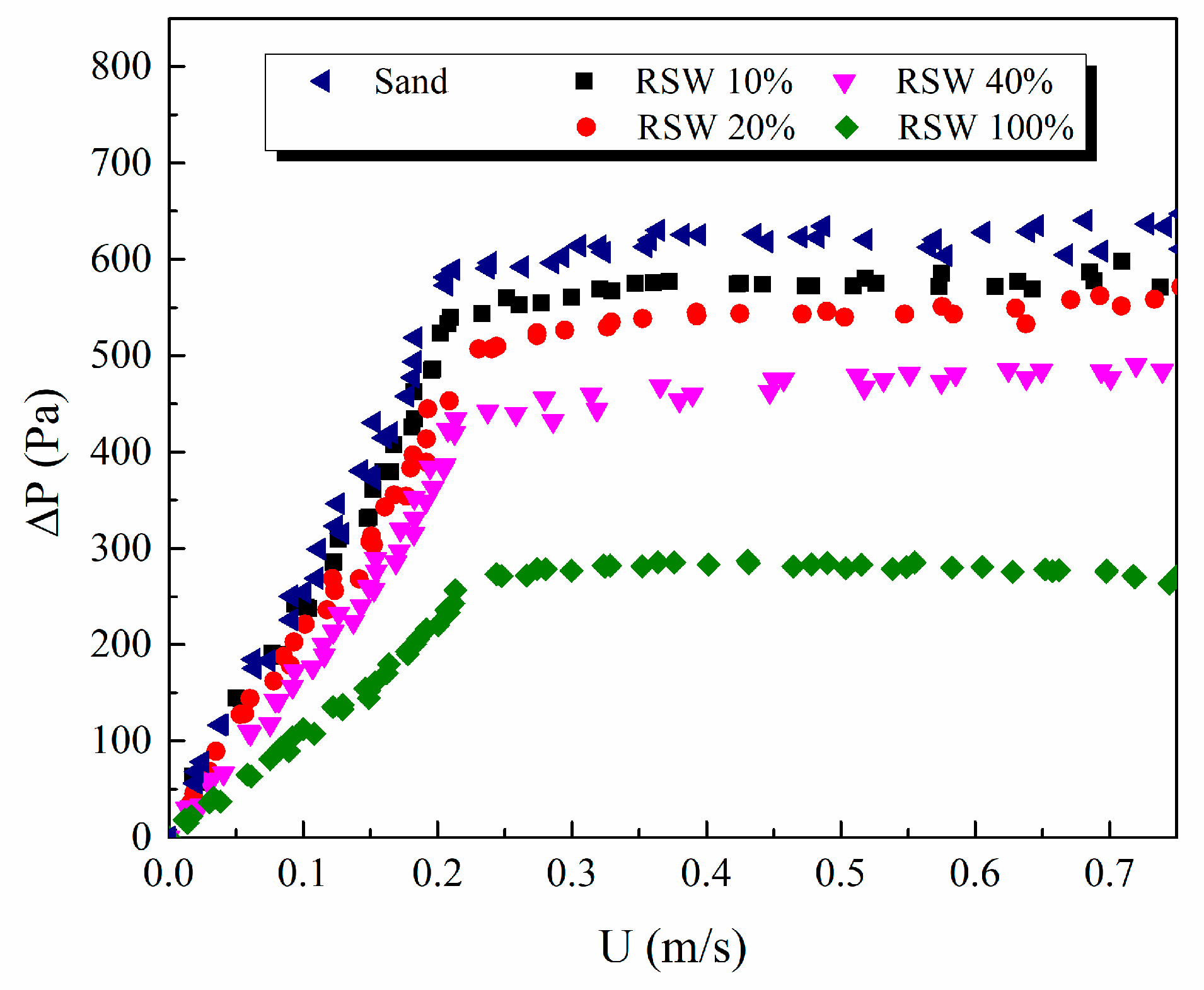
The fluidization curves for sand and RSW mixtures are presented in Figure 5. As observed, pure sand exhibited the highest pressure drop in the fluidized regime due to its greater density. With the successive increase in biomass proportion, the pressure drop in the fluidized regime decreased, attributed to the reduction in bed weight. This behavior has been similarly reported by various authors [15,18,25].
Figure 5.
Fluidization curves for RSW/sand blends with air.
The minimum fluidization velocity was determined by the intersection of the fitted lines representing the fixed and fluidized bed zones in the curves shown in Figure 5 for both pure solids and mixtures. The calculated Umf values are summarized in Table 1.
Table 1.
Minimum fluidization velocities of biomass-sand mixtures.
An increase in Umf was observed with the addition of biomass to the mixture. Similar findings were reported by Toschi et al. [15] and Emiola-Sadiq et al. [18] for wood sawdust particles, where the minimum fluidization velocity increased with biomass addition. Several factors may contribute to this increase, including higher bed porosity [17], the introduction of larger particles [26], or the presence of irregular particles with lower sphericity [16].
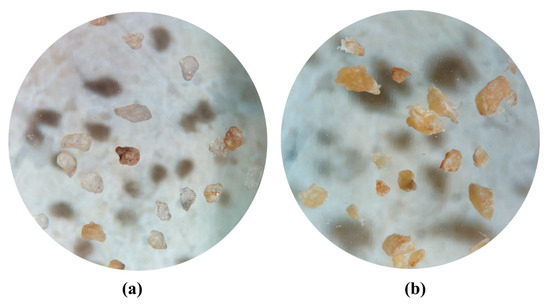
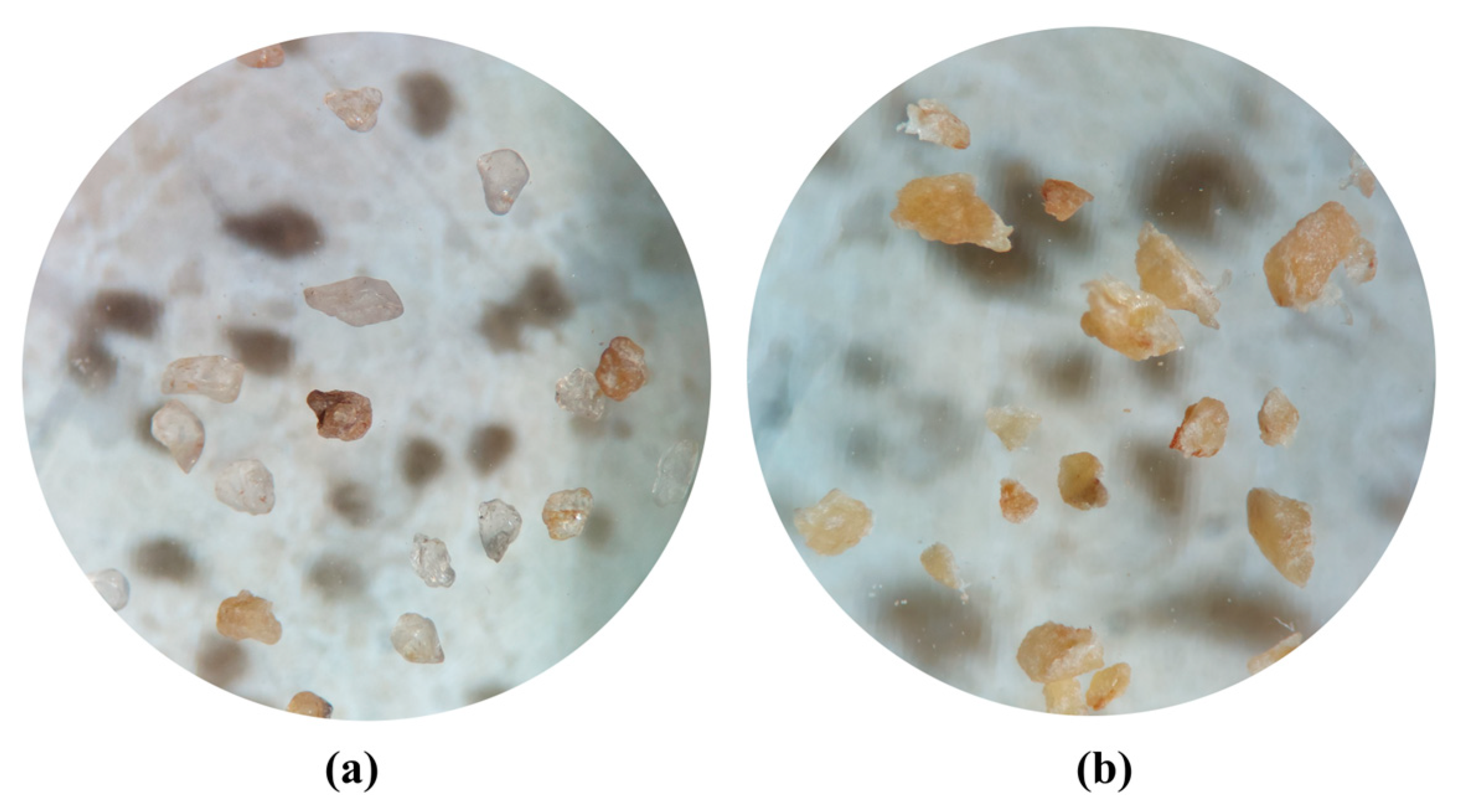
Figure 6 displays magnified images of the solid particles, captured using a stereoscopic binocular microscope.
Figure 6.
Solid particles observed under a stereoscopic binocular magnifying glass at the same magnification: (a) sand and (b) RSW.
Firstly, the biomass particles appear slightly larger than the sand particles, consistent with the size range mentioned in Section 2.1. This size difference could partly explain the slight increase in the Umf of RSW compared to sand.
Secondly, sand particles exhibit more rounded edges and geometries closer to spherical shapes, whereas RSW particles have more angular and irregular geometries. This discrepancy contributes to the higher Umf of RSW since irregular geometries with low sphericity tend to increase the minimum fluidization velocity [16]. Additionally, the bed porosity (εb) of RSW (0.407) is higher than that of sand (0.385). Increased porosity generally correlates with a higher Umf.
It is worth noting that the addition of biomass lowers the average bulk density of the bed, which theoretically tends to reduce Umf. However, the observed increase in Umf confirms that morphological factors exerted a dominant influence over the density effect. The irregular, non-spherical shape of RSW particles increases inter-particle friction and reduces the sphericity factor in the fluidization correlations, thereby requiring a higher superficial gas velocity to overcome the drag and achieve the onset of fluidization.
Biomass particles also experience significant cohesive forces, often amplified by electrostatic charges generated through friction with the fluidizing gas. Incorporating sand into the mixture reduces these cohesive forces, improving bed fluidization [15].
In conclusion, the addition of sand positively impacts the reduction in cohesive forces, facilitating improved fluidization and a decrease in Umf. While this outcome may be advantageous for operating at lower flow rates, it should be noted that the required pressure drop (∆p) to drive the gas will be higher.
3.2. Bed Expansion Analysis
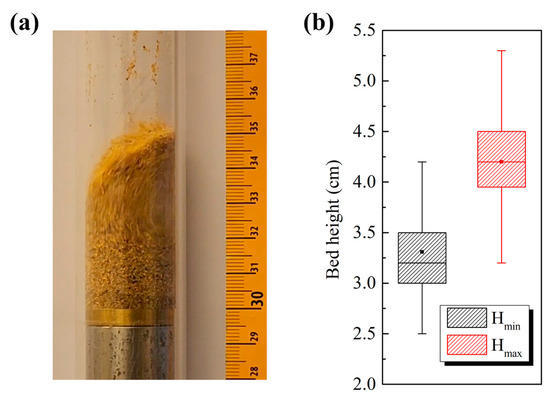
A photograph of the 10% (v/v) RSW–sand mixture is shown in Figure 7a. No segregation of the solids was observed, indicating satisfactory mixing, with the formation of large bubbles and no slugging, confirming stable bubbling fluidization. Axial slugging typically occurs when the bed height exceeds twice the column diameter [17]. In Figure 7a, the bed expansion is evident, occasionally reaching heights greater than twice the initial bed height (Hmax > 2 H0).
Figure 7.
(a) Photograph of the acrylic fluidized bed with a volumetric air flow rate of 22.5 L/min for a 10% (v/v) RSW sample; and (b) Box plots illustrating the bed expansion (Hmin and Hmax) for the 10% (v/v) RSW/sand mixture (N = 100).
After analyzing the captured images (N = 100), a box plot was generated (Figure 7b) to illustrate the minimum and maximum bed heights for the biomass-sand mixture. The results indicate that the average Hmax value is 4.2 cm, representing an average expansion of 68% compared to the initial height (H0). Occasional peaks above twice the initial height reflected the transient nature of bubble coalescence events. The extent of bed expansion is influenced by multiple factors, including particle size and density, the ratio of superficial gas velocity (U/Umf), and the geometry of the distributor mesh [27]. The observed expansion behavior confirms that a 10% (v/v) RSW content ensures adequate mixing and gas–solid contact, validating the selection of this composition and operating conditions for subsequent pyrolysis experiments.
3.3. Analysis of the Syngas Produced by Fast Pyrolysis at Different Temperatures
Although the fluidization properties (minimum fluidization velocity, bed expansion, and bubble formation) were previously studied in an acrylic column, replicating these behaviors in a high-temperature fluidized bed reactor is not straightforward. This discrepancy arises from the influence of temperature, which alters the fluidization behavior compared to observations in the cold prototype. The effect of temperature on fluidized beds has been extensively studied and reported in the literature [28]. For particles in the Geldart B group, it has been demonstrated that the minimum fluidization velocity decreases with increasing temperature, whereas the terminal velocity increases. Additionally, bed porosity increases with temperature, leading to slightly greater expansion compared to the cold prototype. These effects are attributed to the increased gas viscosity and decreased gas density at elevated temperatures, which collectively modify the drag forces acting on the particles [28]. To mitigate potential regime transitions, an intermediate superficial gas velocity, between incipient fluidization and turbulent fluidization, was chosen to ensure adequate mixing. This approach was implemented with the understanding that minor deviations in fluid dynamics may occur at elevated temperatures. Furthermore, regarding wall effects, the stainless-steel reactor eliminates the electrostatic forces often present in cold acrylic models, which can cause particle adhesion to the walls. Consequently, the mixing quality in the hot reactor is expected to be equal to or better than that observed in the cold prototype. The column was deliberately oversized to accommodate additional bed expansion without risking particle loss.
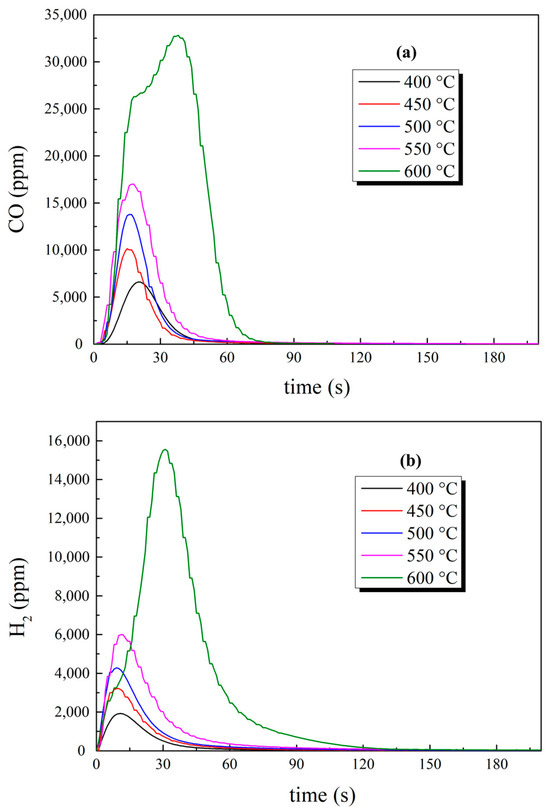
Figure 8 presents the concentration profiles of carbon monoxide (CO) and hydrogen (H2) (in ppm) as measured by the gas analysis equipment over time, starting from the moment of sample injection. The gases were detected for a maximum duration of 2 min.
Figure 8.
Concentration of (a) CO and (b) H2, obtained by pyrolysis of RSW in a fluidized bed at different temperature values.
As shown in Figure 8, increasing the temperature resulted in higher maximum concentrations of CO and H2. This effect was particularly pronounced at 600 °C compared to 550 °C, which indicates enhanced devolatilization and secondary gas-phase reactions. Elevated temperatures favor bond cleavage and promote deoxygenation via decarbonylation and dehydrogenation reactions, leading to greater CO and H2 formation [29]. These findings align with the observations of Torres-Sciancalepore et al. [13], who investigated the slow pyrolysis of RSW samples in a fixed bed. Similarly, increased pyrolysis gas concentrations have been reported in the literature for fluidized bed experiments with biomass [30] and other feedstocks, such as shale oil [31].
The total production of CO and H2 per unit mass of RSW, and the syngas efficiency indices are summarized in Table 2.
Table 2.
Production of H2 and CO, and process efficiency indices (CCECO and ECEsyn) in pyrolysis gases from RSW, conducted in a bubbling fluidized bed reactor at various temperatures.
A comparison of these results with those reported by Torres-Sciancalepore et al. [13] for slow pyrolysis in a fixed bed reveals an inversion in the primary gaseous products. While slow pyrolysis in a fixed bed resulted in a higher yield of H2 compared to CO, the opposite trend was observed for fast pyrolysis in a fluidized bed. However, it is important to note that the maximum temperature used in the fluidized bed experiments was 600 °C, whereas the fixed bed experiments reached temperatures of up to 950 °C [13]. Consistent with this observation, Fuentes-Cano et al. [32] reported that during the pyrolysis of pruning waste in a fluidized bed, H2 yields exceeded those of CO at 700 °C. However, at higher temperatures, this trend was reversed. The high heating rates and extremely short residence times of volatiles in fluidized bed reactors may favor CO formation over H2 production.
The yields of both gaseous compounds obtained in this study were significantly higher than those reported for slow pyrolysis in fixed beds [13]. Moreover, these values fall within the range reported by other studies on biomass pyrolysis in fluidized beds [5,32,33].
In addition, the results of the carbon conversion efficiency to CO and the energy conversion efficiency to syngas were compared with the previous study on the slow pyrolysis of the same RSW feedstock in a fixed-bed reactor [13]. In that study, the process yielded significantly lower gas efficiencies, with a CCE towards CO of only 7.4% and an ECEsyn of 9.8%. This comparison highlights the remarkable advantage of the fast pyrolysis process implemented in this work: despite operating at a much lower temperature (600 °C vs. 950 °C), the CCE towards CO increased nearly fivefold (34.6% vs. 7.4%), and the overall energy recovery in the syngas more than tripled (31.4% vs. 9.8%) compared to the slow pyrolysis regime. This demonstrates that the high heating rates and enhanced gas–solid contact in the bubbling fluidized bed effectively promote the cracking of volatiles into high-energy gaseous molecules, preventing their condensation or re-polymerization. Consequently, the proposed bubbling fluidized bed process offers a far more energy-efficient pathway for syngas production from RSW, achieving superior energy recovery with substantially lower thermal energy requirements. These results demonstrate that fast pyrolysis of Rosa rubiginosa seed waste provides an efficient route for syngas generation.
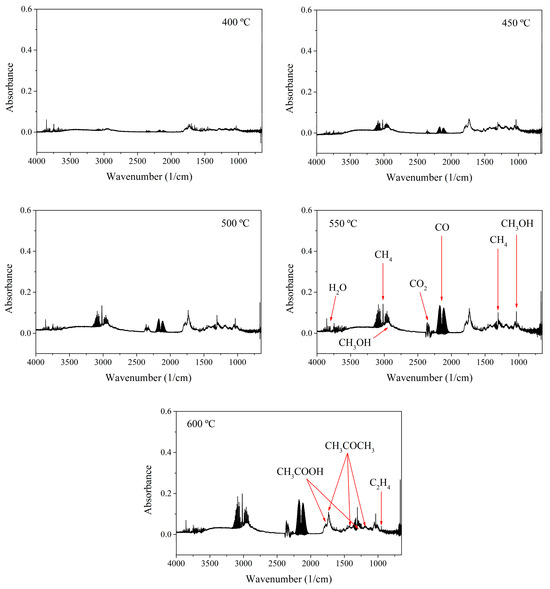
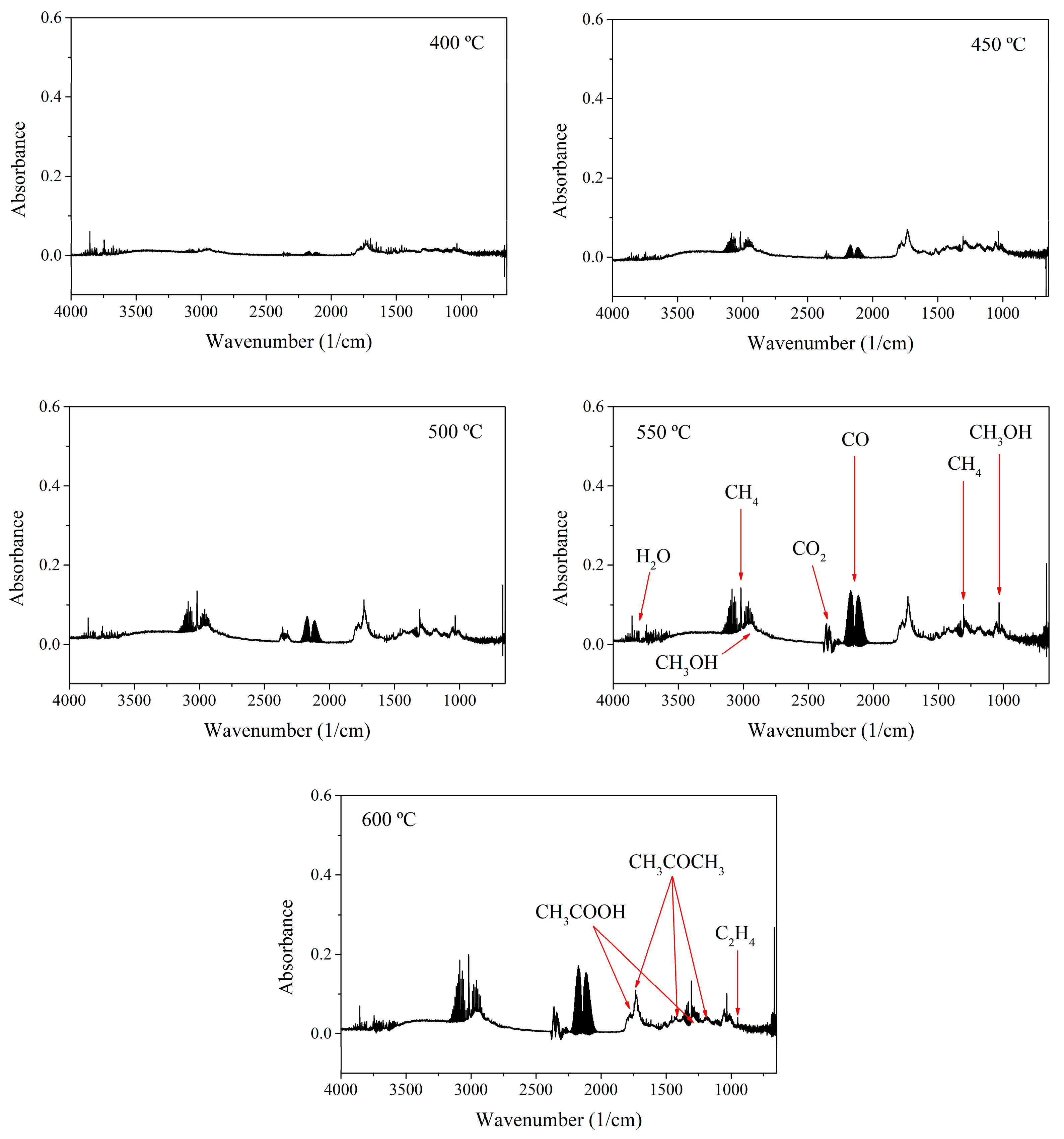
To complement the quantitative analysis of CO and H2, FTIR spectroscopy was used to identify other gaseous species and volatile organic compounds evolved during pyrolysis. Figure 9 presents the FTIR spectra obtained at 15 s after biomass injection for temperatures ranging from 400 °C to 600 °C.
Figure 9.
FTIR spectra of volatile products from RSW pyrolysis at different temperatures (t = 15 s after injection).
As observed in Figure 9, the absorbance intensity generally increases with reactor temperature, indicating a higher concentration of evolved volatiles. At lower temperatures (400–450 °C), the spectra are relatively flat; however, as the temperature rises to 550 °C and 600 °C, distinct characteristic peaks emerge. The identification of the spectral fingerprints for each detected gas was validated by comparison with reference spectra reported in the literature [34,35,36,37,38,39]. Significant absorption bands were observed in the C-H stretching region (around 3016 cm−1) and bending region (1304 cm−1), confirming the production of methane (CH4). Regarding carbon oxides, the characteristic signal for CO2 is clearly visible around 2300–2390 cm−1, while the P and R branches of gaseous CO appear between 2000 and 2200 cm−1, corroborating the trends observed with the quantitative gas analyzer. Furthermore, at 500 °C, a distinct peak appears around 949 cm−1, confirming the presence of ethylene (C2H4) resulting from cracking reactions at higher temperatures. Finally, the spectra also reveal the presence of oxygenated organic volatiles, with peaks associated with methanol (CH3OH), acetic acid (CH3COOH), and acetone (CH3COCH3) becoming identifiable.
4. Conclusions
In this study, fast pyrolysis of rosehip seed waste (RSW) was investigated in a fluidized bed reactor to evaluate syngas production. This work successfully demonstrated, by means of a detailed experimental study, the potential of bubbling fluidized bed pyrolysis as a high-efficiency technology for the valorization of RSW, a challenging residue from an invasive species.
To assess the fluidization dynamics of the sand/biomass mixture, the minimum fluidization velocity (Umf) was determined by constructing pressure loss curves as a function of the superficial velocity of the fluidizing gas. The Umf increased with the proportion of RSW in the mixture, ranging from 0.227 m/s to 0.257 m/s. Additionally, bed expansion and bubble formation were analyzed using a prototype acrylic column of the same dimensions as the reactor, with images captured by a camera. This analysis allowed the determination of the mixing ratio, initial bed height, and gas velocity necessary to ensure acceptable fluidization quality. For a mixture containing 10% RSW, the bed height expanded to over twice the height of the fixed bed, with an average maximum expansion (Hmax) representing a 68% increase. At this composition, bubble formation was observed without axial slugging, ensuring adequate mixing without solid segregation.
Pyrolysis experiments in the fluidized bed reactor were conducted at various temperatures (400 °C ≤ T ≤ 600 °C), using nitrogen as the fluidizing gas at a flow rate equivalent to approximately three times the minimum fluidization flow rate, with a biomass concentration of 10% RSW and an initial bed height of 2.5 cm. The reactor outlet gas composition was analyzed, focusing on the syngas (CO + H2) concentration and total yield. Methane and ethylene were also detected. Results showed that carbon monoxide production (13.868 mmol/gRSW at 600 °C) exceeded that of hydrogen (7.914 mmol/gRSW at 600 °C). Both yields were significantly higher than those reported for the same feedstock under slow pyrolysis in a fixed-bed reactor.
Crucially, a comparison with previous fixed-bed studies on RSW reveals that the bubbling fluidized bed reactor yields significantly higher amounts of H2 and CO at 600 °C than fixed-bed systems operating at much higher temperatures (up to 950 °C). This underscores the advantage of the fast heating rates achieved in the fluidized regime, filling a critical knowledge gap regarding the optimal conversion route for this specific feedstock.
From an application perspective, these results highlight the potential of fluidized bed pyrolysis as a high-efficiency valorization technology. By operating at moderate temperatures (600 °C), the process minimizes energy penalties compared to traditional high-temperature gasification, establishing a more sustainable pathway for energy recovery. Ultimately, this work positions the conversion of RSW not merely as a waste treatment method, but as a viable strategy for regional energy security in Patagonia, transforming an abundant ecological liability into a flexible energy vector within the framework of a circular bioeconomy.
Future work is currently underway to optimize the reactor configuration for the simultaneous recovery and detailed characterization of the liquid (bio-oil) and solid (char) fractions, aiming to provide a comprehensive mass balance and further integrate the biorefinery potential of this feedstock.
Author Contributions
Conceptualization: R.T.-S., D.Z.-G., R.R., G.F. and G.M.; Methodology: R.T.-S., D.Z.-G., G.F. and G.M.; Formal analysis and investigation: R.T.-S., D.Z.-G., G.F. and G.M.; Writing—original draft preparation: R.T.-S.; Writing—review and editing: D.Z.-G., R.R., G.F. and G.M.; Funding acquisition: G.F. and G.M.; Resources: G.F. and G.M.; Project administration: G.F. and G.M.; Supervision: G.F. and G.M. All authors have read and agreed to the published version of the manuscript.
Funding
This research was funded by the following Argentine institutions: University of Comahue (PIN 2022–04/I260); CONICET-National Scientific and Technical Research Council (PIP 2021–2023-11220200100950CO).
Data Availability Statement
The datasheets generated during and/or analyzed during the current study are available from the corresponding author upon reasonable request. Characteristics of used materials are also available on request.
Acknowledgments
The authors wish to thank the support of the following Argentinian institutions: the National Scientific and Technical Research Council (CONICET); the National Atomic Energy Commission (CNEA); the University of San Juan, and the University of Comahue, Faculty of Engineering. Rodrigo Torres-Sciancalepore has a postdoctoral fellowship from CONICET, Argentina. Daniela Zalazar-García, Rosa Rodríguez, Gastón Fouga and Germán Mazza are Research Members of CONICET, Argentina.
Conflicts of Interest
The authors declare no conflicts of interest.
Abbreviations
The following abbreviations are used in this manuscript:
| CCE | Carbon conversion efficiency |
| ECE | Energy conversion efficiency |
| FID | Flame ionization detector |
| FTIR | Fourier-transform infrared spectroscopy |
| LHV | Lower heating value |
| RSW | Rosehip seed waste |
| TCD | Thermal conductivity detector |
References
- Ezeorba, T.P.C.; Okeke, E.S.; Mayel, M.H.; Nwuche, C.O.; Ezike, T.C. Recent Advances in Biotechnological Valorization of Agro-Food Wastes (AFW): Optimizing Integrated Approaches for Sustainable Biorefinery and Circular Bioeconomy. Bioresour. Technol. Rep. 2024, 26, 101823. [Google Scholar] [CrossRef] [Scilit]
- Yadav, A.; Sharma, V.; Tsai, M.L.; Chen, C.W.; Sun, P.P.; Nargotra, P.; Wang, J.X.; Dong, C. Di Development of Lignocellulosic Biorefineries for the Sustainable Production of Biofuels: Towards Circular Bioeconomy. Bioresour. Technol. 2023, 381, 129145. [Google Scholar] [CrossRef] [Scilit] [PubMed]
- Matamba, T.; Tahmasebi, A.; Yu, J.; Keshavarz, A.; Abid, H.R.; Iglauer, S. A Review on Biomass as a Substitute Energy Source: Polygeneration Influence and Hydrogen Rich Gas Formation via Pyrolysis. J. Anal. Appl. Pyrolysis 2023, 175, 106221. [Google Scholar] [CrossRef] [Scilit]
- Fardi, Z.; Shahbeik, H.; Nosrati, M.; Motamedian, E. Waste-to-Energy: Co-Pyrolysis of Potato Peel and Macroalgae for Biofuels and Biochemicals. Environ. Res. 2024, 242, 117614. [Google Scholar] [CrossRef] [Scilit]
- Yan, Y.; Li, N.; Pan, Y.; Shi, L.; Xie, G.; Liu, Z.; Liu, Q. Hydrogen-Rich Syngas Production from Tobacco Stem Pyrolysis in an Electromagnetic Induction Heating Fluidized Bed Reactor. Int. J. Hydrogen Energy 2024, 68, 1271–1280. [Google Scholar] [CrossRef] [Scilit]
- Saleh, T.A. A Review on the Technologies for Converting Biomass into Carbon-Based Materials: Sustainability and Economy. Bioresour. Technol. Rep. 2024, 25, 101771. [Google Scholar] [CrossRef] [Scilit]
- Mu, L.; Wang, R.; Xie, P.; Li, Y.; Huang, X.; Yin, H.; Dong, M. Comparative Investigation on the Pyrolysis of Crop, Woody, and Herbaceous Biomass: Pyrolytic Products, Structural Characteristics, and CO2 Gasification. Fuel 2023, 335, 126940. [Google Scholar] [CrossRef] [Scilit]
- Li, X.; Cen, K.; Li, J.; Jia, D.; Gao, J.; Zhang, L.; Chen, D. Insights into the Interactions between Cellulose and Hemicellulose during Pyrolysis for Optimizing the Properties of Biochar as a Potential Energy Vector. Ind. Crops Prod. 2025, 223, 120126. [Google Scholar] [CrossRef] [Scilit]
- Trubetskaya, A.; von Berg, L.; Johnson, R.; Moore, S.; Leahy, J.J.; Han, Y.; Lange, H.; Anca-Couce, A. Production and Characterization of Bio-Oil from Fluidized Bed Pyrolysis of Olive Stones, Pinewood, and Torrefied Feedstock. J. Anal. Appl. Pyrolysis 2023, 169, 105841. [Google Scholar] [CrossRef] [Scilit]
- Constantinescu, M.; Bucura, F.; Ionete, E.I.; Spiridon, Ş.I.; Ionete, R.E.; Zaharioiu, A.; Marin, F.; Ion-Ebrasu, D.; Botoran, O.R.; Roman, A. Cattle Manure Thermochemical Conversion to Hydrogen-Rich Syngas, through Pyrolysis and Gasification. Int. J. Hydrogen Energy 2024, 79, 1058–1070. [Google Scholar] [CrossRef] [Scilit]
- Quiroga, J.M. Análisis Preliminar de La Cadena de Valor de La Rosa Mosqueta En Bariloche y Zona de Influencia, Argentina. SaberEs 2019, 11, 65–80. Available online: https://www.scielo.org.ar/scielo.php?script=sci_abstract&pid=S1852-42222019000100004 (accessed on 9 December 2025). [CrossRef] [Scilit]
- Torres-Sciancalepore, R.; Asensio, D.; Nassini, D.; Fernandez, A.; Rodriguez, R.; Fouga, G.; Mazza, G. Assessment of the Behavior of Rosa Rubiginosa Seed Waste during Slow Pyrolysis Process towards Complete Recovery: Kinetic Modeling and Product Analysis. Energy Convers. Manag. 2022, 272, 116340. [Google Scholar] [CrossRef] [Scilit]
- Torres-Sciancalepore, R.; Nassini, D.; Asensio, D.; Bohé, A.; Rodriguez, R.; Fouga, G.; Mazza, G. Synergistic Effects of the Mixing Factor on the Kinetics and Products Obtained by Co-Pyrolysis of Rosa Rubiginosa Rosehip Seed and Husk Wastes. Energy Convers. Manag. 2024, 302, 118095. [Google Scholar] [CrossRef] [Scilit]
- Torres-Sciancalepore, R.; Nassini, D.; Asensio, D.; Soria, J.; Rodriguez, R.; Fouga, G.; Mazza, G. CO2-Assisted Gasification of Patagonian Rosehip Bio-Wastes: Kinetic Modeling, Analysis of Ash Catalytic Effects, and Product Gas Speciation. J. Environ. Chem. Eng. 2024, 12, 114644. [Google Scholar] [CrossRef] [Scilit]
- Toschi, F.; Zambon, M.T.; Sandoval, J.; Reyes-Urrutia, A.; Mazza, G.D. Fluidization of Forest Biomass-Sand Mixtures: Experimental Evaluation of Minimum Fluidization Velocity and CFD Modeling. Part. Sci. Technol. 2021, 39, 549–561. [Google Scholar] [CrossRef] [Scilit]
- Soanuch, C.; Korkerd, K.; Piumsomboon, P.; Chalermsinsuwan, B. Minimum Fluidization Velocities of Binary and Ternary Biomass Mixtures with Silica Sand. Energy Rep. 2020, 6, 67–72. [Google Scholar] [CrossRef] [Scilit]
- Oliveira, T.J.P.; Cardoso, C.R.; Ataíde, C.H. Bubbling Fluidization of Biomass and Sand Binary Mixtures: Minimum Fluidization Velocity and Particle Segregation. Chem. Eng. Process. Process Intensif. 2013, 72, 113–121. [Google Scholar] [CrossRef] [Scilit]
- Emiola-Sadiq, T.; Wang, J.; Zhang, L.; Dalai, A. Mixing and Segregation of Binary Mixtures of Biomass and Silica Sand in a Fluidized Bed. Particuology 2021, 58, 58–73. [Google Scholar] [CrossRef] [Scilit]
- Iannello, S.; Morrin, S.; Materazzi, M. Fluidised Bed Reactors for the Thermochemical Conversion of Biomass and Waste. KONA Powder Part. J. 2020, 37, 114–131. [Google Scholar] [CrossRef] [Scilit]
- Zhang, H.; Xiao, R.; Huang, H.; Xiao, G. Comparison of Non-Catalytic and Catalytic Fast Pyrolysis of Corncob in a Fluidized Bed Reactor. Bioresour. Technol. 2009, 100, 1428–1434. [Google Scholar] [CrossRef] [Scilit] [PubMed]
- Yao, B.; Li, X.; Zhou, C.; Lv, F.; Zhang, C.; Wang, L.; Yu, M.; Yuan, Y.; Zhang, Y.; Jin, Y.; et al. Co-Pyrolysis of Dyeing Sludge and Pine Sawdust in a Fluidized Bed: Characterization and Analysis of Pyrolytic Products and Investigation of Synergetic Effects. Waste Manag. 2023, 167, 122–134. [Google Scholar] [CrossRef] [Scilit]
- Basu, P. Biomass Gasification, Pyrolysis and Torrefaction. Practical Design and Theory, 2nd ed.; Elsevier Inc.: San Diego, CA, USA, 2013; ISBN 9780123964885. [Google Scholar]
- Xu, T.; Xu, J.; Wu, Y. Hydrogen-Rich Gas Production from Two-Stage Catalytic Pyrolysis of Pine Sawdust with Calcined Dolomite. Catalysts 2022, 12, 131. [Google Scholar] [CrossRef] [Scilit]
- Perry, R.H.; Green, D.W. Section 2: Physical and Chemical Data. In Perry’s Chemical Engineers’ Handbook; Mc Graw Hill: New York, NY, USA, 2008; ISBN 0071542094. [Google Scholar]
- Bai, Y.; Si, H. Experimental Study on Fluidization, Mixing and Separation Characteristics of Binary Mixtures of Particles in a Cold Fluidized Bed for Biomass Fast Pyrolysis. Chem. Eng. Process.—Process Intensif. 2020, 153, 107936. [Google Scholar] [CrossRef] [Scilit]
- Pérez, N.P.; Pedroso, D.T.; Machin, E.B.; Antunes, J.S.; Verdú Ramos, R.A.; Silveira, J.L. Prediction of the Minimum Fluidization Velocity of Particles of Sugarcane Bagasse. Biomass Bioenergy 2018, 109, 249–256. [Google Scholar] [CrossRef] [Scilit]
- Hilal, N. The Dependence of Solid Expansion on Bed Diameter, Particles Material, Size and Distributor in Open Fluidized Beds. Adv. Powder Technol. 2005, 16, 73–86. [Google Scholar] [CrossRef] [Scilit]
- Yates, J.G. Effects of Temperature and Pressure on Gas-Solid Fluidization. Chem. Eng. Sci. 1996, 51, 167–205. [Google Scholar] [CrossRef] [Scilit]
- Castro, J.; Leaver, J.; Pang, S. Modelling of Enhanced Dual Fluidized Bed Steam Gasification with Integration of Biomass-Specific Devolatilization. Biomass Bioenergy 2026, 204, 108445. [Google Scholar] [CrossRef] [Scilit]
- Santamaria, L.; Beirow, M.; Mangold, F.; Lopez, G.; Olazar, M.; Schmid, M.; Li, Z.; Scheffknecht, G. Influence of Temperature on Products from Fluidized Bed Pyrolysis of Wood and Solid Recovered Fuel. Fuel 2021, 283, 118922. [Google Scholar] [CrossRef] [Scilit]
- Abduhani, H.; Tursun, Y.; Abulizi, A.; Talifu, D.; Huang, X. Characteristics and Kinetics of the Gas Releasing during Oil Shale Pyrolysis in a Micro Fluidized Bed Reactor. J. Anal. Appl. Pyrolysis 2021, 157, 105187. [Google Scholar] [CrossRef] [Scilit]
- Fuentes-Cano, D.; Salinero, J.; Haro, P.; Nilsson, S.; Gómez-Barea, A. The Influence of Volatiles to Carrier Gas Ratio on Gas and Tar Yields during Fluidized Bed Pyrolysis Tests. Fuel 2018, 226, 81–86. [Google Scholar] [CrossRef] [Scilit]
- Pielsticker, S.; Gövert, B.; Kreitzberg, T.; Habermehl, M.; Hatzfeld, O.; Kneer, R. Simultaneous Investigation into the Yields of 22 Pyrolysis Gases from Coal and Biomass in a Small-Scale Fluidized Bed Reactor. Fuel 2017, 190, 420–434. [Google Scholar] [CrossRef] [Scilit]
- Schwarm, K.K.; Strand, C.L.; Miller, V.A.; Spearrin, R.M. Calibration-Free Breath Acetone Sensor with Interference Correction Based on Wavelength Modulation Spectroscopy near 8.2 μM. Appl. Phys. B Lasers Opt. 2020, 126, 9. [Google Scholar] [CrossRef] [Scilit]
- Ding, Y.; Strand, C.L.; Hanson, R.K. High-Temperature Mid-Infrared Absorption Spectra of Methanol (CH3OH) and Ethanol (C2H5OH) between 930 and 1170 cm−1. J. Quant. Spectrosc. Radiat. Transf. 2019, 224, 396–402. [Google Scholar] [CrossRef] [Scilit]
- Ngohang, F.E.; Fontaine, G.; Gay, L.; Bourbigot, S. Revisited Investigation of Fire Behavior of Ethylene Vinyl Acetate/Aluminum Trihydroxide Using a Combination of Mass Loss Cone, Fourier Transform Infrared Spectroscopy and Electrical Low Pressure Impactor. Polym. Degrad. Stab. 2014, 106, 26–35. [Google Scholar] [CrossRef] [Scilit]
- Ngohang, F.E.; Fontaine, G.; Gay, L.; Bourbigot, S. Smoke Composition Using MLC/FTIR/ELPI: Application to Flame Retarded Ethylene Vinyl Acetate. Polym. Degrad. Stab. 2015, 115, 89–109. [Google Scholar] [CrossRef] [Scilit]
- Fedelich, N. TGA-FTIR. In Evolved Gas Analysis; Carl Hanser Verlag GmbH & Co. KG: München, Germany, 2019; pp. 18–30. ISBN 978-1-56990-809-9. [Google Scholar]
- Tkach, I.; Panchenko, A.; Kaz, T.; Gogel, V.; Friedrich, K.A.; Roduner, E. In Situ Study of Methanol Oxidation on Pt and Pt/Ru-Mixed with Nafion® Anodes in a Direct Methanol Fuel Cell by Means of FTIR Spectroscopy. Phys. Chem. Chem. Phys. 2004, 6, 5419–5426. [Google Scholar] [CrossRef] [Scilit]

Disclaimer/Publisher’s Note: The statements, opinions and data contained in all publications are solely those of the individual author(s) and contributor(s) and not of MDPI and/or the editor(s). MDPI and/or the editor(s) disclaim responsibility for any injury to people or property resulting from any ideas, methods, instructions or products referred to in the content. |
© 2025 by the authors. Licensee MDPI, Basel, Switzerland. This article is an open access article distributed under the terms and conditions of the Creative Commons Attribution (CC BY) license (https://creativecommons.org/licenses/by/4.0/).