Article

Facet-Engineered MgO for Efficient Nonthermal Plasma Catalytic CO2 Splitting: Dominant Role of the (111) Surface


1
College of Materials Science and Engineering, Huaqiao University, Xiamen 361021, China
2
State Key Laboratory of Advanced Environmental Technology, Institute of Urban Environment, Chinese Academy of Sciences, Xiamen 361021, China
3
University of Chinese Academy of Sciences, Beijing 100049, China
*
Authors to whom correspondence should be addressed.
ChemEngineering 2026, 10(6), 78; https://doi.org/10.3390/chemengineering10060078

Submission received: 4 May 2026 / Revised: 31 May 2026 / Accepted: 11 June 2026 / Published: 16 June 2026

Abstract

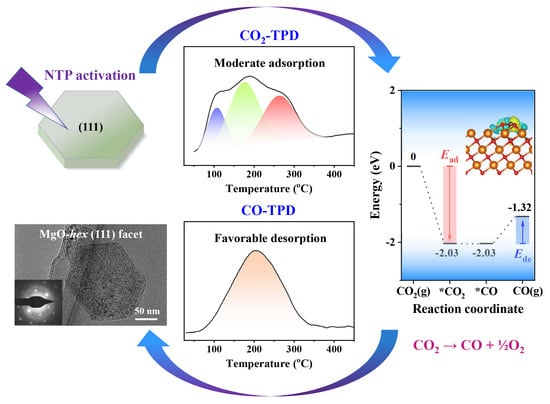
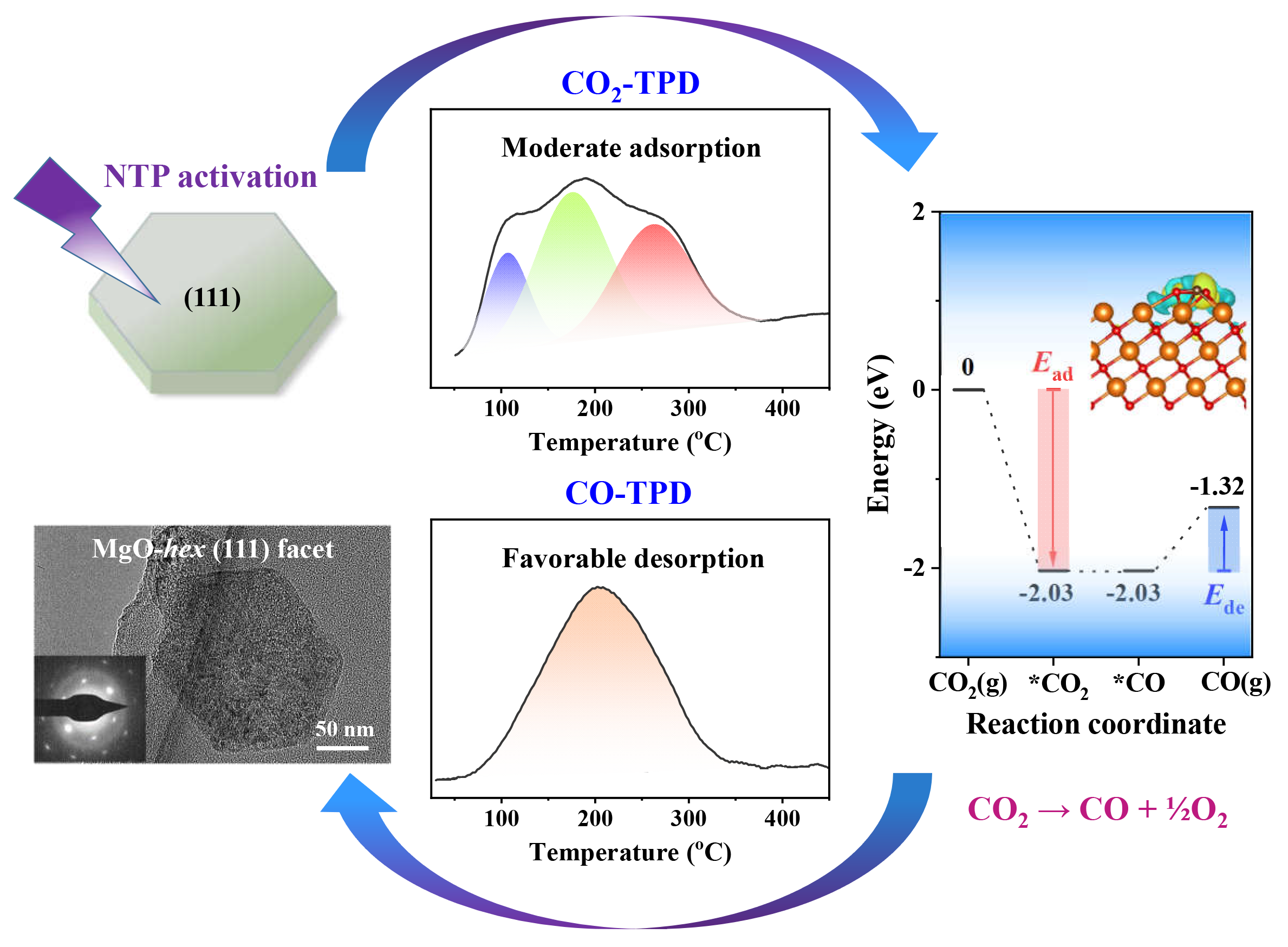
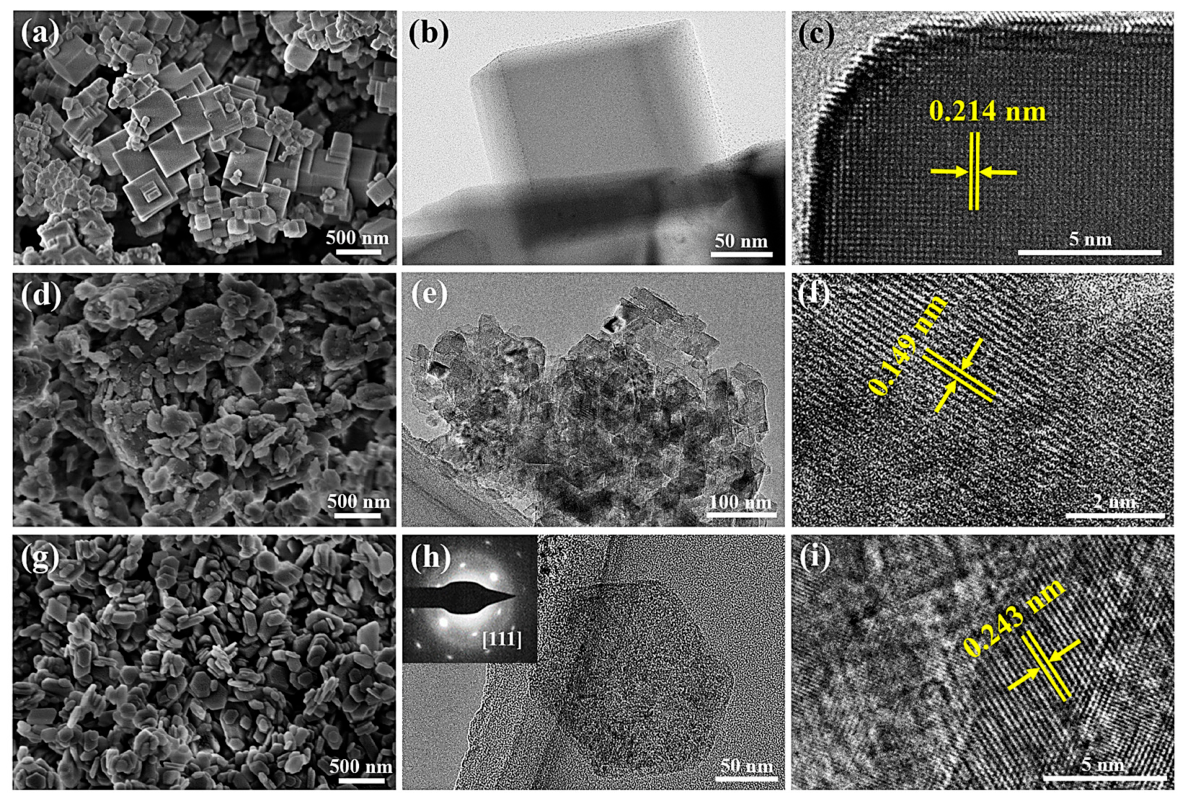
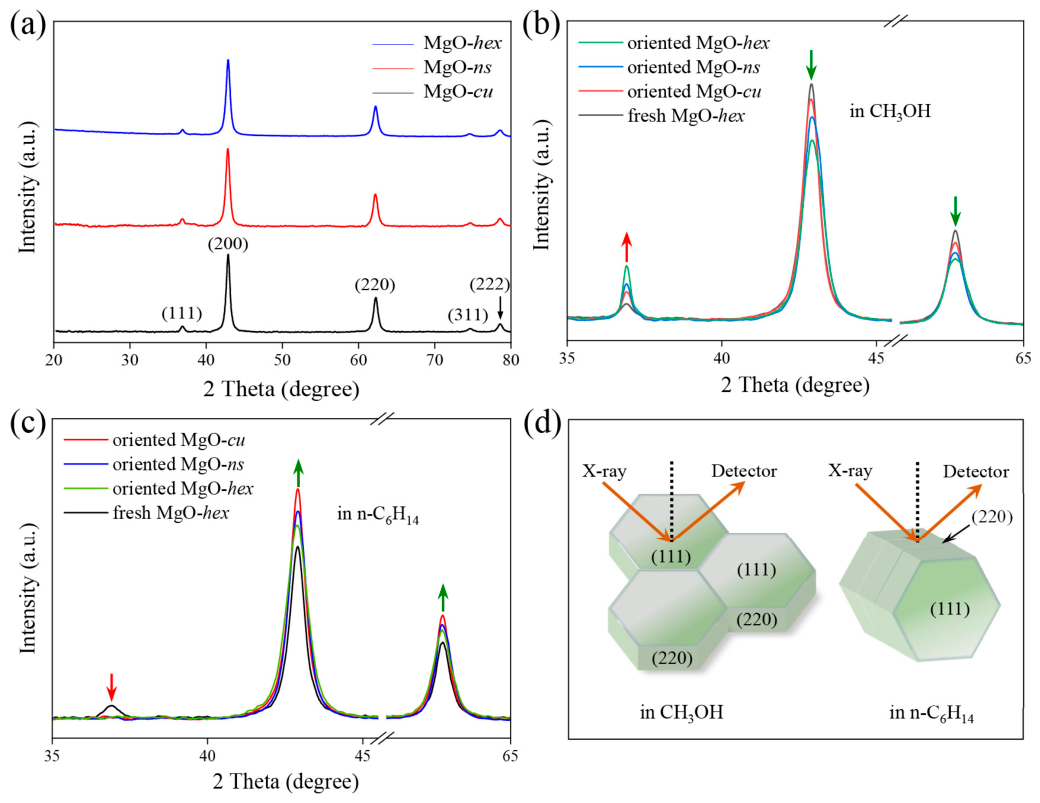
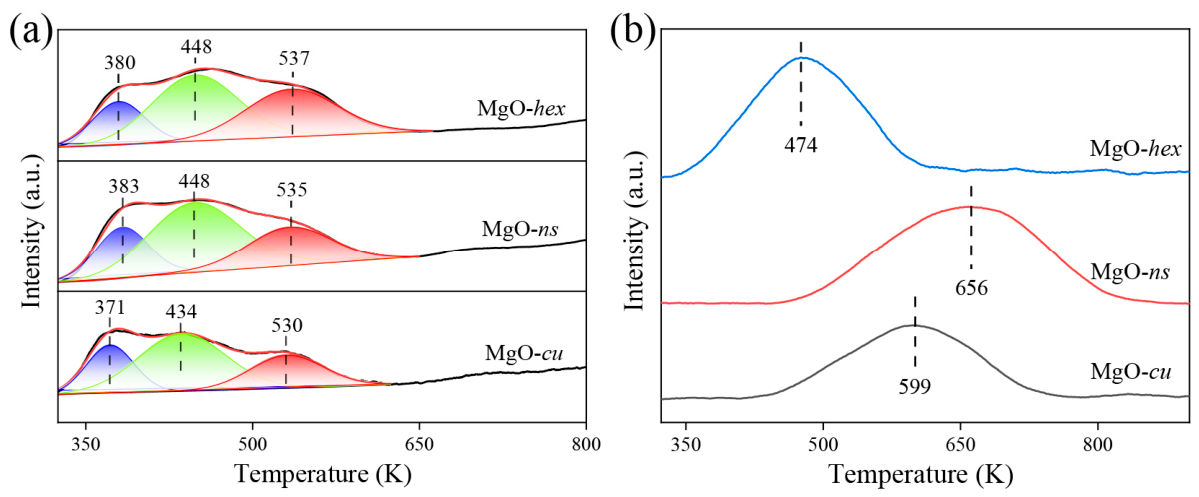
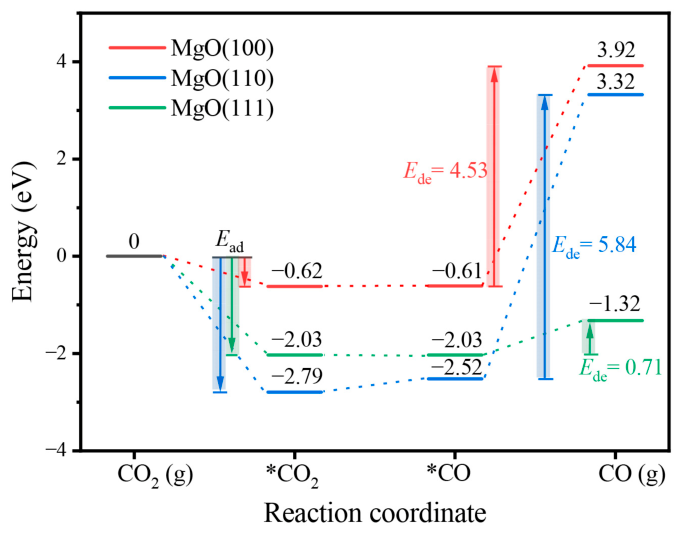
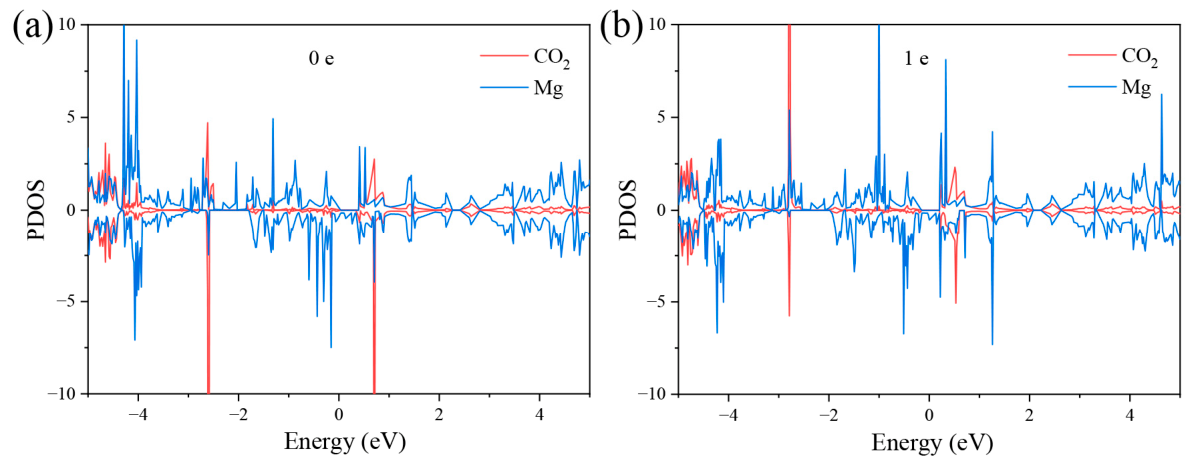
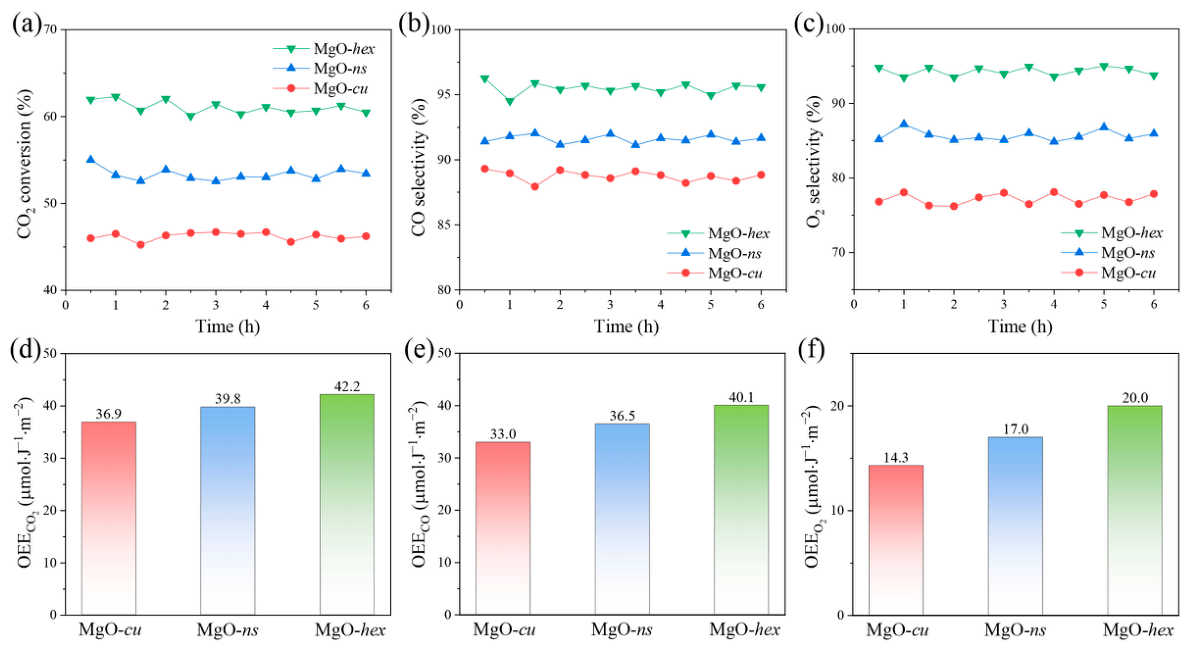
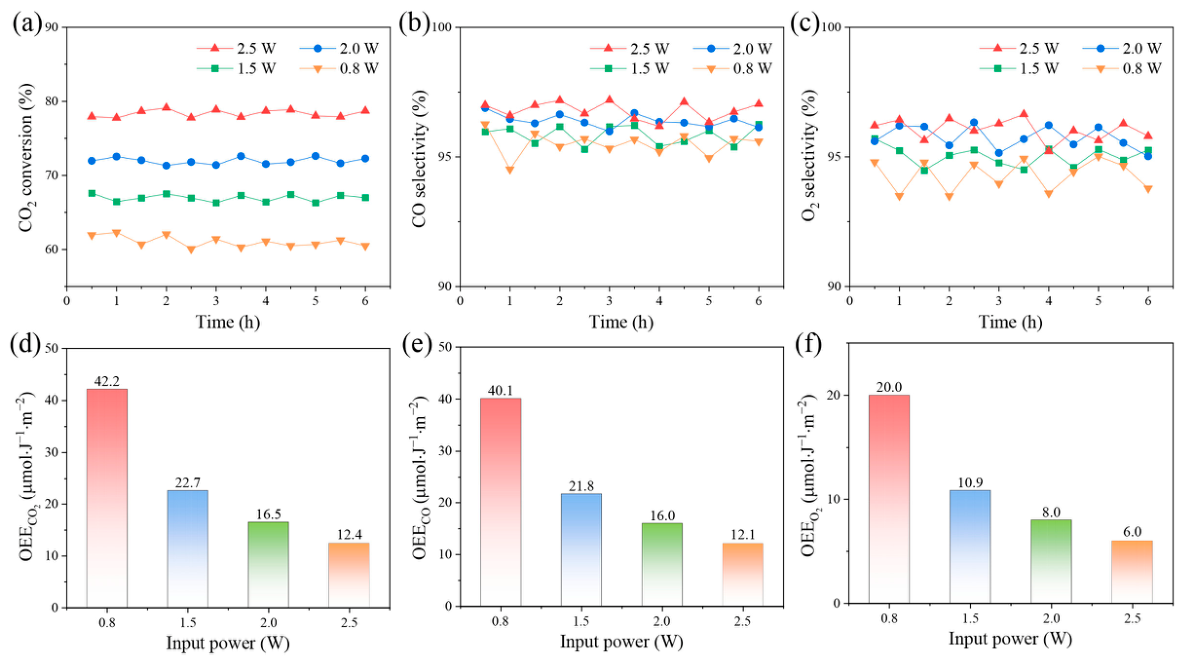
The facet-dependent catalytic behavior of MgO in non-thermal plasma (NTP)-driven CO2 decomposition is systematically investigated by combining experimental measurements and density functional theory (DFT) calculations. Three MgO catalysts with dominant exposure of the (100), (110), and (111) facets are synthesized. CO2 temperature-programmed desorption (CO2-TPD) shows that CO2 adsorption capacity follows the order MgO(110) > MgO(111) > MgO(100), consistent with DFT-derived adsorption energies. DFT energy profiles reveal that although MgO(110) binds CO2 most strongly, it suffers from excessively strong CO adsorption (5.84 eV), inhibiting product desorption. In contrast, MgO(111) offers a favorable CO2 adsorption energy combined with a remarkably low CO desorption energy (0.71 eV), enabling rapid turnover. Electronic structure analyses demonstrate substantial charge transfer from MgO(111) to CO2 (up to 1.76 |e|) and pronounced orbital hybridization near the Fermi level, which are further enhanced under plasma conditions. Plasma-catalytic tests at 0.8 W show that MgO(111) achieves the highest CO2 conversion (60.7%) with excellent selectivity toward CO (95.3%) and O2 (94.4%), outperforming MgO(110) and MgO(100). Increasing the input power from 0.8 to 2.5 W raises conversion to 78.1% but reduces energy efficiency due to increased gas heating or non-productive pathways. Overall, the (111)-enriched MgO is identified as an efficient and selective catalyst for NTP-based CO2 splitting, owing to its optimal balance of adsorption strength, facile CO desorption, strong charge transfer, and plasma–catalyst synergy. This work highlights the importance of facet engineering and power optimization for designing oxide-based plasma catalysts toward energy-efficient CO2 utilization.
Keywords: magnesium oxide; facet engineering; plasma catalysis; CO2 conversion; carbon monoxide magnesium oxide; facet engineering; plasma catalysis; CO2 conversion; carbon monoxide
Graphical Abstract