
Adsorption of Perfluorooctanoic Acid from Aqueous Media Using an Engineered Sugarcane Bagasse Biochar–Chitosan Composite



Abstract
1. Introduction
2. Materials and Methods
2.1. Adsorbate
2.2. SBCT Preparation
2.3. Adsorbent Characterization
2.4. Batch Adsorption of PFOA
2.5. Isotherm Modeling of Adsorption
2.6. Kinetic Modeling of Adsorption
2.7. Thermodynamic Studies
3. Results and Discussion
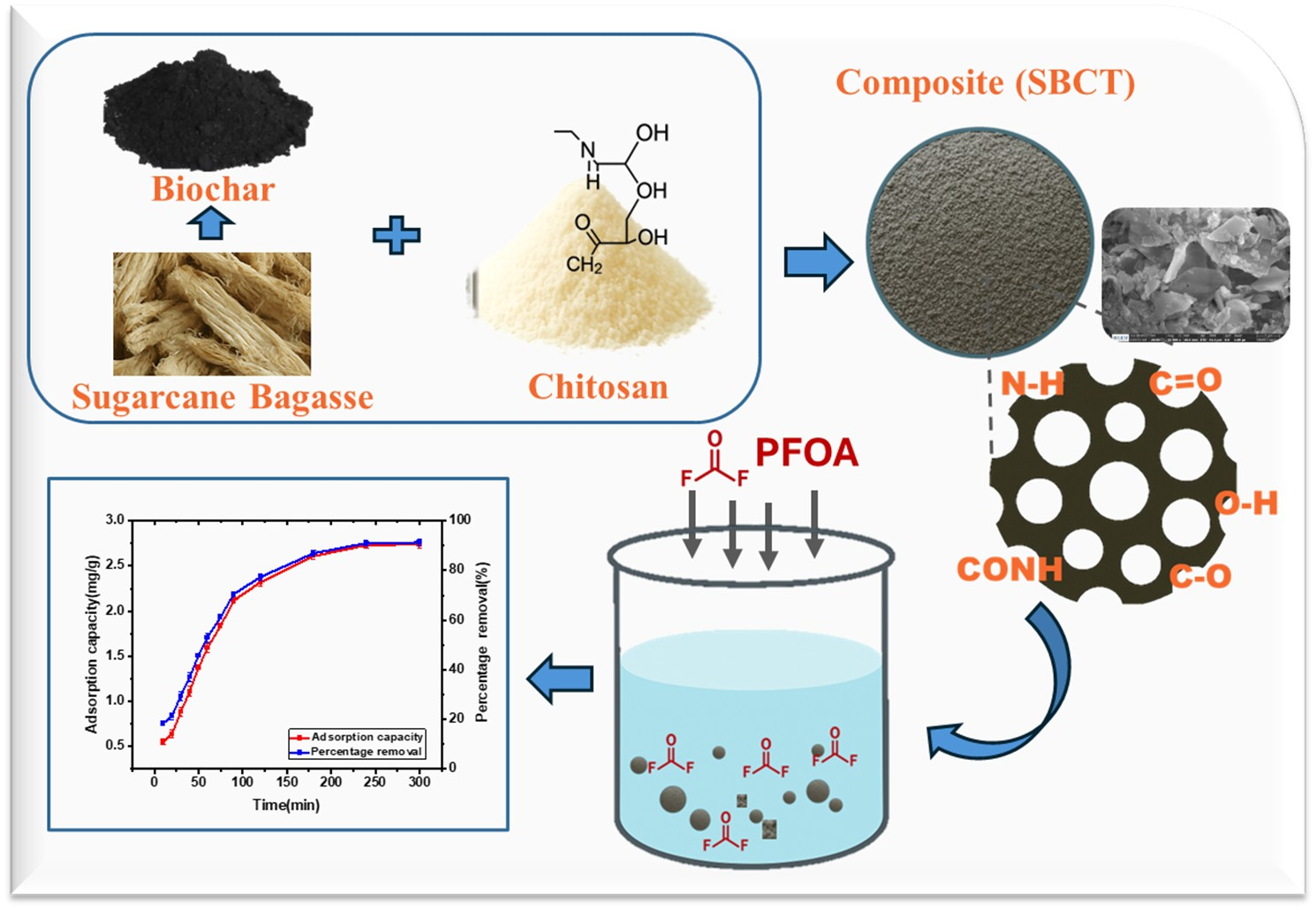
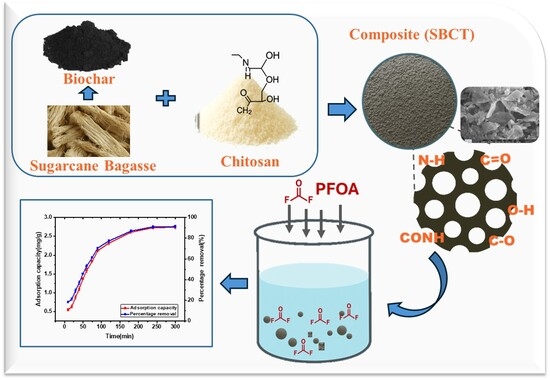
3.1. Novel Engineered SBCT
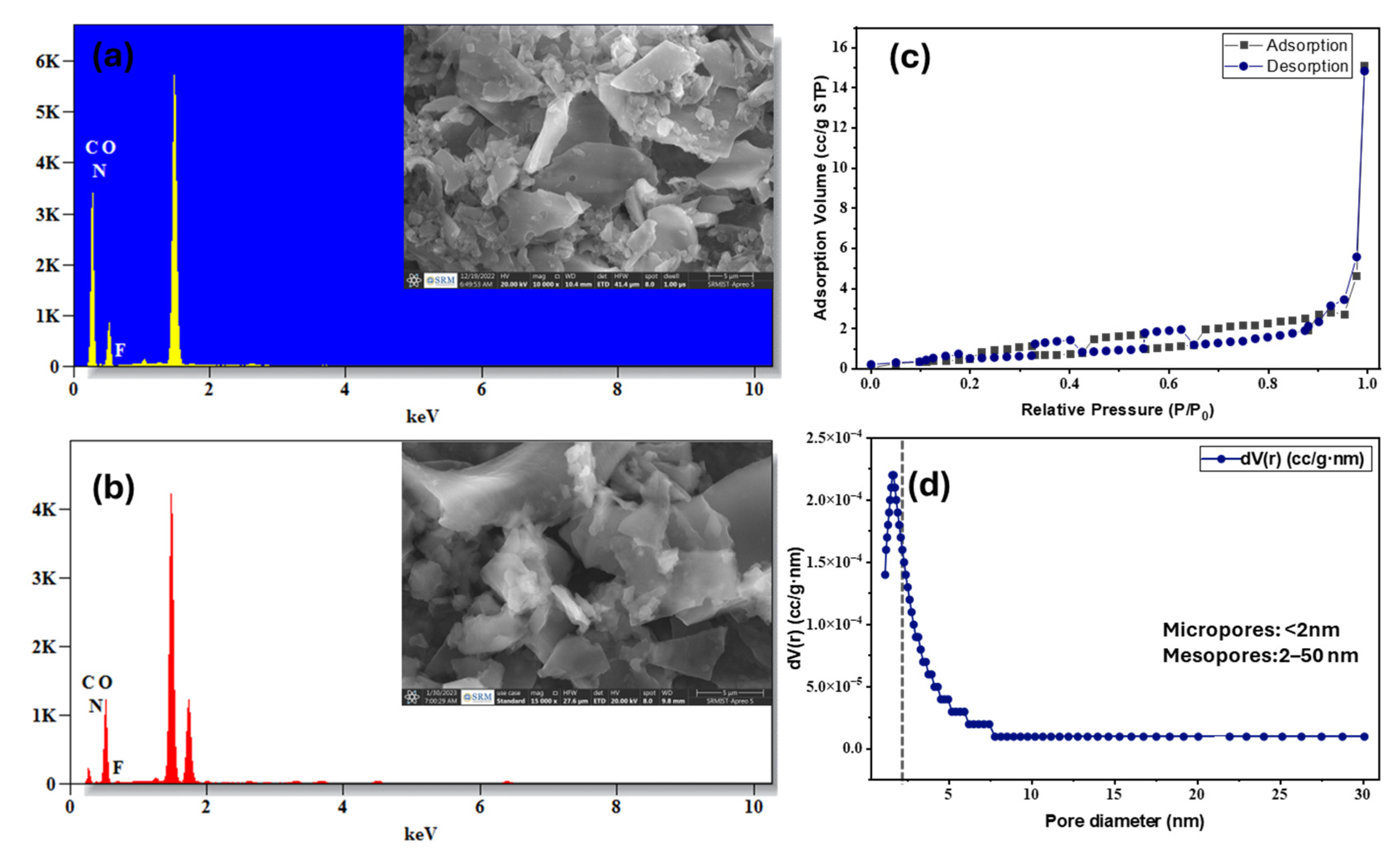
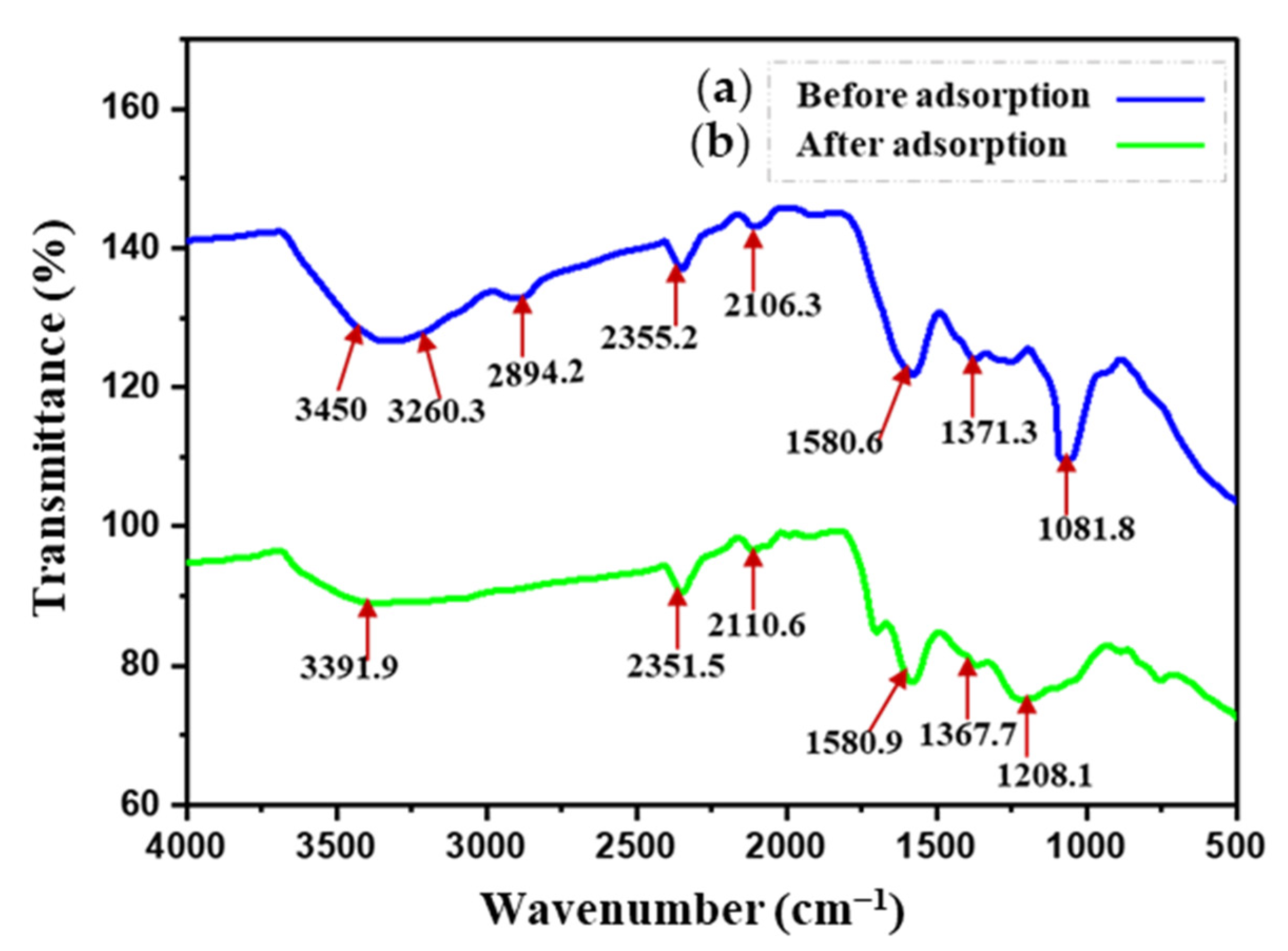
3.2. SBCT Characterization
3.3. Factors Governing PFOA Adsorption
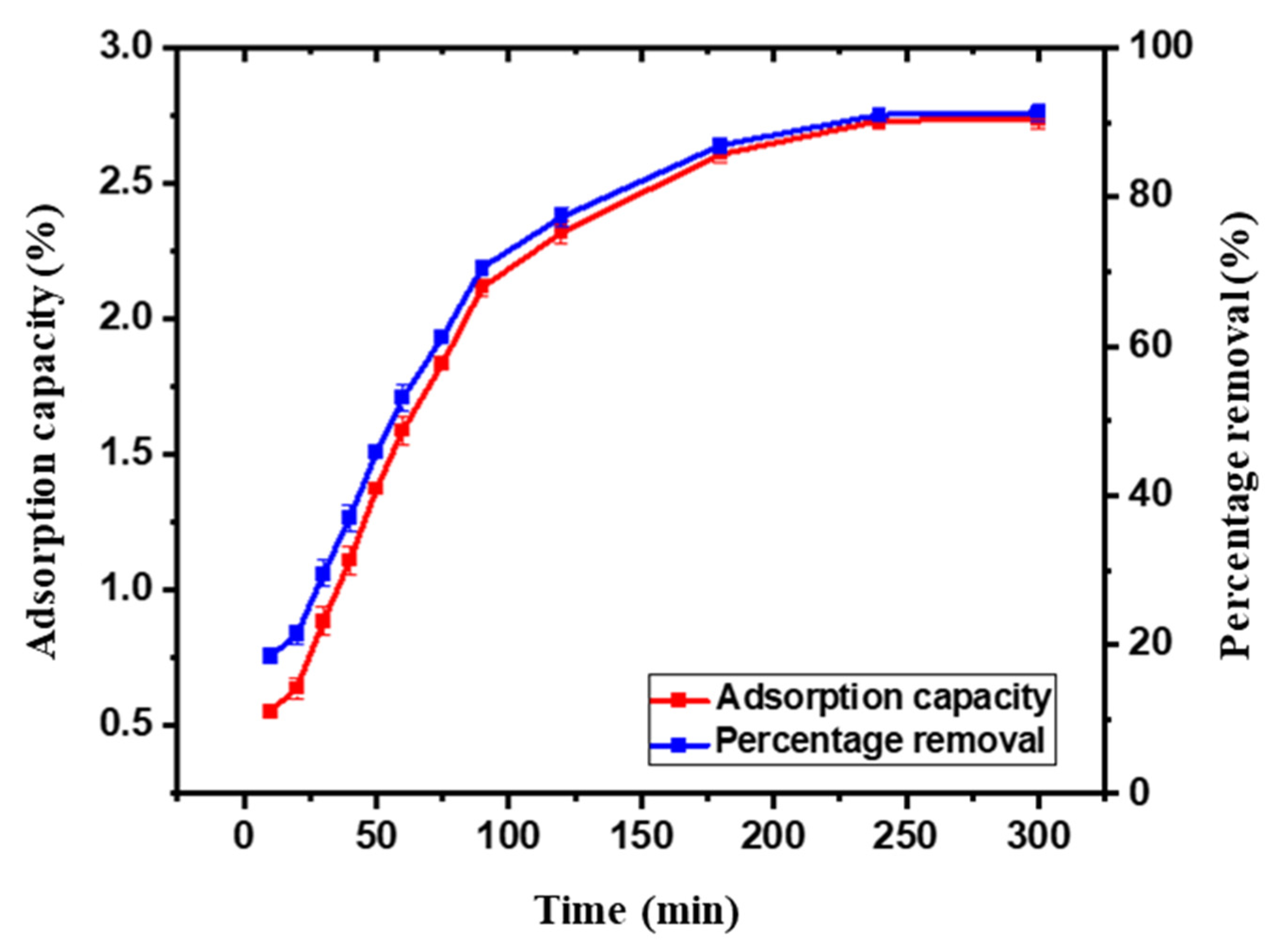
3.3.1. Contact Time
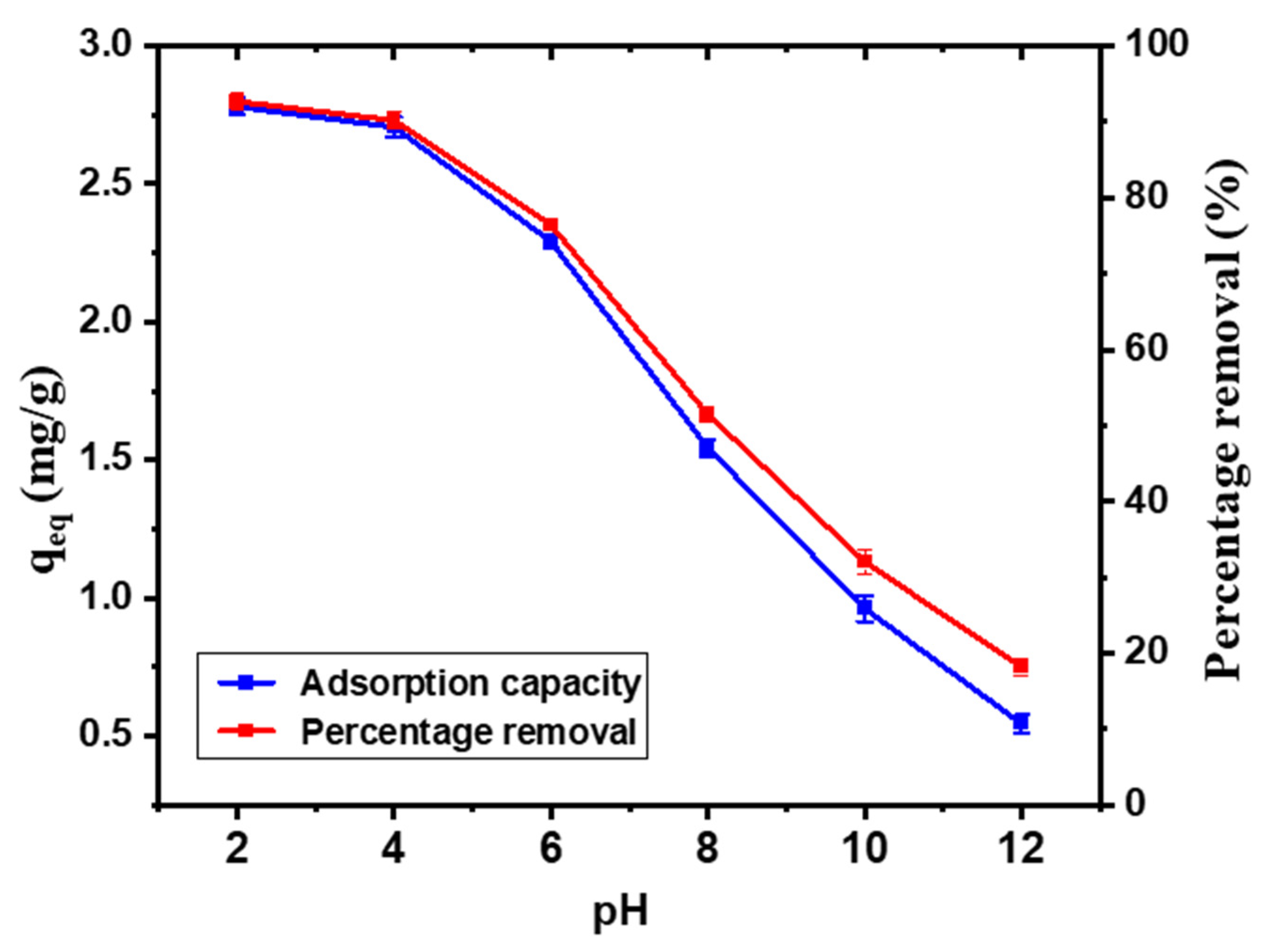
3.3.2. pH
3.3.3. Adsorbent Dosage and Initial Concentration
3.4. Adsorption Modeling of PFOA Using SBCT
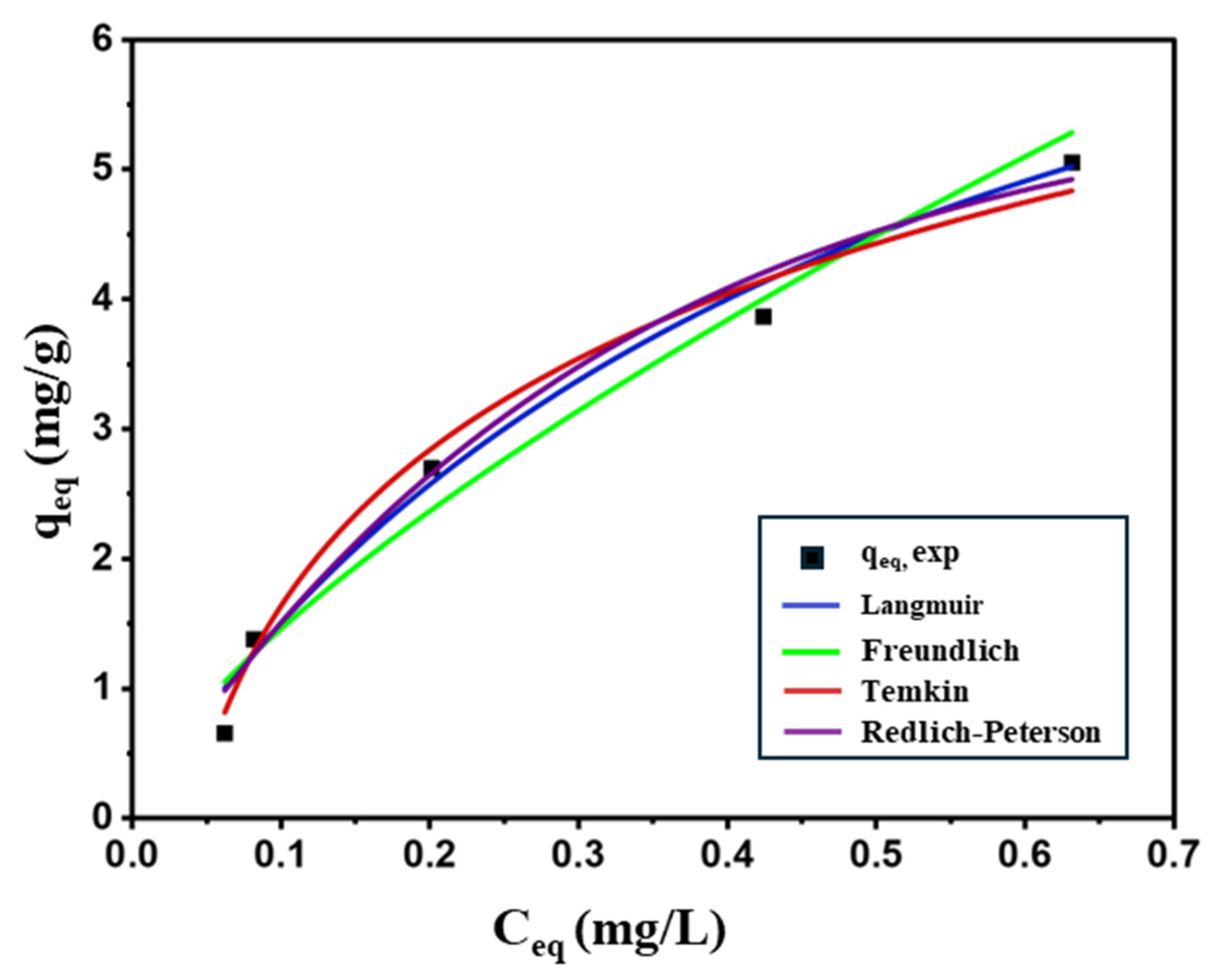
3.4.1. Isotherm Study
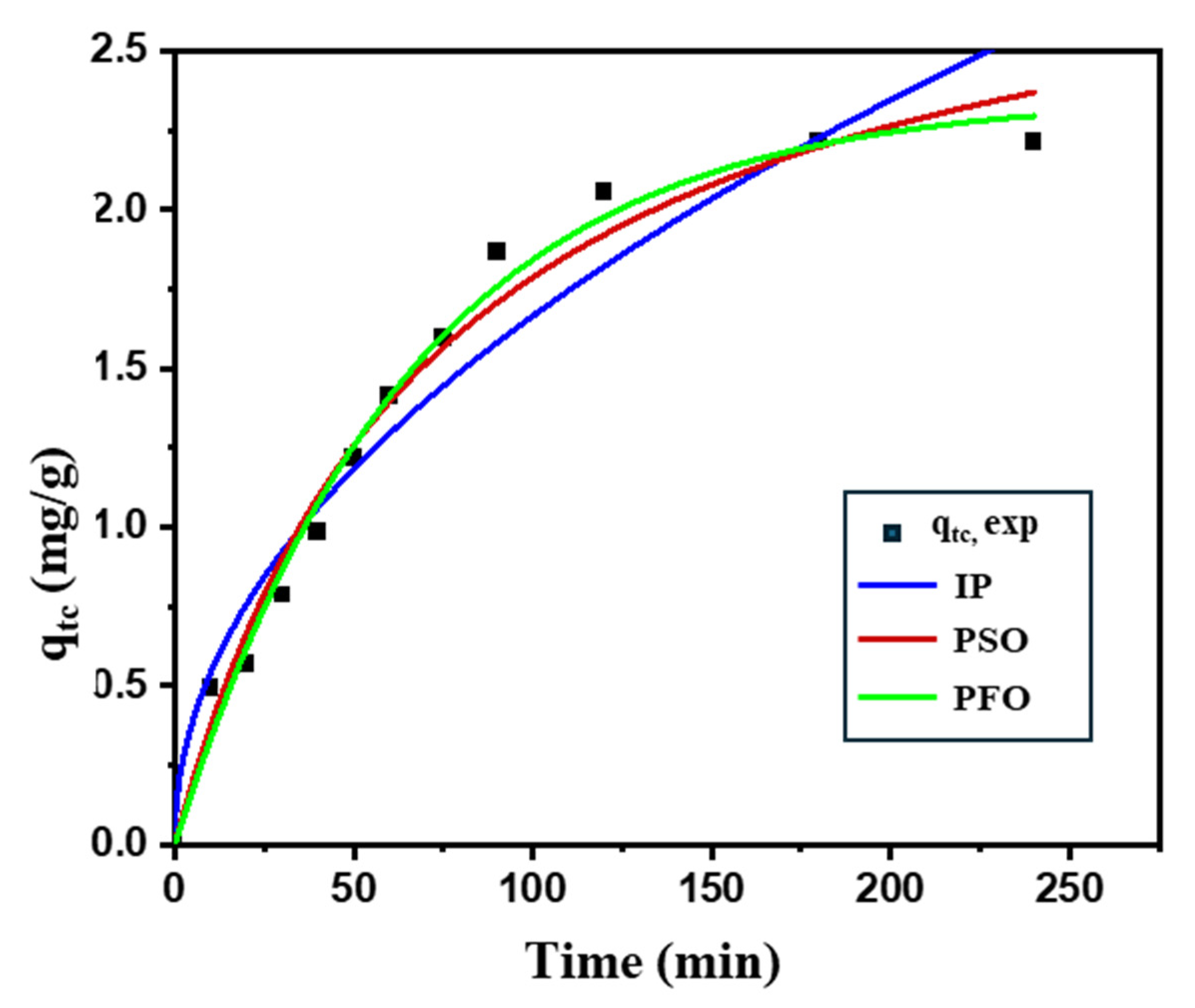
3.4.2. Kinetic Study
3.4.3. Thermodynamic Parameters
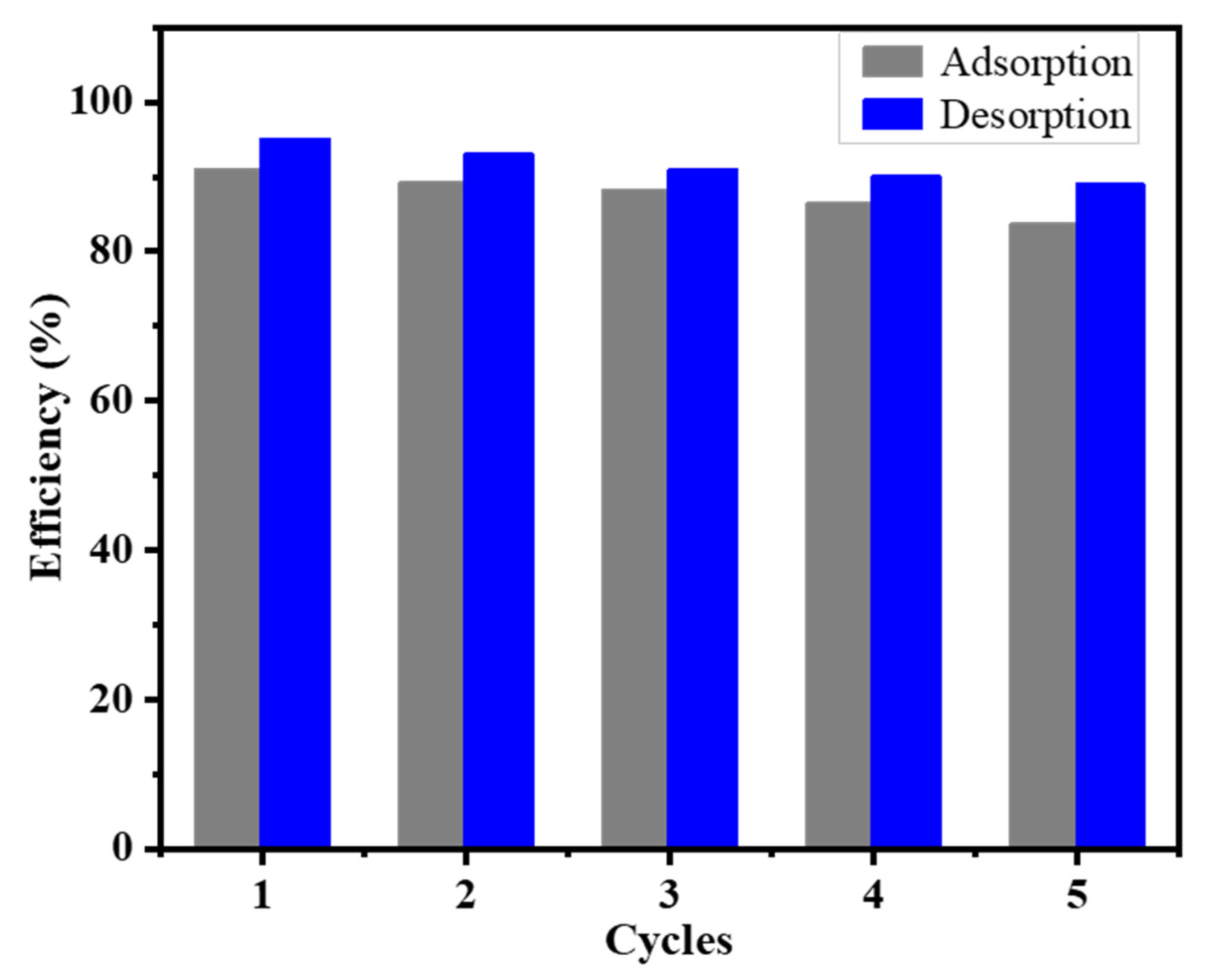
3.5. Regeneration Experiments
3.6. Comparative Analysis with Other Studies
3.7. A Sustainable Technology for Water Treatment
4. Conclusions
Supplementary Materials
Author Contributions
Funding
Data Availability Statement
Conflicts of Interest
References
- Buck, R.C.; Franklin, J.; Berger, U.; Conder, J.M.; Cousins, I.T.; de Voogt, P.; Jensen, A.A.; Kannan, K.; Mabury, S.A.; van Leeuwen, S.P. Perfluoroalkyl and polyfluoroalkyl substances in the environment: Terminology, classification, and origins. Integr. Environ. Assess. Manag. 2011, 7, 513–541. [Google Scholar] [CrossRef]
- Gluge, J.; Scheringer, M.; Cousins, I.T.; DeWitt, J.C.; Goldenman, G.; Herzke, D.; Lohmann, R.; Ng, C.A.; Trier, X.; Wang, Z. An overview of the uses of per- and polyfluoroalkyl substances (PFAS). Environ. Sci. Process Impacts 2020, 22, 2345–2373. [Google Scholar] [CrossRef]
- Post, G.B.; Cohn, P.D.; Cooper, K.R. Perfluorooctanoic acid (PFOA), an emerging drinking water contaminant: A critical review of recent literature. Environ. Res. 2012, 116, 93–117. [Google Scholar] [CrossRef]
- Vierke, L.; Staude, C.; Biegel-Engler, A.; Drost, W.; Schulte, C. Perfluorooctanoic acid (PFOA)—Main concerns and regulatory developments in Europe from an environmental point of view. Environ. Sci. Eur. 2012, 24, 16. [Google Scholar] [CrossRef]
- OCED. Working Towards A Global Emission Inventory of PFASs: Focus on PFCAs—Status Quo and the Way Forward; OCED: Paris, France, 2015. [Google Scholar]
- Lenka, S.P.; Kah, M.; Padhye, L.P. A review of the occurrence, transformation, and removal of poly- and perfluoroalkyl substances (PFAS) in wastewater treatment plants. Water Res. 2021, 199, 117187. [Google Scholar] [CrossRef] [PubMed]
- Rahman, M.F.; Peldszus, S.; Anderson, W.B. Behaviour and fate of perfluoroalkyl and polyfluoroalkyl substances (PFASs) in drinking water treatment: A review. Water Res. 2014, 50, 318–340. [Google Scholar] [CrossRef] [PubMed]
- SC. Stockholm Convention on Persistent Organic Pollutants (POPs), The New POPs Under the Stockholm Convention. Available online: https://chm.pops.int/TheConvention/ThePOPs/TheNewPOPs/tabid/2511/Default.aspx (accessed on 24 March 2025).
- U.S. EPA. Technical Fact Sheet—PFOS and PFOA; U.S. EPA: San Francisco, CA, USA, 2017.
- Garg, S.; Kumar, P.; Mishra, V.; Guijt, R.; Singh, P.; Dumée, L.F.; Sharma, R.S. A review on the sources, occurrence and health risks of per-/poly-fluoroalkyl substances (PFAS) arising from the manufacture and disposal of electric and electronic products. J. Water Process Eng. 2020, 38, 101683. [Google Scholar] [CrossRef]
- Olsen, G.W.; Burris, J.M.; Ehresman, D.J.; Froehlich, J.W.; Seacat, A.M.; Butenhoff, J.L.; Zobel, L.R. Half-life of serum elimination of perfluorooctanesulfonate, perfluorohexanesulfonate, and perfluorooctanoate in retired fluorochemical production workers. Environ. Health Perspect. 2007, 115, 1298–1305. [Google Scholar] [CrossRef]
- Salvalaglio, M.; Muscionico, I.; Cavallotti, C. Determination of energies and sites of binding of PFOA and PFOS to human serum albumin. J. Phys. Chem. B 2010, 114, 14860–14874. [Google Scholar] [CrossRef]
- Castiglioni, S.; Valsecchi, S.; Polesello, S.; Rusconi, M.; Melis, M.; Palmiotto, M.; Manenti, A.; Davoli, E.; Zuccato, E. Sources and fate of perfluorinated compounds in the aqueous environment and in drinking water of a highly urbanized and industrialized area in Italy. J. Hazard. Mater. 2015, 282, 51–60. [Google Scholar] [CrossRef]
- Ji, B.; Kang, P.; Wei, T.; Zhao, Y. Challenges of aqueous per- and polyfluoroalkyl substances (PFASs) and their foreseeable removal strategies. Chemosphere 2020, 250, 126316. [Google Scholar] [CrossRef]
- Houtz, E.; Wang, M.; Park, J.-S. Identification and fate of aqueous film forming foam derived per-and polyfluoroalkyl substances in a wastewater treatment plant. Environ. Sci. Technol. 2018, 52, 13212–13221. [Google Scholar] [CrossRef]
- Filipovic, M.; Berger, U. Are perfluoroalkyl acids in waste water treatment plant effluents the result of primary emissions from the technosphere or of environmental recirculation? Chemosphere 2015, 129, 74–80. [Google Scholar] [CrossRef]
- Shivakoti, B.R.; Tanaka, S.; Fujii, S.; Kunacheva, C.; Boontanon, S.K.; Musirat, C.; Seneviratne, S.; Tanaka, H. Occurrences and behavior of perfluorinated compounds (PFCs) in several wastewater treatment plants (WWTPs) in Japan and Thailand. J. Environ. Monit. 2010, 12, 1255–1264. [Google Scholar] [CrossRef]
- Guo, R.; Sim, W.-J.; Lee, E.-S.; Lee, J.-H.; Oh, J.-E. Evaluation of the fate of perfluoroalkyl compounds in wastewater treatment plants. Water Res. 2010, 44, 3476–3486. [Google Scholar] [CrossRef] [PubMed]
- Gobelius, L.; Glimstedt, L.; Olsson, J.; Wiberg, K.; Ahrens, L. Mass flow of per-and polyfluoroalkyl substances (PFAS) in a Swedish municipal wastewater network and wastewater treatment plant. Chemosphere 2023, 336, 139182. [Google Scholar] [CrossRef]
- Chen, W.; Yang, F.; Hu, E.; Yang, C.; Sun, C.; Li, M. Occurrence, fate and risk assessment of per-and polyfluoroalkyl substances in wastewater treatment plants in Shaanxi, China. Environ. Pollut. 2022, 314, 120226. [Google Scholar] [CrossRef] [PubMed]
- Pan, C.-G.; Liu, Y.-S.; Ying, G.-G. Perfluoroalkyl substances (PFASs) in wastewater treatment plants and drinking water treatment plants: Removal efficiency and exposure risk. Water Res. 2016, 106, 562–570. [Google Scholar] [CrossRef] [PubMed]
- Chirikona, F.; Filipovic, M.; Ooko, S.; Orata, F. Perfluoroalkyl acids in selected wastewater treatment plants and their discharge load within the Lake Victoria basin in Kenya. Environ. Monit. Assess. 2015, 187, 238. [Google Scholar] [CrossRef]
- Bao, J.; Yu, W.-J.; Liu, Y.; Wang, X.; Jin, Y.-H.; Dong, G.-H. Perfluoroalkyl substances in groundwater and home-produced vegetables and eggs around a fluorochemical industrial park in China. Ecotoxicol. Environ. Saf. 2019, 171, 199–205. [Google Scholar] [CrossRef]
- Xu, C.; Chen, H.; Jiang, F. Adsorption of perflourooctane sulfonate (PFOS) and perfluorooctanoate (PFOA) on polyaniline nanotubes. Colloids Surf. A Physicochem. Eng. Asp. 2015, 479, 60–67. [Google Scholar] [CrossRef]
- Pavithra, K.; Sharma, B.M.; Chakraborty, P. An overview of the occurrence and remediation of perfluorooctanoic acid (PFOA) in wastewater-recommendations for cost-effective removal techniques in developing economies. Curr. Opin. Environ. Sci. Health 2024, 41, 100565. [Google Scholar] [CrossRef]
- Sanzana, S.; Fenti, A.; Iovino, P.; Panico, A. A review of PFAS remediation: Separation and degradation technologies for water and wastewater treatment. J. Water Process Eng. 2025, 74, 107793. [Google Scholar] [CrossRef]
- Deng, S.; Niu, L.; Bei, Y.; Wang, B.; Huang, J.; Yu, G. Adsorption of perfluorinated compounds on aminated rice husk prepared by atom transfer radical polymerization. Chemosphere 2013, 91, 124–130. [Google Scholar] [CrossRef]
- Liu, L.; Li, D.; Li, C.; Ji, R.; Tian, X. Metal nanoparticles by doping carbon nanotubes improved the sorption of perfluorooctanoic acid. J. Hazard. Mater. 2018, 351, 206–214. [Google Scholar] [CrossRef]
- Xie, R.; Beckman, M.T.; Almquist, C.B.; Berberich, J.A.; Danielson, N.D. Fixed-bed adsorption of perfluorooctanoic acid from water by a polyamine-functionalized polychlorotrifluoroethylene-ethylene polymer coated on activated carbon. J. Environ. Chem. Eng. 2024, 12, 113001. [Google Scholar] [CrossRef]
- Yin, S.; López, J.F.; Solís, J.J.C.; Wong, M.S.; Villagrán, D. Enhanced adsorption of PFOA with nano MgAl2O4@CNTs: Influence of pH and dosage, and environmental conditions. J. Hazard. Mater. Adv. 2023, 9, 100252. [Google Scholar] [CrossRef]
- Chen, X.; Xia, X.; Wang, X.; Qiao, J.; Chen, H. A comparative study on sorption of perfluorooctane sulfonate (PFOS) by chars, ash and carbon nanotubes. Chemosphere 2011, 83, 1313–1319. [Google Scholar] [CrossRef]
- Inyang, M.; Dickenson, E.R.V. The use of carbon adsorbents for the removal of perfluoroalkyl acids from potable reuse systems. Chemosphere 2017, 184, 168–175. [Google Scholar] [CrossRef]
- Liang, D.; Li, C.; Chen, H.; Sørmo, E.; Cornelissen, G.; Gao, Y.; Reguyal, F.; Sarmah, A.; Ippolito, J.; Kammann, C. A critical review of biochar for the remediation of PFAS-contaminated soil and water. Sci. Total Environ. 2024, 951, 174962. [Google Scholar] [CrossRef] [PubMed]
- Chavan, D.; Mayilswamy, N.; Chame, S.; Kandasubramanian, B. Biochar Adsorption: A Green Approach to PFAS Contaminant Removal. CleanMat 2024, 1, 52–77. [Google Scholar] [CrossRef]
- Hassan, M.; Du, J.; Liu, Y.; Naidu, R.; Zhang, J.; Ahsan, M.A.; Qi, F. Magnetic biochar for removal of perfluorooctane sulphonate (PFOS): Interfacial interaction and adsorption mechanism. Environ. Technol. Innov. 2022, 28, 102593. [Google Scholar] [CrossRef]
- Saheed, I.O.; Oh, W.D.; Suah, F.B.M. Chitosan modifications for adsorption of pollutants—A review. J. Hazard. Mater. 2021, 408, 124889. [Google Scholar] [CrossRef]
- Liu, S.; Huang, B.; Chai, L.; Liu, Y.; Zeng, G.; Wang, X.; Zeng, W.; Shang, M.; Deng, J.; Zhou, Z. Enhancement of As(v) adsorption from aqueous solution by a magnetic chitosan/biochar composite. RSC Adv. 2017, 7, 10891–10900. [Google Scholar] [CrossRef]
- Zhu, C.; Lang, Y.; Liu, B.; Zhao, H. Ofloxacin Adsorption on Chitosan/Biochar Composite: Kinetics, Isotherms, and Effects of Solution Chemistry. Polycycl. Aromat. Compd. 2018, 39, 287–297. [Google Scholar] [CrossRef]
- Zhou, Y.; Gao, B.; Zimmerman, A.R.; Fang, J.; Sun, Y.; Cao, X. Sorption of heavy metals on chitosan-modified biochars and its biological effects. Chem. Eng. J. 2013, 231, 512–518. [Google Scholar] [CrossRef]
- Jacob, M.M.; Ponnuchamy, M.; Kapoor, A.; Sivaraman, P. Bagasse based biochar for the adsorptive removal of chlorpyrifos from contaminated water. J. Environ. Chem. Eng. 2020, 8, 103904. [Google Scholar] [CrossRef]
- Rajapaksha, A.U.; Chen, S.S.; Tsang, D.C.; Zhang, M.; Vithanage, M.; Mandal, S.; Gao, B.; Bolan, N.S.; Ok, Y.S. Engineered/designer biochar for contaminant removal/immobilization from soil and water: Potential and implication of biochar modification. Chemosphere 2016, 148, 276–291. [Google Scholar] [CrossRef]
- Ponnusami, V.; Srivastava, S. Studies on application of teak leaf powders for the removal of color from synthetic and industrial effluents. J. Hazard. Mater. 2009, 169, 1159–1162. [Google Scholar] [CrossRef]
- Li, Z.; Sun, H. Cost-effective detection of perfluoroalkyl carboxylic acids with gas chromatography: Optimization of derivatization approaches and method validation. Int. J. Environ. Res. Public Health 2020, 17, 100. [Google Scholar] [CrossRef]
- Taguba, M.A.M.; Ong, D.C.; Ensano, B.M.B.; Kan, C.-C.; Grisdanurak, N.; Yee, J.-J.; de Luna, M.D.G. Nonlinear isotherm and kinetic modeling of Cu (II) and Pb (II) uptake from water by MnFe2O4/chitosan nanoadsorbents. Water 2021, 13, 1662. [Google Scholar] [CrossRef]
- Ait Ichou, A.; Benhiti, R.; Abali, M.; Dabagh, A.; Carja, G.; Soudani, A.; Chiban, M.; Zerbet, M.; Sinan, F. Characterization and sorption study of Zn2 [FeAl]-CO3 layered double hydroxide for Cu (II) and Pb (II) removal. J. Solid State Chem. 2023, 320, 123869. [Google Scholar] [CrossRef]
- Chen, H.; Zhao, J.; Wu, J.; Dai, G. Isotherm, thermodynamic, kinetics and adsorption mechanism studies of methyl orange by surfactant modified silkworm exuviae. J. Hazard. Mater. 2011, 192, 246–254. [Google Scholar] [CrossRef]
- Wang, B.; Gao, B.; Fang, J. Recent advances in engineered biochar productions and applications. Crit. Rev. Environ. Sci. Technol. 2018, 47, 2158–2207. [Google Scholar] [CrossRef]
- Tan, X.-F.; Liu, S.-B.; Liu, Y.-G.; Gu, Y.-L.; Zeng, G.-M.; Hu, X.-J.; Wang, X.; Liu, S.-H.; Jiang, L.-H. Biochar as potential sustainable precursors for activated carbon production: Multiple applications in environmental protection and energy storage. Bioresour. Technol. 2017, 227, 359–372. [Google Scholar] [CrossRef]
- Ahmad, M.; Rajapaksha, A.U.; Lim, J.E.; Zhang, M.; Bolan, N.; Mohan, D.; Vithanage, M.; Lee, S.S.; Ok, Y.S. Biochar as a sorbent for contaminant management in soil and water: A review. Chemosphere 2014, 99, 19–33. [Google Scholar] [CrossRef]
- Wang, J.; Zhuang, S. Removal of various pollutants from water and wastewater by modified chitosan adsorbents. Crit. Rev. Environ. Sci. Technol. 2017, 47, 2331–2386. [Google Scholar] [CrossRef]
- Long, L.; Hu, X.; Yan, J.; Zeng, Y.; Zhang, J.; Xue, Y. Novel chitosan-ethylene glycol hydrogel for the removal of aqueous perfluorooctanoic acid. J. Environ. Sci. 2019, 84, 21–28. [Google Scholar] [CrossRef] [PubMed]
- Elanchezhiyan, S.S.; Preethi, J.; Rathinam, K.; Njaramba, L.K.; Park, C.M. Synthesis of magnetic chitosan biopolymeric spheres and their adsorption performances for PFOA and PFOS from aqueous environment. Carbohydr. Polym. 2021, 267, 118165. [Google Scholar] [CrossRef] [PubMed]
- Loc, N.X.; Tuyen, P.T.T.; Mai, L.C.; Phuong, D.T.M. Chitosan-modified biochar and unmodified biochar for methyl orange: Adsorption characteristics and mechanism exploration. Toxics 2022, 10, 500. [Google Scholar] [CrossRef] [PubMed]
- Vasilieva, T.; Chuhchin, D.; Lopatin, S.; Varlamov, V.; Sigarev, A.; Vasiliev, M. Chitin and cellulose processing in low-temperature electron beam plasma. Molecules 2017, 22, 1908. [Google Scholar] [CrossRef] [PubMed]
- Hu, X.; Xue, Y.; Long, L.; Zhang, K. Characteristics and batch experiments of acid- and alkali-modified corncob biomass for nitrate removal from aqueous solution. Environ. Sci. Pollut. Res. Int. 2018, 25, 19932–19940. [Google Scholar] [CrossRef]
- Deng, S.; Zhang, Q.; Nie, Y.; Wei, H.; Wang, B.; Huang, J.; Yu, G.; Xing, B. Sorption mechanisms of perfluorinated compounds on carbon nanotubes. Environ. Pollut. 2012, 168, 138–144. [Google Scholar] [CrossRef]
- Du, Z.; Deng, S.; Chen, Y.; Wang, B.; Huang, J.; Wang, Y.; Yu, G. Removal of perfluorinated carboxylates from washing wastewater of perfluorooctanesulfonyl fluoride using activated carbons and resins. J. Hazard. Mater. 2015, 286, 136–143. [Google Scholar] [CrossRef]
- Tian, D.; Geng, D.; Tyler Mehler, W.; Goss, G.; Wang, T.; Yang, S.; Niu, Y.; Zheng, Y.; Zhang, Y. Removal of perfluorooctanoic acid (PFOA) from aqueous solution by amino-functionalized graphene oxide (AGO) aerogels: Influencing factors, kinetics, isotherms, and thermodynamic studies. Sci. Total Environ. 2021, 783, 147041. [Google Scholar] [CrossRef]
- Wang, F.; Shih, K. Adsorption of perfluorooctanesulfonate (PFOS) and perfluorooctanoate (PFOA) on alumina: Influence of solution pH and cations. Water Res. 2011, 45, 2925–2930. [Google Scholar] [CrossRef]
- Fagbayigbo, B.O.; Opeolu, B.O.; Fatoki, O.S.; Akenga, T.A.; Olatunji, O.S. Removal of PFOA and PFOS from aqueous solutions using activated carbon produced from Vitis vinifera leaf litter. Environ. Sci. Pollut. Res. Int. 2017, 24, 13107–13120. [Google Scholar] [CrossRef] [PubMed]
- Johnson, R.L.; Anschutz, A.J.; Smolen, J.M.; Simcik, M.F.; Penn, R.L. The adsorption of perfluorooctane sulfonate onto sand, clay, and iron oxide surfaces. J. Chem. Eng. Data 2007, 52, 1165–1170. [Google Scholar] [CrossRef]
- Lundquist, N.A.; Sweetman, M.J.; Scroggie, K.R.; Worthington, M.J.H.; Esdaile, L.J.; Alboaiji, S.F.K.; Plush, S.E.; Hayball, J.D.; Chalker, J.M. Polymer Supported Carbon for Safe and Effective Remediation of PFOA- and PFOS-Contaminated Water. ACS Sustain. Chem. Eng. 2019, 7, 11044–11049. [Google Scholar] [CrossRef]
- Langmuir, I. The adsorption of gases on plane surfaces of glass, mica and platinum. J. Am. Chem. Soc. 1918, 40, 1361–1403. [Google Scholar] [CrossRef]
- Freundlich, H. Uber die adsorption in Iosungen. Z. Phys. Chem. 1907, 57, 385–470. [Google Scholar] [CrossRef]
- Temkin, M. Kinetics of ammonia synthesis on promoted iron catalysts. Acta Physiochim. URSS 1940, 12, 327–356. [Google Scholar]
- Chu, K.H.; Hashim, M.A.; da Costa Santos, Y.T.; Debord, J.; Harel, M.; Bollinger, J.-C. The Redlich–Peterson isotherm for aqueous phase adsorption: Pitfalls in data analysis and interpretation. Chem. Eng. Sci. 2024, 285, 119573. [Google Scholar] [CrossRef]
- Tran, H.N.; You, S.-J.; Hosseini-Bandegharaei, A.; Chao, H.-P. Mistakes and inconsistencies regarding adsorption of contaminants from aqueous solutions: A critical review. Water Res. 2017, 120, 88–116. [Google Scholar] [CrossRef]
- Niu, B.; Yang, S.; Li, Y.; Zang, K.; Sun, C.; Yu, M.; Zhou, L.; Zheng, Y. Regenerable magnetic carbonized Calotropis gigantea fiber for hydrophobic-driven fast removal of perfluoroalkyl pollutants. Cellulose 2020, 27, 5893–5905. [Google Scholar] [CrossRef]
- Ho, Y.-S.; McKay, G. Sorption of dye from aqueous solution by peat. Chem. Eng. J. 1998, 70, 115–124. [Google Scholar] [CrossRef]
- Omo-Okoro, P.N.; Curtis, C.J.; Karásková, P.; Melymuk, L.; Oyewo, O.A.; Okonkwo, J.O. Kinetics, isotherm, and thermodynamic studies of the adsorption mechanism of PFOS and PFOA using inactivated and chemically activated maize tassel. Water Air Soil Pollut. 2020, 231, 485. [Google Scholar] [CrossRef]
- Guo, B.; Kan, E.; Zeng, S. Enhanced adsorption of aqueous perfluorooctanoic acid on iron-functionalized biochar: Elucidating the roles of inner-sphere complexation. Sci. Total Environ. 2024, 955, 176926. [Google Scholar] [CrossRef]
- Cao, F.; Wang, L.; Yao, Y.; Wu, F.; Sun, H.; Lu, S. Synthesis and application of a highly selective molecularly imprinted adsorbent based on multi-walled carbon nanotubes for selective removal of perfluorooctanoic acid. Environ. Sci. Water Res. Technol. 2018, 4, 689–700. [Google Scholar] [CrossRef]
- Zhang, D.; Luo, Q.; Gao, B.; Chiang, S.-Y.D.; Woodward, D.; Huang, Q. Sorption of perfluorooctanoic acid, perfluorooctane sulfonate and perfluoroheptanoic acid on granular activated carbon. Chemosphere 2016, 144, 2336–2342. [Google Scholar] [CrossRef]
- Yao, Y.; Volchek, K.; Brown, C.E.; Robinson, A.; Obal, T. Comparative study on adsorption of perfluorooctane sulfonate (PFOS) and perfluorooctanoate (PFOA) by different adsorbents in water. Water Sci. Technol. 2014, 70, 1983–1991. [Google Scholar] [CrossRef]
- Deng, S.; Nie, Y.; Du, Z.; Huang, Q.; Meng, P.; Wang, B.; Huang, J.; Yu, G. Enhanced adsorption of perfluorooctane sulfonate and perfluorooctanoate by bamboo-derived granular activated carbon. J. Hazard. Mater. 2015, 282, 150–157. [Google Scholar] [CrossRef]
- Gong, Y.; Wang, L.; Liu, J.; Tang, J.; Zhao, D. Removal of aqueous perfluorooctanoic acid (PFOA) using starch-stabilized magnetite nanoparticles. Sci. Total Environ. 2016, 562, 191–200. [Google Scholar] [CrossRef]
- Zhou, Y.; Xu, M.; Huang, D.; Xu, L.; Yu, M.; Zhu, Y.; Niu, J. Modulating hierarchically microporous biochar via molten alkali treatment for efficient adsorption removal of perfluorinated carboxylic acids from wastewater. Sci. Total Environ. 2021, 757, 143719. [Google Scholar] [CrossRef]
- Niu, B.; Yu, M.; Sun, C.; Wang, L.; Niu, Y.; Huang, H.; Zheng, Y. A comparative study for removal of perfluorooctanoic acid using three kinds of N-polymer functionalized Calotropis gigantea fiber. J. Nat. Fibers 2022, 19, 2119–2128. [Google Scholar] [CrossRef]
- Badruddoza, A.Z.M.; Bhattarai, B.; Suri, R.P. Environmentally friendly β-cyclodextrin–ionic liquid polyurethane-modified magnetic sorbent for the removal of PFOA, PFOS, and Cr (VI) from water. ACS Sustain. Chem. Eng. 2017, 5, 9223–9232. [Google Scholar] [CrossRef]
- Fagbayigbo, B.O.; Opeolu, B.O.; Fatoki, O.S. Adsorption of perfluorooctanoic acid (PFOA) and perfluorooctane sulfonate (PFOS) from water using leaf biomass (Vitis vinifera) in a fixed-bed column study. J. Environ. Health Sci. Eng. 2020, 18, 221–233. [Google Scholar] [CrossRef] [PubMed]
- Ateia, M.; Attia, M.F.; Maroli, A.; Tharayil, N.; Alexis, F.; Whitehead, D.C.; Karanfil, T. Rapid removal of poly-and perfluorinated alkyl substances by poly (ethylenimine)-functionalized cellulose microcrystals at environmentally relevant conditions. Environ. Sci. Technol. Lett. 2018, 5, 764–769. [Google Scholar] [CrossRef]
- Xiao, L.; Ling, Y.; Alsbaiee, A.; Li, C.; Helbling, D.E.; Dichtel, W.R. β-Cyclodextrin polymer network sequesters perfluorooctanoic acid at environmentally relevant concentrations. J. Am. Chem. Soc. 2017, 139, 7689–7692. [Google Scholar] [CrossRef] [PubMed]
- Chularueangaksorn, P.; Tanaka, S.; Fujii, S.; Kunacheva, C. Adsorption of perfluorooctanoic acid (PFOA) onto anion exchange resin, non-ion exchange resin, and granular-activated carbon by batch and column. Desalin. Water Treat. 2014, 52, 6542–6548. [Google Scholar] [CrossRef]
- Kawano, S.; Kida, T.; Takemine, S.; Matsumura, C.; Nakano, T.; Kuramitsu, M.; Adachi, K.; Akashi, M. Efficient Removal and Recovery of Perfluorinated Compounds from Water by Surface-tethered β-Cyclodextrins on Polystyrene Particles. Chem. Lett. 2013, 42, 392–394. [Google Scholar] [CrossRef]





| Nonlinear Isotherm Models | Key Parameters | R2 | RMSE (mg/g) | χ2 |
|---|---|---|---|---|
| Langmuir | qmax = 9.01 mg/g; KLq = 6.80 L/mg | 0.95 | 0.19 | 0.12 |
| Freundlich | Kfd = 7.28; n = 0.69 | 0.92 | 0.32 | 0.35 |
| Temkin | BTm = 1.73; KTm = 25.51 L/mg | 0.94 | 0.24 | 0.21 |
| Redlich–Peterson | KR−P = 16.55; αR−P = 2.04; β = 1.30 | 0.95 | 0.23 | 0.21 |
| Kinetic Models | First Order | Second Order | Intraparticle Diffusion Model | ||||||
|---|---|---|---|---|---|---|---|---|---|
| Parameters | qeq (mg/g) | K1 (min−1) | R2 | qeq (mg/g) | K2 g/mg/min | R2 | kipd mg g−1 min−0.5 | C (mg/g) | R2 |
| Value | 2.784 | 0.014 | 0.992 | 3.477 | 0.004 | 0.981 | 0.166 | 0.167 | 0.90 |
| Parameters | ΔG° (KJ mol−1) | ΔH° (KJ/mol) | ΔS° (J/mol/K) | ||||
|---|---|---|---|---|---|---|---|
| 293 K | 298 K | 303 K | 308 K | 313 K | |||
| Value | −6.65 ± 0.22 | −6.67 ± 0.26 | −6.09 ± 0.15 | −5.95 ± 0.19 | −5.72 ± 0.13 | −21.8 | −51.3 |
| Adsorbent | C0 (mg/L) | pH | teq (h) | qeq (mg/g) | qmax (mg/g) | Reference |
|---|---|---|---|---|---|---|
| Rice husk BC | 100–200 | 5 | 5 | 550 | 1085/Lq | [27] |
| Multi-walled carbon nanotubes (MWCNT) | 10–500 | 5 | 4 | 12.4 | 5.4/Fe | [74] |
| Bamboo AC | 20–250 | 5.0 | 24 | 576 | 544/Fe | [75] |
| Starch-stabilized Fe3O4 nanoparticles | 0–4 | 6.8 | 0.5 | 15.53 | 62.5/Lq | [76] |
| Granular activated carbon(GAC) | 0.5–10 | 5 | 120 | 12.6 | 52.8/Lq | [73] |
| Chitosan + hydrogel | 100–2000 | - | <24 | 1050.83 | 1275.9/Lq-Fe | [51] |
| Sulfur polymer support activated carbon | 0.250–5 | 5 | - | - | 0.355/Lq-Fe | [62] |
| Magnetic carbonized fiber | 25–250 | 3 | 2 | 41.85 | 204.7/Lq | [68] |
| Hierarchically microporous biochar (HMB) | 50–150 | 2–10 | 0.5 | 423 | 1269/Lq | [77] |
| Calotropis Gigantea fiber | 25–250 | - | 3 | 54.76 | 232.8/Lq | [78] |
| Polyurethane-modified magnetic sorbent | 0.05–1 | 5.5 | 46 | 243.9 (µg/g) | 2.480/Sips | [79] |
| Multi-walled carbon nanotubes @Molecular imprinted polymers (MWCNTs@MIPs) | 0.10–20 | 5 | 2 | 1.44 | 12.4/Lq | [72] |
| Sugarcane bagasse biochar/Chitosan composite (SBCT) | 0.5–4 | 4 | 4 | 5.1 | 9.01/Lq | Our study |
Disclaimer/Publisher’s Note: The statements, opinions and data contained in all publications are solely those of the individual author(s) and contributor(s) and not of MDPI and/or the editor(s). MDPI and/or the editor(s) disclaim responsibility for any injury to people or property resulting from any ideas, methods, instructions or products referred to in the content. |
© 2026 by the authors. Licensee MDPI, Basel, Switzerland. This article is an open access article distributed under the terms and conditions of the Creative Commons Attribution (CC BY) license.
Share and Cite
Pavithra, K.; Chakraborty, P. Adsorption of Perfluorooctanoic Acid from Aqueous Media Using an Engineered Sugarcane Bagasse Biochar–Chitosan Composite. ChemEngineering 2026, 10, 30. https://doi.org/10.3390/chemengineering10020030
Pavithra K, Chakraborty P. Adsorption of Perfluorooctanoic Acid from Aqueous Media Using an Engineered Sugarcane Bagasse Biochar–Chitosan Composite. ChemEngineering. 2026; 10(2):30. https://doi.org/10.3390/chemengineering10020030
Chicago/Turabian StylePavithra, K., and Paromita Chakraborty. 2026. "Adsorption of Perfluorooctanoic Acid from Aqueous Media Using an Engineered Sugarcane Bagasse Biochar–Chitosan Composite" ChemEngineering 10, no. 2: 30. https://doi.org/10.3390/chemengineering10020030
APA StylePavithra, K., & Chakraborty, P. (2026). Adsorption of Perfluorooctanoic Acid from Aqueous Media Using an Engineered Sugarcane Bagasse Biochar–Chitosan Composite. ChemEngineering, 10(2), 30. https://doi.org/10.3390/chemengineering10020030