
Article

Drying Methods Applied to Ionic Gelation of Mangaba (Hancornia speciosa) Pulp Microcapsules

by
Jordan Heiki Santos Uemura
1,
João Renato de Jesus Junqueira
2,*,
Ângela Christina Conte Theodoro
3,
Jefferson Luiz Gomes Corrêa
4,
Thaisa Carvalho Volpe Balbinoti
1 and
Juliana Rodrigues do Carmo
5
1
Faculty of Pharmaceutical Sciences, Food and Nutrition, Federal University of Mato Grosso do Sul/UFMS, Av. Costa e Silva s/n, Campo Grande 79070-900, MS, Brazil
2
Faculty of Pharmacy, Federal University of Minas Gerais/UFMG, Av. Presidente Antônio Carlos, 6627, Campus Pampulha, Belo Horizonte 31270-901, MG, Brazil
3
Faculty of Medicine, Federal University of Mato Grosso do Sul/UFMS, Av. Costa e Silva s/n, Campo Grande 79070-900, MS, Brazil
4
Department of Food Science, Federal University of Lavras/UFLA, Trevo Rotatório Professor Edmir Sá Santos, s/n, Lavras 37203-202, MG, Brazil
5
Faculty of Food Engineering, Federal University of Pará/UFPA, Belém 66075-110, PA, Brazil
*
Author to whom correspondence should be addressed.
ChemEngineering 2026, 10(1), 12; https://doi.org/10.3390/chemengineering10010012
Submission received: 12 November 2025 / Revised: 22 December 2025 / Accepted: 24 December 2025 / Published: 12 January 2026

Abstract

Brazil is one of the richest countries in biodiversity, with biomes that host countless native species of ecological and economic relevance. Among its native fruits, mangaba (Hancornia speciosa) stands out for its nutritional relevance. However, its industrial use remains limited by seasonality, perishability, and harvesting difficulties. This study evaluated the effects of different drying techniques—convective (CD), microwave (MWD), and infrared (IRD)—on the physical and chemical properties of mangaba pulp microcapsules obtained by ionic gelation, including drying kinetics. Drying time varied markedly among treatments, ranging from 25 (MWD) to 185 (IRD) min. In general, the Page modified model provided the best fit for drying kinetics. Physical analyses revealed that IRD produced microcapsules with higher wettability (43.33 s), lower hygroscopicity (203.01 g/100 g), and higher bulk (0.382 g/cm3) and particle density (1.339 g/cm3). CD resulted in greater dispersibility (248.45%) and porosity (0.732), whereas MWD showed the lowest water absorption index (1.78). Regarding bioactive compounds, IRD retained the highest ascorbic acid content, CD preserved more antioxidant activity, and MWD presented the highest total phenolic content. Overall, despite the different processes, mangaba microcapsules retained relevant levels of bioactive compounds, confirming the potential of ionic gelation combined with drying as an effective preservation strategy.

1. Introduction

The Brazilian Cerrado, also referred to as the Brazilian Savannah, is the second largest biome in the country, covering approximately 2 million km2 of the national territory. Approximately 43% of its area presents anthropogenic use, being occupied by pasture (28%), agricultural crops (13%) and urban settlements (2%). This biome harbors a wide diversity of native fruit species, which represents valuable resources with strong potential for exploitation and commercialization [1].
Mangaba (Hancornia speciosa) is a native fruit widely distributed in Brazil. In the Central-West, it occurs predominantly in the Cerrado biome, where it holds significant economic importance due to its distinctive sensory characteristics, such as its acidic flavor and aroma [2]. The fruit can be used in the production of liqueurs, jams, and frozen pulp, juices and beverages [3,4]; however, its seasonality, harvesting challenges, and high perishability hinder large-scale industrial applications.
Despite the considerable interest in its exploitation, consumption remains essentially local, with artisanal production still prevailing [3]. Different parts of the mangabeira tree have been studied. Its latex exhibits anti-inflammatory properties, while extracts from its leaves display antidiabetic and antihypertensive potential [5,6].
Botanically classified as a berry, mangaba pulp is recognized as a source of antioxidant compounds, particularly phenolic compounds and carotenoids. Schiassi et al. [7] reported values of approximately 46.85 mg gallic acid equivalents per 100 g for total phenolic compounds and 0.86 mg β-carotene per 100 g. This composition contributes to the antioxidant potential and nutritional relevance of fruit.
The seasonal nature and high moisture content, typically around 85 g per 100 g [3,7], contributes to its high perishability and limits its large-scale industrial application. In this sense, microencapsulation has emerged as a promising strategy, since it allows the protection of bioactive compounds and sensory attributes from adverse environmental conditions, while enabling new applications in food processing and preservation [8,9].
Among the different encapsulation techniques, external ionic gelation stands out for its simplicity, low cost, and ability to form hydrogels without the use of organic solvents. In this technique, an insoluble gel surrounding the microcapsules is formed when divalent cations from a saline solution interact with the polymer and the active compound to be encapsulated [10,11,12].
Alginates are widely employed as a gelling agent due to their non-toxic and biocompatible properties. The anionic polysaccharide chains of alginate can be cross-linked by adding multivalent cationic calcium ions, which results in rapid gelation and the formation of a gel network [10,11].
When applied to mangaba pulp, ionic gelation offers an attractive alternative for extending shelf life, stabilizing bioactive compounds, and facilitating its incorporation into innovative food products. Nevertheless, the microcapsules obtained for this method, presents high moisture content, which requires the application of food preservation technique. In this sense, the drying could be used for reducing the moisture content, prevent microbial development, and facilitate storage and transportation [13,14,15].
For fruits and vegetables, the most conventional drying method is convective drying (CD), which employs hot air to transfer heat and remove moisture. However, this process is often associated with undesirable changes such as color darkening, texture hardening, shrinkage, loss of volatile compounds, and degradation of thermosensitive bioactive compounds, which may compromise both nutritional quality and consumer acceptance. In addition, CD is highly energy-intensive, which has encouraged the search for innovative drying technologies to overcome these limitations [16,17,18].
Emerging drying alternatives such as microwave (MWD) and infrared (IRD) have attracted increasing interest for their ability to optimize food processing. MWD relies on dipolar and ionic mechanisms that allow water molecules to absorb microwave energy and convert it into heat, promoting rapid heating and efficient moisture removal in foods with high water content [19,20]. Infrared radiation (0.75–1000 µm) penetrates the food matrix and heats molecules rapidly, resulting in shorter drying times, reduced energy consumption, and improved reproducibility. Nevertheless, its limited penetration depth can reduce efficiency in denser materials [21].
In this context, the aim of this study was to evaluate the impact of different drying techniques (CD, MWD and IRD) on the physical and chemical properties of mangaba pulp microcapsules obtained by ionic gelation. In addition, drying kinetics and mathematical modeling were also assessed.

2. Materials and Methods

2.1. Fruit Characterization

The mangaba (Hancornia speciosa) pulp was obtained from local traders (Anastácio, −20.4836° S, −55.8070° W; Mato Grosso do Sul/Brazil). The fruit was quantified for its moisture, lipid, protein, ash, and crude fiber contents [22]. The carbohydrate fraction was obtained by difference from the proximate composition, using the equation: 100 − (moisture + lipid + protein + ash + crude fiber).
Physicochemical characterization of the fruit included measurements of pH (HANNA pH21 pH meter, Barueri, SP, Brazil), total soluble solids (Abbè refractometer, Tecnal RL3, Barueri, SP, Brazil), water activity (Aqualab Series 4TE, Decagon Devices Inc., Pullman, WA, USA) [23]. All analyses were performed in three replicates.

2.2. Preparation of Microcapsules

For the preparation of the microcapsules, the pulp was diluted in distilled water (1:1 w/w) and stored at −25 ± 1 °C until use. Prior to processing, it was thawed at room temperature (25 ± 2 °C) and homogenized.
The microcapsules were produced by the external ionic gelation method [24]. Sodium alginate (C6H7O6Na, GastronomyLab, São Paulo, Brazil) was dissolved in the pulp at a concentration of 1 g/100 mL, and the mixture was homogenized in a blender for approximately 2 min. Using a Pasteur pipette, the mixture was dripped into a calcium chloride (CaCl2, GastronomyLab, São Paulo, Brazil) solution (0.5 g/100 mL) from a height of 15 cm. The formed microcapsules were kept in the solution for 5 min to ensure hydrogel structure formation, followed by decantation and washing with distilled water.

2.3. Drying

The microcapsules were subjected to different drying techniques until reaching a final moisture content of approximately 0.26 g/g (dry basis—d.b.), corresponding to 0.20 g/g (wet basis—w.b.), corresponding to. During the process, sample mass was monitored every 10 min using a digital balance (Model IV 2500, Gehaka, São Paulo, Brazil) with a precision of ± 0.01 g. All experiments were performed in triplicate. In each experiment, approximately 20 g of microcapsules were dehydrated.
Convective drying (CD) was carried out in a forced-air dryer (Lucadema, 82/882, Brazil) at 70 ± 2 °C. Microwave drying (MWD) was conducted in a domestic microwave oven (Philco, PME31, Manaus, Brazil) at a power density of 1 W/g. Infrared drying (IRD) was performed in an infrared radiation system (Model IV 2500, Gehaka, Brazil). The infrared source (300 W) was positioned at a fixed distance of approximately 0.10 m from the samples.

2.4. Drying Kinetics and Mathematical Modeling

The experimental drying data obtained were fitted using six-layer drying equations (Table 1). The moisture was recorded during the drying, and the moisture ratio (MR) was calculated according to Equation (1).
M R = X t     X e X 0     X e  
where MR is the moisture ratio [dimensionless], Xt is the moisture content at a specific time [kg/kg d.b.], X0 is the initial moisture content [kg/kg d.b.] and Xe is the moisture content in equilibrium conditions [kg/kg d.b.].
Table 1. Empirical equations applied to the drying curves.
Equation NameEquation
Newton M R = exp k t (2)
Page M R = exp k t n (3)
Page modified M R = exp k t n (4)
Henderson and Pabis M R = a   exp k t (5)
Wang-Singh M R = 1 + a t + b t 2 (6)
Diffusion Approach M R = a   exp k t + 1 a   exp k t (7)
Where MR is the moisture ratio, t is the drying time [s] and a, b, n and k are empirical constants and coefficients in drying equations [25].

2.5. Physical Characterization

All subsequent analyses were conducted in triplicate (at a minimum) on the different treatments.

2.5.1. Dispersibility

For the dispersibility analysis, 1 g of sample was added to 10 mL of distilled water. The aqueous dispersion of the microcapsules was subjected to vigorous manual stirring for 15 s. Subsequently, the dispersion was filtered through parchment paper, and a 1 mL aliquot of the filtrate was transferred to a Petri dish. The sample was then dried in an oven at 105 °C for 4 h [26]. Equation (8) was applied to estimate dispersibility.
D i s p e r s i b i l t y   [ % ] = 100 + m × d m m × 100 X 100
where m is the quantity of the powdered sample [g], X is the moisture content of the powder [kg/kg d.b.], and dm is the dry matter in the reconstituted sample after passing through the sieve [kg/kg d.b.].

2.5.2. Wettability

Wettability was determined using the static wetting method described by Jinapong et al. [27], with modifications. For the assay, 0.1 g of sample was evenly distributed over the surface of 10 mL of distilled water from a height of 10 cm. The time required for complete wetting of the microcapsules was recorded as the wettability value.

2.5.3. Hygroscopicity

Hygroscopicity was determined according to the static moisture absorption method. For this, 0.5 g of sample was stored for 7 days in a desiccator containing a saturated sodium chloride solution at 75% relative humidity [28]. After this period, the samples were weighed, and hygroscopicity was calculated based on the mass gain relative to the initial dry mass, according to Equation (9), and expressed as percentage on a dry basis (% d.b.), which is numerically equivalent to g of absorbed water per 100 g of dry solids.
H y g r o s c o p i c i t y   [ %   d . b . ] = m f m i m i × 100
where mf is the sample mass after moisture absorption [g] and mi is the initial dry mass [g].

2.5.4. Solubility and Water Absorption Index

Solubility and the water absorption index (WAI) were determined according to the methodology described by Asokapandian et al. [29], with modifications. For the assay, 1.0 g of sample was added to 20 mL of distilled water. The aqueous dispersion of the microcapsules was agitated using a stirrer at 250 rpm for 15 min. Subsequently, the supernatant was transferred to Petri dishes and dried in an oven at 70 °C for 24 h. The WAI was obtained from the ratio of the mass of wet solids [g] resulting from centrifugation to the mass of the dry sample [g].

2.5.5. Bulk Density, Particle Density and Porosity

Bulk density (ρb) was determined following the procedure described by Chegini and Ghobadian [30], with slight modifications. Approximately 5.0 g of powder were placed in a 25 mL graduated beaker and dropped gently onto a rubber surface from a height of 20 cm, repeating the operation 10 times. Bulk density [g/cm3] was then obtained as the ratio between the powder mass [g] and its occupied volume [cm3].
Particle density (ρp) was assessed using the liquid displacement method. For this, 1.0 g of powder was transferred into a 10 mL volumetric flask containing petroleum ether, allowing complete penetration of the liquid. Initially, 5 mL of petroleum ether were added using a burette, and the mixture was gently agitated for 60 s. The flask was then sealed and left to stand for 15 min before being filled to the 10 mL mark with ether. Particle density [g/cm3] was calculated as the mass of the powder divided by the true particle volume [31].
Porosity (ε) was subsequently estimated according to the equation proposed by Caparino et al. [32] (Equation (10)).
ε = 1 ρ b ρ p

2.5.6. Color Parameters

Color attributes were determined with a colorimeter (CM-2600D, Konica Minolta, Osaka, Japan). The parameters L*, a*, and b* were obtained for each sample, and the total color difference (ΔE) was calculated according to Equation (11). Eight replicates were analyzed for each treatment [33].
Δ E = L * L 0 * 2 + ( a * a 0 * ) 2 + ( b * b 0 * ) 2
In this system, L* corresponds to lightness, ranging from 100 (white) to 0 (black), a* represents chromaticity on the red (+) to green (−) axis, and b* represents chromaticity on the yellow (+) to blue (−) axis. The subscript “0” denotes the color coordinates of the fresh microcapsule.

2.6. Bioactive Compounds

2.6.1. Total Phenolic and Antioxidant Activity

To obtain the extracts, both the mangaba pulp and its microcapsules were mixed in an aqueous solution of ethanol (5:95, v/v, water:ethanol) and subjected to agitation on a shaker table (Novatecnica, model NT 151—Kline Shaker), as described by Melo et al. [34] and Roesler et al. [35], with modifications. The quantification of total phenolic compounds was performed by colorimetric reaction using a UV-Vis spectrophotometer (Bel, V-M5) at 760 nm, with a calibration curve prepared with gallic acid. Results were expressed as milligrams of gallic acid equivalents per 100 g of sample (mg GAE/100 g).
The antioxidant activity (IC50) was determined using the free radical 2,2-diphenyl-1-picrylhydrazyl (DPPH), with absorbance measured at 517 nm in the spectrophotometer [35]. Results were expressed in μg/mL. The analyses were performed in triplicates.

2.6.2. Ascorbic Acid

The ascorbic acid content was quantified using Tillman’s titrimetric method, with 0.1% sodium 2,6-dichlorophenol-indophenol, after maceration of the samples in 0.5% oxalic acid solution [34]. Results were expressed as milligrams of ascorbic acid per 100 g of sample (mg/100 g).

2.7. Statistical Analysis

The experimental data were analyzed using Statistica 8.0 (Statsoft Inc., Tulsa, OK, USA), and the equation parameters were estimated by a non-linear regression procedure. To assess the goodness of fit, the adjusted coefficient of determination (R2), the reduced chi-square (χ2), the root mean square error (RMSE), the sum of squared errors (SSE) and mean percentage error (MPE) were determined. A satisfactory model fit is indicated when R2 approaches 1.0, while χ2, RMSE, and SSE values are closer to zero; and MPE (%) value is below 10% [25].
Quality parameters were statistically analyzed by one-way ANOVA at a 95% confidence level. When significant differences were observed (p < 0.05), treatment means were compared using Tukey’s test.

3. Results and Discussion

3.1. Fruit Characterization and Ionic Gelation

The results of proximate composition of mangaba pulp are indicated in Table 2.
The average moisture content of the microcapsules was 87.5 g/100 g, whereas the mangaba pulp presented moisture content of 85.18 g/100 g (Table 2). This increase is attributed to the ionic gelation process, in which water is retained within the tridimensional network formed [36].
During encapsulation, the gel matrix can entrap both the target compounds and the water present in the solution. As a result, the moisture content of the microcapsules tends to remain similar to that of the original solution. Comparable results were reported in the microencapsulation of Sacha Inchi oil (Plukenetia volubilis L.) by ionic gelation with sodium alginate and calcium chloride, where moisture values ranged from 85% to 93.70% [37].
The pH value was 4.29 ± 0.04 and soluble solids content was 17.5 ± 0.2 °Brix. The mangaba pulp presented aw of 0.977 ± 0.003. The proximate composition and physicochemical parameters obtained in this study are consistent with values reported in the literature, particularly those described by Schiassi et al. [7], who reported low lipid and protein levels, acidic pH, and elevated water activity for fresh mangaba pulp.
Given the high moisture content observed, complementary drying techniques are required to extend shelf life and improve product stability. Therefore, different drying processes were applied.

3.2. Drying Kinetics and Mathematical Modeling

The drying kinetics of mangaba microcapsules under different treatments are presented in Figure 1.
The drying time using CD, MWD and IRD techniques was 80, 25, and 185 min, respectively. MWD time was 68.75% shorter than CD and 86.5% shorter than IRD. A similar drying trend using these three techniques was also reported for green peas (Pisum sativum L.) [38] and terebinth fruits (Pistacia terebinthus) [39].
Comparable findings for MWD have been highlighted in the literature for okra pods (Abelmoschus esculentus L. Moench) [40] and green peas (Pisum sativum L.) [41].
The higher drying rate achieved by MWD is mainly attributed to the more uniform heating provided by microwaves, their high energy efficiency, and the enhanced heat transfer rate of the equipment [42]. This efficiency is explained by the volumetric heating mechanism of microwaves, in which heat is generated within the samples, rapidly producing vapor pressure. This process creates a pressure gradient between the interior of the microcapsules and the surrounding environment, driving water migration outward [43].
Additionally, MWD caused swelling of the cellular structure in the microcapsules, leading to pore formation on the surface and facilitating moisture removal, thus reducing drying time. In contrast, during CD and IRD, the outer layer of the product dries first, forming a hardened surface that decreases permeability and hinders further moisture removal, thereby prolonging the drying process [44].
Understanding the drying behavior of the product and its mathematical modeling is of great importance for dryer design, as well as for process simulation and optimization. Six different empirical models were applied to describe the moisture content as a function of drying time (Table 1). The model constants and statistical parameters are presented in Table 3.
According to Table 3, the values of the statistical parameters for the analyzed models ranged from 0.7160 to 0.9978; 1.64 × 10⁻⁴ to 1.83 × 10⁻¹; 1.64 × 10⁻⁴ to 3.52 × 10⁻², 1.21 to 1.66 × 10⁻³, and 2.52% to 112.99% for R2, RMSE, χ2, SSE and MPE (%), respectively. The Wang-Singh and Page modified models showed the highest R2 values and the lowest RMSE and χ2 values. For these models, R2 was higher than 0.985, whereas RMSE, χ2 and SSE were lower than 4.08 × 10⁻², 2.49 × 10⁻³, and 6.88 × 10⁻², respectively. Additionally, based on MPE < 10% criterion, these models were able to predict, with good statistical precision, the drying kinetic of mangaba microcapsules.
The Page modified model was chosen to represent the drying data of mangaba microcapsules. Although the statistical fit of the Wang-Singh model was, in some cases, slightly better, the k constant of the modified Page model has a clear and interpretable physical meaning in relation to the constants of the Wang-Singh model.
Çelen et al. [45] investigating MWD and CD of crude olive oil (Olea europaea), reported that the Wang-Singh and Page models provided the best fits for MWD and CD, respectively. Similarly, El-Mesery et al. [46] achieved excellent results with the Wang-Singh model when studying the IRD and CD of garlic slices (Allium sativum).
On the other hand, the Henderson and Pabis and Newton models presented the lowest R2 values, ranging from 0.7791 to 0.8291 and 0.7140 to 0.8017, respectively, along with higher RMSE and χ2 values (Table 3). The Newton model is a special case of the Henderson and Pabis model, and both tend to overestimate drying at the early stages and underestimate it at later stages [47].
This behavior was confirmed by Adekunle et al. [48] during the drying of turmeric slices (Curcuma longa Linn.) and by Husin et al. [49] for palm oil cake (Elaeis guineensis), who concluded that the Newton and Henderson and Pabis models yielded the lowest correlation coefficients across all temperatures and slice sizes, being the least appropriate among the models evaluated.

3.3. Physical Characterization

The physical characterization of microcapsules is essential to define product quality and industrial applicability. Parameters such as dispersibility, wettability, hygroscopicity, water absorption index, densities, porosity, and color indicate the behavior of mangaba microcapsules during processing, storage, and reconstitution. Results for the different drying methods are shown in Table 4 and Table 5.

3.3.1. Dispersibility and Wettability

Dispersibility is one of the most relevant parameters for assessing the reconstitution capacity of powdered foods in liquid media, as it reflects the ability of particles to disperse rapidly without clump formation [50]. In this study (Table 4), values ranged from 121.7% (MWD) to 248.4% (CD), with significant differences among treatments (p < 0.05). These results are considerably higher than those reported by Kak et al. [51], who observed values between 63.3% and 76.1% in microcapsules obtained by spray drying.
According to Table 4, the findings for mangaba microcapsules indicate that the drying methods applied (CD > IRD > MWD) promoted the formation of particles with morphology favorable to rapid dispersion and reconstitution. Such behavior is highly desirable in the food industry, particularly in instant formulations, since reconstitution ease directly influences consumer acceptance [52].
The wettability, defined as the time required for complete wetting of the particles, was significantly influenced (p < 0.05) by the drying methods (Table 4), with values ranging from 43.33 s (IRD) to 115.33 s (MWD). Low wettability times are desirable, as they enable rapid incorporation into liquid matrices [53]. In comparison with literature, higher values were reported by Catelam et al. [54] for yellow passion fruit and condensed milk microcapsules coated with gum arabic (470 s), demonstrating that sodium alginate, used in the present study, promotes water penetration due to its non-hydrophobic character. These findings are consistent with Chew et al. [53], who emphasized the importance of rapid wettability for instant food applications.

3.3.2. Hygroscopicity and WAI

The hygroscopicity of microcapsules ranged from 203.1% d.b. (IRD) to 398.7% d.b. (CD), confirming that the drying methods significantly influenced (p < 0.05) this parameter (Table 4). High hygroscopicity values are generally undesirable, as they indicate a greater tendency to absorb moisture from the environment, which may result in reduced flowability, particle agglomeration, and shortened shelf life [15].
It is important to highlight that the high hygroscopicity values reported in this study are intrinsically related to the hydrogel nature of alginate-based microcapsules produced by ionic gelation. Alginates exhibit strong affinity for water and pronounced swelling behavior, which significantly increases moisture absorption when exposed to humid environments, a characteristic commonly reported for alginate-based hydrogels [10,36]. Therefore, direct comparison of absolute hygroscopicity values should be made with caution, as differences in matrix composition, internal structure, and drying technology strongly affect moisture sorption behavior.
It should also be considered that hygroscopicity values obtained under static moisture absorption conditions reflect the equilibrium interaction between the polymeric matrix and the surrounding humidity, rather than solely the drying efficiency. Thus, this parameter provides complementary information to moisture content and water activity regarding the storage stability of hydrogel-based systems.
The lower hygroscopicity observed for IRD can be attributed to the slower drying rate associated with infrared radiation, which likely promoted the formation of a denser and less porous structure. In contrast, faster drying processes, such as convective and micro-wave drying, favor the development of more porous matrices, increasing the availability of hydrophilic sites and, consequently, enhancing moisture uptake [13,55].
Similarly, Shuen et al. [56] demonstrated that drying intensity plays a key role in determining the hygroscopic behavior of fruit-based powders, showing that more intense drying conditions promote the formation of porous structures with higher affinity for water. These findings reinforce the influence of the drying process on moisture absorption mechanisms.
With respect to WAI, significant differences among all treatments (p < 0.05) were obtained (Table 4). Lower values, such as those observed for MWD, are advantageous for the industry, as they prevent excessive water uptake during rehydration and thus contribute to extended shelf life [57]. However, the values reported in this study were higher than those described by Nurhidajah et al. [58], who obtained values between 0.03% and 0.06% in systems produced by spray drying. These differences are associated with the larger particle sizes generated by CD, MWD and IRD compared with spray drying [59].

3.3.3. Bulk (ρb) and Particle (ρp) Densities and Porosity (ε)

According to Table 4, the ρb was significantly higher for IRD (0.382 g/cm3), whereas MWD and CD showed similar and lower values (0.303 and 0.296 g/cm3, respectively). This difference can be attributed to the smaller particle size observed in IRD microcapsules. Higher-density microcapsules are advantageous in terms of storage and transportation, and they are less susceptible to oxidation due to the reduced presence of interparticle air [60].
Putri et al. [61] studying pitaya (Hylocereus polyrhizus) microcapsules coated with gum arabic, reported ρb ranging from 0.68 to 0.74 g/cm3, demonstrating that the choice of wall material influences final density. The molecular weight of the wall material plays a role in increasing ρb, since higher molecular weight chains penetrate and fill interparticle voids more effectively, resulting in greater compactness and, consequently, higher density [62].
The ρp followed the same trend, although values were on average 69.16% higher. This difference was expected, as true density considers void spaces between microcapsules as well as internal pores, both open and closed. The use of petroleum ether as a displacement liquid was critical to minimize unwanted interactions with the sample.
Significant differences among treatments (p < 0.05), were observed in porosity values. High porosity values may be undesirable at the industrial scale, as they increase oxygen exposure and, consequently, susceptibility to oxidative reactions [63]. Nevertheless, the values obtained here are comparable to those reported by Tonon et al. [62] for açaí powders (68–75%) and lower than those described by Bajac et al. [64] for juniper microcapsules (83%).

3.3.4. Color Parameters

Color parameters of mangaba microcapsules are presented in Table 5. No significant differences (p ≥ 0.05) were observed for lightness (L*), indicating that the overall brightness of the samples was preserved regardless of the drying method applied. In contrast, the chromatic parameters a* and b* were significantly affected by the drying methods (p < 0.05).
Regarding the a* parameter, a significant reduction was observed in the MWD and IRD treatments compared with CD, indicating a decrease in red tonal intensity. A similar trend was observed for the b* parameter, associated with yellow coloration, which was higher in CD and significantly reduced in MWD and IRD. These changes suggest that faster and more intense drying processes may promote pigment degradation or limit the formation of secondary-colored compounds [13,65].
Microcapsules obtained by CD exhibited higher red and yellow intensities, which may be associated with longer exposure to oxygen and moderate temperatures, favoring oxidative reactions and the formation of secondary pigments. Conversely, IRD resulted in the greatest overall color change (ΔE), indicating a more pronounced deviation from the fresh microcapsule color.
Although ΔE was not subjected to statistical comparison, as it is a calculated para-meter derived from the mean values of L*, a*, and b*, its magnitude provides relevant in-formation regarding visual color changes. According to commonly accepted colorimetric criteria, ΔE values above 3 indicate clearly perceptible color differences to the human eye [66]. Therefore, the ΔE values observed for all drying treatments indicate noticeable color alterations, with IRD presenting the greatest visual impact.
In IRD, heat transfer occurs predominantly at the surface of the material, which may intensify localized thermal effects and accelerate pigment degradation reactions. This mechanism can explain the higher ΔE values observed for this treatment, as prolonged exposure to radiant energy and oxygen enhances color changes even when lightness (L*) remains statistically unchanged (Table 5).
Color stability is a critical quality attribute, as it is directly related to consumer acceptance and the commercial value of encapsulated ingredients [67]. In this context, Dincer and Temiz [65] reported that drying conditions, particularly temperature and exposure time, significantly influenced chromatic parameters in microcapsules of Pyracantha coccinea fruits, reinforcing that drying intensity affects color behavior, although the specific parameters impacted may vary depending on matrix composition and drying technology. Similar trends regarding the influence of drying techniques on color stability in microcapsules produced by ionic gelation have also been reported by Juárez-Trujillo et al. [13].

3.4. Bioactive Compounds

The content of bioactive compounds in fresh mangaba pulp and in microcapsules subjected to different drying treatments is presented in Table 6.
The results for total phenolic compounds varied significantly among the samples (p < 0.05), as shown in Table 6. Fresh pulp presented the highest value, 4.62 mg GAE/100 g, differing significantly from the other treatments. The literature reports wide variation in the phenolic content of mangaba fruit. Zitha et al. [68], using essentially the same extraction conditions, reported 324 mg GAE/100 g in mangaba pulp. Santos et al. [69] evaluated lyophilized mangaba pulp from different genotypes using the Folin–Ciocalteu method and obtained values ranging from 899 to 1179 mg GAE/100 g.
Among the drying methods, MWD was the most effective in preserving phenolic compounds, with 2.69 mg GAE/100 g, differing significantly from the other treatments. This result can be attributed to the shorter drying time (25 min), which reduced the exposure of the samples to heat. CD and IRD did not differ significantly from each other (p ≥ 0.05) and showed values of 1.80 and 1.67 mg GAE/100 g, respectively (Table 6).
Similar results were reported by Sakulnarmrat and Kittichonthawat [70], who evaluated the retention of phenolic compounds in powders obtained from Kusum fruit juice (Schleichera oleosa (Lour.) Oken) encapsulated with maltodextrin and gum arabic (4:1) and prepared using freeze drying and spray drying techniques. The control extract (non-encapsulated powdered juice) showed the highest phenolic content (23.40 mg GAE/g powder), whereas the encapsulated powders produced by freeze drying and spray drying exhibited lower values (16.99 and 17.99 mg GAE/g powder, respectively), indicating that the selected drying technique influences physicochemical quality.
According to Roesler et al. [35], an extract with high free radical scavenging potential shows a low IC50 value. Fresh mangaba pulp presented the best antioxidant activity (225.30 μg/mL), with lower IC50 compared to the other treatments, differing significantly (p < 0.05), as shown in Table 6. Santos et al. [71] reported a similar value (222 μg/mL) for the antioxidant activity of mangaba juice after 30 days of storage. Among the microcapsule treatments, no significant differences were observed; however, the CD proved to be the most effective in preserving antioxidant activity (Table 6).
Sriwidodo et al. [72] reported IC50 values of 34.64 μg/mL in mangosteen (Garcinia mangostana L.) peel extracts and 40.68 μg/mL in their microcapsules coated with polyvinyl alcohol and obtained by fluidized bed drying, indicating that thermal treatment tends to reduce antioxidant activity.
Regarding ascorbic acid, no significant differences were observed between fresh pulp and mangaba microcapsules (p ≥ 0.05) (Table 6). The literature also reports wide variation in ascorbic acid contents for this fruit. Santos et al. [71] found 35.56 μg/mL (equivalent to 0.035 mg/100 g), whereas Schiassi et al. [7] and Lima et al. [73] reported higher values of 175 mg/100 g and 255 mg/100 g, respectively.
García-Chacón et al. [74] evaluated ascorbic acid retention in camu-camu (Myrciaria dubia (Kunth) McVaugh) powders obtained by spray drying at 150 °C and 180 °C, using maltodextrin and whey protein as coating agents, compared to freeze-dried fruit powder. Freeze drying promoted the highest ascorbic acid retention (6306.53 mg/100 g), while powders obtained by spray drying showed values of 750.81 mg/100 g (150 °C) and 708.23 mg/100 g (180 °C), respectively, demonstrating that the lower temperature favored compound preservation.
The variations in bioactive compounds observed in mangaba pulp compared with those reported in the literature may be attributed to factors such as harvest season and location, fruit ripening stage, climate and soil conditions, as well as handling, processing, and postharvest storage. It is well established that these compounds are naturally sensitive to high temperatures, humidity, and exposure to light and oxygen [75,76], which also explains the lower levels found in microcapsules after undergoing drying treatments.

4. General Remarks

The physical and chemical analyses demonstrated that the drying technique significantly influences the properties of mangaba pulp microcapsules. Convective drying improved dispersibility, which is advantageous for instant applications, but also increased hygroscopicity and water absorption, potentially reducing stability. Microwave drying resulted in the lowest water absorption, favoring stability in aqueous systems, although at the expense of dispersibility. Infrared drying produced denser and less hygroscopic microcapsules, indicating improved stability during storage and transport, despite greater color changes. Overall, the results indicate that the selection of the drying technique depends on the target technological application. Convective drying is more suitable for instant powder formulations, whereas infrared drying is preferable for products requiring enhanced physical stability. Microwave drying represents an intermediate option, combining process efficiency with balanced quality attributes. These findings support the rational selection of drying strategies to produce mangaba-based microcapsules for food applications.

Author Contributions

Conceptualization, J.R.d.J.J. and J.H.S.U.; methodology, J.R.d.J.J. and J.R.d.C.; validation, J.L.G.C.; formal analysis, J.H.S.U., J.R.d.J.J., Â.C.C.T. and J.R.d.C.; investigation, J.H.S.U., J.R.d.J.J. and J.R.d.C.; writing—original draft preparation, J.H.S.U. and J.R.d.J.J.; writing—review and editing, J.R.d.J.J., Â.C.C.T., T.C.V.B. and J.R.d.C.; supervision, J.R.d.J.J. and J.R.d.C.; project administration, J.R.d.J.J. and J.H.S.U.; funding acquisition, J.R.d.J.J. and J.L.G.C. All authors have read and agreed to the published version of the manuscript.

Funding

This study was financed in part by the Federal University of Mato Grosso do Sul (UFMS)—Finance Code 001; by the Coordenação de Aperfeiçoamento de Pessoal de Nível Superior—Brasil (CAPES)—Finance Code 001, and National Council for Scientific and Technological Development (CNPq)—314191/2021-6.

Data Availability Statement

The raw data supporting the conclusions of this article will be made available by the authors on request.

Acknowledgments

The authors would like to thank the Coordination for the Improvement of Higher Education Personnel (CAPES), National Council for Scientific and Technological Development (CNPq), Foundation for Research Support of the State of Minas Gerais (FAPEMIG) and Federal University of Minas Gerais (UFMG).

Conflicts of Interest

The authors declare no conflicts of interest.

Abbreviations

The following abbreviations are used in this manuscript:
CDConvective Drying
DPPH2,2-diphenyl-1-picrylhydrazyl
GAEGallic Acid Equivalents
IC50Inhibitory Concentration 50%
IRDInfrared Drying
MRMoisture Reduction
MWDMicrowave Drying
RMSERoot Mean Square Error
WAIWater Absorption Index

References

  1. Reis, A.F.; Schmiele, M. Characteristics and Potentialities of Savanna Fruits in the Food Industry. Braz. J. Food Technol. 2019, 22, e2017150. [Google Scholar] [CrossRef]
  2. Santos, P.S.; dos Santos Freitas, L.; Silva Santana, J.G.; Muniz, E.N.; Rabbani, A.R.C.; da Silva, A.V.C. Genetic Diversity and the Quality of Mangabeira Tree Fruits (Hancornia speciosa Gomes—Apocynaceae), a Native Species from Brazil. Sci. Hortic. 2017, 226, 372–378. [Google Scholar] [CrossRef]
  3. Barreto, V.H.N.S.; da Silva Mazzeti, C.M.; Rodrigues, B.M.; de Souza, H.S.; Correa, A.D.; de Almeida Mello, M.; de Oliveira, C.F.R.; de Orlandi Sardi, J.C.; Cardoso, C.A.L.; La Flor Ziegler Sanches, F.; et al. Mangaba (Hancornia speciosa): Exploring Potent Antifungal and Antioxidant Properties in Lyophilised Fruit Pulp Extract through in Vitro Analysis. Nat. Prod. Res. 2025, 39, 6432–6438. [Google Scholar] [CrossRef] [PubMed]
  4. Silva, F.S.; Silva, L.S.; Barros, F.P.D.; Rodrigues Filho, D.P.; Barros, S.K.A.; Pinedo, A.A.; Zuniga, A.D.G.; Dantas, V.V. Avaliação Dos Parâmetros Físicos Químicos de Geleia Mix de Polpas de Cagaita (Eugenia dysenterica) e Mangaba (Hancornia speciosa). Res. Soc. Dev. 2021, 10, e581101624226. [Google Scholar] [CrossRef]
  5. Barbosa, A.M.; Santos, K.S.; Borges, G.R.; Muniz, A.V.C.S.; Mendonça, F.M.R.; Pinheiro, M.S.; Franceschi, E.; Dariva, C.; Padilha, F.F. Separation of Antibacterial Biocompounds from Hancornia speciosa Leaves by a Sequential Process of Pressurized Liquid Extraction. Sep. Purif. Technol. 2019, 222, 390–395. [Google Scholar] [CrossRef]
  6. Reis VHde, O.T.; Rodrigues, B.M.; Loubet Filho, P.S.; Cazarin, C.B.B.; Rafacho, B.P.M.; Santosa, E.F.D. Biotechnological Potential of Hancornia speciosa Whole Tree: A Narrative Review from Composition to Health Applicability. Heliyon 2022, 8, e11018. [Google Scholar] [CrossRef]
  7. Schiassi, M.C.E.V.; Souza, V.R.d.e.; Lago, A.M.T.; Campos, L.G.; Queiroz, F. Fruits from the Brazilian Cerrado Region: Physico-Chemical Characterization, Bioactive Compounds, Antioxidant Activities, and Sensory Evaluation. Food Chem. 2018, 245, 305–311. [Google Scholar] [CrossRef] [PubMed]
  8. Wang, Y.; Brahmia, A.; Shahbaz, A.; Sahramaneshi, H.; Alkhalifah, T.; Yang, J. A Novel Machine Learning Model for Innovative Microencapsulation Techniques and Applications in Advanced Materials, Textiles, and Food Industries. Renew. Sustain. Energy Rev. 2025, 224, 116082. [Google Scholar] [CrossRef]
  9. Hassan, M.E.; Tamer, T.M.; Valachová, K.; Šoltés, L. Microencapsulation Process: Methods, Properties, and Applications; Springer: Berlin/Heidelberg, Germany, 2025; Volume 82. [Google Scholar]
  10. Pereira Silveira, M.; Lucas Chaves Almeida, F.; Dutra Alvim, I.; Silvia Prata, A. Encapsulation of Pomegranate Polyphenols by Ionic Gelation: Strategies for Improved Retention and Controlled Release. Food Res. Int. 2023, 174, 113590. [Google Scholar] [CrossRef]
  11. Shu, J.; McClements, D.J.; Luo, S.; Ye, J.; Liu, C. Effect of Internal and External Gelation on the Physical Properties, Water Distribution, and Lycopene Encapsulation Properties of Alginate-Based Emulsion Gels. Food Hydrocoll. 2023, 139, 108499. [Google Scholar] [CrossRef]
  12. Santos, A.P.; Andreola, K.; Alvim, I.D.; de Moura, S.C.S.R.; Hubinger, M.D. Microencapsulation of Pitanga Extract (Eugenia uniflora L.) by Ionic Gelation: Effect of Wall Material and Fluidized Bed Drying. Food Res. Int. 2025, 209, 116304. [Google Scholar] [CrossRef]
  13. Juárez-Trujillo, N.; Ortiz-Basurto, R.I.; Chacón-López, M.A.; Martinez-Gutierrez, F.; Pascual-Pineda, L.A.; Montalvo-González, E.; Jiménez-Fernández, M. Effect of the Drying Methods on the Stabilization of Symbiotic Microbeads Produced by Ionic Gelation. Food Chem. 2025, 464, 141546. [Google Scholar] [CrossRef]
  14. Kurozawa, L.E.; Hubinger, M.D. Hydrophilic Food Compounds Encapsulation by Ionic Gelation. Curr. Opin. Food Sci. 2017, 15, 50–55. [Google Scholar] [CrossRef]
  15. de Jesus Junqueira, J.R.; Balbinoti, T.C.V.; Santos, A.A.L.; Campos, R.P.; Miyagusku, L.; Corrêa, J.L.G. Infrared Drying of Canjiqueira Fruit: A Novel Approach for Powder Production. Appl. Food Res. 2024, 4, 100645. [Google Scholar] [CrossRef]
  16. Kamble, M.G.; Singh, A.; Kumar, N.; Dhenge, R.V.; Rinaldi, M.; Chinchkar, A.V. Semi-Empirical Mathematical Modeling, Energy and Exergy Analysis, and Textural Characteristics of Convectively Dried Plantain Banana Slices. Foods 2022, 11, 2825. [Google Scholar] [CrossRef] [PubMed]
  17. Rodríguez-Ramos, F.; Leiva-Portilla, D.; Rodríguez-Núñez, K.; Pacheco, P.; Briones-Labarca, V. Mathematical Modeling and Quality Parameters of Salicornia fruticosa Dried by Convective Drying. J. Food Sci. Technol. 2021, 58, 474–483. [Google Scholar] [CrossRef]
  18. de Lima Santos, A.A.; de Souza Cruz, M.; Santos, J.C.C.; de Jesus Junqueira, J.R.; Corrêa, J.L.G. Food Drying Technologies and Their Contributions to the UN 2030 Agenda for Sustainable Development. Food Res. Int. 2025, 222, 117651. [Google Scholar] [CrossRef] [PubMed]
  19. de Mendonça, K.S.; Corrêa, J.L.G.; de Jesus Junqueira, J.R.; Carvalho, E.E.N.; Silveira, P.G.; Uemura, J.H.S. Peruvian Carrot Chips Obtained by Microwave and Microwave-Vacuum Drying. LWT 2023, 187, 115346. [Google Scholar] [CrossRef]
  20. de Souza, A.U.; Corrêa, J.L.G.; Tanikawa, D.H.; Abrahão, F.R.; de Jesus Junqueira, J.R.; Jiménez, E.C. Hybrid Microwave-Hot Air Drying of the Osmotically Treated Carrots. LWT Food Sci. Technol. 2022, 156, 113046. [Google Scholar] [CrossRef]
  21. Delfiya, D.S.A.; Prashob, K.; Murali, S.; Alfiya, P.V.; Samuel, M.P.; Pandiselvam, R. Drying Kinetics of Food Materials in Infrared Radiation Drying: A Review. J. Food Process Eng. 2022, 45, e13810. [Google Scholar] [CrossRef]
  22. AOAC International. Official Methods of Analysis of AOAC International, 20th ed.; AOAC International: Gaithersburg, MD, USA, 2016; ISBN 978-0-935584-87-5. [Google Scholar]
  23. Instituto Adolfo Lutz. Métodos Físico-Químicos para Análise de Alimentos, 4th ed.; Instituto Adolfo Lutz: São Paulo, SP, Brazil, 2008. [Google Scholar]
  24. Xavier, A.C.R.; Silva, L.S.; Oliveira, G.L.S.; Vieira, A.C.A.; Silvaa, G.F.; Ruzene, D.S.; Silva, D.P.; Pagani, A.A.C. Evaluation of the Viability of Probiotic Microorganisms in Microcapsules with Passion Fruit Pulp Resulting from the Ionic Gelation Process. Food Sci. Nutr. Technol. 2021, 6, 1–8. [Google Scholar] [CrossRef]
  25. Kucuk, H.; Midilli, A.; Kilic, A.; Dincer, I. A Review on Thin-Layer Drying-Curve Equations. Dry. Technol. 2014, 32, 757–773. [Google Scholar] [CrossRef]
  26. Qadri, T.; Naik, H.R.; Hussain, S.Z.; Bhat, T.A.; Naseer, B.; Zargar, I.; Beigh, M.A. Impact of Spray Drying Conditions on the Reconstitution, Efficiency and Flow Properties of Spray Dried Apple Powder-Optimization, Sensorial and Rheological Assessment. Heliyon 2023, 9, e18527. [Google Scholar] [CrossRef]
  27. Jinapong, N.; Suphantharika, M.; Jamnong, P. Production of Instant Soymilk Powders by Ultrafiltration, Spray Drying and Fluidized Bed Agglomeration. J. Food Eng. 2008, 84, 194–205. [Google Scholar] [CrossRef]
  28. Ng, M.L.; Sulaiman, R. Development of Beetroot (Beta Vulgaris) Powder Using Foam Mat Drying. LWT Food Sci. Technol. 2018, 88, 80–86. [Google Scholar] [CrossRef]
  29. Asokapandian, S.; Venkatachalam, S.; Swamy, G.J.; Kuppusamy, K. Optimization of Foaming Properties and Foam Mat Drying of Muskmelon Using Soy Protein. J. Food Process Eng. 2016, 39, 692–701. [Google Scholar] [CrossRef]
  30. Chegini, G.R.; Ghobadian, B. Effect of Spray-Drying Conditions on Physical Properties of Orange Juice Powder. Dry. Technol. 2005, 23, 657–668. [Google Scholar] [CrossRef]
  31. Martynenko, A. True, Particle, and Bulk Density of Shrinkable Biomaterials: Evaluation from Drying Experiments True, Particle, and Bulk Density of Shrinkable Biomaterials: Evaluation from Drying Experiments. Dry. Technol. 2014, 32, 37–41. [Google Scholar] [CrossRef]
  32. Caparino, O.A.; Tang, J.; Nindo, C.I.; Sablani, S.S.; Powers, J.R.; Fellman, J.K. Effect of Drying Methods on the Physical Properties and Microstructures of Mango (Philippine “Carabao” Var.) Powder. J. Food Eng. 2012, 111, 135–148. [Google Scholar] [CrossRef]
  33. Çelen, S. Effect of Microwave Drying on the Drying Characteristics, Color, Microstructure, and Thermal Properties of Trabzon persimmon. Foods 2019, 8, 84. [Google Scholar] [CrossRef]
  34. Melo, E.D.A.; Maciel, M.I.S.; De Lima, V.L.A.G.; Do Nascimento, R.J. Capacidade Antioxidante de Frutas. Rev. Bras. De Cienc. Farm. Braz. J. Pharm. Sci. 2008, 44, 193–201. [Google Scholar] [CrossRef]
  35. Roesler, R.; Malta, L.G.; Carrasco, L.C.; Holanda, R.B.; Sousa, C.A.S.; Pastore, G.M. Atividade Antioxidante de Frutas Do Cerrado. Ciência E Tecnol. de Aliment. 2007, 27, 53–60. [Google Scholar] [CrossRef]
  36. Shrestha, K.; Kunwar, M.; Kunwar, A.; Pokharel, P. Encapsulation of Extracted Oil from Mentha piperita in Alginate Beads. Biol. Med. Nat. Prod. Chem. 2025, 14, 337–343. [Google Scholar] [CrossRef]
  37. Silva, K.F.C.e.; da Silva Carvalho, A.G.; Rabelo, R.S.; Hubinger, M.D. Sacha Inchi Oil Encapsulation: Emulsion and Alginate Beads Characterization. Food Bioprod. Process. 2019, 116, 118–129. [Google Scholar] [CrossRef]
  38. Kaveh, M.; Abbaspour-Gilandeh, Y.; Fatemi, H.; Chen, G. Impact of Different Drying Methods on the Drying Time, Energy, and Quality of Green Peas. J. Food Process. Preserv. 2021, 45, e15503. [Google Scholar] [CrossRef]
  39. Abbaspour-Gilandeh, Y.; Kaveh, M.; Fatemi, H.; Hernández-Hernández, J.L.; Fuentes-Penna, A.; Hernández-Hernández, M. Evaluation of the Changes in Thermal, Qualitative, and Antioxidant Properties of Terebinth (Pistacia atlantica) Fruit under Different Drying Methods. Agronomy 2020, 10, 1378. [Google Scholar] [CrossRef]
  40. Ismail, O.; Seyhun Kipcak, A.; Doymaz, I. Drying of Okra by Different Drying Methods: Comparison of Drying Time, Product Color Quality, Energy Consumption and Rehydration. Athens J. Sci. 2019, 6, 155–168. [Google Scholar] [CrossRef]
  41. Chahbani, A.; Fakhfakh, N.; Balti, M.A.; Mabrouk, M.; El-Hatmi, H.; Zouari, N.; Kechaou, N. Microwave Drying Effects on Drying Kinetics, Bioactive Compounds and Antioxidant Activity of Green Peas (Pisum sativum L.). Food Biosci. 2018, 25, 32–38. [Google Scholar] [CrossRef]
  42. El-Mesery, H.S.; Elabd, M.A. Effect of Microwave, Infrared, and Convection Hot-Air on Drying Kinetics and Quality Properties of Okra Pods. Int. J. Food Eng. 2021, 17, 909–926. [Google Scholar] [CrossRef]
  43. Wen, A.; Qin, L.; Zeng, H.; Zhu, Y. Comprehensive Evaluation of Physicochemical Properties and Antioxidant Activity of B. Subtilis-Fermented Polished Adlay Subjected to Different Drying Methods. Food Sci. Nutr. 2020, 8, 2124–2133. [Google Scholar] [CrossRef]
  44. Motevali, A.; Minaei, S.; Khoshtagaza, M.H. Evaluation of Energy Consumption in Different Drying Methods. Energy Convers. Manag. 2011, 52, 1192–1199. [Google Scholar] [CrossRef]
  45. Çelen, S.; Aktaş, T.; Karabeyoğlu, S.S.; Akyildiz, A. Drying Behavior of Prina (Crude Olive Cake) Using Different Types of Dryers. Dry. Technol. 2016, 34, 843–853. [Google Scholar] [CrossRef]
  46. EL-Mesery, H.S.; Sarpong, F.; Xu, W.; Elabd, M.A. Design of Low-Energy Consumption Hybrid Dryer: A Case Study of Garlic (Allium sativum) Drying Process. Case Stud. Therm. Eng. 2022, 33, 101929. [Google Scholar] [CrossRef]
  47. Lopez-Quiroga, E.; Prosapio, V.; Fryer, P.J.; Norton, I.T.; Bakalis, S. Model Discrimination for Drying and Rehydration Kinetics of Freeze-Dried Tomatoes. J. Food Process Eng. 2020, 43, e13192. [Google Scholar] [CrossRef]
  48. Adekunle, A.A.; Jeremiah, O.A.; Bazambo, I.O.; Adetoro, O.B.; Mustapha, K.O.; Onyeka, C.F.; Ayorinde, T.A.; Abioye, A.O. Modelling the Influence of Hot Air on the Drying Kinetics of Turmeric Slices. Croat. J. Food Sci. Technol. 2021, 13, 167–175. [Google Scholar] [CrossRef]
  49. Husin, A.H.; Hamzani, S.H.; Amirnordin, S.H.; Batcha, M.F.M.; Wahidon, R.; Wae-hayee, M. Drying Studies of Oil Palm Decanter Cake for Production of Green Fertilizer. J. Adv. Res. Fluid Mech. Therm. Sci. 2022, 97, 66–79. [Google Scholar] [CrossRef]
  50. Ding, H.; Yu, W.; Boiarkina, I.; Depree, N.; Young, B.R. Effects of Morphology on the Dispersibility of Instant Whole Milk Powder. J. Food Eng. 2020, 276, 109841. [Google Scholar] [CrossRef]
  51. Kak, A.; Parhi, A.; Rasco, B.A.; Tang, J.; Sablani, S.S. Improving the Oxygen Barrier of Microcapsules Using Cellulose Nanofibres. Int. J. Food Sci. Technol. 2021, 56, 4258–4267. [Google Scholar] [CrossRef]
  52. Saha, D.; Nanda, S.K.; Yadav, D.N. Shelf-Life Study of Spray-Dried Groundnut Milk Powder. J. Food Process Eng. 2020, 43, e13259. [Google Scholar] [CrossRef]
  53. Chew, S.C.; Tan, C.P.; Nyam, K.L. Microencapsulation of Refined Kenaf (Hibiscus cannabinus L.) Seed Oil by Spray Drying Using β-Cyclodextrin/Gum Arabic/Sodium Caseinate. J. Food Eng. 2018, 237, 78–85. [Google Scholar] [CrossRef]
  54. Catelam, K.T.; Trindade, C.S.F.; Romero, J.T. Water Adsorption Isotherms and Isosteric Sorption Heat of Spray-Dried and Freeze-Dried Dehydrated Passion Fruit Pulp with Additives and Skimmed Milk [Isotermas de Adsorção e Calor Isostérico de Sorção de Polpa de Maracujá Desidratada Por Spray Dryer e Lio]. Cienc. E Agrotecnol. 2011, 35, 1196–1203. [Google Scholar] [CrossRef]
  55. Timaná, R.; Arango, O.; Osorio, O.; Benavides, O. Effect of Different Drying Methods on the Physicochemical Characteristics and Volatile Compound Profile of Pleurotus Ostreatus. Eng. Agric. 2024, 44, e20240026. [Google Scholar] [CrossRef]
  56. Shuen, G.W.; Yi, L.Y.; Ying, T.S.; Von Yu, G.C.; Binti Yusof, Y.A.; Phing, P.L. Effects of Drying Methods on the Physicochemical Properties and Antioxidant Capacity of Kuini Powder. Braz. J. Food Technol. 2021, 24, e2020086. [Google Scholar] [CrossRef]
  57. de Barros Fernandes, R.V.; Borges, S.V.; Botrel, D.A. Influence of Spray Drying Operating Conditions on Microencapsulated Rosemary Essential Oil Properties. Food Sci. Technol. 2013, 33, 171–178. [Google Scholar] [CrossRef]
  58. Nurhidajah; Pranata, B.; Yusuf, M.; Sya’di, Y.K.; Yonata, D. Microencapsulation of Umami Flavor Enhancer from Indonesian Waters Brown Seaweed. Curr. Res. Nutr. Food Sci. 2022, 10, 349–359. [Google Scholar] [CrossRef]
  59. Deshmukh, R.; Wagh, P.; Naik, J. Solvent Evaporation and Spray Drying Technique for Micro- and Nanospheres/Particles Preparation: A Review. Dry. Technol. 2016, 34, 1758–1772. [Google Scholar] [CrossRef]
  60. Agarry, I.E.; Ding, D.; Cai, T.; Wu, Z.; Huang, P.; Kan, J.; Chen, K. Inulin–Whey Protein as Efficient Vehicle Carrier System for Chlorophyll: Optimization, Characterization, and Functional Food Application. J. Food Sci. 2023, 88, 3445–3459. [Google Scholar] [CrossRef]
  61. Putri, W.D.R.; Nurbaya, S.R.; Murtini, E.S. Microencapsulation of Betacyanin Extract from Red Dragon Fruit Peel. Curr. Res. Nutr. Food Sci. 2021, 9, 953–960. [Google Scholar] [CrossRef]
  62. Tonon, R.V.; Brabet, C.; Hubinger, M.D. Influência Da Temperatura Do Ar de Secagem e Da Concentração de Agente Carreador Sobre as Propriedades Físico-Químicas Do Suco de Açaí Em Pó. Ciência E Tecnol. de Aliment. 2009, 29, 444–450. [Google Scholar] [CrossRef]
  63. Santhalakshmy, S.; Don Bosco, S.J.; Francis, S.; Sabeena, M. Effect of Inlet Temperature on Physicochemical Properties of Spray-Dried Jamun Fruit Juice Powder. Powder Technol. 2015, 274, 37–43. [Google Scholar] [CrossRef]
  64. Bajac, J.; Nikolovski, B.; Lončarević, I.; Petrović, J.; Bajac, B.; Đurović, S.; Petrović, L. Microencapsulation of Juniper Berry Essential Oil (Juniperus communis L.) by Spray Drying: Microcapsule Characterization and Release Kinetics of the Oil. Food Hydrocoll. 2022, 125, 107430. [Google Scholar] [CrossRef]
  65. İlhan Dincer, E.; Temiz, H. Investigation of Physicochemical, Microstructure and Antioxidant Properties of Firethorn (Pyracantha coccinea Var. lalandi) Microcapsules Produced by Spray-Dried and Freeze-Dried Methods. S. Afr. J. Bot. 2023, 155, 340–354. [Google Scholar] [CrossRef]
  66. Pathare, P.B.; Opara, U.L.; Al-Said, F.A.J. Colour Measurement and Analysis in Fresh and Processed Foods: A Review. Food Bioproc. Tech. 2013, 6, 36–60. [Google Scholar] [CrossRef]
  67. de Mendoza Borges, P.H.; dos Reis, G.A.; de Mendoza Morais, P.H.; de Mendoza Morais, P.H.; de Moraes, B.A. Automação de Baixo Custo Na Colorimetria de Frutas/Low-Cost Automation in Fruit Colorimetry. Braz. Appl. Sci. Rev. 2022, 6, 1274–1289. [Google Scholar] [CrossRef]
  68. Zitha, E.Z.M.; Araújo, A.B.S.; da Silva Machado, P.; de Siqueira Elias, H.H.; Carvalho, E.E.N.; de Barros Vilas Boas, E.V. Impact of Processing and Packages on Bioactive Compounds and Antioxidant Activity of Mangaba Jelly. Food Sci. Technol. 2022, 42, e28221. [Google Scholar] [CrossRef]
  69. Santos, P.S.; Freitas, L.D.S.; Muniz, E.N.; Santana, J.G.S.; Da Silva, A.V.C. Phytochemical and Antioxidant Composition in Accessions of the Mangaba Active Germplasm Bank. Rev. Caatinga 2021, 34, 228–235. [Google Scholar] [CrossRef]
  70. Sakulnarmrat, K.; Kittichonthawat, S. Encapsulation of Schleichera Oleosa Juice in Maltodextrin-Inulin and Maltodextrin-Gum Arabic Matrices: Drying Method Effects on Stability, Phenolic Bioaccessibility, and Antioxidant Delivery. Appl. Food Res. 2025, 5, 101521. [Google Scholar] [CrossRef]
  71. Santos, R.S.; Chaves-Filho, A.B.; Silva, L.A.S.; Garcia, C.A.B.; Silva, A.R.S.T.; Dolabella, S.S.; da Costa, S.S.L.; Miyamoto, S.; Matos, H.R. Bioactive Compounds and Hepatoprotective Effect of Hancornia speciosa Gomes Fruit Juice on Acetaminophen-Induced Hepatotoxicity In Vivo. Nat. Prod. Res. 2022, 36, 2565–2569. [Google Scholar] [CrossRef] [PubMed]
  72. Sriwidodo, S.; Pratama, R.; Umar, A.K.; Chaerunisa, A.Y.; Ambarwati, A.T.; Wathoni, N. Preparation of Mangosteen Peel Extract Microcapsules by Fluidized Bed Spray-Drying for Tableting: Improving the Solubility and Antioxidant Stability. Antioxidants 2022, 11, 1331. [Google Scholar] [CrossRef] [PubMed]
  73. de Lima, J.P.; Azevedo, L.; de Souza, N.J.; Nunes, E.E.; de Vilas Boas, E.V.B. First Evaluation of the Antimutagenic Effect of Mangaba Fruit in Vivo and Its Phenolic Profile Identification. Food Res. Int. 2015, 75, 216–224. [Google Scholar] [CrossRef]
  74. García-Chacón, J.M.; Rodríguez-Pulido, F.J.; Heredia, F.J.; González-Miret, M.L.; Osorio, C. Characterization and Bioaccessibility Assessment of Bioactive Compounds from Camu-Camu (Myrciaria dubia) Powders and Their Food Applications. Food Res. Int. 2024, 176, 113820. [Google Scholar] [CrossRef] [PubMed]
  75. Aguilera-Chávez, S.L.; Gallardo-Velázquez, T.; Meza-Márquez, O.G.; Osorio-Revilla, G. Spray Drying and Spout-Fluid Bed Drying Microencapsulation of Mexican Plum Fruit (Spondias purpurea L.) Extract and Its Effect on In Vitro Gastrointestinal Bioaccessibility. Appl. Sci. 2022, 12, 2213. [Google Scholar] [CrossRef]
  76. Luiza Koop, B.; da Silva, M.N.; da Silva, F.D.; Lima, K.T.D.S.; Soares, L.S.; de Andrade, C.J.; Valencia, G.A.; Monteiro, A.R. Flavonoids, Anthocyanins, Betalains, Curcumin, and Carotenoids: Sources, Classification and Enhanced Stabilization by Encapsulation and Adsorption. Food Res. Int. 2022, 153, 110929. [Google Scholar] [CrossRef] [PubMed]
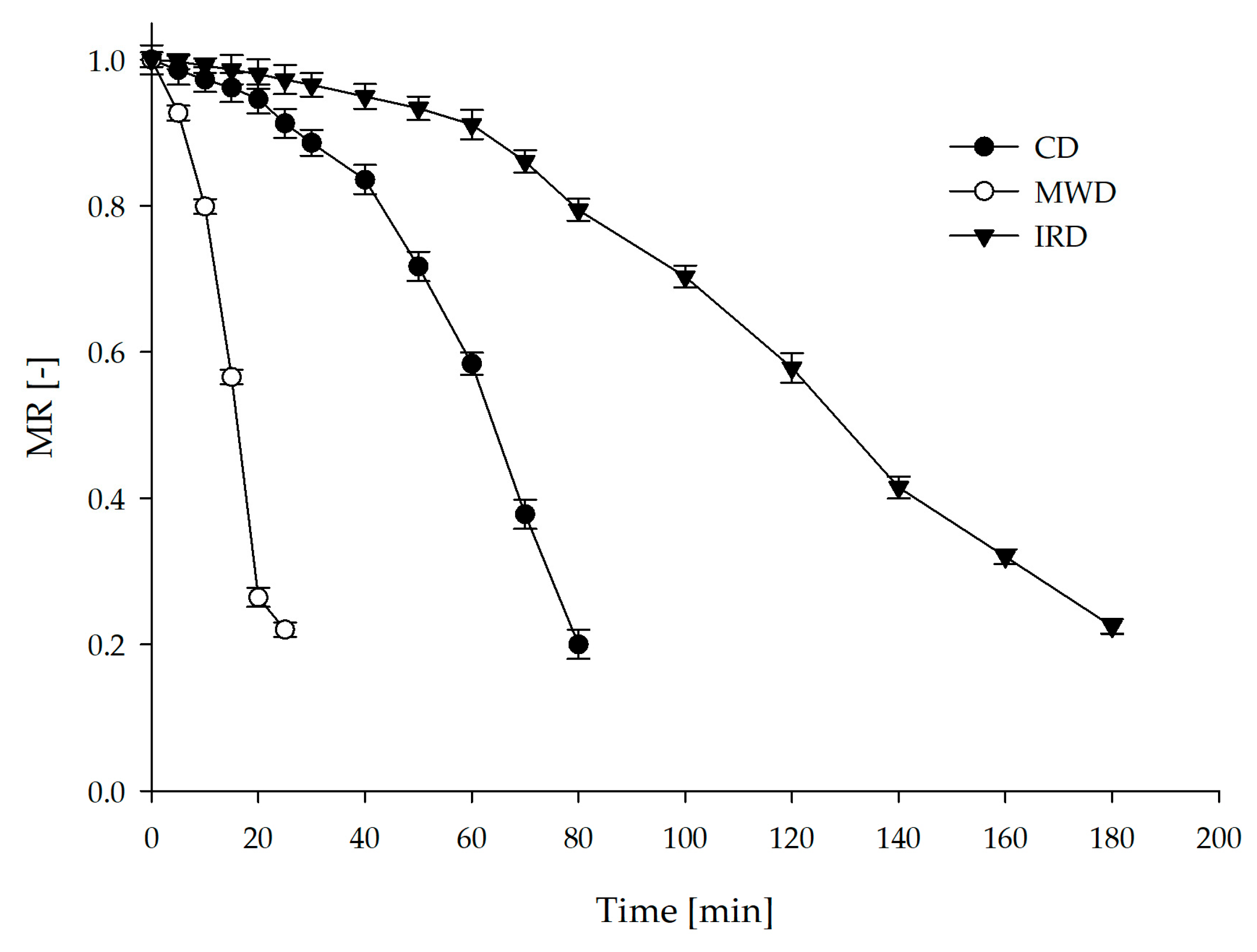
Figure 1. Drying kinetics of mangaba microcapsules obtained by different drying methods.
Chemengineering 10 00012 g001
Table 2. Proximate composition of mangaba pulp.
Component Mean ± Standard Deviation [g/100 g]
Moisture85.18 ± 0.87
Lipid1.05 ± 0.01
Protein1.81 ± 0.02
Ash0.42 ± 0.03
Crude Fiber5.10 ± 0.32
Carbohydrate6.45 ± 0.45
Table 3. Mathematical models fitted to the drying of mangaba microcapsules.
ModelDrying TreatmentkabR2χ2RMSESSEMPE (%)
NewtonCD1.98 × 10−4--0.71603.52 × 10−21.83 × 10−16.69 × 10−168.14
MWD8.64 × 10−4--0.80173.04 × 10−21.59 × 10−11.52 × 10−114.75
IRD8.11 × 10−5--0.71402.82 × 10−21.66 × 10−11.21 × 10−0112.99
PageCD0.01.8781-0.90541.64 × 10−41.64 × 10−42.23 × 10−142.36
MWD0.02.3503-0.98021.64 × 10−41.06 × 10−11.52 × 10−23.10
IRD0.03.5274-0.98511.64 × 10−45.03 × 10−26.88 × 10−221.83
Page modifiedCD1.03 × 10−43.6400-0.98851.50 × 10−33.95 × 10−22.70 × 10−28.81
MWD9.41 × 10−42.8392-0.98692.49 × 10−33.68 × 10−29.98 × 10−34.22
IRD2.42 × 10−43.5268-0.98511.64 × 10−34.08 × 10−26.88 × 10−221.84
Henderson and PabisCD1.06 × 10−41.2015-0.77912.89 × 10−21.61 × 10−15.21 × 10−159.80
MWD9.86 × 10−41.1210-0.82913.28 × 10−21.48 × 10−11.31 × 10−114.38
IRD2.53 × 10−41.2086-0.78292.38 × 10−21.51 × 10−11.00 × 10−098.22
Wang-SinghCD-3.12 × 10−50.00.98704.16 × 10−41.67 × 10−23.06 × 10−210.57
MWD-−1.87 × 10−40.00.99541.70 × 10−33.91 × 10−21.66 × 10−32.52
IRD-7.06 × 10−50.00.99785.01 × 10−42.19 × 10−22.10 × 10−29.38
Diffusion ApproachCD0.0003−20.77290.93160.90081.15 × 10−21.03 × 10−12.34 × 10−140.02
MWD0.0025−21.00370.93400.94161.49 × 10−28.64 × 10−24.47 × 10−25.93
IRD0.0006−10.48170.87470.89901.14 × 10−21.08 × 10−14.67 × 10−169.22
Table 4. Dispersibility, wettability, hygroscopicity, water absorption index, bulk density, particle density, and porosity of mangaba microcapsules.
TreatmentDispersibility [%]Wettability [s]Hygroscopicity [% d.b.]WAI [-]Bulk Density [g/cm3]Particle Density [g/cm3]Porosity
[-]
CD248.4 ± 7.2 a87.0 ± 6.5 b398.7 ± 16.3 a2.57 ± 0.04 a0.296 ± 0.01 b0.927 ± 0.15 b0.674 ± 0.01 b
MWD121.7 ± 6.7 c115.3 ± 6.3 a380.8 ± 2.3 a1.78 ± 0.03 c0.303 ± 0.01 b0.945 ± 0.05 b0.677 ± 0.01 b
IRD163.7 ± 5.5 b43.3 ± 3.8 c203.1 ± 6.3 b2.01 ± 0.01 b0.382 ± 0.01 a1.339 ± 0.21 a0.732 ± 0.01 a
Means followed by the same lowercase letter within a column do not differ significantly according to Tukey’s test (p < 0.05).
Table 5. Color parameters of dried microcapsules.
L*a*b*ΔE
CD42.27 ± 0.78 a6.64 ± 0.90 a9.08 ± 0.24 a11.27
MWD41.45 ± 1.63 a4.79 ± 1.01 ab6.22 ± 0.88 b13.92
IRD40.72 ± 2.46 a3.91 ± 0.04 b5.30 ± 0.19 b15.08
Means followed by the same lowercase letter within a column do not differ significantly according to Tukey’s test (p < 0.05).
Table 6. Bioactive compounds in fresh mangaba pulp and dried microcapsules.
Phenolic Compounds
(mg EAG/100 g)
Antioxidant Activity (IC50)
(μg/mL)
Ascorbic Acid
(mg/100 g)
Fresh pulp4.62 ± 0.16 a225.30 ± 41.55 b1.16 ± 0.23 a
CD1.80 ± 0.06 c489.36 ± 78.29 a1.40 ± 0.40 a
MWD2.69 ± 0.64 b623.41 ± 55.87 a1.96 ± 0.35 a
IRD1.67 ± 0.05 c701.16 ± 152.72 a1.64 ± 0.23 a
Means followed by the same lowercase letter within a column do not differ significantly according to Tukey’s test (p < 0.05).
Disclaimer/Publisher’s Note: The statements, opinions and data contained in all publications are solely those of the individual author(s) and contributor(s) and not of MDPI and/or the editor(s). MDPI and/or the editor(s) disclaim responsibility for any injury to people or property resulting from any ideas, methods, instructions or products referred to in the content.