Article

Music Therapy Self-Care Group for Parents of Preterm Infants in the Neonatal Intensive Care Unit: A Clinical Pilot Intervention


1
Berklee College of Music, Boston, MA 02215, USA
2
SONO—Centro de Musicoterapia, Bogotá 11021, Colombia
3
Clínica de la Mujer, Bogotá 11021, Colombia
*
Author to whom correspondence should be addressed.
Medicines 2018, 5(4), 134; https://doi.org/10.3390/medicines5040134

Submission received: 16 November 2018 / Revised: 7 December 2018 / Accepted: 13 December 2018 / Published: 16 December 2018
(This article belongs to the Special Issue Music Therapy)

Abstract

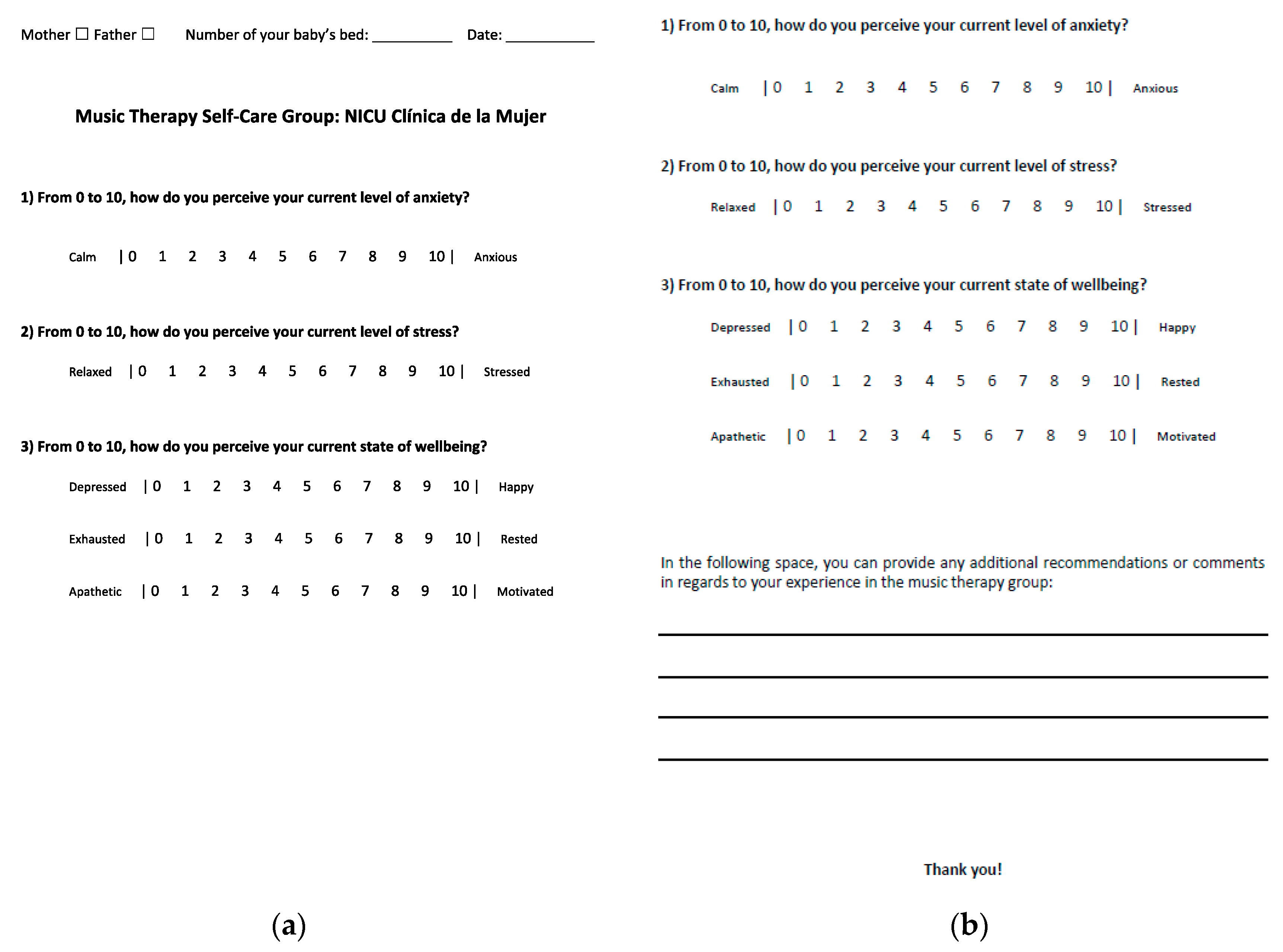
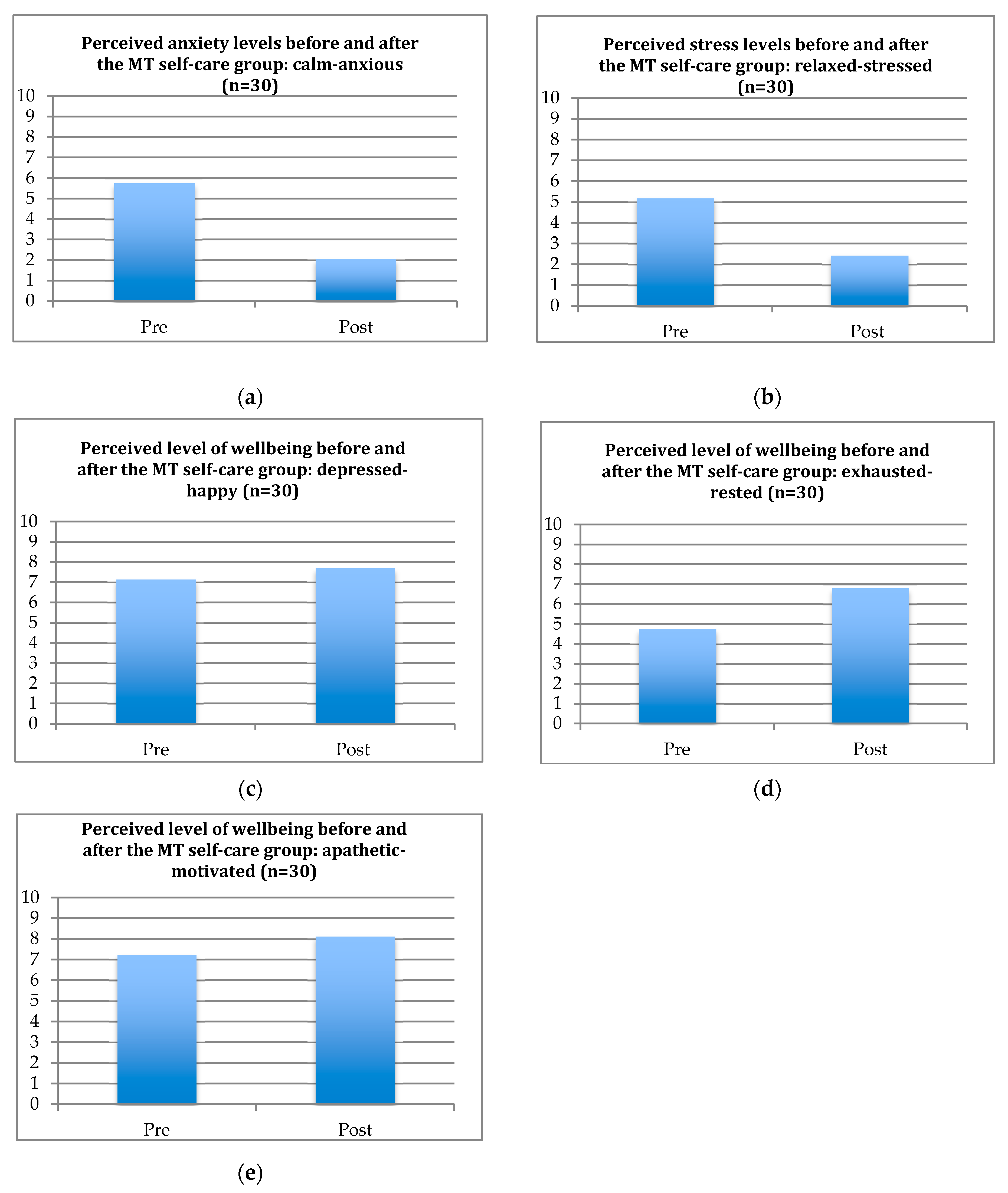
Background: The parents of preterm infants face major mental health challenges in the Neonatal Intensive Care Unit (NICU). Family-centered music therapy actively integrates and empowers parents in their infants’ care. With the aim to better understand and address parental needs separately from their babies’ needs, a music therapy (MT) self-care group was implemented as part of clinical practice at the hospital Clínica de la Mujer, in Bogotá, Colombia. Methods: The group was provided for both parents, twice a week, in the NICU. Music guided relaxations, breathing techniques, and self-expression were at the center of the MT group sessions. The parents completed a pre/post self-administered Numeric Rating Scale (NRS), including anxiety levels, stress levels, mood and motivation. Results: The parents highly valued the MT self-care group in the NICU. On average, there was a 37% improvement in anxiety levels, 28% improvement in stress levels, and 12% improvement in mood, restfulness and motivation. Being able to relax, to distract themselves from their worries and having time for themselves are amongst the most frequently mentioned benefits. Conclusions: Addressing parents’ needs separately from their babies’ treatment, with culturally sensitive interventions aimed at improving parental mental health, is essential for continuing the development of family-centered music therapy interventions in the NICU.
Keywords: music therapy; preterm infants; family-centered care; parents; self-care; wellbeing; Neonatal Intensive Care Unit (NICU) music therapy; preterm infants; family-centered care; parents; self-care; wellbeing; Neonatal Intensive Care Unit (NICU)