Biodegradation of Triphenyl Phosphate by Gordonia polyisoprenivorans YC-XJ4: Environmental Adaptability and Bioremediation Potential

Abstract
1. Introduction
2. Materials and Methods
2.1. Chemicals and Media
2.2. Enrichment, Isolation, and Purification of TPHP-Degrading Bacteria
2.3. Degradation Assays of Strain YC-XJ4
2.3.1. Preparation of Seed Culture
2.3.2. Degradation Experiments Under Different Environmental Conditions
2.3.3. Degradation Kinetics and Growth Curve of Strain YC-XJ4 on TPHP
2.3.4. Substrate Spectrum Assay
2.3.5. Extraction of OPFRs from Cultures
2.4. Soil and Seawater Bioremediation Simulation Experiments
2.4.1. Soil Bioremediation Experiment
2.4.2. Seawater Bioremediation Experiment
2.5. Chromatographic Detection of OPFRs
2.6. Accession Numbers and Homologous Sequence Analysis
2.7. Data Processing
3. Results
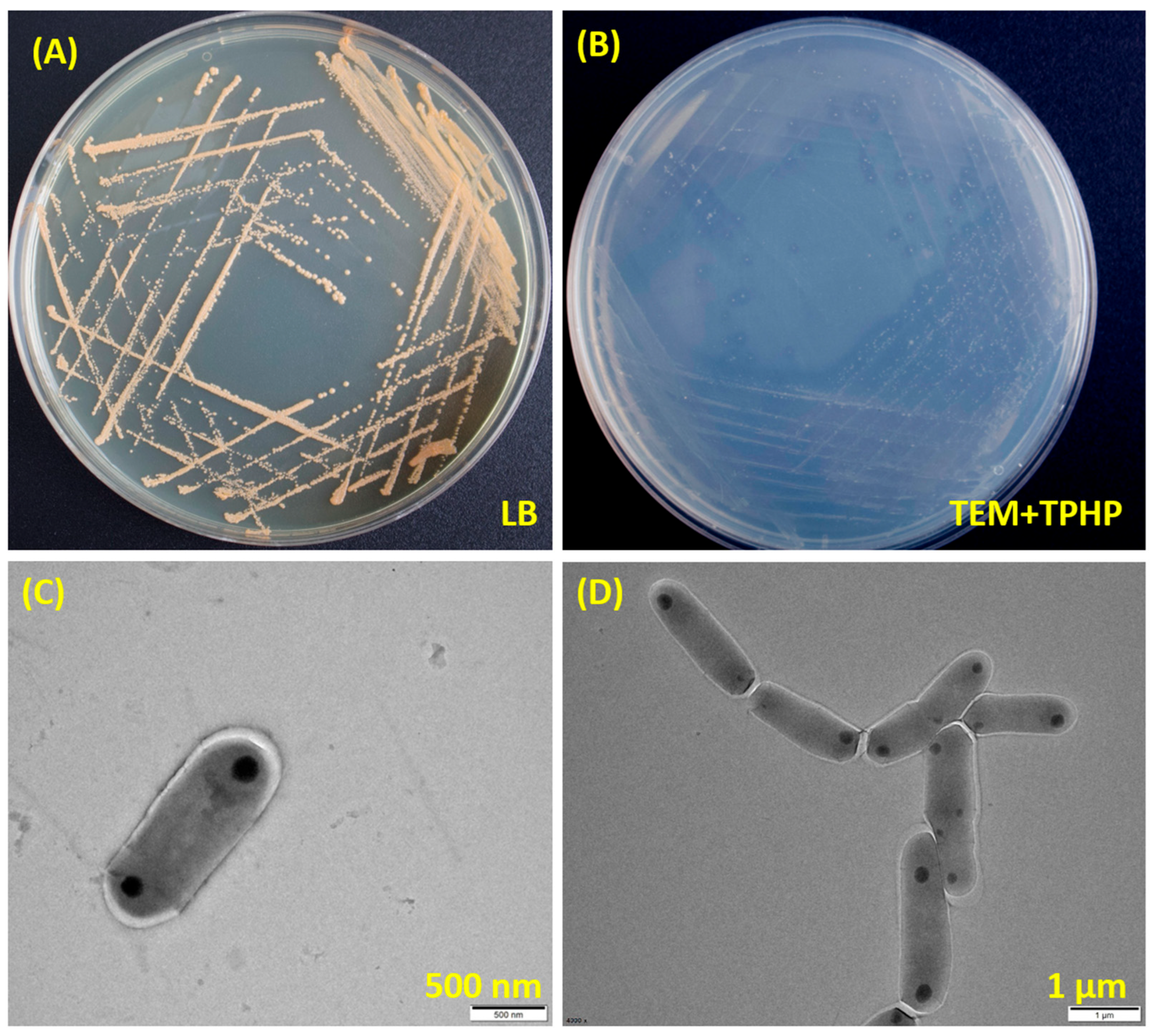
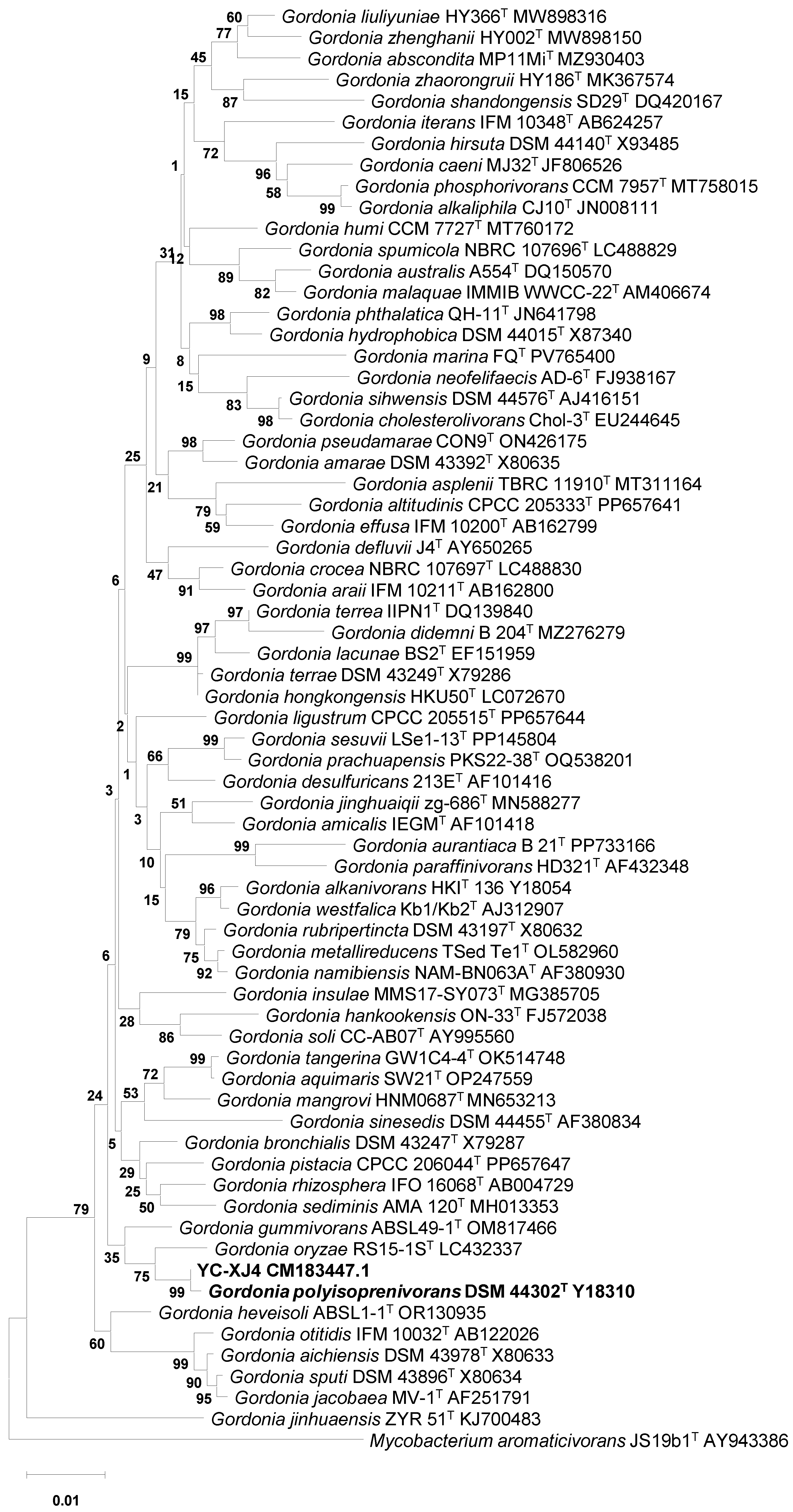
3.1. Isolation and Identification of Strain YC-XJ4
3.2. Characterization of TPHP Degradation Performance of Strain YC-XJ4
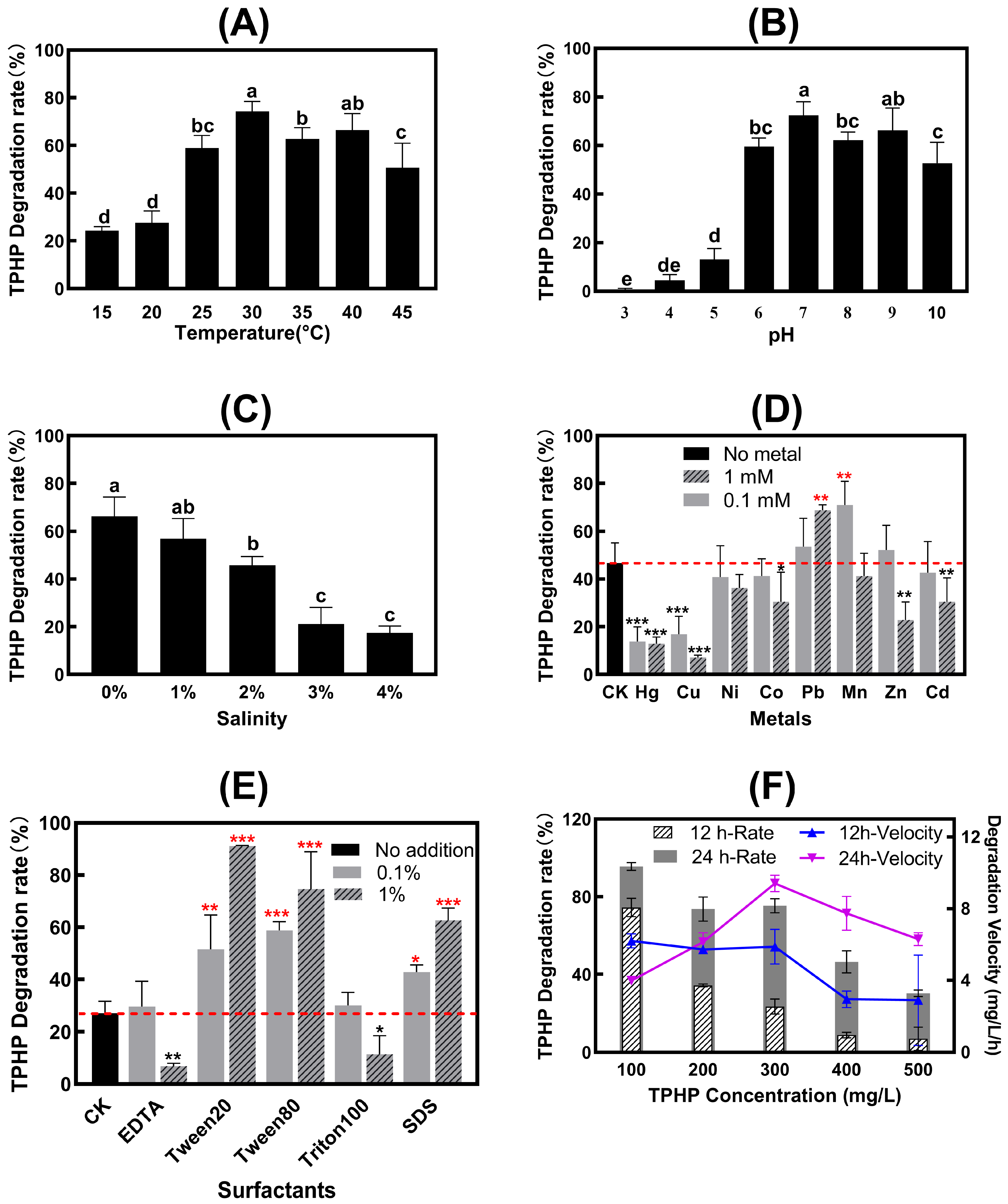
3.2.1. Effects of Environmental Factors on TPHP Degradation by Strain YC-XJ4
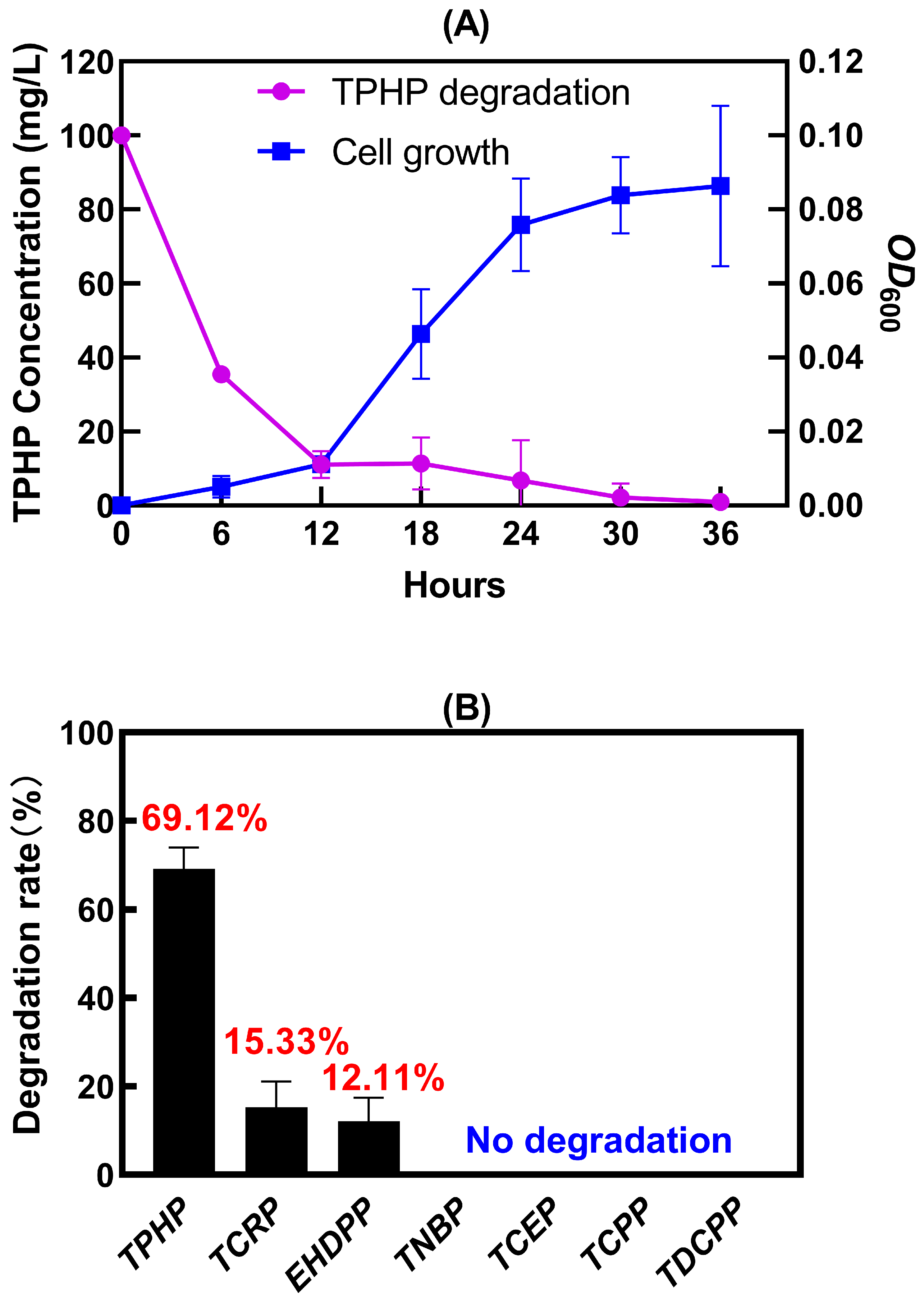
3.2.2. Effect of Initial TPHP Concentration on Degradation by Strain YC-XJ4
3.2.3. Degradation Capability of Strain YC-XJ4 Toward Different OPFRs
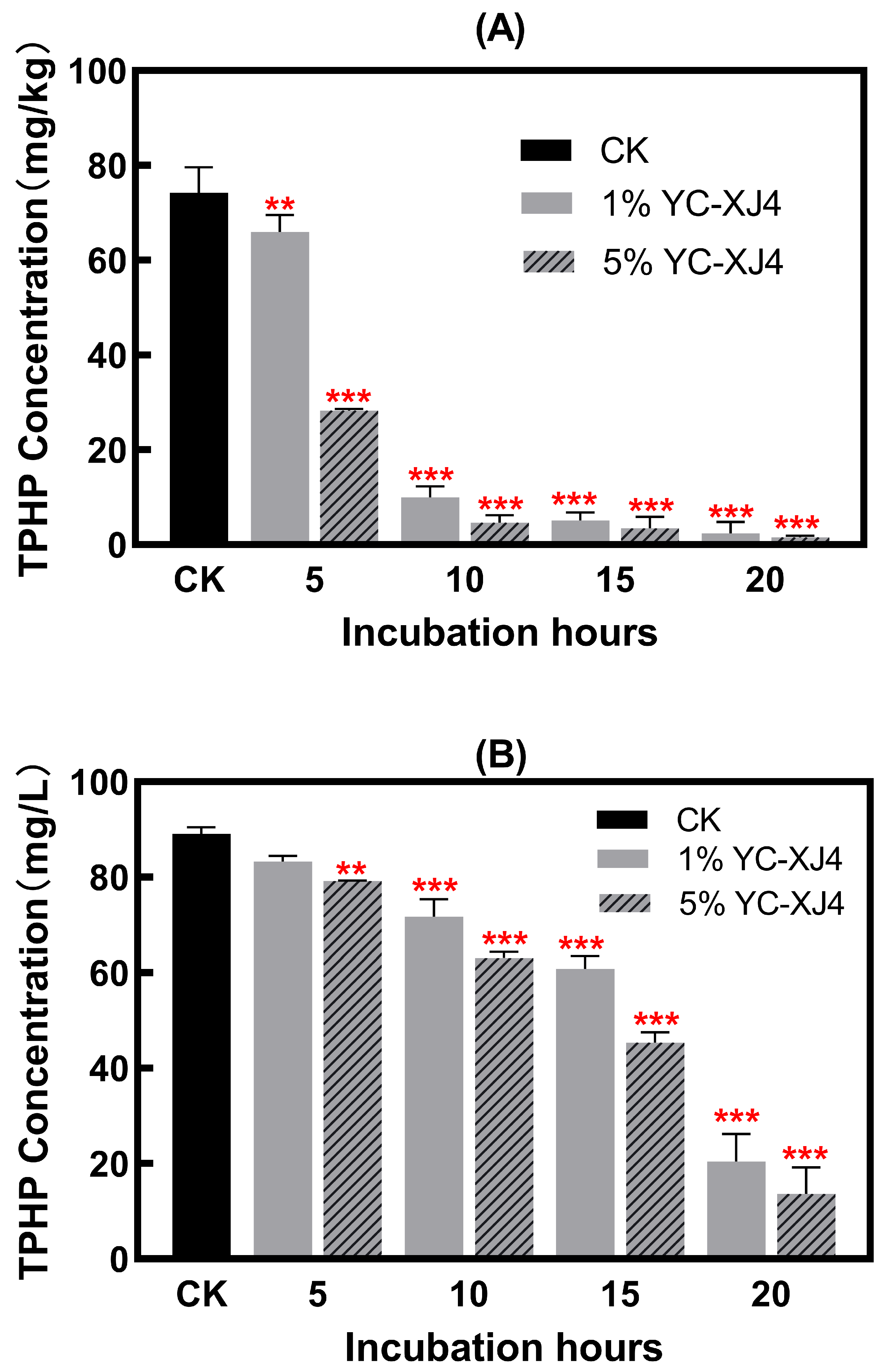
3.3. Assessment of the Bioremediation Potential for TPHP Pollution in Soil and Seawater
4. Discussion
5. Conclusions
Supplementary Materials
Author Contributions
Funding
Institutional Review Board Statement
Informed Consent Statement
Data Availability Statement
Acknowledgments
Conflicts of Interest
References
- Li, T.-Y.; Bao, L.-J.; Wu, C.-C.; Liu, L.-Y.; Wong, C.-S.; Zeng, E.-Y. Organophosphate flame retardants emitted from thermal treatment and open burning of e-waste. J. Hazard. Mater. 2019, 367, 390–396. [Google Scholar] [CrossRef] [Scilit] [PubMed]
- Brandsma, S.H.; Sellström, U.; de Wit, C.A.; de Boer, J.; Leonards, P.E.G. Dust Measurement of Two Organophosphorus Flame Retardants, Resorcinol Bis(diphenylphosphate) (RBDPP) and Bisphenol A Bis(diphenylphosphate) (BPA-BDPP), Used as Alternatives for BDE-209. Environ. Sci. Technol. 2013, 47, 14434–14441. [Google Scholar] [CrossRef] [Scilit] [PubMed]
- He, C.-T.; Zheng, J.; Qiao, L.; Chen, S.-J.; Yang, J.-Z.; Yuan, J.-G.; Yang, Z.-Y.; Mai, B.-X. Occurrence of organophosphorus flame retardants in indoor dust in multiple microenvironments of southern China and implications for human exposure. Chemosphere 2015, 133, 47–52. [Google Scholar] [CrossRef] [Scilit] [PubMed]
- Chen, M.; Jiang, J.; Gan, Z.; Yan, Y.; Ding, S.; Su, S.; Bao, X. Grain size distribution and exposure evaluation of organophosphorus and brominated flame retardants in indoor and outdoor dust and PM10 from Chengdu, China. J. Hazard. Mater. 2019, 365, 280–288. [Google Scholar] [CrossRef] [Scilit] [PubMed]
- Liu, X.; Ji, K.; Choi, K. Endocrine disruption potentials of organophosphate flame retardants and related mechanisms in H295R and MVLN cell lines and in zebrafish. Aquat. Toxicol. 2012, 114–115, 173–181. [Google Scholar] [CrossRef] [Scilit] [PubMed]
- McGee, S.P.; Konstantinov, A.; Stapleton, H.M.; Volz, D.C. Aryl Phosphate Esters Within a Major PentaBDE Replacement Product Induce Cardiotoxicity in Developing Zebrafish Embryos: Potential Role of the Aryl Hydrocarbon Receptor. Toxicol. Sci. 2013, 133, 144–156. [Google Scholar] [CrossRef] [Scilit] [PubMed]
- Isales, G.M.; Hipszer, R.A.; Raftery, T.D.; Chen, A.; Stapleton, H.M.; Volz, D.C. Triphenyl phosphate-induced developmental toxicity in zebrafish: Potential role of the retinoic acid receptor. Aquat. Toxicol. 2015, 161, 221–230. [Google Scholar] [CrossRef] [Scilit] [PubMed]
- Sun, L.; Xu, W.; Peng, T.; Chen, H.; Ren, L.; Tan, H.; Xiao, D.; Qian, H.; Fu, Z. Developmental exposure of zebrafish larvae to organophosphate flame retardants causes neurotoxicity. Neurotoxicol. Teratol. 2016, 55, 16–22. [Google Scholar] [CrossRef] [Scilit] [PubMed]
- Hogberg, H.T.; de Cássia da Silveira E Sá, R.; Kleensang, A.; Bouhifd, M.; Cemiloglu Ulker, O.; Smirnova, L.; Behl, M.; Maertens, A.; Zhao, L.; Hartung, T. Organophosphorus flame retardants are developmental neurotoxicants in a rat primary brainsphere in vitro model. Arch. Toxicol. 2021, 95, 207–228. [Google Scholar] [CrossRef] [Scilit] [PubMed]
- Wang, C.; Le, Y.; Lu, D.; Zhao, M.; Dou, X.; Zhang, Q. Triphenyl phosphate causes a sexually dimorphic metabolism dysfunction associated with disordered adiponectin receptors in pubertal mice. J. Hazard. Mater. 2020, 388, 121732. [Google Scholar] [CrossRef] [Scilit] [PubMed]
- Ma, H.; Ishida, K.; Xu, C.; Takahashi, K.; Li, Y.; Zhang, C.; Kang, Q.; Jia, Y.; Hu, W.; Matsumaru, D.; et al. Triphenyl phosphate delayed pubertal timing and induced decline of ovarian reserve in mice as an estrogen receptor antagonist. Environ. Pollut. 2021, 290, 118096. [Google Scholar] [CrossRef] [Scilit] [PubMed]
- Tian, Y.X.; Chen, H.Y.; Ma, J.; Liu, Q.Y.; Qu, Y.J.; Zhao, W.H. A critical review on sources and environmental behavior of organophosphorus flame retardants in the soil: Current knowledge and future perspectives. J. Hazard. Mater. 2023, 452, 131161. [Google Scholar] [CrossRef] [Scilit] [PubMed]
- Takahashi, S.; Satake, I.; Konuma, I.; Kawashima, K.; Kawasaki, M.; Mori, S.; Morino, J.; Mori, J.; Xu, H.; Abe, K. Isolation and identification of persistent chlorinated organophosphorus flame retardant-degrading bacteria. Appl. Environ. Microbiol. 2010, 76, 5292–5296. [Google Scholar] [CrossRef] [Scilit] [PubMed]
- Rangu, S.S.; Muralidharan, B.; Tripathi, S.C.; Apte, S.K. Tributyl phosphate biodegradation to butanol and phosphate and utilization by a novel bacterial isolate, Sphingobium sp. strain RSMS. Appl. Microbiol. Biotechnol. 2014, 98, 2289–2296. [Google Scholar] [CrossRef] [Scilit] [PubMed]
- Liu, J.; Lin, H.; Dong, Y.; Li, B. Elucidating the biodegradation mechanism of tributyl phosphate (TBP) by Sphingomonas sp. isolated from TBP-contaminated mine tailings. Environ. Pollut. 2019, 250, 284–291. [Google Scholar] [CrossRef] [Scilit] [PubMed]
- Li, X.; Reheman, A.; Wu, W.; Wang, D.; Wang, J.; Jia, Y.; Yan, Y. The genome analysis of halotolerant Sphingobium yanoikuyae YC-XJ2 with aryl organophosphorus flame retardants degrading capacity and characteristics of related phosphotriesterase. Int. Biodeterior. Biodegrad. 2020, 155, 105064. [Google Scholar] [CrossRef] [Scilit]
- Wang, J.; Hlaing, T.S.; Nwe, M.T.; Aung, M.M.; Ren, C.; Wu, W.; Yan, Y. Primary biodegradation and mineralization of aryl organophosphate flame retardants by Rhodococcus-Sphingopyxis consortium. J. Hazard. Mater. 2021, 412, 125238. [Google Scholar] [CrossRef] [Scilit] [PubMed]
- Wang, J.; Khokhar, I.; Ren, C.; Li, X.; Wang, J.; Fan, S.; Jia, Y.; Yan, Y. Characterization and 16S metagenomic analysis of organophosphorus flame retardants degrading consortia. J. Hazard. Mater. 2019, 380, 120881. [Google Scholar] [CrossRef] [Scilit] [PubMed]
- Kawagoshi, Y.; Nakamura, S.; Nishio, T.; Fukunaga, I. Isolation of aryl-phosphate ester-degrading bacterium from leachate of a sea-based waste disposal site. J. Biosci. Bioeng. 2004, 98, 464–469. [Google Scholar] [CrossRef] [Scilit]
- Liu, Y.; Yin, H.; Wei, K.; Peng, H.; Lu, G.; Dang, Z. Biodegradation of tricresyl phosphate isomers by Brevibacillus brevis: Degradation pathway and metabolic mechanism. Chemosphere 2019, 232, 195–203. [Google Scholar] [CrossRef] [Scilit] [PubMed]
- Wei, K.; Yin, H.; Peng, H.; Lu, G.; Dang, Z. Bioremediation of triphenyl phosphate by Brevibacillus brevis: Degradation characteristics and role of cytochrome P450 monooxygenase. Sci. Total Environ. 2018, 627, 1389–1395. [Google Scholar] [CrossRef] [Scilit] [PubMed]
- Long, Y.; Wang, J.; Nwe, M.T.; Zou, X.; Wu, W.; Yan, Y. Biodegradation of aryl-organophosphate flame retardants by Rhodococcus pyridinivorans YC-MTN: Performance, pathway and potential in environmental remediation. Int. Biodeterior. Biodegrad. 2024, 190, 105772. [Google Scholar] [CrossRef] [Scilit]
- Frantsuzova, E.; Bogun, A.; Kopylova, O.; Vetrova, A.; Solyanikova, I.; Streletskii, R.; Delegan, Y. Genomic, Phylogenetic and Physiological Characterization of the PAH-Degrading Strain Gordonia polyisoprenivorans 135. Biology 2024, 13, 339. [Google Scholar] [CrossRef] [Scilit] [PubMed]
- Wang, Y.; Gao, J.; Zhou, S.; Lian, M. Microbial degradation of carbamazepine by a newly isolated of Gordonia polyophrenivorans. Environ. Technol. Innov. 2023, 32, 103322. [Google Scholar] [CrossRef] [Scilit]
- Linos, A.; Steinbüchel, A.; Spröer, C.; Kroppenstedt, R.M. Gordonia polyisoprenivorans sp. nov., a rubber-degrading actinomycete isolated from an automobile tyre. Int. J. Syst. Evol. Microbiol. 1999, 49, 1785–1791. [Google Scholar] [CrossRef] [Scilit] [PubMed]
- Zhu, Y.; Wang, H.; Bai, J.; Qi, Y.; Han, D. Biodegradation potential of Gordonia spp. on polypropylene and polystyrene: Enhanced degradation through pretreatment. Front. Microbiol. 2025, 16, 1621498. [Google Scholar] [CrossRef] [Scilit] [PubMed]
- Freese, H.M.; Meier-Kolthoff, J.P.; Sardà Carbasse, J.; Afolayan, A.O.; Göker, M. TYGS and LPSN in 2025: A Global Core Biodata Resource for genome-based classification and nomenclature of prokaryotes within DSMZ Digital Diversity. Nucleic Acids Res. 2026, 54, D884–D891. [Google Scholar] [CrossRef] [Scilit] [PubMed]
- Meier-Kolthoff, J.P.; Carbasse, J.S.; Peinado-Olarte, R.L.; Göker, M. TYGS and LPSN: A database tandem for fast and reliable genome-based classification and nomenclature of prokaryotes. Nucleic Acids Res. 2022, 50, D801–D807. [Google Scholar] [CrossRef] [Scilit] [PubMed]
- Meier-Kolthoff, J.P.; Göker, M. TYGS is an automated high-throughput platform for state-of-the-art genome-based taxonomy. Nat. Commun. 2019, 10, 2182. [Google Scholar] [CrossRef] [Scilit] [PubMed]
- Yoon, S.-H.; Ha, S.-M.; Lim, J.; Kwon, S.; Chun, J. A large-scale evaluation of algorithms to calculate average nucleotide identity. Antonie Van Leeuwenhoek 2017, 110, 1281–1286. [Google Scholar] [CrossRef] [Scilit] [PubMed]
- Goris, J.; Konstantinidis, K.T.; Klappenbach, J.A.; Coenye, T.; Vandamme, P.; Tiedje, J.M. DNA–DNA hybridization values and their relationship to whole-genome sequence similarities. Int. J. Syst. Evol. Microbiol. 2007, 57, 81–91. [Google Scholar] [CrossRef] [Scilit] [PubMed]
- Saitou, N.; Nei, M. The neighbor-joining method: A new method for reconstructing phylogenetic trees. Mol. Biol. Evol. 1987, 4, 406–425. [Google Scholar] [CrossRef] [Scilit] [PubMed]
- Kimura, M. A simple method for estimating evolutionary rates of base substitutions through comparative studies of nucleotide sequences. J. Mol. Evol. 1980, 16, 111–120. [Google Scholar] [CrossRef] [Scilit] [PubMed]
- Felsenstein, J. Confidence Limits on Phylogenies: An Approach Using the Boostrap. Evolution 1985, 39, 783–791. [Google Scholar] [CrossRef] [Scilit] [PubMed]
- Kumar, S.; Stecher, G.; Suleski, M.; Sanderford, M.; Sharma, S.; Tamura, K. MEGA12: Molecular Evolutionary Genetic Analysis Version 12 for Adaptive and Green Computing. Mol. Biol. Evol. 2024, 41, msae263. [Google Scholar] [CrossRef] [Scilit] [PubMed]
- Wang, J.; Yuan, L.; Wu, W.; Yan, Y. Characterization of the phosphotriesterase capable of hydrolyzing aryl-organophosphate flame retardants. Appl. Microbiol. Biotechnol. 2022, 106, 6493–6504. [Google Scholar] [CrossRef] [Scilit] [PubMed]
- Xiang, D.F.; Bigley, A.N.; Ren, Z.; Xue, H.; Hull, K.G.; Romo, D.; Raushel, F.M. Interrogation of the Substrate Profile and Catalytic Properties of the Phosphotriesterase from Sphingobium sp. Strain TCM1: An Enzyme Capable of Hydrolyzing Organophosphate Flame Retardants and Plasticizers. Biochemistry 2015, 54, 7539–7549. [Google Scholar] [CrossRef] [Scilit] [PubMed]
- Abe, K.; Yoshida, S.; Suzuki, Y.; Mori, J.; Doi, Y.; Takahashi, S.; Kera, Y.; Parales, R.E. Haloalkylphosphorus Hydrolases Purified from Sphingomonas sp. Strain TDK1 and Sphingobium sp. Strain TCM1. Appl. Environ. Microbiol. 2014, 80, 5866–5873. [Google Scholar] [CrossRef] [Scilit] [PubMed]
- Yu, Y.; Huang, W.; Yu, W.; Tang, S.; Yin, H. Metagenomic insights into the mechanisms of triphenyl phosphate degradation by bioaugmentation with Sphingopyxis sp. GY. Ecotoxicol. Environ. Saf. 2023, 263, 115261. [Google Scholar] [CrossRef] [Scilit] [PubMed]
- Jia, Y. Isolation, Identification and Degradation Mechanism of Bisphenol A and Triphenyl Phosphate Degrading Bacteria. Ph.D. Thesis, Chinese Academy of Agricultural Sciences, Beijing, China, 2021. [Google Scholar]
- Yang, Y.; Zhong, D.; Luo, Y.; Huang, H.; Qiu, R.; Chen, S. Enzymatic degradation of four organophosphorus flame retardants by Bacillus pacificus L2 and its proteomics investigation. J. Environ. Manag. 2026, 404, 129555. [Google Scholar] [CrossRef] [Scilit] [PubMed]
- Ren, L.; Luo, X.; Zhou, J.L.; Jia, Y.; Yu, C.; Hu, H.; Li, C.; Wang, Y. Biodegradation of triphenyl phosphate by a novel marine bacterial strain: Performance, mechanism, bioremediation and toxicity alleviation. J. Hazard. Mater. 2025, 494, 138664. [Google Scholar] [CrossRef] [Scilit] [PubMed]
- Nahurira, R.; Wang, J.; Yan, Y.; Jia, Y.; Fan, S.; Khokhar, I.; Eltoukhy, A. In silico genome analysis reveals the metabolic versatility and biotechnology potential of a halotorelant phthalic acid esters degrading Gordonia alkanivorans strain YC-RL2. AMB Express 2019, 9, 21. [Google Scholar] [CrossRef] [Scilit] [PubMed]
- Fan, S.; Wang, J.; Yan, Y.; Wang, J.; Jia, Y. Excellent Degradation Performance of a Versatile Phthalic Acid Esters-Degrading Bacterium and Catalytic Mechanism of Monoalkyl Phthalate Hydrolase. Int. J. Mol. Sci. 2018, 19, 2803. [Google Scholar] [CrossRef] [Scilit] [PubMed]
- Fan, S.; Wang, J.; Li, K.; Yang, T.; Jia, Y.; Zhao, B.; Yan, Y. Complete genome sequence of Gordonia sp. YC-JH1, a bacterium efficiently degrading a wide range of phthalic acid esters. J. Biotechnol. 2018, 279, 55–60. [Google Scholar] [CrossRef] [Scilit] [PubMed]
- Fan, S.; Feng, Z.; Xu, M.; Shi, Z.; Zhang, Y.; Zhang, P.; Hou, X. The Efficient PAE-Degrading Performance and Complete Genome Sequencing of Gordonia sp. LUNF6. Processes 2025, 13, 731. [Google Scholar] [CrossRef] [Scilit]


| Strains | Ability to Degrade OPFRs | Phosphotriesterase a | Reference |
|---|---|---|---|
| Sphingomonas sp. TDK1 | TDCPP (1.08 mg/(L·h)) | Sm-PTE | [13,38] |
| Sphingobium sp. TCM1 | TCEP (1.90 mg/(L·h)), TDCPP (1.43 mg/(L·h)) | Sb-PTE (kcat/Km of TPHP: 1.7 × 10⁶ 1/(M·s)) | [13,37,38] |
| Sphingobium sp. RSMS | TNBP (110.83 mg/(L·h)) | - | [14] |
| Sphingomonas sp. | TNBP (1.43 mg/(L·h)) | - | [15] |
| Sphingobium yanoikuyae YC-XJ2 | TPHP (4.12 mg/(L·h)) | Sy-PTE (kcat/Km of TPHP: 4.8 × 10⁶ 1/(M·s)) | [16] |
| Sphingopyxis terrae subsp. terrae YC-JH3 | TPHP (3.65 mg/(L·h)) | St-PTE (kcat/Km of TPHP: 5.03 × 10⁶ 1/(M·s)) | [17,18,36] |
| Sphingopyxis sp. GY | TPHP (41.67 μg/(L·h)) | - | [39] |
| Sphingobium yanoikuyae YC-JY1 | TPHP (573.61 μg/(L·h)) | N | [40] |
| Roseobacter strain YS-57 | TPHP (23.33 μg/(L·h)), TCRP (8.75 μg/(L·h)) | - | [19] |
| Brevibacillus brevis | TPHP (7.68 μg/(L·h)), m-TCRP (6.91 μg/(L·h)), p-TCRP (7.82 μg/(L·h)), o-TCRP (4.50 μg/(L·h)) | N | [20,21] |
| Rhodococcus pyridinivorans YC-JH2 | TPHP (111.19 μg/(L·h)) | N | [17,18] |
| Rhodococcus pyridinivorans YC-MTN | TPHP (4.01 mg/(L·h)) | N | [22] |
| Bacillus pacificus L2 | TCRP (≈44 μg/(L·h)) TPHP (≈31 μg/(L·h)) TCPP (≈6.3 μg/(L·h)) TCEP (≈5.2 μg/(L·h)) | - | [41] |
| Stutzerimonas frequens RL-XB02 | TPHP (≈2.08 mg/(L·h)) | - | [42] |
| Gordonia polyisoprenivorans YC-XJ4 | TPHP (9.41 mg/(L·h)) | N | This study |
Disclaimer/Publisher’s Note: The statements, opinions and data contained in all publications are solely those of the individual author(s) and contributor(s) and not of MDPI and/or the editor(s). MDPI and/or the editor(s) disclaim responsibility for any injury to people or property resulting from any ideas, methods, instructions or products referred to in the content. |
© 2026 by the authors. Licensee MDPI, Basel, Switzerland. This article is an open access article distributed under the terms and conditions of the Creative Commons Attribution (CC BY) license.
Share and Cite
Li, X.; Ye, X.; Wang, J.; Reheman, A. Biodegradation of Triphenyl Phosphate by Gordonia polyisoprenivorans YC-XJ4: Environmental Adaptability and Bioremediation Potential. Toxics 2026, 14, 815. https://doi.org/10.3390/toxics14090815
Li X, Ye X, Wang J, Reheman A. Biodegradation of Triphenyl Phosphate by Gordonia polyisoprenivorans YC-XJ4: Environmental Adaptability and Bioremediation Potential. Toxics. 2026; 14(9):815. https://doi.org/10.3390/toxics14090815
Chicago/Turabian StyleLi, Xianjun, Xiao Ye, Junhuan Wang, and Aikebaier Reheman. 2026. "Biodegradation of Triphenyl Phosphate by Gordonia polyisoprenivorans YC-XJ4: Environmental Adaptability and Bioremediation Potential" Toxics 14, no. 9: 815. https://doi.org/10.3390/toxics14090815
APA StyleLi, X., Ye, X., Wang, J., & Reheman, A. (2026). Biodegradation of Triphenyl Phosphate by Gordonia polyisoprenivorans YC-XJ4: Environmental Adaptability and Bioremediation Potential. Toxics, 14(9), 815. https://doi.org/10.3390/toxics14090815