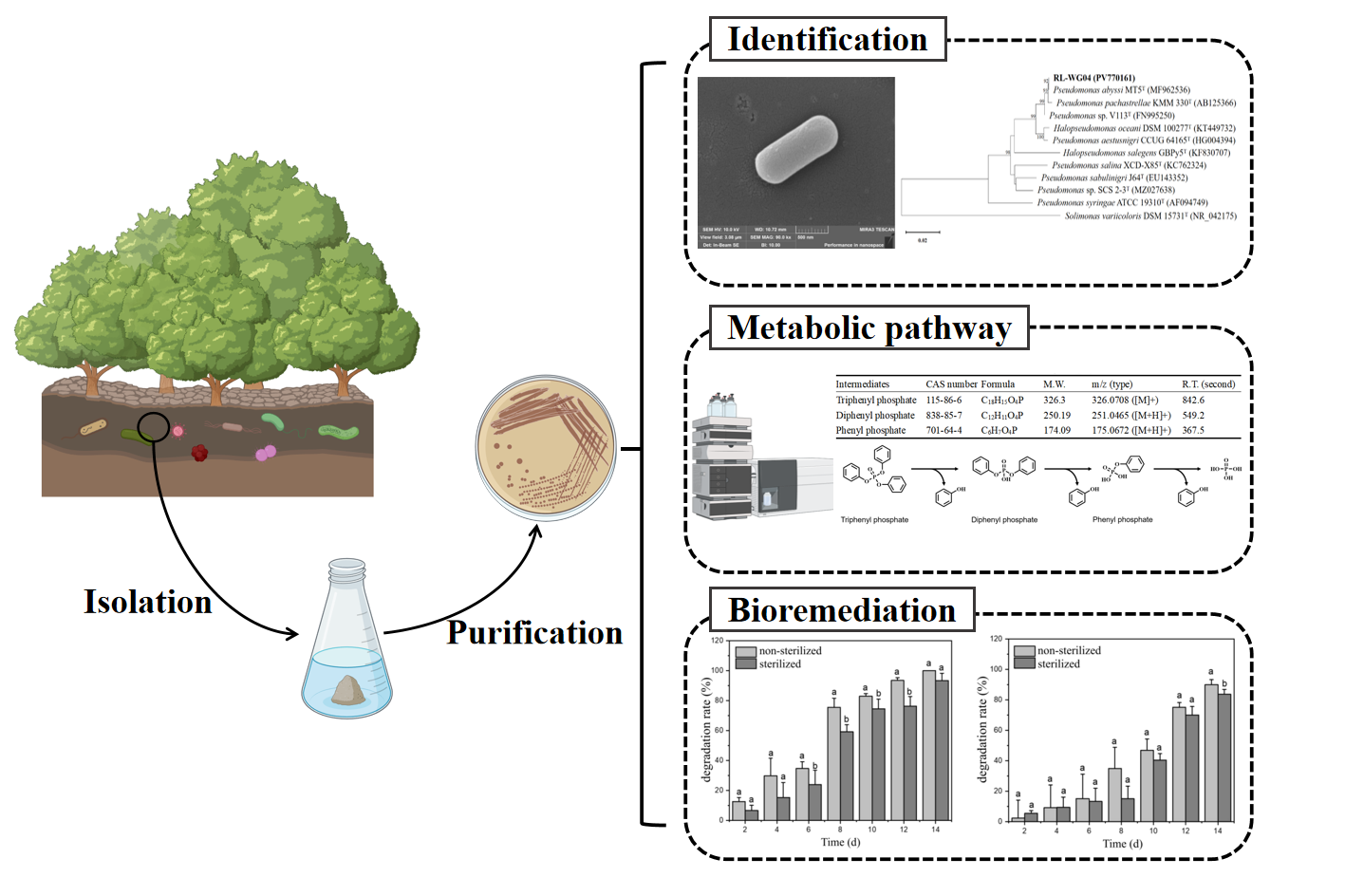
Biodegradation of Triphenyl Phosphate by a Novel Marine Bacterium Pseudomonas abyssi RL-WG04: Characterization, Metabolic Pathway, Bioremediation and Synergistic Metabolism


 ,
,
Abstract
1. Introduction
2. Materials and Methods
2.1. Chemicals and Medium
2.2. Sample Collection
2.3. Isolation and Identification of TPHP-Degrading Strain
2.4. Degradation Characteristics of TPHP-Degrading Strain
2.4.1. Effects of Different Environmental Factors on Degradation Ability
2.4.2. Degradation Kinetics of TPHP by Target Strain
2.4.3. Tolerance of the Strain to Organic Solvents and Metal Ions
2.5. Analysis of Metabolic Pathway
2.6. Co-Culture of TPHP-Degrading Bacteria and Phenol-Degrading Bacteria
2.7. Bioremediation of TPHP-Contaminated Mangrove Sediments
2.8. Analytic Methods
2.9. Statistical Methods
2.10. Data Availability
3. Results
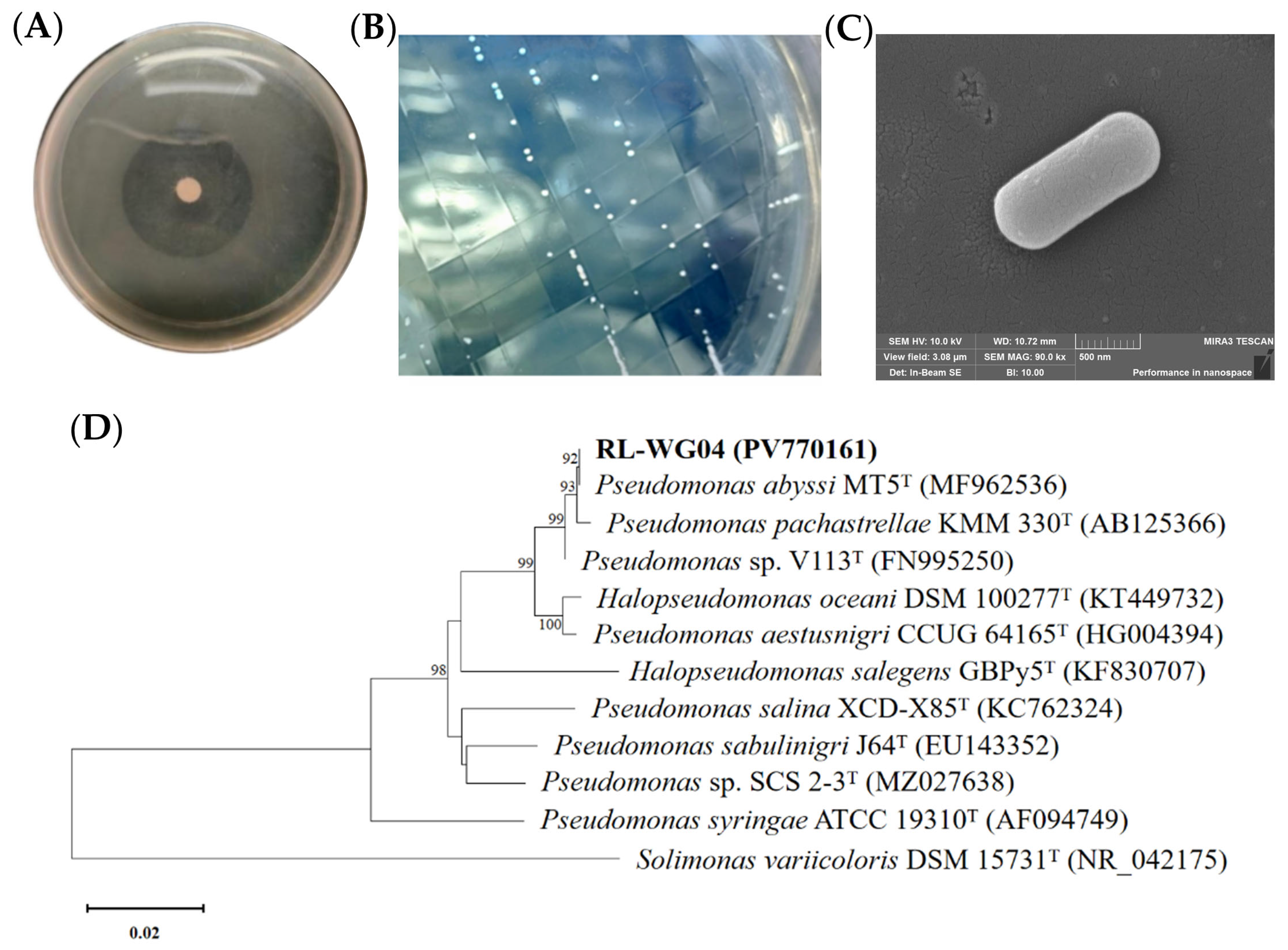
3.1. Identification of TPHP-Degrading Strain
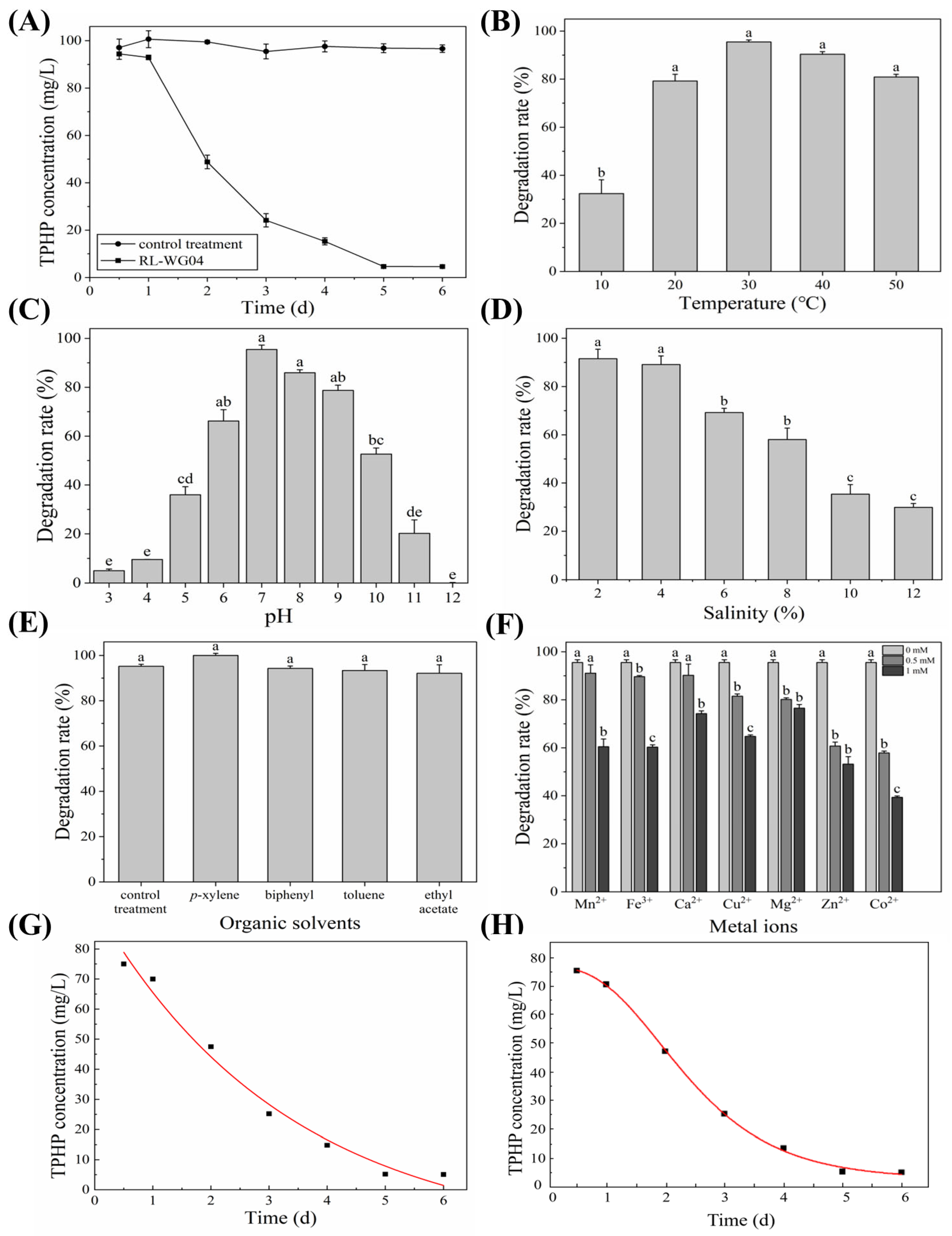
3.2. Characterization of Strain RL-WG04
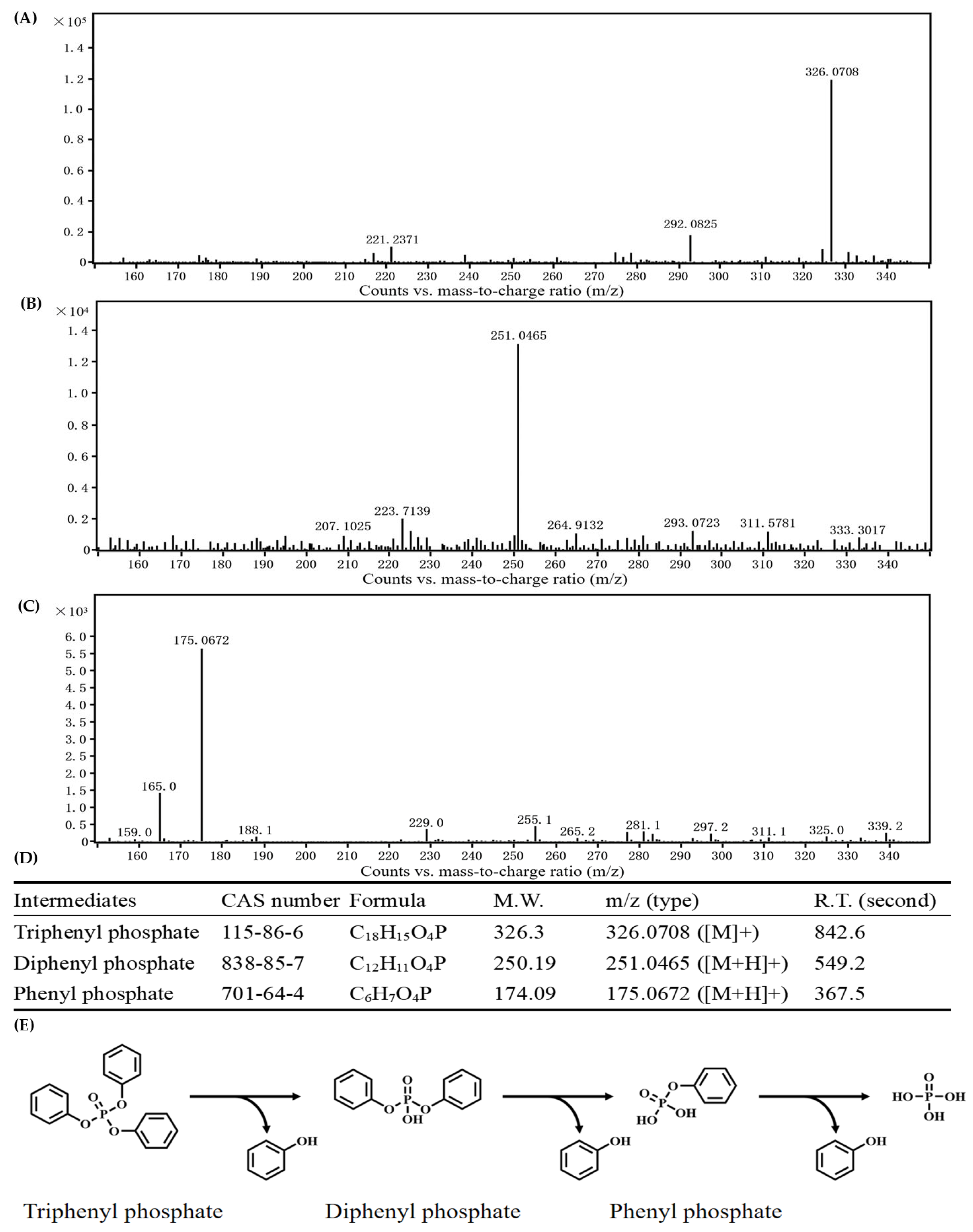
3.3. Metabolic Intermediates and Metabolic Mechanism of TPHP
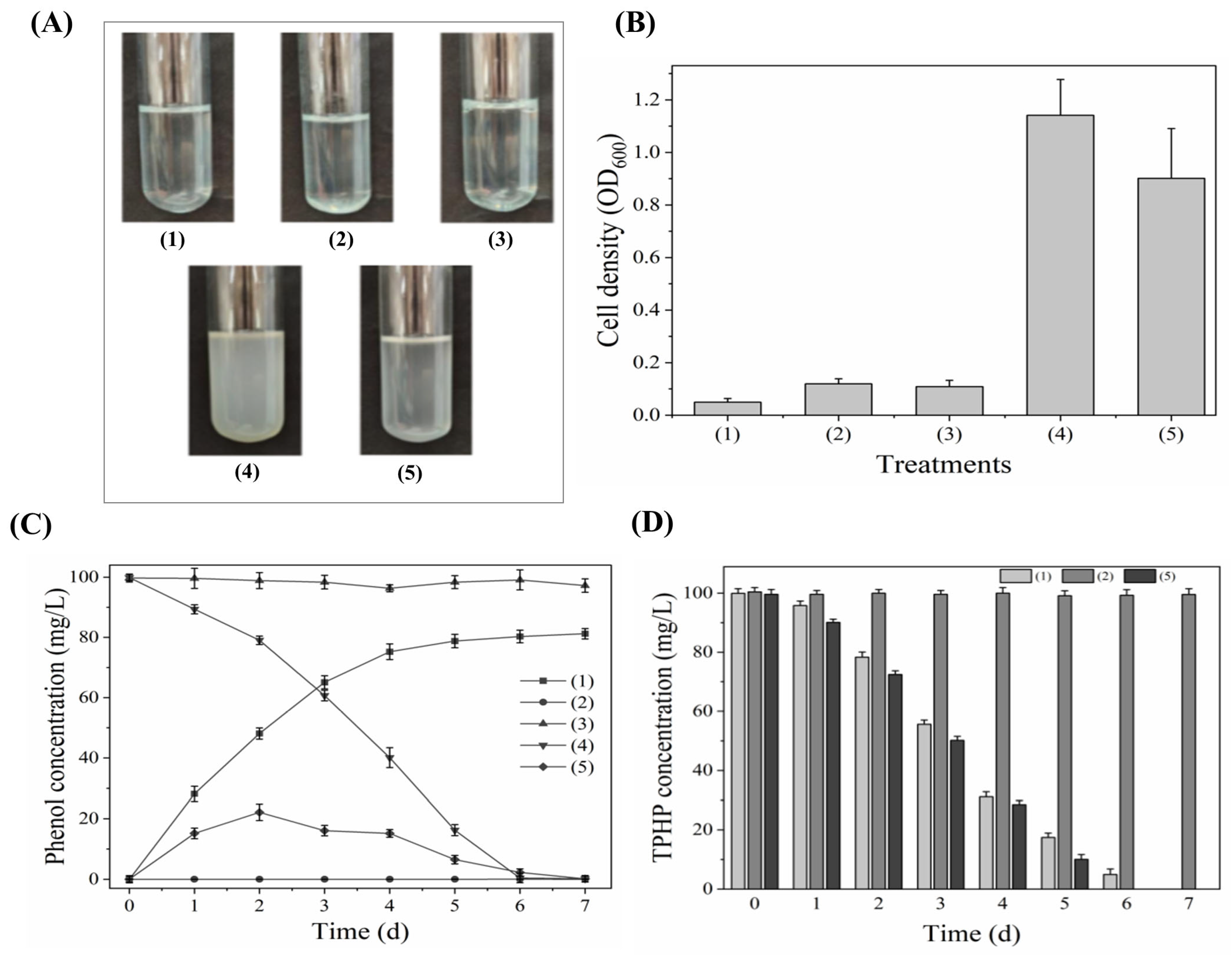
3.4. Synergistic Degradation Analysis of RL-WG04 and RL-LY03
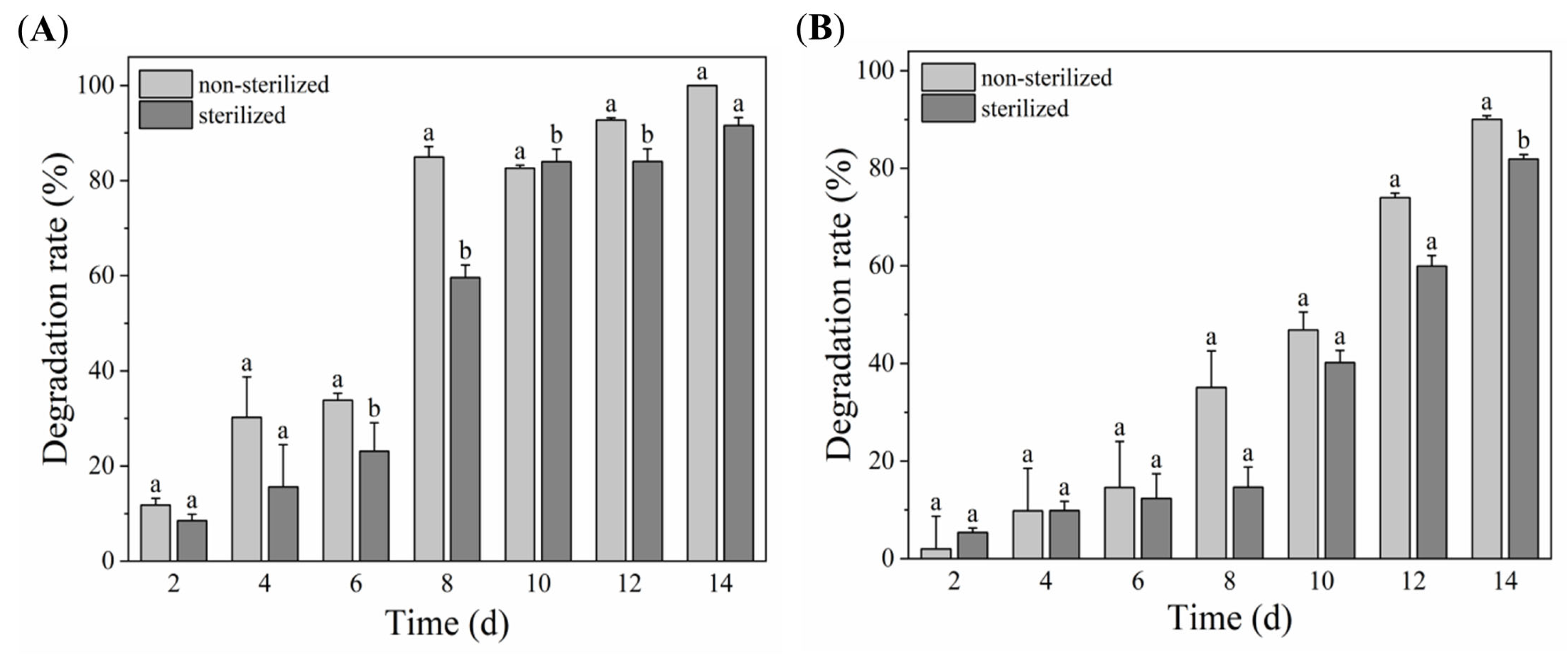
3.5. Bioremediation of TPHP-Contaminated Sediments
4. Discussion
5. Conclusions
Supplementary Materials
Author Contributions
Funding
Institutional Review Board Statement
Informed Consent Statement
Data Availability Statement
Acknowledgments
Conflicts of Interest
References
- He, C.; Zhang, W.; Fang, M.; Li, W.; Wang, K.; Wang, P.; Zhang, H. Research and Application of Flame Retardants. Liaoning Chem. Ind. 2024, 53, 1114–1116+1140. [Google Scholar]
- Chen, Y.; Li, J.; Liu, L.; Zhao, N. Polybrominated diphenyl ethers fate in China: A review with an emphasis on environmental contamination levels, human exposure and regulation. J. Environ. Manag. 2012, 113, 22–30. [Google Scholar] [CrossRef]
- Breivik, K.; Wania, F.; Muir, D.C.G.; Alaee, M.; Backus, S.; Pacepavicius, G. Empirical and Modeling Evidence of the Long-Range Atmospheric Transport of Decabromodiphenyl Ether. Environ. Sci. Technol. 2006, 40, 4612–4618. [Google Scholar] [CrossRef]
- Shockley, K.R.; Cora, M.C.; Malarkey, D.E.; Jackson-Humbles, D.; Vallant, M.; Collins, B.J.; Mutlu, E.; Robinson, V.G.; Waidyanatha, S.; Zmarowski, A.; et al. Comparative toxicity and liver transcriptomics of legacy and emerging brominated flame retardants following 5-day exposure in the rat. Toxicol. Lett. 2020, 332, 222–234. [Google Scholar] [CrossRef]
- Tian, L.; Zhao, S.; Tang, J.; Chen, D.; Li, J.; Zhang, G. Halogenated flame retardants in the atmosphere of the Pearl RiverDelta: Pollution characteristics, trends and relationship with PM2.5. Geochemistry 2022, 51, 305–315. [Google Scholar]
- Kajiwara, N.; Noma, Y.; Takigami, H. Brominated and organophosphate flame retardants in selected consumer products on the Japanese market in 2008. J. Hazard. Mater. 2011, 192, 1250–1259. [Google Scholar] [CrossRef]
- Han, X.; Li, W.; Liu, J.; Wu, C.; Zhuang, Y.; Pei, S. Controlling techniques and characteristics of organophosphate esters in building environment: A review. Chin. J. Eng. 2022, 44, 305–318. [Google Scholar]
- Hoang, M.T.T.; Le, G.T.; Kiwao, K.; Duong, H.T.; Nguyen, T.Q.; Phan, T.Q.; Bui, M.Q.; Truong, D.A.; Trinh, H.T. Occurrence and risk of human exposure to organophosphate flame retardants in indoor air and dust in Hanoi, Vietnam. Chemosphere 2023, 328, 138597. [Google Scholar] [CrossRef]
- Maga, D.; Aryan, V.; Beard, A. Toward Sustainable Fire Safety: Life Cycle Assessment of Phosphinate-Based and Brominated Flame Retardants in E-Mobility and Electronic Devices. ACS Sustain. Chem. Eng. 2024, 12, 3652–3658. [Google Scholar] [CrossRef]
- Marklund, A.; Andersson, B.; Haglund, P. Traffic as a Source of Organophosphorus Flame Retardants and Plasticizers in Snow. Environ. Sci. Technol. 2005, 39, 3555–3562. [Google Scholar] [CrossRef]
- Reemtsma, T.; Quintana, J.B.; Rodil, R.; Garcı´a-López, M.; Rodrı´guez, I. Organophosphorus flame retardants and plasticizers in water and air I. Occurrence and fate. TrAC Trends Anal. Chem. 2008, 27, 727–737. [Google Scholar] [CrossRef]
- Abdallah, M.A.-E.; Covaci, A. Organophosphate Flame Retardants in Indoor Dust from Egypt: Implications for Human Exposure. Environ. Sci. Technol. 2014, 48, 4782–4789. [Google Scholar] [CrossRef] [PubMed]
- Yan, S.; Wu, H.; Qin, J.; Zha, J.; Wang, Z. Halogen-free organophosphorus flame retardants caused oxidative stress and multixenobiotic resistance in Asian freshwater clams (Corbicula fluminea). Environ. Pollut. 2017, 225, 559–568. [Google Scholar] [CrossRef]
- Hou, R.; Xu, Y.; Wang, Z. Review of OPFRs in animals and humans: Absorption, bioaccumulation, metabolism, and internal exposure research. Chemosphere 2016, 153, 78–90. [Google Scholar] [CrossRef]
- Veen, I.V.D.; Boer, J.D. Phosphorus flame retardants: Properties, production, environmental occurrence, toxicity and analysis. Chemosphere 2012, 88, 1119–1153. [Google Scholar] [CrossRef]
- Wang, X.; He, Y.; Lin, L.; Zeng, F.; Luan, T. Application of fully automatic hollow fiber liquid phase microextraction to assess the distribution of organophosphate esters in the Pearl River Estuaries. Sci. Total Environ. 2014, 470–471, 263–269. [Google Scholar] [CrossRef]
- Zhang, Y.; Zheng, X.; Wei, L.; Sun, R.; Guo, H.; Liu, X.; Liu, S.; Li, Y.; Mai, B. The distribution and accumulation of phosphate flame retardants (PFRs) in water environment. Sci. Total Environ. 2018, 630, 164–170. [Google Scholar] [CrossRef] [PubMed]
- Cui, K.; Wen, J.; Zeng, F.; Li, S.; Zhou, X.; Zeng, Z. Occurrence and distribution of organophosphate esters in urban soils of the subtropical city, Guangzhou, China. Chemosphere 2017, 175, 514–520. [Google Scholar] [CrossRef] [PubMed]
- Yu, Y.; Hung, H.; Alexandrou, N.; Roach, P.; Nordin, K. Multiyear Measurements of Flame Retardants and Organochlorine Pesticides in Air in Canada’s Western Sub-Arctic. Environ. Sci. Technol. 2015, 49, 8623–8630. [Google Scholar] [CrossRef]
- Wu, M.; Yu, G.; Cao, Z.; Wu, D.; Liu, K.; Deng, S.; Huang, J.; Wang, B.; Wang, Y. Characterization and human exposure assessment of organophosphate flame retardants in indoor dust from several microenvironments of Beijing, China. Chemosphere 2016, 150, 465–471. [Google Scholar] [CrossRef]
- Kurt-Karakus, P.; Alegria, H.; Birgul, A.; Gungormus, E.; Jantunen, L. Organophosphate ester (OPEs) flame retardants and plasticizers in air and soil from a highly industrialized city in Turkey. Sci. Total Environ. 2018, 625, 555–565. [Google Scholar] [CrossRef]
- Yadav, I.C.; Devi, N.L.; Li, J.; Zhang, G. Organophosphate ester flame retardants in Nepalese soil: Spatial distribution, source apportionment and air-soil exchange assessment. Chemosphere 2018, 190, 114–123. [Google Scholar] [CrossRef] [PubMed]
- Cheung, S.J.; Masud, N.; Robison-Smith, C.; Hansal, P.; Davies-Jones, J.; Ward, B.D.; Cable, J. Assessing the chemical interactions and biological effects of a petrochemical and bio-based plastic with a common plastic flame retardant and solvent. Sci. Total Environ. 2025, 958, 177958. [Google Scholar] [CrossRef]
- Ali, N.; Ismail, I.M.I.; Alamri, S.H.; Alhakamy, N.A.; Summan, A.; Rehan, M.; Alshareef, B.S.; Rajeh, N.; Eqani, S.A.M.A.S. Toxic trespassers: Uncovering phthalates and organophosphate flame retardants in children’s rooms and their health implications. Sci. Total Environ. 2023, 903, 166663. [Google Scholar] [CrossRef]
- Jia, T.; Keller, A.A.; Gao, L.; Liu, W.; Liu, S.; Xu, X.; Yin, F.; He, Y.; Mao, T.; Deng, J.; et al. Organophosphate ester exposure in nail salons: Health implications for workers. Environ. Pollut. 2024, 362, 125013. [Google Scholar] [CrossRef]
- Möller, A.; Sturm, R.; Xie, Z.; Cai, M.; He, J.; Ebinghaus, R. Organophosphorus Flame Retardants and Plasticizers in Airborne Particles over the Northern Pacific and Indian Ocean toward the Polar Regions: Evidence for Global Occurrence. Environ. Sci. Technol. 2012, 46, 3127–3134. [Google Scholar] [CrossRef]
- Wang, P.; Li, D.; Fan, X.; Hu, B.; Wang, X. Sorption and desorption behaviors of triphenyl phosphate (TPhP) and its degradation intermediates on aquatic sediments. J. Hazard. Mater. 2020, 385, 121574. [Google Scholar] [CrossRef]
- Lee, S.; Cho, H.-J.; Choi, W.; Moon, H.-B. Organophosphate flame retardants (OPFRs) in water and sediment: Occurrence, distribution, and hotspots of contamination of Lake Shihwa, Korea. Mar. Pollut. Bull. 2018, 130, 105–112. [Google Scholar] [CrossRef]
- Pantelaki, I.; Voutsa, D. Occurrence, analysis and risk assessment of organophosphate esters (OPEs) in biota: A review. Mar. Pollut. Bull. 2020, 160, 111547. [Google Scholar] [CrossRef] [PubMed]
- Zhang, M.; Chen, J.; Li, Y.; Li, G.; Zhang, Z. Sub-chronic ecotoxicity of triphenyl phosphate to earthworms (Eisenia fetida) in artificial soil: Oxidative stress and DNA damage. Ecotoxicol. Environ. Saf. 2022, 241, 113796. [Google Scholar] [CrossRef] [PubMed]
- Bastiaensen, M.; Gys, C.; Colles, A.; Verheyen, V.; Koppen, G.; Govarts, E.; Bruckers, L.; Morrens, B.; Loots, I.; De Decker, A.; et al. Exposure levels, determinants and risk assessment of organophosphate flame retardants and plasticizers in adolescents (14–15 years) from the Flemish Environment and Health Study. Environ. Int. 2021, 147, 106368. [Google Scholar] [CrossRef]
- Pantelaki, I.; Voutsa, D. Organophosphate esters in inland and coastal waters in northern Greece. Sci. Total Environ. 2021, 800, 149544. [Google Scholar] [CrossRef]
- Ding, Y.; Han, M.; Wu, Z.; Zhang, R.; Li, A.; Yu, K.; Wang, Y.; Huang, W.; Zheng, X.; Mai, B. Bioaccumulation and trophic transfer of organophosphate esters in tropical marine food web, South China Sea. Environ. Int. 2020, 143, 105919. [Google Scholar] [CrossRef]
- Kim, J.-W.; Isobe, T.; Chang, K.-H.; Amano, A.; Maneja, R.H.; Zamora, P.B.; Siringan, F.P.; Tanabe, S. Levels and distribution of organophosphorus flame retardants and plasticizers in fishes from Manila Bay, the Philippines. Environ. Pollut. 2011, 159, 3653–3659. [Google Scholar] [CrossRef] [PubMed]
- Zhang, Q.; Zheng, S.; Shi, X.; Luo, C.; Huang, W.; Lin, H.; Peng, J.; Tan, W.; Wu, K. Neurodevelopmental toxicity of organophosphate flame retardant triphenyl phosphate (TPhP) on zebrafish (Danio rerio) at different life stages. Environ. Int. 2023, 172, 107745. [Google Scholar] [CrossRef] [PubMed]
- Yuan, S.; Li, H.; Dang, Y.; Liu, C. Effects of triphenyl phosphate on growth, reproduction and transcription of genes of Daphnia magna. Aquat. Toxicol. 2018, 195, 58–66. [Google Scholar] [CrossRef] [PubMed]
- Feng, Y.; Shi, J.; Li, M.; Duan, H.; Shao, B. Evaluation of the cytotoxic activity of triphenyl phosphate on mouse spermatocytes cells. Toxicol. Vitr. 2023, 90, 105607. [Google Scholar] [CrossRef]
- Aslantürk, Ö.S. Cytotoxic and genotoxic effects of triphenyl phosphate on root tip cells of Allium cepa L. Toxicol. Vitr. 2024, 94, 105734. [Google Scholar] [CrossRef]
- Abe, F.R.; de Oliveira, A.Á.S.; Marino, R.V.; Rialto, T.C.R.; Oliveira, D.P.; Dorta, D.J. A comparison of developmental toxicity of brominated and halogen-free flame retardant on zebrafish. Ecotoxicol. Environ. Saf. 2021, 208, 111745. [Google Scholar] [CrossRef]
- Howell, B.A. Toxicity of Organophosphorus Flame Retardants: Implications in Environmental Persistence. Recent Dev. Chem. Biochem. Res. 2024, 3, 147–152. [Google Scholar]
- Li, Y.; Fu, Y.; Hu, K.; Zhang, Y.; Chen, J.; Zhang, S.; Zhang, B.; Liu, Y. Positive correlation between human exposure to organophosphate esters and gastrointestinal cancer in patients from Wuhan, China. Ecotoxicol. Environ. Saf. 2020, 196, 110548. [Google Scholar] [CrossRef]
- Liu, Q.; Tang, X.; Zhang, X.; Tong, X.; Sun, Z.; Zhang, X. Mechanistic understanding of the toxicity of triphenyl phosphate (TPhP) to the marine diatom Phaeodactylum tricornutum: Targeting chloroplast and mitochondrial dysfunction. Environ. Pollut. 2022, 295, 118670. [Google Scholar] [CrossRef]
- Wang, L.; Huang, X.; Lim, D.J.; Laserna, A.K.C.; Li, S.F.Y. Uptake and toxic effects of triphenyl phosphate on freshwater microalgae Chlorella vulgaris and Scenedesmus obliquus: Insights from untargeted metabolomics. Sci. Total Environ. 2019, 650, 1239–1249. [Google Scholar] [CrossRef]
- Shi, Q.; Tsui, M.M.P.; Hu, C.; Lam, J.C.W.; Zhou, B.; Chen, L. Acute exposure to triphenyl phosphate (TPhP) disturbs ocular development and muscular organization in zebrafish larvae. Ecotoxicol. Environ. Saf. 2019, 179, 119–126. [Google Scholar] [CrossRef]
- Wang, W.; Deng, S.; Li, D.; Ren, L.; Wang, B.; Huang, J.; Wang, Y.; Yu, G. Adsorptive removal of organophosphate flame retardants from water by non-ionic resins. Chem. Eng. J. 2018, 354, 105–112. [Google Scholar] [CrossRef]
- Tedesco, G.C.; Soares, B.L.; Fagnani, E.; Cristale, J.; Joll, C.A.; Henry, D.J. Photoelectrocatalytic degradation of organophosphate esters using TiO2 electrodes produced from 3D-printed Ti substrates. Environ. Sci. Pollut. Res. 2024, 31, 63910–63925. [Google Scholar] [CrossRef]
- Song, Q.; Feng, Y.; Wang, Z.; Liu, G.; Lv, W. Degradation of triphenyl phosphate (TPhP) by CoFe2O4-activated peroxymonosulfate oxidation process: Kinetics, pathways, and mechanisms. Sci. Total Environ. 2019, 681, 331–338. [Google Scholar] [CrossRef]
- Kawagoshi, Y.; Nakamura, S.; Nishio, T.; Fukunaga, I. Isolation of aryl-phosphate ester-degrading bacterium from leachate of a sea-based waste disposal site. J. Biosci. Bioeng. 2004, 98, 464–469. [Google Scholar] [CrossRef] [PubMed]
- Wei, K.; Yin, H.; Peng, H.; Lu, G.; Dang, Z. Bioremediation of triphenyl phosphate by Brevibacillus brevis: Degradation characteristics and role of cytochrome P450 monooxygenase. Sci. Total Environ. 2018, 627, 1389–1395. [Google Scholar] [CrossRef]
- Wang, J.; Li, X.; Wu, W.; Fan, S.; Jia, Y.; Wang, J.; Yan, Y. The degradation of organophosphorus flame retardants by mixed bacteria YC-BJ1 and analysis of 16S rRNA gene diversity. Acta Bioeng. 2019, 35, 2050–2060. [Google Scholar]
- Long, Y.; Wang, J.; Nwe, M.T.; Zou, X.; Wu, W.; Yan, Y. Biodegradation of aryl-organophosphate flame retardants by Rhodococcus pyridinivorans YC-MTN: Performance, pathway and potential in environmental remediation. Int. Biodeterior. Biodegrad. 2024, 190, 105772. [Google Scholar] [CrossRef]
- Wang, J.; Khokhar, I.; Ren, C.; Li, X.; Wang, J.; Fan, S.; Jia, Y.; Yan, Y. Characterization and 16S metagenomic analysis of organophosphorus flame retardants degrading consortia. J. Hazard. Mater. 2019, 380, 120881. [Google Scholar] [CrossRef] [PubMed]
- Wang, J.; Hlaing, T.S.; Nwe, M.T.; Aung, M.M.; Ren, C.; Wu, W.; Yan, Y. Primary biodegradation and mineralization of aryl organophosphate flame retardants by Rhodococcus-Sphingopyxis consortium. J. Hazard. Mater. 2021, 412, 125238. [Google Scholar] [CrossRef]
- Wang, J.; Yuan, L.; Wu, W.; Yan, Y. Characterization of the phosphotriesterase capable of hydrolyzing aryl-organophosphate flame retardants. Appl. Microbiol. Biotechnol. 2022, 106, 6493–6504. [Google Scholar] [CrossRef]
- Dong, X.; Cai, M. Handbook for Systematic Identification of Common Bacteria, 1st ed.; Science Press: Beijing, China, 2001. [Google Scholar]
- Zandieh, Y.; Taghizadeh, N.; Motamedi, E.; Hadian, P.; Ghollasi, M.; Ariaeenejad, S. Encapsulation of sesame protein hydrolysates prepared by a metagenomic protease: Effect of wall material composition on stability and antimicrobial activity. Ind. Crops Prod. 2025, 233, 121383. [Google Scholar] [CrossRef]
- Ahuactzin-Pérez, M.; Tlecuitl-Beristain, S.; García-Dávila, J.; González-Pérez, M.; Gutiérrez-Ruíz, M.C.; Sánchez, C. Degradation of di (2-ethyl hexyl) phthalate by Fusarium culmorum: Kinetics, enzymatic activities and biodegradation pathway based on quantum chemical modeling pathway based on quantum chemical modeling. Sci. Total Environ. 2016, 566–567, 1186–1193. [Google Scholar] [CrossRef]
- Zhang, J.; Zhao, R.; Cao, L.; Lei, Y.; Liu, J.; Feng, J.; Fu, W.; Li, X.; Li, B. High-efficiency biodegradation of chloramphenicol by enriched bacterial consortia: Kinetics study and bacterial community characterization. J. Hazard. Mater. 2020, 384, 121344. [Google Scholar] [CrossRef]
- Yoon, S.H.; Ha, S.M.; Lim, J.; Kwon, S.; Chun, J. A large-scale evaluation of algorithms to calculate average nucleotide identity. Antonie Van Leeuwenhoek 2017, 110, 1281–1286. [Google Scholar] [CrossRef]
- Vasinthiya Tej, A.; Pranika, M.; Adhithya, S.; Nithya, K.; Sathish, A.; Kumar, V. From contamination to remediation: Understanding the toxicity, risk assessment, and degradation pathways of triphenyl phosphate and related organophosphate flame retardants in water and soil. Sci. Total Environ. 2025, 999, 180356. [Google Scholar] [CrossRef] [PubMed]
- Tomlinson, P.B. The Botany of Mangroves, 2nd ed.; Cambridge University Press: Cambridge, UK, 2016. [Google Scholar]
- De, K.; Sautya, S.; Dora, G.U.; Gaikwad, S.; Katke, D.; Salvi, A. Mangroves in the “Plasticene”: High exposure of coastal mangroves to anthropogenic litter pollution along the Central-West coast of India. Sci. Total Environ. 2023, 858, 160071. [Google Scholar] [CrossRef] [PubMed]
- Woodroffe, C.D.; Rogers, K.; McKee, K.L.; Lovelock, C.E.; Mendelssohn, I.A.; Saintilan, N. Mangrove Sedimentation and Response to Relative Sea-Level Rise. Annu. Rev. Mar. Sci. 2016, 8, 243–266. [Google Scholar] [CrossRef]
- Reef, R.; Feller, I.C.; Lovelock, C.E. Nutrition of mangroves. Tree Physiol. 2010, 30, 1148–1160. [Google Scholar] [CrossRef]
- Luo, Y.; Tang, H.; Li, Y.; Ouyan, H.; Chen, S.; Qiu, R. The degradation characteristics and pathways of organophosphorus flame retardants mixtures by Bacillus pacificus. China Environ. Sci. 2024, 44, 3434–3441. [Google Scholar]
- Feng, M.; Zhou, J.; Yu, X.; Mao, W.; Guo, Y.; Wang, H. Insights into biodegradation mechanisms of triphenyl phosphate by a novel fungal isolate and its potential in bioremediation of contaminated river sediment. J. Hazard. Mater. 2022, 424, 127545. [Google Scholar] [CrossRef]
- Fang, X.; Yang, W. The Current Status of Petroleum Pollution of the Ocean and the Prevention. Environ. Sci. Manag. 2007, 9, 78–80. [Google Scholar]
- Scott, H.D.; Wolf, D.C.; Lavy, T.L. Apparent Adsorption and Microbial Degradation of Phenol by Soil. J. Environ. Qual. 1982, 11, 107–112. [Google Scholar] [CrossRef]
- Wang, W.; Li, Q.; Zhang, L.; Cui, J.; Yu, H.; Wang, X.; Ouyang, X.; Tao, F.; Xu, P.; Tang, H. Genetic mapping of highly versatile and solvent-tolerant Pseudomonas putida B6-2 (ATCC BAA-2545) as a ‘superstar’ for mineralization of PAHs and dioxin-like compounds. Environ. Microbiol. 2021, 23, 4309–4325. [Google Scholar] [CrossRef] [PubMed]
- Poirier, S.; Bize, A.; Bureau, C.; Bouchez, T.; Chapleur, O. Community shifts within anaerobic digestion microbiota facing phenol inhibition: Towards early warning microbial indicators? Water Res. 2016, 100, 296–305. [Google Scholar] [CrossRef] [PubMed]
- Chen, J.; Qi, Y.; Pan, X.; Wu, N.; Zuo, J.; Li, C.; Qu, R.; Wang, Z.; Chen, Z. Mechanistic insights into the reactivity of Ferrate(VI) with phenolic compounds and the formation of coupling products. Water Res. 2019, 158, 338–349. [Google Scholar] [CrossRef] [PubMed]
- Yamamura, S.; Kurasawa, H.; Kashiwabara, Y.; Hori, T.; Aoyagi, T.; Nakajima, N.; Amachi, S. Soil Microbial Communities Involved in Reductive Dissolution of Arsenic from Arsenate-Laden Minerals with Different Carbon Sources. Environ. Sci. Technol. 2019, 53, 12398–12406. [Google Scholar] [CrossRef]
- Ghafghazi, L.; Taghavi, L.; Rasekh, B.; Farahani, H.; Hassani, A.H. Application of compost assisted by Fe3O4 nanoparticles in di (2-ethylhexyl) phthalate-contaminated soil remediation: Biostimulation strategy, Soil responses, and RSM/CCD Optimization. Sci. Total Environ. 2024, 908, 168029. [Google Scholar] [CrossRef] [PubMed]
- Pal, P.; Pramanik, K.; Ghosh, S.K.; Mondal, S.; Mondal, T.; Soren, T.; Maiti, T.K. Molecular and eco-physiological responses of soil-borne lead (Pb2+)-resistant bacteria for bioremediation and plant growth promotion under lead stress. Microbiol. Res. 2024, 287, 127831. [Google Scholar] [CrossRef]
- Choi, N.-C.; Cho, K.H.; Kim, B.J.; Lee, S.; Park, C.Y. Enhancement of Au–Ag–Te contents in tellurium-bearing ore minerals via bioleaching. Int. J. Miner. Metall. Mater. 2018, 25, 262–270. [Google Scholar] [CrossRef]
- Gosai, H.B.; Panseriya, H.Z.; Patel, P.G.; Patel, A.C.; Shankar, A.; Varjani, S.; Dave, B.P. Exploring bacterial communities through metagenomics during bioremediation of polycyclic aromatic hydrocarbons from contaminated sediments. Sci. Total Environ. 2022, 842, 156794. [Google Scholar] [CrossRef]
- Priya, A.K.; Muruganandam, M.; Kumar, A.; Senthilkumar, N.; Shkir, M.; Pandit, B.; Imran, M.; Prakash, C.; Ubaidullah, M. Recent advances in microbial-assisted degradation and remediation of xenobiotic contaminants; challenges and future prospects. J. Water Process Eng. 2024, 60, 105106. [Google Scholar] [CrossRef]
- Vafa, H.J.; Pourbabaee, A.A.; Alikhani, H.A.; Yazdanfar, N.; Khanali, M. A comparative life cycle analysis of bioremediation approaches for old-aged petroleum pollution in hypersaline soil. Chemosphere 2025, 373, 144150. [Google Scholar] [CrossRef]
- Kong, X.; Cernava, T.; Wang, Y.; Jin, D. Native fungal community remains resilient during bioremediation of DBP pollution by exogenous Gordonia phthalatica QH-11T. Sci. Total Environ. 2023, 892, 164532. [Google Scholar] [CrossRef]
- Zhang, Z.; Li, J.; Sui, T.; Cheng, M.; Sun, K. Organic contamination in mangrove ecosystems of China. Ecol. Sci. 2017, 36, 232–240. [Google Scholar]
- Balaban, N.; Bernstein, A.; Gelman, F.; Ronen, Z. Microbial degradation of the brominated flame retardant TBNPA by groundwater bacteria: Laboratory and field study. Chemosphere 2016, 156, 367–373. [Google Scholar] [CrossRef] [PubMed]
- Kumar, B.L.; Gopal, D.V. Effective role of indigenous microorganisms for sustainable environment. 3 Biotech 2015, 5, 867–876. [Google Scholar] [CrossRef]



| Items | Treatments | ||||
|---|---|---|---|---|---|
| (1) | (2) | (3) | (4) | (5) | |
| TPHP | ● | ● | ○ | ○ | ● |
| Phenol | ○ | ○ | ● | ● | ○ |
| TPHP-degrading strain | ● | ○ | ● | ○ | ● |
| Phenol-degrading strain | ○ | ● | ○ | ● | ● |
| Strain | Accessing Number * | Length (bp) | GC Content (%) | ANI Value (%) |
|---|---|---|---|---|
| Strain RL-WG04 | PRJNA1311828 | 4,602,770 | 61.36 | / |
| Pseudomonas abyssi MT5T | PRJNA406957 | 4,322,744 | 61.24 | 98.38 |
| Halopseudomonas pachastrellae JCM 12285T | PRJNA323010 | 3,934,694 | 61.20 | 89.88 |
| Halopseudomonas aestusnigri CECT 8317T | PRJNA224116 | 3,834,943 | 60.92 | 82.80 |
| Halopseudomonas oceani CGMCC 1.15195T | PRJNA224116 | 4,167,679 | 59.92 | 82.42 |
| Halopseudomonas salegens CECT 8338T | PRJNA323043 | 3,796,105 | 57.69 | 74.18 |
Disclaimer/Publisher’s Note: The statements, opinions and data contained in all publications are solely those of the individual author(s) and contributor(s) and not of MDPI and/or the editor(s). MDPI and/or the editor(s) disclaim responsibility for any injury to people or property resulting from any ideas, methods, instructions or products referred to in the content. |
© 2026 by the authors. Licensee MDPI, Basel, Switzerland. This article is an open access article distributed under the terms and conditions of the Creative Commons Attribution (CC BY) license.
Share and Cite
Shi, M.; Xu, D.; Zhou, J.L.; Jia, Y.; Hu, H.; Jiang, X.; Wang, Y. Biodegradation of Triphenyl Phosphate by a Novel Marine Bacterium Pseudomonas abyssi RL-WG04: Characterization, Metabolic Pathway, Bioremediation and Synergistic Metabolism. Toxics 2026, 14, 280. https://doi.org/10.3390/toxics14040280
Shi M, Xu D, Zhou JL, Jia Y, Hu H, Jiang X, Wang Y. Biodegradation of Triphenyl Phosphate by a Novel Marine Bacterium Pseudomonas abyssi RL-WG04: Characterization, Metabolic Pathway, Bioremediation and Synergistic Metabolism. Toxics. 2026; 14(4):280. https://doi.org/10.3390/toxics14040280
Chicago/Turabian StyleShi, Min, Danting Xu, John L. Zhou, Yang Jia, Hanqiao Hu, Xingyu Jiang, and Yanyan Wang. 2026. "Biodegradation of Triphenyl Phosphate by a Novel Marine Bacterium Pseudomonas abyssi RL-WG04: Characterization, Metabolic Pathway, Bioremediation and Synergistic Metabolism" Toxics 14, no. 4: 280. https://doi.org/10.3390/toxics14040280
APA StyleShi, M., Xu, D., Zhou, J. L., Jia, Y., Hu, H., Jiang, X., & Wang, Y. (2026). Biodegradation of Triphenyl Phosphate by a Novel Marine Bacterium Pseudomonas abyssi RL-WG04: Characterization, Metabolic Pathway, Bioremediation and Synergistic Metabolism. Toxics, 14(4), 280. https://doi.org/10.3390/toxics14040280