Peroxydisulfate Activation by Lignosulfonate-Derived Iron–Carbon Catalyst for Tetracycline Hydrochloride Removal: Contributions of 1O2 and Iron Cycle

 ,
, 
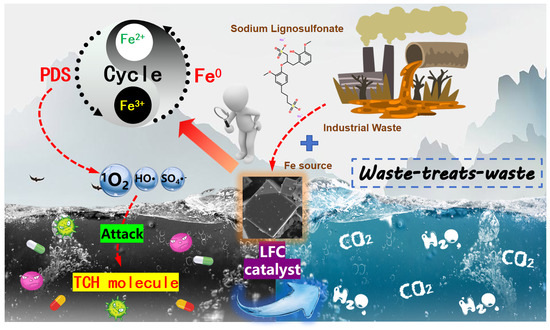
Abstract
1. Introduction
2. Materials and Methods
2.1. Chemical
2.2. Preparation of LFC
2.3. Catalytic Degradation Experiment
2.4. Characterization Analysis
3. Results and Discussion
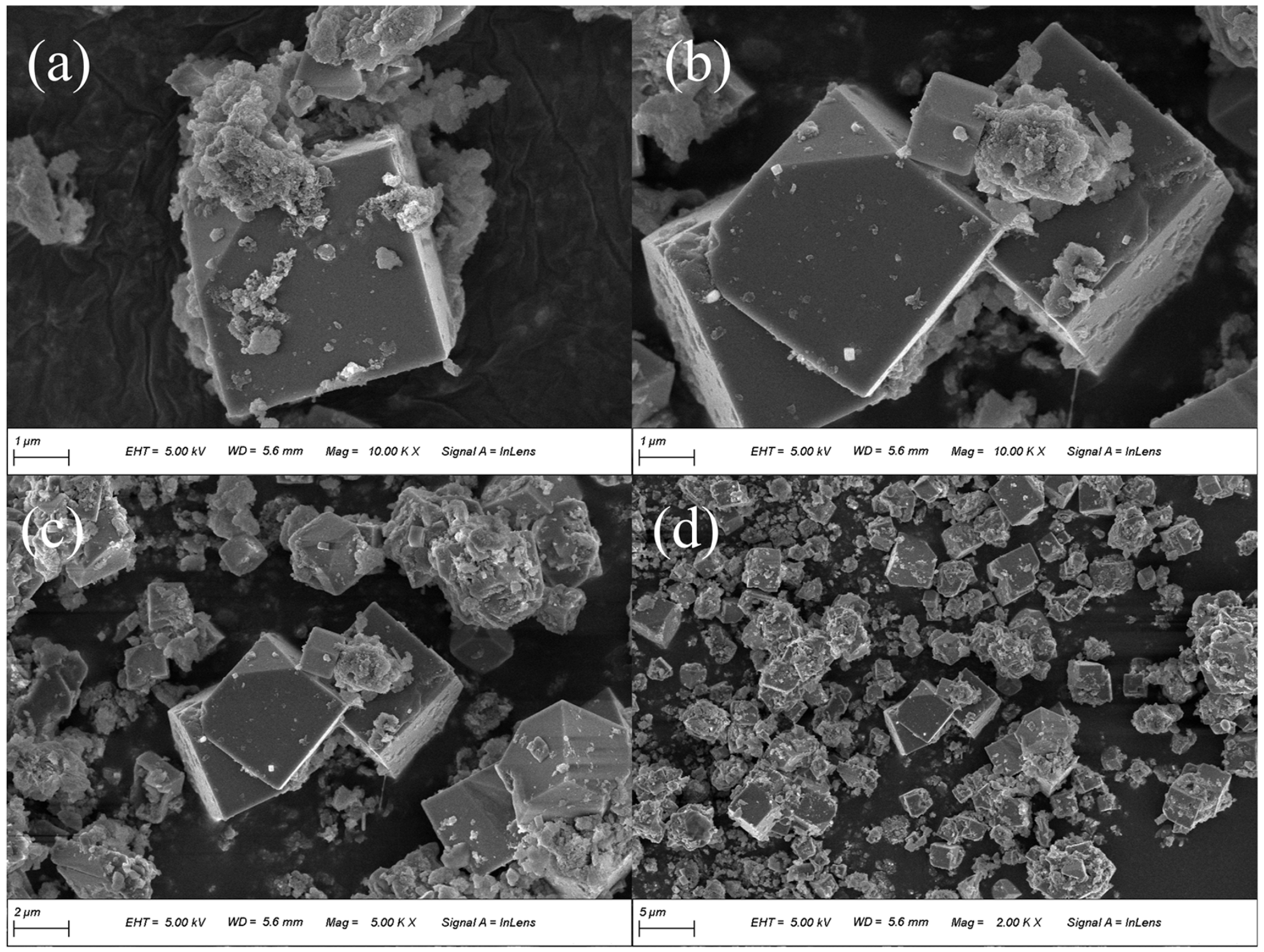
3.1. Characterization
3.2. Optimization of LFC Catalytic Performance
3.2.1. Iron Source Dosage
3.2.2. Hydrothermal Time
3.2.3. Hydrothermal Reaction Temperature
3.3. Degradation of TCH by Different Catalytic Systems
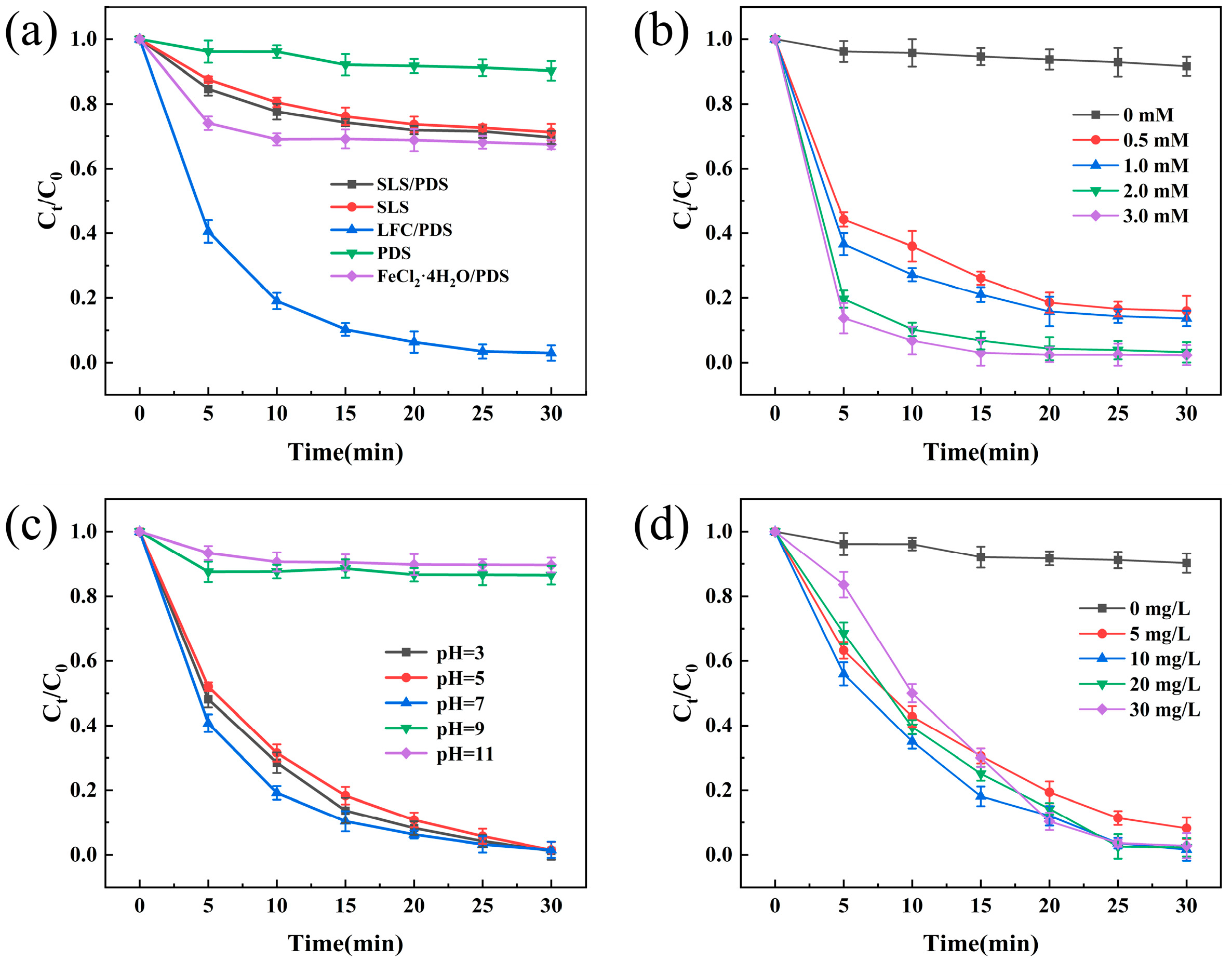
3.3.1. Catalytic Performance of LFC
3.3.2. Effect of PDS Dosages
3.3.3. Effect of pH
3.3.4. Effect of Catalyst Dosages
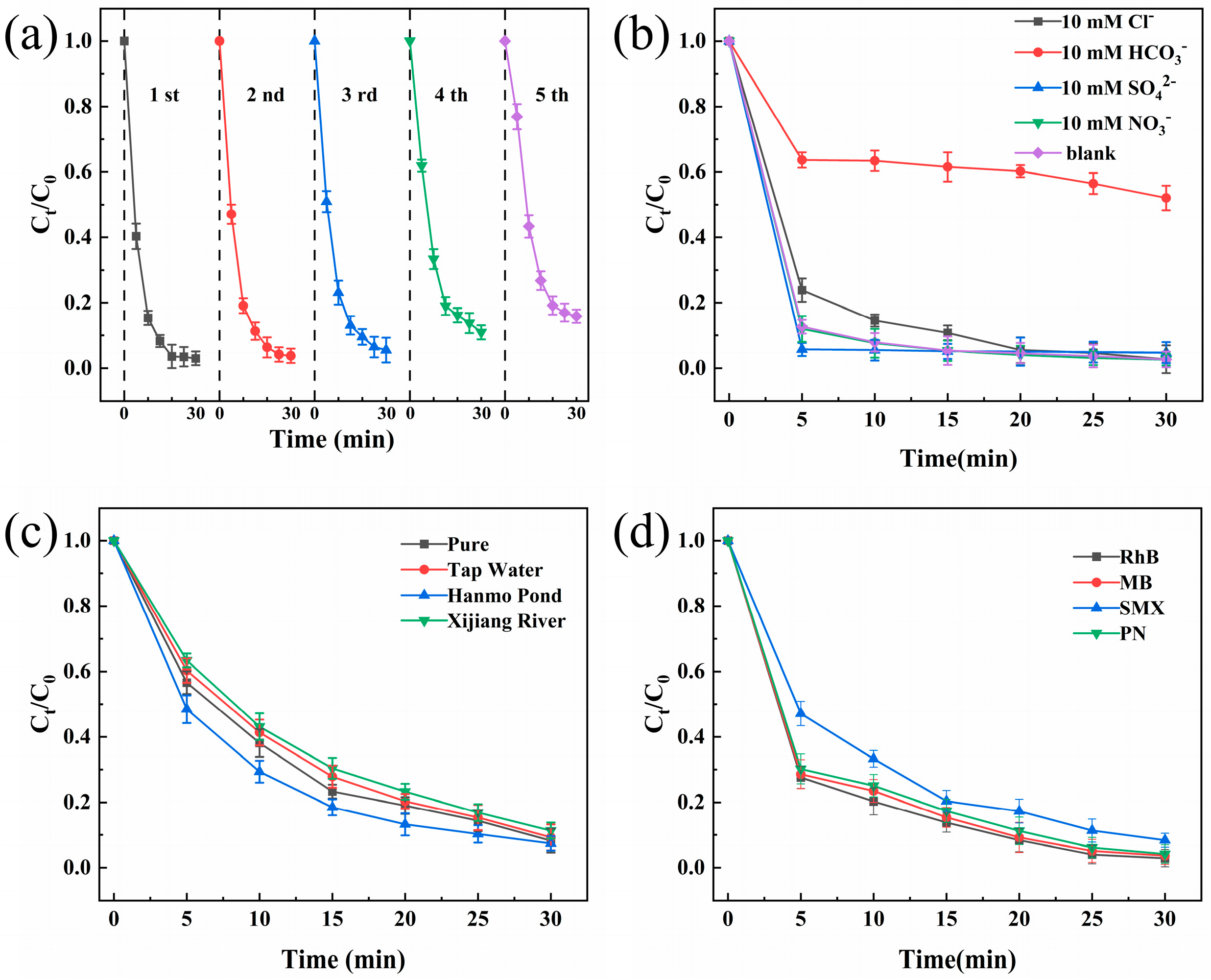
3.4. Stability of LFC
3.5. Practicability of LFC
3.6. Degradation Mechanism of LFC/PDS System
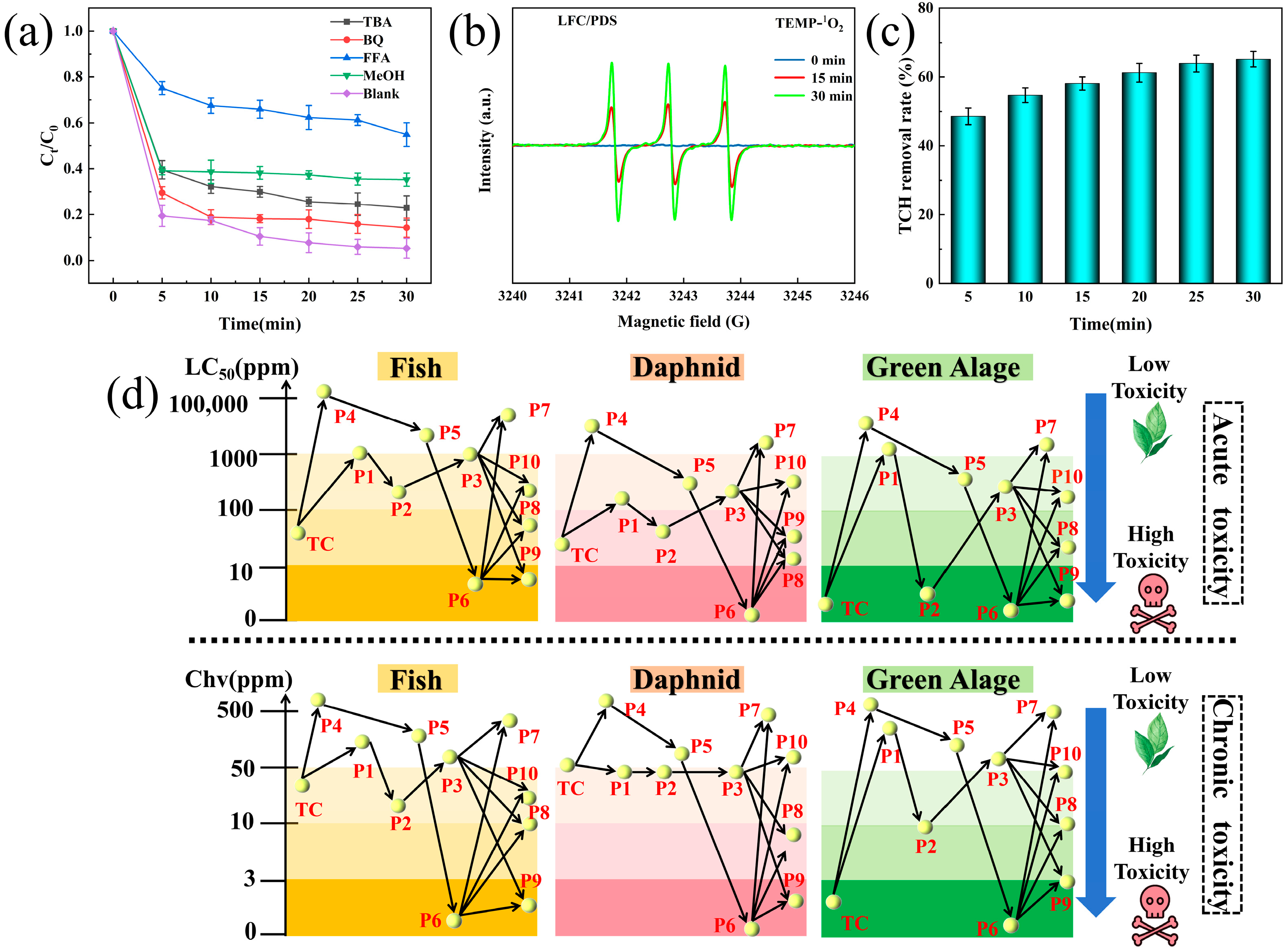
3.6.1. Quenching Experiment and Ecotoxicological Assessment
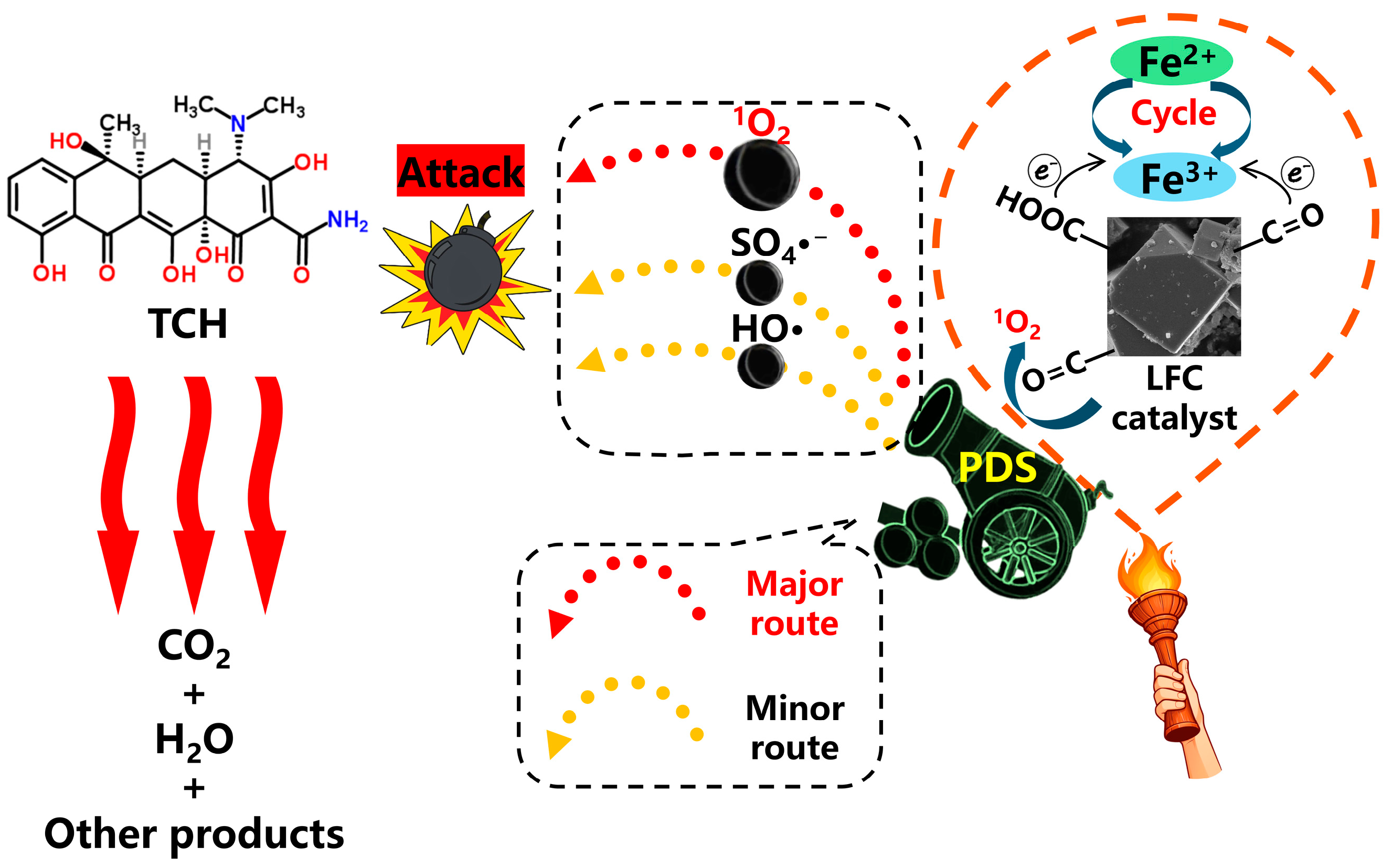
3.6.2. Removal Mechanism
4. Conclusions
Supplementary Materials
Author Contributions
Funding
Institutional Review Board Statement
Informed Consent Statement
Data Availability Statement
Acknowledgments
Conflicts of Interest
Abbreviations
| (PDS) | Peroxydisulfate |
| (TCH) | Tetracycline Hydrochloride |
| (1O2) | Singlet Oxygen |
| (ARGs) | Antibiotic Resistance Genes |
| (ARB) | Antibiotic-Resistant Bacteria |
| (PS-AOPs) | Persulfate-based Advanced Oxidation Processes |
| (SO4−·) | sulfate radicals |
| (·OH) | hydroxyl radicals |
| (SLS) | Sodium Lignosulfonate |
| (LFC) | Lignosulfonate-Fe Carbonized Catalyst |
| (MeOH) | Methanol |
| (FFA) | Furfuryl alcohol |
| (TBA) | tert-butanol |
| (BQ) | p-benzoquinone |
| (RhB) | Rhodamine B |
| (MB) | Methylene Blue |
| (SMX) | Sulfamethoxazole |
| (PN) | Phenol |
| (XRD) | X-ray diffraction |
| (ROS) | reactive Oxygen Species |
| (TOC) | total organic carbon |
| (LC50) | lethal concentration 50% |
| (Chv) | chronic value |
| (HPLC-MS/MS) | High-performance liquid chromatography–tandem mass spectrometry |
| (OFG) | oxygen-containing functional groups |
References
- Samrot, A.V.; Wilson, S.; Sanjay Preeth, R.S.; Prakash, P.; Sathiyasree, M.; Saigeetha, S.; Shobana, N.; Pachiyappan, S.; Rajesh, V.V. Sources of antibiotic contamination in wastewater and approaches to their removal—An overview. Sustainability 2023, 15, 12639. [Google Scholar] [CrossRef]
- Cao, J.; Dong, X.; Xie, C.; Xiao, C.; Wu, Y.; Wei, S. Preparation of nitrogen-doped magnetic carbon microspheres and their adsorption and degradation properties of tetracycline hydrochloride. Chem. Eng. Sci. 2024, 300, 120564. [Google Scholar] [CrossRef]
- Charuaud, L.; Jarde, E.; Jaffrezic, A.; Thomas, M.; Le Bot, B. Veterinary pharmaceutical residues from natural water to tap water: Sales, occurrence and fate. J. Hazard. Mater. 2019, 361, 169–186. [Google Scholar] [CrossRef] [PubMed]
- Xiao, C.; Liu, J.Y.; Hu, Y.Y.; Tang, C.Y.; Cheng, J.H.; Chen, Y.C.; Zhu, X.Q.; Wang, G.B.; Xie, J.Y.; Ai, L.H. Enhanced co-catalytic Fenton degradation of sulfamethoxazole by partitional reaction with H2O2 intermittent addition: From theoretical research to practical application. J. Water Process Eng. 2025, 78, 108799. [Google Scholar] [CrossRef]
- Xiao, C.; Hu, Y.Y.; Li, Q.T.; Liu, J.Y.; Li, X.; Shi, Y.Y.; Chen, Y.C.; Cheng, J.H.; Zhu, X.Q.; Wang, G.B.; et al. Degradation of sulfamethoxazole by super-hydrophilic MoS2 sponge co-catalytic Fenton: Enhancing Fe2+/Fe3+ cycle and mass transfer. J. Hazard. Mater. 2023, 458, 131878. [Google Scholar] [CrossRef] [PubMed]
- Ulucan-Altuntas, K.; Guvenc, S.Y.; Can-Güven, E.; Ihan, F.; Varank, G. Degradation of oxytetracycline in aqueous solution by Heat-activated peroxydisulfate and peroxymonosulfate Oxidation. Environ. Sci. Pollut. Res. 2021, 29, 9110–9123. [Google Scholar] [CrossRef]
- Sun, S.S.; Yang, K.L.; Zhang, Z.S.; Gu, P.; Miao, H.F.; Xu, X.H. Novel iron-carbon micro-electrolysis-anoxic/oxic biofilter system for enhanced treatment of tetracycline wastewater: Significant reduction of antibiotic-resistant and pathogenic bacteria. J. Clean. Prod. 2023, 396, 136480. [Google Scholar] [CrossRef]
- Li, N.; Zhou, L.; Jin, X.Y.; Owens, G.; Chen, Z.L. Simultaneous removal of tetracycline and oxytetracycline antibiotics from wastewater using a ZIF-8 metal organic-Framework. J. Hazard. Mater. 2019, 366, 563–572. [Google Scholar] [CrossRef] [PubMed]
- Pishevar, A.; Khanchoupan, M.; Afradi, A.; Afradi, A.; Kazemian, F.; Behbudi, G. Recent developments in chitosan-based adsorbents for tetracycline removal: A mini-review. Synth. Sinter. 2025, 5, 41–51. [Google Scholar] [CrossRef]
- Pruden, A.; Larsson, D.G.J.; Amezquita, A.; Collignon, P.; Brandt, K.K.; Graham, D.W.; Lazorchak, J.M.; Suzuki, S.; Silley, P.; Snape, J.R. Management Options for Reducing the Release of Antibiotics and Antibiotic Resistance Genes to the Environment. Environ. Health Perspect. 2013, 121, 878–885. [Google Scholar] [CrossRef] [PubMed]
- Moreira, N.F.F.; Sousa, J.M.; Macedo, G.; Ribeiro, A.R.; Barreiros, L.; Pedrosa, M.; Faria, J.L.; Pereira, M.F.R.; Castro-Silva, S.; Segundo, M.A. Photocatalytic ozonation of urban wastewater and surface water using immobilized TiO2 with LEDs: Micropollutants, antibiotic resistance genes and estrogenic Activity. Water Res. 2016, 94, 10–22. [Google Scholar] [CrossRef] [PubMed]
- Yang, Y.Y.; Grossart, H.P. Antibiotic resistance genes: A global change factor. Glob. Change Biol. 2024, 30, 17448. [Google Scholar] [CrossRef]
- Xiao, C.; Li, S.; Yi, F.H.; Zhang, B.; Chen, D.; Zhang, Y.; Chen, H.X.; Huang, Y.L. Enhancement of photo-Fenton catalytic activity with the assistance of oxalic acid on the kaolin-FeOOH system for the degradation of organic dyes. RSC Adv. 2020, 10, 18704–18714. [Google Scholar] [CrossRef] [PubMed]
- Gao, Y.; Wang, Q.; Ji, G.Z.; Li, A.M. Degradation of antibiotic pollutants by persulfate activated with various carbon materials. Chem. Eng. J. 2022, 429, 132387. [Google Scholar] [CrossRef]
- Masud, M.A.A.; Kim, D.G.; Shin, W.S. Highly efficient degradation of phenolic compounds by Fe(II)-activated dual oxidant (persulfate/calcium peroxide) system. Chemosphere 2022, 299, 134392. [Google Scholar] [CrossRef] [PubMed]
- Xiao, C.; Ai, L.H.; Chen, J.X.; Ren, W.; Feng, J.R.; Lu, L.; Chen, Y.Y.; Luo, Y.X.; Dai, M. Unlocking the Oxidative Performance of Peracetic Acid: A Comprehensive Review of Activation Pathways and Mechanisms for Environmental Remediation. Toxics 2025, 14, 6. [Google Scholar] [CrossRef] [PubMed]
- Lee, J.; Von Gunten, U.; Kim, J.H. Persulfate-based advanced oxidation: Critical assessment of opportunities and roadblocks. Environ. Sci. Technol. 2020, 54, 3064–3081. [Google Scholar] [CrossRef] [PubMed]
- Xiao, S.; Cheng, M.; Zhong, H.; Liu, Z.F.; Liu, Y.; Yang, X.; Liang, Q.H. Iron-mediated activation of persulfate and peroxymonosulfate in both homogeneous and heterogeneous ways: A review. Chem. Eng. J. 2020, 384, 123265. [Google Scholar] [CrossRef]
- Hou, K.J.; Pi, Z.J.; Yao, F.B.; Wu, B.; He, L.; Li, X.M.; Wang, D.B.; Dong, H.R.; Yang, Q. A critical review on the mechanisms of persulfate activation by iron-based materials: Clarifying some ambiguity and controversies. Chem. Eng. J. 2021, 407, 127078. [Google Scholar] [CrossRef]
- Yang, X.; Liang, J.L.; Zeng, L.T.; Guan, Z.J.; Liao, X.J.; Zhou, S.Y.; Huang, S.S.; Sun, S.Y. Efficient degradation of humic acid and fulvic acid in water by magnetic waste tea biochar activated persulfate. Acta Sci. Circumstantiae 2021, 41, 3185–3199. [Google Scholar]
- Xi, M.F.; Cui, K.P.; Cui, M.S.; Ding, Y.; Guo, Z.; Chen, Y.H.; Li, X.Y. Enhanced norfloxacin degradation by iron and nitrogen co-doped biochar: Revealing the radical and nonradical co-dominant mechanism of persulfate activation. Chem. Eng. J. 2021, 420, 129902. [Google Scholar] [CrossRef]
- Qin, J.H.; Li, Q.W.; Liu, Y.Q.; Niu, A.Y.; Lin, C.X. Biochar-driven reduction of As(V) and Cr(VI): Effects of pyrolysis temperature and low-molecular-weight organic acids. Ecotoxicol. Environ. Saf. 2020, 201, 110873. [Google Scholar] [CrossRef] [PubMed]
- Kong, L.; Yan, L.L.; Qu, Z.; Yan, N.Q.; Li, L. Β-Cyclodextrin stabilized magnetic Fe3S4 nanoparticles for efficient removal of Pb(II). J. Mater. Chem. A 2015, 3, 15755–15763. [Google Scholar] [CrossRef]
- Tomczyk, A.; Sokołowska, Z.; Boguta, P. Biochar physicochemical properties: Pyrolysis temperature and feedstock kind effects. Rev. Environ. Sci. Bio/Technol. 2020, 19, 191–215. [Google Scholar] [CrossRef]
- Zhu, K.; Bin, Q.; Shen, Y.Q.; Huang, J.; He, D.D.; Chen, W.J. In-situ formed N-doped bamboolike carbon nanotubes encapsulated with Fe nanoparticles supported by biochar as highly efficient catalyst for activation of persulfate (PS) toward degradation of organic pollutants. Chem. Eng. J. 2020, 402, 126090. [Google Scholar] [CrossRef]
- Gong, R.M.; Ma, Z.H.; Wang, X.; Han, Y.; Guo, Y.Z.; Sun, G.W.; Li, Y.; Zhou, J.H. Sulfonic-acid-functionalized carbon fiber from waste newspaper as a recyclable carbon based solid acid catalyst for the hydrolysis of cellulose. RSC Adv. 2019, 9, 28902–28907. [Google Scholar] [CrossRef] [PubMed]
- Yew, Y.P.; Shameli, K.; Miyake, M.; Kuwano, N.; Khairudin, N.B.A.; Mohamad, S.E.B.; Lee, K.X. Green synthesis of magnetite (Fe3O4) nanoparticles using seaweed (Kappaphycus alvarezii) extract. Nanoscale Res. Lett. 2016, 11, 276. [Google Scholar] [CrossRef] [PubMed]
- Xiao, C.; Hu, Y.Y.; Li, Q.T.; Liu, J.Y.; Li, X.; Shi, Y.Y.; Chen, Y.C.; Cheng, J.H. Carbon-doped defect MoS2 co-catalytic Fe3+/peroxymonosulfate process for efficient sulfadiazine degradation: Accelerating Fe3+/Fe2+ cycle and 1O2 dominated oxidation. Sci. Total Environ. 2023, 858, 159587. [Google Scholar] [CrossRef] [PubMed]
- Guo, L.J.; Zhao, L.M.; Tang, Y.L.; Zhou, J.F.; Shi, B. Switching the free radical based peroxydisulfate activation to the nonradical pathway by a chrome shaving–derived biochar for the efficient degradation of tetracycline. Chem. Eng. J. 2022, 435, 135189. [Google Scholar] [CrossRef]
- Xiang, T.; Lu, X.; Qu, H.; Zhao, Z.M.; Zhang, Y.J.; Chu, W.H.; Gao, N.Y. Bioelectricity enhanced tetracycline degradation by iron-carbon activated persulfate: Performance, mechanism and toxicity assessment. J. Water Process Eng. 2025, 75, 108031. [Google Scholar] [CrossRef]
- Kang, X.D.; Zhang, Q.Y.; Liu, X.F.; Song, J.B.; Guo, H.L.; Wang, L.P. The interface mechanism of sludge biochar activating persulfate to remove tetracycline: The role of the C-O-Fe bridge at the carbon surface. J. Clean. Prod. 2023, 384, 135514. [Google Scholar] [CrossRef]
- Xu, B.H.; An, Q.; Deng, S.M.; Li, Z.; Yang, Z.H.; Wu, H.Y.; Ye, Z.H. Acid-modified red mud biochar for the degradation of tetracycline: Synergistic effect of adsorption and nonradical activation. J. Environ. Manag. 2023, 347, 119077. [Google Scholar] [CrossRef]
- Wang, G.H.; Peng, B.; Sun, X.H.; Nie, C.; Fu, R.F.; Yan, B. Constructing Stable N-Doped Iron-Based Porous Carbon Nanocatalyst for Antibiotic Degradation and Bactericidal Detoxification. Langmuir 2025, 41, 7613–7623. [Google Scholar] [CrossRef] [PubMed]
- Li, X.W.; Liu, X.T.; Lin, C.Y.; Zhou, Z.; He, M.C.; Ouyang, W. Catalytic oxidation of contaminants by Fe0 activated peroxymonosulfate process: Fe(IV) involvement, degradation intermediates and toxicity Evaluation. Chem. Eng. J. 2020, 382, 123013. [Google Scholar] [CrossRef]
- Zhang, X.X.; Huang, R.; Show, P.L.; Mahlknecht, J.; Wang, C.Q. Degradation of tetracycline by nitrogen-doped biochar as a peroxydisulfate activator: Nitrogen doping pattern and non-radical mechanism. Sustain. Horiz. 2024, 10, 100091. [Google Scholar] [CrossRef]
- Liu, C.; Tan, L.; Zhang, L.M.; Tan, L.; Tian, W.Q.; Ma, L.Q. A review of the distribution of antibiotics in water in different regions of China and current antibiotic degradation pathways. Front. Environ. Sci. 2021, 9, 692298. [Google Scholar] [CrossRef]
- Wu, B.B.; Wang, Z.; Jia, Y.N.; Xu, N.N.; Liao, L.S.; Zhang, C.Y.; Wang, Z.W.; Shan, Y.X.; Feng, W.T. MoO2-enhanced Fe-loaded biochar promotes Fe2+/Fe3+ cycling for activation of peroxydisulfate to degrade organic pollutants. Environ. Technol. Innov. 2024, 35, 103736. [Google Scholar] [CrossRef]
- An, L.; Xiao, P.F. Zero-valent iron/activated carbon microelectrolysis to activate peroxydisulfate for efficient degradation of chlortetracycline in aqueous solution. RSC Adv. 2020, 10, 19401–19409. [Google Scholar] [PubMed]
- Tian, K.; Shi, F.Y.; Cao, M.H.; Zheng, Q.Z.; Zhang, G.S. A review of persulfate activation by magnetic catalysts to degrade organic contaminants: Mechanisms and applications. Catalysts 2022, 12, 1058. [Google Scholar] [CrossRef]
- Cheng, X.; Guo, H.G.; Zhang, Y.L.; Liu, Y.; Liu, H.W.; Yang, Y. Oxidation of 2,4-dichlorophenol by non-radical mechanism using persulfate activated by Fe/S modified carbon nanotubes. J. Colloid. Interface Sci. 2016, 469, 277–286. [Google Scholar] [CrossRef] [PubMed]
- Lin, K.Y.A.; Lin, J.T.; Lu, X.Y.; Huang, C.; Lin, Y.F. Electrospun magnetic Cobalt-embedded carbon nanofiber as a heterogeneous catalyst for activation of oxone for degradation of Amaranth Dye. J. Colloid. Interface Sci. 2017, 505, 728–735. [Google Scholar] [CrossRef] [PubMed]
- Zhang, R.; Zhang, Z.X.; Wang, F.; Chen, D.Z. Singlet oxygen-dominated non-radical oxidation in biochar/peroxymonosulfate system for efficient degradation of tetracycline hydrochloride: Surface site and catalytic mechanism. J. Taiwan. Inst. Chem. Eng. 2023, 145, 104815. [Google Scholar] [CrossRef]
- Shao, L.P.; Zhu, K.R.; Xiao, Z.; Peng, J.B.; Zhai, S.R. Lignosulfonate derived Fe-doped biochar activated peroxymonosulfate for tetracycline degradation: Solvent-free preparation, treatment efficiency and mechanism. Colloids Surf. A Physicochem. Eng. Asp. 2025, 733, 139245. [Google Scholar] [CrossRef]
- Xiong, B.P.; Lin, J.Y.; Lv, W.G.; Wu, B.Y.; Wang, Y.; Li, P.H.; Song, Z.Y.; Zhang, K.S.; Huang, X.J. Substrate-engineered Mo single-atom catalysts for enhanced PMS activation: Selective 1O2 generation toward efficient tetracycline degradation. Chem. Eng. J. 2025, 525, 170045. [Google Scholar] [CrossRef]
- Jiang, X.X.; Wang, R.Y.; Yang, Q.B.; Guo, W.L.; Ren, X.H. Surface-regulated FexOy/NG catalysts enhancing persulfate activation to remove tetracycline via a singlet oxygen-dominated pathway. Sep. Purif. Technol. 2025, 361, 131570. [Google Scholar] [CrossRef]
- Yang, M.; Wang, W.Y.; Ma, H.F.; Lu, X.; Chen, L.; Li, Y.; Ma, H.F. Peroxymonosulfate activation by microplastics coagulated sludge-derived iron-carbon composite for effective degradation of tetracycline hydrochloride: Performance and mechanism. Chem. Eng. J. 2024, 479, 147882. [Google Scholar] [CrossRef]
- Han, R.C.; Wang, X.Y.; Jiang, M.; Ning, P.; Lynch, I. Oxygen vacancy synergetic mediated generation of 1O2 to enhance metronidazole degradation over N, S co-modified ZIF derivative anchored Fe0/peroxydisulfate system. Appl. Surf. Sci. 2025, 714, 164442. [Google Scholar] [CrossRef]
- Kang, H.; Ren, H.T.; Labidi, A.; Liao, Y.Q.; Wang, Y.; Zheng, H.Q.; Bahnemann, D.; Wang, C.Y. Fe3O4 loaded biochar to enhance persulfate activation for tetracycline degradation: Performance and mechanism. Chemosphere 2025, 376, 144267. [Google Scholar] [CrossRef] [PubMed]



| Catalysts | Conditions | Time (min) | Efficiency (%) | Stability | Reusability Effect (%) | Ref |
|---|---|---|---|---|---|---|
| Cr–Fe/BC | [TCH] = 50 mg/L, [catalyst] = 0.03 g/L, [PDS] = 2.0 mM, pH = 7.0 | 60 | 99.5 | 8th run | 50 | [29] |
| BET/Fe-C/PDS | [TCH] = 10 mg/L, [catalyst] = 80 mg/L, [PDS] = 2.0 mM, pH = 5.56 | 40 | 98.62 | - | - | [30] |
| SSBC | [TCH] = 10 mg/L, [catalyst] = 0.6 g/L, [PDS] = 4.0 mM, pH = 5.0 | 180 | 87.4 | 4th run | 69.4 | [31] |
| MMBC | [TCH] = 10 mg/L, [catalyst] = 0.5 g/L, [PDS] = 2.0 mM, pH = 7.0 | 60 | 93.8 | 3th run | 60.0 | [32] |
| NMPC | [TCH] = 50 mg/L, [catalyst] = 0.25 g/L, [PDS] = 2.0 mM, pH = 6.0 | 120 | 99.8 | 5th run | 92.4 | [33] |
| LFC | [TCH] = 50 mg/L, [catalyst] = 10 mg/L, [PDS] = 2.0 mM, pH = 7.0 | 30 | 100 | 5th run | 84.1 | This work |
Disclaimer/Publisher’s Note: The statements, opinions and data contained in all publications are solely those of the individual author(s) and contributor(s) and not of MDPI and/or the editor(s). MDPI and/or the editor(s) disclaim responsibility for any injury to people or property resulting from any ideas, methods, instructions or products referred to in the content. |
© 2026 by the authors. Licensee MDPI, Basel, Switzerland. This article is an open access article distributed under the terms and conditions of the Creative Commons Attribution (CC BY) license.
Share and Cite
Xiao, C.; Chen, J.; Yang, Y.; Ren, W.; Ai, L.; Lu, Y.; Li, H.; Zhang, J.; Cao, J. Peroxydisulfate Activation by Lignosulfonate-Derived Iron–Carbon Catalyst for Tetracycline Hydrochloride Removal: Contributions of 1O2 and Iron Cycle. Toxics 2026, 14, 606. https://doi.org/10.3390/toxics14070606
Xiao C, Chen J, Yang Y, Ren W, Ai L, Lu Y, Li H, Zhang J, Cao J. Peroxydisulfate Activation by Lignosulfonate-Derived Iron–Carbon Catalyst for Tetracycline Hydrochloride Removal: Contributions of 1O2 and Iron Cycle. Toxics. 2026; 14(7):606. https://doi.org/10.3390/toxics14070606
Chicago/Turabian StyleXiao, Chun, Jinxi Chen, Yin Yang, Wu Ren, Lihong Ai, Yue Lu, Hongjun Li, Jiahui Zhang, and Jiangfei Cao. 2026. "Peroxydisulfate Activation by Lignosulfonate-Derived Iron–Carbon Catalyst for Tetracycline Hydrochloride Removal: Contributions of 1O2 and Iron Cycle" Toxics 14, no. 7: 606. https://doi.org/10.3390/toxics14070606
APA StyleXiao, C., Chen, J., Yang, Y., Ren, W., Ai, L., Lu, Y., Li, H., Zhang, J., & Cao, J. (2026). Peroxydisulfate Activation by Lignosulfonate-Derived Iron–Carbon Catalyst for Tetracycline Hydrochloride Removal: Contributions of 1O2 and Iron Cycle. Toxics, 14(7), 606. https://doi.org/10.3390/toxics14070606