A 3D Graphene Oxide Model Reveals Fine Particulate Matter Induced Cell Cycle Dysregulation in Neural Stem Cells

 ,
,
Abstract
1. Introduction
2. Methods
2.1. PM2.5 Collection, Detection, and Extraction
2.2. Characterization of GO Scaffold
2.3. Swelling Test
2.4. Adsorption Experiment
2.5. Cell Culture
2.5.1. Extraction of NSCs
2.5.2. 3D Culture of NSCs
2.6. Characterization of NSCs
2.6.1. Identification of NSCs
2.6.2. Morphology of NSCs Cultured in GO Scaffolds
2.7. Cell Viability Assay
2.8. Cell Cycle Assay
2.9. Western Blotting
2.10. Statistical Analysis
3. Results
3.1. Detection of Components in PM2.5
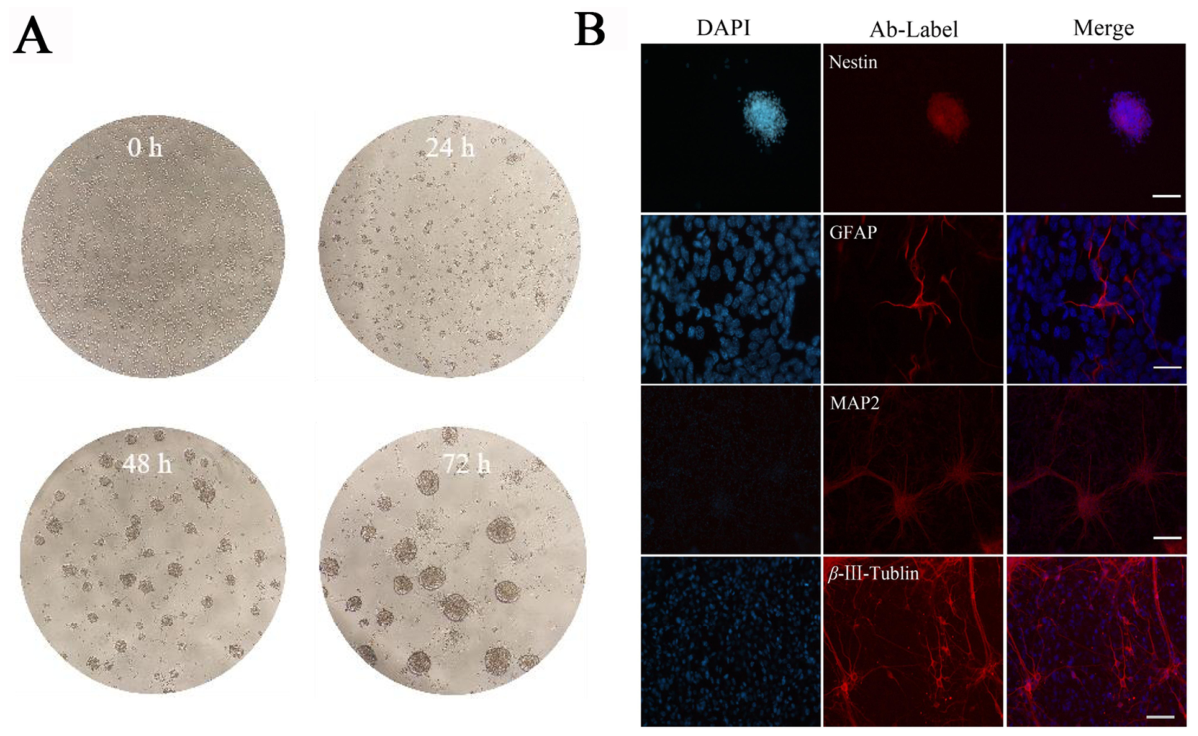
3.2. Identification of NSCs in 2D Culture
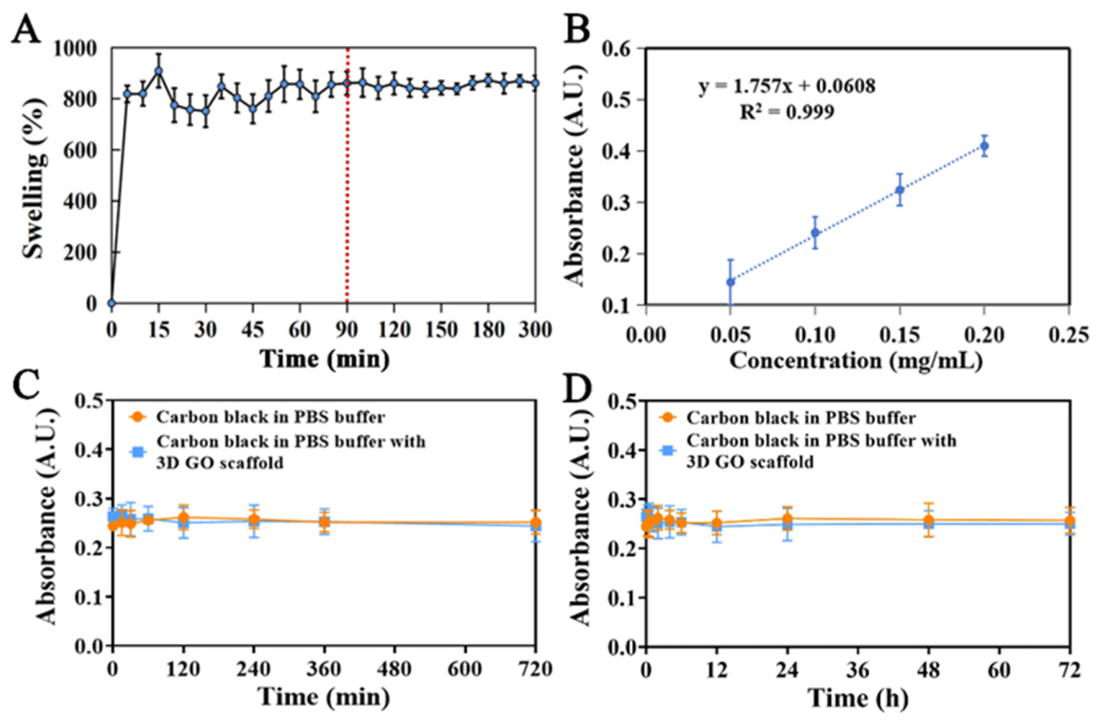
3.3. Swelling and Adsorption Properties of the GO Scaffolds
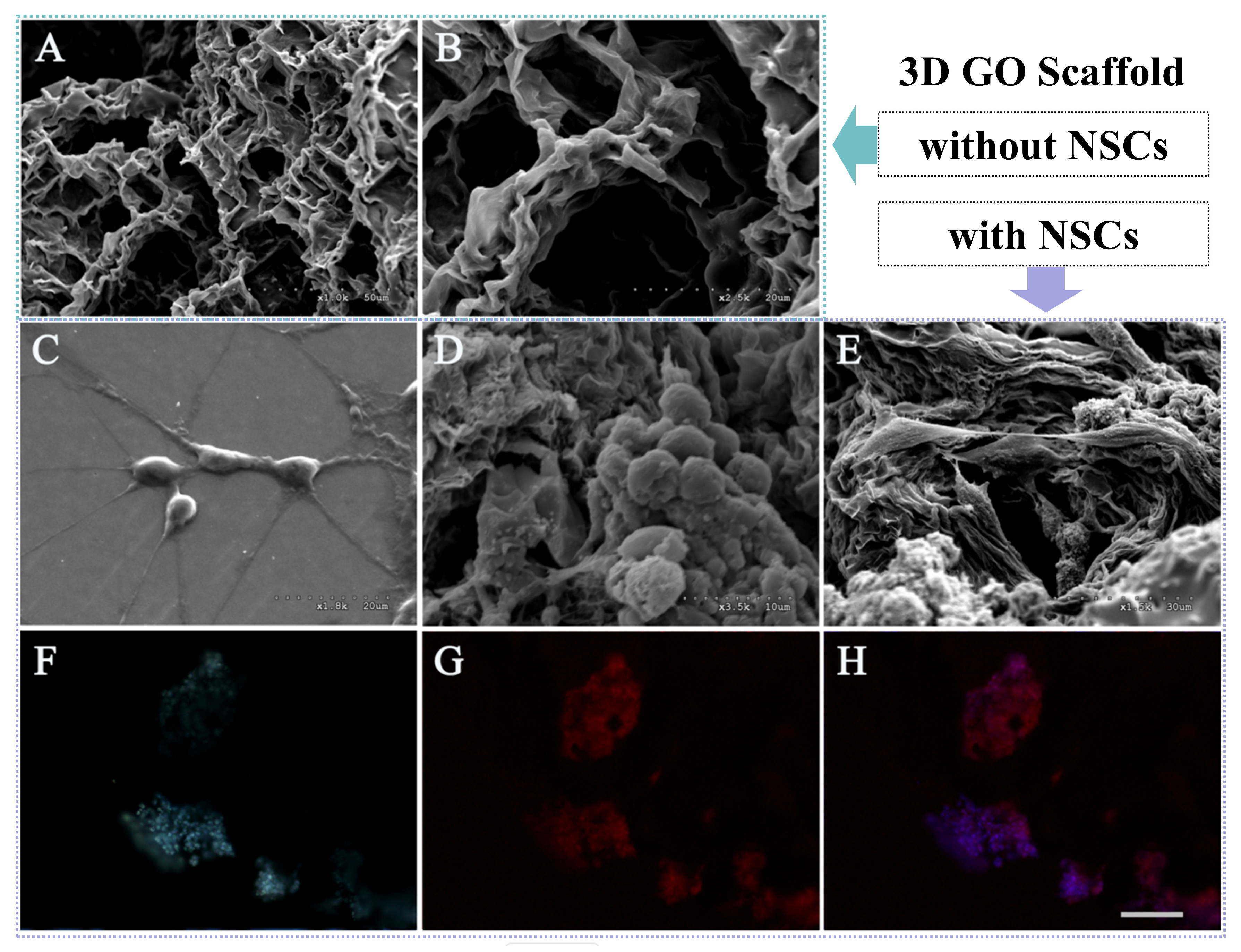
3.4. Culture of NSCs on 3D GO Scaffolds
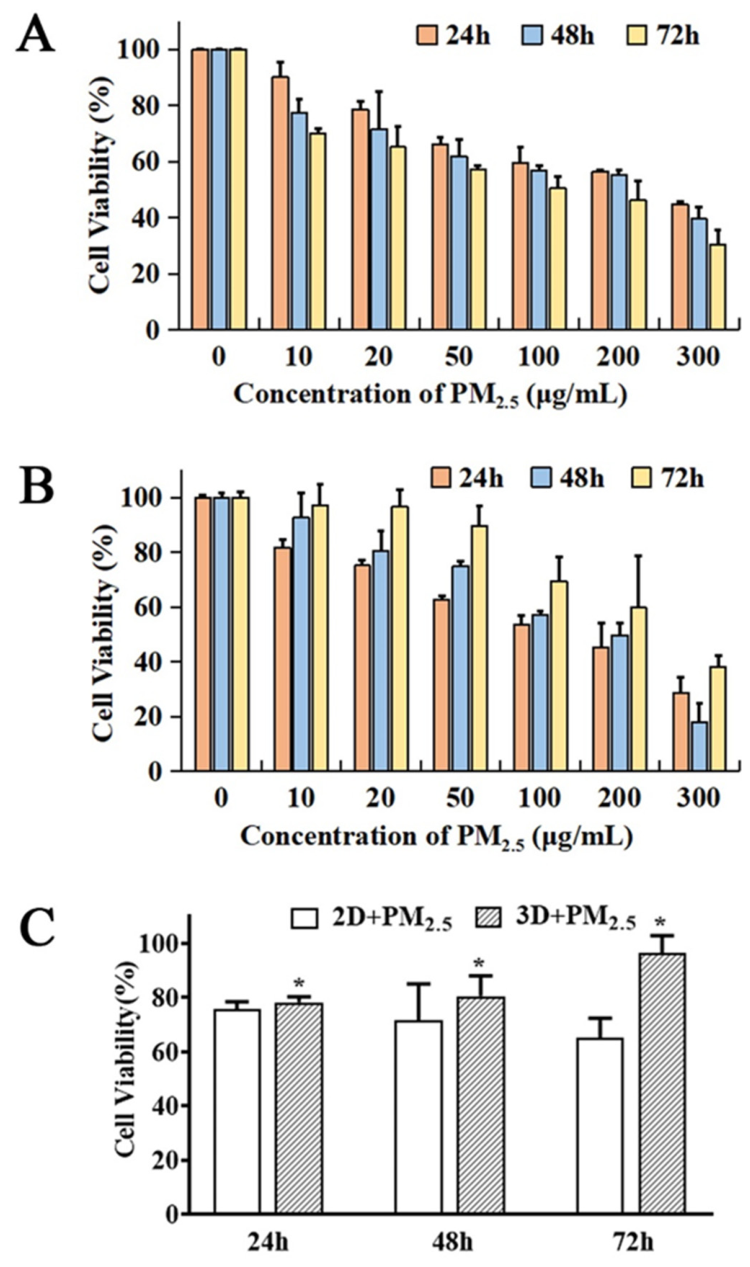
3.5. Impact of PM2.5 Exposure on NSC Proliferation
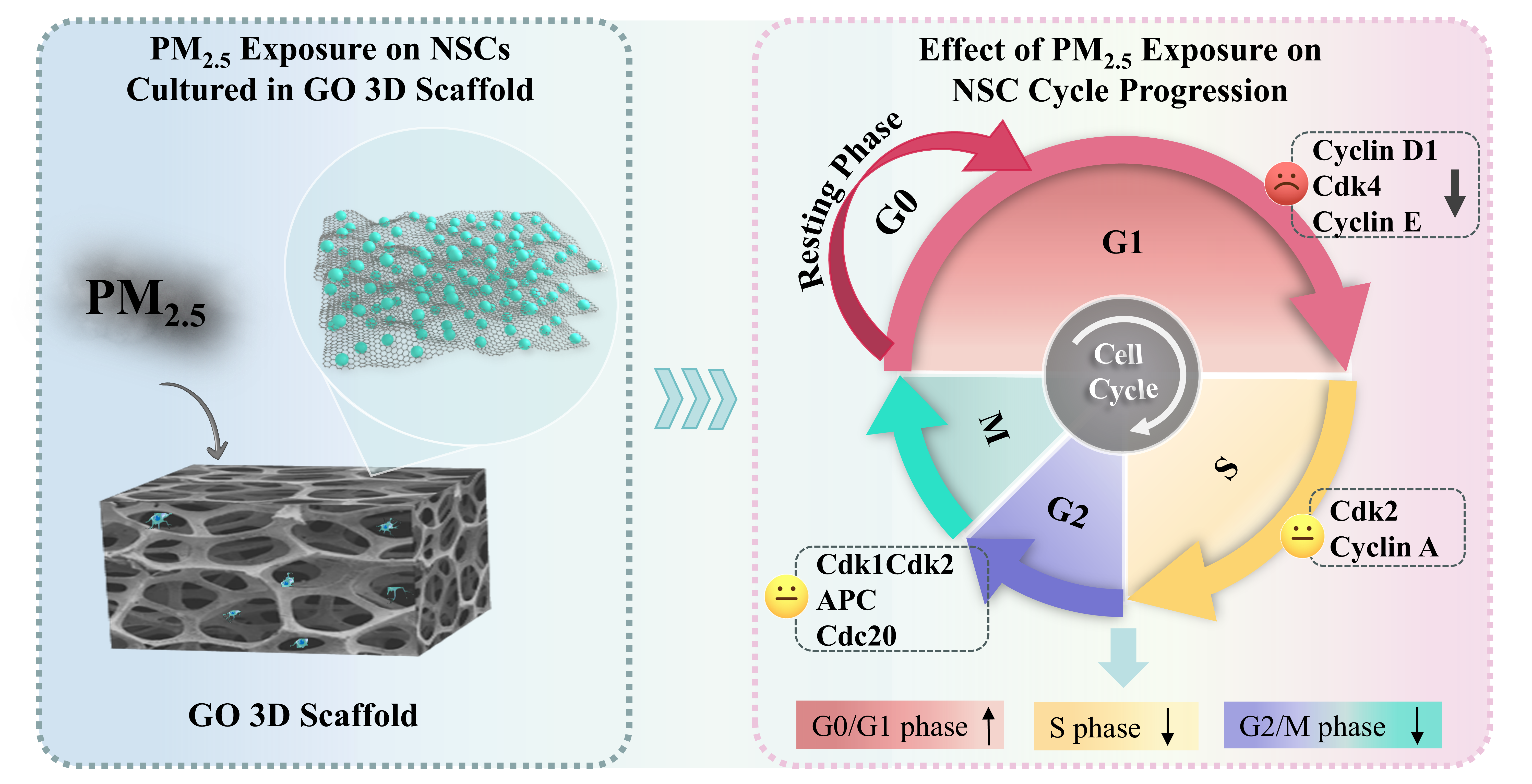
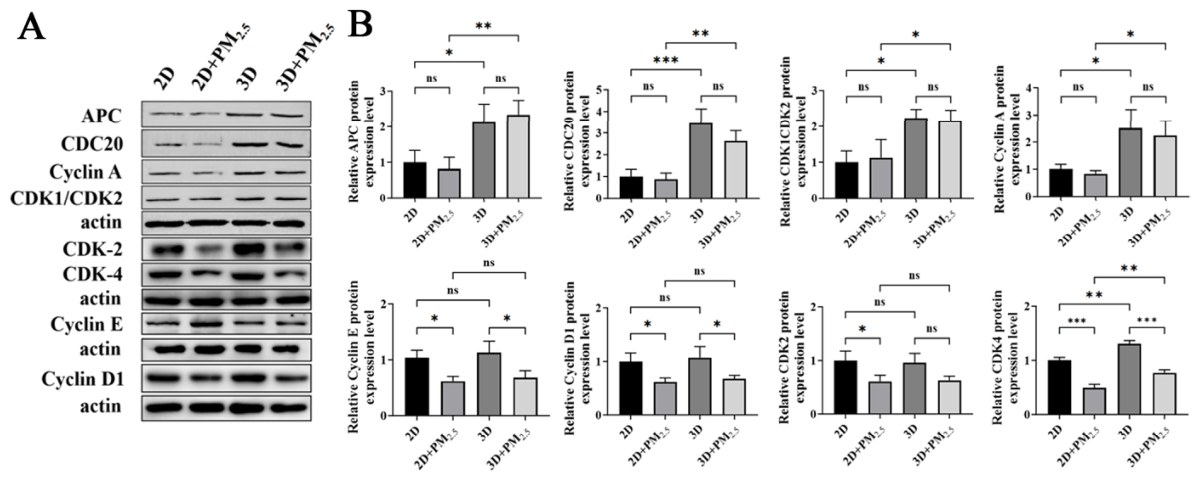
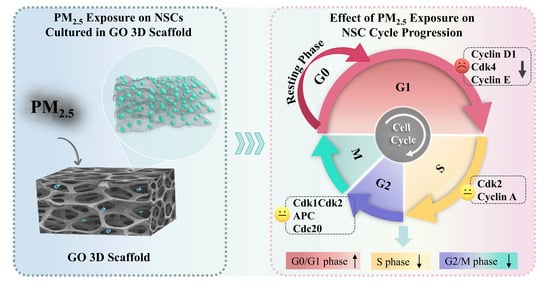
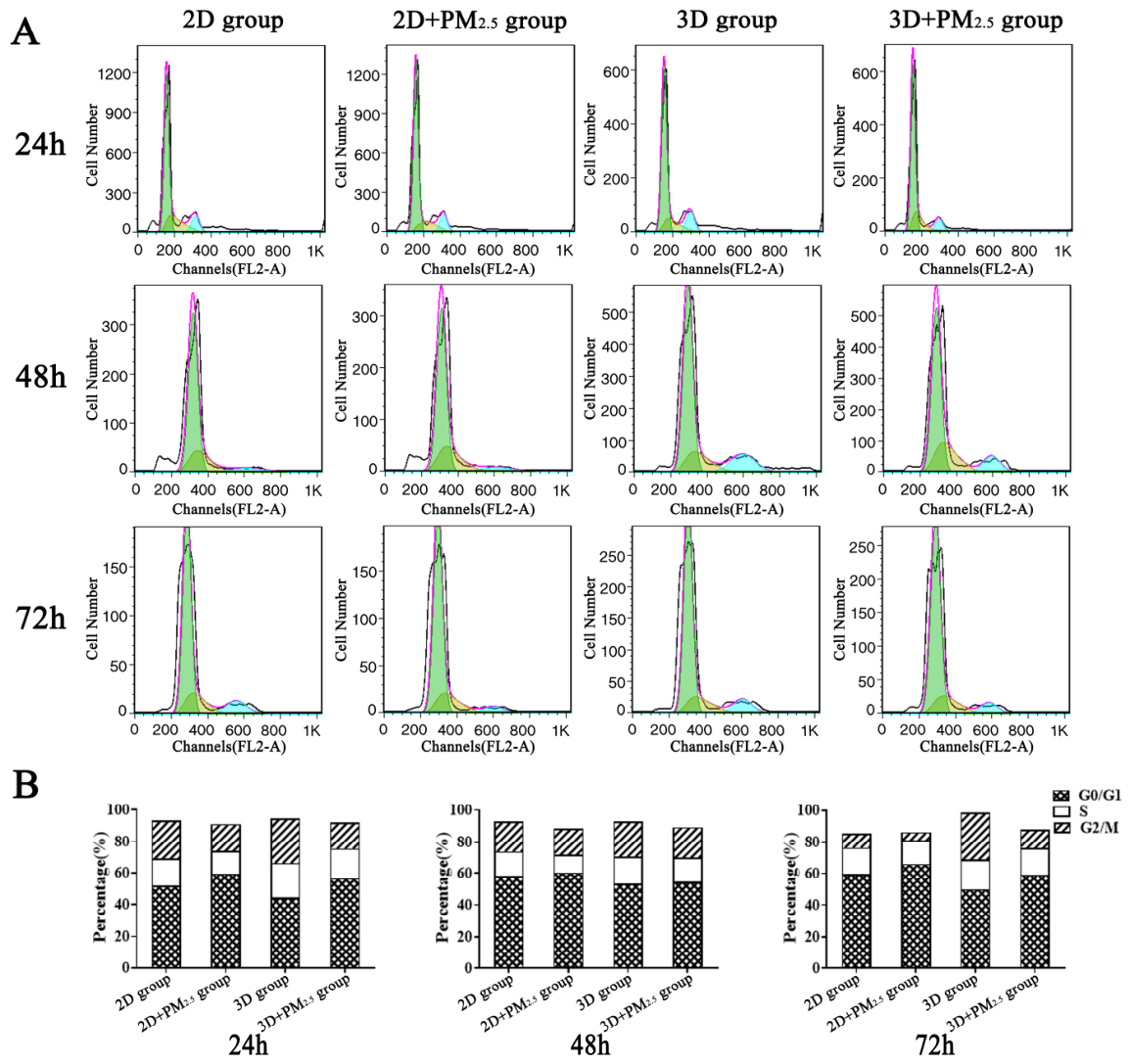
3.6. Effect of PM2.5 Exposure on NSC Cycle Progression
4. Discussion
5. Conclusions
Author Contributions
Funding
Institutional Review Board Statement
Informed Consent Statement
Data Availability Statement
Acknowledgments
Conflicts of Interest
References
- Wang, M.; Kim, R.Y.; Kohonen-Corish, M.R.J.; Chen, H.; Donovan, C.; Oliver, B.G. Particulate matter air pollution as a cause of lung cancer: Epidemiological and experimental evidence. Br. J. Cancer 2025, 132, 986–996. [Google Scholar] [CrossRef] [PubMed]
- Parums, D.V. A Review of the Increasing Impact and Effects of Air Pollution Throughout Life and Before Birth. Med. Sci. Monit. 2026, 32, e953109. [Google Scholar] [CrossRef] [PubMed]
- Amnuaylojaroen, T.; Parasin, N. Pathogenesis of PM2.5-Related Disorders in Different Age Groups: Children, Adults, and the Elderly. Epigenomes 2024, 8, 13. [Google Scholar] [CrossRef] [PubMed]
- Zhu, S.; Zhang, X.; Wu, Z.; Jin, Y.; Wu, W.; Zhang, J.; Zhang, X.; Bo, Y.; Zhu, Y.; Li, L. Healthful Plant-Based Dietary Patterns, PM2.5 Exposure, and the Risk of Heart Failure: A Population Based Cohort Study. Br. J. Nutr. 2025, 133, 11–19. [Google Scholar] [CrossRef] [PubMed]
- Li, S.; Li, L.; Zhang, C.; Fu, H.; Yu, S.; Zhou, M.; Guo, J.; Fang, Z.; Li, A.; Zhao, M.; et al. PM2.5 leads to adverse pregnancy outcomes by inducing trophoblast oxidative stress and mitochondrial apoptosis via KLF9/CYP1A1 transcriptional axis. eLife 2023, 12, e85944. [Google Scholar] [CrossRef] [PubMed]
- Zhang, R.; Zhang, Z.; Zhou, Z.; Yi, F.; Yang, Y.; Guo, D.; Zhang, Q.; Wang, H.; Chen, Y.; Qian, J.; et al. Health Risk and Pathogenesis of PM2.5 in Human Systems. Toxics 2026, 14, 286. [Google Scholar] [CrossRef] [PubMed]
- Garcia, A.; Santa-Helena, E.; De Falco, A.; Ribeiro, J.d.P.; Gioda, A.; Gioda, C.R. Toxicological Effects of Fine Particulate Matter (PM2.5): Health Risks and Associated Systemic Injuries-Systematic Review. Water Air Soil Pollut. 2023, 234, 346. [Google Scholar] [CrossRef] [PubMed]
- Valdes, V.; Lutri, N.A.; Cooper, C.; Das, S.; Jean Louis, R.; Raheel, H.; Thompson, L.M. Association between Prenatal and Early Childhood Exposure to Air Pollution and Cognitive Development in Children: A Systematic Review. Environ. Res. Health 2026, 4, 012002. [Google Scholar] [CrossRef]
- Hou, Y.; Yan, W.; Guo, L.; Li, G.; Sang, N. Prenatal PM2.5 exposure impairs spatial learning and memory in male mice offspring: From transcriptional regulation to neuronal morphogenesis. Part. Fibre Toxicol. 2023, 20, 13. [Google Scholar] [CrossRef] [PubMed]
- Ning, X.; Li, B.; Ku, T.; Guo, L.; Li, G.; Sang, N. Comprehensive hippocampal metabolite responses to PM2.5 in young mice. Ecotoxicol. Environ. Saf. 2018, 165, 36–43. [Google Scholar] [CrossRef] [PubMed]
- Kaminska, A.; Radoszkiewicz, K.; Rybkowska, P.; Wedzinska, A.; Sarnowska, A. Interaction of Neural Stem Cells (NSCs) and Mesenchymal Stem Cells (MSCs) as a Promising Approach in Brain Study and Nerve Regeneration. Cells 2022, 11, 1464. [Google Scholar] [CrossRef] [PubMed]
- Temple, S. The development of neural stem cells. Nature 2001, 414, 112–117. [Google Scholar] [CrossRef] [PubMed]
- Worley, J.R.; Parker, G.C. Effects of environmental stressors on stem cells. World J. Stem Cells 2019, 11, 565–577. [Google Scholar] [CrossRef] [PubMed]
- O’Leary, T.; Wyllie, D.J.A. Neuronal homeostasis: Time for a change? J. Physiol. 2011, 589, 4811–4826. [Google Scholar] [CrossRef] [PubMed]
- Jensen, C.; Teng, Y. Is It Time to Start Transitioning From 2D to 3D Cell Culture? Front. Mol. Biosci. 2020, 7, 33. [Google Scholar] [CrossRef] [PubMed]
- Llorens-Bobadilla, E.; Martin-Villalba, A. Adult NSC diversity and plasticity: The role of the niche. Curr. Opin. Neurobiol. 2017, 42, 68–74. [Google Scholar] [CrossRef] [PubMed]
- Wijnakker, J.J.A.P.M.; Lim, S.; Schreurs, R.; Faria, J.F.; Korving, J.; Begthel, H.; Iyer, K.K.; Kouwer, P.H.J.; Clevers, H. Invasin-functionalized PIC hydrogels enable long-term 3D culture of epithelial organoids. Proc. Natl. Acad. Sci. USA 2025, 122, e2507500122. [Google Scholar] [CrossRef] [PubMed]
- Tang, M.; Song, Q.; Li, N.; Jiang, Z.; Huang, R.; Cheng, G. Enhancement of electrical signaling in neural networks on graphene films. Biomaterials 2013, 34, 6402–6411. [Google Scholar] [CrossRef] [PubMed]
- Xu, D.; Ding, W.; Gong, X.; Tan, X.; Li, H.; Li, F.; Zhang, M.; Huang, Y.; Su, Y.; Cheng, H.M. Graphene oxide with 1-nm-thick adlayer for efficient and near-instant removal of per- and polyfluoroalkyl substances. Natl. Sci. Rev. 2025, 12, nwaf092. [Google Scholar] [CrossRef] [PubMed]
- Dziewiecka, M.; Pawlyta, M.; Majchrzycki, L.; Balin, K.; Barteczko, S.; Czerkawska, M.; Augustyniak, M. The Structure–Properties–Cytotoxicity Interplay: A Crucial Pathway to Determining Graphene Oxide Biocompatibility. Int. J. Mol. Sci. 2021, 22, 5401. [Google Scholar] [CrossRef] [PubMed]
- Jing, G.; Li, K.; Sun, F.; Niu, J.; Zhu, R.; Qian, Y.; Wang, S. Layer-Number-Dependent Effects of Graphene Oxide on the Pluripotency of Mouse Embryonic Stem Cells Through the Regulation of the Interaction Between the Extracellular Matrix and Integrins. Int. J. Nanomed. 2021, 16, 3819–3832. [Google Scholar] [CrossRef] [PubMed]
- Zhang, Y.; Liu, X.; Michelson, K.; Trivedi, R.; Wu, X.; Schepp, E.; Xing, Y.; Darland, D.; Zhao, J.X. Graphene Oxide-Based Biocompatible 3D Mesh with a Tunable Porosity and Tensility for Cell Culture. ACS Biomater. Sci. Eng. 2018, 4, 1505–1517. [Google Scholar] [CrossRef] [PubMed]
- Tchakarska, G.; Sola, B. The double dealing of cyclin D1. Cell Cycle 2020, 19, 163–178. [Google Scholar] [CrossRef] [PubMed]
- Cai, Z.; Wang, J.; Li, Y.; Shi, Q.; Jin, L.; Li, S.; Zhu, M.; Wang, Q.; Wong, L.L.; Yang, W.; et al. Overexpressed Cyclin D1 and CDK4 proteins are responsible for the resistance to CDK4/6 inhibitor in breast cancer that can be reversed by PI3K/mTOR inhibitors. Sci. China Life Sci. 2022, 66, 94–109. [Google Scholar] [CrossRef] [PubMed]
- Truman, A.W.; Kristjansdottir, K.; Wolfgeher, D.; Hasin, N.; Polier, S.; Zhang, H.; Perrett, S.; Prodromou, C.; Jones, G.W.; Kron, S.J. CDK-Dependent Hsp70 Phosphorylation Controls G1 Cyclin Abundance and Cell-Cycle Progression. Cell 2012, 151, 1308–1318. [Google Scholar] [CrossRef] [PubMed]
- Spring, L.; Bardia, A.; Modl, S. Targeting the cyclin D-cyclin-dependent kinase (CDK) 4/6-retinoblastoma pathway with selective CDK 4/6 inhibitors in hormone receptor-positive breast cancer: Rationale, current status, and future directions. Discov. Med. 2016, 21, 65–74. [Google Scholar] [PubMed]
- ColEman, M.L.; Marshall, C.J.; Olson, M.F. Ras promotes p21(Waf1/Cip1) protein stability via a cyclin D1-imposed block in proteasome-mediated degradation. EMBO J. 2003, 22, 2036–2046. [Google Scholar] [CrossRef] [PubMed]
- Sonntag, R.; Giebeler, N.; Nevzorova, Y.A.; Bangen, J.M.; Fahrenkamp, D.; Lambertz, D.; Haas, U.; Hu, W.; Gassler, N.; Cubero, F.J.; et al. Cyclin E1 and cyclin-dependent kinase 2 are critical for initiation, but not for progression of hepatocellular carcinoma. Proc. Natl. Acad. Sci. USA 2018, 115, 9282–9287. [Google Scholar] [CrossRef] [PubMed]
- Clurman, B.E.; Sheaff, R.J.; Thress, K.; Groudine, M.; Roberts, J.M. Turnover of cyclin E by the ubiquitin-proteasome pathway is regulated by cdk2 binding and cyclin phosphorylation. Genes Dev. 1996, 10, 1979–1990. [Google Scholar] [CrossRef] [PubMed]
- Shen, H.; Gong, M.; Zhang, M.; Sun, S.; Zheng, R.; Yan, Q.; Hu, J.; Xie, X.; Wu, Y.; Yang, J.; et al. Effects of PM2.5 exposure on clock gene BMAL1 and cell cycle in human umbilical vein endothelial cells. Toxicol. Res. 2024, 13, tfae022. [Google Scholar] [CrossRef] [PubMed]
- Yu, J.; Raia, P.; Ghent, C.M.; Raisch, T.; Sadian, Y.; Cavadini, S.; Sabale, P.M.; Barford, D.; Raunser, S.; Morgan, D.O.; et al. Structural basis of human separase regulation by securin and CDK1-cyclin B1. Nature 2021, 596, 138–142. [Google Scholar] [CrossRef] [PubMed]
- Robbins, J.A.; Cross, F.R. Regulated degradation of the APC coactivator Cdc20. Cell Div. 2010, 5, 23. [Google Scholar] [CrossRef] [PubMed]




| Item | Compound | Mean ± SD |
|---|---|---|
| PM2.5 (mg/m3) | 0.095 ± 0.043 | |
| Water-soluble inorganic ions (μg/m3) | SO42− | 7.89 ± 4.58 |
| NO3− | 16.95 ± 12.07 | |
| Cl− | 5.98 ± 4.26 | |
| NH4+ | 10.83 ± 6.88 | |
| Metals (ng/m3) | Sb | 3.47 ± 2.58 |
| Al | 267.14 ± 159.51 | |
| As | 6.16 ± 5.56 | |
| Cd | 1.77 ± 1.88 | |
| Cr | 3.58 ± 2.00 | |
| Hg | 0.14 ± 0.11 | |
| Pb | 59.09 ± 42.18 | |
| Mn | 43.46 ± 28.00 | |
| Ni | 1.72 ± 1.08 | |
| Se | 8.41 ± 7.71 | |
| PAHs (ng/m3) | Acenaphthylene | 0.34 ± 0.66 |
| Acenaphthene | 0.09 ± 0.00 | |
| Fluorene | 2.74 ± 1.95 | |
| Phenanthrene | 7.37 ± 5.36 | |
| Anthracene | 10.30 ± 6.71 | |
| Fluoranthene | 12.05 ± 5.26 | |
| Pyrene | 17.86 ± 9.29 | |
| Chrysene | 23.33 ± 12.73 | |
| Benzo[a]anthracene | 20.15 ± 10.85 | |
| Benzo[b]fluoranthene | 28.27 ± 14.33 | |
| Benzo[k]fluoranthene | 30.69 ± 17.36 | |
| Benzo[a]pyrene | 8.90 ± 6.72 | |
| Dibenzo[a,h]anthracene | 5.76 ± 8.12 | |
| Benzo[g,h,i]perylene | 7.69 ± 5.38 | |
| Indeno[1,2,3-cd]pyrene | 5.90 ± 5.92 | |
Disclaimer/Publisher’s Note: The statements, opinions and data contained in all publications are solely those of the individual author(s) and contributor(s) and not of MDPI and/or the editor(s). MDPI and/or the editor(s) disclaim responsibility for any injury to people or property resulting from any ideas, methods, instructions or products referred to in the content. |
© 2026 by the authors. Licensee MDPI, Basel, Switzerland. This article is an open access article distributed under the terms and conditions of the Creative Commons Attribution (CC BY) license.
Share and Cite
Li, S.; Chang, H.; Gao, M.; Zhang, W.; Deng, F.; Chen, F.; Zhu, X.; Song, Y.; Zhang, H.; Liu, S.; et al. A 3D Graphene Oxide Model Reveals Fine Particulate Matter Induced Cell Cycle Dysregulation in Neural Stem Cells. Toxics 2026, 14, 536. https://doi.org/10.3390/toxics14060536
Li S, Chang H, Gao M, Zhang W, Deng F, Chen F, Zhu X, Song Y, Zhang H, Liu S, et al. A 3D Graphene Oxide Model Reveals Fine Particulate Matter Induced Cell Cycle Dysregulation in Neural Stem Cells. Toxics. 2026; 14(6):536. https://doi.org/10.3390/toxics14060536
Chicago/Turabian StyleLi, Siqi, Huiyun Chang, Mengjie Gao, Wenlou Zhang, Furong Deng, Fengge Chen, Xiaoman Zhu, Yu Song, Hong Zhang, Shaojie Liu, and et al. 2026. "A 3D Graphene Oxide Model Reveals Fine Particulate Matter Induced Cell Cycle Dysregulation in Neural Stem Cells" Toxics 14, no. 6: 536. https://doi.org/10.3390/toxics14060536
APA StyleLi, S., Chang, H., Gao, M., Zhang, W., Deng, F., Chen, F., Zhu, X., Song, Y., Zhang, H., Liu, S., Mu, Y., Ma, H., & Zhang, Y. (2026). A 3D Graphene Oxide Model Reveals Fine Particulate Matter Induced Cell Cycle Dysregulation in Neural Stem Cells. Toxics, 14(6), 536. https://doi.org/10.3390/toxics14060536