
Source Apportionment and Health Risk Assessment of Potentially Toxic Elements in Shallow Groundwater Using an Integrated PMF-SOM Approach: A Case Study from Southern Dongting Lake, China


Abstract
1. Introduction
2. Materials and Methods
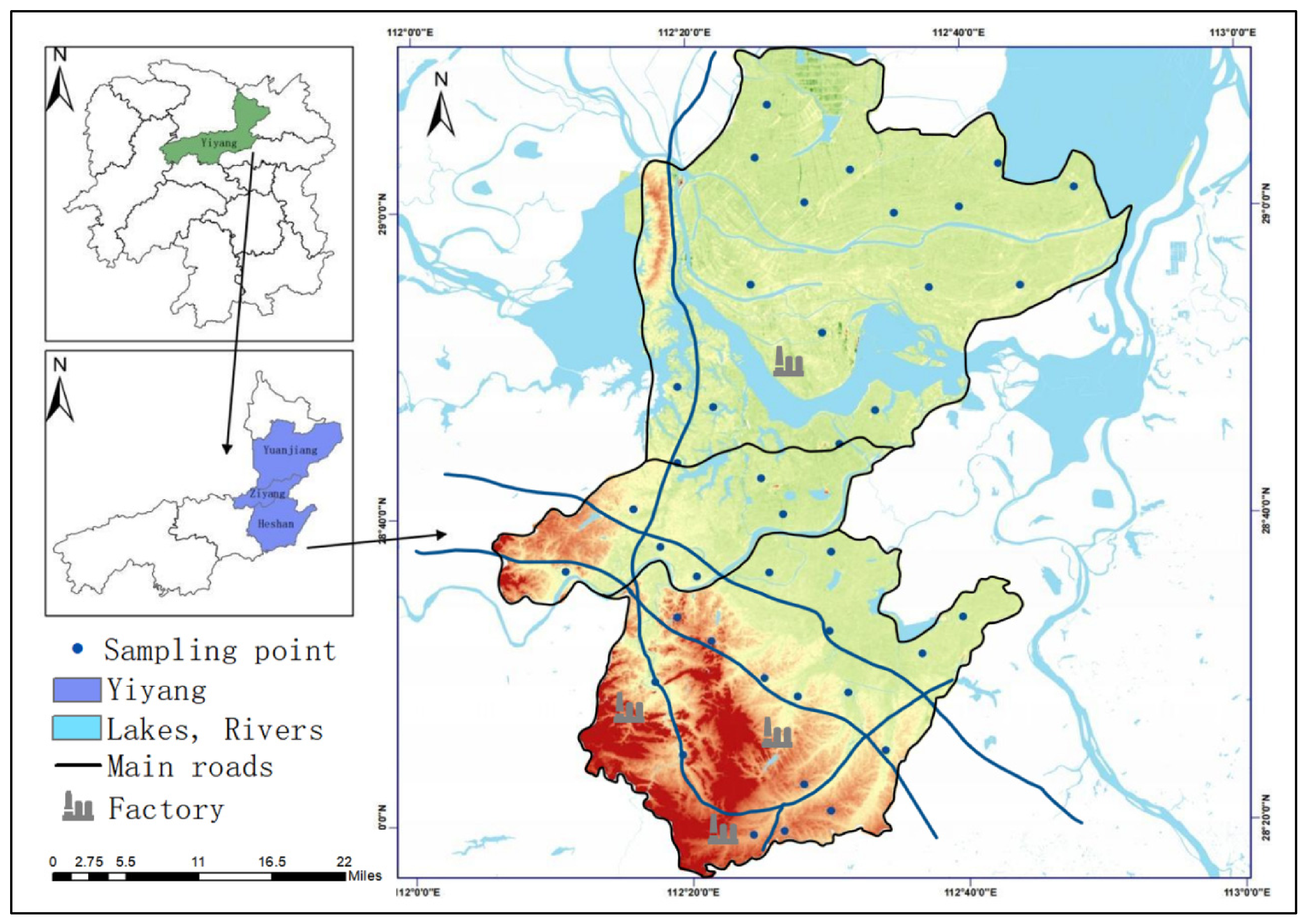
2.1. Research Area

2.2. Sample Collection and Testing
2.3. Data Analysis and Evaluation Methods
2.3.1. Index Evaluation Method
2.3.2. Pearson Correlation Analysis and Hierarchical Cluster Analysis (HCA)
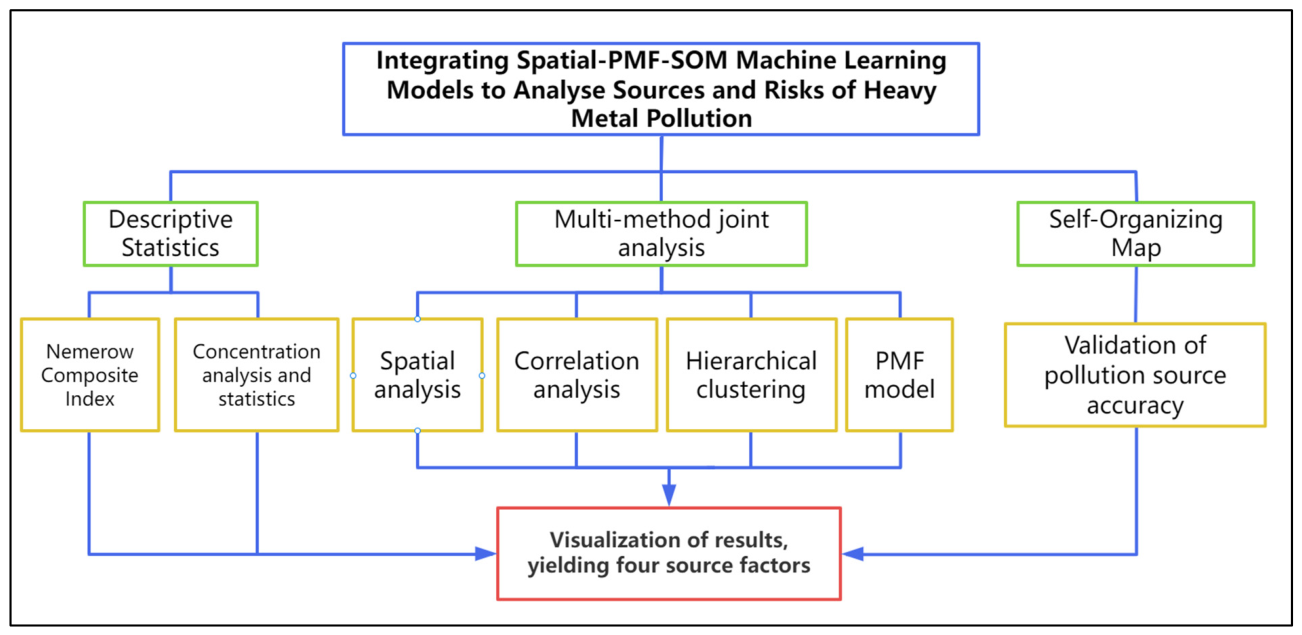
2.3.3. Construction of PMF-SOM Machine-Learning Models
2.3.4. Health Risk Analysis
2.4. Data Processing
3. Results and Discussion
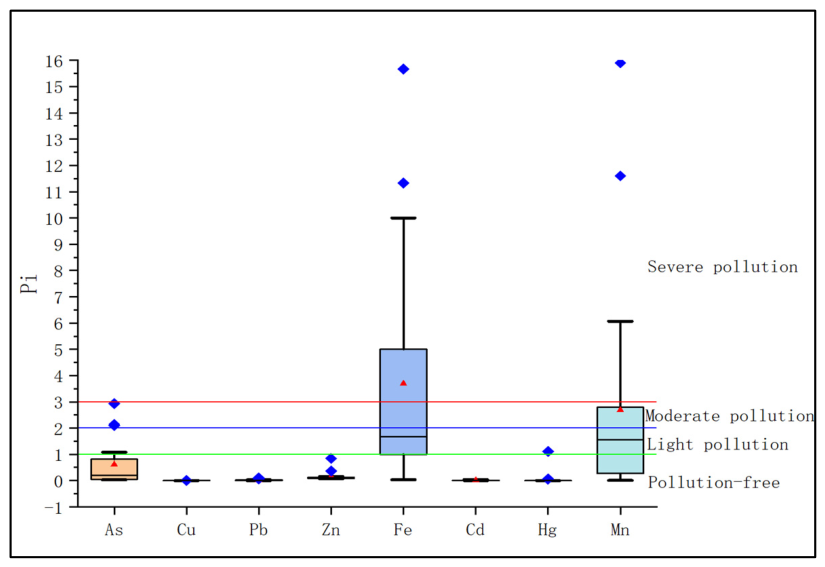
3.1. Characterization of Potentially Toxic Element Concentrations in Shallow Groundwater
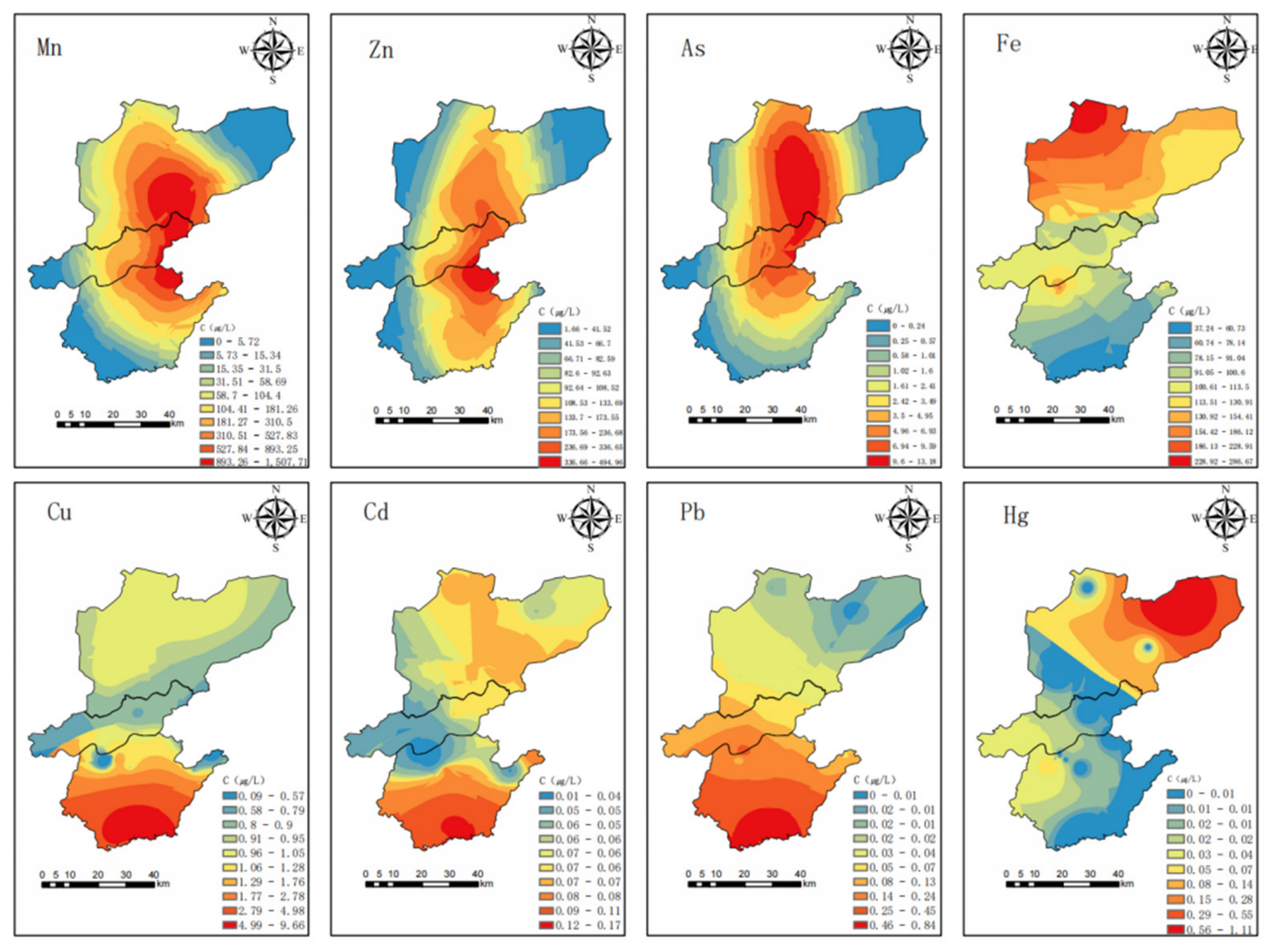
3.2. Characteristics of the Spatial Distribution of Potentially Toxic Elements in Shallow Groundwater

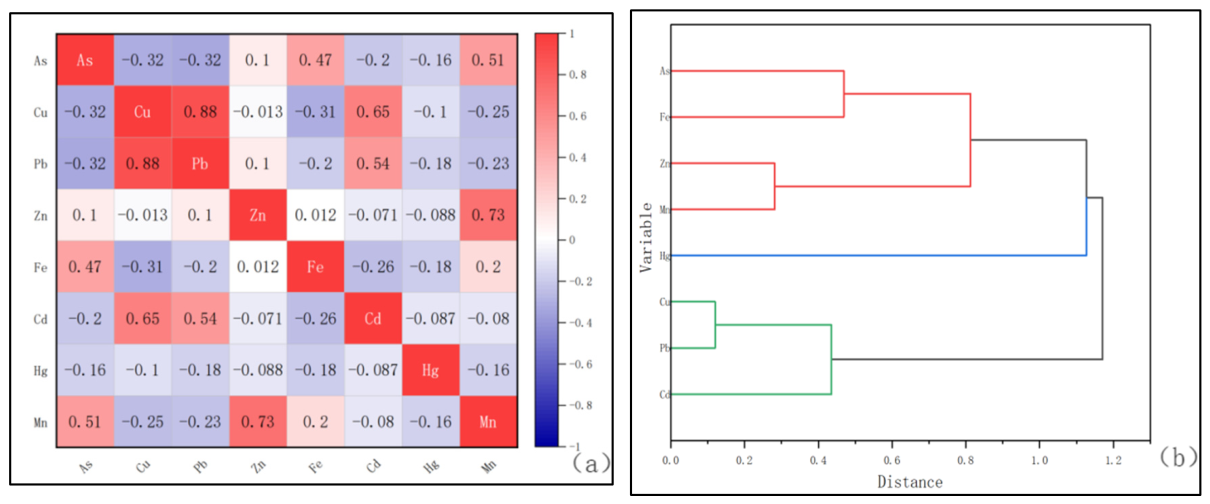
3.3. Correlation Analysis and Hierarchical Clustering

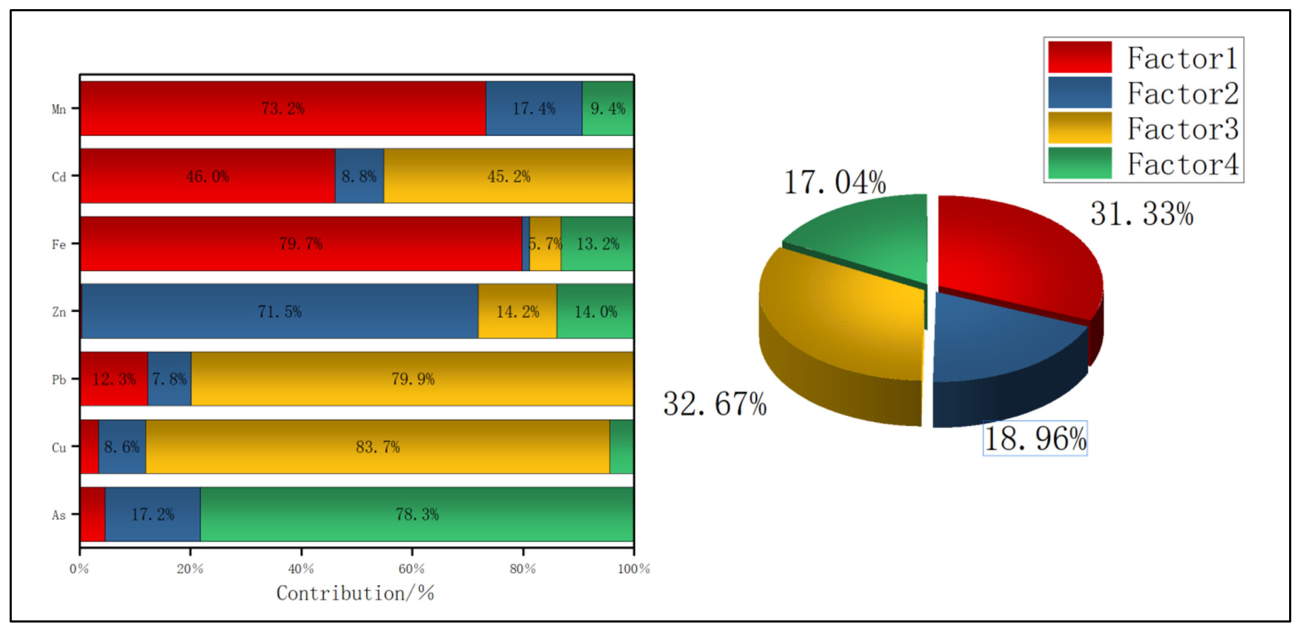
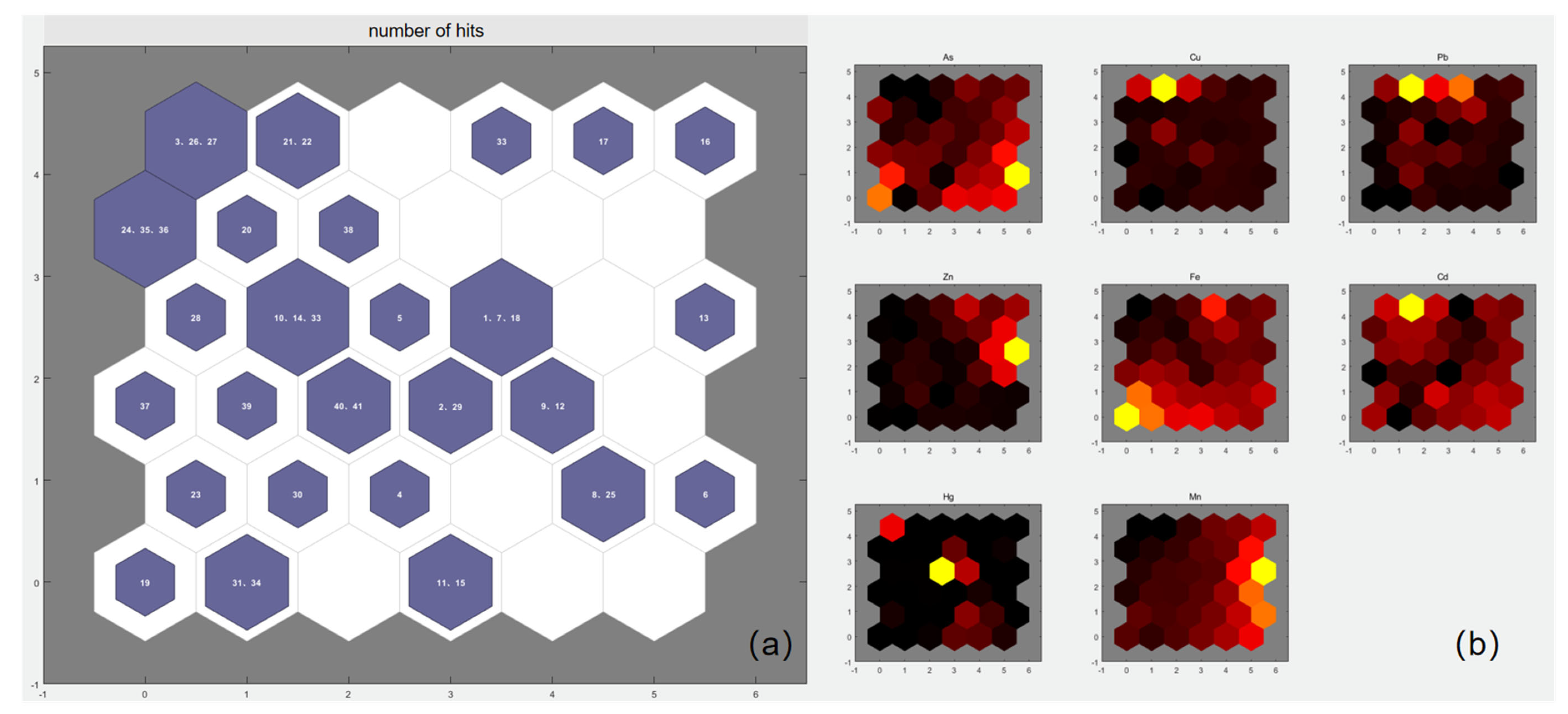
3.4. PMF-SOM Machine-Learning Source Parsing Results


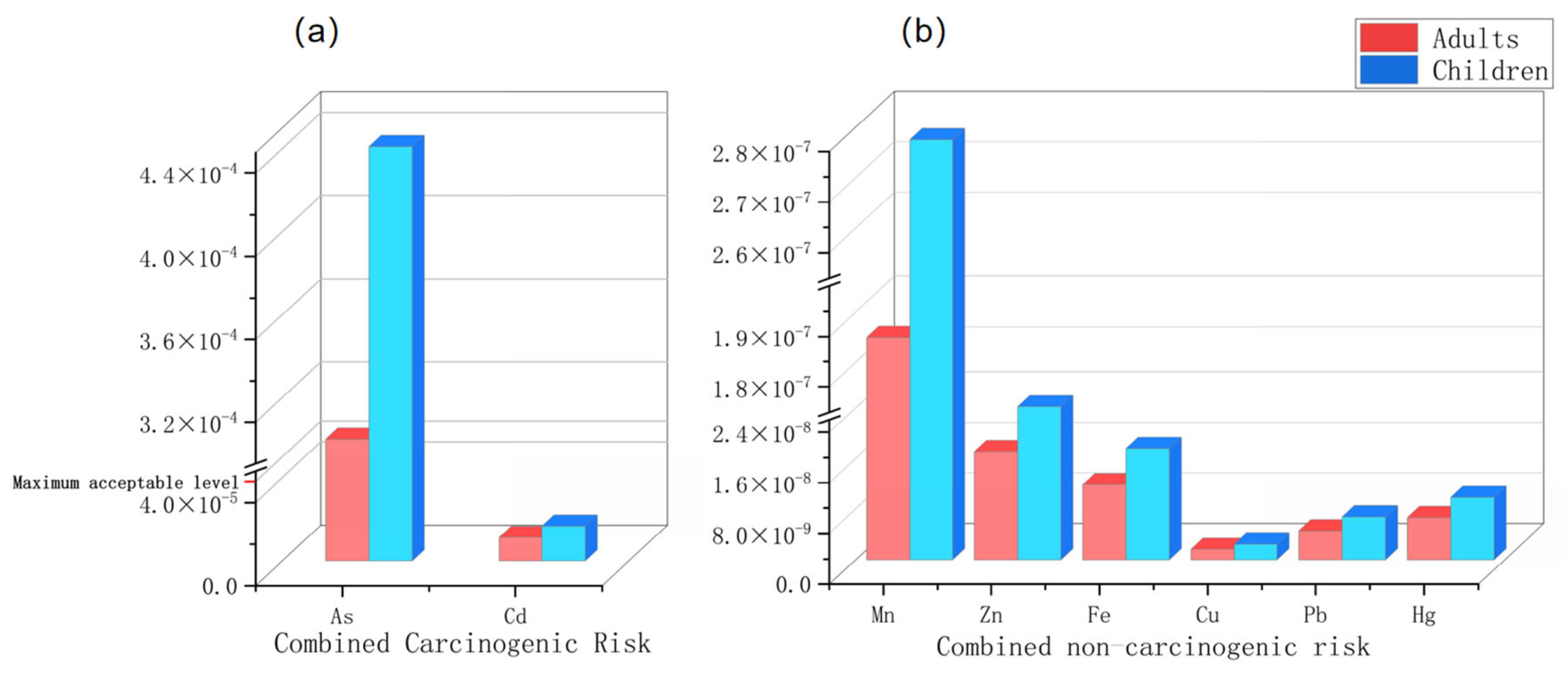
3.5. Health Risk Assessment

| Event | Element | Drinking Water Route | Skin Penetration Route | Combined Risk | |||
|---|---|---|---|---|---|---|---|
| Carcinogenic | As | 2.93 × 10 −4 | 6.53 × 10 −6 | 3.00 × 10 −4 | |||
| Cd | 1.13 × 10 −5 | 5.74 × 10 −8 | 1.14 × 10 −5 | ||||
| Total Health Risk | 3.05 × 10 −4 | 6.59 × 10 −6 | 3.11 × 10 −4 | ||||
| Adults | Children | Adults | Children | Adults | Children | ||
| Non-Carcinogenic | Mn | 1.87 × 10 −7 | 2.78E × 10 −7 | 7.50 × 10 −10 | 5.64 × 10 −10 | 1.88 × 10 −7 | 2.78 × 10 −7 |
| Zn | 1.55 × 10 −8 | 2.31 × 10 −8 | 1.42 × 10 −9 | 1.06 × 10 −9 | 1.70 × 10 −8 | 2.42 × 10 −8 | |
| Fe | 1.18 × 10 −8 | 1.75 × 10 −8 | 3.98 × 10 −11 | 2.99 × 10 −11 | 1.18 × 10 −8 | 1.75 × 10 −8 | |
| Cu | 1.65 × 10 −9 | 2.46 × 10 −9 | 1.67 × 10 −11 | 1.26 × 10 −11 | 1.67 × 10 −9 | 2.47 × 10 −9 | |
| Pb | 4.51 × 10 −9 | 6.71 × 10 −9 | 3.05 × 10 −13 | 2.29 × 10 −13 | 4.51 × 10 −9 | 6.71 × 10 −9 | |
| Hg | 6.54 × 10 −9 | 9.73 × 10 −9 | 5.97 × 10 −11 | 4.48 × 10 −11 | 6.60 × 10 −9 | 9.77 × 10 −9 | |
| Total Health Risk | 2.27 × 10 −7 | 3.37 × 10 −7 | 2.28 × 10 −9 | 1.72 × 10 −9 | 2.29 × 10 −7 | 3.39 × 10 −7 | |

3.6. Policy and Management Suggestions
4. Conclusions
Author Contributions
Funding
Institutional Review Board Statement
Informed Consent Statement
Data Availability Statement
Conflicts of Interest
References
- Salameh, E. Over-exploitation of groundwater resources and their environmental and socio-economic implications: The case of Jordan. Water Int. 2008, 33, 55–68. [Google Scholar] [CrossRef]
- Krishan, G.; Ghosh, S.; Virk, H.S. Correction to: Arsenic pollution and associated human health hazards in Rupnagar district, Punjab, India. Environ. Sci. Pollut. Res. 2023, 30, 77948–77956. [Google Scholar] [CrossRef]
- Hashim, M.A.; Mukhopadhyay, S.; Sahu, J.N.; Sen Gupta, B. Remediation technologies for heavy metal contaminated groundwater. J. Environ. Manag. 2011, 92, 2355–2388. [Google Scholar] [CrossRef]
- Hao, W.; Liu, H.; Hao, S.; Mao, K. Characterization of heavy metal contamination in groundwater of typical mining area in Hunan Province. Sci. Rep. 2024, 14, 13054. [Google Scholar] [CrossRef]
- Cai, Z.; Ren, B.; Xie, Q.; Deng, X.; Yin, W.; Chen, L. Heterogeneous comparative analysis of potentially toxic elements(PTEs)in different media stem from the black rock system under a high geologic background. J. Clean. Prod. 2024, 481, 144139. [Google Scholar] [CrossRef]
- Cai, Z.; Ren, B.; Xie, Q.; Deng, X.; Yin, W.; Chen, L. Toxic element characterization against a typical high geology background: Pollution enrichment, source tracking, spatial distribution, and ecological risk assessment. Environ. Res. 2024, 255, 119146. [Google Scholar] [CrossRef]
- Xie, Q.; Ren, B.; Deng, X.; Yin, W.; Lu, Y. Quantitative source identification, risk assessment and pollution of heavy metals in soils around a typical Sb smelter in central and southern China. Stoch. Environ. Res. Risk Assess. 2023, 37, 2495–2511. [Google Scholar] [CrossRef]
- Huang, G.; Song, J.; Han, D.; Liu, R.; Liu, C.; Hou, Q. Assessing natural background levels of geogenic contaminants in groundwater of an urbanized delta through re-moval of groundwaters impacted by anthropogenic inputs: New insights into driving factors. Sci. Total Environ. 2022, 857, 159527. [Google Scholar] [CrossRef] [PubMed]
- Rahman, M.A.; Siddique, M.A.B.; Khan, R.; Reza, A.S.; Khan, A.H.A.N.; Akbor, M.A.; Islam, M.S.; Hasan, A.B.; Hasan, M.I.; Elius, I.B. Mechanism of arsenic enrichment and mobilization in groundwater from southeastern Bangladesh: Water quality and preliminary health risks assessment. Chemosphere 2022, 294, 133556. [Google Scholar] [CrossRef] [PubMed]
- Moradnia, M.; Attar, H.M.; Hajizadeh, Y.; Lundh, T.; Salari, M.; Darvishmotevalli, M. Assessing the carcinogenic and non-carcinogenic health risks of metals in the drinking water of Isfahan, Iran. Sci. Rep. 2024, 14, 5029. [Google Scholar] [CrossRef]
- Naranjo, V.I.; Hendricks, M.; Jones, K.S. Lead toxicity in children: An unremitting public health problem. Pediatr. Neurol. 2020, 113, 51–55. [Google Scholar] [CrossRef] [PubMed]
- Arica, E.; Yuksel, B.; Yener, I.; Dolak, I.; Gok, E.; Yilmaz, E. ICP-MS determination of lead levels in autopsy liver samples: An application in forensic medicine. At. Spectrosc. 2018, 39, 62–66. [Google Scholar] [CrossRef]
- Raja, V.; Lakshmi, R.V.; Sekar, C.P.; Chidambaram, S.; Neelakantan, M.A. Health Risk Assessment of Heavy Metals in Groundwater of Industrial Township Virudhunagar, Tamil Nadu, India. Arch. Environ. Contam. Toxicol. 2021, 80, 144–163. [Google Scholar] [CrossRef] [PubMed]
- Xia, X.; Teng, Y.; Zhai, Y. Biogeochemistry of iron enrichment in groundwater: An indicator of environmental pollution and its management. Sustainability 2022, 14, 7059. [Google Scholar] [CrossRef]
- Hamer, K.; Gudenschwager, I.; Pichler, T. Manganese (Mn) concentrations and the Mn-Fe relationship in shallow groundwater: Implications for groundwater monitoring. Soil Syst. 2020, 4, 49. [Google Scholar] [CrossRef]
- HJ 164-2020; Technical Specifications for Environmental Monitoring of Groundwater. Ministry of Ecology and Environment: Beijing, China, 2020.
- HJ 1019-2019; Technical Guideline for Site Soil and Groundwater Sampling of Volatile Organic Compounds. Ministry of Ecology and Environment: Beijing, China, 2019.
- Charvalas, G.; Molla, A.; Lolas, A.; Skoufogianni, E.; Papadopoulos, S.; Chatzikirou, E.; Emmanouil, C.; Christopoulou, O. Evaluation of Potential Toxic Elements in Soils from Three Urban Areas Surrounding a Steel Industrial Zone. Toxics 2025, 13, 351. [Google Scholar] [CrossRef] [PubMed]
- Jeong, H.; Ra, K. Pollution and Health Risk Assessments of Potentially Toxic Elements in the Fine-Grained Particles (10-63 µm and 10 µm) in Road Dust from Apia City, Samoa. Toxics 2022, 10, 683. [Google Scholar] [CrossRef]
- Su, K.; Wang, Q.; Li, L.; Cao, R.; Xi, Y. Water quality assessment of Lugu Lake based on Nemerow pollution index method. Sci. Rep. 2022, 12, 13613. [Google Scholar] [CrossRef]
- GB/T 14848-2017; Standard for Groundwater Quality. Standardization Administration of China: Beijing, China, 2017.
- Luo, P.; Xu, C.; Kang, S.; Huo, A.; Lyu, J.; Zhou, M.; Nover, D. Heavy metals in water and surface sediments of the Fenghe River Basin, China: Assessment and source analysis. Water Sci. Technol. 2021, 84, 3072–3090. [Google Scholar] [CrossRef]
- Chai, L.; Wang, Y.; Wang, X.; Ma, L.; Cheng, Z.; Su, L. Pollution characteristics, spatial distributions, and source apportionment of heavy metals in cultivated soil in Lanzhou, China. Ecol. Indic. 2021, 125, 107507. [Google Scholar] [CrossRef]
- Cao, B.; Sun, Z.; Bai, D.; Kong, L.; Zhang, X.; Chen, J.; Chen, D. The Identification of Soil Heavy Metal Sources and Environmental Risks in Industrial City Peri-Urban Areas: A Case Study from a Typical Peri-Urban Area in Western Laizhou, Shandong, China. Sustainability 2024, 16, 4655. [Google Scholar] [CrossRef]
- Zhuang, S.; Lu, X. Environmental Risk Evaluation and Source Identification of Heavy Metal(loid)s in Agricultural Soil of Shangdan Valley, Northwest China. Sustainability 2020, 12, 5806. [Google Scholar] [CrossRef]
- Li, W.; Cao, X.; Hu, Y.; Cheng, H. Source Apportionment and Risk Assessment of Heavy Metals in Agricultural Soils in a Typical Mining and Smelting Industrial Area. Sustainability 2024, 16, 1673. [Google Scholar] [CrossRef]
- Zeng, T.; Ma, L.; Li, Y.; Abuduwaili, J.; Liu, W.; Feng, S. Source apportionment of soil heavy metals with PMF model and Pb isotopes in an intermountain basin of Tianshan Mountains, China. Sci. Rep. 2022, 12, 19429. [Google Scholar] [CrossRef]
- Shao, F.; Li, K.; Ouyang, D.; Zhou, J.; Luo, Y.; Zhang, H. Sources apportionments of heavy metal(loid)s in the farmland soils close to industrial parks: Integrated application of positive matrix factorization (PMF) and cadmium isotopic fractionation. Sci. Total. Environ. 2024, 924, 171598. [Google Scholar] [CrossRef]
- Brown, S.G.; Eberly, S.; Paatero, P.; Norris, G.A. Methods for estimating uncertainty in PMF solutions: Examples with ambient air and water quality data and guidance on reporting PMF results. Sci. Total. Environ. 2015, 518–519, 626–635. [Google Scholar] [CrossRef] [PubMed]
- Kohonen, T. Essentials of the self-organizing map. Neural Netw. 2013, 37, 52–65. [Google Scholar] [CrossRef]
- Bigdeli, A.; Maghsoudi, A.; Ghezelbash, R. Application of self-organizing map (SOM) and K-means clustering algorithms for portraying geochemical anomaly patterns in Moalleman district, NE Iran. J. Geochem. Explor. 2022, 233, 106923. [Google Scholar] [CrossRef]
- Zou, H.; Ren, B. Analyzing topsoil heavy metal pollution sources and ecological risks around antimony mine waste sites by a joint methodology. Ecol. Indic. 2023, 154, 110761. [Google Scholar] [CrossRef]
- Nargis, A.; Habib, A.; Islam, N.; Chen, K.; Sarker, S.I.; Al-Razee, A.N.M.; Liu, W.; Liu, G.; Cai, M. Source identification, contamination status and health risk assessment of heavy metals from road dusts in Dhaka, Bangladesh. J. Environ. Sci. 2022, 121, 159–174. [Google Scholar] [CrossRef]
- Li, Z.Y.; Ma, Z.W.; van der Kuijp, T.J.; Yuan, Z.W.; Huang, L. A review of soil heavy metal pollution from mines in China: Pollution and health risk assessment. Sci. Total Environ. 2014, 468–469, 843–853. [Google Scholar] [CrossRef]
- Chen, L.; Ren, B.; Deng, X.; Yin, W.; Xie, Q.; Cai, Z.; Zou, H. Potential toxic elements (PTEs) in rhizosphere soils and crops under a black shale high geological background: Pollution characteristics, distribution and risk assessment. Ecol. Indic. 2024, 165, 112236. [Google Scholar] [CrossRef]
- Wu, B.; Zhao, D.Y.; Jia, H.Y.; Zhang, Y.; Zhang, X.X.; Cheng, S.P. Preliminary risk assessment of trace metal pollution in surface water from Yangtze River in Nanjing Section, China. Bull. Environ. Contam. Toxicol. 2009, 82, 405–409. [Google Scholar] [CrossRef]
- Liang, F.; Yang, S.; Sun, C. Primary health risk analysis of metals in surface water of Taihu Lake, China. Bull. Environ. Contam. Toxicol. 2011, 87, 404–408. [Google Scholar] [CrossRef] [PubMed]
- Saleh, H.N.; Panahande, M.; Yousefi, M.; Asghari, F.B.; Conti, G.O.; Talaee, E.; Mohammadi, A.A. Carcinogenic and non-carcinogenic risk assessment of heavy metals in groundwater wells in Neyshabur Plain, Iran. Biol. Trace Elem. Res. 2018, 190, 251–261. [Google Scholar] [CrossRef]
- Deng, J.; Yang, G.; Yan, X.; Du, J.; Tang, Q.; Yu, C.; Pu, S. Quality evaluation and health risk assessment of karst groundwater in Southwest China. Sci. Total. Environ. 2024, 946, 174371. [Google Scholar] [CrossRef] [PubMed]
- Xie, Q.; Ren, B.; Shi, X.; Hursthouse, A. Factors on the distribution, migration, and leaching of potential toxic metals in the soil and risk assessment around the zinc smelter. Ecol. Indic. 2022, 144, 109502. [Google Scholar] [CrossRef]
- Alidadi, H.; Tavakoly Sany, S.B.; Zarif Garaati Oftadeh, B.; Mohamad, T.; Shamszade, H.; Fakhari, M. Health risk assessments of arsenic and toxic heavy metal exposure in drinking water in northeast Iran. Environ. Health Prev. Med. 2019, 24, 59. [Google Scholar] [CrossRef]
- Lin, L.; Zhang, Y.; Qian, X.; Wang, Y. Hydrochemical Characteristics and Human Health Risk Assessment of Surface Water in the Danjiang River Source Basin of the Middle Route of China’s South-to-North Water Transfer Project. Water 2023, 15, 2203. [Google Scholar] [CrossRef]
- Guan, Y.; Qiang, Y.; Li, B.; Xiao, Y.; Zhang, N.; Qin, C.; Shi, R. Environmental hazard and human health risk attributed to surface water pollution in China: City-level assessment and socioeconomic driver identification. J. Hazard. Mater. 2025, 501, 140827. [Google Scholar] [CrossRef]
- Zhao, X.; Luo, H.; Yao, R.; Xie, Z.; Chen, S.; Zhang, L.; Zhang, Y.; Wang, Y.; Liu, Y. Groundwater Driving Factors Identification and Its Associated Human Health Risk Assessment in a Metropolitan City of Southwest China. Toxics 2025, 14, 19. [Google Scholar] [CrossRef] [PubMed]
- Li, S.; Xu, Y.; Yang, B.; Yang, W.; Chen, X. Evaluating the groundwater quality in Northern Tarim Basin by resistivity inverted from magnetotelluric data. J. Appl. Geophys. 2024, 221, 105285. [Google Scholar] [CrossRef]
- Tiwari, A.K.; Singh, P.K.; Singh, A.K.; De Maio, M. Estimation of Heavy Metal Contamination in Groundwater and Development of a Heavy Metal Pollution Index by Using GIS Technique. Bull. Environ. Contam. Toxicol. 2016, 96, 508–515. [Google Scholar] [CrossRef]
- Huang, C.; Zhou, Y.; Zhang, S.; Wang, J. Groundwater resources in the Yangtze River Basin and its current development and utilization. Geol. China 2021, 48, 979–1000. [Google Scholar]
- Zamani, A.A.; Yaftian, M.R.; Parizanganeh, A. Multivariate statistical assessment of heavy metal pollution sources of groundwater around a lead and zinc plant. Iran. J. Environ. Health Sci. Eng. 2012, 9, 29. [Google Scholar] [CrossRef] [PubMed]
- Singaraja, C.; Chidambaram, S.; Srinivasamoorthy, K.; Anandhan, P.; Selvam, S. A Study on Assessment of Credible Sources of Heavy Metal Pollution Vulnerability in Groundwater of Thoothukudi Districts, Tamilnadu, India. Water Qual. Expo. Health 2015, 7, 459–467. [Google Scholar] [CrossRef]
- Wu, H.; Xu, C.; Wang, J.; Xiang, Y.; Ren, M.; Qie, H.; Zhang, Y.; Yao, R.; Li, L.; Lin, A. Health risk assessment based on source identification of heavy metals: A case study of Beiyun River, China. Ecotoxicol. Environ. Saf. 2021, 213, 112046. [Google Scholar] [CrossRef]
- Zou, H.; Ren, B.; Deng, X.; Li, T. Geographic distribution, source analysis, and ecological risk assessment of PTEs in the topsoil of different land uses around the antimony tailings tank: A case study of Longwangchi tailings pond, Hunan, China. Ecol. Indic. 2023, 150, 110205. [Google Scholar] [CrossRef]
- Khozyem, H.; Hamdan, A.; Tantawy, A.A.; Emam, A.; Elbadry, E. Distribution and origin of iron and manganese in groundwater: Case study, Balat-Teneida area, El-Dakhla Basin, Egypt. Arab. J. Geosci. 2019, 12, 523. [Google Scholar] [CrossRef]
- Emenike, E.C.; Iwuozor, K.O.; Anidiobi, S.U. Heavy Metal Pollution in Aquaculture: Sources, Impacts and Mitiga-tion Techniques. Biol. Trace Elem. Res. 2022, 200, 4476–4492. [Google Scholar] [CrossRef]
- Jeong, H.; Ryu, J.-S.; Ra, K. Characteristics of potentially toxic elements and multi-isotope signatures (Cu, Zn, Pb) in non-exhaust traffic emission sources. Environ. Pollut. 2022, 292, 118339. [Google Scholar] [CrossRef]
- Panda, G.; Pobi, K.K.; Gangopadhyay, S.; Gope, M.; Rai, A.K.; Nayek, S. Contamination level, source identification and health risk evaluation of potentially toxic elements (PTEs) in groundwater of an industrial city in eastern India. Environ. Geochem. Health 2021, 44, 2685–2709. [Google Scholar] [CrossRef]
- Cai, L.-M.; Jiang, H.-H.; Luo, J. Metals in soils from a typical rapidly developing county, Southern China: Levels, distribution, and source apportionment. Environ. Sci. Pollut. Res. 2019, 26, 19282–19293. [Google Scholar] [CrossRef]
- Zou, H.; Li, W.-Q.; Ren, B.-Z.; Xie, Q.; Cai, Z.-Q.; Chen, L.-Y.; Wang, J. Heavy metal pollution and ecological risk assessment: A study on Linli County soils based on self-organizing map and positive factorization approaches. J. Cent. South Univ. 2024, 31, 1371–1382. [Google Scholar] [CrossRef]
- Acioly, T.M.D.S.; da Silva, M.F.; Barbosa, L.A.; Iannacone, J.; Viana, D.C. Levels of Potentially Toxic and Essential Elements in Water and Estimation of Human Health Risks in a River Located at the Interface of Brazilian Savanna and Amazon Biomes (Tocantins River). Toxics 2024, 12, 444. [Google Scholar] [CrossRef]
- Guo, J.; Cao, W.; Li, X.; Ren, Y.; Lu, C.; Wang, Y.; Song, L.; Liu, Y.; Sun, X. Comparative study on genesis mechanism of high arsenic groundwater in typical alluvial plain of the Upper and lower Yellow River, China. Sci. Total. Environ. 2024, 957, 177694. [Google Scholar] [CrossRef]
- Cai, Z.; Ren, B.; Xie, Q.; Deng, X.; Yin, W.; Chen, L. Potential toxic heavy metals in village topsoil of antimony mining area: Pollution and distribution, environmental safety–A case study of Qilijiang village in xikuangshan mining area, central Hunan Province, China. Ecol. Indic. 2023, 155, 111033. [Google Scholar] [CrossRef]
- Chen, H.; Teng, Y.; Lu, S.; Wang, Y.; Wang, J. Contamination features and health risk of soil heavy metals in China. Sci. Total Environ. 2015, 512–513, 143–153. [Google Scholar] [CrossRef]
- Valskys, V.; Hassan, H.R.; Wołkowicz, S.; Satkūnas, J.; Kibirkštis, G.; Ignatavičius, G. A review on detection techniques, health hazards and human health risk assessment of arsenic pollution in soil and groundwater. Minerals 2022, 12, 1326. [Google Scholar] [CrossRef]
- Chakraborti, D.; Rahman, M.M.; Ahamed, S.; Dutta, R.N.; Pati, S.; Mukherjee, S.C. Arsenic contamination of groundwater and its induced health effects in Shahpur block, Bhojpur district, Bihar state, India: Risk evaluation. Environ. Sci. Pollut. Res. 2016, 23, 9492–9504. [Google Scholar] [CrossRef]
- Mendez, W., Jr.; Shao, K.; Lee, J.S.; Cote, I.; Druwe, I.L.; Davis, A.; Gift, J.S. Model averaging methods for the evaluation of dose-response model uncertainty when assessing the suitability of studies for estimating risk. Environ. Int. 2020, 143, 105857. [Google Scholar] [CrossRef]


| Element | PC (1 × 10⁻³) | SF(kg·d/mg) | RfD (mg/(kg·d)) | Source | |||
|---|---|---|---|---|---|---|---|
| Drinking Water Route | Dermal Route | Drinking Water Route | Dermal Route | ||||
| Carcinogenic | As | 1.8 | 1.5 | 3.66 | - | - | USEPA IRIS (https://www.epa.gov/iris, accessed on 21 May 2026) |
| Cd | 1 | 6.1 | 6.1 | - | - | USEPA IRIS (https://www.epa.gov/iris, accessed on 21 May 2026) | |
| Non-Carcinogenic | Mn | 0.1 | - | - | 0.046 | 0.0018 | [41] |
| Zn | 0.6 | - | - | 0.3 | 0.01 | [41] | |
| Fe | 0.1 | - | - | 0.3 | 0.045 | [42] | |
| Cu | 0.6 | - | - | 0.04 | 0.012 | [43] | |
| Pb | 0.004 | - | - | 0.0014 | 0.00042 | [44] | |
| Hg | 1.8 | - | - | 0.0003 | 0.0003 | [44] | |
| Elemental | As | Cu | Pb | Zn | Fe | Cd | Hg | Mn |
|---|---|---|---|---|---|---|---|---|
| Average value (μg/L) | 6.12 | 2.07 | 0.20 | 145.90 | 110.48 | 0.06 | 0.06 | 268.78 |
| Minimum value (μg/L) | 0.27 | ND | ND | 69.10 | ND | ND | ND | 0.92 |
| Maximum value (μg/L) | 29.30 | 10.10 | 1.02 | 843.00 | 470.00 | 0.22 | 1.11 | 1590.00 |
| Standard deviation (μg/L) | 8.26 | 3.25 | 0.32 | 171.02 | 130.90 | 0.05 | 0.24 | 403.50 |
| Coefficient of variation | 1.35 | 1.57 | 1.61 | 1.17 | 1.18 | 0.94 | 3.93 | 1.50 |
| Variance | 68.19 | 10.55 | 0.10 | 29,247.97 | 17,133.66 | 0.00 | 0.06 | 162,810.57 |
| Kurtosis | 2.36 | 2.73 | 1.53 | 15.32 | 1.59 | 2.58 | 20.61 | 5.99 |
| Skewness | 1.75 | 2.02 | 1.66 | 3.82 | 1.48 | 1.13 | 4.52 | 2.45 |
| Class III threshold value of GB/T 14848-2017 | 10 | 1000 | 10 | 1000 | 30 | 5 | 1 | 100 |
| Class I threshold value of GB/T 14848-2017 | 1 | 10 | 5 | 50 | 10 | 0.1 | 0.1 | 50 |
| Elemental | Factor 1 | Factor 2 | Factor 3 | Factor 4 |
|---|---|---|---|---|
| As | 4.5 | 17.2 | 0.0 | 78.3 |
| Cu | 3.3 | 8.6 | 83.7 | 4.4 |
| Pb | 12.3 | 7.8 | 79.9 | 0.0 |
| Zn | 0.3 | 71.5 | 14.2 | 14.0 |
| Fe | 79.7 | 1.4 | 5.7 | 13.2 |
| Cd | 46.0 | 8.8 | 45.2 | 0.0 |
| Mn | 73.2 | 17.4 | 0.0 | 9.4 |
Disclaimer/Publisher’s Note: The statements, opinions and data contained in all publications are solely those of the individual author(s) and contributor(s) and not of MDPI and/or the editor(s). MDPI and/or the editor(s) disclaim responsibility for any injury to people or property resulting from any ideas, methods, instructions or products referred to in the content. |
© 2026 by the authors. Licensee MDPI, Basel, Switzerland. This article is an open access article distributed under the terms and conditions of the Creative Commons Attribution (CC BY) license.
Share and Cite
Deng, X.; Ren, B.; Zhang, S.; Chen, L.; Cai, Z. Source Apportionment and Health Risk Assessment of Potentially Toxic Elements in Shallow Groundwater Using an Integrated PMF-SOM Approach: A Case Study from Southern Dongting Lake, China. Toxics 2026, 14, 473. https://doi.org/10.3390/toxics14060473
Deng X, Ren B, Zhang S, Chen L, Cai Z. Source Apportionment and Health Risk Assessment of Potentially Toxic Elements in Shallow Groundwater Using an Integrated PMF-SOM Approach: A Case Study from Southern Dongting Lake, China. Toxics. 2026; 14(6):473. https://doi.org/10.3390/toxics14060473
Chicago/Turabian StyleDeng, Xinping, Bozhi Ren, Shun Zhang, Luyuan Chen, and Zhaoqi Cai. 2026. "Source Apportionment and Health Risk Assessment of Potentially Toxic Elements in Shallow Groundwater Using an Integrated PMF-SOM Approach: A Case Study from Southern Dongting Lake, China" Toxics 14, no. 6: 473. https://doi.org/10.3390/toxics14060473
APA StyleDeng, X., Ren, B., Zhang, S., Chen, L., & Cai, Z. (2026). Source Apportionment and Health Risk Assessment of Potentially Toxic Elements in Shallow Groundwater Using an Integrated PMF-SOM Approach: A Case Study from Southern Dongting Lake, China. Toxics, 14(6), 473. https://doi.org/10.3390/toxics14060473