

A Mixture of Herbicides Dicamba and Glyphosate Causes Teratogenic Effects, Oxidative Stress, and Neurotoxicity in Zebrafish Embryos
 ,
, 
Abstract
1. Introduction
2. Materials and Methods
2.1. Herbicides
2.2. Fish Keeping and Egg Collection
2.3. Median Lethal Concentration (LC50)
2.4. Teratogenicity and Hatching Rate Test
2.5. Exposure to Herbicides
2.6. Evaluation of Antioxidant System and Acetylcholinesterase Activity
2.7. Statistical Analysis
3. Results
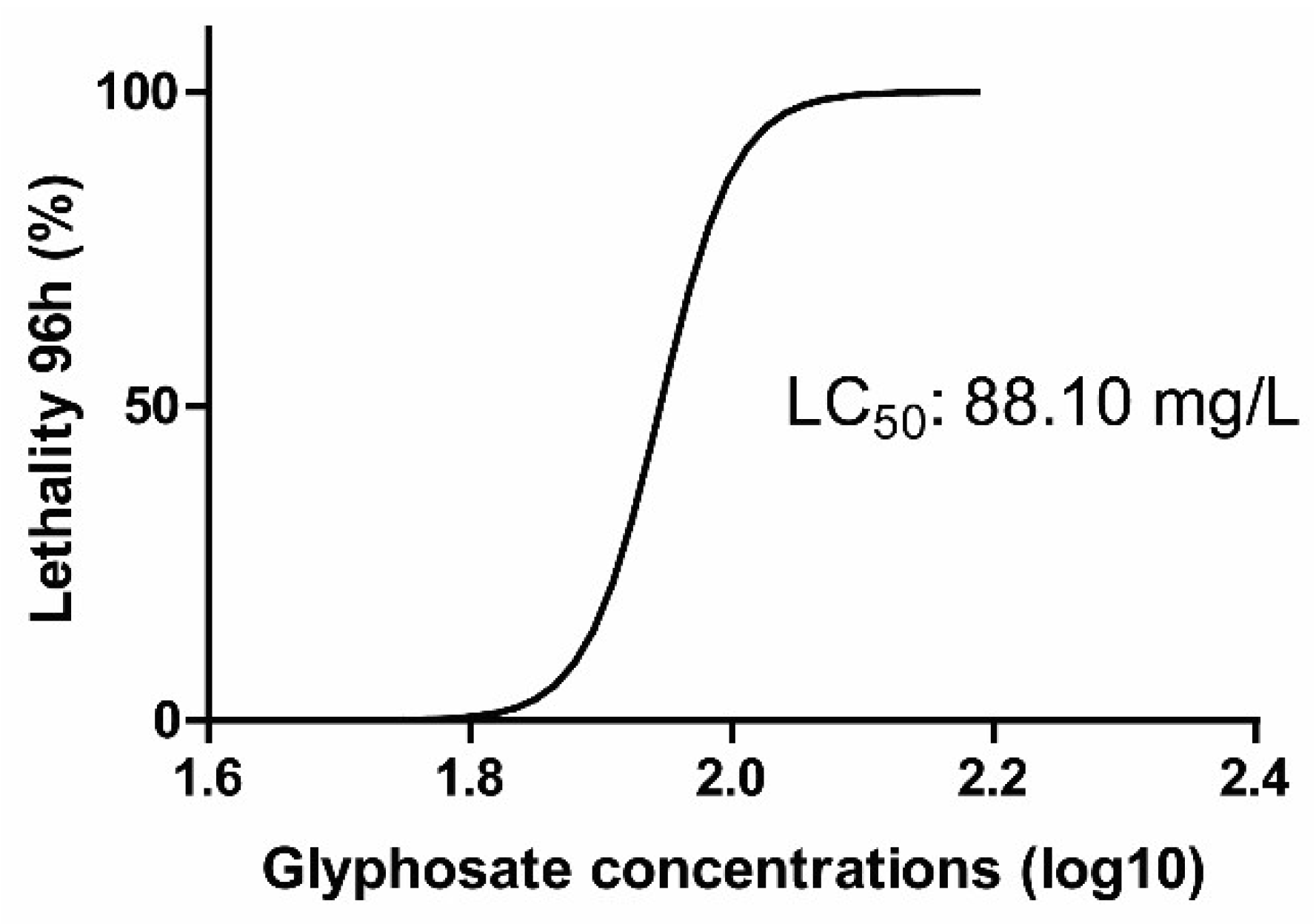
3.1. Median Lethal Concentration (LC50) of Herbicides
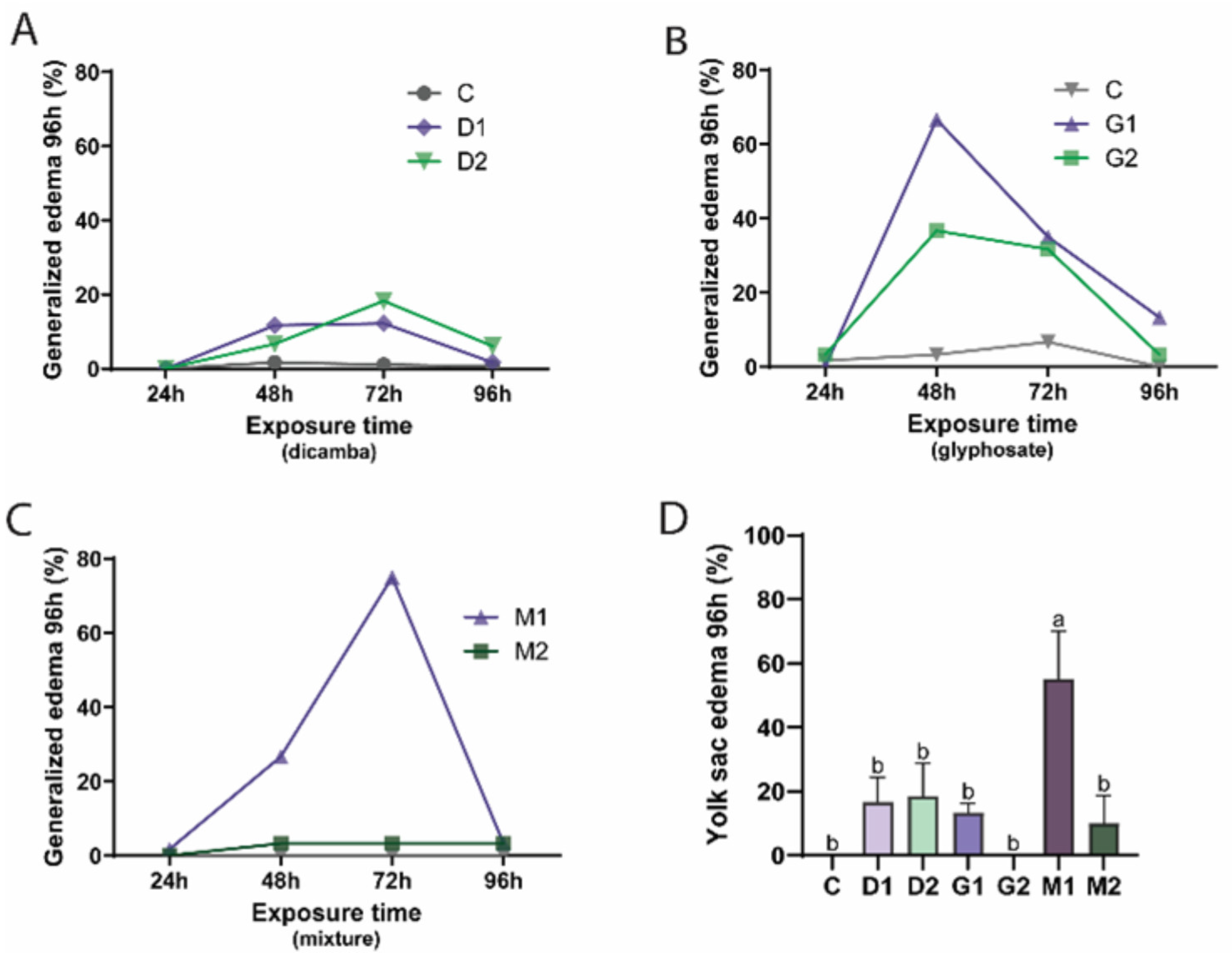
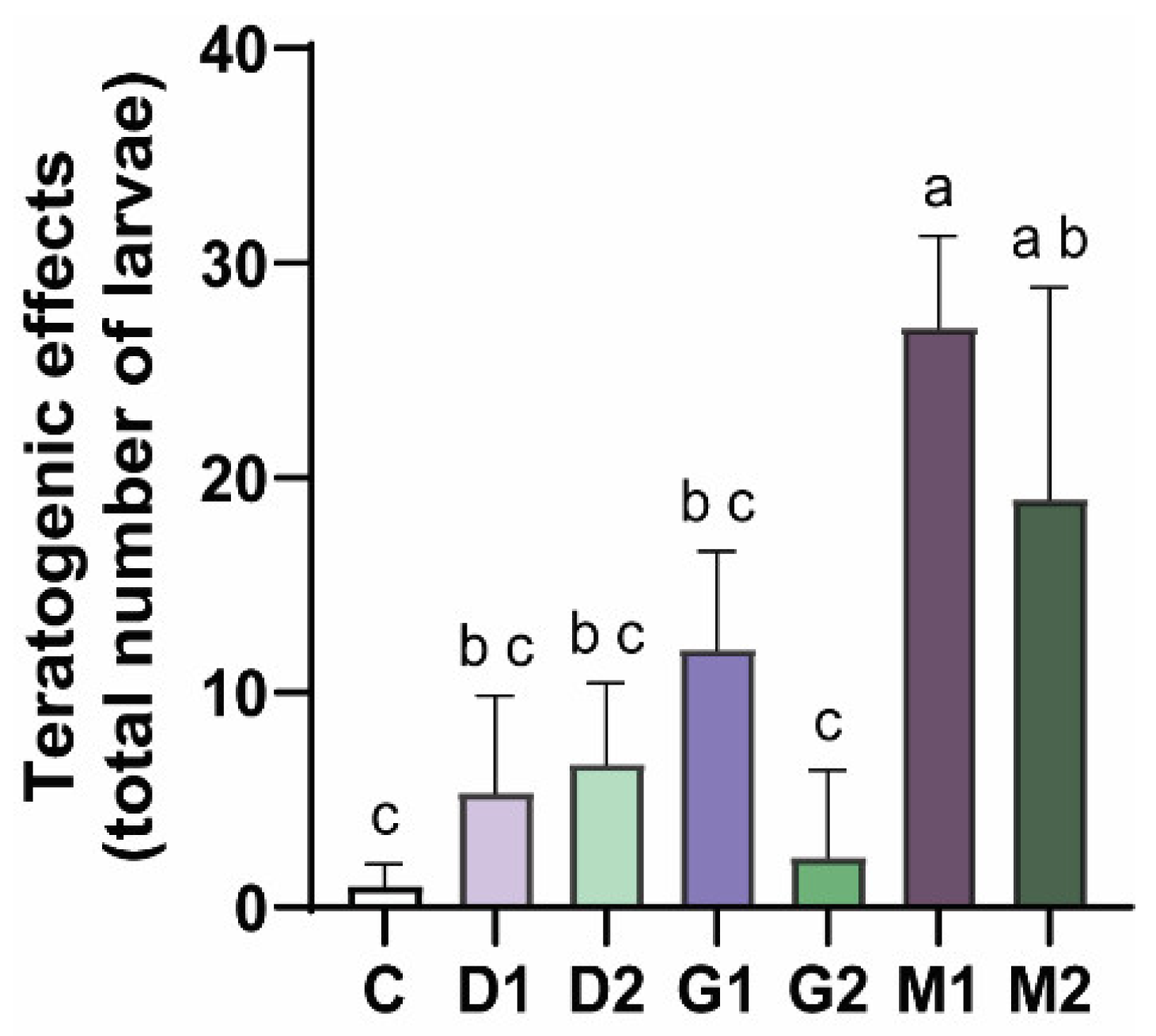
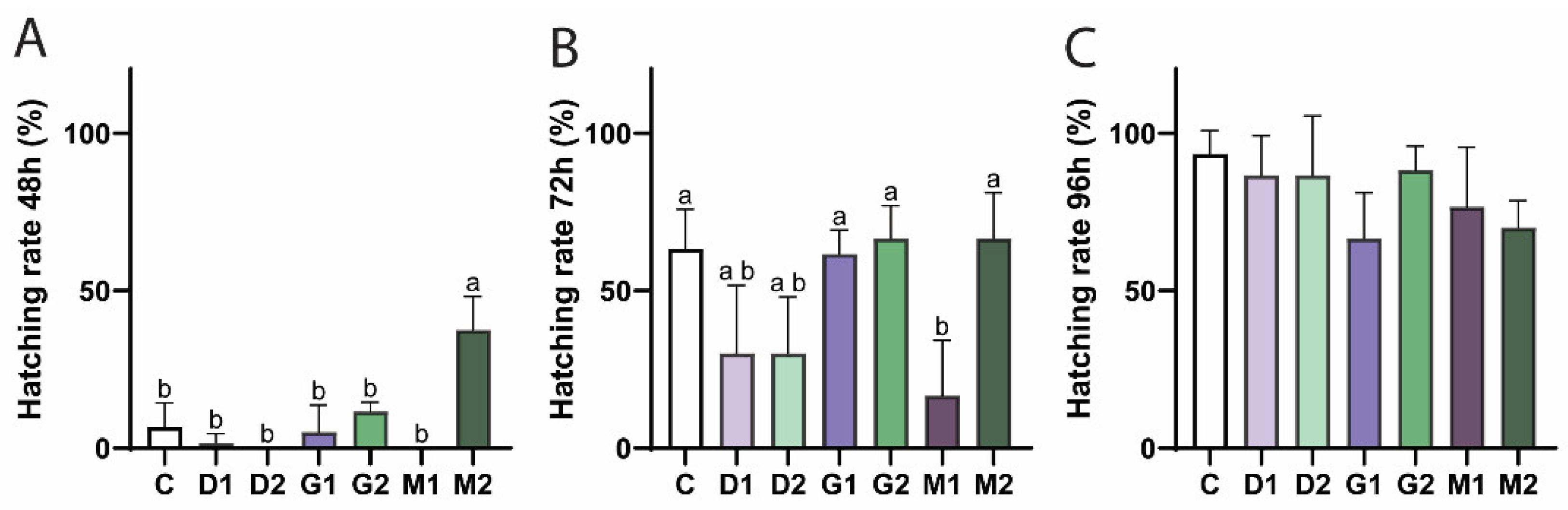
3.2. Lethality, Teratogenicity and Hatching Rate Test
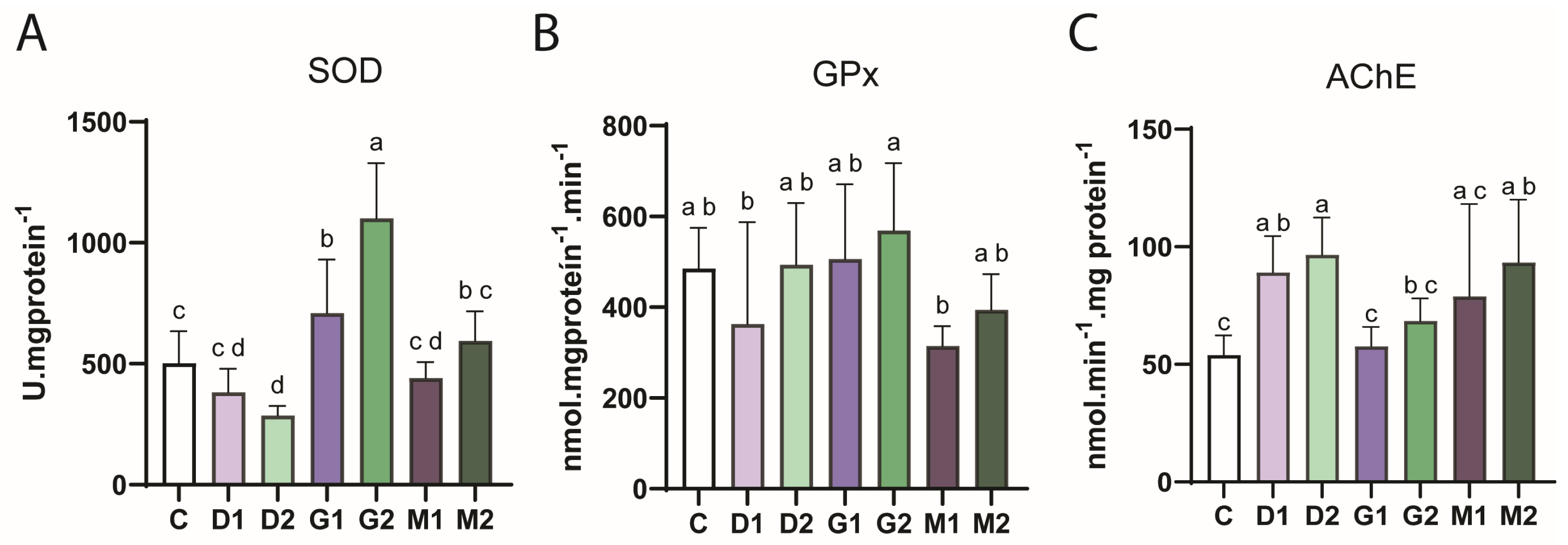
3.3. Antioxidant System and Acetylcholinesterase Activity
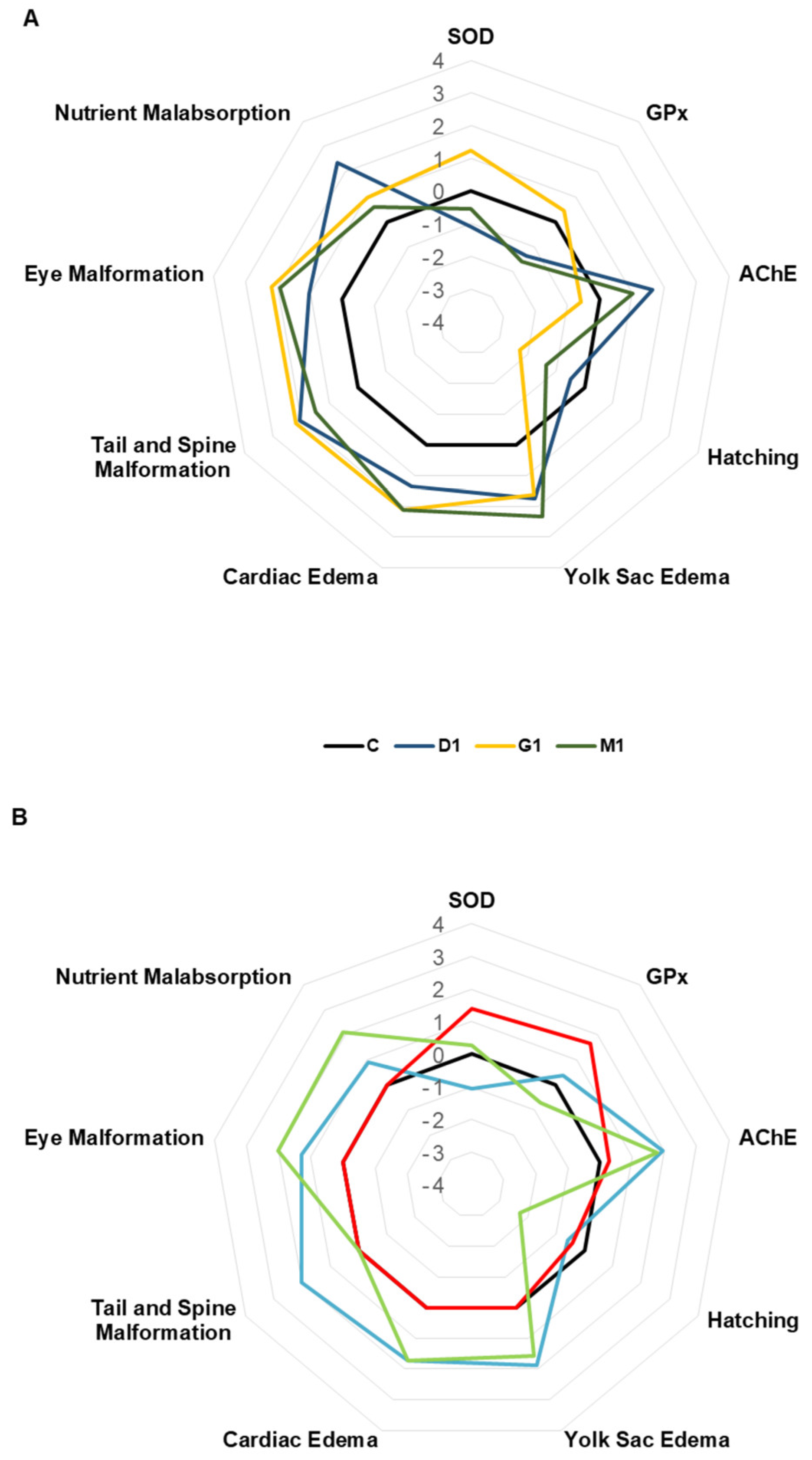
3.4. Integrated Biomarker Response Index (IBRv2)
4. Discussion
5. Conclusions
Author Contributions
Funding
Institutional Review Board Statement
Informed Consent Statement
Data Availability Statement
Conflicts of Interest
References
- Genchi, G.; Carocci, A.; Lauria, G.; Sinicropi, M.S.; Catalano, A. Nickel: Human Health and Environmental Toxicology. Int. J. Environ. Res. Public Health 2020, 17, 679. [Google Scholar] [CrossRef]
- Pal, M.; Ayele, Y.; Hadush, A.; Panigrahi, S.; Jadhav, V.J. Public Health Hazards Due to Unsafe Drinking Water. Air Water Borne Dis. 2018, 7, 2. [Google Scholar]
- Akcha, F.; Leday, G.; Pfohl-Leszkowicz, A. Measurement of DNA Adducts and Strand Breaks in Dab (Limanda limanda) Collected in the Field: Effects of Biotic and Abiotic Factors. Mutat. Res. 2004, 552, 197–207. [Google Scholar] [CrossRef] [PubMed]
- Huang, R.; Zhou, P.K. DNA Damage Repair: Historical Perspectives, Mechanistic Pathways and Clinical Translation for Targeted Cancer Therapy. Signal Transduct. Target. Ther. 2021, 6, 254. [Google Scholar] [CrossRef]
- Huggett, R.J.; Kimerle, R.A.; Mehrle, P.M.; Bergman, H.L. Biomarkers: Biochemical, Physiological and Histological Markers of Anthropogenic Stress; Lewis Publishers: Ririe, ID, USA, 1992. [Google Scholar]
- Juan, C.A.; Pérez de la Lastra, J.M.; Plou, F.J.; Pérez-Lebeña, E. The Chemistry of Reactive Oxygen Species (ROS) Revisited: Outlining their role in biological macromolecules (DNA, lipids and proteins) and induced pathologies. Int. J. Mol. Sci. 2021, 22, 4642. [Google Scholar] [CrossRef]
- Pizzino, G.; Irrera, N.; Cucinotta, M.; Pallio, F.; Mannino, V.; Arcoraci, F.; Squadrito, D.; Altavilla, A.B. Oxidative Stress: Harms and Benefits for Human Health. Oxid. Med. Cell. Longev. 2017, 8416763. [Google Scholar] [CrossRef]
- Sule, R.O.; Condon, L.; Gomes, A.V. A Common Feature of Pesticides: Oxidative Stress—The role of oxidative stress in pesticide-induced toxicity. Oxid. Med. Cell. Longev. 2022, 5563759. [Google Scholar] [CrossRef]
- Friedrich, K.; Friedrich, K.; Silveira, G.R.D.; Amazonas, J.C.; Gurgel, A.D.M.; Almeida, V.E.S.D.; Sarpa, M. Situação regulatória internacional de agrotóxicos com uso autorizado no Brasil: Potencial de danos sobre a saúde e impactos ambientais. Cad. Saude Publica 2021, 37, e00061820. [Google Scholar] [CrossRef]
- Togni, P.H.; Venzon, M.; Lagôa, A.C.G.; Sujii, E.R. Brazilian legislation leaning towards fast registration of biological control agents to benefit organic agriculture. Neotrop. Entomol. 2019, 48, 175–185. [Google Scholar] [CrossRef]
- Tudi, M.; Ruan, H.D.; Wang, L.; Lyu, J.; Sadler, R.; Connell, D.; Phung, D.T. Agriculture development, pesticide application and its impact on the environment. Int. J. Environ. Res. Public Health 2021, 18, 1112. [Google Scholar] [CrossRef]
- Maino, J.L.; Thia, J.; Hoffmann, A.A.; Umina, P.A. Estimating rates of pesticide usage from trends in herbicide, insecticide, and fungicide product registrations. Crop Prot. 2023, 163, 106125. [Google Scholar] [CrossRef]
- Shinn, C.; Delello-Schneider, D.; Mendes, L.B.; Sanchez, A.L.; Müller, R.; Espíndola, E.L.G.; Araújo, C.V. Immediate and mid-term effects of pyrimethanil toxicity on microalgae by simulating an episodic contamination. Chemosphere 2015, 120, 407–413. [Google Scholar] [CrossRef]
- Hedges, B.K.; Soltani, N.; Robinson, D.E.; Hooker, D.C.; Sikkema, P.H. Influence of glyphosate/dicamba application rate and timing on the control of glyphosate-resistant waterhemp in glyphosate/dicamba-resistant soybean. Can. J. Plant Sci. 2019, 99, 371–374. [Google Scholar] [CrossRef]
- Ou, J.; Thompson, C.R.; Stahlman, P.W.; Bloedow, N.; Jugulam, M. Reduced translocation of glyphosate and dicamba in combination contributes to poor control of Kochia scoparia: Evidence of herbicide antagonism. Sci. Rep. 2018, 8, 5330. [Google Scholar] [CrossRef]
- Werle, R.; Oliveira, M.C.; Jhala, A.J.; Proctor, C.A.; Rees, J.; Klein, R. Survey of Nebraska farmers’ adoption of dicamba-resistant soybean technology and dicamba off-target movement. Weed Technol. 2018, 32, 754–761. [Google Scholar] [CrossRef]
- Bish, M.D.; Farrell, S.T.; Lerch, R.N.; Bradley, K.W. Dicamba Losses to Air after applications to soybean under stable and nonstable atmospheric conditions. J. Environ. Qual. 2019, 48, 1675–1682. [Google Scholar] [CrossRef]
- Mueller, T.C.; Steckel, L.E. Dicamba volatility in humidomes as affected by temperature and herbicide treatment. Weed Technol. 2019, 33, 541–546. [Google Scholar] [CrossRef]
- Ruiz de Arcaute, C.; Brodeur, J.C.; Soloneski, S.; Larramendy, M.L. Toxicity to Rhinella arenarum tadpoles (Anura, Bufonidae) of herbicide mixtures commonly used to treat fallow containing resistant weeds: Glyphosate–dicamba and glyphosate–flurochloridone. Chemosphere 2020, 245, 125623. [Google Scholar] [CrossRef] [PubMed]
- Adamson, K.I.; Sheridan, E.; Grierson, A.J. Use of zebrafish models to investigate rare human disease. J. Med. Genet. 2018, 55, 641–649. [Google Scholar] [CrossRef]
- Bambino, K.; Chu, J. Zebrafish in Toxicology and Environmental Health. Curr. Top. Dev. Biol. 2017, 124, 331–367. [Google Scholar] [CrossRef] [PubMed]
- Khan, K.M.; Collier, A.D.; Meshalkina, D.A.; Kysil, E.V.; Khatsko, S.L.; Kolesnikova, T.; Echevarria, D.J. Zebrafish models in neuropsychopharmacology and CNS drug discovery. Br. J. Pharmacol. 2017, 174, 1925–1944. [Google Scholar] [CrossRef]
- Nowik, N.; Podlasz, P.; Jakimiuk, A.; Kasica, N.; Sienkiewicz, W.; Kaleczyc, J. Zebrafish: An animal model for research in veterinary medicine. Pol. J. Vet. Sci. 2015, 18, 663–674. [Google Scholar] [CrossRef]
- Kalueff, A.V.; Stewart, A.M.; Gerlai, R. Zebrafish as an emerging model for studying complex brain disorders. Trends Pharmacol. Sci. 2014, 35, 63–75. [Google Scholar] [CrossRef]
- Test No. 236; Fish Embryo Acute Toxicity (FET) Test; OECD Guidelines for the Testing of Chemicals. OECD Publishing: Paris, France, 2013; pp. 1–22. [CrossRef]
- USEPA. 2018 Edition of the Drinking Water Standards and Health Advisories Tables; USEPA: Washington, DC, USA, 2018.
- Felisbino, K.; Kirsten, N.; Milhorini, S.S.; Marçal, I.S.; Bernert, K.; Schiessl, R.; Nominato-Oliveira, L.; Guiloski, I.C. Teratogenic Effects of Dicamba in Zebrafish. Environ. Pollut. 2023, 334, 122187. [Google Scholar] [CrossRef] [PubMed]
- Gao, R.; Yuan, Z.; Zhao, Z.; Gao, X. Mechanism of Pyrogallol Autoxidation and determination of superoxide dismutase enzyme activity. Bioelectrochemistry Bioenerg. 1998, 45, 41–45. [Google Scholar] [CrossRef]
- Paglia, D.; Valentine, W. Studies on the quantitative and qualitative characterization of erythrocyte glutathione peroxidase. J. Lab. Clin. Med. 1967, 70, 158–169. [Google Scholar]
- Ellman, G.L.; Courtney, K.D.; Andres, V.; Featherstone, R.M. A new and rapid colorimetric determination of acetylcholinesterase activity. Biochem. Pharmacol. 1961, 7, 88–95. [Google Scholar] [CrossRef]
- Bradford, M. A rapid and sensitive method for the quantitation of microgram quantities of protein utilizing the principle of protein-dye binding. Anal. Biochem. 1976, 72, 248–254. [Google Scholar] [CrossRef]
- Beliaeff, B.; Burgeot, T. Integrated biomarker response: A useful tool for ecological risk assessment. Environ. Toxicol. Chem. 2002, 21, 1316–1322. [Google Scholar] [CrossRef]
- Sanchez, W.; Burgeot, T.; Porcher, J.M. A novel “Integrated Biomarker Response” calculation based on reference deviation concept. Environ. Sci. Pollut. Res. 2013, 20, 2721–2725. [Google Scholar] [CrossRef] [PubMed]
- Lanzarin, G.A.; Félix, L.M.; Fontaínhas-Fernandes, A.; Monteiro, S.M.; Venâncio, C. Effects of glyphosate or glyphosate-based herbicide during the zebrafish life cycle: A review addressing the mechanisms of toxicity. Water 2023, 15, 2276. [Google Scholar] [CrossRef]
- Tóth, G.; Háhn, J.; Szabó, G.; Bakos, K.; Volner, C.; Liang, X.; Göbölös, B.; Bock, I.; Szoboszlay, S.; Urbányi, B.; et al. In vivo estrogenicity of glyphosate, its formulations, and AMPA on transgenic zebrafish (Danio rerio) embryos. Environ. Pollut. 2024, 342, 123113. [Google Scholar] [CrossRef] [PubMed]
- Manservisi, F.; Lesseur, C.; Panzacchi, S.; Mandrioli, D.; Falcioni, L.; Bua, L.; Belpoggi, F. Glyphosate-Based the Ramazzini Institute 13-week pilot study glyphosate-based herbicides administered at human-equivalent dose to Sprague Dawley rats: Effects on development and endocrine system. Environ. Health 2019, 18, 15. [Google Scholar] [CrossRef]
- Ord, J. Ionic Stress Prompts Premature Hatching of Zebrafish (Danio rerio) Embryos. Fishes 2019, 4, 20. [Google Scholar] [CrossRef]
- Kim, R.; Heo, Y.; Yoon, H.; Park, J.W. Dechorionated Zebrafish Embryos Improve Evaluation of Nanotoxicity. Front. Toxicol. 2024, 6, 1476110. [Google Scholar] [CrossRef]
- Sant, K.E.; Timme-Laragy, A.R. Zebrafish as a Model for Toxicological Perturbation of Yolk and Nutrition in the Early Embryo. Curr. Environ. Health Rep. 2018, 5, 125–133. [Google Scholar] [CrossRef]
- Yang, Y.; Bazhin, A.V.; Werner, J.; Karakhanova, S. Reactive Oxygen Species in the Immune System. Int. Rev. Immunol. 2013, 32, 249–270. [Google Scholar] [CrossRef] [PubMed]
- Liu, Z.; Shangguan, Y.; Zhu, P.; Sultan, Y.; Feng, Y.; Li, X.; Ma, J. Developmental toxicity of glyphosate on embryo-larval zebrafish (Danio rerio). Ecotoxicol. Environ. Saf. 2022, 236, 113493. [Google Scholar] [CrossRef]
- Belo, M.A.; Oliveira, M.F.; Oliveira, S.L.; Aracati, M.F.; Rodrigues, L.F.; Costa, C.C.; Charlie-Silva, I. Zebrafish as a model to study inflammation: A tool for drug discovery. Biomed. Pharmacother. 2021, 144, 112310. [Google Scholar] [CrossRef] [PubMed]
- Sokolova, I.M. Energy-Limited Tolerance to Stress as a conceptual framework to integrate the effects of multiple stressors. Integr. Comp. Biol. 2013, 53, 597–608. [Google Scholar] [CrossRef]
- Gomes, S.D.S.; Silva, J.F.; Padilha, R.M.O.; Vasconcelos, J.V.A.; Negreiros Neto, L.G.D.; Marrs, J.A.; Cadena, P.G. Behavioral effects of the mixture and the single compounds carbendazim, fipronil, and sulfentrazone on zebrafish (Danio rerio) larvae. Biomedicines 2024, 12, 1176. [Google Scholar] [CrossRef]
- Halliwell, B. Reactive oxygen species (ROS), oxygen radicals and antioxidants: Where are we now, where is the field going and where should we go? Biochem. Biophys. Res. Commun. 2022, 633, 17–19. [Google Scholar] [CrossRef]
- Valko, M.; Leibfritz, D.; Moncol, J.; Cronin, M.T.; Mazur, M.; Telser, J. Free radicals and antioxidants in normal physiological functions and human disease. Int. J. Biochem. Cell Biol. 2007, 39, 44–84. [Google Scholar] [CrossRef] [PubMed]
- Ames, J.; Miragem, A.A.; Cordeiro, M.F.; Cerezer, F.O.; Loro, V.L. Effects of glyphosate on zebrafish: A systematic review and meta-analysis. Ecotoxicology 2022, 31, 1189–1204. [Google Scholar] [CrossRef]
- Costas-Ferreira, C.; Durán, R.; Faro, L.R. Toxic Effects of Glyphosate on the Nervous System: A systematic review. Int. J. Mol. Sci. 2022, 23, 4605. [Google Scholar] [CrossRef]
- Barreto, L.S.; Souza, T.L.; Morais, T.P.; Oliveira Ribeiro, C.A. Toxicity of glyphosate and aminomethylphosphonic acid (AMPA) to the early stages of development of Steindachneridion melanodermatum, an endangered endemic species of Southern Brazil. Environ. Toxicol. Pharmacol. 2023, 102, 104234. [Google Scholar] [CrossRef] [PubMed]
- Zhang, X.J.; Greenberg, D.S. Acetylcholinesterase involvement in apoptosis. Front. Mol. Neurosci. 2012, 5, 40. [Google Scholar] [CrossRef]
- Knorr, D.Y.; Demirbas, D.; Heinrich, R. Multifaceted promotion of apoptosis by acetylcholinesterase. Front. Cell Death 2023, 2, 1169966. [Google Scholar] [CrossRef]
- Jokanović, M. Neurotoxic Effects of Organophosphorus Pesticides and possible association with neurodegenerative diseases in man: A review. Toxicology 2018, 410, 125–131. [Google Scholar] [CrossRef] [PubMed]

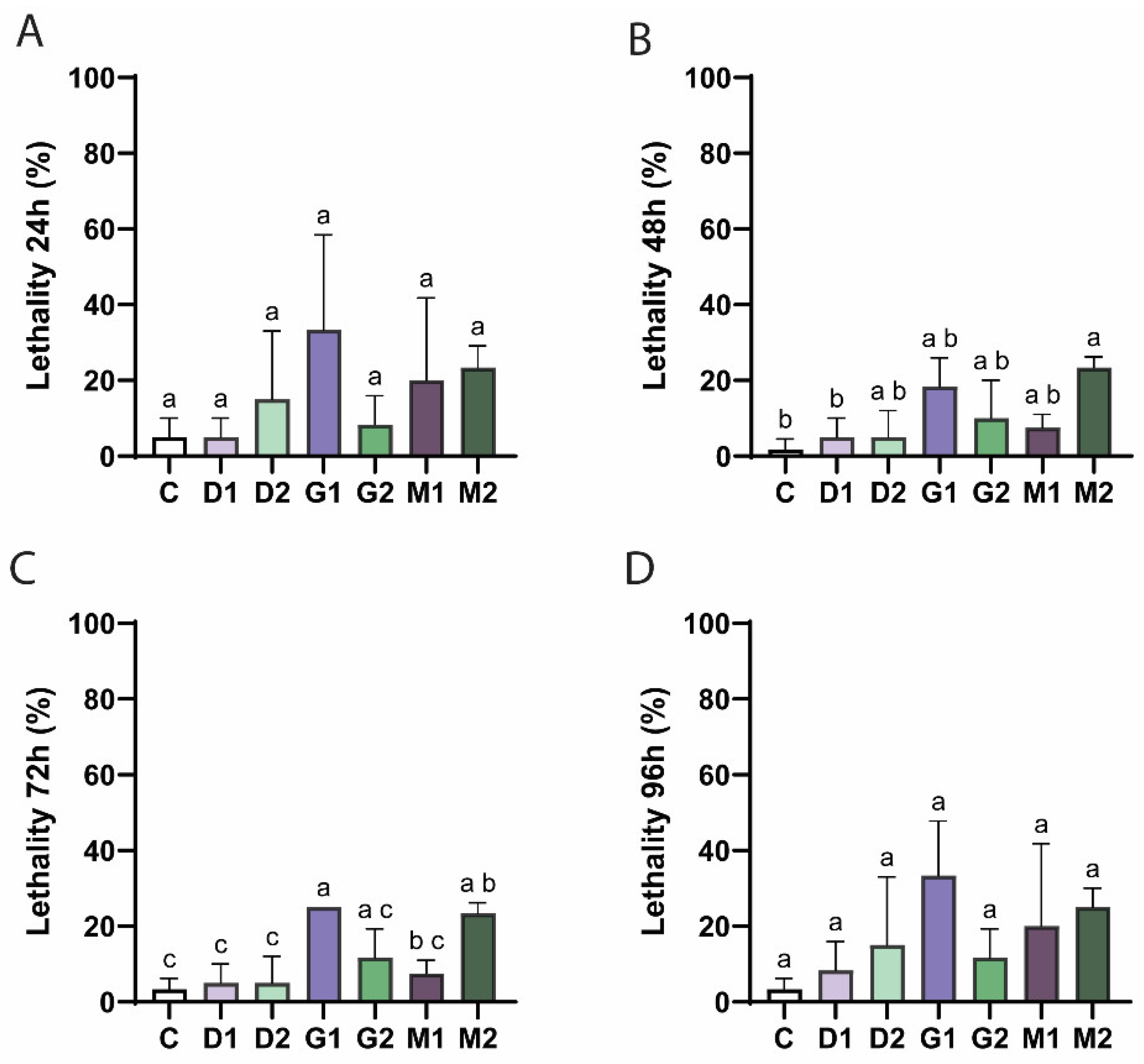


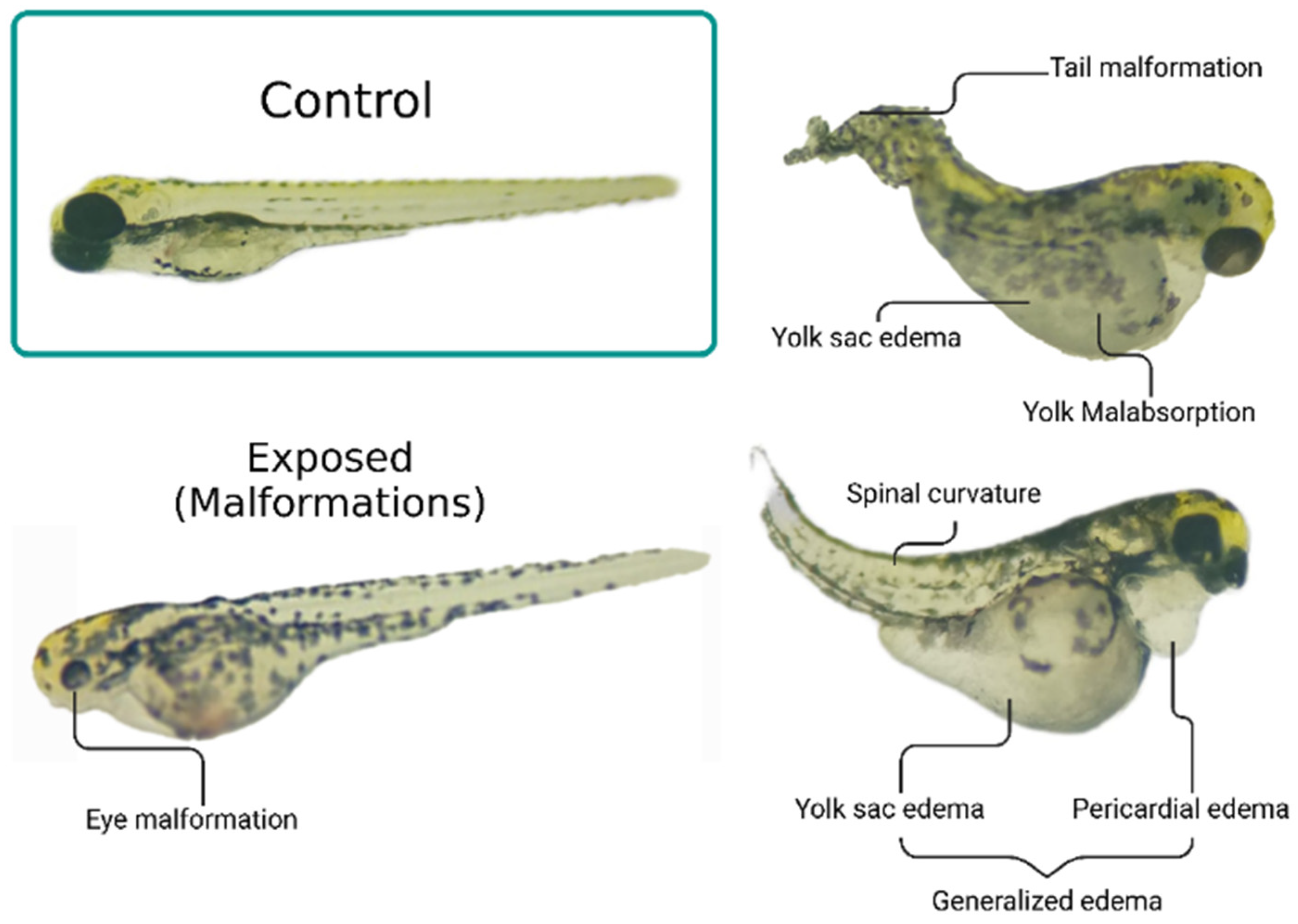


| Effects (96 h) | C | D1 | D2 | G1 | G2 | M1 | M2 |
|---|---|---|---|---|---|---|---|
| Eye malformation | 0 | 1 | 1 | 4 | 0 | 3 | 2 |
| Tail and spine malformation | 1 | 3 | 6 | 5 | 1 | 3 | 1 |
| Cardiac edema | 0 | 1 | 2 | 2 | 0 | 2 | 2 |
| Dwarfism | 0 | 1 | 2 | 1 | 1 | 1 | 2 |
| Yolk Malabsorption | 1 | 15 * | 11 | 3 | 1 | 2 | 26 * |
Disclaimer/Publisher’s Note: The statements, opinions and data contained in all publications are solely those of the individual author(s) and contributor(s) and not of MDPI and/or the editor(s). MDPI and/or the editor(s) disclaim responsibility for any injury to people or property resulting from any ideas, methods, instructions or products referred to in the content. |
© 2026 by the authors. Licensee MDPI, Basel, Switzerland. This article is an open access article distributed under the terms and conditions of the Creative Commons Attribution (CC BY) license.
Share and Cite
Felisbino, K.; Kirsten, N.; Milhorini, S.d.S.; Bernert, K.; Schiessl, R.; Vicentini, M.; Guiloski, I.C. A Mixture of Herbicides Dicamba and Glyphosate Causes Teratogenic Effects, Oxidative Stress, and Neurotoxicity in Zebrafish Embryos. Toxics 2026, 14, 435. https://doi.org/10.3390/toxics14050435
Felisbino K, Kirsten N, Milhorini SdS, Bernert K, Schiessl R, Vicentini M, Guiloski IC. A Mixture of Herbicides Dicamba and Glyphosate Causes Teratogenic Effects, Oxidative Stress, and Neurotoxicity in Zebrafish Embryos. Toxics. 2026; 14(5):435. https://doi.org/10.3390/toxics14050435
Chicago/Turabian StyleFelisbino, Karoline, Nathalia Kirsten, Shayane da Silva Milhorini, Karina Bernert, Rafaela Schiessl, Maiara Vicentini, and Izonete Cristina Guiloski. 2026. "A Mixture of Herbicides Dicamba and Glyphosate Causes Teratogenic Effects, Oxidative Stress, and Neurotoxicity in Zebrafish Embryos" Toxics 14, no. 5: 435. https://doi.org/10.3390/toxics14050435
APA StyleFelisbino, K., Kirsten, N., Milhorini, S. d. S., Bernert, K., Schiessl, R., Vicentini, M., & Guiloski, I. C. (2026). A Mixture of Herbicides Dicamba and Glyphosate Causes Teratogenic Effects, Oxidative Stress, and Neurotoxicity in Zebrafish Embryos. Toxics, 14(5), 435. https://doi.org/10.3390/toxics14050435