
Occurrence, Distribution, and Risk Assessment of Phenolic Endocrine-Disrupting Chemicals in Surface Waters of the World’s Longest Water Diversion Project: The Non-Negligible Impact of Local Wastewater Emissions

Abstract
1. Introduction
2. Materials and Methods
2.1. Field Sampling
2.2. Sample Pretreatment and Analysis
2.3. Risk Assessment
2.4. Statistical Analysis
3. Results and Discussion
3.1. Concentrations and Composition of APs in the Eastern Route Project
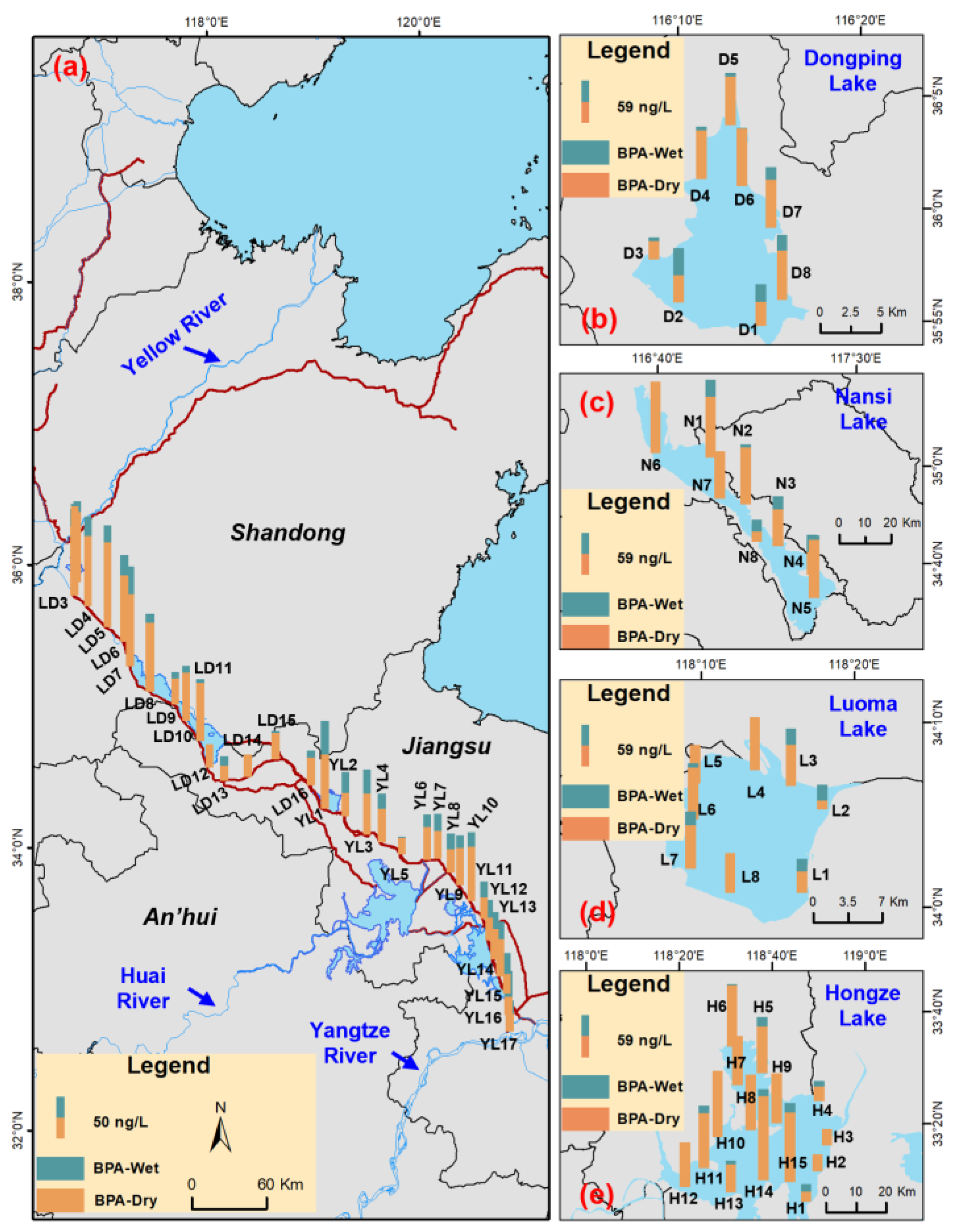
3.2. Concentration of BPA in the Eastern Route Project
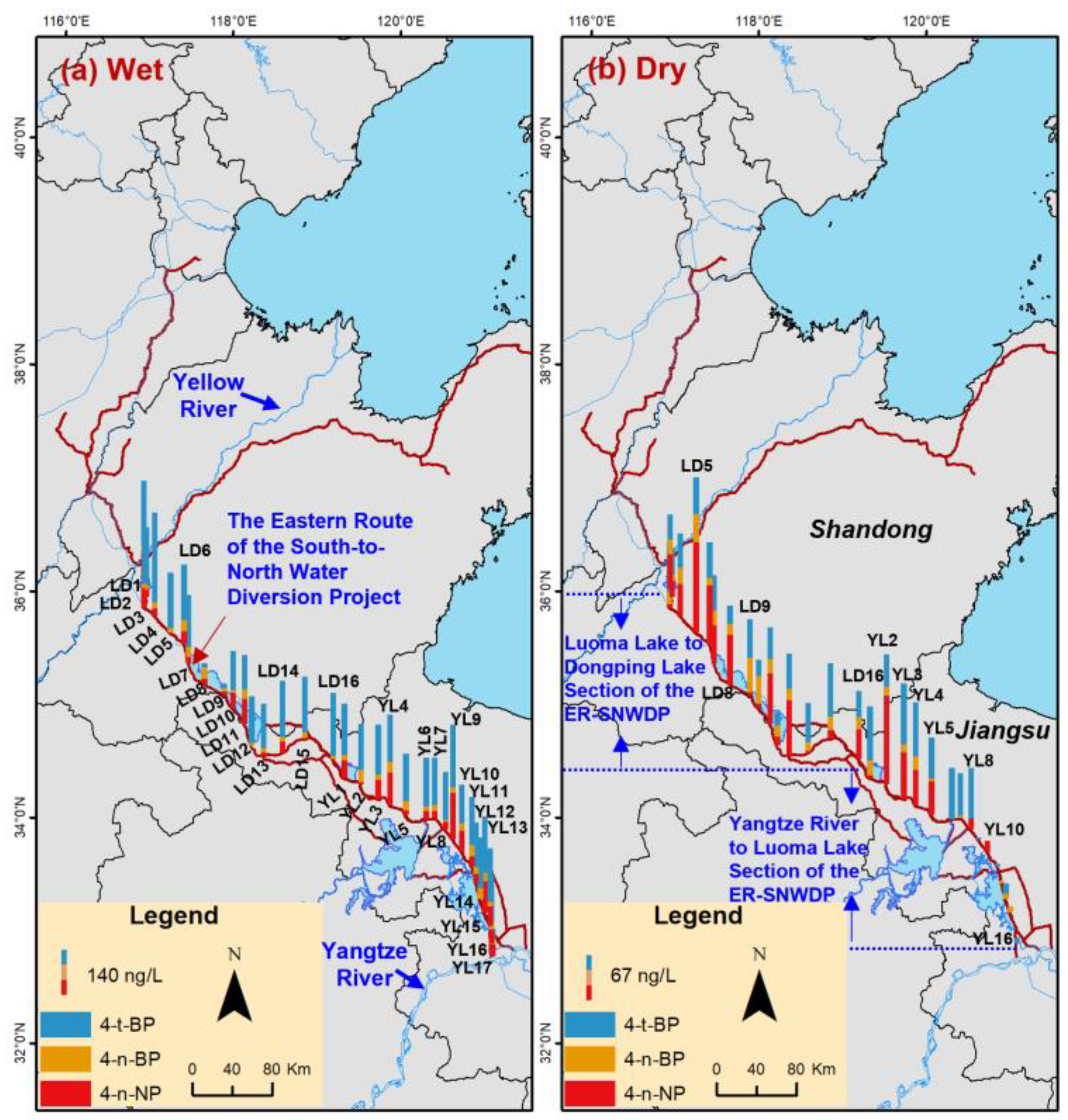
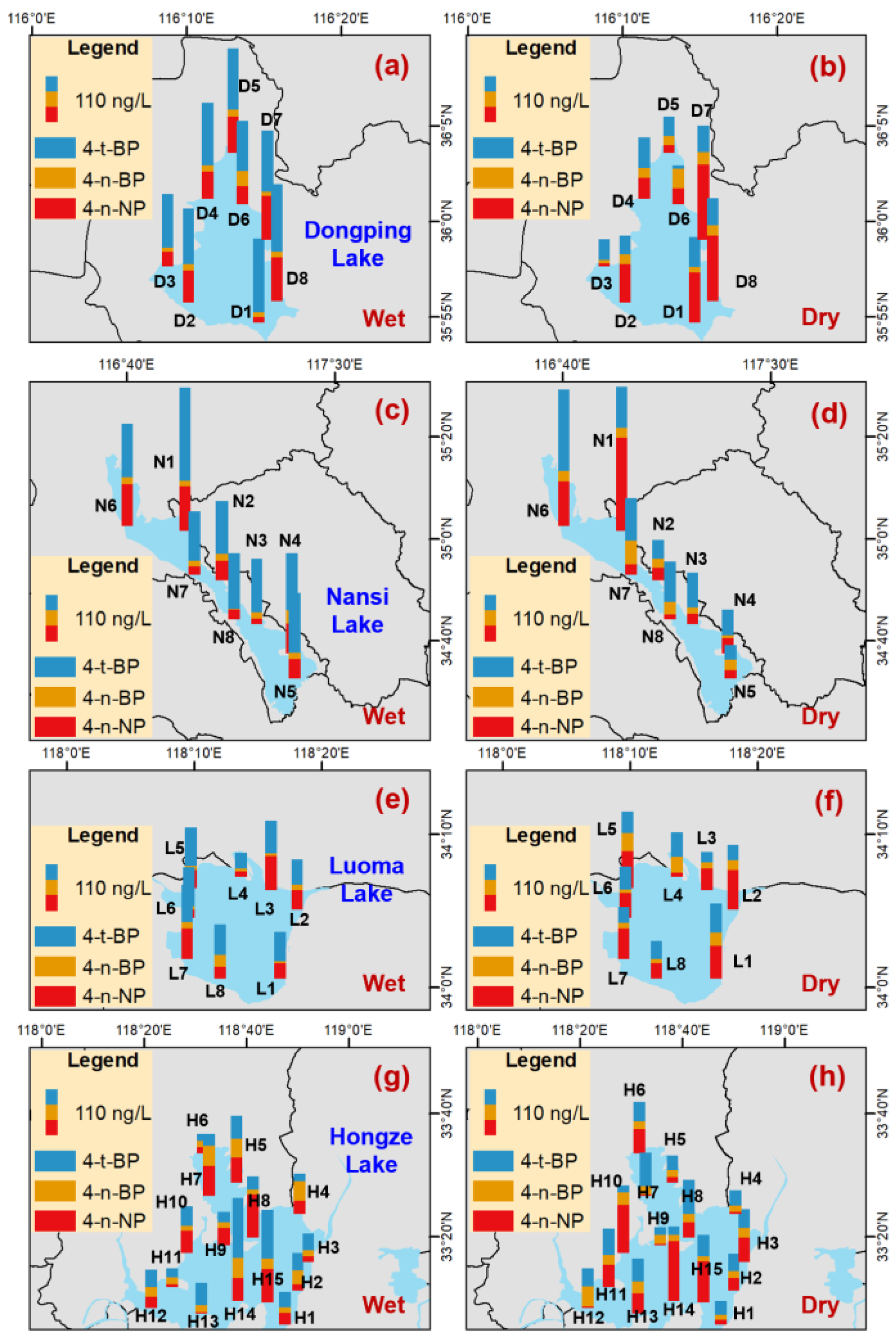
3.3. Spatial Distribution of the Detected APs and BPA in the Water
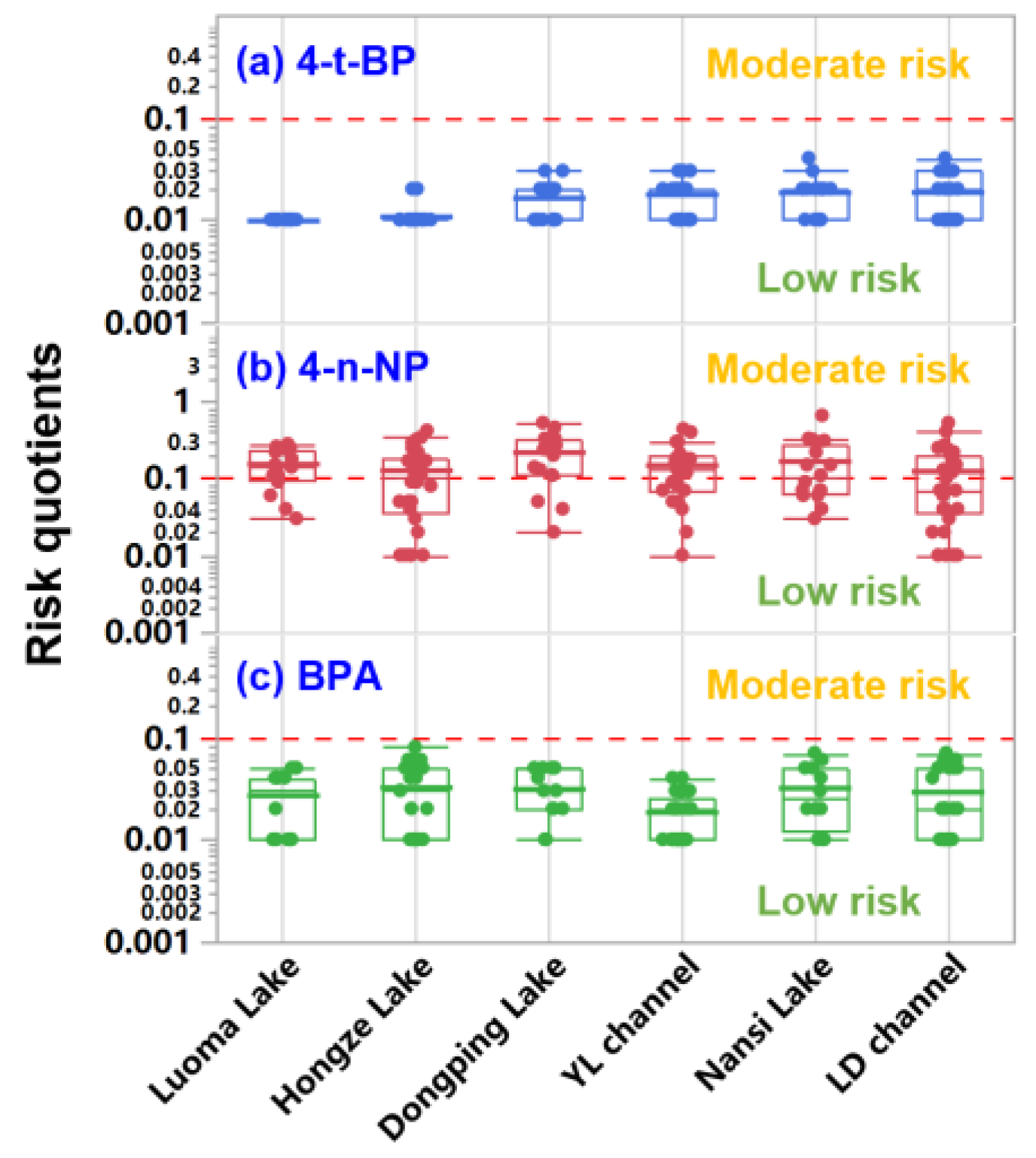
3.4. Environmental Risk Assessment
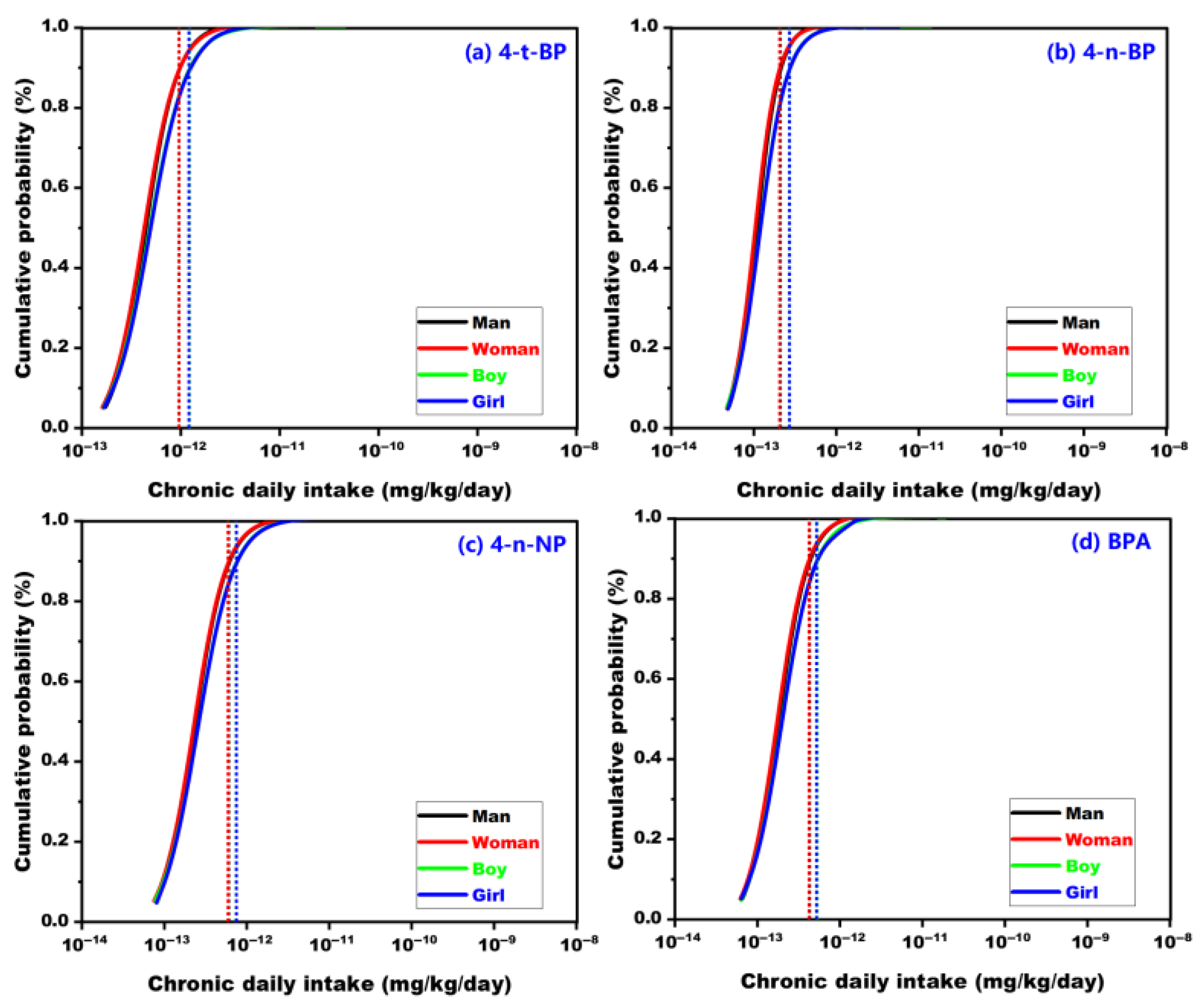
3.5. Health Risk Assessment
4. Conclusions
Supplementary Materials
Author Contributions
Funding
Institutional Review Board Statement
Informed Consent Statement
Data Availability Statement
Acknowledgments
Conflicts of Interest
References
- Hong, Y.; Feng, C.; Yan, Z.; Wang, Y.; Liu, D.; Liao, W.; Bai, Y. Nonylphenol occurrence, distribution, toxicity and analytical methods in freshwater. Environ. Chem. Lett. 2020, 18, 2095–2106. [Google Scholar] [CrossRef]
- Swansborough, C.; Soto, J.; Shapland, I.; Hughes, C.B.; Jennings, E.; McArdle, M.; Mihaich, E.; Majoris, E.; Bunge, M. Trend analysis of environmental concentrations of Bisphenol A in European waters and sediments. Environ. Res. 2025, 282, 121946. [Google Scholar] [CrossRef]
- Xiao, Y.; Han, D.; Currell, M.; Song, X.; Zhang, Y. Review of Endocrine Disrupting Compounds (EDCs) in China’s water environments: Implications for environmental fate, transport and health risks. Water Res. 2023, 245, 120645. [Google Scholar] [CrossRef]
- Hong, Y.; Li, H.; Feng, C.; Liu, D.; Yan, Z.; Qiao, Y.; Bai, Y.; Wu, F. A review on the water quality criteria of nonylphenol and the methodological construction for reproduction toxicity endocrine disrupting chemicals. Rev. Environ. Contam. Toxicol. 2022, 260, 5. [Google Scholar] [CrossRef]
- Ji, L.; Ji, S.; Wang, C.; Kepp, K.P. Molecular mechanism of alternative P450-catalyzed metabolism of environmental phenolic endocrine-disrupting chemicals. Environ. Sci. Technol. 2018, 52, 4422–4431. [Google Scholar] [CrossRef]
- Khetan, S.K. Endocrine Disruptors in the Environment; John Wiley & Sons, Inc.: Hoboken, NJ, USA, 2014. [Google Scholar] [CrossRef]
- Wang, X.; Xiang, W.; Wang, S.; Ge, J.; Qu, R.; Wang, Z. Oxidative oligomerization of phenolic endocrine disrupting chemicals mediated by Mn (III)-L complexes and the role of phenoxyl radicals in the enhanced removal: Experimental and theoretical studies. Environ. Sci. Technol. 2019, 54, 1573–1582. [Google Scholar] [CrossRef] [PubMed]
- Chen, H.; Zheng, Y. A comprehensive review on the sources, environmental behavior, and degradation of alkylphenol ethoxylates and their metabolites in surface water and soils. J. Environ. Qual. 2025, 54, 1631–1652. [Google Scholar] [CrossRef]
- ECB (European Chemicals Bureau). European Union Risk Assessment Report for 4-Nonylphenol (Branched) and Nonylphenol. European Chemicals Bureau, Joint Research Centre, European Commission, Italy. 2002. Available online: https://echa.europa.eu/documents/10162/43080e23-3646-4ddf-836b-a248bd4225c6 (accessed on 12 April 2026).
- ECB (European Chemicals Bureau). European Union Risk Assessment Report for 4,4′-Isopropylidenediphenol (Bisphenol-A). European Chemicals Bureau, Joint Research Centre, European Commission, Italy. 2003. Available online: https://echa.europa.eu/documents/10162/c6a8dcfc-1823-4d31-8a24-2c1168f0d217 (accessed on 12 April 2026).
- ECB (European Chemicals Bureau). European Union Risk Assessment Report for P-Tert-Butylphenol. European Chemicals Bureau, Joint Research Centre, European Commission, Italy. 2008. Available online: https://euon.echa.europa.eu/documents/10162/605c05d5-0ef9-46cf-b5a2-bb8a51ac26e5 (accessed on 12 April 2026).
- Pohl, A.; Bodzek, M. Alkylphenols and bisphenol A in the aquatic environment and their leaching from plastic products—A review. Desalin. Water Treat. 2023, 315, 446–457. [Google Scholar] [CrossRef]
- Yang, L.; Luan, T.; Li, Y.; Lin, L. Understanding nonylphenol’s aquatic fate: An integrated review of partitioning, natural attenuation, and contribution mechanism. Environ. Pollut. 2025, 384, 126907. [Google Scholar] [CrossRef] [PubMed]
- Bhandari, G.; Bagheri, A.R.; Bhatt, P.; Bilal, M. Occurrence, potential ecological risks, and degradation of endocrine disrupter, nonylphenol, from the aqueous environment. Chemosphere 2021, 275, 130013. [Google Scholar] [CrossRef] [PubMed]
- Lassen, C.; Jensen, A.; Maag, J.; Christensen, F.; Kjølholt, J.; Jeppesen, C.N.; Mikkelsen, S.H.; Innanen, S. Survey of Alkylphenols and Alkylphenol Ethoxylates; Danish EPA: Odense, Denmark, 2012; Available online: https://www2.mst.dk/udgiv/publications/2013/04/978-87-92903-99-0.pdf (accessed on 12 April 2026).
- Wang, H.; Liu, J.; Qiang, S.; Che, Y.; Hu, T. 4-tert-Butylphenol impairs the liver by inducing excess liver lipid accumulation via disrupting the lipid metabolism pathway in zebrafish. Environ. Pollut. 2024, 356, 124385. [Google Scholar] [CrossRef]
- Soares, A.; Guieysse, B.; Jefferson, B.; Cartmell, E.; Lester, J. Nonylphenol in the environment: A critical review on occurrence, fate, toxicity and treatment in wastewaters. Environ. Int. 2008, 34, 1033–1049. [Google Scholar] [CrossRef] [PubMed]
- Wang, S.; Peng, C.; Sheng, N.; Lian, L.; Dai, J.; Guan, X. Occurrence, ecological risk and estrogenic effect of 19 bisphenol analogues in the surface water used for drinking water in Shanghai, China. Water Res. 2025, 279, 123408. [Google Scholar] [CrossRef]
- Chen, D.; Kannan, K.; Tan, H.; Zheng, Z.; Feng, Y.-L.; Wu, Y.; Widelka, M. Bisphenol analogues other than BPA: Environmental occurrence, human exposure, and toxicity—A review. Environ. Sci. Technol. 2016, 50, 5438–5453. [Google Scholar] [CrossRef]
- Im, J.; Löffler, F.E. Fate of bisphenol A in terrestrial and aquatic environments. Environ. Sci. Technol. 2016, 50, 8403–8416. [Google Scholar] [CrossRef]
- Yang, N.; Zhang, Y.; Yang, N.; Men, C.; Zuo, J. Distribution characteristics and relationship of microplastics, phthalate esters, and bisphenol A in the Beiyun River basin of Beijing. J. Hazard. Mater. 2024, 480, 136190. [Google Scholar] [CrossRef] [PubMed]
- Wang, J.; Chan, F.K.S.; Johnson, M.F.; Chan, H.K.; Cui, Y.; Chen, J.; Chen, W.-Q. Material cycles, environmental emissions, and ecological risks of bisphenol A (BPA) in China and implications for sustainable plastic management. Environ. Sci. Technol. 2025, 59, 1631–1646. [Google Scholar] [CrossRef]
- Corrales, J.; Kristofco, L.A.; Steele, W.B.; Yates, B.S.; Breed, C.S.; Williams, E.S.; Brooks, B.W. Global assessment of bisphenol A in the environment: Review and analysis of its occurrence and bioaccumulation. Dose-Response 2015, 13, 1–29. [Google Scholar] [CrossRef] [PubMed]
- Moreman, J.; Lee, O.; Trznadel, M.; David, A.; Kudoh, T.; Tyler, C.R. Acute toxicity, teratogenic, and estrogenic effects of bisphenol A and its alternative replacements bisphenol S, bisphenol F, and bisphenol AF in zebrafish embryo-larvae. Environ. Sci. Technol. 2017, 51, 12796–12805. [Google Scholar] [CrossRef]
- EFSA Panel on Food Contact Materials, Enzymes and Processing Aids (CEP); Lambré, Y.; Baviera, J.M.B.; Bolognesi, C.; Chesson, A.; Cocconcelli, P.S.; Crebelli, R.; Gott, D.M.; Grob, K.; Lampi, E.; et al. Re-evaluation of the risks to public health related to the presence of bisphenol A (BPA) in foodstuffs. EFSA J. 2023, 21, 6857. [Google Scholar] [CrossRef]
- Zhao, Y.; Ji, J.; Wu, Y.; Chen, S.; Xu, M.; Cao, X.; Liu, H.; Wang, Z.; Bi, H.; Guan, G.; et al. Nonylphenol and its derivatives: Environmental distribution, treatment strategy, management and future perspectives. Chemosphere 2024, 352, 141377. [Google Scholar] [CrossRef]
- Hu, Y.; Zhu, Q.; Yan, X.; Liao, C.; Jiang, G. Occurrence, fate and risk assessment of BPA and its substituents in wastewater treatment plant: A review. Environ. Res. 2019, 178, 108732. [Google Scholar] [CrossRef] [PubMed]
- Ying, G.-G.; Williams, B.; Kookana, R. Environmental fate of alkylphenols and alkylphenol ethoxylates—A review. Environ. Int. 2002, 28, 215–226. [Google Scholar] [CrossRef] [PubMed]
- Cai, J.; Peng, J. Introduction of the Beijing–Hangzhou grand canal and analysis of its heritage values. J. Hydro-Environ. Res. 2019, 26, 2–7. [Google Scholar] [CrossRef]
- MWR (Ministry of Water Resources of China). China South-to-North Water Diversion Project Construction Yearbook; MWR: Wuhan, China, 2024. [Google Scholar]
- Yan, H.; Lin, Y.; Chen, Q.; Zhang, J.; He, S.; Feng, T.; Wang, Z.; Chen, C.; Ding, J. A review of the eco-environmental impacts of the South-to-North Water Diversion: Implications for Interbasin Water Transfers. Engineering 2023, 30, 161–169. [Google Scholar] [CrossRef]
- Cao, Y.; Zhang, X.; Yan, Y.; Li, Q.; Shen, J. Spatiotemporal variations and risk assessment of organophosphate esters in surface waters of the Eastern Route of the South-to-North Water Diversion Project, China: A comprehensive survey for human health. Environ. Technol. Innov. 2025, 40, 104571. [Google Scholar] [CrossRef]
- Huang, S.; Peng, C.; Wang, Z.; Xiong, X.; Bi, Y.; Liu, Y.; Li, D. Spatiotemporal distribution of microplastics in surface water, biofilms, and sediments in the world’s largest drinking water diversion project. Sci. Total Environ. 2021, 789, 148001. [Google Scholar] [CrossRef]
- Zhang, X.; Cao, Y.; Zhang, Z.; Li, Q.; Yan, Y. Residues of neonicotinoid insecticides in artificial waterways of the Eastern Route of the South-to North water diversion project, China: Implications for environmental risks and human health. Environ. Pollut. 2024, 363, 125132. [Google Scholar] [CrossRef]
- Zhao, Z.; Gong, X.; Ding, Q.; Jin, M.; Wang, Z.; Lu, S.; Zhang, L. Environmental implications from the priority pollutants screening in impoundment reservoir along the eastern route of China’s South-to-North Water Diversion Project. Sci. Total Environ. 2021, 794, 148700. [Google Scholar] [CrossRef]
- JPBS. Jiangsu Statistical Yearbook in 2022; Jiangsu Provincial Bureau of Statistics: Nanjing, China, 2023. [Google Scholar]
- HJ 1192-2021; Determination of 9 Alkylphenols and Bisphenol A—Solid Phase Extraction/High Performance Liquid Chromatography. China’s National Ecological and Environmental Standards: Beijing, China, 2021.
- Liu, D.; Liu, J.; Guo, M.; Xu, H.; Zhang, S.; Shi, L.; Yao, C. Occurrence, distribution, and risk assessment of alkylphenols, bisphenol A, and tetrabromobisphenol A in surface water, suspended particulate matter, and sediment in Taihu Lake and its tributaries. Mar. Pollut. Bull. 2016, 112, 142–150. [Google Scholar] [CrossRef]
- Vesković, J.; Onjia, A. Exposure and Toxicity Factors in Health Risk Assessment of Heavy Metal(loid)s in Water. Water 2025, 17, 2901. [Google Scholar] [CrossRef]
- Arnold, S.M.; Clark, K.E.; Staples, C.A.; Klecka, G.M.; Dimond, S.S.; Caspers, N.; Hentges, S.G. Relevance of drinking water as a source of human exposure to bisphenol A. J. Expo. Sci. Environ. Epidemiol. 2013, 23, 137–144. [Google Scholar] [CrossRef]
- Benotti, M.J.; Trenholm, R.A.; Vanderford, B.J.; Holady, J.C.; Stanford, B.D.; Snyder, S.A. Pharmaceuticals and endocrine disrupting compounds in U.S. drinking water. Environ. Sci. Technol. 2009, 43, 597–603. [Google Scholar] [CrossRef] [PubMed]
- Chen, H.; Liang, C.; Wu, Z.; Chang, E.; Lin, T.; Chiang, P.; Wang, G. Occurrence and assessment of treatment efficiency of nonylphenol, octylphenol and bisphenol-A in drinking water in Taiwan. Sci. Total Environ. 2013, 449, 20–28. [Google Scholar] [CrossRef] [PubMed]
- Fan, Z.; Hu, J.; An, W.; Yang, M. Detection and occurrence of chlorinated byproducts of bisphenol A, nonylphenol, and estrogens in drinking water of China: Comparison to the parent compounds. Environ. Sci. Technol. 2013, 47, 10841–10850. [Google Scholar] [CrossRef] [PubMed]
- Kleywegt, S.; Pileggi, V.; Yang, P.; Hao, C.; Zhao, X.; Rocks, C.; Thach, S.; Cheung, P.; Whitehead, B. Pharmaceuticals, hormones and bisphenol A in untreated source and finished drinking water in Ontario, Canada—Occurrence and treatment efficiency. Sci. Total Environ. 2011, 409, 1481–1488. [Google Scholar] [CrossRef]
- Padhye, L.P.; Yao, H.; Kung’u, F.T.; Huang, C.-H. Year-long evaluation on the occurrence and fate of pharmaceuticals, personal care products, and endocrine disrupting chemicals in an urban drinking water treatment plant. Water Res. 2014, 51, 266–276. [Google Scholar] [CrossRef]
- Duan, X. Highlights of the Chinese Exposure Factors Handbook (Children); China Environment Press: Wuhan, China, 2014; (In Chinese with English abstract). [Google Scholar]
- Duan, X. Highlights of the Chinese Exposure Factors Handbook (Adults); China Environment Press: Wuhan, China, 2016; (In Chinese with English abstract). [Google Scholar]
- Liu, R.; Luo, X.; Shu, S.; Ding, J.; Zhang, G.; Wang, Z.; Zou, H.; Zhang, Y. Impact of rainfall on the occurrence, spatiotemporal distribution, and partition trend of micropollutants in Taihu Lake, China: Bisphenol A and 4-nonylphenol as examples. Ecotoxicol. Environ. Saf. 2020, 204, 111064. [Google Scholar] [CrossRef]
- Wei, Q.; Xue, L.; Liao, S.; Yang, J.; Niu, B. Analysis of Driving Forces on Ecohydrological Regime and Environmental Flow Changes in Hongze Lake, China. Ecol. Inform. 2024, 79, 102423. [Google Scholar] [CrossRef]
- Liu, Y.; Zhang, S.; Song, N.; Guo, R.; Chen, M.; Mai, D.; Yan, Z.; Han, Z.; Chen, J. Occurrence, distribution and sources of bisphenol analogues in a shallow Chinese freshwater lake (Taihu Lake): Implications for ecological and human health risk. Sci. Total Environ. 2017, 599, 1090–1098. [Google Scholar] [CrossRef]
- Zhang, S.; Fan, Y.; Qian, X.; Wu, Z.; Feng, S.; Xu, W.; Wang, G. Spatiotemporal distribution, source apportionment, and ecological risk of bisphenol analogues in a highly urbanized river basin. Sci. Total Environ. 2024, 920, 170964. [Google Scholar] [CrossRef]
- BWRJP (Bureau of Water Resource of Jiangsu Province). Jiangsu Shuiwen; China Water Power Press: Beijing, China, 2021. [Google Scholar]
- Shandong Provincial Bureau of Statistics. Shandong Statistical Yearbook in 2023; Shandong Provincial Bureau of Statistics: Jinan, China, 2023. [Google Scholar]
- Feng, C.; Wang, H.; Wang, Y.; Wu, F. Predicted No Effect Concentration of Bisphenol A (BPA) Based on Different Toxicological Endpoints. Asian J. Ecotoxicol. 2015, 10, 119–129. [Google Scholar]



Disclaimer/Publisher’s Note: The statements, opinions and data contained in all publications are solely those of the individual author(s) and contributor(s) and not of MDPI and/or the editor(s). MDPI and/or the editor(s) disclaim responsibility for any injury to people or property resulting from any ideas, methods, instructions or products referred to in the content. |
© 2026 by the authors. Licensee MDPI, Basel, Switzerland. This article is an open access article distributed under the terms and conditions of the Creative Commons Attribution (CC BY) license.
Share and Cite
Cao, Y.; Zhang, X.; Yan, Y.; Li, Q. Occurrence, Distribution, and Risk Assessment of Phenolic Endocrine-Disrupting Chemicals in Surface Waters of the World’s Longest Water Diversion Project: The Non-Negligible Impact of Local Wastewater Emissions. Toxics 2026, 14, 427. https://doi.org/10.3390/toxics14050427
Cao Y, Zhang X, Yan Y, Li Q. Occurrence, Distribution, and Risk Assessment of Phenolic Endocrine-Disrupting Chemicals in Surface Waters of the World’s Longest Water Diversion Project: The Non-Negligible Impact of Local Wastewater Emissions. Toxics. 2026; 14(5):427. https://doi.org/10.3390/toxics14050427
Chicago/Turabian StyleCao, Yuanxin, Xiaoxin Zhang, Yubo Yan, and Qiao Li. 2026. "Occurrence, Distribution, and Risk Assessment of Phenolic Endocrine-Disrupting Chemicals in Surface Waters of the World’s Longest Water Diversion Project: The Non-Negligible Impact of Local Wastewater Emissions" Toxics 14, no. 5: 427. https://doi.org/10.3390/toxics14050427
APA StyleCao, Y., Zhang, X., Yan, Y., & Li, Q. (2026). Occurrence, Distribution, and Risk Assessment of Phenolic Endocrine-Disrupting Chemicals in Surface Waters of the World’s Longest Water Diversion Project: The Non-Negligible Impact of Local Wastewater Emissions. Toxics, 14(5), 427. https://doi.org/10.3390/toxics14050427