

Impact of Compound Organic Fertilizer–Plant Combined Remediation on Microbial Community Structure in Mine Tailings Substrates
Abstract
1. Introduction
2. Materials and Methods
2.1. Experimental Materials
2.1.1. Soil Samples
2.1.2. Compound Organic Fertilizers
2.2. Experimental Methods
2.2.1. Determination of Physical and Chemical Properties of Tailings Substrate
2.2.2. Soil Microbial Community Structure
3. Results
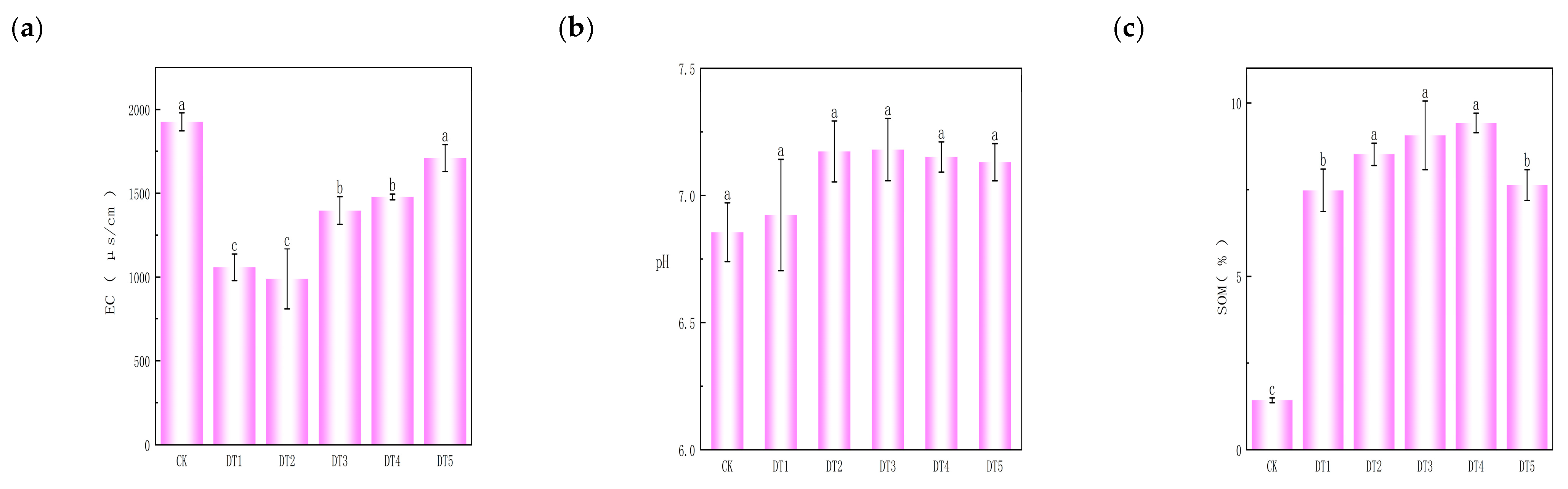
3.1. Soil Physicochemical Properties
3.2. Community Structure of Microorganisms
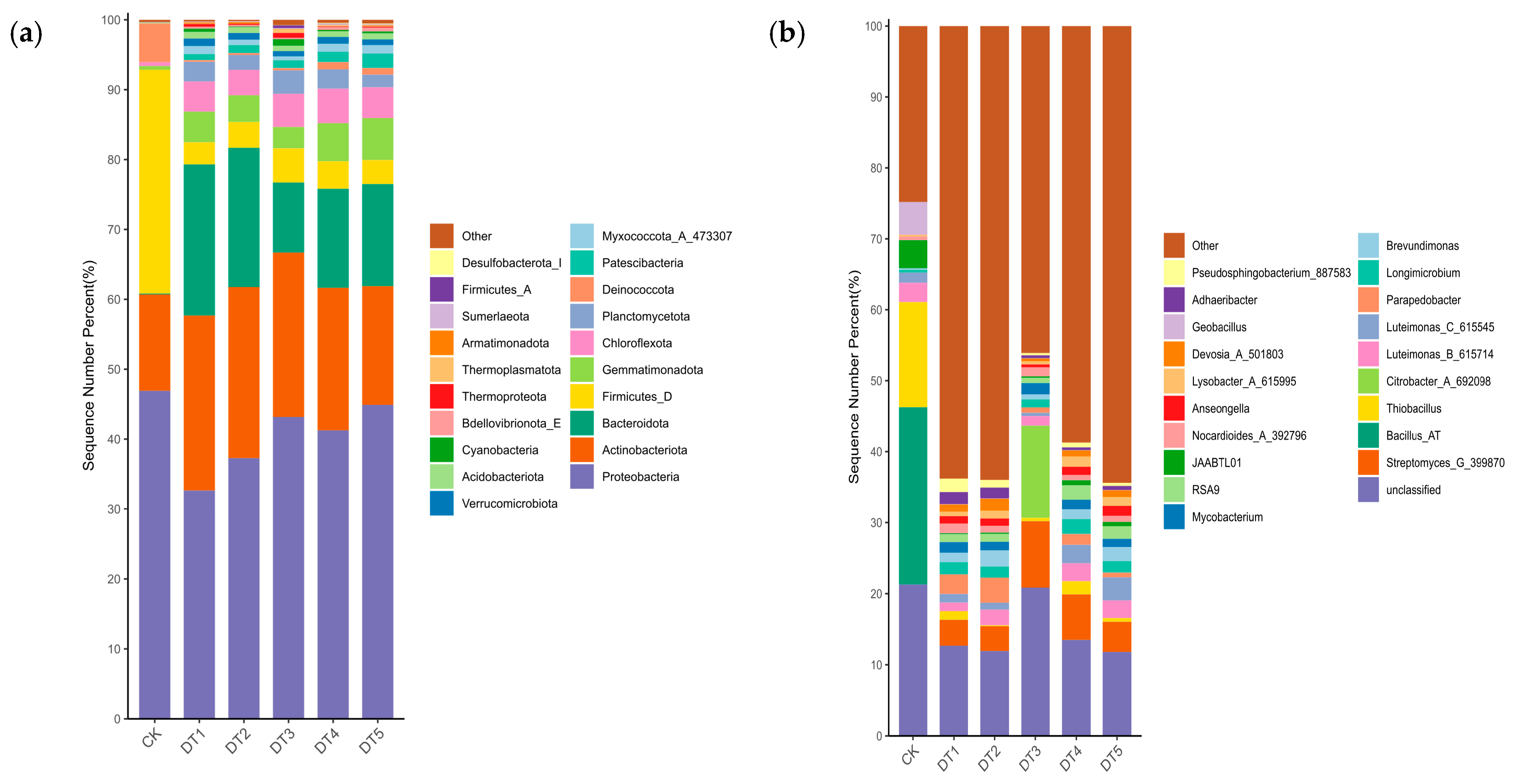
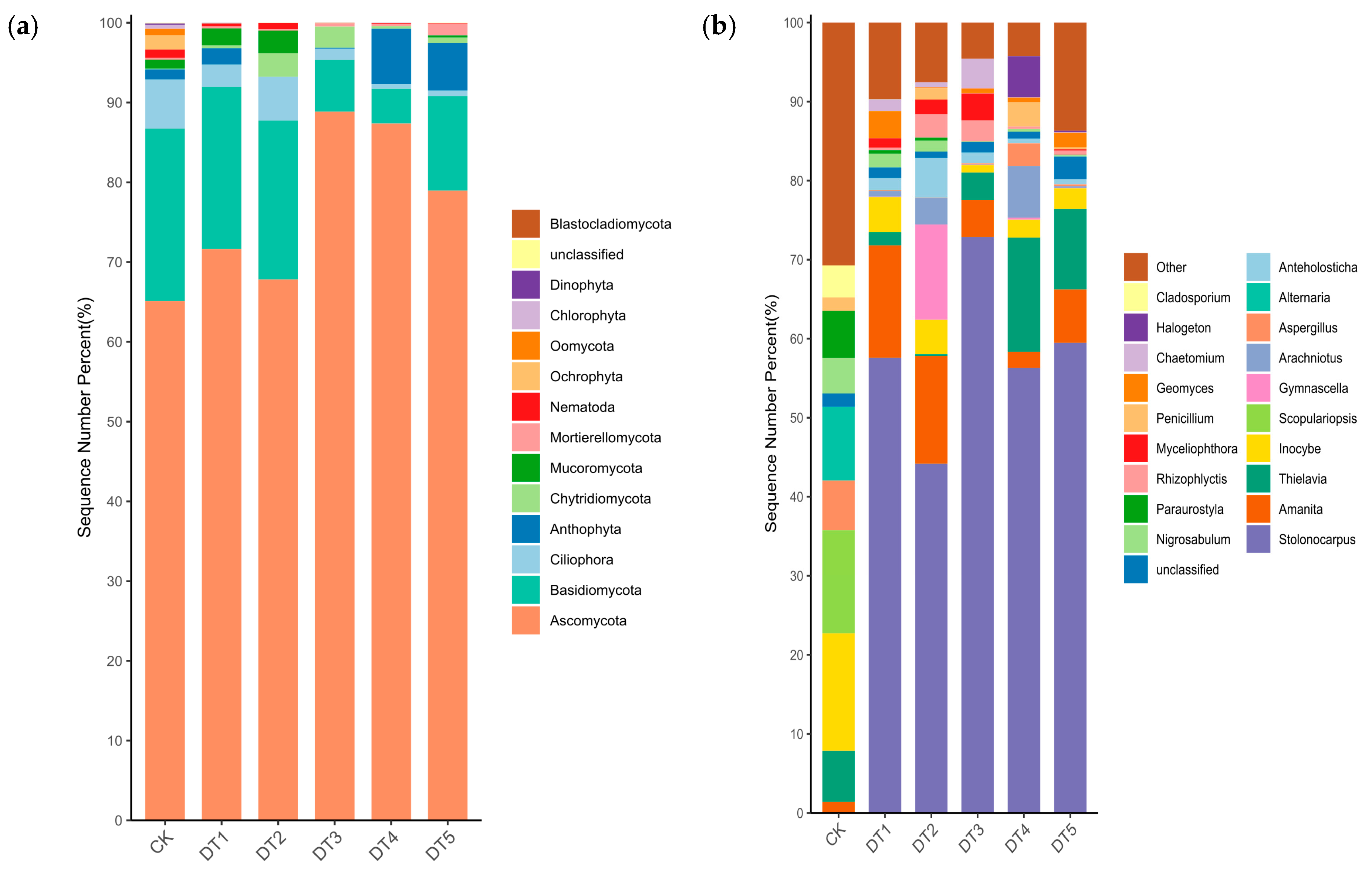
3.2.1. Microbial Community Structure Composition Diagram
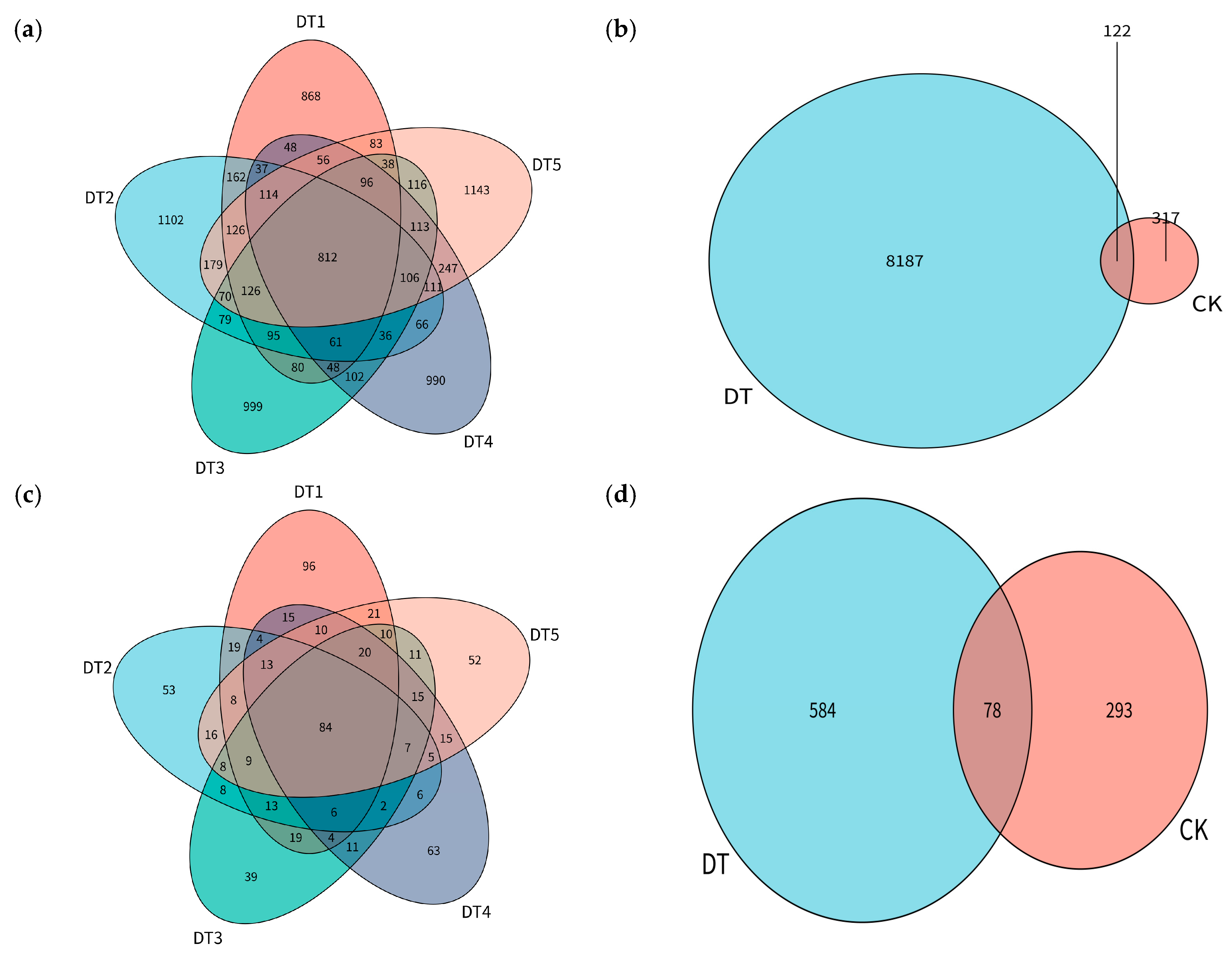
3.2.2. Microbial Venn Diagram
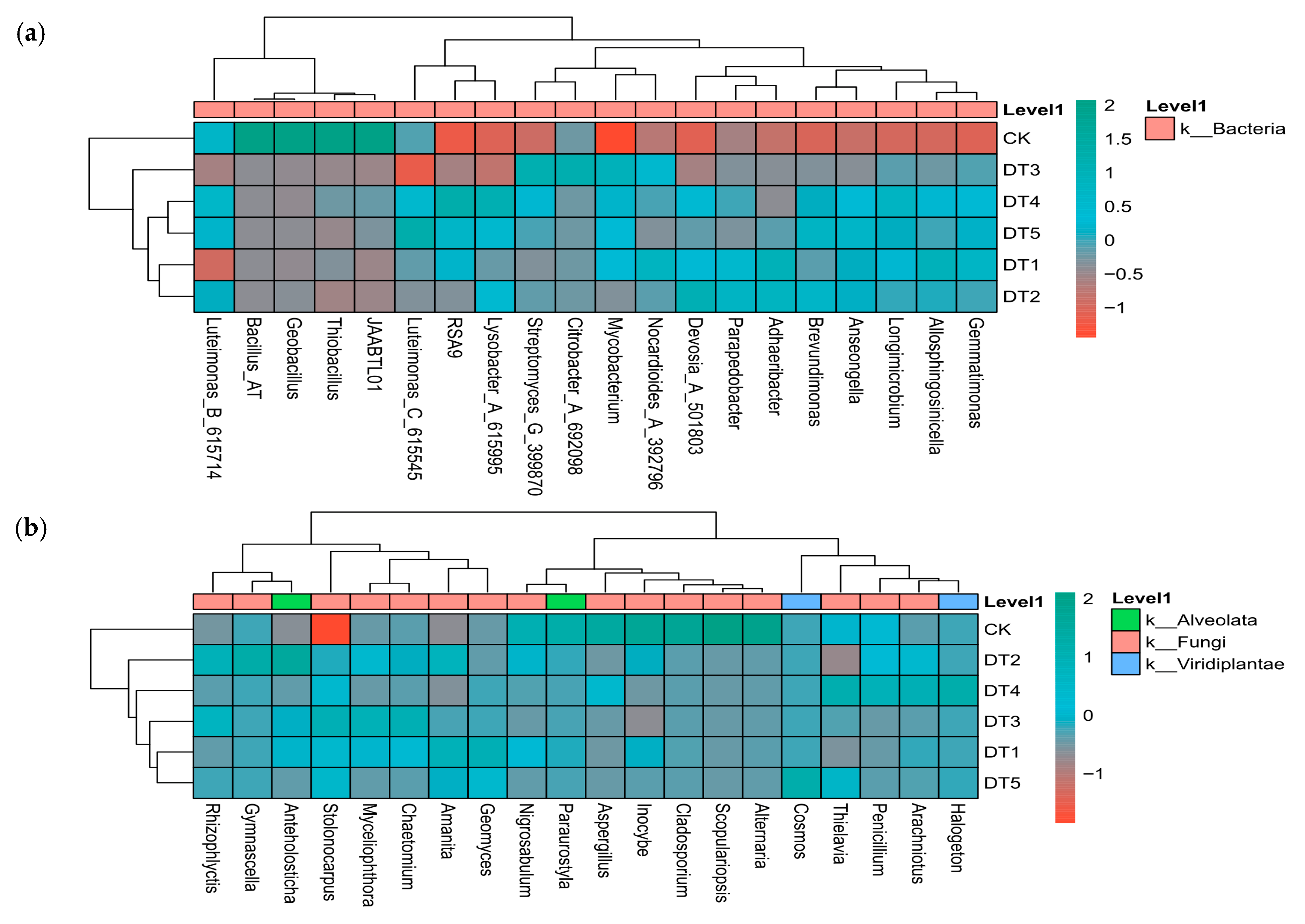
3.2.3. Microbial Clustering Heatmap Results
3.3. Results of Microbial Diversity
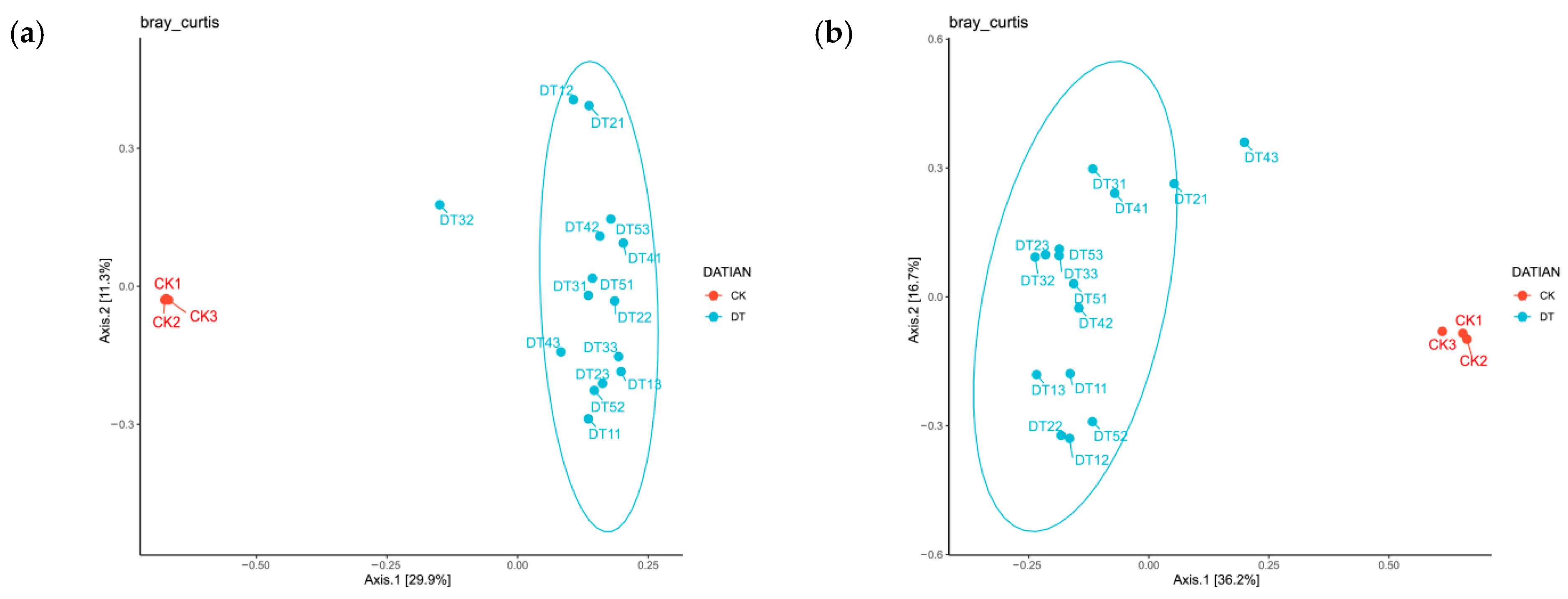
3.3.1. Microbial Beta Diversity
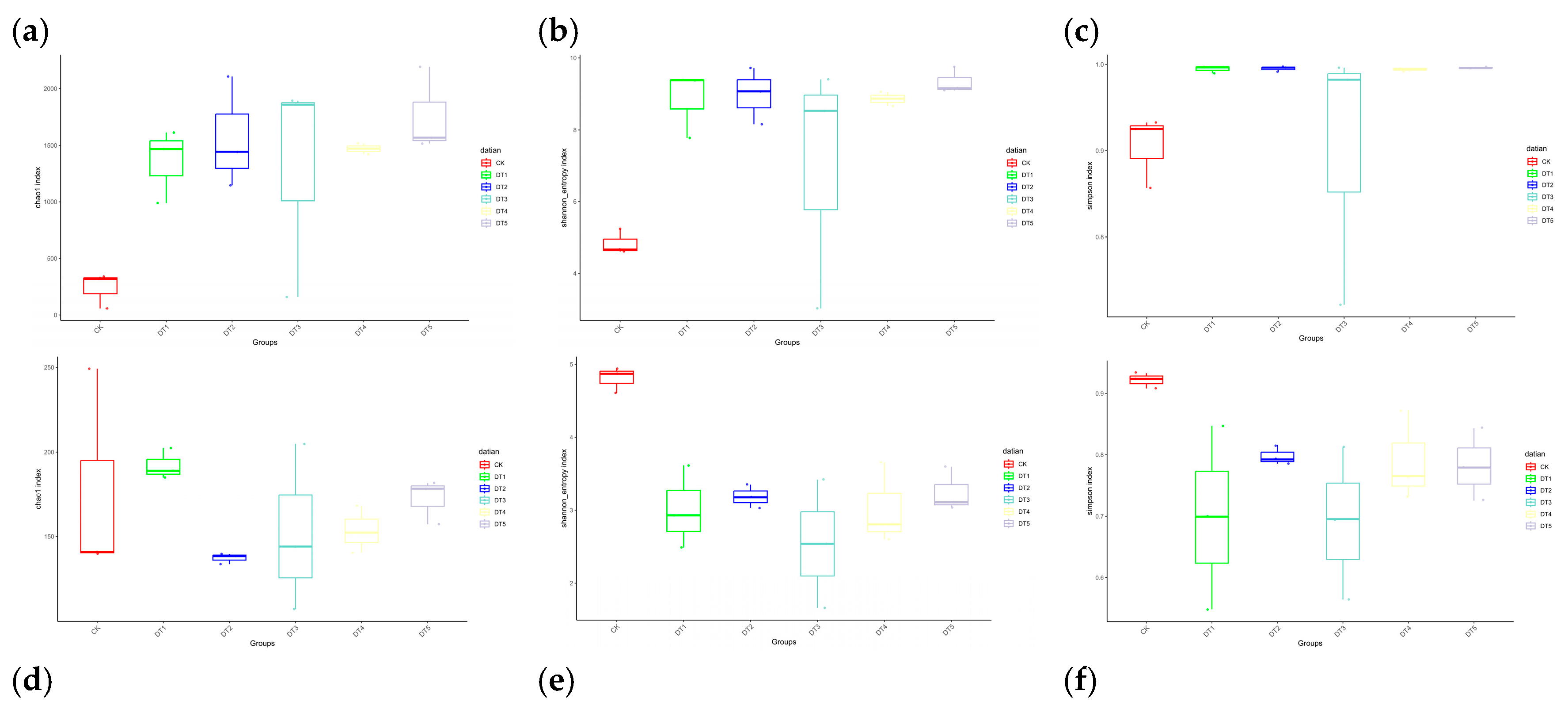
3.3.2. Microbial Alpha Diversity
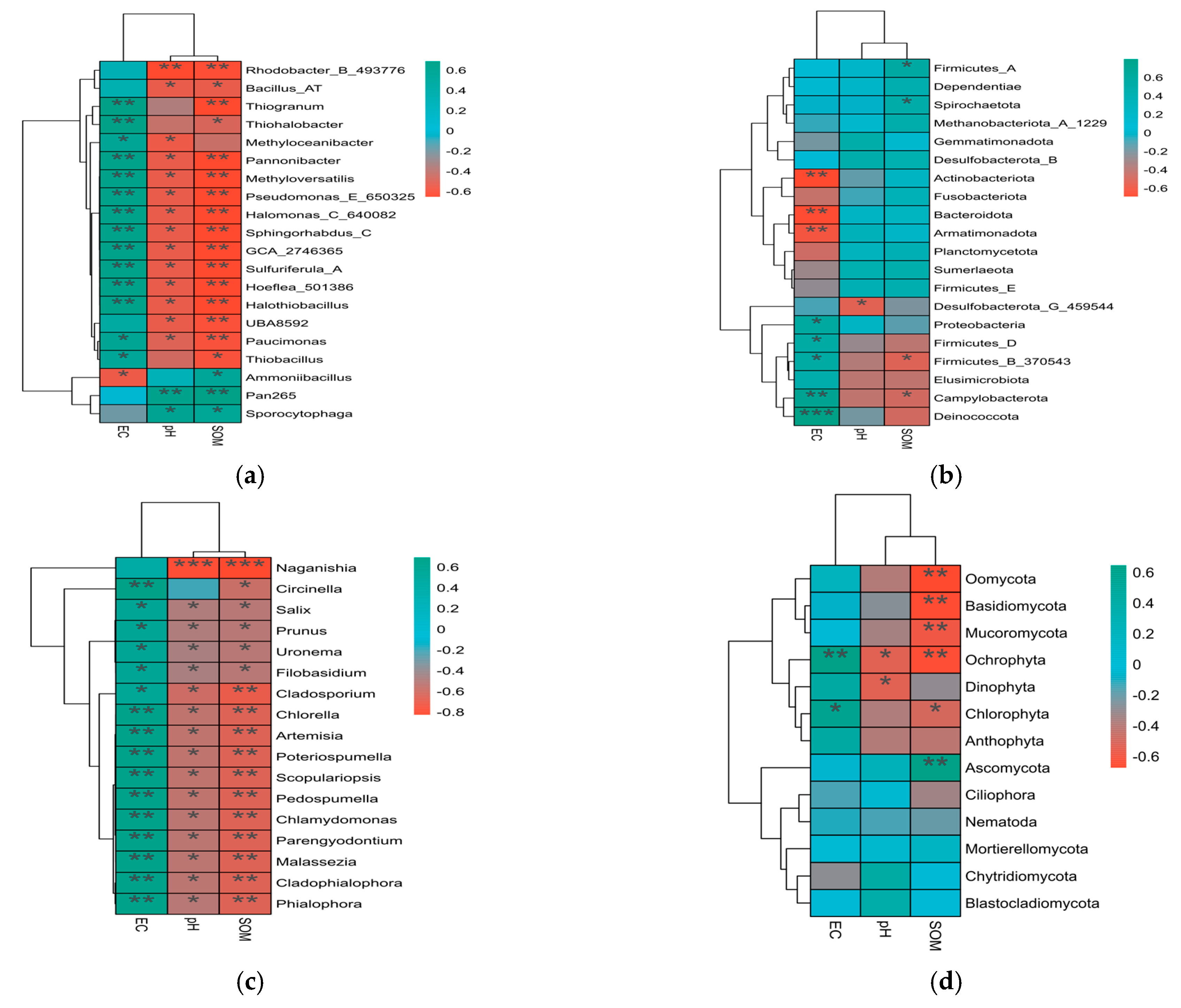
3.4. Correlation Analysis Between Dominant Species in Soil Microbial Communities and Soil Physicochemical Properties and Enzyme Activity
4. Discussion
4.1. Improvement in the Soil Environment by Combined Remediation with Compound Organic Fertilizer and Plants
4.2. Effects of Combined Remediation with Compound Organic Fertilizer and Plants on Microbial Community Structure of Tailings Substrates
4.2.1. Dominant Microbial Taxa in Amended Soils
4.2.2. Dominant Microbial Taxa in Tailings Substrates
4.2.3. Composition of Dominant Taxa Under Different Remediation Strategies
4.3. Microbial Diversity
5. Conclusions
Author Contributions
Funding
Institutional Review Board Statement
Informed Consent Statement
Data Availability Statement
Conflicts of Interest
References
- Geng, Y.; Zhou, P. The roles of rare and abundant microbial species in the primary succession of biological soil crusts are differentiated in metal tailings ponds with different states. J. Hazard. Mater. 2024, 472, 134577. [Google Scholar] [CrossRef] [PubMed]
- Ramdial, K.S.; Abell, R. Elevated toxicity of resuspended mine tailings over time. Mar. Environ. Res. 2021, 171, 105471. [Google Scholar] [CrossRef] [PubMed]
- Fennell, J.; Arciszewski, T.J. Current knowledge of seepage from oil sands tailings ponds and its environmental influence in northeastern Alberta. Sci. Total Environ. 2019, 686, 968–985. [Google Scholar] [PubMed]
- Dong, K. The detoxification and utilization of cyanide tailings: A critical review. J. Clean. Prod. 2021, 302, 126946. [Google Scholar] [CrossRef]
- Fashola, M.O.; Xie, F. Heavy metal immobilization potential of indigenous bacteria isolated from gold mine tailings. Int. J. Environ. Res. 2020, 14, 71–86. [Google Scholar] [CrossRef]
- Saborimanesh, N.; Ngole-Jeme, V.M. Toward sustainable remediation of oil sands fine tailings-a review. J. Environ. Manag. 2021, 288, 112418. [Google Scholar] [CrossRef]
- He, Z.; Long, L. Remediation of heavy-metal-contaminated soil with two organic acids: Washing efficiency, recovery performance, and benefit analysis. J. Clean. Prod. 2023, 393, 136235. [Google Scholar] [CrossRef]
- Jiang, Y.; Hu, C.; Zhou, A.; Qiu, H.; Cao, B.; Xu, J. Effectiveness of various chemical leaching systems in the remediation of chromium-contaminated soil and their impact on chromium speciation. J. Environ. Sci. 2025, 157, 77–89. [Google Scholar] [CrossRef]
- Gurdon, L.; Esmahi, L. Life cycle cost analysis of contaminated site remediation using information technology tools. Environ. Dev. Sustain. 2021, 23, 10173–10193. [Google Scholar] [CrossRef]
- Ashraf, S.; Ali, Q. Phytoremediation: Environmentally sustainable way for reclamation of heavy metal polluted soils. Ecotoxicol. Environ. Saf. 2019, 174, 714–727. [Google Scholar] [CrossRef]
- Sarwar, N.; Imran, M. Phytoremediation strategies for soils contaminated with heavy metals: Modifications and future perspectives. Chemosphere 2017, 171, 710–721. [Google Scholar] [CrossRef] [PubMed]
- Glick, B.R. Using soil bacteria to facilitate phytoremediation. Biotechnol. Adv. 2010, 28, 367–374. [Google Scholar] [CrossRef] [PubMed]
- Wang, L.; Ji, B. A review on in situ phytoremediation of mine tailings. Chemosphere 2017, 184, 594–600. [Google Scholar] [CrossRef] [PubMed]
- Wang, J.; Delavar, M.A. Techno-economic analysis of phytoremediation: A strategic rethinking. Sci. Total Environ. 2023, 902, 165949. [Google Scholar] [CrossRef]
- Li, C.; Cai, H.; Liu, Y. Sustainable approaches to tailings remediation: Role of organic fertilizers. Environ. Res. 2025, 276, 121454. [Google Scholar] [CrossRef]
- Cui, Z.H. Combined Remediation and Improvement Techniques of Plant-Microorganism in Utilization of Iron Tailings. Ph.D. Thesis, Shandong University, Jinan, China, 2018. [Google Scholar]
- Luo, M.; Lin, H. The influence of corncob-based biochar on remediation of arsenic and cadmium in yellow soil and cinnamon soil. Sci. Total Environ. 2020, 717, 137014. [Google Scholar] [CrossRef]
- Blossfeld, S.; Perriguey, J. Rhizosphere pH dynamics in trace-metal-contaminated soils, monitored with planar pH optodes. Plant Soil 2010, 330, 173–184. [Google Scholar] [CrossRef]
- Liao, K.; Tao, Y. A feasible method of induced biological soil crust propagation through the inoculation of moss and addition of soil amendments in a Pb-Zn tailing pond. Sci. Total Environ. 2024, 910, 168569. [Google Scholar] [CrossRef]
- Zhang, H.; Dang, Z. Remediation of soil co-contaminated with pyrene and cadmium by growing maize (Zea mays L.). Int. J. Environ. Sci. Technol. 2009, 6, 249–258. [Google Scholar] [CrossRef]
- Li, Y.; Jia, Z. Ecological restoration alters microbial communities in mine tailings profiles. Sci. Rep. 2016, 6, 25193. [Google Scholar] [CrossRef]
- Yin, Y.; Wang, X. Soil bacterial community structure in the habitats with different levels of heavy metal pollution at an abandoned polymetallic mine. J. Hazard. Mater. 2023, 442, 130063. [Google Scholar]
- He, M.; Zhang, J. High-throughput sequencing analysis of microbial community diversity in response to indica and japonica bar-transgenic rice paddy soils. PLoS ONE 2019, 14, e0222191. [Google Scholar] [CrossRef]
- Fernández-Calviño, D.; Bååth, E. Interaction between pH and Cu toxicity on fungal and bacterial performance in soil. Soil Biol. Biochem. 2016, 96, 20–29. [Google Scholar] [CrossRef]
- Teng, J.L.; Jia, R.L. Impact of sand burial on bacterial community structure and diversity within biocrusts dominated by Bryum argenteum. Acta Ecol. Sin. 2017, 37, 2179–2187. [Google Scholar] [CrossRef][Green Version]
- Emenike, C.U.; Agamuthu, P. Enhanced bioremediation of metal-contaminated soil by consortia of Proteobacteria. Water Air Soil Pollut. 2023, 234, 731. [Google Scholar] [CrossRef]
- Johansen, J.E.; Binnerup, S.J. Contribution of Cytophaga-like bacteria to the potential of turnover of carbon, nitrogen, and phosphorus by bacteria in the rhizosphere of barley (Hordeum vulgare L.). Microb. Ecol. 2002, 43, 298–306. [Google Scholar] [CrossRef]
- Escudero-Martinez, C.; Coulter, M. Identifying plant genes shaping microbiota composition in the barley rhizosphere. Nat. Commun. 2022, 13, 3443. [Google Scholar] [CrossRef]
- Kwak, M.J.; Kong, H.G. Rhizosphere microbiome structure alters to enable wilt resistance in tomato. Nat. Biotechnol. 2018, 36, 1100–1109. [Google Scholar]
- Cardinale, M.; Grube, M. Bacterial networks and co-occurrence relationships in the lettuce root microbiota. Environ. Microbiol. 2015, 17, 239–252. [Google Scholar]
- Chaparro, J.M.; Badri, D.V. Rhizosphere microbiome assemblage is affected by plant development. ISME J. 2014, 8, 790–803. [Google Scholar]
- Kumar, K.R.; Mathur, A. Actinobacteria as biological nitrogen fixation (BNF) and symbiotic association with actinorhizal plants for restoration of salinized soils. Mater. Today Proc. 2023, 95, 67–72. [Google Scholar] [CrossRef]
- Nie, X.; Huang, X. Advances in soil amendments for remediation of heavy metal-contaminated soils: Mechanisms, impact, and future prospects. Toxics 2024, 12, 872. [Google Scholar] [CrossRef] [PubMed]
- Nagaki, T.M.; Possinger, A.R. Microscale spatial distribution and soil organic matter persistence in top and subsoil. Soil Biol. Biochem. 2023, 178, 108921. [Google Scholar] [CrossRef]
- Narendrula-Kotha, R.; Nkongolo, K.K. Bacterial and fungal community structure and diversity in a mining region under long-term metal exposure revealed by metagenomics sequencing. Ecol. Genet. Genom. 2017, 2, 13–24. [Google Scholar] [CrossRef]
- Montiel-Rozas, M.M.; Domínguez, M.T. Long-term effects of organic amendments on bacterial and fungal communities in a degraded Mediterranean soil. Geoderma 2018, 332, 20–28. [Google Scholar] [CrossRef]
- Dong, L.; Li, M.X. Aridity drives the variability of desert soil microbiomes across north-western China. Sci. Total Environ. 2024, 907, 168048. [Google Scholar] [CrossRef]
- Li, Q.; Xiong, Z. Effects of uranium mining on soil bacterial communities and functions in the Qinghai-Tibet plateau. Chemosphere 2024, 347, 140715. [Google Scholar] [CrossRef]
- Arunrat, N.; Sansupa, C. Fire-induced changes in soil properties and bacterial communities in rotational shifting cultivation fields in Northern Thailand. Biology 2024, 13, 383. [Google Scholar] [CrossRef]
- Arunrat, N.; Sansupa, C. Short-term response of soil bacterial and fungal communities to fire in rotational shifting cultivation, northern Thailand. Appl. Soil Ecol. 2024, 196, 105303. [Google Scholar] [CrossRef]
- Lv, Y.; Tang, C. Optimization of environmental conditions for microbial stabilization of uranium tailings, and the microbial community response. Front. Microbiol. 2021, 12, 770206. [Google Scholar] [CrossRef]
- Bhandari, P.; Choudhary, S. Insights on the role of sulfur oxidizing bacteria in acid mine drainage biogeochemistry. Geomicrobiol. J. 2022, 39, 270–281. [Google Scholar] [CrossRef]
- Huang, Q.Y.; Yang, F. Diversity and communlty structure of soil bacteria in different volcanoes, Wudalianchi. Acta Ecol. Sin. 2021, 41, 8276–8284. [Google Scholar]
- Peng, M.; Jia, H. The effect of land use on bacterial communities in saline–alkali soil. Curr. Microbiol. 2017, 74, 325–333. [Google Scholar] [CrossRef] [PubMed]
- Venâncio, C. The Quirky Rot Fungi: Underexploited Potential for Soil Remediation and Rehabilitation. Appl. Sci. 2025, 15, 1039. [Google Scholar] [CrossRef]
- Gostinčar, C.; Zalar, P. No need for speed: Slow development of fungi in extreme environments. Fungal Biol. Rev. 2022, 39, 1–14. [Google Scholar] [CrossRef]
- Maki, T.; Bin, C. Vertical distributions of airborne microorganisms over Asian dust source region of Taklimakan and Gobi Desert. Atmos. Environ. 2019, 214, 116848. [Google Scholar] [CrossRef]
- Santiago, I.F.; Gonçalves, V.N. Fungal diversity in the Atacama Desert. Antonie Van Leeuwenhoek 2018, 111, 1345–1360. [Google Scholar]
- Maestre, F.T.; Delgado-Baquerizo, M. Increasing aridity reduces soil microbial diversity and abundance in global drylands. Proc. Natl. Acad. Sci. USA 2015, 112, 15684–15689. [Google Scholar] [CrossRef]
- Hui, N.; Liu, X. Ectomycorrhizal fungal communities in urban parks are similar to those in natural forests but shaped by vegetation and park age. Appl. Environ. Microbiol. 2017, 83, e01797-17. [Google Scholar] [CrossRef]
- Zhang, S.; Gao, H. Rhizosphere bacterial communities of Agriophyllum squarrosum (L.) Moq. during different developmental stages. J. Arid Land 2025, 17, 1282–1296. [Google Scholar] [CrossRef]
- Zhang, X.; Luo, H. Divergent effects of root and leaf litter on soil microbial diversity decouple soil CN release. Soil Ecol. Lett. 2025, 7, 250332. [Google Scholar] [CrossRef]
- Tedersoo, L.; Mett, M. Phylogenetic relationships among host plants explain differences in fungal species richness and community composition in ectomycorrhizal symbiosis. New Phytol. 2013, 199, 822–831. [Google Scholar] [CrossRef] [PubMed]
- Lin, S.; He, Q. Effects of Cadmium Stress on Root Exudates and Soil Rhizosphere Microorganisms of Rice (Oryza sativa L.) and Its Ecological Regulatory Mechanisms. Plants 2025, 14, 1695. [Google Scholar] [CrossRef] [PubMed]
- Tao, C.; Wang, Z. Additive fungal interactions drive biocontrol of Fusarium wilt disease. New Phytol. 2023, 238, 1198–1214. [Google Scholar] [CrossRef] [PubMed]
- Baruch, Z.; Liddicoat, C. Characterising the soil fungal microbiome in metropolitan green spaces across a vegetation biodiversity gradient. Fungal Ecol. 2020, 47, 100939. [Google Scholar] [CrossRef]
- Li, J.; Liu, Y. Botanical Integrity of Leymus chinensis Meadow Steppe Correlates with Parameters of Physicochemical Soil Fertility and Arbuscular Mycorrhizal Fungal Richness and Diversity in the Songnen Plain in NE China Threatened by Soil Salinization. Russ. J. Plant Physiol. 2025, 72, 88. [Google Scholar] [CrossRef]
- Amen, R.; Ganzert, L. From single pioneers to complex pro-and eukaryotic microbial networks in soils along a glacier forefield chronosequence in continental Antarctica. Front. Microbiol. 2025, 16, 1576898. [Google Scholar] [CrossRef]
- Gao, L.; Rao, M.P.N. Salinity-induced changes in diversity, stability, and functional profiles of microbial communities in different saline lakes in arid areas. Microb. Ecol. 2024, 87, 135. [Google Scholar] [CrossRef]
- Scheffer, G.; Hubert, C.R.J. Metagenomic investigation of a low diversity, high salinity offshore oil reservoir. Microorganisms 2021, 9, 2266. [Google Scholar] [CrossRef]



Disclaimer/Publisher’s Note: The statements, opinions and data contained in all publications are solely those of the individual author(s) and contributor(s) and not of MDPI and/or the editor(s). MDPI and/or the editor(s) disclaim responsibility for any injury to people or property resulting from any ideas, methods, instructions or products referred to in the content. |
© 2026 by the authors. Licensee MDPI, Basel, Switzerland. This article is an open access article distributed under the terms and conditions of the Creative Commons Attribution (CC BY) license.
Share and Cite
Wu, T.; Bao, Y.; Su, Y.-C.; Yang, T.-D.; Leng, X.-Y.; Shi, C.-F. Impact of Compound Organic Fertilizer–Plant Combined Remediation on Microbial Community Structure in Mine Tailings Substrates. Toxics 2026, 14, 285. https://doi.org/10.3390/toxics14040285
Wu T, Bao Y, Su Y-C, Yang T-D, Leng X-Y, Shi C-F. Impact of Compound Organic Fertilizer–Plant Combined Remediation on Microbial Community Structure in Mine Tailings Substrates. Toxics. 2026; 14(4):285. https://doi.org/10.3390/toxics14040285
Chicago/Turabian StyleWu, Tong, Yan Bao, Yang-Chen Su, Teng-Da Yang, Xiao-Yun Leng, and Chun-Fang Shi. 2026. "Impact of Compound Organic Fertilizer–Plant Combined Remediation on Microbial Community Structure in Mine Tailings Substrates" Toxics 14, no. 4: 285. https://doi.org/10.3390/toxics14040285
APA StyleWu, T., Bao, Y., Su, Y.-C., Yang, T.-D., Leng, X.-Y., & Shi, C.-F. (2026). Impact of Compound Organic Fertilizer–Plant Combined Remediation on Microbial Community Structure in Mine Tailings Substrates. Toxics, 14(4), 285. https://doi.org/10.3390/toxics14040285