
A High-Throughput, High-Content Analysis of Dopaminergic Neurodegeneration in Caenorhabditis elegans Exposed to Per- and Polyfluoroalkyl Substances



Abstract
1. Introduction
2. Materials and Methods
2.1. Chemicals
2.2. C. elegans Maintenance and Exposure
2.3. PFAS Selection and Mixture Construction
2.4. Developing the HTHC Imaging Platform
2.5. DA-Dependent Neuronal Behavioral Analysis
2.6. Benchmark Dose Calculation
2.7. Statistical Analysis
3. Results
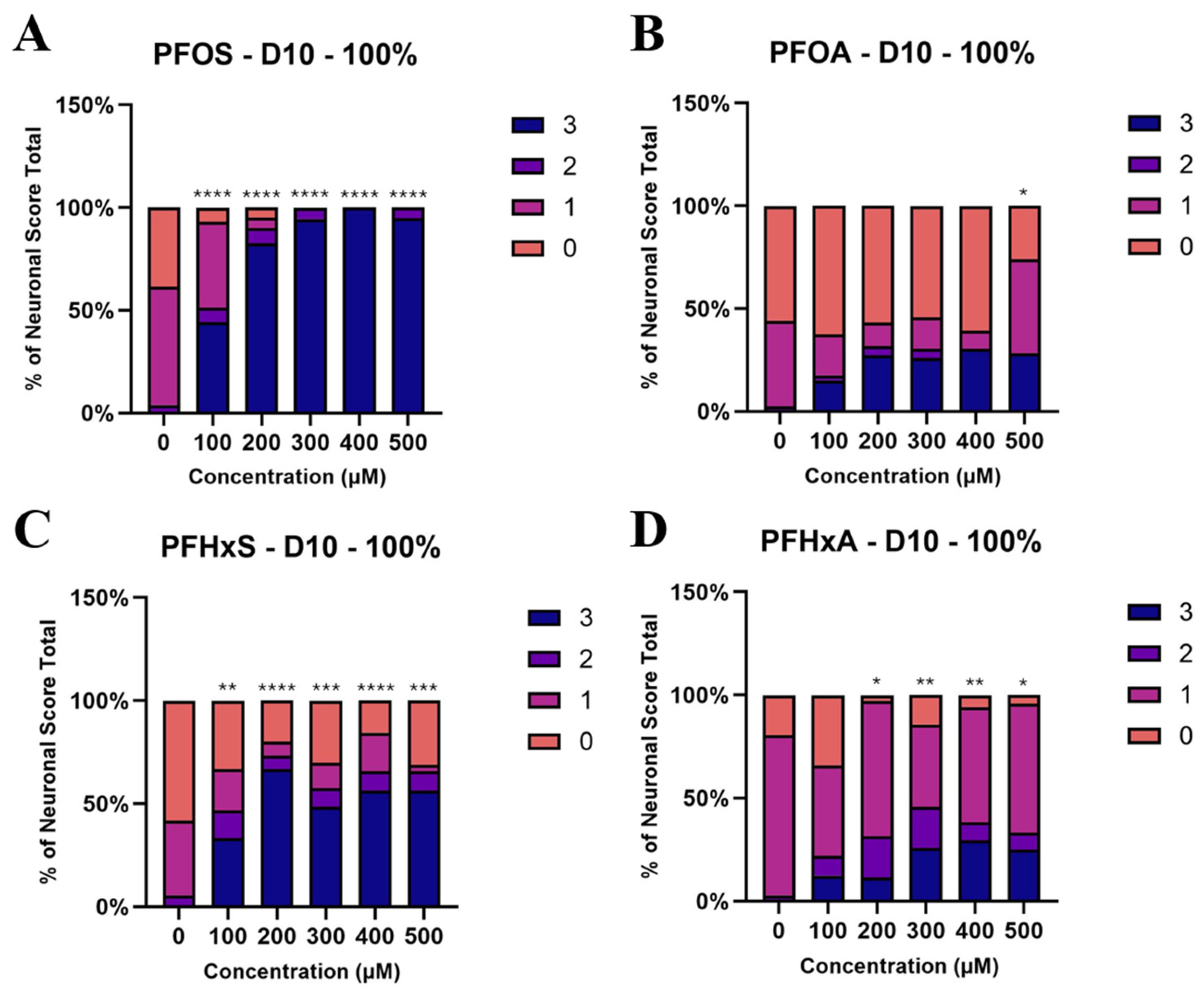
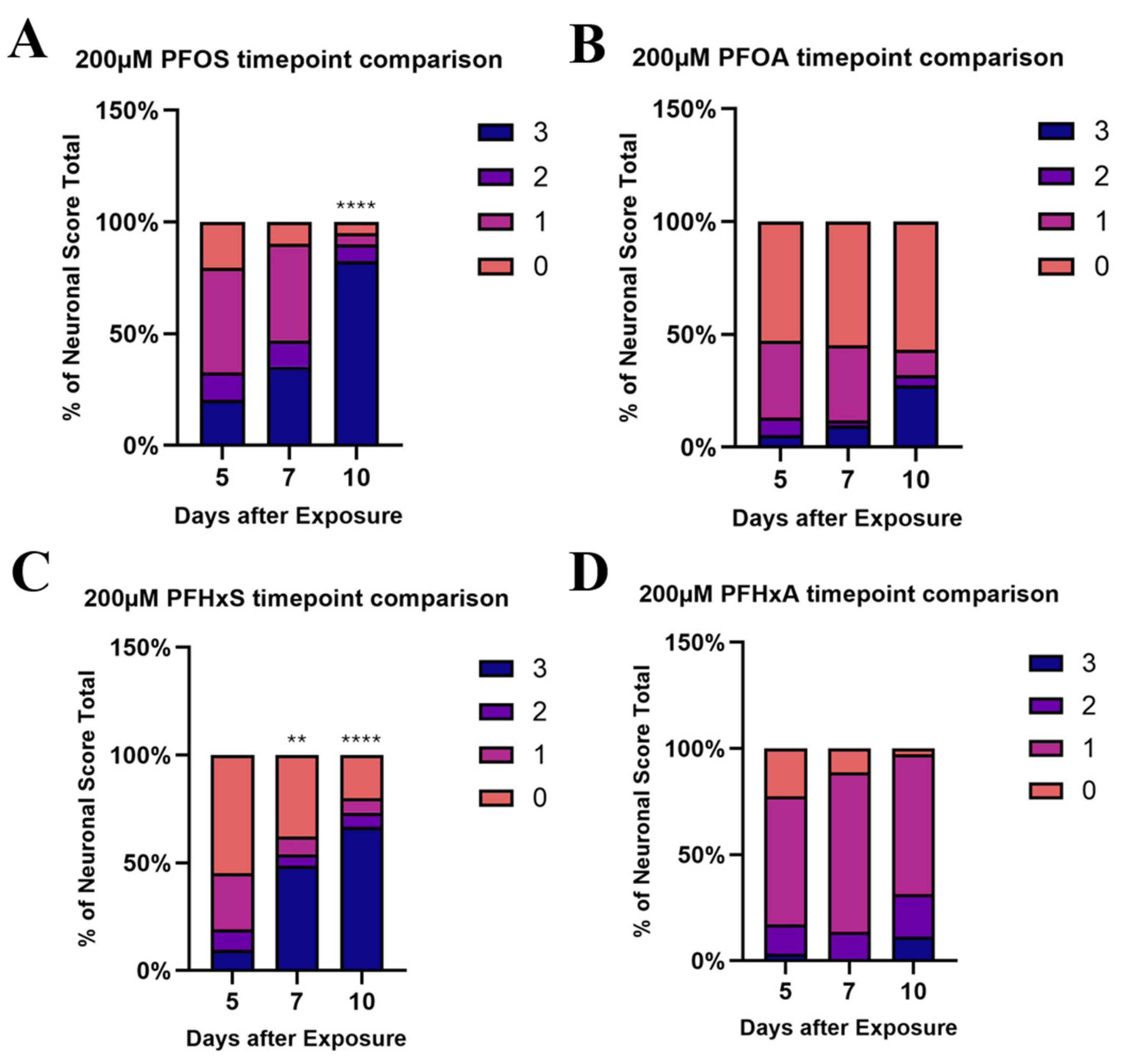
3.1. HTHC Imaging of Individual PFAS Exposure
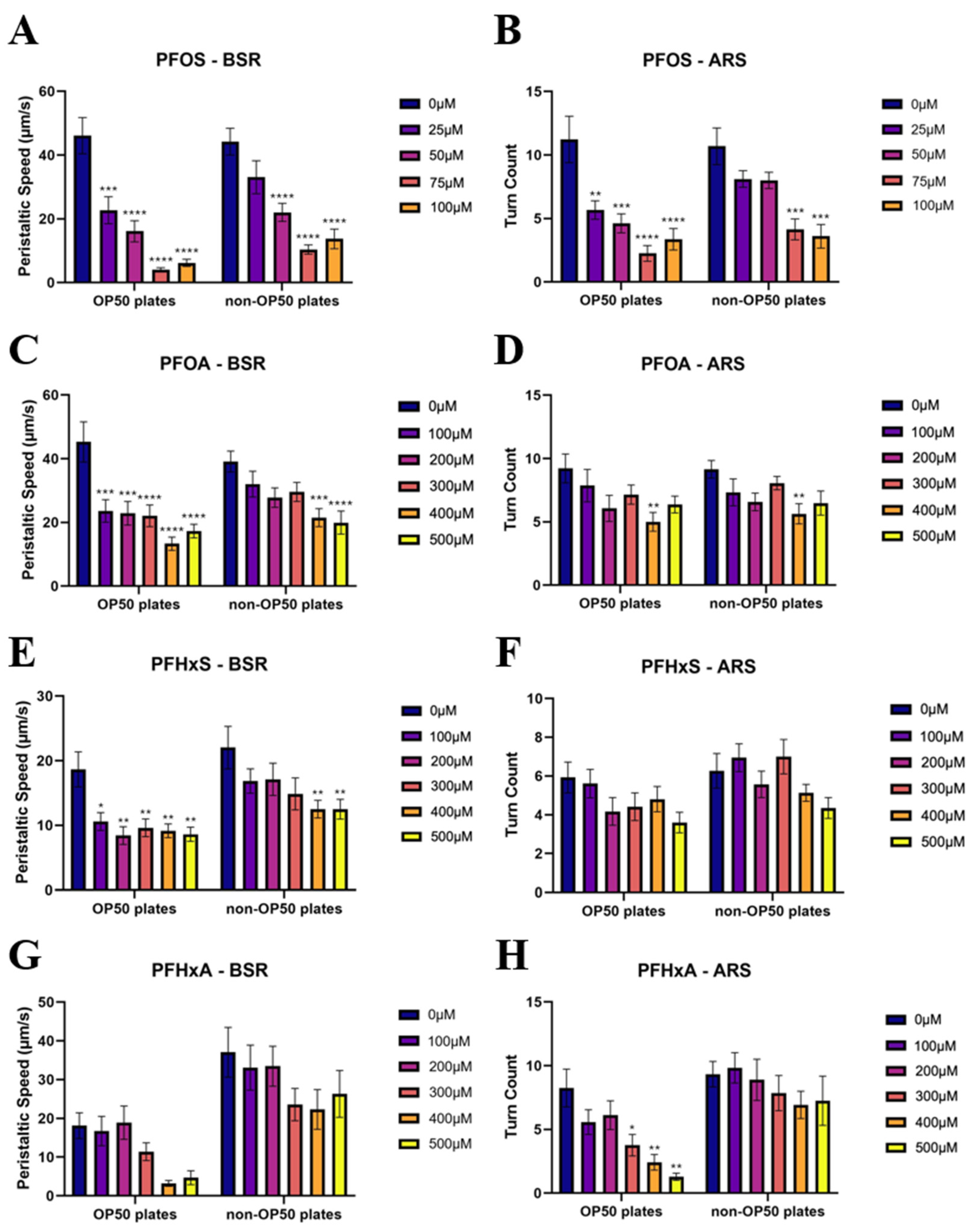
3.2. Behavioral Validation of Dopaminergic Imaging Findings
3.3. Neurological Disorder of Constructed PFAS Mixtures
3.3.1. Neuronal Integrity Following PFAS Mixture Exposure
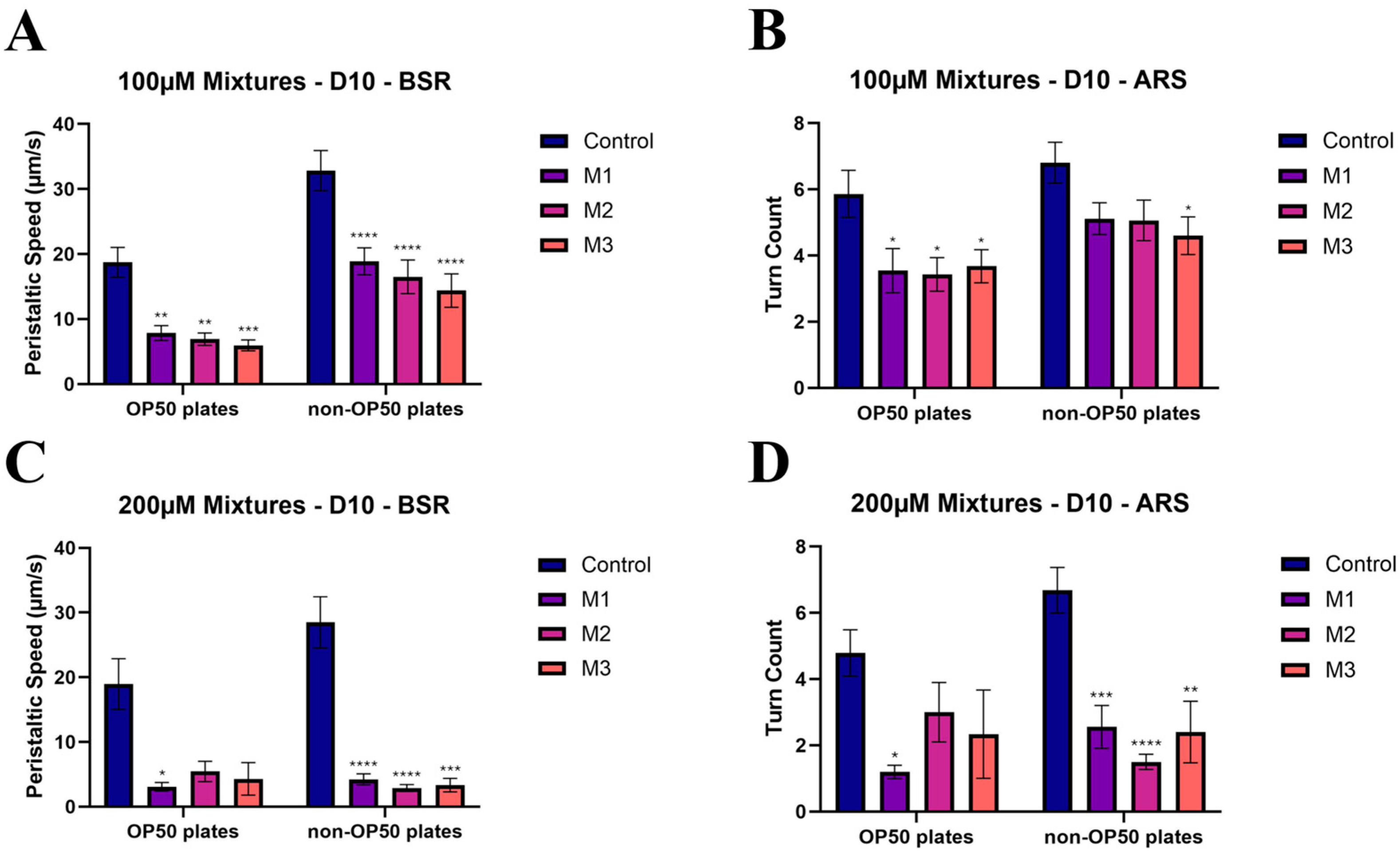
3.3.2. Behavioral Validation of Neuronal Integrity Following PFAS Mixture Exposure
4. Discussion
5. Conclusions
Author Contributions
Funding
Institutional Review Board Statement
Informed Consent Statement
Data Availability Statement
Conflicts of Interest
References
- Gómez-Benito, M.; Granado, N.; García-Sanz, P.; Michel, A.; Dumoulin, M.; Moratalla, R. Modeling Parkinson’s Disease with the Alpha-Synuclein Protein. Front. Pharmacol. 2020, 11, 356. [Google Scholar] [CrossRef] [PubMed]
- Keavney, J.L.; Mathur, S.; Schroeder, K.; Merrell, R.; Castillo-Torres, S.A.; Gao, V.; Crotty, G.F.; Schwarzschild, M.A.; Poma, J.M. Perspectives of People At-Risk on Parkinson’s Prevention Research. J. Park. Dis. 2024, 14, 399–414. [Google Scholar] [CrossRef] [PubMed]
- Moustafa, A.A.; Chakravarthy, S.; Phillips, J.R.; Gupta, A.; Keri, S.; Polner, B.; Frank, M.J.; Jahanshahi, M. Motor symptoms in Parkinson’s disease: A unified framework. Neurosci. Biobehav. Rev. 2016, 68, 727–740. [Google Scholar] [CrossRef] [PubMed]
- Surmeier, D.J. Determinants of dopaminergic neuron loss in Parkinson’s disease. FEBS J. 2018, 285, 3657–3668. [Google Scholar] [CrossRef]
- Atterling Brolin, K.; Schaeffer, E.; Kuri, A.; Rumrich, I.K.; Schumacher Schuh, A.F.; Darweesh, S.K.; Kaasinen, V.; Tolppanen, A.M.; Chahine, L.M.; Noyce, A.J. Environmental risk factors for Parkinson’s disease: A critical review and policy implications. Mov. Disord. 2025, 40, 204–221. [Google Scholar] [CrossRef]
- Jeong, A.; Park, S.J.; Lee, E.J.; Kim, K.W. Nanoplastics exacerbate Parkinson’s disease symptoms in C. elegans and human cells. J. Hazard. Mater. 2024, 465, 133289. [Google Scholar] [CrossRef]
- Limke, A.; Scharpf, I.; Blesing, F.; von Mikecz, A. Tire components, age and temperature accelerate neurodegeneration in C. elegans models of Alzheimer’s and Parkinson’s disease. Environ. Pollut. 2023, 328, 121660. [Google Scholar] [CrossRef]
- Aly, N.A.; Luo, Y.-S.; Liu, Y.; Casillas, G.; McDonald, T.J.; Kaihatu, J.M.; Jun, M.; Ellis, N.; Gossett, S.; Dodds, J.N.; et al. Temporal and spatial analysis of per and polyfluoroalkyl substances in surface waters of Houston ship channel following a large-scale industrial fire incident. Environ. Pollut. 2020, 265, 115009. [Google Scholar] [CrossRef]
- Salvatore, D.; Mok, K.; Garrett, K.K.; Poudrier, G.; Brown, P.; Birnbaum, L.S.; Goldenman, G.; Miller, M.F.; Patton, S.; Poehlein, M. Presumptive contamination: A new approach to PFAS contamination based on likely sources. Environ. Sci. Technol. Lett. 2022, 9, 983–990. [Google Scholar] [CrossRef]
- Currie, S.D.; Ji, Y.; Huang, Q.; Wang, J.-S.; Tang, L. The impact of early life exposure to individual and combined PFAS on learning, memory, and bioaccumulation in C. elegans. Environ. Pollut. 2024, 363, 125257. [Google Scholar] [CrossRef]
- Glüge, J.; Scheringer, M.; Cousins, I.T.; DeWitt, J.C.; Goldenman, G.; Herzke, D.; Lohmann, R.; Ng, C.A.; Trier, X.; Wang, Z. An overview of the uses of per- and polyfluoroalkyl substances (PFAS). Environ. Sci. Process. Impacts 2020, 22, 2345–2373. [Google Scholar] [CrossRef]
- Khan, B.; Burgess, R.M.; Cantwell, M.G. Occurrence and Bioaccumulation Patterns of Per- and Polyfluoroalkyl Substances (PFAS) in the Marine Environment. ACS ES&T Water 2023, 3, 1243–1259. [Google Scholar] [CrossRef] [PubMed]
- Lewis, A.J.; Yun, X.; Spooner, D.E.; Kurz, M.J.; McKenzie, E.R.; Sales, C.M. Exposure pathways and bioaccumulation of per- and polyfluoroalkyl substances in freshwater aquatic ecosystems: Key considerations. Sci. Total Environ. 2022, 822, 153561. [Google Scholar] [CrossRef] [PubMed]
- Barzen-Hanson, K.A.; Roberts, S.C.; Choyke, S.; Oetjen, K.; McAlees, A.; Riddell, N.; McCrindle, R.; Ferguson, P.L.; Higgins, C.P.; Field, J.A. Discovery of 40 Classes of Per- and Polyfluoroalkyl Substances in Historical Aqueous Film-Forming Foams (AFFFs) and AFFF-Impacted Groundwater. Environ. Sci. Technol. 2017, 51, 2047–2057. [Google Scholar] [CrossRef] [PubMed]
- Langberg, H.A.; Breedveld, G.D.; Grønning, H.M.; Kvennås, M.; Jenssen, B.M.; Hale, S.E. Bioaccumulation of Fluorotelomer Sulfonates and Perfluoroalkyl Acids in Marine Organisms Living in Aqueous Film-Forming Foam Impacted Waters. Environ. Sci. Technol. 2019, 53, 10951–10960. [Google Scholar] [CrossRef]
- He, Q.; Yang, Q.; Wu, L.; He, Y.; Zeng, N.; Wang, Z. Neurotoxic effects of per- and polyfluoroalkyl substances (PFAS) mixture exposure in mice: Accumulations in brain and associated changes of behaviors, metabolome, and transcriptome. J. Hazard. Mater. 2025, 489, 137699. [Google Scholar] [CrossRef]
- Wang, J.; Pan, Y.; Cui, Q.; Yao, B.; Wang, J.; Dai, J. Penetration of PFASs Across the Blood Cerebrospinal Fluid Barrier and Its Determinants in Humans. Environ. Sci. Technol. 2018, 52, 13553–13561. [Google Scholar] [CrossRef]
- Currie, S.D.; Wang, J.-S.; Tang, L. Impacts of PFAS Exposure on Neurodevelopment: A Comprehensive Literature Review. Environments 2024, 11, 188. [Google Scholar] [CrossRef]
- Long, Y.; Wang, Y.; Ji, G.; Yan, L.; Hu, F.; Gu, A. Neurotoxicity of Perfluorooctane Sulfonate to Hippocampal Cells in Adult Mice. PLoS ONE 2013, 8, e54176. [Google Scholar] [CrossRef]
- Varsi, K.; Torsvik, I.K.; Huber, S.; Averina, M.; Brox, J.; Bjørke-Monsen, A.-L. Impaired gross motor development in infants with higher PFAS concentrations. Environ. Res. 2022, 204, 112392. [Google Scholar] [CrossRef]
- Beck, I.H.; Bilenberg, N.; Möller, S.; Nielsen, F.; Grandjean, P.; Højsager, F.D.; Halldorsson, T.I.; Nielsen, C.; Jensen, T.K. Association Between Prenatal and Early Postnatal Exposure to Perfluoroalkyl Substances and IQ Score in 7-Year-Old Children from the Odense Child Cohort. Am. J. Epidemiol. 2023, 192, 1522–1535. [Google Scholar]
- Kim, J.I.; Kim, B.-N.; Lee, Y.A.; Shin, C.H.; Hong, Y.-C.; Døssing, L.D.; Hildebrandt, G.; Lim, Y.-H. Association between early-childhood exposure to perfluoroalkyl substances and ADHD symptoms: A prospective cohort study. Sci. Total Environ. 2023, 879, 163081. [Google Scholar] [PubMed]
- Oh, J.; Bennett, D.H.; Calafat, A.M.; Tancredi, D.; Roa, D.L.; Schmidt, R.J.; Hertz-Picciotto, I.; Shin, H.-M. Prenatal exposure to per- and polyfluoroalkyl substances in association with autism spectrum disorder in the MARBLES study. Environ. Int. 2021, 147, 106328. [Google Scholar] [CrossRef] [PubMed]
- Zhang, B.; Wang, Z.; Zhang, J.; Dai, Y.; Ding, J.; Guo, J.; Qi, X.; Wu, C.; Zhou, Z. Prenatal exposure to per- and polyfluoroalkyl substances, fetal thyroid function, and intelligence quotient at 7 years of age: Findings from the Sheyang Mini Birth Cohort Study. Environ. Int. 2024, 187, 108720. [Google Scholar] [CrossRef] [PubMed]
- Hallgren, S.; Fredriksson, A.; Viberg, H. More signs of neurotoxicity of surfactants and flame retardants—Neonatal PFOS and PBDE 99 cause transcriptional alterations in cholinergic genes in the mouse CNS. Environ. Toxicol. Pharmacol. 2015, 40, 409–416. [Google Scholar] [CrossRef]
- Labine, L.M.; Oliveira Pereira, E.A.; Kleywegt, S.; Jobst, K.J.; Simpson, A.J.; Simpson, M.J. Comparison of sub-lethal metabolic perturbations of select legacy and novel perfluorinated alkyl substances (PFAS) in Daphnia magna. Environ. Res. 2022, 212, 113582. [Google Scholar] [CrossRef]
- Tukker, A.M.; Bouwman, L.M.S.; van Kleef, R.G.D.M.; Hendriks, H.S.; Legler, J.; Westerink, R.H.S. Perfluorooctane sulfonate (PFOS) and perfluorooctanoate (PFOA) acutely affect human α1β2γ2L GABAA receptor and spontaneous neuronal network function in vitro. Sci. Rep. 2020, 10, 5311. [Google Scholar]
- Anderson, G.L.; Cole, R.D.; Williams, P.L. Assessing behavioral toxicity with Caenorhabditis elegans. Environ. Toxicol. Chem. 2004, 23, 1235–1240. [Google Scholar] [CrossRef]
- Hunt, P.R. The C. elegans model in toxicity testing. J. Appl. Toxicol. 2017, 37, 50–59. [Google Scholar]
- Jiang, J.; Liu, Q.; Zhang, B.; Zhao, L.; Xu, D. Distinct Effects of PFOS and OBS on Neurotoxicity via PMK-1 Mediated Pathway in Caenorhabditis elegans. Toxics 2025, 13, 662. [Google Scholar] [CrossRef]
- Zhang, M.; Zhao, X.; Bai, H.; Wang, Q.; Zou, W. Phoxim induces neurotoxicity and intestinal damage in Caenorhabditis elegans. Front. Pharmacol. 2025, 16, 1657527. [Google Scholar] [CrossRef] [PubMed]
- Li, H.; Dong, K.; Zhao, M.; Li, R.; Shi, C.; Wang, C.; Wei, Y.; Li, J.; Chen, L.; Zhao, Y.; et al. 6:2 Chlorinated Polyfluoroalkyl Ether Sulfonate (F-53B) Induces Aging and Parkinson’s Disease-like Disorders in C. elegans at Low Concentrations. Environ. Sci. Technol. 2025, 59, 14249–14257. [Google Scholar] [CrossRef] [PubMed]
- Clark, A.S.; Kalmanson, Z.; Morton, K.; Hartman, J.; Meyer, J.; San-Miguel, A. An unbiased, automated platform for scoring dopaminergic neurodegeneration in C. elegans. PLoS ONE 2023, 18, e0281797. [Google Scholar] [CrossRef] [PubMed]
- San-Miguel, A.; Lu, H. Microfluidics as a tool for C. elegans research. In WormBook: The Online Review of C. elegans Biology; WormBook: Pasadena, CA, USA, 2018. [Google Scholar]
- East, A.; Anderson, R.H.; Salice, C.J. Per- and Polyfluoroalkyl Substances (PFAS) in Surface Water Near US Air Force Bases: Prioritizing Individual Chemicals and Mixtures for Toxicity Testing and Risk Assessment. Environ. Toxicol. Chem. 2021, 40, 859–870. [Google Scholar] [CrossRef]
- Yan, P.-F.; Dong, S.; Pennell, K.D.; Cápiro, N.L. A review of the occurrence and microbial transformation of per- and polyfluoroalkyl substances (PFAS) in aqueous film-forming foam (AFFF)-impacted environments. Sci. Total Environ. 2024, 927, 171883. [Google Scholar] [CrossRef]
- Williams, P.L.; Dusenbery, D.B. A promising indicator of neurobehavioral toxicity using the nematode Caenorhabditis elegans and computer tracking. Toxicol. Ind. Health 1990, 6, 425–440. [Google Scholar] [CrossRef]
- Brenner, S. The genetics of Caenorhabditis elegans. Genetics 1974, 77, 71–94. [Google Scholar] [CrossRef]
- Tang, J.; Li, J.; Zhou, Q.; Kuerban, G.; Qin, J.; Zhang, H.; Sun, R.; Yin, L.; Pu, Y.; Zhang, J. Neurotoxicity of Tris (1,3-dichloroisopropyl) phosphate in Caenorhabditis elegans. Toxicology 2022, 474, 153211. [Google Scholar] [CrossRef]
- Ali, S.J.; Rajini, P.S. Elicitation of dopaminergic features of Parkinson’s disease in C. elegans by monocrotophos, an organophosphorous insecticide. CNS Neurol. Disord. Drug Targets 2012, 11, 993–1000. [Google Scholar] [CrossRef]
- Currie, S.D.; Doherty, J.P.; Xue, K.S.; Wang, J.-S.; Tang, L. The stage-specific toxicity of per- and polyfluoroalkyl substances (PFAS) in nematode Caenorhabditis elegans. Environ. Pollut. 2023, 336, 122429. [Google Scholar] [CrossRef]
- Lemons, M.L. An Inquiry-Based Approach to Study the Synapse: Student-Driven Experiments Using C. elegans. J. Undergrad. Neurosci. Educ. 2016, 15, A44–A55. [Google Scholar] [PubMed]
- Lewis, J.A.; Fleming, J.T. Basic culture methods. Methods Cell Biol. 1995, 48, 3–29. [Google Scholar] [PubMed]
- Currie, S.D.; Benson, D.B.; Xie, Z.-R.; Wang, J.-S.; Tang, L. Utilization of Artificial Intelligence Coupled with a High-Throughput, High-Content Platform in the Exploration of Neurodevelopmental Toxicity of Individual and Combined PFAS. J. Xenobiotics 2025, 15, 24. [Google Scholar] [CrossRef] [PubMed]
- Anderson, R.H.; Long, G.C.; Porter, R.C.; Anderson, J.K. Occurrence of select perfluoroalkyl substances at U.S. Air Force aqueous film-forming foam release sites other than fire-training areas: Field-validation of critical fate and transport properties. Chemosphere 2016, 150, 678–685. [Google Scholar] [CrossRef]
- Purdue, M.P.; Rhee, J.; Denic-Roberts, H.; McGlynn, K.A.; Byrne, C.; Sampson, J.; Botelho, J.C.; Calafat, A.M.; Rusiecki, J. A Nested Case-Control Study of Serum Per- and Polyfluoroalkyl Substances and Testicular Germ Cell Tumors among U.S. Air Force Servicemen. Environ. Health Perspect. 2023, 131, 77007. [Google Scholar] [CrossRef]
- Hoskins, T.D.; Flynn, R.W.; Coogan, G.S.M.; Catlin, A.C.; de Perre, C.; Modiri Gharehveran, M.; Choi, Y.J.; Lee, L.S.; Hoverman, J.T.; Sepúlveda, M.S. Chronic Exposure to a PFAS Mixture Resembling AFFF-Impacted Surface Water Decreases Body Size in Northern Leopard Frogs (Rana pipiens). Environ. Sci. Technol. 2023, 57, 14797–14806. [Google Scholar] [CrossRef]
- Bijwadia, S.R.; Morton, K.; Meyer, J.N. Quantifying Levels of Dopaminergic Neuron Morphological Alteration and Degeneration in Caenorhabditis elegans. J. Vis. Exp. 2021. [Google Scholar] [CrossRef]
- Clark, A.S.; Huayta, J.; Morton, K.S.; Meyer, J.N.; San-Miguel, A. Morphological hallmarks of dopaminergic neurodegeneration are associated with altered neuron function in Caenorhabditis elegans. Neurotoxicology 2024, 100, 100–106. [Google Scholar] [CrossRef]
- Albrecht, P.A.; Fernandez-Hubeid, L.E.; Deza-Ponzio, R.; Martins, A.C.; Aschner, M.; Virgolini, M.B. Developmental lead exposure affects dopaminergic neuron morphology and modifies basal slowing response in Caenorhabditis elegans: Effects of ethanol. Neurotoxicology 2022, 91, 349–359. [Google Scholar] [CrossRef]
- Dorfman, A.; Hills, T.T.; Scharf, I. A guide to area-restricted search: A foundational foraging behaviour. Biol. Rev. 2022, 97, 2076–2089. [Google Scholar]
- Hills, T.; Brockie, P.J.; Maricq, A.V. Dopamine and glutamate control area-restricted search behavior in Caenorhabditis elegans. J. Neurosci. 2004, 24, 1217–1225. [Google Scholar] [CrossRef] [PubMed]
- Murakami, H.; Bessinger, K.; Hellmann, J.; Murakami, S. Manipulation of serotonin signal suppresses early phase of behavioral aging in Caenorhabditis elegans. Neurobiol. Aging 2008, 29, 1093–1100. [Google Scholar] [CrossRef] [PubMed]
- Sawin, E.R.; Ranganathan, R.; Horvitz, H.R. C. elegans Locomotory Rate Is Modulated by the Environment through a Dopaminergic Pathway and by Experience through a Serotonergic Pathway. Neuron 2000, 26, 619–631. [Google Scholar] [CrossRef] [PubMed]
- Sammi, S.R.; Foguth, R.M.; Nieves, C.S.; De Perre, C.; Wipf, P.; McMurray, C.T.; Lee, L.S.; Cannon, J.R. Perfluorooctane Sulfonate (PFOS) Produces Dopaminergic Neuropathology in Caenorhabditis elegans. Toxicol. Sci. 2019, 172, 417–434. [Google Scholar] [CrossRef]
- Gaballah, S.; Swank, A.; Sobus, J.R.; Howey, X.M.; Schmid, J.; Catron, T.; McCord, J.; Hines, E.; Strynar, M.; Tal, T. Evaluation of Developmental Toxicity, Developmental Neurotoxicity, and Tissue Dose in Zebrafish Exposed to GenX and Other PFAS. Environ. Health Perspect. 2020, 128, 47005. [Google Scholar]
- Solan, M.E.; Senthilkumar, S.; Aquino, G.V.; Bruce, E.D.; Lavado, R. Comparative cytotoxicity of seven per- and polyfluoroalkyl substances (PFAS) in six human cell lines. Toxicology 2022, 477, 153281. [Google Scholar] [CrossRef]
- Stylianou, M.; Björnsdotter, M.K.; Olsson, P.-E.; Ericson Jogsten, I.; Jass, J. Distinct transcriptional response of Caenorhabditis elegans to different exposure routes of perfluorooctane sulfonic acid. Environ. Res. 2019, 168, 406–413. [Google Scholar] [CrossRef]
- Lindell, A.E.; Grießhammer, A.; Michaelis, L.; Papagiannidis, D.; Ochner, H.; Kamrad, S.; Guan, R.; Blasche, S.; Ventimiglia, L.N.; Ramachandran, B.; et al. Human gut bacteria bioaccumulate per- and polyfluoroalkyl substances. Nat. Microbiol. 2025, 10, 1630–1647. [Google Scholar] [CrossRef]
- Yoon, S.; You, D.K.; Jeong, U.; Lee, M.; Kim, E.; Jeon, T.J.; Kim, S.M. Microfluidics in High-Throughput Drug Screening: Organ-on-a-Chip and C. elegans-Based Innovations. Biosensors 2024, 14, 55. [Google Scholar]
- Sammi, S.R.; Jameson, L.E.; Conrow, K.D.; Leung, M.C.K.; Cannon, J.R. Caenorhabditis elegans Neurotoxicity Testing: Novel Applications in the Adverse Outcome Pathway Framework. Front. Toxicol. 2022, 4, 826488. [Google Scholar] [CrossRef]
- Soukup, S.F.; Vanhauwaert, R.; Verstreken, P. Parkinson’s disease: Convergence on synaptic homeostasis. EMBO J. 2018, 37, e98960. [Google Scholar] [CrossRef]
- Overk, C.R.; Masliah, E. Pathogenesis of synaptic degeneration in Alzheimer’s disease and Lewy body disease. Biochem. Pharmacol. 2014, 88, 508–516. [Google Scholar] [CrossRef]
- Podder, A.; Sadmani, A.H.M.A.; Reinhart, D.; Chang, N.-B.; Goel, R. Per and poly-fluoroalkyl substances (PFAS) as a contaminant of emerging concern in surface water: A transboundary review of their occurrences and toxicity effects. J. Hazard. Mater. 2021, 419, 126361. [Google Scholar] [CrossRef]
- Mohammadi, K.; Zhang, D.; Saris, P.E.J. Strain-specific effects of Desulfovibrio on neurodegeneration and oxidative stress in a Caenorhabditis elegans PD model. npj Park. Dis. 2025, 11, 236. [Google Scholar] [CrossRef]
- Liang, Q.; Zhao, G. The Effect of glna Loss on the Physiological and Pathological Phenotype of Parkinson’s Disease C. elegans. J. Clin. Lab. Anal. 2024, 38, e25129. [Google Scholar] [CrossRef]



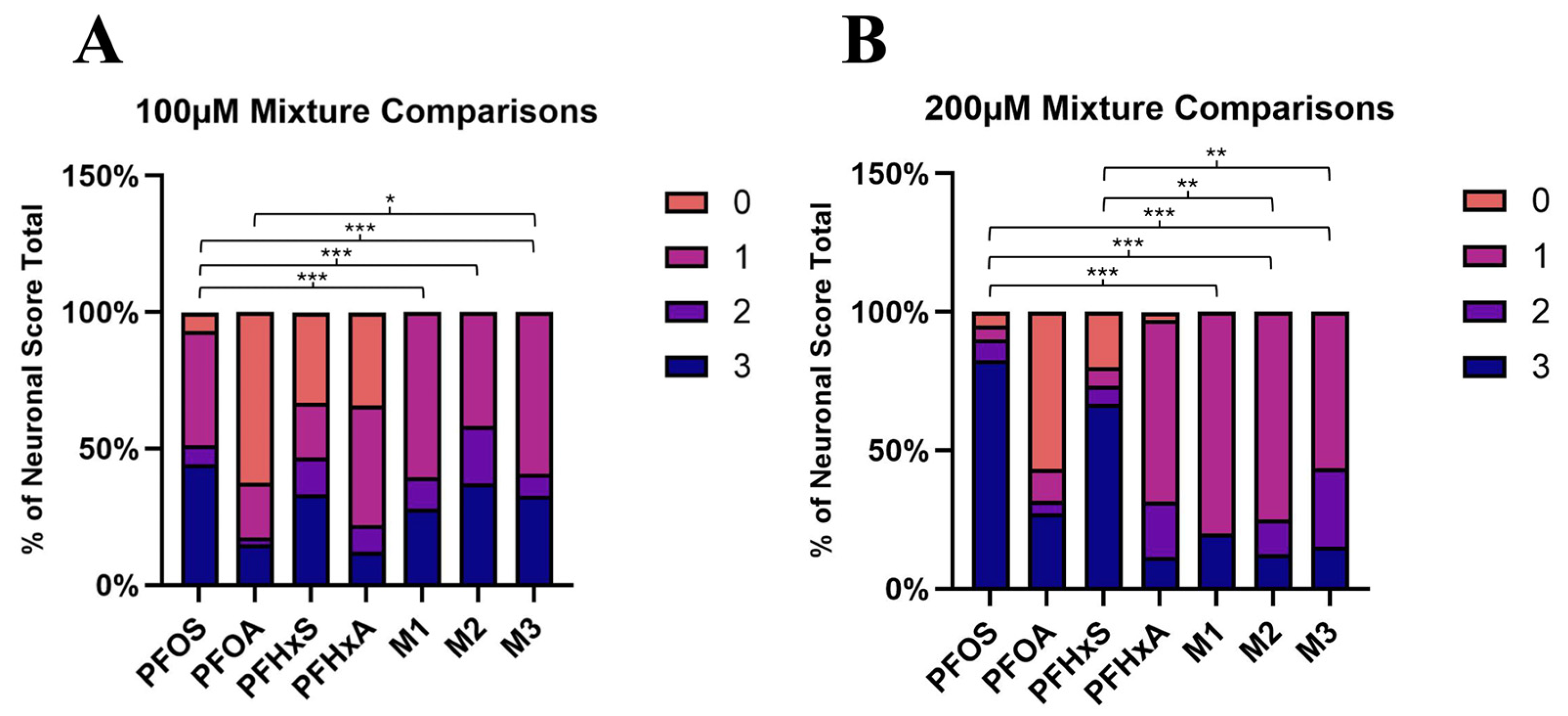


| Mixture ID | Components | Normalized Ratio * | ΣPFAS (µM) | PFOS (µM) | PFHxS (µM) | PFHxA (µM) | PFOA (µM) |
|---|---|---|---|---|---|---|---|
| M1 | PFOS+ | 0.88:0.12 | 100 | 88.0 | - | - | 12.0 |
| PFOA | 200 | 176.0 | - | - | 24.0 | ||
| M2 | PFOS+ | 0.60:0.30:0.10 | 100 | 60.0 | 30.0 | - | 10.0 |
| PFHxS+ | |||||||
| PFOA | 200 | 120.0 | 60.0 | - | 20.0 | ||
| M3 | PFOS+ | 0.56:0.28:0.09:0.07 | 100 | 56.3 | 27.6 | 9.2 | 6.9 |
| PFHxS+ | |||||||
| PFHxA+ | |||||||
| PFOA | 200 | 112.6 | 55.2 | 18.4 | 13.8 |
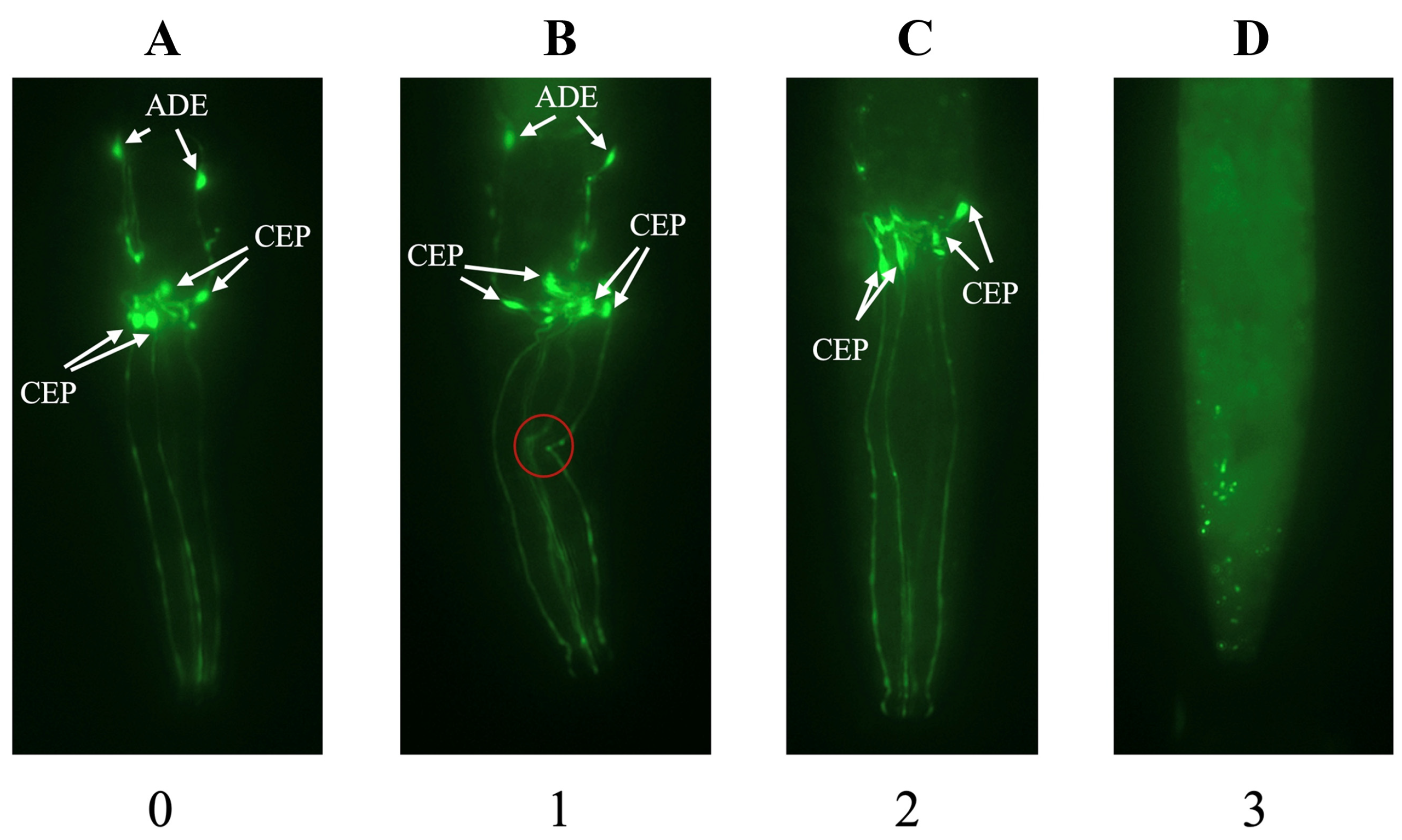
| Score | Criteria |
|---|---|
| 0 | 6 perfectly healthy intact neurons * |
| 1 | 5 intact neurons OR 6 intact neurons + morphological damage (kinks, blebs) |
| 2 | 1–4 intact neurons |
| 3 | 0 intact neurons |
| PFAS | PROAST Best Model | BMC (BMCL) [µM] | Akaike Information Criterion (AIC) |
|---|---|---|---|
| PFOS | Exponential—5 | 4.73 (0.97) | 186.56 |
| PFOA | Exponential—3 | 11.23 (0.27) | 738.12 |
| PFHxS | Exponential—5 | 33.01 (0.08) | 421.14 |
| PFHxA | Hill—5 | 113.3 (64.9) | 461.52 |
Disclaimer/Publisher’s Note: The statements, opinions and data contained in all publications are solely those of the individual author(s) and contributor(s) and not of MDPI and/or the editor(s). MDPI and/or the editor(s) disclaim responsibility for any injury to people or property resulting from any ideas, methods, instructions or products referred to in the content. |
© 2026 by the authors. Licensee MDPI, Basel, Switzerland. This article is an open access article distributed under the terms and conditions of the Creative Commons Attribution (CC BY) license.
Share and Cite
Benson, D.; Currie, S.; Wang, J.-S.; Tang, L. A High-Throughput, High-Content Analysis of Dopaminergic Neurodegeneration in Caenorhabditis elegans Exposed to Per- and Polyfluoroalkyl Substances. Toxics 2026, 14, 278. https://doi.org/10.3390/toxics14040278
Benson D, Currie S, Wang J-S, Tang L. A High-Throughput, High-Content Analysis of Dopaminergic Neurodegeneration in Caenorhabditis elegans Exposed to Per- and Polyfluoroalkyl Substances. Toxics. 2026; 14(4):278. https://doi.org/10.3390/toxics14040278
Chicago/Turabian StyleBenson, David, Seth Currie, Jia-Sheng Wang, and Lili Tang. 2026. "A High-Throughput, High-Content Analysis of Dopaminergic Neurodegeneration in Caenorhabditis elegans Exposed to Per- and Polyfluoroalkyl Substances" Toxics 14, no. 4: 278. https://doi.org/10.3390/toxics14040278
APA StyleBenson, D., Currie, S., Wang, J.-S., & Tang, L. (2026). A High-Throughput, High-Content Analysis of Dopaminergic Neurodegeneration in Caenorhabditis elegans Exposed to Per- and Polyfluoroalkyl Substances. Toxics, 14(4), 278. https://doi.org/10.3390/toxics14040278