Target and Non-Target Analysis of Polycyclic Aromatic Hydrocarbons and Emerging Aromatic Contaminants in Outdoor Dust from a Petrochemical-Impacted Residential Area


 ,
,  ,
, 
Highlights
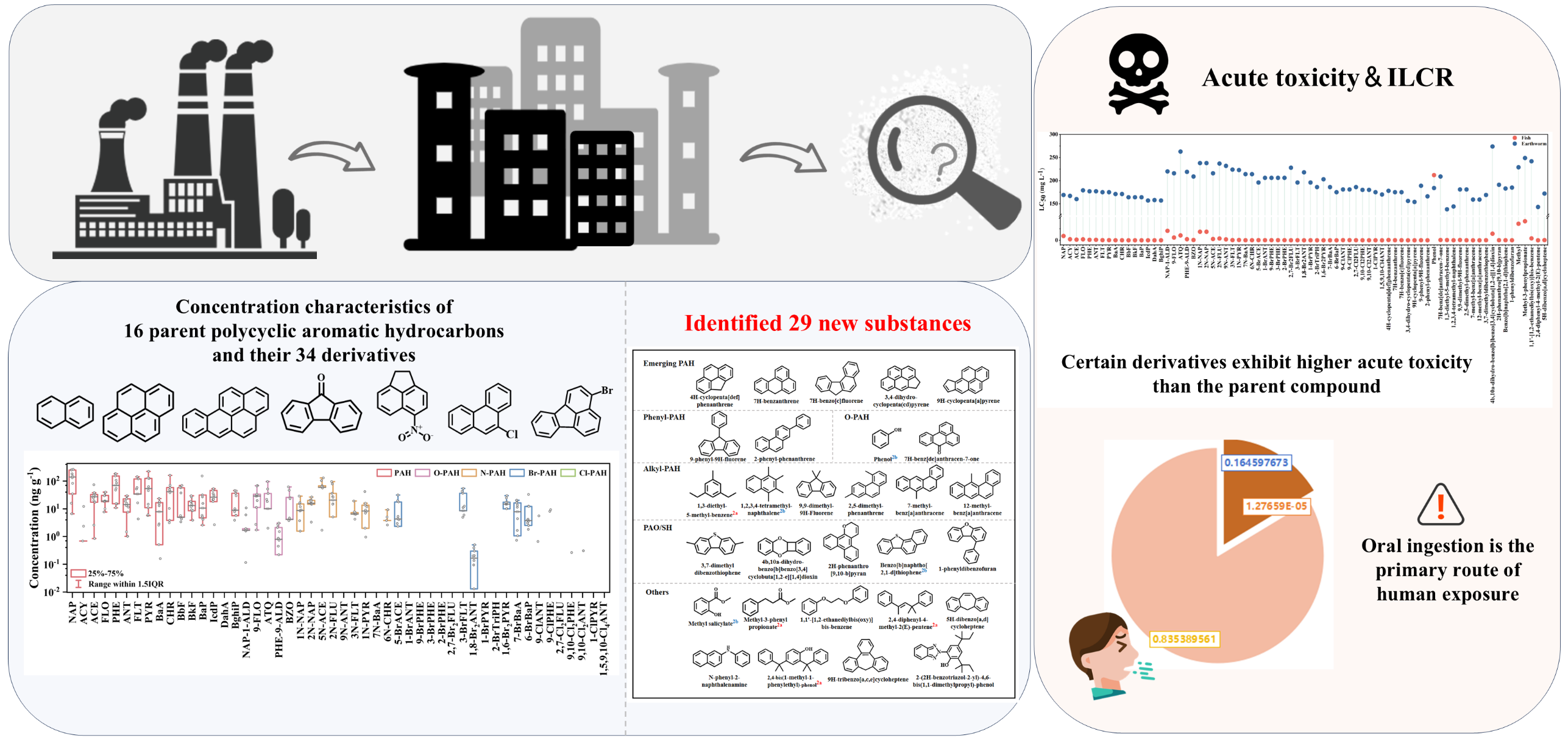
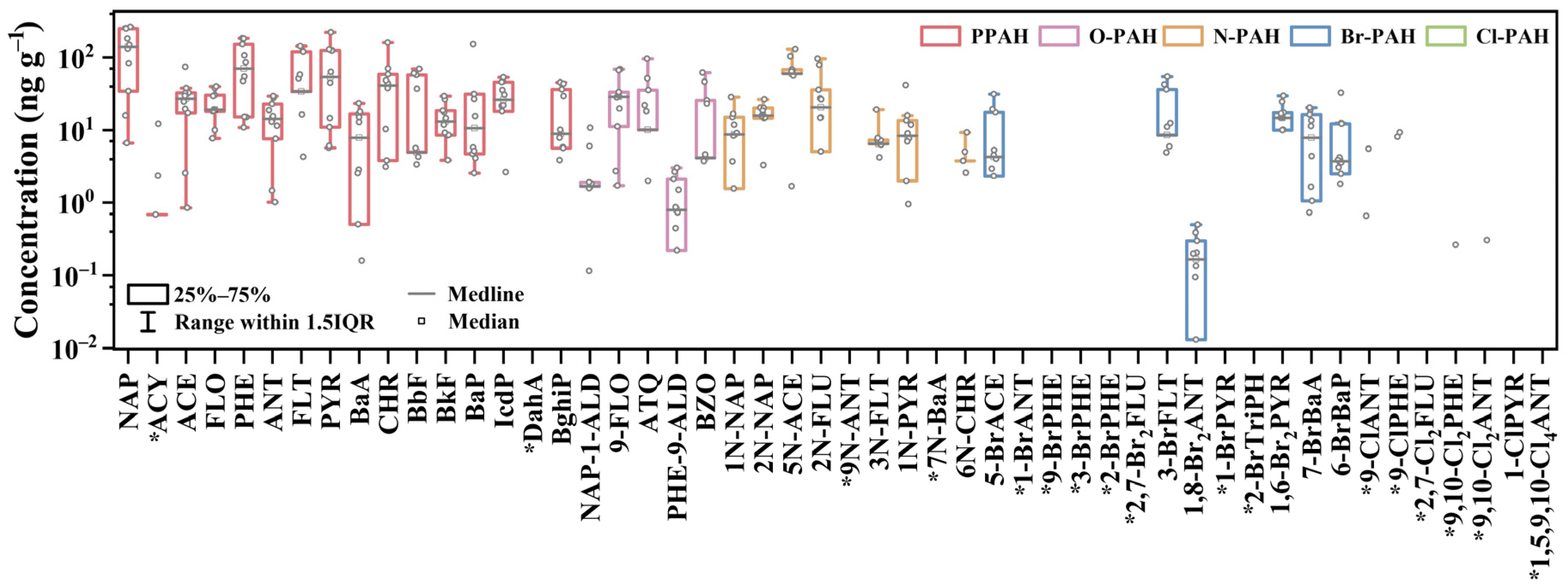
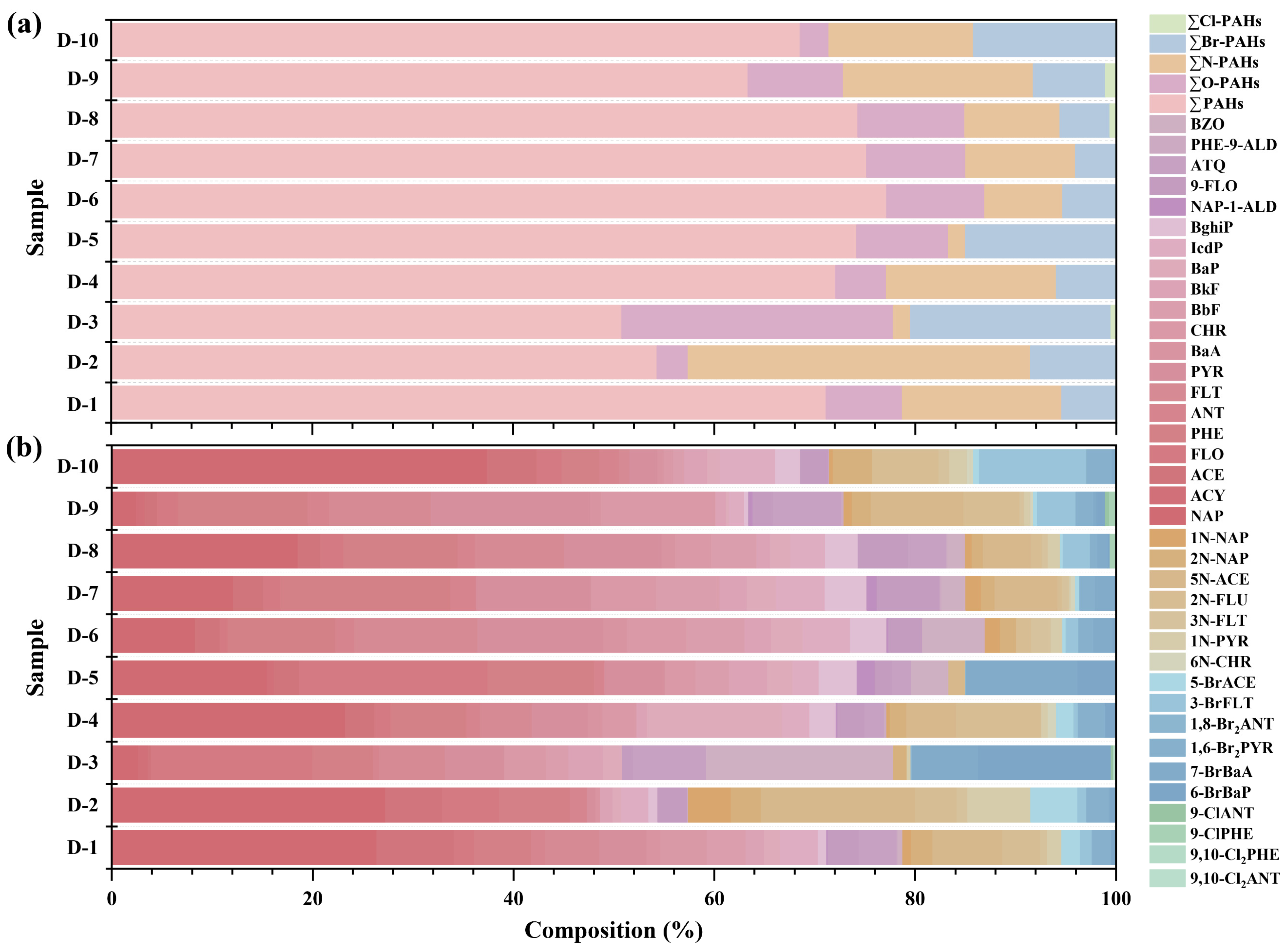
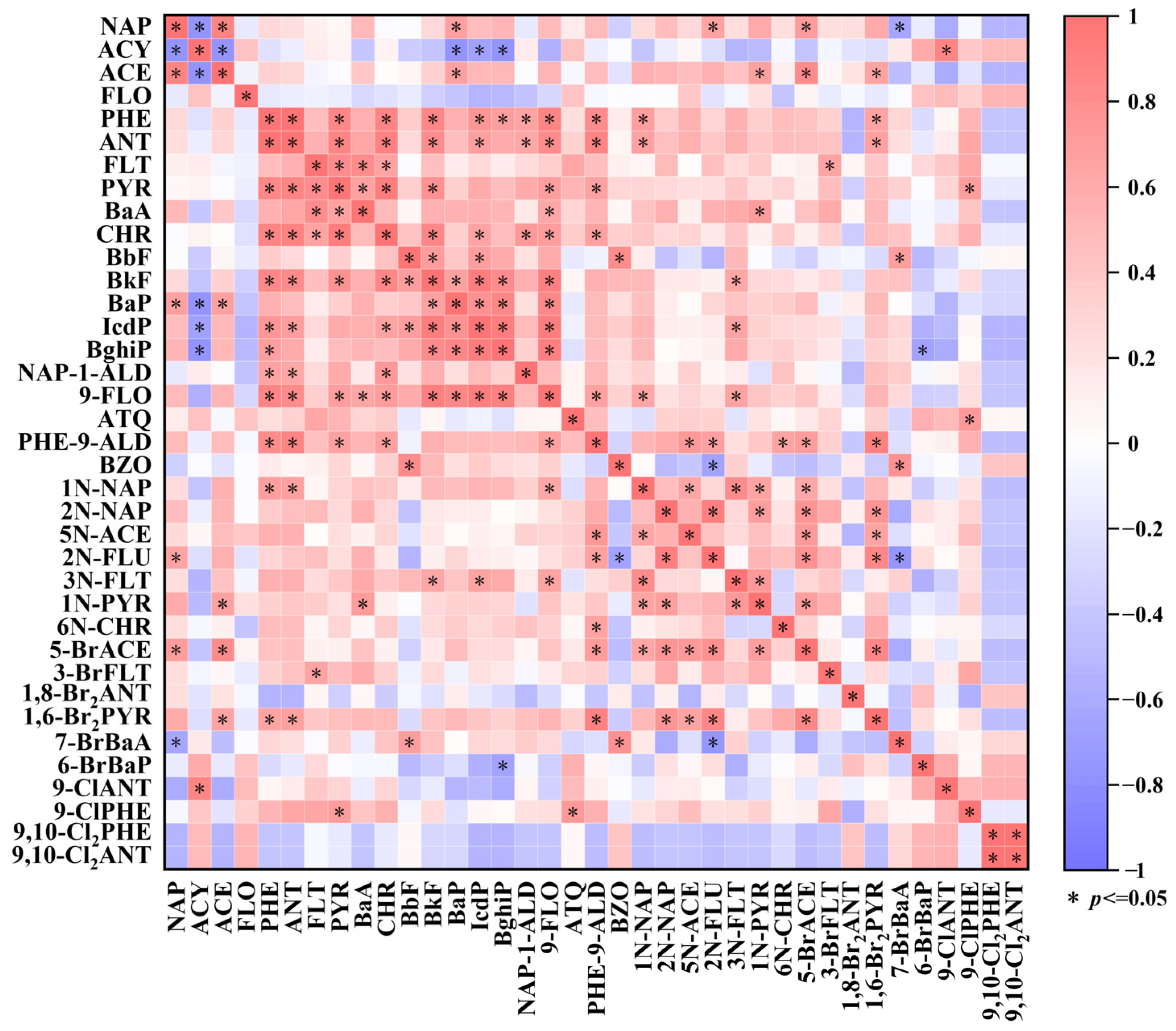
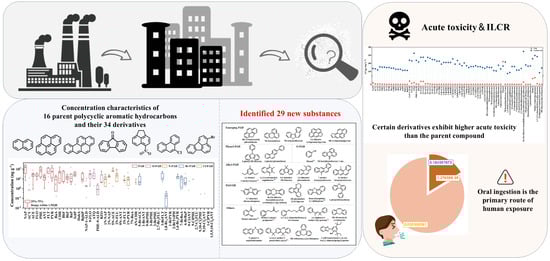
- PAHs and diverse PAH derivatives co-occurred in residential outdoor dust.
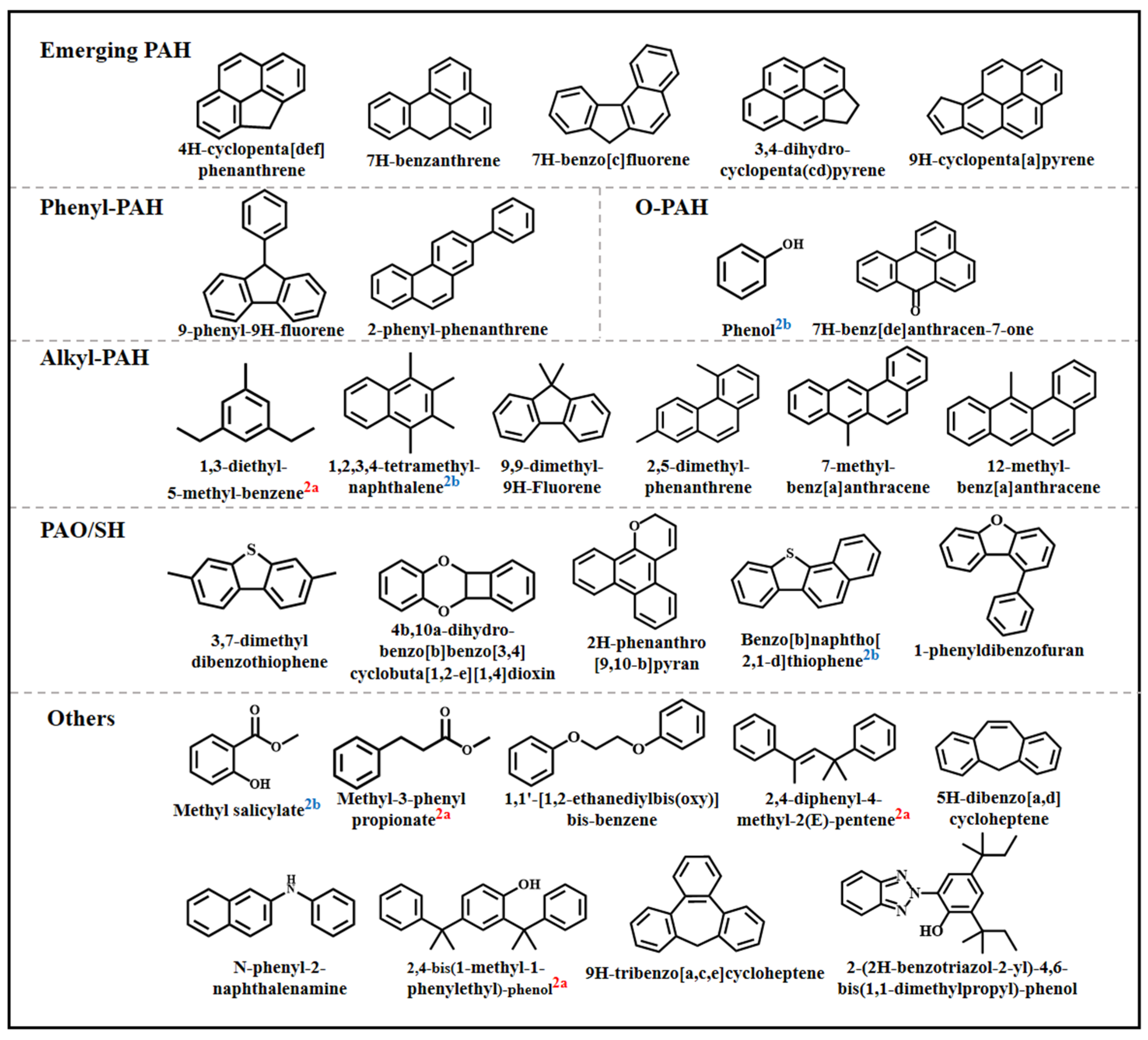
- Non-target screening revealed 29 additional PACs beyond conventional PAHs.
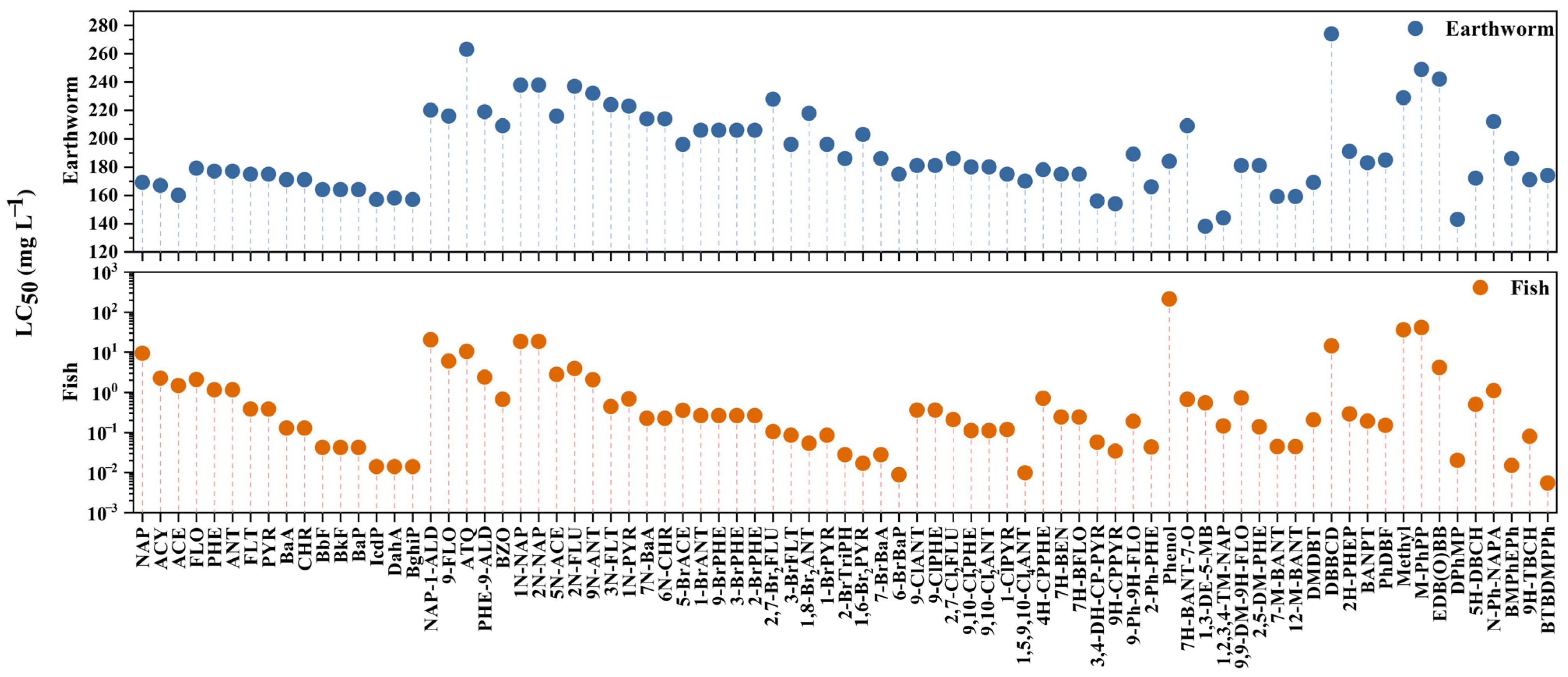
- Several newly identified PACs showed higher predicted toxicity than parent PAHs.
- Ignoring PAH derivatives may lead to underestimation of dust-related health risks.
Abstract
Share and Cite
Si, Y.; Li, S.; Wang, Y.; Chen, H.; Zhang, Y.; Kuang, S.; Sun, H. Target and Non-Target Analysis of Polycyclic Aromatic Hydrocarbons and Emerging Aromatic Contaminants in Outdoor Dust from a Petrochemical-Impacted Residential Area. Toxics 2026, 14, 223. https://doi.org/10.3390/toxics14030223
Si Y, Li S, Wang Y, Chen H, Zhang Y, Kuang S, Sun H. Target and Non-Target Analysis of Polycyclic Aromatic Hydrocarbons and Emerging Aromatic Contaminants in Outdoor Dust from a Petrochemical-Impacted Residential Area. Toxics. 2026; 14(3):223. https://doi.org/10.3390/toxics14030223
Chicago/Turabian StyleSi, Yimeng, Siyuan Li, Yu Wang, Hao Chen, Yanlong Zhang, Shaoping Kuang, and Hongwen Sun. 2026. "Target and Non-Target Analysis of Polycyclic Aromatic Hydrocarbons and Emerging Aromatic Contaminants in Outdoor Dust from a Petrochemical-Impacted Residential Area" Toxics 14, no. 3: 223. https://doi.org/10.3390/toxics14030223
APA StyleSi, Y., Li, S., Wang, Y., Chen, H., Zhang, Y., Kuang, S., & Sun, H. (2026). Target and Non-Target Analysis of Polycyclic Aromatic Hydrocarbons and Emerging Aromatic Contaminants in Outdoor Dust from a Petrochemical-Impacted Residential Area. Toxics, 14(3), 223. https://doi.org/10.3390/toxics14030223