
RNA-Seq Can Be Used to Quantify Gene Expression Levels for Use in the GARDskin Assay
Abstract
1. Introduction
2. Materials and Methods
2.1. Overview of the Study Design
2.2. Chemicals for Exposure Experiments
2.3. Cell Exposure Experiments and Total RNA Isolation
2.4. NanoString nCounter Quantification
2.5. RNA Sequencing
2.6. Quantification of RNA-Seq Data
2.7. Mapping Candidate Transcripts to the NanoString GARDskin Prediction Signature
2.8. Refining the RNA-Seq Candidate Transcripts for NanoString Signal Reconstruction
2.9. Comparison of Expression Levels Between the Platforms
2.10. Generation of GARDskin Predictions
2.11. Assessment of Sequencing Depth on GARDskin Classifications
2.12. Visualizations
3. Results
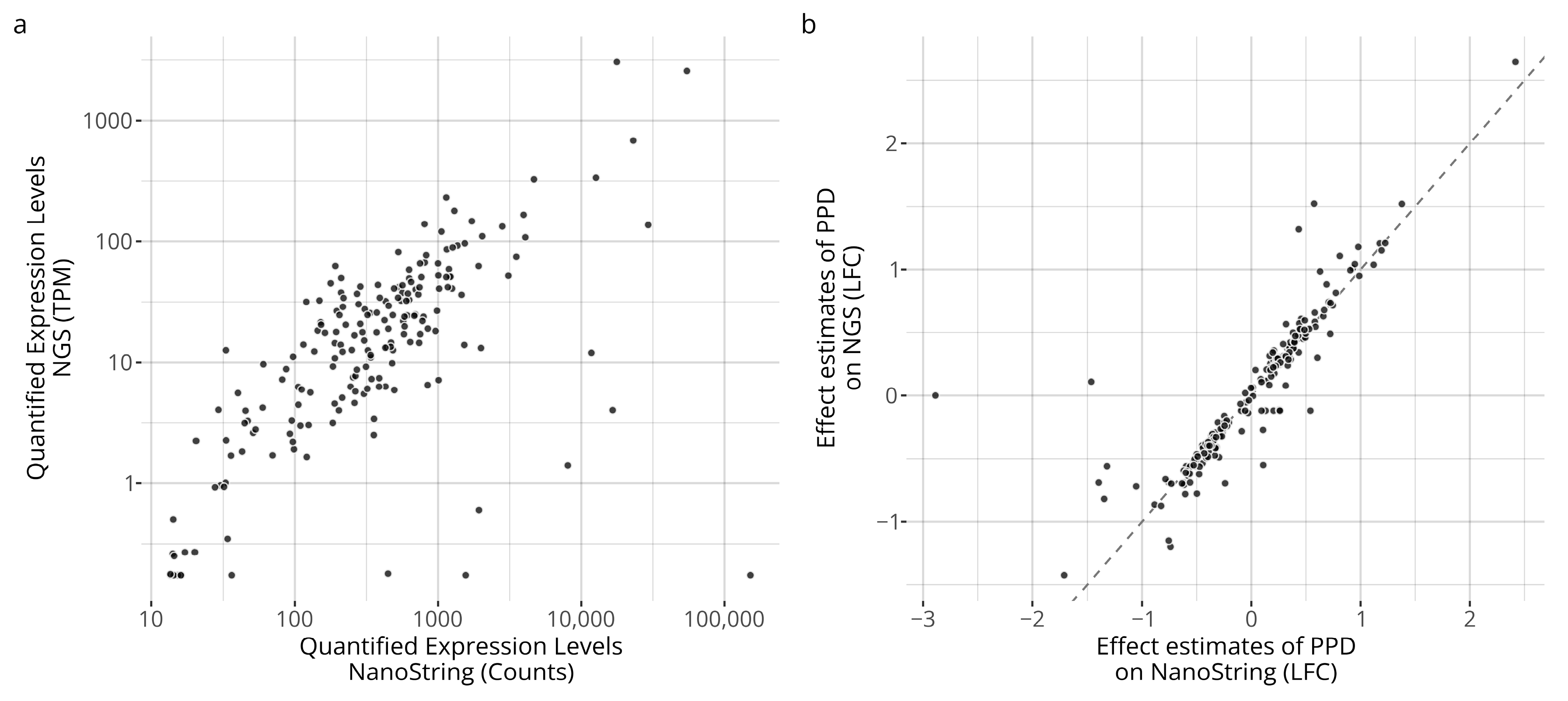
3.1. Reconstructing the NanoString Probe Signals from RNA-Seq Data
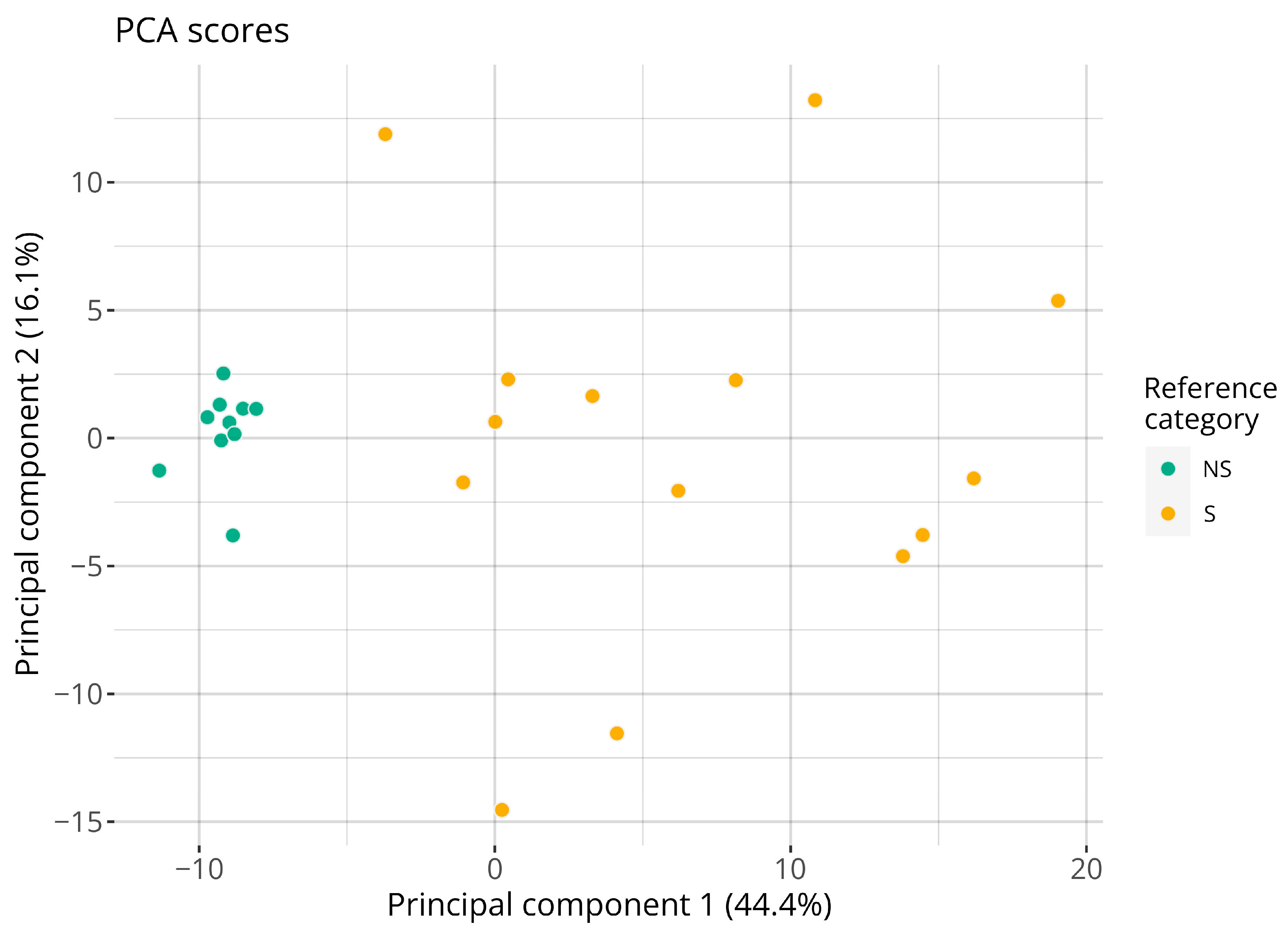
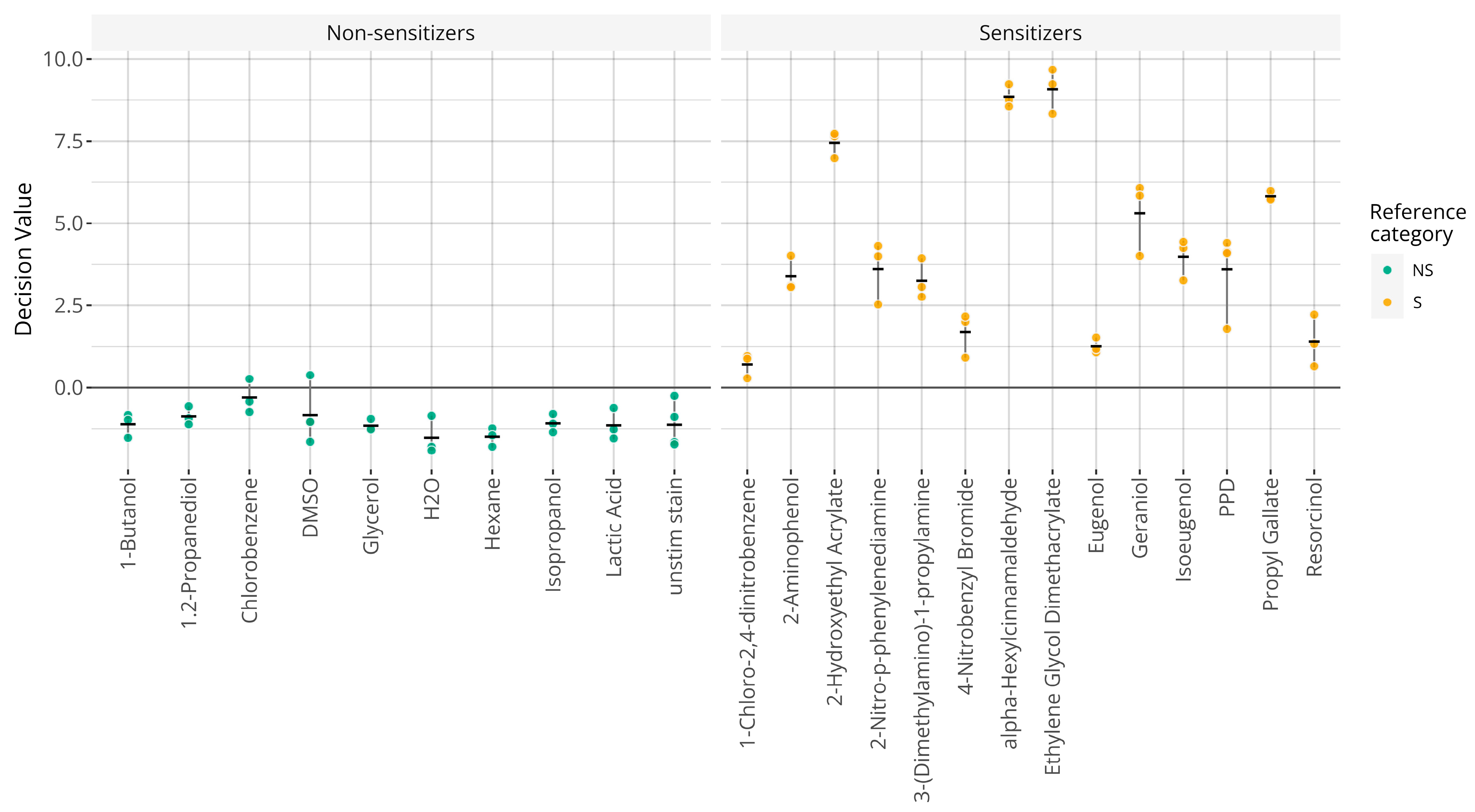
3.2. Classifying Sensitizing Hazard with RNA-Seq Data
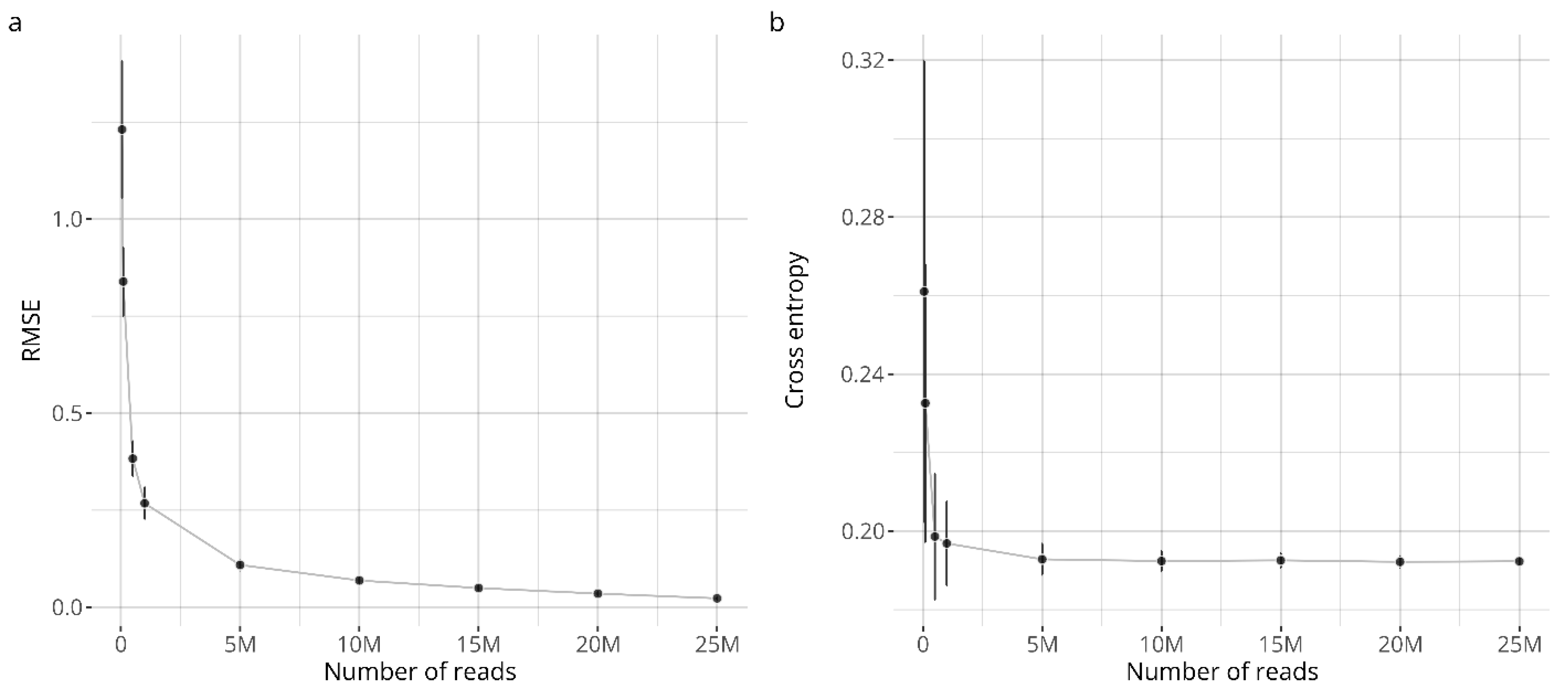
3.3. Assessment of Sequencing Depth
4. Discussion
5. Conclusions
Supplementary Materials
Author Contributions
Funding
Institutional Review Board Statement
Informed Consent Statement
Data Availability Statement
Acknowledgments
Conflicts of Interest
Abbreviations
| AOP | Adverse Outcome Pathway |
| CASRN | Chemical Abstracts Service Registry Number |
| CPTC | Counts-per-total-counts |
| EC3 | The effective concentration that induces a stimulation index of three in the LLNA assay |
| GPS | GARDskin Prediction Signature |
| HDSG | Human Data Sub-Group |
| KE | Key Event |
| LFC | Log Fold Change |
| LLNA | Local Lymph Node Assay |
| MLLP | Median-Like Location Parameter |
| NGS | Next Generation Sequencing |
| PCA | Principal Component Analysis |
| RMSE | Root Mean Squared Error |
| SVM | Support Vector Machine |
| TPM | Transcripts per Million |
References
- Kimber, I.; Basketter, D.A.; Gerberick, G.F.; Ryan, C.A.; Dearman, R.J. Chemical Allergy: Translating Biology into Hazard Characterization. Toxicol. Sci. 2011, 120, S238–S268. [Google Scholar] [CrossRef]
- OECD. The Adverse Outcome Pathway for Skin Sensitisation Initiated by Covalent Binding to Proteins; OECD Series on Testing and Assessment; OECD: Paris, France, 2014. [Google Scholar] [CrossRef]
- Aleksic, M.; Rajagopal, R.; de-Ávila, R.; Spriggs, S.; Gilmour, N. The Skin Sensitization Adverse Outcome Pathway: Exploring the Role of Mechanistic Understanding for Higher Tier Risk Assessment. Crit. Rev. Toxicol. 2024, 54, 69–91. [Google Scholar] [CrossRef] [PubMed]
- Peiser, M.; Tralau, T.; Heidler, J.; Api, A.M.; Arts, J.H.E.; Basketter, D.A.; English, J.; Diepgen, T.L.; Fuhlbrigge, R.C.; Gaspari, A.A.; et al. Allergic Contact Dermatitis: Epidemiology, Molecular Mechanisms, in Vitro Methods and Regulatory Aspects. Current Knowledge Assembled at an International Workshop at BfR, Germany. Cell. Mol. Life Sci. 2012, 69, 763–781. [Google Scholar] [CrossRef] [PubMed]
- Esser, P.R.; Martin, S.F. Pathomechanisms of Contact Sensitization. Curr. Allergy Asthma Rep. 2017, 17, 83. [Google Scholar] [CrossRef]
- Buehler, E.V. Delayed Contact Hypersensitivity In the Guinea Pig. Arch. Dermatol. 1965, 91, 171–175. [Google Scholar] [CrossRef]
- Magnusson, B.; Kligman, A.M. The Identification of Contact Allergens by Animal Assay. The Guinea Pig Maximization Test. J. Investig. Dermatol. 1969, 52, 268–276. [Google Scholar] [CrossRef]
- Ritz, H.; Buehler, E. Planning, Conduct and Interpretation of Guinea Pig Sensitization Patch Tests. In Current Concepts in Cutaneous Toxicity; Academic Press: New York, NY, USA, 1980; pp. 25–40. [Google Scholar]
- Kimber, I.; Weisenberger, C. A Murine Local Lymph Node Assay for the Identification of Contact Allergens. Arch. Toxicol. 1989, 63, 274–282. [Google Scholar] [CrossRef] [PubMed]
- Robinson, M.K.; Nusair, T.L.; Robert Fletcher, E.; Ritz, H.L. A Review of the Buehler Guinea Pig Skin Sensitization Test and Its Use in a Risk Assessment Process for Human Skin Sensitization. Toxicology 1990, 61, 91–107. [Google Scholar] [CrossRef]
- Kimber, I.; Dearman, R.J.; Basketter, D.A.; Ryan, C.A.; Gerberick, G.F. The Local Lymph Node Assay: Past, Present and Future. Contact Dermat. 2002, 47, 315–328. [Google Scholar] [CrossRef]
- Gerberick, G.F. Development of a Peptide Reactivity Assay for Screening Contact Allergens. Toxicol. Sci. 2004, 81, 332–343. [Google Scholar] [CrossRef]
- Fujita, M.; Yamamoto, Y.; Tahara, H.; Kasahara, T.; Jimbo, Y.; Hioki, T. Development of a Prediction Method for Skin Sensitization Using Novel Cysteine and Lysine Derivatives. J. Pharmacol. Toxicol. Methods 2014, 70, 94–105. [Google Scholar] [CrossRef] [PubMed]
- Natsch, A.; Haupt, T.; Wareing, B.; Landsiedel, R.; Kolle, S.N. Predictivity of the Kinetic Direct Peptide Reactivity Assay (kDPRA) for Sensitizer Potency Assessment and GHS Subclassification. Altex-Altern. Anim. Exp. 2020, 37, 652–664. [Google Scholar] [CrossRef]
- Ashikaga, T.; Yoshida, Y.; Hirota, M.; Yoneyama, K.; Itagaki, H.; Sakaguchi, H.; Miyazawa, M.; Ito, Y.; Suzuki, H.; Toyoda, H. Development of an in Vitro Skin Sensitization Test Using Human Cell Lines: The Human Cell Line Activation Test (h-CLAT): I. Optimization of the h-CLAT Protocol. Toxicol. Vitr. Int. J. Publ. Assoc. BIBRA 2006, 20, 767–773. [Google Scholar] [CrossRef]
- Johansson, H.; Lindstedt, M.; Albrekt, A.-S.; Borrebaeck, C.A.K. A Genomic Biomarker Signature Can Predict Skin Sensitizers Using a Cell-Based in Vitro Alternative to Animal Tests. BMC Genom. 2011, 12, 399. [Google Scholar] [CrossRef]
- Natsch, A.; Bauch, C.; Foertsch, L.; Gerberick, F.; Norman, K.; Hilberer, A.; Inglis, H.; Landsiedel, R.; Onken, S.; Reuter, H.; et al. The Intra- and Inter-Laboratory Reproducibility and Predictivity of the KeratinoSens Assay to Predict Skin Sensitizers in Vitro: Results of a Ring-Study in Five Laboratories. Toxicol. Vitr. 2011, 25, 733–744. [Google Scholar] [CrossRef]
- Takahashi, T.; Kimura, Y.; Saito, R.; Nakajima, Y.; Ohmiya, Y.; Yamasaki, K.; Aiba, S. An In Vitro Test to Screen Skin Sensitizers Using a Stable THP-1–Derived IL-8 Reporter Cell Line, THP-G8. Toxicol. Sci. 2011, 124, 359–369. [Google Scholar] [CrossRef]
- Saito, K.; Nukada, Y.; Takenouchi, O.; Miyazawa, M.; Sakaguchi, H.; Nishiyama, N. Development of a New in Vitro Skin Sensitization Assay (Epidermal Sensitization Assay; EpiSensA) Using Reconstructed Human Epidermis. Toxicol. Vitr. Int. J. Publ. Assoc. BIBRA 2013, 27, 2213–2224. [Google Scholar] [CrossRef]
- Ramirez, T.; Mehling, A.; Kolle, S.N.; Wruck, C.J.; Teubner, W.; Eltze, T.; Aumann, A.; Urbisch, D.; van Ravenzwaay, B.; Landsiedel, R. LuSens: A Keratinocyte Based ARE Reporter Gene Assay for Use in Integrated Testing Strategies for Skin Sensitization Hazard Identification. Toxicol. Vitr. Int. J. Publ. Assoc. BIBRA 2014, 28, 1482–1497. [Google Scholar] [CrossRef]
- Piroird, C.; Ovigne, J.-M.; Rousset, F.; Martinozzi-Teissier, S.; Gomes, C.; Cotovio, J.; Alépée, N. The Myeloid U937 Skin Sensitization Test (U-SENS) Addresses the Activation of Dendritic Cell Event in the Adverse Outcome Pathway for Skin Sensitization. Toxicol. Vitr. Int. J. Publ. Assoc. BIBRA 2015, 29, 901–916. [Google Scholar] [CrossRef]
- Wilm, A.; Kühnl, J.; Kirchmair, J. Computational Approaches for Skin Sensitization Prediction. Crit. Rev. Toxicol. 2018, 48, 738–760. [Google Scholar] [CrossRef]
- Gradin, R.; Tourneix, F.; Mattson, U.; Andersson, J.; Amaral, F.; Forreryd, A.; Alépée, N.; Johansson, H. In Vitro Prediction of Skin-Sensitizing Potency Using the GARDskin Dose–Response Assay: A Simple Regression Approach. Toxics 2024, 12, 626. [Google Scholar] [CrossRef]
- Nepal, R.U.; Jeong, T.C. A Rapid Spectrophotometric Test for Assessing Skin Sensitization Potential of Chemicals by Using N-Acetyl-L-Cysteine Methyl Ester in Chemico. J. Toxicol. Environ. Health Part A 2024, 87, 811–823. [Google Scholar] [CrossRef]
- Scheufen Tieghi, R.; Moreira-Filho, J.T.; Martin, H.-J.; Wellnitz, J.; Otoch, M.C.; Rath, M.; Tropsha, A.; Muratov, E.N.; Kleinstreuer, N. A Novel Machine Learning Model and a Web Portal for Predicting the Human Skin Sensitization Effects of Chemical Agents. Toxics 2024, 12, 803. [Google Scholar] [CrossRef]
- Tourneix, F.; Carron, L.; Jouffe, L.; Hoffmann, S.; Alépée, N. Deriving a Continuous Point of Departure for Skin Sensitization Risk Assessment Using a Bayesian Network Model. Toxics 2024, 12, 536. [Google Scholar] [CrossRef] [PubMed]
- OECD. Guideline No. 497: Defined Approaches on Skin Sensitisation; OECD Guidelines for the Testing of Chemicals, Section 4; OECD Publishing: Paris, France, 2025. [Google Scholar] [CrossRef]
- Reinke, E.N.; Reynolds, J.; Gilmour, N.; Reynolds, G.; Strickland, J.; Germolec, D.; Allen, D.G.; Maxwell, G.; Kleinstreuer, N.C. The Skin Allergy Risk Assessment-Integrated Chemical Environment (SARA-ICE) Defined Approach to Derive Points of Departure for Skin Sensitization. Curr. Res. Toxicol. 2025, 8, 100205. [Google Scholar] [CrossRef] [PubMed]
- Suzuki, S.; Mizumachi, H.; Miyazawa, M. Skin Sensitization Potency Prediction Based on Read-Across (RAx) Incorporating RhE-Based Testing Strategy (RTSv1)-Defined Approach: RTSv1-Based RAx. J. Appl. Toxicol. JAT 2025, 45, 620–635. [Google Scholar] [CrossRef] [PubMed]
- Forreryd, A.; Zeller, K.S.; Lindberg, T.; Johansson, H.; Lindstedt, M. From Genome-Wide Arrays to Tailor-Made Biomarker Readout—Progress towards Routine Analysis of Skin Sensitizing Chemicals with GARD. Toxicol. Vitr. Int. J. Publ. Assoc. BIBRA 2016, 37, 178–188. [Google Scholar] [CrossRef]
- Johansson, H.; Gradin, R.; Johansson, A.; Adriaens, E.; Edwards, A.; Zuckerstätter, V.; Jerre, A.; Burleson, F.; Gehrke, H.; Roggen, E.L. Validation of the GARDTMskin Assay for Assessment of Chemical Skin Sensitizers: Ring Trial Results of Predictive Performance and Reproducibility. Toxicol. Sci. 2019, 170, 374–381. [Google Scholar] [CrossRef]
- OECD. Test No. 442E: In Vitro Skin Sensitisation. 2023. [CrossRef]
- Albrekt, A.-S.; Johansson, H.; Börje, A.; Borrebaeck, C.; Lindstedt, M. Skin Sensitizers Differentially Regulate Signaling Pathways in MUTZ-3 Cells in Relation to Their Individual Potency. BMC Pharmacol. Toxicol. 2014, 15, 5. [Google Scholar] [CrossRef]
- Forreryd, A.; Gradin, R.; Humfrey, C.; Sweet, L.; Johansson, H. Exploration of the GARDTMskin Applicability Domain: Indirectly Acting Haptens, Hydrophobic Substances and UVCBs. Altex-Altern. Anim. Exp. 2023, 40, 53–60. [Google Scholar] [CrossRef]
- Forreryd, A.; Gradin, R.; Larne, O.; Rajapakse, N.; Deag, E.; Johansson, H. The GARDTMskin Assay: Investigation of the Applicability Domain for Metals. Altex-Altern. Anim. Exp. 2023, 40, 425–438. [Google Scholar] [CrossRef]
- Corvaro, M.; Henriquez, J.; Settivari, R.; Mattson, U.; Forreryd, A.; Gradin, R.; Johansson, H.; Gehen, S. GARDTMskin and GARDTMpotency: A Proof-of-Concept Study Investigating Applicability Domain for Agrochemical Formulations. Regul. Toxicol. Pharmacol. RTP 2024, 148, 105595. [Google Scholar] [CrossRef] [PubMed]
- Jenvert, R.-M.; Larne, O.; Johansson, A.; Berglin, M.; Pedersen, E.; Johansson, H. Evaluation of the Applicability of GARDskin to Predict Skin Sensitizers in Extracts from Medical Device Materials. Front. Toxicol. 2024, 6, 1320367. [Google Scholar] [CrossRef]
- Gradin, R.; Forreryd, A.; Mattson, U.; Jerre, A.; Johansson, H. Quantitative Assessment of Sensitizing Potency Using a Dose–Response Adaptation of GARDskin. Sci. Rep. 2021, 11, 18904. [Google Scholar] [CrossRef]
- OECD. Supporting Document to the Genomic Allergen Rapid Detection Test Method for Skin Sensitisation (Gardtmskin), Described in Test Guideline 442E. 2023. Available online: https://one.oecd.org/document/ENV/CBC/MONO(2022)13/en/pdf (accessed on 19 September 2025).
- Forreryd, A.; Johansson, H.; Albrekt, A.-S.; Lindstedt, M. Evaluation of High Throughput Gene Expression Platforms Using a Genomic Biomarker Signature for Prediction of Skin Sensitization. BMC Genom. 2014, 15, 379. [Google Scholar] [CrossRef]
- Geiss, G.K.; Bumgarner, R.E.; Birditt, B.; Dahl, T.; Dowidar, N.; Dunaway, D.L.; Fell, H.P.; Ferree, S.; George, R.D.; Grogan, T.; et al. Direct Multiplexed Measurement of Gene Expression with Color-Coded Probe Pairs. Nat. Biotechnol. 2008, 26, 317–325. [Google Scholar] [CrossRef]
- Li, H.-H.; Chen, R.; Hyduke, D.R.; Williams, A.; Frötschl, R.; Ellinger-Ziegelbauer, H.; O’Lone, R.; Yauk, C.L.; Aubrecht, J.; Fornace, A.J. Development and Validation of a High-Throughput Transcriptomic Biomarker to Address 21st Century Genetic Toxicology Needs. Proc. Natl. Acad. Sci. USA 2017, 114, E10881–E10889. [Google Scholar] [CrossRef] [PubMed]
- Chen, R. A High-Throughput and Highly Automated Genotoxicity Screening Assay. Altex 2021, 39, 71–81. [Google Scholar] [CrossRef] [PubMed]
- Phillips, K.A.; Douglas, M.P.; Wordsworth, S.; Buchanan, J.; Marshall, D.A. Availability and Funding of Clinical Genomic Sequencing Globally. BMJ Glob. Health 2021, 6, e004415. [Google Scholar] [CrossRef]
- Sarantopoulou, D.; Tang, S.Y.; Ricciotti, E.; Lahens, N.F.; Lekkas, D.; Schug, J.; Guo, X.S.; Paschos, G.K.; FitzGerald, G.A.; Pack, A.I.; et al. Comparative Evaluation of RNA-Seq Library Preparation Methods for Strand-Specificity and Low Input. Sci. Rep. 2019, 9, 13477. [Google Scholar] [CrossRef]
- Ura, H.; Togi, S.; Niida, Y. A Comparison of mRNA Sequencing (RNA-Seq) Library Preparation Methods for Transcriptome Analysis. BMC Genom. 2022, 23, 303. [Google Scholar] [CrossRef]
- Bray, N.L.; Pimentel, H.; Melsted, P.; Pachter, L. Near-Optimal Probabilistic RNA-Seq Quantification. Nat. Biotechnol. 2016, 34, 525–527. [Google Scholar] [CrossRef]
- Patro, R.; Duggal, G.; Love, M.I.; Irizarry, R.A.; Kingsford, C. Salmon Provides Fast and Bias-Aware Quantification of Transcript Expression. Nat. Methods 2017, 14, 417–419. [Google Scholar] [CrossRef]
- Chen, S.; Zhou, Y.; Chen, Y.; Gu, J. Fastp: An Ultra-Fast All-in-One FASTQ Preprocessor. Bioinformatics 2018, 34, i884–i890. [Google Scholar] [CrossRef]
- Srivastava, A.; Malik, L.; Sarkar, H.; Zakeri, M.; Almodaresi, F.; Soneson, C.; Love, M.I.; Kingsford, C.; Patro, R. Alignment and Mapping Methodology Influence Transcript Abundance Estimation. Genome Biol. 2020, 21, 239. [Google Scholar] [CrossRef] [PubMed]
- Ewels, P.A.; Peltzer, A.; Fillinger, S.; Patel, H.; Alneberg, J.; Wilm, A.; Garcia, M.U.; Di Tommaso, P.; Nahnsen, S. The Nf-Core Framework for Community-Curated Bioinformatics Pipelines. Nat. Biotechnol. 2020, 38, 276–278. [Google Scholar] [CrossRef] [PubMed]
- Verheijen, M.C.; Meier, M.J.; Asensio, J.O.; Gant, T.W.; Tong, W.; Yauk, C.L.; Caiment, F. R-ODAF: Omics Data Analysis Framework for Regulatory Application. Regul. Toxicol. Pharmacol. 2022, 131, 105143. [Google Scholar] [CrossRef] [PubMed]
- Rezapour, M.; Narayanan, A.; Mowery, W.H.; Gurcan, M.N. Assessing Concordance between RNA-Seq and NanoString Technologies in Ebola-Infected Nonhuman Primates Using Machine Learning. BMC Genom. 2025, 26, 358. [Google Scholar] [CrossRef]
- Chen, J.-W.; Shrestha, L.; Green, G.; Leier, A.; Marquez-Lago, T.T. The Hitchhikers’ Guide to RNA Sequencing and Functional Analysis. Brief. Bioinform. 2023, 24, bbac529. [Google Scholar] [CrossRef]
- EURL ECVAM. GARDskin Assay Protocol. Available online: https://tsar.jrc.ec.europa.eu/system/files/Published/GARDskin%20Assay%20Protocol%20TSAR.pdf (accessed on 19 September 2025).
- OECD. Supporting Document to the OECD Guideline 497 on Defined Approaches for Skin Sensitisation. 2023. Available online: https://one.oecd.org/document/ENV/CBC/MONO(2025)2/en/pdf (accessed on 19 September 2025).
- Johansson, H.; Gradin, R.; Forreryd, A.; Agemark, M.; Zeller, K.; Johansson, A.; Larne, O.; van Vliet, E.; Borrebaeck, C.; Lindstedt, M. Evaluation of the GARD Assay in a Blind Cosmetics Europe Study. Altex-Altern. Anim. Exp. 2017, 34, 515–523. [Google Scholar] [CrossRef]
- Strickland, J.; Abedini, J.; Allen, D.G.; Gordon, J.; Hull, V.; Kleinstreuer, N.C.; Ko, H.-S.; Matheson, J.; Thierse, H.-J.; Truax, J.; et al. A Database of Human Predictive Patch Test Data for Skin Sensitization. Arch. Toxicol. 2023, 97, 2825–2837. [Google Scholar] [CrossRef]
- Gerberick, G.F.; Ryan, C.A.; Kern, P.S.; Schlatter, H.; Dearman, R.J.; Kimber, I.; Patlewicz, G.Y.; Basketter, D.A. Compilation of Historical Local Lymph Node Data for Evaluation of Skin Sensitization Alternative Methods. Dermat. Contact Atopic Occup. Drug 2005, 16, 157–202. [Google Scholar]
- Enoch, S.J.; Madden, J.C.; Cronin, M.T.D. Identification of Mechanisms of Toxic Action for Skin Sensitisation Using a SMARTS Pattern Based Approach. SAR QSAR Environ. Res. 2008, 19, 555–578. [Google Scholar] [CrossRef]
- Mudge, J.M.; Carbonell-Sala, S.; Diekhans, M.; Martinez, J.G.; Hunt, T.; Jungreis, I.; Loveland, J.E.; Arnan, C.; Barnes, I.; Bennett, R.; et al. GENCODE 2025: Reference Gene Annotation for Human and Mouse. Nucleic Acids Res. 2025, 53, D966–D975. [Google Scholar] [CrossRef]
- Langmead, B.; Salzberg, S.L. Fast Gapped-Read Alignment with Bowtie 2. Nat. Methods 2012, 9, 357–359. [Google Scholar] [CrossRef] [PubMed]
- Huber, P.J. Robust Statistics, 1st ed.; Wiley Series in Probability and Statistics; Wiley: Hoboken, NJ, USA, 1981. [Google Scholar] [CrossRef]
- Signorell, A. DescTools: Tools for Descriptive Statistics. 2023. Available online: https://andrisignorell.github.io/DescTools/ (accessed on 25 September 2025).
- Rousseeuw, P.J.; Croux, C. Alternatives to the Median Absolute Deviation. J. Am. Stat. Assoc. 1993, 88, 1273–1283. [Google Scholar] [CrossRef]
- Maechler, M.; Rousseeuw, P.; Croux, C.; Todorov, V.; Ruckstuhl, A.; Saliban-Barrera, M.; Verbeke, T.; Koller, M.; Conceicao, E.L.T.; Anna di Palma, M. Robustbase: Basic Robust Statistics. 2023. Available online: http://robustbase.r-forge.r-project.org/ (accessed on 19 September 2025).
- Benjamini, Y.; Yekutieli, D. The Control of the False Discovery Rate in Multiple Testing under Dependency. Ann. Stat. 2001, 29, 1165–1188. [Google Scholar] [CrossRef]
- Gradin, R.; Lindstedt, M.; Johansson, H. Batch Adjustment by Reference Alignment (BARA): Improved Prediction Performance in Biological Test Sets with Batch Effects. PLoS ONE 2019, 14, e0212669. [Google Scholar] [CrossRef]
- European Commission. Joint Research Centre. ESAC Opinion on the Scientific Validity of the GARDskin and GARDpotency Test Methods; Publications Office-LU: Luxembourg, 2021. [Google Scholar]
- R Core Team. R: A Language and Environment for Statistical Computing. 2022. Available online: https://www.R-project.org/ (accessed on 19 September 2025).
- Wickham, H. Ggplot2, 2nd ed.; Use R! Springer International Publishing: Basel, Switzerland, 2016. [Google Scholar]
- Ritchie, M.E.; Phipson, B.; Wu, D.; Hu, Y.; Law, C.W.; Shi, W.; Smyth, G.K. Limma Powers Differential Expression Analyses for RNA-Sequencing and Microarray Studies. Nucleic Acids Res. 2015, 43, e47. [Google Scholar] [CrossRef] [PubMed]
- OECD. Test No. 442C: In Chemico Skin Sensitisation. 2023. [CrossRef]
- OECD. Test No. 442D: In Vitro Skin Sensitisation. 2022. [CrossRef]
- Satam, H.; Joshi, K.; Mangrolia, U.; Waghoo, S.; Zaidi, G.; Rawool, S.; Thakare, R.P.; Banday, S.; Mishra, A.K.; Das, G.; et al. Next-Generation Sequencing Technology: Current Trends and Advancements. Biology 2023, 12, 997. [Google Scholar] [CrossRef]
- Kufel, J.; Grzechnik, P. Small Nucleolar RNAs Tell a Different Tale. Trends Genet. 2019, 35, 104–117. [Google Scholar] [CrossRef]
- Dahlgren, A.R.; Scott, E.Y.; Mansour, T.; Hales, E.N.; Ross, P.J.; Kalbfleisch, T.S.; MacLeod, J.N.; Petersen, J.L.; Bellone, R.R.; Finno, C.J. Comparison of Poly-A+ Selection and rRNA Depletion in Detection of lncRNA in Two Equine Tissues Using RNA-Seq. Non-Coding RNA 2020, 6, 32. [Google Scholar] [CrossRef]
- Dávila López, M.; Samuelsson, T. Early Evolution of Histone mRNA 3′ End Processing. RNA 2008, 14, 1–10. [Google Scholar] [CrossRef] [PubMed]
- Speranza, E.; Altamura, L.A.; Kulcsar, K.; Bixler, S.L.; Rossi, C.A.; Schoepp, R.J.; Nagle, E.; Aguilar, W.; Douglas, C.E.; Delp, K.L.; et al. Comparison of Transcriptomic Platforms for Analysis of Whole Blood from Ebola-Infected Cynomolgus Macaques. Sci. Rep. 2017, 7, 14756. [Google Scholar] [CrossRef] [PubMed]
- Sims, D.; Sudbery, I.; Ilott, N.E.; Heger, A.; Ponting, C.P. Sequencing Depth and Coverage: Key Considerations in Genomic Analyses. Nat. Rev. Genet. 2014, 15, 121–132. [Google Scholar] [CrossRef] [PubMed]


| Chemical | CASRN | Input Concentration | LLNA MLLP (%) | LLNA Call | HDSG Call | Consensus Reference Call | N Replicates |
|---|---|---|---|---|---|---|---|
| 4-Nitrobenzyl Bromide | 100-11-8 | 2 µM | 0.05 | 1 | - | 1 | 3 |
| 1-Chloro-2,4-dinitrobenzene | 97-00-7 | 4 µM | 0.054 | 1 | 1 | 1 | 3 |
| p-Phenylenediamine (PPD) | 106-50-3 | 75 µM | 0.11 | 1 | 1 | 1 | 16 (12 + 4) |
| 2-Nitro-p-phenylenediamine | 5307-14-2 | 400 µM | 0.4 | 1 | - | 1 | 3 |
| 2-Aminophenol | 95-55-6 | 50 µM | 0.45 | 1 | - | 1 | 3 |
| Isoeugenol | 97-54-1 | 300 µM | 1.3 | 1 | 1 | 1 | 3 |
| 3-(Dimethylamino)-1-propylamine | 109-55-7 | 500 µM | 3.5 | 1 | - | 1 | 3 |
| Resorcinol | 108-46-3 | 500 µM | 6.3 | 1 | - | 1 | 3 |
| alpha-Hexylcinnamaldehyde | 101-86-0 | 300 µM | 10.8 | 1 | - | 1 | 3 |
| Eugenol | 97-53-0 | 500 µM | 11.6 | 1 | 1 | 1 | 3 |
| Geraniol | 106-24-1 | 500 µM | 16.1 | 1 | 1 | 1 | 3 |
| Ethylene Glycol Dimethacrylate | 97-90-5 | 500 µM | 28 | 1 | - | 1 | 3 |
| 2-Hydroxyethyl Acrylate | 818-61-1 | 100 µM | - | 1 | - | 1 | 3 |
| Propyl Gallate | 121-79-9 | 100 µM | - | 1 | - | 1 | 3 |
| 1-Butanol | 71-36-3 | 500 µM | - | 0 | - | 0 | 3 |
| 1.2-Propanediol | 57-55-6 | 500 µM | - | 0 | 0 | 0 | 3 |
| Chlorobenzene | 108-90-7 | 500 µM | - | 0 | - | 0 | 3 |
| DMSO (negative control) | 67-68-5 | 0.1% | 72 | 1 | 0 | 0 | 4 |
| Glycerol | 56-81-5 | 500 µM | - | 0 | - | 0 | 3 |
| H2O (negative control) | 7732-18-5 | 0.1% | - | 0 | 0 | 0 | 3 |
| Hexane | 110-54-3 | 500 µM | - | 0 | 0 | 0 | 3 |
| Isopropanol | 67-63-0 | 500 µM | - | 0 | - | 0 | 3 |
| Lactic acid | 50-21-5 | 500 µM | - | 0 | - | 0 | 3 |
| Unstimulated control | - | NA | - | 0 | 0 | 0 | 16 (12 + 4) |
Disclaimer/Publisher’s Note: The statements, opinions and data contained in all publications are solely those of the individual author(s) and contributor(s) and not of MDPI and/or the editor(s). MDPI and/or the editor(s) disclaim responsibility for any injury to people or property resulting from any ideas, methods, instructions or products referred to in the content. |
© 2025 by the authors. Licensee MDPI, Basel, Switzerland. This article is an open access article distributed under the terms and conditions of the Creative Commons Attribution (CC BY) license.
Share and Cite
Gradin, R.; Andersson, J.; Forreryd, A.; Johansson, H. RNA-Seq Can Be Used to Quantify Gene Expression Levels for Use in the GARDskin Assay. Toxics 2026, 14, 9. https://doi.org/10.3390/toxics14010009
Gradin R, Andersson J, Forreryd A, Johansson H. RNA-Seq Can Be Used to Quantify Gene Expression Levels for Use in the GARDskin Assay. Toxics. 2026; 14(1):9. https://doi.org/10.3390/toxics14010009
Chicago/Turabian StyleGradin, Robin, Johan Andersson, Andy Forreryd, and Henrik Johansson. 2026. "RNA-Seq Can Be Used to Quantify Gene Expression Levels for Use in the GARDskin Assay" Toxics 14, no. 1: 9. https://doi.org/10.3390/toxics14010009
APA StyleGradin, R., Andersson, J., Forreryd, A., & Johansson, H. (2026). RNA-Seq Can Be Used to Quantify Gene Expression Levels for Use in the GARDskin Assay. Toxics, 14(1), 9. https://doi.org/10.3390/toxics14010009