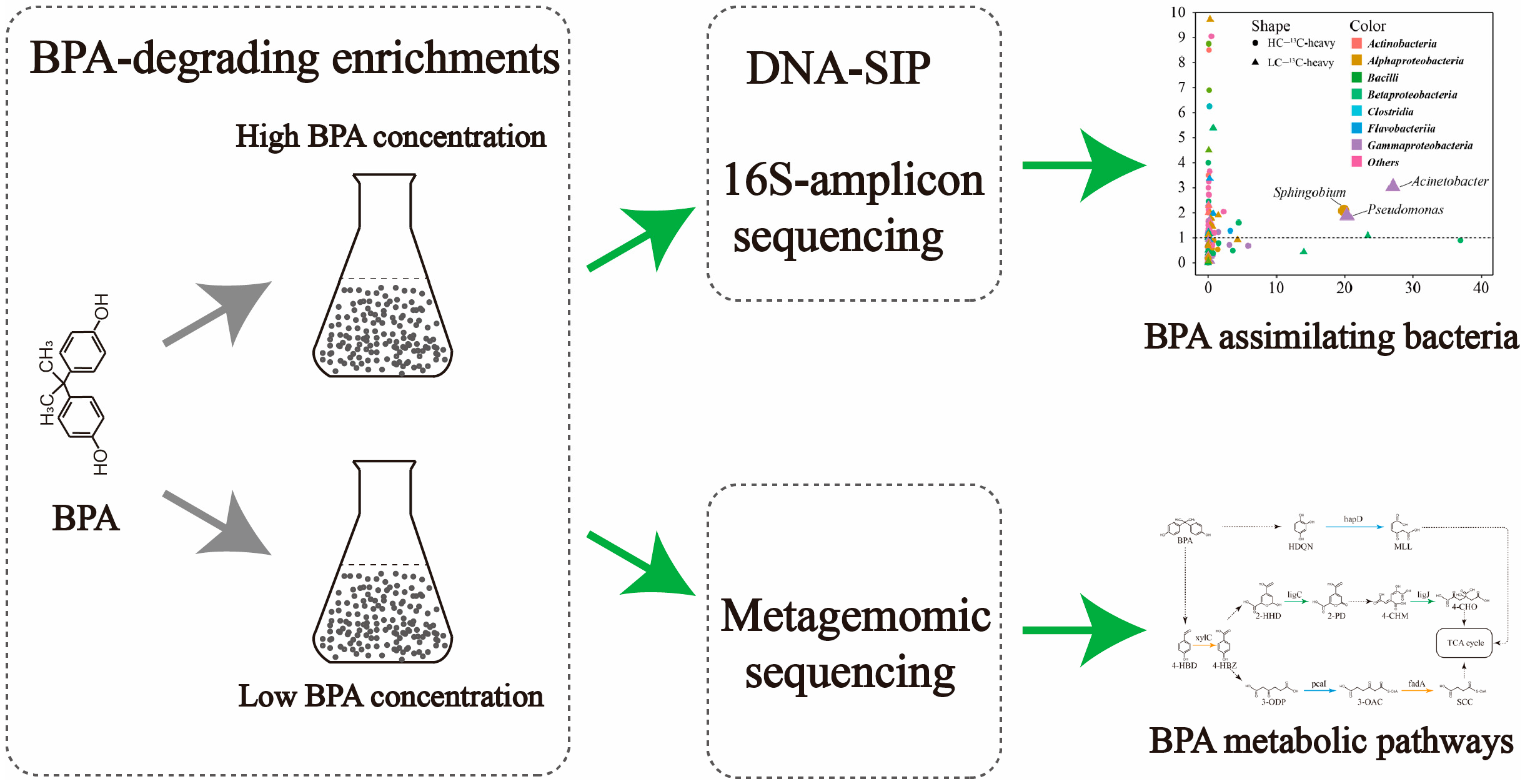
Integrated 13C-DNA Stable Isotope Probing and Metagenomics Approaches to Identify Bisphenol A Assimilating Microorganisms and Metabolic Pathways in Biofilms

 and
and
Abstract
1. Introduction
2. Materials and Methods
2.1. Biofilm Culture and Enriched with BPA
2.2. DNA Stable Isotope Probing
2.3. DNA Extraction
2.4. Density Gradient Ultracentrifugation
2.5. 16S rRNA Gene Sequencing and Data Analysis
2.6. Metagenomic Sequencing and Data Analysis
2.7. BPA Concentration Analysis
3. Results and Discussion
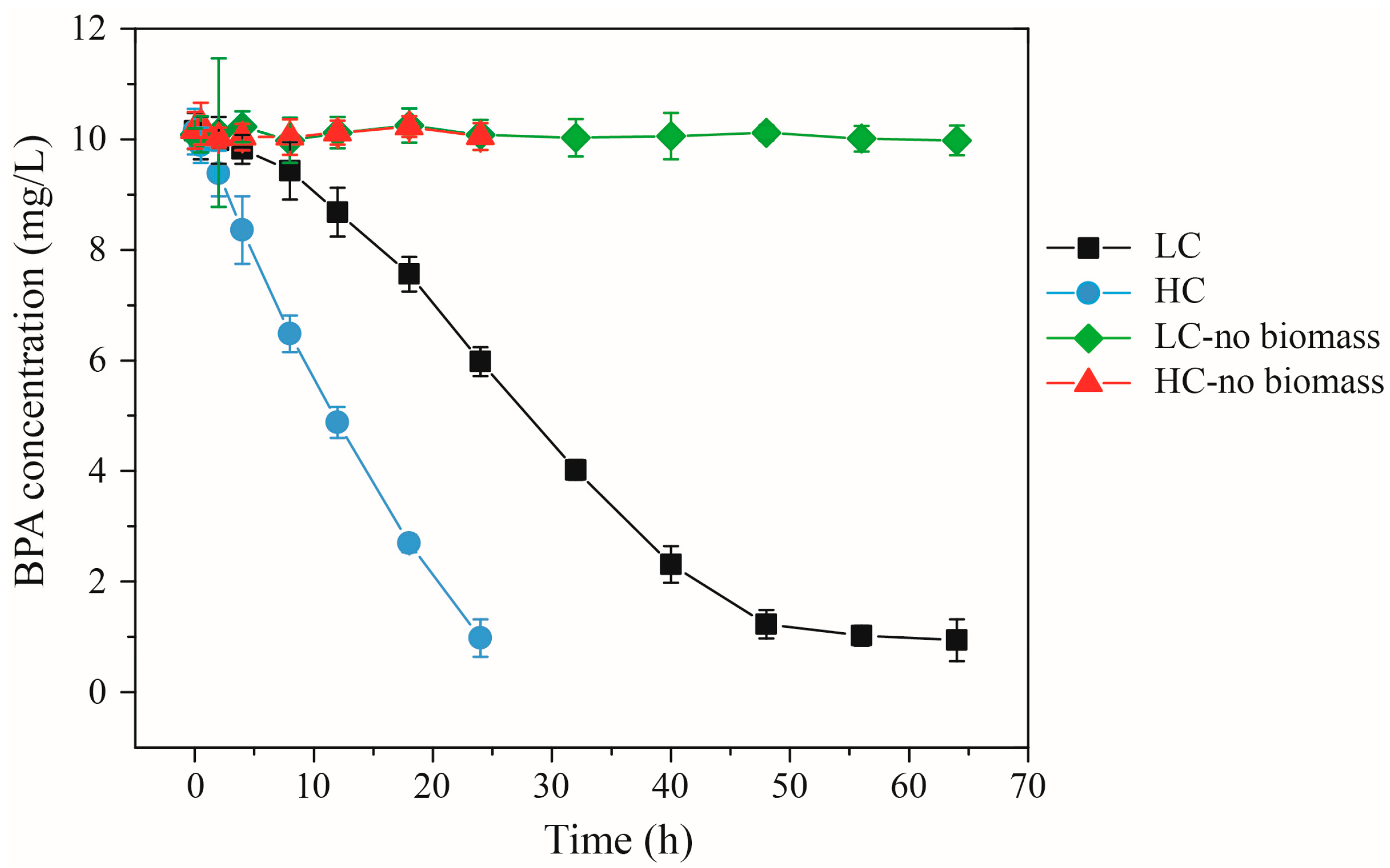
3.1. Biodegradation of Bisphenol A
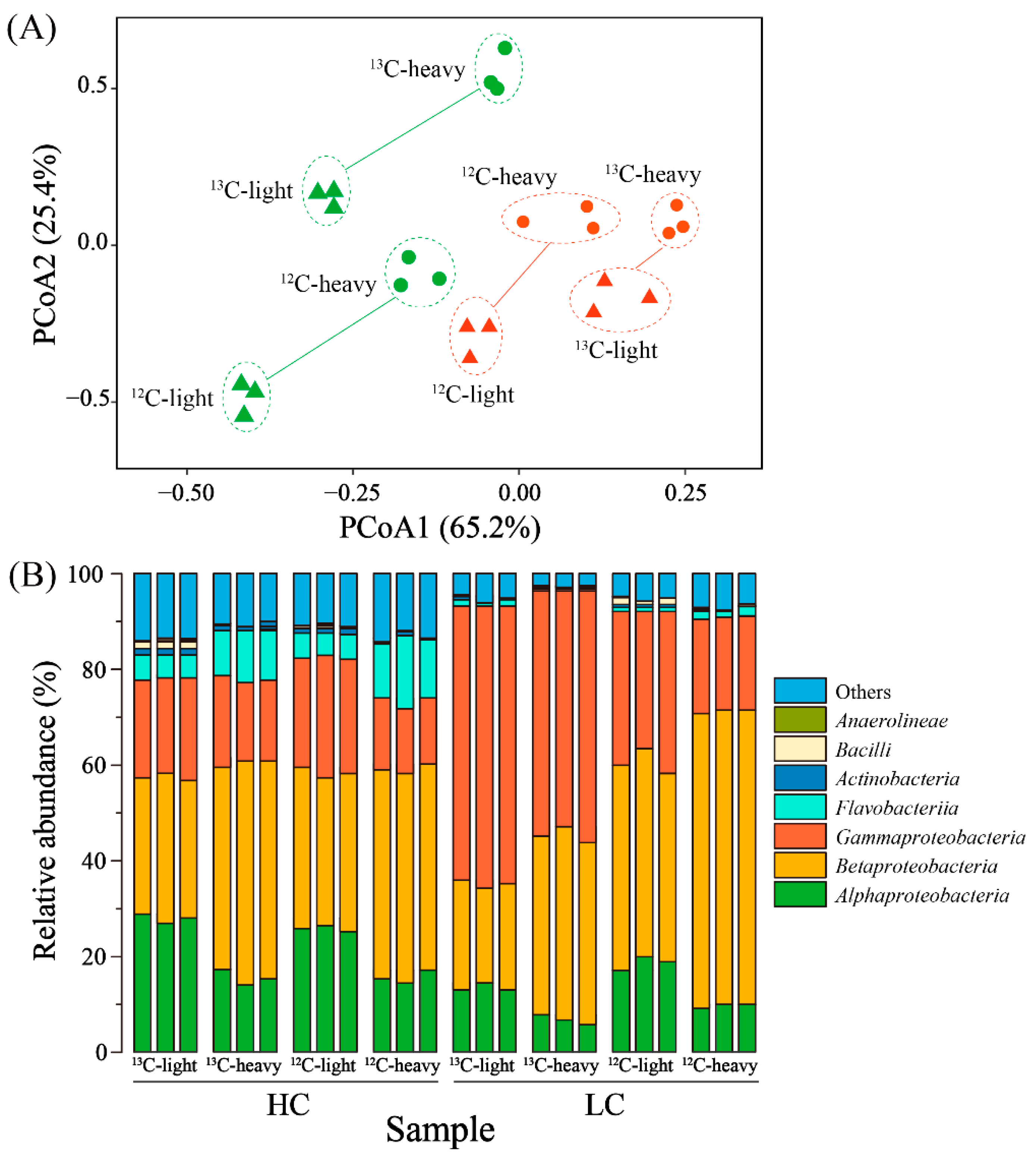
3.2. Microbial Community Structures of BPA-Enriched Sludge
3.3. Analysis of SIP Gradient Fractions
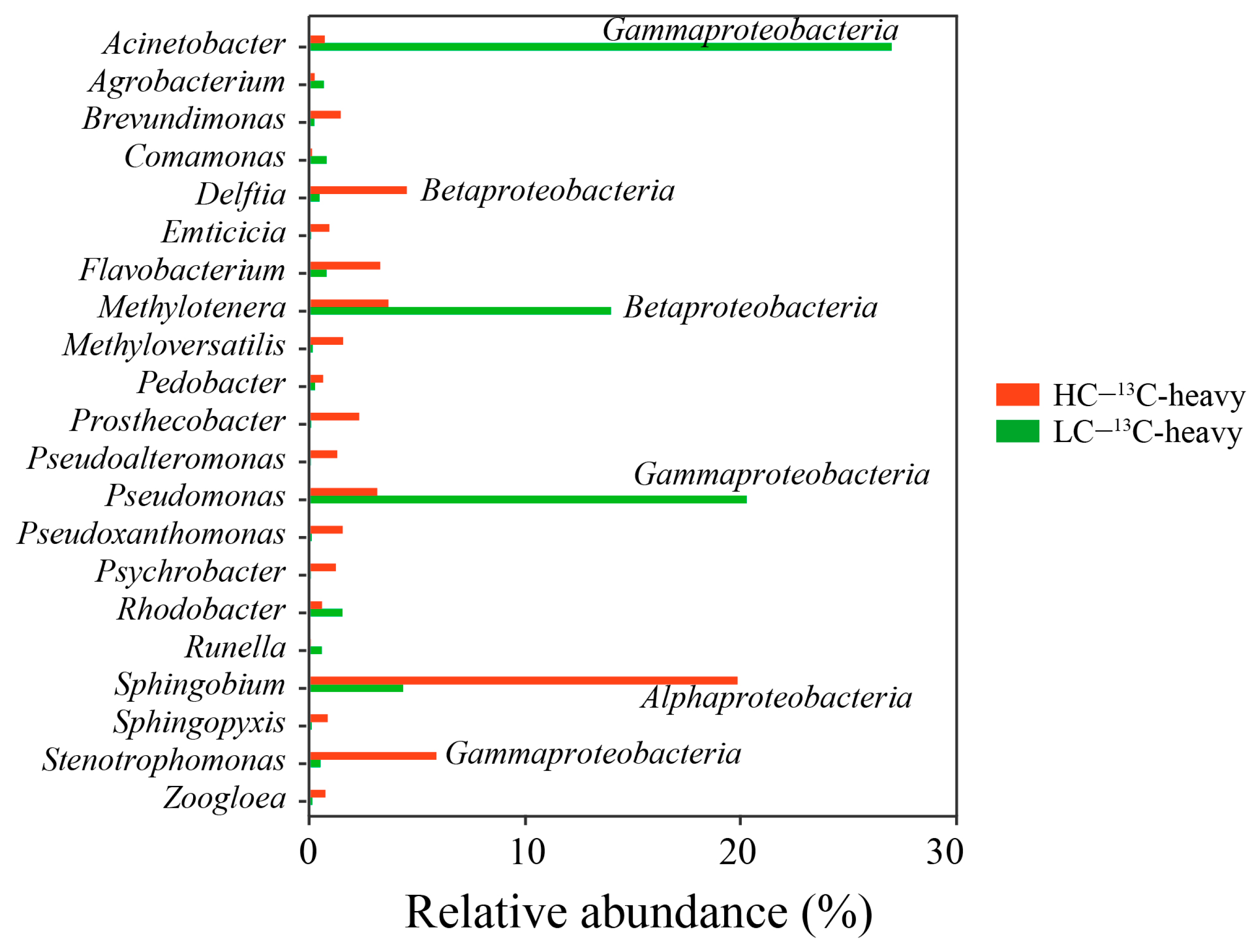
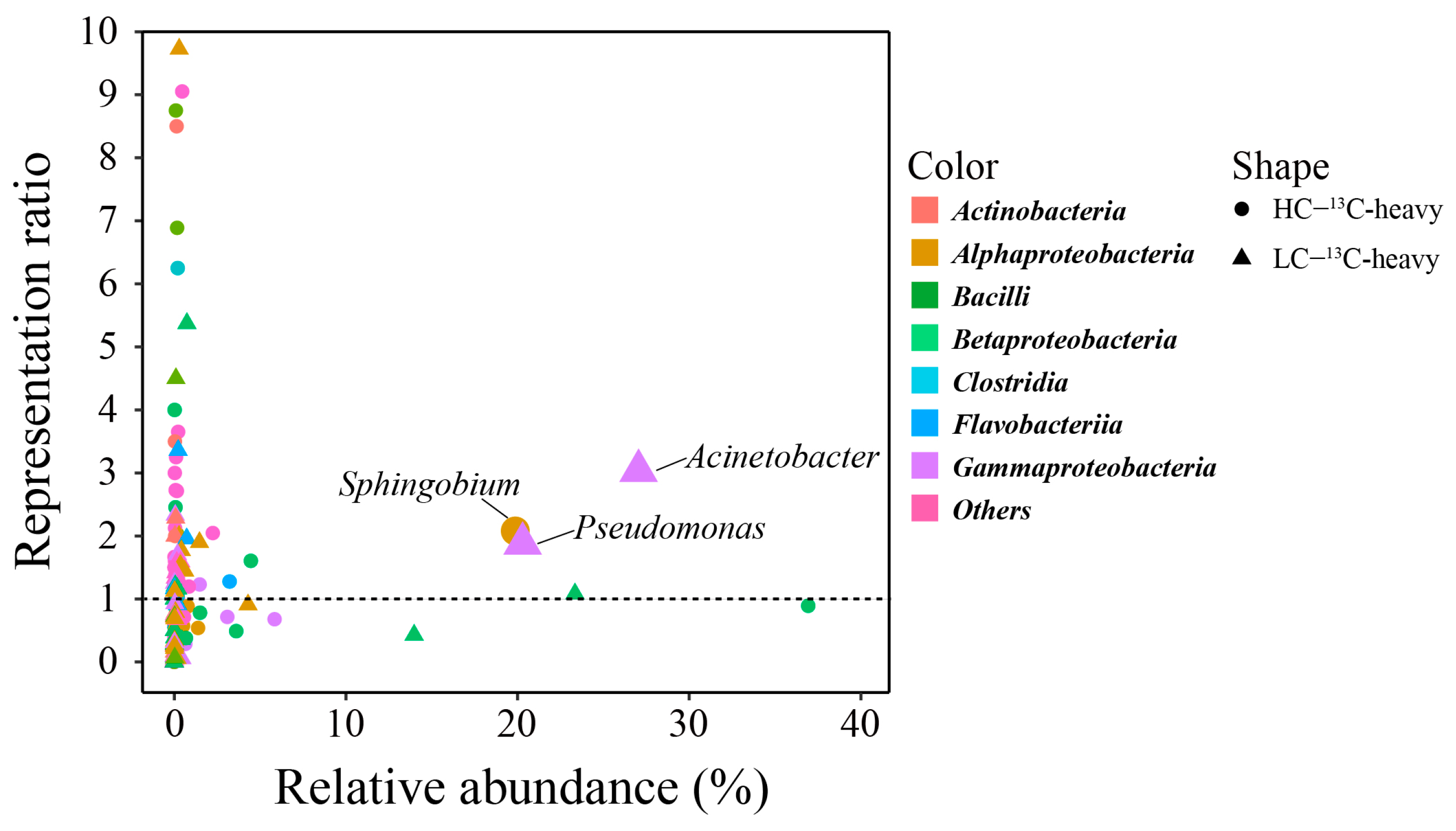
3.4. Identification of Bisphenol A-Assimilating Bacteria
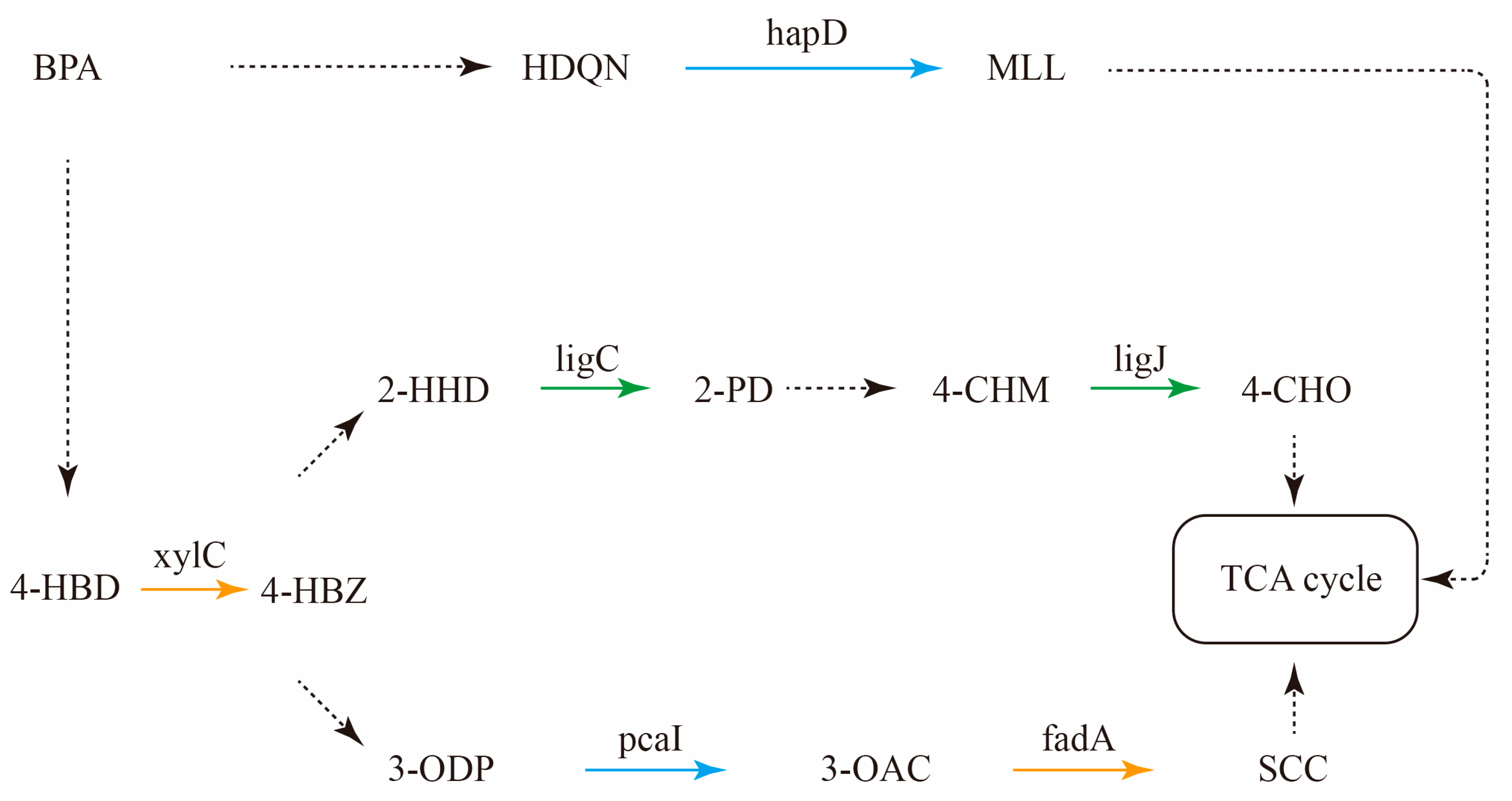
3.5. Construction of Bisphenol A Metabolic Pathway
4. Conclusions
Supplementary Materials
Author Contributions
Funding
Institutional Review Board Statement
Informed Consent Statement
Data Availability Statement
Acknowledgments
Conflicts of Interest
References
- Vogel, S.A. The politics of plastics: The making and unmaking of bisphenol a “safety”. Am. J. Public Health 2009, 99, S559–S566. [Google Scholar]
- Staples, C.A.; Dome, P.B.; Klecka, G.M.; Oblock, S.T.; Harris, L.R. A review of the environmental fate, effects, and exposures of bisphenol A. Chemosphere 1998, 36, 2149–2173. [Google Scholar] [CrossRef] [Scilit]
- Rezg, R.; El-Fazaa, S.; Gharbi, N.; Mornagui, B. Bisphenol A and human chronic diseases: Current evidences, possible mechanisms, and future perspectives. Environ. Int. 2014, 64, 83–90. [Google Scholar] [CrossRef] [Scilit] [PubMed]
- Liu, J.-L.; Wong, M.-H. Pharmaceuticals and personal care products (PPCPs): A review on environmental contamination in China. Environ. Int. 2013, 59, 208–224. [Google Scholar] [CrossRef] [Scilit] [PubMed]
- Santhi, V.; Sakai, N.; Ahmad, E.; Mustafa, A. Occurrence of bisphenol A in surface water, drinking water and plasma from Malaysia with exposure assessment from consumption of drinking water. Sci. Total Environ. 2012, 427, 332–338. [Google Scholar] [CrossRef] [Scilit]
- Petrie, B.; Barden, R.; Kasprzyk-Hordern, B. A review on emerging contaminants in wastewaters and the environment: Current knowledge, understudied areas and recommendations for future monitoring. Water Res. 2015, 72, 3–27. [Google Scholar] [CrossRef] [Scilit]
- Brian, J.V.; Harris, C.A.; Scholze, M.; Backhaus, T.; Booy, P.; Lamoree, M.; Pojana, G.; Jonkers, N.; Runnalls, T.; Bonfà, A. Accurate prediction of the response of freshwater fish to a mixture of estrogenic chemicals. Environ. Health Perspect. 2005, 113, 721–728. [Google Scholar] [PubMed]
- Kang, J.-H.; Aasi, D.; Katayama, Y. Bisphenol A in the aquatic environment and its endocrine-disruptive effects on aquatic organisms. Crit. Rev. Toxicol. 2007, 37, 607–625. [Google Scholar] [CrossRef] [Scilit]
- Kapelewska, J.; Kotowska, U.; Karpińska, J.; Kowalczuk, D.; Arciszewska, A.; Świrydo, A. Occurrence, removal, mass loading and environmental risk assessment of emerging organic contaminants in leachates, groundwaters and wastewaters. Microchem. J. 2018, 137, 292–301. [Google Scholar] [CrossRef] [Scilit]
- Yu, K.; Yi, S.; Li, B.; Guo, F.; Peng, X.; Wang, Z.; Wu, Y.; Alvarez-Cohen, L.; Zhang, T. An integrated meta-omics approach reveals substrates involved in synergistic interactions in a bisphenol A (BPA)-degrading microbial community. Microbiome 2019, 7, 16. [Google Scholar]
- Xiong, J.; An, T.; Li, G.; Peng, P. Accelerated biodegradation of BPA in water-sediment microcosms with Bacillus sp. GZB and the associated bacterial community structure. Chemosphere 2017, 184, 120–126. [Google Scholar] [CrossRef] [Scilit]
- Endo, Y.; Kimura, N.; Ikeda, I.; Fujimoto, K.; Kimoto, H. Adsorption of bisphenol A by lactic acid bacteria, Lactococcus, strains. Appl. Microbiol. Biotechnol. 2007, 74, 202–207. [Google Scholar] [CrossRef] [Scilit]
- Mita, L.; Grumiro, L.; Rossi, S.; Bianco, C.; Defez, R.; Gallo, P.; Mita, D.G.; Diano, N. Bisphenol A removal by a Pseudomonas aeruginosa immobilized on granular activated carbon and operating in a fluidized bed reactor. J. Hazard. Mater. 2015, 291, 129–135. [Google Scholar] [CrossRef] [Scilit]
- Sathyamoorthy, S.; Hoar, C.; Chandran, K. Identification of bisphenol-A assimilating microorganisms in mixed microbial communities using C-DNA stable isotope probing. Environ. Sci. Technol. 2018, 52, 9128–9135. [Google Scholar] [CrossRef] [Scilit]
- Sun, H.; Huang, K.; Zhang, X.; Ren, H.; Ye, L. Stable isotope probing reveals specific assimilating bacteria of refractory organic compounds in activated sludge. Water Res. 2022, 212, 118105. [Google Scholar] [CrossRef] [Scilit]
- Yi, Y.; Wang, H.; Chen, Y.; Gou, M.; Xia, Z.; Hu, B.; Nie, Y.; Tang, Y. Identification of Novel Butyrate- and Acetate-Oxidizing Bacteria in Butyrate-Fed Mesophilic Anaerobic Chemostats by DNA-Based Stable Isotope Probing. Microb. Ecol. 2020, 79, 285–298. [Google Scholar] [CrossRef] [Scilit] [PubMed]
- Zhang, L.; Dumont, M.G.; Bodelier, P.L.E.; Adams, J.M.; He, D.; Chu, H. DNA stable-isotope probing highlights the effects of temperature on functionally active methanotrophs in natural wetlands. Soil Biol. Biochem. 2020, 149, 107954. [Google Scholar] [CrossRef] [Scilit]
- Boschker, H.T.S.; Nold, S.C.; Wellsbury, P.; Bos, D.; de Graaf, W.; Pel, R.; Parkes, R.J.; Cappenberg, T.E. Direct linking of microbial populations to specific biogeochemical processes by 13C-labelling of biomarkers. Nature 1998, 392, 801–805. [Google Scholar] [CrossRef] [Scilit]
- Radajewski, S.; Ineson, P.; Parekh, N.R.; Murrell, J.C. Stable-isotope probing as a tool in microbial ecology. Nature 2000, 403, 646–649. [Google Scholar] [CrossRef] [Scilit]
- Li, Y.; Lee, C.G.; Watanabe, T.; Murase, J.; Asakawa, S.; Kimura, M. Identification of microbial communities that assimilate substrate from root cap cells in an aerobic soil using a DNA-SIP approach. Soil. Boil. Biochem. 2011, 43, 1928–1935. [Google Scholar] [CrossRef] [Scilit]
- Winderl, C.; Penning, H.; Netzer, F.V.; Meckenstock, R.U.; Lueders, T. DNA-SIP identifies sulfate-reducing Clostridia as important toluene degraders in tar-oil. ISME J. 2010, 4, 1314–1325. [Google Scholar] [CrossRef] [Scilit]
- Sun, H.; Mei, R.; Zhang, X.-X.; Ren, H.; Liu, W.-T.; Ye, L. Bacterial enrichment in highly-selective acetate-fed bioreactors and its application in rapid biofilm formation. Water Res. 2020, 170, 115359. [Google Scholar] [CrossRef] [Scilit] [PubMed]
- Neufeld, J.D.; Vohra, J.; Dumont, M.G.; Lueders, T.; Manefield, M.; Friedrich, M.W.; Murrell, J.C. DNA stable-isotope probing. Nat. Protoc. 2007, 2, 860–866. [Google Scholar] [CrossRef] [Scilit] [PubMed]
- Ouyang, W.-Y.; Su, J.-Q.; Richnow, H.H.; Adrian, L. Identification of dominant sulfamethoxazole-degraders in pig farm-impacted soil by DNA and protein stable isotope probing. Environ. Int. 2019, 126, 118–126. [Google Scholar] [CrossRef] [Scilit] [PubMed]
- Callahan, B.J.; McMurdie, P.J.; Rosen, M.J.; Han, A.W.; Johnson, A.J.; Holmes, S.P. DADA2: High-resolution sample inference from Illumina amplicon data. Nat. Methods 2016, 13, 581–583. [Google Scholar] [CrossRef] [Scilit] [PubMed]
- Bolger, A.M.; Lohse, M.; Usadel, B. Trimmomatic: A flexible trimmer for Illumina sequence data. Bioinformatics 2014, 30, 2114–2120. [Google Scholar] [CrossRef] [Scilit]
- Li, D.; Liu, C.M.; Luo, R.; Sadakane, K.; Lam, T.W. MEGAHIT: An ultra-fast single-node solution for large and complex metagenomics assembly via succinct de Bruijn graph. Bioinformatics 2015, 31, 1674–1676. [Google Scholar] [CrossRef] [Scilit]
- Kang, D.D.; Li, F.; Kirton, E.; Thomas, A.; Egan, R.; An, H.; Wang, Z. MetaBAT 2: An adaptive binning algorithm for robust and efficient genome reconstruction from metagenome assemblies. PeerJ 2019, 7, e7359. [Google Scholar] [CrossRef] [Scilit]
- Parks, D.; Imelfort, M.; Skennerton, C.; Philip, H.; Tyson, G. CheckM: Assessing the quality of microbial genomes recovered from isolates, single cells, and metagenomes. Genome Res. 2015, 25, 1043–1055. [Google Scholar] [CrossRef] [Scilit]
- Parks, D.H.; Chuvochina, M.; Waite, D.W.; Rinke, C.; Skarshewski, A.; Chaumeil, P.A.; Hugenholtz, P. A standardized bacterial taxonomy based on genome phylogeny substantially revises the tree of life. Nat. Biotechnol. 2018, 36, 996–1004. [Google Scholar] [CrossRef] [Scilit]
- Goris, J.; Konstantinidis, K.T.; Klappenbach, J.A.; Coenye, T.; Vandamme, P.; Tiedje, J.M. DNA–DNA hybridization values and their relationship to whole-genome sequence similarities. Int. J. Syst. Evol. Microbiol. 2007, 57, 81–91. [Google Scholar] [CrossRef] [Scilit]
- Hyatt, D.; Chen, G.-L.; LoCascio, P.F.; Land, M.L.; Larimer, F.W.; Hauser, L.J. Prodigal: Prokaryotic gene recognition and translation initiation site identification. BMC Bioinform. 2010, 11, 119. [Google Scholar] [CrossRef] [Scilit]
- Duarte, M.; Jauregui, R.; Vilchez-Vargas, R.; Junca, H.; Pieper, D.H. AromaDeg, a novel database for phylogenomics of aerobic bacterial degradation of aromatics. Database 2014, 2014, bau118. [Google Scholar] [CrossRef] [Scilit]
- Wang, L.; Lin, Y.; Ye, L.; Qian, Y.; Shi, Y.; Xu, K.; Ren, H.; Geng, J. Microbial roles in dissolved organic matter transformation in full-scale wastewater treatment processes revealed by reactomics and comparative genomics. Environ. Sci. Technol. 2021, 55, 11294–11307. [Google Scholar] [CrossRef] [Scilit] [PubMed]
- Jo, S.J.; Kwon, H.; Jeong, S.-Y.; Lee, C.-H.; Kim, T.G. Comparison of microbial communities of activated sludge and membrane biofilm in 10 full-scale membrane bioreactors. Water Res. 2016, 101, 214–225. [Google Scholar] [CrossRef] [Scilit]
- Mazioti, A.A.; Stasinakis, A.S.; Pantazi, Y.; Andersen, H.R. Biodegradation of benzotriazoles and hydroxy-benzothiazole in wastewater by activated sludge and moving bed biofilm reactor systems. Bioresour. Technol. 2015, 192, 627–635. [Google Scholar] [CrossRef] [Scilit] [PubMed]
- Guo, X.; Li, B.; Zhao, R.; Zhang, J.; Lin, L.; Zhang, G.; Li, R.-H.; Liu, J.; Li, P.; Li, Y.; et al. Performance and bacterial community of moving bed biofilm reactors with various biocarriers treating primary wastewater effluent with a low organic strength and low C/N ratio. Bioresour. Technol. 2019, 287, 121424. [Google Scholar] [CrossRef] [Scilit]
- Godzieba, M.; Zubrowska-Sudol, M.; Walczak, J.; Ciesielski, S. Development of microbial communities in biofilm and activated sludge in a hybrid reactor. Sci. Rep. 2022, 12, 12558. [Google Scholar] [CrossRef] [Scilit] [PubMed]
- Vijayalakshmi, V.; Senthilkumar, P.; Mophin-Kani, K.; Sivamani, S.; Sivarajasekar, N.; Vasantharaj, S. Bio-degradation of Bisphenol A by Pseudomonas aeruginosa PAb1 isolated from effluent of thermal paper industry: Kinetic modeling and process optimization. J. Radiat. Res. Appl. Sci. 2018, 11, 56–65. [Google Scholar] [CrossRef] [Scilit]
- Jia, Y.; Eltoukhy, A.; Wang, J.; Li, X.; Hlaing, T.S.; Aung, M.M.; Nwe, M.T.; Lamraoui, I.; Yan, Y. Biodegradation of bisphenol A by Sphingobium sp. YC-JY1 and the essential role of cytochrome P450 monooxygenase. Int. J. Mol. Sci. 2020, 21, 3588. [Google Scholar] [CrossRef] [Scilit]
- Noszczyńska, M.; Chodór, M.; Jałowiecki, Ł.; Piotrowska-Seget, Z. A comprehensive study on bisphenol A degradation by newly isolated strains Acinetobacter sp. K1MN and Pseudomonas sp. BG12. Biodegradation 2021, 32, 1–15. [Google Scholar] [CrossRef] [Scilit]
- Steen, A.D.; Crits-Christoph, A.; Carini, P.; DeAngelis, K.M.; Fierer, N.; Lloyd, K.G.; Cameron Thrash, J. High proportions of bacteria and archaea across most biomes remain uncultured. ISME J. 2019, 13, 3126–3130. [Google Scholar] [CrossRef] [Scilit]
- Ni, B.; Zhang, Y.; Chen, D.-W.; Wang, B.-J.; Liu, S.-J. Assimilation of aromatic compounds by Comamonas testosteroni: Characterization and spreadability of protocatechuate 4,5-cleavage pathway in bacteria. Appl. Microbiol. Biotechnol. 2013, 97, 6031–6041. [Google Scholar] [CrossRef] [Scilit]
- Penton, C.R.; Johnson, T.A.; Quensen, J.F., III; Iwai, S.; Cole, J.R.; Tiedje, J.M. Functional genes to assess nitrogen cycling and aromatic hydrocarbon degradation: Primers and processing matter. Front. Microbiol. 2013, 4, 279. [Google Scholar] [CrossRef] [Scilit] [PubMed]
- Kanehisa, M.; Sato, Y.; Morishima, K. BlastKOALA and GhostKOALA: KEGG Tools for Functional Characterization of Genome and Metagenome Sequences. J. Mol. Biol. 2016, 428, 726–731. [Google Scholar] [CrossRef] [Scilit] [PubMed]
- Hu, T.; Chitnis, N.; Monos, D.; Dinh, A. Next-generation sequencing technologies: An overview. Hum. Immunol. 2021, 82, 801–811. [Google Scholar] [CrossRef] [Scilit]
- Campana, S.; Busch, K.; Hentschel, U.; Muyzer, G.; de Goeij, J.M. DNA-stable isotope probing DNA-stable isotope probing (DNA-SIP) identifies marine sponge-associated bacteria actively utilizing dissolved organic matter (DOM). Environ. Microbiol. 2021, 23, 4489–4504. [Google Scholar] [CrossRef] [Scilit] [PubMed]


Disclaimer/Publisher’s Note: The statements, opinions and data contained in all publications are solely those of the individual author(s) and contributor(s) and not of MDPI and/or the editor(s). MDPI and/or the editor(s) disclaim responsibility for any injury to people or property resulting from any ideas, methods, instructions or products referred to in the content. |
© 2026 by the authors. Licensee MDPI, Basel, Switzerland. This article is an open access article distributed under the terms and conditions of the Creative Commons Attribution (CC BY) license.
Share and Cite
Wang, D.; Sun, J.; Zhang, Y.; Yuan, L.; Xu, X.; Xue, Y.; Sun, H. Integrated 13C-DNA Stable Isotope Probing and Metagenomics Approaches to Identify Bisphenol A Assimilating Microorganisms and Metabolic Pathways in Biofilms. Toxics 2026, 14, 80. https://doi.org/10.3390/toxics14010080
Wang D, Sun J, Zhang Y, Yuan L, Xu X, Xue Y, Sun H. Integrated 13C-DNA Stable Isotope Probing and Metagenomics Approaches to Identify Bisphenol A Assimilating Microorganisms and Metabolic Pathways in Biofilms. Toxics. 2026; 14(1):80. https://doi.org/10.3390/toxics14010080
Chicago/Turabian StyleWang, Di, Jiayue Sun, Yunian Zhang, Lingjue Yuan, Xia Xu, Yingang Xue, and Haohao Sun. 2026. "Integrated 13C-DNA Stable Isotope Probing and Metagenomics Approaches to Identify Bisphenol A Assimilating Microorganisms and Metabolic Pathways in Biofilms" Toxics 14, no. 1: 80. https://doi.org/10.3390/toxics14010080
APA StyleWang, D., Sun, J., Zhang, Y., Yuan, L., Xu, X., Xue, Y., & Sun, H. (2026). Integrated 13C-DNA Stable Isotope Probing and Metagenomics Approaches to Identify Bisphenol A Assimilating Microorganisms and Metabolic Pathways in Biofilms. Toxics, 14(1), 80. https://doi.org/10.3390/toxics14010080