1. Introduction
Diabetes mellitus is a major global public health challenge, contributing to morbidity and mortality worldwide [
1]. Global trends indicate a concurrent increase in obesity and diabetes prevalence, with both conditions reflecting complex metabolic dysregulation involving impaired insulin signaling and disrupted glucose homeostasis [
2]. In the United States, incidence rates of type 1 diabetes have increased among young adults, with disproportionate growth observed in Hispanic and Black populations [
3].
Diabetes risk models have traditionally focused on demographic characteristics (age, sex, race/ethnicity, socioeconomic status) [
4], anthropometric indicators (body mass index [BMI], waist circumference, blood pressure), laboratory biomarkers (insulin, lipids, liver enzymes), and behavioral factors such as smoking and alcohol consumption [
5,
6,
7].
Emerging evidence indicates that environmental exposures are associated with diabetes risk. PFAS compounds such as PFOA and PFOS, as well as heavy metals including lead (Pb), cadmium (Cd), and nickel (Ni), have been associated with markers of impaired glucose regulation, insulin resistance, and metabolic dysregulation [
8]. Studies increasingly report associations between heavy metal exposures and diabetes prevalence [
9,
10], with experimental and epidemiologic evidence suggesting potential effects on pancreatic β-cell function and glucose homeostasis [
11,
12]. With industrialization driving rising environmental levels of heavy metals that frequently exceed safety standards, understanding their role in diabetes-related metabolic dysfunction has become an increasingly urgent public health and analytic priority [
13].
Machine learning (ML) has emerged as a valuable analytic approach in population health research. Compared to traditional statistical methods, ML offers enhanced capacity to model complex, nonlinear relationships among biological, environmental, and social determinants of health. Leveraging large, high-resolution datasets, ML techniques can improve disease classification, elucidate exposure–health relationships, and support the development of more precise and effective prevention strategies [
14,
15,
16,
17,
18,
19,
20]. Traditional regression-based methods are limited in their capacity to model complex, nonlinear relationships and high-dimensional interactions among risk factors. ML algorithms such as support vector machines (SVMs), artificial neural networks (ANNs), k-nearest neighbors (k-NNs), decision trees, and naïve Bayes offer flexible modeling capabilities that can improve predictive performance. Previous studies applying ML to diabetes risk classification have mainly focused on demographic and clinical predictors, with minimal incorporation of environmental variables [
21,
22].
KNN is a common and simple method for filling in missing values, but it performs poorly when a large portion of the data is missing [
23,
24,
25]. The challenge becomes more pronounced when datasets contain mixed variable types (nominal, ordinal, binary, and continuous), as these differences can distort underlying data structure and complicate model performance [
26,
27,
28]. Only a limited number of supervised algorithms, primarily tree-based models, can inherently accommodate missing values [
29,
30]. Earlier KNN-based imputation approaches relied mainly on Euclidean distance and were optimized for continuous data, which often led to misclassification and reduced accuracy when applied to nominal variables or datasets with substantial missingness [
31,
32,
33].
Handling missing data remains a central methodological challenge in population and health research. Multiple imputation has emerged as a practical and robust strategy for reducing bias and preserving statistical power across a wide range of analytic settings [
34]. Among available approaches, Multiple Imputation by Chained Equations (MICE), also referred to as Fully Conditional Specification (FCS), is one of the most widely recommended and frequently applied methods [
35], which generates multiple plausible values for missing observations through iterative regression models [
36,
37]. MICE often employs Predictive Mean Matching (PMM), a semi-parametric approach that replaces missing values with observed responses from the most similar cases, making it robust to violations of normality [
37].
Missing data in epidemiologic and health studies may arise through several mechanisms with important implications for analytic validity. Missing Completely At Random (MCAR) occurs when the probability of missingness is independent of both observed and unobserved data, often producing a combination of intermittent and monotone missingness patterns [
38,
39]. More commonly, missingness follows a Missing At Random (MAR) mechanism, in which the likelihood of missingness depends on observed variables but not on the missing values themselves. Both MCAR and MAR can reduce statistical efficiency and introduce bias if not appropriately addressed. MICE is widely recommended for handling missing data under these mechanisms across diverse data structures and study designs [
39].
Despite increasing adoption of machine learning approaches in diabetes research, most prior population-based studies have relied primarily on clinical and demographic risk factors, with limited incorporation of environmental exposure indicators. As a result, the potential contribution of toxic environmental exposures to diabetes classification remains insufficiently characterized at the population level. To address this gap, the present study integrates clinical, behavioral, lifestyle, and environmental exposure data within a unified supervised machine learning framework using nationally representative NHANES data. By systematically benchmarking multiple supervised learning algorithms and explicitly evaluating the contribution of environmental toxicants, this work provides a more comprehensive assessment of population-level diabetes classification.
In this study, we leverage nationally representative NHANES 2017–2018 biomonitoring, clinical, behavioral, lifestyle, and environmental exposure data to develop and evaluate an integrated machine learning framework for population-level diabetes classification. Specifically, we pursue the following objectives:
To construct a supervised diabetes classification framework that integrates heterogeneous tabular features spanning demographic characteristics, anthropometric measures, clinical laboratory biomarkers, behavioral and lifestyle factors, and toxic environmental exposures.
To systematically benchmark multiple supervised classification algorithms, including logistic regression, support vector machines, multilayer perceptrons (artificial neural networks), k-nearest neighbors, decision trees, random forests, naïve Bayes, and XGBoost, under a standardized preprocessing pipeline incorporating feature engineering, multiple imputation, and class-imbalance correction.
To identify models that achieve robust out-of-sample generalization and to quantify the relative contribution of toxic environmental exposure features compared with established clinical, behavioral, and lifestyle predictors.
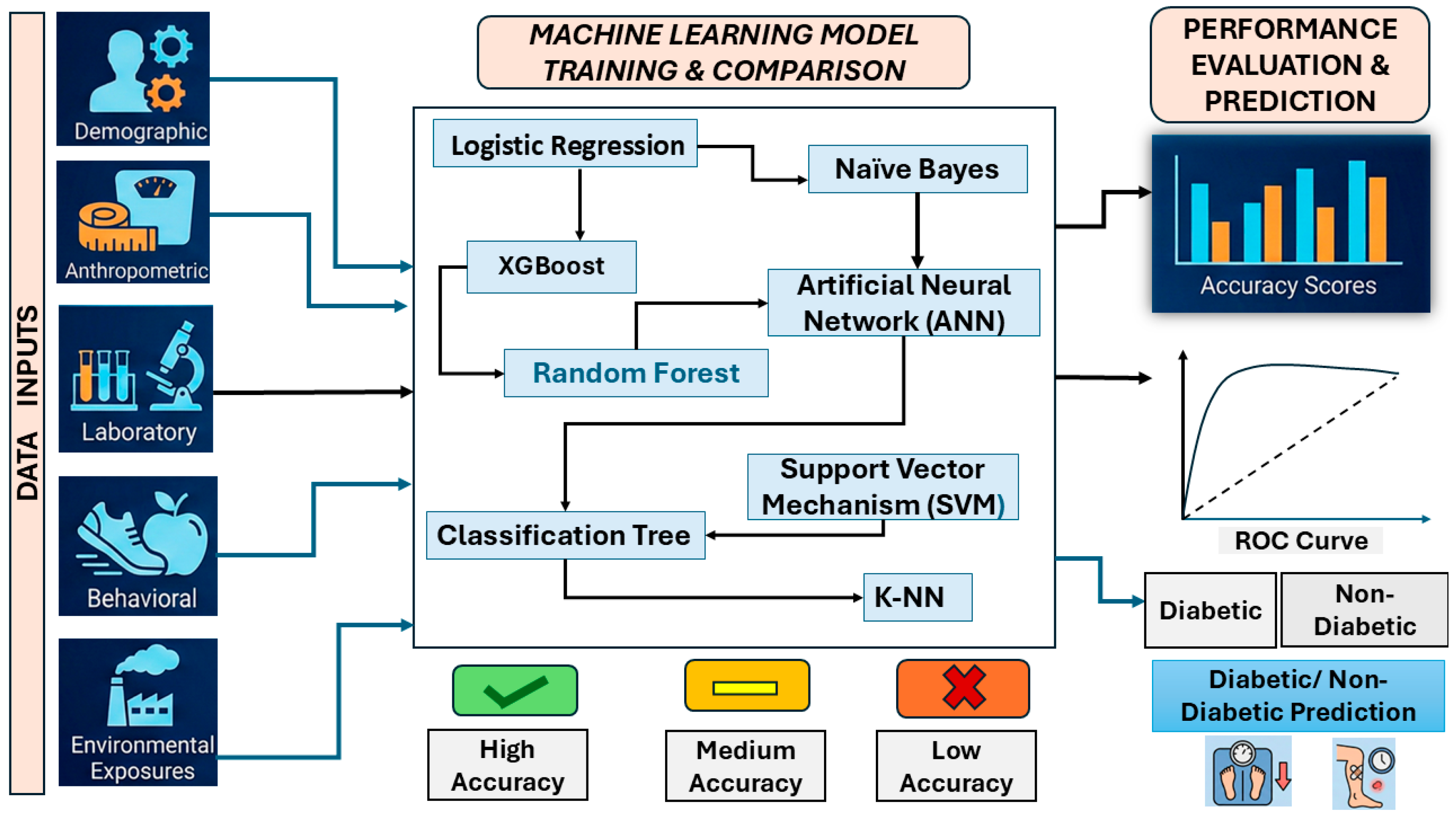
Figure 1 provides an overview of the analytical workflow used in this study, including the data domains incorporated, the supervised machine learning models evaluated, and the procedures used for model training, comparison, and classification.
2. Materials and Methods
2.1. Data Source and Study Population
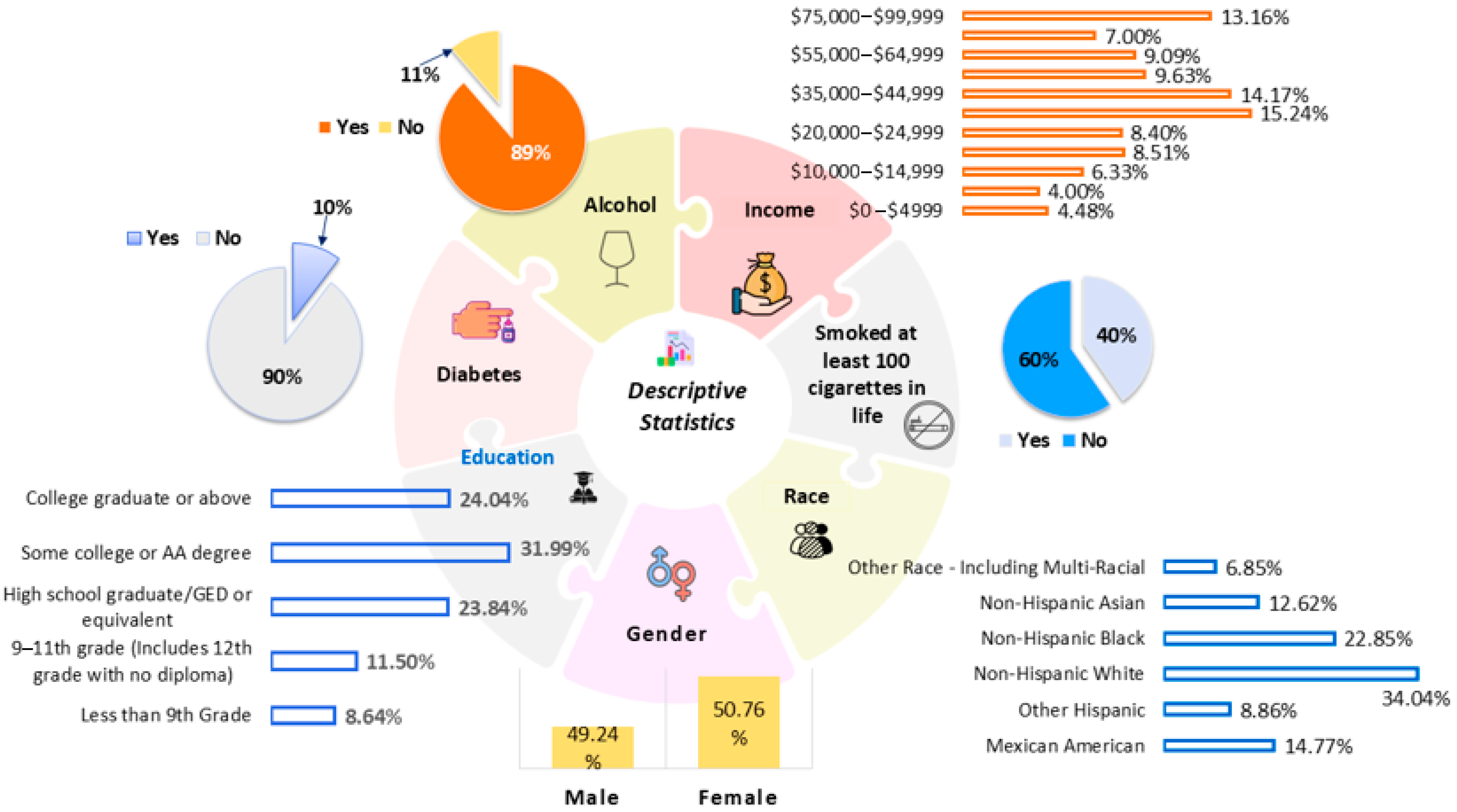
NHANES, conducted by the Centers for Disease Control and Prevention through the National Center for Health Statistics, provided the publicly accessible data used in this study. The analytic sample included adults aged 18 years and older with available information across key demographic, socioeconomic, behavioral, anthropometric, clinical, and environmental exposure domains relevant to diabetes risk. Demographic and socioeconomic characteristics included age, sex, race and ethnicity, educational attainment, and household income. Behavioral and lifestyle factors included smoking status and alcohol use. Diabetes status was determined through questionnaire. Anthropometric and clinical measures included body mass index and blood pressure. Environmental toxic exposures were assessed using biomonitoring data for metals and per- and polyfluoroalkyl substances (PFAS).
Because missingness was present in several domains, all variables were harmonized and prepared for multiple imputations to ensure consistent coding and a complete analytic dataset.
2.2. Outcome Variable
The primary outcome was self-reported physician-diagnosed diabetes, defined based on the NHANES questionnaire asking whether a doctor or health professional had ever informed the participant of having diabetes. The variable was coded as a binary class:
1 = Diabetes (Yes).
0 = No diabetes.
2.3. Predictor Variables
Predictors included four domains:
Demographic variables: age, sex, race/ethnicity, education level, and household income.
Behavioral variables: smoking history (≥100 cigarettes), alcohol consumption.
Clinical and metabolic biomarkers: insulin, triglycerides, total cholesterol, HDL, LDL, CRP, systolic and diastolic blood pressure, BMI, waist circumference, AST, ALT.
Environmental exposure biomarkers: lead, mercury, cadmium, PFOS, PFOA.
Composite physiological and behavioral indices: allostatic load and the dietary inflammatory index.
These variables were selected based on clinical relevance, the prior literature, and data availability.
2.3.1. Laboratory Analysis
Per- and Polyfluoroalkyl Substances
Serum PFAS were quantified at the CDC National Center for Environmental Health, Division of Laboratory Sciences, Organic Analytical Toxicology Branch using an online solid-phase extraction–high-performance liquid chromatography–TurboIonSpray–tandem mass spectrometry method (online SPE–HPLC–TIS–MS/MS; CDC method 6304.09) in NHANES 2017–2018. Briefly, 50 µL of serum was diluted with formic acid and injected into a commercial column-switching system (Symbiosis extractor with Alias autosampler and HPLC pump; Spark Holland Inc., dba iChrom Solutions, Plainsboro, NJ, USA) that concentrates analytes on an SPE cartridge and then performs reversed-phase HPLC separation. Detection and quantification of target PFAS (including linear and branched PFOA and PFOS isomers, PFNA, PFDA, PFUnDA, PFHxS, GenX, ADONA, and 9Cl-PFESA) were carried out on Sciex Triple Quad 5500, Triple Quad 6500+ or QTRAP 6500 triple-quadrupole mass spectrometers (SCIEX, Foster City, CA, USA) operated in negative-ion TurboIonSpray mode with multiple-reaction monitoring. Instrument control and data acquisition used Analyst software (1.7.4), and peak integration and quantification used MultiQuant (SCIEX, Foster City, CA, USA). Calibration curves were prepared in calf serum using isotopically labeled PFAS as internal standards, and multi-level quality-control pools were analyzed with each batch to monitor accuracy, precision, and long-term assay performance according to CDC laboratory protocols.
2.3.2. Clinical Analysis
Clinical and anthropometric biomarkers were measured according to standardized NHANES 2017–2018 protocols. Insulin was quantified from venous blood using a hexokinase-mediated enzymatic method and a sandwich immunoassay, respectively, while hemoglobin A1c (HbA1c) was assessed using high-performance liquid chromatography following NGSP-certified procedures [NHANES Lab Methods]. Serum triglycerides, total cholesterol, HDL cholesterol, and LDL cholesterol (calculated using the Friedewald equation when appropriate) were measured enzymatically on automated analyzers with CDC quality-control oversight. High-sensitivity C-reactive protein (CRP) was determined using latex-enhanced nephelometry. Liver enzymes, including aspartate aminotransferase (AST) and alanine aminotransferase (ALT), were quantified using kinetic rate methods. Blood pressure was obtained during the physical examination using a calibrated automatic sphygmomanometer after a standardized rest period, with systolic and diastolic values averaged from repeated measurements. Anthropometric measures were collected by trained health technicians: body mass index (BMI) was calculated from measured height and weight, and waist circumference was measured at the iliac crest using a flexible steel tape according to NHANES anthropometry protocols [NHANES Examination Methods]. All assays followed rigorous internal and external quality-assurance procedures mandated by the CDC’s National Center for Health Statistics.
2.3.3. Derived Scores
Allostatic Load
Allostatic load was operationalized as a multi-system index capturing dysregulation across cardiovascular, metabolic, and inflammatory pathways, following established epidemiologic protocols. Allostatic load is the long-term ‘wear and tear’ on the body caused by ongoing stress and repeated adjustments to environmental, social, and metabolic challenges. It has been widely linked to a higher risk of cardiometabolic diseases, including diabetes. Higher allostatic load has been linked to insulin resistance, problems with glucose regulation, and a greater chance of developing type 2 diabetes in studies of large groups of people.
Ten biomarkers were used to construct the score. Cardiovascular indicators included systolic blood pressure (SBP), diastolic blood pressure (DBP), triglycerides, HDL cholesterol, and total cholesterol. Metabolic function was assessed using albumin, body mass index (BMI), hemoglobin A1c (HbA1c), and creatinine clearance. Systemic inflammation was represented by C-reactive protein (CRP).
For each biomarker, values were divided into quartiles based on the distribution within the analytic sample. Participants falling in the highest-risk quartile received a score of 1, and those in lower-risk quartiles received a score of 0. Because lower values of albumin, creatinine clearance, and HDL cholesterol are associated with higher physiological risk, these markers assigned a score of 1 for the lowest quartile instead of the highest. Individual scores across the 10 indicators were summed to create a total allostatic load score ranging from 0 to 10, with higher values indicating greater multisystem physiological strain.
Dietary Inflammatory Index
Dietary inflammation was quantified using the Dietary Inflammatory Index (DII), calculated from the 24 h dietary recall interviews administered in NHANES. These recalls were collected using standardized procedures validated by the Nutrition Methodology Working Group. The DII was computed separately for each recall and then averaged to generate a participant-level score.
The computation followed Hébert’s standardized algorithm, which evaluates the inflammatory potential of dietary intake by assessing the contribution of multiple nutrients and food components. In NHANES 2017–2018, data were available for 27 dietary parameters used to derive the DII. These included macronutrients (energy, carbohydrates, protein, fiber), lipid components (saturated, monounsaturated, and polyunsaturated fatty acids), cholesterol, alcohol, and a range of vitamins and minerals (e.g., vitamin A, C, D, E, B6, B12, thiamine, riboflavin, folate, beta-carotene, magnesium, zinc, selenium, iron).
Although Hébert’s full DII algorithm incorporates up to 45 food parameters, prior validation studies show that reliable DII estimates can be generated when fewer components are available, as long as core nutrient contributors are represented. Higher DII scores indicate a more pro-inflammatory dietary pattern.
2.4. Data Completeness and Missingness Structure
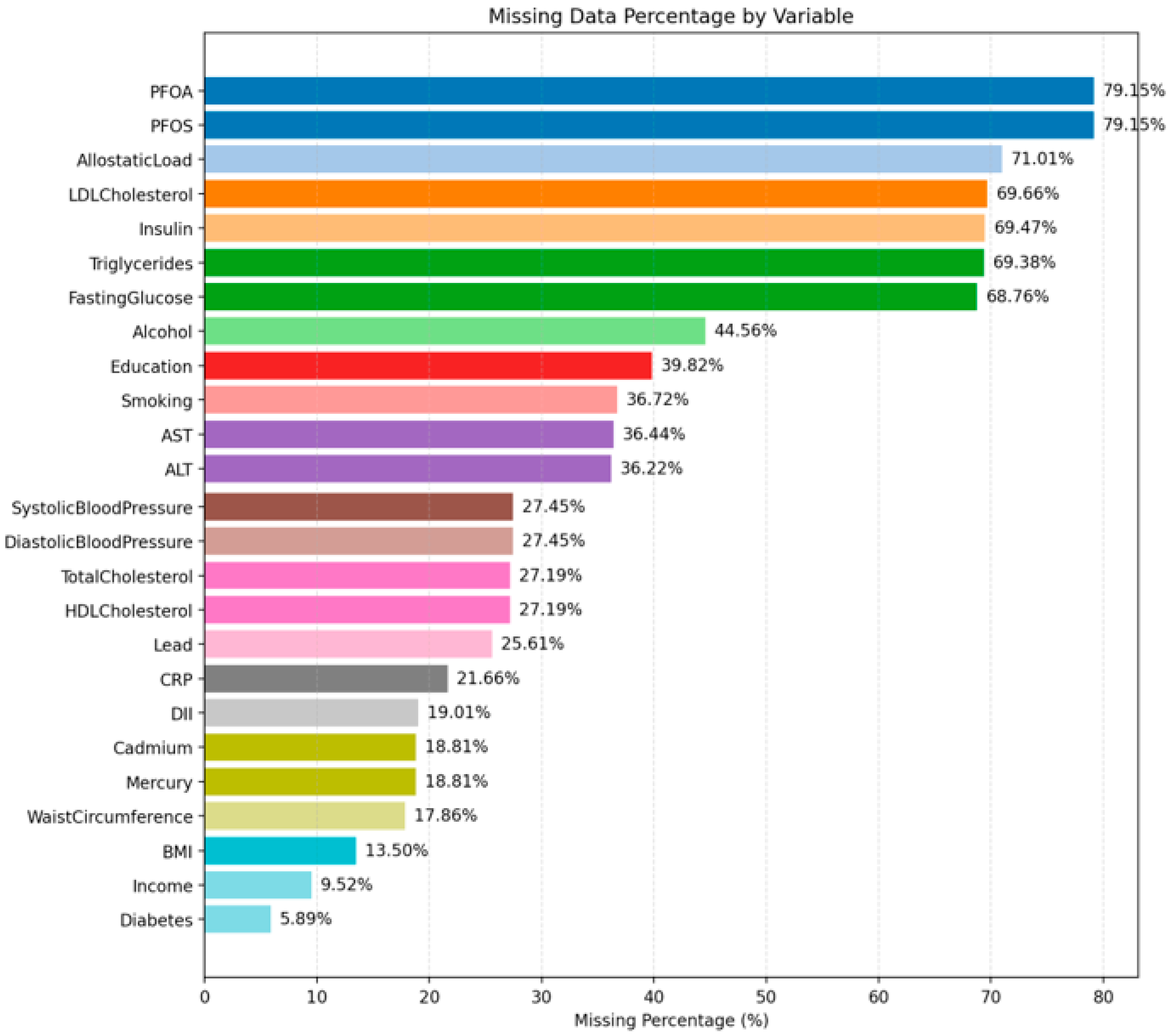
High variability in missingness across variables was found in a thorough analysis of data completeness, suggesting non-random data gaps. PFOS and PFOA had around 78% missing for each. Other biochemical and clinical indicators, including allostatic load, LDL-cholesterol, insulin, triglycerides, and, exhibited missingness between 68 and 70%.
Demographic variables such as age, gender, and race had no missing values. In contrast, socioeconomic and behavioral factors, including income, education, alcohol usage, and smoking, showed considerable amounts of missing data, ranging from 30% to 45%. In all, 27.6% of the dataset had missing values, meaning that 72.4% of the data could be examined. The Data Quality Distribution analysis grouped the variables into four completeness categories: Perfect (no missing data; 9 variables), Good (up to 20% missing; 10 variables), Moderate (20–50% missing; 17 variables), and Poor (more than 50% missing; 7 variables).
This pattern reveals that most variables contain missing data, making frequent imputation important to prevent losing crucial information. According to the Cumulative Missingness Curve, only 32 columns accounted for roughly 80% of all missing values. This indicates that rather than being dispersed equally throughout the sample, the missing data were clustered in particular exposure and biomarker variables. The Missing Data Pattern Analysis also showed repeated groups of variables missing together, suggesting a structured source of missingness, possibly due to differences in laboratory testing or participant response behavior—rather than completely random missingness.
2.5. Handling Missing Data
Missing data were addressed using the MICE method to minimize bias and preserve statistical power. To guarantee convergence and stability, 70 imputed datasets (M = 70) were created across 20 rounds of imputation. Rather than using a single finished dataset, machine learning models were trained and assessed independently on each imputed dataset. Model performance metrics were then aggregated across imputations, allowing both within and between-imputation variability to be reflected in the reported results.
By using predictive models appropriate for each type of variable, the iterative procedure preserved multivariate relationships between predictors. After imputation, findings from all datasets were aggregated using Rubin’s technique, providing pooled estimates that accounted for within- and between-imputation variance.
Rather than randomly maximizing iterations, the number of imputations (M = 70) was determined depending on the degree of missingness and the stability of parameter estimates. Simulation studies [
40,
41] show that using more imputations than the percentage of missing data does not greatly improve accuracy. Since several variables in this dataset had 60–70% missingness, using 70 imputations (M = 70) was both statistically appropriate and efficient.
NHANES laboratory biomarkers are collected using a complex subsample design rather than full-sample testing. Consequently, the high proportion of missing values for PFOS, PFOA, LDL, insulin, and triglycerides reflects planned subsample testing rather than participant nonresponse. Because assignment to NHANES laboratory subsamples is probabilistic and independent of individual health characteristics, the resulting missingness corresponds to a design-based Missing at Random (MAR) mechanism. Multiple imputation is the recommended approach for handling this type of structured subsample missingness and has been widely applied in peer-reviewed NHANES analyses involving laboratory biomarkers with comparable subsample missingness.
2.6. Class Imbalance Handling
The dataset showed a strong class imbalance, with only about 10% of respondents having diabetes. To reduce bias caused by this unequal distribution, we applied the Synthetic Minority Oversampling Technique (SMOTE) after completing multiple imputation. SMOTE generates new diabetes cases by combining each minority sample with its nearest neighbors rather than simply duplicating existing records. This approach produces realistic synthetic examples, helps reduce overfitting, and preserves the structure of the original data. Using SMOTE ensured that diabetic and non-diabetic participants were more evenly represented during model training. SMOTE was applied only within each training fold to ensure that no synthetic minority cases were introduced into the test data and to prevent oversampling from propagating imputed values across folds. Although alternative class-balancing approaches exist (e.g., random undersampling or cost-sensitive learning), SMOTE was selected to provide a consistent and widely adopted framework for model comparison; evaluation of alternative balancing strategies is left for future work.
2.7. Model Development
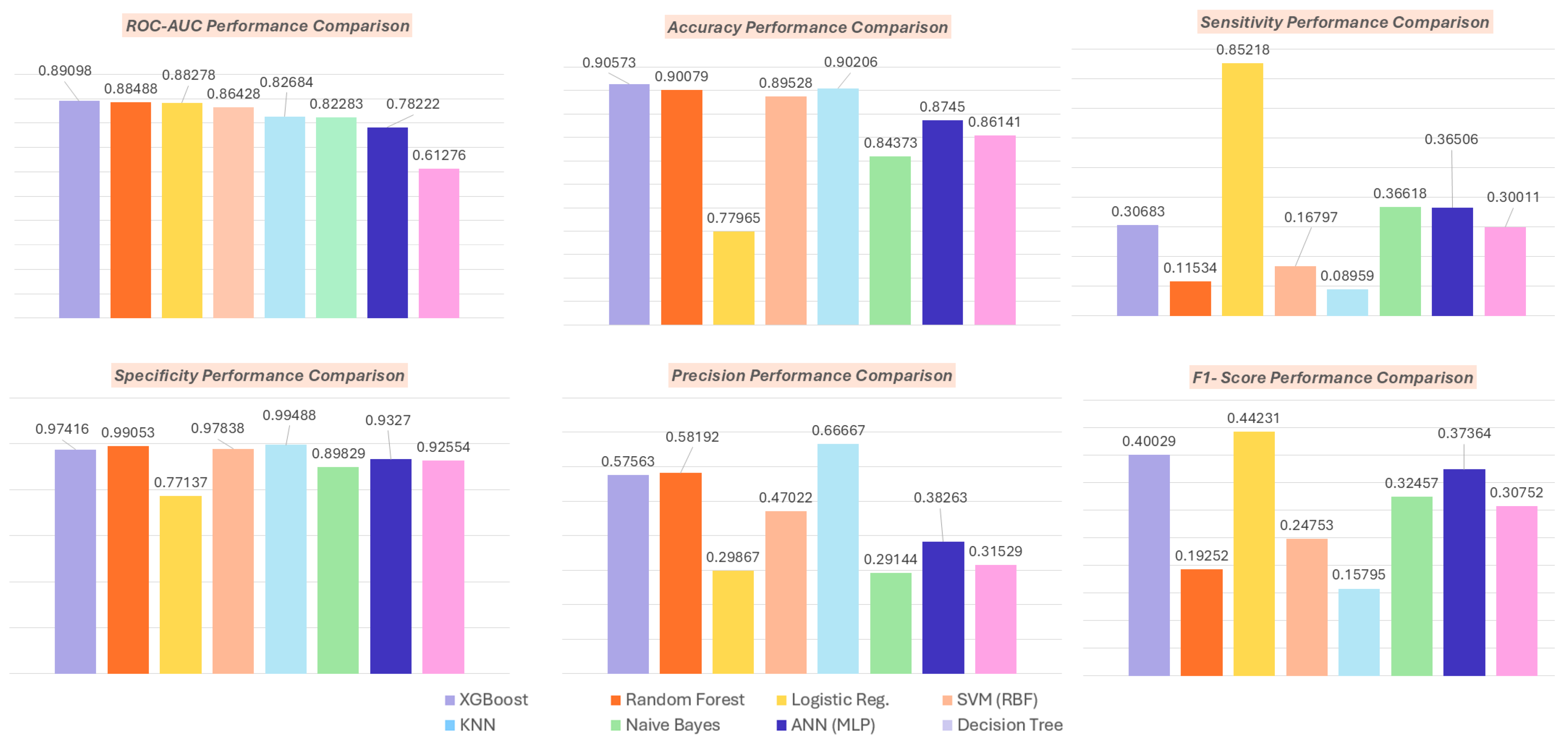
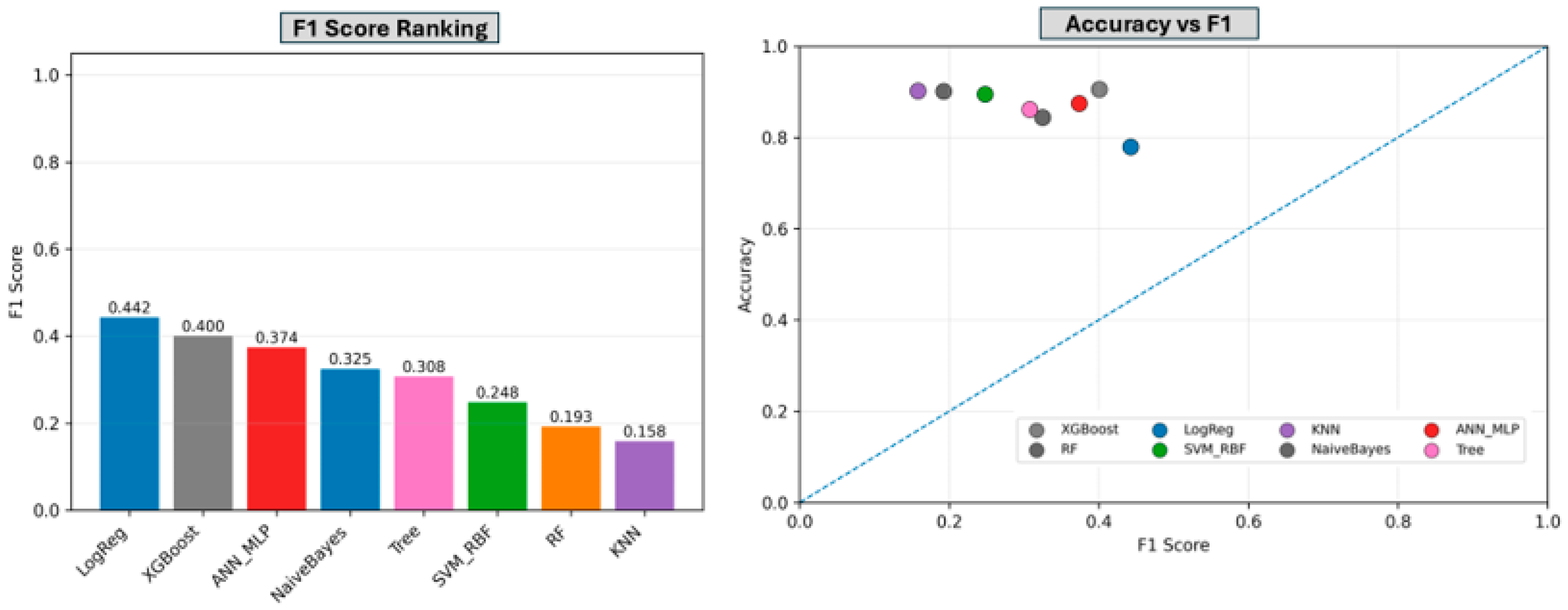
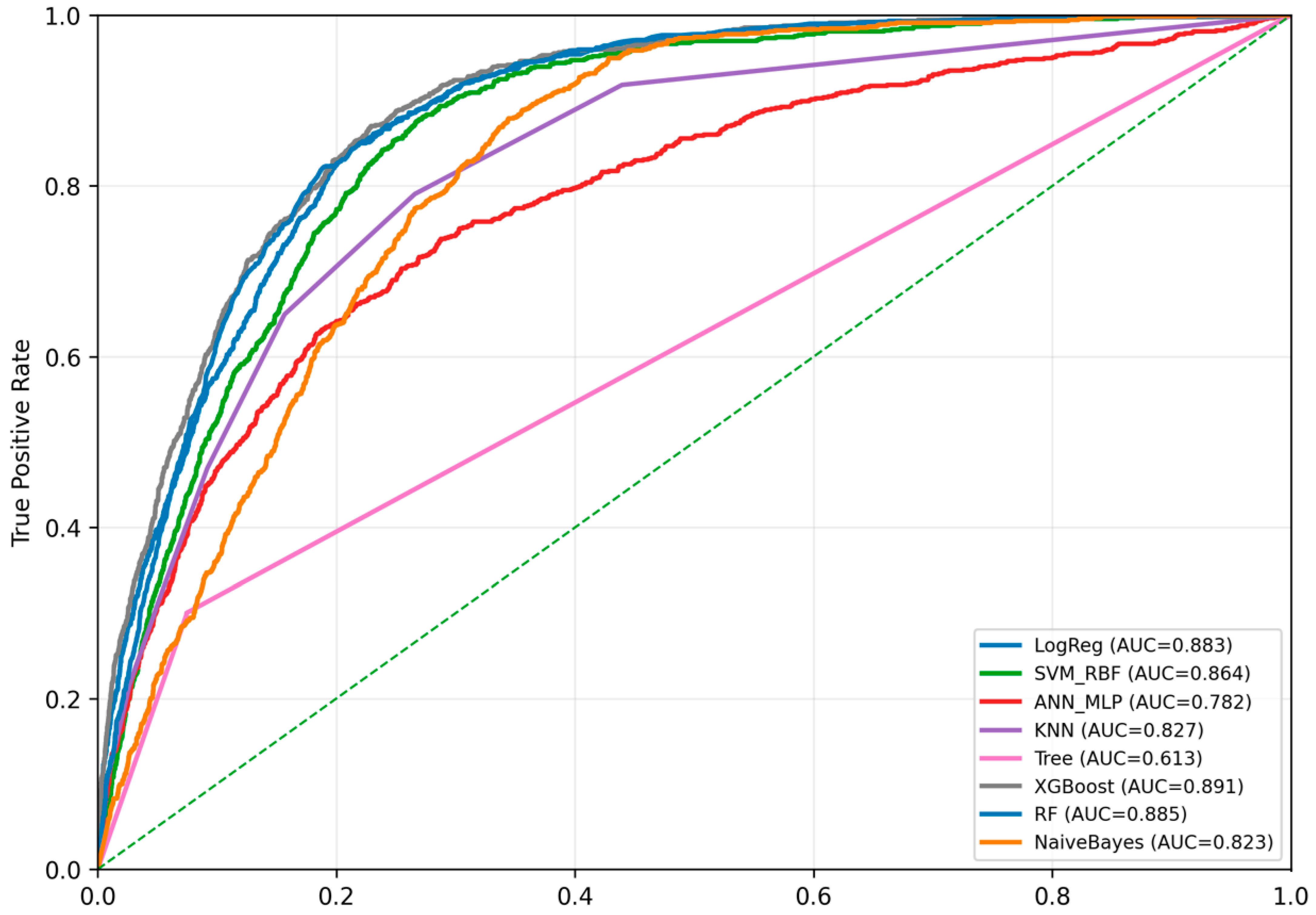
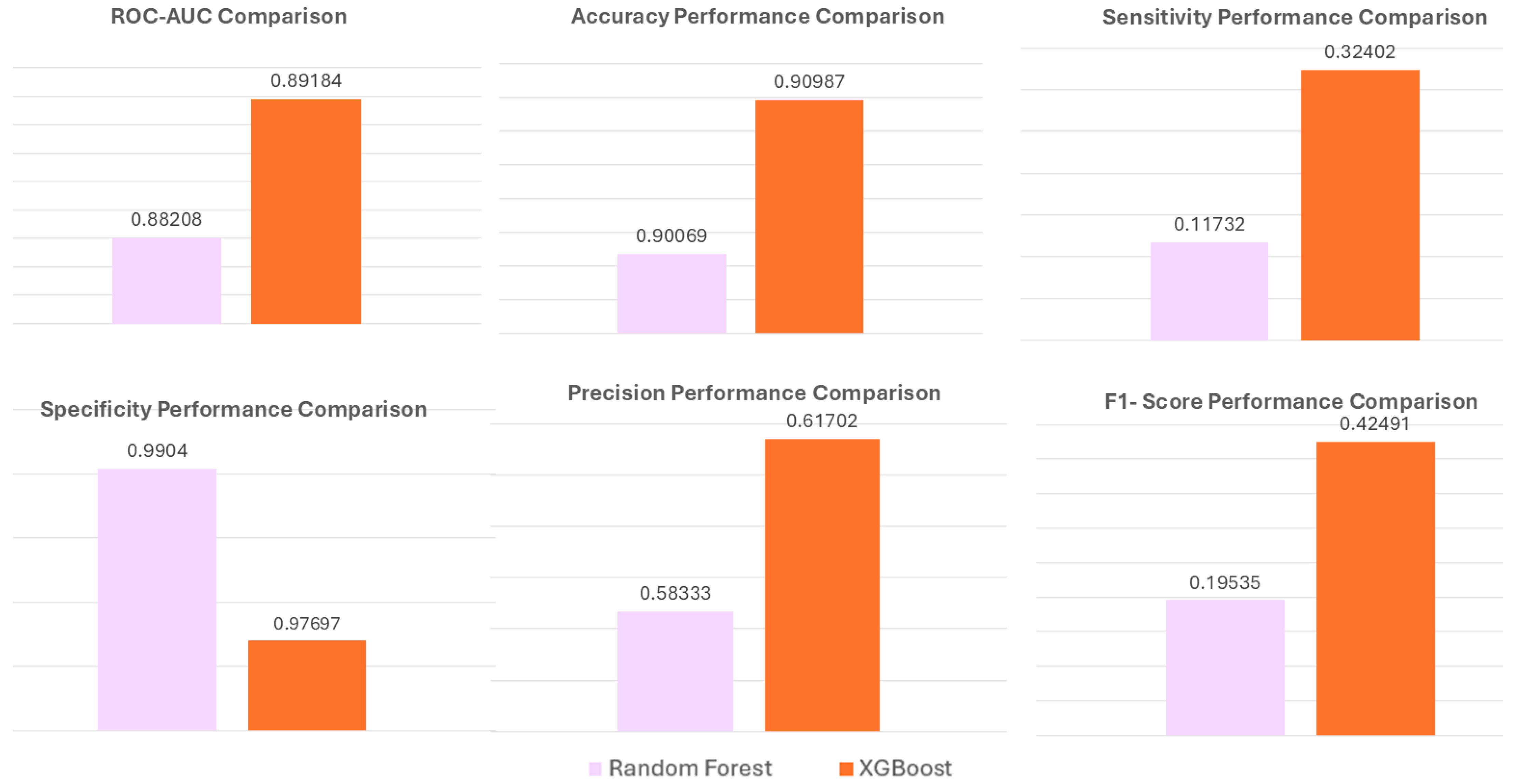
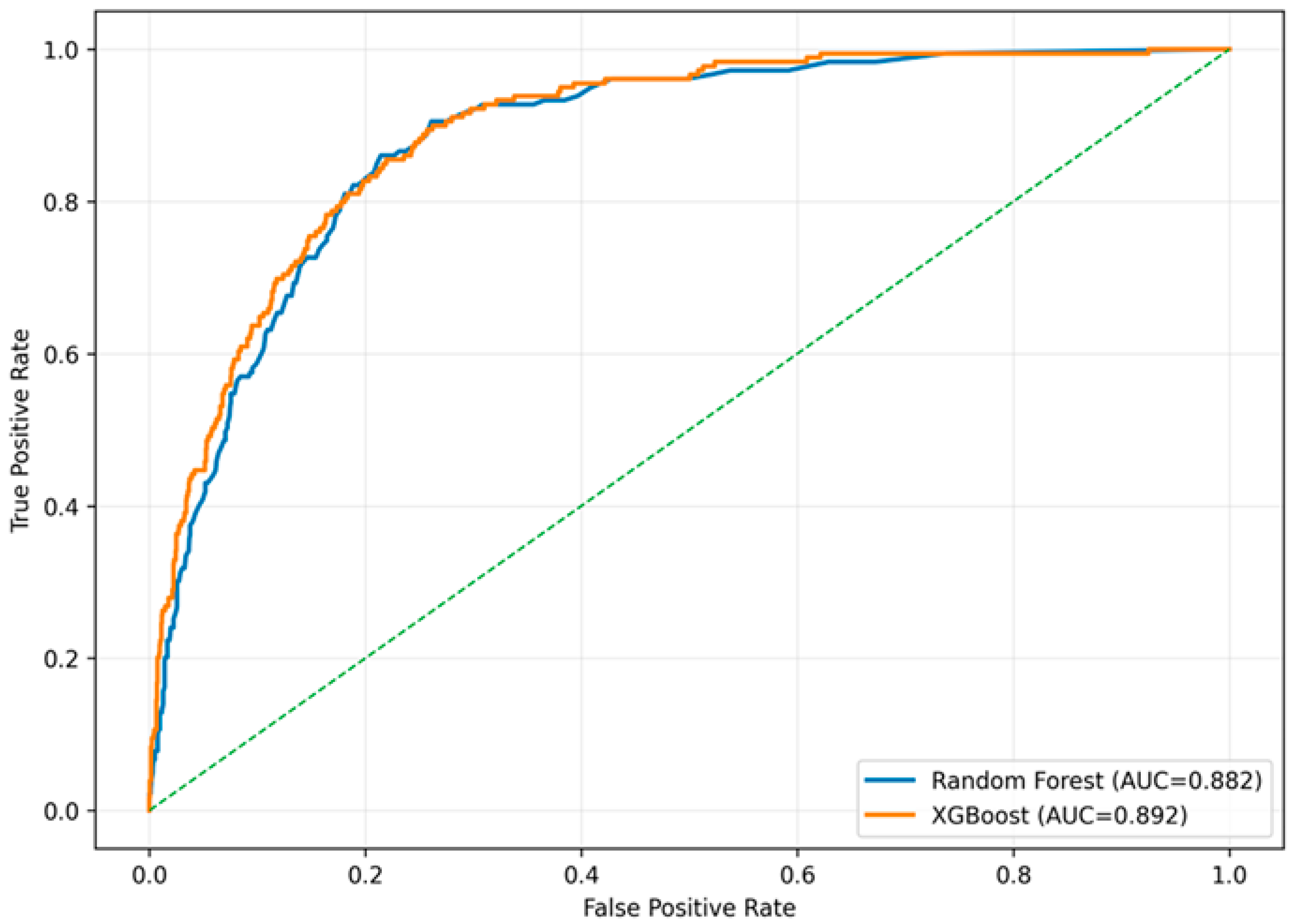
The model’s performance was evaluated using a variety of complementary evaluation metrics due to the dataset’s significant class imbalance. Because false positives have less of an impact on public health than failing to identify people with diabetes, sensitivity (recall) was stressed. Regardless of the classification criteria, overall discrimination was evaluated using ROC-AUC. Precision and F1-score were included to characterize the trade-offs between sensitivity and false-positive burden and to avoid over-reliance on accuracy alone.
Eight machine learning models were trained to classify diabetes status:
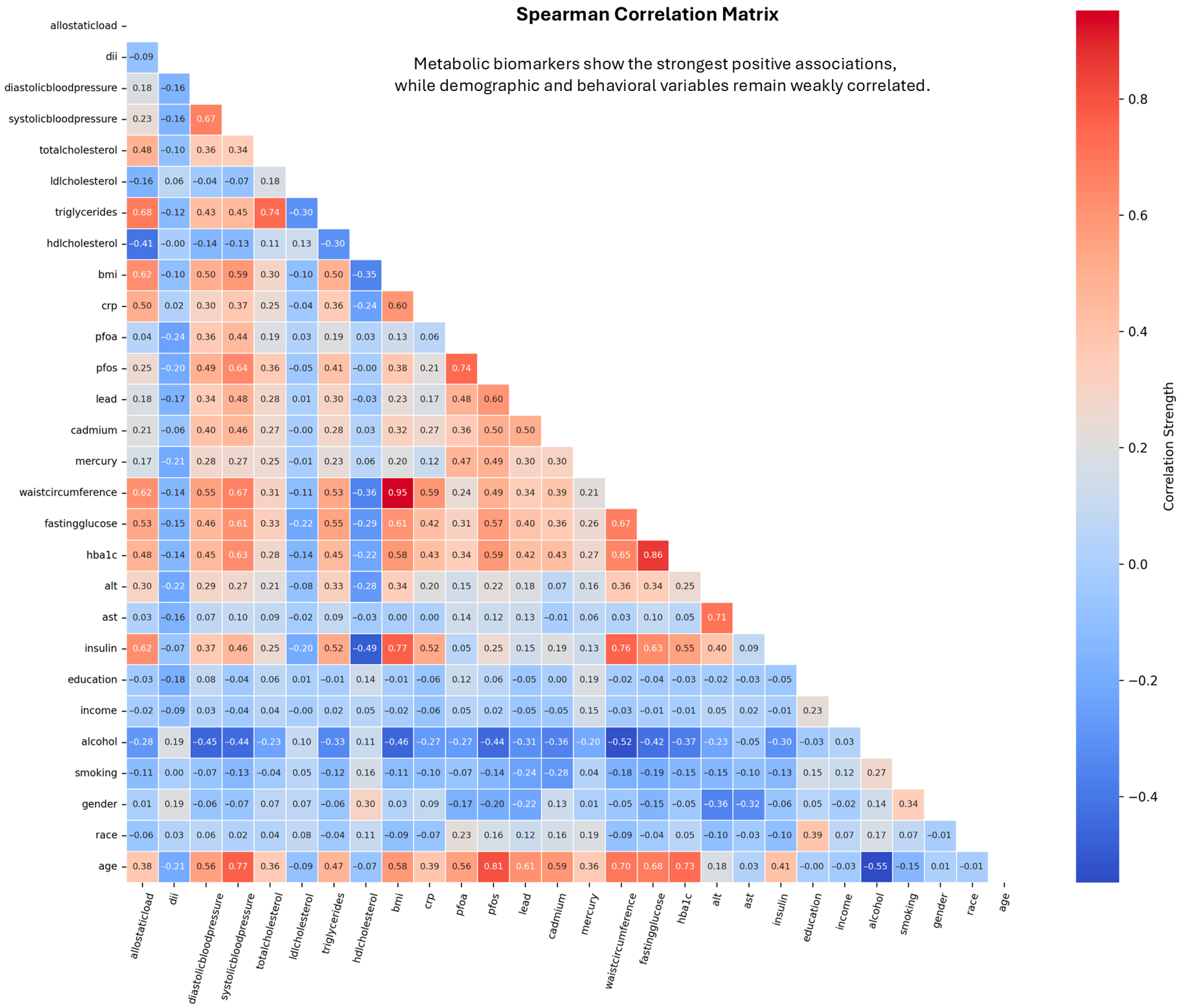
To prevent data leakage, imputation and SMOTE oversampling were performed within each training fold of the cross-validation procedure. Here, the test fold remained untouched during preprocessing. Several metabolic predictors, including insulin, and waist circumference, showed moderate to strong correlations. Multicollinearity was handled using model-specific approaches rather than removing features. Tree-based models, such as Random Forest and XGBoost, are naturally robust to correlated predictors. Sensitivity tests that eliminated strongly correlated diagnostic biomarkers, independent hold-out testing, and cross-validation were used to further assess the robustness of the model.
This study benchmarks a suite of supervised learning algorithms that represent the principal modeling paradigms used in contemporary health analytics. Logistic regression provides a discriminative linear classifier that models the log-odds of diabetes as a function of multiple covariates, offering a stable and interpretable baseline that aligns with established epidemiologic risk-estimation frameworks. A single classification tree supplies a transparent, rule-based model of hierarchical splits, although its high variance limits standalone reliability. Ensemble tree methods extend this class: random forests reduce variance through bootstrap aggregation and randomized feature selection, while XGBoost applies gradient-boosted decision trees with explicit regularization, optimized split scoring, and robust handling of structured tabular data. Support vector machines with an RBF kernel provide a margin-maximizing nonlinear classifier capable of capturing complex decision boundaries in heterogeneous clinical and exposure spaces. Both linear and RBF-kernel SVM variants were initially explored, but only the RBF-SVM was retained and reported because it achieved superior discriminatory performance. The linear SVM is described for methodological completeness, even though only the RBF model was retained for final reporting. Multilayer perceptron neural networks (MLP) introduce a flexible representation-learning architecture that can encode nonlinear interactions and multi-scale dependencies across metabolic, behavioral, and environmental predictors. Naïve Bayes functions as a generative probabilistic baseline that scales efficiently despite its conditional-independence assumption. k-Nearest neighbors serve as a nonparametric, instance-based comparator that reflects local geometric structure but degrades in high-dimensional settings. Together, these models span linear, generative, kernel-based, instance-based, and ensemble learning families, enabling a rigorous comparative assessment of predictive performance using integrated demographic, clinical, lifestyle, anthropometric, and environmental toxic exposure features relevant to diabetes.
All analyses were performed in Python 3.14.2 within a Jupyter Notebook 7.5.2 environment. Data preprocessing and management were carried out using pandas 2.3.3 and NumPy 2.4.1, with scikit-learn 1.8.0 utilities supporting feature engineering, standardization, class balancing, and multiple imputation workflows. Model development employed scikit-learn implementations of logistic regression, support vector machines, multilayer perceptrons, k-nearest neighbors, naïve Bayes, classification trees, and random forests. Gradient-boosted models were trained using XGBoost 3.1.3. Hyperparameter selection used grid-based search with cross-validation through GridSearchCV to ensure stable model calibration across imputations. Performance metrics and pooled estimates from the multiply imputed datasets were computed using scikit-learn’s evaluation suite. Visualizations and diagnostic plots were generated with Matplotlib 3.10.8 and Seaborn 0.13.2. The Jupyter environment supported a fully reproducible workflow for iterative experimentation, hyperparameter tuning, and integration of clinical, behavioral, anthropometric, and environmental exposure features.
2.8. External-Style Validation (Internal Hold-Out Validation)
An internal hold-out test was conducted for validation. Using stratified sampling to maintain the diabetes/non-diabetes ratio, the entire dataset was split into 80% for model building and 20% for independent testing after multiple imputations were completed. To avoid information leakage, all preprocessing procedures, standardization, SMOTE balancing, and hyperparameter tuning were limited to 80% of the training data. After that, the final Random Forest and XGBoost models were assessed on the unaltered 20% test subset and retrained on the training set. This allowed us to determine how well the models generalized to new data and to provide evidence of external validation.
4. Discussion
Our approach incorporated multiple domains of information, including demographic, anthropometric, biochemical, behavioral, and environmental exposures. After handling the high rate of missing data with MICE and addressing class imbalance with SMOTE, most machine learning models achieved excellent performance. XGBoost and Random Forest achieved the highest overall discrimination and accuracy, as reflected by their ROC–AUC and accuracy values. These results agree with earlier studies that highlight the strong performance of ensemble tree-based models in clinical prediction and high-dimensional health data analysis [
14,
15,
16].
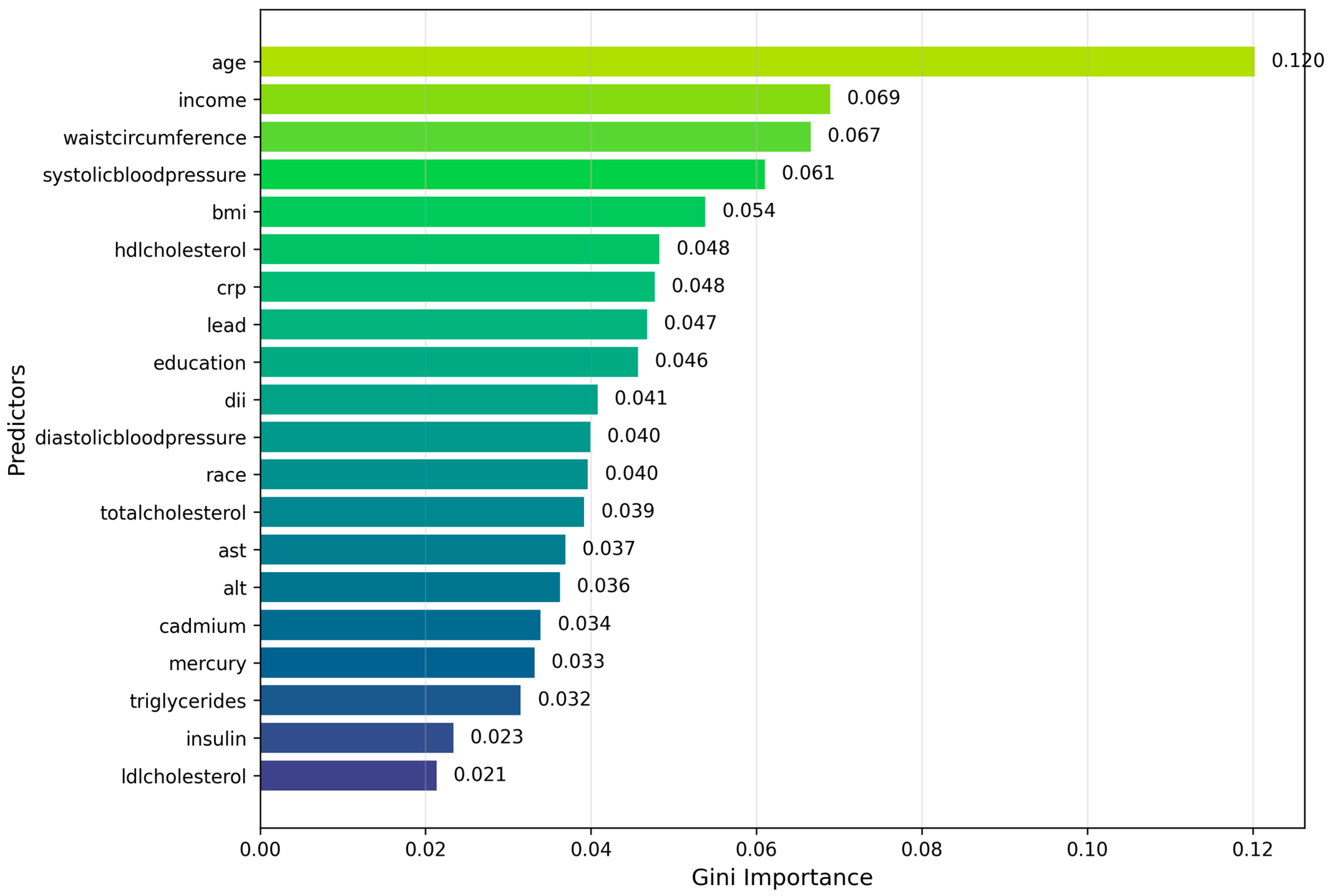
The variable importance patterns suggested that age, income, and waist circumference were the most important factors. These results are consistent with established life-course and cardiometabolic frameworks in which cumulative metabolic burden, central adiposity, and socioeconomic position are strongly associated with diabetes risk. Measures of blood pressure, lipid metabolism, and systemic inflammation also ranked highly, consistent with cardiometabolic dysregulation serving as an important correlate of diagnosed diabetes. Notably, blood concentrations of lead, cadmium, and mercury contributed predictive information comparable to several traditional clinical risk factors, suggesting that environmental metal exposures may function as informative risk markers that contribute to diabetes classification beyond traditional clinical predictors. Dietary inflammatory potential and educational attainment showed moderate importance, consistent with their roles as behavioral and social modifiers of metabolic risk. Overall, the observed importance structure is consistent with a multifactorial pattern of diabetes classification in which social, metabolic, and environmental factors jointly contribute predictive information.
A key contribution of this study is the integration of environmental exposure biomarkers into diabetes classification models. Metals such as lead contributed meaningfully to model performance. This finding is consistent with prior experimental and epidemiologic studies reporting that low-to-moderate chronic exposure to heavy metals may impair β-cell function, reduce insulin secretion, and increase oxidative stress, processes that have been linked to diabetes risk [
42]. The ability of ensemble machine learning models to capture non-linear and higher-order interactions may explain why metals appear influential despite their minimal pairwise correlations.
In contrast, demographic and behavioral variables such as sex, race/ethnicity, income, education, smoking, and alcohol use showed relatively lower importance once clinical and biochemical predictors were included, potentially reflecting their indirect influence through biological pathways and healthcare access. Prior work also suggests that these distal determinants act mainly through proximal biological pathways such as adiposity, lipid levels, and inflammation, rather than directly influencing disease risk. Additionally, the broad categorical measurement of behavioral and socioeconomic variables in NHANES may limit their predictive resolution compared to continuous biomarkers.
A major aspect of this analysis is its meticulous handling of missing data. Several biochemical and environmental variables exhibited severe missingness (60–70%). It makes complete-case analysis infeasible. Simulation experiments show that the use of Multiple Imputation by Chained Equations (MICE) can minimize bias and maintain statistical power in datasets with mixed variable types and high missingness rates [
34,
35]. Furthermore, the choice of 70 imputations complies with accepted guidelines, which state that to guarantee stable estimates and a suitable representation of imputation uncertainty, the number of imputations should roughly correspond to the percentage of incomplete cases [
37].
Addressing the strong class imbalance with SMOTE further ensured that the minority diabetic class was well represented during model training, thereby preventing bias in classification performance [
43]. An independent internal 80/20 hold-out validation was performed. The results indicate that both Random Forest and XGBoost maintained strong performance on unseen data.
However, several limitations must be considered. First, diabetes was defined by self-reported physician diagnosis, which may be affected by underdiagnosis, recall errors, and differential access to healthcare, potentially introducing diagnostic and socioeconomic bias [
44]. Second, the cross-sectional design of NHANES prevents the assessment of temporality or causal inference, thereby allowing for reverse causation. Third, exposures such as PFAS and heavy metals were examined only at a single time point, which may not correctly represent long-term or cumulative exposure patterns.
Subgroup-specific performance by sex, race or ethnicity, and socioeconomic status was not evaluated in this study, limiting formal assessment of algorithmic fairness. While stratified analyses could provide insight into heterogeneity in model performance and feature contributions, effective sample sizes within subgroups were substantially reduced after multiple imputation and class-imbalance correction. Conducting subgroup-level evaluations under these conditions may produce unstable or unreliable estimates, and was therefore deferred to future work designed specifically for fairness and subgroup robustness analyses.
5. Conclusions
In summary, this study found that integrating environmental exposure biomarkers with clinical, metabolic, anthropometric, behavioral, and demographic variables can markedly improve the classification of diagnosed diabetes in NHANES. After applying MICE and SMOTE, Random Forest and XGBoost achieved very high discrimination.
Notably, heavy metal exposures such as lead contributed meaningfully to model performance, indicating that toxicant biomarkers provide additional discriminatory information in diabetes classification. Importantly, the models also performed well on a separate 20% test set. This result indicates that the models generalized beyond the training data and did not simply overfit the development sample.
These results support incorporating environmental exposure biomarkers into population-level diabetes classification models. These combined models can capture complex, non-linear patterns that may not be fully represented in traditional linear modeling approaches. In public health, such models may support population-level diabetes classification, improve risk stratification, and help identify groups that may benefit from targeted metabolic management and exposure-reduction strategies.