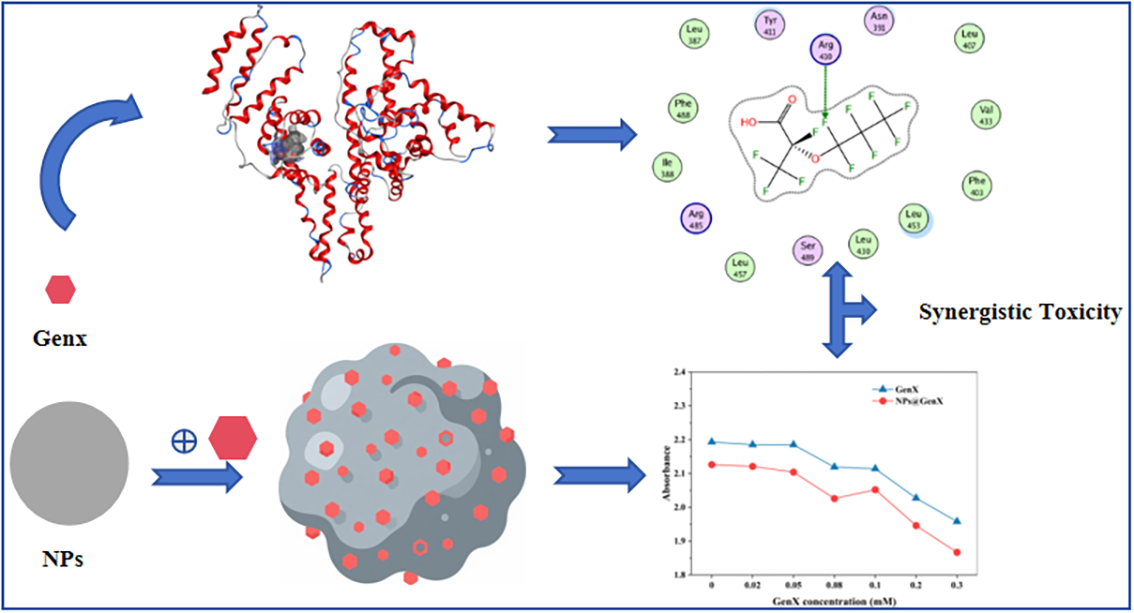

Synergistic Effect of Nanoplastics and GenX on Human Serum Albumin: The Role of Protein Corona Formation and Co-Adsorption

Abstract
1. Introduction
2. Materials and Methods
2.1. Chemicals
2.2. HSA Structural Analysis
2.3. Secondary Structure Characterization
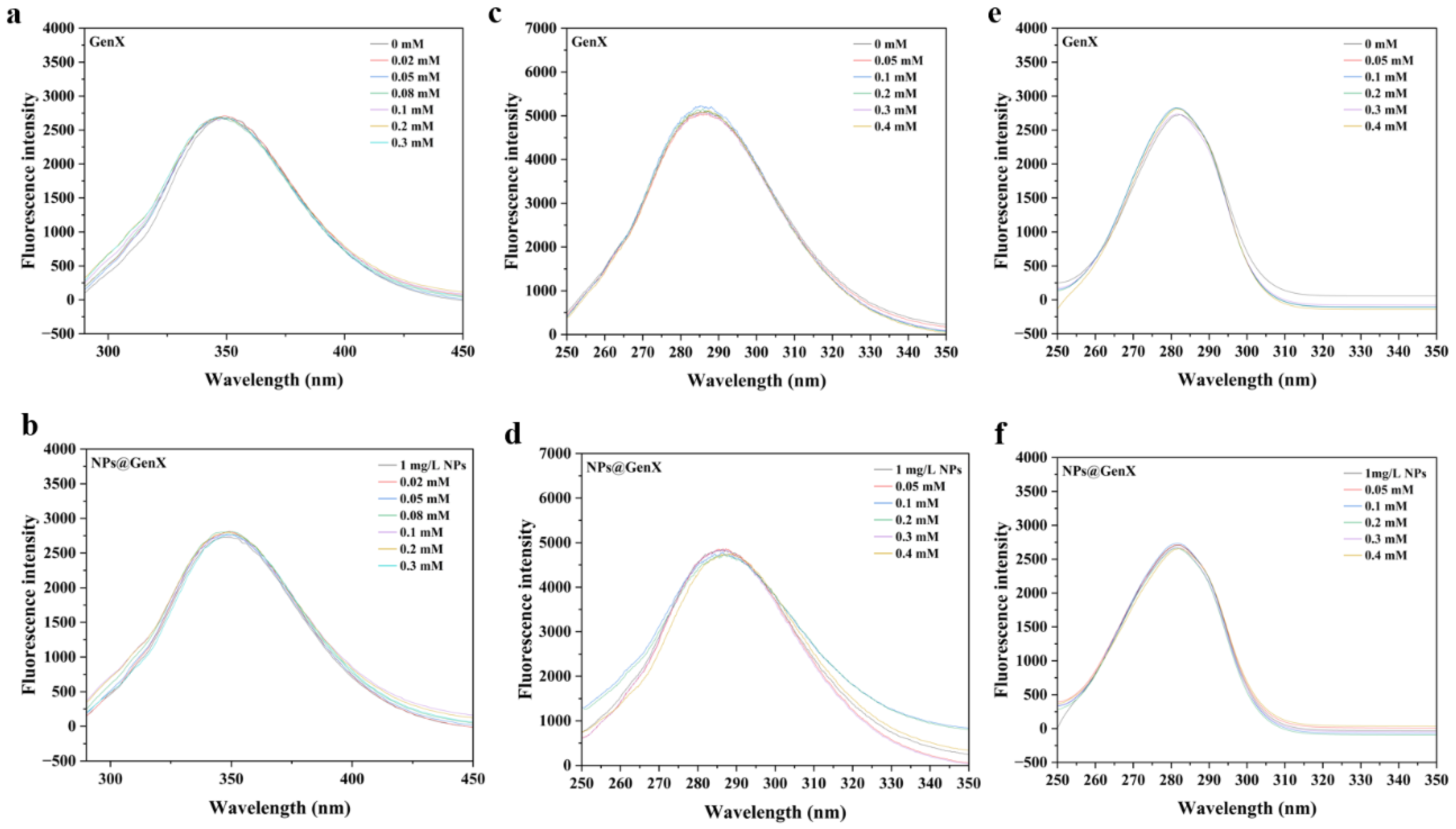
2.4. Fluorescence Spectroscopy Analysis
- Intrinsic Fluorescence: The excitation wavelength was 280 nm, the emission wavelength was 290–450 nm (PMT voltage: 650 V; scan speed: 1200 nm/min; interval: 0.2 nm).
- The fluorescence spectral parameters were set as follows: Both emission and synchronous fluorescence spectra of the experimental system were recorded on a fluorescence spectrophotometer. The instrument was uniformly set with the following parameters: photomultiplier tube (PMT) voltage at 700 V, data interval at 0.2 nm, and scan speed at 1200 nm/min. The specific spectral acquisition parameters were as follows:
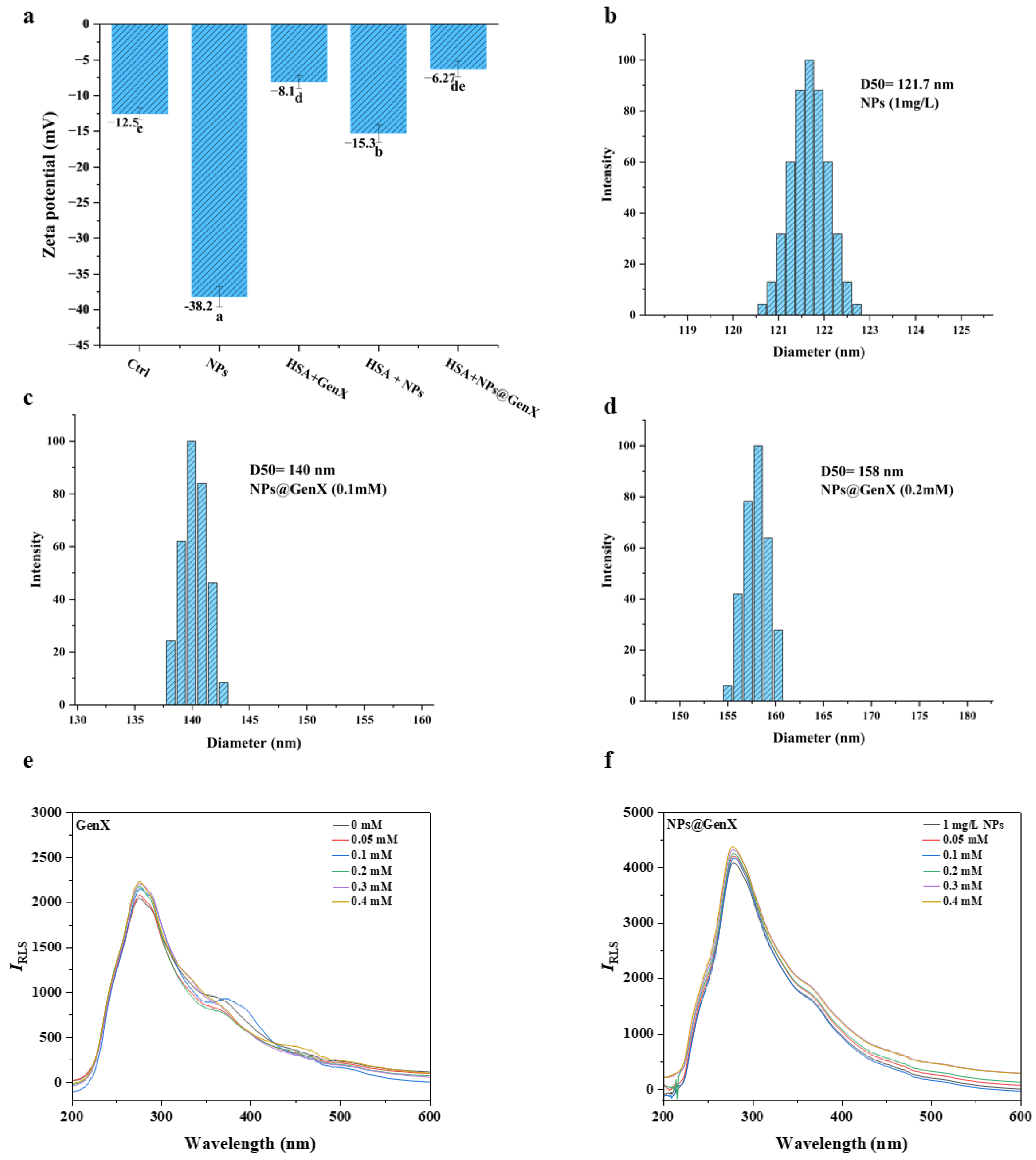
- The resonance light scattering (RLS) spectra of the experimental system were acquired using a fluorescence spectrophotometer. The key parameters were set as follows: photomultiplier tube (PMT) voltage at 600 V, and a data sampling interval of 0.2 nm. A complete scan was performed over the wavelength range of 200–600 nm to obtain the full RLS spectrum. This method of synchronous scanning with a zero wavelength difference is a standard technique for measuring resonance light scattering spectra using a conventional fluorescence spectrophotometer.
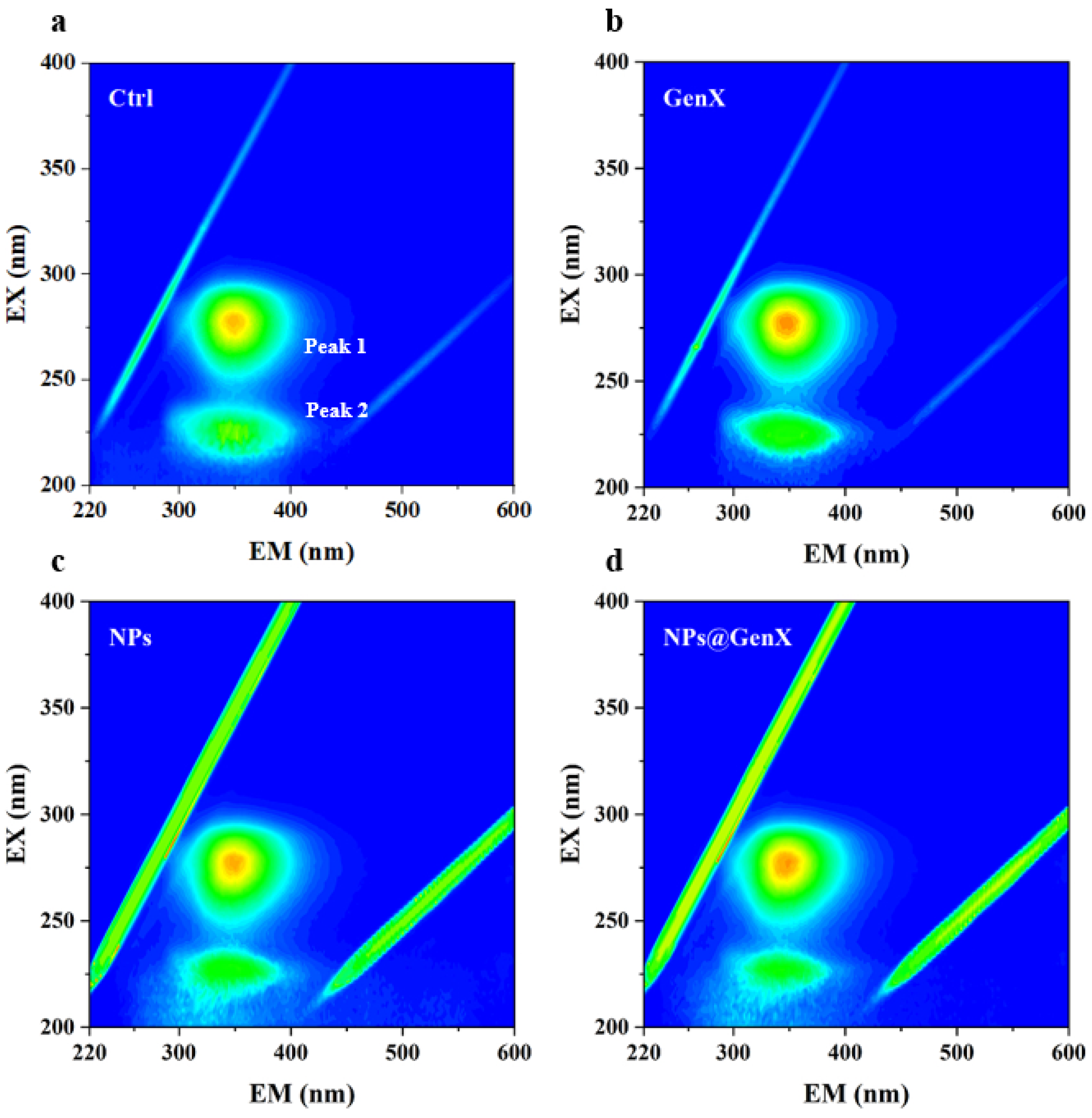
- 3D Fluorescence: λex = 200–370 nm, λem = 250–600 nm (slit width: 5 nm; PMT: 550 V; data interval: 2 nm).
2.5. Hydrodynamic Size and Zeta Potential
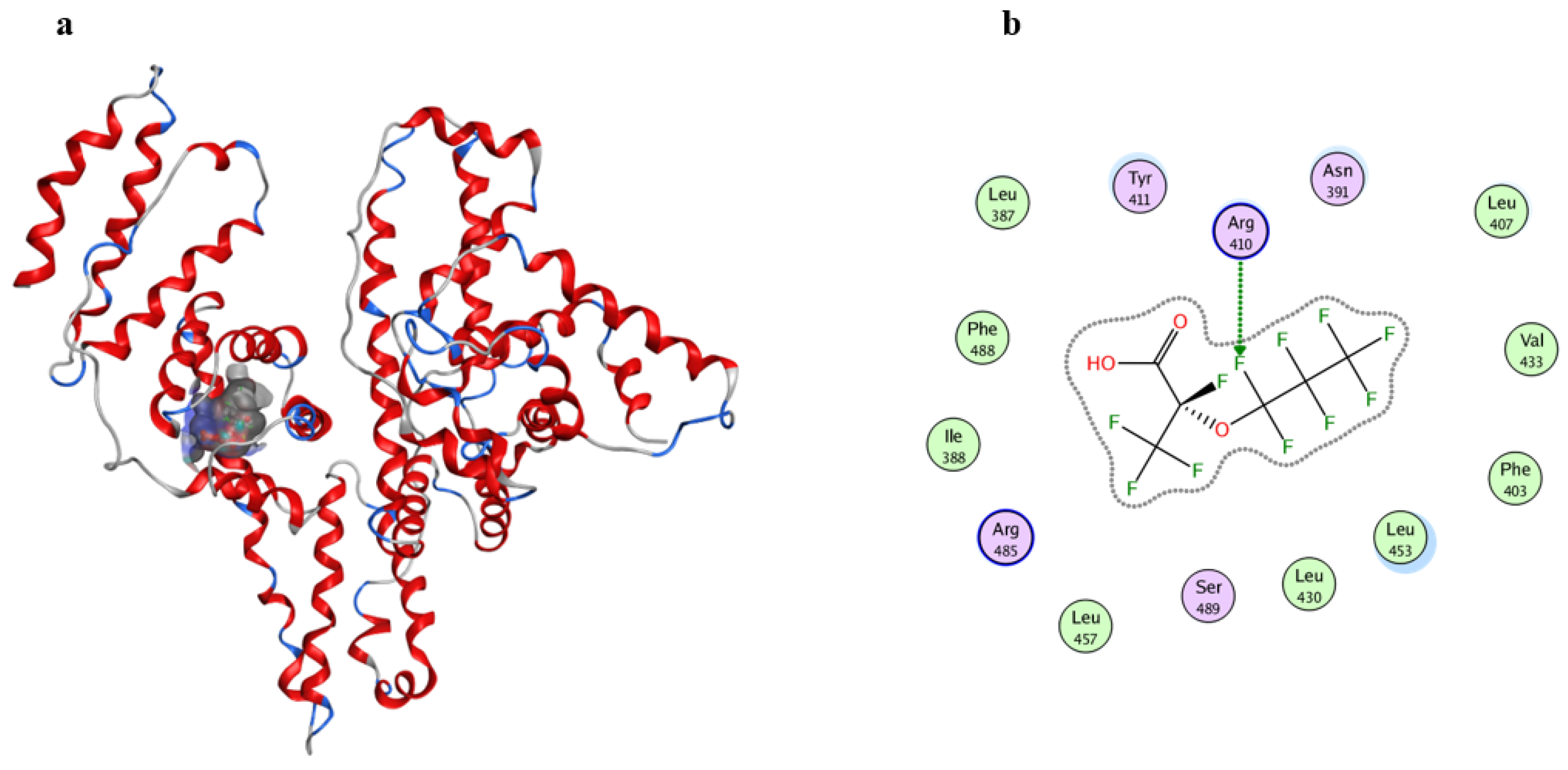
2.6. Molecular Docking Simulations
2.7. Statistical Analysis
3. Results and Discussion
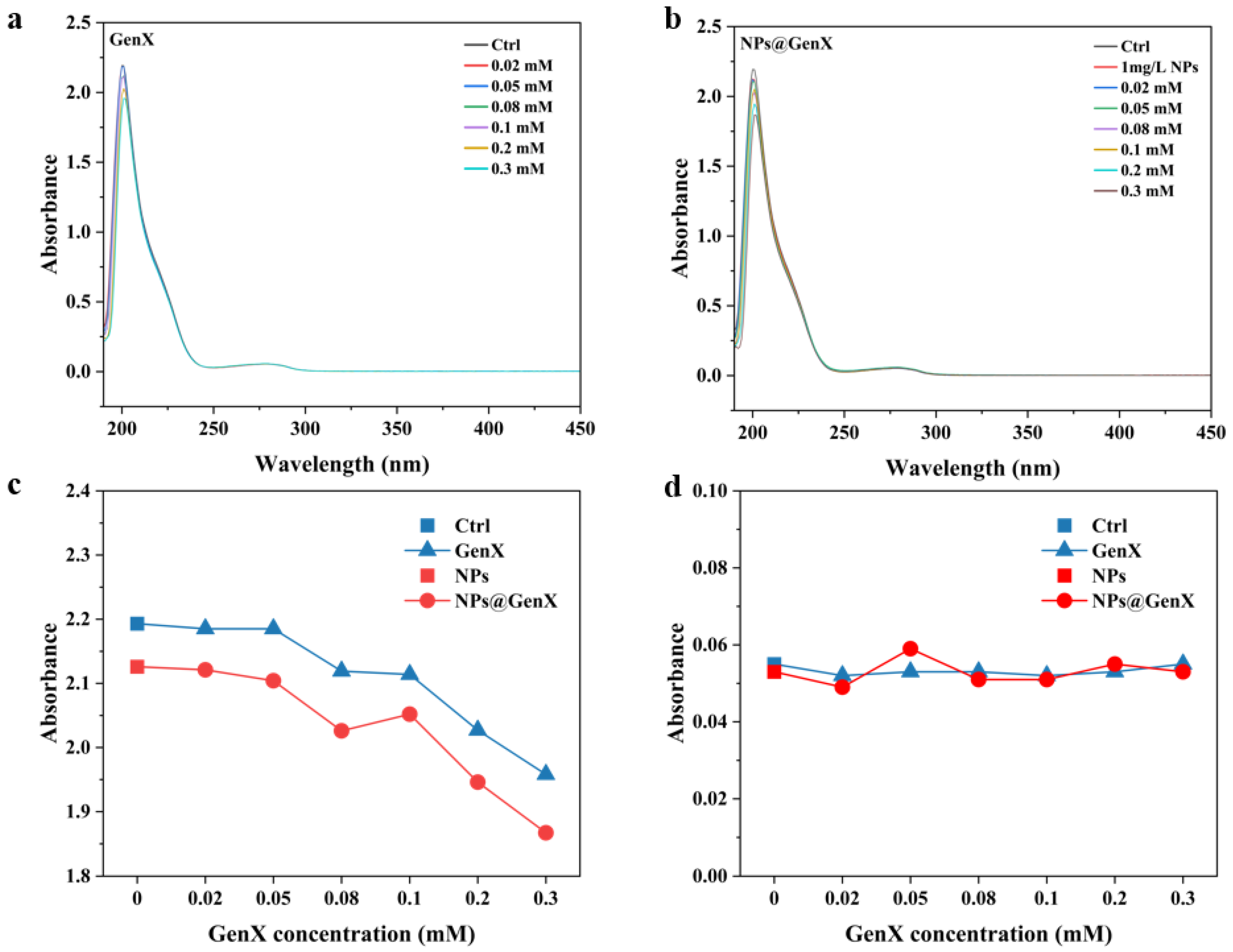
3.1. Conformational and Structural Damage of HSA Induced by NPs@GenX
3.2. Effect of NPs@GenX on the Intrinsic Fluorescence of HSA
3.3. Effect of NPs@GenX on the Three-Dimensional Fluorescence Spectra of HSA
3.4. Analysis of Particle Size and Stability in the NPs@GenX-HSA System
3.5. Simulation of GenX Binding Sites on HSA
4. Conclusions
Supplementary Materials
Author Contributions
Funding
Institutional Review Board Statement
Informed Consent Statement
Data Availability Statement
Acknowledgments
Conflicts of Interest
References
- Issifu, I.; Dahmouni, I.; Sumaila, U.R. Assessing the ecological and economic transformation pathways of plastic production system. J. Environ. Manag. 2025, 374, 124104. [Google Scholar] [CrossRef] [PubMed]
- Roshanzadeh, A.; Oyunbaatar, N.-E.; Ganjbakhsh, S.E.; Park, S.; Kim, D.-S.; Kanade, P.P.; Lee, S.; Lee, D.-W.; Kim, E.-S. Exposure to nanoplastics impairs collective contractility of neonatal cardiomyocytes under electrical synchronization. Biomaterials 2021, 278, 121175. [Google Scholar] [CrossRef] [PubMed]
- Hendriks, L.; Kissling, V.M.; Buerki-Thurnherr, T.; Mitrano, D.M. Development of single-cell ICP-TOFMS to measure nanoplastics association with human cells. Environ. Sci. Nano 2023, 10, 3439–3449. [Google Scholar] [CrossRef] [PubMed]
- Schiferle, E.B.; Suman, S.; Steffen, K.R.; Kundu, K.; Islam, A.N.; Reinhard, B.M. Nanoplastics Enhance Transmembrane Transport and Uptake of Carcinogens: Transcriptional Changes and the Effects of Weathering. Adv. Sci. 2025, 12, e07355. [Google Scholar] [CrossRef]
- Zhang, L.; Deng, X.; Qin, Z.; Guo, X.; Wang, C.; Tang, J. Aging amplifies the combined toxic effects of polystyrene nanoplastics and norfloxacin on human intestinal cells. Environ. Sci. Nano 2025, 12, 5358–5372. [Google Scholar] [CrossRef]
- Li, Y.; Li, Y.; Li, J.; Song, Z.; Zhang, C.; Guan, B. Toxicity of polystyrene nanoplastics to human embryonic kidney cells and human normal liver cells: Effect of particle size and Pb2+ enrichment. Chemosphere 2023, 328, 138545. [Google Scholar] [CrossRef]
- Qian, H.; Wang, Y.; Wang, Y.; Hu, H.; Tan, Q.-G.; Yan, N.; Xie, M. Numeric uptake drives nanoplastic toxicity: Size-effects uncovered by toxicokinetic-toxicodynamic (TKTD) modeling. J. Hazard. Mater. 2025, 486, 137105. [Google Scholar] [CrossRef]
- Sun, H.; Jiao, R.; Wang, D. The difference of aggregation mechanism between microplastics and nanoplastics: Role of Brownian motion and structural layer force. Environ. Pollut. 2021, 268, 115942. [Google Scholar] [CrossRef]
- Liu, L.; Xu, K.; Zhang, B.; Ye, Y.; Zhang, Q.; Jiang, W. Cellular internalization and release of polystyrene microplastics and nanoplastics. Sci. Total Environ. 2021, 779, 146523. [Google Scholar] [CrossRef]
- Li, X.; Hu, S.; Yu, Z.; He, F.; Zhao, X.; Liu, R. New Evidence for the Mechanisms of Nanoplastics Amplifying Cadmium Cytotoxicity: Trojan Horse Effect, Inflammatory Response, and Calcium Imbalance. Environ. Sci. Technol. 2025, 59, 9471–9485. [Google Scholar] [CrossRef]
- Huang, P.; Cao, L.; Du, J.; Guo, Y.; Li, Q.; Sun, Y.; Zhu, H.; Xu, G.; Gao, J. Polystyrene nanoplastics amplify the toxic effects of PFOA on the Chinese mitten crab (Eriocheir sinensis). J. Hazard. Mater. 2025, 488, 137488. [Google Scholar] [CrossRef]
- Sun, L.; Liu, Y.; Feng, Y.; Wang, H.; Wang, Y.; Zhang, W. Response mechanism of submerged plants to stress induced by per- and poly-fluoroalkyl substances and ultraviolet-aged polylactic acid microplastics. J. Environ. Chem. Eng. 2025, 13, 118149. [Google Scholar] [CrossRef]
- van der Veen, I.; Fiedler, H.; de Boer, J. Assessment of the per- and polyfluoroalkyl substances analysis under the Stockholm Convention—2018/2019. Chemosphere 2023, 313, 137549. [Google Scholar] [CrossRef] [PubMed]
- Fiedler, H.; Sadia, M. Regional occurrence of perfluoroalkane substances in human milk for the global monitoring plan under the Stockholm Convention on Persistent Organic Pollutants during 2016–2019. Chemosphere 2021, 277, 130287. [Google Scholar] [CrossRef] [PubMed]
- Guo, W.; Hao, W.; Xiao, W. Emerging Perfluorinated Chemical GenX: Environmental and Biological Fates and Risks. Environ. Health 2025, 3, 338–351. [Google Scholar] [CrossRef]
- Pan, Y.; Zhang, H.; Cui, Q.; Sheng, N.; Yeung, L.W.Y.; Sun, Y.; Guo, Y.; Dai, J. Worldwide Distribution of Novel Perfluoroether Carboxylic and Sulfonic Acids in Surface Water. Environ. Sci. Technol. 2018, 52, 7621–7629. [Google Scholar] [CrossRef] [PubMed]
- Feng, X.; Yi, S.; Shan, G.; Chen, X.; Yang, Y.; Yang, L.; Jia, Y.; Zhu, Y.; Zhu, L. Occurrence of perfluoroalkyl substances in the environment compartments near a mega fluorochemical industry: Implication of specific behaviors and emission estimation. J. Hazard. Mater. 2023, 445, 130473. [Google Scholar] [CrossRef]
- Liu, J.; Xie, Y.; Zhou, L.; Lu, G.; Li, Y.; Gao, P.; Hou, J. Co-accumulation characteristics and interaction mechanism of microplastics and PFASs in a large shallow lake. J. Hazard. Mater. 2024, 480, 135780. [Google Scholar] [CrossRef]
- Chen, Z.-W.; Hua, Z.-L.; Shi, Y.-B.; Gu, L.; Ye, F.-Z.; Chen, J.-Y.; Guo, P. The emerging threat of hybrid microplastics: Impacts on per(poly)fluoroalkyl substance bioaccumulation and phytotoxicity in floating macrophytes. J. Hazard. Mater. 2025, 495, 139130. [Google Scholar] [CrossRef]
- Li, X.; Wang, J.; Jing, M.; Hu, S.; Zong, W.; Liu, R. Cross-level technologies for exploring nanoplastics to amplify cadmium immunotoxicity: Endpoint identification and kinetic model construction. Chem. Eng. J. 2025, 511, 162087. [Google Scholar] [CrossRef]
- Xiao, S.; Liu, Y.; Ding, S.; Lu, D.; Yang, J.; Niu, X.; Qi, X.; Wei, J. GenX-loaded polystyrene microplastics exacerbate intestinal injury in mice via barrier impairment and microbial dysregulation. J. Environ. Chem. Eng. 2025, 13, 119812. [Google Scholar] [CrossRef]
- Singh, S.; Kumar Naik, T.S.S.; Anil, A.G.; Dhiman, J.; Kumar, V.; Dhanjal, D.S.; Aguilar-Marcelino, L.; Singh, J.; Ramamurthy, P.C. Micro (nano) plastics in wastewater: A critical review on toxicity risk assessment, behaviour, environmental impact and challenges. Chemosphere 2022, 290, 133169. [Google Scholar] [CrossRef] [PubMed]
- Du, T.; Yu, X.; Shao, S.; Li, T.; Xu, S.; Wu, L. Aging of Nanoplastics Significantly Affects Protein Corona Composition Thus Enhancing Macrophage Uptake. Environ. Sci. Technol. 2023, 57, 3206–3217. [Google Scholar] [CrossRef]
- Yu, G.; Zheng, D.; Wang, W.; Long, Y.; Chen, J.; Chen, H.; Wang, Y.; He, S. Effects of micro/nanoplastics on microorganisms and plants in constructed wetlands during the nitrogen removal process: A review. Chem. Eng. J. 2024, 496, 153778. [Google Scholar] [CrossRef]
- Perera, N.L.D.; Miksovska, J.; O’Shea, K.E. Elucidation of specific binding sites and extraction of toxic Gen X from HSA employing cyclodextrin. J. Hazard. Mater. 2022, 425, 127765. [Google Scholar] [CrossRef]
- Peng, S.-Y.; Yang, Y.-D.; Tian, R.; Lu, N. Critical new insights into the interactions of hexafluoropropylene oxide-dimer acid (GenX or HFPO-DA) with albumin at molecular and cellular levels. J. Environ. Sci. 2025, 149, 88–98. [Google Scholar] [CrossRef]
- Pavithra, K.; Priyadharshini, R.D.; Vennila, K.N.; Elango, K.P. Multi-spectroscopic and molecular simulation methods of analysis to explore the mode of binding of Mebendazole drug with calf-thymus DNA. Spectrochim. Acta Part A Mol. Biomol. Spectrosc. 2023, 300, 122938. [Google Scholar] [CrossRef]
- Zhong, Y.; Lee, K.; Deng, Y.; Ma, Y.; Chen, Y.; Li, X.; Wei, C.; Yang, S.; Wang, T.; Wong, N.J.; et al. Arctigenin attenuates diabetic kidney disease through the activation of PP2A in podocytes. Nat. Commun. 2019, 10, 4523. [Google Scholar] [CrossRef]
- Rashtbari, S.; Khataee, S.; Iranshahi, M.; Moosavi-Movahedi, A.A.; Hosseinzadeh, G.; Dehghan, G. Experimental investigation and molecular dynamics simulation of the binding of ellagic acid to bovine liver catalase: Activation study and interaction mechanism. Int. J. Biol. Macromol. 2020, 143, 850–861. [Google Scholar] [CrossRef]
- Liu, S.; Sun, L.; Sun, M.; Lv, Z.; Hua, R.; Wang, Y.; Yang, X.; Zhu, M. Influence of para-substituted benzaldehyde derivatives with different push/pull electron strength groups on the conformation of human serum albumin and toxicological effects in zebrafish. Int. J. Biol. Macromol. 2024, 266, 131246. [Google Scholar] [CrossRef]
- He, F.; Chu, S.; Sun, N.; Li, X.; Jing, M.; Wan, J.; Zong, W.; Tang, J.; Liu, R. Binding interactions of acrylamide with lysozyme and its underlying mechanisms based on multi-spectra, isothermal titration microcalorimetry and docking simulation. J. Mol. Liq. 2021, 337, 116460. [Google Scholar] [CrossRef]
- Wang, S.; Zheng, D.; Yin, L.; Wang, F. Preparation, activity and structure of cross-linked enzyme aggregates (CLEAs) with nanoparticle. Enzym. Microb. Technol. 2017, 107, 22–31. [Google Scholar] [CrossRef] [PubMed]
- Wang, J.; Zhang, H.; Zhang, T.; Zhang, R.; Liu, R.; Chen, Y. Molecular mechanism on cadmium-induced activity changes of catalase and superoxide dismutase. Int. J. Biol. Macromol. 2015, 77, 59–67. [Google Scholar] [CrossRef] [PubMed]
- Qi, Y.; Li, X.; Guo, S.; He, F.; Liu, R. Insights into the potential toxicity of Zn(II) to catalase and their binding mechanisms. J. Mol. Liq. 2024, 394, 123760. [Google Scholar] [CrossRef]
- Yin, Q.; Qi, Y.; Zong, W.; Liu, R. Molecular mechanisms of ciprofloxacin-loaded nanoplastics on human serum albumin: Protein denaturation and binding site recognition. J. Environ. Sci. 2025; in press. [Google Scholar] [CrossRef]
- Guarracino, D.A.; Riordan, J.A.; Barreto, G.M.; Oldfield, A.L.; Kouba, C.M.; Agrinsoni, D. Macrocyclic Control in Helix Mimetics. Chem. Rev. 2019, 119, 9915–9949. [Google Scholar] [CrossRef]
- Siddaramaiah, M.; Satyamoorthy, K.; Rao, B.S.S.; Roy, S.; Chandra, S.; Mahato, K.K. Identification of protein secondary structures by laser induced autofluorescence: A study of urea and GnHCl induced protein denaturation. Spectrochim. Acta Part A Mol. Biomol. Spectrosc. 2017, 174, 44–53. [Google Scholar] [CrossRef]
- Fang, W.; Chi, Z.; Li, W.; Zhang, X.; Zhang, Q. Comparative study on the toxic mechanisms of medical nanosilver and silver ions on the antioxidant system of erythrocytes: From the aspects of antioxidant enzyme activities and molecular interaction mechanisms. J. Nanobiotechnol. 2019, 17, 66. [Google Scholar] [CrossRef]
- Khalil, N.; Khalil, A.; Kashif, M. Spectrofluorimetric and theoretical investigation of a glucocorticoid drug with HSA: Quantitative studies in real sample. Anal. Biochem. 2025, 700, 115800. [Google Scholar] [CrossRef]
- Xu, M.; Wan, J.; Niu, Q.; Liu, R. PFOA and PFOS interact with superoxide dismutase and induce cytotoxicity in mouse primary hepatocytes: A combined cellular and molecular methods. Environ. Res. 2019, 175, 63–70. [Google Scholar] [CrossRef]
- He, F.; Liu, Q.; Jing, M.; Wan, J.; Huo, C.; Zong, W.; Tang, J.; Liu, R. Toxic mechanism on phenanthrene-induced cytotoxicity, oxidative stress and activity changes of superoxide dismutase and catalase in earthworm (Eisenia foetida): A combined molecular and cellular study. J. Hazard. Mater. 2021, 418, 126302. [Google Scholar] [CrossRef]
- Li, Y.; Li, X.; Cui, Z.; He, F.; Zong, W.; Liu, R. Probing the toxic effect of quinoline to catalase and superoxide dismutase by multispectral method. Spectrochim. Acta Part A Mol. Biomol. Spectrosc. 2023, 293, 122449. [Google Scholar] [CrossRef]
- Guo, S.; He, F.; Hu, S.; Zong, W.; Liu, R. Novel evidence on iodoacetic acid-induced immune protein functional and conformational changes: Focusing on cellular and molecular aspects. Sci. Total Environ. 2024, 912, 169359. [Google Scholar] [CrossRef] [PubMed]
- Wang, M.; Yang, J.; Wu, X.; Huang, F. Study of the interaction of nucleic acids with acridine red and CTMAB by a resonance light scattering technique and determination of nucleic acids at nanogram levels. Anal. Chim. Acta 2000, 422, 151–158. [Google Scholar] [CrossRef]
- Qi, Y.; Wang, X.; Guo, S.; Li, X.; Song, H.; Zhao, X.; Niu, Q.; Hu, S.; Liu, R. New regulatory mechanisms of polystyrene nanoplastics on the ecological risk of zinc: Cellular oxidative injury and molecular toxicity mechanisms in soil sentinel organisms (Eisenia fetida). Environ. Pollut. 2025, 381, 126624. [Google Scholar] [CrossRef] [PubMed]
- Du, F.; Li, X.; Guo, S.; Qi, Y.; Wang, T.; Hu, S.; Liu, R. Redefining the synergistic toxicity of nano-plastics and cadmium in earthworm coelomocytes: The mechanism of α-amylase molecular docking orientation and energy crisis. Int. J. Biol. Macromol. 2025, 320, 145905. [Google Scholar] [CrossRef]
- Cui, X.; Xu, S.; Wang, X.; Chen, C. The nano-bio interaction and biomedical applications of carbon nanomaterials. Carbon 2018, 138, 436–450. [Google Scholar] [CrossRef]
- Dominguez-Medina, S.; Kisley, L.; Tauzin, L.J.; Hoggard, A.; Shuang, B.; Indrasekara, A.S.D.S.; Chen, S.; Wang, L.-Y.; Derry, P.J.; Liopo, A.; et al. Adsorption and Unfolding of a Single Protein Triggers Nanoparticle Aggregation. ACS Nano 2016, 10, 2103–2112. [Google Scholar] [CrossRef]
- Barhoumi, B.; Sander, S.G.; Tolosa, I. A review on per- and polyfluorinated alkyl substances (PFASs) in microplastic and food-contact materials. Environ. Res. 2022, 206, 112595. [Google Scholar] [CrossRef]



| Treatments | Concentration | Secondary Structural Contents in HSA (%) | |||
|---|---|---|---|---|---|
| α-Helix | β-Sheet | Turn | Random | ||
| Control | 0 mM | 44.8 | 17.7 | 9.1 | 26.3 |
| NPs | 1 mg/L | 42.1 | 28.2 | 3.9 | 25.8 |
| GenX | 0.05 mM | 43.8 | 18.7 | 9.2 | 28.3 |
| 0.1 mM | 41.5 | 19.9 | 8.5 | 25 | |
| NPs@GenX | 0.05 mM | 38.4 | 19.6 | 8.9 | 33.1 |
| 0.1 mM | 37.3 | 20.1 | 11.7 | 30.9 | |
Disclaimer/Publisher’s Note: The statements, opinions and data contained in all publications are solely those of the individual author(s) and contributor(s) and not of MDPI and/or the editor(s). MDPI and/or the editor(s) disclaim responsibility for any injury to people or property resulting from any ideas, methods, instructions or products referred to in the content. |
© 2025 by the authors. Licensee MDPI, Basel, Switzerland. This article is an open access article distributed under the terms and conditions of the Creative Commons Attribution (CC BY) license.
Share and Cite
Qi, Y.; Yin, Q.; Ni, P.; Zong, W.; Niu, Q.; Liu, R. Synergistic Effect of Nanoplastics and GenX on Human Serum Albumin: The Role of Protein Corona Formation and Co-Adsorption. Toxics 2026, 14, 12. https://doi.org/10.3390/toxics14010012
Qi Y, Yin Q, Ni P, Zong W, Niu Q, Liu R. Synergistic Effect of Nanoplastics and GenX on Human Serum Albumin: The Role of Protein Corona Formation and Co-Adsorption. Toxics. 2026; 14(1):12. https://doi.org/10.3390/toxics14010012
Chicago/Turabian StyleQi, Yuntao, Qianyue Yin, Penghang Ni, Wansong Zong, Qigui Niu, and Rutao Liu. 2026. "Synergistic Effect of Nanoplastics and GenX on Human Serum Albumin: The Role of Protein Corona Formation and Co-Adsorption" Toxics 14, no. 1: 12. https://doi.org/10.3390/toxics14010012
APA StyleQi, Y., Yin, Q., Ni, P., Zong, W., Niu, Q., & Liu, R. (2026). Synergistic Effect of Nanoplastics and GenX on Human Serum Albumin: The Role of Protein Corona Formation and Co-Adsorption. Toxics, 14(1), 12. https://doi.org/10.3390/toxics14010012