Article

Risk Assessment of Displaced Sediment by an Extreme Event Cyclone in a Peri-Urban Zone Using Bioassays and Analytical Chemistry


1
Cawthron Institute, Private Bag 2, Nelson 7042, New Zealand
2
School of Biological Sciences, University of Auckland, Auckland 1142, New Zealand
3
Manaaki Whenua–Landcare Research, Lincoln 7608, New Zealand
4
Health and Environmental Risk Division, National Institute for Environmental Studies, Tsukuba 305-8506, Japan
5
Department of Life and Environmental Science, Prefectural University of Hiroshima, Hiroshima 734-8558, Japan
6
Hawke’s Bay Regional Council, 159 Dalton Street, Napier 4110, New Zealand
7
Pattle Delamore Partners, Ground Floor South, Bower House, 18 Bower Street, Napier 4110, New Zealand
*
Author to whom correspondence should be addressed.
Toxics 2024, 12(8), 558; https://doi.org/10.3390/toxics12080558

Submission received: 3 July 2024 / Revised: 27 July 2024 / Accepted: 30 July 2024 / Published: 31 July 2024
(This article belongs to the Section Ecotoxicology)

Abstract

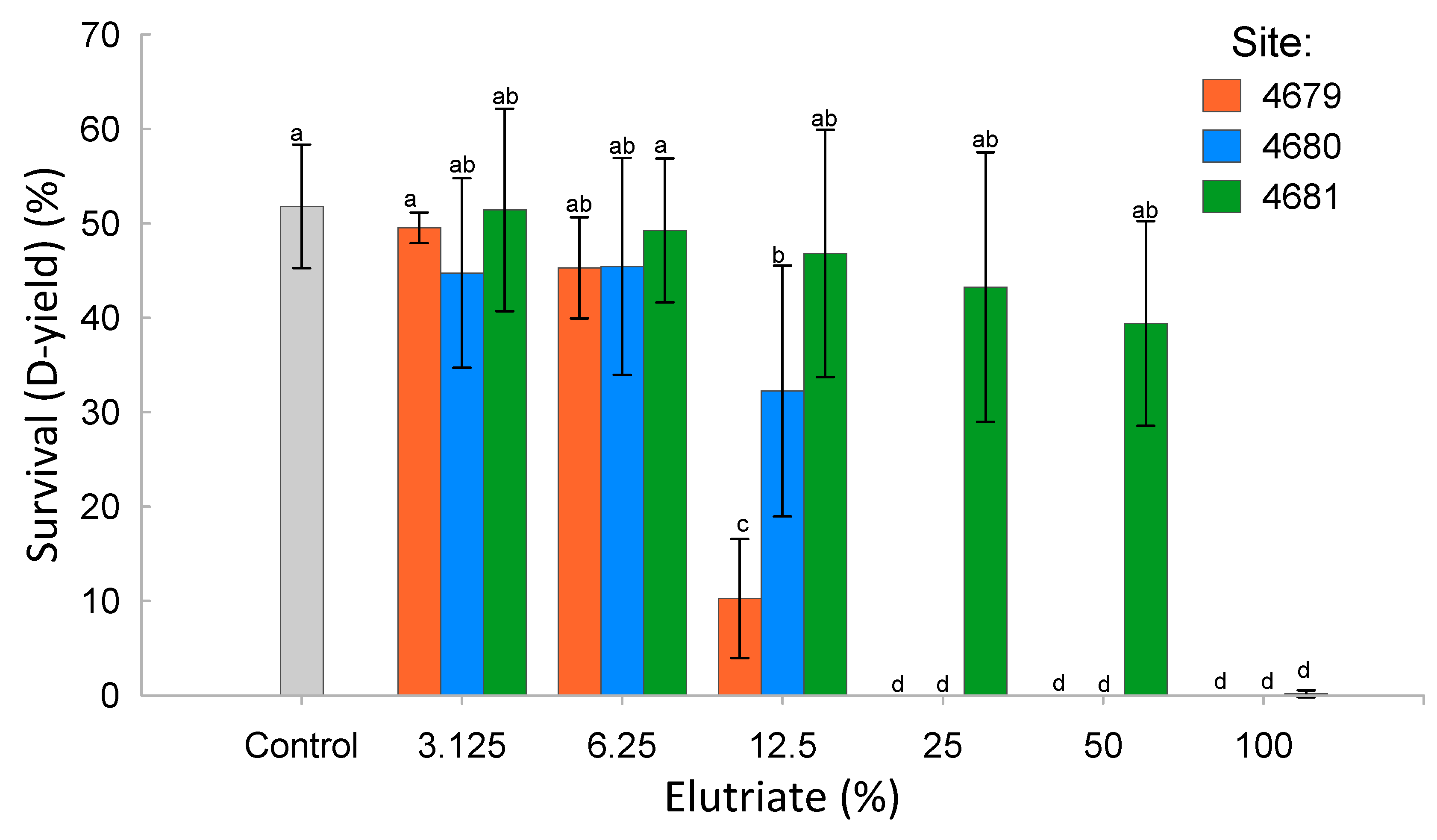
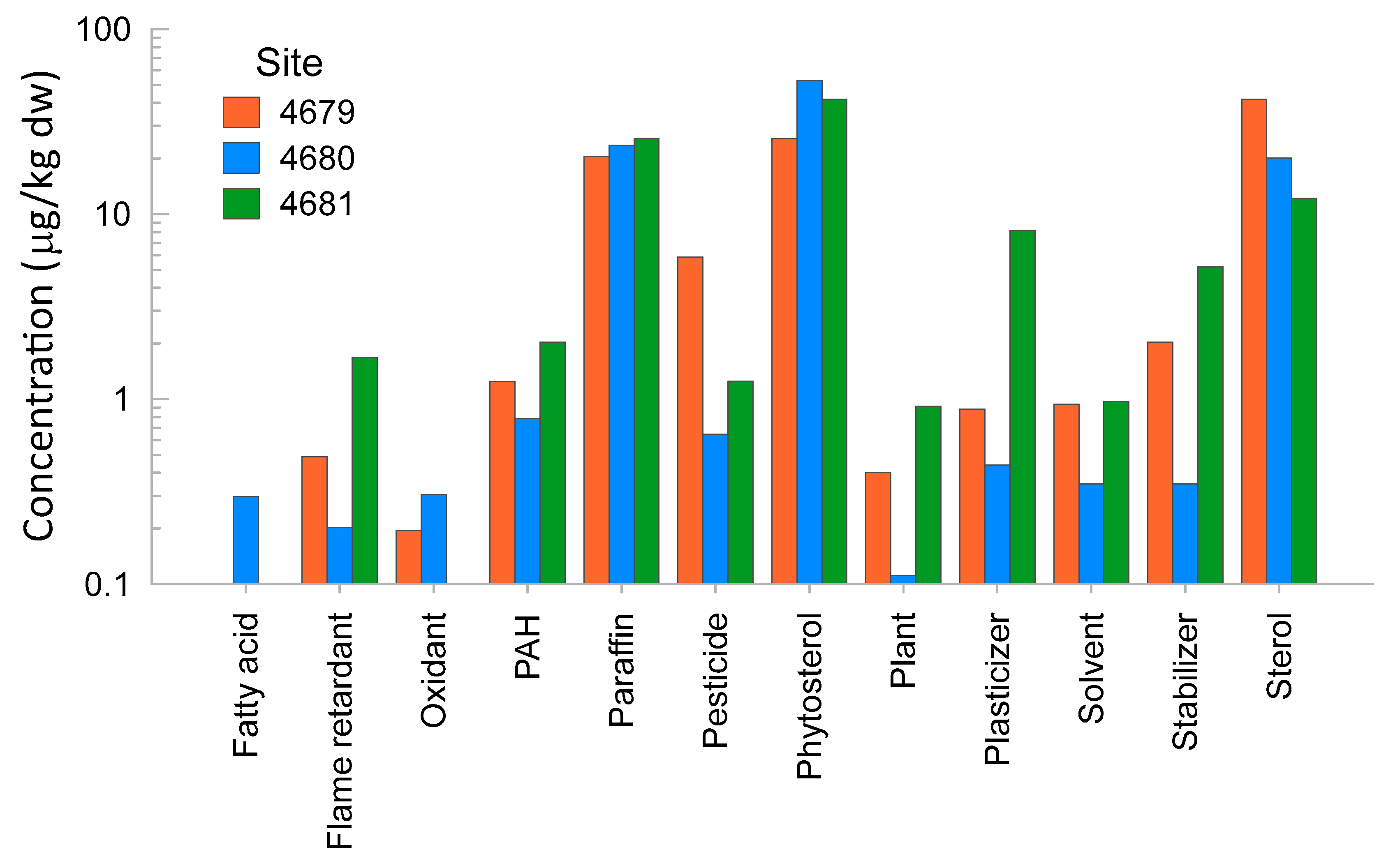
Hawke’s Bay in New Zealand was impacted by Cyclone Gabrielle in 2023, experiencing intense weather conditions and rainfall. Rivers and streams surged beyond their banks, displacing large amounts of sediment. The sewage treatment plant and industries in the Waitangi catchment, south of the city of Napier, were heavily impacted, making them potential sources of contaminants. The aim of this study was to investigate the risk of displaced sediments deposited south of Napier City, using bioassays and chemical analysis methods. Sediment samples were collected across a gradient between the coastline and the Waitangi Stream. The toxicity of chemically extracted or elutriate samples was assessed by Microtox®, mussel embryo–larval development, and aryl hydrocarbon and constitutive androstane receptor yeast two-hybrid assays. Targeted chemical analysis and automated identification and quantification system (AIQS-GC) methods were used to identify contaminants. The elutriates showed low toxicity and the yeast assays showed levels of activity like those previously reported. Chemical methods confirmed historical contamination by DDT and its metabolites DDE and DDD, as well as by plant sterols. Overall, the toxicity and chemicals detected are what would be expected from a typical agricultural soil. The risk posed by the displaced sediment in the Waitangi catchment can be considered low. Combining chemical and bioanalytical methods was an effective approach to investigate the potential risks of post-disaster contamination.
Keywords: New Zealand; Microtox; mussel embryo test; yeast two-hybrid assay; aryl hydrocarbon receptor; constitutive androstane receptor; AIQS-GC; DDT; phytosterol New Zealand; Microtox; mussel embryo test; yeast two-hybrid assay; aryl hydrocarbon receptor; constitutive androstane receptor; AIQS-GC; DDT; phytosterol
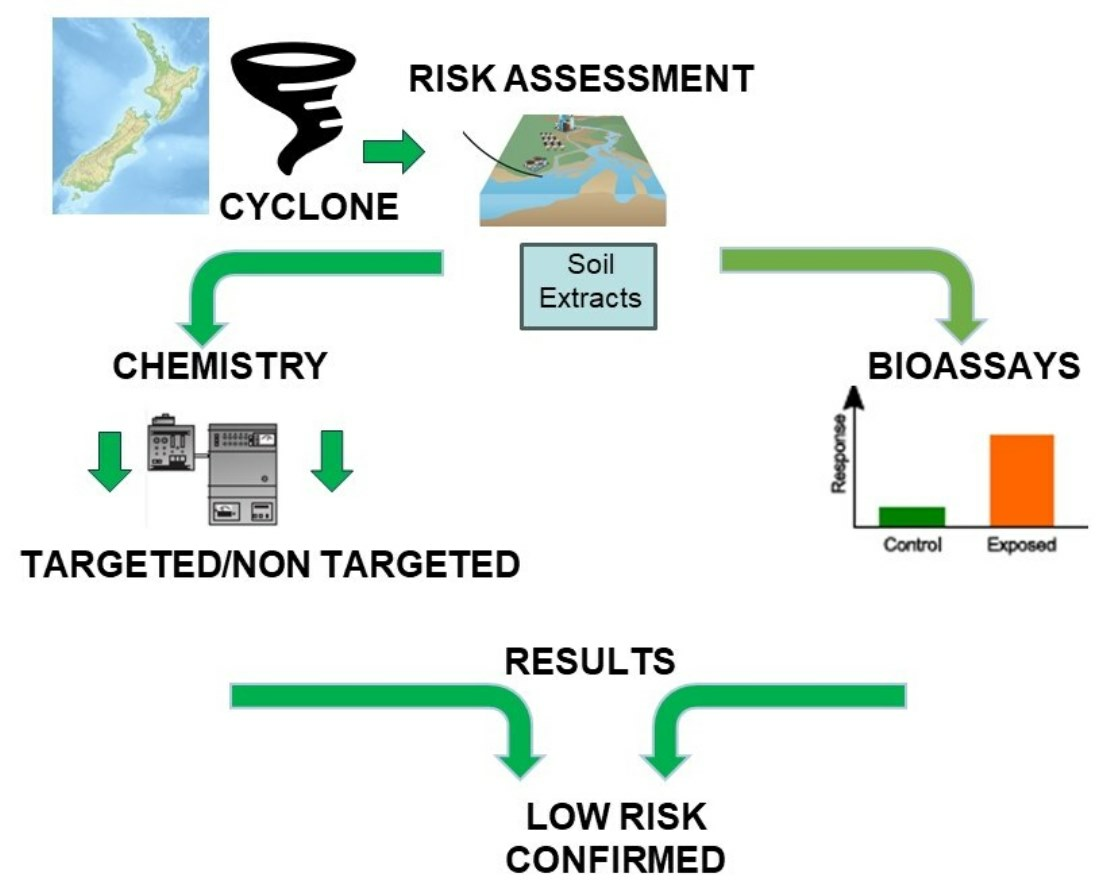
Graphical Abstract