Article

Energy and Logistics Cost Transmission in the Dairy Market: Evidence from Kazakhstan Using a Log-Linear ARDL Model


by
Dauren Turarov
1,
Zhumakul Abisheva
1,*,
Aiman Issayeva
1,
Madina Beisenova
1 and
Stefan Dyrka
2
1
Higher School of Economics and Business, Farabi University, Almaty 050040, Kazakhstan
2
Department of Management and Marketing, Katowice Business University, 40-659 Katowice, Poland
*
Author to whom correspondence should be addressed.
Logistics 2026, 10(6), 121; https://doi.org/10.3390/logistics10060121
Submission received: 28 February 2026 / Revised: 16 May 2026 / Accepted: 20 May 2026 / Published: 2 June 2026

Abstract

Background: This study aims to evaluate the impact of energy and logistics factors on the milk producer price index to support evidence-based policies that maintain price stability at an optimal level. Methods: Annual data for 2000–2023 are used, including the milk producer price index, milk production volume, transport CPI, diesel price, CO2 emissions from agriculture, and renewable energy consumption (percentage of total energy consumption). A log-linear ARDL model is applied to examine both short- and long-run asymmetric effects of diesel prices, transport costs, and agricultural CO2 emissions on milk production dynamics. Results: The research results indicate that energy expenses, logistics considerations, and environmental metrics have statistically significant asymmetric influences on milk production. This underscores the varying short-term adjustments and enduring long-term economic effects throughout the supply chain. Conclusions: Energy and cost factors on the supply side significantly influence the stability of milk markets. Therefore, improving transportation efficiency, encouraging the use of renewable energy sources, and addressing environmental impacts can contribute to consistent and sustainable pricing. Specific policies—including investments in transport infrastructure, subsidies for green energy targeting dairy producers, carbon pricing with support tailored to the sector, and digitalization of supply chains—can enhance resilience and ensure price stability.

1. Introduction

This study looks at milk price formation grounded in price transmission theory and cost structures in a supply chain, which both occur on agricultural land and in the course of industry. Price transmission theory can be seen as a way to understand how jolts in the price of inputs feed upstream markets—producers through processors and vendors—often in an incomplete and asymmetric fashion, partly due to market power, adjustment costs, as well as contractual inflexibility [1]. This is particularly relevant to agri-food production systems characterized by perishable foods and high transaction costs, but also with structures that do not fit well into the market concept of what needs to be accomplished if consumers purchase them later on in food. Specifically, a primary element of the upstream cost that affects farm production as well as transport is energy, specifically diesel. Higher fuel prices raise marginal costs over several phases in the dairy supply chain, causing downstream price adjustments [2]. Empirical studies have empirically demonstrated that energy price shocks are transmitted to food prices with asymmetry and lag, reflective of nonlinear mechanisms of adjustment [3,4]. This forms the theoretical backdrop for investigating the diesel price pass-through to milk price. Furthermore, they also consider CO2 emissions as a proxy for energy intensity and environmental cost pressures in the production and distribution systems. From an energy–economics viewpoint, greater emissions corresponded with greater dependence on fossil fuels and potential regulatory costs that could be absorbed into production and logistics costs [5]. In the price transmission model, those costs then spread indirectly through the system and affect retail prices through cumulative cost effects. Finally, logistics variables (transport distance, infrastructure availability, storage capacity, and the number of intermediaries) are crucial to the cost structure of the supply chain. Higher logistics costs and inefficiencies generate frictions that reduce or delay price transmission: transaction cost economics and spatial price equilibrium theory [6,7].
They become especially amplified in geographically large and landlocked economies such as that of Kazakhstan, amplifying cost pass-through and increasing the degree of price spread by region. This serves as the groundwork for exploring the logistical determinants of milk pricing. Since such variations (nonlinear and asymmetric) can emerge in response to cost shocks, this study uses a log-linear Autoregressive Distributed Lag (ARDL) that can decompose positive and negative changes in explanatory variables and differentiate between short-run and long-run transmission dynamics [8]. This approach also captures the delicate interplay of energy costs, environmental pressure, logistics, and milk price in Kazakhstan’s dairy market.
Therefore, to assess the energy factors and other factors indirectly related to milk production, the following questions are sought:
RQ1: To what extent do diesel prices affect milk prices?
RQ2: To what extent do CO2 emissions affect milk prices?
RQ3: To what extent do logistical factors affect milk prices?

2. Literature Review

Dairy market price formation can be analyzed in light of agricultural price transmission theory and cost structures in supply chains. Price transmission demonstrates how cost fluctuations (e.g., for energy, logistics) are communicated vertically from the producer of food products (the product and service provider) to the consumer (the final consumer) [9]. This distribution process is usually not symmetric, with market power, adjustment frictions, and so forth contributing to this process [10]. The retail prices of milk in the dairy industry are driven by input costs that consist of various energy costs (including fuel and electricity), transportation, and processing costs based on the processes in the supply chain [11]. More precisely, energy prices—especially diesel—affect both production and distribution processes, while environmental cost-related indicators (e.g., CO2 emissions) serve as proxies for regulatory and energy intensity costs [12]. Considering that agri-food chains are not linear in nature, cost shocks propagate nonlinearly, thus lending support for the use of log-linear ARDL to more effectively model both nonlinear short- and long-run effects [13].
Rising operating costs, labor shortages, volatile milk prices, shifting consumer preferences, long hours with little relaxation, and unpredictable weather patterns brought on by climate change are just a few of the major business difficulties dairy farmers are facing [14]. Dairy farming is increasingly adopting management practices that demand more energy. Both on-farm emissions resulting from fossil fuel combustion and off-farm emissions related to the production of agricultural inputs, such as fertilizers and feed additives, play a role in exacerbating climate change when utilized in dairy operations [15]. By the year 2050, global consumption of dairy products is projected to increase by 19% per capita. However, milk production is energy-intensive. To ensure both financial viability and environmental sustainability within the dairy sector over the long term, it is crucial to align increased milk production with responsible energy resource utilization while addressing concerns regarding greenhouse gas emissions from agriculture [16]. Research by Daniel et al. [17] indicates that a significant portion (85%) of electricity used in dairy farming goes toward agricultural and processing equipment, with lighting and refrigeration being major contributors during processing, accounting for approximately 10% and 30% of total electricity usage, respectively. The food and beverage industry stands out as the largest energy user and is responsible for 67% of greenhouse gas emissions in the agro-food sector [18]. In recent years, the proportion of energy costs within overall agricultural expenditures has risen due to climbing energy prices alongside greater automation and mechanization on farms [19]. Dairy farming necessitates substantial amounts of electricity for milking processes, cooling milk, and heating and cleaning water, which underscores its high energy demand [20,21].
In order to establish baseline data for comparing the energy performance of different facilities and systems, Xu and Flapper [22] investigated energy consumption within the current global fluid milk markets. Their findings revealed that the average ultimate energy intensity of individual plants varied markedly across different facilities and countries, with values ranging from 0.2 to 12.6 MJ per kilogram of fluid milk product. Wojdalski et al. [23] analyzed four categories of dairy facilities, each characterized by distinct production profiles, to explore the relationship between two sets of parameters and energy usage. The results indicated that small dairy factories producing up to four products offered the clearest insight into variations in energy consumption per unit of final output. Furthermore, assessments of individual plants demonstrated a significant correlation between energy use per unit of final product and both the production profile and milk-processing output.
By examining a year’s worth of 30 min interval electrical data, Dew et al. [24] assessed the capacity of six large dairy farms in New Zealand to provide flexibility in electricity demand. The analysis focused on daily electricity consumption patterns to illustrate how irrigation and milking activities contribute to peak usage periods. It was found that, according to a proposed time-of-use (TOU) pricing structure, the morning peak represents 20% of the total electricity costs incurred by the dairy shed.
Implementing various conservation technologies could result in a reduction in electricity demand by one-third. Furthermore, integrating renewable energy generation with conservation efforts enables dairy farms to reach net-zero electricity consumption [25].
Moerkerken et al. [26] generated an extensive dataset concerning farm energy utilization, comprising over 25,000 observations collected from 2015 to 2018 through an online platform that systematically monitored the energy performance of dairy operations. Their research highlights three significant trends: first, the installation of solar panels emerges as the most critical element in decreasing reliance on non-renewable energy sources; secondly, ongoing mechanization—especially in automatic milking systems—counterbalances energy efficiency gains attributed to governmental policies; and thirdly, advancements in economies of scale have led to marked improvements in per-unit energy efficiency within milk production.
To explore both the prospects and constraints of a self-sustaining energy system, Höhendinger et al. [27] investigated and detailed the energy consumption associated with a milk production system. Their comprehensive assessment indicated that the total energy output could meet the consumption demands of the production process itself. Ultimately, profitability stemming from both acquisitions and sales is contingent upon prevailing energy prices. Logistics plays an important role in determining the price of any product [28,29]. Efficient logistics management helps optimize value in any supply chain.
Logistics encompasses numerous elements that influence pricing [30]. With the growing emphasis on environmental concerns, discussions surrounding diesel costs—integral to delivery expenses—and emissions within the supply chain have gained prominence in academic discourse. For dairy farmers, fluctuations in diesel prices are particularly significant [31]. These price variations exert a more substantial effect on the initial pricing within the food supply chain than on the final consumer product. A study by Chang et al. (2024) has illustrated how both diesel prices and the availability of truck drivers impact food costs [32]. Even so, whether oil prices directly correlate with milk production or the pricing structure is yet to be established [33]. However, one cannot entirely dismiss their impact. Moreover, previous research has underscored another aspect of this relationship: the emissions of CO2 generated by dairy producers, who contribute to such emissions regardless of their operating scale [34,35]. This contribution is not only in milk production but also in fuel consumption throughout the supply chain.
Since 2012, Kazakhstan’s milk production has reached 6247.2 thousand tons across all livestock categories, reflecting a 28.7% increase from 4851.6 thousand tons in that year [36]. Data from 2019 indicate that 72.7% of households in the nation engage in milk production [37]. Despite this growth, Kazakhstan remains one of Central Asia’s leading milk importers; hence, enhancing competitiveness within its dairy sector is essential [38,39]. Limited research exists examining how energy and fuel prices intersect with food security issues [40,41]. In Kazakhstan, road transport is primarily utilized for dairy distribution; thus, gasoline costs and transportation expenses significantly affect milk pricing. Various factors influence these costs—including energy required for milk preservation, transport distance, diesel output levels, and fueling requirements for transit vehicles.
When determining pricing strategies for their products, milk producers must consider all variables present within both production and value chains comprehensively. Consequently, this research aims to assess some of the logistical and energy factors that may influence the price structure of milk.

3. Materials and Methods

3.1. Data

In this research paper, the authors aim to find out the impact of milk production volume, transport consumer price index, diesel price, CO2 emissions, and renewable energy consumption on the milk producer price index in the Republic of Kazakhstan. This study uses data from the World Data Bank (WDI), the Bureau of National Statistics Agency for Strategic Planning and Reforms (BNSASPR) of the Republic of Kazakhstan, and Globalpetrolprices.com covering the period from 2000 to 2023.

Justification for the Use of Variables

After examining a range of studies available in the literature and applying the criteria for statistical accessibility, the subsequent variables were chosen to fulfill the research objective.
Milk production levels serve as a crucial supply-side factor that directly impacts the milk producer price index through the mechanism of market equilibrium. When production increases, the supply of raw milk grows, which, all else being equal, puts downward pressure on producer prices; conversely, reductions in supply lead to higher prices. Research indicates that fluctuations in production significantly affect farm-gate price indices due to the perishability of milk and limitations in storage [42]. Utilizing a log-linear ARDL framework, this variable accounts for both immediate supply shocks and long-term adjustments toward equilibrium that influence the milk producer price index.
The transport Consumer Price Index (CPI) is intricately connected to the milk producer price index, as it captures variations in logistics and distribution expenses throughout the dairy supply chain. Given that raw milk has a short shelf life, efficient transportation is vital for ensuring prompt delivery. When transport costs increase, transaction expenses also rise, which are partially passed back to producers, thereby affecting the producer price index. Research on price transmission indicates that distribution costs have a substantial impact on vertical pricing relationships [43,44], highlighting the transport CPI as a crucial factor influencing the fluctuations of the milk producer price index.
Diesel prices have a direct influence on the milk producer price index, primarily through their effect on both production and transportation expenses. The dairy farming sector is heavily dependent on fuel-intensive resources, including machinery, feed logistics, and the collection of milk. An increase in diesel prices raises marginal costs, which subsequently leads to higher prices for producers. Research examining the relationship between energy and food prices demonstrates notable pass-through effects from fuel costs to agricultural price indices [45,46]. Within the ARDL framework, diesel prices reflect energy cost shocks and their dynamic impact on the milk producer price index.
CO2 emissions originating from agricultural practices are linked to the scale and intensity of livestock production, which in turn has an indirect effect on the index of milk producer prices. Elevated emissions often indicate more intensive production systems, potentially leading to changes in cost structures due to environmental regulations or carbon limitations. These elements contribute to increased production expenses, subsequently influencing producer prices. The existing literature emphasizes the strengthening connection between environmental externalities and the determination of agricultural prices [47,48]. By incorporating this variable, the ARDL model is able to reflect long-term structural relationships between environmental pressures and the index of milk producer prices.
Renewable energy use plays a role in determining the milk producer price index by impacting the cost structure associated with energy in agricultural production. An increased proportion of renewable sources lessens reliance on the volatility of fossil fuel prices, which helps stabilize input expenses and may reduce fluctuations in producer prices. Research examining the relationship between energy and agriculture indicates that shifts toward renewable energy have a considerable influence on agricultural pricing systems [49,50]. Within the ARDL framework, this factor illustrates how variations in energy sources affect both short-term and long-term trends in the milk producer price index.
The following graph shows the dynamics of changes in all indicators presented in Table 1 for the period 2000–2023:
Figure 1 shows clear, consistent, and stable temporal patterns, indicating that the variables’ changes are suitable for further study.

3.2. Methods

Based on the literature review, we propose the following theoretical model (Equation (1)) that examines the influence of important factors on the milk producer price index in the Republic of Kazakhstan:
MPPI = f (MPV, TCPI, DP, CO2E, REC)
where all of their definitions and measurements are given in Table 1.
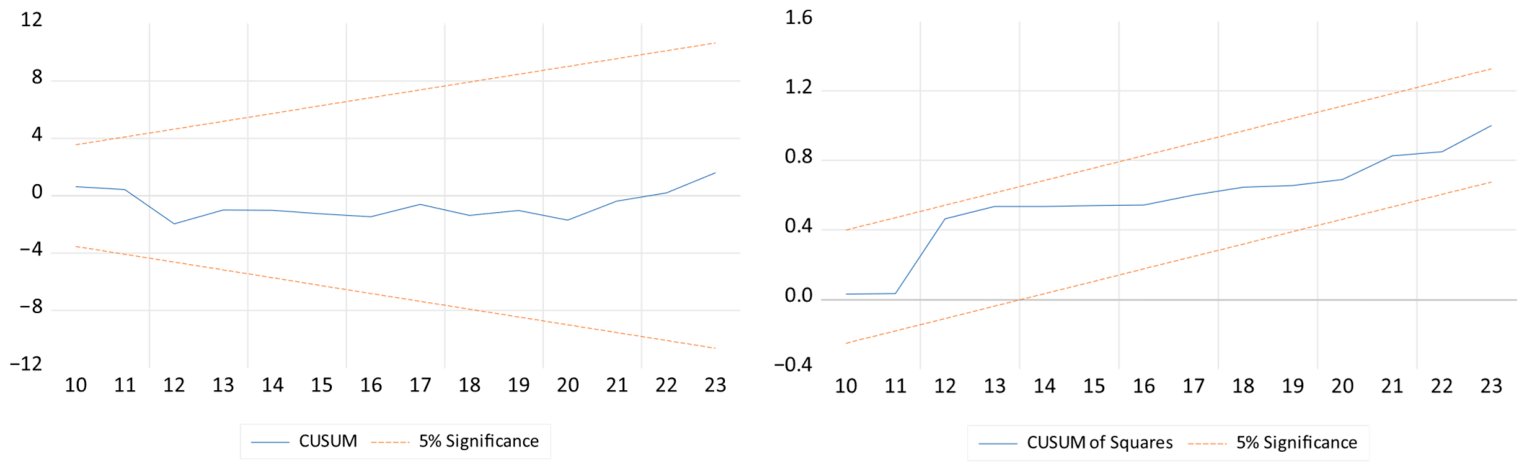
In the work of Bolatbek et al. (2025) [51], a block diagram was created showing the general algorithm for estimating the corresponding model. In our study, all the required procedures in that figure were carried out: the order of the lag in the model being constructed was determined, tests were performed to determine the residuals’ normalcy, normality of the residuals, serial correlation, heteroscedasticity, and to check the stability of the model, CUSUM (Cumulative sum of recursive residuals) and CUSUMSQ (Cumulative sum of squared recursive residuals) tests were used.
First, since the variables under study must satisfy certain requirements, all indicators were tested for stationarity. Not all variables under investigation were stationary at I(0) or first-difference I(1) levels, according to the ADF test results. However, this non-stationarity was removed by taking logarithms. Therefore, since the logarithms of all indicators are found to be level or first-difference stationary, it is appropriate to consider log-linear ARDL models. Consequently, a logarithmic model was estimated, and an autoregressive distributed lag (ARDL) model was deemed suitable for this situation to investigate the dynamic behavior of these variables and account for both short- and long-term impacts.
For the investigation, the log-linear power-law model (Equation (2)) that follows was created:
Δ L O G M P P I t = β 0 + k = 1 m β 1 Δ L O G M P P I t k   + k = 0 n β 2 Δ L O G ( M P V t k ) + k = 0 p β 3 Δ L O G ( T C P I   t k ) + k = 0 q β 4 Δ L O G ( D P   t k ) + k = 0 r β 5 Δ L O G ( C O 2 E t k )   + k = 0 s β 6 Δ L O G ( R E C t k ) +   γ 0 L O G ( M P P I t i ) + γ 1 L O G ( M P V t i ) + γ 2 L O G ( T C P I t i ) +   γ 3 L O G (   D P t i ) + γ 4 L O G ( C O 2 E t i ) + γ 5 L O G R E C t i +   ε t
where operator Δ represents the differencing operation.

4. Results

4.1. Empirical Findings

Descriptive statistics facilitate a comprehensive analysis of various features within a dataset. This study employs the properties of mean, median, skewness, kurtosis, the Jarque–Bera test, and probability to evaluate the variables under consideration.
Table 2 displays the descriptive statistics for each variable. The average values for MPPI, MPV, TCPI, DP, CO2E, and REC are 108.775, 4918.950 thousand tonnes, 107.504, 111.083 tenge/L, 0.221, and 2.108%, respectively. The standard deviations for these variables are as follows: MPPI is 7.751, MPV is 775.422 thousand tonnes, TCPI is 4.14, DP is 71.945 tenge/L, CO2E is 0.120, and REC is 1.057%. This indicates that CO2E exhibits low variability (0.120), while MPV demonstrates very high variability (775.422). All indicators except MPV display positive skewness. The mean values of MPPI and TCPI (108.775 and 107.504) are similar to their medians (108.400 and 106.650), suggesting a nearly symmetric distribution for these variables. In contrast, significant deviations can be noted in the other factors: MPV, DP, and REC; their skewness coefficients are close to zero (0.128 and 0.060), supporting this observation. There exists pronounced right skewness in both CO2E (1.032) and REC (2.359), with skewness values exceeding one indicating this trend further. The kurtosis values for the variables—MPPI (2.559), MPV (2.518), TCPI (2.484), DP (2.818), and CO2E (2.734)—are near three, suggesting they follow a normal distribution pattern; however, the kurtosis value of the REC variable at 8.652 indicates it has a heavy-tailed distribution. Notably, in our analysis, REC has undergone a logarithmic transformation for better handling of its distribution characteristics. Examining the p-values from the Jarque–Bera test criterion reveals that only the REC variable shows statistical significance with p = 0.000 < 0.05; meanwhile, the variables MPPI (p = 0.878), MPV (p = 0.594), TCPI (p = 0.869), DP (p = 0.283), and CO2E (p = 0.115) have probabilities exceeding this threshold, indicating normal distribution. These analyzed variables can be utilized within an ARDL model framework since normality is not a prerequisite; nevertheless, subsequent steps will involve testing for stationarity.

4.2. Unit Root Test

Before proceeding with the estimation of Equation (2), this study assessed the levels or differences of stationary variables using augmented Dickey–Fuller (ADF) unit root tests, as introduced by Dickey and Fuller in 1979 [52]. This assessment is crucial for identifying whether the variables are stationary prior to analyzing any long-term relationships between the series. At a significance level of 5%, it was found that the logarithms of each variable were integrated at order I(0) or I(1).
The findings from the unit root analysis (see Table 3) align with the preliminary hypotheses, thus necessitating an examination of the ARDL logarithmic model to verify any long-term relationships between the Kazakhstan milk producer price index and its explanatory variables. The parameters derived from this logarithmic model indicate elasticity.

4.3. Lag Selection Criteria

In this research, the ARDL bounds testing approach is employed to investigate the long-term association between the chosen explanatory variables and the milk producer price index in Kazakhstan. Prior to performing the cointegration analysis, establishing an appropriate lag length criterion is crucial. The findings for the selected lag of the log-linear model are displayed in Table 4. The lag length criterion is determined based on LR, FPE, AIC, SC, and HQ. As shown in the table, the selected lag length is 1, as it has more stars and was used throughout the study. The determination of the order of an autoregression was developed by Hannan and Quinn (1979) [53].

4.4. Co-Integration Test

In this research, the logarithmic model ARDL (1, 1, 1, 0, 1, 0) (refer to Equation (2)) was utilized to analyze both long-term and short-term relationships between variables through first differences. The findings from the cointegration F-test for the ARDL presented in Table 5 reveal that the calculated F-statistic of 19.18721 surpasses the upper threshold of 4.21 and is statistically significant at a level of 1%. These results suggest that there is cointegration among the chosen variables, specifically for Kazakhstan, indicating that an enduring relationship exists among them.
The subsequent phase involves estimating the coefficients for both the long run and short run, as the chosen variables exhibit cointegration over time. Utilizing the log-linear ARDL(1, 1, 1, 0, 1, 0) model allows us to analyze how fluctuations in the explanatory variables influence the dependent variable across these two time frames.

4.5. Results of Long- and Short-Run Relationships

Table 6 indicates that all estimated long-term coefficients from the chosen logarithmic model ARDL (1, 1, 1, 0, 1, 0) are statistically significant at the 10% level. The coefficient for LOG(TCPI) is notably positive and significant at the 1% level of significance. This finding confirms that the Transport Consumer Price Index has a substantial positive effect on the long-term growth of LOG(MPPI), reflected in an elasticity coefficient of 0.510803 when other factors remain constant. Additionally, the variables LOG(DP), LOG(REC), and LOG(MPV) also exert a favorable impact on LOG(MPPI) over time with respective elasticity coefficients of approximately 0.096282%, 0.103141%, and 0.171863%. Solely the logarithm of CO2E shows a sustained adverse effect on the change in the logarithm of MPPI, with an elasticity coefficient quantified at 0.178830%.
In the short term, the coefficient for the lagged variable LOG (MPPI(−1)) at period t-1 was found to be negative (−1.246150). Assuming all other variables remain constant, positive relationships were identified for LOG(DP(−1)), ΔLOG(DP), LOG(REC), LOG(MPV(−1)), LOG(TCPI), and LOG(MPPI) with corresponding elasticity coefficients of 0.119982, 0.553717, 0.128530, 0.214167, and 0.636537. The logarithm of the lagged variable LOG(CO2E(−1)) exhibited a negative correlation with ΔLOG(MPPI) (with a coefficient value of −0.222849) in the short run; this finding aligns with long-term results. The error correction factor CointEq(−1)* is −1.246 and holds statistical significance. The presence of a negative sign indicates that there is a stable long-term equilibrium among these variables. Furthermore, values exceeding one suggest an extremely rapid adjustment process concerning deviations from this equilibrium state, potentially resulting in re-regulatory effects within the system.

4.6. Diagnostic Tests

To validate the strength of the log-linear ARDL (1, 1, 1, 0, 1, 0) model, a series of diagnostic tests were conducted (see Table 7). These assessments included evaluations for serial correlation, heteroscedasticity, and normal distribution. The results from all diagnostic procedures—Lagrange multiplier test for serial correlation, Jarque–Bera test for normality, and tests for heteroscedasticity—were favorable. This outcome confirms the robustness of the ARDL (1, 1, 1, 0, 1, 0) model. Consequently, the null hypothesis positing the absence of serial correlation or issues related to heteroscedasticity and non-normality is not rejected.

4.7. Multicollinearity Test

In this research, the variance inflation factor (VIF) is employed to assess multicollinearity. The findings from the VIF analysis are displayed in Table 8, which indicates that no evidence of multicollinearity was found.
The test outcomes indicate that every VIF value remains under 10, aligning with the established empirical guidelines. Therefore, we can confirm that there are no significant issues related to multicollinearity. This finding enables us to assert that multicollinearity is not a concern in our model, allowing for the inclusion of all variables in our subsequent analysis.

4.8. The Granger Causality Test

The analysis presented in Table 9 regarding the Granger causality test indicates a one-way causal relationship between LOG(MPV) and LOG(MPPI).
The sole notable variable with a lasting impact on MPPI is MPV. It serves as an essential element in elucidating the fluctuations of MPPI. Conversely, all other variables exhibit no substantial influence on the MPPI. Collectively, these variables provide a meaningful explanation for the changes in MPPI, indicated by p = 0.0267. Although there exists an interrelationship among them, their intrinsic importance remains minimal.

4.9. Stability Tests

To evaluate the dynamic stability of our model, we employed the CUSUM and CUSUMSQ tests. The visual outputs of these assessments, illustrated in Figure 2, demonstrate the overall stability of the ARDL (1, 1, 1, 0, 1, 0) framework.
Since the CUSUM and CUSUMSQ statistics in Figure 2 stay within the critical threshold of 5%, it indicates that the model parameters are deemed stable.

5. Discussion

5.1. Discussion of Empirical Findings

The positive influence of diesel prices and transport CPI suggests cost-push transmission, since fuel-intensive production and distribution raise marginal costs across Kazakhstan’s geographically dispersed dairy chain. The importance of lagged milk prices reflects adaptive expectations, menu costs, and contractual rigidities, generating price inertia and asymmetry. The positive association between milk volume and prices implies structural inefficiencies: fragmented smallholder production leads to increased collection, coordination, and spoilage costs that offset scale benefits [54]. The adverse effects of CO2 emissions may reflect energy inefficiency and technological backwardness—high CO2 emissions increase demonstrates high input usage and slow growth, which would reduce price formation [55]. Furthermore, poor market integration and long supply chains generate spatial arbitrage friction that prevents efficient price equalization [7]. Policy should:
-
subsidize fuel-efficient logistics;
-
invest in cold-chain and rural infrastructure;
-
promote dairy cooperatives to reduce transaction costs; and
-
support low-carbon technologies to enhance.
Some of the findings align with Zingbagba et al. [56] and Rose and Paparas [57]. The agricultural, logistics, and energy sectors are very closely linked [58,59]. This can be seen in the structure of milk prices. Price transmission arises from the need for energy for both milk production and milk delivery. The presence of energy elements in both milk production and delivery indicates how important they are. Energy and logistics also contribute to the environmental footprint, which is especially noticeable in terms of CO2 emissions [60,61].
As a result, it is crucial to ensure its accessibility to the public and to reduce and improve milk prices. The dilemma is that energy sources are used in both milk production and distribution, so all aspects are interconnected and must be carefully managed to keep price fluctuations within a manageable range. Additionally, milk production and logistics affect the environment. The results of the study are similar to the results of Ortego [62], Young et al. [63], and Li and Lopez [64]. In other words, this conundrum is always pertinent. In the era of an interconnected circular economy, the influence of a factor with little to no connection to the supply chain can play a major role in the value chain.

5.2. Theoretical and Practical Implications

This research contributes to the existing body of knowledge on agricultural price transmission by examining the interplay between energy, environmental factors, and logistics in relation to milk price fluctuations in Kazakhstan. Unlike most prior studies focused solely on food prices and agricultural output, this analysis integrates diesel fuel costs, transportation expenses, renewable energy usage, and carbon dioxide emissions within a comprehensive analytical framework. The findings reveal that the dynamics of milk pricing in Kazakhstan are influenced not only by traditional supply-side factors but also by broader pressures related to energy and logistics throughout the dairy supply chain.
The study reinforces theoretical concepts regarding asymmetric and nonlinear mechanisms of price transmission within agri-food markets [9,13]. The relationships identified suggest that shocks related to energy prices and transport costs exert varying impacts on milk prices over both short and long-term periods. This variability highlights issues such as price adjustment frictions, market inflexibility, and spatial inefficiencies typical of economies characterized by geographic dispersion.
By utilizing the log-linear Autoregressive Distributed Lag (ARDL) model, this research further substantiates the significance of incorporating dynamic and nonlinear methodologies into agricultural price modeling. The findings hold considerable implications for practitioners and stakeholders within Kazakhstan’s dairy sector. Given that diesel fuel prices and transportation costs significantly influence milk pricing, enhancing rural transportation infrastructure and cold-chain logistics could mitigate supply chain inefficiencies while stabilizing market prices [56,57].
Additionally, promoting renewable energy utilization alongside energy-efficient technologies in dairy production may reduce reliance on fossil fuels and bolster sustainability at this production level [58,59,60,61]. This suggests that policies aimed at diminishing the fragmentation of supply chain operations, optimizing coordination in planning processes, and fostering low-carbon innovations could enhance competitiveness and resilience within the dairy industry.

6. Conclusions

The current research has provided confirmation that in Kazakhstan, milk prices are heavily influenced by cost-push mechanisms that are incorporated in vertically connected but spatially dispersed supply chains. It is shown that diesel prices and transport CPI greatly raise milk prices in both the short-term and the long-term from ARDL model results, confirming that energy-intensive logistics are the main component of price transmission. Lagged milk prices convey both adaptive expectations and structural price inertia; for milk production volume, it is a reflective measure of inefficiencies arising from fragmented production systems. In contrast, CO2 emissions have a negative impact on prices, indicating that the greater the carbon intensity, the lower the productivity and technological inefficiency, rather than cost recovery. Thus, the results support the asymmetric and nonlinear nature of price transmission of a type that is expected according to theories of agricultural economics [10,11]. Logistics efficiency, low-carbon modernization, and supply-chain consolidation should be among policy interventions to bolster price stability and sectoral efficiency within Kazakhstan’s dairy market. As a result of the evaluation, the following answers were identified to the research questions posed in the Section 1.
In order to analyze, diesel fuel price and transportation-related factors have a significant positive effect on milk price for short-run and long-run periods. This highlights the importance of energy-intensive logistics in Kazakhstan’s dairy supply chain. Importantly, the quantity of milk production is shown to be linked to price fluctuations, signaling structural inefficiencies in divided production systems. On the contrary, CO2 emissions fall in the opposite direction to the milk price. Therefore, the greater the carbon intensity, the lower the productivity and the greater the technological inefficiencies. In conclusion, the fact is revealed that three major factors influence the stability of milk prices and overall efficiency in the supply chain in Kazakhstan; they are energy issues, environmental issues, and logistics.
Our results indicate that Kazakhstan’s dairy prices have been driven significantly by cost-push transmission through energy and logistics channels. Policymakers should mitigate the effect of diesel price vulnerability by enhancing fuel-efficient transport and providing targeted subsidies for dairy logistics. Rural infrastructure and cold-chain systems should be invested in to reduce transport CPI impacts. Besides, low-carbon technologies and energy-efficiency incentives should be advocated to mitigate the adverse productivity impact of rising CO2 emissions and help guarantee sectoral sustainability. Specific policy measures can enhance the resilience and stability of the milk market. Public entities could invest in transportation infrastructure that will reduce logistics costs and increase the efficiency of supply chains. Special targeted subsidies to try to drive farmers into renewable energy could help smooth the swings in energy prices. At the same time, effective carbon pricing strategies and industry-specific support initiatives will limit those negative environmental consequences, but not at the expense of producers. Moreover, digitizing supply chains could enhance coordination, transparency, and market efficiency.

Author Contributions

Conceptualization, D.T., Z.A., A.I., M.B. and S.D.; Methodology, Z.A.; Software, D.T., A.I. and M.B.; Validation, Z.A. and S.D.; Investigation, D.T. and A.I.; Resources, S.D.; Data curation, A.I. and M.B.; Writing—original draft, D.T. and Z.A.; Writing—review and editing, D.T., Z.A., and M.B.; Project administration, A.I. and S.D. All authors have read and agreed to the published version of the manuscript.

Funding

This research received no external funding.

Institutional Review Board Statement

Not applicable.

Informed Consent Statement

Not applicable.

Data Availability Statement

The original contributions presented in this study are included in the article. Further inquiries can be directed to the corresponding author.

Conflicts of Interest

The authors declare no conflicts of interest.

References

  1. Frey, G.; Manera, M. Econometric models of asymmetric price transmission. J. Econ. Surv. 2007, 21, 349–415. [Google Scholar] [CrossRef]
  2. Saghaian, S.H. The impact of the oil sector on commodity prices: Correlation or causation? J. Agric. Appl. Econ. 2010, 42, 477–485. [Google Scholar] [CrossRef]
  3. Rezitis, A.N. The relationship between agricultural commodity prices, crude oil prices and US dollar exchange rates: A panel VAR approach and causality analysis. Int. Rev. Appl. Econ. 2015, 29, 403–434. [Google Scholar] [CrossRef]
  4. Serra, T.; Goodwin, B.K. Price transmission and asymmetric adjustment in the Spanish dairy sector. Appl. Econ. 2003, 35, 1889–1899. [Google Scholar] [CrossRef]
  5. Apergis, N.; Payne, J.E. Energy consumption and growth in South America: Evidence from a panel error correction model. Energy Econ. 2010, 32, 1421–1426. [Google Scholar] [CrossRef]
  6. Barrett, C.B. Measuring integration and efficiency in international agricultural markets. Rev. Agric. Econ. 2001, 23, 19–32. [Google Scholar] [CrossRef]
  7. Fackler, P.L.; Goodwin, B.K. Spatial price analysis. In Handbook of Agricultural Economics; Gardner, B.L., Rausser, G.C., Eds.; Elsevier: Amsterdam, The Netherlands, 2001; Volume 1, pp. 971–1024. [Google Scholar] [CrossRef]
  8. Shin, Y.; Yu, B.; Greenwood-Nimmo, M. Modelling asymmetric cointegration and dynamic multipliers in a nonlinear ARDL framework. In Festschrift in Honor of Peter Schmidt; Sickles, R., Horrace, W., Eds.; Springer: New York, NY, USA, 2014; pp. 281–314. [Google Scholar] [CrossRef]
  9. Mészáros, S.; Popovics, P. Price transmission and its analysis in the milk and dairy sector: A survey. Stud. Agric. Econ. 2004, 100, 5–22. Available online: https://dea.lib.unideb.hu/server/api/core/bitstreams/c0faccc6-7828-4935-9c18-e7570d4f1508/content (accessed on 15 December 2025).
  10. Prišenk, J.; Zidar, N.; Turk, J. Development of a theoretical model for the price formation of agri-food products in the food supply chain: A Slovenian case study. Foods 2025, 14, 415. [Google Scholar] [CrossRef]
  11. Ben Abdallah, M.; Fekete Farkas, M.; Lakner, Z. Analysis of dairy product price transmission in Hungary: A nonlinear ARDL model. Agriculture 2020, 10, 217. [Google Scholar] [CrossRef]
  12. Garnett, T. Livestock-related greenhouse gas emissions: Impacts and options for policy makers. Environ. Sci. Policy 2009, 12, 491–503. [Google Scholar] [CrossRef]
  13. Cho, J.S.; Kim, T.-H.; Shin, Y. Quantile cointegration in the autoregressive distributed-lag modeling framework. J. Econ. 2015, 188, 281–300. [Google Scholar] [CrossRef]
  14. Ilyas, H.M.A.; Safa, M.; Bailey, A.; Rauf, S.; Pangborn, M. The carbon footprint of energy consumption in pastoral and barn dairy farming systems. Sustainability 2019, 11, 4809. [Google Scholar] [CrossRef]
  15. Shine Shine, P.; Upton, J.; Sefeedpari, P.; Murphy, M.D. Energy consumption on dairy farms: Review of monitoring and modeling. Energies 2020, 13, 1288. [Google Scholar] [CrossRef]
  16. Marchi, B.; Bettoni, L.; Zanoni, S. Assessment of energy efficiency measures in food cold supply chains: A dairy industry case study. Energies 2022, 15, 6901. [Google Scholar] [CrossRef]
  17. Daniel, E.; Ponsá, S.; Llenas, L.; Colón, J. Towards energy-efficient small dairy production systems: An environmental and economic assessment. Sustain. Prod. Consum. 2021, 28, 39–51. [Google Scholar] [CrossRef]
  18. Celik, E.; Bogueva, D.; Phillips, C.J. A survey of Australian dairy farmers’ attitudes to their business, challenges and transitioning to alternative enterprises. Sci. Rep. 2024, 14, 30555. [Google Scholar] [CrossRef]
  19. Rajaniemi, M.; Jokiniemi, T.; Alakukku, L.; Ahokas, J. Electric energy consumption of milking process on some Finnish dairy farms. Agric. Food Sci. 2017, 26, 160–170. [Google Scholar] [CrossRef]
  20. Hörndahl, T. Energy Use in Farm Buildings: A Study of 16 Farms with Different Enterprises, 2nd ed.; Report 2008:8; Swedish University of Agricultural Sciences: Uppsala, Sweden, 2008; Available online: https://res.slu.se/id/publ/125977 (accessed on 15 December 2025).
  21. Tike. Maa- ja Puutarhatalouden Energiankulutuksen Jakautuminen Tuotantosuunnittain ja Energialähteittäin Vuonna 2010; Agricultural Structure Research Report. 2010. Available online: https://www.fao.org/fileadmin/templates/ess/ess_test_folder/World_Census_Agriculture/Country_info_2010/Reports/Reports_4/FIN_FIN_ENG_REP_vol_II_2010.pdf (accessed on 11 December 2025).
  22. Xu, T.; Flapper, J. Energy use and implications for efficiency strategies in global fluid-milk processing. Energy Policy 2009, 37, 5334–5341. [Google Scholar] [CrossRef]
  23. Wojdalski, J.; Ligenza, P.; Postuła, M.; Dróżdż, B.; Niżnikowski, R. Determinants of energy consumption in the dairy industry: A case study in Poland. Environ. Prot. Nat. Resour. 2024, 34, 69–91. [Google Scholar] [CrossRef]
  24. Dew, J.J.W.; Jack, M.W.; Stephenson, J.; Walton, S. Reducing electricity demand peaks on large-scale dairy farms. Sustain. Prod. Consum. 2021, 25, 248–258. [Google Scholar] [CrossRef]
  25. Mohsenimanesh, A.; LeRiche, E.; Gordon, R.; Clarke, S.; MacDonald, R.; MacKinnon, I.; VanderZaag, A. Dairy farm electricity use, conservation, and renewable production: A global perspective. Appl. Eng. Agric. 2021, 37, 977–990. [Google Scholar] [CrossRef]
  26. Moerkerken, A.; Duijndam, S.; Blasch, J.; Van Beukering, P.J.H.; Smit, A. Determinants of energy efficiency in the Dutch dairy sector. J. Clean. Prod. 2021, 293, 126095–126110. [Google Scholar] [CrossRef]
  27. Höhendinger, M.; Krieg, H.-J.; Dietrich, R.; Rauscher, S.; Hartung, C.; Stumpenhausen, J.; Bernhardt, H. Requirements and economic implications of integrating a PV-plant-based energy system in the dairy production process. AgriEngineering 2023, 5, 2196–2215. [Google Scholar] [CrossRef]
  28. Bórawski, P.; Parzonko, A.; Żuchowski, I. Challenges in the Milk Market (Investments, Disruptions, Logistics, Competitiveness, Prices, and Policy); Wydawnictwo Ostrołęckiego Towarzystwa Naukowego im: Ostrołęka, Poland, 2021. [Google Scholar] [CrossRef]
  29. Rankl, A.; Nemeth, P. Modeling attitude as a delighter in supply chains: A Kano-based perspective. Logistics 2026, 10, 74. [Google Scholar] [CrossRef]
  30. Mat, B.; Çevrimli, M.; Akin, A.; Arikan, M.; Polat, M.; Varalan, A.; Demirsöz, M.; Tekindal, M. Determining the factors affecting the consumer price of milk in Turkey by using regularization (elastic net) linear regression analysis. Pak. J. Agric. Sci. 2023, 60, 25. [Google Scholar] [CrossRef]
  31. Ivanova, M.; Dospatliev, L. Effects of diesel price on changes in agricultural commodity prices in Bulgaria. Mathematics 2023, 11, 559. [Google Scholar] [CrossRef]
  32. Chang, A.J.; Zhou, F.; El-Rayes, N.; Shi, J. Food transportation and price impacted by diesel price and truck-driver shortage pre-, amid, and post-pandemic. Transp. Res. Part E Logist. Transp. Rev. 2024, 192, 103794. [Google Scholar] [CrossRef]
  33. Baumeister, C.; Kilian, L. Do oil price increases cause higher food prices? Econ. Policy 2014, 29, 691–747. [Google Scholar] [CrossRef]
  34. Mech, A.; Letha Devi, G.; Sivaram, M.; Sirohi, S.; Dhali, A.; Kolte, A.P.; Malik, P.K.; Veeranna, R.K.; Niketha, L.; Bhatta, R. Assessment of carbon footprint of milk production and identification of its major determinants in smallholder dairy farms in Karnataka, India. J. Dairy Sci. 2023, 106, 8847–8860. [Google Scholar] [CrossRef]
  35. Stolarski, M.J.; Warmiński, K.; Krzyżaniak, M.; Olba-Zięty, E.; Dudziec, P. The carbon footprint of milk production on a farm. Appl. Sci. 2025, 15, 8446. [Google Scholar] [CrossRef]
  36. Baiguzhinova, A.; Apysheva, A.; Saktayeva, A.; Domalatov, Y.; Mamyrbekova, D.; Kuangaliyeva, T.; Mugauina, R. Identifying the prospects for sustainable development of the dairy sector. East.-Eur. J. Enterp. Technol. 2025, 5, 81–91. [Google Scholar] [CrossRef]
  37. Mutaliyeva, A.; Dyrka, S.; Seitova, V.; Makhatova, A.; Uskenov, M. Analysis and forecast of milk production development in Kazakhstan. Sci. J. Pedagog. Econ. 2022, 5, 322–331. [Google Scholar] [CrossRef]
  38. Denissova, O.; Rakhimberdinova, M.U. Development of import substitution as a factor in ensuring food security in Kazakhstan. Econ. Strategy Pract. 2021, 16, 107–115. [Google Scholar] [CrossRef]
  39. Toleugaliyeva, S.T. Assessment of competitiveness of milk production under export conditions. Econ. Strategy Pract. 2019, 14, 93–103. Available online: https://esp.ieconom.kz/jour/article/view/195/191?locale=en_US (accessed on 1 May 2026).
  40. Kakizhanova, T.; Sagynbay, A.; Nurgazy, S.; Andabayeva, G.; Dauliyeva, G. Impact of energy consumption and food security on income inequality. Int. J. Energy Econ. Policy 2024, 14, 184–194. [Google Scholar] [CrossRef]
  41. Syrbek, P.; Bimendiyeva, L.; Kondybayeva, S.; Tlesova, A.; Tolepov, A. Nexus between energy intensity, CO2 emissions and food security. Int. J. Energy Econ. Policy 2025, 15, 616–623. [Google Scholar] [CrossRef]
  42. Acosta, A.; Ihle, R.; Robles, M. Spatial price transmission of milk in dairy markets. Agric. Econ. 2014, 45, 395–406. [Google Scholar] [CrossRef]
  43. Meyer, J.; von Cramon-Taubadel, S. Asymmetric price transmission: A survey. J. Agric. Econ. 2004, 55, 581–611. [Google Scholar] [CrossRef]
  44. Bakucs, L.Z.; Falkowski, J.; Fertő, I. Does market structure influence price transmission? J. Agric. Econ. 2014, 65, 1–25. [Google Scholar] [CrossRef]
  45. Nazlioglu, S.; Soytas, U. Oil price, agricultural commodity prices, and the dollar: A panel cointegration and causality analysis. Energy Econ. 2012, 34, 1098–1104. [Google Scholar] [CrossRef]
  46. Rezitis, A.N.; Sassi, M. Commodity price volatility and food prices: A panel VAR approach. Econ. Model. 2013, 35, 116–126. [Google Scholar] [CrossRef]
  47. Ciaian, P.; Kancs, D.A.; Swinnen, J. EU land markets and the Common Agricultural Policy. Land Use Policy 2012, 29, 121–130. Available online: https://cdn.ceps.eu/wp-content/uploads/2010/02/EU%20Land%20Markets%20and%20the%20CAP%20e-version.pdf (accessed on 13 December 2025).
  48. Zhou, Z.; Liu, W.; Wang, H.; Yang, J. The impact of environmental regulation on agricultural productivity: From the perspective of digital transformation. Int. J. Environ. Res. Public Health 2022, 19, 10794. [Google Scholar] [CrossRef] [PubMed]
  49. Nazlioglu, S.; Erdem, C.; Soytas, U. Volatility spillover between oil and agricultural commodity markets. Energy Econ. 2013, 36, 658–665. [Google Scholar] [CrossRef]
  50. Apergis, N.; Payne, J.E. Renewable energy, output, carbon dioxide emissions, and fossil fuel prices in Central America: Evidence from a panel vector error correction model. Energy Econ. 2014, 42, 226–232. [Google Scholar] [CrossRef]
  51. Bolatbek, Y.; Kakizhanova, T.; Akhmetova, Z.; Dildebayeva, Z.; Adiyetova, E. Creative economy at the nexus of innovation, digitalization and education: ARDL and ARDL approach from Kazakhstan. Econ.—Innov. Econ. Res. J. 2025, 13, 147–166. [Google Scholar] [CrossRef]
  52. Dickey, D.A.; Fuller, W.A. Distribution of the estimators for autoregressive time series with a unit root. J. Am. Stat. Assoc. 1979, 74, 427–431. [Google Scholar] [CrossRef]
  53. Hannan, E.J.; Quinn, B.G. The determination of the order of an autoregression. J. R. Stat. Soc. Ser. B 1979, 41, 190–195. Available online: https://www.jstor.org/stable/2985032 (accessed on 1 May 2026). [CrossRef]
  54. Sexton, R.J. Market power, misconceptions, and modern agricultural markets. Am. J. Agric. Econ. 2013, 95, 209–219. [Google Scholar] [CrossRef]
  55. Burney, J.A.; Davis, S.J.; Lobell, D.B. Greenhouse gas mitigation by agricultural intensification. Proc. Natl. Acad. Sci. USA 2010, 107, 12052–12057. [Google Scholar] [CrossRef]
  56. Zingbagba, M.; Nunes, R.; Fadairo, M. The impact of diesel price on upstream and downstream food prices: Evidence from São Paulo. Energy Econ. 2020, 85, 104531. [Google Scholar] [CrossRef]
  57. Rose, R.; Paparas, D. Price transmission: The case of the UK dairy market. Commodities 2023, 2, 73–93. [Google Scholar] [CrossRef]
  58. Hahn, C.; Lindkvist, E.; Magnusson, D.; Johansson, M. The role of agriculture in a sustainable energy system—The farmers’ perspective. Renew. Sustain. Energy Rev. 2025, 213, 115437. [Google Scholar] [CrossRef]
  59. Svazas, M.; Navickas, V. The synergy potential of energy and agriculture—The main directions of development. Energies 2025, 18, 1031. [Google Scholar] [CrossRef]
  60. Dubisz, D.; Golińska-Dawson, P.; Koliński, A. Measuring CO2 emissions level for more sustainable distribution in a supply chain. J. Eng. Appl. Sci. 2023, 49, 804–810. [Google Scholar] [CrossRef]
  61. Royo, B.; Zhang, Y.; Lewis, A.; Dehdari, P. CO2 emissions in urban freight transport: Developing and testing the EcoLogistics tool. Case Stud. Transp. Policy 2025, 20, 101415. [Google Scholar] [CrossRef]
  62. Ortego, A.J. Economic implications of higher transportation costs. J. Dairy Sci. 1979, 62, 673–677. [Google Scholar] [CrossRef]
  63. Young, C.W.; Hillers, J.K.; Freeman, A.E. Production, consumption, and pricing of milk and its components. J. Dairy Sci. 1986, 69, 272–281. [Google Scholar] [CrossRef]
  64. Li, X.; Lopez, R.A. Energy Price Transmission and Retail Milk Prices; Work. Pap. 38; Univ. Connecticut: Storrs, CT, USA, 2015. [Google Scholar] [CrossRef]
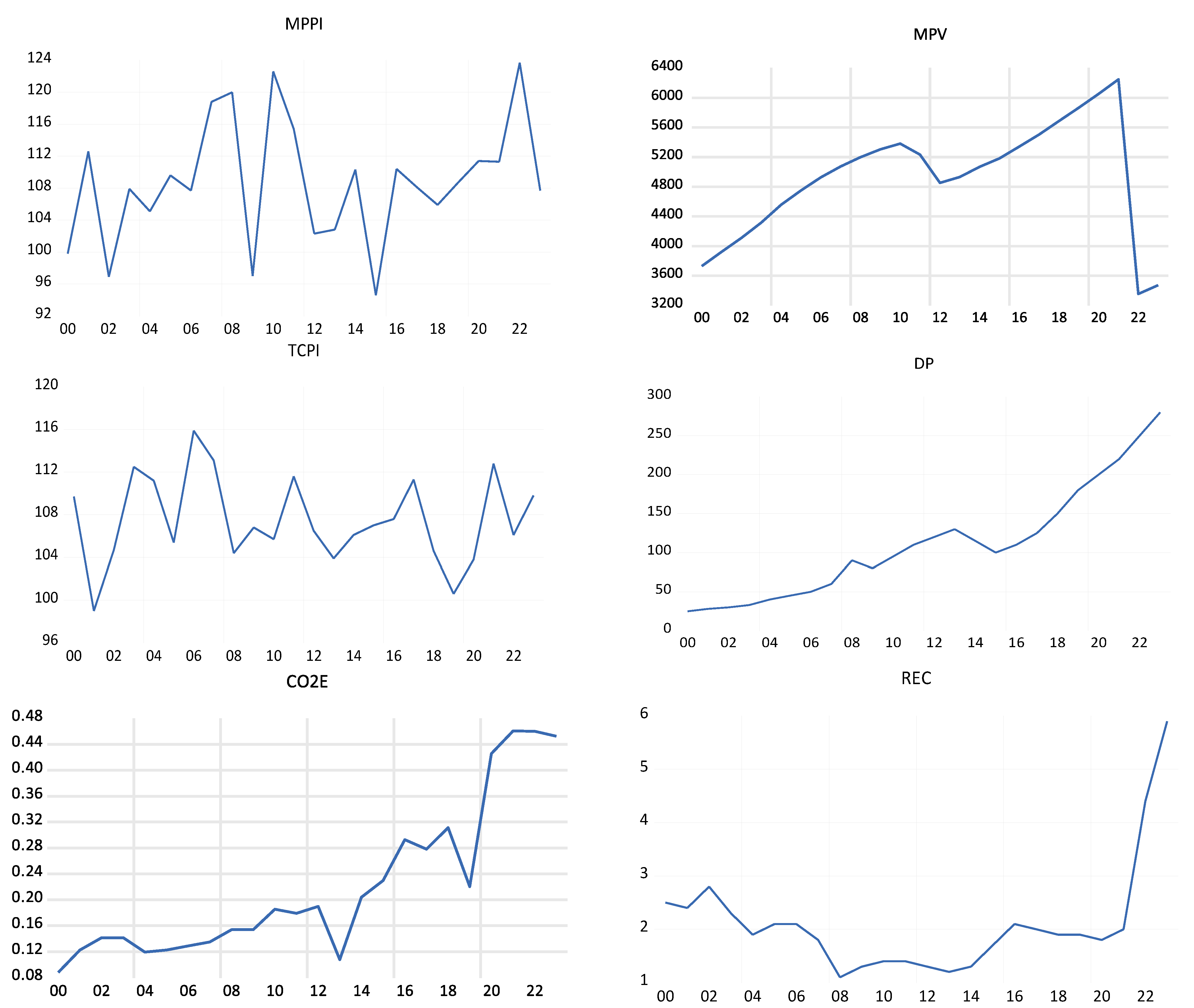
Figure 1. Evolution of all variables for Kazakhstan (2000–2023).
Logistics 10 00121 g001
Figure 2. CUSUM and CUSUMSQ tests.
Logistics 10 00121 g002
Table 1. Model Variables and Sources.
VariablesDefinitionsSources
MPPIMilk producer price indexBureau of National Statistics, Agency for Strategic Planning and Reforms of the Republic of Kazakhstan
MPVMilk production volume, thousand tonnesBureau of National Statistics, Agency for Strategic Planning and Reforms of the Republic of Kazakhstan
TCPITransport consumer price indexBureau of National Statistics, Agency for Strategic Planning and Reforms of the Republic of Kazakhstan
DPDiesel price (tg/L)Globalpetrolprices.com
CO2ECO2 emissions from agriculture (including livestock), MtWorld Development Indicators (WDI) (2025)
RECRenewable energy consumption (% of total energy consumption)World Development Indicators (WDI) (2025)
Table 2. Values of descriptive statistics of the displayed series.
ValuesMPPIMPVTCPIDPCO2EREC
Mean108.7754918.950107.504111.0830.2212.108
Median108.4005070.550106.650105.0000.1821.900
Maximum123.7006247.200115.900280.0000.4615.900
Minimum94.6003354.60099.00025.0000.0881.100
Std. Dev.7.751775.4224.14871.9450.1201.057
Skewness0.128−0.4490.0600.7891.0322.359
Kurtosis2.5592.5182.4842.8182.7348.652
Jarque–Bera0.2601.0410.2812.5254.33254.217
Probability0.8780.5940.8690.2830.1150.000
Sum2610.600118,054.802580.1002666.0005.30550.600
Sum Sq. Dev.1381.90513,829,434.000395.770119,049.8000.32925.698
Table 3. ADF unit root tests.
VariablesInterceptTrend and InterceptNone
LevelFirst Diff.Order of IntegrationLevelFirst Diff.Order of IntegrationLevelFirst Diff.Order of Integration
MPPI−5.48 ***
(0.000)
−7.02 ***
(0.000)
I(0)−5.45 ***
(0.001)
−6.78 ***
(0.000)
I(0)0.650
(0.849)
−7.07 ***
(0.000)
I(1)
MPV−2.245
(0.197)
−4.70 ***
(0.001)
I(1)−1.357
(0.845)
−5.23 ***
(0.002)
I(1)−0.353
(0.546)
−4.81 ***
(0.000)
I(1)
TCPI−4.36 ***
(0.003)
−6.30 ***
(0.000)
I(0)−4.24 **
(0.015)
−6.13 ***
(0.000)
I(0)−0.397
(0.789)
−6.42 ***
(0.000)
I(1)
DP2.523
(0.999)
−2.632
(0.102)
>I(1)0.171
(0.996)
−3.237
(0.103)
>I(1)−1.005
(0.273)
−1.652 *
(0.092)
I(1)
LOGDP−0.787
(0.804)
−4.24 ***
(0.004)
I(1)−1.729
(0.705)
−4.156 **
(0.018)
I(1)4.104
(0.999)
−2.70 ***
(0.009)
I(1)
CO2E4.248
(1.000)
0.055
(0.952)
>I(1)1.658
(1.000)
−1.861
(0.630)
>I(1)2.955
(0.998)
0.971
(0.904)
>I(1)
LOGCO2E1.959
(1.000)
−6.95 ***
(0.000)
I(1)−3.41 *
(0.074)
−4.50 **
(0.011)
I(0)−1.684 *
(0.087)
−6.50 ***
(0.000)
I(0)
REC1.367
(0.998)
−2.109
(0.23)
>I(1)1.467
(0.999)
−2.860
(0.193)
>I(1)0.742
(0.868)
−2.010 **
(0.045)
I(1)
LOGREC−0.021
(0.947)
−3.21 **
(0.033)
I(1)0.044
(0.994)
−3.908 **
(0.029)
I(1)0.662
(0.852)
−3.206 **
(0.003)
I(1)
Notes: *, **, *** denote statistically significant at the 10%, 5%, and 1% levels, respectively. p-value is inside brackets.
Table 4. Selection order criteria.
ARDL(1, 1, 1, 0, 1, 0)
LagLogLLRFPEAICSCHQ
0−0.245684NA1.73 × 10−50.3859710.5843430.432702
172.82240112.9234 *9.97 × 10−8 *−4.802036 *−3.810180 *−4.568385 *
283.4167112.520551.93 × 10−7−4.310610−2.525268−3.890037
Notes: * denote statistically significant at the 10% level. p-value is inside brackets.
Table 5. Results of the cointegration test.
ModelF StatisticsSignif.Critical BoundsDecision
I(0)I(1)
ARDL(1, 1, 1, 0, 1, 0)19.18721 ***10%1.812.93Cointegration
5%2.143.34
2.5%2.443.71
1%2.824.21
Critical bounds are reported at the 1% (***) level of significance.
Table 6. Results of ARDL(1, 1, 1, 0, 1, 0) estimation ΔLOG(MPPI) (2000–2023).
Long Run Short Run
Variable Coefficient t-Statistic Variable Coefficient t-Statistic
LOG(DP)0.096282 ***3.587773CointEq(−1) *−1.246150−12.49955
LOG(CO2E)−0.178830 ***−3.828803LOG(MPPI(−1))−1.246150 ***−9.491030
LOG(REC)0.103141 **2.596667LOG(DP(−1))0.119982 ***3.342298
LOG(MPV)0.171863 *2.123920LOG(CO2E(−1))−0.222849 ***−3.755185
LOG(TCPI)0.510803 ***3.192311LOG(REC)0.128530 *2.615056
LOG(MPV(−1))0.214167 **2.190090
LOG(TCPI)0.636537 **2.820620
ΔLOG(DP)0.553717 ***6.094089
ΔLOG(CO2E)0.0039870.086303
ΔLOG(MPV)−0.085795−0.910691
(1) Coefficients are statistically significant at *** 1%, ** 5%, * 10% level of significance, in parentheses (t-values); (2) Operator D represents the differencing operation.
Table 7. Short-run diagnostics.
Model—ARDL(1, 1, 1, 0, 1, 0)
TestF-Statisticsp-ValueConclusion
Serial correlation LM0.6711510.5293No Serial Correlation
Heteroskedasticity0.4059800.9101No Heteroskedasticity
Jarque–Bera0.08440.9586Normality Exists
Table 8. VIF multicollinearity test results.
Model–ARDL(1, 1, 1, 0, 1, 0)
VariableVariable VarianceUncentered VIFCentered VIF
MPV2.61 × 10−5223.30115.194189
TCPI0.198473793.95961.131253
DP0.00340520.363295.838772
CO2E1597.16334.527577.559951
REC19.1710136.549637.095215
C2510.955867.8919NA
Table 9. Granger causality test.
Null Hypothesis
VariableVariable VarianceUncentered VIF
LOG(DP) does not Granger cause LOG(MPPI)1.8426000.3980
LOG(CO2E) does not Granger cause LOG(MPPI)2.7377360.2544
LOG(REC) does not Granger cause LOG(MPPI)0.7671550.6814
LOG(MPV) does not Granger cause LOG(MPPI)10.031670.0066
LOG(TCPI) does not Granger cause LOG(MPPI)0.2634750.8766
All do not Granger cause LOG(MPPI)20.281390.0267
Disclaimer/Publisher’s Note: The statements, opinions and data contained in all publications are solely those of the individual author(s) and contributor(s) and not of MDPI and/or the editor(s). MDPI and/or the editor(s) disclaim responsibility for any injury to people or property resulting from any ideas, methods, instructions or products referred to in the content.