Article

Dynamic Resource-Capability View, Agility, and Resilience in Supply Chain: An Organizational Strategy Perspective


1
College of Business, Liwa University, Abu Dhabi P.O. Box 41009, United Arab Emirates
2
OB and HR Area, IMI Delhi, New Delhi 110016, India
*
Author to whom correspondence should be addressed.
Logistics 2026, 10(5), 112; https://doi.org/10.3390/logistics10050112
Submission received: 13 March 2026 / Revised: 23 April 2026 / Accepted: 6 May 2026 / Published: 12 May 2026

Abstract

Background: Research on what promotes agility and resilience in the supply chain from an organizational strategy perspective is limited. This paper profiles the factors that can enable supply chain agility and resilience, with a special emphasis on organizational strategy. Method: Using an exploratory approach, the study first identifies the enablers of supply chain agility and resilience and then applies Fuzzy Total Interpretive Structural Modeling (Fuzzy TISM) to rank them. Data were collected from experts using a literature-derived knowledge base. Results: The findings reveal key resource and knowledge-based enablers (Integration, both internal and external; Knowledge Management; Culture for Flexibility, Risk Management, Innovation, Organizational Ambidexterity, Absorptive Capacity, and Collaborative Communication) that strengthen resilience and agility, offering insights into mitigating disruptions caused by macro- and micro-level factors and global interdependencies. Conclusions: The study contributes by exploring the enablers of supply chain agility and resilience through an organizational strategy lens. By applying a rent-yielding mechanism grounded in resource and dynamic capability theories, the study advances theoretical maturity in this domain from an emerging-country context.

1. Introduction

The contemporary business environment has remained dynamic and uncertain, posing unprecedented challenges to organizational functions, particularly in supply chain management [1,2]. Such challenges include demand volatility, inventory mismatch, skill gaps, multi-tier complexity, logistics cost pressure, etc. [3]. These challenges often disrupt SCM, compelling firms to respond quickly and effectively [4]. In today’s world, supply chains serve as the lifeline of businesses and play a vital role in delivering value to customers, communities, and societies. However, this critical dependence has also exposed supply chains to numerous vulnerabilities.
SC agility is characterized by capabilities such as rapidly changing direction, accelerating operations, scanning and anticipating environmental changes, empowering customers, adjusting tactics and operations, and integrating processes within and across firms [5,6,7]. SC resilience encompasses the ability to withstand and survive disruptions, recover to the original state after disruptions, accelerate operations, adjust tactics and processes, and maintain environmental scanning [8]. It is apparent that SC agility is primarily about the speed of change, and SC resilience is about recovery from shock. However, both are termed as reconfiguring capabilities (Sensing, Seizing, and Reconfiguring) [9]. In a highly disruptive business environment, firms need to integrate SC agility and resilience to achieve supply chain performance, as adapting to uncertainties (agility) and recovering from them (resilience) must be well-integrated within the supply chain [9]. The link between SCA&R and firm performance has been well-established across multiple dimensions, including export performance [9,10,11], financial outcomes, functional integration, overall business performance, environmental benefits, and customer satisfaction [5,11,12,13,14]. Given their critical role in enhancing firm performance, scholars have devoted significant effort to identifying factors that promote agility and resilience. However, while existing research has examined operational and behavioral antecedents [2,15,16,17], the organizational or strategic perspective remains underexplored in identifying enablers of SCA&R [12,18].
The strategic orientation of a firm is the guiding direction that shapes its behavior to achieve goals through shared values and beliefs. This orientation enables firms to interact with and respond effectively to market dynamism by aligning strategies accordingly. Recently, only a few studies have attempted to bridge the gap between the supply chain agility and resilience (SCA&R) literature and the strategic orientation literature [5,8,19,20,21,22,23]. These studies set the foundation for extending research by incorporating the organization’s strategic orientation perspective into SCA&R literature. For instance, Gölgeci and Ponomarov [12] emphasized that future research should address the following broad question: “How do firms leverage their innovativeness to overcome adversities and challenges in turbulent environments?” [12].
This research builds on the principles of the dynamic resource-capability perspective, and the implicit notion that fostering firm innovativeness is central to our objectives. Similarly, Zhu and Gao [23] examined a firm’s learning orientation. They suggested that future studies should explore other orientations, particularly strategic ones, and investigate the interplay among these orientations and their roles in promoting SCA&R [23]. These recommendations provide strong motivation to examine the enablers of SCA&R through the lens of dynamic resources and capabilities. Furthermore, recent systematic reviews [24,25] of 60 articles suggest that further investigation is required into the selection and implementation of appropriate strategies to improve supply chain resilience. Additional shortcomings in the current knowledge base include a lack of findings across economic contexts, reliance on cross-sectional designs, and a limited scope for developing a comprehensive understanding of how to effectively facilitate SCA&R [25,26,27].
Considering these inconsistencies in the literature, we aim first to identify and second to rank the enablers of SCA&R from an organizational strategy perspective. To achieve these objectives, we build on the dynamic resource-capability view and contribute to existing SCA&R research and practice in multiple ways. The proposed integration of the resource-based view (RBV) and dynamic capability (DC) perspectives explains how dynamic capabilities facilitate SCA&R. This theoretical foundation enables us to identify resource- and capability-based enablers, refine them through expert consultation, and finally rank them using Fuzzy Total Interpretive Structural Modeling (Fuzzy TISM). This research addresses critical gaps by emphasizing strategic orientation and dynamic capabilities as key drivers of supply chain agility and resilience.
The theoretical contribution of this study is its addition to the relevance of RBV by supporting the view that a specific, outcome-oriented resource architecture is relevant. This would support the contingent RBV perspective. Second, this study seeks to add to the research on the RBV-DC capability Blackbox by proposing a hierarchical, recursive path relationship between lower-order resources and higher-order dynamic capabilities. Finally, the study outlines a preliminary basis for quantitatively examining sensing, seizing, and reconfiguration. Although the present paper is exploratory in approach, it adds to the literature by offering the insights noted above with evidence. This would point to potential avenues for future research to further investigate and refine these capabilities in the context of SCA&R.

2. Literature Review

2.1. Dynamic Resource-Capability Based View

The dynamic resource-capability perspective explains how firms can achieve competitive advantage [28]. This perspective has become a popular rent-yielding mechanism in contemporary management research and addresses the question of what causes firm performance variance. The dynamic resource-capability perspective explains how firms adapt and renew resources to achieve performance variance in the current dynamic business environment. This perspective suggests an interplay between a firm’s capacity to respond to a changing business environment by reconfiguring activities, competencies, and routines and the creation of resource heterogeneity to sustain competitive advantage [28]. This perspective is meta-theoretical, an extension of the resource-based view and the dynamic capability view. It integrates the assumptions of these two frameworks, i.e., resource heterogeneity and firm capabilities [29]. The literature is full of evidence that firms with strong dynamic capabilities outperform their competitors through adaptation and strategic renewal [30]. This evidence supports the assumption that dynamic capabilities complement the static resource-based view and create resource heterogeneity through sensing, seizing, and reconfiguration [31]. A dynamic capability may be understood as an organizational capability to mitigate environmental uncertainties and leverage these volatilities by repurposing resources [31]. Supply chain agility and resilience (SCA&R) is considered a type of dynamic capability, positively linked to supply chain performance [9]. The next section of the paper discusses the enablers of SCA&R.

2.2. SCA&R

We reviewed the relevant literature on supply chain agility and resilience to identify resource- and dynamic capability-based enablers. We searched the Scopus database using the terms “supply chain agility” and “supply chain resilience in the business management and accounting subject category. We limited this to journal publication, articles, and review papers. After this, we reviewed the keywords of the retrieved papers and limited our search to those that included dynamic capability and the resource-based view perspective. The final set of 60 papers was manually screened to identify a list of enablers (resource and capability-based) with descriptions. This list was shared with experts from both industry and academia, who were asked to rank the variables based on their potential to promote SC agility and resilience. After receiving feedback, the list was refined and used for data collection. The descriptions of the retained enablers are presented below.
Resource Integration (internal and external): Integrating resources facilitates effective deployment and utilization across functions [32,33]. Internal integration ensures resource leveraging through proper tracking, monitoring, and synchronized decision making across supply chain activities [12,33]. Internal integration facilitates cross-functional coordination [34], reduces internal friction, and leads to quick detection and resolution of disruptions. Similarly, external integration with supply chain partners across SC activities enhances SCA&R [33]. External integration promotes coordination and streamlining of firm and partner resources [35], thereby strengthening SC agility and resilience through enhanced operational visibility and reconfigurability [36]. Integration, both internal and external, enables the sharing of information and resources and adds to the SCA&R.
Knowledge Management: Firm-specific knowledge is critical for sustainability; its creation, acquisition, sharing, storage, and application promote SCA&R [37,38]. The knowledge-based view and dynamic capability view has established that knowledge management improves risk management, promotes collaborative innovation, supports digital transformation, and enables swift responses to supply chain disruptions [39,40,41]. In addition to the above-mentioned benefits, knowledge management is an important antecedent of other dynamic capabilities, as it enables firms to develop sensing, seizing, and transforming capabilities [2]. This discussion establishes knowledge management as an important enabler of SCA&R.
Culture for Flexibility, Risk Management, and Innovation: Shared workplace values influence desired outcomes [42]. A culture that embraces flexibility, risk management, and innovation helps firms mitigate environmental uncertainties [43] and adapt SC activities to them [37]. An organizational culture that appreciates flexibility is considered a foundational driver of a firm’s capacity to respond to supply chain disruptions [11]. The resource orchestration view supports this assumption [35]. Similarly, risk management culture is positioned as a provocative enabler of SCA&R through informed, rapid responses [44]. Likewise, innovation-oriented culture is a strong predictor of SCA&R. Innovation-oriented culture supports continuous experimentation and, through this, promotes the higher-order firm capabilities that further drive SCA&R [45,46]. Thus, a culture that characterizes flexibility, risk management, and innovation will promote SCA&R.
Organizational Ambidexterity: Organizational ambidexterity is defined as the ability to explore and exploit [46,47]. Ambidextrous firms can leverage existing resources and create new ones to enhance SC responsiveness during disruptions [48,49]. The exploitation aspect helps a firm strengthen operational efficiency by refining processes and managing redundancies [26]. In contrast, the exploration aspect leads to adaptive reconfiguration in the supply chain [50]. Organizational ambidexterity is a type of dynamic capability. It enhances the SCA&R through anticipation (of risks, uncertainties, and threats), response (process efficiency and the management of redundancies), recovery (repurposing capabilities), and adaptation (reconfiguration of supply chain architecture) [51,52].
Absorptive Capacity: Absorptive capacity enables firms to identify, assimilate, and apply knowledge across operations, thereby improving adaptability to disruptions and emerging as a strong enabler of SCA&R [53]. The knowledge base view postulates absorptive capacity as a dynamic capability that promotes resilience through learning and adaptation [54]. The four dimensions of absorptive capacity enable an organization to acquire, assimilate, transform, and exploit external knowledge [55]. It subsequently strengthens anticipation, response, and opportunity exploitation, boosting SC agility and resilience [6,56,57,58].
Collaborative Communication: Collaborative communication fosters cooperation among partners, facilitates resource exchange, and mitigates the impact of environmental dynamism and disruptions [59]. Collaborative communication refers to “the frequency, direction, mode, and influence strategy of contacting and message transmission between collaborative partners” ([60], p. 162). Collaborative communication is a significant predictor of uncertainty management and contributes to SCA&R by enhancing flexibility and responsiveness [61]. Effective information sharing enhances SC visibility and early detection of risks and threats, and it also promotes coordination, thereby enabling rapid response and recovery. This argument posits that collaborative communication is a strong predictor of SCA&R.

3. Research Design and Methods

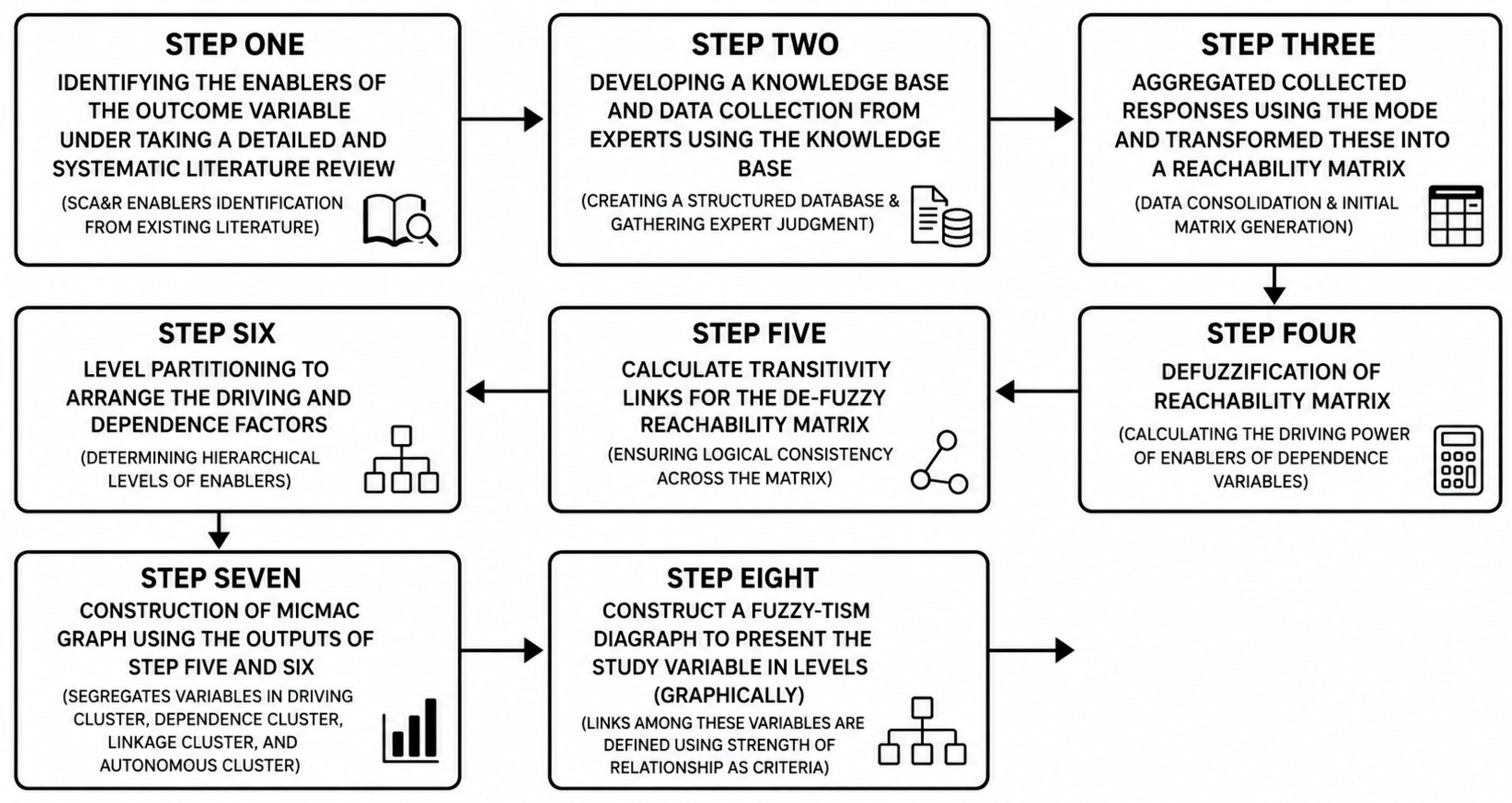
Since our study questions are exploratory, an exploratory research design is appropriate for the present study. Thus, we sought to answer the study questions using the Fuzzy-TISM (Fuzzy Total Interpretive Structural Modeling) methodology. Fuzzy-TISM is a Multi-Criteria Decision-Making (MCDM) method widely used in business management research, particularly for problems with multiple, often conflicting, criteria. Fuzzy-TISM is an extension of fuzzy set theory used to develop hierarchies among study factors [62,63]. Fuzzy TISM is an eight-step process and is described in Figure 1.

3.1. Sample and Data Collection

Expert responses (people working in the supply chain domain) were recorded in a knowledge base. The guide for selecting respondents included eligibility criteria for expertise in the domain. A survey link was shared with participants via email and on other social media platforms, including LinkedIn and Facebook.
After screening, 12 experts working at middle- to senior-level positions in the supply chain area were selected. Interestingly, the responses are dominated by experts from the automobile manufacturing sector (almost 90 percent). Almost 80 percent of the respondents possess a bachelor’s degree in mechanical or industrial engineering.

3.2. Study Measures

Data were collected using a knowledge base consisting of forty-two paired statements. Sample items include the following: “Does integration, both internal and external, influence knowledge management?” and “Does organizational ambidexterity influence supply chain agility and resilience?” The experts were asked to choose “yes” or “no” for each statement and to indicate the strength of the relationship for each pair on a scale from 0 to 1:
0 = No influence (No)
0.1 = Very low influence/low strength of relationship (VL)
0.2 = Slightly low (SL)
0.3 = Low influence (L)
0.4 = Below medium (BM)
0.5 = Medium influence (ML)
0.6 = Above medium (AM)
0.7 = Strong influence (H)
0.8 = Very strong influence (VSH)
0.9 = Remarkably strong influence (VH)
1.0 = Full influence (F)

4. Results

4.1. Fuzzy TISM Analysis

Experts’ responses were analyzed using Fuzzy-TISM methods, and the findings are detailed below in a stepwise manner.
Initially, a list of enablers was developed from a literature review, and, in consultation with experts, six were selected for further analysis. These enablers are Integration; Knowledge management; Culture for flexibility, risk management and innovation; Organizational ambidexterity; Absorptive capacity; and Collaborative communication. In the next step, a knowledge base was created using these six variables, and experts were asked to rate the level of influence between them (pairwise) on a 10-point scale, as detailed in the Methods section. After this, a reachability matrix (Table 1) was developed based on the experts’ scores. Table 1 shows that knowledge management, absorptive capacity, and organizational ambidexterity have a strong influence on SCA&R, whereas integration, culture, and collaborative communication have a moderate influence.
Next, using the reachability matrix, a de-Fuzzy reachability matrix was developed (Table 2). The de-Fuzzy reachability matrix indicates the degree of relationship between the enablers and the dependent variable, i.e., SCA&R. A threshold value of 0.5 was applied to transform the Fuzzy reachability matrix (Table 1) into the binary de-Fuzzy matrix (Table 2). A score less than 0.5 (medium influence was transformed into 0, and scores ≥ 0.5 are converted to 1) helps reduce noise caused by weak structural drivers and, later, can lead to overcomplexity in the diagraph [4,5].
Next, using the de-Fuzzy reachability matrix, the existence of transitive links between enablers and the dependence variables was checked (Table 3). It was found that collaborative communication has a transitive link. In Step 6, study variables were arranged into various levels or hierarchies using a level partitioning approach (from Table 4, Table 5 and Table 6).
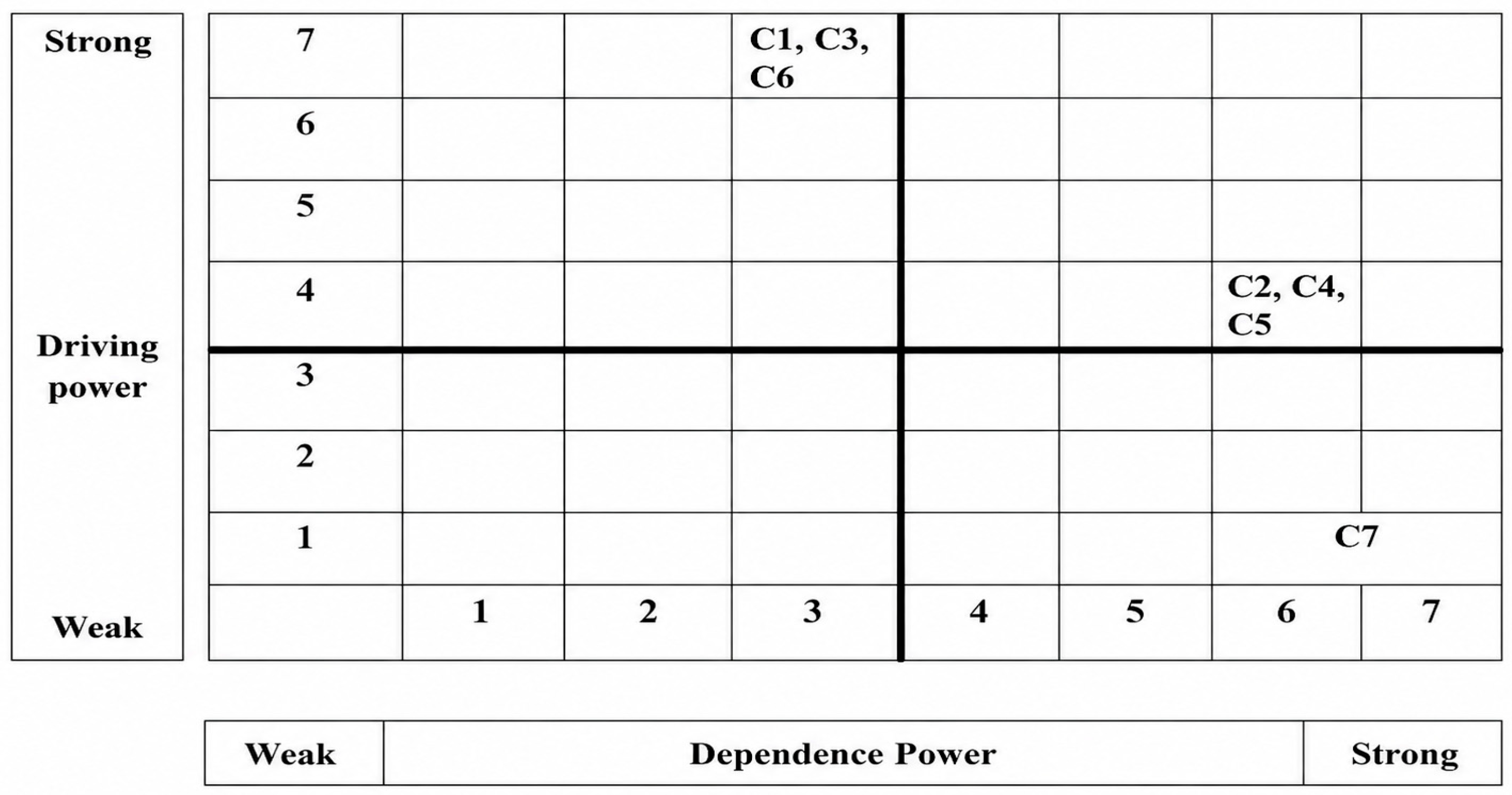
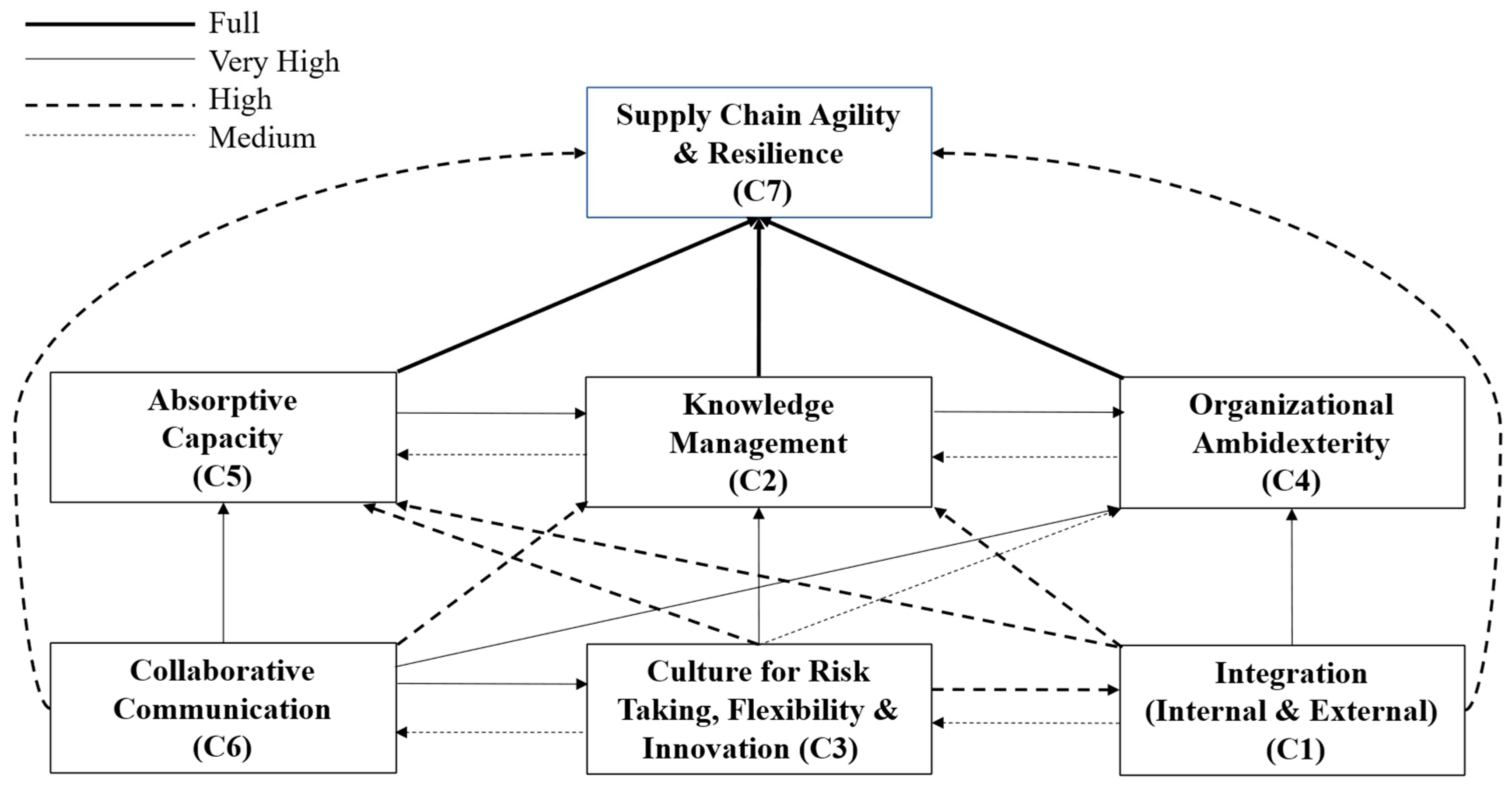
In Step 7, a MICMAC (Matrix of Cross-Impact Multiplications Applied to Classification) graph was developed using the reachability scores derived from Table 3, Table 4, Table 5, Table 6 and Table 7. Based on these tables and corresponding scores, the study variables were categorized into three clusters: driving, dependent, and linkage. The MICMAC analysis (Figure 2) indicates that Integration, Collaborative Communication, and Culture for Risk-Taking, Flexibility, and Innovation exhibit strong driving power and weak dependence power. Conversely, Supply Chain Agility and Resilience (SCA&R) demonstrates weak driving power but strong dependence power. Furthermore, the variables Absorptive Capacity, Knowledge Management, and Organizational Ambidexterity possess both strong driving and strong dependence power, positioning them as linkage variables. The analysis also confirms the absence of autonomous variables, characterized by weak driving and low dependence power. Finally, in the concluding step of the Fuzzy-TISM analysis, a hierarchical diagram (Figure 3) was constructed to illustrate the arrangement of the study variables across levels and depict the strength of their interrelationships. The hierarchical diagram exhibits four types of relationship strength (i.e., full, very high, high, and medium) among the drivers, linkage, and dependent variables. Full strength means the variables have almost a unitary relationship with each other. As is evident, the higher-order dynamic capabilities have a strong relationship with SCA&R, thus establishing them as important enablers of SCA&R.
This analysis identified study variables as enablers of SCA&R and ranked them as driving, linkage, and dependence variables.

4.2. Sensitivity Analysis

We also carried out a sensitivity analysis by changing the binary transformation threshold to 0.3 (Table 7) and 0.7 (Table 8), respectively. The sensitivity analysis suggests that the original diagram is parsimonious when generated with the threshold value 0.5. In other words, the diagraph generated with a 0.5 threshold is complex enough to capture the essential structural relationships while remaining interpretable and free of noise. Table 7 shows that if the threshold is reduced to 0.3 (where ≥0.3 = 1 and <0.3 = 0), the model would be more saturated, with variable C7 at level 1 and all other variables having a large reachability set.
Similarly, Table 8 shows that when the alpha value is set to 0.7, C4 (Organizational Ambidexterity) would behave as an outcome variable. However, both tables suggest that the foundational drivers, i.e., Integration (C1), Culture (C3), and Collaborative Communication (C6), would remain drivers consistently. This establishes the validity of our analysis.

5. Discussion

This paper sets out two primary objectives: firstly to identify the key enablers of supply chain agility and resilience (SCA&R) from an organizational strategic perspective and secondly to rank these enablers based on their relative strength of influence on SCA&R. Initially, we conducted a review of SCA&R research and incorporated the strategic orientation perspective to extend the scope of SCA&R research and compiled a refined set of enablers grounded in the dynamic resource and capability framework.
Following the literature review, we adopted the strategic orientation and dynamic capabilities research stream to identify and rank the enablers of supply chain agility and resilience (SCA&R). In recent years, scholars have increasingly sought to expand the antecedent portfolio of SCA&R by incorporating the firm’s strategic orientation perspective [22,23,64]. We first identified a list of enablers and subsequently refined it through discussions with subject-matter experts. Two key criteria guided this refinement: first, the enablers must align with the firm’s strategic orientation, and second, they should fall within the scope of the dynamic resource and capability view.
The final list comprises six antecedents considered highly relevant and expected to significantly influence SCA&R: Integration (both internal and external); Knowledge Management; Culture for Flexibility, Risk Management, and Innovation; Organizational Ambidexterity; Absorptive Capacity; and Collaborative Communication. Our exploratory analysis indicates that these enablers exert varying degrees of influence on SCA&R.
Using the Fuzzy-TISM methodology [63], we classified them into two categories: driving variables (i.e., Integration of Resources, both internal and external; Culture for Flexibility, Risk Management and Innovation; and Collaborative Communication) and linkage variables (i.e., Knowledge Management, Organizational Ambidexterity, and Absorptive Capacity).
Driving variables occupy the lowest level in the hierarchy (Figure 3) and are critical for shaping dependent variables, namely SCA&R. Enablers, namely Integration of Resources [33,35]; Culture for Flexibility, Risk Management, and Innovation [43,65]; and Collaborative Communication [27], reflect the firm’s strategic orientation. For example, the enabler Integration of Resources, both internal and external (C1), is a root driver, suggesting that integration of resources is a prerequisite for the development of dynamic capability. Similarly, our analysis suggests that Collaborative Communication (C6) is not an operational tool but a strategic resource that may contribute to the sensing phase of dynamic capabilities.
The linkage variables, namely Knowledge Management (C2), Organizational Ambidexterity (C4), and Absorptive Capacity (C5), are identified as dynamic capability bridge variables. These variables have high driving and dependence power and would act as seizing variables, providing a reconfiguration mechanism. In other words, these variables draw strategic input from the drivers and transform it into actionable outcomes, i.e., SCA&R. These are classic dynamic capabilities of the firm; however, they cannot yield significant outcomes in the absence of driving variables.
Finally, the present analysis identifies Supply Chain Agility and Resilience (C7) as a dependent variable with high dependence power and low driving power. Our model explains that a firm may not be able to achieve higher-order dynamic capabilities unless these are based on root variables (resources) through transformational capabilities.

5.1. Theoretical Implications

This study provides theoretical implications for RBV and the dynamic capability perspective. First, our findings posit RBV not as a traditional rent-yielding mechanism but rather as a specific, outcome-oriented resource architecture, i.e., a supply chain agility and resilience-oriented resource architecture in the present case. This adds to the RBV perspective while establishing that a firm could achieve desirable outcomes through cultivating and combining strategic resources. This finding supports the dialogue on the legitimacy of the contingent RBV perspective [9].
Second, our findings suggest that supply chain agility and resilience-oriented resource architecture (a unique combination of factors such as Integration of Resources; Culture for Flexibility, Risk Management, and Innovation; and Collaborative Communication) provides a foundation for higher-order capabilities such as organizational ambidexterity, absorptive capacity, and knowledge management capabilities, and these dynamic capabilities serve as critical enablers for achieving superior supply chain agility and resilience. These findings also add support to the recursive linkage between lower-order resources and higher-order capabilities. Future research could test this recursiveness to unpack the RBV-DC Blackbox [66].
Third, the present analysis configures a model of SCA&R and yields testable relationships (mediation, moderation, etc.) between these variables. These relationships could be tested using quantitative models to establish the sensing, seizing, and reconfiguration framework [67,68].

5.2. Managerial Implications

By adding to the list of enablers of SCA&R, our research provides managers and practitioners with ways to neutralize the impact of environmental dynamism on supply chains. The supply chain industry is growing at a double-digit rate; however, factors such as digitization, changing business models, the emergence of new industries and sectors, changing demographics, and shifting of wealth to newer clusters have disrupted supply chains, making them more vulnerable. Thus, there is a need to rethink the way SC activities should be redesigned.
For example, future supply chains are expected to be faster, more flexible, more granular, more accurate, and more efficient [69]. SCA&R has met all the requirements mentioned above; thus, understanding what promotes SCA&R would help organizations design interventions to promote it.
Findings suggest that dynamic firm capabilities, such as knowledge management, absorptive capacity, and organizational ambidexterity, are strongly linked with SCA&R. However, to translate these higher-order capabilities into higher SCA&R, firms need to possess certain driving variables. For example, cultivating a culture that values flexibility, risk-taking, and innovation will promote higher-order firm capabilities. Similarly, collaborative communication, comprising shared decision making, real-time information sharing, risk-sharing contracts, etc., will complement these capabilities. Likewise, integrating internal and external resources will boost the firm’s capabilities, such as absorptive capacity and organizational ambidexterity. Based on these findings, we suggest that senior management should design interventions and initiatives to promote these resources, thereby augmenting higher-order firm capabilities for SCA&R.

6. Conclusions

This paper advances the research on supply chain agility and resilience (SCA&R) through the lens of an organization’s strategic orientation. Building on this foundation, our study aimed to identify and rank enablers of SCA&R by organizing them into hierarchical levels based on their degree of influence. The literature review yielded six critical enablers. We then developed a structured knowledge base to collect expert opinions, and the resulting data were analyzed using the Fuzzy-TISM framework. This analysis identified and ranked six enablers: Integration (both internal and external); Knowledge Management; Culture for Flexibility, Risk Management, and Innovation; Organizational Ambidexterity; Absorptive Capacity; and Collaborative Communication.
The findings of this study carry significant implications for both research and practice. However, certain limitations must be acknowledged. First, the research is exploratory, and additional empirical evidence is required to reinforce the argument that an organization’s strategic orientation plays a pivotal role in enhancing SCA&R. Second, the study focuses exclusively on the dynamic resource and capability perspective; future research should incorporate other rent-yielding frameworks to broaden theoretical understanding. Third, we identified only six enablers; expanding this portfolio through similar studies will be essential for developing a more comprehensive set of enablers. We also acknowledge the automotive sector’s dominance in the sample; these experts were selected for their extensive experience in large-scale logistics. Findings from this study may be generalized in the large-scale logistics context with caution. Future inquiries may be conducted in a more diversified sample.

Author Contributions

Conceptualization, S.R. and U.B.; Methodology, U.B.; Validation, S.R. and U.B.; Formal analysis, S.R.; Investigation, S.R. and U.B.; Resources, S.R.; Data curation, S.R.; Writing—original draft, U.B.; Writing—review & editing, S.R. and U.B.; Project administration, S.R. All authors have read and agreed to the published version of the manuscript.

Funding

This research received no external funding.

Institutional Review Board Statement

Ethical review and approval were waived for this study by the Institutional Committee due to legal regulations (ICMR guidelines), as the research does not involve or seek any personal data and instead seeks professional strategies to understand the enablers of a business phenomenon.

Informed Consent Statement

Informed consent was obtained from all subjects involved in the study.

Data Availability Statement

The original contributions presented in this study are included in the article. Further inquiries can be directed to the corresponding author.

Conflicts of Interest

The authors declare no conflict of interest.

References

  1. Naughton, S.; Golgeci, I.; Arslan, A. Supply chain agility as an acclimatisation process to environmental uncertainty and organisational vulnerabilities: Insights from British SMEs. Prod. Plan. Control 2020, 31, 1164–1177. [Google Scholar] [CrossRef]
  2. Zighan, S.; Dwaikat, N.Y.; Alkalha, Z.; Abualqumboz, M. Knowledge management for supply chain resilience in pharmaceutical industry: Evidence from the Middle East region. Int. J. Logist. Manag. 2024, 35, 1142–1167. [Google Scholar] [CrossRef]
  3. Santhi, A.R.; Muthuswamy, P. Pandemic, War, Natural Calamities, and Sustainability: Industry 4.0 Technologies to Overcome Traditional and Contemporary Supply Chain Challenges. Logistics 2022, 6, 81. [Google Scholar] [CrossRef]
  4. Martinez-Sanchez, A.; Lahoz-Leo, F. Supply chain agility: A mediator for absorptive capacity. Balt. J. Manag. 2018, 13, 264–278. [Google Scholar] [CrossRef]
  5. Gligor, D.; Holcomb, M.; Maloni, M.J.; Davis-Sramek, E. Achieving financial performance in uncertain times: Leveraging supply chain agility. Transp. J. 2019, 58, 247–279. [Google Scholar] [CrossRef]
  6. Goaill, M.M.; Al-Hakimi, M.A. Does absorptive capacity moderate the relationship between entrepreneurial orientation and supply chain resilience? Cogent Bus. Manag. 2021, 8, 1962487. [Google Scholar] [CrossRef]
  7. Pu, G.; Gao, X.; Qiao, J. Impact of supply chain quality management practices on supply chain resilience: A dynamic capability perspective. Bus. Process Manag. J. 2026, 32, 105–126. [Google Scholar] [CrossRef]
  8. Gligor, D.M.; Holcomb, M.C.; Stank, T.P. A multidisciplinary approach to supply chain agility: Conceptualization and scale development. J. Bus. Logist. 2013, 34, 94–108. [Google Scholar] [CrossRef]
  9. Altay, N.; Gunasekaran, A.; Dubey, R.; Childe, S.J. Agility and Resilience as Antecedents of Supply Chain Performance Under Moderating Effects of Organisational Culture Within the Humanitarian Setting: A Dynamic Capability View. Prod. Plan. Control 2018, 29, 1158–1174. [Google Scholar] [CrossRef]
  10. Um, J.; Han, N. Understanding the relationships between global supply chain risk and supply chain resilience: The role of mitigating strategies. Supply Chain Manag. 2020, 26, 240–255. [Google Scholar] [CrossRef]
  11. Yamin, M.A.; Almuteri, S.D.; Bogari, K.J.; Ashi, A.K. The influence of strategic human resource management and artificial intelligence in determining supply chain agility and supply chain resilience. Sustainability 2024, 16, 2688. [Google Scholar] [CrossRef]
  12. Gölgeci, I.; Ponomarov, S.Y. How does firm innovativeness enable supply chain resilience? The moderating role of supply uncertainty and interdependence. Technol. Anal. Strateg. Manag. 2015, 27, 267–282. [Google Scholar] [CrossRef]
  13. Ji, L.; Yuan, C.; Feng, T.; Wang, C. Achieving the environmental profits of green supplier integration: The roles of supply chain resilience and knowledge combination. Sustain. Dev. 2020, 28, 978–989. [Google Scholar] [CrossRef]
  14. Novak, D.C.; Wu, Z.; Dooley, K.J. Whose resilience matters? Addressing issues of scale in supply chain resilience. J. Bus. Logist. 2021, 42, 323–335. [Google Scholar] [CrossRef]
  15. Alsmairat, M.A.; Hussain, S.; AlOqool, A.; Ali, W. Does supply chain resilience mediate the relationship between CRM dimensions and customer satisfaction? FIIB Bus. Rev. 2024. first published online. [Google Scholar] [CrossRef]
  16. Chowdhury, T.M.; Anzum, K.M.T. From Resilience to Flexibility: A Hybrid SEM-ANN Model of AI-Enabled Adaptive Supply Chains. Glob. J. Flex. Syst. Manag. 2026, 27, 123–153. [Google Scholar] [CrossRef]
  17. Yang, Y.; Xu, X. Post-disaster grain supply chain resilience with government aid. Transp. Res. Part E 2015, 76, 139–159. [Google Scholar] [CrossRef]
  18. Ribeiro, J.P.; Barbosa-Povoa, A. Supply Chain Resilience: Definitions and quantitative modeling approaches—A literature review. Comput. Ind. Eng. 2018, 115, 109–122. [Google Scholar] [CrossRef]
  19. Gligor, D.M. The role of demand management in achieving supply chain agility. Supply Chain Manag. 2014, 19, 577–591. [Google Scholar] [CrossRef]
  20. Gligor, D.M.; Holcomb, M.C. Antecedents and consequences of supply chain agility: Establishing the link to firm performance. J. Bus. Logist. 2012, 33, 295–308. [Google Scholar] [CrossRef]
  21. Gligor, D.M.; Holcomb, M.C.; Feizabadi, J. An exploration of the strategic antecedents of firm supply chain agility: The role of a firm’s orientation. Int. J. Prod. Econ. 2016, 179, 24–34. [Google Scholar] [CrossRef]
  22. Gligor, D.; Bozkurt, S.; Gölgeci, I.; Maloni, M.J. Does supply chain agility create customer value and satisfaction for loyal B2B business and B2C end-customers? Int. J. Phys. Distrib. Logist. Manag. 2020, 50, 721–743. [Google Scholar] [CrossRef]
  23. Zhu, M.; Gao, H. The antecedents of supply chain agility and their effect on business performance: An organizational strategy perspective. Oper. Manag. Res. 2021, 14, 166–176. [Google Scholar] [CrossRef]
  24. Mukherjee, S.; Sharma, R.; Panigrahi, R.R.; Shrivastava, A.K. Leveraging Digital Transformation to Enhance Circular Supply Chain Performance: A Systematic Review. FIIB Bus. Rev. 2026. first published online. [Google Scholar] [CrossRef]
  25. Tukamuhabwa, B.R.; Stevenson, M.; Busby, J.; Zorzini, M. Supply chain resilience: Definition, review and theoretical foundations for further study. Int. J. Prod. Res. 2015, 53, 5592–5623. [Google Scholar] [CrossRef]
  26. Iftikhar, A.; Ali, I.; Stevenson, M. The silver lining of supply chain complexity: Building supply chain resilience and robustness through exploitation and exploration. Supply Chain Manag. 2024, 29, 244–259. [Google Scholar] [CrossRef]
  27. Zaman, S.I.; Khan, S.A.; Kusi-Sarpong, S. Investigating the relationship between supply chain finance and supply chain collaborative factors. Benchmarking Int. J. 2024, 31, 1941–1975. [Google Scholar] [CrossRef]
  28. Cruz-Sánchez, O.; Cruz-Cázares, C.; Hernandez-Vivanco, A. Business model innovation from dynamic capabilities perspective: A systematic literature review. J. Bus. Res. 2026, 204, 115835. [Google Scholar] [CrossRef]
  29. Haq, M.Z.U.; Syed, T.A.; Akbar, U.; Aslam, H. Triple-A supply chains: The bridge between supply chain analytics and supply chain resilience. IEEE Trans. Eng. Manag. 2026, 73, 1210–1223. [Google Scholar] [CrossRef]
  30. Ibidunni, A.S.; Agbi, B.D.; Kehinde, B.E. Interacting effects of tacit knowledge and learning orientation in improving firm performance. J. Knowl. Econ. 2023, 14, 2539–2560. [Google Scholar] [CrossRef]
  31. Ho, H.X.; Nguyen, P.D.; Nguyen-Phuong, K.T. Fostering sustainable supply chain performance: A mixed-method approach of the moderated mediation model involving learning orientation, innovation, agility, and environmental complexity. Supply Chain Manag. 2026, 31, 122–142. [Google Scholar] [CrossRef]
  32. Min, H. Blockchain technology for enhancing supply chain resilience. Bus. Horiz. 2019, 62, 35–45. [Google Scholar] [CrossRef]
  33. Wong, C.Y.; Wong, C.W.Y.; Boon-Itt, S. Integrating environmental management into supply chains a systematic literature review and theoretical framework. Int. J. Phys. Distrib. Logist. Manag. 2015, 45, 43–68. [Google Scholar] [CrossRef]
  34. Tarigan, Z.J.H.; Siagian, H.; Jie, F. Impact of internal integration, supply chain partnership, supply chain agility, and supply chain resilience on sustainable advantage. Sustainability 2021, 13, 5460. [Google Scholar] [CrossRef]
  35. Chunsheng, L.; Wong, C.W.Y.; Yang, C.-C.; Shang, K.-C.; Lirn, T.-C. Value of supply chain resilience: Roles of culture, flexibility, and integration. Int. J. Phys. Distrib. Logist. Manag. 2020, 50, 80–100. [Google Scholar] [CrossRef]
  36. Koç, E.; Delibaş, M.B.; Anadol, Y. Environmental uncertainties and competitive advantage: A sequential mediation model of supply chain integration and supply chain agility. Sustainability 2022, 14, 8928. [Google Scholar] [CrossRef]
  37. Braunscheidel, M.J.; Suresh, N.C. The organizational antecedents of a firm’s supply chain agility for risk mitigation and response. J. Oper. Manag. 2009, 27, 119–140. [Google Scholar] [CrossRef]
  38. Zhu, C.Y.; Zhang, D.L. An empirical study on the mechanism of dynamic capacity formation in the supply chain. Sustainability 2022, 14, 15044. [Google Scholar] [CrossRef]
  39. Mukherjee, S.; Nagariya, R.; Mathiyazhagan, K.; Scuotto, V. Linking supply chain resilience with knowledge management for achieving supply chain performance. J. Knowl. Manag. 2024, 28, 971–993. [Google Scholar] [CrossRef]
  40. Pal, T.; Ganguly, K.; Chaudhuri, A. Digitalisation in food supply chains to build resilience from disruptive events: A combined dynamic capabilities and knowledge-based view. Supply Chain Manag. 2024, 29, 1042–1062. [Google Scholar] [CrossRef]
  41. Sabahi, S.; Parast, M.M. Firm innovation and supply chain resilience: A dynamic capability perspective. Int. J. Logist. Res. Appl. 2020, 23, 254–269. [Google Scholar] [CrossRef]
  42. Khazanchi, S.; Lewis, M.W.; Boyer, K.K. Innovation-supportive culture: The impact of organizational values on process innovation. J. Oper. Manag. 2007, 25, 871–884. [Google Scholar] [CrossRef]
  43. Pellathy, D.A.; In, J.; Mollenkopf, D.A.; Stank, T.P. Middle-range theorizing on logistics customer service. Int. J. Phys. Distrib. Logist. Manag. 2018, 48, 2–18. [Google Scholar] [CrossRef]
  44. Siva, K.; Anbanandam, R. Impact of risk management culture on supply chain resilience: An empirical study from the Indian manufacturing industry. Proc. Inst. Mech. Eng. Part O J. Risk Reliab. 2020, 234, 246–259. [Google Scholar]
  45. Alzoubi, H.M.; Alkayid, K.; El Khatib, M.; Al-Nakeeb, A.; Al Harmoodi, S.; Ahmed, G. Harnessing technology innovation and process excellence: Integrating lean six sigma, business process management, and strategic alignment to enhance supply chain agility and organizational performance. J. Proj. Manag. 2026, 11, 347–360. [Google Scholar] [CrossRef]
  46. O’Reilly, C.A., III; Tushman, M.L. Organizational ambidexterity: Past, present, and future. Acad. Manag. Perspect. 2013, 27, 324–338. [Google Scholar] [CrossRef]
  47. Wang, Y.; Yan, F.; Jia, F.; Chen, L. Building supply chain resilience through ambidexterity: An information processing perspective. Int. J. Logist. Res. Appl. 2023, 26, 172–189. [Google Scholar] [CrossRef]
  48. Gu, M.; Yang, L.; Huo, B. The impact of information technology usage on supply chain resilience and performance: An ambidextrous view. Int. J. Prod. Econ. 2021, 232, 107956. [Google Scholar] [CrossRef]
  49. Tuan, L.T. Organizational ambidexterity and supply chain agility: The mediating role of external knowledge sharing and moderating role of competitive intelligence. Int. J. Logist. Res. Appl. 2016, 19, 583–603. [Google Scholar] [CrossRef]
  50. Vega, D.; Arvidsson, A.; Saïah, F. Resilient supply management systems in times of crisis. Int. J. Oper. Prod. Manag. 2023, 43, 70–98. [Google Scholar] [CrossRef]
  51. Lee, S.M.; Rha, J.S. Ambidextrous supply chain as a dynamic capability: Building a resilient supply chain. Manag. Decis. 2016, 54, 2–23. [Google Scholar] [CrossRef]
  52. Ocicka, B.; Mierzejewska, W.; Brzeziński, J. Creating supply chain resilience during and post-COVID-19 outbreak: The organizational ambidexterity perspective. Decision 2022, 49, 129–151. [Google Scholar] [CrossRef]
  53. Volberda, H.; Foss, N.; Lyles, M. Absorbing the concept of absorptive capacity: How to realize its potential in the organization field. Organ. Sci. 2010, 21, 931–951. [Google Scholar] [CrossRef]
  54. Kong, F.; Li, J.; Wang, H. The mechanism of network openness in achieving supply chain resilience: The role of the depth and breadth of digital absorptive capacity. Bus. Process Manag. J. 2025, 1–26. [Google Scholar] [CrossRef]
  55. Roh, J.; Tokar, T.; Swink, M.; Williams, B. Supply chain resilience to low-/high-impact disruptions: The influence of absorptive capacity. Int. J. Logist. Manag. 2022, 33, 214–238. [Google Scholar] [CrossRef]
  56. Chen, C.-J. Developing a model for supply chain agility and innovativeness to enhance firms’ competitive advantage. Manag. Decis. 2019, 57, 1511–1534. [Google Scholar] [CrossRef]
  57. Cheng, J.H.; Lu, K.L. Enhancing effects of supply chain resilience: Insights from trajectory and resource-based perspectives. Supply Chain Manag. 2017, 22, 329–340. [Google Scholar] [CrossRef]
  58. Liu, F.; Song, J.S.; Tong, J.D. Building supply chain resilience through virtual stockpile pooling. Prod. Oper. Manag. 2016, 25, 1745–1762. [Google Scholar] [CrossRef]
  59. Pan, X.; Pan, X.; Song, M.; Guo, R. The influence of green supply chain management on manufacturing enterprise performance: Moderating effect of collaborative communication. Prod. Plan. Control 2020, 31, 245–258. [Google Scholar] [CrossRef]
  60. Nguyen, M.P.; Thai, V.V.; Chan, C.; Lau, K.H.; Nguyen, M.T.N.; Do, H.P.N. The interplay among trust, reciprocity, and commitment factors in facilitating supply chain collaboration: The case of Vietnamese fishery industry. Asia Pac. J. Mark. Logist. 2025, 37, 150–170. [Google Scholar] [CrossRef]
  61. Wu, Y. Blockchain-enabled sustainable supply chain management: A study on the impact of collaboration optimization. Manag. Decis. 2026, 64, 1378–1404. [Google Scholar] [CrossRef]
  62. Bamel, N.; Bamel, U. Big data analytics based enablers of supply chain capabilities and firm competitiveness: A fuzzy-TISM approach. J. Enterp. Inf. Manag. 2021, 34, 559–577. [Google Scholar] [CrossRef]
  63. Bamel, N.; Dhir, S.; Sushil, S. Inter-partner dynamics and joint venture competitiveness: A fuzzy TISM approach. Benchmarking 2019, 26, 97–116. [Google Scholar] [CrossRef]
  64. Golgeci, I.; Bouguerra, A.; Rofcanin, Y. The human impact on the emergence of firm supply chain agility: A multilevel framework. Pers. Rev. 2020, 49, 733–754. [Google Scholar] [CrossRef]
  65. Spieske, A.; Birkel, H. Improving supply chain resilience through industry 4.0: A systematic literature review under the impressions of the COVID-19 pandemic. Comput. Ind. Eng. 2021, 158, 107452. [Google Scholar] [CrossRef]
  66. Sirmon, D.G.; Hitt, M.A.; Ireland, R.D.; Gilbert, B.A. Resource orchestration to create competitive advantage: Breadth, depth, and life cycle effects. J. Manag. 2011, 37, 1390–1412. [Google Scholar] [CrossRef]
  67. Ahmadi, T.; Hesaraki, A.F.; Morsch, J.P. Exploring IT-driven supply chain capabilities and resilience: The roles of supply chain risk management and complexity. Supply Chain Manag. 2025, 30, 50–66. [Google Scholar] [CrossRef]
  68. Pereira, V.; Bamel, U. Extending the resource and knowledge-based view: A critical analysis into its theoretical evolution and future research directions. J. Bus. Res. 2021, 132, 557–570. [Google Scholar] [CrossRef]
  69. McKinsey. Supply Chain 4.0—The Next-Generation Digital Supply Chain. Available online: https://www.mckinsey.com/business-functions/operations/our-insights/supply-chain-40--the-next-generation-digital-supply-chain (accessed on 14 March 2026).
Figure 1. Fuzzy TISM flow.
Logistics 10 00112 g001
Figure 2. MIC-MAC Graph.
Logistics 10 00112 g002
Figure 3. Ordering of the Enablers of SCA&R (Diagraph).
Logistics 10 00112 g003
Table 1. Fuzzy Reachability Matrix.
Name of VariablesC1C2C3C4C5C6C7
Integration
(C1)
10.70.50.90.70.50.5
Knowledge management
(C2)
0.110.30.90.50.31
Culture for flexibility, risk management, and innovation (C3)0.70.910.50.70.50.5
Organizational ambidexterity (C4)00.50.110.50.31
Absorptive capacity
(C5)
0.10.90.30.710.11
Collaborative communication (C6)0.30.70.90.90.910.5
Supply chain agility and resilience (C7)0.100.3000.11
Source: primary data.
Table 2. De-Fuzzy Reachability Matrix.
Name of VariablesC1C2C3C4C5C6C7
Integration
(C1)
1111111
Knowledge management
(C2)
0101101
Culture for flexibility, risk management, and innovation
(C3)
1111111
Organizational ambidexterity (C4)0101101
Absorptive capacity
(C5)
0101101
Collaborative communication (C6)0111111
Supply chain agility and resilience (C7)0000001
Source: primary data.
Table 3. Reachability matrix with Transitivity.
Name of VariablesC1C2C3C4C5C6C7DP
Integration
(C1)
11111117
Knowledge management
(C2)
01011014
Culture for flexibility, risk management, and innovation
(C3)
11111117
Organizational ambidexterity (C4)01011014
Absorptive capacity
(C5)
01011014
Collaborative communication
(C6)
1 *1111117
Supply chain agility and resilience
(C7)
00000011
Dependence3636637
Source: primary data. DP: dependence power; *: transitive enablers.
Table 4. Level partitioning, Iteration 1.
Name of VariablesReachability SetAntecedent SetIntersectionLevel
Integration
(C1)
1, 2, 3, 4, 5, 6, 71, 3, 61, 3, 6
Knowledge management
(C2)
2, 4, 5, 71, 2, 3, 4, 5, 62, 4, 5
Culture for flexibility, risk management, and innovation
(C3)
1, 2, 3, 4, 5, 6, 71, 3, 61, 3, 6
Organizational ambidexterity
(C4)
2, 4, 5, 71, 2, 3, 4, 5, 62, 4, 5
Absorptive capacity
(C5)
2, 4, 5, 71, 2, 3, 4, 5, 62, 4, 5
Collaborative communication
(C6)
1, 2, 3, 4, 5, 6, 71, 3, 61, 3, 6
Supply chain agility and resilience
(C7)
71, 2, 3, 4, 5, 6, 77Level 1
Source: primary data.
Table 5. Level partitioning, Iteration 2.
VariablesReachability SetAntecedent SetIntersectionLevel
Integration
(C1)
1, 2, 3, 4, 5, 61, 3, 61, 3, 6
Knowledge management
(C2)
2, 4, 51, 2, 3, 4, 5, 62, 4, 5Level 2
Culture for flexibility, risk management, and innovation
(C3)
1, 2, 3, 4, 5, 61, 3, 61, 3, 6
Organizational ambidexterity
(C4)
2, 4, 51, 2, 3, 4, 5, 62, 4, 5Level 2
Absorptive capacity
(C5)
2, 4, 51, 2, 3, 4, 5, 62, 4, 5Level 2
Collaborative communication
(C6)
1, 2, 3, 4, 5, 61, 3, 61, 3, 6
Source: primary data.
Table 6. Level partitioning, Iteration 3.
VariablesReachability SetAntecedent SetIntersectionLevel
Integration
(C1)
1, 3, 61, 3, 61, 3, 6Level 3
Culture for flexibility, risk management, and innovation
(C3)
1, 3, 61, 3, 61, 3, 6Level 3
Collaborative communication
(C6)
1, 3, 61, 3, 61, 3, 6Level 3
Source: primary data.
Table 7. Level partitioning, Iteration 1 with threshold value 0.3.
Name of VariablesReachability SetAntecedent SetIntersectionLevel
Integration
(C1)
1, 2, 3, 4, 5, 6, 71, 2, 3, 4, 5, 61, 2, 3, 4, 5, 6
Knowledge management
(C2)
1, 2, 3, 4, 5, 6, 71, 2, 3, 4, 5, 61, 2, 3, 4, 5, 6
Culture for flexibility, risk management, and innovation
(C3)
1, 2, 3, 4, 5, 6, 71, 2, 3, 4, 5, 6, 71, 2, 3, 4, 5, 6, 7
Organizational ambidexterity
(C4)
1, 2, 3, 4, 5, 6, 71, 2, 3, 4, 5, 61, 2, 3, 4, 5, 6
Absorptive capacity
(C5)
1, 2, 3, 4, 5, 6, 71, 2, 3, 4, 5, 61, 2, 3, 4, 5, 6
Collaborative communication
(C6)
1, 2, 3, 4, 5, 6, 71, 2, 3, 4, 5, 61, 2, 3, 4, 5, 6
Supply chain agility and resilience
(C7)
3, 71, 2, 3, 4, 5, 6, 73, 7Level 1
Source: primary data.
Table 8. Level partitioning, Iteration 1 with threshold value 0.7.
Name of VariablesReachabilityAntecedent SetIntersectionLevel
Integration
(C1)
1, 2, 4, 51, 31
Knowledge management
(C2)
2, 4, 71, 2, 3, 5, 62
Culture for flexibility, risk management, and innovation
(C3)
1, 2, 3, 53, 63
Organizational ambidexterity
(C4)
4, 71, 2, 4, 5, 64
Absorptive capacity
(C5)
2, 4, 5, 71, 3, 5, 65
Collaborative communication
(C6)
2, 3, 4, 5, 666
Supply chain agility and resilience
(C7)
72, 4, 5, 77Level 1
Source: primary data.
Disclaimer/Publisher’s Note: The statements, opinions and data contained in all publications are solely those of the individual author(s) and contributor(s) and not of MDPI and/or the editor(s). MDPI and/or the editor(s) disclaim responsibility for any injury to people or property resulting from any ideas, methods, instructions or products referred to in the content.