1. Introduction
In the digital era, where technology profoundly shapes consumer behavior—particularly among younger generations raised with smartphones, high-speed internet, and social media platforms—logistics marketing and service providers must rapidly adapt their offerings to meet the evolving expectations of this demographic. One area that has received increasing scholarly attention is the acceptance of artificial intelligence (AI) in logistics services. AI not only improves operational efficiency but also enhances the overall customer experience, thereby contributing to long-term satisfaction and brand loyalty [
1]. Recent studies indicate that AI acceptance in service contexts is influenced not only by the technology’s technical capabilities but also by users’ psychological perceptions and experiences, including perceived usefulness, ease of use, and trust in autonomous systems—all of which significantly shape decisions to engage with AI-driven services [
2,
3]. This issue is particularly relevant for Generation Z consumers, who tend to be more receptive to emerging technologies than other age groups while simultaneously maintaining high expectations regarding service quality, transparency, and personalization.
From a relationship marketing perspective, value co-creation behavior has emerged as a key mechanism through which firms enhance consumer engagement and strengthen brand relationships. This behavior involves active consumer participation—such as providing feedback, customizing services, or co-creating content—which enhances perceived value and fosters emotional attachment [
4]. Within the logistics service context, contemporary consumers are no longer satisfied with purely functional aspects such as delivery and warehousing; instead, they increasingly demand flexibility, precision, transparency, and high-quality communication throughout the service process. Despite its importance, the relationship between AI acceptance and value co-creation behavior remains insufficiently explored, particularly within the logistics industry and among Thai Generation Z consumers, who represent a growing and influential segment in the digital economy.
As consumers become more familiar and comfortable with AI-integrated services, they are more likely to engage actively with brands—through sharing feedback, co-designing service experiences, and even participating in innovation processes. These behaviors reflect a sense of psychological ownership, which has been shown to contribute significantly to long-term brand loyalty [
5,
6]. Accordingly, understanding the interplay among AI acceptance, value co-creation behavior, and brand loyalty is critical for logistics providers seeking to build sustainable relationships with digitally native consumers. Moreover, prior research consistently highlights brand loyalty as a key behavioral outcome of meaningful customer engagement. Such loyalty is often driven by positive service experiences, trust, and the perception that the firm genuinely co-creates value with its customers [
7,
8]. This is particularly evident in service ecosystems that depend heavily on advanced technologies and data-driven processes—such as automated delivery systems, parcel tracking platforms, and AI-powered chatbots—where customers expect high levels of accuracy, reliability, and responsiveness.
Although the use of artificial intelligence in logistics services has expanded rapidly, much of the existing literature remains largely descriptive and primarily focused on operational efficiency, automation, and service performance. Consequently, there is limited theoretical insight into the psychological and relational mechanisms underlying user engagement. Empirical studies based on the Technology Acceptance Model (TAM) typically examine perceived usefulness, perceived ease of use, and behavioral intention as key predictors of technology adoption [
9,
10,
11], while more recent AI-related studies emphasize trust and system performance as determinants of acceptance [
2,
3,
12]. However, these studies generally treat adoption or usage as the final outcome, rather than examining how cognitive evaluations of AI systems translate into broader relational consequences.
In contrast, research in digital services and marketing demonstrates that value co-creation and customer engagement behaviors play a significant role in strengthening brand loyalty [
4,
5,
6,
7,
8]. While these studies confirm that participatory interactions foster emotional attachment and repeat patronage, they rarely incorporate cognitive technology acceptance as a foundational antecedent. As a result, the technology adoption literature and the co-creation–loyalty literature remain theoretically disconnected. The process through which AI-enabled service interactions evolve from cognitive acceptance into participatory engagement and ultimately into long-term loyalty outcomes remains insufficiently examined, particularly in AI-driven logistics environments. Therefore, a more comprehensive understanding is required of how AI acceptance in logistics services leads to value co-creation behavior and subsequently influences brand loyalty. Addressing this gap is essential to explain how cognitive evaluations of AI-enabled services develop into participatory engagement and enduring relational outcomes.
Furthermore, although Service-Dominant Logic (SDL) conceptualizes value as co-created through interaction [
13,
14], empirical integration of TAM and SDL remains limited. Few studies have systematically investigated how AI acceptance acts as a cognitive enabler of value co-creation behavior and how this process influences brand loyalty through a mediated structural mechanism. This theoretical gap is particularly important in the context of Generation Z consumers, whose digital fluency and expectations of intelligent service interfaces may reshape the dynamics of technology-enabled engagement.
To address this gap, this study advances the literature by integrating TAM [
9,
10] and SDL [
13,
14] into a unified process model, which is empirically tested using Structural Equation Modeling (SEM). Rather than treating AI acceptance solely as a predictor of behavioral intention, this study conceptualizes it as a cognitive foundation that activates value co-creation behavior, which in turn mediates the formation of brand loyalty. By modeling this sequential process, the study moves beyond a purely contextual application and offers a theoretically grounded explanation of how AI-enabled service interfaces facilitate technology-driven relationship building. By focusing on Generation Z consumers in Thailand, this study further extends the boundary conditions of both adoption and co-creation theories by examining digitally native users within AI-integrated logistics services. Overall, this integrated approach provides deeper theoretical insights into how cognitive evaluations of technology evolve into sustained relational outcomes within digital service ecosystems.
This study offers several important contributions to the literature. First, it extends the Technology Acceptance Model (TAM) by demonstrating that AI acceptance in logistics services not only predicts usage intentions but also drives relational outcomes through value co-creation behavior. Second, by integrating TAM with Service-Dominant Logic (SDL), the study provides a process-oriented explanation of how cognitive evaluations of AI-enabled systems translate into participatory engagement and ultimately lead to brand loyalty. Third, this research contributes empirical evidence from the logistics service context—an industry characterized by rapid AI adoption but still underexplored from a consumer behavior perspective. Finally, by focusing on Generation Z consumers in Thailand, the study offers valuable generational insights into how digitally native users interact with AI-driven service ecosystems. Collectively, these contributions enhance understanding of technology-enabled relationship building and provide meaningful strategic implications for logistics firms operating in AI-integrated environments.
3. Research Methodology
3.1. Research Design
To examine the relationships among the key variables derived from the conceptual framework grounded in the relevant literature, this study employed a quantitative research design. This approach is particularly appropriate for investigating causal relationships—specifically, the influence paths among AI Acceptance in Logistics Service, Value Co-Creation Behavior, and Brand Loyalty among Generation Z consumers in Thailand. Generation Z is defined as individuals born between 1997 and 2012, meaning they are approximately 13 to 28 years old in 2025 [
48,
49]. This cohort has grown up immersed in digital technologies, high-speed internet, and social media platforms, making them more likely to adopt innovations rapidly while maintaining high expectations regarding service quality, customer experience, and transparency.
The study focuses on Generation Z not only because of their technological proficiency but also due to their theoretical relevance in understanding emerging behavioral mechanisms of AI-based service adoption. As digital natives, Generation Z consumers exhibit distinct patterns of cognition and trust toward automated systems, where engagement with AI is perceived as an integral part of their consumption experience rather than a novelty [
50,
51]. Consequently, this cohort represents a theoretically significant group for examining AI acceptance and value co-creation, as their behavioral tendencies may reflect the future trajectory of consumer–AI interactions. In contrast, including a general population sample could obscure generationally specific insights by averaging across cohorts with differing levels of technological socialization. Therefore, focusing on Generation Z enhances both the analytical precision and theoretical relevance of the study by capturing early adoption behaviors that signal broader market trends.
A quantitative approach enables the collection of data from a large sample and supports the application of both descriptive and inferential statistical techniques to systematically test causal models [
52]. The study adopts a non-experimental research design and utilizes a structured questionnaire as the primary data collection instrument. Structural Equation Modeling (SEM), implemented using SmartPLS v.3 software, is employed to analyze the proposed model, as this method is particularly well-suited for evaluating latent constructs and examining both direct and indirect effects [
53]. This methodological approach allows for the empirical validation of the theoretical framework using data collected from the target population.
3.2. Data Collection Procedure
The data collection process for this study focused on Thai Generation Z consumers. Generation Z was deliberately selected as the target population because this cohort represents the first generation of true digital natives, having grown up fully immersed in mobile technologies, AI-enabled platforms, and automated service environments. Their familiarity with intelligent systems and expectations for seamless digital interactions make them theoretically distinct in terms of AI acceptance and engagement behavior. Thai Generation Z consumers aged between 20 and 28 years were selected, as this group is legally recognized as adults and is more likely to possess relevant experience with AI-integrated logistics services.
Prior to completing the questionnaire, respondents were asked a screening question to confirm that they were within the specified age range (20–28 years) and voluntarily agreed to participate in the study. This procedure ensured that all participants belonged to the targeted Generation Z cohort, who are generally highly familiar with digital platforms and automated service environments. Examples of such services include intelligent parcel tracking systems, AI-powered chatbots, and automated service recommendation platforms.
The empirical context of this study focuses on AI-enabled parcel delivery services, which constitute a key component of the broader logistics service industry. Although the term “logistics services” encompasses a wide range of activities, including warehousing, freight forwarding, and supply chain management, parcel delivery represents the most consumer-interactive segment of the logistics ecosystem. This segment provides an appropriate context for examining user acceptance of AI applications, as consumers directly interact with digital features such as automated parcel tracking, chatbots for customer inquiries, delivery notifications, and personalized route updates. Therefore, while the theoretical framework applies to logistics services more broadly, the data collection and empirical analysis are specifically centered on parcel delivery as a representative context of consumer–AI interaction in logistics.
A structured questionnaire, developed based on observable variables identified in the literature review, served as the primary data collection instrument. The questionnaire was distributed through online channels, including Google Forms and other digital platforms, to align with the digital-native characteristics of the target population, who are highly accustomed to internet-based technologies and online interactions. The study also employed a convenience sampling technique due to accessibility considerations and the exploratory nature of research on AI-enabled logistics adoption among Thai Generation Z consumers. Convenience sampling is appropriate for behavioral studies targeting specific groups that meet predefined inclusion criteria, particularly when the objective is theory testing rather than population parameter estimation [
54]. In PLS-SEM research, the primary focus is on examining structural relationships and underlying mechanisms rather than achieving statistical generalizability to the broader population.
The minimum sample size was determined using Cochran’s formula [
55] for large or unknown populations, assuming a 95% confidence level (Z = 1.96) and a margin of error of ±5% (e = 0.05), resulting in a required minimum of approximately 385 respondents. This approach ensures adequate statistical power for structural equation modeling. In total, 461 complete and valid responses were collected, exceeding the minimum threshold and providing a sufficient sample size for advanced statistical analysis. The final sample size enhances the reliability and robustness of the empirical results and is consistent with methodological recommendations for SEM studies [
52,
53].
Furthermore, artificial intelligence systems can be broadly categorized into Narrow AI (Weak AI), General AI (Strong AI), and Super AI [
56]. This study focuses exclusively on Narrow AI applications currently implemented in logistics services, including AI-powered chatbots, automated parcel tracking systems, delivery notification systems, and route optimization tools. These systems are task-specific and represent the primary form of AI with which consumers interact in contemporary logistics contexts. In contrast, General AI and Super AI remain largely theoretical or experimental and are not yet implemented in commercial logistics services. Accordingly, this study does not assume user acceptance across all levels of AI. Instead, AI acceptance is operationalized as users’ cognitive and behavioral acceptance of Narrow AI-enabled service features that are directly experienced during logistics service interactions.
3.3. Measurement Instruments
This study employed a structured questionnaire as the primary instrument for collecting data from Generation Z consumers in Thailand. The questionnaire consisted of two main sections: (1) respondents’ demographic information, including age, gender, education level, and prior experience with AI-enabled logistics services, and (2) measurement items designed to assess the constructs derived from the conceptual framework. These items were adapted from relevant prior studies and measured using a five-point Likert scale, ranging from “Strongly Disagree (1)” to “Strongly Agree (5),” to capture respondents’ levels of agreement with each statement.
The research model comprised three primary constructs: (1) AI Acceptance in Logistics Service, (2) Value Co-Creation Behavior, and (3) Brand Loyalty. Each construct included component variables and indicators that were systematically synthesized from prior empirical and theoretical literature. A detailed summary of these components and indicators is presented in
Table 1. This study intentionally focuses on these three core constructs to maintain theoretical clarity and model parsimony. This selection is consistent with the Technology Acceptance Model (TAM) and Service-Dominant Logic (SDL), which together provide a robust theoretical foundation for explaining user behavior in AI-enabled service contexts. Specifically, AI acceptance represents the cognitive and attitudinal mechanisms underlying users’ interactions with intelligent systems; value co-creation behavior captures the interactive processes through which users contribute to and derive value from service ecosystems; and brand loyalty reflects the ultimate behavioral outcome, indicating the strength of long-term customer–brand relationships.
Although additional variables—such as perceived risk, trust, service quality, and cultural values—may also influence user perceptions and behaviors, they were not included in the present model to avoid unnecessary complexity and potential multicollinearity issues that could weaken the model’s explanatory power. Instead, these variables are acknowledged as important avenues for future research, particularly as potential mediators or moderators, to further enrich understanding of AI-driven service relationships.
All constructs presented in
Table 1 were measured using multiple items adapted from established and validated scales in prior literature. The adaptation followed a standard scale development and contextualization procedure. Initially, items were selected from studies demonstrating strong psychometric validity and were subsequently refined to fit the context of AI-driven logistics service interactions. The wording was adjusted to ensure clarity and contextual appropriateness, followed by an expert panel review (two marketing scholars and one logistics practitioner) to confirm face validity and content relevance. A pilot test involving 30 respondents was conducted to assess item comprehension and preliminary reliability prior to the main data collection.
Specifically, AI Acceptance in Logistics Service was adapted from Technology Acceptance Model (TAM) scales developed by [
9,
57], focusing on perceived usefulness, perceived ease of use, and intention to use AI-assisted service features. Value Co-Creation Behavior items were adapted from [
58], capturing both customer participation and citizenship behaviors. Brand Loyalty was adapted from [
59,
60], emphasizing repurchase intention and brand commitment. Each construct was measured using three to four indicators on a five-point Likert scale (1 = strongly disagree to 5 = strongly agree). Minor linguistic and contextual adjustments were made to align the items with the logistics service environment (e.g., replacing “brand” with “service provider” and “technology” with “AI system”). These modifications did not alter the conceptual meaning of the constructs. The complete list of measurement items, their original sources, and adaptation details are presented in
Table 1.
Prior to the main data collection, the research instrument underwent a rigorous validation process. Content validity was assessed through expert evaluation by three specialists in the relevant field. In addition, a pilot study was conducted with 30 participants to evaluate the instrument’s reliability. The internal consistency of each construct was examined using Cronbach’s alpha to ensure that the questionnaire reliably measured the intended variables. Based on feedback from both the expert review and pilot testing, the questionnaire was refined and finalized for the main data collection. The finalized instrument, aligned with the indicators outlined in
Table 1, was subsequently administered to a total of 461 respondents.
Moreover, given that the data were collected using a single questionnaire and self-reported measures, the potential for common method bias (CMB) was carefully considered. Several procedural remedies were implemented to mitigate this risk. Respondents were assured of anonymity and confidentiality to reduce evaluation apprehension, and all items were carefully worded to ensure clarity and simplicity. In addition, the questionnaire was designed to conceptually separate predictor and criterion constructs, thereby reducing respondents’ tendency to provide consistent or patterned responses.
3.4. Data Analysis Methods
Following the completion of the cross-sectional quantitative survey, the data were subjected to a comprehensive data-cleaning process to address any missing values and identify anomalous entries. Descriptive statistics were subsequently employed to summarize the demographic characteristics of the respondents, including gender, age, educational background, and experience with AI-integrated logistics services. Inferential statistical analyses were then conducted to assess the quality of the research instrument. Reliability was evaluated using Cronbach’s alpha for each latent construct, while construct validity was assessed through Confirmatory Factor Analysis (CFA) to verify the adequacy of the measurement model.
After validating the measurement model, Structural Equation Modeling (SEM) was conducted using SmartPLS v.3 to test the hypothesized causal relationships among the three key constructs: AI Acceptance in Logistics Service, Value Co-Creation Behavior, and Brand Loyalty. The analysis also included an assessment of the model’s predictive relevance (Q2) and explanatory power (R2) to evaluate the overall accuracy and robustness of the proposed framework. The findings are interpreted in relation to the underlying theoretical foundations and are used to derive practical implications for logistics service providers, particularly in targeting Generation Z consumers, who represent the primary focus of this study.
4. Results
This study collected data from a total of 461 Generation Z consumers who had prior experience using logistics services integrated with artificial intelligence (AI) technologies. The analysis began with descriptive statistics to summarize the demographic characteristics and logistics service usage patterns of the respondents. This initial profiling provided essential contextual insights into the target population before proceeding to the structural model analysis.
Table 2 presents the demographic profile of the sample. The majority of respondents were female, accounting for 76.8%, while male respondents represented 23.2% of the sample. In terms of age distribution, most participants were between 20 and 25 years old, with 41.0% aged 20–22 years and 41.2% aged 23–25 years; the remaining 17.8% were between 26 and 28 years old. Regarding educational background, the vast majority (95.7%) were either currently enrolled in or had completed a bachelor’s degree, followed by 2.8% who held postgraduate qualifications.
With respect to employment status, 45.6% of respondents were employed full-time, 33.4% were students, and 13.7% were either unemployed or actively seeking employment. Monthly income levels further reflect the transitional life stage of the participants, with 42.7% earning less than 10,000 THB and 41.9% earning between 10,001 and 20,000 THB. Overall, these findings provide a clear demographic profile of Generation Z consumers—the primary focus of this study—characterized by early career or student status and a high level of digital engagement.
Table 3 presents data on respondents’ usage behavior of parcel delivery services accessed via mobile applications. The usage patterns reported in
Table 3 are provided for descriptive purposes and do not constitute a direct measure of AI acceptance. In this study, AI acceptance is operationalized through perceptual constructs that explicitly capture interaction with AI-enabled features, such as automated parcel tracking systems, AI-powered chatbots, and delivery notification systems. This study does not assume uniform levels of AI adoption across logistics service providers. Instead, it focuses on consumer-experienced Narrow AI applications at the service interface level, which are directly observable by users. Accordingly, respondents’ evaluations of AI acceptance reflect their interactions with AI-enabled service features rather than general logistics service usage.
More specifically, the majority of respondents reported low-to-moderate usage frequency of parcel delivery services, with 42.5% indicating usage “once a month or less” and 37.3% reporting usage “2–3 times per month.” Only 5.9% had never used such services, while 9.3% reported frequent usage (“several times per week”). These findings suggest a generally moderate level of engagement with logistics services among Generation Z consumers. Regarding service access channels, mobile applications were identified as the most commonly used method (47.3%), followed by direct visits to service counters or branches (40.3%). This pattern indicates that Generation Z consumers continue to engage with logistics services through both online and offline channels.
With respect to AI-enabled service features, 58.8% of respondents reported having used logistics services incorporating AI functionalities, such as automated parcel tracking systems or chatbot interfaces. However, 22.1% were uncertain whether the services they had used involved AI, and 19.1% indicated that they had never used such features. In terms of personalized services—defined as services tailored to individual usage behaviors—the largest proportion of respondents (43.0%) reported no prior usage, while 28.6% confirmed having experience with such services and 28.4% were unsure whether the services they had used qualified as personalized.
Although 19.1% of respondents reported no prior use of AI-based logistics services and 22.1% were uncertain about their experience, these cases were intentionally retained in the sample. The inclusion of these respondents is theoretically justified, as technology acceptance and behavioral intention toward AI adoption may also develop among potential users who have limited or no direct experience but possess awareness and perceptions shaped by marketing exposure, peer influence, or general technological readiness [
9,
11,
61]. Excluding these respondents could have limited the generalizability of the findings by biasing the sample toward more experienced users. Importantly, reliability and validity indicators (Cronbach’s α, Composite Reliability, and AVE) remained robust, confirming that the constructs were consistently interpreted across respondents, regardless of their level of prior experience.
Following preliminary data screening and verification of instrument quality, the study proceeded with an evaluation of the measurement model using Structural Equation Modeling (SEM) implemented in SmartPLS. This analysis aimed to confirm whether the structure of the latent and observed variables in the questionnaire appropriately reflected the underlying theoretical constructs. The model’s goodness-of-fit was assessed using standard indices, as presented in
Table 4, which reports the results for both the saturated and estimated models.
The results indicate that the Standardized Root Mean Square Residual (SRMR) value was 0.062, which is below the commonly accepted threshold of 0.08, suggesting a good fit between the model and the empirical data [
53]. In addition, the Normed Fit Index (NFI) was 0.886, which is close to the recommended cutoff value of 0.90. Other fit indices, including d_ULS and d_G, also indicate an acceptable level of model fit. These findings suggest that the proposed measurement model demonstrates an acceptable level of alignment with the empirical data and is therefore suitable for subsequent structural analysis.
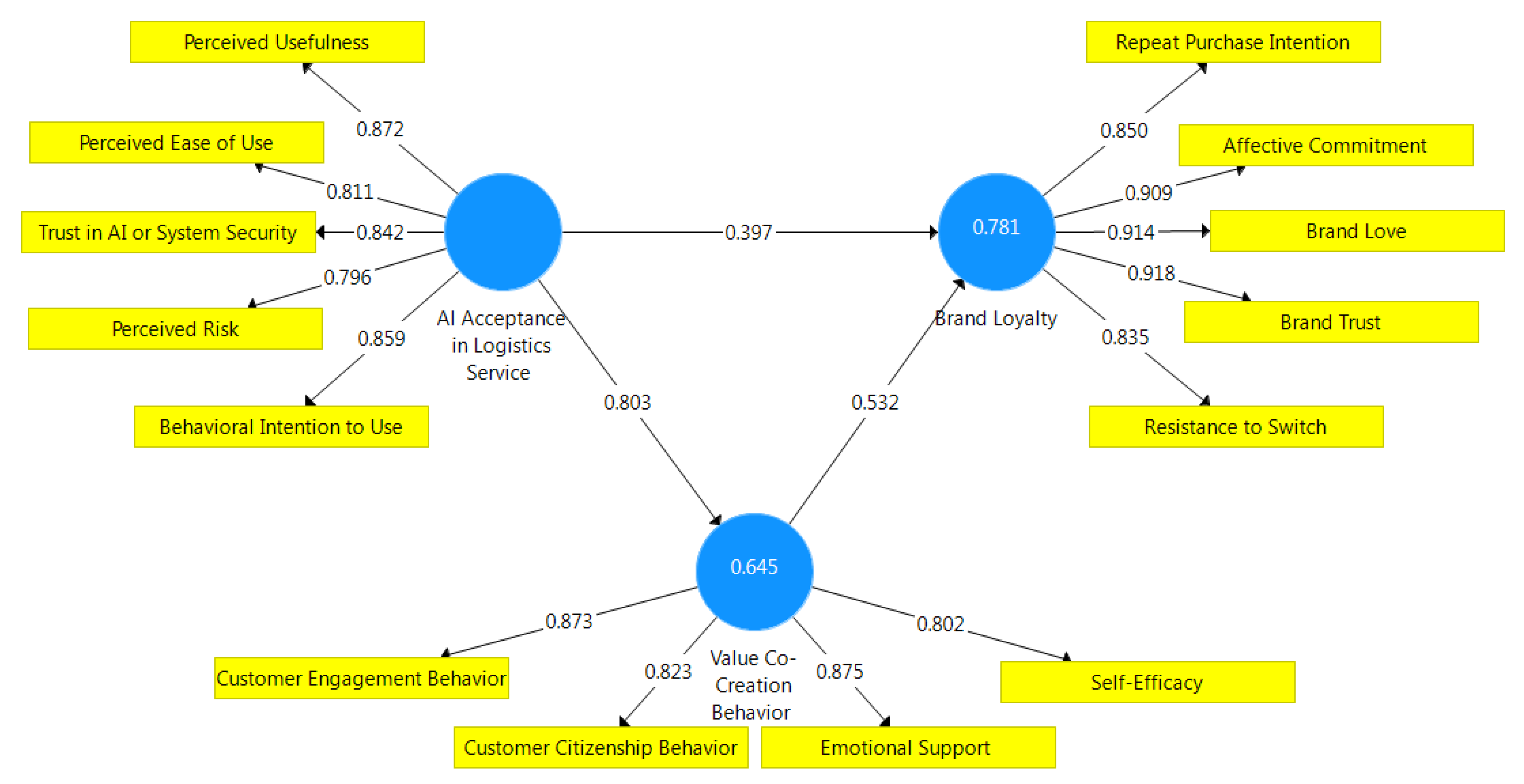
Table 5 presents the results of the reliability and construct validity assessment for the three latent variables: AI Acceptance in Logistics Service, Value Co-Creation Behavior, and Brand Loyalty. The analysis indicates that all indicator items exhibit factor loadings ranging from 0.796 to 0.918, exceeding the recommended minimum threshold of 0.70. This suggests that the observed variables adequately represent their respective latent constructs. Furthermore, the Variance Inflation Factor (VIF) values, used to assess multicollinearity, range from 1.704 to 4.001—well below the acceptable limit of 5.0—indicating no significant redundancy among the indicators within each construct.
In terms of reliability, Cronbach’s alpha coefficients are high across all three constructs: AI Acceptance in Logistics Service (α = 0.892), Value Co-Creation Behavior (α = 0.865), and Brand Loyalty (α = 0.931). These results are consistent with the Composite Reliability (CR) values, which range from 0.908 to 0.948, as well as rho_A values, further confirming strong internal consistency. The Average Variance Extracted (AVE) values for all constructs range from 0.699 to 0.785, exceeding the recommended minimum threshold of 0.50 as suggested by [
62], thereby indicating satisfactory convergent validity. These findings confirm that the measurement instrument demonstrates a high level of reliability and construct validity, providing a solid foundation for subsequent structural equation modeling analysis. Accordingly, the quality of the measurement data in this study can be considered robust and credible.
Because the data were collected using a single self-reported survey instrument, the potential for common method bias (CMB) was evaluated using both procedural and statistical approaches. First, Harman’s single-factor test was conducted using exploratory factor analysis without rotation. The results indicate that multiple factors emerged with eigenvalues greater than 1.0, and the first unrotated factor accounted for 38.72% of the total variance, which is below the commonly accepted threshold of 50%. This finding suggests that no single factor dominates the covariance structure and that common method bias is unlikely to pose a significant threat to the validity of the results.
Recognizing that Harman’s test serves as a preliminary diagnostic tool, an additional statistical assessment was conducted using full collinearity variance inflation factors (VIFs), as recommended for detecting common method variance in PLS-SEM models. All full collinearity VIF values were below the threshold of 5, indicating that neither multicollinearity nor common method bias presents a concern in this study. These results provide further assurance that the observed structural relationships are not artificially inflated by measurement method effects.
Table 6 presents the assessment of discriminant validity to confirm the distinctiveness of each latent construct in the research model, using two widely accepted criteria: the Heterotrait–Monotrait Ratio of Correlations (HTMT) and the Fornell–Larcker criterion. The HTMT values for the three theoretically related construct pairs—(1) AI Acceptance in Logistics Service and Value Co-Creation Behavior, (2) AI Acceptance in Logistics Service and Brand Loyalty, and (3) Value Co-Creation Behavior and Brand Loyalty—range from 0.901 to 0.942. Although these values are relatively high, they remain within the acceptable upper threshold of 0.90–0.95 as recommended by [
63]. This pattern is expected in process-oriented models, where conceptually related constructs are sequentially linked. Importantly, the HTMT results reflect conceptual proximity rather than a violation of discriminant validity, confirming that the constructs are empirically distinct while theoretically coherent.
Additional support is provided by the Fornell–Larcker criterion. As shown on the diagonal of
Table 6, the square roots of the Average Variance Extracted (AVE) are 0.836 for AI Acceptance in Logistics Service, 0.844 for Value Co-Creation Behavior, and 0.886 for Brand Loyalty. Each value exceeds the corresponding inter-construct correlations. These results satisfy the Fornell–Larcker criterion that a latent construct should explain more variance in its own indicators than it shares with other constructs [
62], thereby confirming adequate discriminant validity of the measurement model.
Furthermore, discriminant validity was examined using both the Fornell–Larcker criterion and the Heterotrait–Monotrait (HTMT) ratio. The HTMT values between Value Co-Creation Behavior and Brand Loyalty range from 0.901 to 0.942, slightly exceeding the conservative threshold of 0.85. However, these values remain within the commonly accepted upper limit of 0.90, particularly when constructs are conceptually related yet theoretically distinct [
53,
63]. To provide a more rigorous assessment, HTMT inference was conducted using bootstrapping procedures. The 95% confidence intervals did not include the critical value of 1.0, indicating that discriminant validity is statistically established. In line with the recommendation of Henseler [
63], the constructs can therefore be considered empirically distinct despite their strong theoretical association.
Although the square root of AVE for Value Co-Creation Behavior (0.844) is marginally lower than its correlation with Brand Loyalty (0.851), this condition is theoretically justifiable given the conceptual relationship between the two constructs. Value Co-Creation Behavior and Brand Loyalty are both behaviorally and psychologically interconnected, as customer participation in value creation often enhances satisfaction and strengthens brand attachment, ultimately leading to loyalty. Therefore, this empirical proximity is consistent with prior theoretical expectations rather than indicative of redundancy. Importantly, Value Co-Creation Behavior reflects customers’ participatory actions in interacting with firms and contributing to service value, whereas Brand Loyalty represents a post-evaluative attitudinal and behavioral commitment toward a brand. While participation in value co-creation may foster stronger loyalty over time, the two constructs capture distinct stages of the customer relationship process. Accordingly, their empirical closeness reflects a sequential behavioral linkage rather than conceptual overlap.
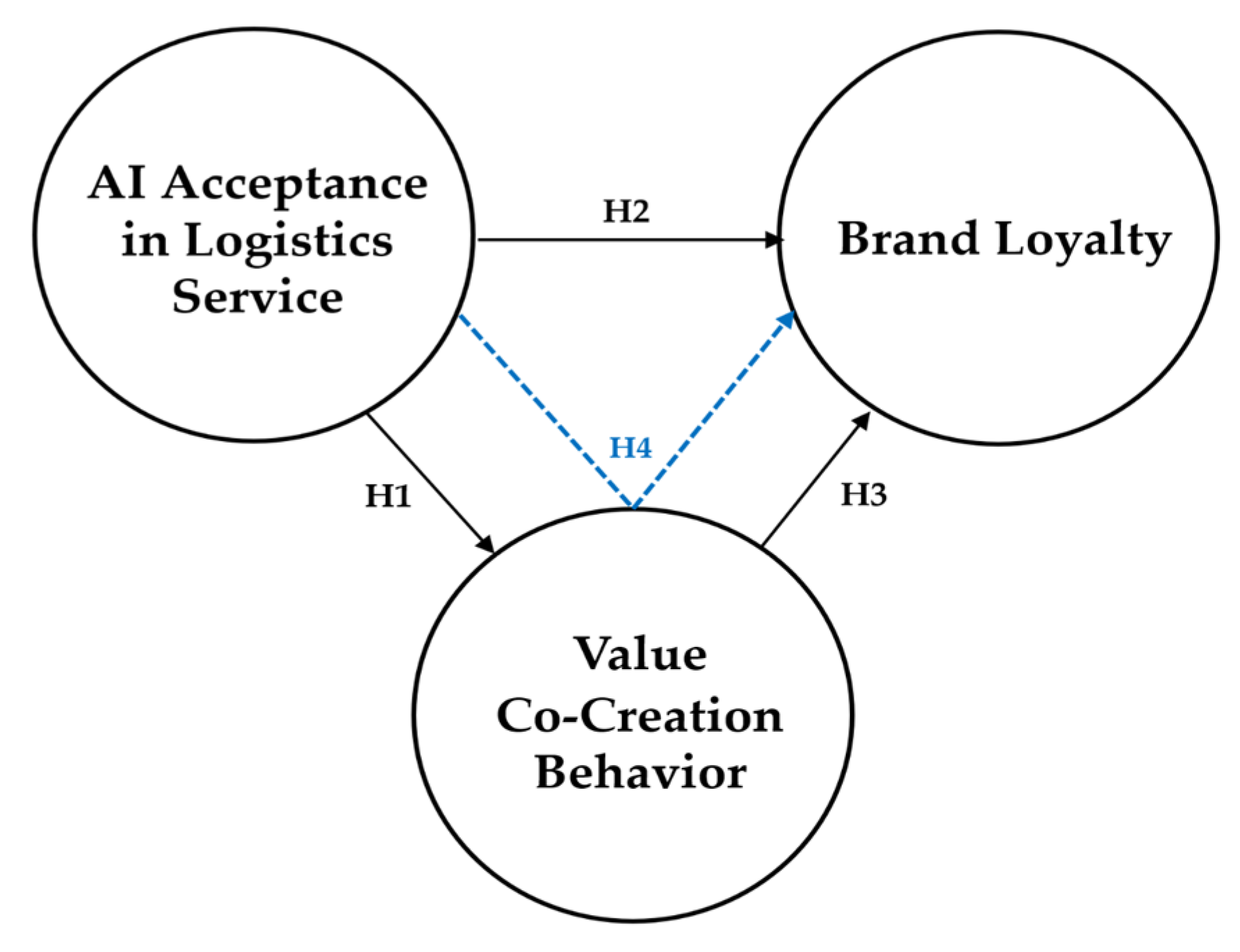
Table 7 presents the results of the structural model hypothesis testing using Partial Least Squares Structural Equation Modeling (PLS-SEM), highlighting the relationships among the three key latent constructs: AI Acceptance in Logistics Service, Value Co-Creation Behavior, and Brand Loyalty. All four hypotheses (H1–H4) are statistically supported at the 0.01 significance level.
For H1, the results indicate that AI Acceptance in Logistics Service has a strong positive effect on Value Co-Creation Behavior (β = 0.803, t = 43.666,
p < 0.01, CI = [0.764, 0.838]). The effect size is substantial, as reflected by f
2 = 1.814, indicating a large explanatory impact of AI acceptance on co-creation behavior. Regarding H2, the analysis reveals that AI Acceptance in Logistics Service also has a significant direct effect on Brand Loyalty (β = 0.397, t = 9.048,
p < 0.01, CI = [0.307, 0.477]). The associated effect size (f
2 = 0.256) reflects a medium effect according to Cohen’s [
64] guidelines, highlighting the important role of AI technologies in fostering consumer loyalty.
For H3, Value Co-Creation Behavior is found to have a strong direct influence on Brand Loyalty (β = 0.532, t = 12.300, p < 0.01, CI = [0.451, 0.617]), with an effect size of f2 = 0.459, which is considered large. This finding reinforces the theoretical proposition that active consumer engagement in co-creation processes enhances long-term brand relationships. Finally, H4 examines the indirect effect of AI Acceptance in Logistics Service on Brand Loyalty through Value Co-Creation Behavior. The mediation effect is statistically significant (β = 0.427, t = 12.091, p < 0.01, CI = [0.361, 0.501]), confirming that Value Co-Creation Behavior serves as a key mediating mechanism. This result suggests that the influence of AI acceptance extends beyond its direct impact on brand loyalty, operating also through customer participation in co-creative interactions with logistics service providers.
Figure 2 illustrates the structural equation model analyzed using PLS-SEM, depicting the causal relationships among all latent constructs. The standardized path coefficients, which indicate the strength and direction of the hypothesized relationships tested in the previous table, are presented along the arrows connecting the latent variables. The values displayed between the latent constructs and their respective observed indicators represent the factor loadings, providing further evidence of the model’s adequacy in terms of both reliability and construct validity.
5. Discussion
The findings of this study provide meaningful insights into how Generation Z consumers in Thailand respond to AI-enabled logistics services, particularly in relation to value co-creation and long-term brand loyalty. The results extend existing theoretical discourse by demonstrating that AI acceptance not only enhances task-related efficiency but also shapes the psychological and relational processes underlying contemporary service engagement.
First, the strong positive effect of AI Acceptance on Value Co-Creation Behavior indicates that Gen Z consumers perceive AI not merely as an operational tool, but as an interactive interface that facilitates participation and personal contribution. While the Technology Acceptance Model (TAM) traditionally conceptualizes perceived usefulness and ease of use as antecedents of behavioral intention [
9,
57], the present findings extend this perspective by showing that these perceptions also promote engagement-oriented behaviors, such as providing feedback, interacting with AI features, and supporting service innovation. This interpretation aligns with [
40], who found that intelligent systems enhance participatory intentions by improving perceived capability and responsiveness. In the logistics context, AI-driven features—such as automated tracking, chatbots, and predictive notifications—appear to foster a sense of control, transparency, and empowerment, thereby encouraging active co-creation among digitally proficient Gen Z consumers.
Second, the direct relationship between AI Acceptance and Brand Loyalty, although moderate in magnitude, suggests that loyalty formation in AI-mediated environments is influenced by more than functional performance alone. This finding is consistent with [
44,
45], which report that AI-enabled digital experiences contribute to loyalty when users perceive systems as trustworthy, reliable, and enjoyable. For Gen Z consumers, whose expectations are shaped by seamless and continuously connected digital ecosystems, AI features that reduce complexity and enhance personalization contribute to more favorable brand evaluations. However, the moderate effect size also indicates that technology alone is insufficient to establish loyalty; emotional and relational dimensions remain critical in the loyalty formation process.
Third, Value Co-Creation Behavior exhibits a strong and direct impact on Brand Loyalty, reinforcing the notion that loyalty in digital service ecosystems is co-constructed through participatory experiences. Prior research [
5,
26,
58] highlights that co-creation activities—such as providing feedback, interacting with service interfaces, or supporting other users—enhance psychological ownership and emotional attachment to the brand. The present findings corroborate this mechanism among Gen Z logistics users, who naturally engage with interactive digital environments. As consumers participate in value creation, they develop deeper cognitive and affective connections with logistics service providers, which translate into repeat purchase intentions, trust, and resistance to switching. This relationship also underscores the role of emotional support and self-efficacy, as AI systems that offer accuracy, adaptability, and reassurance can foster relational closeness even in the absence of human interaction.
Finally, the significant mediating effect of Value Co-Creation Behavior clarifies the mechanism through which AI Acceptance translates into Brand Loyalty. Rather than directly generating loyalty, AI technologies create conditions that enable participatory engagement, which subsequently evolves into stronger brand relationships. This finding extends Service-Dominant Logic [
13,
14] by demonstrating that AI-enabled touchpoints can function as legitimate platforms for collaborative value creation, which has traditionally been associated with human interactions. Within AI-enabled logistics services, value is co-created through informational transparency, real-time responsiveness, and the emotional reassurance provided by intelligent system interactions. These mechanisms contribute to the development of relational depth, thereby transforming digital service interactions into sustained loyalty outcomes.
5.1. AI Acceptance as a Strategic Driver of Customer Value in Digital Logistics
The findings of this study suggest that AI acceptance in logistics services significantly influences both value co-creation behavior and brand loyalty, both directly and indirectly. This indicates that the acceptance of AI technologies is not merely a technical consumer response but also a strategic lever that organizations can utilize to create and sustain customer value in the digital economy. Traditionally, customer experience design in logistics has emphasized efficiency and pricing. However, the present findings demonstrate that when consumers perceive AI-enabled logistics systems as capable of reducing complexity, enhancing convenience, and ensuring operational safety, they are more likely to respond positively and engage with the service.
Importantly, such engagement is not passive. Instead, customers assume active roles in co-creating value with service providers—for instance, by providing feedback, sharing user experiences, and recommending services to others. The significant indirect effect of AI acceptance on brand loyalty through value co-creation behavior further underscores the role of AI as an enabler, enhancing consumers’ motivation and capacity to participate in co-creation processes. This dynamic is particularly salient among Generation Z consumers, who are highly familiar with intelligent technologies, expect personalized services, and increasingly value adaptive and customized experiences over standardized offerings.
Moreover, these findings contribute to a broader strategic understanding of AI deployment in logistics. Rather than treating AI acceptance as a purely technological investment, organizations should integrate it into a comprehensive customer value co-creation strategy. This requires not only effective technological implementation but also clear communication of AI-related benefits, proactive management of user concerns regarding safety and data privacy, and the encouragement of consistent user engagement. Such efforts can foster a reinforcing cycle of trust, participation, and loyalty. The ability to design AI-integrated service experiences that enhance both functional performance and emotional engagement represents an emerging strategic capability in the logistics sector. Developing this capability is essential for firms seeking to sustain competitive advantage in the digital economy and to respond effectively to the evolving expectations of next-generation consumers.
5.2. The Role of AI and Value Co-Creation in Fostering Loyalty Among Next-Generation Consumers
The findings reveal a clear process through which AI acceptance influences brand loyalty via value co-creation behavior. Positive cognitive evaluations of AI-enabled logistics services—such as perceived usefulness, ease of use, and reliability—reduce uncertainty and enhance user confidence. This cognitive acceptance encourages consumers to actively engage with AI-based service interfaces, provide feedback, and participate in service interactions, thereby facilitating value co-creation. Over time, such participatory engagement strengthens emotional attachment and relational bonds with service providers, ultimately fostering brand loyalty. These results indicate that AI acceptance contributes to loyalty not only through functional efficiency but also by enabling interactive and relational value creation.
More broadly, the findings suggest that brand loyalty in the digital era does not emerge solely from technological acceptance; rather, it develops through value-based engagement between consumers and service providers. This mechanism is particularly salient among Generation Z consumers, who tend to exhibit participatory behaviors—such as sharing experiences, providing feedback, and supporting brands—that contribute to brand attachment, emotional connection, and sustained repurchase intentions. The strong relationship observed between value co-creation behavior and brand loyalty reflects a broader shift in consumer roles, from passive recipients of services to active co-creators of service experiences.
From a managerial perspective, logistics service providers that design communication channels and engagement mechanisms aligned with Generation Z’s behavioral tendencies are better positioned to cultivate long-term customer relationships. Such strategies may include enabling users to contribute ideas for service improvement, delivering personalized notifications, and leveraging AI systems to analyze behavioral data and provide targeted promotions. Importantly, the findings also suggest that AI alone—when deployed solely to enhance technical efficiency or convenience—may be insufficient to foster brand loyalty. Emotional dimensions, including trust, a sense of ownership, and personally meaningful experiences, must be integrated into AI-enabled service design.
This perspective aligns with contemporary approaches in customer experience management (CEM), which emphasize the co-creation of meaningful value across multiple service touchpoints. Overall, designing logistics services that integrate AI capabilities with opportunities for consumer value co-creation represents a strategic pathway for strengthening brand loyalty among Generation Z—fostering loyalty not only at the behavioral level but also at deeper emotional and relational levels in the digital age.
5.3. Theoretical Implications
This study extends existing theoretical frameworks by integrating the Technology Acceptance Model (TAM) and value co-creation theory within the emerging context of AI-enabled logistics services. While prior research has predominantly examined TAM constructs—such as perceived usefulness and perceived ease of use—within traditional digital platforms [
10,
65], the present study demonstrates that AI acceptance extends beyond a purely technological evaluation. Instead, it functions as a psychological catalyst that motivates users to actively engage in co-creative behaviors with service providers. This finding highlights an expanded role of TAM, whereby cognitive acceptance of AI translates into relational and experiential engagement.
Furthermore, by positioning value co-creation behavior as a mediating mechanism between AI acceptance and brand loyalty, this study contributes to the literature by elucidating how technology-induced participation fosters emotional attachment and attitudinal loyalty. This result is consistent with, yet extends beyond, service-dominant logic [
13,
14] by demonstrating that AI-driven interactions can, to some extent, substitute for human interfaces in generating co-created value.
Theoretically, this integration offers a novel perspective on how AI technologies reshape consumer–brand relationships. It underscores a transition from technology adoption to technology-embedded relationship building—a shift that has not been extensively examined within the logistics and broader service industries. Accordingly, the findings expand the boundary conditions of both TAM and value co-creation theory, suggesting that their applicability extends to contexts characterized by automation, personalization, and high levels of digital fluency, particularly among Generation Z consumers.
5.4. Limitations of the Study
Although this study was systematically designed and employed appropriate statistical procedures for structural model testing, several limitations should be acknowledged when interpreting the findings. First, the study employed a convenience sampling technique, which is appropriate for exploratory and theory-driven research focusing on specific user groups—namely, Generation Z consumers in Thailand with experience using AI-enabled logistics services. However, this sampling approach limits the representativeness of the sample and constrains the statistical generalizability of the findings to broader populations or different cultural and national contexts. Accordingly, the results should be interpreted as indicative rather than universally generalizable.
Second, the cross-sectional research design restricts the ability to capture changes in consumer perceptions and behaviors over time. Third, the study relies on self-reported measures, which may not fully reflect actual behaviors in real-world settings. Finally, the exclusive use of quantitative methods limits deeper contextual understanding of consumer attitudes and experiences. Future research could enhance external validity by employing probability-based sampling methods, such as stratified or random sampling across multiple age cohorts, regions, or countries. In addition, longitudinal research designs, cross-generational comparisons, and the integration of qualitative approaches are recommended to provide richer insights into the evolution of AI acceptance and value co-creation behavior across diverse consumer segments.
5.5. Recommendations for Future Research
While recent studies have increasingly examined AI adoption and service automation, limited attention has been given to the relational mechanisms linking AI acceptance to brand-related outcomes in logistics services. By positioning value co-creation behavior as a mediating mechanism, this study adopts a process-oriented perspective that clarifies how cognitive acceptance of AI translates into relational outcomes. Nevertheless, potential moderating factors—such as perceived risk, trust, and digital literacy—may further influence these relationships. Although these factors fall beyond the scope of the present model, they represent important avenues for future research.
Future studies are therefore encouraged to broaden the empirical scope by including a wider range of demographic groups, such as Generation Y or older consumers, and by conducting cross-country or cross-cultural comparisons. In addition, employing longitudinal research designs would enable the examination of changes in consumer attitudes and behaviors toward AI-enabled logistics services over time. The integration of qualitative methods, such as in-depth interviews or focus group discussions, could also provide richer and more contextualized insights into consumers’ perceptions, motivations, and lived experiences.





 ,
,