Mushrooms as Sustainable Protein Alternatives: Nutritional–Functional Characterization and Innovative Applications in Meat Analogs, Functional Snacks, and Beverages

 ,
,  , , ,
, , ,  , and
, and
Abstract
1. Introduction
2. A Techno-Functional Framework for Innovative Applications
2.1. Macronutrient Composition
2.2. Bioactive Peptides and Protein-Derived Health Benefits
2.3. Micronutrient Profile
2.4. Bioactive Compounds and Health Benefits
2.5. Techno-Functional Properties
2.5.1. Water and Oil Holding Capacity
2.5.2. Emulsification and Foaming Properties
2.5.3. Gelation Properties
2.5.4. Textural Properties
2.6. Physicochemical Properties
2.6.1. pH and Acidity
2.6.2. Moisture Content and Water Activity
2.6.3. Surface Properties
2.6.4. Thermal Properties
3. Mushroom-Based Meat Analogs
3.1. Burger Patty Development
3.1.1. Species Selection and Processing Parameters
3.1.2. Binding Systems and Formulation Optimization
3.1.3. Nutritional Profile and Sensory Characteristics
3.2. Sausage Formulation and Processing Technology
3.2.1. Species Selection and Preparation Methods
3.2.2. Advanced Binding and Emulsification Systems
3.2.3. Nutritional Enhancement and Quality Control
3.3. Nugget Production and Advanced Processing Technologies
3.3.1. Protein Extraction and Functionalization
3.3.2. Extrusion Technology and Texturization
3.3.3. Coating Systems and Cooking Technologies

4. Mushroom-Based Snack Products
4.1. Ready-to-Eat Snack Development
4.1.1. Extrusion-Based Mushroom Snacks
4.1.2. Advanced Drying Technologies
4.1.3. Fermented Mushroom Snacks
4.2. Protein Bar Innovation and Functional Enhancement
4.2.1. Advanced Protein Extraction and Processing
4.2.2. Commercial Product Development and Critical Evaluation
4.3. Baked Snack Applications
5. Functional Mushroom Beverages
5.1. Non-Alcoholic Fermented Mushroom Beverages
5.1.1. Fermentation Technology and Process Optimization
5.1.2. Bioactive Compound Enhancement
5.2. Concentrated Mushroom Extract Beverages
5.2.1. Advanced Extraction Technologies
5.2.2. Standardization and Quality Assurance
5.3. Alcoholic Mushroom Beverages
6. Processing Technologies and Quality Considerations
6.1. Thermal Processing Optimization
6.2. Non-Thermal Processing Technologies
6.3. Ultrasonic-Assisted Processing
6.4. Microencapsulation and Stabilization
6.5. Comprehensive Quality Assurance Framework
7. Market Trends and Consumer Acceptance
7.1. Market Growth and Commercial Opportunities
7.2. Consumer Acceptance and Sensory Optimization
7.3. Regulatory Framework and Health Claims
8. Future Perspectives and Research Directions for Mushroom-Based Food Products
9. Conclusions
Author Contributions
Funding
Institutional Review Board Statement
Informed Consent Statement
Data Availability Statement
Acknowledgments
Conflicts of Interest
References
- Food and Agriculture Organization of the United Nations. New FAO Report Maps Pathways Towards Lower Livestock Emissions. Available online: https://www.fao.org/newsroom/detail/new-fao-report-maps-pathways-towards-lower-livestock-emissions/en (accessed on 17 March 2026).
- World Health Organization. Cancer: Carcinogenicity of the Consumption of Red Meat and Processed Meat. Available online: https://www.who.int/news-room/questions-and-answers/item/cancer-carcinogenicity-of-the-consumption-of-red-meat-and-processed-meat (accessed on 26 October 2025).
- Galanakis, C.M. The future of food. Foods 2024, 13, 506. [Google Scholar] [CrossRef] [PubMed]
- Jafarzadeh, S.; Qazanfarzadeh, Z.; Majzoobi, M.; Sheiband, S.; Oladzadabbasabad, N.; Esmaeili, Y.; Barrow, C.J.; Timms, W. Alternative proteins; A path to sustainable diets and environment. Curr. Res. Food Sci. 2024, 9, 100882. [Google Scholar] [CrossRef] [PubMed]
- Cerletti, C.; Esposito, S.; Iacoviello, L. Edible Mushrooms and Beta-Glucans: Impact on Human Health. Nutrients 2021, 13, 2195. [Google Scholar] [CrossRef]
- Singh, U.; Tiwari, P.; Kelkar, S.; Kaul, D.; Tiwari, A.; Kapri, M.; Sharma, S. Edible mushrooms: A sustainable novel ingredient for meat analogs. Efood 2023, 4, e122. [Google Scholar] [CrossRef]
- Sá, A.G.A.; da Silva, D.C.; Pacheco, M.T.B.; Moreno, Y.M.F.; Carciofi, B.A.M. Oilseed by-products as plant-based protein sources: Amino acid profile and digestibility. Future Foods 2021, 3, 100023. [Google Scholar] [CrossRef]
- Sousa, A.S.; Araújo-Rodrigues, H.; Pintado, M.E. The health-promoting potential of edible mushroom proteins. Curr. Pharm. Des. 2023, 29, 804–823. [Google Scholar] [CrossRef]
- Arshad, Z.; Shahid, S.; Hasnain, A.; Yaseen, E.; Rahimi, M. Functional foods enriched with bioactive compounds: Therapeutic potential and technological innovations. Food Sci. Nutr. 2025, 13, e71024. [Google Scholar] [CrossRef]
- Pashaei, K.H.A.; Irankhah, K.; Namkhah, Z.; Sobhani, S.R. Edible mushrooms as an alternative to animal proteins for having a more sustainable diet: A review. J. Health Popul. Nutr. 2024, 43, 205. [Google Scholar] [CrossRef]
- Sande, D.; de Oliveira, G.P.; e Moura, M.A.F.; de Almeida Martins, B.; Lima, M.T.N.S.; Takahashi, J.A. Edible mushrooms as a ubiquitous source of essential fatty acids. Food Res. Int. 2019, 125, 108524. [Google Scholar] [CrossRef]
- Yilmaz, N.; Türkekul, I.; Bulut, S.; Sahin, F. Fatty acid composition in ten mushroom species collected from Middle Black Sea Region of Turkey. Asian J. Chem. 2013, 25, 1216. [Google Scholar] [CrossRef]
- Consultation, F. Dietary protein quality evaluation in human nutrition. FAO Food Nutr. Pap. 2011, 92, 26369006. [Google Scholar]
- Nkhata, S.G.; Ayua, E.; Kamau, E.H.; Shingiro, J.B. Fermentation and germination improve nutritional value of cereals and legumes through activation of endogenous enzymes. Food Sci. Nutr. 2018, 6, 2446–2458. [Google Scholar] [CrossRef]
- Liu, P.; Zhang, Z.; Wu, D.; Li, W.; Chen, W.; Yang, Y. The prospect of mushroom as an alternative protein: From acquisition routes to nutritional quality, biological activity, application and beyond. Food Chem. 2025, 469, 142600. [Google Scholar] [CrossRef]
- Ho, L.-H.; Zulkifli, N.A.; Tan, T.-C. Edible mushroom: Nutritional properties, potential nutraceutical values, and its utilisation in food product development. In An Introduction to Mushroom; IntechOpen: London, UK, 2020. [Google Scholar]
- USDA FoodData Central. FoodData Central Database; USDA FoodData Central: Beltsville, MD, USA, 2021.
- Mazumder, M.A.R.; Sangsomboon, M.; Ketnawa, S.; Rawdkuen, S. Mushroom-based Northern Thai style sausages: Physico-chemical, nutritional profile and in vitro digestibility. J. Agric. Food Res. 2024, 16, 101103. [Google Scholar] [CrossRef]
- Institute of Medicine (US) Food and Nutrition Board. Dietary Reference Intakes: The Essential Guide to Nutrient Requirements; National Academies Press: Washington, DC, USA, 2006. [Google Scholar]
- Pandey, M.; Satisha, G.; Azeez, S.; Kumaran, G.S. Mushrooms for integrated and diversified nutrition. J. Hortic. Sci. 2022, 17, 6–18. [Google Scholar] [CrossRef]
- Spungen, J.H.; Shimizu, M.; Jarman, D.; Santillana Farakos, S.M. The US Food and Drug Administration (FDA) Food Disaggregation Database (FDA-FDD): A new tool for US dietary exposure assessment. Food Addit. Contam. Part. A 2024, 41, 1385–1393. [Google Scholar] [CrossRef]
- International Service for the Acquisition of Agri-biotech Applications (ISAAA). Gene Editing of Edible Fungus Produces Healthier Foods. Available online: https://www.isaaa.org/kc/cropbiotechupdate/article/default.asp?ID=20725#:~:text=To%20address%20this%20issue%2C%20scientists%20from%20the,neutral%20loci%2C%20gene%20integration%2C%20and%20tunable%20promoters (accessed on 17 March 2026).
- Araujo-Rodrigues, H.; Sousa, A.S.; Relvas, J.B.; Tavaria, F.K.; Pintado, M. An Overview on Mushroom Polysaccharides: Health-promoting Properties, Prebiotic and Gut Microbiota Modulation Effects and Structure-function Correlation. Carbohydr. Polym. 2024, 333, 121978. [Google Scholar] [CrossRef]
- Mirończuk-Chodakowska, I.; Witkowska, A.M. Evaluation of Polish wild mushrooms as beta-glucan sources. Int. J. Environ. Res. Public Health 2020, 17, 7299. [Google Scholar] [CrossRef] [PubMed]
- Idowu, O.A.; Yupanqui, C.T. Enzymatic Hydrolysis with Pepsin Enhanced the Nutrient Compositions of Unfractionated Soy Protein Hydrolysate and Its Cell Viability and Nitric Oxide Activities. Food Sci. Nutr. 2025, 13, e71147. [Google Scholar] [CrossRef]
- Goswami, B.; Majumdar, S.; Das, A.; Barui, A.; Bhowal, J. Evaluation of bioactive properties of Pleurotus ostreatus mushroom protein hydrolysate of different degree of hydrolysis. LWT 2021, 149, 111768. [Google Scholar] [CrossRef]
- Abachi, S.; Bazinet, L.; Beaulieu, L. Antihypertensive and angiotensin-I-converting enzyme (ACE)-inhibitory peptides from fish as potential cardioprotective compounds. Mar. Drugs 2019, 17, 613. [Google Scholar] [CrossRef] [PubMed]
- Banjongsinsiri, P.; Pasakawee, K.; Noojuy, N.; Taksima, T.; Rodsuwan, U. Production of mushroom protein hydrolysates by enzymatic hydrolysis and their physicochemical properties. Food Appl. Biosci. J. 2016, 4, 161–170. [Google Scholar] [CrossRef]
- Singh, A.; Saini, R.K.; Kumar, A.; Chawla, P.; Kaushik, R. Mushrooms as Nutritional Powerhouses: A Review of Their Bioactive Compounds, Health Benefits, and Value-Added Products. Foods 2025, 14, 741. [Google Scholar] [CrossRef]
- Mattila, P.; Könkö, K.; Eurola, M.; Pihlava, J.-M.; Astola, J.; Vahteristo, L.; Hietaniemi, V.; Kumpulainen, J.; Valtonen, M.; Piironen, V. Contents of vitamins, mineral elements, and some phenolic compounds in cultivated mushrooms. J. Agric. Food Chem. 2001, 49, 2343–2348. [Google Scholar] [CrossRef]
- Kristensen, H.L.; Rosenqvist, E.; Jakobsen, J. Increase of vitamin D(2) by UV-B exposure during the growth phase of white button mushroom (Agaricus bisporus). Food Nutr. Res. 2012, 56, 7114. [Google Scholar] [CrossRef]
- Gençcelep, H.; Uzun, Y.; Tunçtürk, Y.; Demirel, K. Determination of mineral contents of wild-grown edible mushrooms. Food Chem. 2009, 113, 1033–1036. [Google Scholar] [CrossRef]
- Mirończuk-Chodakowska, I.; Socha, K.; Zujko, M.E.; Terlikowska, K.M.; Borawska, M.H.; Witkowska, A.M. Copper, manganese, selenium and zinc in wild-growing edible mushrooms from the eastern territory of “Green Lungs of Poland”: Nutritional and toxicological implications. Int. J. Environ. Res. Public Health 2019, 16, 3614. [Google Scholar] [CrossRef]
- Elekes, C.C.; Busuioc, G. The metal concentrations and daily physiological contribution of mushrooms for the necessary of iron, magnesium and zinc. Bull. UASVM Agric. 2010, 67, 1843–5246. [Google Scholar] [CrossRef] [PubMed]
- Cardwell, G.; Bornman, J.F.; James, A.P.; Black, L.J. A review of mushrooms as a potential source of dietary vitamin D. Nutrients 2018, 10, 1498. [Google Scholar] [CrossRef] [PubMed]
- Kour, H.; Kour, D.; Kour, S.; Singh, S.; Hashmi, S.A.J.; Yadav, A.N.; Kumar, K.; Sharma, Y.P.; Ahluwalia, A.S. Bioactive compounds from mushrooms: Emerging bioresources of food and nutraceuticals. Food Biosci. 2022, 50, 102124. [Google Scholar] [CrossRef]
- Johnston, C.J.H.; Ledwith, A.E.; Lundahl, M.L.; Charles-Messance, H.; Hackett, E.E.; O’Shaughnessy, S.D.; Clegg, J.; Prendeville, H.; McGrath, J.P.; Walsh, A.M. Recognition of yeast β-glucan particles triggers immunometabolic signaling required for trained immunity. Iscience 2024, 27, 109030. [Google Scholar] [CrossRef]
- Lertworapreecha, M.; Chanasit, W.; Nitipan, S.; Chamnankit, W. Growth Factors Optimization and Antioxidant Evaluation of β-Glucan Extracted from Lignosus rhinocerus Mycelium using Microwave-Assisted Extraction. Trends Sci. 2025, 22, 8912. [Google Scholar] [CrossRef]
- Singh, A.; Singh, G.; Kapoor, R.; Dhasmana, A.; Ghosh-Jerath, S. Wild Edible Mushrooms of Jharkhand: Nutrient-Dense Seasonal Foods to Improve Dietary Diversity among Indigenous Communities. Curr. Res. Nutr. Food Sci. 2025, 13, 61–76. [Google Scholar] [CrossRef]
- Singh, P.; Varshney, V.K. Nutritional Attributes and Nonvolatile Taste Components of Medicinally Important Wild False Earthstar Mushroom, Astraeus hygrometricus (Agaricomycetes), from India. Int. J. Med. Mushrooms 2020, 22, 909–918. [Google Scholar] [CrossRef]
- Chu, M.; Khan, R.D.; Zhou, Y.; Agar, O.T.; Barrow, C.J.; Dunshea, F.R.; Suleria, H.A. LC-ESI-QTOF-MS/MS characterization of phenolic compounds in common commercial mushrooms and their potential antioxidant activities. Processes 2023, 11, 1711. [Google Scholar] [CrossRef]
- Tokarczyk, G.; Felisiak, K.; Adamska, I.; Przybylska, S.; Hrebień-Filisińska, A.; Biernacka, P.; Bienkiewicz, G.; Tabaszewska, M.; Bernaś, E.; Arroyos, E.L. Impact of Drying Methods on β-Glucan Retention and Lipid Stability in Oyster mushroom (Pleurotus ostreatus) Enriched Carp (Cyprinus carpio L.) Fish Burgers. Molecules 2025, 30, 4649. [Google Scholar] [CrossRef] [PubMed]
- Kapoor, R.; Karabulut, G.; Mundada, V.; Feng, H. Unraveling the potential of non-thermal ultrasonic contact drying for enhanced functional and structural attributes of pea protein isolates: A comparative study with spray and freeze-drying methods. Food Chem. 2024, 439, 138137. [Google Scholar] [CrossRef]
- Alamprese, C.; Rollini, M.; Musatti, A.; Ferranti, P.; Barbiroli, A. Emulsifying and foaming properties of a hydrophobin-based food ingredient from Trichoderma reesei: A phenomenological comparative study. LWT 2022, 157, 113060. [Google Scholar] [CrossRef]
- Cheung, P.C. The nutritional and health benefits of mushrooms. Nutr. Bull. 2010, 35, 292–299. [Google Scholar] [CrossRef]
- Ogawa, Y.; Miyazawa, A.; Yamamoto, N.; Suzuki, A. Compression properties of the fruit body of king Oyster mushroom Pleurotus eryngii. Int. J. Food Sci. Technol. 2012, 47, 2487–2492. [Google Scholar] [CrossRef]
- Paudel, E.; Boom, R.M.; van Haaren, E.; Siccama, J.; van der Sman, R.G. Effects of cellular structure and cell wall components on water holding capacity of mushrooms. J. Food Eng. 2016, 187, 106–113. [Google Scholar] [CrossRef]
- Zhang, Y.; Wei, S.; Xiong, Q.; Meng, L.; Li, Y.; Ge, Y.; Guo, M.; Luo, H.; Lin, D. Ultrasonic-Assisted Extraction of Dictyophora rubrovolvata Volva Proteins: Process Optimization, Structural Characterization, Intermolecular Forces, and Functional Properties. Foods 2024, 13, 1265. [Google Scholar] [CrossRef]
- Lin, J.; Zeng, J.; Shi, G.; Zhuo, Z.; Guan, Y.; Li, Z.; Ni, H.; Fei, P.; Huang, B. Caffeic Acid-Modified Mushroom Chitosan as a Natural Emulsifier for Soybean Oil-Based Emulsions and Its Application in β-Carotene Delivery. Foods 2025, 14, 1108. [Google Scholar] [CrossRef] [PubMed]
- de Medeiros, F.G.M.; You, S.W.; Hoskin, R.T.; Moncada, M. Spray dried protein concentrates from white button and Oyster mushrooms produced by ultrasound-assisted alkaline extraction and isoelectric precipitation. J. Sci. Food Agric. 2025, 105, 1635–1650. [Google Scholar] [CrossRef]
- Li, H.; Hao, Y.-p.; Dai, Y.; Chen, Z.-z.; Ping, Y.-l.; Zhao, B.-b. Effects of protein-polysaccharide extracted from Auricularia auricula-judae mushroom on the quality characteristics of Chinese wheat noodles. LWT 2023, 182, 114783. [Google Scholar] [CrossRef]
- Yu, R.; Huppertz, T.; Vasiljevic, T. Effect of Shear and pH on Heat-Induced Changes in Faba Bean Proteins. Foods 2025, 14, 2906. [Google Scholar] [CrossRef]
- Zivanovic, S.; Buescher, R.; Kim, S. Mushroom texture, cell wall composition, color, and ultrastructure as affected by pH and temperature. J. Food Sci. 2003, 68, 1860–1865. [Google Scholar] [CrossRef]
- Bermúdez-Gómez, P.; Fernández-López, J.; Pérez-Clavijo, M.; Viuda-Martos, M. Optimization of Mushroom (Agaricus bisporus and Pleurotus ostreatus) By-Products Processing for Prospective Functional Flour Development. Foods 2024, 13, 4046. [Google Scholar] [CrossRef]
- Sharma, D.; Ramniwas, S.; Mugabi, R.; Uddin, J.; Nayik, G.A. Revolutionizing Mushroom processing: Innovative techniques and technologies. Food Chem. X 2024, 23, 101774. [Google Scholar] [CrossRef]
- Zhou, H.-y.; Yu, M.-j.; Nie, Y.-y.; Zhang, P.-h.; Yang, W.; Li, B. Effects of heat processing methods on nutritional properties and antioxidant activity of Lentinus edodes. Food Eng. 2021, 42, 106–114. [Google Scholar] [CrossRef]
- Mok, P.W.; Hwa, K.B. Effect of pH of Casing Soil and Calcium on Mycelial Growth and Yield of Agaricus bisporus (Lge.) Sing. Korean J. Appl. Entomol. 1971, 10, 59–62. [Google Scholar]
- Siddiqui, U.; You, K.-M.; Wei, L.; San Martin-Gonzalez, F.; Simsek, S.; Chen, D. Influence of glutaminase-assisted extraction at varied pH on the physicochemical properties and functionalities of pea proteins. Appl. Food Res. 2025, 5, 101059. [Google Scholar] [CrossRef]
- Asdullah, H.U.; Chen, F.; Hassan, M.A.; Abbas, A.; Sajad, S.; Rafiq, M.; Raza, M.A.; Tahir, A.; Wang, D.; Chen, Y. Recent advances and role of melatonin in post-harvest quality preservation of shiitake (Lentinula edodes). Front. Nutr. 2024, 11, 1348235. [Google Scholar] [CrossRef]
- Tolera, K.D.; Abera, S. Nutritional quality of Oyster mushroom (Pleurotus ostreatus) as affected by osmotic pretreatments and drying methods. Food Sci. Nutr. 2017, 5, 989–996. [Google Scholar] [CrossRef]
- Ketemepi, H.K.; Awang, M.A.B.; Seelan, J.S.S.; Noor, N.Q.I.M. Extraction process and applications of mushroom-derived protein hydrolysate: A comprehensive review. Future Foods 2024, 9, 100359. [Google Scholar] [CrossRef]
- Jin, M.; Xie, Y.; Xie, P.; Zheng, Q.; Wei, T.; Guo, L.; Lin, J.; Ye, Z.; Zou, Y. Physicochemical and functional properties of Pleurotus geesteranus proteins. Food Res. Int. 2022, 162, 111978. [Google Scholar] [CrossRef] [PubMed]
- Ionescu, M.; Dincă, M.-N.; Ferdeș, M.; Zăbavă, B.-Ș.; Paraschiv, G.; Moiceanu, G. Proteins from edible mushrooms: Nutritional role and contribution to well-being. Foods 2025, 14, 3201. [Google Scholar] [CrossRef]
- Benito-Román, Ó.; Martín-Cortés, A.; Cocero, M.J.; Alonso, E. Dissolution of (1-3),(1-4)-β-Glucans in Pressurized Hot Water: Quantitative Assessment of the Degradation and the Effective Extraction. Int. J. Carbohydr. Chem. 2016, 2016, 2189837. [Google Scholar] [CrossRef]
- Lu, X.; Brennan, M.A.; Brennan, C.S. Harnessing the multifaceted potential of mushrooms: Sustainable development, health promotion, and industrial innovation. Int. J. Food Sci. Technol. 2025, 60, vvaf159. [Google Scholar] [CrossRef]
- Berger, R.G.; Bordewick, S.; Krahe, N.-K.; Ersoy, F. Mycelium vs. fruiting bodies of edible fungi—A comparison of metabolites. Microorganisms 2022, 10, 1379. [Google Scholar] [CrossRef]
- Joshi, V. Mycelium Matter (s)–Fictionalizing Human–Mushroom Relations. Jednak Książki. Gdańskie Czas. Humanist. 2022, 15, 64–81. [Google Scholar] [CrossRef]
- Rybicka, I.; Bohdan, K.; Kowalczewski, P. Meat alternatives—Market and cunsumption. In Sustainable Food: Production and Consumption Perspectives; Pawlak-Lema nska, K., Borusiak, B., Sikorska, E., Eds.; Poznań University of Economics and Business (PUEB) Press: Poznań, Poland, 2024; pp. 118–131. [Google Scholar]
- Srivastava, A.; Arjun, A.D.; Attri, B.L.; Anand, A.; Sharma, V.P. Development of nutritionally enriched wheat-millet-mushroom composite flour and its application in Indian flatbread (chapatti): Evaluation of sensory, rheological, textural, and microstructural properties. Nutr. Food Sci. 2026, 56, 252–272. [Google Scholar] [CrossRef]
- Cho, S.Y.; Ryu, G.H. Effects of Oyster mushroom addition on quality characteristics of full fat soy-based analog burger patty by extrusion process. J. Food Process Eng. 2023, 46, e14128. [Google Scholar] [CrossRef]
- Mounir, S.; Mohamed, R.; Sunooj, K.V.; El-Saidy, S.; Farid, E. Assessing the effects of partially substituting chicken breast meat with Oyster mushroom stalk powder on the quality attributes of mushroom-chicken burgers. Sci. Rep. 2025, 15, 4361. [Google Scholar] [CrossRef] [PubMed]
- Mazumder, M.A.R.; Jongraksang, K.; Kaewsiri, K.; Keawnualborvornnij, S.; Nenjatee, W.; Kaur, L.; Zhang, W.; Phongthai, S.; Rawdkuen, S. Mushroom-legume-based alternative chicken nuggets: Physico-chemical and sensory properties. Food Chem. Adv. 2024, 5, 100777. [Google Scholar] [CrossRef]
- Yuan, X.; Jiang, W.; Zhang, D.; Liu, H.; Sun, B. Textural, sensory and volatile compounds analyses in formulations of sausages analogue elaborated with edible mushrooms and soy protein isolate as meat substitute. Foods 2021, 11, 52. [Google Scholar] [CrossRef]
- Chaffee, O.; Ardoin, R. Consumer perceptions of plant-based and mushroom-based jerky: A focus on texture, main ingredient and protein information, and willingness to pay. Curr. Res. Food Sci. 2025, 10, 101058. [Google Scholar] [CrossRef] [PubMed]
- Coelho, V.S.; Modolo, M.U.; de Jesus Filho, M.; Macedo, L.L.; Cardoso, W.S.; de Abreu Pinheiro, F. Is it possible to produce canned champignon mushrooms with less sulfite? Food Humanit. 2024, 2, 100203. [Google Scholar] [CrossRef]
- Devi, S.; Zhang, M.; Ju, R.; Bhandari, B. Water loss and partitioning of the oil fraction of mushroom chips using ultrasound-assisted vacuum frying. Food Biosci. 2020, 38, 100753. [Google Scholar] [CrossRef]
- Uukule, E.; Embashu, W.; Kadhila, P.; Ueitele, I.; Nantanga, K. Climate smart, underutilised, healthful future cereal: Protein content, hydration properties, starch digestibility and consumer liking of pearl millet-based Oyster mushroom crackers. Food Chem. Adv. 2023, 3, 100467. [Google Scholar] [CrossRef]
- Spim, S.R.V.; Castanho, N.R.C.M.; Pistila, A.M.H.; Jozala, A.F.; Oliveira Júnior, J.M.; Grotto, D. Lentinula edodes mushroom as an ingredient to enhance the nutritional and functional properties of cereal bars. J. Food Sci. Technol. 2021, 58, 1349–1357. [Google Scholar] [CrossRef]
- Su, W.Y.; Gao, S.Y.; Zhan, S.J.; Wu, Q.; Chen, G.M.; Han, J.Z.; Lv, X.C.; Rao, P.F.; Ni, L. Evaluation of Volatile Profile and In Vitro Antioxidant Activity of Fermented Green Tea Infusion with Pleurotus sajor-caju (Oyster mushroom). Front. Nutr. 2022, 9, 865991. [Google Scholar] [CrossRef]
- Kała, K.; Cicha-Jeleń, M.; Hnatyk, K.; Krakowska, A.; Sułkowska-Ziaja, K.; Szewczyk, A.; Lazur, J.; Muszyńska, B. Coffee with Cordyceps militaris and Hericium erinaceus fruiting bodies as a source of essential bioactive substances. Pharmaceuticals 2024, 17, 955. [Google Scholar] [CrossRef] [PubMed]
- Wang, D.; Zhang, M.; Adhikari, B.; Zhang, L. Determination of polysaccharide content in shiitake mushroom beverage by NIR spectroscopy combined with machine learning: A comparative analysis. J. Food Compos. Anal. 2023, 122, 105460. [Google Scholar] [CrossRef]
- Ho, C.W.; Lazim, A.; Fazry, S.; Hussain Zaki, U.K.H.; Massa, S.; Lim, S.J. Alcoholic fermentation of soursop (Annona muricata) juice via an alternative fermentation technique. J. Sci. Food Agric. 2020, 100, 1012–1021. [Google Scholar] [CrossRef] [PubMed]
- Nayak, P.; Tiwari, A.M.; Chauhan, S.K.; Mishra, S. Unveiling the Nutritional, Therapeutic, and Environmental Impact of Oyster mushrooms (Pleurotus species): A Review. Asian J. Curr. Res. 2024, 9, 55–64. [Google Scholar] [CrossRef]
- Antunez-Medina, J.R.; Suárez-Jiménez, G.M.; Ocano-Higuera, V.M.; Tolano-Villaverde, I.d.J.; Ornelas-Paz, J.d.J.; Torres-Arreola, W.; Márquez-Ríos, E. Application of ultrasound in proteins: Physicochemical, structural changes, and functional properties with emphasis on foaming properties. Processes 2025, 13, 1646. [Google Scholar] [CrossRef]
- Tunnarut, D.; Nopwinyuwong, A.; Tanakamolpradit, T. Quality improvement of plant-based patty using methylcellulose, κ-carrageenan and xanthan gum. J. Curr. Sci. Technol. 2022, 12, 327–335. [Google Scholar]
- Zimoch-Korzycka, A.; Krawczyk, A.; Krol-Kilinska, Z.; Kulig, D.; Bobak, L.; Jarmoluk, A. Influence of Microbial Transglutaminase on the Formation of Physico-Chemical Properties of Meat Analogs. Foods 2024, 13, 4085. [Google Scholar] [CrossRef]
- M2 Ingredients. Our Mushrooms. Available online: https://m2ingredients.com/our-mushrooms/ (accessed on 17 March 2026).
- Setyawan, R.H.; Elfirta, R.R.; Saskiawan, I.; Widhyastuti, N.; Dewi, R.K. Optimization of vegetarian burger patties through mushroom substitution with peanut: Formulation, nutritional Profile, bioactivity, and consumer acceptability evaluation. Asia-Pac. J. Sci. Technol. 2025, 30, 1–8. [Google Scholar] [CrossRef]
- Panda, J.; Nath, P.C.; Mishra, A.K.; Rustagi, S.; Nayak, D.; Blundell, R.; Mohanta, Y.K. Mushroom: An emerging source for next generation meat analogues. Front. Nutr. 2025, 12, 1638121. [Google Scholar] [CrossRef]
- Vallikkadan, M.S.; Dhanapal, L.; Dutta, S.; Sivakamasundari, S.; Moses, J.; Anandharamakrishnan, C. Meat alternatives: Evolution, structuring techniques, trends, and challenges. Food Eng. Rev. 2023, 15, 329–359. [Google Scholar] [CrossRef]
- Jiménez-Colmenero, F.; Herrero, A.; Pintado, T.; Solas, M.T.; Ruiz-Capillas, C. Influence of emulsified olive oil stabilizing system used for pork backfat replacement in frankfurters. Food Res. Int. 2010, 43, 2068–2076. [Google Scholar] [CrossRef]
- Yang, Q.; Han, P.; Qi, W.; Shao, Y.; Zhang, X.; Wu, F.; Zhang, Z. High internal phase Pickering emulsion by ultrasound-modified almond protein isolate particles as a new fat substitute to improve oxidative stability of pork sausages. Front. Sustain. Food Syst. 2025, 9, 1529154. [Google Scholar] [CrossRef]
- Kozarski, M.; Klaus, A.; van Griensven, L.; Jakovljevic, D.; Todorovic, N.; Wan, W.A.A.Q.I.; Vunduk, J. Mushroom β-glucan and polyphenol formulations as natural immunity boosters and balancers: Nature of the application. Food Sci. Hum. Wellness 2023, 12, 378–396. [Google Scholar] [CrossRef]
- Lenzi, J.; Costa, T.M.; Alberton, M.D.; Goulart, J.A.G.; Tavares, L.B.B. Medicinal fungi: A source of antiparasitic secondary metabolites. Appl. Microbiol. Biotechnol. 2018, 102, 5791–5810. [Google Scholar] [CrossRef] [PubMed]
- Gorissen, S.H.; Crombag, J.J.; Senden, J.M.; Waterval, W.H.; Bierau, J.; Verdijk, L.B.; Van Loon, L.J. Protein content and amino acid composition of commercially available plant-based protein isolates. Amino Acids 2018, 50, 1685–1695. [Google Scholar] [CrossRef]
- Singh, A.; Sit, N. Fungi-based meat analogs. In Handbook of Plant-Based Meat Analogs; Elsevier: Amsterdam, The Netherlands, 2024; pp. 99–119. [Google Scholar]
- Patra, A.; Prasath, V.A.; Pandiselvam, R. Deep eutectic solvent: An emerging trend for extraction of plant proteins. J. Mol. Liq. 2023, 389, 122887. [Google Scholar] [CrossRef]
- Ketnawa, S.; Rawdkuen, S. Properties of Texturized Vegetable Proteins from Edible Mushrooms by Using Single-Screw Extruder. Foods 2023, 12, 1269. [Google Scholar] [CrossRef] [PubMed]
- Ketnawa, S.; Chaijan, M.; Grossmann, L.; Rawdkuen, S. High-moisture soy protein-mushroom-based meat analogue: Physicochemical, structural properties and its application. Int. J. Food Sci. Technol. 2024, 59, 596–614. [Google Scholar] [CrossRef]
- Mazumder, M.A.R.; Sukchot, S.; Phonphimai, P.; Ketnawa, S.; Chaijan, M.; Grossmann, L.; Rawdkuen, S. Mushroom-Legume-Based Minced Meat: Physico-Chemical and Sensory Properties. Foods 2023, 12, 2094. [Google Scholar] [CrossRef]
- Mazumder, M.A.R.; Sujintonniti, N.; Chaum, P.; Ketnawa, S.; Rawdkuen, S. Developments of Plant-Based Emulsion-Type Sausage by Using Grey Oyster mushrooms and Chickpeas. Foods 2023, 12, 1564. [Google Scholar] [CrossRef]
- Research and Markets. Snacks Market Size, Share, and Growth Analysis; Research and Markets: Dublin, Ireland, 2025. [Google Scholar]
- Das, A.K.; Nanda, P.K.; Dandapat, P.; Bandyopadhyay, S.; Gullón, P.; Sivaraman, G.K.; McClements, D.J.; Gullón, B.; Lorenzo, J.M. Edible mushrooms as functional ingredients for development of healthier and more sustainable muscle foods: A flexitarian approach. Molecules 2021, 26, 2463. [Google Scholar] [CrossRef] [PubMed]
- Padermo, S.d.S.H. Development and Application of Flavor Enhancer Ingredient from Shiitake Mushroom (Lentinula edodes) Byproducts. Ph.D. Thesis, Universidade de São Paulo, Sao Paulo, Brazil, 2021. [Google Scholar]
- Balan, V.; Novak, D.; Knudson, W.; Jones, A.D.; Iñiguez-Franco, F.M.; Auras, R.; Cho, S.; Rodgers, A.; Ubanwa, B. Nutritious mushroom protein crisp–healthy alternative to starchy snack. Food Prod. Process. Nutr. 2021, 3, 33. [Google Scholar] [CrossRef]
- Sudhakar, A.; Dash, S.K.; Bal, L.M.; Sahoo, N.R.; Rayaguru, K. Extrudate snacks from rice flour and Oyster mushroom powder: Physico-chemical and functional properties characterization and storability evaluation. J. Indian Chem. Soc. 2021, 98, 100160. [Google Scholar] [CrossRef]
- Li, Y.; Ma, S.; Dong, J.; Cheng, Z.; Shen, R. Incorporation of mushroom powder: Enhancing structure and flavor in pea-mung bean composite protein. NPJ Sci. Food 2025, 10, 19. [Google Scholar] [CrossRef]
- Gat, Y.; Gawande, P. Freeze-Drying Effect on Nutrients and Their Stability. In Freeze Drying of Food Products: Fundamentals, Processes and Applications; John Wiley & Sons Ltd.: Hoboken, NJ, USA, 2024; pp. 179–201. [Google Scholar]
- Duan, X.; Zhang, M.; Mujumdar, A.; Wang, R. Trends in microwave-assisted freeze drying of foods. Dry. Technol. 2010, 28, 444–453. [Google Scholar] [CrossRef]
- Ayimbila, F.; Keawsompong, S. Nutritional quality and biological application of mushroom protein as a novel protein alternative. Curr. Nutr. Rep. 2023, 12, 290–307. [Google Scholar] [CrossRef] [PubMed]
- Mani-López, E.; Palou, E.; López-Malo, A. Probiotic viability and storage stability of yogurts and fermented milks prepared with several mixtures of lactic acid bacteria. J. Dairy. Sci. 2014, 97, 2578–2590. [Google Scholar] [CrossRef]
- Grand View Research. Protein Bar Market Size, Share & Trends Analysis Report by Type (Sports Nutritional Bars, Meal Replacement Bars), by Protein Source, by Distribution Channel, by Region, and Segment Forecasts, 2024–2030; Grand View Research: San Francisco, CA, USA, 2023. [Google Scholar]
- Chandran, A.S.; Kashyap, P.; Thakur, M. Effect of extraction methods on functional properties of plant proteins: A review. EFood 2024, 5, e151. [Google Scholar] [CrossRef]
- Wongaem, A.; Reamtong, O.; Srimongkol, P.; Sangtanoo, P.; Saisavoey, T.; Karnchanatat, A. Antioxidant properties of peptides obtained from the split gill mushroom (Schizophyllum commune). J. Food Sci. Technol. 2021, 58, 680–691. [Google Scholar] [CrossRef]
- Łysakowska, P.; Sobota, A.; Wirkijowska, A. Medicinal mushrooms: Their bioactive components, nutritional value and application in functional food production—A review. Molecules 2023, 28, 5393. [Google Scholar] [CrossRef]
- Bello, M.; Oluwamukomi, M.; Enujiugha, V. Nutrient composition and sensory properties of biscuit from mushroom-wheat composite flours. Arch. Curr. Res. Int. 2017, 9, 1–11. [Google Scholar] [CrossRef]
- Shrivastava, P.; Verma, A.; Ali, N.; Patel, S.; Limaye, R.; Puri, P. Exploring the therapeutic potential of edible mushrooms: Antioxidant and anti-inflammatory properties of Agaricus bisporus and Pleurotus ostreatus extracts. Braz. J. Sci. 2026, 5, 47–57. [Google Scholar] [CrossRef]
- Sharma, S.; Singh, A.; Sharma, S.; Kant, A.; Sevda, S.; Taherzadeh, M.J.; Garlapati, V.K. Functional foods as a formulation ingredients in beverages: Technological advancements and constraints. Bioengineered 2021, 12, 11055–11075. [Google Scholar] [CrossRef]
- Patel, D.K.; Dutta, S.D.; Ganguly, K.; Cho, S.-J.; Lim, K.-T. Mushroom-derived bioactive molecules as immunotherapeutic agents: A review. Molecules 2021, 26, 1359. [Google Scholar] [CrossRef]
- Flores, G.A.; Cusumano, G.; Zengin, G.; Venanzoni, R.; Angelini, P. Fungal biomolecules for food and pharmaceutical application. Efood 2025, 6, e70033. [Google Scholar] [CrossRef]
- Acumen Research and Consulting. Kombucha Market Size—Global Industry, Share, Analysis, Trends and Forecast 2022–2030. Available online: https://www.acumenresearchandconsulting.com/kombucha-market (accessed on 17 March 2026).
- El Khoury, D.; Cuda, C.; Luhovyy, B.L.; Anderson, G.H. Beta glucan: Health benefits in obesity and metabolic syndrome. J. Nutr. Metab. 2012, 2012, 851362. [Google Scholar] [CrossRef] [PubMed]
- Abedelmaksoud, T.G.; Allaith, S.A.; Altemimi, A.B.; Abdel-aziz, M.E.; Thabit, Z.A.; Hesarinejad, M.A.; Mohamed, R.M. Comparative Optimization of Culture Media for Enhanced β-Glucan Production by Limosilactobacillus fermentum SH2 (MW897962) and Its Bioactivity Assessment. Food Sci. Nutr. 2025, 13, e70960. [Google Scholar] [CrossRef]
- Tepsongkroh, B.; Thaihuttakij, C.; Supawong, S.; Jangchud, K. Impact of high pressure pre-treatment and hot water extraction on chemical properties of crude polysaccharide extract obtained from mushroom (Volvariella volvacea). Food Chem. X 2023, 19, 100864. [Google Scholar] [CrossRef]
- Capaldi, G.; Binello, A.; Aimone, C.; Mantegna, S.; Grillo, G.; Cravotto, G. New trends in extraction-process intensification: Hybrid and sequential green technologies. Ind. Crops Prod. 2024, 209, 117906. [Google Scholar] [CrossRef]
- Okamura, T.; Ogata, T.; Minamimoto, N.; Takeno, T.; Noda, H.; Fukuda, S.; Ohsugi, M. Characteristics of wine produced by mushroom fermentation. Biosci. Biotechnol. Biochem. 2001, 65, 1596–1600. [Google Scholar] [CrossRef]
- Chakka, A.K.; Sriraksha, M.; Ravishankar, C. Sustainability of emerging green non-thermal technologies in the food industry with food safety perspective: A review. LWT 2021, 151, 112140. [Google Scholar] [CrossRef]
- Zhang, Z.-H.; Yan, J.-K.; Qin, Y. Deep processing and comprehensive utilisation of edible mushroom resources. Int. J. Food Sci. Technol. 2024, 59, 9559–9561. [Google Scholar] [CrossRef]
- Lu, H.; Lou, H.; Hu, J.; Liu, Z.; Chen, Q. Macrofungi: A review of cultivation strategies, bioactivity, and application of mushrooms. Compr. Rev. Food Sci. Food Saf. 2020, 19, 2333–2356. [Google Scholar] [CrossRef]
- Kim, K.; Choi, B.; Lee, I.; Lee, H.; Kwon, S.; Oh, K.; Kim, A.Y. Bioproduction of mushroom mycelium of Agaricus bisporus by commercial submerged fermentation for the production of meat analogue. J. Sci. Food Agric. 2011, 91, 1561–1568. [Google Scholar] [CrossRef]
- Kurek, M.A.; Onopiuk, A.; Pogorzelska-Nowicka, E.; Szpicer, A.; Zalewska, M.; Poltorak, A. Novel Protein Sources for Applications in Meat-Alternative Products-Insight and Challenges. Foods 2022, 11, 957. [Google Scholar] [CrossRef]
- Wendiro, D.; Wacoo, A.P.; Wise, G. Identifying indigenous practices for cultivation of wild saprophytic mushroom s: Responding to the need for sustainable utilization of natural resources. J. Ethnobiol. Ethnomedicine 2019, 15, 64. [Google Scholar] [CrossRef]
- Aguiló-Aguayo, I.; Walton, J.; Viñas, I.; Tiwari, B.K. Ultrasound assisted extraction of polysaccharides from mushroom by-products. LWT 2017, 77, 92–99. [Google Scholar] [CrossRef]
- Reche, C.; Umaña, M.; Dalmau, E.; Carcel, J.A.; Eim, V. Improving 3D printed food characteristics by using mushroom by-products and olive oil in the formulation. LWT 2024, 202, 116238. [Google Scholar] [CrossRef]
- Contato, A.G.; Conte-Junior, C.A. Mushrooms in innovative food products: Challenges and potential opportunities as meat substitutes, snacks and functional beverages. Trends Food Sci. Technol. 2025, 156, 104868. [Google Scholar] [CrossRef]
- Nath, K.G.; Pandiselvam, R.; Sunil, C. High-pressure processing: Effect on textural properties of food-A review. J. Food Eng. 2023, 351, 111521. [Google Scholar] [CrossRef]
- Kantala, C.; Supasin, S.; Intra, P.; Rattanadecho, P. Evaluation of pulsed electric field and conventional thermal processing for microbial inactivation in Thai orange juice. Foods 2022, 11, 1102. [Google Scholar] [CrossRef]
- Tian, Y.; Zeng, H.; Xu, Z.; Zheng, B.; Lin, Y.; Gan, C.; Lo, Y.M. Ultrasonic-assisted extraction and antioxidant activity of polysaccharides recovered from white button mushroom (Agaricus bisporus). Carbohydr. Polym. 2012, 88, 522–529. [Google Scholar] [CrossRef]
- Vladić, J.; Nastić, N.; Janković, T.; Šavikin, K.; Menković, N.; Lončarević, I.; Vidović, S. Microencapsulation of Sideritis raeseri Boiss. & Heldr. subsp. raeseri extract using spray drying with maltodextrin and whey protein. Period. Polytech. Chem. Eng. 2022, 66, 229–238. [Google Scholar] [CrossRef]
- Kabir, M.; Vahora, N.S. Investigating the Impact of Tablet Coatings on Gastrointestinal Tract Residence Time and Drug Bioavailability: A Comparative Study of Different Coating Materials. Integr. Biomed. Res. 2024, 8, 1–10. [Google Scholar] [CrossRef]
- Cordeiro, F.; Llorente-Mirandes, T.; Lopez-Sanchez, J.F.; Rubio, R.; Sanchez Agullo, A.; Raber, G.; Scharf, H.; Velez, D.; Devesa, V.; Fiamegos, Y.; et al. Determination of total cadmium, lead, arsenic, mercury and inorganic arsenic in mushrooms: Outcome of IMEP-116 and IMEP-39. Food Addit. Contam. Part. A Chem. Anal. Control Expo. Risk Assess. 2015, 32, 54–67. [Google Scholar] [CrossRef] [PubMed]
- Pawde, S.; Chaudhari, S.R.; Matche, R.S. Active Packaging for Strawberry and Coriander: A Natural Extract Impregnated Paper. ACS Food Sci. Technol. 2024, 4, 1166–1178. [Google Scholar] [CrossRef]
- Fortune Business Insights. Functional Mushrooms Market Size, Share & Industry Analysis, By Type (Lion’s Mane, Chaga, Shiitake, Reishi, Cordyceps, Turkey Tail, Others), By Application (Food & Beverages, Dietary Supplements, Pharmaceuticals, Personal Care & Cosmetics), and Regional Forecast, 2026–2034. Available online: https://www.fortunebusinessinsights.com/industry-reports/functional-mushrooms-market-101511 (accessed on 17 March 2026).
- Grand View Research. North America Functional Mushroom Supplements Market Size, Share & Trends Analysis Report. Available online: https://www.grandviewresearch.com/industry-analysis/north-america-functional-mushroom-supplements-market-report (accessed on 17 March 2026).
- Savelkoul, H.; Chanput, W.; Wichers, H. Immunomodulatory effects of mushroom β-glucans. In Diet, Immunity and Inflammation; Elsevier: Amsterdam, The Netherlands, 2013; pp. 416–434. [Google Scholar]
- Baruah, P.; Patra, A.; Barge, S.; Khan, M.R.; Mukherjee, A.K. Therapeutic potential of bioactive compounds from edible mushrooms to attenuate SARS-CoV-2 infection and some complications of coronavirus disease (COVID-19). J. Fungi 2023, 9, 897. [Google Scholar] [CrossRef]
- Kos, I.; Bendelja Ljoljić, D.; Vrdoljak, I.; Glavaš, V.; Kovačević, N.; Pleadin, J.; Vnučec, I. Glutamate in meat processing–origin, function and novel application. J. Cent. Eur. Agric. 2023, 24, 624–633. [Google Scholar] [CrossRef]
- Chen, S.N.; Chang, C.S.; Yang, M.F.; Chen, S.; Soni, M.; Mahadevan, B. Subchronic toxicity and genotoxicity studies of Hericium erinaceus beta-glucan extract preparation. Curr. Res. Toxicol. 2022, 3, 100068. [Google Scholar] [CrossRef]
- EFSA Panel on Dietetic Products, Nutrition and Allergies (NDA). Scientific Opinion on the safety of” Lentinus edodes extract”(Lentinex®) as a Novel Food ingredient. EFSA J. 2010, 8, 1685. [Google Scholar] [CrossRef]
- Shimizu, M. History and current status of functional food regulations in Japan. In Nutraceutical and Functional Food Regulations in the United States and Around the World; Elsevier: Amsterdam, The Netherlands, 2019; pp. 337–344. [Google Scholar]
- van Steenwijk, H.P.; Bast, A.; de Boer, A. Immunomodulating Effects of Fungal Beta-Glucans: From Traditional Use to Medicine. Nutrients 2021, 13, 1333. [Google Scholar] [CrossRef] [PubMed]
- Zou, G.; Li, T.; Mijakovic, I.; Wei, Y. Synthetic biology enables mushrooms to meet emerging sustainable challenges. Front. Microbiol. 2024, 15, 1337398. [Google Scholar] [CrossRef] [PubMed]
- Farooq, S.; Farooq, S.; Rather, S.A.; Ganaie, T.A. Supercritical CO2 extraction of natural products. In Extraction of Natural Products from Agro-Industrial Wastes; Elsevier: Amsterdam, The Netherlands, 2023; pp. 79–90. [Google Scholar]
- Padhiary, M.; Saha, D.; Kumar, R.; Sethi, L.N.; Kumar, A. Enhancing precision agriculture: A comprehensive review of machine learning and AI vision applications in all-terrain vehicle for farm automation. Smart Agric. Technol. 2024, 8, 100483. [Google Scholar] [CrossRef]
- Elsayed, H.H.; Saleh, R.T. Review of: Nutritional Genomics and Precision Nutrition. Bull. Natl. Nutr. Inst. Arab. Repub. Egypt. 2024, 64, 204–234. [Google Scholar] [CrossRef]
- Zhang, X.; Han, Y.; Huang, W.; Jin, M.; Gao, Z. The influence of the gut microbiota on the bioavailability of oral drugs. Acta Pharm. Sin. B 2021, 11, 1789–1812. [Google Scholar] [CrossRef]
- Louise, H.; Alexandru, P.P.; Stefana, J. The use of mushrooms as source of protein in market products. Rom. Biotechnol. Lett. 2022, 27, 3575–3582. [Google Scholar] [CrossRef]
- Vinci, G.; Prencipe, S.A.; Pucinischi, L.; Perrotta, F.; Ruggeri, M. Sustainability assessment of waste and wastewater recovery for edible mushroom production through an integrated nexus. A case study in Lazio. Sci. Total Environ. 2023, 903, 166044. [Google Scholar] [CrossRef]



| Nutrient | Content per 100 g | % RDI | Equivalent in Meat (100 g) | References |
|---|---|---|---|---|
| Moisture | 85–95 g | - | 65–75 g (beef/chicken) | [16,17] |
| Protein (fresh weight) 1 | 1.9–3.3 g | 3.8–6.6 | 20–26 g (beef/chicken) | [17,18,19] |
| Fat | 0.2–0.6 g | - | 5–20 g (beef/chicken) | [16,17] |
| Ash | 0.85 g | - | 1.0–1.5 g | [16,17] |
| Carbohydrate | 3–7 g | 1–2.3 | 0 g (beef/chicken) | [17,18,19] |
| Dietary fiber | 1–2 g | 4–8 | 0 g (beef/chicken) | [17,18,19] |
| Total sugars | 1–2 g | - | 0 g (beef/chicken) | [16,17] |
| Energy | 22–37 kcal | 1.1–1.9 | 250–300 kcal (beef/chicken) | [17,18,19] |
| Ergosterol | 56 mg | - | 0 g (beef/chicken) | [16,17] |
| Calcium | 2–6 mg | 0.2–0.6 | 5–12 mg | [17,19,20] |
| Copper, Cu | 0.1–0.5 mg | 11–56 | 0.08–0.15 mg | [16,17,19] |
| Iron | 2–7 mg | 11–39 | 2.5–3.5 mg | [16,17,19] |
| Magnesium, Mg | 9–20 mg | 2–5 | 20–25 mg | [16,17,19] |
| Manganese, Mn | 0.047 mg | 2 | 0.01–0.02 mg | [16,17,19] |
| Phosphorus, P | 86–120 mg | 12–17 | 200–220 mg | [16,17,19] |
| Potassium, K | 304–420 mg | 6–9 | 300–350 mg | [16,17,19] |
| Selenium, Se | 2.6–26 µg | 5–47 | 14–26 µg | [16,17,19] |
| Sodium, Na | 5–18 mg | 0.2–0.8 | 60–75 mg | [16,17,19] |
| Zinc, Zn | 0.5–1 mg | 5–9 | 4–6 mg | [17,19,21] |
| Vitamin C, total ascorbic acid | 0.0–2.1 mg | 0–2.3 | 0 mg (beef/chicken) | [17,19,21] |
| Thaimin (vitamin B1) | 0.081–0.1 mg | 6.8–8.3 | 0.06–0.08 mg | [17,19,21] |
| Riboflavin (vitamin B2) | 0.2–0.5 mg | 15–38 | 0.2–0.3 mg | [17,19,21] |
| Niacin (vitamin B3) | 3.6–4.9 mg | 23–31 | 5–8 mg | [17,19,21] |
| Vitamin B6 | 0.1–0.3 mg | 6–18 | 0.4–0.6 mg | [17,19,21] |
| Vitamin B12 | 0.04 µg | 1.7 | 2.4–2.6 µg | [17,19,21] |
| Pantothenic acid (vitamin B5) | 1.50 mg | 30 | 0.6–0.8 mg | [17,19,21] |
| Folate (vitamin B9) | 17–38 µg | 4.3–9.5 | 6–20 µg | [17,19,21] |
| Vitamin E (alpha-tocopherol) | 0.01 µg | 0.07 | 0.6–0.8 mg | [17,19,21] |
| Vitamin D | <40–1200 * IU | 7–800 | 0–2 IU | [17,19,21] |
| Essential Amino Acids 2 (mg/g protein, dry weight basis) | ||||
| Histidine (His) | 22–29 | Meets FAO/WHO | 28–35 3 | [8,15] |
| Isoleucine (Ile) | 38–50 | Meets FAO/WHO | 48–55 | [8,15] |
| Leucine (Leu) | 60–80 | Meets FAO/WHO | 78–85 | [8,15] |
| Lysine (Lys) | 48–65 | Meets FAO/WHO | 85–95 | [8,15] |
| Methionine + Cysteine [22] | 18–26 | Meets FAO/WHO | 35–42 | [8,15] |
| Phenylalanine + Tyrosine [22] | 45–62 | Meets FAO/WHO | 72–80 | [8,15] |
| Threonine (Thr) | 36–50 | Meets FAO/WHO | 42–50 | [8,15] |
| Tryptophan (Trp) | 9–15 | Meets FAO/WHO | 12–15 | [8,15] |
| Valine (Val) | 44–58 | Meets FAO/WHO | 50–58 | [8,15] |
| Sl No. | Scientific Name | Energy (Kcal/ 100 g) | Protein (g/ 100 g) | Carbohydrate (g/ 100 g) | Fat (g/100 g) | Dietary Fiber (g/ 100 g) | β-Carotene (μg/ 100 g) | Vit C (mg/ 100 g) | Vit B1 (mg/ 100 g) | Vit B2 (mg/ 100 g) | Total Folate (μg/ 100 g) | Iron (mg/ 100 g) | Zinc (mg/ 100 g) | Calcium (mg/ 100 g) |
|---|---|---|---|---|---|---|---|---|---|---|---|---|---|---|
| 1. | Termitomyces fuliginosus | 41.5 | 2.5 | 7.5 | 0.2 | 6.1 | 9.4 | <1.25 | 1.7 | 0.5 | 2.9 | 6.6 | 0.9 | 11.2 |
| 2. | Russula c.f kanadii | 28.84 | 4.19 | 3.02 | <0.1 | 1.2 | <200 | <1.25 | <0.2 | <0.2 | 1.9 | 12.1 | 3.5 | 39.3 |
| 3. | Termitomyces microcarpus | 66.76 | 3.52 | 13.2 | <0.1 | 6.9 | 9.3 | <1.25 | 0.2 | 0.2 | 2.9 | 10.8 | 0.6 | 9.6 |
| 4. | Volvariella volvacea | 34.68 | 4.27 | 4.4 | <0.1 | 1.7 | <200 | 1.4 | 2.9 | 0.8 | 0.3 | 3.7 | 1.7 | 34.9 |
| 5. | Astraeus odoratus | 138 | 4.8 | 29.5 | 0.06 | 7.3 | <0.01 | <1.25 | 0.6 | 0.4 | 0.3 | 6.8 | 3.1 | 193.4 |
| 6. | Astraeus asiaticus | 141 | 4.3 | 30.9 | 0.02 | 7.6 | <0.01 | <1.25 | 1.9 | 0.1 | 0.3 | 3 | 3.3 | 185.6 |
| 7. | Termitomyces Indiud (B) | 38.35 | 2.2 | 6.9 | 0.2 | 4.9 | <5.0 | <1.25 | 1.5 | 0.3 | 5.2 | 4.1 | 0.4 | 4.9 |
| 8. | Lactarius rajma halensis | 77.1 | 2.7 | 16.6 | <0.1 | 2.4 | <200 | <1.25 | 2.2 | 0.6 | 1.9 | 6.5 | 4.1 | 18.5 |
| Property | Description | Correlation with Product Development | References |
|---|---|---|---|
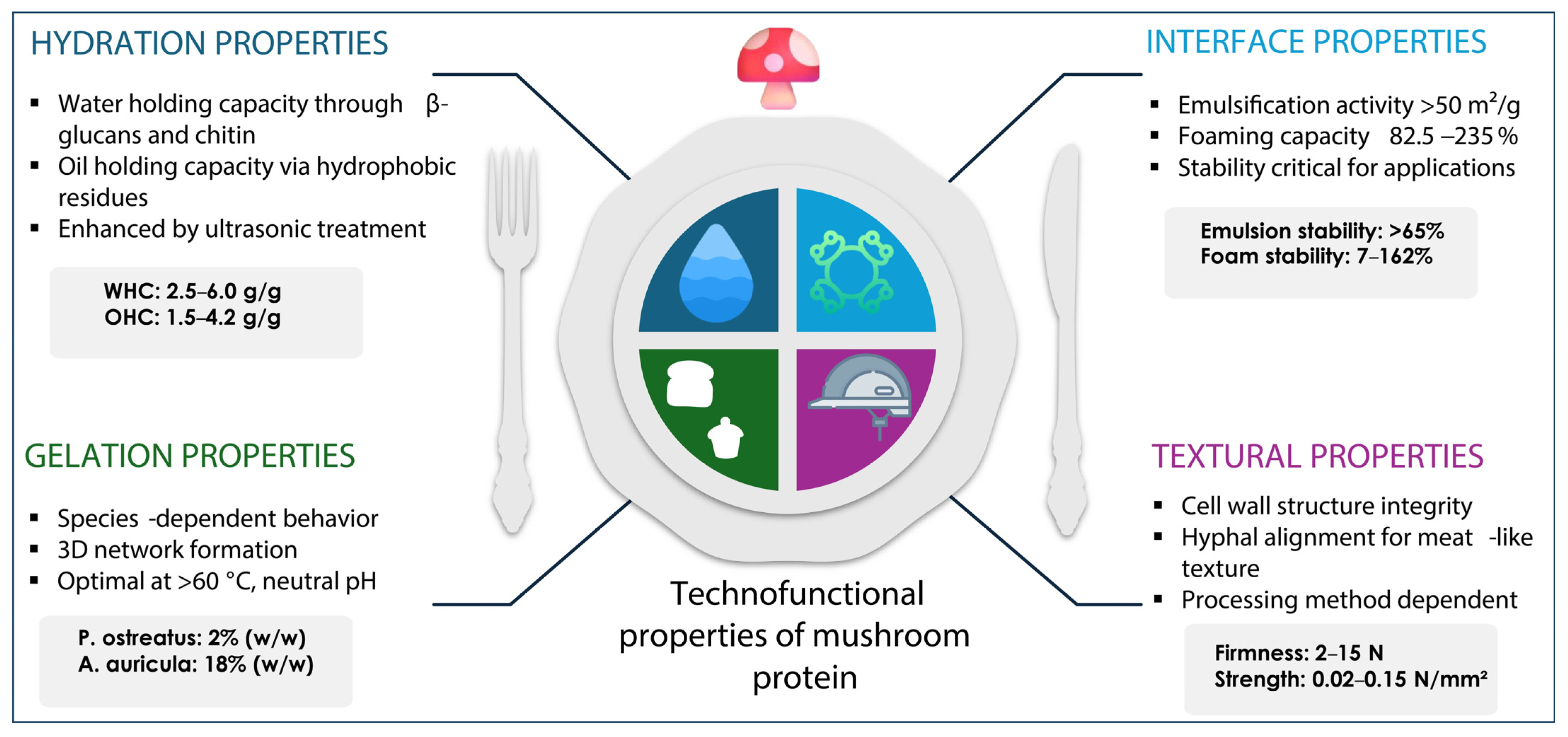
| Water Holding Capacity (WHC) | The ability to retain moisture. Ranging from 2.5 to 6.0 g water/g, due to hydrogen bonding and physical entrapment by high fiber content, particularly β-glucans and chitin. | Crucial for maintaining product texture and preventing moisture loss during processing. | [42] |
| Oil Holding Capacity (OHC) | The ability to absorb and retain lipids. Values ranging from 1.5 to 4.2 g oil/g protein. This can be enhanced by treatments like ultrasonication or enzymatic modification that expose hydrophobic amino acid residues. | Essential for texture enhancement and the retention of flavor compounds in food formulations. | [43] |
| Emulsification and Foaming Properties | Due to its amphiphilic nature, mushroom protein can stabilize oil–water interfaces and create foams. Emulsification activity often exceeds 50 m2/g, with emulsion stability indices over 65%. Foaming capacity ranges from 82.5 to 235%, but foam stability is variable (7–162%). | Essential for stabilizing products like dressings, sauces, and aerated foods. Emulsion and foam stability are more critical for commercial viability and extended shelf-life. | [44] |
| Gelation Properties | The ability to form a three-dimensional network that entraps water and other components. The minimum concentration required varies significantly by species (e.g., Pleurotus ostreatus requires 2%, while Auricularia auricula needs 18%). Gelation is influenced by heat, pH, and ionic strength. | Allows us to create desirable gel textures and mouthfeel in various food products, such as meat analogs or thickeners. | [45] |
| Textural Properties | Determined by the cellular structure and components like chitin and β-glucans. Fresh firmness values typically range from 2 to 15 N. Species like Pleurotus eryngii (8–12 N) are firmer than Agaricus bisporus (3–7 N). | Contributes to the meat-like mouthfeel that is valuable in plant-based meat substitutes. Processing methods, such as freeze-drying, can help to preserve texture. | [46] |
| Property | Description | Correlation with Product Development | References |
|---|---|---|---|
| pH and Acidity | The pH of fresh mushrooms typically ranges from 5.5 to 7.5. Species like Agaricus bisporus are around pH 6.2–6.5, while Pleurotus species are closer to 6.5–7.0. | The pH significantly affects the functional properties of mushroom proteins, with optimal emulsification and foaming often occurring in alkaline conditions (pH 10) and gelation enhanced at a neutral or slightly acidic pH. | [54] |
| Moisture Content and Water Activity (aw) | Mushrooms have 85–95% moisture and a high aw of 0.95–0.98. The optimal moisture content for dried products is 8–12%. | High aw in fresh mushrooms necessitates careful handling and preservation to prevent microbial growth. Controlled dehydration to the optimal moisture content is crucial for product stability and rehydration capacity. | [55] |
| Surface Properties | The surface hydrophobicity of mushroom proteins, which can be measured with probes like ANS, influences their functional behavior. This property can be enhanced by specific processing treatments. Isoelectric points for most mushroom proteins are typically between pH 4–5. | Directly affects protein solubility and their ability to stabilize emulsions and foams, making it a key factor in developing functional food ingredients. | [56] |
| Thermal Properties | The thermal transition temperature of mushroom proteins (protein denaturation) occurs between 60 and 85 °C. Polysaccharides, like β-glucans, are more thermally stable and can maintain their structure up to 120 °C. | Essential for optimizing heat processing to maintain functional properties and texture. Processing temperatures can be adjusted to either preserve or modify protein and polysaccharide structures for desired outcomes. | [56] |
| Company | Country | Products |
|---|---|---|
| Quorn Foods Ltd. | United Kingdom | Quorn mince, sausages, burgers, chicken-style pieces, ready meals, vegan range with potato protein binder |
| Four Sigmatic ® | United States | Focus Ground Coffee (Lion’s Mane), Mushroom Coffee Mix, Adaptogen Coffee, Chaga Elixir, Reishi Elixir |
| Popadelics | United States | Shiitake mushroom chips (various flavors), vacuum-fried specialty varieties |
| Host Defense (Fungi Perfecti) | United States | Lion’s mane capsules, Turkey Tail extract, Reishi tinctures, cordyceps supplements, multi-mushroom blends |
| Libre Foods S.L | Spain | Mycelium-based bacon alternative: Libre Bacon (oyster mushroom and pea protein) |
| Mush Foods, Ltd. | Israel | Mycelium ingredient for hybrid meat products: 50CUT-mycelium blended with half meat in hybrid burgers |
| Fungi Perfecti, LLC. (Host Defense®) | United States | Mycelium-based functional drink mixes: MycoBrew®: coffee, matcha, cocoa, and mocha blends with lion’s mane mycelium |
| Mud\Wtr | United States | Mushroom-based coffee alternative: matcha chai blend with cordyceps, lion’s mane, chaga, Reishi |
| Spacegoods | United Kingdom | Adaptogenic powder drink mixes with mushrooms. Rainbow Dust with lion’s mane, cordyceps, chaga |
| Ppuff! | Indonesia | Crisp mushroom snacks: Snacks made from red rice, corn, and mushrooms |
| Rritual Superfoods | Canada | Offers a range of mushroom-based functional powders, rather than ready-to-eat meals: Chaga Immune, Reishi Relax, Lion’s Mane Focus |
| Life Cykel | Australia | Life Cykel specializes in double liquid mushroom extracts crafted from both fruiting bodies and mycelium: Lion’s mane extract, cordyceps extract, Reishi extract, chaga extract, Turkey Tail extract, shiitake extract |
| Innovative Product | Species Used | Preparation/Technology | Nutritional Highlights/Physiological Effects or Health Claims | References |
|---|---|---|---|---|
| Flatbread (chapatti) | Pleurotus spp. or Agaricus bisporus as dried mushroom powder | D-optimal mixture design; mushroom drying and powdering; blending with wheat and millet flours; dough rheology, texture and SEM analysis | Increased protein, fiber, ash, vitamin D2 (3812 IU/100 g) and antioxidant activity; reduced chapatti hardness; improved functional value | [69] |
| Soy–Mushroom Analog Burger | Pleurotus ostreatus | Full fat soy (FFS) or isolated soy protein (ISP) mixed with oyster mushroom (0–12%); texturized using twin-screw extruder with cooling die | Enhanced textural properties, improved water holding capacity and cooking properties; FFS-based with 12% mushroom showed highest quality parameters and organoleptic properties | [70] |
| Mushroom–Chicken Burger | Oyster mushroom stalk | Chicken breast meat partially substituted with oyster mushroom stalk powder (2.5–10%); formed into patties | Improved water-binding capacity, reduced cooking loss and shrinkage, enhanced antioxidant properties, increased fiber and ash content; optimal substitution at 2.5–5% level | [71] |
| Mushroom Nuggets | - | Utilizes mycelium for fibrous texture; shaped and breaded before baking or frying | Rich in protein, fiber; zero cholesterol; supports immune health | [72] |
| Mushroom-Based Sausages | Lentinus edodes, Coprinus comatus and Pleurotus ostreatus | Blended mushroom powder with pea protein, barley, and spices; extruded or stuffed into casings | Resulted with high in protein, low in fat, good umami profile; contains dietary fiber and essential amino acids | [73] |
| Commercial Plant/Mushroom Jerky | Shiitake and king oyster | Commercially produced jerky alternatives using mushroom-based formulations | Lower protein content (3 g/serving) compared to plant-based alternatives; consumer acceptance challenged by excessive toughness and chewiness; optimal pricing below current market rates | [74] |
| Processed/Preserved Products | ||||
| Reduced-Sulfite Canned Mushrooms | Agaricus bisporus | Canned mushrooms with controlled/reduced sulfite content, using alternative preservation methods and condiments | Maintained stable pH (<4.5) for 42 days without sulfites; “sulfite-free” labeling increased consumer purchase intention despite slight color changes; commercially viable with appropriate marketing | [75] |
| Snack Products | ||||
| Mushroom Chips | Agaricus bisporus | Thinly sliced mushrooms (shiitake, portobello) dehydrated or vacuum-fried/seasoned | Gluten-free, low calorie and fat; contains antioxidants and B vitamins | [76] |
| Mushroom Crackers | Pleurotus ostreatus | Mushroom powder incorporated into dough; baked | Higher protein and lower carbohydrates than conventional crackers; fiber-rich | [77] |
| Mushroom-Based Snack Bars | Lentinula edodes | Mixed mushroom powders with seeds, nuts, grains; pressed and packaged | Rich in bioactive compounds (protocatechuic, p-hydroxybenzoic, p-coumaric and cinnamic acids), proteins, and fibers; energy-boosting | [78] |
| Beverages | ||||
| Mushroom-Infused Tea | Pleurotus sajor-caju | Infusion of dried mushroom (e.g., Reishi, lion’s mane) with herbs | Provides adaptogens, immune-boosting polysaccharides, low-calorie | [79] |
| Mushroom Coffee | Hericium erinaceus and cordyceps militaris | Coffee blended with powdered mushrooms (e.g., lion’s mane, chaga) | Offers caffeine + cognitive benefits (hericenones, erinacines); reduces anxiety, supports focus | [80] |
| Shiitake Beverage with Quality Control | Shiitake | Beverage formulation with quantified polysaccharide content, using NIR spectroscopy and machine learning for quality assurance | Standardized polysaccharide content with rapid, non-destructive quality control; enables consistent bioactive compound delivery | [81] |
| Mushroom-Enhanced Fermented Wine | Pleurotus pulmonarius | Co-fermentation using mushroom mycelia and yeast (42:58 ratio) at optimized conditions (pH 4.99, 28.29 °C, 131 h) | Enhanced ethanol production (22.29% vs. conventional 13–14%), increased antioxidant activity, extends shelf-life of perishable fruits | [82] |
| Technology | Application | Advantages | Limitations | Recent Achievement | Reference |
|---|---|---|---|---|---|
| High Moisture Extrusion | Meat alternatives | Made fibrous, meat-like texture | High energy consumption, limited to specific moisture content ranges (45–75%) | Temperature-controlled processing (120–180 °C) | [99] |
| Fermentation Technology | Mycoprotein production | Improved in digestibility and flavor | Extended processing time (days to weeks), contamination risk, pH sensitivity | Continuous fermentation systems, pH control | [129,130] |
| Freeze Drying | For preservation and snack development | Maintains nutritional quality, avoids aroma loss and/or oxidation associated with conventional drying | Extremely high energy costs, long processing times (24–48 h), equipment intensive, high investment cost | Hybrid and atmospheric freeze-drying systems reduce energy use by up to 30% and drying time by up to 70%; integration with microwave, infrared, or ultrasound technologies enhances efficiency and preserves quality | [131] |
| High-Pressure Processing | Safety, shelf-life extension | Non-thermal preservation | High capital investment, limited to liquid/semi-solid products, texture changes in some foods | 400–600 MPa pressure applications | [132] |
| Ultrasonic Extraction | To extract bioactive compounds | Improved extraction efficiency | Equipment fouling, limited penetration depth, potential compound degradation at high intensities | Optimization of frequency and time parameters | [133] |
| 3D Food Printing | Novel textures, customization | Personalized nutrition, reduced waste | Limited material compatibility, slow processing speed, high initial costs, scalability issue | Integration with mushroom-based gels and pastes | [134] |
Disclaimer/Publisher’s Note: The statements, opinions and data contained in all publications are solely those of the individual author(s) and contributor(s) and not of MDPI and/or the editor(s). MDPI and/or the editor(s) disclaim responsibility for any injury to people or property resulting from any ideas, methods, instructions or products referred to in the content. |
© 2026 by the authors. Licensee MDPI, Basel, Switzerland. This article is an open access article distributed under the terms and conditions of the Creative Commons Attribution (CC BY) license.
Share and Cite
Pawde, S.V.; Sai-Ut, S.; Kingwascharapong, P.; Pongsetkul, J.; Wu, S.; Huang, J.-Q.; Huang, Z.; Jung, Y.H.; Rawdkuen, S. Mushrooms as Sustainable Protein Alternatives: Nutritional–Functional Characterization and Innovative Applications in Meat Analogs, Functional Snacks, and Beverages. Foods 2026, 15, 1301. https://doi.org/10.3390/foods15081301
Pawde SV, Sai-Ut S, Kingwascharapong P, Pongsetkul J, Wu S, Huang J-Q, Huang Z, Jung YH, Rawdkuen S. Mushrooms as Sustainable Protein Alternatives: Nutritional–Functional Characterization and Innovative Applications in Meat Analogs, Functional Snacks, and Beverages. Foods. 2026; 15(8):1301. https://doi.org/10.3390/foods15081301
Chicago/Turabian StylePawde, Subhash V., Samart Sai-Ut, Passakorn Kingwascharapong, Jaksuma Pongsetkul, Shusong Wu, Jia-Qiang Huang, Zhaoxian Huang, Young Hoon Jung, and Saroat Rawdkuen. 2026. "Mushrooms as Sustainable Protein Alternatives: Nutritional–Functional Characterization and Innovative Applications in Meat Analogs, Functional Snacks, and Beverages" Foods 15, no. 8: 1301. https://doi.org/10.3390/foods15081301
APA StylePawde, S. V., Sai-Ut, S., Kingwascharapong, P., Pongsetkul, J., Wu, S., Huang, J.-Q., Huang, Z., Jung, Y. H., & Rawdkuen, S. (2026). Mushrooms as Sustainable Protein Alternatives: Nutritional–Functional Characterization and Innovative Applications in Meat Analogs, Functional Snacks, and Beverages. Foods, 15(8), 1301. https://doi.org/10.3390/foods15081301