Exopolysaccharides from Lactiplantibacillus plantarum WLPL04 Alleviate Hyperuricemia by Regulating Uric Acid Metabolism and Gut Microbiota
Abstract
1. Introduction
2. Materials and Methods
2.1. Strain Culture, EPS Isolation, and Purification
2.2. HK-2 Cell Model
2.3. Animal Procedure
2.4. Urine Collection and Analysis
2.5. Biochemical Index Assay
2.6. RT-qPCR Analysis
2.7. Histopathological Evaluation
2.8. Bacterial DNA Extraction and Sequence Data Analysis
2.9. Statistical Analysis
3. Results
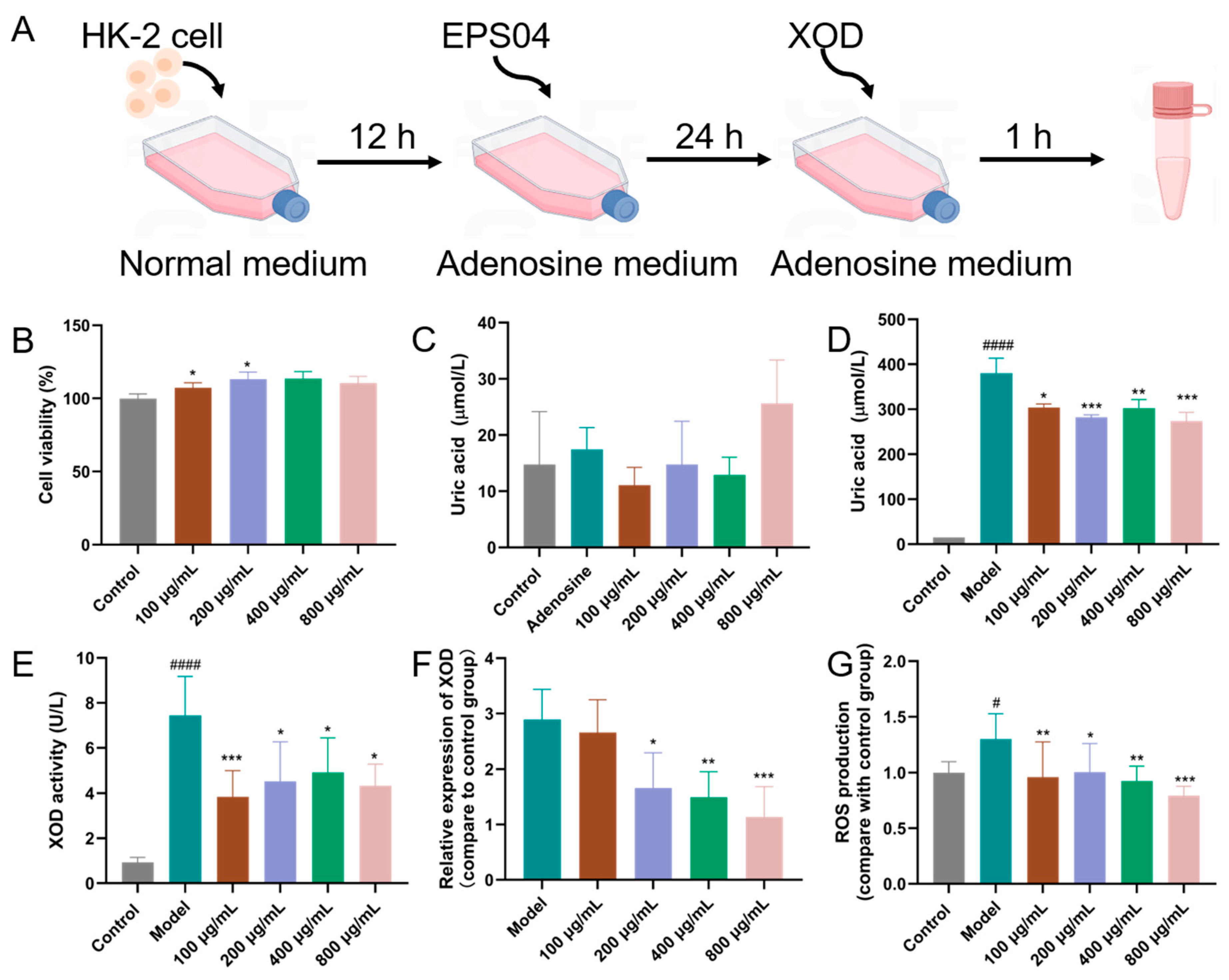
3.1. Effect of EPS04 on Hyperuricemia HK-2 Cells Induced by Adenosine and XOD
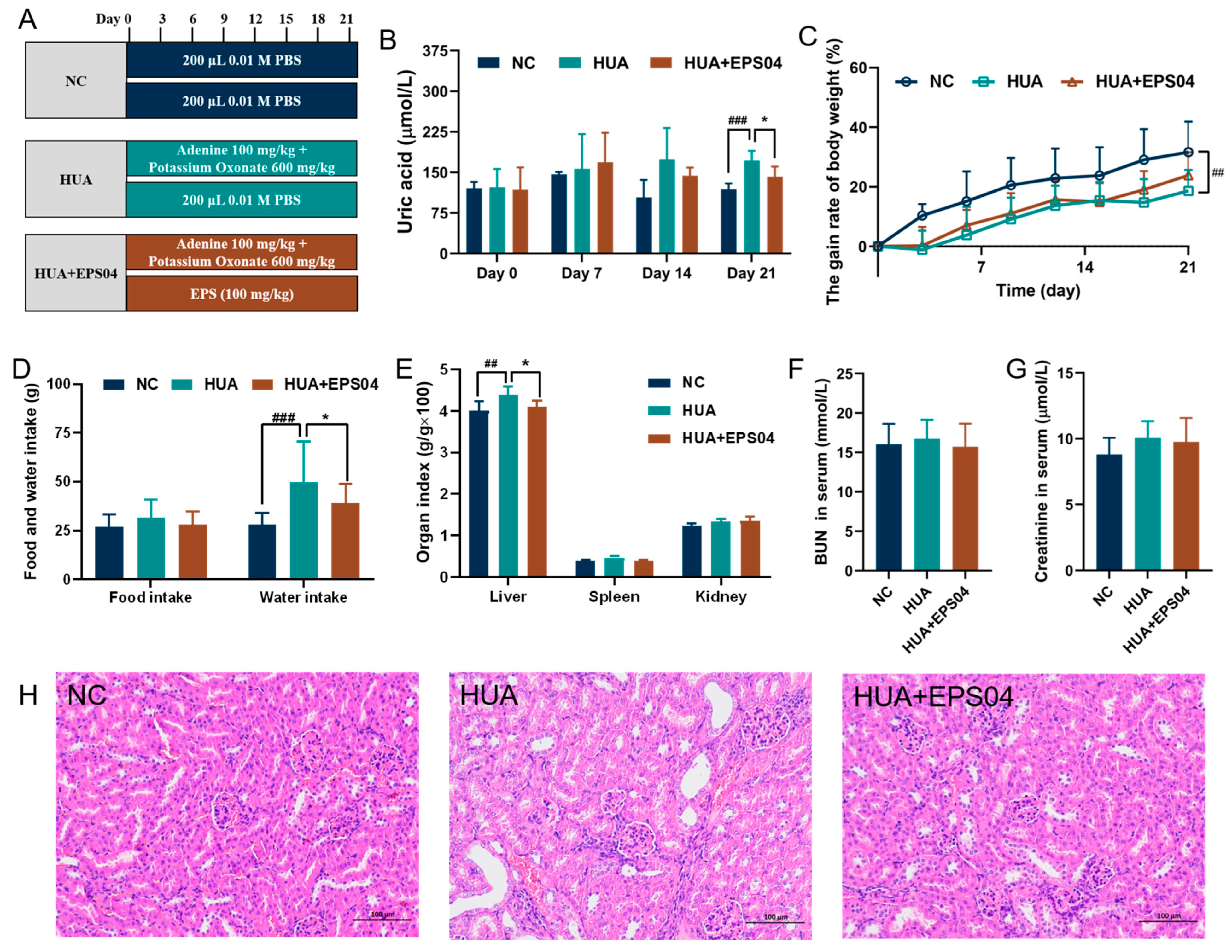
3.2. Effect of EPS04 on Physiological in HUA Mice
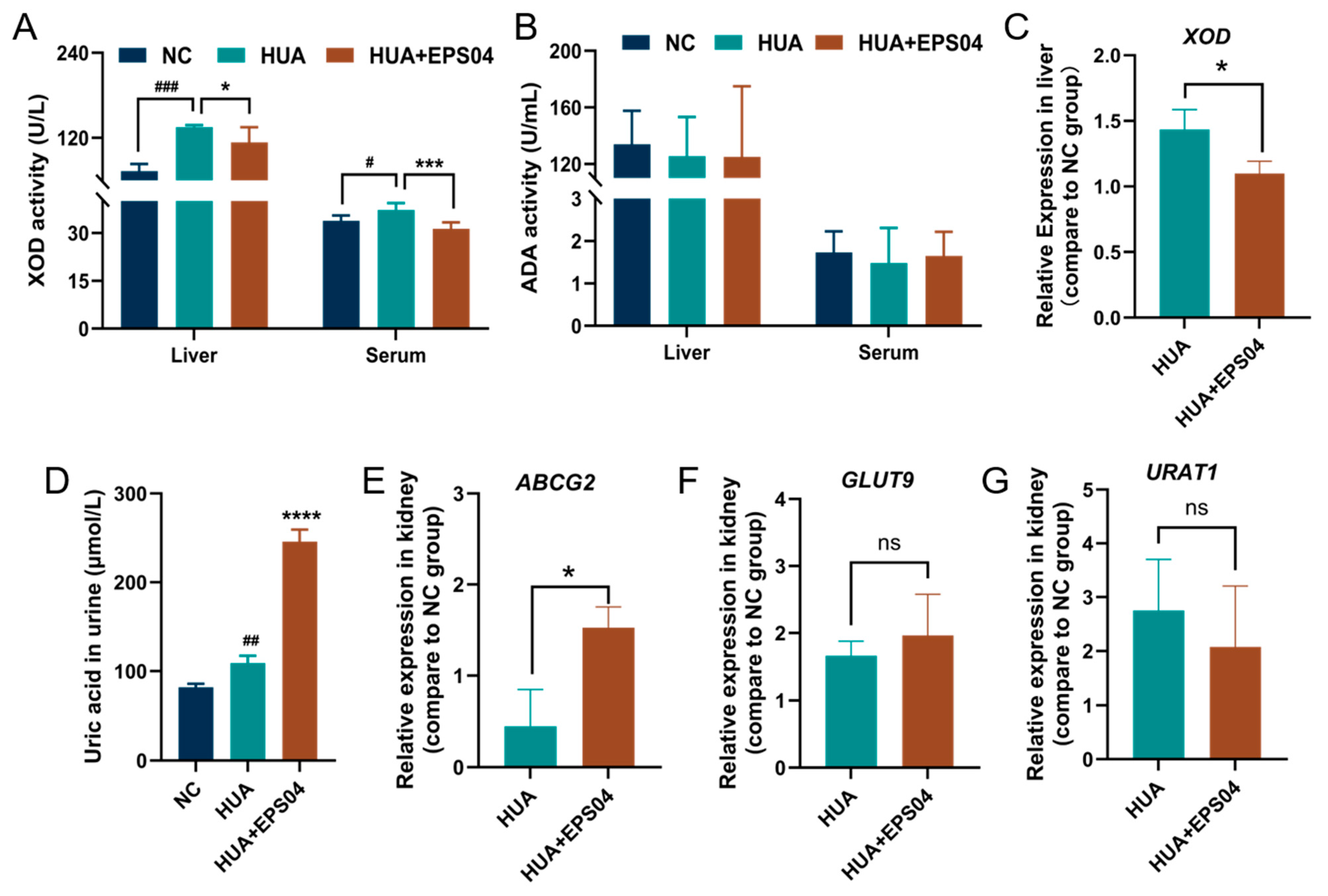
3.3. Effect of EPS04 on UA Metabolism and Transport Regulation
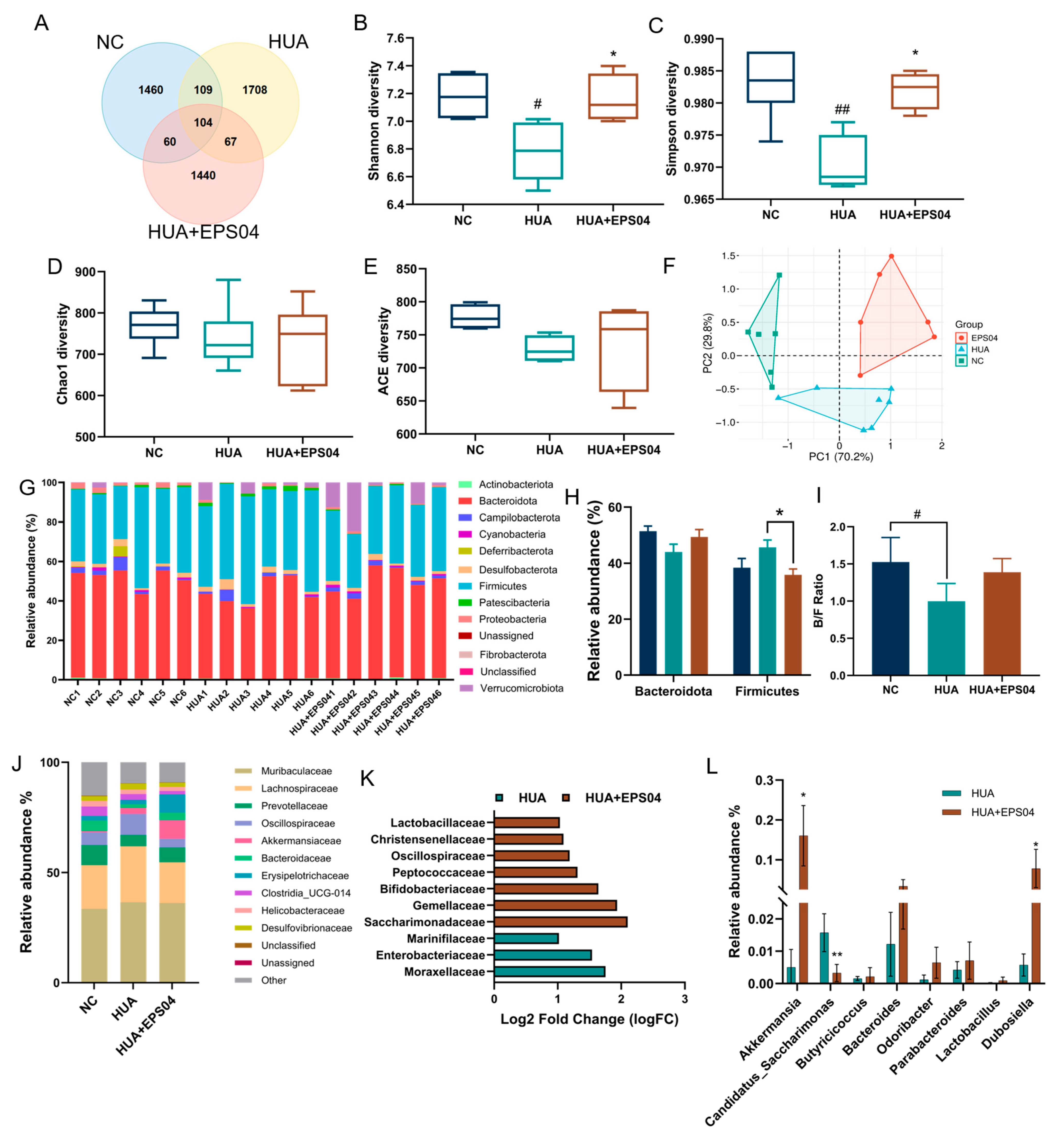
3.4. Effect of EPS04 on Gut Microbes in Hyperuricemia Mice
4. Discussion
5. Conclusions
Author Contributions
Funding
Institutional Review Board Statement
Informed Consent Statement
Data Availability Statement
Conflicts of Interest
References
- Du, L.; Zong, Y.; Li, H.; Wang, Q.; Xie, L.; Yang, B.; Pang, Y.; Zhang, C.; Zhong, Z.; Gao, J. Hyperuricemia and its related diseases: Mechanisms and advances in therapy. Signal Transduct. Target. Ther. 2024, 9, 212. [Google Scholar] [CrossRef] [PubMed]
- Ma, L.; Wang, J.; Ma, L.; Wang, X.M. The link between hyperuricemia and diabetes: Insights from a quantitative analysis of scientific literature. Front. Endocrinol. 2025, 15, 1441503. [Google Scholar] [CrossRef] [PubMed]
- Reynolds, R.J.; Irvin, M.R.; Bridges, S.L.; Kim, H.; Merriman, T.R.; Arnett, D.K.; Singh, J.A.; Sumpter, N.A.; Lupi, A.S.; Vazquez, A.I. Genetic correlations between traits associated with hyperuricemia, gout, and comorbidities. Eur. J. Hum. Genet. 2021, 29, 1438–1445. [Google Scholar] [CrossRef] [PubMed]
- Jalal, D.I. Hyperuricemia, the kidneys, and the spectrum of associated diseases: A narrative review. Curr. Med. Res. Opin. 2016, 32, 1863–1869. [Google Scholar] [CrossRef]
- Bortolotti, M.; Polito, L.; Battelli, M.G.; Bolognesi, A. Xanthine oxidoreductase: One enzyme for multiple physiological tasks. Redox Biol. 2021, 41, 101882. [Google Scholar] [CrossRef]
- Luk, A.J.; Levin, G.P.; Moore, E.E.; Zhou, X.-H.; Kestenbaum, B.R.; Choi, H.K. Allopurinol and mortality in hyperuricaemic patients. Rheumatology 2009, 48, 804–806. [Google Scholar] [CrossRef]
- Edwards, N.L. Febuxostat: A new treatment for hyperuricaemia in gout. Rheumatology 2009, 48, ii15–ii19. [Google Scholar] [CrossRef]
- Hotea, I.; Giesen, T.; Comarniceanu, A.; Efde, M.; van Osch, F.; Janssen, M.; Jansen, T.L. Real-life results of urate-driven pharmacotherapy with three urate lowering drugs in gout: Allopurinol, febuxostat and benzbromarone. Explor. Musculoskelet. Dis. 2023, 1, 97–105. [Google Scholar] [CrossRef]
- Khoo, B.; Leow, Y. A review of inpatients with adverse drug reactions to allopurinol. Singap. Med. J. 2000, 41, 156–160. [Google Scholar]
- Ding, X.; Yuan, Q.; Han, C.; Shen, C.; Chen, M.; Yin, H.; Zhong, H.; Yang, C.; Huang, J.; He, C. Effects and mechanisms of theabrownin from black tea in improving hyperuricemia: Evidence from animal study and clinical trial. Int. J. Biol. Macromol. 2025, 293, 139373. [Google Scholar] [CrossRef]
- Zhang, N.; Zhang, B.; Chen, X.; Zhang, Y.; Wang, Y.; Lu, S.; Zhang, H.; Chen, Y.; Jiang, H.; Zhou, H. Effects and mechanisms of Polygonati Rhizoma polysaccharide on potassium oxonate and hypoxanthine-induced hyperuricemia in mice. Int. J. Biol. Macromol. 2024, 280, 135550. [Google Scholar] [CrossRef]
- Wan, Y.; Qian, J.; Li, Y.; Shen, Y.; Chen, Y.; Fu, G.; Xie, M. Inhibitory mechanism of xanthine oxidase activity by caffeoylquinic acids in vitro. Int. J. Biol. Macromol. 2021, 184, 843–856. [Google Scholar] [CrossRef]
- Zhang, C.; Wang, R.; Zhang, G.; Gong, D. Mechanistic insights into the inhibition of quercetin on xanthine oxidase. Int. J. Biol. Macromol. 2018, 112, 405–412. [Google Scholar] [CrossRef] [PubMed]
- Lv, C.; Yang, Q.; Mariga, A.M.; Pei, F.; Fang, Y.; Xia, J. Isolation, structural characterization and bioactivity of a novel exopolysaccharide from lactic acid bacteria in kefir grains. Food Biosci. 2025, 73, 107747. [Google Scholar] [CrossRef]
- Xu, Q.; Wang, M.-M.; Li, X.; Ding, Y.-R.; Wei, X.-Y.; Zhou, T. Antioxidant and anti-inflammatory activities and action mechanisms of exopolysaccharides from Lactiplantibacillus plantarum Z-1. Food Biosci. 2024, 62, 105247. [Google Scholar] [CrossRef]
- Jiang, M.; Zhang, F.; Wan, C.; Xiong, Y.; Shah, N.P.; Wei, H.; Tao, X. Evaluation of probiotic properties of Lactobacillus plantarum WLPL04 isolated from human breast milk. J. Dairy Sci. 2016, 99, 1736–1746. [Google Scholar] [CrossRef]
- Wei, M.; Hu, Y.; Zhang, Z.; Qiu, L.; Tao, X.; Wei, H. Lactiplantibacillus plantarum WLPL04 from Human Breast Milk Attenuates Hyperuricemia via Coordinated Purine Salvage Pathway, Renal Transporter Regulation, and Gut Microbiota Remodeling. Nutrients 2025, 17, 3447. [Google Scholar] [CrossRef]
- Liu, Z.; Zhang, Z.; Qiu, L.; Zhang, F.; Xu, X.; Wei, H.; Tao, X. Characterization and bioactivities of the exopolysaccharide from a probiotic strain of Lactobacillus plantarum WLPL04. J. Dairy Sci. 2017, 100, 6895–6905. [Google Scholar] [CrossRef]
- Liu, Z.; Dong, L.; Jia, K.; Zhan, H.; Zhang, Z.; Shah, N.P.; Tao, X.; Wei, H. Sulfonation of Lactobacillus plantarum WLPL04 exopolysaccharide amplifies its antioxidant activities in vitro and in a Caco-2 cell model. J. Dairy Sci. 2019, 102, 5922–5932. [Google Scholar] [CrossRef]
- Wang, H.; Zhang, X.; Yu, J.; Huang, Y.; Wang, R. In vitro screening and probiotic properties of lactic acid bacteria with anti-hyperuricemia capacity. Food Biosci. 2025, 72, 107511. [Google Scholar] [CrossRef]
- Zhao, X.; Cai, P.; Xiong, S.; Wei, B.; Du, T.; Huang, T.; Yu, Q.; Xie, M.; Xiong, T. Lacticaseibacillus rhamnosus NCUH061012 alleviates hyperuricemia via modulating gut microbiota and intestinal metabolites in mice. Food Biosci. 2024, 58, 103699. [Google Scholar] [CrossRef]
- Wu, H.; Wang, Y.; Huang, J.; Li, Y.; Lin, Z.; Zhang, B. Rutin ameliorates gout via reducing XOD activity, inhibiting ROS production and NLRP3 inflammasome activation in quail. Biomed. Pharmacother. 2023, 158, 114175. [Google Scholar] [CrossRef] [PubMed]
- Gherghina, M.E.; Peride, I.; Tiglis, M.; Neagu, T.P.; Niculae, A.; Checherita, I.A. Uric Acid and Oxidative Stress-Relationship with Cardiovascular, Metabolic, and Renal Impairment. Int. J. Mol. Sci. 2022, 23, 3188. [Google Scholar] [CrossRef] [PubMed]
- Halperin Kuhns, V.L.; Woodward, O.M. Urate transport in health and disease. Best Pract. Res. Clin. Rheumatol. 2021, 35, 101717. [Google Scholar] [CrossRef]
- Eckenstaler, R.; Benndorf, R.A. The Role of ABCG2 in the Pathogenesis of Primary Hyperuricemia and Gout-An Update. Int. J. Mol. Sci. 2021, 22, 6678. [Google Scholar] [CrossRef]
- Wang, Y.; Lin, Z.; Zhang, B.; Nie, A.; Bian, M. Cichorium intybus L. promotes intestinal uric acid excretion by modulating ABCG2 in experimental hyperuricemia. Nutr. Metab. 2017, 14, 38. [Google Scholar] [CrossRef]
- Zhao, L.-Q.; Zhao, Y.-L.; He, Y.-J.; Yang, X.-W.; Luo, X.-D. Tuberindine A, a Truffle Alkaloid with an Unprecedented Skeleton Exhibiting Anti-hyperuricemic Bioactivity. Org. Lett. 2022, 24, 4333–4337. [Google Scholar] [CrossRef]
- Cui, Y.; An, P.; Li, F.; Duan, F.; Mei, Z.; Ye, Q.; Wang, G.; Zhang, H.; Luo, Y. Strategies to reduce uric acid through gut microbiota intervention. Front. Microbiol. 2025, 16, 1654152. [Google Scholar] [CrossRef]
- Ding, Y.; Hou, Y.; Lao, X. The Role of Akkermansia muciniphila in Disease Regulation. Probiotics Antimicrob. Proteins 2025, 17, 2027–2038. [Google Scholar] [CrossRef]
- Zhang, L.; Liu, J.; Jin, T.; Qin, N.; Ren, X.; Xia, X. Live and pasteurized Akkermansia muciniphila attenuate hyperuricemia in mice through modulating uric acid metabolism, inflammation, and gut microbiota. Food Funct. 2022, 13, 12412–12425. [Google Scholar] [CrossRef]



| Genes | Forward Primer (5′-3′) | Reverse Primer (3′-5′) |
|---|---|---|
| m-XOD | ATGACGAGGACAACGGTAGAT | TCATACTTGGAGATCATCACGGT |
| m-ABCG2 | GGCCTGGACAAAGTAGCAGA | GTTGTGGGCTCATCCAGGAA |
| m-GLUT9 | TGGACTCAATGCGATCTGG | AGAGAAGATAGCAGCCAGTGTTT |
| m-URAT1 | CCGCTTCCGACAACCTCA | CTTCTGCGCCCAAACCTATC |
| m-β-actin | GCTCCTCCTGAGCGCAAGTA | CAGCTCAGTAACAGTCCGCC |
| h-XOD | TCTTCCTGGCTGCTTCTATCTT | TGTTCTGTGGTATGTTCCTCCT |
| h-β-actin | CATCCCCCAAAGTTCACAATT | AGTGGGGTGGCTTTTAGGAT |
Disclaimer/Publisher’s Note: The statements, opinions and data contained in all publications are solely those of the individual author(s) and contributor(s) and not of MDPI and/or the editor(s). MDPI and/or the editor(s) disclaim responsibility for any injury to people or property resulting from any ideas, methods, instructions or products referred to in the content. |
© 2026 by the authors. Licensee MDPI, Basel, Switzerland. This article is an open access article distributed under the terms and conditions of the Creative Commons Attribution (CC BY) license.
Share and Cite
Wei, M.; Hu, Y.; Li, X.; Long, X.; Zhang, Z.; Tao, X.; Wei, H. Exopolysaccharides from Lactiplantibacillus plantarum WLPL04 Alleviate Hyperuricemia by Regulating Uric Acid Metabolism and Gut Microbiota. Foods 2026, 15, 1206. https://doi.org/10.3390/foods15071206
Wei M, Hu Y, Li X, Long X, Zhang Z, Tao X, Wei H. Exopolysaccharides from Lactiplantibacillus plantarum WLPL04 Alleviate Hyperuricemia by Regulating Uric Acid Metabolism and Gut Microbiota. Foods. 2026; 15(7):1206. https://doi.org/10.3390/foods15071206
Chicago/Turabian StyleWei, Min, Yingsheng Hu, Xiaoxian Li, Xingyi Long, Zhihong Zhang, Xueying Tao, and Hua Wei. 2026. "Exopolysaccharides from Lactiplantibacillus plantarum WLPL04 Alleviate Hyperuricemia by Regulating Uric Acid Metabolism and Gut Microbiota" Foods 15, no. 7: 1206. https://doi.org/10.3390/foods15071206
APA StyleWei, M., Hu, Y., Li, X., Long, X., Zhang, Z., Tao, X., & Wei, H. (2026). Exopolysaccharides from Lactiplantibacillus plantarum WLPL04 Alleviate Hyperuricemia by Regulating Uric Acid Metabolism and Gut Microbiota. Foods, 15(7), 1206. https://doi.org/10.3390/foods15071206