Review

Polyphenol-Rich Wild Fruits of the Indian Himalayas as a Potential Nutraceutical Candidate for the Management of Endometriosis: A Review

School of Health Sciences and Technology, UPES, Dehradun 248007, Uttarakhand, India
*
Author to whom correspondence should be addressed.
Foods 2026, 15(7), 1178; https://doi.org/10.3390/foods15071178
Submission received: 13 February 2026 / Revised: 20 March 2026 / Accepted: 30 March 2026 / Published: 1 April 2026
(This article belongs to the Special Issue The Health Benefits of Fruits and Vegetables—3rd Edition)

Abstract

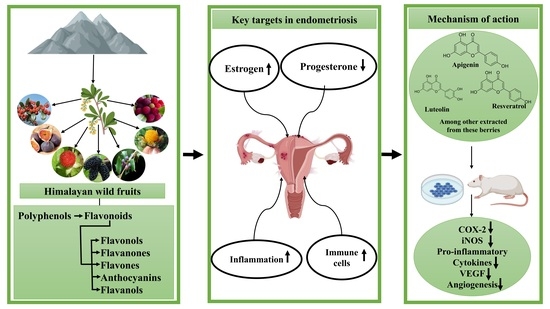
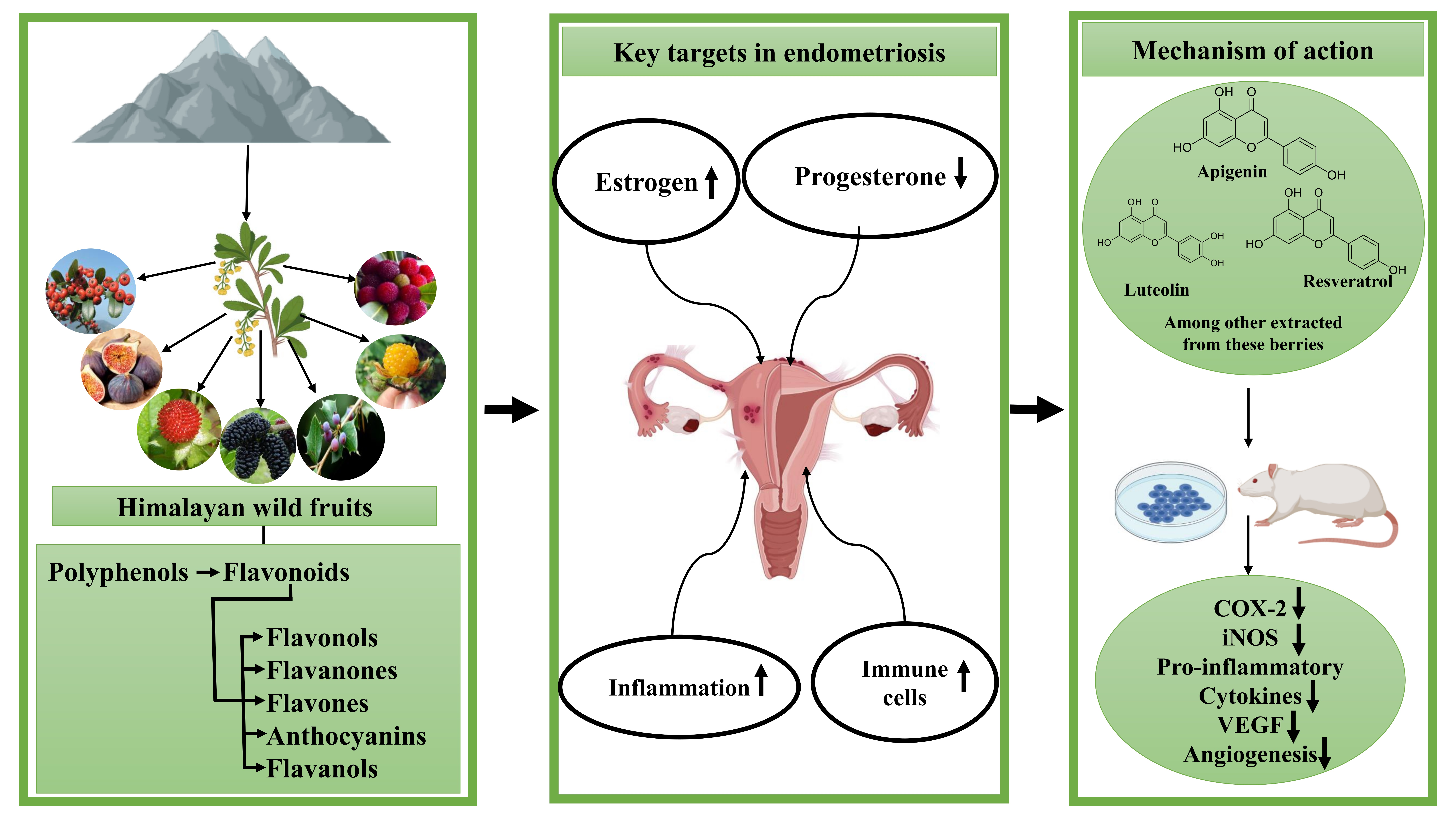
India, home to 4 biodiversity hotspots, hosts 675 wild species used for nutritional and therapeutic purposes. Wild edible fruits are highly valuable for their rich content of health-beneficial compounds, such as polyphenols, carotenoids, and vitamins. The shift in modern lifestyles has increasingly impacted human health. Several factors contribute to heightened oxidative stress, which underpins the development of non-communicable diseases (NCDs). Endometriosis, one of these conditions influenced by oxidative stress, currently lacks a definitive cure, leaving patients reliant on hormonal and surgical treatments. According to the WHO, 10% of girls and women worldwide are affected by endometriosis, often experiencing severe symptoms. This review explores the role of oxidative stress in the progression of endometriosis, its pathophysiology, and the effects of polyphenols found in wild Himalayan fruits, including various phenolic acids, flavonoids, stilbenes, and lignans. It also examines their synergistic effects with other non-polyphenolic compounds in reducing these biomarkers, such as inflammatory enzymes, pro-inflammatory cytokines, and estrogen receptors, and in modulating pathways like NF-κB, PI3K/AKT, among others, based on preclinical and clinical studies. Additionally, the review highlights key wild fruit species native to the Indian Himalayas, details their nutritional and phytochemical profiles, and assesses their potential, individually and synergistically, as functional foods or nutraceuticals for non-invasive treatment options for endometriosis.

Graphical Abstract

1. Introduction

Over the past few decades, society has undergone a paradigm shift in socioeconomic development and improved living standards, prompting changes in lifestyle patterns and modern dietary habits. Adopting healthy behaviors, including adequate sleep, regular physical exercise, balanced nutrition, and effective stress management, is considered a way to combat increased oxidative stress and maintain overall health [1,2]. Free radicals are produced in our bodies through processes such as digestion, metabolism, and excretion. If our body is unable to neutralize these free radicals, they can trigger an adverse chain reaction that, to stabilize themselves, can damage the cell membrane, DNA, restrict the action of major enzymes, and disrupt normal cell division [3]. Reactive oxygen species (ROS) are unavoidable byproducts of mitochondrial oxidative metabolism and include hydrogen peroxide, the superoxide anion, and hydroxyl radicals [4].
Oxidative stress has been defined as an imbalance between the production of free radicals, such as ROS, and their neutralisation by antioxidants in the human body. The imbalance is generally seen due to either excessive production of free radicals from endogenous or exogenous sources or a weakened antioxidant system, leading to cellular damage [5]. An increased oxidant environment in the body has been associated with mitochondrial dysfunction, endoplasmic reticulum stress, and activation of NADPH oxidase, which further triggers superoxide production and inflammatory molecule production. A surge in ROS is observed with a high-calorie Western diet, which is mainly composed of fats and carbohydrates [6]. A sedentary lifestyle is a major contributor to global health and a leading risk factor for global mortality, and replacing traditional foods with industrially processed foods poses a disadvantage to the body’s natural defense against free radicals [7]. A risk factor that is strongly associated with increased cardiovascular morbidity and mortality is poor diet quality [8].
Non-communicable diseases (NCDs) constituted around three-quarters of global deaths in 2017, resulting in 41 million deaths annually, primarily driven by lifestyle behaviors, environmental exposure, and genetic predisposition, resulting in action taken in response to reduce one-third of premature mortality by NCDs by 2030 through Sustainable Development Goals [9]. India is facing a growing burden of NCDs, as the India state-level disease burden study by the Indian Council of Medical Research found that 23.9% of deaths increased from 1990 to 2016 were caused by NCDs [10]. A review by Cena et al. [11] defined the role of a healthy diet in combating NCDs, with an emphasis on its definition, which states that a diet rich in macronutrients such as carbohydrates, proteins, and fats, and in micronutrients including vitamins and minerals, should be consumed in balanced proportions to meet the body’s daily physiological requirements and support normal bodily functions. WHO further specified the recommended proportions in which each nutrient should be consumed citing the importance of unrefined carbohydrates representing 45–75% of total daily energy, less than 50 g of free sugars consumption, not more than 10% of saturated fats, 10–15% of protein and appropriate consumption of fruits, vegetables, nuts, legumes, and lean animal source for the intake of micronutrients daily [12]. Research is being conducted to valorize fruits and vegetables and produce polyphenol-rich value-added products. One such review by ‘Aqilah et al. [13] summarized the importance of utilizing the whole fruit pulp, seed, and peel of apple, blackberry, blueberry, strawberry, raspberry, and red dragon fruit, as they are rich sources of bioactive compounds. These parts can be efficiently extracted using solvents and extraction methods to produce juices, wines, yogurts, jams, and nutraceuticals. They can also serve as natural preservatives and indicators in the industry, thereby enhancing food security and health benefits.
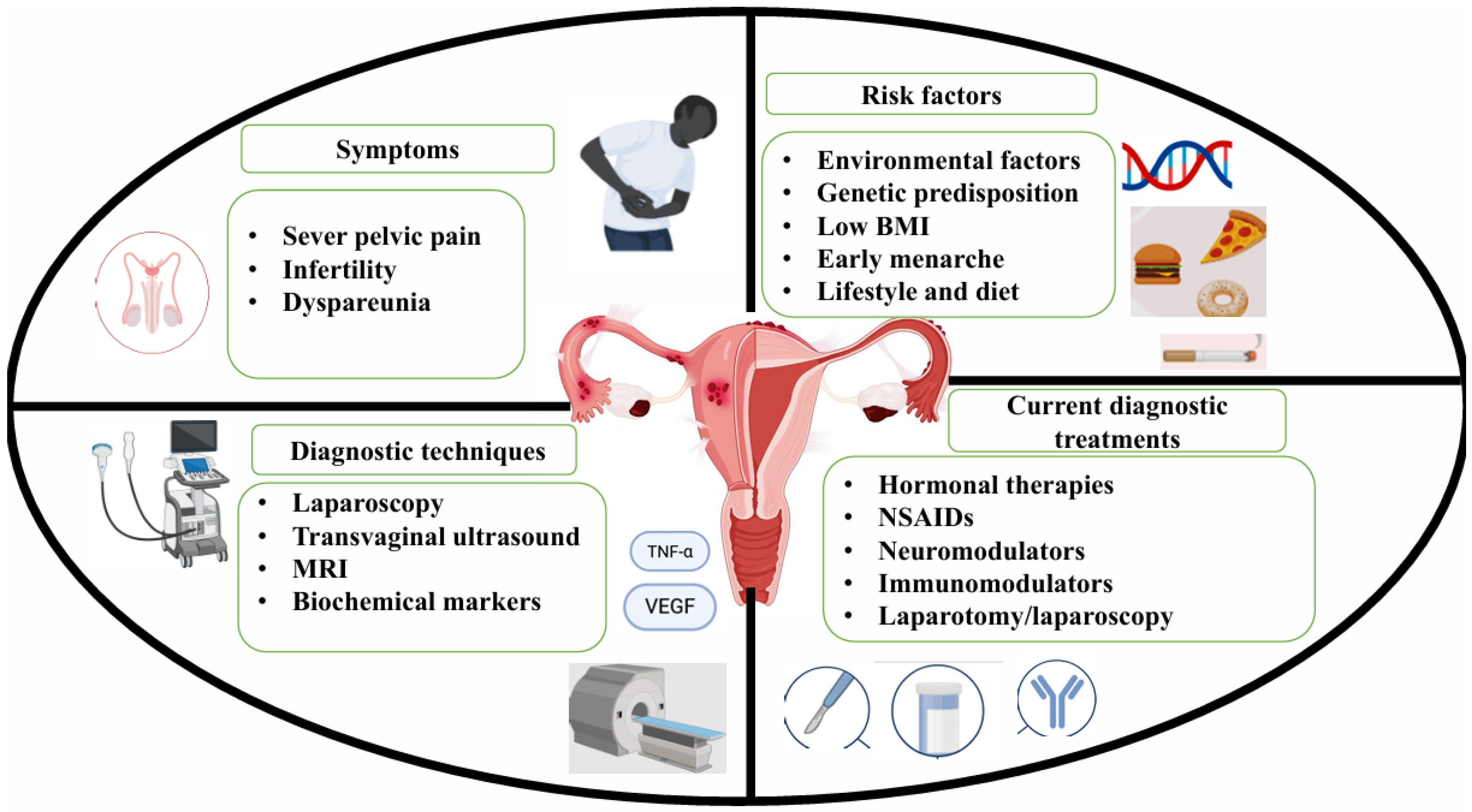
One of the significant physical manifestations associated with oxidative stress that has received comparatively less attention is endometriosis. Endometriosis, initially recognised as an estrogen-dependent localized gynaecological condition, is now considered a complex systemic disease by emerging evidence indicating its effect on metabolic activity in the liver and adipose tissue, promotion of systemic inflammation, and modulation of gene expression in the central nervous system, factors collectively contributing to pain sensitization and neuropsychiatric comorbidities [14,15]. Ectopic endometrial lesions can be distributed throughout the abdominal cavity and are classified as: deep infiltrating endometriosis, superficial peritoneal endometriosis, and ovarian endometriosis, based on anatomical location and depth of invasion [16]. The condition is characterised by symptoms such as pelvic pain, painful menstruation, dyspareunia, and infertility, which also affect other aspects, such as quality of life, by creating a negative impact on social and family life, mental health issues, and substantial healthcare expenses. Standard treatment to mitigate the disease burden and relieve pain symptoms often includes non-steroidal anti-inflammatory drugs (NSAIDs), Gonadotropin-Releasing Hormone (GnRH) agonists, progestins, and oral contraceptives [17]. Given that the disease is hormone-dependent in nature, hormonal or endocrine-based treatments remain primary therapeutic options, which are offered linked to unfavourable mental images and emotions, while causing a broad spectrum of side effects [18]. Surgical treatment is often used to excise or remove ectopic endometriotic tissue. However, consistent improvement is not experienced by all women, considering recurrence remains common, with rates reported as high as 50% within five years [19]. An overview of pathophysiology and current treatment for endometriosis is provided in Figure 1.
Phytochemicals, bioactive compounds derived from plants, play an essential role in disease prevention and treatment due to their diverse pharmacological properties, including antioxidant, anti-inflammatory, and antineoplastic activities [20,21]. Hence, it is essential to understand their causes and the methods for their prevention, using phytochemicals. A review by Osińska et al. [22] concluded that fruits and vegetables may play an important role in the regression of endometriosis, citing the importance of specific foods and diets such as fish oil, green leafy vegetables, and the Mediterranean diet. This review highlighted that these components can modulate the symptoms associated with endometriosis, especially with pain, through the mechanistic regulations of steroid hormones, inflammatory responses, and oxidative stress. In contrast, its opposite, a diet high in processed foods and red meat, has been associated with higher incidences of developing and progression of endometriosis.
The Indian Himalayan region falls within four global biodiversity hotspots, covering 16.2% of India’s total geographical area, spanning about 5.3 lakh km2 [23,24]. The Himalayas are divided into three regions: the Greater Himalayas, the Lesser Himalayas, and the Sub-Himalayas. In Uttarakhand, it covers all three zones, with peaks ranging from 8000 m above sea level (asl) to 1000 m asl, and harbours 10,000 plant species unique to the region [25].
This review synthesizes current knowledge on endometriosis, pathophysiology, and pathways, the role of polyphenols, a subclass of phytochemicals, in mediating endometriosis, and in vivo and in vitro studies, with a specific focus on the role of polyphenols from fruits of the Indian Himalayan Region. Furthermore, it will provide evidence on current functional foods on the market, as well as the potential, challenges, and opportunities for functional food and nutraceuticals derived from wild Himalayan fruits.

2. Literature Search Methodology

A comprehensive literature search of review articles, research articles, and book chapters was conducted in the electronic databases Google Scholar, PubMed, and Scopus. The primary search keywords used were “endometriosis”, “polyphenols”, “Indian Himalayas”, “north-western Himalayas”, “wild fruits”, “endometriosis treatment”, “phytochemical profiling”, “anti-oxidant activity”, and “inflammatory markers”. Additional search combinations included: (1) endometriosis and prevalence, (2) endometriosis and polyphenols, (3) endometriosis and flavonoids, (4) endometriosis and diet, (5) endometriosis and nutraceuticals. A total of 218 articles published between 2010 and 2025, with particular emphasis on recent publications, were selected and discussed in the review, which focused on Himalayan wild berries, their phytochemical profile, and their antioxidant and anti-inflammatory actions through in vitro, in vivo, and human trials.

3. Pathophysiology of Endometriosis

The predominant theory of endometriosis pathogenesis remains Sampson’s theory of retrograde menstruation. According to this theory, viable endometrial tissue refluxes through the fallopian tubes into the peritoneal cavity, where it implants on pelvic organs or peritoneal surfaces [26]. Women who experience early menarche, late menopause, prolonged menstruation, or heavy menstrual bleeding are at an increased risk of endometriosis, further supporting this theory. Another theory, the Müllerian remnants hypothesis, proposes that endometriotic lesions develop in situ via metaplastic transformation or from residual Müllerian duct tissue, which further supports cases of endometriosis in young adolescents shortly after menarche [27]. The lesions are categorised by coloration into white, red, brown, and black, with no relationship to disease severity. The black coloration is attributed to glandular secretions and surrounding stromal reactions [20].
The coelomic metaplasia theory, initially proposed by Iwanoff and Meyer, states that cells from the primitive peritoneum can differentiate into endometrial tissue. The theory stems from the embryological principle that the pelvic peritoneum and ovaries arise from the coelomic epithelium, and it provides evidence for the occurrence of endometriosis in non-menstruating individuals [28]. However, clinical and molecular studies, including recent observations of stromal mutations in endometrium and endometriotic lesions, offer strong evidence that retrograde menstruation is the predominant mechanism responsible for cell deposition in these lesions [29].
The first theory on the origin of stem cells assumed that, during menstruation, epithelial stem cells responsible for the regeneration of the uterine endometrium are shed from the functional layer of the endometrium, may become abnormally activated, and may be confined outside the uterus. Through retrograde menstruation and trans-tubal migration, these adult stem cells may implant in the pelvic cavity, forming ectopic lesions. The second hypothesis regarding the role of stem cells in endometriosis posits that extrauterine stem or progenitor cells, originating outside the uterus, such as bone marrow mesenchymal stem cells or endothelial progenitor cells, may differentiate, leading to the development of ectopic lesions [30].
Redundancy of cellular pathways has been regarded as a key factor in the development of diseases, as it can disguise the genetic and epigenetic alterations that can damage the organisms, along with the fact that multiple pathways have the capability of performing the same biological processes, resulting in mutations that lead to the loss of function, going unnoticed until system failure occurs [31].
Recent studies have examined additional factors that may contribute to the development of endometriotic lesions, including familial tendencies and genetic predisposition. Studies on the pathophysiology of endometriosis have identified several core molecular markers of the disorder, including genetic predisposition, estrogen dependence, progesterone resistance, and chronic inflammation [32]. There is a widely accepted notion that oxidative stress plays a significant role in the pathophysiology of endometriosis, triggering an inflammatory response in the peritoneal cavity [33]. Several inflammatory mediators are released in endometriosis, including prostaglandins, vascular endothelial growth factor (VEGF), tumour necrosis factor-α (TNF-α), nerve growth factor (NGF), and various interleukins (ILs). Cytokines are a group of signalling proteins that can have pro- or anti-inflammatory functions. The group of cytokines includes interferons, interleukins, chemokines, lymphokines, and tumor necrosis factors, and they mediate their effects by binding to specific cell-surface receptors [34]. Cytokines are key molecules in the immune system that play numerous biological roles, including tissue repair, haematopoiesis, and angiogenesis [35].

4. Prevalence of Endometriosis

According to the WHO 2023 data, 10% (190 million) of women and girls of reproductive age globally are affected by endometriosis [36]. However, the prevalence of endometriosis in young women is often underestimated due to the neglect of menstrual pain as a symptom, which results in delayed diagnosis, as long as 4 to 11 years after the presentation of the earliest symptoms [31]. Pelvic pain is reported by 50–80% of women with endometriosis, while 50% of affected women have reported infertility. Globally, endometriosis is known to affect 176 million women, but due to the challenging diagnosis condition, 65% of affected women are initially misdiagnosed [37].

5. Role of Oxidative Stress in the Progression of Endometriosis

Endometriosis is a well-known disorder characterized by abnormal and uncontrolled growth of endometrial tissue outside the uterus; however, the molecular and cellular mechanisms underlying the condition remain unclear. Pathways involving angiogenesis, cell adhesion and invasion, cell proliferation, apoptosis, and immune system function are supposed to play a role [38]. Endometriosis is predominantly linked to chronic pelvic pain driven by the activation of macrophages and mast cells, which fosters a self-sustaining cycle of inflammation, oxidative stress, and persistent pain. The aim to explore the link between endometriosis and ROS stemmed partly from similarities between the two. However, the former is classified as a benign disorder [39]. Oxidative stress in the local peritoneal environment may play a role in the sequence of events that contribute to the development of endometriosis, which are triggered by factors such as erythrocytes, apoptotic endometrial cells, and residual endometrial cells present in menstrual fluid [33].
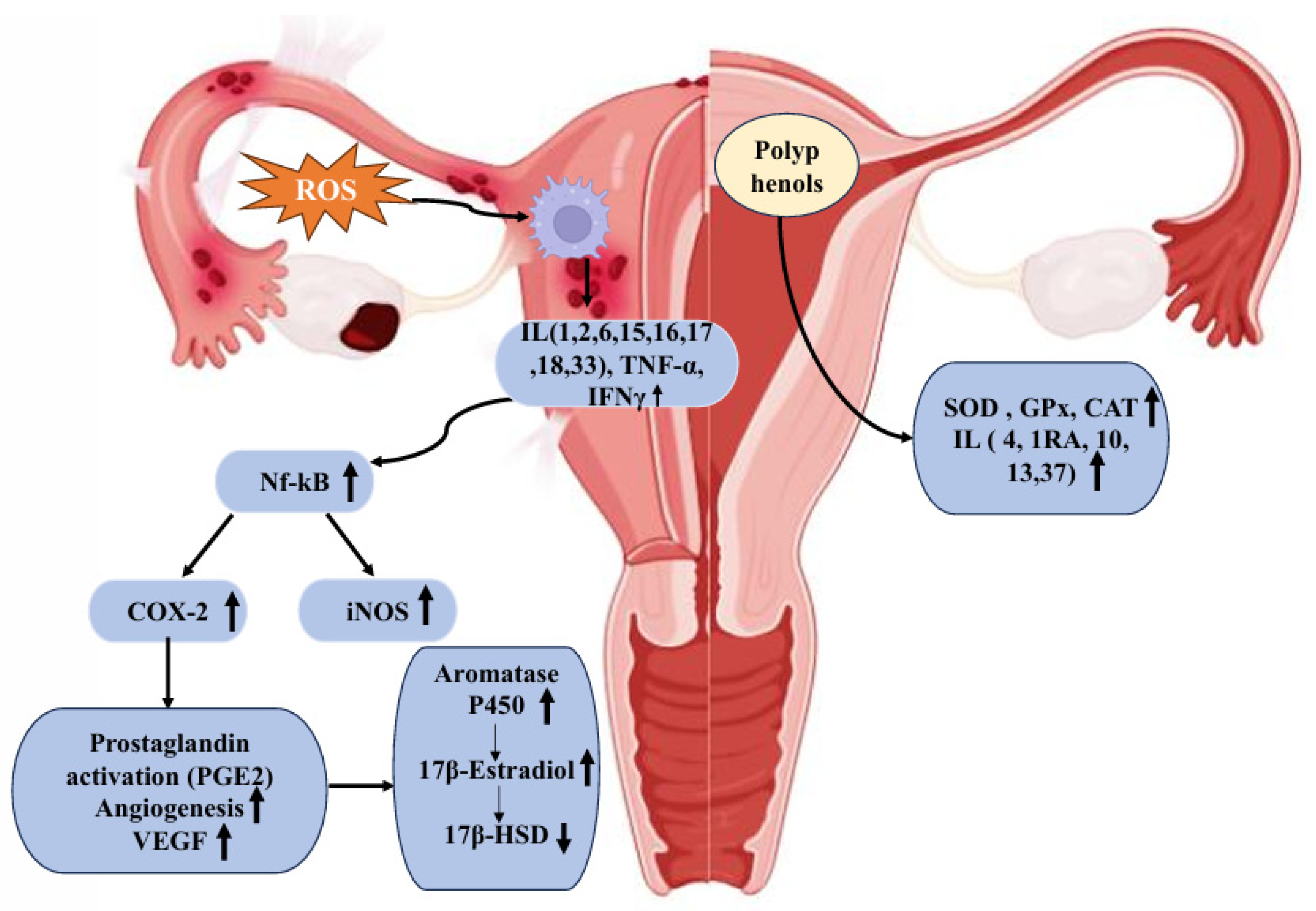
The key cause of endometriosis is an altered balance between estrogen and progesterone, as the former promotes the proliferation and maturation of endometrial tissue and the secretion of various proinflammatory cytokines, such as TNF-α, IL-1β, IL-6, and IL-8, by peritoneal macrophages in an estrogen-rich environment [39]. Increased ROS and oxidative stress levels trigger transforming growth factor-β1 (TGF-β1), a cytokine responsible for fibrosis. Once activated, it promotes fibroblast growth and increases the synthesis and accumulation of extracellular matrix components [40]. These components are also known to stimulate the activation and recruitment of mononuclear phagocytes, leading to the generation of lipid peroxides and other byproducts from the interaction of apolipoproteins with peroxides, thereby initiating a localized inflammatory response in the pelvic region [41]. Upregulation of the mitogen-activated protein kinase (MAPK)/extracellular signal-regulated kinase (ERK) pathway is crucial for promoting the proliferation of endometriotic lesions [21].
Studies have shown increased concentrations of IL-1β, IL-6, TNF-α, or high-sensitivity C-reactive protein (hs-CRP) in patients with endometriosis compared to healthy controls [21,42]. Excessive production of ROS activates the NF-kB signalling pathway, leading to upregulation of intercellular adhesion molecule-1 (ICAM-1), resulting in structural changes in peritoneal epithelial cells and the establishment of adhesion sites that support ectopic endometrial attachment [43].

6. Key Biomolecular Drivers in Endometriosis

At the cellular level, endometriosis is marked by cell proliferation, persistent inflammation, and excessive angiogenesis, which are interlinked and arise from dysregulated sex hormone signalling, with the estradiol (E2) pathway overactivated and the progesterone (P4) pathway impaired [44].

6.1. Cyclooxygenase-2 (COX-2)

Cyclooxygenase is a key rate-limiting enzyme that converts arachidonic acid into prostaglandins. Two COX isoforms are currently known: COX-1, which is present in many tissues, and COX-2, which is induced by mitogens, growth factors, and cytokines. Vascular endothelial growth factor (VEGF), one of the pro-angiogenic cytokines upregulated by COX-2 activity, is markedly overexpressed in several cancers, including ovarian and endometrial cancer, as well as in benign conditions such as endometriosis and spontaneous pregnancy loss [45]. The COX-2/PGE2 signalling pathway activates oxygenated fatty acids and is well recognised in a wide range of inflammatory conditions. In endometriosis, this pathway plays a key role in mediating the disease’s associated pain. It is a primary target of non-steroidal anti-inflammatory drugs (NSAIDs). Also, it contributes to the progression of endometriosis by regulating the implantation of ectopic lesions, endometrial cell proliferation, angiogenesis, and immune suppression [46].

6.2. Inducible Nitric Oxide Synthase (iNOS)

Nitric oxide is a gaseous free radical that acts as an essential signalling molecule in neurotransmission, vascular regulation, and immune defense, and is produced in the body by nitric oxide synthase via the metabolism of L-arginine to L-citrulline. Nitric oxide synthase enzymes are distributed in various organs and cell types, including macrophages, endothelial and neuronal cells, fibroblasts, platelets, and hepatocytes. They are categorised by origin and functional properties into neuronal NOS, inducible NOS, and endothelial NOS [47].
Several studies have suggested an association between elevated nitric oxide levels and the progression of endometriosis. iNOS expression is widely reported to be upregulated in affected women, with ectopic lesions exhibiting substantially greater NO production [48,49].

6.3. Pro-Inflammatory Cytokines

Macrophages play an essential role in recognizing foreign cells, which are more abundant in the peritoneal cavity of women with endometriosis. The cells release increased levels of pro-inflammatory cytokines. In contrast, anti-inflammatory signalling from stromal, epithelial, smooth muscle, and other immune cells is reduced, favouring the microenvironment for the initiation and progression of the disease [50].
Research indicates that high levels of inflammatory cytokines, including IL-6, IL-8, TNF-α, and VEGF, are present in endometriomas [51]. Trapped blood within the cysts leads to iron accumulation, which, in turn, drives the production of large amounts of ROS and increases inflammation. Follicular fluids have also been reported to contain elevated levels of inflammatory cytokines and higher ROS, which directly interfere with follicle growth and damage the oocyte [52,53].
Interferon-γ (IFN-γ) plays a key role in modulating the Th1/Th2 balance and has been reported to show altered expression in endometriosis studies [48]. Although its levels are reduced in peripheral blood, IFN-γ remains elevated in peritoneal fluid and ectopic lesions, and ectopic tissues exhibit higher IFN-γ mRNA expression, indicating localized upregulation at lesion sites [54]. A study of 59 women with confirmed endometriosis assessed IL-6 as a diagnostic marker using a machine-learning model, given that IL-6 levels are elevated in these women. This study opens the path for further non-invasive and quick ways to diagnose endometriosis based on levels of inflammatory markers [55].

6.4. Nuclear Factor-κB (NF-κB) Pathway

NF-κB, a central regulator of immune and inflammatory responses, governs proliferation, adhesion, apoptosis, invasion, and angiogenesis, thereby linking early development and progression of endometriotic lesions. The activation of the NF-κB pathway by factors such as IL-1β, Tumor Necrosis Factor (TNF)-α, and Toll-like receptor (TLR)4 contributes to both the initiation and progression of endometriosis. In the early stages, NF-κB upregulates key adhesion molecules, including DcR3, CD44, ICAM-1, and VCAM-1, supporting the abnormal attachment of endometrial cells to ectopic sites. As disease progression advances, NF-κB activity promotes the production of cytokines and chemokines, such as IL-1β, IL-6, IL-8, TNF-α, IFN-γ, eotaxin, and RANTES, as well as proliferative markers, such as Proliferating Cell Nuclear Antigen (PCNA), thereby maintaining a chronic inflammatory state [56,57]. An in vitro study on primary endometrial stromal cells showed that aspirin and aloe-emodin treatment successfully inhibited NF-κB signalling by downregulating IKK activity, thereby reducing proliferative capacity and downregulating adhesion molecules such as ICAM and VCAM, highlighting NF-κB as a central therapeutic target [58].

6.5. Matrix Metalloproteinases (MMPs)

Matrix metalloproteinases are a family of zinc-dependent endopeptidases, including collagenases, gelatinases, and stromelysins, that degrade and remodel the extracellular matrix. Their activity is precisely controlled by tissue inhibitors of metalloproteinases, which help regulate matrix dynamics in both healthy and diseased conditions. In endometriosis, these enzymes play a crucial role in endometrial tissue remodeling throughout the menstrual cycle. A study involving 43 patients with visible stage 2 and 3 peritoneal endometriotic lesions found increased levels of MMP-2 and MMP-9 in the endometrium of patients with endometriosis compared to controls. This suggests a strong link between MMP expression in ectopic and eutopic endometrial tissue and indicates their potential as non-invasive diagnostic markers for endometriosis [59].
Another role MMPs play in the progression of endometriosis is in angiogenesis and vasculogenesis, which establish and maintain ectopic endometrial lesions by degrading the extracellular matrix and promoting endothelial cell migration. Studies have indicated that MMP-1 promotes Vascular endothelial growth factor receptor (VEGFR)-2 expression, while MMP-7 enhances VEGF signalling by degrading VEGFR-1, thereby creating a supportive environment for angiogenesis. Further, MMPs are known to contribute to immune evasion by cleaving natural killer group 2 member D (NKG2D) ligands and ICAM-1, thereby impairing NK-mediated cytotoxicity [60].

6.6. Transforming Growth Factor β (TGF-β)

The TGF-β superfamily comprises a group of cytokines that is involved in the pathophysiology of endometriosis. It promotes prolactin production and triggers decidual-like differentiation in ectopic endometrial stromal cells (ESCs) [61]. TGF-β occurs in three isoforms, i.e., TGF-β 1, TGF-β 2, and TGF-β 3, and is considered essential for endometrial function; however, upregulation of TGF-β 1 promotes disease progression by inducing epithelial–mesenchymal transition, increasing MMP expression, inhibiting apoptosis, promoting angiogenesis, and suppressing the immune response [62].

6.7. VEGF (Vascular Endothelial Growth Factor)

Survival of ectopic endometrial tissue in the peritoneal cavity depends on the formation of a dense vascular network that provides adequate oxygen and nutrient support. Neovascularisation in endometriotic lesions is achieved through two primary mechanisms: vasculogenesis and sprouting angiogenesis. Vascular endothelial growth factor and fibroblast growth factor-2 (FGF-2) are primary mediators of endothelial progenitor cell migration and proliferation. VEGF, a potent angiogenic mediator, is upregulated by estradiol in endometrial cells during the late proliferative phase of the menstrual cycle. VEGF is overexpressed in endometriotic lesions, supporting its involvement in lesion vascularisation [63].

6.8. Estrogen Receptors

Estrogen plays a crucial role in female reproduction through two estrogen receptors, ERα and Erβ. In the follicular phase of the menstrual cycle, estrogen, via its receptors, stimulates endometrial growth, leading to thickening of the endometrial mucosa. A key biomarker involved in the development and persistence of endometriotic tissue is 17β-Estradiol (E2), which is well associated with inflammation and pain. Estradiol is predominantly produced locally within the lesions; it can also reach endometriotic lesions via the circulation. The local accumulation of estrogen plays an important role in the development and progression of endometriosis by binding to and activating estrogen receptors. This process is thought to be caused by altered activities of enzymes responsible for estradiol biosynthesis and inactivation [64,65].
In normal endometrium conditions, Erα is expressed at higher levels than Erβ and is mainly associated with cell proliferation. In endometriosis, reduced Erα expression is observed, accompanied by marked upregulation of Erβ [66]. An in vitro study conducted with endometrial stromal cells obtained from women with confirmed endometriosis showed that Erβ regulated CCL2 (C-C motif chemokine ligand 2) production through NF-κB signalling in endometrial stromal cells, further promoting macrophage recruitment to ectopic lesions and contributing to the pathogenesis of endometriosis [67]. The effects of these biomarkers on endometriosis progression are shown in Figure 2.

7. Most Researched Polyphenols in Mediating Symptoms of Endometriosis

Polyphenols are plant secondary metabolites with over 8000 identified structures. Their biological activities primarily stem from their capacity to neutralize ROS and reactive nitrogen species (RNS) by donating electrons, thereby lowering oxidative stress and inflammation [68,69]. Polyphenols are classified by their chemical structure as follows: (1) phenolic acids, which contain a single phenolic ring; (2) flavonoids, featuring two aromatic rings connected by a three-carbon chain that includes one oxygen atom; (3) stilbenes, composed of two aromatic rings linked by a methylene bridge; and (4) lignans, characterized by a diphenolic structure where two phenylpropane units are joined by a carbon-carbon bond [70]. A systematic review paper by Tassinari et al. [71] highlighted the role of diet in advancing or reducing endometriosis, noting that certain animal and plant-derived compounds, such as arachidonic acid (an omega-6 polyunsaturated fatty acid), can promote inflammation. The authors also highlighted the importance of flavonols, flavones, isoflavones, and stilbenoids in influencing key molecular pathways, such as the phosphoinositide 3-kinase (PI3K)/protein kinase B (AKT)/mammalian target of rapamycin (mTOR) and NF-κB pathways, which are crucial to the pathophysiology of endometriosis, as mentioned earlier. The authors mentioned that studies have reported that these compounds suppress COX-2 expression, reduce pro-inflammatory mediators, and prevent the overproduction of prostaglandins. This section will further explore additional research on other polyphenolic compounds.

7.1. Baicalein

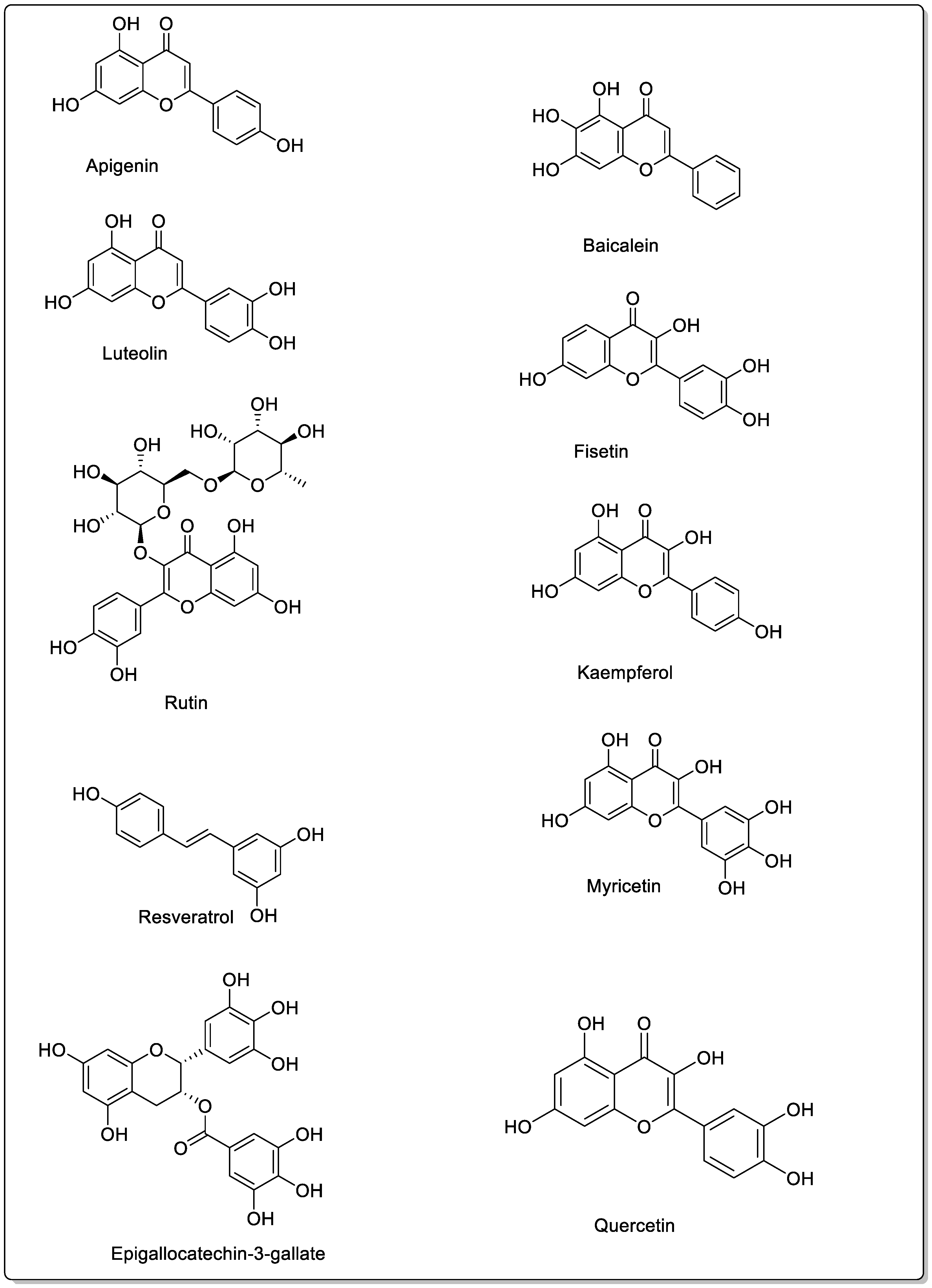
Baicalin and baicalein are two bioactive flavonoids known for their broad pharmacological activities, including anti-inflammatory, antioxidant, antiviral, and anticancer effects. Baicalin exhibits poor oral bioavailability, primarily due to its low aqueous solubility and limited membrane permeability. In contrast, its aglycone metabolite, baicalein, shows greater lipophilicity and enhanced intestinal permeability following removal of the glucuronic acid moiety. The hydrolysis of baicalin to baicalein occurs in the intestine by gut microbiota and enzymes, thereby increasing its bioavailability [72]. The presence of a di-Orthohydroxyl group on ring A is the key feature of baicalein [73] (Figure 3).
A study conducted by Ke et al. [74] to examine the effect of baicalein on the invasion of ectopic endometrial stromal cells in vitro and in vivo revealed significant dose-dependent suppression of the invasive capacity of ectopic endometrial stromal cells treated with increasing concentrations of baicalein (0–40 μmol/L) for 48 h. Wound-healing assay results were consistent with the findings, revealing that baicalein also effectively suppressed the migration of ectopic endometrial stromal cells. Downregulation of TGFB1 expression was also observed in baicalein–treated mice.

7.2. Fisetin

Fisetin is a naturally occurring flavonoid with a well-defined chemical structure, widely found in fruits and vegetables, particularly in cucumber, strawberry, and apple, with content ranging from 0.1 to 160 μg/g [75]. It exhibits a broad spectrum of pharmacological activities, including anti-inflammatory, antioxidant, neuroprotective, and anticancer properties, which suppress tumour growth, angiogenesis, invasion, migration, and autophagy, highlighting its potential as a multifunctional bioactive compound in disease prevention and therapy [76,77]. Fisetin is characterised by a diphenylpropane framework, consisting of two aromatic rings linked through an oxygenated heterocyclic ring (Figure 3). The biological activity of fisetin is governed particularly by hydroxyl groups at the 3, 7, 3′, and 4′ positions, the carbonyl group at C4, and the double bond between C2 and C3 [78].
Arangia et al. [79] reported that the antioxidant effects of fisetin in Sprague-Dawley rats are modulated through the NLRP3 (NOD-like receptor family pyrin domain-containing 3 inflammasome) pathway. In this study, fisetin treatment significantly reduced cyst size, histological alterations, mast cell activity, fibrosis markers, and inflammatory cell infiltration.

7.3. Quercetin

A naturally occurring flavanol widely found in flowers, barks, stems, roots, wines, teas, and a variety of vegetables and fruits, commonly apples, berries, and onions. Composed of a flavonoid skeleton, it contains three benzene rings and five hydroxyl groups (Figure 3). It exists in the aglycone form, lacking a carbohydrate moiety. It is biosynthesised through the phenylpropanoid pathway and involves key enzymes such as cinnamate 4-hydroxylase, phenylalanine ammonia-lyase, p-coumarate: CoA ligase (4-CL), chalcone isomerase (CHI), chalcone synthase (CHS), flavanone 3β-hydroxylase (F3H), flavonol synthase (FLS), and flavonol 3′-hydroxylase (F3′H) [80,81]. Interestingly, quercetin accounts for nearly 75% of that daily intake of flavonoids [82].
A study conducted by Delenko et al. [83] observed a dose-dependent inhibitory effect of quercetin on the proliferation of menstrual effluent-derived endometrial stroma cells isolated from and cultured from healthy women and women with histologically confirmed endometriosis of menstruating age, mimicking cAMP and MPA. In this study, quercetin reduced the proliferation of menstrual effluent-derived endometrial stroma cells obtained from healthy controls in a dose-dependent manner (6.25–50 µM). Moreover, in cells obtained from patients with endometriosis, a significant inhibition was observed at 25 µM.

7.4. Kaempferol

Kaempferol, a flavonol also referred to as triterahydroxyflavone, is mainly found in plants as glycosides, including astragalin, populnin, nicotiflorin, and kaempferitrin. Kaempferol has a diphenylpropane backbone and is biosynthesized via the phenylpropanoid pathway [84,85] (Figure 3).
In a study by Chuwa et al. [86], Kaempferol inhibited the proliferation of the human endometrial adenocarcinoma cell lines Ishikawa (estrogen receptor-positive) and HEC 265, with IC50 values of 83 µM and 65 µM, respectively. Apoptosis suppression was observed through downregulation of estrogen receptor α and the anti-apoptotic proteins survivin and Bcl-2, accompanied by p53 activation and PARP cleavage.

7.5. Myricetin

Isolated from the bark of Myrica rubra, myricetin is a polyhydroxyflavonol widely distributed across plant families, including Vitaceae, Myricaceae, Leguminosae, Ericaceae, Rosaceae, Compositae, and Fagaceae. Humans commonly consume myricetin through berries, fruits, vegetables, honey, red wine, and tea. Although its stability is temperature-dependent, studies have indicated that myricetin remains stable under strong acidic conditions and occurs in both free form and various glycosides, including arabinosides, rhamnosides, galactosides, xylosides, and galloylated derivatives [87,88,89] (Figure 3).
Park et al. [90] investigated the role of myricetin in endometriosis in female mice and in VK2/E6E7 (VK2) and End1/E6E7 (End1) patient-derived endometriosis cell lines. In this study, a dose-dependent (0–100 μM) inhibitory trend was observed in the VK2 and End1 cell lines, resulting from cell cycle arrest in the sub-G0/G1 phase. Mitochondrial membrane depolarization was observed in the VK2 and End1 cell lines, and an elevation in cytosolic calcium was observed at 100 μM myricetin. The study also indicated that myricetin inhibited cervical cell growth by suppressing PI3K/AKT and MAPK/ERK survival signalling while activating the pro-apoptotic p38 pathway. The combination of myricetin with pathway-specific inhibitors (LY294002, U0126, SB203580) enhanced antiproliferative activity, particularly in VK2 cells. Moreover, a reduction in the size of endometriotic lesions was observed in mice treated with 30 mg/kg/day myricetin for 4 weeks, as compared to DMSO-injected mice, thus demonstrating its potential as a therapeutic agent.

7.6. Epigallocatechin-3-Gallate

Epigallocatechin-3-gallate (EGCG) consists of three aromatic rings connected by a pyran ring (Figure 3). It is primarily absorbed in the intestine, where the gut microbiota plays a key role in its metabolism by converting large polyphenolic structures into smaller bioactive metabolites, thereby enhancing its systemic efficacy. Its pharmacological activity is primarily attributed to its multiple phenolic hydroxyl groups, which also make it important in the food industry. The primary source of EGCG is brewed green tea, and it is associated with protective effects against various inflammatory diseases and cancers [91,92,93]. Activation of multiple signaling pathways involved in inflammation and carcinogenesis, including activator protein-1, NF-κB, signal transducer and activator of transcription-3, MAPK, intercellular adhesion molecule, and COX-2, results from the shift toward oxidative stress, which can be modulated by EGCG [94].
A study by Laschke et al. [95] examined the anticancer properties of epigallocatechin-3-gallate and its effectiveness against endometriosis in cultured endometrial glandular and stromal cells from the uterus of 10 hamsters, and in an in vivo model of hamsters. The study concluded that the green tea polyphenol epigallocatechin-3-gallate suppressed cell proliferation, estradiol-induced activation, and VEGF expression in endometrial cells, decreased angiogenesis and blood flow in ectopic endometrial tissue, and promoted regression of endometriotic lesions. Another study by Di et al. [96] demonstrated the effect of epigallocatechin-3-gallate on lipopolysaccharide (LPS)-induced bovine endometrial epithelial cells in female mice. LPS strongly enhanced TNF-α, IL-1β, and IL-6 levels. At the same time, epigallocatechin-3-gallate significantly downregulated their expression, indicating its role in inflammatory and oxidative stress, as well as in deregulating apoptosis in uterine tissue.

7.7. Apigenin

Apigenin is a widely distributed plant flavonoid belonging to the flavone subclass, predominantly found in Asteraceae, Lamiaceae, and Fabaceae. In plants, apigenin occurs as the aglycone and in various conjugated forms, including C- and O-glucosides, O-methyl ethers, glucuronides, and acetylated derivatives (Figure 3). It is biosynthesized mainly through the phenylpropanoid pathway from shikimate-derived amino acids phenylalanine and tyrosine. Apigenin is notable for inhibiting the cytochrome P450 enzyme CYP2C9, which plays a key role in the oxidation of drugs and xenobiotics, underscoring its importance in pharmaceutical research [97,98]. Apigenin exhibits low water solubility and pronounced lipophilicity, facilitating efficient membrane penetration [99].
In a study by Liang et al. [100], the inhibitory effects of apigenin on cell viability, migration, invasion, and apoptosis induction in Ishikawa EC cells were investigated. Results showed a progressive reduction in colony formation in Ishikawa cells as apigenin concentrations increased from 20 to 70 μM, indicating a concentration-dependent inhibitory effect. Untreated cells showed significantly greater migration into the wound area than apigenin-treated cells after 48 h. The Transwell assay revealed that API treatment suppressed the migration and invasion abilities of human endometrial carcinoma Ishikawa cells.

7.8. Luteolin

A bioactive flavonoid metabolite is well recognized for its potent antioxidant and anti-inflammatory properties, as evidenced by its long-standing traditional use in Chinese medicine to treat a wide range of disorders [101]. Luteolin has four hydroxyl groups on its flavone skeleton. It is sensitive to ambient oxygen, which both contributes to its antioxidant function and influences its stability (Figure 3). Studies have shown that luteolin has high intestinal absorption and is classified as a human intestinal absorption-positive compound [102,103]. The biosynthesis of luteolin in plants begins with the amino acid phenylalanine, which is converted to trans-cinnamic acid by phenylalanine ammonia-lyase. Luteolin can also be obtained by the conversion of naringenin via flavone synthase [104].
A study by Park et al. [105] showed that luteolin inhibited cell proliferation in the VK2/E6E7 and End1/E6E7 cell lines, with 44% and 43% reductions at 20 μM after 48 h, respectively. The researchers used these concentrations for subsequent experiments, in which significant decreases in PCNA expression and cell-cycle arrest in the sub-G0/G1 phase were observed, likely mediated by downregulation of MAPK and PI3K/AKT signaling, as well as suppression of CCNE1 (Cyclin E1) mRNA. A significant reduction in the size of endometriotic lesions was observed in mice treated with 40 mg/kg of luteolin by ip injection.

7.9. Resveratrol

Resveratrol, a representative of hydroxy stilbenes, which are a class of naturally occurring polyphenolic compounds that are extensively studied for their cytoprotective potential due to their potent antioxidant activity through free radical scavenging [106]. Structurally, resveratrol has two phenolic rings linked by a styrene double bond and exists as cis and trans isomers, of which the latter is more stable, more biologically active, and predominantly found in nature [107] (Figure 3).
Resveratrol is commonly present in dietary sources as the glycosylated form piceid. Due to this glycosylation, resveratrol is protected from enzymatic degradation, thereby enhancing its stability, biological activity, and overall bioavailability [108]. Initially, it was identified as an immunomodulatory agent for its ability to suppress the proliferation of splenic lymphocytes induced by concanavalin A, interleukin-2, and alloantigens, and to exert a greater inhibitory effect on lymphocyte production of IL-2 and IFN-γ, as well as macrophage secretion of TNF-α and IL-12 [109].
In a study by Gołąbek et al. [110], the therapeutic potential of resveratrol and its natural analogs was investigated on a macrophage-endometriotic cell co-culture model, focusing on their effects on inflammatory and oxidative stress markers. Overall, downregulation of pro-inflammatory genes and reduced ROS production were observed, suggesting that stilbenes can modulate the immune microenvironment and ameliorate oxidative stress. In another study by Chen et al. [111] investigating the role of resveratrol in endometriosis, two models were employed: one in rats and the other in human ectopic endometrial stromal cells. The results show a significant reduction in lesion size and improvement in lipid profiles in rats. In vitro, resveratrol reduced cell proliferation and invasion while promoting apoptosis. Another study by Arablou et al. [112] on endometrial stromal cells found that resveratrol at 100 µM significantly decreased gene and protein expression of TGF-β, VEGF, and MMP-9 in ectopic and eutopic endometrial stromal cells at different time points.

7.10. Rutin

Rutin, also called rutoside, quercetin-3-O-rutinoside, or vitamin P, is a natural flavonol glycoside made of quercetin attached to the disaccharide rutinose (Figure 3) and is commonly present in foods such as asparagus, buckwheat, apricots, apples, cherries, grapes, grapefruits, plums, citrus fruits, and tea [113]. Rutin has been known for various pharmacological activities, including antioxidant and anti-inflammatory [114], anticancer [115], and neuroprotective [116], among others [117].
In a study by Talebi et al. [118] on female Wistar albino rats, in which endometriosis was induced surgically, rutin at 3000 and 6000 µg/kg upregulated Bax and cleaved caspase and downregulated Bcl-2, confirming the rutin-mediated induction of apoptosis. Additionally, concentrations of SOD, GPx, and total antioxidant activity (TAC) were higher in treated animals, suggesting greater antioxidant potential. In another study by Chen et al. [119] on ZEA-induced apoptosis in porcine endometrial stromal cells, rutin at 25 μM enhanced SOD and GSH-Px activity, reduced ROS and peroxide accumulation, upregulated MMP, and decreased the Bax/Bcl-2 ratio through the Nrf2 pathway.

7.11. Anthocyanins

Among flavonoid categories, the water-soluble pigments, anthocyanins, are predominantly found in plant sources, often in glycosylated forms. They have a significant role in imparting distinctive red, blue, and purple colours to various plant tissues [120]. Investigations have highlighted the role of dietary anthocyanins and their numerous health-promoting effects, including mitigating neurological and cardiovascular disorders, various types of cancer, and, due to their anti-inflammatory properties, the management of various chronic conditions [121].
Jiang et al. [122] investigated the effects of anthocyanin-enriched preparations from mulberry juice and mulberry marc purification in mice using a weight-loaded swimming test, which demonstrated enhanced endurance compared to the control group, further supporting the hypothesis that anthocyanins mitigate oxidative stress induced by strenuous exercise through their antioxidant capabilities.
Park et al. [123] investigated the antiproliferative and pro-apoptotic effects of delphinidin, derived from eggplants, berries, and red onions, in VK2/E6E7 and End1/E6E7 cell lines derived from vaginal and endocervical tissues of premenopausal women. The findings indicated that delphinidin, administered in a dose-dependent manner, significantly inhibited cell proliferation, with a 100 μM dose reducing proliferation by about 50% compared to vehicle-treated controls and decreasing PCNA expression. Additionally, delphinidin decreased mitochondrial membrane potential and cytosolic calcium levels in a dose-dependent manner and suppressed the PI3K/AKT signalling pathway.
In addition to the major polyphenols discussed above, several other non-polyphenolic compounds have been identified and studied for their effects on endometriosis. These compounds can be found in the wild fruits of the Indian Himalayas, discussed in the upcoming sections. A molecular docking study by Liu et al. [124] investigated a traditional Chinese medicine, Wenjing decoction, used to treat endometriosis. They identified and filtered 50 compounds from 8 herbs, with the top five bioactive compounds being quercetin, kaempferol, wogonin, β-sitosterol, and stigmasterol, which exhibited the highest binding affinity with the top four targeted genes responsible for endometriosis. These findings highlight the potential synergistic interactions between polyphenolic and non-polyphenolic compounds to modulate molecular pathways involved in endometriosis. Hence, keeping this in mind, several other polyphenolic and non-polyphenolic compounds that synergize to mediate endometriosis symptoms are summarized in Table 1.

8. Clinical Trials on Polyphenols in Mediating Symptoms of Endometriosis

Clinical trials are very limited in endometriosis research and have primarily focused on hormonal pathways, targeting estrogen and progesterone receptors, as well as gonadotropin-releasing hormone analogs, to assess an incompletely defined mechanism, reflecting the complexity of the disease. While hormonal therapies dominate the therapeutic landscape, there is an emerging trend toward non-hormonal approaches and natural-based interventions [137]. Maia Jr et al. [138] conducted an open-label study to assess the effect of resveratrol (30 mg/day) in combination with an oral contraceptive containing drospirenone (3 mg) and ethinylestradiol (30 μg) in 12 reproductive-age patients. The patients reported a decrease in pain; however, the symptom persisted. In the second group of the same study, 42 patients received the same combination to assess its effect on COX-2; COX-2 levels were significantly reduced, suggesting that combining natural compounds with oral contraceptives is an effective treatment strategy compared with oral contraceptives alone.
Signorile et al. [139] conducted a prospective case–control study where ninety patients were selected to examine the effect of a combination of natural ingredients containing linoleic acid (1002 mg), α-linolenic acid (432 mg), quercetin (200 mg), nicotinamide (20 mg), 5-methyltetrahydrofolate calcium salt (400 µg), titrated turmeric (20 mg), and titrated parthenium (19.5 mg) on inflammatory response and symptoms in endometriosis. The study revealed a significant reduction in symptoms among patients treated with the combination, including headache, cystitis, muscle ache, irritable bowel, dysmenorrhea, dyspareunia, and chronic pelvic pain. Furthermore, serum levels of prostaglandin E2, 17β-estradiol, and CA-125 decreased markedly. Another study by Rostami et al. [140] assessed the effects of an astaxanthin supplement (6 mg) on antioxidant, anti-inflammatory, and fertility-enhancing activities over 12 weeks in a randomized, triple-blind, placebo-controlled trial involving 50 infertile patients with endometriosis. The study found higher serum levels of total anthocyanins and SOD. The supplementation group showed downregulation of MDA, FF, TNF-α, and IL-6 compared with the placebo group.
A recent meta-analysis by Meneghetti et al. [141] assessed 11 randomized clinical trials, including 716 women, that evaluated the effects of dietary interventions, including antioxidants and phenolic compounds, on alleviating endometriosis symptoms. Of these, 6 compared a specific antioxidant combination with a placebo group. The meta-analysis consistently reported reductions in symptom dysmenorrhea, but not in dyspareunia or chronic pelvic pain, suggesting that bioactive compounds may directly and effectively downregulate pro-inflammatory cytokines and inhibit PEG2 and COX-2, ultimately affecting inflammatory pathways. Supplementation included vitamin D, pycnogenol, vitamin C, vitamin E, garlic, palmitoylethanolamine, transpolidatin, Wobenzym Vital, minerals (Ca, Mg, Se, Zn, Fe), probiotics, and fish oil.
Barrea et al. [142] reviewed studies on the effects of Mediterranean, ketogenic, and nutrient-supplemented diets on endometriosis symptoms and summarized that, due to its richness in antioxidant and anti-inflammatory compounds such as vitamins, minerals, phenolic compounds, and omega-3 PUFAs, the Mediterranean diet can help to minimize pelvic pain and endometriosis. The Mediterranean diet primarily comprises fruits, vegetables, legumes, whole grains, nuts, fish, and extra virgin olive oil, with minimal or no consumption of red and processed meats and refined sugar products. The review also synthesised findings on the most commonly used and researched nutritional supplements, such as vitamin D, C, and E, curcumin, and quercetin, in which most clinical trials reported reductions in symptoms, including dysmenorrhea and pelvic pain.

9. Overview of Biodiversity of Wild Fruits of the North Western Himalayas

The Indian Himalayan region spans 26°20′–35°40′ N latitude and 74°50′–95°40′ E longitude, covering the Himalaya and adjoining hills of Himachal Pradesh, Jammu and Kashmir, Uttarakhand, Sikkim, Meghalaya, Nagaland, Arunachal Pradesh, Manipur, and Mizoram, along with hill districts of Assam and West Bengal [143]. A study conducted by Aryal et al. [144] in a part of the Kailash Sacred Landscape, reported that families of wild and non-cultivated edible plants, namely Moraceae, Rosaceae, Urticaceae, Polygonaceae, Araceae, Dioscoreaceae, Amaranthaceae, Lamiaceae, and Combretaceae, were found and utilized, most commonly for food, medicinal, and spice uses, and other purposes, highlighting the importance of biodiversity of the region. Uttarakhand, being an integral part of the Indian Himalayan Region, is located between the latitudes 28°44′ and 31°28′ N and longitudes 77°35′ and 81°01′ E. The state is split into two regions, Garhwal and Kumaon, with 13 districts in total, covering an area of 53,483 km2, most of which is rugged terrain, steep slopes, and snow-covered regions [145]. Uttarakhand’s biodiversity is especially notable because the region lies within internationally recognized biodiversity hotspots, underscoring its ecological importance [146].

10. Importance of Utilising Underutilized Plants in Traditional Medicine and Nutrition

The Terai region of Uttarakhand is a flat stretch in the south of the Himalayan foothills, composed of fine alluvium and clay-rich swamps, and is marked by high precipitation and humid conditions, which favour soils rich in minerals and organic matter. Traditionally, many underutilised fruits from this region have been used in folk medicine to treat conditions such as fever, cough, cold, and skin conditions. Many of these wild fruits from the regions are seldom eaten or processed due to their seasonal availability and short shelf life, and thus are underutilized, despite their nutritional value, which includes an abundance of carbohydrates, vitamins, minerals, and bioactive compounds, making them a strong potential source for application in health-promoting initiatives [147,148]. Various fruits and their traditional uses found in these regions highlight the historical therapeutic relevance of these plants and support their potential as sources of bioactive compounds with antioxidant and anti-inflammatory properties, as mentioned in Table 2.
The central Himalayan region of Uttarakhand comprises a large variety of wild edible plants (338 species). The inhabitants of mountain communities possess extensive indigenous and traditional knowledge regarding the sustainable harvesting and utilization of these wild resources. However, the true potential of these wild edibles remains underutilized and underdocumented [160]. Several value added products from these fruits can be seen in market seasonally such as wine, vinegar, jam, jellies, squashes and ready to serve drinks by local people of the region but does not gain much attention and profit due to short shelf life as well as commercial scale production despite natural antioxidants gaining significant importance for their safety and diverse application in food, pharmaceutical and cosmetic industry [161]. A study conducted by Mishra et al. [162] concluded that wild edible plants play a significant role in providing livelihood and income for indigenous communities, with 5–24% (Rs 3559 to Rs 12,710) of household annual income derived from them. They also partially fulfill micronutrient requirements, yet a large deficit remains, as reflected in the low intake of wild edible plants relative to total consumption. A survey conducted by Thakur et al. [163] revealed that 50 wild species were used individually by locals, primarily in chutneys (condiments) and local brews, in the Dhauladhar region of the western Himalayan state of Himachal Pradesh. The changing lifestyle pattern was reported as the primary reason for the decline in the use of wild edible plants, as people prefer to sell them for income rather than consume them themselves, further underscoring the need for research on their sustainable utilization.

10.1. Bioactive Potential of Underutilized Wild Edible Berries

Numerous epidemiological studies have shown that consuming fruits and vegetables is linked to a lower risk of NCDs due to the protective effects of various antioxidants and phytochemicals that neutralise ROS, which are responsible for their onset [164]. Wild food plants are gaining attention in the food industry due to their potential to replace synthetic chemicals and nutraceuticals. Indigenous fruit crops not only exhibit adaptability to diverse environmental conditions but also possess significant nutritional and medicinal properties, highlighting their value for food security and commercialisation [165,166,167]. India is home to various wild edible plant species, such as Rubus ellipticus Sm, Myrica esculenta, Ficus palmata, Berberis asiatica, Pyracantha crenulate, Morus alba L, and Duchesnea indica, which are prominently and readily available in the north-western Himalayan area and have been used for many centuries for medicinal and commercial use [158]. Given the immense potential of polyphenols, extensive research is underway to improve their utilisation and oral bioavailability. A review by Zhang et al. [168] summarised various protein-, polysaccharide-, and lipid-based nanodelivery systems currently under development and research, highlighting their importance in modern health and fitness scenarios. Polyphenolic nutraceuticals currently available in the Indian market are given in Table 3.

10.1.1. Morus Species (M. nigra L. and M. alba L.)

Mulberry is considered a highly productive woody plant known for its adaptability, ease of cultivation, and richness in bioactive compounds such as polysaccharides, alkaloids, and flavonoids, making it an ideal species for sustainable development. In the genus Morus, 100 subspecies have been identified, most of which are found in Asia [169]. Species plants of the genus Morus are mainly found in temperate and mid-elevation tropical forests, and have developed broad ecological adaptability, capable of growing in a wide variety of soils, except for swampy, saline, or highly acidic soils [170,171]. The three main species cultivated are M. rubra L., M. nigra, and M. alba L., due to their applicability in animal husbandry as livestock fodder and to support the silkworm industry [172]. The fruits of the Morus species are typically 2–3 cm in length [173]. Sugar being the primary compound responsible for sweetness in fruits, with fructose and glucose being the dominant during the fruit repining stage, in total M. nigra carbohydrate ranges from 5 to 19 g per 100 g of fresh fruits whereas amino acids such as glycine, aspartate and glutamate are present in the fruits with glutamate being predominantly present covering 20% of the total amino acids content [174]. The fruits of M. nigra are found to contain kaempferol-3-rutinoside, quercetin-3-rutinoside, and quercetin-3-glucoside, as well as anthocyanins such as cyanidin-3-rutinoside, cyanidin-3-glucoside, cyanidin-3-sophoroside, pelargonidin-3-rutinoside, and pelargonidin-3-glucoside, as well as carotenoids such as lutein, zeaxanthin, and α- and β-carotenes [175].
Morus species have been studied for their pharmacological activities, including anti-hypolipidemic, antidiabetic, antiobesity, antitumour, hepatoprotective, antioxidant, and neuroprotective effects, suggesting them as potential candidates for the food and healthcare industries [176].
The toxicity of various Morus species extracts has been evaluated, suggesting a range of 300–2000 mg/kg body weight is safe for consumption and nutraceutical and functional food use [177]. Currently mulberry species is being processed for consumption in the forms of jam, wine, yogurt, vinegar, juice, jelly, fried mulberry fruit, milk, syrup and food colorant in the industry as well as in pharmaceutical industry by incorporating them in bio-materials for treatment against various diseases such as anticancer, antioxidant and antimicrobial but challenges remains in the bioavailability of the active compounds from the fruits as well as their preservation for longer usage [178].

10.1.2. Berberis asiatica

The genus Berberis is globally distributed and comprises nearly 500 species, many of which are widely cultivated for their medicinal and ornamental properties. Members of this genus are highly adaptable to adverse climatic conditions, such as tolerance to shade and drought, and the ability to thrive in open areas, forests, and wetlands [179]. In India, approximately 77 species of Berberis have been reported, predominantly in the Himalayan region at elevations of 1000–3000 m asl. The growing conditions around the roots of the species are reported to be soil rich in organic carbon, nitrogen, and phosphorus [180]. B. asiatica is the most extensive species in the western Himalayas, occurring in states including Uttarakhand, Himachal Pradesh, Jammu and Kashmir, Arunachal Pradesh, and Assam [181]. Isoquinoline alkaloids constitute the principal bioactive compounds in the genus Berberis, most prominent among them being berberine, a yellow-coloured compound identified by a tetracyclic structure composed of four fused benzene rings, with a nitrogen atom bridging two ring pairs and oxygen substitution at both ends [182]. As for the other metabolites, physicochemical evaluation revealed 1.73% tannins, 2.56% total ash, 16.44% starch, and 11.83% alcohol-soluble extractives, including phenolic compounds, flavonoids, and anthocyanins, in the plant’s roots. Moreover, fruits contain a significant amount of anthocyanin (24.59 mg/100 g of fw) [120]. Researchers have isolated the prominent compound from its fruits, berberine, along with other polyphenols, to examine its effects on various pharmacological activities, including anti-inflammatory, anti-arthritic, and protective renal effects [183,184,185]. Other parts of the species from the genus, such as roots, bark, leaves, and stems, have shown cardioprotective, neuroprotective, antimicrobial, hepatoprotective, and anticancer activity [186,187,188].

10.1.3. Duchesnea indica

Duchesnea indica, also known as Fragaria indica Andr and Potentilla indica, is a perennial herb in the family Rosaceae, commonly called false strawberry, Indian strawberry, or wild strawberry. The native habitat of this species includes mountain slopes (below 3100 m asl), meadows, and riverbanks, and it especially thrives in moist, nitrogen-rich habitats [186]. It has been traditionally used for its leaves as decoration and externally for pain and swelling. The flowers are used in infusions [187]. The herb has been studied for various phenolic and phytochemical compounds, including salicylic acid (161.29 µg/g), ferulic acid (42.09 µg/g), vanillic acid (33.23 µg/g), trans-cinnamic acid (27.92 µg/g), and 4-coumaric acid (27.84 µg/g) in the ethyl extract of leaves and stems of D. indica [188]. Other studies have also reported several classes of phenolic compounds in the species, grouped into flavonols, ellagitannins, ellagic acid and its derivatives, hydroxybenzoic acids, and hydroxycinnamic acids [120]. Certain Chinese medical texts have reported using the aerial parts of P. indica for activity against cancer agents, both alone and in polyherbal formulations. Extensive studies have been conducted on Potentilla species regarding the abundance of their secondary metabolites, which have been shown to possess anti-inflammatory, antimicrobial, and antioxidant properties [189].

10.1.4. Ficus palmata

The genus Ficus is a large group of flowering plants distributed across the Himalayan moist tropical and subtropical regions at an elevation of 1100–1800 m asl, in clay-loam soils [190,191]. It serves as an important source of fruits, vegetables, and beverages, contributing significantly to dietary diversity and local livelihoods. The medicinal potential of the genus Ficus has been explored over the years through ethnobotanical and pharmacological investigations, revealing its activities, including antioxidant, antimicrobial, anticancer, anti-inflammatory, and antidiabetic [192]. The hydroalcoholic extract of fruits showed analgesic activity in rats, while molecular docking suggested a potential mechanism involving COX enzyme inhibition or mu-opioid receptor (MOR) modulation, as demonstrated with diclofenac, psoralen, and rutin [193]. The phytochemical screening of F. plamata, which indicated the presence of various bioactive compounds, including ascorbic acid (7.27 mg/g fw), anthocyanin content (19.27 mg/100 g fw), and phenolic compounds (5.88 mg/100 g), making it a promising candidate for functional food and nutraceutical use [194,195]. The toxicity and safe human consumption were tested on rats with 70% hydroethanolic extract, and it was established at or over 2000 mg/kg body weight [193]. The fruit is currently used to make jam, jellies, and squash, and locals cook it as a vegetable. It is also utilized in the pharmaceutical industry to encapsulate bioactive compounds from the species through nanotechnology [196,197].

10.1.5. Lycium barbarum

The Lycium genus has established itself as an important source of medicine and nutrition in Southeast Asia, comprising 100 species spread across temperate and tropical regions at elevations of 3063–3196 m asl. Native to arid regions, the plant grows well in well-drained, nutrient-deficient soils and exhibits remarkable resistance to drought and saline conditions [198]. The most common species of this genus found in India are L. barbarum L. and L. ruthenicum Murr., often sold as Goji berry or Wolfberry [199]. A review by Liu et al. [200] summarized the major bioactive compounds found in goji fruits, namely carotenoids, ascorbic acid, tocopherols, syringic acid, chlorogenic acid, gallic acid, caffeic acid, p-coumaric acid, 4-hydroxybenzoic acid, ferulic acid, trans-cinnamic acid, rutin, naringin, quercetin, catechin, and kaempferol, making it a superfood. Since goji berries have a high water content, they are highly perishable, limiting their use. An evaluation of the functional properties of goji berry juice demonstrated that the juice retained total phenolics of 194.5 mg gallic acid equivalent (GAE)/100 mL, flavonoids of 70.3 mg catechin equivalents (CE)/100 mL, and a total carotenoid content of 289.5 µg/100 mL. Among minerals, potassium (285.30 µg/100 mL) was the most abundant, followed by sulfur (22.30 µg/100 mL), sodium (9.37 µg/100 mL), magnesium (9.10 µg/100 mL), and calcium (8.48 µg/100 mL), demonstrating its sustainable and full utilization as a functional food [201]. Researchers investigated the incorporation of goji berry pulp into ciabatta bread, demonstrating the retention of significant amounts of bioactive compounds and notable antioxidant activity compared with the control, indicating its potential as a new functional food [202]. Currently, this species is processed into fruit juices, wines, vinegars, and yogurt. Furthermore, extracts of L. barbarum L. fruits have demonstrated a wide range of pharmacological activities, including anti-inflammatory, anti-aging, anti-tumor, anti-osteoporosis, anti-diabetic, heart-protective, hepatoprotective, and prebiotic activities [203,204].

10.1.6. Myrica esculenta

Myrica esculenta, a perennial species well adapted to harsh environments, is commonly known as Himalayan bayberry and has regional names such as kaiphal, kaphal, maruta, and kefang. The plant is typically found in soil that is depleted in nitrogen, receiving 205–250 cm of rainfall, usually in mixed forest and forest edges [205]. Fruits are locally processed to prepare jams, syrups, and juices, thereby providing financial and nutritional security. The species is widely distributed in the hilly regions of Garhwal and Kumaon in Uttarakhand, as well as parts of Punjab and the Khasi hills of India, at an elevation of 900–2100 m above sea level [206]. The mineral and nutritional composition of M. esculenta fruit is documented to be 0.83% to 3.575 reducing sugars, 2.18% to 7.68% total sugars, and an overall moisture content of 72.38%. In comparison, the pulp was reported to contain 7.83% fibre, 9.62% protein, 4.93% crude fat, 78.03% carbohydrates, and an energy value of 395.04 kcal/100 g [149]. The bioactive constituents in M. esculenta fruit include anthocyanins (310.00 mg/100 g), carotenoids (1.43 mg/100 g), vitamin C (60.68 mg/100 g), and vitamin E (23.27 mg/100 g) [207]. Among the various biological activities, different parts of M. esculenta have been studied for their properties, including antiallergic and anti-allergenic effects from ethanolic bark extract, antioxidant, antipyretic, and analgesic activities from methanolic fruit extract, anti-inflammatory activity from essential oils obtained from bark, nephroprotective activity from fruit juices, as well as antiulcer, anthelmintic activity from bark, and antidiabetic effects from methanolic leaf extract. These findings highlight its significance as a potent source of nutraceuticals and functional foods [208].

10.1.7. Pyracantha crenulata

An indigenous plant of northern and northwestern Pakistan, India, and China, Pyracantha crenulate, locally known as ghingaru, is commonly used in herbal medicine and traditional therapeutic preparations. In India, it is found in wild habitats across several districts of Uttarakhand, including Nainital, Almora, Pithoragarh, Champawat, Bageshwar, and Ranikhet [147]. The plant is usually found in pine and oak forests of the central Himalayas on partly shaded mountain slopes at an elevation of 1000–2400 m asl, with a preference for well-drained soil with moderate moisture [209,210,211]. This species is rich in diverse health-beneficial phytochemicals, including phenols, flavonoids, glycosides, tannins, triterpenes, alkaloids, sterols, and coumarins, with total phenolic content and flavonoid content reported as 6.59 mg/g gallic acid equivalent and 7.46 mg/g quercetin equivalent, respectively [147,212]. Another review by Song et al. [159] documented the presence of health-beneficial compounds, including gallic acid (10.15 mg/100 g fw), catechin (8.27 mg/100 g fw), anthocyanins (0.44 mg/100 g fw), vitamin C (3.30 mg/100 g fw), β-carotene (5.08 μg/g of extract), and condensed tannins, suggesting the importance of this plant against various metabolic diseases.
Researchers investigating this wild plant have revealed antioxidant, antiproliferative, antiurolithogenic, anti-inflammatory, and anticancer activities across various formulations, particularly using ecologically friendly nanoparticles. These formulations have successfully reduced the number of cancer cells in Swiss albino mice, underscoring their importance as potent candidates in both the food and pharmaceutical industries [213].

10.1.8. Rubus ellipticus

Rubus ellipticus, also known as the golden Himalayan raspberry and locally as “hisalu,” is a plant with various medicinal properties, from traditional use as a root poultice to treat bone fractures and fever [160]. This species is native to India and Sri Lanka in tropical and subtropical regions, mostly in mountains and lowlands, and is available in wild habitats [161]. The plant has shown rapid growth in open, sunny areas as well as in dense rainforests, occurring at elevations ranging from 300 to 2600 m above sea level, with annual rainfall of 2000 to 6000 mm [154]. The fruit is rich in various nutrients and bioactive compounds, including 4.73% protein, 2.35% fibre, 0.96% fat, 86.4% carbohydrates, and an ash content of 2.97 g/100 g of dry matter [154]. Mineral content of the species is reported to be 89.43 mg sodium, 1.82 mg potassium, 0.95 mg calcium, 118.72 mg magnesium, 0.020 mg copper, 12.77 mg zinc, and 4.249 mg iron/100 g of dry weight (dw), and 19.8 mg ascorbic acid/100 g fw [154]. The polyphenolic compounds that have been reported in the fruits include rutin, quercetin, quercetin 3-O-glucuronide, epicatechin, phlorizin, epigallocatechin, cyanidin, chrysin, pelargonidin, malic acid, gallic acid, ellagic acid, citric acid, chlorogenic acid, and some amino acids like tyrosine, hydroxyproline, serine, histidine, and leucine [154]. Due to the diverse metabolites present in various parts and extracts of the plant, they have been employed to test their activity against inflammation, malaria, diabetes, cancer, nephrodegeneration, and neurodegeneration [214]. Currently, the fruits of the species are used to make jams, jellies, and desserts, and are known to have very little economic value, indicating a lack of awareness of the plant’s protection and sustainable use for pharmaceutical and nutraceutical purposes, despite its antioxidant richness [215].

11. Challenges in Harnessing and Utilising Wild Fruits to Their Full Potential

The limited shelf life of these wild fruits remains the main obstacle; thus, it is essential to develop and implement value-addition and environmentally friendly strategies to utilise these fruits beyond their fresh consumption. Integration of traditional practices with modern scientific approaches represents a promising avenue for enhancing healthcare outcomes, as traditional knowledge can serve as an important foundation for the discovery and development of novel drugs and dietary supplements [206]. Researchers have continually explored greener methods of extracting beneficial bioactive compounds from plant material. Among the many factors that determine extraction yield, optimal extraction conditions remain the one for which there are few standardized techniques for different target compounds. It is therefore essential to identify the optimal and economically viable conditions [216]. The color, stability, and expression of these bioactive compounds after extraction are highly influenced by many factors, such as pH, solvent type, temperature, concentration, molecular structure, oxygen exposure, light, enzymatic activity, and storage and processing conditions. These factors can also lead to the degradation of these compounds. A review by Narra et al. [217] discussed various thermal processing techniques like boiling, steaming, superheated steaming, blanching, and microwaving, and their effect on phenolic compounds, carotenoids, glucosinolates (GLs), and ascorbic acid present in fruits and vegetables, as it can affect the nutraceuticals’ bioavailability in the body. The paper highlighted that, since polyphenols are prone to heat-mediated degradation, the optimization of an appropriate extraction method remains a gap. The author’s findings, based on total phenolics, total flavonoids, and antioxidant assays, revealed that superheated steaming retained the highest levels of bioactive compounds, followed by microwave heating. Hence, new strategies are being researched to fully utilize the bioactive compounds from these fruits, such as microencapsulation. A study reported that locals benefit annually from Myrica esculenta fruits, selling them for 1.4 million Indian rupees per season. However, no data are available on the commercialisation of other wild fruits, which opens the way for their valorisation and for self-employment opportunities for the local Himalayan communities [218].

12. Conclusions and Future Perspective

Wild fruits from the Himalayan belt are a promising source of nutraceuticals and functional foods for managing early symptoms of endometriosis, given their rich nutrient and bioactive compound profiles. This review examines biomarkers involved in the progression and symptoms of endometriosis. It discusses how phenolic compounds, primarily found in these wild fruits, mediate these processes. The review also analyzes the prominent wild fruits available in Uttarakhand, their in vitro and in vivo pharmacological activities, traditional uses, and current commercialization. The review also highlights current challenges that hinder the full utilization of bioactive compounds from these wild fruits in the food and pharmaceutical industries, thereby paving the way for further research. A lack of standardized extraction methods and poor storage techniques for these wild fruits still pose challenges. Future research should focus on developing nutraceuticals and functional foods that encapsulate bioactive compounds without significant degradation, using environmentally friendly and cost-effective techniques.

Author Contributions

Conceptualization, G.K. and R.K.S.; methodology, G.K.; software, P.P.; validation, G.K. and R.K.S.; formal analysis, G.K.; investigation, G.K.; resources, R.K.S.; data curation, G.K.; writing—original draft preparation, G.K.; writing—review and editing, G.K. and R.K.S.; visualization, P.P.; supervision, R.K.S.; project administration, P.P.; funding acquisition, R.K.S. All authors have read and agreed to the published version of the manuscript.

Funding

This research received no external funding.

Institutional Review Board Statement

Not applicable.

Informed Consent Statement

Not applicable.

Data Availability Statement

No new data were created or analyzed in this study. Data sharing is not applicable to this article.

Acknowledgments

We thank UPES for providing Ph.D. fellowship support to G.K. and P.P.

Conflicts of Interest

The authors declare no conflicts of interest.

References

  1. Noce, A.; Marrone, G.; Parisi, A. Editorial: The impact of lifestyle changes on non-communicable diseases. Front. Nutr. 2024, 11, 1471019. [Google Scholar] [CrossRef]
  2. Cerf, M.E. Healthy lifestyles and noncommunicable diseases: Nutrition, the life-course, and health promotion. Lifestyle Med. 2021, 2, e31. [Google Scholar] [CrossRef]
  3. Sharifi-Rad, M.; Anil Kumar, N.V.; Zucca, P.; Varoni, E.M.; Dini, L.; Panzarini, E.; Rajkovic, J.; Tsouh Fokou, P.V.; Azzini, E.; Peluso, I.; et al. Lifestyle, Oxidative Stress, and Antioxidants: Back and Forth in the Pathophysiology of Chronic Diseases. Front. Physiol. 2020, 11, 694. [Google Scholar] [CrossRef]
  4. Schieber, M.; Chandel, N.S. ROS function in redox signaling and oxidative stress. Curr. Biol. 2014, 24, R453–R462. [Google Scholar] [CrossRef] [PubMed]
  5. Costas, C.; Faro, L.R.F. Do Naturally Occurring Antioxidants Protect Against Neurodegeneration of the Dopaminergic System? A Systematic Revision in Animal Models of Parkinson’s Disease. Curr. Neuropharmacol. 2022, 20, 432–459. [Google Scholar] [CrossRef] [PubMed]
  6. Galicia-Garcia, U.; Benito-Vicente, A.; Jebari, S.; Larrea-Sebal, A.; Siddiqi, H.; Uribe, K.B.; Ostolaza, H.; Martín, C. Pathophysiology of Type 2 Diabetes Mellitus. Int. J. Mol. Sci. 2020, 21, 6275. [Google Scholar] [CrossRef] [PubMed]
  7. Sharma, B.M.; Bharat, G.K.; Chakraborty, P.; Martiník, J.; Audy, O.; Kukučka, P.; Přibylová, P.; Kukreti, P.K.; Sharma, A.; Kalina, J.; et al. A comprehensive assessment of endocrine-disrupting chemicals in an Indian food basket: Levels, dietary intakes, and comparison with European data. Environ. Pollut. 2021, 288, 117750. [Google Scholar] [CrossRef]
  8. Lichtenstein, A.H.; Appel, L.J.; Vadiveloo, M.; Hu, F.B.; Kris-Etherton, P.M.; Rebholz, C.M.; Sacks, F.M.; Thorndike, A.N.; Van Horn, L.; Wylie-Rosett, J.; et al. 2021 Dietary Guidance to Improve Cardiovascular Health: A Scientific Statement From the American Heart Association. Circulation 2021, 144, e472–e487. [Google Scholar] [CrossRef]
  9. Li, J.; Pandian, V.; Davidson, P.M.; Song, Y.; Chen, N.; Fong, D.Y.T. Burden and attributable risk factors of non-communicable diseases and subtypes in 204 countries and territories, 1990–2021: A systematic analysis for the global burden of disease study 2021. Int. J. Surg. 2025, 111, 2385–2397. [Google Scholar] [CrossRef]
  10. Haridoss, M.; Nandi, D.; Rajesh Lenin, R.; John, S.P.; Anantharaman, V.V.; Janardhanan, R. Health-seeking behavior and its determinants for non-communicable diseases in India—A systematic review and meta-analysis. Front. Public Health 2025, 13, 1580824. [Google Scholar] [CrossRef]
  11. Cena, H.; Calder, P.C. Defining a Healthy Diet: Evidence for The Role of Contemporary Dietary Patterns in Health and Disease. Nutrients 2020, 12, 334. [Google Scholar] [CrossRef]
  12. World Health Organization (WHO). Healthy Diet. Available online: https://www.who.int/news-room/fact-sheets/detail/healthy-diet (accessed on 5 March 2026).
  13. ‘Aqilah, N.M.N.; Rovina, K.; Felicia, W.X.L.; Vonnie, J.M. A Review on the Potential Bioactive Components in Fruits and Vegetable Wastes as Value-Added Products in the Food Industry. Molecules 2023, 28, 2631. [Google Scholar] [CrossRef] [PubMed]
  14. Saunders, P.T.K.; Horne, A.W. Endometriosis: Etiology, pathobiology, and therapeutic prospects. Cell 2021, 184, 2807–2824. [Google Scholar] [CrossRef]
  15. Taylor, H.S.; Kotlyar, A.M.; Flores, V.A. Endometriosis is a chronic systemic disease: Clinical challenges and novel innovations. Lancet 2021, 397, 839–852. [Google Scholar] [CrossRef] [PubMed]
  16. Zutautas, K.B.; Sisnett, D.J.; Miller, J.E.; Lingegowda, H.; Childs, T.; Bougie, O.; Lessey, B.A.; Tayade, C. The dysregulation of leukemia inhibitory factor and its implications for endometriosis pathophysiology. Front. Immunol. 2023, 14, 1089098. [Google Scholar] [CrossRef]
  17. Ahn, S.H.; Singh, V.; Tayade, C. Biomarkers in endometriosis: Challenges and opportunities. Fertil. Steril. 2017, 107, 523–532. [Google Scholar] [CrossRef] [PubMed]
  18. Chen, Q.; Wang, J.; Ding, X.; Zhang, Q.; Duan, P. Emerging strategies for the treatment of endometriosis. Biomed. Technol. 2024, 7, 46–62. [Google Scholar] [CrossRef]
  19. Gołąbek, A.; Kowalska, K.; Olejnik, A. Polyphenols as a Diet Therapy Concept for Endometriosis—Current Opinion and Future Perspectives. Nutrients 2021, 13, 1347. [Google Scholar] [CrossRef]
  20. Oală, I.E.; Mitranovici, M.-I.; Chiorean, D.M.; Irimia, T.; Crișan, A.I.; Melinte, I.M.; Cotruș, T.; Tudorache, V.; Moraru, L.; Moraru, R.; et al. Endometriosis and the Role of Pro-Inflammatory and Anti-Inflammatory Cytokines in Pathophysiology: A Narrative Review of the Literature. Diagnostics 2024, 14, 312. [Google Scholar] [CrossRef]
  21. Goleij, P.; Khandan, M.; Khazeei Tabari, M.A.; Sanaye, P.M.; Alijanzadeh, D.; Soltani, A.; Hosseini, Z.; Larsen, D.S.; Khan, H.; Kumar, A.P.; et al. Unlocking the Potential: How Flavonoids Affect Angiogenesis, Oxidative Stress, Inflammation, Proliferation, Invasion, and Alter Receptor Interactions in Endometriosis. Food Sci. Nutr. 2025, 13, e4607. [Google Scholar] [CrossRef]
  22. Osińska, D.; Woźniak, A.; Woźniak, S. The Role of Nutrition on the Pathogenesis of Endometriosis. Nutrients 2026, 18, 646. [Google Scholar] [CrossRef]
  23. Wani, S.K.; Ahmad, R.; Gulzar, R.; Rashid, I.; Malik, A.; Khuroo, A. Diversity, Distribution and Drivers of Alien Flora in the Indian Himalayan Region. Glob. Ecol. Conserv. 2022, 38, e02246. [Google Scholar] [CrossRef]
  24. Tripathi, A.K.; Pandey, P.C.; Sharma, J.K.; Triantakonstantis, D.; Srivastava, P.K. Climate Change and Its Impact on Forest of Indian Himalayan Region: A Review. In Climate Change: Impacts, Responses and Sustainability in the Indian Himalaya; Rani, S., Kumar, R., Eds.; Springer International Publishing: Cham, Switzerland, 2022; pp. 207–222. [Google Scholar]
  25. Pathak, R.; Pant, V.; Negi, V.S.; Bhatt, I.D.; Belwal, T. Introduction to Himalayan region and wild edible diversity. In Himalayan Fruits and Berries; Belwal, T., Bhatt, I., Devkota, H., Eds.; Academic Press: Cambridge, MA, USA, 2023; pp. 1–12. [Google Scholar]
  26. Ahn, S.H.; Monsanto, S.P.; Miller, C.; Singh, S.S.; Thomas, R.; Tayade, C. Pathophysiology and Immune Dysfunction in Endometriosis. Biomed. Res. Int. 2015, 2015, 795976. [Google Scholar] [CrossRef]
  27. Chen, L.-H.; Lo, W.-C.; Huang, H.-Y.; Wu, H.-M. A Lifelong Impact on Endometriosis: Pathophysiology and Pharmacological Treatment. Int. J. Mol. Sci. 2023, 24, 7503. [Google Scholar] [CrossRef] [PubMed]
  28. Ochoa Bernal, M.A.; Fazleabas, A.T. The Known, the Unknown and the Future of the Pathophysiology of Endometriosis. Int. J. Mol. Sci. 2024, 25, 5815. [Google Scholar] [CrossRef]
  29. Cousins, F.L.; McKinnon, B.D.; Mortlock, S.; Fitzgerald, H.C.; Zhang, C.; Montgomery, G.W.; Gargett, C.E. New concepts on the etiology of endometriosis. J. Obstet. Gynaecol. Res. 2023, 49, 1090–1105. [Google Scholar] [CrossRef] [PubMed]
  30. Adilbayeva, A.; Kunz, J. Pathogenesis of Endometriosis and Endometriosis-Associated Cancers. Int. J. Mol. Sci. 2024, 25, 7624. [Google Scholar] [CrossRef]
  31. Pašalić, E.; Tambuwala, M.M.; Hromić-Jahjefendić, A. Endometriosis: Classification, pathophysiology, and treatment options. Pathol. Res. Pract. 2023, 251, 154847. [Google Scholar] [CrossRef]
  32. Burney, R.O.; Giudice, L.C. Pathogenesis and pathophysiology of endometriosis. Fertil. Steril. 2012, 98, 511–519. [Google Scholar] [CrossRef]
  33. Scutiero, G.; Iannone, P.; Bernardi, G.; Bonaccorsi, G.; Spadaro, S.; Volta, C.A.; Greco, P.; Nappi, L. Oxidative Stress and Endometriosis: A Systematic Review of the Literature. Oxidative Med. Cell. Longev. 2017, 2017, 7265238. [Google Scholar] [CrossRef] [PubMed]
  34. Coperchini, F.; Greco, A.; Teliti, M.; Croce, L.; Chytiris, S.; Magri, F.; Gaetano, C.; Rotondi, M. Inflamm-ageing: How cytokines and nutrition shape the trajectory of ageing. Cytokine Growth Factor Rev. 2025, 82, 31–42. [Google Scholar] [CrossRef]
  35. Machairiotis, N.; Vasilakaki, S.; Thomakos, N. Inflammatory Mediators and Pain in Endometriosis: A Systematic Review. Biomedicines 2021, 9, 54. [Google Scholar] [CrossRef]
  36. World Health Organization (WHO). Endometeriosis. Available online: https://www.who.int/news-room/fact-sheets/detail/endometriosis (accessed on 26 December 2025).
  37. Shen, D.Y.; Li, J.; Hu, P.; Qi, C.; Yang, H. Global, regional, and national prevalence and disability-adjusted life-years for endometriosis in 204 countries and territories, 1990–2019: Findings from a global burden of disease study. Eur. J. Obstet. Gynecol. Reprod. Biol. X 2025, 25, 100363. [Google Scholar] [CrossRef]
  38. Aznaurova, Y.B.; Zhumataev, M.B.; Roberts, T.K.; Aliper, A.M.; Zhavoronkov, A.A. Molecular aspects of development and regulation of endometriosis. Reprod. Biol. Endocrinol. 2014, 12, 50. [Google Scholar] [CrossRef] [PubMed]
  39. Clower, L.; Fleshman, T.; Geldenhuys, W.J.; Santanam, N. Targeting Oxidative Stress Involved in Endometriosis and Its Pain. Biomolecules 2022, 12, 1055. [Google Scholar] [CrossRef]
  40. Orisaka, M.; Mizutani, T.; Miyazaki, Y.; Shirafuji, A.; Tamamura, C.; Fujita, M.; Tsuyoshi, H.; Yoshida, Y. Chronic low-grade inflammation and ovarian dysfunction in women with polycystic ovarian syndrome, endometriosis, and aging. Front. Endocrinol. 2023, 14, 1324429. [Google Scholar] [CrossRef] [PubMed]
  41. Gupta, S.; Agarwal, A.; Krajcir, N.; Alvarez, J.G. Role of oxidative stress in endometriosis. Reprod. Biomed. Online 2006, 13, 126–134. [Google Scholar] [CrossRef]
  42. Mu, F.; Harris, H.R.; Rich-Edwards, J.W.; Hankinson, S.E.; Rimm, E.B.; Spiegelman, D.; Missmer, S.A. A Prospective Study of Inflammatory Markers and Risk of Endometriosis. Am. J. Epidemiol. 2018, 187, 515–522. [Google Scholar] [CrossRef]
  43. Xie, C.; Lu, C.; Lv, N.; Kong, W.; Liu, Y. Identification and analysis of oxidative stress-related genes in endometriosis. Front. Immunol. 2025, 16, 1515490. [Google Scholar] [CrossRef]
  44. García-Gómez, E.; Vázquez-Martínez, E.R.; Reyes-Mayoral, C.; Cruz-Orozco, O.P.; Camacho-Arroyo, I.; Cerbón, M. Regulation of Inflammation Pathways and Inflammasome by Sex Steroid Hormones in Endometriosis. Front. Endocrinol. 2020, 10, 935. [Google Scholar] [CrossRef] [PubMed]
  45. Huang, F.; Cao, J.; Liu, Q.; Zou, Y.; Li, H.; Yin, T. MAPK/ERK signal pathway involved expression of COX-2 and VEGF by IL-1β induced in human endometriosis stromal cells in vitro. Int. J. Clin. Exp. Pathol. 2013, 6, 2129–2136. [Google Scholar]
  46. Lai, Z.Z.; Yang, H.L.; Ha, S.Y.; Chang, K.K.; Mei, J.; Zhou, W.J.; Qiu, X.M.; Wang, X.Q.; Zhu, R.; Li, D.J.; et al. Cyclooxygenase-2 in Endometriosis. Int. J. Biol. Sci. 2019, 15, 2783–2797. [Google Scholar] [CrossRef]
  47. Kim, M.E.; Lee, J.S. Advances in the Regulation of Inflammatory Mediators in Nitric Oxide Synthase: Implications for Disease Modulation and Therapeutic Approaches. Int. J. Mol. Sci. 2025, 26, 1204. [Google Scholar] [CrossRef]
  48. Yeo, S.G.; Oh, Y.J.; Lee, J.M.; Yeo, J.H.; Kim, S.S.; Park, D.C. Production and Role of Nitric Oxide in Endometrial Cancer. Antioxidants 2025, 14, 369. [Google Scholar] [CrossRef]
  49. Yeo, S.G.; Oh, Y.J.; Lee, J.M.; Kim, S.S.; Park, D.C. A Narrative Review of the Expression and Role of Nitric Oxide in Endometriosis. Antioxidants 2025, 14, 247. [Google Scholar] [CrossRef]
  50. Krygere, L.; Jukna, P.; Jariene, K.; Drejeriene, E. Diagnostic Potential of Cytokine Biomarkers in Endometriosis: Challenges and Insights. Biomedicines 2024, 12, 2867. [Google Scholar] [CrossRef] [PubMed]
  51. Fan, Y.-Y.; Chen, H.-Y.; Chen, W.; Liu, Y.-N.; Fu, Y.; Wang, L.-N. Expression of inflammatory cytokines in serum and peritoneal fluid from patients with different stages of endometriosis. Gynecol. Endocrinol. 2018, 34, 507–512. [Google Scholar] [CrossRef] [PubMed]
  52. Park, W.; Lim, W.; Kim, M.; Jang, H.; Park, S.J.; Song, G.; Park, S. Female reproductive disease, endometriosis: From inflammation to infertility. Mol. Cells 2025, 48, 100164. [Google Scholar] [CrossRef] [PubMed]
  53. Dai, Y.; Ye, Z.; Lin, X.; Zhang, S. Immunopathological insights into endometriosis: From research advances to future treatments. Semin. Immunopathol. 2025, 47, 31. [Google Scholar] [CrossRef]
  54. Abramiuk, M.; Grywalska, E.; Małkowska, P.; Sierawska, O.; Hrynkiewicz, R.; Niedźwiedzka-Rystwej, P. The Role of the Immune System in the Development of Endometriosis. Cells 2022, 11, 2028. [Google Scholar] [CrossRef]
  55. Kasoha, M.; Sklavounos, P.; Molnar, I.; Nigdelis, M.P.; Haj Hamoud, B.; Solomayer, E.-F.; Klamminger, G.G. Evaluation of inflammatory serum parameters as a diagnostic tool in patients with endometriosis: A case-control study. Sci. Rep. 2025, 15, 20172. [Google Scholar] [CrossRef]
  56. Zdrojkowski, Ł.; Jasiński, T.; Ferreira-Dias, G.; Pawliński, B.; Domino, M. The Role of NF-κB in Endometrial Diseases in Humans and Animals: A Review. Int. J. Mol. Sci. 2023, 24, 2901. [Google Scholar] [CrossRef]
  57. González-Ramos, R.; Van Langendonckt, A.; Defrère, S.; Lousse, J.-C.; Colette, S.; Devoto, L.; Donnez, J. Involvement of the nuclear factor-κB pathway in the pathogenesis of endometriosis. Fertil. Steril. 2010, 94, 1985–1994. [Google Scholar] [CrossRef]
  58. Banerjee, S.; Xu, W.; Doctor, A.; Driss, A.; Nezhat, C.; Sidell, N.; Taylor, R.N.; Thompson, W.E.; Chowdhury, I. TNFα-Induced Altered miRNA Expression Links to NF-κB Signaling Pathway in Endometriosis. Inflammation 2023, 46, 2055–2070. [Google Scholar] [CrossRef] [PubMed]
  59. Barbe, A.M.; Berbets, A.M.; Davydenko, I.S.; Koval, H.D.; Yuzko, V.O.; Yuzko, O.M. Expression and Significance of Matrix Metalloproteinase-2 and Matrix Metalloproteinas-9 in Endometriosis. J. Med. Life 2020, 13, 314–320. [Google Scholar] [CrossRef] [PubMed]
  60. Ke, J.; Ye, J.; Li, M.; Zhu, Z. The Role of Matrix Metalloproteinases in Endometriosis: A Potential Target. Biomolecules 2021, 11, 1739. [Google Scholar] [CrossRef] [PubMed]
  61. Xu, X.; Li, J.; Lin, H.; Lin, Z.; Ji, G. The role of TGF-β superfamily in endometriosis: A systematic review. Front. Immunol. 2025, 16, 1638604. [Google Scholar] [CrossRef]
  62. Adamyan, L.; Pivazyan, L.; Murvatova, K.; Tarlakyan, V.; Zarova, E.; Stepanian, A.; Mailova, K. Association between the level of TGF- β expression and endometriosis: A systematic review and meta-analysis. J. Endometr. Uterine Disord. 2025, 9, 100100. [Google Scholar] [CrossRef]
  63. Siampalis, A.; Papakonstantinou, E.; Keramida, M.; Panteris, E.; Kalogeropoulos, S.; Georgopoulos, N.; Taniguchi, F.; Adonakis, G.; Harada, T.; Kaponis, A. The effect of combined oral contraceptive pills on angiogenesis in endometriotic lesions. Hormones 2025, 24, 517–524. [Google Scholar] [CrossRef]
  64. Yu, K.; Huang, Z.-Y.; Xu, X.-L.; Li, J.; Fu, X.-W.; Deng, S.-L. Estrogen Receptor Function: Impact on the Human Endometrium. Front. Endocrinol. 2022, 13, 827724. [Google Scholar] [CrossRef]
  65. Chantalat, E.; Valera, M.-C.; Vaysse, C.; Noirrit, E.; Rusidze, M.; Weyl, A.; Vergriete, K.; Buscail, E.; Lluel, P.; Fontaine, C.; et al. Estrogen Receptors and Endometriosis. Int. J. Mol. Sci. 2020, 21, 2815. [Google Scholar] [CrossRef] [PubMed]
  66. Mori, T.; Ito, F.; Koshiba, A.; Kataoka, H.; Takaoka, O.; Okimura, H.; Khan, K.N.; Kitawaki, J. Local estrogen formation and its regulation in endometriosis. Reprod. Med. Biol. 2019, 18, 305–311. [Google Scholar] [CrossRef]
  67. Gou, Y.; Li, X.; Li, P.; Zhang, H.; Xu, T.; Wang, H.; Wang, B.; Ma, X.; Jiang, X.; Zhang, Z. Estrogen receptor β upregulates CCL2 via NF-κB signaling in endometriotic stromal cells and recruits macrophages to promote the pathogenesis of endometriosis. Hum. Reprod. 2019, 34, 646–658. [Google Scholar] [CrossRef] [PubMed]
  68. de Araújo, F.F.; de Paulo Farias, D.; Neri-Numa, I.A.; Pastore, G.M. Polyphenols and their applications: An approach in food chemistry and innovation potential. Food Chem. 2021, 338, 127535. [Google Scholar] [CrossRef]
  69. Lang, Y.; Gao, N.; Zang, Z.; Meng, X.; Lin, Y.; Yang, S.; Yang, Y.; Jin, Z.; Li, B. Classification and antioxidant assays of polyphenols: A review. J. Future Foods 2024, 4, 193–204. [Google Scholar] [CrossRef]
  70. Bolat, E.; Sarıtaş, S.; Duman, H.; Eker, F.; Akdaşçi, E.; Karav, S.; Witkowska, A.M. Polyphenols: Secondary Metabolites with a Biological Impression. Nutrients 2024, 16, 2550. [Google Scholar] [CrossRef]
  71. Tassinari, V.; Smeriglio, A.; Stillittano, V.; Trombetta, D.; Zilli, R.; Tassinari, R.; Maranghi, F.; Frank, G.; Marcoccia, D.; Di Renzo, L. Endometriosis Treatment: Role of Natural Polyphenols as Anti-Inflammatory Agents. Nutrients 2023, 15, 2967. [Google Scholar] [CrossRef]
  72. Zieniuk, B.; Uğur, Ş. The Therapeutic Potential of Baicalin and Baicalein in Breast Cancer: A Systematic Review of Mechanisms and Efficacy. Curr. Issues Mol. Biol. 2025, 47, 181. [Google Scholar] [CrossRef]
  73. Liu, H.; Dong, Y.; Gao, Y.; Du, Z.; Wang, Y.; Cheng, P.; Chen, A.; Huang, H. The Fascinating Effects of Baicalein on Cancer: A Review. Int. J. Mol. Sci. 2016, 17, 1681. [Google Scholar] [CrossRef] [PubMed]
  74. Ke, J.-Y.; Yang, J.; Li, J.; Xu, Z.; Li, M.-Q.; Zhu, Z.-L. Baicalein inhibits FURIN-MT1-MMP-mediated invasion of ectopic endometrial stromal cells in endometriosis possibly by reducing the secretion of TGFB1. Am. J. Reprod. Immunol. 2021, 85, e13344. [Google Scholar] [CrossRef] [PubMed]
  75. Szymczak, J.; Cielecka-Piontek, J. Fisetin—In Search of Better Bioavailability—From Macro to Nano Modifications: A Review. Int. J. Mol. Sci. 2023, 24, 14158. [Google Scholar] [CrossRef] [PubMed]
  76. Zhou, C.; Huang, Y.; Nie, S.; Zhou, S.; Gao, X.; Chen, G. Biological effects and mechanisms of fisetin in cancer: A promising anti-cancer agent. Eur. J. Med. Res. 2023, 28, 297. [Google Scholar] [CrossRef]
  77. Kumar, R.M.; Kumar, H.; Bhatt, T.; Jain, R.; Panchal, K.; Chaurasiya, A.; Jain, V. Fisetin in Cancer: Attributes, Developmental Aspects, and Nanotherapeutics. Pharmaceuticals 2023, 16, 196. [Google Scholar] [CrossRef]
  78. Hassan, S.S.u.; Samanta, S.; Dash, R.; Karpiński, T.M.; Habibi, E.; Sadiq, A.; Ahmadi, A.; Bungau, S. The neuroprotective effects of fisetin, a natural flavonoid in neurodegenerative diseases: Focus on the role of oxidative stress. Front. Pharmacol. 2022, 13, 1015835. [Google Scholar] [CrossRef]
  79. Arangia, A.; Marino, Y.; Fusco, R.; Siracusa, R.; Cordaro, M.; D’Amico, R.; Macrì, F.; Raffone, E.; Impellizzeri, D.; Cuzzocrea, S.; et al. Fisetin, a Natural Polyphenol, Ameliorates Endometriosis Modulating Mast Cells Derived NLRP-3 Inflammasome Pathway and Oxidative Stress. Int. J. Mol. Sci. 2023, 24, 5076. [Google Scholar] [CrossRef]
  80. Vollmannová, A.; Bojňanská, T.; Musilová, J.; Lidiková, J.; Cifrová, M. Quercetin as one of the most abundant represented biological valuable plant components with remarkable chemoprotective effects—A review. Heliyon 2024, 10, e33342. [Google Scholar] [CrossRef] [PubMed]
  81. Aghababaei, F.; Hadidi, M. Recent Advances in Potential Health Benefits of Quercetin. Pharmaceuticals 2023, 16, 1020. [Google Scholar] [CrossRef]
  82. Alharbi, H.O.A.; Alshebremi, M.; Babiker, A.Y.; Rahmani, A.H. The Role of Quercetin, a Flavonoid in the Management of Pathogenesis Through Regulation of Oxidative Stress, Inflammation, and Biological Activities. Biomolecules 2025, 15, 151. [Google Scholar] [CrossRef] [PubMed]
  83. Delenko, J.; Xue, X.; Chatterjee, P.K.; Hyman, N.; Shih, A.J.; Adelson, R.P.; Safaric Tepes, P.; Gregersen, P.K.; Metz, C.N. Quercetin enhances decidualization through AKT-ERK-p53 signaling and supports a role for senescence in endometriosis. Reprod. Biol. Endocrinol. 2024, 22, 100. [Google Scholar] [CrossRef]
  84. Shahbaz, M.; Imran, M.; Momal, U.; Naeem, H.; Alsagaby, S.A.; Al Abdulmonem, W.; El-Ghorab, A.H.; Ghoneim, M.M.; Hussain, M.; Shaker, M.E.; et al. Potential effect of kaempferol against various malignancies: Recent advances and perspectives. Food Agric. Immunol. 2023, 34, 2265690. [Google Scholar] [CrossRef]
  85. Jin, S.; Zhang, L.; Wang, L. Kaempferol, a potential neuroprotective agent in neurodegenerative diseases: From chemistry to medicine. Biomed. Pharmacother. 2023, 165, 115215. [Google Scholar] [CrossRef] [PubMed]
  86. Chuwa, A.H.; Sone, K.; Oda, K.; Tanikawa, M.; Kukita, A.; Kojima, M.; Oki, S.; Fukuda, T.; Takeuchi, M.; Miyasaka, A.; et al. Kaempferol, a natural dietary flavonoid, suppresses 17β-estradiol-induced survivin expression and causes apoptotic cell death in endometrial cancer. Oncol. Lett. 2018, 16, 6195–6201. [Google Scholar] [CrossRef]
  87. Song, X.; Tan, L.; Wang, M.; Ren, C.; Guo, C.; Yang, B.; Ren, Y.; Cao, Z.; Li, Y.; Pei, J. Myricetin: A review of the most recent research. Biomed. Pharmacother. 2021, 134, 111017. [Google Scholar] [CrossRef]
  88. Semwal, D.K.; Semwal, R.B.; Combrinck, S.; Viljoen, A. Myricetin: A Dietary Molecule with Diverse Biological Activities. Nutrients 2016, 8, 90. [Google Scholar] [CrossRef] [PubMed]
  89. Imran, M.; Saeed, F.; Hussain, G.; Imran, A.; Mehmood, Z.; Gondal, T.A.; El-Ghorab, A.; Ahmad, I.; Pezzani, R.; Arshad, M.U.; et al. Myricetin: A comprehensive review on its biological potentials. Food Sci. Nutr. 2021, 9, 5854–5868. [Google Scholar] [CrossRef]
  90. Park, S.; Song, G.; Lim, W. Myricetin inhibits endometriosis growth through cyclin E1 down-regulation in vitro and in vivo. J. Nutr. Biochem. 2020, 78, 108328. [Google Scholar] [CrossRef]
  91. Kciuk, M.; Alam, M.; Ali, N.; Rashid, S.; Głowacka, P.; Sundaraj, R.; Celik, I.; Yahya, E.B.; Dubey, A.; Zerroug, E.; et al. Epigallocatechin-3-Gallate Therapeutic Potential in Cancer: Mechanism of Action and Clinical Implications. Molecules 2023, 28, 5246. [Google Scholar] [CrossRef]
  92. Dai, W.; Ruan, C.; Zhang, Y.; Wang, J.; Han, J.; Shao, Z.; Sun, Y.; Liang, J. Bioavailability enhancement of EGCG by structural modification and nano-delivery: A review. J. Funct. Foods 2020, 65, 103732. [Google Scholar] [CrossRef]
  93. Capasso, L.; De Masi, L.; Sirignano, C.; Maresca, V.; Basile, A.; Nebbioso, A.; Rigano, D.; Bontempo, P. Epigallocatechin Gallate (EGCG): Pharmacological Properties, Biological Activities and Therapeutic Potential. Molecules 2025, 30, 654. [Google Scholar] [CrossRef] [PubMed]
  94. Mokra, D.; Adamcakova, J.; Mokry, J. Green Tea Polyphenol (-)-Epigallocatechin-3-Gallate (EGCG): A Time for a New Player in the Treatment of Respiratory Diseases? Antioxidants 2022, 11, 1566. [Google Scholar] [CrossRef]
  95. Laschke, M.W.; Schwender, C.; Scheuer, C.; Vollmar, B.; Menger, M.D. Epigallocatechin-3-gallate inhibits estrogen-induced activation of endometrial cells in vitro and causes regression of endometriotic lesions in vivo. Hum. Reprod. 2008, 23, 2308–2318. [Google Scholar] [CrossRef] [PubMed]
  96. Di, M.; Zhang, Q.; Wang, J.; Xiao, X.; Huang, J.; Ma, Y.; Yang, H.; Li, M. Epigallocatechin-3-gallate (EGCG) attenuates inflammatory responses and oxidative stress in lipopolysaccharide (LPS)-induced endometritis via silent information regulator transcript-1 (SIRT1)/nucleotide oligomerization domain (NOD)-like receptor pyrin domain-containing 3 (NLRP3) pathway. J. Biochem. Mol. Toxicol. 2022, 36, e23203. [Google Scholar] [CrossRef]
  97. Salehi, B.; Venditti, A.; Sharifi-Rad, M.; Kręgiel, D.; Sharifi-Rad, J.; Durazzo, A.; Lucarini, M.; Santini, A.; Souto, E.B.; Novellino, E.; et al. The Therapeutic Potential of Apigenin. Int. J. Mol. Sci. 2019, 20, 1305. [Google Scholar] [CrossRef]
  98. Glinkowska, A.; Rzepecka-Stojko, A.; Stojko, J. Therapeutic Potential of Flavonoids—The Use of Apigenin in Medicine. Appl. Sci. 2025, 15, 12996. [Google Scholar] [CrossRef]
  99. Rosiak, N.; Tykarska, E.; Miklaszewski, A.; Pietrzak, R.; Cielecka-Piontek, J. Enhancing the Solubility and Dissolution of Apigenin: Solid Dispersions Approach. Int. J. Mol. Sci. 2025, 26, 566. [Google Scholar] [CrossRef]
  100. Liang, Y.-C.; Zhong, Q.; Ma, R.-H.; Ni, Z.-J.; Thakur, K.; Khan, M.R.; Busquets, R.; Zhang, J.-G.; Wei, Z.-J. Apigenin inhibits migration and induces apoptosis of human endometrial carcinoma Ishikawa cells via PI3K-AKT-GSK-3β pathway and endoplasmic reticulum stress. J. Funct. Foods 2022, 94, 105116. [Google Scholar] [CrossRef]
  101. Imran, M.; Rauf, A.; Abu-Izneid, T.; Nadeem, M.; Shariati, M.A.; Khan, I.A.; Imran, A.; Orhan, I.E.; Rizwan, M.; Atif, M.; et al. Luteolin, a flavonoid, as an anticancer agent: A review. Biomed. Pharmacother. 2019, 112, 108612. [Google Scholar] [CrossRef]
  102. Vithalkar, M.P.; Beere, V.; Sandra, K.S.; Naik, V.; Dessai, A.D.; Nayak, U.Y.; Fayaz, S.M.; Andugulapati, S.B.; Sathyanarayana, B.; Nagareddy, P.R.; et al. Luteolin as a multi-targeted polyphenol in pulmonary fibrosis: Network pharmacology, mechanistic insights, and formulation advances. Beni-Suef Univ. J. Basic Appl. Sci. 2025, 14, 96. [Google Scholar] [CrossRef]
  103. Lv, J.; Song, X.; Luo, Z.; Huang, D.; Xiao, L.; Zou, K. Luteolin: Exploring its therapeutic potential and molecular mechanisms in pulmonary diseases. Front. Pharmacol. 2025, 16, 1535555. [Google Scholar] [CrossRef] [PubMed]
  104. Mahwish; Imran, M.; Naeem, H.; Hussain, M.; Alsagaby, S.A.; Al Abdulmonem, W.; Mujtaba, A.; Abdelgawad, M.A.; Ghoneim, M.M.; El-Ghorab, A.H.; et al. Antioxidative and Anticancer Potential of Luteolin: A Comprehensive Approach Against Wide Range of Human Malignancies. Food Sci. Nutr. 2025, 13, e4682. [Google Scholar] [CrossRef] [PubMed]
  105. Park, S.; Lim, W.; You, S.; Song, G. Ameliorative effects of luteolin against endometriosis progression in vitro and in vivo. J. Nutr. Biochem. 2019, 67, 161–172. [Google Scholar] [CrossRef]
  106. Andrabi, S.A.; Spina, M.G.; Lorenz, P.; Ebmeyer, U.; Wolf, G.; Horn, T.F. Oxyresveratrol (trans-2,3′,4,5′-tetrahydroxystilbene) is neuroprotective and inhibits the apoptotic cell death in transient cerebral ischemia. Brain Res. 2004, 1017, 98–107. [Google Scholar] [CrossRef]
  107. Puranik, N.; Kumari, M.; Tiwari, S.; Dhakal, T.; Song, M. Resveratrol as a Therapeutic Agent in Alzheimer’s Disease: Evidence from Clinical Studies. Nutrients 2025, 17, 2557. [Google Scholar] [CrossRef] [PubMed]
  108. Salehi, B.; Mishra, A.P.; Nigam, M.; Sener, B.; Kilic, M.; Sharifi-Rad, M.; Fokou, P.V.T.; Martins, N.; Sharifi-Rad, J. Resveratrol: A Double-Edged Sword in Health Benefits. Biomedicines 2018, 6, 91. [Google Scholar] [CrossRef] [PubMed]
  109. Malaguarnera, L. Influence of Resveratrol on the Immune Response. Nutrients 2019, 11, 946. [Google Scholar] [CrossRef]
  110. Gołąbek-Grenda, A.; Juzwa, W.; Kaczmarek, M.; Olejnik, A. Resveratrol and Its Natural Analogs Mitigate Immune Dysregulation and Oxidative Imbalance in the Endometriosis Niche Simulated in a Co-Culture System of Endometriotic Cells and Macrophages. Nutrients 2024, 16, 3483. [Google Scholar] [CrossRef]
  111. Chen, Z.; Wang, C.; Lin, C.; Zhang, L.; Zheng, H.; Zhou, Y.; Li, X.; Li, C.; Zhang, X.; Yang, X.; et al. Lipidomic Alterations and PPARα Activation Induced by Resveratrol Lead to Reduction in Lesion Size in Endometriosis Models. Oxidative Med. Cell. Longev. 2021, 2021, 9979953. [Google Scholar] [CrossRef]
  112. Arablou, T.; Aryaeian, N.; Khodaverdi, S.; Kolahdouz-Mohammadi, R.; Moradi, Z.; Rashidi, N.; Delbandi, A.-A. The effects of resveratrol on the expression of VEGF, TGF-β, and MMP-9 in endometrial stromal cells of women with endometriosis. Sci. Rep. 2021, 11, 6054. [Google Scholar] [CrossRef]
  113. Nouri, Z.; Fakhri, S.; Nouri, K.; Wallace, C.E.; Farzaei, M.H.; Bishayee, A. Targeting Multiple Signaling Pathways in Cancer: The Rutin Therapeutic Approach. Cancers 2020, 12, 2276. [Google Scholar] [CrossRef] [PubMed]
  114. Choi, S.-S.; Park, H.-R.; Lee, K.-A. A Comparative Study of Rutin and Rutin Glycoside: Antioxidant Activity, Anti-Inflammatory Effect, Effect on Platelet Aggregation and Blood Coagulation. Antioxidants 2021, 10, 1696. [Google Scholar] [CrossRef]
  115. Caparica, R.; Júlio, A.; Araújo, M.E.M.; Baby, A.R.; Fonte, P.; Costa, J.G.; Santos de Almeida, T. Anticancer Activity of Rutin and Its Combination with Ionic Liquids on Renal Cells. Biomolecules 2020, 10, 233. [Google Scholar] [CrossRef]
  116. Sun, X.-Y.; Li, L.-J.; Dong, Q.-X.; Zhu, J.; Huang, Y.-R.; Hou, S.-J.; Yu, X.-L.; Liu, R.-T. Rutin prevents tau pathology and neuroinflammation in a mouse model of Alzheimer’s disease. J. Neuroinflamm. 2021, 18, 131. [Google Scholar] [CrossRef]
  117. Rahmani, S.; Naraki, K.; Roohbakhsh, A.; Hayes, A.W.; Karimi, G. The protective effects of rutin on the liver, kidneys, and heart by counteracting organ toxicity caused by synthetic and natural compounds. Food Sci. Nutr. 2023, 11, 39–56. [Google Scholar] [CrossRef] [PubMed]
  118. Talebi, H.; Farahpour, M.R.; Hamishehkar, H. The effectiveness of Rutin for prevention of surgical induced endometriosis development in a rat model. Sci. Rep. 2021, 11, 7180. [Google Scholar] [CrossRef]
  119. Chen, C.; Wang, C.; Jiang, H.; Wang, M.; Rahman, S.U.; Chen, C.; Ding, H.; Zhao, C.; Huang, W.; Wang, X. Rutin Alleviates Zearalenone-Induced Endoplasmic Reticulum Stress and Mitochondrial Pathway Apoptosis in Porcine Endometrial Stromal Cells by Promoting the Expression of Nrf2. Toxins 2025, 17, 7. [Google Scholar] [CrossRef] [PubMed]
  120. Ahmed, M.; Bose, I.; Goksen, G.; Roy, S. Himalayan Sources of Anthocyanins and Its Multifunctional Applications: A Review. Foods 2023, 12, 2203. [Google Scholar] [CrossRef] [PubMed]
  121. Tarone, A.G.; Cazarin, C.B.B.; Marostica Junior, M.R. Anthocyanins: New techniques and challenges in microencapsulation. Food Res. Int. 2020, 133, 109092. [Google Scholar] [CrossRef]
  122. Jiang, D.-Q.; Guo, Y.; Xu, D.-H.; Huang, Y.-S.; Yuan, K.; Lv, Z.-Q. Antioxidant and anti-fatigue effects of anthocyanins of mulberry juice purification (MJP) and mulberry marc purification (MMP) from different varieties mulberry fruit in China. Food Chem. Toxicol. 2013, 59, 1–7. [Google Scholar] [CrossRef]
  123. Park, S.; Lim, W.; Song, G. Delphinidin induces antiproliferation and apoptosis of endometrial cells by regulating cytosolic calcium levels and mitochondrial membrane potential depolarization. J. Cell. Biochem. 2019, 120, 5072–5084. [Google Scholar] [CrossRef]
  124. Liu, Y.-N.; Hu, X.-J.; Liu, B.; Shang, Y.-J.; Xu, W.-T.; Zhou, H.-F. Network Pharmacology-Based Prediction of Bioactive Compounds and Potential Targets of Wenjing Decoction for Treatment of Endometriosis. Evid.-Based Complement. Altern. Med. 2021, 2021, 4521843. [Google Scholar] [CrossRef]
  125. Zhang, L.; Mohankumar, K.; Martin, G.; Mariyam, F.; Park, Y.; Han, S.J.; Safe, S. Flavonoids Quercetin and Kaempferol Are NR4A1 Antagonists and Suppress Endometriosis in Female Mice. Endocrinology 2023, 164, bqad133. [Google Scholar] [CrossRef]
  126. Cao, Y.; Zhuang, M.-F.; Yang, Y.; Xie, S.-W.; Cui, J.-G.; Cao, L.; Zhang, T.-T.; Zhu, Y. Preliminary Study of Quercetin Affecting the Hypothalamic-Pituitary-Gonadal Axis on Rat Endometriosis Model. Evid.-Based Complement. Altern. Med. 2014, 2014, 781684. [Google Scholar] [CrossRef] [PubMed]
  127. Li, X.; Zhu, Q.; Ma, M.; Guo, H. Quercetin inhibits the progression of endometrial HEC-1-A cells by regulating ferroptosis—A preliminary study. Eur. J. Med. Res. 2022, 27, 292. [Google Scholar] [CrossRef] [PubMed]
  128. Wang, C.; Chen, Z.; Zhao, X.; Lin, C.; Hong, S.; Lou, Y.; Shi, X.; Zhao, M.; Yang, X.; Guan, M.-X.; et al. Transcriptome-Based Analysis Reveals Therapeutic Effects of Resveratrol on Endometriosis in aRat Model. Drug Des. Dev. Ther. 2021, 15, 4141–4155. [Google Scholar] [CrossRef]
  129. Taguchi, A.; Wada-Hiraike, O.; Kawana, K.; Koga, K.; Yamashita, A.; Shirane, A.; Urata, Y.; Kozuma, S.; Osuga, Y.; Fujii, T. Resveratrol suppresses inflammatory responses in endometrial stromal cells derived from endometriosis: A possible role of the sirtuin 1 pathway. J. Obstet. Gynaecol. Res. 2014, 40, 770–778. [Google Scholar] [CrossRef] [PubMed]
  130. Gołąbek-Grenda, A.; Kaczmarek, M.; Juzwa, W.; Olejnik, A. Natural resveratrol analogs differentially target endometriotic cells into apoptosis pathways. Sci. Rep. 2023, 13, 11468. [Google Scholar] [CrossRef]
  131. Zheng, C.; Wang, Y.; Bi, B.; Zhou, W.; Cao, X.; Zhang, C.; Lu, W.; Sun, Y.; Qu, J.; Lv, W. Gallic acid ameliorates endometrial hyperplasia through the inhibition of the PI3K/AKT pathway and the down-regulation of cyclin D1 expression. J. Pharmacol. Sci. 2024, 155, 1–13. [Google Scholar] [CrossRef]
  132. Jamali, N.; Mostafavi-Pour, Z.; Zal, F.; Kasraeian, M.; Poordast, T.; Nejabat, N. Antioxidant ameliorative effect of caffeic acid on the ectopic endometrial cells separated from patients with endometriosis. Taiwan. J. Obstet. Gynecol. 2021, 60, 216–220. [Google Scholar] [CrossRef]
  133. Wang, Y.; Zhang, S. Berberine suppresses growth and metastasis of endometrial cancer cells via miR-101/COX-2. Biomed. Pharmacother. 2018, 103, 1287–1293. [Google Scholar] [CrossRef]
  134. Liang, X.; Wang, Y.; Li, T.; Li, P.; Jiang, G. Mechanistic Study on the Alleviation of Endometritis in Mice Through Inhibition of NF-κB and MAPK Signaling Pathways by Berberine and Carvacrol. Microorganisms 2025, 13, 1051. [Google Scholar] [CrossRef]
  135. Park, Y.; Cho, Y.J.; Sung, N.; Park, M.J.; Guan, X.; Gibbons, W.E.; O’Malley, B.W.; Han, S.J. Oleuropein suppresses endometriosis progression and improves the fertility of mice with endometriosis. J. Biomed. Sci. 2022, 29, 100. [Google Scholar] [CrossRef] [PubMed]
  136. Warowicka, A.; Qasem, B.; Dera-Szymanowska, A.; Wołuń-Cholewa, M.; Florczak, P.; Horst, N.; Napierała, M.; Szymanowski, K.; Popenda, Ł.; Bartkowiak, G.; et al. Effect of Protoberberine-Rich Fraction of Chelidonium majus L. on Endometriosis Regression. Pharmaceutics 2021, 13, 931. [Google Scholar] [CrossRef]
  137. He, S.; Li, H.; Wan, L.; Qin, X. Global landscape of clinical trials for endometriosis: Dynamic trends and future directions. Int. J. Surg. 2025, 111, 7355–7358. [Google Scholar] [CrossRef] [PubMed]
  138. Maia, H., Jr.; Haddad, C.; Pinheiro, N.; Casoy, J. Advantages of the association of resveratrol with oral contraceptives for management of endometriosis-related pain. Int. J. Womens Health 2012, 4, 543–549. [Google Scholar] [CrossRef]
  139. Signorile, P.G.; Viceconte, R.; Baldi, A. Novel dietary supplement association reduces symptoms in endometriosis patients. J. Cell. Physiol. 2018, 233, 5920–5925. [Google Scholar] [CrossRef] [PubMed]
  140. Rostami, S.; Alyasin, A.; Saedi, M.; Nekoonam, S.; Khodarahmian, M.; Moeini, A.; Amidi, F. Astaxanthin ameliorates inflammation, oxidative stress, and reproductive outcomes in endometriosis patients undergoing assisted reproduction: A randomized, triple-blind placebo-controlled clinical trial. Front. Endocrinol. 2023, 14, 1144323. [Google Scholar] [CrossRef]
  141. Meneghetti, J.K.; Pedrotti, M.T.; Coimbra, I.M.; da Cunha-Filho, J.S.L. Effect of Dietary Interventions on Endometriosis: A Systematic Review and Meta-Analysis of Randomized Controlled Trials. Reprod. Sci. 2024, 31, 3613–3623. [Google Scholar] [CrossRef]
  142. Barrea, L.; Verde, L.; Annunziata, G.; Chedraui, P.; Petraglia, F.; Cucalón, G.; Camajani, E.; Caprio, M.; Gorini, S.; Iorio, G.G.; et al. Effectiveness of Medical Nutrition Therapy in the Management of Patients with Obesity and Endometriosis: From the Mediterranean Diet To the Ketogenic Diet, Through Supplementation. The Role of the Nutritionist in Clinical Management. Curr. Obes. Rep. 2025, 14, 68. [Google Scholar] [CrossRef]
  143. Dikshit, A.; Sarkar, R.; Pradhan, B.; Segoni, S.; Alamri, A.M. Rainfall Induced Landslide Studies in Indian Himalayan Region: A Critical Review. Appl. Sci. 2020, 10, 2466. [Google Scholar] [CrossRef]
  144. Aryal, K.P.; Poudel, S.; Chaudhary, R.P.; Chettri, N.; Chaudhary, P.; Ning, W.; Kotru, R. Diversity and use of wild and non-cultivated edible plants in the Western Himalaya. J. Ethnobiol. Ethnomed. 2018, 14, 10. [Google Scholar] [CrossRef]
  145. Chauhan, J.S.; Gautam, A.S.; Negi, R.S. Natural and Anthropogenic Impacts on Forest Structure: A Case Study of Uttarakhand State. Open Environ. Res. J. 2018, 11, TOERJ–11–38. [Google Scholar] [CrossRef]
  146. Sharma, P.; Chettri, N.; Wangchuk, K. Human–wildlife conflict in the roof of the world: Understanding multidimensional perspectives through a systematic review. Ecol. Evol. 2021, 11, 11569–11586. [Google Scholar] [CrossRef] [PubMed]
  147. Bachheti, A.; Deepti; Bachheti, R.K.; Singh, A.; Zebeaman, M.; Hunde, Y.; Husen, A. Bioactive constituents and health promoting compounds of underutilized fruits of the northern Himalayas of India: A review. Food Prod. Process. Nutr. 2023, 5, 24. [Google Scholar] [CrossRef]
  148. Cheema, J.; Yadav, K.; Sharma, N.; Saini, I.; Aggarwal, A. Nutritional Quality Characteristics of Different Wild and Underutilized Fruits of Terai Region, Uttarakhand (India). Int. J. Fruit Sci. 2017, 17, 72–81. [Google Scholar] [CrossRef]
  149. Bhatt, S.C.; Kumar, V.; Gupta, A.K.; Mishra, S.; Naik, B.; Rustagi, S.; Preet, M.S. Insights on bio-functional properties of Myrica esculenta plant for nutritional and livelihood security. Food Chem. Adv. 2023, 3, 100434. [Google Scholar] [CrossRef]
  150. Shrivastava, A.K.; Chaudhary, D.; Shrestha, L.; Awadalla, M.E.; Al-Shouli, S.T.; Palikhey, A.; Eltayb, W.A.; Gupta, A.; Gupta, P.P.; Parab, M.; et al. GC-MS Based Metabolite Profiling, and Anti-Inflammatory Activity of Aqueous Extract of Myrica esculenta through In Vitro and In Silico Approach. Med. Sci. Forum 2023, 21, 52. [Google Scholar]
  151. Rodrigues, E.L.; Marcelino, G.; Silva, G.T.; Figueiredo, P.S.; Garcez, W.S.; Corsino, J.; Guimarães, R.d.C.A.; Freitas, K.d.C. Nutraceutical and Medicinal Potential of the Morus Species in Metabolic Dysfunctions. Int. J. Mol. Sci. 2019, 20, 301. [Google Scholar] [CrossRef]
  152. Belwal, T.; Pandey, A.; Bhatt, I.D.; Rawal, R.S.; Luo, Z. Trends of polyphenolics and anthocyanins accumulation along ripening stages of wild edible fruits of Indian Himalayan region. Sci. Rep. 2019, 9, 5894. [Google Scholar] [CrossRef] [PubMed]
  153. Janiak, M.A.; Gryn-Rynko, A.; Sulewska, K.; Amarowicz, R.; Penkacik, K.; Graczyk, R.; Olszewska-Słonina, D.; Majewski, M.S. Phenolic profiles and antioxidant activity of Morus alba L. infusions prepared from commercially available products and naturally collected leaves. Sci. Rep. 2025, 15, 13030. [Google Scholar] [CrossRef]
  154. Lamichhane, A.; Lamichhane, G.; Devkota, H.P. Yellow Himalayan Raspberry (Rubus ellipticus Sm.): Ethnomedicinal, Nutraceutical, and Pharmacological Aspects. Molecules 2023, 28, 6071. [Google Scholar] [CrossRef]
  155. Kumari, A.; Prakash, V.; Gupta, D.; Kashyap, L.; Goyal, R.; Chopra, H.; Gautam, R.K.; Chakraborty, S.; Chandran, D.; Dhama, K. Identification and evaluation of antimicrobial and anti-arthritis activities of hydroethanolic extract of Rubus ellipticus leaves. Narra J. 2023, 3, e152. [Google Scholar] [CrossRef]
  156. Neag, M.A.; Mocan, A.; Echeverría, J.; Pop, R.M.; Bocsan, C.I.; Crişan, G.; Buzoianu, A.D. Berberine: Botanical Occurrence, Traditional Uses, Extraction Methods, and Relevance in Cardiovascular, Metabolic, Hepatic, and Renal Disorders. Front. Pharmacol. 2018, 9, 557. [Google Scholar] [CrossRef]
  157. Huneif, M.A.; Alqahtani, S.M.; Abdulwahab, A.; Almedhesh, S.A.; Mahnashi, M.H.; Riaz, M.; Ur-Rahman, N.; Jan, M.S.; Ullah, F.; Aasim, M.; et al. α-Glucosidase, α-Amylase and Antioxidant Evaluations of Isolated Bioactives from Wild Strawberry. Molecules 2022, 27, 3444. [Google Scholar] [CrossRef]
  158. Sharma, I.P.; Kanta, C.; Semwal, S.C.; Goswami, N. Wild Fruits of Uttarakhand (India): Ethnobotanical and Medicinal Uses. Int. J. Complement. Altern. Med. 2017, 8, 00260. [Google Scholar] [CrossRef]
  159. Song, S.; Li, J.; Liu, H.; Qi, Y.; Subbiah, V.; Sharifi-Rad, J.; Setzer, W.N.; Suleria, H.A.R. Pyracantha as a promising functional food: A comprehensive review on bioactive characteristics, pharmacological activity, and industrial applications. Food Front. 2023, 4, 1720–1736. [Google Scholar] [CrossRef]
  160. Dhyani, D.; Maikhuri, R.K.; Dhyani, S. Seabuckthorn: An Underutilized Resource for the Nutritional Security and Livelihood Improvement of Rural Communities in Uttarakhand Himalaya. Ecol. Food Nutr. 2011, 50, 168–180. [Google Scholar] [CrossRef]
  161. Rymbai, H.; Verma, V.K.; Talang, H.; Assumi, S.R.; Devi, M.B.; Vanlalruati; Sangma, R.H.C.; Biam, K.P.; Chanu, L.J.; Makdoh, B.; et al. Biochemical and antioxidant activity of wild edible fruits of the eastern Himalaya, India. Front. Nutr. 2023, 10, 1039965. [Google Scholar] [CrossRef]
  162. Mishra, A.; Swamy, S.L.; Thakur, T.K.; Bhat, R.; Bijalwan, A.; Kumar, A. Use of Wild Edible Plants: Can They Meet the Dietary and Nutritional Needs of Indigenous Communities in Central India. Foods 2021, 10, 1453. [Google Scholar] [CrossRef] [PubMed]
  163. Thakur, D.; Sharma, A.; Uniyal, S.K. Why they eat, what they eat: Patterns of wild edible plants consumption in a tribal area of Western Himalaya. J. Ethnobiol. Ethnomed. 2017, 13, 70. [Google Scholar] [CrossRef] [PubMed]
  164. de la Rosa, L.A.; Moreno-Escamilla, J.O.; Rodrigo-García, J.; Alvarez-Parrilla, E. Chapter 12—Phenolic Compounds. In Postharvest Physiology and Biochemistry of Fruits and Vegetables; Yahia, E.M., Ed.; Woodhead Publishing: Cambridge, UK, 2019; pp. 253–271. [Google Scholar]
  165. Meena, V.S.; Gora, J.S.; Singh, A.; Ram, C.; Meena, N.K.; Pratibha; Rouphael, Y.; Basile, B.; Kumar, P. Underutilized Fruit Crops of Indian Arid and Semi-Arid Regions: Importance, Conservation and Utilization Strategies. Horticulturae 2022, 8, 171. [Google Scholar] [CrossRef]
  166. Marappan, K.; Sadasivam, S.; Natarajan, N.; Arumugam, V.A.; Lakshmaiah, K.; Thangaraj, M.; Giridhar Gopal, M.; Asokan, A. Underutilized fruit crops as a sustainable approach to enhancing nutritional security and promoting economic growth. Front. Sustain. Food Syst. 2025, 9, 1618112. [Google Scholar] [CrossRef]
  167. Donno, D.; Mellano, M.G.; Cerutti, A.K.; Beccaro, G.L. Nutraceuticals in alternative and underutilized fruits as functional food ingredients: Ancient species for new health needs. In Alternative and Replacement Foods; Elsevier: Amsterdam, The Netherlands, 2018; pp. 261–282. [Google Scholar]
  168. Zhang, Z.; Li, X.; Sang, S.; McClements, D.J.; Chen, L.; Long, J.; Jiao, A.; Jin, Z.; Qiu, C. Polyphenols as Plant-Based Nutraceuticals: Health Effects, Encapsulation, Nano-Delivery, and Application. Foods 2022, 11, 2189. [Google Scholar] [CrossRef]
  169. Yadav, S.; Nair, N.; Biharee, A.; Prathap, V.M.; Majeed, J. Updated ethnobotanical notes, phytochemistry and phytopharmacology of plants belonging to the genus Morus (Family: Moraceae). Phytomed. Plus 2022, 2, 100120. [Google Scholar] [CrossRef]
  170. Kumar, V.; Sharma, A.; Sharma, N.; Saini, R.; Dev, K.; El-Shazly, M.; Bari, A.B.A. A review of botany, traditional applications, phytochemistry, pharmacological applications, and toxicology of Rubus ellipticus Smith fruits. Naunyn-Schmiedeb. Arch. Pharmacol. 2024, 397, 4483–4497. [Google Scholar] [CrossRef]
  171. Yang, C.-X.; Liu, S.-Y.; Zerega, N.J.C.; Stull, G.W.; Gardner, E.M.; Tian, Q.; Gu, W.; Lu, Q.; Folk, R.A.; Kates, H.R.; et al. Phylogeny and Biogeography of Morus (Moraceae). Agronomy 2023, 13, 2021. [Google Scholar] [CrossRef]
  172. Porasar, P.; Gibo, R.; Gogoi, B.; Sharma, D.; Bharadwaj, A.; Gam, S.; Hazarika, D.; Dutta, K.N. A Systematic review on the phytochemistry, isolated compounds, nutritional benefits, pharmacology and toxicology of the plant species Morus alba L. Discov. Plants 2025, 2, 7. [Google Scholar] [CrossRef]
  173. Cásedas, G.; Moliner, C.; Abad-Longas, A.; Núñez, S.; Gómez-Rincón, C.; Maggi, F.; López, V. Black Mulberries (Morus nigra L.) Modulate Oxidative Stress and Beta-Amyloid-Induced Toxicity, Becoming a Potential Neuroprotective Functional Food. Foods 2024, 13, 2577. [Google Scholar] [CrossRef]
  174. Özgür, M.; Uçar, A.; Yılmaz, S. The multifaceted benefits of Morus nigra L.: A pharmacological powerhouse. Phytochem. Rev. 2025, 24, 5317–5342. [Google Scholar] [CrossRef]
  175. Ferraz, A.P.C.R.; Figueiredo, P.d.O.; Yoshida, N.C. Black Mulberry (Morus nigra L.): A Review of Attributes as an Anticancer Agent to Encourage Pharmaceutical Development. Adv. Pharmacol. Pharm. Sci. 2024, 2024, 3784092. [Google Scholar] [CrossRef]
  176. Zhang, H.; Ma, Z.F.; Luo, X.; Li, X. Effects of Mulberry Fruit (Morus alba L.) Consumption on Health Outcomes: A Mini-Review. Antioxidants 2018, 7, 69. [Google Scholar] [CrossRef]
  177. Fatima, M.; Dar, M.A.; Dhanavade, M.J.; Abbas, S.Z.; Bukhari, M.N.; Arsalan, A.; Liao, Y.; Wan, J.; Shah Syed Bukhari, J.; Ouyang, Z. Biosynthesis and Pharmacological Activities of the Bioactive Compounds of White Mulberry (Morus alba): Current Paradigms and Future Challenges. Biology 2024, 13, 506. [Google Scholar] [CrossRef]
  178. Hu, Z.; Su, Y.; Jia, J.; Bian, X.; Gu, Y.; Lv, G.; Chen, S.; Jiang, N. Mulberry—Nutritional Value, Health Benefits, and its Applications in Food, Biomaterials, and Medicine: A Systematic Review with Bibliometric Analysis. Nat. Prod. Commun. 2025, 20, 1934578X251314698. [Google Scholar] [CrossRef]
  179. Belwal, T.; Bisht, A.; Devkota, H.P.; Ullah, H.; Khan, H.; Pandey, A.; Bhatt, I.D.; Echeverría, J. Phytopharmacology and Clinical Updates of Berberis Species Against Diabetes and Other Metabolic Diseases. Front. Pharmacol. 2020, 11, 41. [Google Scholar] [CrossRef]
  180. Hansda, P.; Kumar, S.; Garkoti, S.C. Differential rhizosphere soil nutrient use strategy of invasive and native shrub species in oak, pine, and oak-pine mixed forest ecosystems of the Himalaya. Rhizosphere 2025, 33, 101021. [Google Scholar] [CrossRef]
  181. Bhardwaj, D.; Kaushik, N. Phytochemical and pharmacological studies in genus Berberis. Phytochem. Rev. 2012, 11, 523–542. [Google Scholar] [CrossRef]
  182. Srivastava, S.; Srivastava, M.; Misra, A.; Pandey, G.; Rawat, A. A review on biological and chemical diversity in Berberis (Berberidaceae). EXCLI J. 2015, 14, 247–267. [Google Scholar] [CrossRef] [PubMed]
  183. Fan, Z.; Wei, X.; Zhu, X.; Yang, K.; Tian, L.; Wang, X.; Du, Y.; Yang, L. Unveiling the therapeutic potential of berberine: Its therapeutic role and molecular mechanisms in kidney diseases. Front. Pharmacol. 2025, 16, 1549462. [Google Scholar] [CrossRef] [PubMed]
  184. Fatima Hashmi, S.; Saleem, H.; Khurshid, U.; Khursheed, A.; Tauquir Alam, M.; Imran, M.; Abida; Nayeem, N.; Shoaib Ali Gill, M. Genus Berberis: A Comprehensive and Updated Review on Ethnobotanical Uses, Phytochemistry and Pharmacological Activities. Chem. Biodivers. 2024, 21, e202400911. [Google Scholar] [CrossRef]
  185. Jain, S.; Tripathi, S.; Tripathi, P.K. Antioxidant and antiarthritic potential of berberine: In vitro and in vivo studies. Chin. Herb. Med. 2023, 15, 549–555. [Google Scholar] [CrossRef]
  186. Pliszko, A.; Wójcik, T.; Kostrakiewicz-Gierałt, K. Phytosociological and Abiotic Factors Influencing the Coverage and Morphological Traits of the Invasive Alien Potentilla indica (Rosaceae) in Riparian Forests and Other Urban Habitats: A Case Study from Kraków, Southern Poland. Forests 2024, 15, 2229. [Google Scholar] [CrossRef]
  187. Saavedra-Molina, A.; Lemus-de la Cruz, J.; Landa-Moreno, C.; Murillo-Villicaña, M.; García-Berumen, C.; Montoya-Pérez, R.; Manzo Avalos, S.; Aguilera-Méndez, A.; Salgado-Garciglia, R.; Cortés-Rojo, C. Antioxidant Activity of Natural Products from Medicinal Plants. In The Power of Antioxidants-Unleashing Nature’s Defense Against Oxidative Stress; IntechOpen: London, UK, 2024. [Google Scholar]
  188. Landa-Moreno, C.I.; Trejo-Hurtado, C.M.; Lemus-de la Cruz, J.; Pena-Montes, D.J.; Murillo-Villicana, M.; Huerta-Cervantes, M.; Montoya-Perez, R.; Salgado-Garciglia, R.; Manzo-Avalos, S.; Cortes-Rojo, C.; et al. Antioxidant Effect of the Ethyl Acetate Extract of Potentilla indica on Kidney Mitochondria of Streptozotocin-Induced Diabetic Rats. Plants 2023, 12, 3196. [Google Scholar] [CrossRef]
  189. Augustynowicz, D.; Lemieszek, M.K.; Strawa, J.W.; Wiater, A.; Tomczyk, M. Anticancer potential of acetone extracts from selected Potentilla species against human colorectal cancer cells. Front. Pharmacol. 2022, 13, 1027315. [Google Scholar] [CrossRef]
  190. Joshi, Y.; Joshi, A.K.; Prasad, N.; Juyal, D. A review on Ficus palmata (wild himalayan fig). J. Phytopharm. 2014, 3, 374–377. [Google Scholar] [CrossRef]
  191. Phondani, P.C.; Maikhuri, R.K.; Rawat, L.S.; Negi, V.S. Assessing farmers’ perception on criteria and indicators for sustainable management of indigenous agroforestry systems in Uttarakhand, India. Environ. Sustain. Indic. 2020, 5, 100018. [Google Scholar] [CrossRef]
  192. Shi, Y.; Mon, A.M.; Fu, Y.; Zhang, Y.; Wang, C.; Yang, X.; Wang, Y. The genus Ficus (Moraceae) used in diet: Its plant diversity, distribution, traditional uses and ethnopharmacological importance. J. Ethnopharmacol. 2018, 226, 185–196. [Google Scholar] [CrossRef]
  193. Tewari, D.; Gupta, P.; Bawari, S.; Sah, A.N.; Barreca, D.; Khayatkashani, M.; Khayat Kashani, H.R. Himalayan Ficus palmata L. Fruit Extract Showed In Vivo Central and Peripheral Analgesic Activity Involving COX-2 and Mu Opioid Receptors. Plants 2021, 10, 1685. [Google Scholar] [CrossRef] [PubMed]
  194. Tewari, D.; Zengin, G.; Ak, G.; Sinan, K.I.; Cziáky, Z.; Mishra, S.T.; Jekő, J. Phenolic Profiling, Antioxidants, Multivariate, and Enzyme Inhibitory Properties of Wild Himalayan Fig (Ficus palmata Forssk.): A Potential Candidate for Designing Innovative Nutraceuticals and Related Products. Anal. Lett. 2021, 54, 1439–1456. [Google Scholar] [CrossRef]
  195. Saklani, S.; Chandra, S. Phytochemical screening of garhwal himalaya wild edible fruit Ficus palmata. Int. J. Pharm. Tech. Res. 2012, 4, 1185–1191. [Google Scholar]
  196. Kumari, K.; Sharma, S.; Joshi, V.; Sharma, S. Adding value to wild Himalayan fig (Ficus palmata): Composition, functional and sensory characteristics of jam. J. Phytopharmacol. 2018, 7, 13–18. [Google Scholar] [CrossRef]
  197. Hussain, A.; Yasar, M.; Ahmad, G.; Ijaz, M.; Aziz, A.; Nawaz, M.G.; Khan, F.A.; Iqbal, H.; Shakeel, W.; Momand, H.; et al. Synthesis, characterization, and applications of iron oxide nanoparticles. Int. J. Health Sci. 2023, 17, 3–10. [Google Scholar]
  198. Sharma, R.; Raghuvanshi, R.; Kumar, R.; Thakur, M.S.; Kumar, S.; Patel, M.K.; Chaurasia, O.P.; Saxena, S. Current findings and future prospective of high-value trans Himalayan medicinal plant Lycium ruthenicum Murr: A systematic review. Clin. Phytosci. 2022, 8, 3. [Google Scholar] [CrossRef]
  199. Solomando González, J.C.; Rodríguez Gómez, M.J.; Ramos García, M.; Nicolás Barroso, N.; Calvo Magro, P. Characterization and Selection of Lycium barbarum Cultivars Based on Physicochemical, Bioactive, and Aromatic Properties. Horticulturae 2025, 11, 924. [Google Scholar] [CrossRef]
  200. Liu, J.; Xu, D.; Chen, S.; Yuan, F.; Mao, L.; Gao, Y. Superfruits in China: Bioactive phytochemicals and their potential health benefits—A Review. Food Sci. Nutr. 2021, 9, 6892–6902. [Google Scholar] [CrossRef] [PubMed]
  201. Ilić, T.; Krgović, N.; Čakar, U.; Kodranov, I.; Milenković, M.; Vidović, B. Phytochemical Properties, Antioxidant Capacity, and Hypoglycemic Potential of Goji Berry Juice from Serbia. Horticulturae 2025, 11, 1308. [Google Scholar] [CrossRef]
  202. Sicari, V.; Romeo, R.; Mincione, A.; Santacaterina, S.; Tundis, R.; Loizzo, M.R. Ciabatta Bread Incorporating Goji (Lycium barbarum L.): A New Potential Functional Product with Impact on Human Health. Foods 2023, 12, 566. [Google Scholar] [CrossRef]
  203. Skenderidis, P.; Leontopoulos, S.; Lampakis, D. Goji Berry: Health Promoting Properties. Nutraceuticals 2022, 2, 32–48. [Google Scholar] [CrossRef]
  204. Wen, P.; Hu, T.-G.; Linhardt, R.J.; Liao, S.-T.; Wu, H.; Zou, Y.-X. Mulberry: A review of bioactive compounds and advanced processing technology. Trends Food Sci. Technol. 2019, 83, 138–158. [Google Scholar] [CrossRef]
  205. Sharma, P.; Negi, R.S.; Malik, S.; Patil, U.K.; Thareja, S. An Overview of Phytochemistry and Ethnopharmacological Aspects of Myrica esculenta. N. Z. J. Crop Hortic. Sci. 2026, 54, e70086. [Google Scholar] [CrossRef]
  206. Singh, S.P.; Tiyasha, T.; Negi, N.; Bhagat, S.K.; Kumar, V. Integrated review of Myrica esculenta (bayberry) in therapeutic nutritional and environmental contexts. Discov. Food 2025, 5, 253. [Google Scholar] [CrossRef]
  207. Ngurthankhumi, R.; Hazarika, T.K.; Lalruatsangi, E.; Lalnunsangi, T.; Lalhmangaihzuali, H.P. Bioactive constituents and health promoting compounds of few wild edible fruits of North-East India. Int. J. Food Prop. 2024, 27, 927–950. [Google Scholar] [CrossRef]
  208. Sawian, C.E.; Susngi, A.M.; Manners, B.; Sawian, J.T. Myrica esculenta. In Himalayan Fruits and Berries; Belwal, T., Bhatt, I., Devkota, H., Eds.; Academic Press: Cambridge, MA, USA, 2023; pp. 287–303. [Google Scholar]
  209. Kaviani, B.; Deltalab, B.; Kulus, D.; Tymoszuk, A.; Bagheri, H.; Azarinejad, T. In Vitro Propagation of Pyracantha angustifolia (Franch.) C.K. Schneid. Horticulturae 2022, 8, 964. [Google Scholar] [CrossRef]
  210. Negi, G.C.S. Trees, forests and people: The Central Himalayan case of forest ecosystem services. Trees For. People 2022, 8, 100222. [Google Scholar] [CrossRef]
  211. Singh, S.; Mehta, J.P.; Singh, B. Exploring botanical varieties in alpine landscape of Himalayas: A study of vegetation and species composition in Madhmaheshwar Valley, Western Himalaya, India. Trees For. People 2024, 18, 100672. [Google Scholar] [CrossRef]
  212. Jaiswal, J.; Upadhyaya, K.; Arya, V. Pyracantha crenulata: A Review of Its Botanical Features, Ecological Significance, And Horticultural Potential. Int. J. Pharm. Sci. 2024, 2, 1387–1396. [Google Scholar] [CrossRef]
  213. Gupta, S.; Jasrotia, S.; Kandwal, A.; Rawat, R.; Purohit, M. Green synthesis of silver nitrate nanoparticles using L. of Pyracantha crenulata and its anticancer activity on liver cancer. J. Mt. Res. 2023, 18, 273–283. [Google Scholar] [CrossRef]
  214. Kewlani, P.; Tiwari, D.; Rawat, S.; Bhatt, I.D. Pharmacological and phytochemical potential of Rubus ellipticus: A wild edible with multiple health benefits. J. Pharm. Pharmacol. 2023, 75, 143–161. [Google Scholar] [CrossRef]
  215. Dangwal, L.R.; Bhujabal, B.; Lal, T.; Rawat, M.; Shukla, U.K.; Panwar, A. Ethnobotanical survey of lesser-known economic plants in the Chamba region of the Western Himalaya, Uttarakhand, India. Ethnobot. Res. Appl. 2025, 30, 1–21. [Google Scholar] [CrossRef]
  216. Vo, T.P.; Pham, T.V.; Weina, K.; Tran, T.N.H.; Vo, L.T.V.; Nguyen, P.T.; Bui, T.L.H.; Phan, T.H.; Nguyen, D.Q. Green extraction of phenolics and flavonoids from black mulberry fruit using natural deep eutectic solvents: Optimization and surface morphology. BMC Chem. 2023, 17, 119. [Google Scholar] [CrossRef] [PubMed]
  217. Narra, F.; Piragine, E.; Benedetti, G.; Ceccanti, C.; Florio, M.; Spezzini, J.; Troisi, F.; Giovannoni, R.; Martelli, A.; Guidi, L. Impact of thermal processing on polyphenols, carotenoids, glucosinolates, and ascorbic acid in fruit and vegetables and their cardiovascular benefits. Compr. Rev. Food Sci. Food Saf. 2024, 23, e13426. [Google Scholar] [CrossRef] [PubMed]
  218. Sendri, N.; Bhandari, P. Polyphenolic composition and antioxidant potential of underutilized Himalayan wild edible berries by high-performance liquid chromatography coupled with electrospray ionization quadrupole time-of-flight mass spectrometry. J. Sep. Sci. 2021, 44, 4237–4254. [Google Scholar] [CrossRef] [PubMed]
Figure 1. Overview of endometriosis and related factors. Abbreviations: BMI: Body mass index; MRI: Magnetic resonance imaging; NSAIDs: Nonsteroidal Anti-Inflammatory Drugs.
Foods 15 01178 g001
Figure 2. Biomarkers involved and their interactions in the promotion of endometriosis. Abbreviations: ROS: reactive oxygen species; IL: interleukins; TNF-α: Tumor necrosis factor-alpha; IFN-γ: interferon-gamma; NF-κB: nuclear factor kappa-light-chain-enhancer of activated B cells; COX-2: cyclooxygenase-2; iNOS: inducible nitric oxide synthase; VEGF: vascular endothelial growth factor; Aromatase P450: aromatase cytochrome P450; 17β-HSD: 17-beta-hydroxysteroid dehydrogenase; SOD: superoxide dismutase; GPx: glutathione peroxidase; CAT: catalase. ↑ indicates upregulation and ↓ indicates downregulation.
Foods 15 01178 g002
Figure 3. Chemical structures of the most researched polyphenols.
Foods 15 01178 g003
Table 1. Phenolic and non-polyphenolic bioactive compounds in the management of endometriosis-related symptoms evaluated using in vitro and in vivo experimental systems.
CompoundExperimental SystemMolecular Mechanism of ActionSignificant ResultsReference
Quercetin and kaemferolLuciferase-expressing FVB female mice and primary human endometrial stromal cellsModulation of NR4A1-mediated cellular pathwaysDecreased Luciferase activity of ectopic lesions at 100 mg/kg/day.
Inhibited mTOR.
Decreased fibrosis progression.
[125]
QuercitinFemale SD ratsModulation in the HPGA axisDecrease in the level of FSH and LH.
Downregulation of ERα and PR in the endometrium.
[126]
HEC-1-A cellsInducing ferroptosis in HEC-1-A cellsInhibition of proliferation at 104.2 μM at 24 h[127]
ResveratrolFemale SD ratsMigitating the activation of PPARγ (Peroxisome proliferator-activated receptor gamma)Decreased lesion size, alteration in macrophage polarisation, glucose tolerance, and adipocyte size[128]
Endometriotic stromal cellsActivation of Sirtuin 1Suppressed expression of IL-8 in endometriotic stromal cells.[129]
Human endometrial stromal cellsIncrease in the expression of the antiapoptotic BCL2 genePterostilbene inhibited the proliferation of cells.
Resveratrol and its analogs increased the number of apoptotic cells.
[130]
Gallic acidFemale C57BL/6 mice and Human Endometrial Epithelial Cells.Downregulation of cyclin D1 expression of PI3K/AKT pathway genesGallic acid inhibited endometrial epithelial cell proliferation.
Alleviates endometrial hyperplasia
[131]
Caffeic acidEctopic endometrial cellsIncrease in Nrf-2 gene expression, indicating a possible modulation via Nrf-2/HO-1/NQO1 pathwayDownregulated ROS levels, HO-1 and NQO1 activity.[132]
BerberineAN3 CA and HEC-1-A Endometrial cancer cellsModulation in miR-101/COX-2 axisRepressed migration and inhibited invasion potential of cells in cell lines[133]
Berberine and CarvacolFemale Kunming miceInhibition of NF-κB and MAPK pathway activationDownregulated the mRNA expression of TLR2 and TLR4.
Inhibition of phosphorylation of NF-κB and MAPK signaling pathway proteins.
Downregulation of TNF-α, IL-1β, IL-6, and IL-8 expression.
[134]
OleuropeinC57BL/6J, luciferase-expressing FVB, FVB, and SCID female mice and HeLa cellsSuppression of the TNFα-induced phosphorylation of Akt and p44/p42 MAP kinaseSelective inhibition of Erβ activity in HeLa cells at 10 nM.
Suppressed progression of ectopic lesions in SCID mice.
Upregulated the levels of the cleaved form of caspase 3, reactivating apoptosis in epithelial and stromal cells of ectopic lesions.
[135]
Protoberberine (coptisine, berberine, sanguinarine, and stylopine)Female Wistar ratsUpregulation of the concentration of metabolites involved in energy homeostasis, including glucose, lactate, and glutamateEctopic lesions were decreased.[136]
Abbreviations: AKT: Protein Kinase B, BCL2: B-cell lymphoma 2, FSH: Follicle-stimulating hormone, HEC-1-A: Human endometrial adenocarcinoma cell line, HPGA: Hypothalamic–Pituitary–Gonadalaxis, HO-1: Heme oxygenase-1, IL-8: Interleukin-8. LH: Luteinizing hormone, MAPK: Mitogen-Activated Protein Kinase, mTOR: mechanistic target of rapamycin, NQO1: NAD(P)H: quinone oxidoreductase 1, NR4A1: Nuclear receptor subfamily 4 group A member 1, Nrf-2: Nuclear factor erythroid 2-related factor 2, PI3K: Phosphoinositide 3-kinase, PPARγ: Peroxisome Proliferator-Activated Receptor Gamma, TLR: Toll-like receptor.
Table 2. Summary of traditional uses and bioactivity identified in wild Himalayan fruits.
FruitsCommon NameTraditional UsesBioactive Compounds IdentifiedPartsReferences
Myrica esculentaKaphal, kaiphal, katphal, and kataphalJaundice, fever, bronchitis, dysentery, body ache, headache, ulcerProanthocyanins, alkaloids, tannins, glycosides, gallic acid, hexadecanol, ascorbic acids, cis-β-caryophyllene, n-octadecanol, phytosterols, saponins, catechin, chlorogenic acid, trans-cinnamic acid, p-coumaric acid, hydroxybenzoic acid, gallic acid, caffeic acid, methyl salicylate, O-amino benzohydroxamic acid, pyridine, and ellagic acid.Stem, leaves, and fruit[149,150]
Morus nigra and Morus albaShahtootPrevention of various diseases of the liver, kidney, and agingTannins, coumarins, triterpene, anthocyanins (cyanidin and delphinidin), catechin, chlorogenic acid, and 3-hydroxybenzoic acid, 4-hydroxybenzoic acid, vanillic acid, rutin, quercetin-3-O-glucoside, ascorbic acid, resveratrol, β-carotene, gallic acid, and fatty acid (palmitic acid, linolic acid, and oleic acid).Leaves, fruits[151,152,153]
Rubus ellipticusHisaul, hisaluMature fruits are used in the treatment of coughs and fever, and roots and shoots are well known for their renal tonic, anti-diuretic, and diarrhoea, dysenteryβ-carotene, anthocyanins (cyanidin and delphinidin), ascorbic acid, rutin, caffeic acid, gallic acid, m-coumaric acid, chlorogenic acid, 3-hydroxybenzoic acid, 4-hydroxybenzoic acid, ferulic acid, ellagic acid, phloridzin, and vanillic acid.Leaves, roots, shoots, and fruit[152,154,155]
Berberis asiaticaKingor, Chutro, rasanjan (Nep); marpyashi (Newa); daruharidra, darbi (Sans)Jaundice, diabetes mellitus, wound healing, asthma; drying unhealthy ulcers, anti-inflammatory, swelling, treating pneumococcal infections, eye (conjunctivitis) and ear diseases, rheumatism, fever, stomach disorders, skin disease (hyperpigmentation), malarial feverCarotenoids (α and β-carotene), ascorbic acid, anthocyanins, gallic acid, catechin, caffeic acid, chlorogenic acid, and coumaric acidRoots, shoot, stem, bark, and fruit[152,156]
Potentilla indicaFalse strawberryLeprosy, tissue inflammation, congenital fever, cancer, and diabetes mellitusSterols, volatile oils, ellagitannins, ellagic acid and its derivatives, hydroxybenzoic acid, and hydroxycinnamic acid, brevifolin carboxylate, caffeic acid, acarbose, ascorbic acid, 2,4-dichloro-6-hydroxy-3,5-dimethoxytoluene, and 2-methyl-6-(4-methylphenyl)-2-hepten-4-one.Whole plant[120,157]
Pyracantha crenulataGhigharuCardioprotective, anti-hypertensive, antioxidants, reduction in cholesterol, anti-malarialAscorbic acid, β-carotene, lycopene, catechin, anthocyanins (cyanidin and delphinidin), gallic acid, phloridzin, ferulic acid, chlorogenic acid, 3-hydroxybenzoic acid, 4-hydroxybenzoic acid, caffeic acid, m-coumaric acid, p-coumaric acid, ellagic acid, and condensed tanninsStem, bark, leaf[152,158,159]
Table 3. Current polyphenolic nutraceuticals present in the market.
ProductIngredientsDosageTargetManufactured by
HealthyHey grape seed extractGrape seed extract500 mgAntioxidant activityHealthyHey Foods LLP, Mumbai, India
Green tea leaf extractGreen tea leaf extract, Piper nigrum extract650 mgAnti-inflammatory, anti-aging, weight-mediatingMyFitFuel, Inventiva Labs Pvt Ltd., Delhi, India
Now Foods, natural resveratrolPolygonum cuspidatum extract complex, grape seed extract200 mgCardiovascular support, anti-ageing, anti-inflammatoryNow Foods, USA
Quercetin with Bromelain health capsulesQuercetin, bromelain1200 mgAntioxidant, anti-inflammatorySAS India PVT LTD 
Resveratrol complexJapanese knotweed extract, grape seeds, red wine, blueberry, grape skin1800 mgAntioxidantPiping Rock Health Products, USA
Polyphenol complexA blend of pomegranate, citrus bioflavonoids, grape seed, resveratrol, apple peel, blueberry, cranberry, strawberry, acerola, acai, turmeric, broccoli seed, green tea, quercetin, olive leaf, and ginkgo leaf extracts.2250 mgAntioxidant UBNA distribution LLC, USA
Apple polyphenolsApple extract standardised to 80% polyphenols and 5% phloridzin600 mgAntioxidant, cardioprotective, weight and cholesterol lowering, and oral health management,Super smart, USA
Disclaimer/Publisher’s Note: The statements, opinions and data contained in all publications are solely those of the individual author(s) and contributor(s) and not of MDPI and/or the editor(s). MDPI and/or the editor(s) disclaim responsibility for any injury to people or property resulting from any ideas, methods, instructions or products referred to in the content.