Optimizing Wheat Milling By-Products: An Overview of Processing Techniques
 , ,
, ,
Abstract
1. Introduction
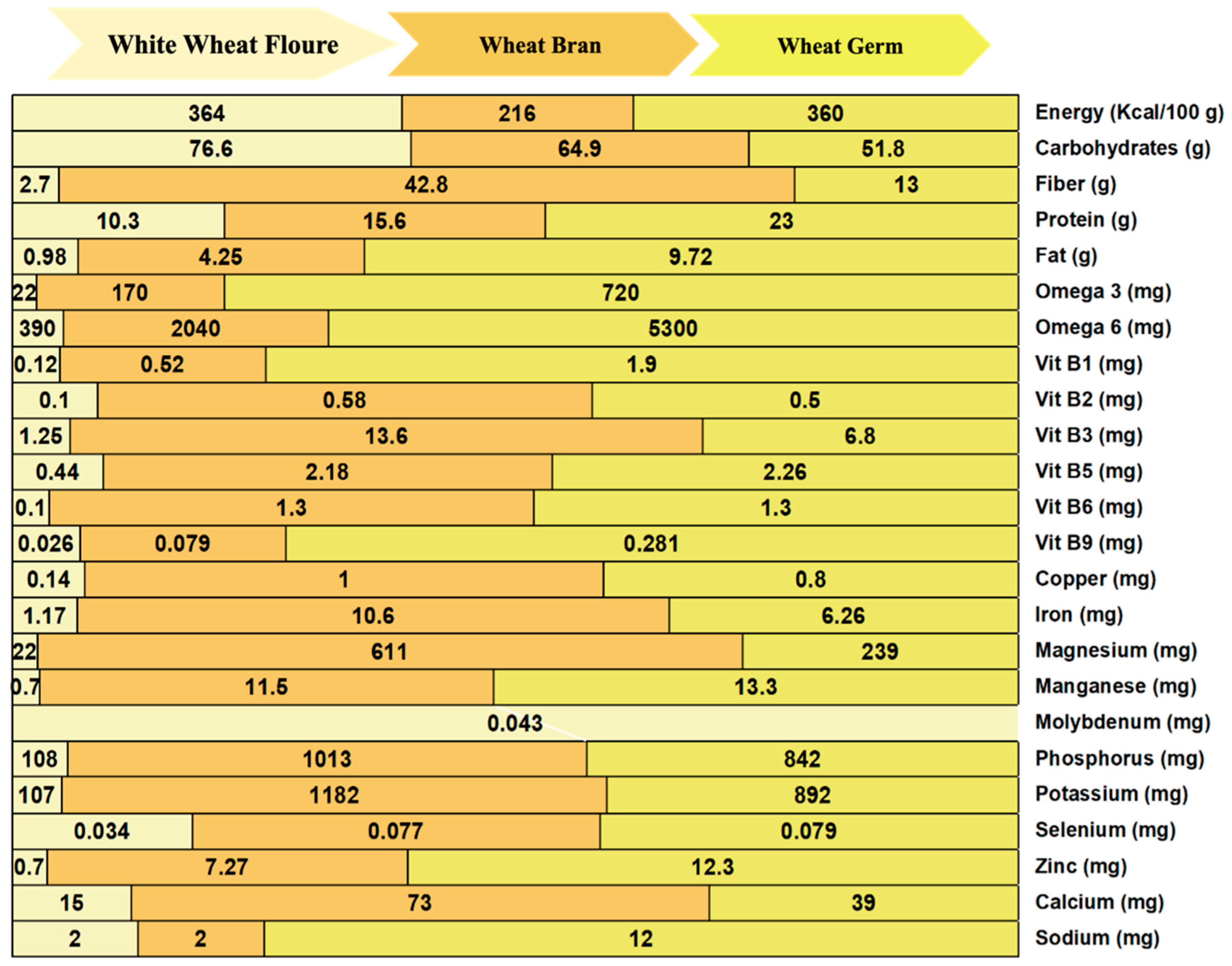
2. Nutritional Value and Bioactive Contents of Wheat-Milling By-Products
3. Effects of Thermal Processing Technologies on Wheat Milling By-Products
3.1. Hot Air Oven (Conventional Dry Heating)
3.2. Microwave and Infrared Heating
3.3. Hydrothermal Treatments Without Mechanical Process (Autoclaving and Superheated Steam)
3.4. Hydrothermal Treatments with the Mechanical Process (Steam Explosion and Extrusion)
4. Effects of Emerging Nonthermal Processing Technologies on Wheat Milling By-Products
4.1. High-Intensity Ultrasound
4.2. Radiofrequency
4.3. Nonthermal Plasma
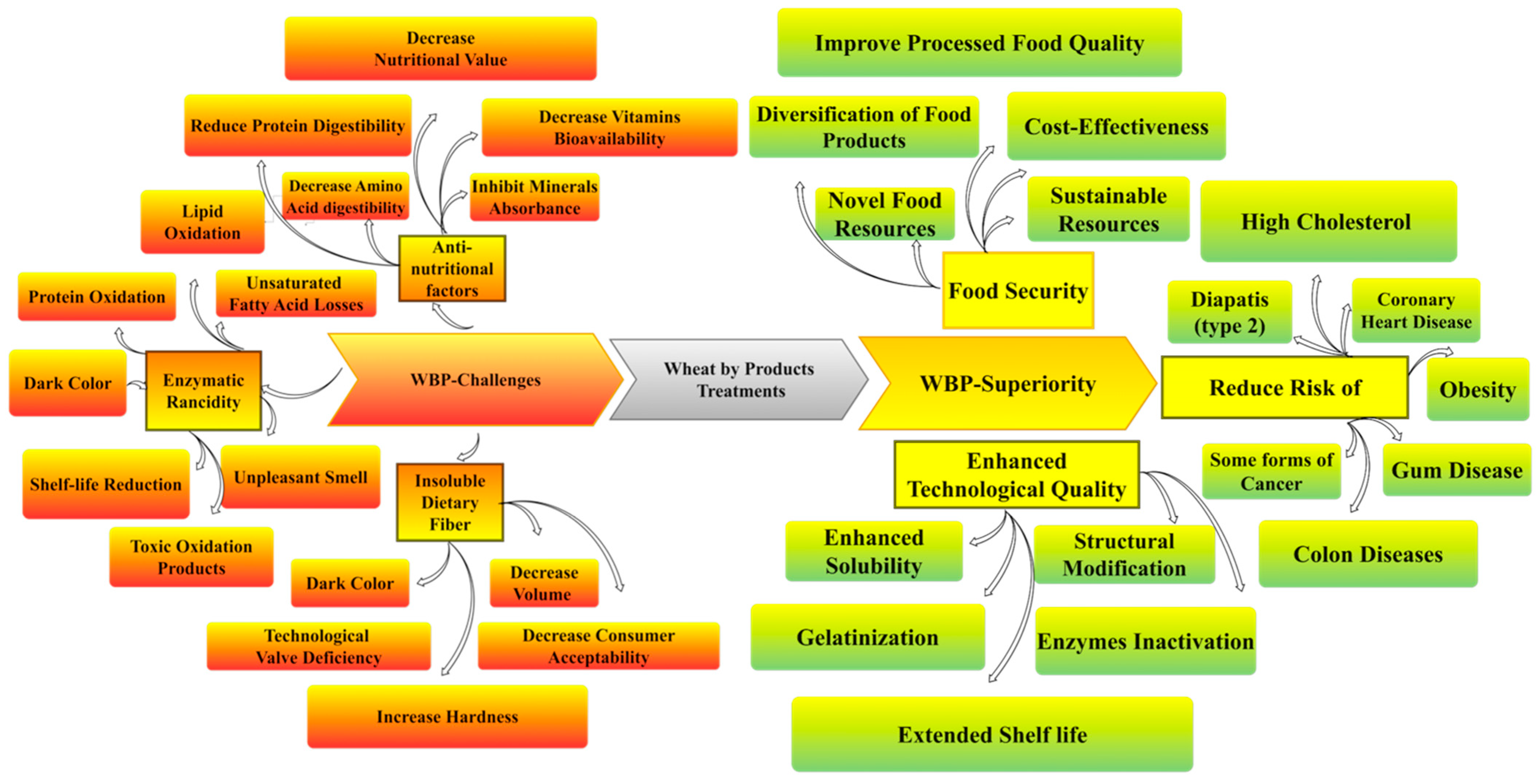
5. Challenges and Future Perspectives
6. Conclusions
Author Contributions
Funding
Institutional Review Board Statement
Informed Consent Statement
Data Availability Statement
Acknowledgments
Conflicts of Interest
References
- Kadam, A.; Deshmukh, R. Grain Mill Products Market. Available online: www.alliedmarketresearch.com (accessed on 28 November 2025).
- Khashaba, R.; Lou, H.; Gu, Z.; Omer, S.H.S.; Wang, X.; Zhao, R. Enhancing wheat bran quality: Comparing the effects of conventional thermal processing and microwave-assisted hydrolysis. Food Chem. 2025, 489, 144984. [Google Scholar] [CrossRef] [PubMed]
- Reguengo, L.M.; Salgaço, M.K.; Sivieri, K.; Maróstica, M.R., Jr. Agro-industrial by-products: Valuable sources of bioactive compounds. Food Res. Int. 2022, 152, 110871. [Google Scholar] [CrossRef]
- Shahbazi, F.; Shahbazi, S.; Nadimi, M.; Paliwal, J. Losses in agricultural produce: A review of causes and solutions, with a specific focus on grain crops. J. Stored Prod. Res. 2025, 111, 102547. [Google Scholar] [CrossRef]
- Cheng, W.; Sun, Y.; Fan, M.; Li, Y.; Wang, L.; Qian, H. Wheat bran, as the resource of dietary fiber: A review. Crit. Rev. Food Sci. Nutr. 2021, 62, 7269–7281. [Google Scholar] [CrossRef]
- Arte, E. Bioprocess-Induced Changes in Wheat Bran Protein Bioavailability, Nutritional Quality and Technological Functionality. Ph.D. Thesis, University of Helsinki, Helsinki, Finland, 2019. [Google Scholar]
- Kaur, A.; Yadav, M.P.; Singh, B.; Bhinder, S.; Simon, S.; Singh, N. Isolation and characterization of arabinoxylans from wheat bran and study of their contribution to wheat flour dough rheology. Carbohydr. Polym. 2019, 221, 166–173. [Google Scholar] [CrossRef]
- Fardet, A. New hypotheses for the health-protective mechanisms of whole-grain cereals: What is beyond fibre? Nutr. Res. Rev. 2010, 23, 65–134. [Google Scholar] [CrossRef]
- Li, Y.; Wang, H.; Wang, L.; Qiu, J.; Li, Z.; Wang, L. Milling of wheat bran: Influence on digestibility, hydrolysis and nutritional properties of bran protein during in vitro digestion. Food Chem. 2023, 404, 134559. [Google Scholar] [CrossRef] [PubMed]
- Sardari, R.R.R.; Sutiono, S.; Azeem, H.A.; Galbe, M.; Larsson, M.; Turner, C.; Karlsson, E. Evaluation of Sequential Processing for the Extraction of Starch, Lipids, and Proteins From Wheat Bran. Front. Bioeng. Biotechnol. 2019, 7, 413. [Google Scholar] [CrossRef] [PubMed]
- Relina, L. Fatty acid composition of oil from grain of some tetraploid wheat species. Biotechnol. Acta 2020, 13, 56–64. [Google Scholar] [CrossRef]
- Spaggiari, M.; Ricci, A.; Calani, L.; Bresciani, L.; Neviani, E.; Dall’aSta, C.; Lazzi, C.; Galaverna, G. Solid state lactic acid fermentation: A strategy to improve wheat bran functionality. LWT 2020, 118, 108668. [Google Scholar] [CrossRef]
- Arfaoui, L. Dietary plant polyphenols: Effects of food processing on their content and bioavailability. Molecules 2021, 26, 2959. [Google Scholar] [CrossRef]
- Zhang, Y.; Cai, P.; Cheng, G.; Zhang, Y. A Brief Review of Phenolic Compounds Identified from Plants: Their Extraction, Analysis, and Biological Activity. Nat. Prod. Commun. 2022, 17, 1–14. [Google Scholar] [CrossRef]
- Chen, Z.; Mense, A.L.; Brewer, L.R.; Shi, Y.C. Wheat bran layers: Composition, structure, fractionation, and potential uses in foods. Crit. Rev. Food Sci. Nutr. 2024, 64, 6636–6659. [Google Scholar] [CrossRef]
- Poudel, R.; Rose, D.J. Changes in enzymatic activities and functionality of whole wheat flour due to steaming of wheat kernels. Food Chem. 2018, 263, 315–320. [Google Scholar] [CrossRef]
- Meral, R. Determination of thermal, molecular changes, and functional properties in stabilized rice bran. Int. J. Food Eng. 2021, 17, 247–256. [Google Scholar] [CrossRef]
- Paesani, C.; Lammers, T.C.G.L.; Sciarini, L.S.; Moiraghi, M.; Pérez, G.T.; Fabi, J.P. Effect of chemical, thermal, and enzymatic processing of wheat bran on the solubilization, technological and biological properties of non-starch polysaccharides. Carbohydr. Polym. 2024, 328, 121747. [Google Scholar] [CrossRef] [PubMed]
- Rout, S.; Srivastav, P.P. A concise review on the thermal and non-thermal extraction methods of dietary fiber and their implications on human health. Food Chem. Adv. 2023, 3, 100466. [Google Scholar] [CrossRef]
- Hu, Y.; Wang, L.; Li, Z. Superheated steam treatment on wheat bran: Enzymes inactivation and nutritional attributes retention. LWT Food Sci. Technol. 2018, 91, 446–452. [Google Scholar] [CrossRef]
- Islam, M.N.; Zhang, M.; Adhikari, B. The Inactivation of Enzymes by Ultrasound—A Review of Potential Mechanisms. Food Rev. Int. 2014, 30, 1–21. [Google Scholar] [CrossRef]
- El-Saadony, M.; Yang, T.; Saad, A.; Alkafaas, S.; Elkafas, S.; Eldeeb, G.; Mohammed, D.; Salem, H.; Korma, S.; Loutfy, S.; et al. Polyphenols: Chemistry, bioavailability, bioactivity, nutritional aspects and human health benefits: A review. Int. J. Biol. Macromol. 2024, 277, 134223. [Google Scholar] [CrossRef]
- Barros, R.G.C.; Pereira, U.C.; Andrade, J.K.S.; de Oliveira, C.S.; Vasconcelos, S.V.; Narain, N. In vitro gastrointestinal digestion and probiotics fermentation impact on bioaccessbility of phenolics compounds and antioxidant capacity of some native and exotic fruit residues with potential antidiabetic effects. Food Res. Int. 2020, 136, 109614. [Google Scholar] [CrossRef] [PubMed]
- Samtiya, M.; Aluko, R.E.; Dhewa, T. Plant food anti-nutritional factors and their reduction strategies: An overview. Food Prod. Process. Nutr. 2020, 2, 6. [Google Scholar] [CrossRef]
- Yao, W.; Gong, Y.; Li, L.; Hu, X.; You, L. The effects of dietary fibers from rice bran and wheat bran on gut microbiota: An overview. Food Chem. X 2022, 13, 100252. [Google Scholar] [CrossRef]
- Lai, W.T.; Khong, N.M.H.; Lim, S.S.; Hee, Y.Y.; Sim, B.I.; Lau, K.Y.; Lai, O.M. A review: Modified agricultural by-products for the development and fortification of food products and nutraceuticals. Trends Food Sci. Technol. 2017, 59, 148–160. [Google Scholar] [CrossRef]
- Lajtai-Szabó, P.; Nemestóthy, N.; Gubicza, L. The Role of Water Activity in Terms of Enzyme Activity and Enantioselectivity during Enzymatic Esterification in Non-conventional Media. Hung. J. Ind. Chem. 2020, 48, 9–12. [Google Scholar] [CrossRef]
- Yawut, N.; Mekwilai, T.; Vichiansan, N.; Braspaiboon, S.; Leksakul, K.; Boonyawan, D. Cold plasma technology: Transforming food processing for safety and sustainability. J. Agric. Food Res. 2024, 18, 101383. [Google Scholar] [CrossRef]
- Kumari, S.; Kaur, B.P.; Thiruvalluvan, M. Ultrasound modified millet starch: Changes in functional, pasting, thermal, structural, in vitro digestibility properties, and potential food applications. Food Hydrocoll. 2024, 153, 110008. [Google Scholar] [CrossRef]
- Li, S.; Zhang, R.; Lei, D.; Huang, Y.; Cheng, S.; Zhu, Z.; Wu, Z.; Cravotto, G. Impact of ultrasound, microwaves and high-pressure processing on food components and their interactions. Trends Food Sci. Technol. 2021, 109, 1–15. [Google Scholar] [CrossRef]
- Lin, Y.W.; Tsai, C.L.; Chen, C.J.; Li, P.L.; Huang, P.H. Insights into the effects of multiple frequency ultrasound combined with acid treatments on the physicochemical and thermal properties of brown rice postcooking. LWT 2023, 188, 115423. [Google Scholar] [CrossRef]
- Singla, M.; Sit, N. Application of ultrasound in combination with other technologies in food processing: A review. Ultrason. Sonochem. 2021, 73, 105506. [Google Scholar] [CrossRef]
- Costa, J.M.; Marra, F. Advances in Food Processing Through Radio Frequency Technology: Applications in Pest Control, Microbial and Enzymatic Inactivation. Food Eng. Rev. 2024, 16, 422–440. [Google Scholar] [CrossRef]
- Yarrakula, S.; Mummaleti, G.; Toleti, K.S.; Saravanan, S. Functional characteristics and storage stability of hot air assisted radio frequency treated pearl millet. Food Prod. Process. Nutr. 2024, 6, 60. [Google Scholar] [CrossRef]
- Gupta, K.K.; Routray, W. Cold plasma: A nonthermal pretreatment, extraction, and solvent activation technique for obtaining bioactive compounds from agro-food industrial biomass. Food Chem. 2025, 472, 142960. [Google Scholar] [CrossRef]
- Jaddu, S.; Sonkar, S.; Seth, D.; Dwivedi, M.; Pradhan, R.C.; Goksen, G.; Sarangi, P.K.; Jambrak, A.R. Cold plasma: Unveiling its impact on hydration, rheology, nutritional, and anti-nutritional properties in food materials—An overview. Food Chem. X 2024, 22, 101266. [Google Scholar] [CrossRef] [PubMed]
- Desai, M.; Chandel, A.; Chauhan, O.P.; Semwal, A.D. Uses and future prospects of cold plasma in agriculture. Food Humanit. 2024, 2, 100262. [Google Scholar] [CrossRef]
- Doddabematti Prakash, S.; Siliveru, K.; Zheng, Y. Emerging applications of cold plasma technology in cereal grains and products. Trends Food Sci. Technol. 2023, 141, 104177. [Google Scholar] [CrossRef]
- Patra, M.; Bashir, O.; Amin, T.; Wani, A.W.; Shams, R.; Chaudhary, K.S.; Mirza, A.A.; Manzoor, S. A comprehensive review on functional beverages from cereal grains-characterization of nutraceutical potential, processing technologies and product types. Heliyon 2023, 9, e16804. [Google Scholar] [CrossRef]
- Saini, P.; Islam, M.; Das, R.; Shekhar, S.; Sinha, A.S.K.; Prasad, K. Wheat bran as potential source of dietary fiber: Prospects and challenges. J. Food Compos. Anal. 2023, 116, 105030. [Google Scholar] [CrossRef]
- Suchowilska, E.; Bieńkowska, T.; Stuper-Szablewska, K.; Wiwart, M. Concentrations of phenolic acids, flavonoids and carotenoids and the antioxidant activity of the grain, flour and bran of triticum polonicum as compared with three cultivated wheat species. Agriculture 2020, 10, 591. [Google Scholar] [CrossRef]
- Chen, Z.; Mense, A.L.; Brewer, L.R.; Shi, Y.C. Wheat bran arabinoxylans: Chemical structure, extraction, properties, health benefits, and uses in foods. Compr. Rev. Food Sci. Food Saf. 2024, 23, e13366. [Google Scholar] [CrossRef] [PubMed]
- Lu, S.; Li, H.; Wang, J. Arabinoxylan: Structure, physiochemical properties, and beneficial effects on health. In Carbohydrate Nutrition; Academic Press: Cambridge, MA, USA, 2025; pp. 189–207. [Google Scholar]
- Maheshwari, G.; Sowrirajan, S.; Joseph, B. β-Glucan, a dietary fiber in effective prevention of lifestyle diseases—An insight. Bioact. Carbohydr. Diet. Fibre 2019, 19, 100187. [Google Scholar] [CrossRef]
- Ying, R.; Zeng, S.; Huang, M. Microstructure of starch complexes coated with arabinoxylans and β-glucans: Effect on gelatinization and digestion properties. Int. J. Biol. Macromol. 2025, 284, 137967. [Google Scholar] [CrossRef]
- Yuan, C.; Hu, R.; He, L.; Hu, J.; Liu, H. Extraction and prebiotic potential of β-glucan from highland barley and its application in probiotic microcapsules. Food Hydrocoll. 2023, 139, 108520. [Google Scholar] [CrossRef]
- Cheng, J.; Guo, M.; Wang, C. Dietary fiber and dietary fiber-rich foods. In Functional Foods: Principles and Technology, 2nd ed.; Elsevier: Amsterdam, The Netherlands, 2025; pp. 55–103. [Google Scholar]
- Rahman, A.; Fehrenbach, J.; Ulven, C.; Simsek, S.; Hossain, K. Utilization of wheat-bran cellulosic fibers as reinforcement in bio-based polypropylene composite. Ind. Crops Prod. 2021, 172, 114028. [Google Scholar] [CrossRef]
- Khorasaniha, R.; Olof, H.; Voisin, A.; Armstrong, K.; Wine, E.; Vasanthan, T.; Armstrong, H. Diversity of fibers in common foods: Key to advancing dietary research. Food Hydrocoll. 2023, 139, 108495. [Google Scholar] [CrossRef]
- Liu, N.; Ma, S.; Wang, Z.; Li, L.; Zheng, X.; Wang, X. Influence of wheat bran dietary fiber on gluten protein structure during dough fermentation. J. Food Process Preserv. 2021, 45, e15035. [Google Scholar] [CrossRef]
- Hullings, A.G.; Sinha, R.; Liao, L.M.; Freedman, N.D.; Graubard, B.I.; Loftfield, E. Whole grain and dietary fiber intake and risk of colorectal cancer in the NIH-AARP Diet and Health Study cohort. Am. J. Clin. Nutr. 2020, 112, 603–912. [Google Scholar] [CrossRef]
- Zhang, M.Y.; Liao, A.M.; Thakur, K.; Huang, J.H.; Zhang, J.G.; Wei, Z.J. Modification of wheat bran insoluble dietary fiber with carboxymethylation, complex enzymatic hydrolysis and ultrafine comminution. Food Chem. 2019, 297, 124983. [Google Scholar] [CrossRef]
- Yang, B.; Li, K.; Niu, M.; Wei, J.; Zhao, S.; Jia, C.; Xu, Y. Structural characteristics of wheat bran insoluble dietary fiber with various particle size distributions and their influences on the kinetics of gastrointestinal emptying in mice. Int. J. Biol. Macromol. 2024, 272, 132905. [Google Scholar] [CrossRef]
- Boll, E.V.J.; Ekström, L.M.N.K.; Courtin, C.M.; Delcour, J.A.; Nilsson, A.C.; Björck, I.M.E.; Östman, E.M. Effects of wheat bran extract rich in arabinoxylan oligosaccharides and resistant starch on overnight glucose tolerance and markers of gut fermentation in healthy young adults. Eur. J. Nutr. 2016, 55, 1661–1670. [Google Scholar] [CrossRef]
- Chen, Z.; Li, S.; Fu, Y.; Li, C.; Chen, D.; Chen, H. Arabinoxylan structural characteristics, interaction with gut microbiota and potential health functions. J. Funct. Foods 2019, 54, 536–551. [Google Scholar] [CrossRef]
- Li, C.; Stump, M.; Wu, W.; Li, Y. Exploring the chemical composition, antioxidant potential, and bread quality effects of the nutritional powerhouse: Wheat bran—A mini-review. J. Agric. Food Res. 2023, 14, 100898. [Google Scholar] [CrossRef]
- Liaqat, H.; Kim, K.J.; Park, S.-Y.; Jung, S.K.; Park, S.H.; Lim, S.; Kim, J.Y. Antioxidant effect of wheat germ extracts and their antilipidemic effect in palmitic acid-induced steatosis in hepg2 and 3t3-l1 cells. Foods 2021, 10, 1061. [Google Scholar] [CrossRef] [PubMed]
- Meriles, S.P.; Steffolani, M.E.; León, A.E.; Penci, M.C.; Ribotta, P.D. Physico-chemical characterization of protein fraction from stabilized wheat germ. Food. Sci. Biotechnol. 2019, 28, 1327–1335. [Google Scholar] [CrossRef]
- Zhang, J.; Luo, D.; Xiang, J.; Xu, W.; Xu, B.; Li, P.; Huang, J. Structural Variations of Wheat Proteins under ultrasound treatment. J. Cereal Sci. 2021, 99, 103219. [Google Scholar] [CrossRef]
- Mollakhalili-Meybodi, N.; Nejati, R.; Sayadi, M.; Nematollahi, A. Novel nonthermal food processing practices: Their influences on nutritional and technological characteristics of cereal proteins. Food Sci. Nutr. 2022, 10, 1725–1744. [Google Scholar] [CrossRef]
- Walters, M.E.; Esfandi, R.; Tsopmo, A. Potential of food hydrolyzed proteins and peptides to chelate iron or calcium and enhance their absorption. Foods 2018, 7, 172. [Google Scholar] [CrossRef]
- Prückler, M.; Siebenhandl-Ehn, S.; Apprich, S.; Höltinger, S.; Haas, C.; Schmid, E.; Kneifel, W. Wheat bran-based biorefinery 1: Composition of wheat bran and strategies of functionalization. LWT Food Sci. Technol. 2014, 56, 211–221. [Google Scholar] [CrossRef]
- Mahmoud, A.A.; Mohdaly, A.A.A.; Elneairy, N.A.A. Wheat Germ: An Overview on Nutritional Value, Antioxidant Potential and Antibacterial Characteristics. Food Nutr. Sci. 2015, 6, 265–277. [Google Scholar] [CrossRef]
- Sayed-Ahmad, B.; Talou, T.; Straumite, E.; Sabovics, M.; Kruma, Z.; Saad, Z.; Hijazi, A.; Merah, O. Evaluation of nutritional and technological attributes of whole wheat based bread fortified with Chia flour. Foods 2018, 7, 135. [Google Scholar] [CrossRef]
- Starzyńska-Janiszewska, A.; Stodolak, B.; Socha, R.; Mickowska, B.; Wywrocka-Gurgul, A. Spelt wheat tempe as a value-added whole-grain food product. LWT 2019, 113, 108250. [Google Scholar] [CrossRef]
- Rose, D.J.; Ogden, L.V.; Dunn, M.L.; Pike, O.A. Enhanced lipid stability in whole wheat flour by lipase inactivation and antioxidant retention. Cereal Chem. 2008, 85, 218–223. [Google Scholar] [CrossRef]
- World Health Organization. Vitamin and Mineral Requirements in Human Nutrition; WHO: Geneva, Switzerland, 2004.
- Kawaguchi, T.; Ueno, T.; Nogata, Y.; Hayakawa, M.; Koga, H.; Torimura, T. Wheat-bran autolytic peptides containing a branched-chain amino acid attenuate non-alcoholic steatohepatitis via the suppression of oxidative stress and the upregulation of AMPK/ACC in high-fat diet-fed mice. Int. J. Mol. Med. 2017, 39, 407–414. [Google Scholar] [CrossRef] [PubMed]
- Zhao, W.; Lyu, Y.; Xiong, L.; Wang, L.; Wang, F.; Song, H.; Shen, X. Effects of in vitro simulated digestion on the hypoglycaemic capacity of wheat bran-soluble dietary fibre. Biochem. Biophys. Res. Commun. 2025, 746, 151267. [Google Scholar] [CrossRef] [PubMed]
- Pandya, J.K.; DeBonee, M.; Corradini, M.G.; Camire, M.E.; McClements, D.J.; Kinchla, A.J. Development of vitamin E-enriched functional foods: Stability of tocotrienols in food systems. Int. J. Food Sci. Technol. 2019, 54, 3196–3204. [Google Scholar] [CrossRef]
- Dang, H.-N.; Wang, C.-L.; Lay, H.-L. Effect of nutrition, vitamin, grains, and temperature on the mycelium growth and antioxidant capacity of Cordyceps militaris (strains AG-1 and PSJ-1). J. Radiat. Res. Appl. Sci. 2018, 11, 130–138. [Google Scholar] [CrossRef]
- Youssef, H.M.K.E. Assessment of Gross Chemical Composition, Mineral Composition, Vitamin Composition and Amino Acids Composition of Wheat Biscuits and Wheat Germ Fortified Biscuits. Food Nutr. Sci. 2015, 6, 845–853. [Google Scholar] [CrossRef]
- Szewczyk, K.; Chojnacka, A.; Górnicka, M. Tocopherols and tocotrienols—Bioactive dietary compounds; what is certain, what is doubt? Int. J. Mol. Sci. 2021, 22, 6222. [Google Scholar] [CrossRef]
- Rawat, M.; Varshney, A.; Rai, M.; Chikara, A.; Pohty, A.L.; Joshi, A.; Binjola, A.; Singh, C.; Rawat, K.; Rather, M.; et al. A comprehensive review on nutraceutical potential of underutilized cereals and cereal-based products. J. Agric. Food Res. 2023, 12, 100619. [Google Scholar] [CrossRef]
- Safwa, S.M.; Ahmed, T.; Talukder, S.; Sarker, A.; Rana, M.R. Applications of non-thermal technologies in food processing Industries—A review. J. Agric. Food Res. 2023, 18, 100917. [Google Scholar] [CrossRef]
- Gong, X.; Chen, T.; Tian, Y.; Zhang, Y.; Ibba, M.I.; Wang, C.; He, Z.; Chen, F.; Tian, W. Variability of arabinoxylan and phytochemicals in refined and whole wheat flour: Insights for wheat quality improvement. J. Food Compos. Anal. 2025, 144, 107760. [Google Scholar] [CrossRef]
- Zhu, Y.; Sang, S. Phytochemicals in whole grain wheat and their health-promoting effects. Mol. Nutr. Food Res. 2017, 61, 1600852. [Google Scholar] [CrossRef]
- Vanegas, S.M.; Meydani, M.; Barnett, J.B.; Goldin, B.; Kane, A.; Rasmussen, H.; Brown, C.; Vangay, P.; Knights, D.; Jonnalagadda, S.; et al. Substituting whole grains for refined grains in a 6-wk randomized trial has a modest effect on gut microbiota and immune and inflammatory markers of healthy adults. Am. J. Clin. Nutr. 2017, 105, 635–650. [Google Scholar] [CrossRef]
- Jeong, H.; Choi, Y.; Lee, J.; Lee, B.; Kim, W.; Kang, H. Anti-inflammatory activity of citric acid-treated wheat germ extract in lipopolysaccharide-stimulated macrophages. Nutrients 2017, 9, 730. [Google Scholar] [CrossRef] [PubMed]
- Rahmani, S.; Sadeghi, O.; Sadeghian, M.; Sadeghi, N.; Larijani, B.; Esmaillzadeh, A. The Effect of Whole-Grain Intake on Biomarkers of Subclinical Inflammation: A Comprehensive Meta-analysis of Randomized Controlled Trials. Adv. Nutr. 2020, 11, 52–65. [Google Scholar] [CrossRef] [PubMed]
- Bechthold, A.; Boeing, H.; Schwedhelm, C.; Hoffmann, G.; Knüppel, S.; Iqbal, K.; Henauw, S.; Michels, N.; Devleesschauwer, B.; Schlesinger, S.; et al. Food groups and risk of coronary heart disease, stroke and heart failure: A systematic review and dose-response meta-analysis of prospective studies. Crit. Rev. Food Sci. Nutr. 2019, 59, 1071–1090. [Google Scholar] [CrossRef]
- Tosh, S.M.; Bordenave, N. Emerging science on benefits of whole grain oat and barley and their soluble dietary fibers for heart health, glycemic response, and gut microbiota. Nutr. Rev. 2021, 78, 13–20. [Google Scholar] [CrossRef] [PubMed]
- Tullio, V.; Gasperi, V.; Catani, M.V.; Savini, I. The impact of whole grain intake on gastrointestinal tumors: A focus on colorectal, gastric, and esophageal cancers. Nutrients 2021, 13, 81. [Google Scholar] [CrossRef]
- Wang, L.; Zhao, H.; Brennan, M.; Guan, W.; Liu, J.; Wang, M.; Wen, X.; He, J.; Brennan, C. In vitro gastric digestion antioxidant and cellular radical scavenging activities of wheat-shiitake noodles. Food Chem. 2020, 330, 127214. [Google Scholar] [CrossRef]
- Brandl, B.; Lee, Y.M.; Dunkel, A.; Hofmann, T.; Hauner, H.; Skurk, T. Effects of extrinsic wheat fiber supplementation on fecal weight; A randomized controlled trial. Nutrients 2020, 12, 298. [Google Scholar] [CrossRef]
- Chung, W.S.F.; Walker, A.W.; Bosscher, D.; Garcia-Campayo, V.; Wagner, J.; Parkhill, J.; Duncan, S.; Flint, H. Relative abundance of the Prevotella genus within the human gut microbiota of elderly volunteers determines the inter-individual responses to dietary supplementation with wheat bran arabinoxylan-oligosaccharides. BMC Microbiol. 2020, 20, 283. [Google Scholar] [CrossRef]
- Galanakis, C.M. Functionality of Food Components and Emerging Technologies. Foods 2021, 10, 128. [Google Scholar] [CrossRef] [PubMed]
- Liaqat, H.; Jeong, E.; Kim, K.J.; Kim, J.Y. Effect of wheat germ on metabolic markers: A systematic review and meta-analysis of randomized controlled trials. Food Sci. Biotechnol. 2020, 29, 739–749. [Google Scholar] [CrossRef] [PubMed]
- Moshawih, S.; Abdullah Juperi, R.N.A.; Paneerselvam, G.S.; Ming, L.C.; Liew, K.B.; Goh, B.H.; Al-Worafi, Y.M.; Choo, C.-Y.; Thuraisingam, S.; Goh, H.; et al. General Health Benefits and Pharmacological Activities of Triticum aestivum L. Molecules 2022, 27, 1948. [Google Scholar] [CrossRef] [PubMed]
- Müller, M.; Hermes, G.D.A.; Canfora, E.E.; Holst, J.J.; Zoetendal, E.G.; Smidt, H.; Troost, F.; Schaap, F.; Damink, S.; Jocken, J.; et al. Effect of wheat bran derived prebiotic supplementation on gastrointestinal transit, gut microbiota, and metabolic health: A randomized controlled trial in healthy adults with a slow gut transit. Gut Microbes 2020, 12, 1704141. [Google Scholar] [CrossRef]
- Neacsu, M.; McMonagle, J.; Fletcher, R.J.; Hulshof, T.; Duncan, S.H.; Scobbie, L.; Duncan, G.; Cantlay, L.; Horgan, G.; de Roos, B.; et al. Availability and dose response of phytophenols from a wheat bran rich cereal product in healthy human volunteers. Mol. Nutr. Food Res. 2017, 61, 1600202. [Google Scholar] [CrossRef]
- Neacsu, M.; Anderson, S.E.; Verschoor, P.; Vaughan, N.J.; Horgan, G.W.; Hulshof, T.; Duncan, S.; Duthie, S.; Russell, W. Consumption of a Recommended Serving of Wheat Bran Cereals Significantly Increases Human Faecal Butyrate Levels in Healthy Volunteers and Reduces Markers of Inflammation Ex Vivo. Recent Prog. Nutr. 2021, 1, 1–15. [Google Scholar] [CrossRef]
- Skřivan, P.; Sluková, M.; Stýblová, B.; Trusová, Š.; Sinica, A.; Bleha, R.; Švec, I.; Kotrcová, V. Utilization of the Nutritional Potential of Wheat Bran Using Different Fractionation Techniques. Appl. Sci. 2024, 14, 7222. [Google Scholar] [CrossRef]
- Tieri, M.; Ghelfi, F.; Vitale, M.; Vetrani, C.; Marventano, S.; Lafranconi, A.; Godos, J.; Titta, L.; Gambera, A.; Alonzo, E.; et al. Whole grain consumption and human health: An umbrella review of observational studies. Int. J. Food Sci. Nutr. 2020, 71, 668–677. [Google Scholar] [CrossRef]
- Costabile, A.; Klinder, A.; Fava, F.; Napolitano, A.; Fogliano, V.; Leonard, C.; Gibson, G.; Tuohy, K. Whole-grain wheat breakfast cereal has a prebiotic effect on the human gut microbiota: A double-blind, placebo-controlled, crossover study. Br. J. Nutr. 2008, 99, 110–120. [Google Scholar] [CrossRef]
- Cloetens, L.; De Preter, V.; Rutgeerts, P.; Verbeke, K.; Swennen, K.; Broekaert, W.F.; Courtin, C.; Delcour, J.; Rutgeerts, P.; Verbeke, K. Dose-Response Effect of Arabinoxylooligosaccharides on Gastrointestinal Motility and on Colonic Bacterial Metabolism in Healthy Volunteers. J. Am. Coll. Nutr. 2008, 27, 512–518. [Google Scholar] [CrossRef] [PubMed]
- Freeland, K.R.; Wilson, C.; Wolever, T.M.S. Adaptation of colonic fermentation and glucagon-like peptide-1 secretion with increased wheat fibre intake for 1 year in hyperinsulinaemic human subjects. Br. J. Nutr. 2010, 103, 82–90. [Google Scholar] [CrossRef] [PubMed]
- François, I.E.J.A.; Lescroart, O.; Veraverbeke, W.S.; Marzorati, M.; Possemiers, S.; Evenepoel, P.; Hamer, H.; Houben, E.; Windey, K.; Welling, G.; et al. Effects of a wheat bran extract containing arabinoxylan oligosaccharides on gastrointestinal health parameters in healthy adult human volunteers: A double-blind, randomised, placebo-controlled, cross-over trial. Br. J. Nutr. 2012, 108, 2229–2242. [Google Scholar] [CrossRef] [PubMed]
- Maki, K.C.; Gibson, G.R.; Dickmann, R.S.; Kendall, C.W.C.; Chen, C.Y.O.; Costabile, A.; Comelli, E.; McKay, D.; Almeida, N.; Jenkins, D.; et al. Digestive and physiologic effects of a wheat bran extract, arabino-xylan-oligosaccharide, in breakfast cereal. Nutrition 2012, 28, 1115–1121. [Google Scholar] [CrossRef]
- Windey, K.; De Preter, V.; Huys, G.; Broekaert, W.F.; Delcour, J.A.; Louat, T.; Herman, J.; Verbeke, K. Wheat bran extract alters colonic fermentation and microbial composition, but does not affect faecal water toxicity: A randomised controlled trial in healthy subjects. Br. J. Nutr. 2015, 113, 225–238. [Google Scholar] [CrossRef]
- Deroover, L.; Verspreet, J.; Luypaerts, A.; Vandermeulen, G.; Courtin, C.M.; Verbeke, K. Wheat bran does not affect postprandial plasma short-chain fatty acids from 13C-inulin fermentation in healthy subjects. Nutrients 2017, 9, 83. [Google Scholar] [CrossRef]
- Tolouie, H.; Mohammadifar, M.A.; Ghomi, H.; Hashemi, M. Argon and nitrogen cold plasma effects on wheat germ lipolytic enzymes: Comparison to thermal treatment. Food Chem. 2021, 346, 128974. [Google Scholar] [CrossRef]
- Liu, Y.; Jia, Z.; Li, M.; Bian, K.; Guan, E. Heat treatment of wheat for improving moisture diffusion and the effects on wheat milling characteristics. J. Cereal Sci. 2023, 114, 103806. [Google Scholar] [CrossRef]
- Abdel-Haleem, A.M.H. Influence of heat treatment for some wheat milling fractions on fino bread quality. J. Food Sci. Technol. 2019, 56, 2639–2650. [Google Scholar] [CrossRef]
- Arslan, D.; Demir, M.K.; Acar, A.; Arslan, F.N. Investigation of wheat germ and oil characteristics with regard to different stabili-zation techniques. Food Technol. Biotechnol. 2020, 58, 348–355. [Google Scholar] [CrossRef]
- Meriles, S.P.; Penci, M.C.; Steffolani, M.E.; Ribotta, P.D. Effect of heat-treated wheat germ on dough properties and crackers quality. Int. J. Food Sci. Technol. 2021, 56, 1837–1843. [Google Scholar] [CrossRef]
- Erim Kose, Y. Degradation kinetic modeling of bioactive compounds and enzyme activity in wheat germ during stabilization. LWT 2022, 153, 112501. [Google Scholar] [CrossRef]
- Saroj, R.; Kaur, S.; Malik, M.A.; Puranik, V.; Kaur, D. Thermal processing of wheat bran: Effect on the bioactive compounds and dietary fiber. Bioact. Carbohydrates Diet. Fibre 2024, 32, 100433. [Google Scholar] [CrossRef]
- Li, B.; Zhao, L.; Chen, H.; Sun, D.; Deng, B.; Li, J.; Liu, Y.; Wang, F. Inactivation of lipase and lipoxygenase of wheat germ with temperature-controlled short wave infrared radiation and its effect on storage stability and quality of wheat germ Oil. PLoS ONE 2016, 11, e0167330. [Google Scholar] [CrossRef] [PubMed]
- Gili, R.D.; Palavecino, P.M.; Cecilia Penci, M.; Martinez, M.L.; Ribotta, P.D. Wheat germ stabilization by infrared radiation. J. Food Sci. Technol. 2017, 54, 71–81. [Google Scholar] [CrossRef] [PubMed]
- Zhang, Y.; Tang, N.; Shi, L.; Miao, Y.; Liu, X.; Ge, X.; Cheng, Y.; Zhang, X. Characterization and comparison of predominant aroma compounds in microwave-treated wheat germ and evaluation of microwave radiation on stability. J. Cereal Sci. 2020, 93, 102942. [Google Scholar] [CrossRef]
- Lauková, M.; Karovičová, J.; Minarovičová, L.; Kohajdová, Z. Wheat bran stabilization and its effect on cookies quality. Potravinarstvo Slovak J. Food Sci. 2019, 13, 109–115. [Google Scholar] [CrossRef]
- Lauková, M.; Karovičová, J.; Minarovičová, L.; Kohajdová, Z. Effect of thermal stabilization on physico-chemical parameters and functional properties of wheat bran. Potravinarstvo Slovak J. Food Sci. 2020, 14, 170–177. [Google Scholar] [CrossRef]
- Liu, J.; Zhang, J.; Wang, W.; Hou, H. Effects of microwave treatment on the stability and antioxidant capacity of a functional wheat bran. Food Sci. Nutr. 2021, 9, 2713–2721. [Google Scholar] [CrossRef]
- Qu, C.; Yang, Q.; Ding, L.; Wang, X.; Liu, S.; Wei, M. The effect of microwave stabilization on the properties of whole wheat flour and its further interpretation by molecular docking. BMC Chem. 2021, 15, 57. [Google Scholar] [CrossRef]
- Rico, D.; Villaverde, A.; Martinez-Villaluenga, C.; Gutierrez, A.L.; Caballero, P.A.; Ronda, F.; Peñas, E.; Frias, J.; Diana, A. Application of autoclave treatment for development of a natural wheat bran antioxidant ingredient. Foods 2020, 9, 781. [Google Scholar] [CrossRef] [PubMed]
- Wu, T.; Li, Z.; Liu, R.; Sui, W.; Zhang, M. Effect of extrusion, steam explosion and enzymatic hydrolysis on functional properties of wheat bran. Food Sci. Technol. Res. 2018, 24, 591–598. [Google Scholar] [CrossRef]
- Ramos-Enríquez, J.R.; Ramírez-Wong, B.; Robles-Sánchez, R.M.; Robles-Zepeda, R.E.; González-Aguilar, G.A.; Gutiérrez-Dorado, R. Effect of Extrusion Conditions and the Optimization of Phenolic Compound Content and Antioxidant Activity of Wheat Bran Using Response Surface Methodology. Plant Foods Hum. Nutr. 2018, 73, 228–234. [Google Scholar] [CrossRef] [PubMed]
- Kong, F.; Wang, L.; Gao, H.; Chen, H. Process of steam explosion assisted superfine grinding on particle size, chemical composition and physico-chemical properties of wheat bran powder. Powder Technol. 2020, 371, 154–160. [Google Scholar] [CrossRef]
- Roye, C.; Henrion, M.; Chanvrier, H.; de Roeck, K.; de Bondt, Y.; Liberloo, I.; King, R.; Courtin, C. Extrusion-cooking modifies physicochemical and nutrition-related properties of wheat bran. Foods 2020, 9, 738. [Google Scholar] [CrossRef]
- Kong, F.; Wang, L.; Chen, H.; Zhao, X. Improving storage property of wheat bran by steam explosion. Int. J. Food Sci. Technol. 2021, 56, 287–292. [Google Scholar] [CrossRef]
- Liu, Y.; Guan, L.; Meng, N.; Wang, L.; Liu, M.; Tan, B. Evaluation of quality deterioration of dried whole-wheat noodles with extrusion-stabilized bran and germ during storage. J. Cereal Sci. 2021, 97, 103143. [Google Scholar] [CrossRef]
- Lee, Y.Y.; Ma, F.; Byars, J.A.; Felker, F.C.; Liu, S.; Mosier, N.S.; Lee, J.; Kenar, J.; Baik, B. Influences of hydrothermal and pressure treatments on compositional and hydration properties of wheat bran and dough mixing properties of whole wheat meal. Cereal Chem. 2021, 98, 673–682. [Google Scholar] [CrossRef]
- Chen, X.; Tang, W.; Li, X.; Zhuang, K.; Lyu, Q.; Ding, W. Effect of extrusion on phenolics from Jizi439 black wheat bran: The profile, structure, and bioactivities. LWT 2023, 177, 114369. [Google Scholar] [CrossRef]
- Zou, Y.; Gao, Y.; He, H.; Yang, T. Effect of roasting on physico-chemical properties, antioxidant capacity, and oxidative stability of wheat germ oil. LWT 2018, 90, 246–253. [Google Scholar] [CrossRef]
- Demir, M.K.; Bilgiçli, N.; Türker, S.; Demir, B. Enriched Turkish noodles (Erişte) with stabilized wheat germ: Chemical, nutritional and cooking properties. LWT 2021, 149, 111819. [Google Scholar] [CrossRef]
- Davari, O.; Rafati, A.; Nosrati, M. Comprehensive modeling of far-infrared drying process for rough rice in a combined FIR dryer. Discov. Food 2024, 4, 87. [Google Scholar] [CrossRef]
- van Rooyen, J.; Simsek, S.; Oyeyinka, S.A.; Manley, M. Holistic View of Starch Chemistry, Structure and Functionality in Dry Heat-Treated Whole Wheat Kernels and Flour. Foods 2022, 11, 207. [Google Scholar] [CrossRef]
- Wang, D.; Li, X.; Hao, X.; Lv, J.; Chen, X. The Effects of Moisture and Temperature on the Microwave Absorption Power of Poplar Wood. Forests 2022, 13, 309. [Google Scholar] [CrossRef]
- Irakli, M.; Lazaridou, A.; Biliaderis, C.G. Comparative evaluation of the nutritional, antinutritional, functional, and bioactivity attributes of rice bran stabilized by different heat treatments. Foods 2021, 10, 57. [Google Scholar] [CrossRef]
- Chowdhury, A.; Kumar, A.Y.N.; Kumar, R.; Maurya, V.K.; Mahesh, M.S.; Singh, A.K.; Yadav, P.; Ghosh, M. Optimization of microwave parameters to enhance phytochemicals, antioxidants and metabolite profile of de-oiled rice bran. Sci. Rep. 2024, 14, 23959. [Google Scholar] [CrossRef]
- Mukwevho, P.; Emmambux, M.N. Effect of infrared and microwave treatments alone and in combination on the functional properties of resulting flours from bambara groundnut seeds. LWT 2022, 153, 112448. [Google Scholar] [CrossRef]
- Abhilasha, A.; Kaur, L.; Monro, J.; Hardacre, A.; Singh, J. Effects of hydrothermal treatment and low-temperature storage of whole wheat grains on in vitro starch hydrolysis and flour properties. Food Chem. 2022, 395, 133516. [Google Scholar] [CrossRef] [PubMed]
- Papadaki, E.; Grigorakis, S.; Palaiogiannis, D.; Lalas, S.I.; Mitlianga, P. Hydrothermal Treatment of Wheat Bran under Mild Acidic or Alkaline Conditions for Enhanced Polyphenol Recovery and Antioxidant Activity. Molecules 2024, 29, 1193. [Google Scholar] [CrossRef]
- Guo, X.N.; Wu, S.H.; Zhu, K.X. Effect of superheated steam treatment on quality characteristics of whole wheat flour and storage stability of semi-dried whole wheat noodle. Food Chem. 2020, 322, 126738. [Google Scholar] [CrossRef] [PubMed]
- Hu, L.; Liu, R.; Wu, T.; Sui, W.; Zhang, M. Structural Properties of Homogeneous Polysaccharide Fraction Released from Wheat Germ by Hydrothermal Treatment. Carbohydr. Polym. 2020, 240, 116238. [Google Scholar] [CrossRef]
- Yang, Z.; Zhou, Y.; Xing, J.J.; Guo, X.N.; Zhu, K.X. Effect of superheated steam treatment and extrusion on lipid stability of black soybean noodles during storage. Food Control. 2022, 132, 108388. [Google Scholar] [CrossRef]
- Zhang, N.; Gao, Y.; Tong, L.; Li, Z. Superheated steam processing improved the qualities of oats flour and noodles. J. Cereal Sci. 2018, 83, 96–100. [Google Scholar] [CrossRef]
- Kaur, T.; Panesar, P.S.; Riar, C.S. Effect of hydrothermal treatments on the nutritional, functional and storage stability characteristics of decorticated foxtail millet grains and flour. J. Cereal Sci. 2024, 120, 104025. [Google Scholar] [CrossRef]
- Pang, T.; Wang, L.; Kong, F.; Yang, W.; Chen, H. Steam explosion pretreatment: Dramatic reduction in energy consumption for wheat bran grinding. J. Cereal Sci. 2024, 117, 103893. [Google Scholar] [CrossRef]
- Yu, X.; Sun, X.; Dong, J.; Wu, L.; Guo, W.; Wang, Y.; Jiang, X.; Liu, Z.; Zhang, M. Instant catapult steam explosion pretreatment of wheat straw liquefied polyols to prolong the slow-release longevity of bio-based polyurethane-coated fertilizers. Chem. Eng. J. 2022, 435, 134985. [Google Scholar] [CrossRef]
- Wang, L.; Pang, T.; Kong, F.; Chen, H. Steam Explosion Pretreatment for Improving Wheat Bran Extrusion Capacity. Foods 2022, 11, 2850. [Google Scholar] [CrossRef] [PubMed]
- Yi, C.; Qiang, N.; Zhu, H.; Xiao, Q.; Li, Z. Extrusion processing: A strategy for improving the functional components, physicochemical properties, and health benefits of whole grains. Food Res. Int. 2023, 160, 111681. [Google Scholar] [CrossRef]
- Dalbhagat, C.G.; Mahato, D.K.; Mishra, H.N. Effect of extrusion processing on physicochemical, functional and nutritional characteristics of rice and rice-based products: A review. Trends Food Sci. Technol. 2019, 85, 226–240. [Google Scholar] [CrossRef]
- Gao, C.; Jia, J.; Yang, Y.; Ge, S.; Song, X.; Yu, J.; Wu, Q. Structural change and functional improvement of wheat germ protein promoted by extrusion. Food Hydrocoll. 2023, 137, 108389. [Google Scholar] [CrossRef]
- Han, H.; Dye, L.; Mackie, A. The impact of processing on the release and antioxidant capacity of ferulic acid from wheat: A systematic review. Food Res. Int. 2022, 164, 112371. [Google Scholar] [CrossRef]
- Šárka, E.; Sluková, M.; Henke, S. Changes in phenolics during cooking extrusion: A Review. Foods 2021, 10, 2100. [Google Scholar] [CrossRef] [PubMed]
- Xiao, Z.; Wang, K.; Li, F.; Cao, H.; Duan, Q.; Zhu, M.; Wang, P.; Gao, Y.; Duan, Y. Effect of extrusion on physical and chemical properties and storage stability of corn germ. Cereal Chem. 2021, 98, 1135–1145. [Google Scholar] [CrossRef]
- Domonkos, M.; Tichá, P.; Trejbal, J.; Demo, P. Applications of cold atmospheric pressure plasma technology in medicine, agriculture and food industry. Appl. Sci. 2021, 11, 4809. [Google Scholar] [CrossRef]
- Sirohi, R.; Tarafdar, A.; Kumar Gaur, V.; Singh, S.; Sindhu, R.; Rajasekharan, R.; Madhavan, A.; Binod, P.; Kumar, S.; Pandey, A. Technologies for disinfection of food grains: Advances and way forward. Food Res. Int. 2021, 145, 110396. [Google Scholar] [CrossRef]
- Barbhuiya, R.I.; Singha, P.; Singh, S.K. A comprehensive review on impact of non-thermal processing on the structural changes of food components. Food Res. Int. 2021, 149, 110647. [Google Scholar] [CrossRef]
- Arshad, R.N.; Abdul-Malek, Z.; Roobab, U.; Ranjha, M.M.A.N.; Režek Jambrak, A.; Qureshi, M.I.; Khan, N.; Lorenzo, J.; Aadil, R. Nonthermal food processing: A step towards a circular economy to meet the sustainable development goals. Food Chem. X 2022, 16, 100516. [Google Scholar] [CrossRef]
- Chiozzi, V.; Agriopoulou, S.; Varzakas, T. Advances, Applications, and Comparison of Thermal (Pasteurization, Sterilization, and Aseptic Packaging) against Non-Thermal (Ultrasounds, UV Radiation, Ozonation, High Hydrostatic Pressure) Technologies in Food Processing. Appl. Sci. 2022, 12, 2202. [Google Scholar] [CrossRef]
- Tolouie, H.; Mohammadifar, M.A.; Ghomi, H.; Yaghoubi, A.S.; Hashemi, M. The impact of atmospheric cold plasma treatment on inactivation of lipase and lipoxygenase of wheat germs. Innov. Food Sci. Emerg. Technol. 2018, 47, 346–352. [Google Scholar] [CrossRef]
- Ling, B.; Ouyang, S.; Wang, S. Radio-frequency treatment for stabilization of wheat germ: Storage stability and physicochemical properties. Innov. Food Sci. Emerg. Technol. 2019, 52, 158–165. [Google Scholar] [CrossRef]
- Liao, M.; Damayanti, W.; Xu, Y.; Zhao, Y.; Xu, X.; Zheng, Y.; Jiao, S. Hot air-assisted radio frequency heating for stabilization of rice bran: Enzyme activity, phenolic content, antioxidant activity and microstructure. LWT 2020, 131, 109754. [Google Scholar] [CrossRef]
- Liao, M.; Damayanti, W.; Zhao, Y.; Xu, X.; Zheng, Y.; Wu, J.; Jiao, S. Hot Air-Assisted Radio Frequency Stabilizing Treatment Effects on Physicochemical Properties, Enzyme Activities and Nutritional Quality of Wheat Germ. Food Bioprocess Technol. 2020, 13, 901–910. [Google Scholar] [CrossRef]
- Habuš, M.; Novotni, D.; Gregov, M.; Čukelj Mustač, N.; Voučko, B.; Ćurić, D. High-intensity ultrasound treatment for prolongation of wheat bran oxidative stability. LWT 2021, 151, 112110. [Google Scholar] [CrossRef]
- Scholtz, V.; Šerá, B.; Khun, J.; Šerý, M.; Julák, J. Effects of Nonthermal Plasma on Wheat Grains and Products. J. Food Qual. 2019, 2019, 7917825. [Google Scholar] [CrossRef]
- Zhang, T.; He, L.; Zhang, M.; Jiang, H. Physicochemical characterization and sensory enhancement of cold plasma treated black whole wheat flour. Sci. Rep. 2024, 14, 24366. [Google Scholar] [CrossRef]
- Abarghoei, M.; Goli, M.; Shahi, S. Investigation of cold atmospheric plasma effects on functional and physicochemical properties of wheat germ protein isolate. LWT 2023, 177, 114585. [Google Scholar] [CrossRef]
- Guimarães, B.; Polachini, T.C.; Augusto, P.E.; Telis-Romero, J. Ultrasound-assisted hydration of wheat grains at different temperatures and power applied: Effect on acoustic field, water absorption and germination. Chem. Eng. Process. Process. Intensif. 2020, 155, 108045. [Google Scholar] [CrossRef]
- Estivi, L.; Brandolini, A.; Condezo-Hoyos, L.; Hidalgo, A. Impact of low-frequency ultrasound technology on physical, chemical and technological properties of cereals and pseudocereals. Ultrason. Sonochem. 2022, 86, 106044. [Google Scholar] [CrossRef]
- Córdova, A.; Henríquez, P.; Nuñez, H.; Rico-Rodriguez, F.; Guerrero, C.; Astudillo-Castro, C.; Illanes, A. Recent Advances in the Application of Enzyme Processing Assisted by Ultrasound in Agri-Foods: A Review. Catalysts 2022, 12, 107. [Google Scholar] [CrossRef]
- Nemes, S.A.; Mitrea, L.; Teleky, B.-E.; Dulf, E.H.; Călinoiu, L.F.; Ranga, F.; Elekes, D.; Diaconeasa, Z.; Dulf, F.; Vodnar, D. Integration of ultrasound and microwave pretreatments with solid-state fermentation enhances the release of sugars, organic acids, and phenolic compounds in wheat bran. Food Chem. 2025, 463, 141237. [Google Scholar] [CrossRef] [PubMed]
- Rebolleda, S.; José, M.L.G.S.; Sanz, M.T.; Beltrán, S.; Solaesa, Á.G. Bioactive compounds of a wheat bran oily extract obtained with supercritical carbon dioxide. Foods 2020, 9, 625. [Google Scholar] [CrossRef]
- Atehli, D.; Xu, Z.; Guo, X.; Xiao, M.; Cheng, B.; Jia, X.; Wu, B.; Kang, J.; Guo, Q.; Cui, S. Eco-friendly synthesis of Arabinoxylan-Catechin conjugates: Enhanced functional and antioxidant properties via cold plasma and ultrasonic methods. Food Chem. 2025, 472, 142986. [Google Scholar] [CrossRef]
- Pietiäinen, S.; Moldin, A.; Ström, A.; Malmberg, C.; Langton, M. Effect of physicochemical properties, pre-processing, and extraction on the functionality of wheat bran arabinoxylans in breadmaking—A review. Food Chem. 2022, 383, 132584. [Google Scholar] [CrossRef]
- Gu, J.; Li, Q.; Liu, J.; Ye, Z.; Feng, T.; Wang, G.; Wang, W.; Zhang, Y. Ultrasonic–assisted extraction of polysaccharides from Auricularia auricula and effects of its acid hydrolysate on the biological function of Caenorhabditis elegans. Int. J. Biol. Macromol. 2021, 167, 423–433. [Google Scholar] [CrossRef]
- Mohammadi, H.; Karimifar, M.; Heidari, Z.; Zare, M.; Amani, R. The effects of wheat germ consumption on mental health and brain-derived neurotrophic factor in subjects with type 2 diabetes mellitus: A randomized, double-blind, placebo-controlled trial. Nutr. Neurosci. 2021, 25, 46–53. [Google Scholar] [CrossRef]
- Rao, M.V.; Sunil, C.K.; Venkatachalapathy, N. Effect of microwave and hot air radiofrequency treatments on physicochemical and functional properties of foxtail millet flour and its protein isolate. J. Cereal Sci. 2023, 114, 103774. [Google Scholar] [CrossRef]
- Mao, Y.; Hao, Y.; Guan, X.; Wang, P.; Wang, S. Temperature and Moisture Dependent Dielectric and Thermal Properties of Walnut Components Associated with Radio Frequency and Microwave Pasteurization. Foods 2022, 11, 919. [Google Scholar] [CrossRef]
- Ling, B.; Lyng, J.G.; Wang, S. Radio-frequency treatment for stabilization of wheat germ: Dielectric properties and heating uniformity. Innov. Food Sci. Emerg. Technol. 2018, 48, 66–74. [Google Scholar] [CrossRef]
- Ling, B.; Lyng, J.G.; Wang, S. Effects of hot air-assisted radio frequency heating on enzyme inactivation, lipid stability and product quality of rice bran. LWT 2018, 91, 453–459. [Google Scholar] [CrossRef]
- Ling, B.; Ouyang, S.; Wang, S. Effect of radio frequency treatment on functional, structural and thermal behaviors of protein isolates in rice bran. Food Chem. 2019, 289, 537–544. [Google Scholar] [CrossRef] [PubMed]
- Khan, M.K.; Ahmad, K.; Hassan, S.; Imran, M.; Ahmad, N.; Xu, C. Effect of novel technologies on polyphenols during food processing. Innov. Food Sci. Emerg. Technol. 2018, 45, 361–381. [Google Scholar] [CrossRef]
- Huang, M.; Adhikari, B.; Lv, W.; Xu, J. Application of novel-assisted radio frequency technology to improve ready-to-eat foods quality: A critical review. Food Biosci. 2024, 59, 104182. [Google Scholar] [CrossRef]
- Arjmand, S.; Sadrabad, E.K.; Ramroudi, F.; Mollakhalili-meybodi, N. Cold Plasma Treatment of Quinoa Grains: Changes in Phytic Acid, Saponin, Content, and Antioxidant Capacity. Food Sci. Nutr. 2024, 13, e4691. [Google Scholar] [CrossRef]
- Mollakhalili-Meybodi, N.; Yousefi, M.; Nematollahi, A.; Khorshidian, N. Effect of atmospheric cold plasma treatment on technological and nutrition functionality of protein in foods. Eur. Food Res. Technol. 2021, 247, 1579–1594. [Google Scholar] [CrossRef]
- Sharma, N.; Sahu, J.K.; Joshi, S.; Khubber, S.; Bansal, V.; Bhardwaj, A.; Bangar, S.; Bal, L. Modulation of lentil antinutritional properties using non-thermal mediated processing techniques—A review. J. Food Compos. Anal. 2022, 109, 104498. [Google Scholar] [CrossRef]
- Basak, S.; Annapure, U.S. Recent trends in the application of cold plasma for the modification of plant proteins—A review. Futur. Foods 2022, 5, 100119. [Google Scholar] [CrossRef]
- Zeng, Z.; Wang, Y.; Xu, G.; Zhou, L.; Liu, C.; Luo, S. Peroxidase inactivation by cold plasma and its effects on the storage, physicochemical and bioactive properties of brown rice. Food Biosci. 2023, 52, 102383. [Google Scholar] [CrossRef]
- Chaple, S.; Sarangapani, C.; Jones, J.; Carey, E.; Causeret, L.; Genson, A.; Duffy, B.; Bourke, P. Effect of atmospheric cold plasma on the functional properties of whole wheat (Triticum aestivum L.) grain and wheat flour. Innov. Food Sci. Emerg. Technol. 2020, 66, 102529. [Google Scholar] [CrossRef]
- Zhang, Q.; Cheng, Z.; Zhang, J.; Nasiru, M.M.; Wang, Y.; Fu, L. Atmospheric cold plasma treatment of soybean protein isolate: Insights into the structural, physicochemical, and allergenic characteristics. J. Food Sci. 2021, 86, 68–77. [Google Scholar] [CrossRef]
- Ganesan, A.R.; Tiwari, U.; Ezhilarasi, P.N.; Rajauria, G. Application of cold plasma on food matrices: A review on current and future prospects. J. Food Process. Preserv. 2021, 45, e15070. [Google Scholar] [CrossRef]
- McClurkin Moore, J.; Ileleji, K.E.; Keener, K. Factors that affect high voltage atmospheric cold plasma treatment efficacy on wet distillers’ grains: Shelf-life and nutrient composition. J. Cereal Sci. 2020, 95, 103034. [Google Scholar] [CrossRef]
- Bertran-Llorens, S.; Perondi, F.; Slama de Freitas, A.L.; Chen, J.; van Erven, G.; Deuss, P.J. Supercritical CO2 as effective wheat straw pretreatment for subsequent mild fractionation strategies. Chem. Eng. J. 2024, 497, 154491. [Google Scholar] [CrossRef]
- Castro, L.M.G.; Borges, N.F.; Alexandre, E.M.C.; Pintado, M. Ohmic, ultraviolet, and infrared heating-assisted extraction of bioactive compounds. In Application of Emerging Technologies and Strategies to Extract Bioactive Compounds; Academic Press: Cambridge, MA, USA, 2025; pp. 143–170. [Google Scholar]
- Chakraborty, S.; Pulivarthi, M.K.; Raj, A.S.; Prakash, S.D.; Bommina, H.; Siliveru, K. Inactivation of lipase and lipoxygenase in whole wheat flour using atmospheric cold plasma and steam treatments: Kinetics, mechanism, and impact on its compositional properties. J. Cereal Sci. 2024, 117, 103889. [Google Scholar] [CrossRef]
- Tuhanioglu, A.; Ubeyitogullari, A. Application of supercritical carbon dioxide to enhance the aroma of whole sorghum flour for use in 3D printing of sorghum cookies. Food Res. Int. 2024, 190, 114588. [Google Scholar] [CrossRef] [PubMed]
- Waziiroh, E.; Schoenlechner, R.; Jaeger, H.; Brusadelli, G.; Bender, D. Understanding gluten-free bread ingredients during ohmic heating: Function, effect and potential application for breadmaking. Eur. Food Res. Technol. 2022, 248, 1021–1034. [Google Scholar] [CrossRef]
- Dyshlyuk, L.; Babich, O.; Prosekov, A.; Ivanova, S.; Pavsky, V.; Chaplygina, T. The effect of postharvest ultraviolet irradiation on the content of antioxidant compounds and the activity of antioxidant enzymes in tomato. Heliyon 2020, 6, e03288. [Google Scholar] [CrossRef]
- Darré, M.; Vicente, A.R.; Cisneros-Zevallos, L.; Artés-Hernández, F. Postharvest Ultraviolet Radiation in Fruit and Vegetables: Applications and Factors Modulating Its Efficacy on Bioactive Compounds and Microbial Growth. Foods 2022, 11, 653. [Google Scholar] [CrossRef] [PubMed]
- Yu, C.; Hu, Q.; Wang, H.; Deng, Z. Comparison of 11 rice bran stabilization methods by analyzing lipase activities. J. Food Process. Preserv. 2020, 44, e14370. [Google Scholar] [CrossRef]
- Yu, T.; Niu, L.; Iwahashi, H. High-Pressure Carbon Dioxide Used for Pasteurization in Food Industry. Food Eng. Rev. 2020, 12, 364–380. [Google Scholar] [CrossRef]
- Iqbal, A.; Murtaza, A.; Muhammad, Z.; Elkhedir, A.E.; Tao, M.; Xu, X. Inactivation, aggregation and conformational changes of polyphenol oxidase from quince (Cydonia oblonga Miller) juice subjected to thermal and high-pressure carbon dioxide treatment. Molecules 2018, 23, 1743. [Google Scholar] [CrossRef]
- Murtaza, A.; Iqbal, A.; Marszałek, K.; Iqbal, M.A.; Ali, S.W.; Xu, X.; Pan, S.; Hu, W. Enzymatic, Phyto-, and Physicochemical Evaluation of Apple Juice under High-Pressure Carbon Dioxide and Thermal Processing. Foods 2020, 9, 243. [Google Scholar] [CrossRef] [PubMed]
- Hojnik Podrepšek, G.; Knez, Ž.; Leitgeb, M. The Influence of Supercritical Carbon Dioxide on Graham Flour Enzyme Polyphenol Oxidase Activity. Molecules 2020, 25, 5981. [Google Scholar] [CrossRef] [PubMed]
- Alcántara-Zavala, A.E.; Figueroa-Cárdenas, J.d.D.; Morales-Sánchez, E.; Aldrete-Tapia, J.A.; Arvizu-Medrano, S.M.; Martínez-Flores, H.E. Application of ohmic heating to extend shelf life and retain the physicochemical, microbiological, and sensory properties of pulque. Food Bioprod. Process. 2019, 118, 139–148. [Google Scholar] [CrossRef]
- Srivastava, S.; Mishra, H.N. Ecofriendly nonchemical/nonthermal methods for disinfestation and control of pest/fungal infestation during storage of major important cereal grains: A review. Food Front. 2021, 2, 93–105. [Google Scholar] [CrossRef]
- Makroo, H.A.; Rastogi, N.K.; Srivastava, B. Ohmic heating assisted inactivation of enzymes and microorganisms in foods: A review. Trends Food Sci. Technol. 2020, 97, 451–465. [Google Scholar] [CrossRef]



| Study Participants Sex, Baseline Age (Years) | WBP | Duration | Main Findings | References |
|---|---|---|---|---|
| 31 adults (15 M and 16 F) Av age 32 years | 48 g WB breakfast cereal | 3 weeks |
| [95] |
| 12 adults (6 M and 6 F) Av age 24 years | 4.9 g WB-arabinoxylan extract | Single test meal |
| [96] |
| 40 adults Diabetic (higher insulin) Av age 29 years | 60 g WB | 1 year |
| [97] |
| 63 adults (33 M and 30 F) Av age 42 years | 8 g WB-arabinoxylan extract in soft drink | 3 weeks |
| [98] |
| 55 adults Av age 18–75 years | 44 g WB daily | 3 weeks |
| [99] |
| 29 adults Av age 19–44 years | 10 g WB-arabinoxylan extract | 3 weeks |
| [100] |
| 19 adults (9 M and 10 F) Av age 23 years | 8.9 g WB-arabinoxylan extract | Single test meal |
| [54] |
| 10 adults Av age 18–65 years | 20 g WB | Single test meal |
| [101] |
| 8 healthy adults Av age 18–55 years | 120 g WB breakfast cereal | Single test meal |
| [91] |
| 81 adults (49 M and 32 F) Av age 40–65 years | 40 g WBP | 6 weeks |
| [91] |
| 8 healthy volunteers Av age 23 years | 120 g WB | 2 weeks |
| [78,91] |
| 60 healthy volunteers | 3.5 g WG oil | 30 days |
| [88] |
| 48 normoglycemic adults | 15 g WB | 12 weeks |
| [90] |
| 20 adults Av age 18–30 years | 10 g WB | 5 days |
| [85] |
| 21 male and female Av age 60 years | 15 g WB, three times daily | 5 days |
| [86] |
| 75 male and female | 20 g WG | 12 weeks |
| [102] |
| 8 healthy volunteers Av age 18–55 years | 40 g WB | Single test meal |
| [92] |
| WB/WG | Treatment/ Process | Effects | References |
|---|---|---|---|
| Thermal processing technologies (1-Conventional dry heating) | |||
| WG WB | 175 °C/20 min |
| [104] |
| WG | 160 °C/6 min |
| [105] |
| WG | 175 °C/20 min |
| [106] |
| WG | 120 °C/20 min |
| [107] |
| WB | 105 °C/40 min |
| [108] |
| WB | 120 °C for 20 min |
| |
| Thermal processing technologies (2-Microwave and infrared heating) | |||
| WG | Short wave infrared/ 100 W at 90 °C/20 min |
| [109] |
| WG | Short wave infrared 4800 W/m2/3 min |
| [110] |
| WG | Microwave/ 180 W/12 min |
| [105] |
| WG | Microwave 560 W/3 min |
| [111] |
| WB | Microwave 800 W/2 min |
| [112,113] |
| WB | Microwave 7.5 kW/2 min |
| [114] |
| WB | Microwave 700 W/3 min |
| [115] |
| WB | Microwave 800 W/1.50 min |
| [108] |
| WB | Microwave 7.5 kW for 120 s |
| [2] |
| Hydrothermal treatments (1-Autoclaving, superheated steam (without mechanical process)) | |||
| WB | Superheated steam 170 °C/ 7 min compared with hot air oven/ 20 min at the same temperature |
| [20] |
| WB | Autoclave 130 °C/3 min |
| [116] |
| WB | Autoclave 121 °C/90 min |
| [108] |
| Hydrothermal treatments (2-Steam explosion and extrusion (with the mechanical process)) | |||
| WB | Steam explosion and extrusion |
| [117] |
| WB | Extrusion 120 °C, 30% feed moisture |
| [118] |
| WB | Steam explosion 170 °C/5 min assisted superfine grinding |
| [119] |
| WB | Extrusion 120 °C, 23% feed moisture, 310 rpm |
| [120] |
| WB | Steam Explosion at 0.8 MPa 170 °C/5 min compared with Autoclaving (0.1 MPa 121 °C/20 min |
| [121] |
| WB | Extrusion 160 °C, 17% feed moisture, 275 rpm |
| [122] |
| WB | Extrusion 120 °C, 26% feed moisture, 250 rpm. |
| [123] |
| WB | Extrusion 110 °C, 25% feed moisture,140 rpm |
| [124] |
| WB/WG | Treatment/ Process | Effects | References |
|---|---|---|---|
| Emerging nonthermal processing technologies | |||
| WG | Cold plasma, 20, 24 kV, 25 min |
| [102,154] |
| WG | Radiofrequency 100 °C/15 min holding in hot air heating and 110 °C/5 min |
| [155] |
| W G | Radio-frequency to 100 °C/15 min holding in hot air heating 110 °C/5 min |
| [156,157] |
| WB | High-intensity ultrasound/ 15 min and 15% suspension |
| [158] |
| WG | Cold plasma, 50 Hz, 24 kV, 35 min |
| [102] |
| WB | Microwave-assisted hydrolysis 7.5 kW for 120 s at controlled temperature (50–70 °C) |
| [2] |
| WB | Atmospheric plasma, 10 kV, 6 kHz and up to 24 kV, 50–Hz (5–35 min) |
| [159] |
| WB | Cold plasma 40 V, 0.9 ± 0.1 A for 2–6 min |
| [160] |
| WG | Atmospheric cold plasma at 25 kV for 5–40 min |
| [161] |
| WB | Ultrasound-assisted hydration 0–1500 W at 15–25 °C |
| [162] |
| WB | Ultrasound 400 W for 1–10 min |
| [30] |
| WB | Low-frequency ultrasound at 120 W- for 23 min |
| [163] |
| WB | Ultrasound (180 W) at 50 °C, for 70 min, |
| [164] |
| WB | Ultrasound 152 to 750 W |
| [165] |
| WB | supercritical carbon dioxide at 25.0 ± 0.1 MPa and 40 ± 2 °C |
| [166] |
| WB | Cold plasma 50 V for 3 min ultrasonic 200 W for 3 min |
| [167] |
| WB | Ultrasonication (500 W) and microwave (25 min) combination sodium hydroxide 0.30 mol/L |
| [168] |
Disclaimer/Publisher’s Note: The statements, opinions and data contained in all publications are solely those of the individual author(s) and contributor(s) and not of MDPI and/or the editor(s). MDPI and/or the editor(s) disclaim responsibility for any injury to people or property resulting from any ideas, methods, instructions or products referred to in the content. |
© 2026 by the authors. Licensee MDPI, Basel, Switzerland. This article is an open access article distributed under the terms and conditions of the Creative Commons Attribution (CC BY) license.
Share and Cite
Khashaba, R.A.; Lou, H.; Li, Y.; Saeed Omer, S.H.; Wang, X.; Gu, Z.; Zhao, R. Optimizing Wheat Milling By-Products: An Overview of Processing Techniques. Foods 2026, 15, 1085. https://doi.org/10.3390/foods15061085
Khashaba RA, Lou H, Li Y, Saeed Omer SH, Wang X, Gu Z, Zhao R. Optimizing Wheat Milling By-Products: An Overview of Processing Techniques. Foods. 2026; 15(6):1085. https://doi.org/10.3390/foods15061085
Chicago/Turabian StyleKhashaba, Reham Ahmed, Haiwei Lou, Yue Li, Saeed Hamid Saeed Omer, Xunda Wang, Zhonghua Gu, and Renyong Zhao. 2026. "Optimizing Wheat Milling By-Products: An Overview of Processing Techniques" Foods 15, no. 6: 1085. https://doi.org/10.3390/foods15061085
APA StyleKhashaba, R. A., Lou, H., Li, Y., Saeed Omer, S. H., Wang, X., Gu, Z., & Zhao, R. (2026). Optimizing Wheat Milling By-Products: An Overview of Processing Techniques. Foods, 15(6), 1085. https://doi.org/10.3390/foods15061085