Upcycling Tomato Harvest and Processing Residues into Polyphenol-Enriched Cellulosic Films with Tunable Antioxidant and UV-Blocking Properties





Abstract
1. Introduction
2. Materials and Methods
2.1. Raw Materials and Chemicals
2.2. Extraction and Characterization of Tomato Polyphenolics
2.3. Recovery and Carboxymethylation of Cellulose from Tomato Harvest Residues
2.4. Development of Bio-Based Active Films
2.5. Structural Characterization
2.6. Determination of Physical Properties of Films
2.7. Determination of Mechanical Properties of Films
2.8. Functional Properties of Films
2.8.1. UV-Blocking Properties
2.8.2. Antioxidant Properties
2.9. Biodesintegration Assay of THR-CMC-Based Films
2.10. Statistical Analysis
3. Results and Discussion
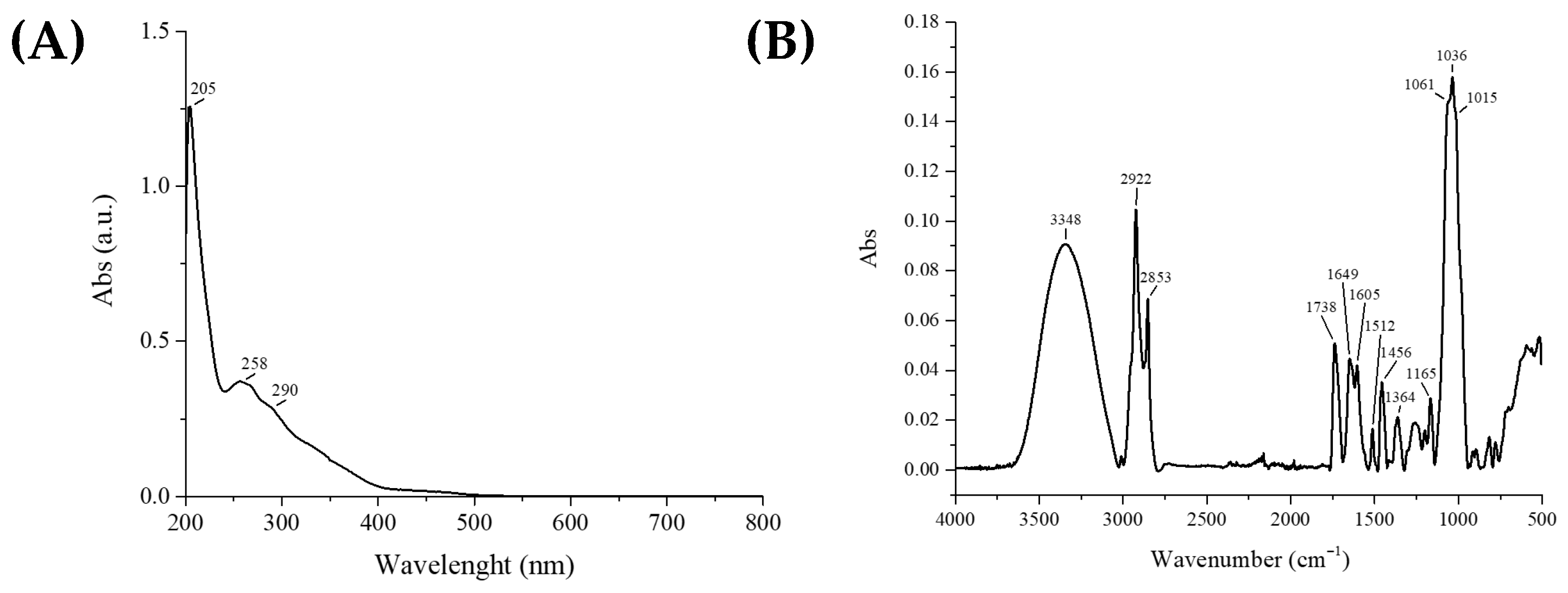
3.1. Characterization of Tomato Polyphenolic Fraction
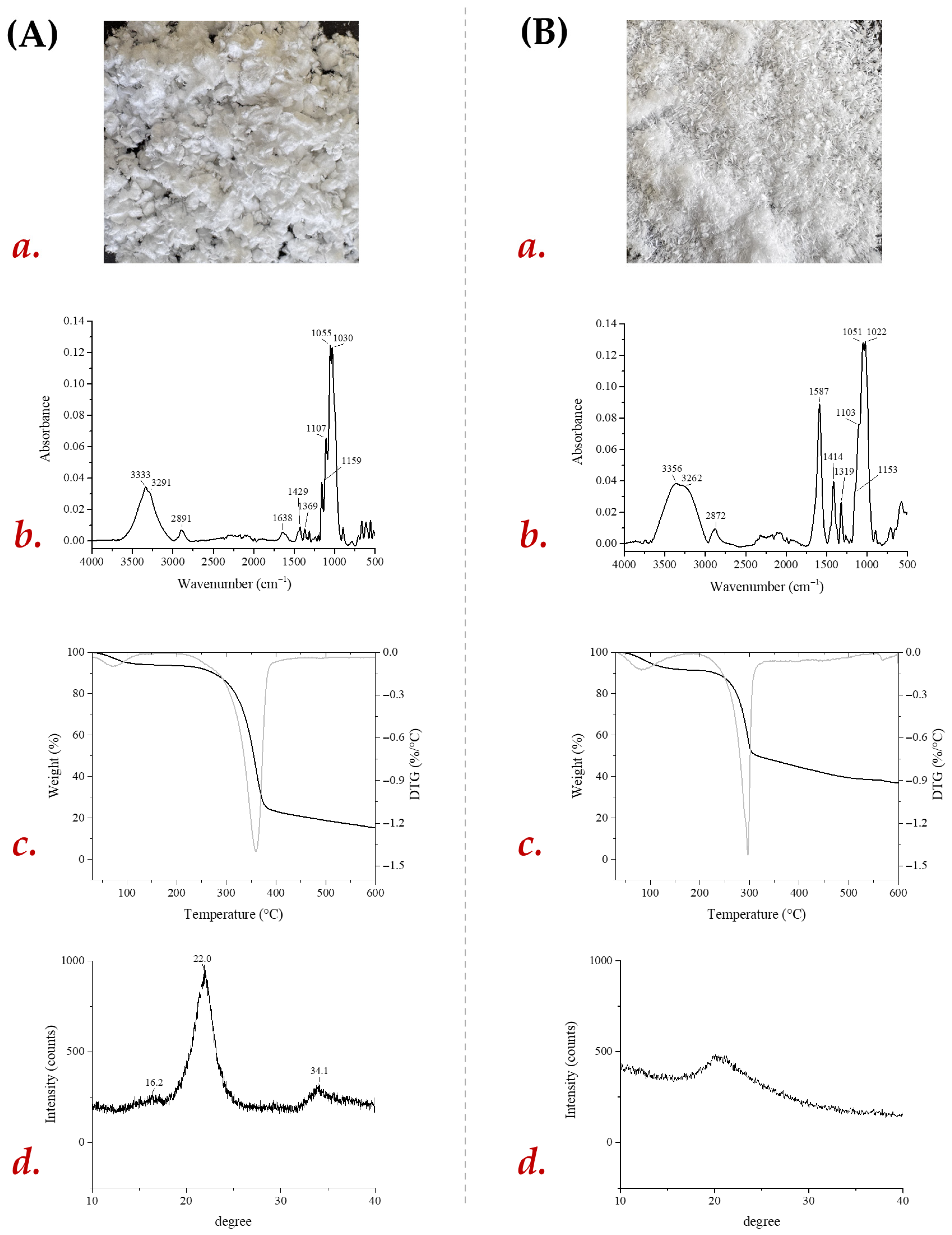
3.2. Cellulose Recovery and Functionalization to CMC
3.3. Structural Characterization of THR-Cellulose and Derived CMC
3.4. Characterization of Newly Developed Bioplastic Films
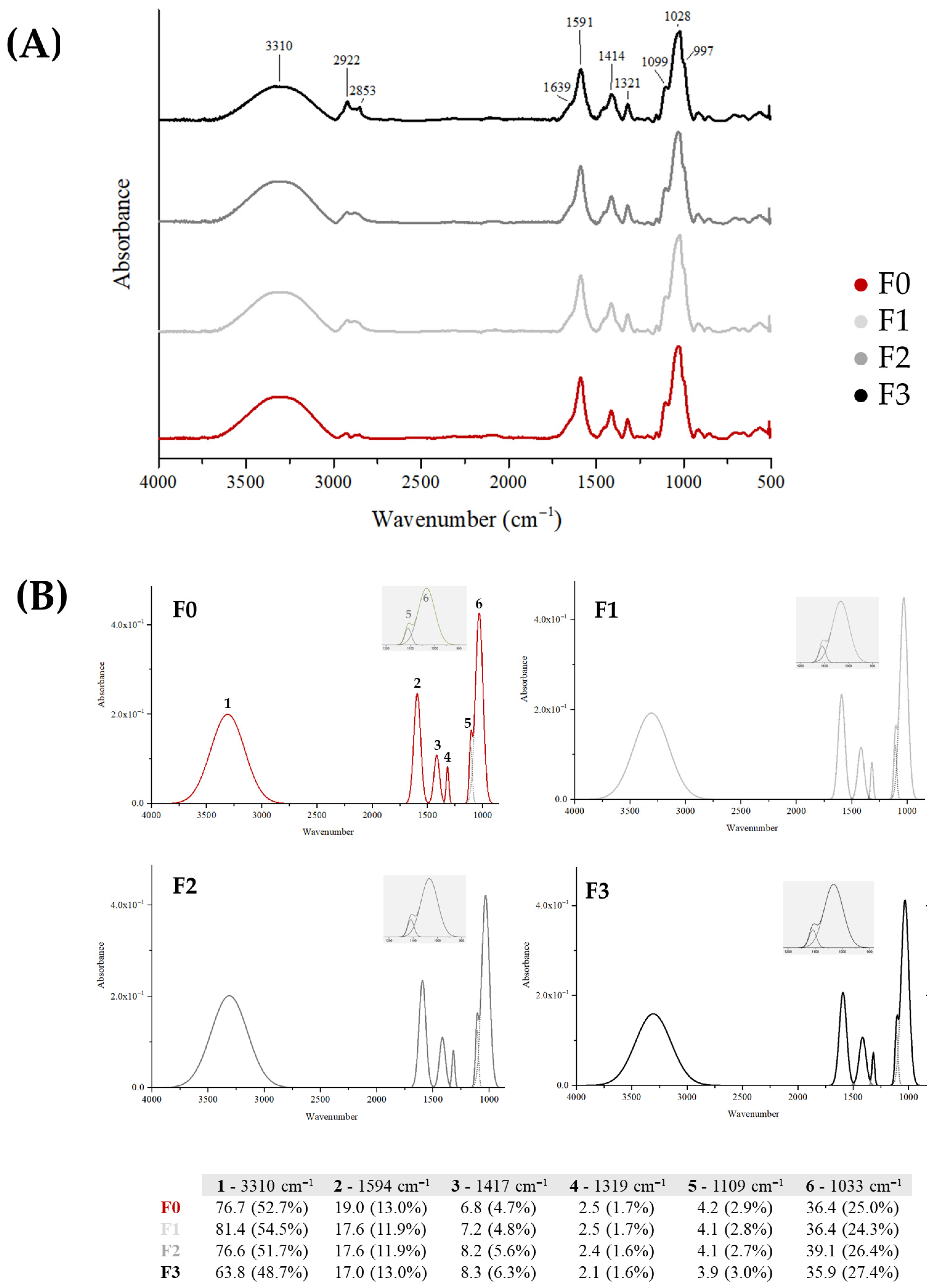
3.4.1. Structural Characterization of Films
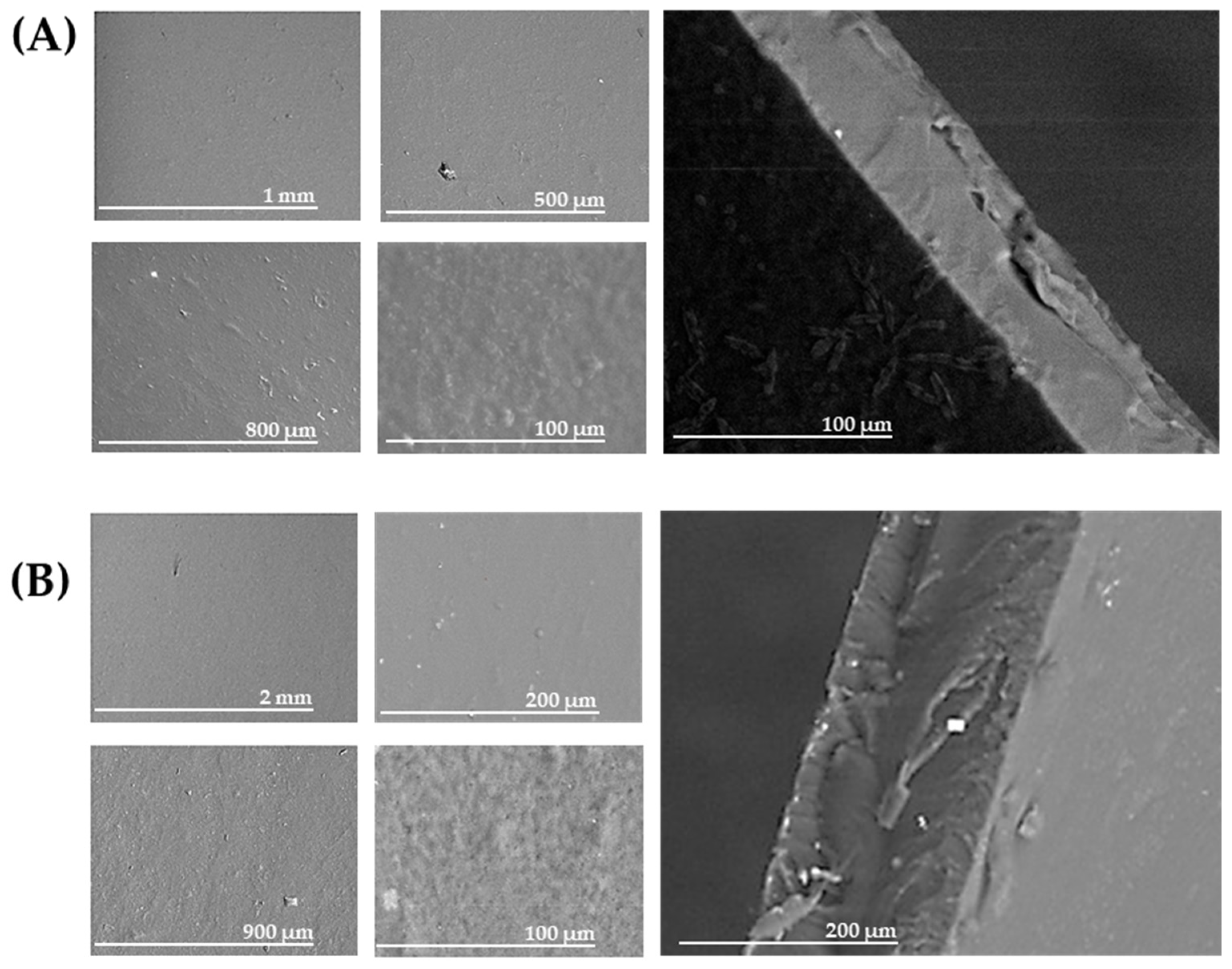
3.4.2. Physical Properties of Films
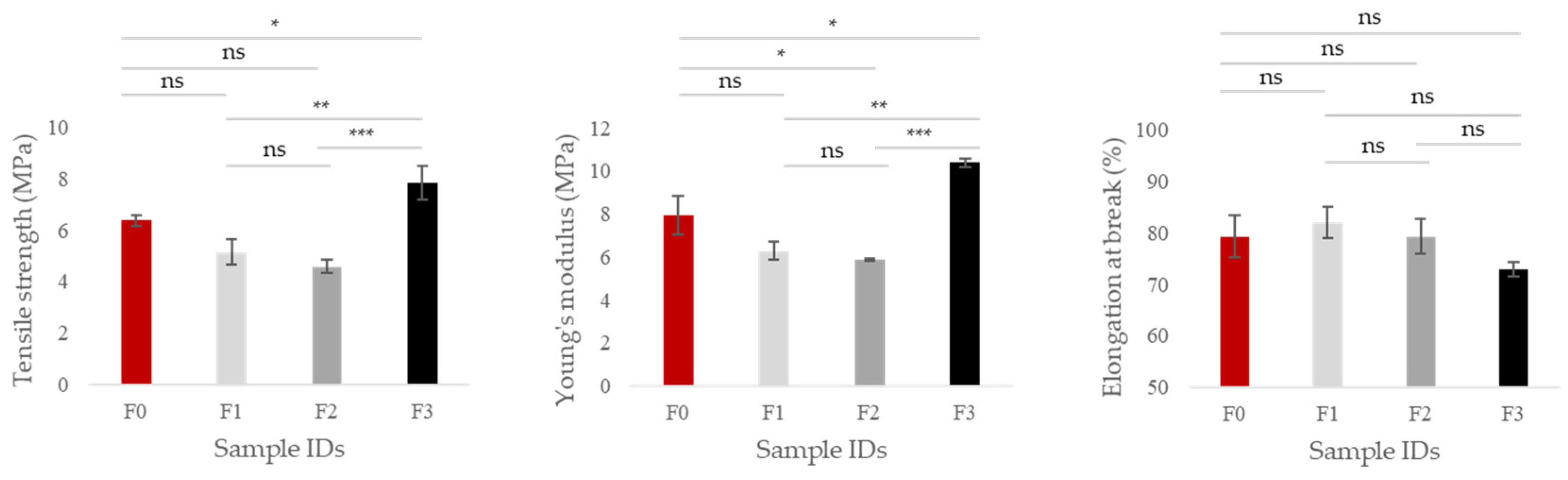
3.4.3. Mechanical Properties of Films
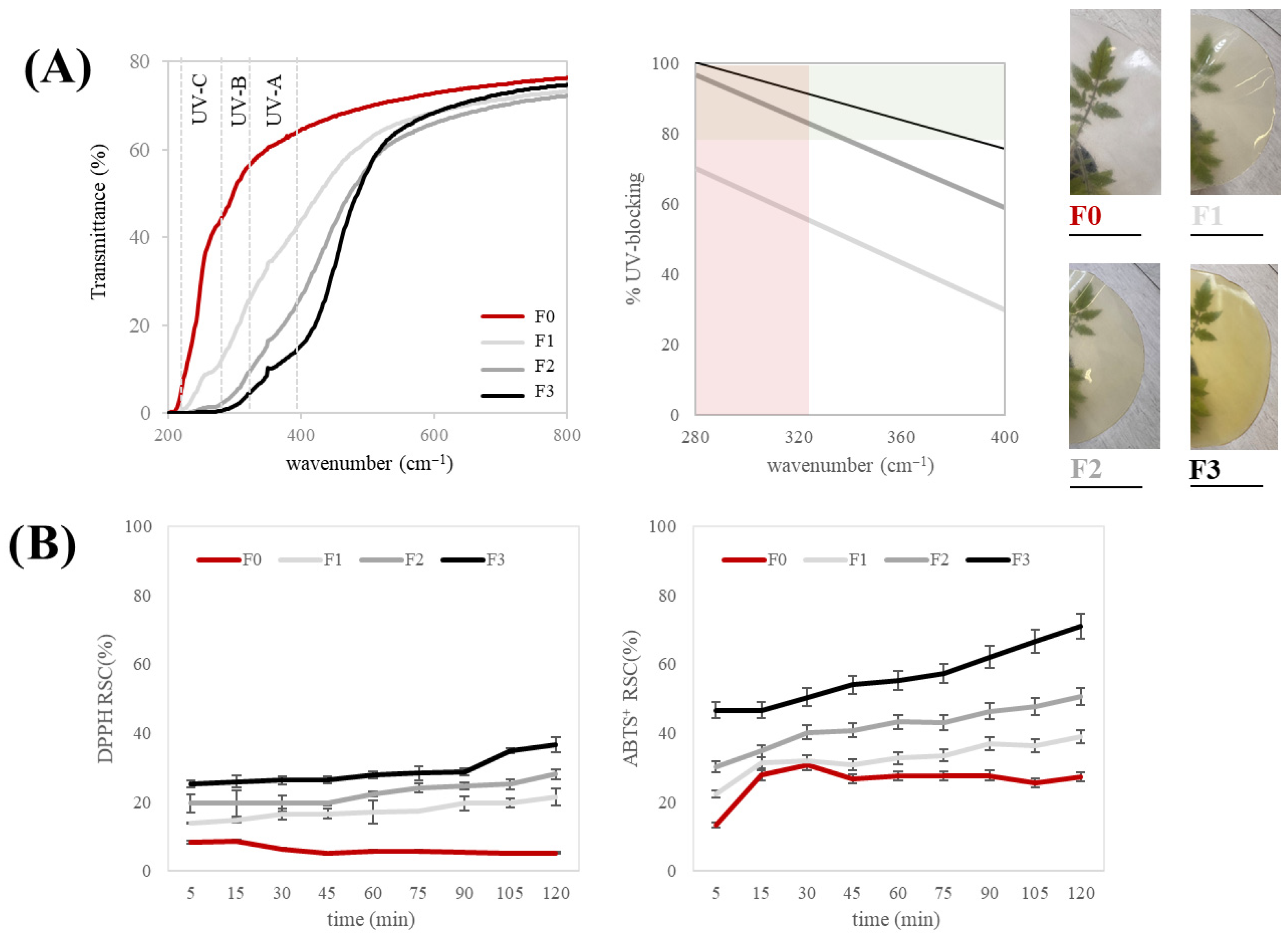
3.4.4. UV-Blocking and Antiradical Activity of Films
3.4.5. Mechanistic Interpretation of Film Behavior
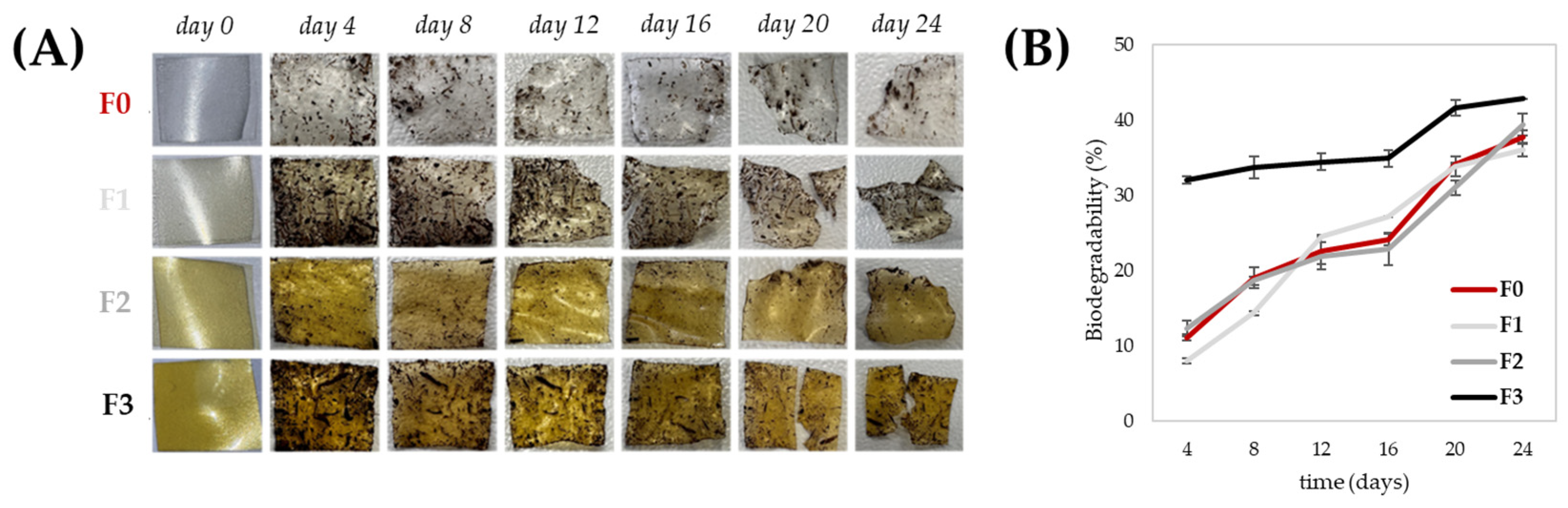
3.5. Biodesintegration of the Obtained Films
4. Conclusions
Supplementary Materials
Author Contributions
Funding
Institutional Review Board Statement
Informed Consent Statement
Data Availability Statement
Acknowledgments
Conflicts of Interest
References
- Aguilar-Rivera, N.; Olvera-Vargas, L.A. Management of food waste for sustainable economic development and circularity. In Handbook of Sustainability Science in the Future; Leal Filho, W., Azul, A.M., Doni, F., Salvia, A.L., Eds.; Springer: Cham, Switzerland, 2023; pp. 1895–1917. [Google Scholar] [CrossRef]
- Ilangovan, M.; Guna, V.; Hu, C.; Nagananda, G.S.; Reddy, N. Curcuma longa L. plant residue as a source for natural cellulose fibers with antimicrobial activity. Ind. Crops Prod. 2018, 112, 556–560. [Google Scholar] [CrossRef]
- Asgher, M.; Qamar, S.A.; Bilal, M.; Iqbal, H.M. Bio-based active food packaging materials: Sustainable alternative to conventional petrochemical-based packaging materials. Food Res. Int. 2020, 137, 109625. [Google Scholar] [CrossRef] [PubMed]
- Qamar, S.A.; Piccolella, S.; Ziegler, G.R.; Pacifico, S.; Zhang, Y. Functional bioplastic films from cocoa shell cellulose and natural waxes: Towards sustainable active packaging. Food Packag. Shelf Life 2025, 52, 101595. [Google Scholar] [CrossRef]
- Liu, Q.; Xu, Y.; Su, H.; Nie, Z.; Shi, X.; Ge, B.; Gao, S. Eco-friendly antioxidant carboxymethyl cellulose/pectin films incorporating oregano essential oil and vanillic acid for tomato shelf-life extension. Int. J. Biol. Macromol. 2025, 323, 147151. [Google Scholar] [CrossRef] [PubMed]
- Liu, Y.; Ahmed, S.; Sameen, D.E.; Wang, Y.; Lu, R.; Dai, J.; Qin, W. A review of cellulose and its derivatives in biopolymer-based for food packaging application. Trends Food Sci. Technol. 2021, 112, 532–546. [Google Scholar] [CrossRef]
- Qamar, S.A.; Comune, L.; Diglio, C.; Petraglia, A.; Rubino, M.; Piccolella, S.; Pacifico, S. Biobased films from ‘Annurca’ apple processing waste: Isolated cellulose and polyphenols combined for functional materials development. Food Res. Int. 2026, 223, 117838. [Google Scholar] [CrossRef]
- de Castro, D.O.; Tabary, N.; Martel, B.; Gandini, A.; Belgacem, N.; Bras, J. Controlled release of carvacrol and curcumin: Bio-based food packaging by synergism action of TEMPO-oxidized cellulose nanocrystals and cyclodextrin. Cellulose 2018, 25, 1249–1263. [Google Scholar] [CrossRef]
- Felgueiras, C.; Azoia, N.G.; Gonçalves, C.; Gama, M.; Dourado, F. Trends on the cellulose-based textiles: Raw materials and technologies. Front. Bioeng. Biotechnol. 2021, 9, 608826. [Google Scholar] [CrossRef]
- Iravani, S.; Varma, R.S. Cellulose-based composites as scaffolds for tissue engineering: Recent advances. Molecules 2022, 27, 8830. [Google Scholar] [CrossRef]
- Han, Y.; Yu, M.; Wang, L. Bio-based films prepared with soybean by-products and pine (Pinus densiflora) bark extract. J. Clean. Prod. 2018, 187, 1–8. [Google Scholar] [CrossRef]
- Bastante, C.C.; Silva, N.H.; Cardoso, L.C.; Serrano, C.M.; de la Ossa, E.J.M.; Freire, C.S.; Vilela, C. Biobased films of nanocellulose and mango leaf extract for active food packaging: Supercritical impregnation versus solvent casting. Food Hydrocoll. 2021, 117, 106709. [Google Scholar] [CrossRef]
- Peydayesh, M. Sustainable materials via the assembly of biopolymeric nanobuilding blocks valorized from agri-food waste. Sustainability 2024, 16, 1286. [Google Scholar] [CrossRef]
- Boccia, F.; Di Donato, P.; Covino, D.; Poli, A. Food waste and bio-economy: A scenario for the Italian tomato market. J. Clean. Prod. 2019, 227, 424–433. [Google Scholar] [CrossRef]
- Karthick, K.; Boris Ajit, A.; Subramanaian, V.; Anbuudayasankar, S.P.; Narassima, M.S.; Hariharan, D. Maximising profit by waste reduction in postharvest Supply Chain of tomato. Br. Food J. 2023, 125, 626–644. [Google Scholar] [CrossRef]
- Castagna, A.; Aboudia, A.; Guendouz, A.; Scieuzo, C.; Falabella, P.; Matthes, J.; Coltelli, M.B. Transforming Agricultural Waste from Mediterranean Fruits into Renewable Materials and Products with a Circular and Digital Approach. Materials 2025, 18, 1464. [Google Scholar] [CrossRef]
- Kassab, Z.; Kassem, I.; Hannache, H.; Bouhfid, R.; Qaiss, A.E.K.; El Achaby, M. Tomato plant residue as new renewable source for cellulose production: Extraction of cellulose nanocrystals with different surface functionalities. Cellulose 2020, 27, 4287–4303. [Google Scholar] [CrossRef]
- Yue, Y.; Han, J.; Han, G.; Aita, G.M.; Wu, Q. Cellulose fibers isolated from energycane bagasse using alkaline and sodium chlorite treatments: Structural, chemical and thermal properties. Ind. Crops Prod. 2015, 76, 355–363. [Google Scholar] [CrossRef]
- Haleem, N.; Arshad, M.; Shahid, M.; Tahir, M.A. Synthesis of carboxymethyl cellulose from waste of cotton ginning industry. Carbohydr. Polym. 2014, 113, 249–255. [Google Scholar] [CrossRef]
- Segal, L.; Creely, J.J.; Martin, A.E.; Conrad, C.M. An empirical method for estimating the degree of crystallinity of native cellulose using the X-ray diffractometer. Text. Res. J. 1959, 29, 786–794. [Google Scholar] [CrossRef]
- Mouco, I.M.; Qamar, S.A.; Petraglia, A.; Piccolella, S.; Rubino, M.; Laudante, E.; Buono, M.; Pacifico, S. Amazonian arouma (Ischnosiphon arouma (Aubl.) Körn) as a novel source for cellulose-based bioplastics. Int. J. Biol. Macromol. 2025, 323, 147221. [Google Scholar] [CrossRef]
- Mushtaq, H.; Piccolella, S.; Cimmino, G.; Ferrara, E.; Brahmi-Chendouh, N.; Petriccione, M.; Pacifico, S. Polyphenols from Olea europaea L. cv. Caiazzana leaf pruning waste for antioxidant and UV-blocking starch-based plastic films. Food Packag. Shelf Life 2025, 47, 101447. [Google Scholar] [CrossRef]
- ASTM D638-14; Standard Test Method for Tensile Properties of Plastics. ASTM: West Conshohocken, PA, USA, 2014.
- ASTM D6400-21; Standard Specification for Labeling of Plastics Designed to be Aerobically Composted in Municipal or Industrial Facilities. ASTM International: West Conshohocken, PA, USA, 2021.
- Bovy, A.; Schijlen, E.; Hall, R.D. Metabolic engineering of flavonoids in tomato (Solanum lycopersicum): The potential for metabolomics. Metabolomics 2007, 3, 399–412. [Google Scholar] [CrossRef] [PubMed]
- Slimestad, R.; Fossen, T.; Verheul, M.J. The flavonoids of tomatoes. J. Agric. Food Chem. 2008, 56, 2436–2441. [Google Scholar] [CrossRef] [PubMed]
- Moco, S.; Bino, R.J.; Vorst, O.; Verhoeven, H.A.; de Groot, J.; van Beek, T.A.; Vervoort, J.; de Vos, C.H. A liquid chromatography–mass spectrometry-based metabolome database for tomato. Plant Physiol. 2006, 141, 1205–1218. [Google Scholar] [CrossRef]
- Pacifico, S.; Piccolella, S.; Nocera, P.; Tranquillo, E.; Dal Poggetto, F.; Catauro, M. New insights into phenol and polyphenol composition of Stevia rebaudiana leaves. J. Pharm. Biomed. Anal. 2019, 163, 45–57. [Google Scholar] [CrossRef]
- Patras, M.A.; Jaiswal, R.; Kuhnert, N. Profiling and quantification of regioisomeric caffeoyl glucoses in Solanaceae vegetables. Food Chem. 2017, 237, 659–666. [Google Scholar] [CrossRef]
- Ono, M.; Shiono, Y.; Tanaka, T.; Masuoka, C.; Ikeda, T.; Nohara, T. Three new aromatic glycosides from the ripe fruit of cherry tomato. J. Nat. Med. 2010, 64, 500–505. [Google Scholar] [CrossRef]
- Pascual, L.S.; Mittler, R.; Sinha, R.; Peláez-Vico, M.Á.; López-Climent, M.F.; Vives-Peris, V.; Gómez-Cadenas, A.; Zandalinas, S.I. Jasmonic acid is required for tomato acclimation to multifactorial stress combination. Environ. Exp. Bot. 2023, 213, 105425. [Google Scholar] [CrossRef]
- Yin, X.; Wei, L.; Pan, X.; Liu, C.; Jiang, J.; Wang, K. The pretreatment of lignocelluloses with green solvent as biorefinery preprocess: A minor review. Front. Plant Sci. 2021, 12, 670061. [Google Scholar] [CrossRef]
- Naduparambath, S.; Purushothaman, E. Sago seed shell: Determination of the composition and isolation of microcrystalline cellulose (MCC). Cellulose 2016, 23, 1803–1812. [Google Scholar] [CrossRef]
- Vergara, P.; Ladero, M.; García-Ochoa, F.; Villar, J.C. Pre-treatment of corn stover, Cynara cardunculus L. stems and wheat straw by ethanol-water and diluted sulfuric acid: Comparison under different energy input conditions. Bioresour. Technol. 2018, 270, 449–456. [Google Scholar] [CrossRef] [PubMed]
- Ren, H.; Shen, J.; Pei, J.; Wang, Z.; Peng, Z.; Fu, S.; Zheng, Y. Characteristic microcrystalline cellulose extracted by combined acid and enzyme hydrolysis of sweet sorghum. Cellulose 2019, 26, 8367–8381. [Google Scholar] [CrossRef]
- Suriyatem, R.; Noikang, N.; Kankam, T.; Jantanasakulwong, K.; Leksawasdi, N.; Phimolsiripol, Y.; Rachtanapun, P. Physical properties of carboxymethyl cellulose from palm bunch and bagasse agricultural wastes: Effect of delignification with hydrogen peroxide. Polymers 2020, 12, 1505. [Google Scholar] [CrossRef] [PubMed]
- Tongdeesoontorn, W.; Mauer, L.J.; Wongruong, S.; Sriburi, P.; Rachtanapun, P. Effect of carboxymethyl cellulose concentration on physical properties of biodegradable cassava starch-based films. Chem. Cent. J. 2011, 5, 6. [Google Scholar] [CrossRef]
- Suryanti, V.; Kusumaningsih, T.; Safriyani, D.; Cahyani, I.S. Synthesis and characterization of cellulose ethers from screw pine (Pandanus tectorius) leaves cellulose as food additives. Int. J. Technol. 2023, 14, 659–668. [Google Scholar] [CrossRef]
- Dai, D.; Fan, M. Investigation of the dislocation of natural fibres by Fourier-transform infrared spectroscopy. Vib. Spectrosc. 2011, 55, 300–306. [Google Scholar] [CrossRef]
- Liu, Y.; Kim, H.J. Fourier transform infrared spectroscopy (FT-IR) and simple algorithm analysis for rapid and non-destructive assessment of developmental cotton fibers. Sensors 2017, 17, 1469. [Google Scholar] [CrossRef]
- Tripathy, J.; Mishra, D.K.; Behari, K. Graft copolymerization of N-vinylformamide onto sodium carboxymethylcellulose and study of its swelling, metal ion sorption and flocculation behaviour. Carbohydr. Polym. 2009, 75, 604–611. [Google Scholar] [CrossRef]
- Borsoi, C.; Zimmernnam, M.V.; Zattera, A.J.; Santana, R.M.; Ferreira, C.A. Thermal degradation behavior of cellulose nanofibers and nanowhiskers. J. Therm. Anal. Calorim. 2016, 126, 1867–1878. [Google Scholar] [CrossRef]
- Çelikçi, N.; Ziba, C.A.; Dolaz, M. Synthesis and characterization of carboxymethyl cellulose (CMC) from different waste sources containing cellulose and investigation of its use in the construction industry. Cellul. Chem. Technol. 2022, 56, 55–68. [Google Scholar] [CrossRef]
- French, A.D. Idealized powder diffraction patterns for cellulose polymorphs. Cellulose 2014, 21, 885–896. [Google Scholar] [CrossRef]
- Wang, J.; Jiao, L.; Yi, C.; Bai, H.; Liu, Q.; Fu, Y.; Liu, J.; Wang, C.; Lei, Y.; Zhang, T.; et al. Molecular Chain Rearrangement of Natural Cellulose-Based Artificial Interphase for Ultra-Stable Zn Metal Anodes. Angew. Chem. Int. Ed. 2025, 64, e202418992. [Google Scholar] [CrossRef] [PubMed]
- Thivya, P.; Bhosale, Y.K.; Anandakumar, S.; Hema, V.; Sinija, V.R. Development of active packaging film from sodium alginate/carboxymethyl cellulose containing shallot waste extracts for anti-browning of fresh-cut produce. Int. J. Biol. Macromol. 2021, 188, 790–799. [Google Scholar] [CrossRef]
- Rambabu, K.; Bharath, G. Mango leaf extract incorporated chitosan antioxidant film for active food packaging. Int. J. Biol. Macromol. 2019, 126, 1234–1243. [Google Scholar] [CrossRef] [PubMed]
- Wei, H.; Pascall, M.A. Evaluation of structural and functional properties of citrus pectin film enriched with green tea extract. Polym. Eng. Sci. 2023, 63, 2522–2533. [Google Scholar] [CrossRef]
- Szymański, M.; Studzińska-Sroka, E.; Paczkowska-Walendowska, M.; Gumienna, M.; Lasik-Kurdyś, M.; Dobrucka, R. Novel eco-friendly, active polysaccharides packaging materials according E. coli based on herbal raw material (Rumex hydrolapathum) extract for environmental and consumer safety. Cellulose 2025, 32, 7817–7838. [Google Scholar] [CrossRef]
- Rajapaksha, S.W.; Shimizu, N. Development and characterization of functional starch-based films incorporating free or microencapsulated spent black tea extract. Molecules 2021, 26, 3898. [Google Scholar] [CrossRef]
- Olejar, K.J.; Ray, S.; Ricci, A.; Kilmartin, P.A. Superior antioxidant polymer films created through the incorporation of grape tannins in ethyl cellulose. Cellulose 2014, 21, 4545–4556. [Google Scholar] [CrossRef]
- Huang, X.; Ji, Y.; Guo, L.; Xu, Q.; Jin, L.; Fu, Y.; Wang, Y. Incorporating tannin onto regenerated cellulose film towards sustainable active packaging. Ind. Crops Prod. 2022, 180, 114710. [Google Scholar] [CrossRef]
- Nastasi, J.R.; Fitzgerald, M.A.; Kontogiorgos, V. Tuning the mechanical properties of pectin films with polyphenol-rich plant extracts. Int. J. Biol. Macromol. 2023, 253, 127536. [Google Scholar] [CrossRef]
- Jannatyha, N.; Shojaee-Aliabadi, S.; Moslehishad, M.; Moradi, E. Comparing mechanical, barrier and antimicrobial properties of nanocellulose/CMC and nanochitosan/CMC composite films. Int. J. Biol. Macromol. 2020, 164, 2323–2328. [Google Scholar] [CrossRef] [PubMed]
- Klunklin, W.; Jantanasakulwong, K.; Phimolsiripol, Y.; Leksawasdi, N.; Seesuriyachan, P.; Chaiyaso, T.; Insomphun, C.; Phongthai, S.; Jantrawut, P.; Sommano, S.R.; et al. Synthesis, characterization, and application of carboxymethyl cellulose from asparagus stalk end. Polymers 2021, 13, 81. [Google Scholar] [CrossRef]
- Quílez-Molina, A.I.; López-Caballero, M.E.; Gómez-Guillén, M.C.; Montero, P. Active and UV-protective edible films based on chitosan and polyphenol-enriched extracts from industrial tomato by-products. Food Hydrocoll. 2020, 108, 106011. [Google Scholar] [CrossRef]
- Ray, A.; Ghosh, S.; Bhowmick, N. Solar Radiation Transmittance Characteristics of Textile Woven Fabrics suitable for Greenhouse covering Materials. J. Inst. Eng. (India) Ser. E 2022, 103, 293–303. [Google Scholar] [CrossRef]
- Senatova, S.I.; Senatov, F.S.; Kuznetsov, D.V.; Stepashkin, A.A.; Issi, J.P. Effect of UV-radiation on structure and properties of PP nanocomposites. J. Alloys Compd. 2017, 707, 304–309. [Google Scholar] [CrossRef]
- Mengozzi, A.; Carullo, D.; Bot, F.; Farris, S.; Chiavaro, E. Functional properties of food packaging solutions alternative to conventional multilayer systems. J. Food Sci. Technol. 2025, 62, 483–491. [Google Scholar] [CrossRef]
- Sirviö, J.A.; Visanko, M. Highly transparent nanocomposites based on poly(vinyl alcohol) and sulfated UV-absorbing wood nanofibers. Biomacromolecules 2019, 20, 2413–2420. [Google Scholar] [CrossRef]
- Guzman-Puyol, S.; Hierrezuelo, J.; Benítez, J.J.; Tedeschi, G.; Porras-Vázquez, J.M.; Heredia, A.; Athanassiou, A.; Romero, D.; Heredia-Guerrero, J.A. Transparent, UV-blocking, and high barrier cellulose-based bioplastics with naringin as active food packaging materials. Int. J. Biol. Macromol. 2022, 209, 1985–1994. [Google Scholar] [CrossRef]
- Zhang, H.; Cheng, X.; Liu, C.; Liu, Z.; Liu, L.; Feng, C.; Ju, J.; Yao, X. Ultraviolet-blocking polymers and composites: Recent advances and future perspectives. J. Mater. Chem. A 2024, 12, 32638–32664. [Google Scholar] [CrossRef]
- He, X.; Tang, L.; Huang, R. Active packaging films from PBAT/PLA with Rosmarinus officinalis L. extract: Antioxidant, UV-shielding, and compostable properties. Molecules 2026, 31, 217. [Google Scholar] [CrossRef]
- Ahamed, A.; Loganathan, V.; Mullaivendhan, J.; Alodaini, H.A.; Akbar, I. Synthesis of chitosan and carboxymethyl cellulose connect flavonoid (CH-Fla-CMC) composite and their investigation of antioxidant, cytotoxicity activities. Int. J. Biol. Macromol. 2025, 300, 140081. [Google Scholar] [CrossRef]
- Krysa, M.; Szymańska-Chargot, M.; Pieczywek, P.M.; Adamczuk, A.; Pertile, G.; Frąc, M.; Zdunek, A. The effect of surface adsorption of caffeic, chlorogenic, and gallic acids on the properties of cellulose- and nanocellulose-based films. Ind. Crops Prod. 2025, 224, 120349. [Google Scholar] [CrossRef]
- Xue, S.; Tan, W.; Mao, S.; Pan, H.; Ye, X.; Donlao, N.; Tian, J. Polyphenol-Based Functional Materials: Structural Insights, Composite Strategies, and Biomedical Applications. Adv. Sci. 2025, 12, e08924. [Google Scholar] [CrossRef]
- Li, X.; Liu, Y.; Luo, B.; Xiang, W.; Chen, Z. Effect of apple polyphenols on physicochemical properties of pea starch/pulp cellulose nanofiber composite biodegradable films. Int. J. Biol. Macromol. 2024, 257, 128480. [Google Scholar] [CrossRef]



| Peak | tR | Tentative Assignment | Formula | [M − H]− (m/z) | RDB | Error (ppm) | |
|---|---|---|---|---|---|---|---|
| 1 | 1.265 | * | 3-CQA | C16H18O9 | 353.0870 | 8 | −2.3 |
| 2 | 1.457 | * | Caffeic acid hexoside 1 | C15H18O9 | 341.0869 | 7 | −2.7 |
| 3 | 1.767 | * | Caffeic acid hexoside 2 | C15H18O9 | 341.0872 | 7 | −1.8 |
| 4 | 1.890 | * | Dihydrocaffeic acid hexoside 1 | C15H20O9 | 343.1018 | 6 | −4.8 |
| 5 | 2.128 | * | Dihydrocaffeic acid hexoside 2 | C15H20O9 | 343.1031 | 6 | −1.0 |
| 6 | 2.444 | * | Caffeic acid hexoside 3 | C15H18O9 | 341.0873 | 7 | −1.5 |
| 7 | 2.794 | * | 4-CQA | C16H18O9 | 353.0870 | 8 | −2.3 |
| 8 | 3.118 | † | Tuberonic acid hexoside 1 | C18H28O9 | 387.1652 | 5 | −2.2 |
| 9 | 3.308 | ‡ | Benzyl pentosyl hexoside | C18H26O10 | 401.1454 | 6 | 0.2 |
| 10 | 3.600 | * | 5-CQA | C16H18O9 | 353.0862 | 8 | −4.5 |
| 11 | 3.705 | ‡ | Hydroxyphenethyl deoxyhexosylhexoside | C20H30O11 | 445.1709 | 6 | −1.4 |
| 12 | 4.002 | † | Tuberonic acid hexoside 2 | C18H28O9 | 387.1653 | 5 | −2.0 |
| 13 | 4.587 | ** | Quercetin dihexosyl deoxyhexoside | C33H40O21 | 771.1998 | 14 | 1.1 |
| 14 | 4.826 | ‡ | Phenethyl pentosyl hexoside | C19H28O10 | 415.1604 | 6 | −1.4 |
| 15 | 6.558 | ** | Eriodictyol 7-O-hexoside | C21H22O11 | 449.1084 | 11 | −1.2 |
| 16 | 6.724 | ** | Naringenin 7-O-hexoside | C21H22O10 | 433.1128 | 11 | −2.8 |
| 17 | 7.091 | ⁑ | p-Coumaroyltyramine hexoside | C23H27NO8 | 444.1656 | 11 | −1.8 |
| 18 | 7.166 | ** | Quercetin pentosyl rutinoside | C32H38O20 | 741.1877 | 14 | −0.9 |
| 19 | 7.537 | ** | Quercetin deoxyhexosylhexoside | C27H30O16 | 609.1454 | 13 | −1.2 |
| 20 | 7.757 | ** | Phloretin 3’,5’-di-C-glucoside | C27H34O15 | 597.1821 | 11 | −0.7 |
| 21 | 8.014 | ** | Kaempferol pentosyl rutinoside | C32H38O19 | 725.1910 | 14 | −3.4 |
| 22 | 8.033 | ** | Naringenin O-hexoside | C21H22O10 | 433.1129 | 11 | −2.6 |
| 23 | 8.271 | * | 3,4-diCQA | C25H24O12 | 515.1187 | 14 | −1.6 |
| 24 | 8.601 | * | 3,5-diCQA | C25H24O12 | 515.1186 | 14 | −1.7 |
| 25 | 8.676 | ** | Kaempferol rutinoside | C27H30O15 | 593.1494 | 13 | −3.0 |
| 26 | 8.764 | † | caffeoylhexosyl tuberonic acid | C27H34O12 | 549.1972 | 11 | −1.0 |
| 27 | 8.975 | * | Dicaffeoyl hexose | C24H24O12 | 503.1188 | 13 | −1.4 |
| 28 | 9.560 | * | 4,5-diCQA | C25H24O12 | 515.1183 | 14 | −2.3 |
| 29 | 9.736 | ** | Naringenin chalcone O-hexoside | C21H22O10 | 433.1134 | 11 | −1.4 |
| 30 | 10.536 | ** | Quercetin pentosyl coumaroyl rutinoside | C41H44O22 | 887.2208 | 20 | −4.9 |
| 31 | 12.056 | ** | Naringenin | C15H12O5 | 271.0599 | 10 | −4.8 |
| 32 | 12.586 | ** | Hesperitin | C16H14O6 | 301.0713 | 10 | −1.5 |
| 33 | 13.069 | ** | Naringenin chalcone | C15H12O5 | 271.0612 | 10 | 0 |
| 34 | 13.202 | * | TriCQA | C34H30O15 | 677.1486 | 20 | −3.8 |
| Sample IDs | Film Thickness (mm) | Color Analysis | Transparency Index | Moisture Content (%) | Water Vapor Transmission Rate (g/m2 × h) | ||
| Whiteness Index | Yellowness Index | WVTR24 | WVTR48 | ||||
| F0 | 0.11 ± 0.01 | 84.12 ± 2.39 | −10.10 ± 0.01 | 2.83 ± 0.00 | 10.37 ± 0.77 | 7.28 ± 0.13 | 4.22 ± 0.07 |
| F1 | 0.11 ± 0.01 NS | 77.48 ± 1.11 **** | 22.76 ± 1.12 **** | 2.78 ± 0.00 NS | 8.27 ± 1.05 NS | 2.10 ± 0.44 **** | 1.30 ± 0.13 * |
| F2 | 0.11 ± 0.01 NS | 66.88 ± 1.05 **** | 46.28 ± 1.50 **** | 2.78 ± 0.00 NS | 6.93 ± 1.97 ** | 2.65 ± 0.16 **** | 2.24 ± 0.06 NS |
| F3 | 0.11 ± 0.01 NS | 44.85 ± 1.68 **** | 93.18 ± 3.49 **** | 2.78 ± 0.00 NS | 7.09 ± 0.19 ** | 16.31 ± 0.06 **** | 8.42 ± 0.41 *** |
Disclaimer/Publisher’s Note: The statements, opinions and data contained in all publications are solely those of the individual author(s) and contributor(s) and not of MDPI and/or the editor(s). MDPI and/or the editor(s) disclaim responsibility for any injury to people or property resulting from any ideas, methods, instructions or products referred to in the content. |
© 2026 by the authors. Licensee MDPI, Basel, Switzerland. This article is an open access article distributed under the terms and conditions of the Creative Commons Attribution (CC BY) license.
Share and Cite
Qamar, S.A.; Piccolella, S.; Raimondo, R.; Pacifico, S. Upcycling Tomato Harvest and Processing Residues into Polyphenol-Enriched Cellulosic Films with Tunable Antioxidant and UV-Blocking Properties. Foods 2026, 15, 1067. https://doi.org/10.3390/foods15061067
Qamar SA, Piccolella S, Raimondo R, Pacifico S. Upcycling Tomato Harvest and Processing Residues into Polyphenol-Enriched Cellulosic Films with Tunable Antioxidant and UV-Blocking Properties. Foods. 2026; 15(6):1067. https://doi.org/10.3390/foods15061067
Chicago/Turabian StyleQamar, Sarmad Ahmad, Simona Piccolella, Raffaele Raimondo, and Severina Pacifico. 2026. "Upcycling Tomato Harvest and Processing Residues into Polyphenol-Enriched Cellulosic Films with Tunable Antioxidant and UV-Blocking Properties" Foods 15, no. 6: 1067. https://doi.org/10.3390/foods15061067
APA StyleQamar, S. A., Piccolella, S., Raimondo, R., & Pacifico, S. (2026). Upcycling Tomato Harvest and Processing Residues into Polyphenol-Enriched Cellulosic Films with Tunable Antioxidant and UV-Blocking Properties. Foods, 15(6), 1067. https://doi.org/10.3390/foods15061067