The Role of Health Claims on Consumer Behavior and Food Choice: A Narrative Review
 ,
,  and
and
Abstract
1. Introduction
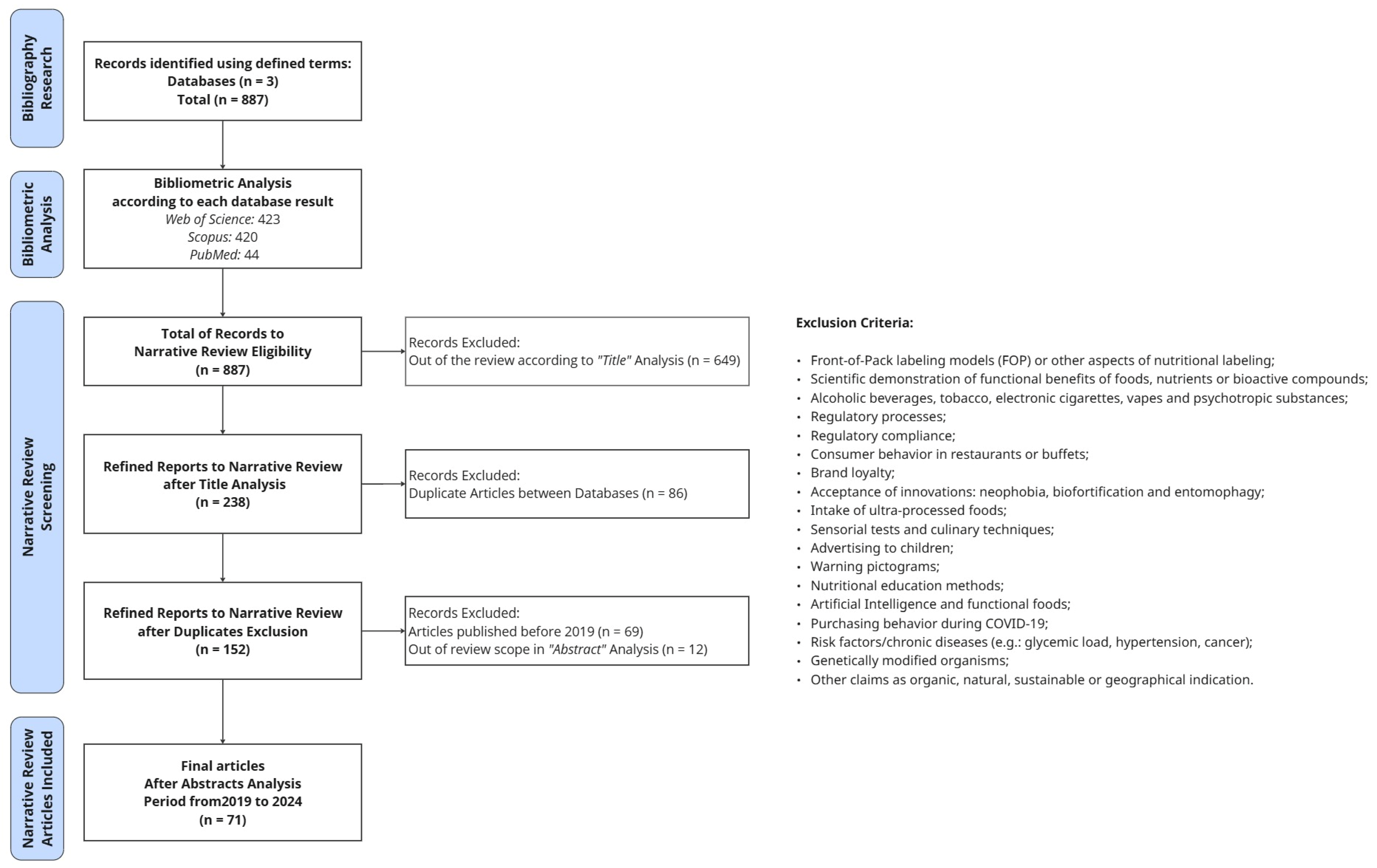
2. Materials and Methods
2.1. Bibliometric Analysis
2.2. Narrative Review
3. Results
3.1. Bibliometric Analysis
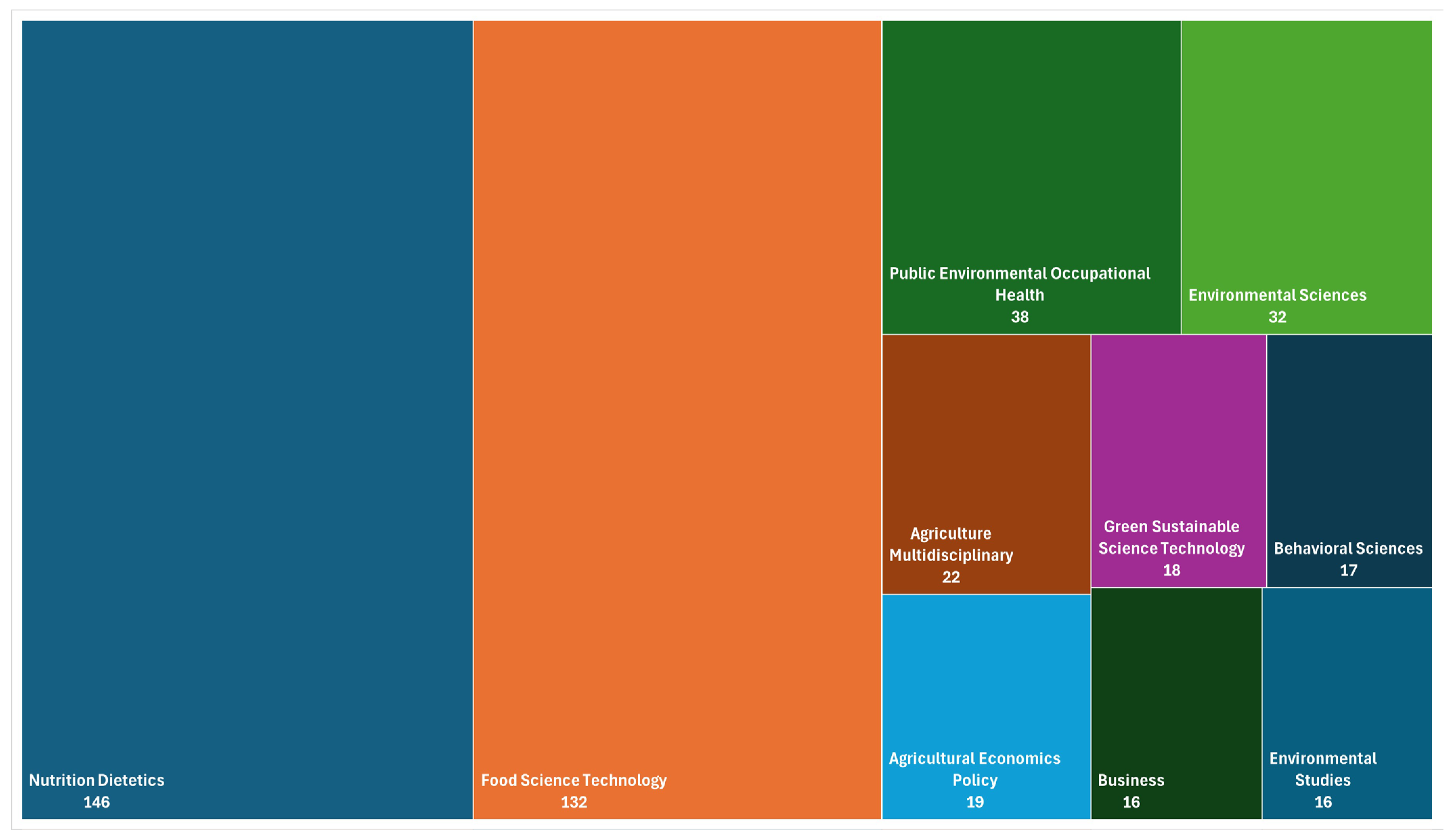
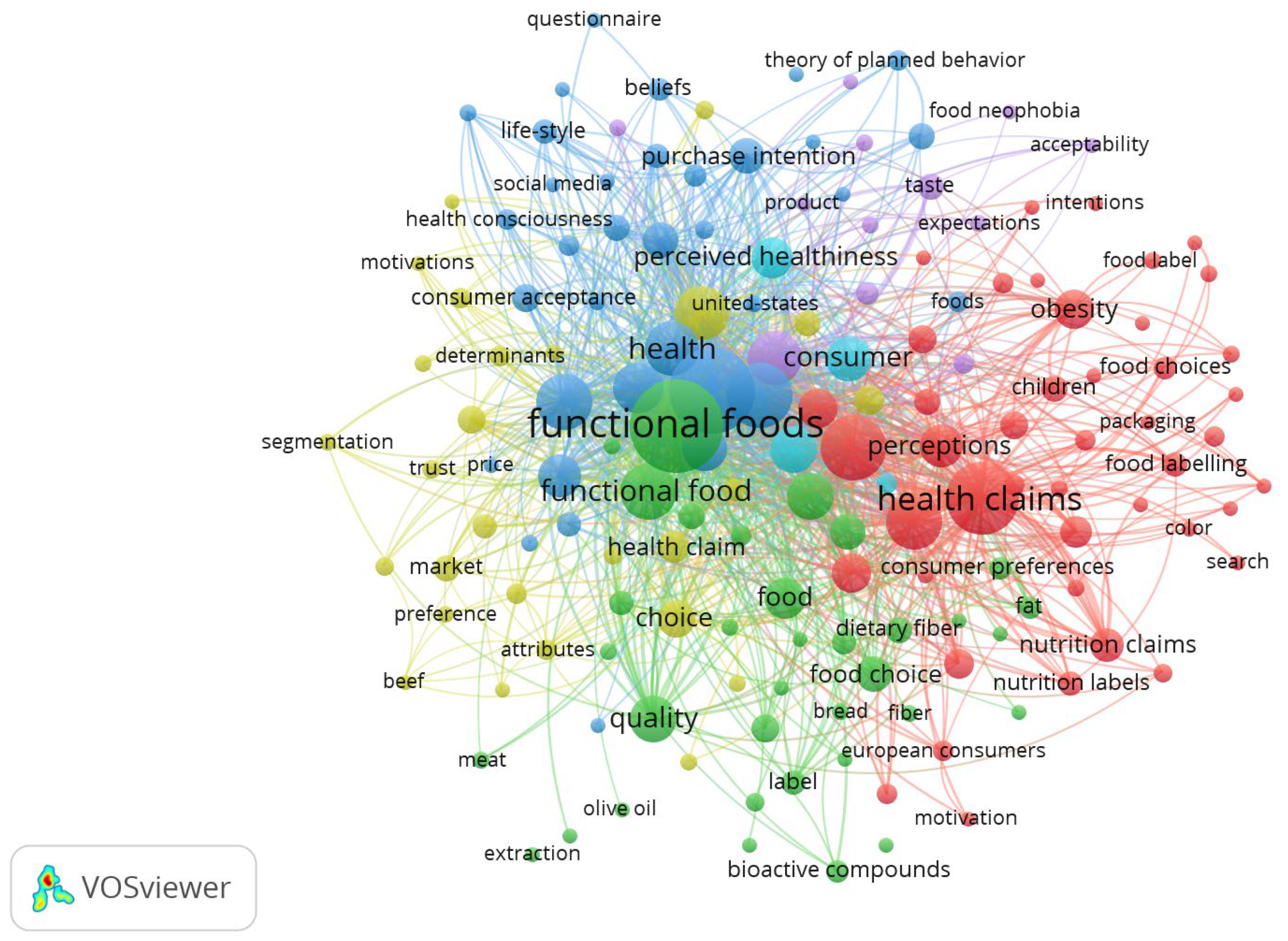
3.1.1. Areas of the Science Publishing About Health Claims and Consumer Behavior
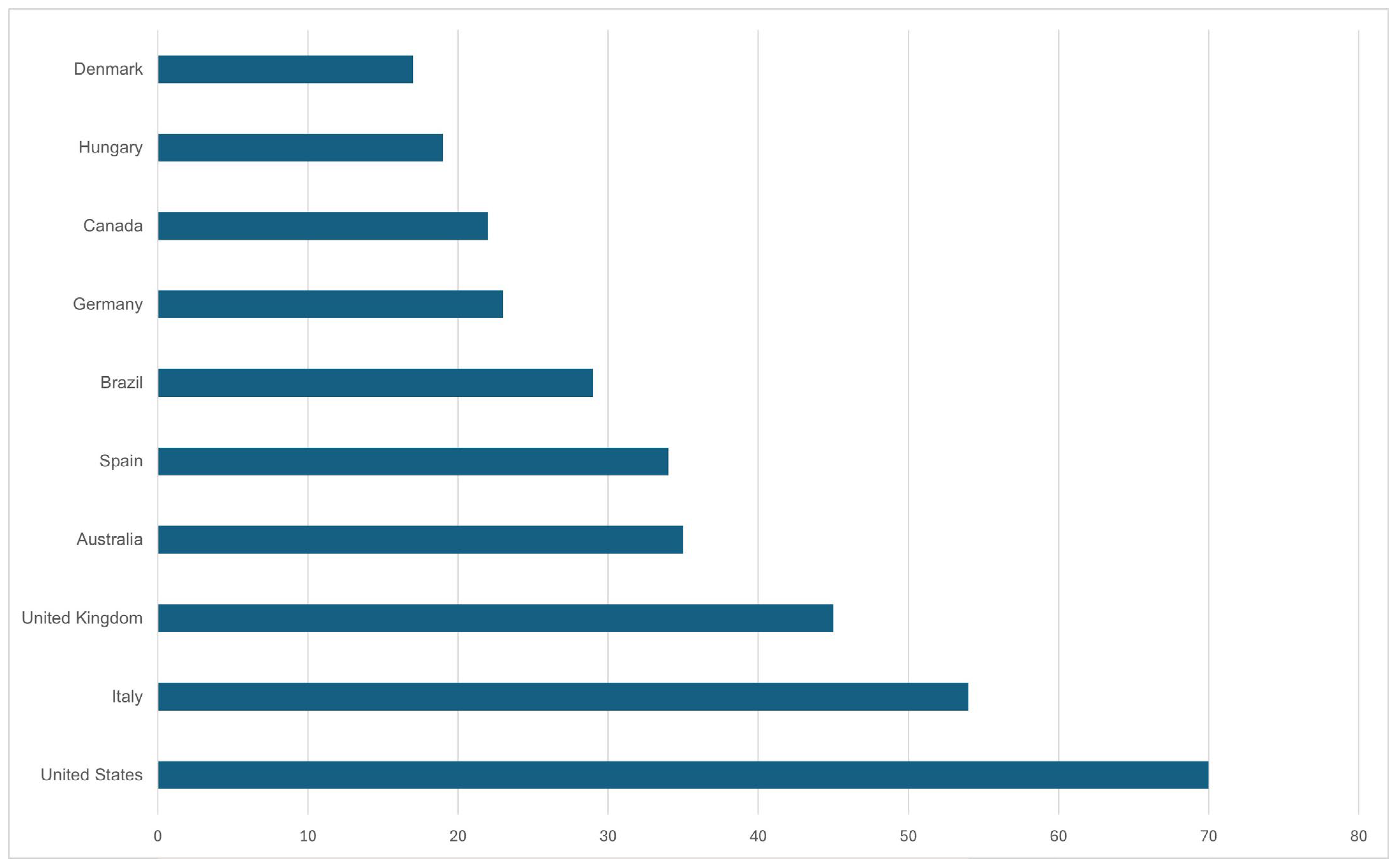
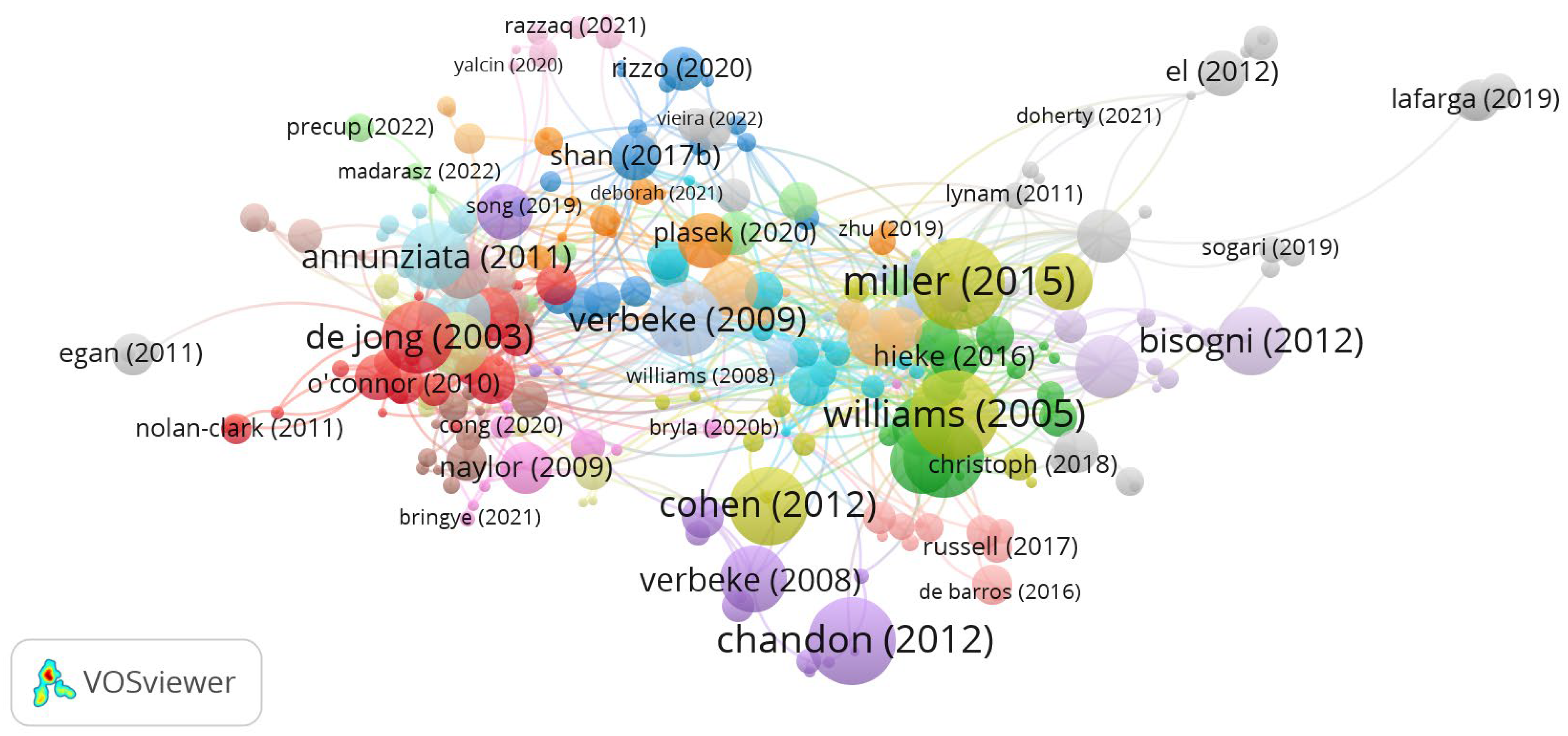
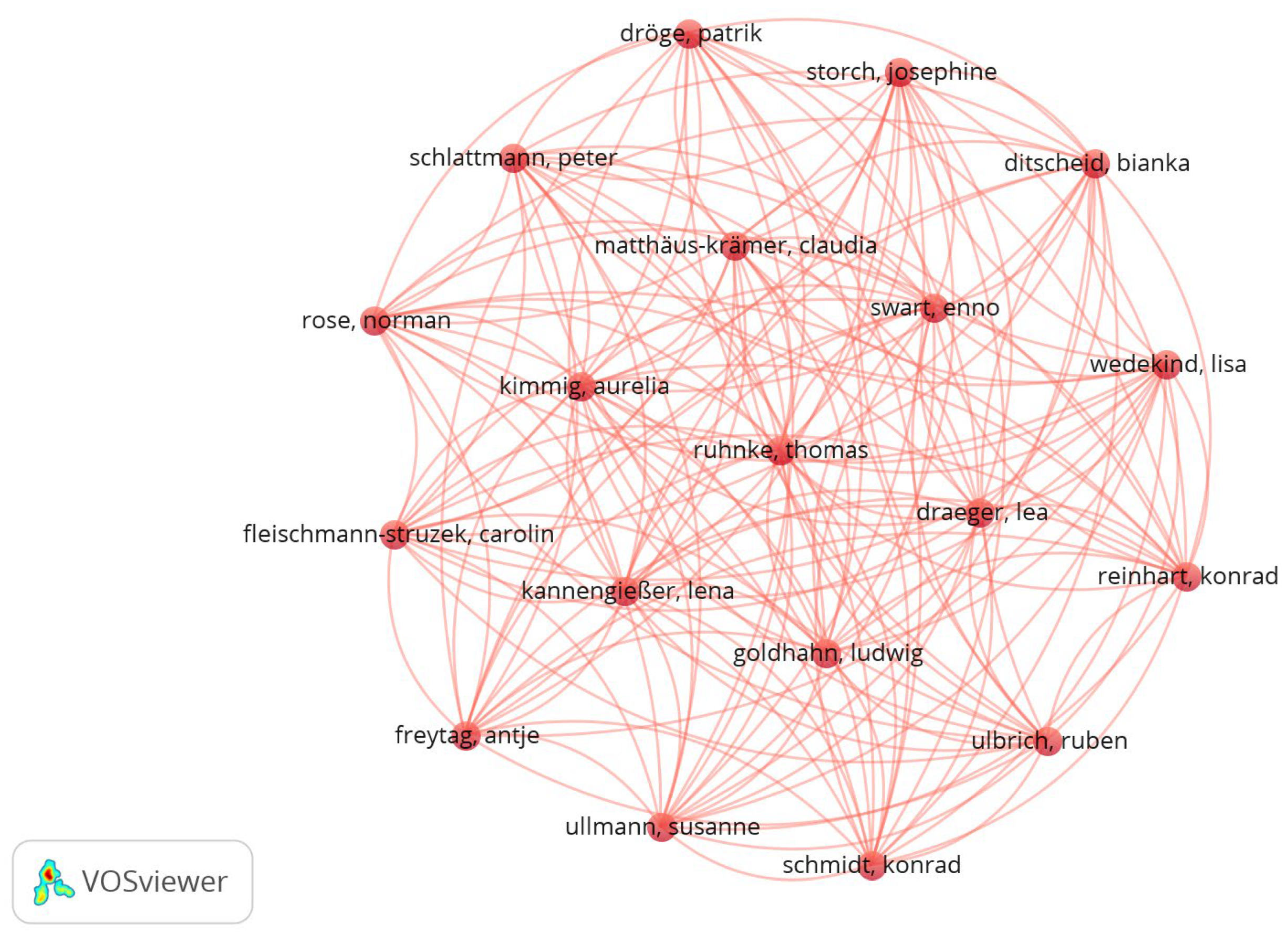
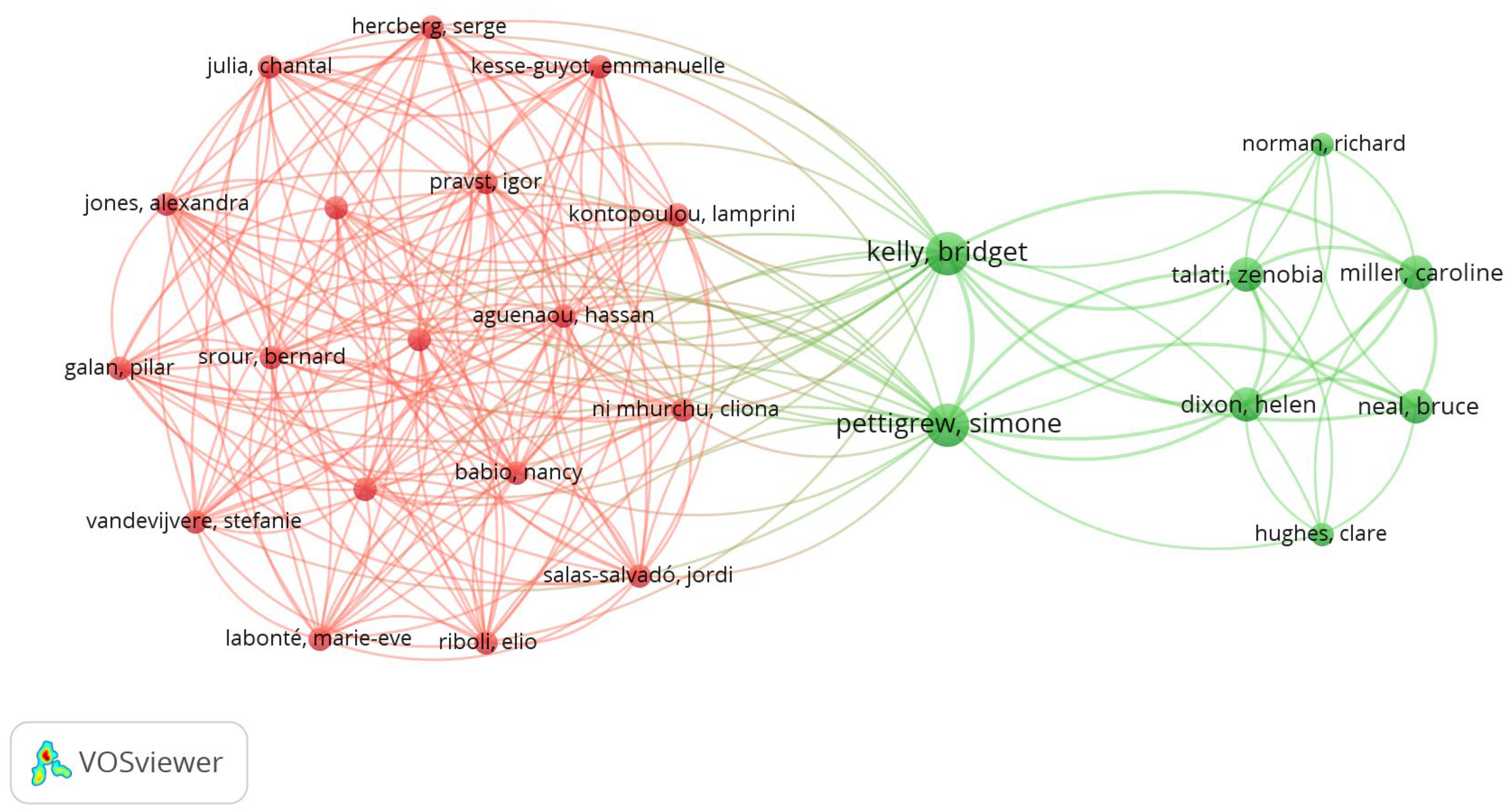
3.1.2. Countries, Citation Network, and Co-Authorship
3.2. Narrative Review
4. Discussion
4.1. Health Claims Relationship with Consumer Behavior
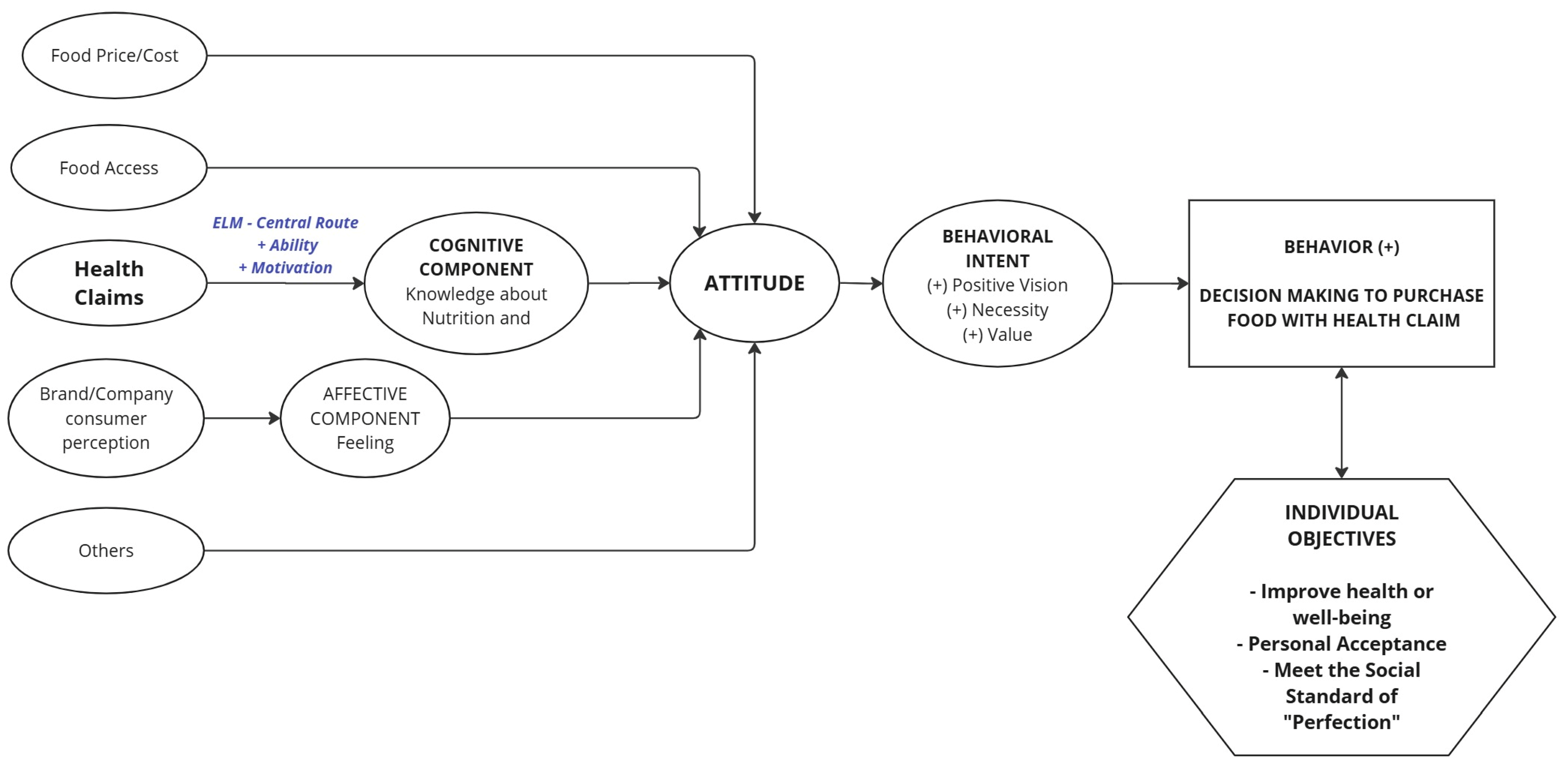
4.2. Elaboration Likelihood Model and Theory of Planned Behavior
5. Conclusions
Author Contributions
Funding
Institutional Review Board Statement
Informed Consent Statement
Data Availability Statement
Acknowledgments
Conflicts of Interest
Abbreviations
| WHO | World Health Organization |
| FOSHU | Foods for Specified Health Uses |
| WTP | Willing to Pay |
| ELM | Elaboration Likelihood Model |
| TPB | Theory of Planned Behavior |
References
- Oyedijo, A.; Akenroye, T. Here’s How We Make the $9 Trillion Global Food Supply Chain Sustainable. World Economic Forum, 7 August 2024. Available online: https://www.weforum.org/stories/2024/08/food-supply-chain-networks-why-sustainable-practices-fail-and-approaches-to-improve-them/ (accessed on 13 January 2026).
- Guiné, R.P.F.; Florença, S.G.; Barroca, M.J.; Anjos, O. The link between the consumer and the innovations in food product development. Foods 2020, 9, 1317. [Google Scholar] [CrossRef] [Scilit] [PubMed]
- Rabadán, A.; Nieto, R.; Bernabéu, R. Food innovation as a means of developing healthier and more sustainable foods. Foods 2021, 10, 2069. [Google Scholar] [CrossRef] [Scilit] [PubMed]
- Ni Mhurchu, C.; Gorton, D. Nutrition labels and claims in New Zealand and Australia: A review of use and understanding. Aust. N. Z. J. Public Health 2007, 31, 105–112. [Google Scholar] [CrossRef] [Scilit] [PubMed]
- Tuorila, H.; Hartmann, C. Consumer responses to novel and unfamiliar foods. Curr. Opin. Food Sci. 2020, 33, 1–8. [Google Scholar] [CrossRef] [Scilit]
- WHO. WHO Guideline on the Use of Glucagon-Like Peptide-1 (GLP-1) Therapies for the Treatment of Obesity in Adults; World Health Organization: Geneva, Switzerland, 2025. [Google Scholar]
- Are GLP-1s the first longevity drugs? Nat. Biotechnol. 2025, 43, 1741–1742. [CrossRef] [Scilit]
- Ozen, A.E.; Pons, A.; Tur, J.A. Worldwide consumption of functional foods: A systematic review. Nutr. Rev. 2012, 70, 472–481. [Google Scholar] [CrossRef] [Scilit]
- Jones, P.J.; Jew, S. Functional food development: Concept to reality. Trends Food Sci. Technol. 2007, 18, 387–390. [Google Scholar] [CrossRef] [Scilit]
- Kowalska, A.; Leoniak, K.; Sołowiej, B.G. Consumers’ attitudes and intentions toward functional beverages: A lesson for producers and retailers. Decision 2024, 51, 321–337. [Google Scholar] [CrossRef] [Scilit]
- Iwatani, S.; Yamamoto, N. Functional food products in Japan: A review. Food Sci. Hum. Wellness 2019, 8, 96–101. [Google Scholar] [CrossRef] [Scilit]
- Codex Alimentarius Commission. Guidelines for Use of Nutrition and Health Claims (CAC/GL 23-1997, Rev. 2013); FAO/WHO: Rome, Italy, 2013; Available online: https://www.fao.org/input/download/standards/351/CXG_023e.pdf (accessed on 3 July 2025).
- European Parliament and Council of the European Union. Regulation (EC) No 1924/2006 of the European Parliament and of the Council of 20 December 2006 on Nutrition and Health Claims Made on Foods. Official Journal of the European Union, L 404. pp. 9–25. Available online: https://eur-lex.europa.eu/legal-content/en/ALL/?uri=CELEX%3A32006R1924 (accessed on 16 February 2026).
- U.S. Food and Drug Administration—FDA. The Nutrition Labeling and Education Act—1990. Available online: https://www.fda.gov/food/nutrition-food-labeling-and-critical-foods/authorized-health-claims-meet-significant-scientific-agreement-ssa-standard (accessed on 16 February 2026).
- Health Canada. Food and Drug Regulations and the Food and Drugs Act 1985. Available online: https://inspection.canada.ca/en/food-labels/labelling/industry/health-claims (accessed on 16 February 2026).
- Food Standards Australia New Zealand. Food Standards Act 1991. Available online: https://www.foodstandards.gov.au/sites/default/files/2025-12/Food%20Standards%20Code%20-%20Compilation%20%28December%202025%29_0.pdf (accessed on 16 February 2026).
- Wills, J.M.; Bonsmann, S.S.G.; Kolka, M.; Grunert, K.G. Symposium 2: Nutrition and health claims: Help or hindrance European consumers and health claims: Attitudes, understanding and purchasing behaviour. Proc. Nutr. Soc. 2012, 71, 229–236. [Google Scholar] [CrossRef] [Scilit]
- Viscecchia, R.; Nocella, G.; De Devitiis, B.; Bimbo, F.; Carlucci, D.; Seccia, A.; Nardone, G. Consumers’ Trade-Off between Nutrition and Health Claims under Regulation 1924/2006: Insights from a Choice Experiment Analysis. Nutrients 2019, 11, 2881. [Google Scholar] [CrossRef] [Scilit] [PubMed]
- Tønnesen, M.T.; Hansen, S.; Laasholdt, A.V.; Lähteenmäki, L. The impact of positive and reduction health claims on consumers’ food choices. Food Qual. Prefer. 2022, 98, 104526. [Google Scholar] [CrossRef] [Scilit]
- Stuthridge, L.; Alexander, D.; Stubbe, M.; Eme, P.; Smith, C. “It’s All Just Marketing”, a Qualitative Analysis of Consumer Perceptions and Understandings of Nutrition Content and Health Claims in New Zealand. Int. J. Environ. Res. Public Health 2022, 19, 3510. [Google Scholar] [CrossRef] [Scilit] [PubMed]
- Reitano, M.; Selvaggi, R.; Chinnici, G.; Pappalardo, G.; Yagi, K.; Pecorino, B. Athletes preferences and willingness to pay for innovative high-protein functional foods. Appetite 2024, 203, 107687. [Google Scholar] [CrossRef] [Scilit]
- Jadhav, H.B.; Sablani, S.; Gogate, P.; Annapure, U.; Casanova, F.; Nayik, G.A.; Alaskar, K.; Sarwar, N.; Raina, I.A.; Ramniwas, S.; et al. Factors governing consumers buying behavior concerning nutraceutical product. Food Sci. Nutr. 2023, 11, 4988–5003. [Google Scholar] [CrossRef] [Scilit]
- Rai, S.; Wai, P.P.; Koirala, P.; Bromage, S.; Nirmal, N.P.; Pandiselvam, R.; Nor-Khaizura, M.A.R.; Mehta, N.K. Food product quality, environmental and personal characteristics affecting consumer perception toward food. Front. Sustain. Food Syst. 2023, 7, 1222760. [Google Scholar] [CrossRef] [Scilit]
- Ballco, P.; De Magistris, T. Spanish Consumer Purchase Behaviour and Stated Preferences for Yoghurts with Nutritional and Health Claims. Nutrients 2019, 11, 2742. [Google Scholar] [CrossRef] [Scilit]
- Lafarga, T.; Acién-Fernández, F.G.; Castellari, M.; Villaró, S.; Bobo, G.; Aguiló-Aguayo, I. Effect of microalgae incorporation on the physicochemical, nutritional, and sensorial properties of an innovative broccoli soup. LWT-Food Sci. Technol. 2019, 111, 167–174. [Google Scholar] [CrossRef] [Scilit]
- Egan, B.; Hodgkins, C.; Shepherd, R.; Timotijevic, L.; Raats, M. An overview of consumer attitudes and beliefs about plant food supplements. Food Funct. 2011, 12, 747–752. [Google Scholar] [CrossRef] [Scilit]
- Miller, L.M.S.; Cassadi, D.L. The effects of nutrition knowledge on food label use. A review of the literature. Appetite 2015, 92, 2017–2216. [Google Scholar] [CrossRef] [Scilit] [PubMed]
- Verbeke, W.; Scholderer, J.; Lahteenmaki, L. Consumer appeal of nutrition and health claims in three existing product concepts. Appetite 2009, 3, 684–692. [Google Scholar] [CrossRef] [Scilit] [PubMed]
- Williams, P. Consumer understanding and use of health claims for foods. Nutr. Rev. 2005, 7, 256–264. [Google Scholar] [CrossRef] [Scilit] [PubMed]
- Chandon, P.; Wansink, B. Does food marketing need to make us fat? A review and solutions. Nutr. Rev. 2012, 10, 571–593. [Google Scholar] [CrossRef] [Scilit]
- Ikonen, I.; Sotgiu, F.; Aydinli, A.; Verlegh, P.W.J. Consumer effects of front-of-package nutrition labeling: An interdisciplinary meta-analysis. J. Acad. Mark. Sci. 2020, 3, 360–383. [Google Scholar] [CrossRef] [Scilit]
- Cohen, D.A.; Babey, S.H. Contextual influences on eating behaviours: Heuristic processing and dietary choices. Obes. Rev. 2012, 9, 766–779. [Google Scholar] [CrossRef] [Scilit]
- de Jong, N.; Ocké, M.C.; Branderhorst, H.A.C.; Friele, R. Demographic and lifestyle characteristics of functional food consumers and dietary supplement users. Br. J. Nutr. 2003, 2, 273–281. [Google Scholar] [CrossRef] [Scilit]
- Mohammad, M.; Malgwi, I.H.; Schiavon, S.; Szigeti, O. The Effect of Motivators and Barriers on Attitudes and Willingness to Consume Dairy Functional Foods in Hungary. Foods 2024, 2017, 3364. [Google Scholar] [CrossRef] [Scilit]
- Safraid, G.F.; Portes, C.Z.; Dantas, R.M.; Batista, Â.G. Perception of functional food consumption by adults: Is there any difference between generations? Braz. J. Food Technol. 2024, 27, 1–10. [Google Scholar] [CrossRef] [Scilit]
- Toorani, A.; Moodi, M.; Zeinali, T.; Salmani, F.; Norozi, E. Consumption status of functional drinks based on the theory of planned behavior and the stages of change model in female employees. Sci. Rep. 2024, 14, 1–11. [Google Scholar] [CrossRef] [Scilit]
- Huang, Z.; Li, H.; Huang, J. Chinese consumers’ psychology and behavior of the foods with nutrition claims based on AISAS model. Front. Nutr. 2024, 11, 1309478. [Google Scholar] [CrossRef] [Scilit] [PubMed]
- Collins, N.; Lalor, F. Consumer behaviour towards milk and dairy yoghurt products carrying nutrition and health claims: A qualitative study. Nutr. Food Sci. 2024, 54, 56–70. [Google Scholar] [CrossRef] [Scilit]
- Chattaraman, V.; Lee, Y.M.; Robinson, E.M.; Book, A.J.; Al-Amin, F. The Effects of Social Distance and Front-of-Package Claims on Healthy Food Selection: Moderating Role of Perceived Importance of Eating Healthily. Nutrients 2023, 15, 3427. [Google Scholar] [CrossRef] [Scilit] [PubMed]
- Grujić, S.; Grujčić, M. Factors affecting consumer preference for healthy diet and functional foods. Foods Raw Mater. 2023, 11, 259–271. [Google Scholar] [CrossRef] [Scilit]
- Dias, P.G.I.; Marapana, R.A.U.J.; Rathnayaka, R.M.U.S.K.; Gayathri, S.M.D.S.; Anuradha, N.G.D.; Kananke, T.C.; Rathnayaka, R.M.K.T.; Perera, M.G.A.N.; Sabaragamuwa, R.S.; Wickramaratne, N.M. Consumers’ Knowledge, Attitudes, and Behavior Regarding Functional Food Products-A Survey from Selected Areas of Sri Lanka. J. Agric. Sci. 2023, 18, 140–153. [Google Scholar] [CrossRef] [Scilit]
- Bou Fakhreddine, L.; Sánchez, M. The interplay between health claims and sensory attributes in determining consumers’ purchase intentions for extra virgin olive oil. Food Qual. Prefer. 2023, 106, 104819. [Google Scholar] [CrossRef] [Scilit]
- Neale, E.P.; Tapsell, L.C. Nutrition and Health Claims: Consumer Use and Evolving Regulation. Curr. Nutr. Rep. 2022, 11, 431–436. [Google Scholar] [CrossRef] [Scilit]
- Baker, M.T.; Lu, P.; Parrella, J.A.; Leggette, H.R. Investigating the Effect of Consumers’ Knowledge on Their Acceptance of Functional Foods: A Systematic Review and Meta-Analysis. Foods 2022, 11, 1135. [Google Scholar] [CrossRef] [Scilit]
- Ballco, P.; Gracia, A. Tackling nutritional and health claims to disentangle their effects on consumer food choices and behaviour: A systematic review. Food Qual. Prefer. 2022, 101, 104634. [Google Scholar] [CrossRef] [Scilit]
- Delivett, C.P.; Farrow, C.V.; Thomas, J.M.; Nash, R.A. Front-of-pack health imagery on both ‘healthy’ and ‘unhealthy’ foods leads people to misremember seeing health claims: Two memory experiments. Appetite 2022, 174, 106013. [Google Scholar] [CrossRef] [Scilit]
- Tian, Y.; Zhu, H.; Chen, H. Does Supplementary Information Add Value to Functional Food? Evidence from a Choice Experiment in China. Nutrients 2022, 14, 4424. [Google Scholar] [CrossRef] [Scilit]
- Wu, I.-H.; Liang, C.; Ip, Y.C. Involvement Theory with Market Segmentation: Effect of False Functional Food Advertising on Purchase Intention. Foods 2022, 11, 978. [Google Scholar] [CrossRef] [Scilit] [PubMed]
- Baker, M.T.; Lu, P.; Parrella, J.A.; Leggette, H.R. Consumer Acceptance toward Functional Foods: A Scoping Review. Int. J. Environ. Res. Public Health 2022, 19, 1217. [Google Scholar] [CrossRef] [Scilit] [PubMed]
- Kosicka-Gebska, M.; Jezewska-Zychowicz, M.; Gebski, J.; Sajdakowska, M.; Niewiadomska, K.; Nicewicz, R. Consumer Motives for Choosing Fruit and Cereal Barrs—Differences Due to Consumer Lifestyles, Attitudes toward the Product, and Expectations. Nutrients 2022, 14, 2710. [Google Scholar] [CrossRef] [Scilit] [PubMed]
- Teoh, S.L.; Ngorsuraches, S.; Lai, N.M.; Chaiyakunapruk, N. Consumer Preferences and Willingness to Pay for Nutraceuticals: A Discrete Choice Experiment. Value Health Reg. Issues 2021, 24, 167–172. [Google Scholar] [CrossRef] [Scilit]
- Nystrand, B.T.; Olsen, S.O. Relationships between functional food consumption and individual traits and values: A segmentation approach. J. Funct. Foods 2021, 86, 104736. [Google Scholar] [CrossRef] [Scilit]
- Nystrand, B.T.; Olsen, S.O.; Tudoran, A.A. Individual differences in functional food consumption: The role of time perspective and the Big Five personality traits. Appetite 2021, 156, 104979. [Google Scholar] [CrossRef] [Scilit]
- Wang, E.S.-T.; Chu, Y.-H. How Social Norms Affect Consumer Intention to Purchase Certified Functional Foods: The Mediating Role of Perceived Effectiveness and Attitude. Foods 2021, 10, 1151. [Google Scholar] [CrossRef] [Scilit]
- Duarte, P.; Teixeira, M.; Silva, S.C.E. Healthy eating as a trend: Consumers’ perceptions towards products with nutrition and health claims. Rev. Bras. Gest. Neg. 2021, 23, 405–421. [Google Scholar] [CrossRef] [Scilit]
- Topolska, K.; Florkiewicz, A.; Filipiak-Florkiewicz, A. Functional food—Consumer motivations and expectations. Int. J. Environ. Res. Public Health 2021, 18, 5327. [Google Scholar] [CrossRef] [Scilit]
- Schifferstein, H.N.J.; de Boer, A.; Lemke, M. Conveying information through food packaging: A literature review comparing legislation with consumer perception. J. Funct. Foods 2021, 86, 104734. [Google Scholar] [CrossRef] [Scilit]
- Arfaoui, L.; Alkhaldy, A.; Alareeshi, A.; Alsaadi, G.; Alhendi, S.; Alghanmi, A.; Alghafari, W.; Assidi, M. Assessment of knowledge and self-reported use of nutrition facts labels, nutrient content, and health claims among saudi adult consumers. J. Multidiscip. Healthc. 2021, 14, 2959–2972. [Google Scholar] [CrossRef] [Scilit] [PubMed]
- Fatkullin, R.; Naumenko, N.; Popova, N.; Ruskina, A.; Kalinina, I.; Potoroko, I. Explaining consumer intentions for foods with antioxidant properties: Predictors of choice and purchase barriers. Int. J. Food Sci. 2021, 9971425. [Google Scholar] [CrossRef] [Scilit] [PubMed]
- Rizwana, R.; Rao, E.S.; Sondhi, A.; Agarwal, A.; Verma, A.; Kant, K.; Kumar, D. Consumer’s attitude and awareness towards functional foods during COVID-19. Ann. Phytomed. Int. J. 2021, 10, 56–62. [Google Scholar] [CrossRef] [Scilit]
- Kandyliari, A.; Elmaliklis, I.N.; Kontopoulou, O.; Tsafkopoulou, M.; Komninos, G.; Ntzatha, C.; Petsas, A.; Karantonis, H.C.; Koutelidakis, A.E. An epidemiological study report on the antioxidant and phenolic content of selected mediterranean functional foods, their consumption association with the body mass index, and consumers purchasing behavior in a sample of healthy greek adults. Appl. Sci. 2021, 11, 7818. [Google Scholar] [CrossRef] [Scilit]
- Plasek, B.; Lakner, Z.; Temesi, Á. I Believe It Is Healthy—Impact of Extrinsic Product Attributes in Demonstrating Healthiness of Functional Food Products. Nutrients 2021, 13, 3518. [Google Scholar] [CrossRef] [Scilit]
- Bryla, P. Who Reads Food Labels? Selected Predictors of Consumer Interest in Front-of-Package and Back-of-Package Labels during and after the Purchase. Nutrients 2020, 12, 2605. [Google Scholar] [CrossRef] [Scilit]
- Di Vita, G.; Strano, A.; Maesano, G.; La Via, G.; D’Amico, M. The role of individual knowledge in functional olive oil preferences: Does self-coherence lead to different health attributes perception? Foods 2020, 9, 1428. [Google Scholar] [CrossRef] [Scilit]
- Shammakh, M.; Ali, R.T.; Shaari, T. The relationship of health and nutrition claims towards purchasing choices among consumers in Shah Alam, Selangor. J. Nutr. Sci. Vitaminol. 2020, 66, S222–S225. [Google Scholar] [CrossRef] [Scilit]
- Papp-Bata, Á.; Szakály, Z. The Relationship between the Motivators and Barriers of Health Behaviour and Consumer Attitudes towards Functional Food. Acta Aliment. 2020, 49, 287–294. [Google Scholar] [CrossRef] [Scilit]
- Vorage, L.; Wiseman, N.; Graca, J.; Harris, N. The association of demographic characteristics and food choice motives with the consumption of functional foods in emerging adults. Nutrients 2020, 12, 2582. [Google Scholar] [CrossRef] [Scilit] [PubMed]
- Nguyen, N.; Nguyen, H.V.; Nguyen, P.T.; Tran, V.T.; Nguyen, H.N.; Nguyen, T.M.N.; Cao, T.K.; Nguyen, T.H. Some key factors affecting consumers’ intentions to purchase functional foods: A case study of functional yogurts in Vietnam. Foods 2020, 9, 24. [Google Scholar] [CrossRef] [Scilit] [PubMed]
- Szakos, D.; Ózsvári, L.; Kasza, G. Perception of older adults about health-related functionality of foods compared with other age groups. Sustainability 2020, 12, 2748. [Google Scholar] [CrossRef] [Scilit]
- González-Díaz, C.; Vilaplana-Aparicio, M.J.; Iglesias-García, M. How Is Functional Food Advertising Understood? An Approximation in University Students. Nutrients 2020, 12, 3312. [Google Scholar] [CrossRef] [Scilit]
- Costa, M.M.; Strehlau, S. Health and nutrition claims in functional foods. Rev. Bras. Mark. 2020, 19, 216–236. [Google Scholar] [CrossRef] [Scilit]
- Plasek, B.; Lakner, Z.; Temesi, Á. Factors that influence the perceived healthiness of food—Review. Nutrients 2020, 12, 1881. [Google Scholar] [CrossRef] [Scilit]
- Menozzi, D.; Nguyen, T.T.; Sogari, G.; Taskov, D. Consumers’ Preferences and Willingness to Pay for Fish Products with Health and Environmental Labels: Evidence from Five European Countries. Nutrients 2020, 12, 2650. [Google Scholar] [CrossRef] [Scilit]
- Banjari, I.; Domiter, M.; Ostrognjaj, T.; Vidić, I.P. Consumers’ attitudes towards functional dairy market in Croatia—A cross-sectional study. Mljekarstvo 2020, 70, 242–252. [Google Scholar] [CrossRef] [Scilit]
- Nystrand, B.T.; Olsen, S.O. Consumers’ attitudes and intentions toward consuming functional foods in Norway. Food Qual. Prefer. 2020, 80, 103827. [Google Scholar] [CrossRef] [Scilit]
- Ballco, P.; Caputo, V.; de-Magistris, T. Consumer valuation of European nutritional and health claims: Do taste and attention matter? Food Qual. Prefer. 2020, 79, 103793. [Google Scholar] [CrossRef] [Scilit]
- Nguyen, N.T. Attitudes and Repurchase Intention of Consumers Towards Functional Foods in Ho Chi Minh City, Vietnam. Int. J. Anal. Appl. 2020, 18, 212–242. [Google Scholar] [CrossRef] [Scilit]
- Biondi, B.; Camanzi, L. Nutrition, hedonic or environmental? The effect of front-of-pack messages on consumers’ perception and purchase intention of a novel food product with multiple attributes. Food Res. Int. 2020, 130, 108962. [Google Scholar] [CrossRef] [Scilit] [PubMed]
- Ali, T.; Ali, J. Factors affecting consumers’ willingness to pay for health and wellness food products. J. Agric. Food Res. 2020, 2, 100076. [Google Scholar] [CrossRef] [Scilit]
- Franco-Arellano, B.; Vanderlee, L.; Ahmed, M.; Oh, A.; L’abbé, M.R. Consumers’ implicit and explicit recall, understanding and perceptions of products with nutrition-related messages: An online survey. Int. J. Environ. Res. Public Health 2020, 17, 8213. [Google Scholar] [CrossRef] [Scilit] [PubMed]
- Klopčič, M.; Slokan, P.; Erjavec, K. Consumer preference for nutrition and health claims: A multi-methodological approach. Food Qual. Prefer. 2020, 82, 103863. [Google Scholar] [CrossRef] [Scilit]
- Bakti, I.G.M.Y.; Sumaedi, S.; Astrini, N.J.; Rakhmawati, T.; Yarmen, M.; Damayanti, S. Applying the Theory of Planned Behavior in Functional Food Purchasing: A Young Consumers Perception. IOP Conf. Ser. Mater. Sci. Eng. 2020, 722, 012024. [Google Scholar] [CrossRef] [Scilit]
- Theben, A.; Gerards, M.; Folkvord, F. The effect of packaging color and health claims on product attitude and buying intention. Int. J. Environ. Res. Public Health 2020, 17, 1991. [Google Scholar] [CrossRef] [Scilit]
- Steinhauser, J.; Janssen, M.; Hamm, U. Consumers’ purchase decisions for products with nutrition and health claims: What role do product category and gaze duration on claims play? Appetite 2019, 141, 104337. [Google Scholar] [CrossRef] [Scilit]
- Hodgkins, C.E.; Egan, B.; Peacock, M.; Klepacz, N.; Miklavec, K.; Pravst, I.; Pohar, J.; Gracia, A.; Groeppel-Klein, A.; Rayner, M.; et al. Understanding How Consumers Categorise Health Related Claims on Foods: A Consumer-Derived Typology of Health-Related Claims. Nutrients 2019, 11, 539. [Google Scholar] [CrossRef] [Scilit]
- Temesi, Á.; Bacsó, Á.; Grunert, K.G.; Lakner, Z. Perceived correspondence of health effects as a new determinant influencing purchase intention for functional food. Nutrients 2019, 11, 740. [Google Scholar] [CrossRef] [Scilit]
- Teoh, S.L.; Ngorsuraches, S.; Lai, N.M.; Bangpan, M.; Chaiyakunapruk, N. Factors affecting consumers’ decision on the use of nutraceuticals: A systematic review. Int. J. Food Sci. Nutr. 2019, 70, 491–512. [Google Scholar] [CrossRef] [Scilit] [PubMed]
- Annunziata, A.; Mariani, A. Do Consumers Care about Nutrition and Health Claims? Some Evidence from Italy. Nutrients 2019, 11, 2735. [Google Scholar] [CrossRef] [Scilit] [PubMed]
- Steinhauser, J.; Janssen, M.; Hamm, U. Who buys products with nutrition and health claims? A purchase simulation with eye tracking on the influence of consumers’ nutrition knowledge and health motivation. Nutrients 2019, 11, 2199. [Google Scholar] [CrossRef] [Scilit] [PubMed]
- Samoggia, A.; Riedel, B. Consumers’ perceptions of coffee health benefits and motives for coffee consumption and purchasing. Nutrients 2019, 11, 653. [Google Scholar] [CrossRef] [Scilit]
- Lusk, J.L. Consumer beliefs about healthy foods and diets. PLoS ONE 2019, 14, e0223098. [Google Scholar] [CrossRef] [Scilit]
- Benson, T.; Lavelle, F.; McCloat, A.; Mooney, E.; Bucher, T.; Egan, B.; Dean, M. Are the Claims to Blame? A Qualitative Study to Understand the Effects of Nutrition and Health Claims on Perceptions and Consumption of Food. Nutrients 2019, 11, 2058. [Google Scholar] [CrossRef] [Scilit]
- Szakály, Z.; Kovács, S.; Pető, K.; Huszka, P.; Kiss, M. A modified model of the willingness to pay for functional foods. Appetite 2019, 138, 94–101. [Google Scholar] [CrossRef] [Scilit]
- López-Galán, B.; De-Magistris, T. Testing emotional eating style in relation to willingness to pay for nutritional claims. Nutrients 2019, 11, 1773. [Google Scholar] [CrossRef] [Scilit]
- Ballco, P.; de-Magistris, T.; Caputo, V. Consumer preferences for nutritional claims: An exploration of attention and choice based on an eye-tracking choice experiment. Food Res. Int. 2019, 116, 37–48. [Google Scholar] [CrossRef] [Scilit]
- Kaur, A.; Scarborough, P.; Rayner, M. A systematic review, and meta-analysis, of the impact of health-related claims on dietary choices. Int. J. Behav. Nutr. Phys. Act. 2017, 14, 93. [Google Scholar] [CrossRef] [Scilit]
- Verbeke, W. Impact of communication on consumers’ food choices. Proc. Nutr. Soc. 2008, 67, 281–288. [Google Scholar] [CrossRef] [Scilit]
- Petty, R.E.; Cacioppo, J.T. Communication and Persuasion: Central and Peripheral Routes to Attitude Change; Springer: New York, NY, USA, 1986. [Google Scholar]
- Ajzen, I. The theory of planned behavior. Organ. Behav. Hum. Decis. Process. 1991, 50, 179–211. [Google Scholar] [CrossRef] [Scilit]



| Description | Web of Science | Scopus | PubMed |
|---|---|---|---|
| Articles | 423 | 420 | 44 |
| Articles (year of higher production) | 60 (2020) | 56 (2020) | 7 (2022) |
| Most intense period of publication | 2018–2020 | 2014–2020 | 2020–2022 |
| Number of Citations | Indication in VOSviewer | References |
|---|---|---|
| 297 | Miller | [27] |
| 282 | Williams | [29] |
| 267 | Chandon | [30] |
| 232 | Ikonen | [31] |
| 214 | Cohen | [32] |
| 196 | Verbeke | [28] |
| 182 | De Jong | [33] |
| Reference | Population (n) | Method | Country | Was the Role of Health Claims on Consumer Behavior Observed? |
|---|---|---|---|---|
| Mohammad et al. [34] | 313 | Questionary | Hungary | Yes |
| Safraid et al. [35] | 522 | Questionary | Brazil | Yes |
| Toorani et al. [36] | 536 | Questionary | Iran | Yes |
| Reitano et al. [21] | 333 | Questionary | Italy | Yes |
| Kowalska et al. [10] | 784 | Questionary | Poland | Yes |
| Huang et al. [37] | 630 | Questionary | China | Yes |
| Collins & Lalor [38] | 24 | Focus Group + Questionary | Ireland | Yes |
| Jahdav et al. [22] | 400 | Review + Questionary | India | Yes |
| Chattaraman et al. [39] | 171 | Questionary | US | Yes |
| Grujić & Grujčić [40] | 720 | Questionary | BH | Yes |
| Dias et al. [41] | 303 | Questionary | Sri Lanka | Yes |
| Bou Fakhreddine & Sánchez [42] | 207 | Questionary + Sensorial | Spain | Yes |
| Rai et al. [23] | - | Review | Thailand | Yes |
| Neale & Tapsell [43] | - | Review | Australia | Yes |
| Baker et al., 2022 [44] | - | Systematic Rev/Meta-Analysis | US | Yes |
| Tonnesen et al. [19] | 1494 | Questionary | Denmark | Yes |
| Ballco & Gracia [45] | - | Systematic Review | Spain | No–Limited relationship |
| Delivett et al. [46] | 60 | Memory Test: label images | UK | Yes |
| Tian et al. [47] | 2379 | Test: leaflets + videos | China | Yes |
| Wu et al. [48] | 1046 | Questionary | Taiwan | Yes |
| Baker et al., 2022 [49] | - | Review | US | Yes |
| Kosicka-Gebska et al. [50] | 1034 | Questionary | Poland | Yes |
| Stuthridge et al. [20] | 49 | Focus Group + Questionary | NZ | No–Limited relationship |
| Teoh et al. [51] | 111 | Questionary | Malaysia | Yes |
| Nystrand & Olsen [52] | 810 | Questionary | Norway | Yes |
| Nystrand et al. [53] | 810 | Questionary | Norway | Yes |
| Wang & Chu et al. [54] | 398 | Questionary | Taiwan | Yes |
| Duarte et al. [55] | 477 | Review + Questionary | Portugal | Yes |
| Topolska et al. [56] | - | Review | Poland | Yes |
| Schifferstein et al. [57] | - | Review | N | Yes |
| Arfaoui et al. [58] | 722 | Questionary | SA | Yes |
| Fatkullin et al. [59] | 721 | Questionary | Russia | Yes |
| Rizwana et al. [60] | 301 | Questionary | India | Yes |
| Kandyliari et al. [61] | 949 | In vitro + Questionary | Greece | Yes |
| Plasek et al. [62] | 633 | Questionary + prod. images | Hungary | No–Limited relationship |
| Bryla [63] | 1051 | Questionary | Poland | Yes |
| Di Vita et al. [64] | 767 | Questionary | Italy | Yes |
| Shammakh et al. [65] | 385 | Questionary + prod. image | Malaysia | Yes |
| Papp-Bata & Szakaly [66] | 16 | Focus Group | Hungary | Yes |
| Vorage et al. [67] | 350 | Questionary | Australia | Yes |
| Nguyen et al. [68] | 596 | Questionary | Vietnan | Yes |
| Szakos et al. [69] | 1002 | Questionary | Hungary | Yes |
| Gonzalez-Diaz et al. [70] | 191 | Questionary | Spain | Yes |
| Costa & Strehlau [71] | 44 | Focus Group | Brazil | Yes |
| Plasek et al. [72] | - | Review | Hungary | Yes |
| Menozzi et al. [73] | 2059 | Questionary | F, G, I, S, UK | Yes |
| Banjari et al. [74] | 452 | Market + Questionary | Croatia | Yes |
| Nystrand & Olsen [75] | 810 | Questionary | Norway | Yes |
| Ballco et al. [76] | 218 | Track-Eye + Sensorial | Spain | Yes |
| Nguyen [77] | 260 | Questionary | Spain | Yes |
| Guiné et al. [2] | - | Review | Portugal | Yes |
| Biondi & Camanzi [78] | 1250 | Questionary | Italy | Yes |
| Ali & Ali [79] | 218 | Questionary | India | Yes |
| Franco-Arellano et al. [80] | 1997 | Questionary | Canada | Yes |
| Klopčič et al. [81] | 45 | Focus Group | Slovenia | Yes |
| Bakti et al. [82] | 123 | Questionary | Indonesia | Yes |
| Theben et al. [83] | 300 | Questionary | Spain | No–Limited relationship |
| Steinhauser et al. [84] | 156 | Questionary + Track-Eye | Denmark | Yes |
| Hodgkins et al. [85] | 100 | Questionary | G, N, S, Sp, UK | Yes |
| Ballco & Magistris [24] | 218 | Questionary | Spain | Yes |
| Temesi et al. [86] | 1016 | Questionary | Denmark | Yes |
| Teoh et al. [87] | - | Systematic Review | Malaysia | Yes |
| Annunziata & Mariani [88] | 508 | Questionary | Italy | Yes |
| Steinhauser et al. [89] | 156 | Questionary + Track-Eye | Germany | Yes |
| Samoggia & Riedel [90] | 250 | Questionary | Italy | Yes |
| Lusk [91] | 1250 | Questionary | US | Yes |
| Benson et al. [92] | 78 | Focus Group | Ireland | Yes |
| Szakaly et al. [93] | 500 | Questionary | Hungary | Yes |
| Lopez-Galan & de-Magistris [94] | 306 | Questionary | Spain | Yes |
| Ballco et al. [95] | 100 | Questionary + Track-Eye | Spain | Yes |
| Viscecchia et al. [18] | 601 | Questionary | Italy | No–Limited relationship |
| Reference | Food Category | Evaluation of Consumer’s Behavior Towards Functional Foods | Relationship Observed Between Health Claims and Consumer Behavior | Wording & Phrase: Health Claims Evaluated |
|---|---|---|---|---|
| [39] | Whole-grain wheat Low-fat dairy | Attitude and Purchase Intentions: questionary using product photo prototypes. | Yes | “May Reduce the Risk of Heart Disease”; “May Reduce the Risk of Osteoporosis”. |
| [42] | Extra Virgin Olive Oil | Purchase intention: questionary considering an informed scenario with and without a health claim, in addition to sensorial analysis. | Yes | “Olive oil polyphenols contribute to the protection of blood lipids from oxidative stress”. |
| [19] | General Foods Healthy (Broccoli, Strawberry) Unhealthy (Chips, Cake, Sausages) and Health-neutral (Fruit-yogurt, ham, vegetarian cold cuts) | Choice Task: questionnaire where respondents were shown eight different products with and without Nutrition and Health Claims. The products varied in terms of health and taste perception. | Yes | “Broccoli has a high content of Vitamin K. Vitamin K contributes to the maintenance of normal bone”. “Strawberries have a high content of vitamin C. Vitamin C contributes to a normal functioning nervous system.” |
| [20] | Diverse Functional Foods | Attitude: Qualitative study. Analysis using inductive coding, with development of five themes: (1) aware of claims but did not use, (2) mistrust and skepticism, (3) confusion and misinterpretation, (4) using claims to guide food choice, and (5) not all claims are equal. | Depending on consumer profile | “Cholesterol Lowering” “Actively Lowers Cholesterol” |
| [58] | Functional Foods | Consumer knowledge and use of health claims: Questionary applied, and study highlights the need for more education and public awareness programs to enhance consumer knowledge and use of the nutrition facts label and health claims, and consequently lead to healthy dietary choices. | Yes | Health claims relationship questions: “Vitamin D deficiency and Osteoporosis”; “High fat intake and heart diseases; “High sodium intake and hypertension”; “High fiber intake and Diabetes Mellitus” |
| [62] | Functional Foods (Smoothie product) | Perception of health impacts: questionary examined the effects of 6 attributes: claims related to ingredients, organic origin, health claims, shape of packaging, color of packaging, and domestic origin. In the order of importance, health claims/nutritional claims are only the fifth of the six elements, and only the nutritional claim showed significant effect; the tested health claim did not. | Limited results to health claims (extrinsic characteristics—blue color and organic origin—have greatest effect on consumers’ beliefs). | “Protein contributes to the maintenance of normal bones”. |
| [63] | General Foods | Consumer behavior: the study identified selected predictors of food labels in consumer behavior and food purchases. The importance of the information about the content of fat and that about the health effects of consuming a food product were significant predictors of three types of food label use. | Yes | Health information included in the questions: “Lowering cholesterol”; “Reducing the risk of heart diseases”; “Strengthening bones”; “Impact on the digestive system”; “Reducing tiredness and fatigue”; “Maintaining proper vision”; “Proper development of children”; “Proper functioning of the heart”. |
| [64] | Extra Virgin Olive Oil | Preferences: different degrees of individual knowledge act as distinctive drivers in influencing the health perception of olive oil consumers. The findings reveal that label information is only important for uninformed consumers, since it is positively correlated with a healthy product. This could indicate that less informed consumers use labels as a quality signal to detect information about the health components of olive oil. | Yes | Health properties included in the questionary: “Anti-inflammatory activities”; “Positive action on the immune system”; “Prevention of cardiovascular disease”. |
| [67] | Functional Foods | Attitude and Food Choice: The study analyzed some predictors for attitude and choice. Of the eight predictors, three were statistically significant: living situation, natural content, and health. Findings highlight that when targeting emerging adults, functional food companies could benefit from promoting the natural and health properties of their products. | Yes | Questionary included some claim examples as: “margarine which can lower cholesterol”; “yogurt drink with probiotics”. |
| [73] | Fish Products (trout, herring, salmon, sea bass, sea bream, cod, and pangasius) | Preferences and Willingness to pay: The questionaries results showed positive perspectives for a sustainability label, and nutrition and health claims, with high heterogeneity across species and countries. The results may also suggest the need to implement homogeneous strategies within EU countries, for educating consumers about the product labeling and the different claims and certifications which can be found on the pack, and about the tangible benefits to consumers related to health and sustainability labels. | Yes | “Product high in omega-3 fatty acids, which contribute to the maintenance of normal function of the heart and normal blood pressure, with the following condition of use: The beneficial effect is obtained with a daily intake of 250 mg of omega-3 fatty acids. Such an amount can be consumed as part of a balanced diet”. |
| [74] | Functional Dairy (milk, yogurt, and cheese) | Attitudes: Consumers’ awareness improved over time, especially regarding probiotics. Consumers are more likely to attribute a particular health effect to a functional product, rather than generally describing them as “good for health”, but also more people associate functional foods with organic products. These results imply the need for manufacturers to strengthen and better target communication strategies for not only the new products, but the existing ones as well. | Yes | Questionary included a specific question: “How would you define what functional foods are? Possible answers: (i) products with a positive effect on health; (ii) products that prevent diseases; (iii) products that will lower blood cholesterol.” |
| [76] | Functional Foods (Yogurt) | Consumer Attention: The results suggest that there is a relationship between the highly valued nutrition claims and Health claims from the stated preferences and visual attention in terms of fixation count. This relationship affirms that the final product selection is based not only on the type of labeling on the package but also on the visual attention that consumers pay to it. | Yes | “Calcium is necessary for maintaining bones under normal conditions”; “Vitamin B6 helps your defenses and reduces fatigue”. |
| [81] | Breakfast Cereal | Preference: The survey demonstrated that consumers in general are moderately doubtful of nutrition and health claims. Conjoint analysis showed that when Slovenians choose their breakfast cereals, nutrition and health claims are more important than whether visual images are present. | Yes | “For a healthy heart” (general non-specific health claim) and “Cholesterol-lowering” (a more specific claim). |
| [82] | Functional Foods | Purchase: Attitude and subjective norm influence the purchase intention of the young consumers to buy functional foods. | Yes | Questionary included specific questions for Attitude: AT1: I like functional food that can prevent hypertension; AT4: It is interesting to consume functional food that can prevent hypertension. |
| [84] | Orange Juice Milk Chocolate | Purchase behavior: The findings indicate that each claim was noticed by at least 85% of the participants, and health claims were looked at longer than nutrition or taste claims. When compared to other participants, the longer a participant looked at a specific claim, the more likely the participant was to purchase the respective product. | Yes | Orange Juice: “Vitamin C contributes to the normal function of the immune system”; Milk Chocolate: “Calcium is needed for the maintenance of normal bones”. |
| [85] | - | Perception: consumers do not consciously differentiate between nutrition claims and health claims in the same way regulatory experts do. Additionally, a consumer-derived typology of health-related claims was identified, based on three main dimensions: (1) familiarity with the nutrient, substance, or food mentioned in the claim; (2) statement type in terms of simplicity/complexity; and (3) relevance of the claim, either personally or for a specific population group. | Yes | Examples of the Health Claims evaluated: “Calcium is needed for the maintenance of normal bones”; “Vitamin B12 contributes to normal homocysteine metabolism”; “Iron contributes to the normal cognitive development of children”; “Zinc contributes to normal cognitive function”; “Vitamin D contributes to the maintenance of normal muscle function”; “DHA contributes to normal brain function”; “Pantothenic acid contributes to normal mental performance”; “Taurine contributes to normal eye/vision development in children”; “Reduced risk of heart disease”. |
| [24] | Yogurt | Purchase behavior: Results suggest that consumers positively valued most claims, however, the valuation was heterogeneous, and three consumer segments were identified: “health-claims oriented”, “nutritional-and health-claim oriented”, and “indifferent”. | Depending on consumer profile | “Reducing consumption of saturated fat contributes to the maintenance of normal blood cholesterol levels”; “Consumption of food containing sweeteners instead of sugar induces lower blood glucose”; “Fiber contributes to an acceleration of intestinal transit”; “Fiber contributes to an increase in fecal bulk”; “With vitamin B6 that helps your defenses and reduces fatigue”; “Vitamin B6 contributes to the normal functioning of the nervous system”; “Calcium is necessary for maintaining bones under normal conditions”; “Calcium contributes to normal muscle function”. |
| [89] | Orange Juice | Consumer knowledge: The lower the price and the higher the perceived healthiness and tastiness of the product further it heightened its likelihood of being purchased. Interestingly, consumers with higher nutrition knowledge and/or higher health motivation looked longer at the nutrition and health claims; however, these consumer characteristics did not show an effect on the purchase decision. | Yes | “Vitamin C contributes to the normal function of the immune system”. |
| [90] | Coffee | Perception and Purchase: Consumers drink coffee for its energetic and therapeutic effects. Coffee consumption is still price-driven, but consumers are interested in purchasing coffee with associated health claims. | Yes | Health Claims in the Questionary: Awakening and attention Physical energy Digestion Against headache Increase blood pressure |
| [18] | Mozzarella cheese | Consumer’s trade off: consumers are unfamiliar with functional foods; analysis reveals distinct consumer groups and a higher WTP for health and disease-risk reduction claims than for nutrition claims alone. | Depending on consumer profile | “Contributes to the maintenance of normal blood cholesterol levels”; “Helps to reduce cardiovascular disease risk”. |
Disclaimer/Publisher’s Note: The statements, opinions and data contained in all publications are solely those of the individual author(s) and contributor(s) and not of MDPI and/or the editor(s). MDPI and/or the editor(s) disclaim responsibility for any injury to people or property resulting from any ideas, methods, instructions or products referred to in the content. |
© 2026 by the authors. Licensee MDPI, Basel, Switzerland. This article is an open access article distributed under the terms and conditions of the Creative Commons Attribution (CC BY) license.
Share and Cite
Tavares, H.F.M.; Sampaio, G.R.; de Camargo, A.C.; Torres, E.A.F.d.S. The Role of Health Claims on Consumer Behavior and Food Choice: A Narrative Review. Foods 2026, 15, 773. https://doi.org/10.3390/foods15040773
Tavares HFM, Sampaio GR, de Camargo AC, Torres EAFdS. The Role of Health Claims on Consumer Behavior and Food Choice: A Narrative Review. Foods. 2026; 15(4):773. https://doi.org/10.3390/foods15040773
Chicago/Turabian StyleTavares, Helena F. Martins, Geni Rodrigues Sampaio, Adriano Costa de Camargo, and Elizabeth Aparecida Ferraz da Silva Torres. 2026. "The Role of Health Claims on Consumer Behavior and Food Choice: A Narrative Review" Foods 15, no. 4: 773. https://doi.org/10.3390/foods15040773
APA StyleTavares, H. F. M., Sampaio, G. R., de Camargo, A. C., & Torres, E. A. F. d. S. (2026). The Role of Health Claims on Consumer Behavior and Food Choice: A Narrative Review. Foods, 15(4), 773. https://doi.org/10.3390/foods15040773