Physicochemical Properties of Safflower (Carthamus tinctorius L.) Seed Meal Protein and the Effects of pH and Ionic Strength on Its Functional Characteristics

 and
and
Abstract
1. Introduction
2. Materials and Methods
2.1. Raw Materials and Pre-Treatment
2.2. Determination of the Isoelectric Point of Safflower Seed Meal Protein Isolate (SMP)
2.3. Extraction of SMP
2.4. Sodium Dodecyl Sulfate-Polyacrylamide Gel Electrophoresis (SDS-PAGE)
2.5. Amino Acid Composition Analysis
- Column: 2622# PH ion-exchange column, 4.5 × 60 mm;
- Column temperature: 57 °C;
- Post-column derivatization: Derivatization reaction temperature 135 °C;
- Injection volume: 20 μL;
- Flow rate: Derivatization reagent 0.35 mL/min; buffer: 0.4 mL/min.
2.6. Thermalgravimetric Analysis (TGA)
2.7. Effect of pH and Salt Ion Concentration on Solubility
2.8. Effect of pH Value and Salt Ion Concentration on Foaming Performance
2.9. Effect of pH Value and Salt Ion Concentration on Emulsification Properties
2.10. Statistical Analysis
3. Results and Discussion
3.1. Isoelectric Point
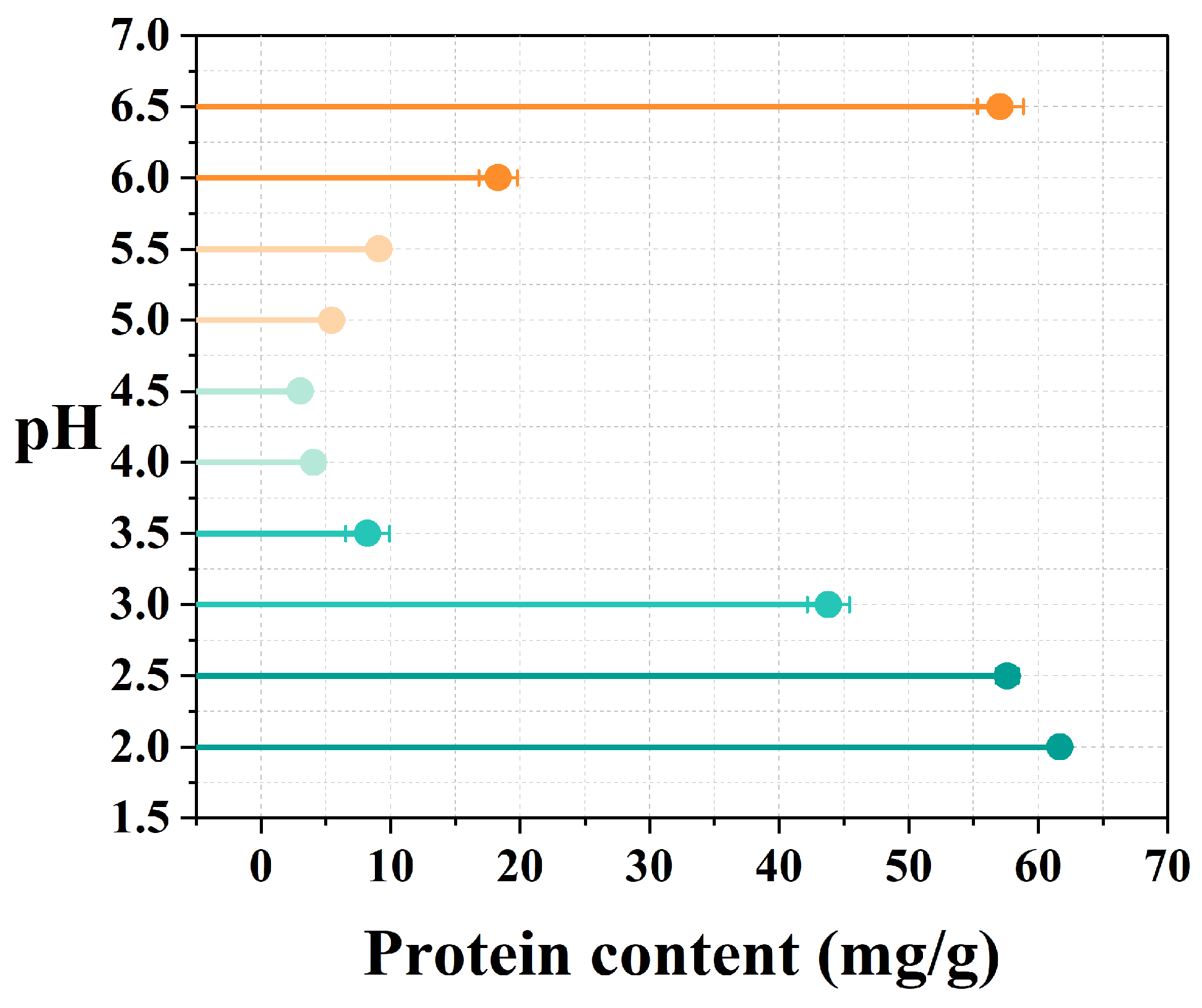
3.2. Protein Extraction Rate
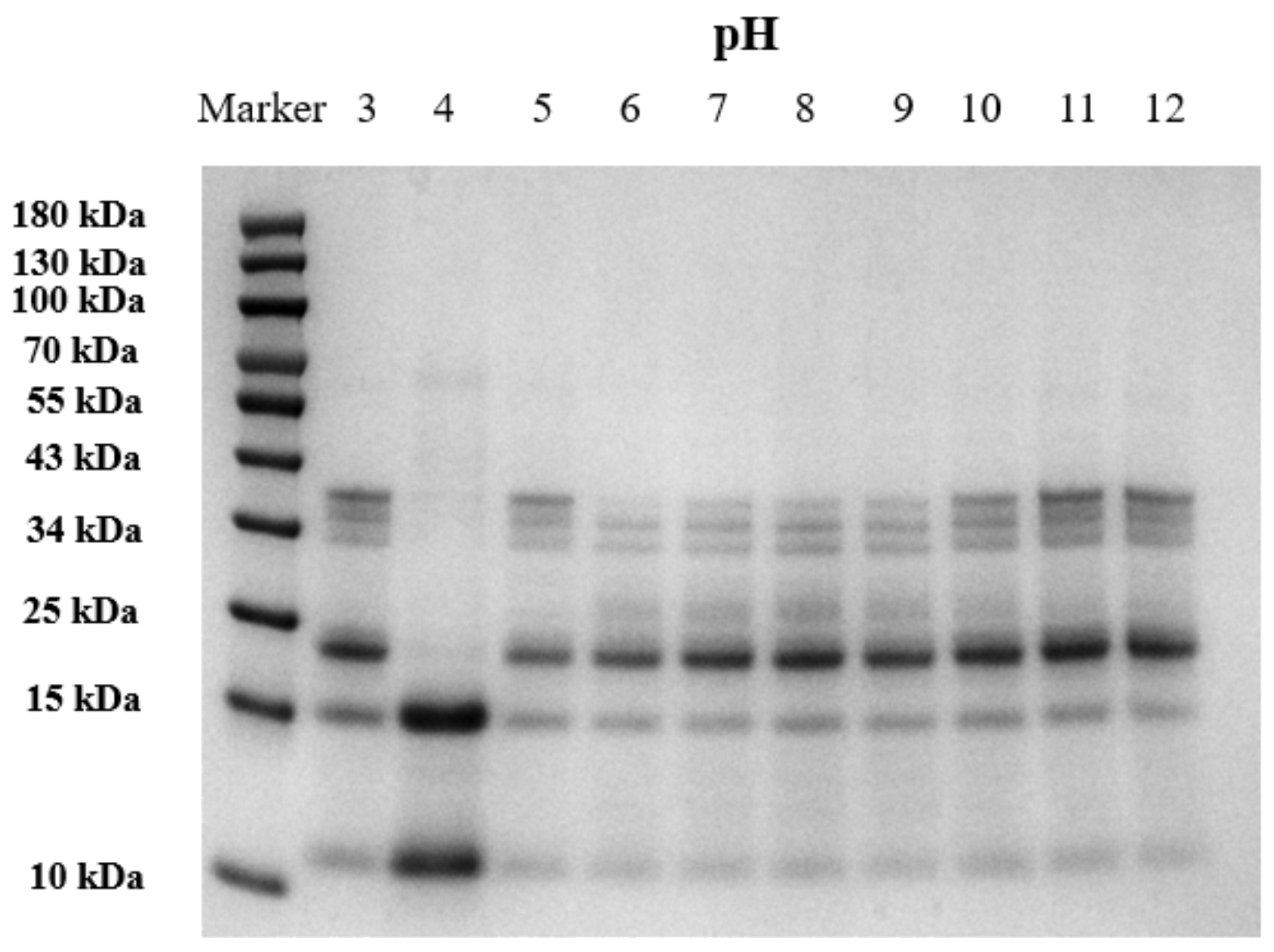
3.3. SDS-PAGE
3.4. Amino Acid Composition Analysis
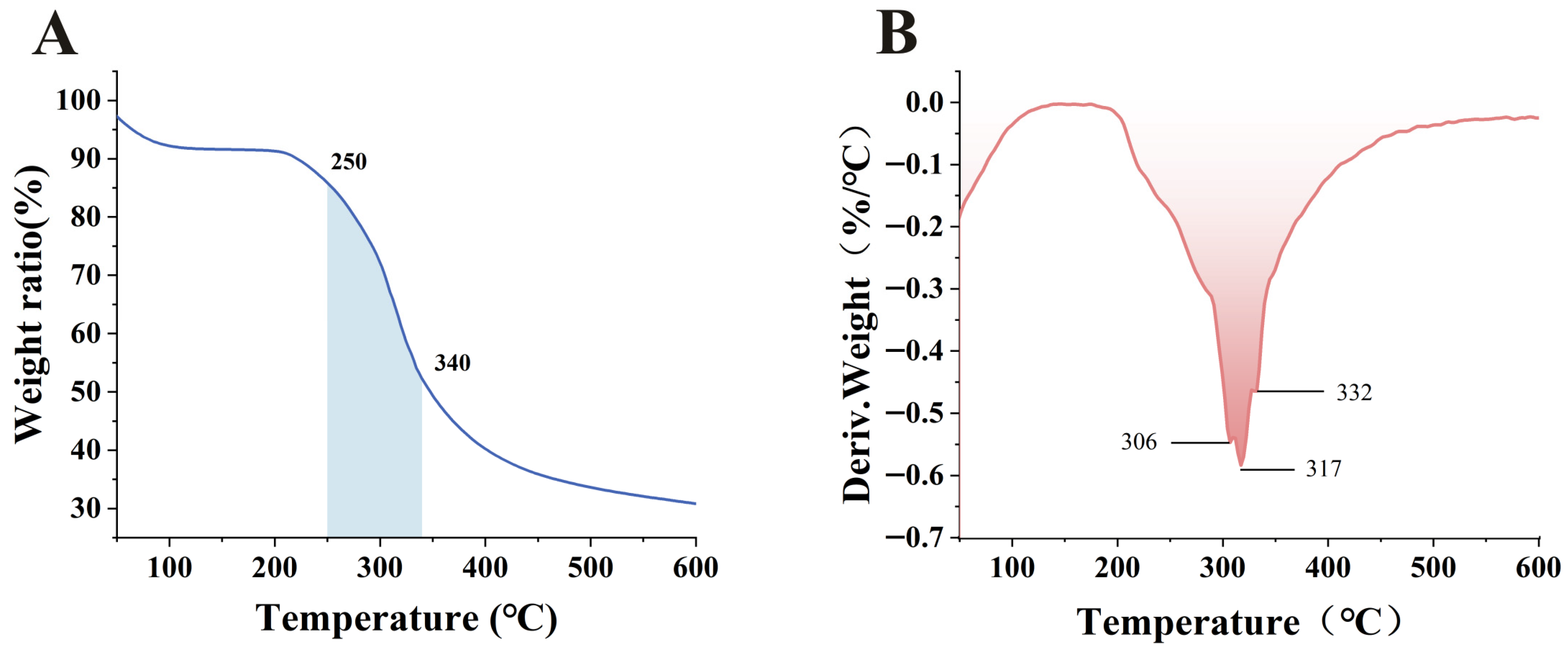
3.5. Thermogravimetric Analysis
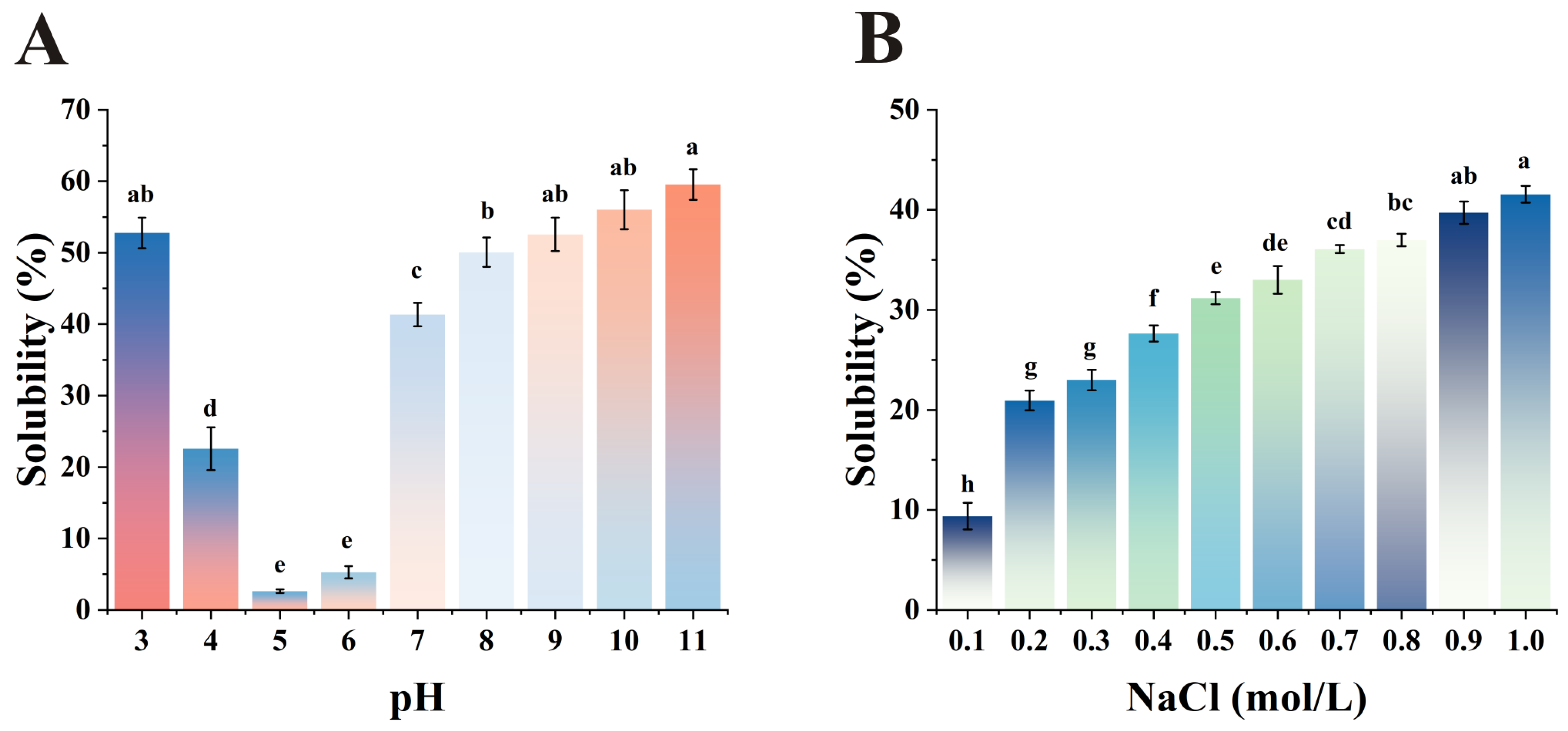
3.6. Solubility
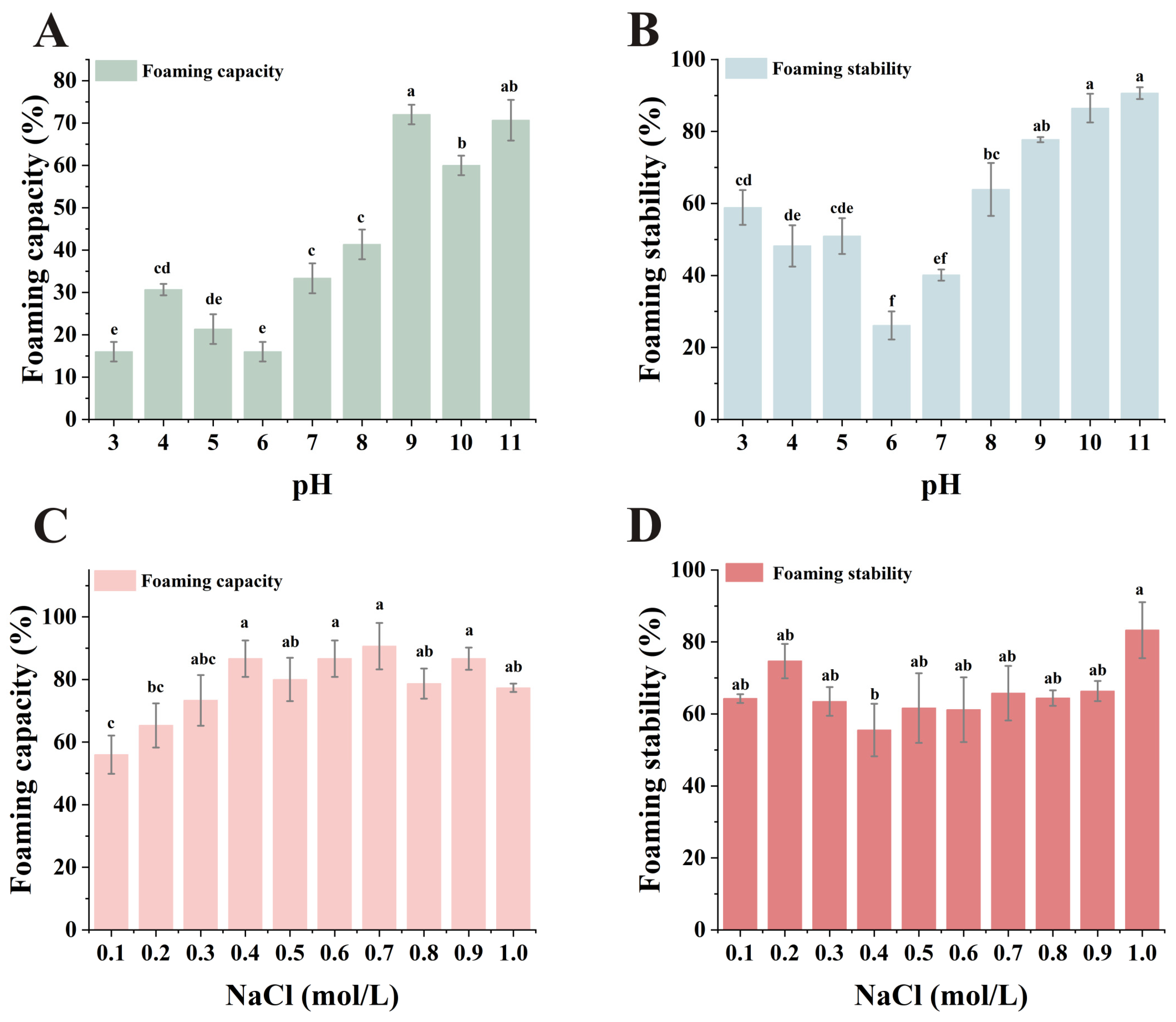
3.7. Foaming Capacity and Foaming Stability
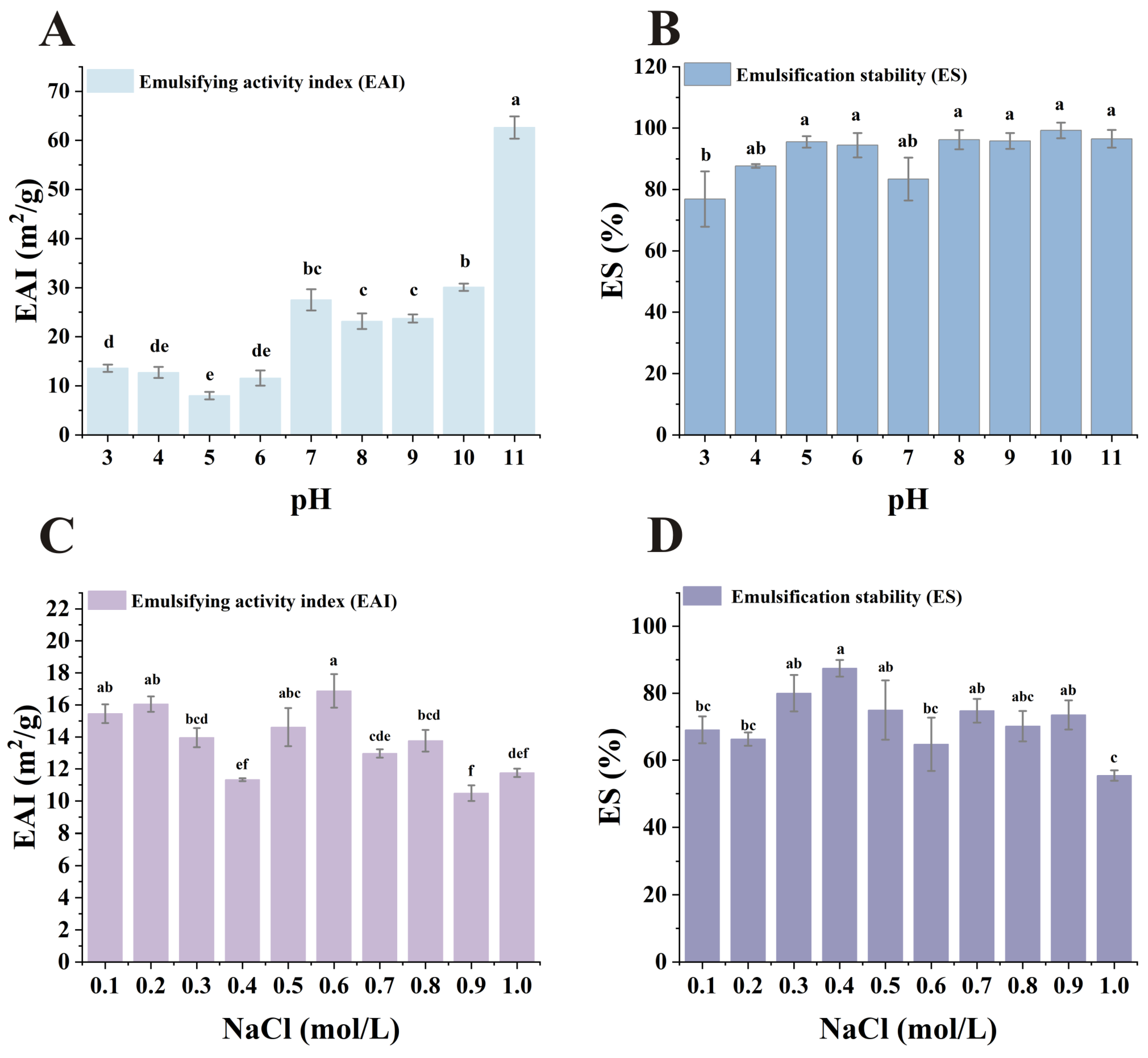
3.8. Emulsifying Properties
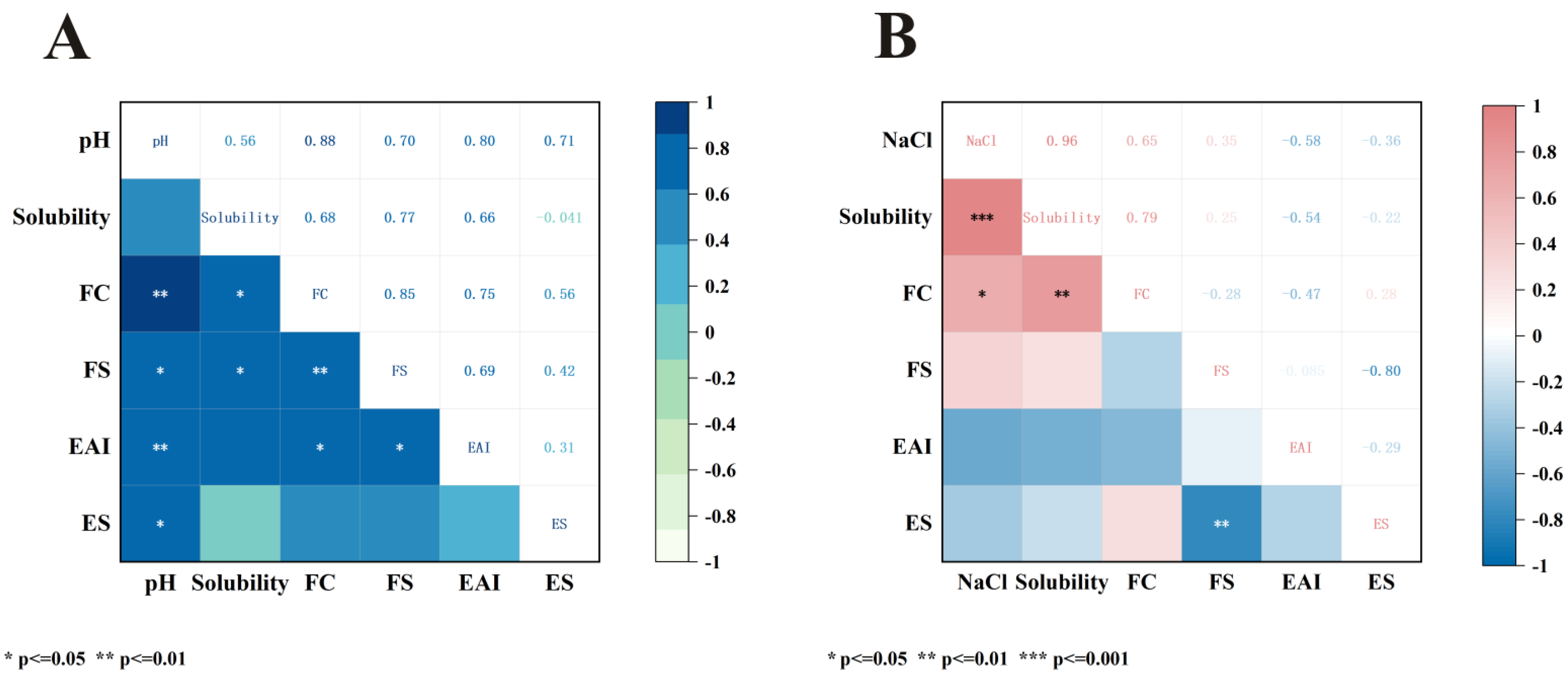
3.9. Correlation Analysis
4. Conclusions
Author Contributions
Funding
Institutional Review Board Statement
Informed Consent Statement
Data Availability Statement
Conflicts of Interest
Abbreviations
| SMP | Safflower seed meal protein |
| AAS | Amino acid score |
| EAI | Emulsifying activity index |
| ES | Emulsification stability |
| FC | Foaming capacity |
| FS | Foaming Stability |
| TGA | Thermogravimetric analysis |
| DTG | Derivative thermogravimetric |
References
- Carvalho, C.d.S.; Ojoli, G.X.; Paco, M.G.; Bonetti, N.A.; de Pinho, S.C.; Silva, J.T.d.P.; Polachini, T.C. The Role of Nonconventional Technologies in the Extraction Enhancement and Technofunctionality of Alternative Proteins from Sustainable Sources. Foods 2025, 14, 3612. [Google Scholar] [CrossRef] [Scilit]
- Özbay, S. From Safety to Sustainability: Shaping the Next Era of Food Science. J. Food Saf. Food Qual. 2025, 76, 47774. [Google Scholar] [CrossRef] [Scilit]
- Adeva-Andany, M.M.; Fernandez-Fernandez, C.; Carneiro-Freire, N.; Vila-Altesor, M.; Ameneiros-Rodriguez, E. The differential effect of animal versus vegetable dietary protein on the clinical manifestations of diabetic kidney disease in humans. Clin. Nutr. ESPEN 2022, 48, 21–35. [Google Scholar] [CrossRef] [Scilit]
- Al-Shaar, L.; Satija, A.; Wang, D.D.; Rimm, E.B.; Smith-Warner, S.A.; Stampfer, M.J.; Hu, F.B.; Willett, W.C. Red meat intake and risk of coronary heart disease among US men: Prospective cohort study. BMJ 2020, 371, m4141. [Google Scholar] [CrossRef] [Scilit]
- Aiking, H.; de Boer, J. The next protein transition. Trends Food Sci. Technol. 2020, 105, 515–522. [Google Scholar] [CrossRef] [Scilit]
- Hartmann, C.; Siegrist, M. Consumer perception and behaviour regarding sustainable protein consumption: A systematic review. Trends Food Sci. Technol. 2017, 61, 11–25. [Google Scholar] [CrossRef] [Scilit]
- Brodersen, L.; Rimbach, G.; Seidel, U.; Rinne, P.; Hasler, M.; Bosy-Westphal, A.; Jans, K. A Nutritional Evaluation of Plant-Based Meat and Sausage Analogues. Foods 2025, 14, 3674. [Google Scholar] [CrossRef] [Scilit]
- Hadidi, M.; Aghababaei, F.; Gonzalez-Serrano, D.J.; Goksen, G.; Trif, M.; McClements, D.J.; Moreno, A. Plant-based proteins from agro-industrial waste and by-products: Towards a more circular economy. Int. J. Biol. Macromol. 2024, 261, 129576. [Google Scholar] [CrossRef] [Scilit] [PubMed]
- Nemli, E.; Gunal-Koroglu, D.; Apak, R.; Capanoglu, E. Potential of Plant-Based Oil Processing Wastes/By-Products as an Alternative Source of Bioactive Compounds in the Food Industry. Foods 2025, 14, 2718. [Google Scholar] [CrossRef] [Scilit] [PubMed]
- Menegaes, J.F.; Nunes, U.R. Safflower: Importance, use and economical exploitation. Sci. Agrar. Parana. 2020, 1, 1–11. [Google Scholar] [CrossRef] [Scilit]
- Gomashe, S.S.; Ingle, K.P.; Sarap, Y.A.; Chand, D.; Rajkumar, S. Safflower (Carthamus tinctorius L.): An underutilized crop with potential medicinal values. Ann. Phytomed. Int. J. 2021, 10, 242–248. [Google Scholar] [CrossRef] [Scilit]
- Chapman, M.A.; Hvala, J.; Strever, J.; Burke, J.M. Population genetic analysis of safflower (Carthamus tinctorius; Asteraceae) reveals a Near Eastern origin and five centers of diversity. Am. J. Bot. 2010, 97, 831–840. [Google Scholar] [CrossRef] [Scilit]
- Song, L.; Geng, S.; Liu, B. Characterization of Wei Safflower Seed Oil Using Cold-Pressing and Solvent Extraction. Foods 2023, 12, 3228. [Google Scholar] [CrossRef] [Scilit]
- Adamska, I.; Biernacka, P. Bioactive Substances in Safflower Flowers and Their Applicability in Medicine and Health-Promoting Foods. Int. J. Food Sci. 2021, 2021, 6657639. [Google Scholar] [CrossRef] [Scilit] [PubMed]
- Matthaus, B.; Ozcan, M.M.; Al Juhaimi, F.Y. Fatty acid composition and tocopherol profiles of safflower (Carthamus tinctorius L.) seed oils. Nat. Prod. Res. 2015, 29, 193–196. [Google Scholar] [CrossRef] [Scilit]
- Khalid, N.; Khan, R.S.; Hussain, M.I.; Farooq, M.; Ahmad, A.; Ahmed, I. A comprehensive characterisation of safflower oil for its potential applications as a bioactive food ingredient—A review. Trends Food Sci. Technol. 2017, 66, 176–186. [Google Scholar] [CrossRef] [Scilit]
- Sagiroglu, A.; Ozcan, H.M.; Satana, A. Functional and biochemical properties of proteins from safflower seed. Prep. Biochem. Biotechnol. 2009, 39, 159–169. [Google Scholar] [CrossRef] [Scilit] [PubMed]
- Ulloa, J.A.; Rosas-Ulloa, P.; Ulloa-Rangel, B.E. Physicochemical and functional properties of a protein isolate produced from safflower (Carthamus tinctorius L.) meal by ultrafiltration. J. Sci. Food Agric. 2011, 91, 572–577. [Google Scholar] [CrossRef] [Scilit] [PubMed]
- Pilorgé, E. Sunflower in the global vegetable oil system: Situation, specificities and perspectives. OCL 2020, 27, 34. [Google Scholar] [CrossRef] [Scilit]
- Capanoglu, E.; Nemli, E.; Tomas-Barberan, F. Novel Approaches in the Valorization of Agricultural Wastes and Their Applications. J. Agric. Food Chem. 2022, 70, 6787–6804. [Google Scholar] [CrossRef] [Scilit]
- Yerlikaya, O.; Oztekin, H.E.; Balta, Y. Plant-Based Milk Alternatives in Kefir Production: A Review. J. Food Saf. Food Qual. 2025, 76, 45815. [Google Scholar] [CrossRef] [Scilit]
- Fu, Q.; Zhao, J.; Rong, S.; Han, Y.; Liu, F.; Chu, Q.; Wang, S.; Chen, S. Research Advances in Plant Protein-Based Products: Protein Sources, Processing Technology, and Food Applications. J. Agric. Food Chem. 2023, 71, 15429–15444. [Google Scholar] [CrossRef] [Scilit] [PubMed]
- Aydar, E.F.; Tutuncu, S.; Ozcelik, B. Plant-based milk substitutes: Bioactive compounds, conventional and novel processes, bioavailability studies, and health effects. J. Funct. Foods 2020, 70, 103975. [Google Scholar] [CrossRef] [Scilit]
- Du, M.; Xie, J.; Gong, B.; Xu, X.; Tang, W.; Li, X.; Li, C.; Xie, M. Extraction, physicochemical characteristics and functional properties of Mung bean protein. Food Hydrocoll. 2018, 76, 131–140. [Google Scholar] [CrossRef] [Scilit]
- Nathia-Neves, G.; Getachew, A.T.; Santana, A.L.; Jacobsen, C. Legume Proteins in Food Products: Extraction Techniques, Functional Properties, and Current Challenges. Foods 2025, 14, 1626. [Google Scholar] [CrossRef] [Scilit] [PubMed]
- Lin, D.; Zhang, Q.; Xiao, L.; Huang, Y.; Yang, Z.; Wu, Z.; Tu, Z.; Qin, W.; Chen, H.; Wu, D.; et al. Effects of ultrasound on functional properties, structure and glycation properties of proteins: A review. Crit. Rev. Food Sci. Nutr. 2021, 61, 2471–2481. [Google Scholar] [CrossRef] [Scilit]
- Lawal, O.S. Functionality of African locust bean (Parkia biglobossa) protein isolate: Effects of pH, ionic strength and various protein concentrations. Food Chem. 2004, 86, 345–355. [Google Scholar] [CrossRef] [Scilit]
- Liu, Y.; Tan, M.; Chen, Z.; Zheng, H.; Gao, J.; Lin, H.; Zhu, G.; Cao, W. Oyster (Crassostrea hongkongensis) protein isolates: Influence of extraction pH on physicochemical, conformational and functional properties. Food Chem. 2025, 492, 145549. [Google Scholar] [CrossRef] [Scilit]
- Gao, C.; Wang, F.; Yuan, L.; Liu, J.; Sun, D.; Li, X. Physicochemical property, antioxidant activity, and cytoprotective effect of the germinated soybean proteins. Food Sci. Nutr. 2019, 7, 120–131. [Google Scholar] [CrossRef] [Scilit]
- Chai, L.; Shi, W.; Tan, Y.; Che, X.; Lu, J.; Bai, B.; Zhang, C. Effect of pH-Shifted Compound Heating Treatment on the Structure and Properties of Walnut Protein Isolate. Foods 2025, 14, 1754. [Google Scholar] [CrossRef] [Scilit]
- Ge, J.; Sun, C.-X.; Mata, A.; Corke, H.; Gan, R.-Y.; Fang, Y. Physicochemical and pH-dependent functional properties of proteins isolated from eight traditional Chinese beans. Food Hydrocoll. 2021, 112, 106288. [Google Scholar] [CrossRef] [Scilit]
- Tontul, I.; Kasimoglu, Z.; Asik, S.; Atbakan, T.; Topuz, A. Functional properties of chickpea protein isolates dried by refractance window drying. Int. J. Biol. Macromol. 2018, 109, 1253–1259. [Google Scholar] [CrossRef] [Scilit]
- Yoon, I.S.; Lee, H.J.; Kang, S.I.; Park, S.Y.; Kang, Y.M.; Kim, J.S.; Heu, M.S. Food functionality of protein isolates extracted from Yellowfin Tuna (Thunnus albacares) roe using alkaline solubilization and acid precipitation process. Food Sci. Nutr. 2019, 7, 412–424. [Google Scholar] [CrossRef] [Scilit]
- Kozlowski, L.P. Proteome-pI 2.0: Proteome isoelectric point database update. Nucleic Acids Res. 2022, 50, D1535–D1540. [Google Scholar] [CrossRef] [Scilit] [PubMed]
- Pace, C.N.; Grimsley, G.R.; Scholtz, J.M. Protein ionizable groups: pK values and their contribution to protein stability and solubility. J. Biol. Chem. 2009, 284, 13285–13289. [Google Scholar] [CrossRef] [Scilit]
- Malik, M.A.; Sharma, H.K.; Saini, C.S. Effect of removal of phenolic compounds on structural and thermal properties of sunflower protein isolate. J. Food Sci. Technol. 2016, 53, 3455–3464. [Google Scholar] [CrossRef] [Scilit] [PubMed]
- Wu, W.; Zhang, C.; Hua, Y. Structural modification of soy protein by the lipid peroxidation product malondialdehyde. J. Sci. Food Agric. 2009, 89, 1416–1423. [Google Scholar] [CrossRef] [Scilit]
- GB 5009.5-2016; National Food Safety Standard—Determination of Protein in Foods. China Standards Press: Beijing, China, 2016.
- Matuz, J.; Bartók, T.; Mórocz-Salamon, K.; Bóna, L. Structure and Potential Allergenic Character of Cereal Proteins I. Protein Content and Amino Acid Composition. Cereal Res. Commun. 2000, 28, 263–270. [Google Scholar] [CrossRef] [Scilit]
- Ruan, S.; Li, Y.; Wang, Y.; Huang, S.; Luo, J.; Ma, H. Analysis in protein profile, antioxidant activity and structure-activity relationship based on ultrasound-assisted liquid-state fermentation of soybean meal with Bacillus subtilis. Ultrason. Sonochem. 2020, 64, 104846. [Google Scholar] [CrossRef] [Scilit]
- Sadeghi, A.A.; Nikkhah, A.; Shawrang, P.; Shahrebabak, M.M. Protein degradation kinetics of untreated and treated soybean meal using SDS-PAGE. Anim. Feed Sci. Technol. 2006, 126, 121–133. [Google Scholar] [CrossRef] [Scilit]
- Warsame, A.O.; Michael, N.; O’Sullivan, D.M.; Tosi, P. Identification and Quantification of Major Faba Bean Seed Proteins. J. Agric. Food Chem. 2020, 68, 8535–8544. [Google Scholar] [CrossRef] [Scilit] [PubMed]
- Satish, I.; Shrivastava, S.K. Chemical, Nutritional and Anti-Nutritional Study of New Varieties of Oil Seeds from Sunflower, Safflower and Groundnut. Int. J. Biotechnol. Appl. 2011, 3, 118–129. [Google Scholar] [CrossRef] [Scilit]
- Ge, J.; Sun, C.X.; Sun, M.; Zhang, Y.; Fang, Y. Introducing panda bean (Vigna umbellata (Thunb.) Ohwi et Ohashi) protein isolate as an alternative source of legume protein: Physicochemical, functional and nutritional characteristics. Food Chem. 2022, 388, 133016. [Google Scholar] [CrossRef] [Scilit] [PubMed]
- Food and Agriculture Organization/World Health Organization (FAO/WHO). Protein and Amino Acid Requirements in Human Nutrition; Report of a Joint WHO/FAO/UNU Expert Consultation, WHO technical report series no. 935; WHO: Geneva, Switzerland, 2007. [Google Scholar]
- Brosnan, J.T.; Brosnan, M.E. Glutamate: A truly functional amino acid. Amino Acids 2013, 45, 413–418. [Google Scholar] [CrossRef] [Scilit]
- Morris, S.M., Jr. Arginine Metabolism Revisited. J. Nutr. 2016, 146, 2579S–2586S. [Google Scholar] [CrossRef] [Scilit] [PubMed]
- Gorissen, S.H.M.; Crombag, J.J.R.; Senden, J.M.G.; Waterval, W.A.H.; Bierau, J.; Verdijk, L.B.; van Loon, L.J.C. Protein content and amino acid composition of commercially available plant-based protein isolates. Amino Acids 2018, 50, 1685–1695. [Google Scholar] [CrossRef] [Scilit]
- Multescu, M.; Culetu, A.; Susman, I.E. Screening of the Nutritional Properties, Bioactive Components, and Antioxidant Properties in Legumes. Foods 2024, 13, 3528. [Google Scholar] [CrossRef] [Scilit]
- Food and Agriculture Organization (FAO). Dietary protein quality evaluation in human nutrition: Report of an FAO expert consultation. FAO Food Nutr. Pap. 2013, 92, 1–66. [Google Scholar]
- Zhang, Y.X.; Zhu, J.; Wu, D.F.; Liu, X.F. Effects of heat treatment on nutritional profiles and antioxidant activity of peanuts. J. Food Saf. Food Qual. 2024, 75, 144–152. [Google Scholar] [CrossRef] [Scilit]
- Moughan, P.J.; Lim, W.X.J. Digestible indispensable amino acid score (DIAAS): 10 years on. Front. Nutr. 2024, 11, 1389719. [Google Scholar] [CrossRef] [Scilit]
- Sa, A.G.A.; Moreno, Y.M.F.; Carciofi, B.A.M. Food processing for the improvement of plant proteins digestibility. Crit. Rev. Food Sci. Nutr. 2020, 60, 3367–3386. [Google Scholar] [CrossRef] [Scilit]
- Gomez, X.; Bernal, M.P.; Zarate, P.P.; Alvarez-Robles, M.J.; Gonzalez, R.; Clemente, R. Thermal evaluation of plant biomass from the phytostabilisation of soils contaminated by potentially toxic elements. Chemosphere 2023, 342, 140116. [Google Scholar] [CrossRef] [Scilit]
- Yilmaz, H.; Gultekin Subasi, B. Distinctive Processing Effects on Recovered Protein Isolates from Laurel (Bay) and Olive Leaves: A Comparative Study. ACS Omega 2023, 8, 36179–36187. [Google Scholar] [CrossRef] [Scilit]
- Ricci, L.; Umilta, E.; Righetti, M.C.; Messina, T.; Zurlini, C.; Montanari, A.; Bronco, S.; Bertoldo, M. On the thermal behavior of protein isolated from different legumes investigated by DSC and TGA. J. Sci. Food Agric. 2018, 98, 5368–5377. [Google Scholar] [CrossRef] [Scilit] [PubMed]
- Shevkani, K.; Singh, N.; Kaur, A.; Rana, J.C. Structural and functional characterization of kidney bean and field pea protein isolates: A comparative study. Food Hydrocoll. 2015, 43, 679–689. [Google Scholar] [CrossRef] [Scilit]
- Roussel, H.; Cheftel, J.C. Mechanisms of gelation of sardine proteins: Influence of thermal processing and of various additives on the texture and protein solubility of kamaboko gels. Int. J. Food Sci. Technol. 2007, 25, 260–280. [Google Scholar] [CrossRef] [Scilit]
- Muneer, F.; Johansson, E.; Hedenqvist, M.S.; Plivelic, T.S.; Kuktaite, R. Impact of pH Modification on Protein Polymerization and Structure(-)Function Relationships in Potato Protein and Wheat Gluten Composites. Int. J. Mol. Sci. 2018, 20, 58. [Google Scholar] [CrossRef] [Scilit] [PubMed]
- Ma, K.K.; Greis, M.; Lu, J.; Nolden, A.A.; McClements, D.J.; Kinchla, A.J. Functional Performance of Plant Proteins. Foods 2022, 11, 594. [Google Scholar] [CrossRef] [Scilit]
- Curtis, R.A.; Ulrich, J.; Montaser, A.; Prausnitz, J.M.; Blanch, H.W. Protein-protein interactions in concentrated electrolyte solutions. Biotechnol. Bioeng. 2002, 79, 367–380. [Google Scholar] [CrossRef] [Scilit]
- Carolina Gonzalez-Gonzalez, D.; Elena Lugo-Sanchez, M.; Olivia Garcia-Sifuentes, C.; Carlos Ramirez-Suarez, J.; Pacheco-Aguilar, R. Influence of pH, ionic strength and isoascorbic acid on the gel-forming ability of Jumbo squid muscle (Dosidicus gigas). Food Chem. 2021, 337, 127993. [Google Scholar] [CrossRef] [Scilit]
- Korkmaz, F. Safflower protein as a potential plant protein powder: Optimization of extraction and spray-drying process parameters and determination of physicochemical and functional properties. J. Sci. Food Agric. 2024, 104, 7408–7416. [Google Scholar] [CrossRef] [Scilit]
- Khushairay, E.S.I.; Ghani, M.A.; Babji, A.S.; Yusop, S.M. The Nutritional and Functional Properties of Protein Isolates from Defatted Chia Flour Using Different Extraction pH. Foods 2023, 12, 3046. [Google Scholar] [CrossRef] [Scilit]
- Benelhadj, S.; Gharsallaoui, A.; Degraeve, P.; Attia, H.; Ghorbel, D. Effect of pH on the functional properties of Arthrospira (Spirulina) platensis protein isolate. Food Chem. 2016, 194, 1056–1063. [Google Scholar] [CrossRef] [Scilit]
- Lawal, O.; Adebowale, K.; Ogunsanwo, B.; Sosanwo, O.; Bankole, S. On the functional properties of globulin and albumin protein fractions and flours of African locust bean (Parkia biglobossa). Food Chem. 2005, 92, 681–691. [Google Scholar] [CrossRef] [Scilit]
- Boye, J.I.; Aksay, S.; Roufik, S.; Ribéreau, S.; Mondor, M.; Farnworth, E.; Rajamohamed, S.H. Comparison of the functional properties of pea, chickpea and lentil protein concentrates processed using ultrafiltration and isoelectric precipitation techniques. Food Res. Int. 2010, 43, 537–546. [Google Scholar] [CrossRef] [Scilit]
- Yu, Y.; Guan, Y.; Wen, H.; Zhang, Y.; Liu, J.; Zhang, T. Mild heating assisted alkaline pH shifting modify the egg white protein: The mechanism and the enhancement of emulsifying properties. LWT 2021, 151, 112094. [Google Scholar] [CrossRef] [Scilit]
- Wu, L.; Li, J.; Wu, W.; Wang, L.; Qin, F.; Xie, W. Effect of extraction pH on functional properties, structural properties, and in vitro gastrointestinal digestion of tartary buckwheat protein isolates. J. Cereal Sci. 2021, 101, 103314. [Google Scholar] [CrossRef] [Scilit]
- Segura-Campos, M.R. Isolation and functional caharacterization of chia (Salvia hispanica) proteins. Food Sci. Technol. 2020, 40, 334–339. [Google Scholar] [CrossRef] [Scilit]
- Gong, K.-J.; Shi, A.-M.; Liu, H.-Z.; Liu, L.; Hu, H.; Adhikari, B.; Wang, Q. Emulsifying properties and structure changes of spray and freeze-dried peanut protein isolate. J. Food Eng. 2016, 170, 33–40. [Google Scholar] [CrossRef] [Scilit]
- Zhao, Q.; Xiong, H.; Selomulya, C.; Chen, X.D.; Huang, S.; Ruan, X.; Zhou, Q.; Sun, W. Effects of Spray Drying and Freeze Drying on the Properties of Protein Isolate from Rice Dreg Protein. Food Bioprocess Technol. 2012, 6, 1759–1769. [Google Scholar] [CrossRef] [Scilit]
- Li, R.; Xiong, Y.L. Sensitivity of oat protein solubility to changing ionic strength and pH. J. Food Sci. 2021, 86, 78–85. [Google Scholar] [CrossRef] [Scilit]
- Gul, O.; Gul, L.B.; Baskinci, T.; Parlak, M.E.; Saricaoglu, F.T. Influence of pH and ionic strength on the bulk and interfacial rheology and technofunctional properties of hazelnut meal protein isolate. Food Res. Int. 2023, 169, 112906. [Google Scholar] [CrossRef] [Scilit] [PubMed]
- Joye, I.J.; McClements, D.J. Emulsifying and emulsion-stabilizing properties of gluten hydrolysates. J. Agric. Food Chem. 2014, 62, 2623–2630. [Google Scholar] [CrossRef] [Scilit] [PubMed]



| Sample | Group | Nitrogen Content (g/100 g) | Protein Content (g/100 g) | Average Protein Content (g/100 g) |
|---|---|---|---|---|
| Degreased safflower seed meal | 1 | 10.263 | 54.394 | 54.380 ± 0.025 |
| 2 | 10.267 | 54.415 | ||
| 3 | 10.251 | 54.330 | ||
| Safflower seed meal protein | 1 | 16.150 | 85.595 | 85.652 ± 0.035 |
| 2 | 16.159 | 85.643 | ||
| 3 | 16.173 | 85.717 |
| Classification g·(100 g) − 1 | Amino Acid Name | Degreased Safflower Seed Meal | Safflower Seed Meal Protein | FAO/WHO, 2007 [45] (Adult) |
|---|---|---|---|---|
| Essential amino acid | Lys | 1.41 ± 0.15 | 2.39 ± 0.14 | 1.6 |
| Phe | 3.29 ± 0.15 | 7.77 ± 0.17 | 1.9 | |
| Met | 0.94 ± 0.04 | 1.01 ± 0.04 | 1.7 | |
| Thr | 2.10 ± 0.13 | 1.51 ± 0.07 | 0.9 | |
| Ile | 2.14 ± 0.07 | 1.86 ± 0.10 | 1.3 | |
| Leu | 4.08 ± 0.09 | 3.80 ± 0.06 | 1.9 | |
| Val | 3.06 ± 0.03 | 3.67 ± 0.14 | 1.5 | |
| Semi-essential amino acids | His | 2.14 ± 0.13 | 3.50 ± 0.07 | 1.6 |
| Arg | 7.12 ± 0.06 | 8.55 ± 0.15 | ||
| Non-essential amino acid | Ser | 2.20 ± 0.10 | 2.04 ± 0.05 | |
| Glu | 15.5 ± 0.18 | 14.11 ± 0.35 | ||
| Gly | 3.15 ± 0.20 | 2.38 ± 0.16 | ||
| Ala | 3.63 ± 0.10 | 4.63 ± 0.14 | ||
| Cys | 0.64 ± 0.08 | 0.77 ± 0.06 | ||
| Asp | 6.22 ± 0.10 | 3.69 ± 0.18 | ||
| Tyr | 2.20 ± 0.08 | 4.21 ± 0.11 | ||
| Pro | 2.80 ± 0.09 | 3.33 ± 0.06 | ||
| Total amino acids | 62.62 | 69.24 |
| Classification | Degreased Safflower Seed Meal | Safflower Seed Meal Protein | WHO/FAO Model g·(100 g) − 1 |
|---|---|---|---|
| Thr | 84.0 | 60.4 | 2.5 |
| Lys | 29.4 | 49.8 | 4.8 |
| Ile | 71.3 | 62.0 | 3.0 |
| Val | 76.5 | 91.8 | 4.0 |
| Phe + Tyr | 133.9 | 292.2 | 4.1 |
| Leu | 66.9 | 62.3 | 6.1 |
| Met + Cys | 68.9 | 77.4 | 2.3 |
| His | 133.8 | 218.8 | 1.6 |
Disclaimer/Publisher’s Note: The statements, opinions and data contained in all publications are solely those of the individual author(s) and contributor(s) and not of MDPI and/or the editor(s). MDPI and/or the editor(s) disclaim responsibility for any injury to people or property resulting from any ideas, methods, instructions or products referred to in the content. |
© 2026 by the authors. Licensee MDPI, Basel, Switzerland. This article is an open access article distributed under the terms and conditions of the Creative Commons Attribution (CC BY) license.
Share and Cite
Yang, Y.; Bai, Y.; Xie, X.; Li, B.; Luo, L.; Zhang, Q.; Luo, C.; Nie, W.; Qin, R.; Liu, H.; et al. Physicochemical Properties of Safflower (Carthamus tinctorius L.) Seed Meal Protein and the Effects of pH and Ionic Strength on Its Functional Characteristics. Foods 2026, 15, 593. https://doi.org/10.3390/foods15030593
Yang Y, Bai Y, Xie X, Li B, Luo L, Zhang Q, Luo C, Nie W, Qin R, Liu H, et al. Physicochemical Properties of Safflower (Carthamus tinctorius L.) Seed Meal Protein and the Effects of pH and Ionic Strength on Its Functional Characteristics. Foods. 2026; 15(3):593. https://doi.org/10.3390/foods15030593
Chicago/Turabian StyleYang, Yanling, Yucheng Bai, Xiaoling Xie, Bingjing Li, Liping Luo, Qian Zhang, Cheng Luo, Wenxing Nie, Rui Qin, Hong Liu, and et al. 2026. "Physicochemical Properties of Safflower (Carthamus tinctorius L.) Seed Meal Protein and the Effects of pH and Ionic Strength on Its Functional Characteristics" Foods 15, no. 3: 593. https://doi.org/10.3390/foods15030593
APA StyleYang, Y., Bai, Y., Xie, X., Li, B., Luo, L., Zhang, Q., Luo, C., Nie, W., Qin, R., Liu, H., Liu, J., & He, H. (2026). Physicochemical Properties of Safflower (Carthamus tinctorius L.) Seed Meal Protein and the Effects of pH and Ionic Strength on Its Functional Characteristics. Foods, 15(3), 593. https://doi.org/10.3390/foods15030593