1. Introduction
Thermal processing is widely applied in the production and storage of foods such as grain products, baked goods, coffee beverages, and infant formula. Although thermal processing improves product sensory quality and microbial safety, it simultaneously promotes the formation of various Maillard reaction products (MRPs) [
1,
2]. Among these products, volatile small molecules, such as furans and their derivatives, are considered major process contaminants in heat-processed foods that may pose potential health risks [
3]. Epidemiological studies and animal experiments suggest that certain furan compounds may cause hepatotoxicity, neurotoxicity, and carcinogenicity. Consequently, increasing attention has been directed toward the levels of these compounds in food and feed, as well as their associated health effects [
4].
2-acetylfuran is a typical furan-type Maillard product formed through dehydration, rearrangement, and cleavage reactions between reducing sugars and amino acids at elevated temperatures [
5]. It serves as a food flavoring agent and occurs naturally in baked grains, roasted oils, and caramelized dairy products. Other Maillard reaction products with structural or biosynthetic relevance to 2-acetylfuran, such as 5-hydroxymethylfurfural (5-HMF), 2-furfural, and glyoxal, have been shown to cause developmental, neurotoxic, and hepatotoxic effects in zebrafish, rodents, and cellular models. 5-HMF and 2-furfural can induce developmental delays, impaired bone mineralization, and pathological changes in the liver and central nervous system of zebrafish [
6,
7]. Glyoxal has also been reported to impair organ development and trigger oxidative stress and inflammatory responses [
8]. Collectively, these findings suggest that Maillard reaction products, despite their relatively low levels in heat-processed foods, may still exert cumulative health effects following chronic or early-life exposure. Currently, systematic toxicological data on 2-acetylfuran remain extremely limited. A 90-day evaluation in rats confirmed that 22.6 mg/kg body weight daily is a safe dose of 2-acetylfuran [
9]. Furthermore, the EFSA Animal Feed Additives and Products or Substances Group has reported safe doses of 2-acetylfuran in several species, including cats (2 mg/kg body weight), dogs (11.9 mg/kg body weight), and ornamental fish (44.2 mg/kg body weight) [
10]. Based on these findings, the group states that the use of 2-acetylfuran in animal feed at doses ≤ 0.5 mg/kg is safe in all animal diets. These findings provide a safe range for 2-acetylfuran exposure, but toxicity from high-concentration exposures has not yet been reported. In particular, there is a lack of dose–response data on the effects of 2-acetylfuran on specific organs, such as the immune system, nervous system, gastrointestinal tract, and liver.
Zebrafish embryos and larvae possess transparent bodies and a well-characterized developmental timeline and exhibit high genetic and physiological similarity to humans. These features have established zebrafish as a key vertebrate model for evaluating the toxicity of environmental pollutants and foodborne hazards [
11,
12]. In addition, their immune, nervous, gastrointestinal, and hepatic systems share substantial structural and functional homology with those of mammals, enabling reliable assessment of developmental and functional toxicity across multiple organs. Transgenic strains allow visual tracking of target cells, such as immune cells and motor neurons [
13]. As a result, zebrafish are widely used in toxicological assessments to elucidate the mechanisms of neurotoxicity, hepatotoxicity, and immunotoxicity caused by metals, pesticides, plastic additives, and novel food contaminants [
14,
15]. Compared with traditional rodent models, zebrafish are better suited for early developmental exposure studies and high-throughput screening. Furthermore, zebrafish can generate a comprehensive toxicity profile using multidimensional endpoints, including locomotor behavior, immune cell fluorescence, and organ morphology.
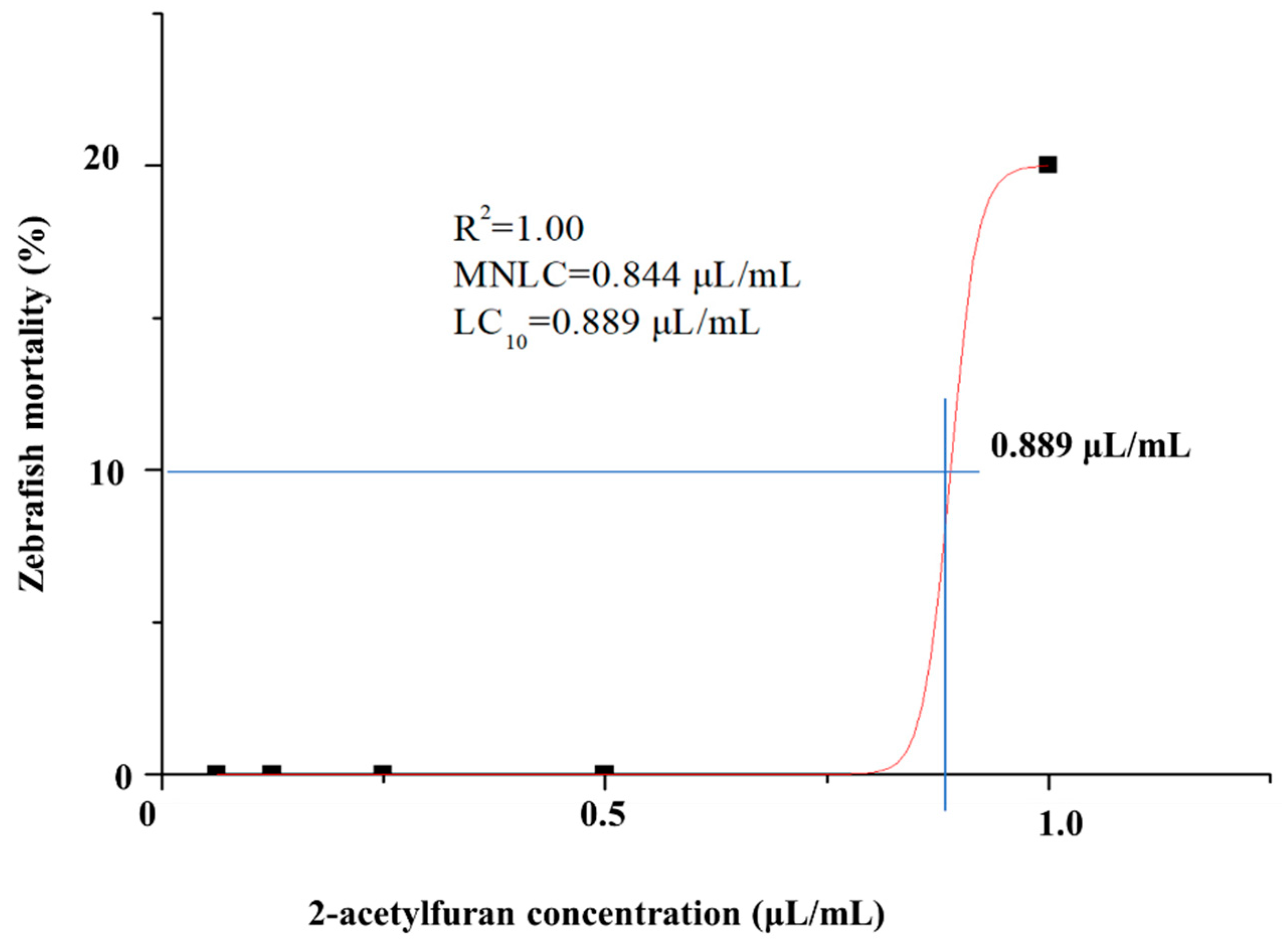
In this context, zebrafish were used as a model organism to determine the maximum non-lethal concentration (MNLC) and the 10% lethal concentration (LC10) of 2-acetylfuran using concentration–lethality curves. Based on these findings, four exposure doses (1/9 of MNLC, 1/3 of MNLC, MNLC, and LC10) were chosen to systematically evaluate the effects of 2-acetylfuran on zebrafish immune systems, locomotor behavior, neural development, gastrointestinal development, and liver function. Overall, this study aims to elucidate the multi-organ toxicity profile of 2-acetylfuran and clarify its dose–response relationships.
2. Materials and Methods
2.1. Zebrafish Husbandry
Wild-type AB zebrafish and transgenic lines were obtained from Hunter Biotechnology Inc. (Hangzhou, China). All fish were maintained at 28 °C in recirculating aquaria with prepared culture water consisting of reverse osmosis water, supplemented with 200 mg/L of instant sea salt, with conductivity adjusted to 450–550 µS/cm, pH maintained between 6.5 and 8.5, and a total hardness of 50–100 mg/L CaCO3. Animal use was approved by the Institutional Animal Care and Use Committee (IACUC-2023-6809-01). All procedures complied with the institutional license for experimental animals (SYXK (Zhejiang) 2022-0004) and adhered to AAALAC accreditation requirements (accreditation No. 001458).
2.2. Determination of MNLC and LC10 for 2-Acetylfuran
The acute lethality of 2-acetylfuran (purity of 99%, Merck KGaA, Darmstadt, Germany) was first assessed in 2-day-post-fertilization (dpf) wild-type AB zebrafish larvae. Larvae were exposed for 3 days to a series of nominal 2-acetylfuran concentrations (0.062, 0.125, 0.250, 0.500, and 1.00 µL/mL). A normal control (NC) and a vehicle control containing 1% DMSO were included in parallel. Simultaneously, all concentrations of 2-acetylfuran were dissolved in 1% DMSO. Zebrafish were reared in 6-well plates with 30 zebrafish per well. To each well, 3 mL of aqueous solution containing or without 2-acetylfuran (dissolved in 1% DMSO) was added. Mortality in each group was recorded daily, and dead larvae were promptly removed. Origin 8.0 software was used to fit the concentration–mortality ratio of 2-acetylfuran, and a nonlinear fitting was employed to generate the optimal concentration–mortality effect curve for 2-acetylfuran. The MNLC and LC10 of 2-acetylfuran were recorded using the 1% and 10% mortality rates from the curve, respectively. These values were then used to define a subtoxic exposure concentration set (1/9 of MNLC, 1/3 of MNLC, MNLC, and LC10) for subsequent toxicity assessments.
2.3. Immunotoxicity Assessment
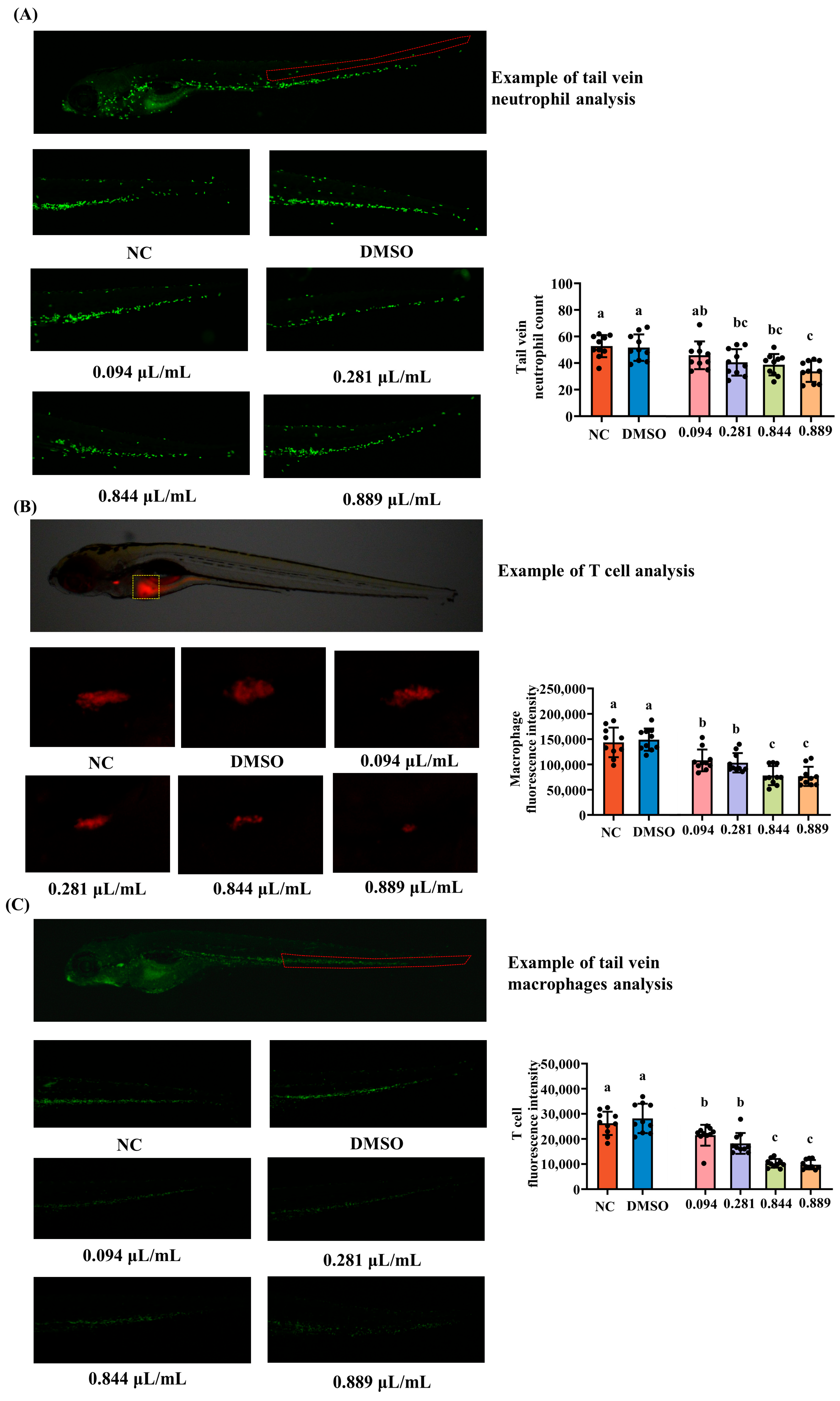
Immunotoxic effects of 2-acetylfuran were examined using three transgenic lines that label distinct immune cell populations: Tg (mpx: EGFP) for neutrophils, Tg (mpeg1: EGFP) for macrophages, and Tg (rag2: DsRed) for T cells in the thymus. The three transgenic zebrafish strains were provided by Hunter Biotechnology Inc. (Hangzhou, China). At 3 dpf, larvae were randomly assigned to six treatment groups (n = 30 per group): the NC, 1% DMSO, and four 2-acetylfuran exposure concentrations corresponding to 1/9 of the MNLC (0.094 µL/mL), 1/3 of the MNLC (0.281 µL/mL), the MNLC (0.844 µL/mL), and LC10 (0.889 µL/mL). Exposure was carried out for 2 days at 28 °C. After exposure,10 larvae from each group were randomly selected and mounted for imaging under a fluorescence microscope. Images of the caudal vein region were acquired, and the numbers and fluorescence intensities of neutrophils, macrophages, and T cells were quantified using the NIS-Elements D 3.20 advanced imaging software (Nikon, Tokyo, Japan). Changes in immune cell abundance in the tail vasculature were considered indicators of immunotoxicity.
2.4. Behavioral Analysis
Locomotor activity was assessed in wild-type AB larvae at 4 dfp to evaluate 2-acetylfuran-induced motor function alterations. The same six exposure groups and sample sizes as described in
Section 2.3 were employed (
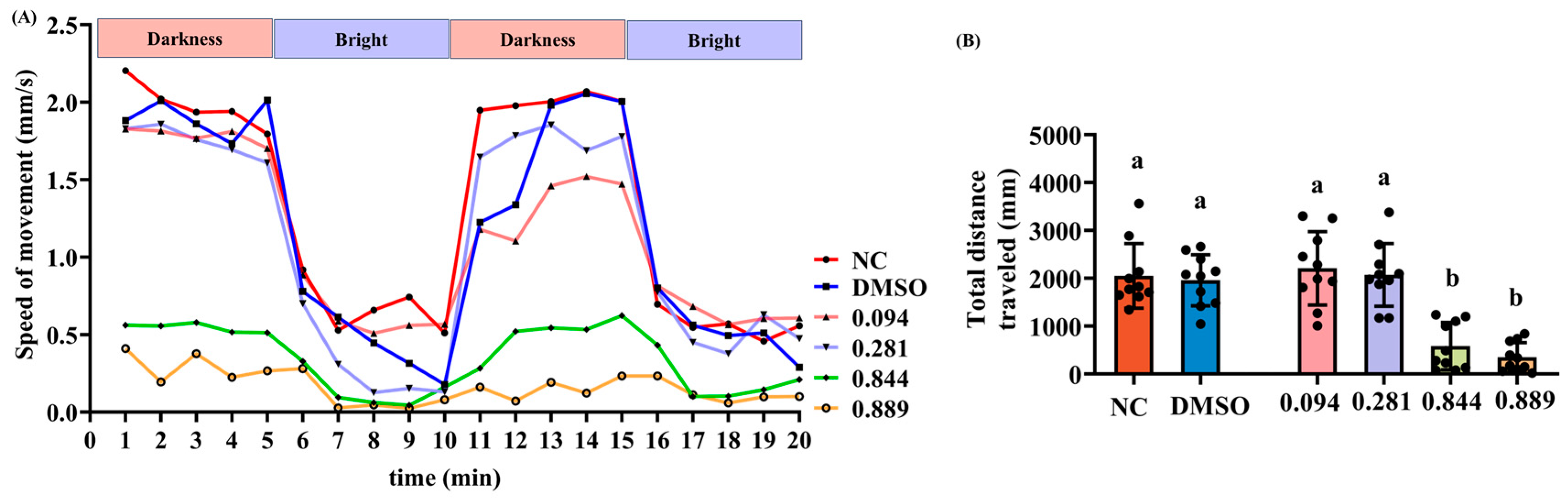
n = 30 per group). Larvae were exposed to the respective concentrations for 1 day at 28 °C. After exposure, 10 larvae per group were randomly selected and individually transferred into the wells of a behavior analysis system (V3.11, ViewPoint Life Sciences, Civrieux, France). Spontaneous locomotion was recorded for 20 min. The total distance traveled was calculated over 20 min, and average swimming speed per minute was further analyzed during a light–dark challenge paradigm consisting of two cycles of 5 min dark and 5 min light phases (20 min in total).
2.5. Apoptotic Cell Detection in the Central Nervous System
Wild-type AB larvae at 6 dpf were used to investigate whether 2-acetylfuran induces apoptosis in the central nervous system (CNS). Larvae were allocated to the same six exposure groups described in
Section 2.3 (
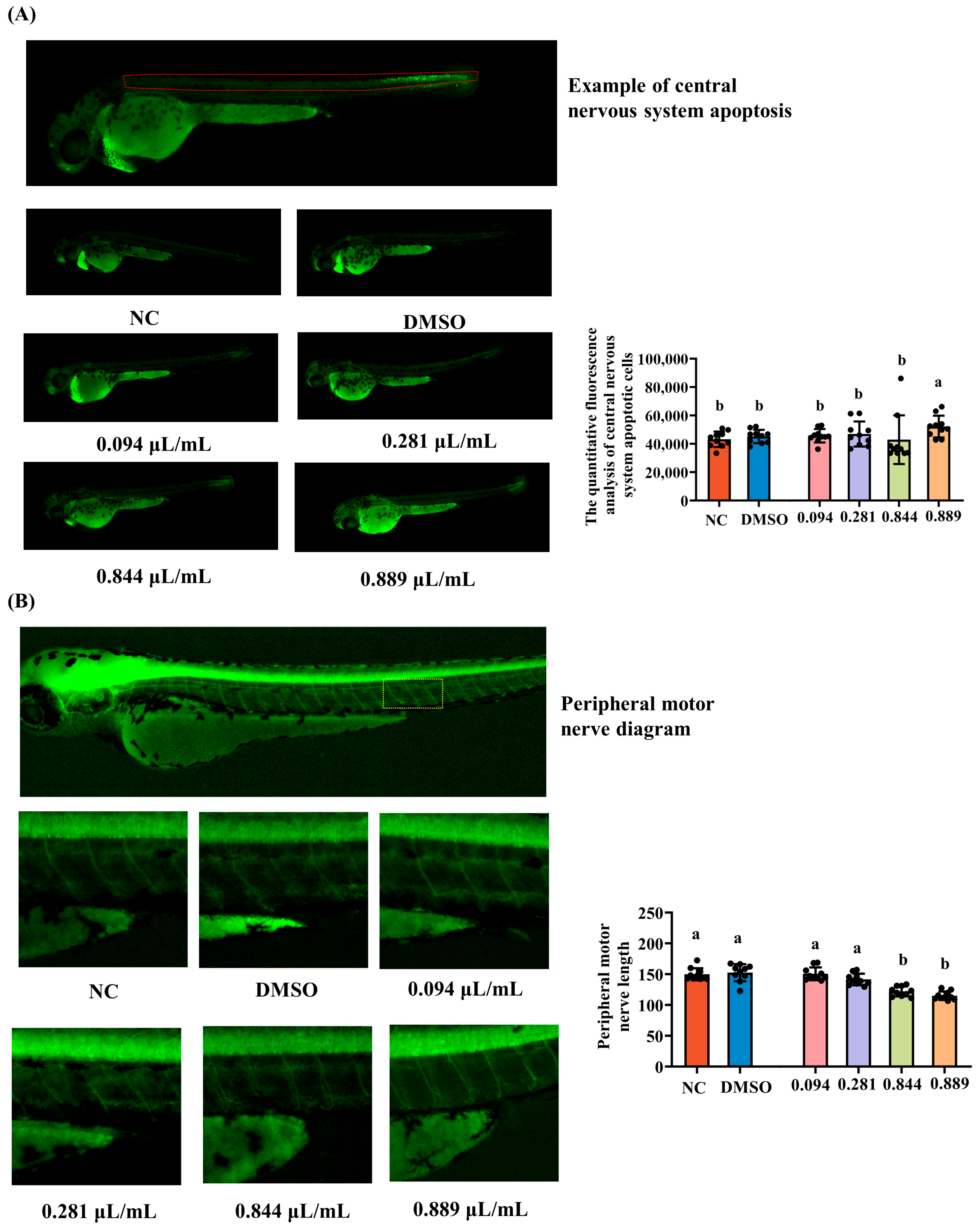
n = 30 per group) and treated with the indicated concentrations for 2 days at 28 °C. After exposure, the larvae were stained with acridine orange (AO) in the dark for 30 min. Following staining, the larvae were rinsed three times with fresh culture water to remove excess dye. Ten larvae from each group were then randomly selected for fluorescence microscopy, and AO fluorescence in the CNS region was quantified as an indicator of apoptotic cell burden.
2.6. Assessment of Peripheral Motor Neuron Length
The impact of 2-acetylfuran on peripheral motor neuron development was evaluated using 6 dpf Tg (hb9: EGFP) larvae, in which motor neurons express green fluorescence. Larvae were assigned to the same treatment groups as described in
Section 2.3 (
n = 30 per group) and exposed to the respective 2-acetylfuran concentrations for 3 days at 28 °C. Following exposure, 10 larvae per group were randomly selected for the fluorescence microscope. The lengths of peripheral motor nerves within the region encompassing three somites dorsal to the cloaca were measured using image analysis software. Mean motor nerve length per fish was calculated for each group and used as an endpoint for neurodevelopmental toxicity.
2.7. Gastrointestinal Area Measurement
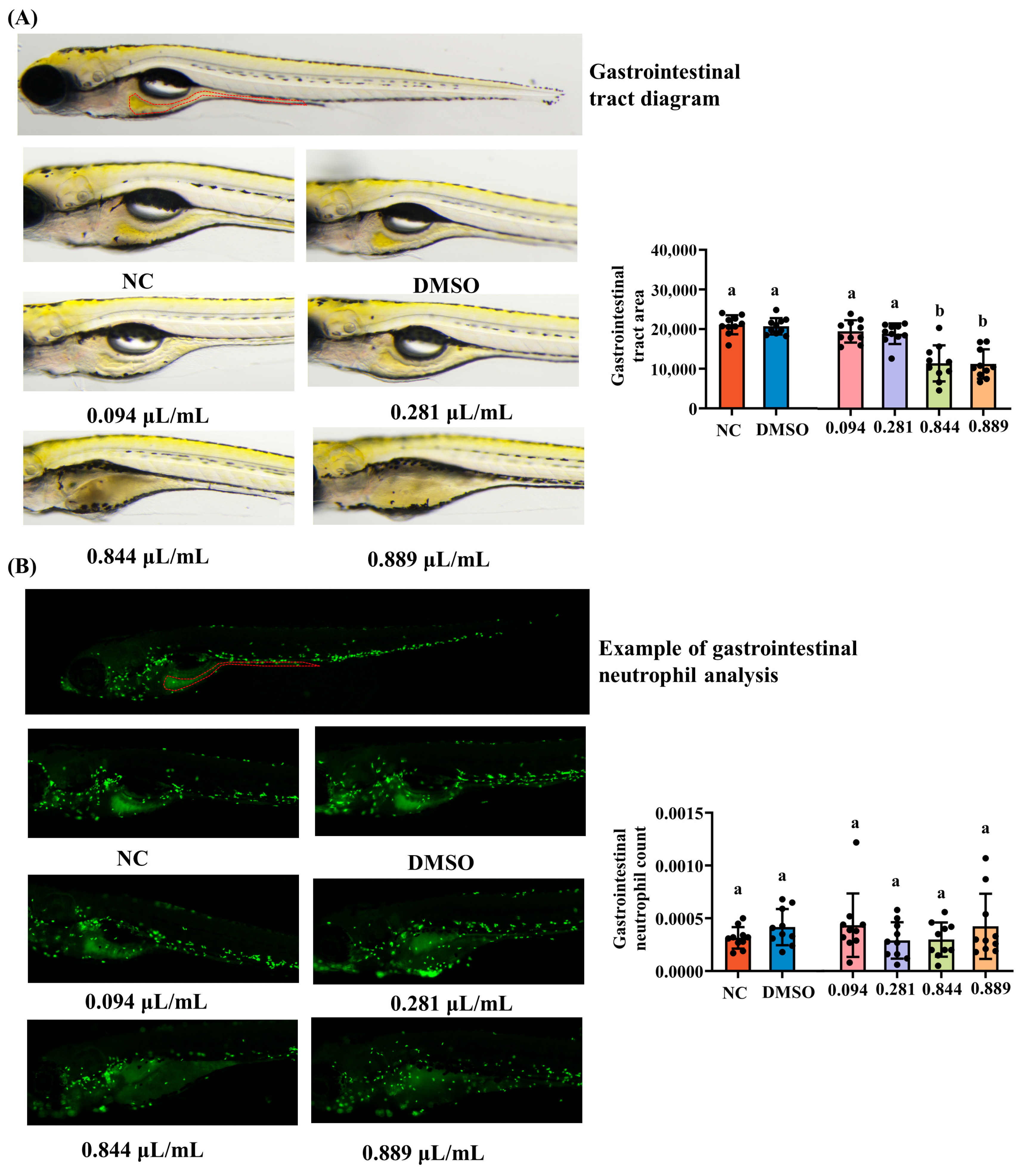
To assess gastrointestinal (GI) development, 3 dpf wild-type AB larvae were exposed to 2-acetylfuran. The grouping strategy and exposure concentrations were identical to those described in
Section 2.3, with 30 larvae per group. After 2 days of exposure, 10 larvae from each group were randomly selected and imaged under a dissecting microscope (SZX7, OLYMPUS, Tokyo, Japan). The GI tract area was outlined and quantified using image analysis software, and the relative GI area was compared across groups as an indicator of developmental delay or growth impairment in the digestive system.
2.8. Quantification of Neutrophils in the Gastrointestinal Tract
Gastrointestinal (GI) inflammation was further evaluated using 3 dpf Tg (mpx: EGFP) larvae, in which neutrophils are fluorescently labeled. Larvae were assigned to the same six treatment groups as described in
Section 2.3 (30 larvae per group) and exposed to the respective concentrations of 2-acetylfuran for 2 days. Following exposure, the larvae were imaged using a fluorescence microscope. The number of neutrophils within the defined GI tract region was counted and normalized to the GI area to obtain neutrophil density (cells per unit area). This parameter was used to evaluate GI inflammatory responses induced by 2-acetylfuran.
2.9. Hepatotoxicity Evaluation
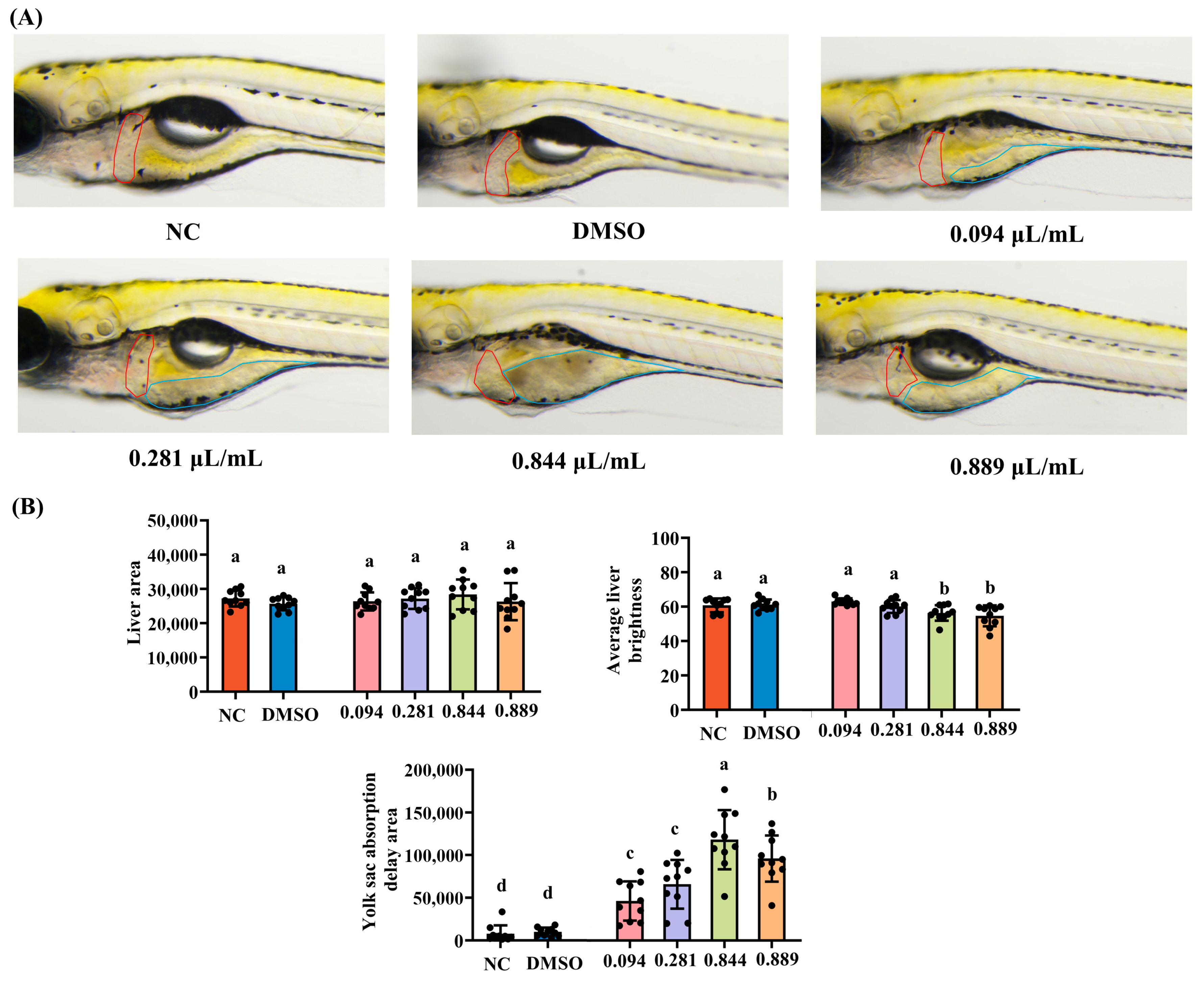
Hepatotoxicity was examined in wild-type AB larvae using the same six treatment groups and group sizes as in
Section 2.3. Larvae were exposed to 2-acetylfuran for 2 days. After exposure, 10 larvae per group were randomly selected and observed under a dissecting microscope. Liver morphology was documented, and quantitative analysis of liver area, mean liver brightness (as a proxy for hepatocellular integrity), and yolk sac residual area was performed using image analysis software. These parameters were collectively used to characterize hepatotoxic changes.
2.10. Histopathological Analysis (H&E Staining)
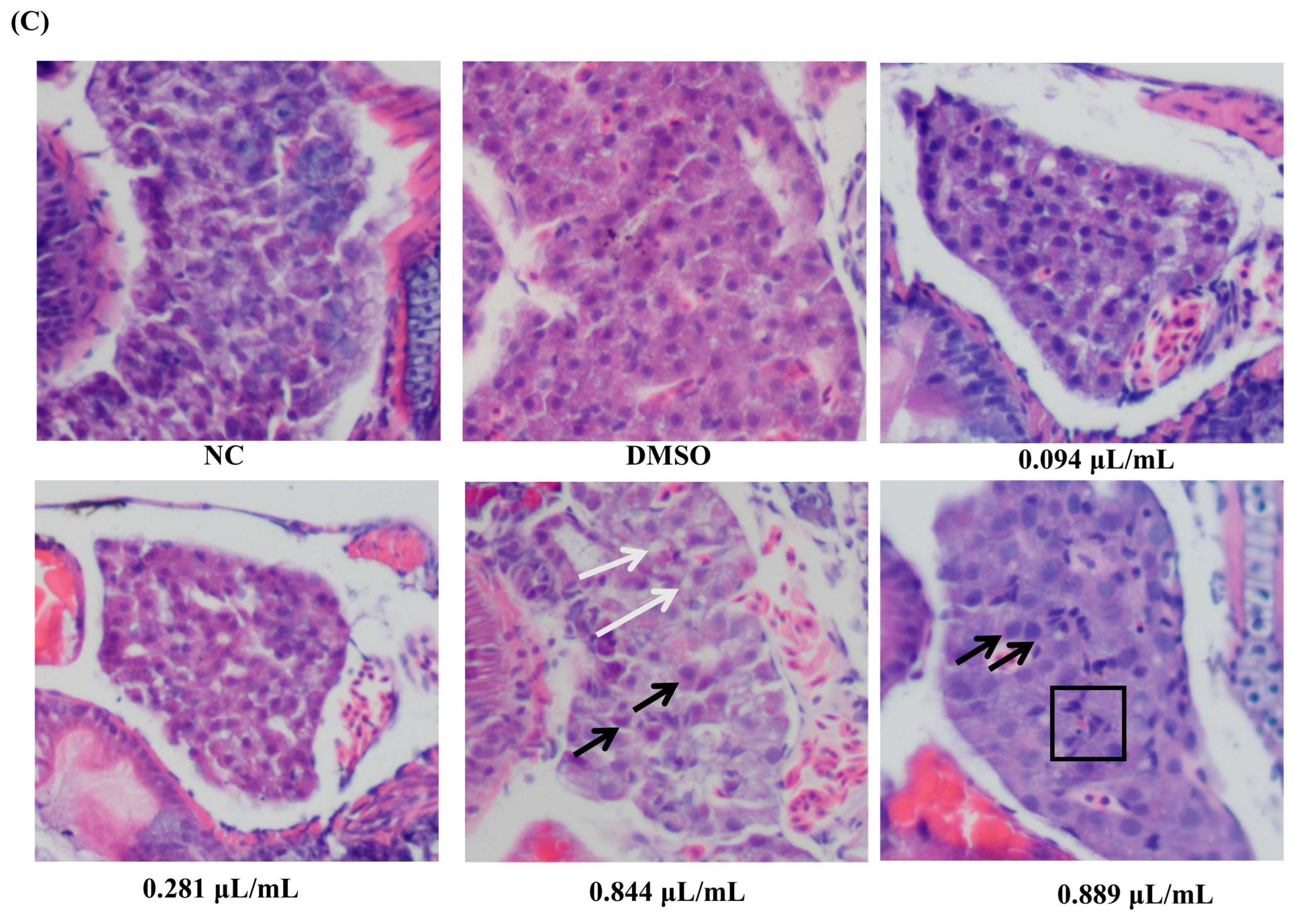
To confirm liver injury histopathologically, larvae from the hepatotoxicity experiments (
Section 2.9) were collected for hematoxylin and eosin (H&E) staining. Zebrafish were fixed in 4% paraformaldehyde and processed using a standard histological workflow, including graded dehydration, paraffin embedding, sectioning, and H&E staining. Liver sections were examined under a light microscope, and histopathological alterations were evaluated to corroborate the quantitative liver toxicity endpoints.
2.11. Statistical Analysis
All quantitative data are presented as the mean ± standard deviation (SD), with n = 3–10 per group depending on the specific assay. One-way analysis of variance (ANOVA) was used to compare differences among groups, followed by Tukey’s post hoc test for pairwise comparisons. Data processing was performed using SPSS version 26.0 (IBM SPSS Inc., New York, NY, USA). p values < 0.05 were considered statistically significant, and differences are indicated by different letters. Furthermore, all fluorescence-related images acquired in this study were not edited or manipulated outside of standard processing procedures. Because the images were acquired while the zebrafish were alive, all images were region-specific, and complete images were not collected.
4. Discussion
2-acetylfuran is produced during the Maillard reaction, a process involving the dehydration, rearrangement, and cleavage of reducing sugars and amino acids. This process primarily occurs during the processing of protein- and carbohydrate-rich foods or feeds [
5,
16,
17]. Furthermore, 2-acetylfuran is a commonly used flavoring additive in feeds, thereby exposing mammals or fish to its diet [
10]. In recent years, the toxicity risks of Maillard reaction products such as 2-acetylfuran have received increasing attention. This study systematically examined the effects of 2-acetylfuran on immunity, locomotor behavior, neural and gastrointestinal development, and liver function at sublethal doses using a zebrafish multi-organ toxicity assessment system. Together with the determination of the MNLC and LC
10, these analyses enabled delineation of the preliminary dose–response characteristics of 2-acetylfuran. The LC
10 of 2-acetylfuran for zebrafish embryos was determined to be 0.889 μL/mL, while the MNLC was 0.844 μL/mL. Based on these values, concentrations of 1/9 of the MNLC, 1/3 of the MNLC, the MNLC, and LC
10 were selected for sublethal toxicity assessment. One study reported 2-acetylfuran levels in 24 fruit- and meat-based canned infant food samples, all <6 ng/g [
17]. This concentration is less than 1/9 of the MNLC in this study, reflecting that conventionally processed and normally stored products are generally not toxic due to 2-acetylfuran. Another study found 2-acetylfuran concentrations as high as 359.49 ng/g in oxidized fish oil [
18]. This concentration is higher than 1/3 of the MNLC in this study. This suggests that the product may pose a risk of 2-acetylfuran toxicity under conditions of overprocessing or improper storage. In conclusion, these results indicate that the concentration tested in this study is of practical significance. A similar zebrafish toxicity assessment strategy based on the MNLC and LC
10 has been widely applied in safety studies of Maillard reaction products, including 5-HMF, 2-furfural, and glyoxal [
19,
20]. Within the dose range that does not induce mass mortality, 2-acetylfuran can still cause significant functional or developmental damage to specific target organs, suggesting that reliance solely on traditional lethal endpoints may underestimate its actual health risks.
This study found that 2-acetylfuran exhibits differential sensitivity across various immune cell types with respect to immunotoxicity. Neutrophil counts decreased significantly at or above 1/3 of the MNLC, whereas T cells and macrophages exhibited marked reductions at doses as low as 1/9 of the MNLC. Neutrophils and macrophages are key effector cells in zebrafish’s innate immunity, participating in pathogen clearance, inflammatory responses, and tissue repair [
21]. T cells are critical for adaptive immune development and the establishment of immune tolerance [
22]. Previous studies have shown that various environmental pollutants and food-related small molecules can alter the abundance and distribution of neutrophils, macrophages, and thymic T cells in zebrafish at low doses [
23,
24]. The greater susceptibility of T cells and macrophages suggests that hematopoietic or lymphoid lineage cells may be more vulnerable to 2-acetylfuran than innate myeloid cells. This may be related to differences in proliferation and differentiation states, antioxidant capacity, and metabolic enzyme expression profiles between cell types. Previous studies indicate that 5-HMF disrupts immune cell homeostasis in zebrafish by inducing oxidative stress and affecting Nrf2 and downstream antioxidant gene expression [
19]. Given its structural similarity to 5-HMF, 2-acetylfuran may undergo reactions analogous to those of 5-HMF (e.g., nucleophilic additions) and thereby induce oxidative stress and immune-cell dysfunction [
18,
25]. In summary, the immune system, particularly during early development, exhibits high sensitivity to small-molecule hazards. Even low-dose exposure to 2-acetylfuran may impair innate and adaptive immune function, warranting special attention for infants and children whose immune systems are not fully mature.
Behavioral results indicated that exposure to 2-acetylfuran at the MNLC and LC
10 significantly reduced both locomotor speed and total distance traveled in zebrafish during light–dark cycle stimulation, resulting in markedly decreased activity. No significant effects were observed at the two lower concentrations (0.094 and 0.281 μL/mL). This dose-dependent change correlated strongly with reduced peripheral motor neuron axon length and increased central nervous system apoptosis, suggesting that the locomotor toxicity of 2-acetylfuran is closely associated with neurodevelopmental impairments [
26]. Normal extension of motor neuron axons is critical for neuromuscular junction formation and effective locomotor control in zebrafish [
27]. Reduced axon length often indicates impaired motor neuron development, leading to diminished locomotor capacity [
12]. Maillard reaction products, environmental pollutants, and drug metabolites have been reported to exhibit neurotoxicity and motor toxicity similar to the neurotoxicity of 2-acetylfuran [
19,
28]. These studies generally agree that oxidative stress, mitochondrial dysfunction, and inflammatory responses are key mechanisms that induce neuronal apoptosis and impair axonal development. Therefore, 2-acetylfuran likely exerts its effects through similar pathways. Furthermore, the significant alterations in neurotoxic endpoints were observed primarily at the MNLC and LC
10, indicating that the nervous system is less sensitive to 2-acetylfuran exposure than the immune system. This finding suggests differential susceptibility among organs to 2-acetylfuran exposure.
The effects of 2-acetylfuran on gastrointestinal development and mucosal immunity in zebrafish were subsequently evaluated. Results showed a significant reduction in gastrointestinal surface area of zebrafish only at the MNLC and LC
10. Concurrently, the number and density of neutrophils in the gastrointestinal region did not differ significantly among the dose groups. In summary, these findings suggest that 2-acetylfuran exhibits low gastrointestinal toxicity, with reduced gastrointestinal surface area observed only at the MNLC. However, zebrafish are stomachless teleosts; their foregut, midgut, and hindgut exhibit structural and functional similarities to those of mammals. Their transparent body walls facilitate whole-organ observation, making them widely used to assess the effects of foodborne hazards on digestive system development and mucosal immunity [
29]. In most intestinal toxicity models, significant intestinal inflammation is typically accompanied by massive neutrophil recruitment and destruction of mucosal structures [
22]. In contrast, exposure to 2-acetylfuran reduced intestinal surface area, while neutrophil counts remained broadly stable. This suggests that its primary effect on the intestine may be developmental delay or growth restriction, rather than typical inflammatory damage.
Liver-related endpoints were more sensitive to 2-acetylfuran than gastrointestinal endpoints. This study revealed a significant reduction in liver fluorescence brightness at the MNLC and LC
10 in zebrafish, suggesting alterations in hepatocellular refractive substances such as lipids or glycogen [
30]. Specifically, the delayed yolk sac absorption area increased significantly at all tested concentrations. The yolk sac is the primary energy and nutrient source during early zebrafish development, and its absorption depends on normal liver and metabolic function. Delayed yolk sac absorption is a sensitive indicator of liver developmental delay or lipid metabolism disorders [
31]. Accordingly, these results indicate that even at the lowest concentration (1/9 of MNLC), 2-acetylfuran significantly interferes with nutrient mobilization and liver-related metabolic functions in zebrafish. Histological analysis further confirmed the hepatotoxicity of 2-acetylfuran: in the 0.844 μL/mL treatment group, hepatocyte nuclear swelling, cytoplasmic vacuolation, and focal necrosis were clearly visible. These pathological alterations closely resemble the hepatic cell degeneration, steatosis, and necrosis phenotypes induced by 5-HMF and certain furan compounds in zebrafish and rodent models [
19,
20]. Together, these findings suggest that 2-acetylfuran may disrupt hepatic cell function by interfering with lipid metabolism, inducing oxidative stress, and causing mitochondrial damage.



 ,
,